






The colonization of food
Heirlooms of flavor and family
By NEVAEH KARRAKER — nakarraker@ucdavis.edu
I had the privilege of growing up in an “ingredient household.” As a chef, my dad constantly filled the house with the aromas of new concoctions and rows of potions wafting over the countertops.
To others, “candy meat” is a weird conjunction of words. Yet to my family and I, it’s a delicious traditional dish of pork shoulder coated in a mouth-watering brown sugar rub. It’s born from a kitchen crowded with siblings sneaking bites and parents taking the time to teach us the proper ways to use a knife, all while music blasts in the background.
There’s no tangible recipe for this dish. It’s rather a culmination of dozens of tests, several cookbooks and the finesse of experience. It’s derived from an intimate familiarity with earth’s provision of whole foods, not from the soulless assembly lines inside of factories.
In the United States, the wide accessibility of convenient fast food — making up 60% of the total caloric intake — has unfortunately caused the loss of culture passed down through food. After all, stereotypical “American food” is mass-produced burgers, french fries and frozen dinners.
Recipes physically passed down through crumpled pieces of paper or via verbal instructions are as authentic as pleating dumplings with technique, love and connection. It’s a palpable transference of history and passion. What’s more, the gesture of making food with our own hands — the zesting of the orange, the kneading of the dough — is more than culture: It’s a tradition of servitude.
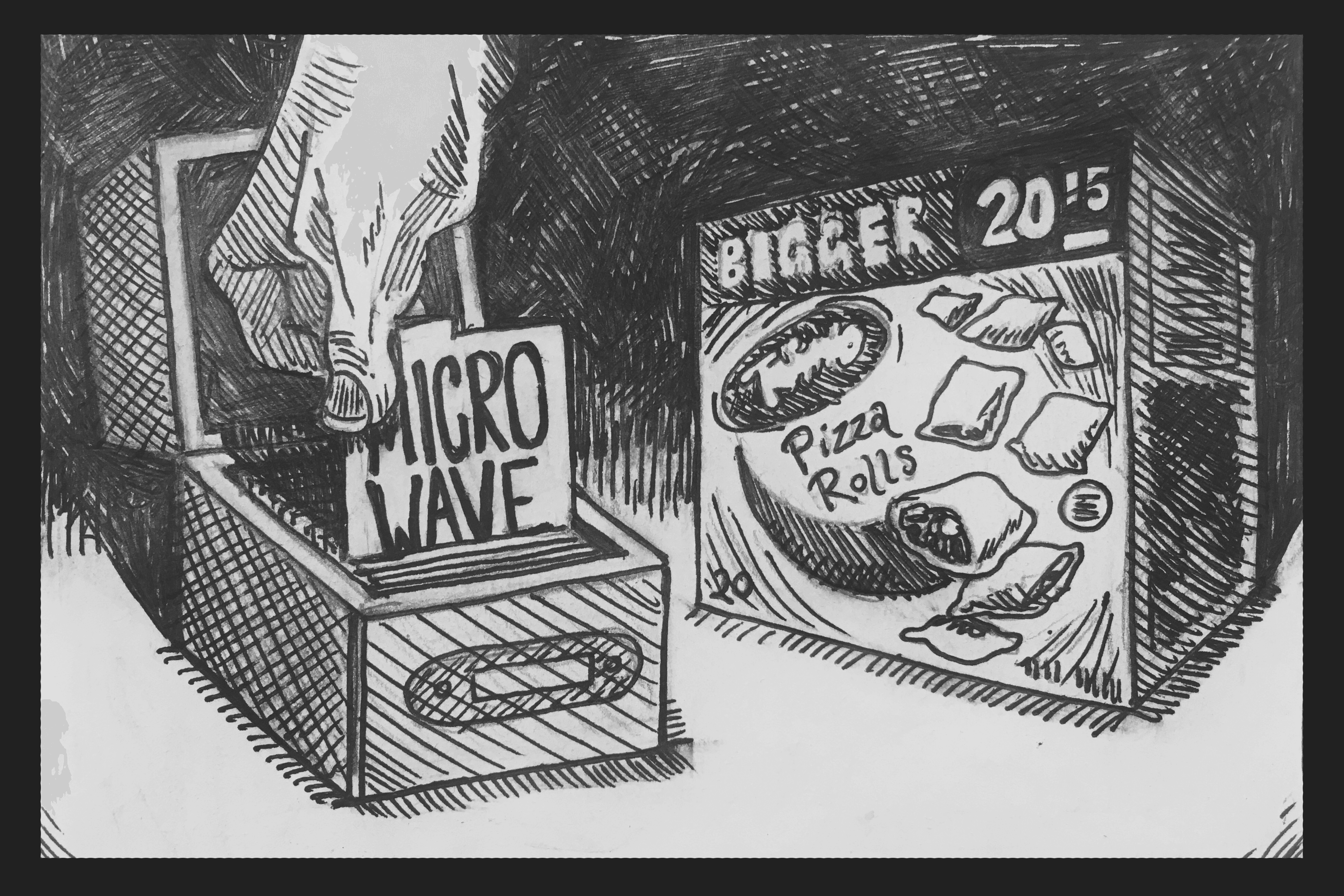
Yet today, the servitude and invaluable heritage that used to define our society has fizzled out. Grocery stores have exploited healthy ingredients by controlling the influx of microwave meals, challenging our discipline in turn: How much time and effort is our health and wellbeing worth?
Post-World War II, the evolution of industrial kitchens transgressed into automation. The commercialization of air fryers, microwaves or similar appliances has replaced the authentic expertise of humans. Our reliance on these machines has diminished our skills, softened our hands, degenerated our cultures and robbed future generations of inheriting that priceless knowledge.
Junk food corrupts our bodies and minds into lazier, more lousy versions of ourselves. Further, society harbors a selfish mindset; a “what can I get out of this” in lieu of “what can I give?” We prefer the overconsumption of popular items to a home-cooked meal and quality time if it means less work for us.
The kitchen is a center of unity. Our past, language and ethnicity is irrelevant when it comes to enjoying a meal together; the sensation of flavors and a grateful smile is all we need. In a way, food sustains the memories that we make with people and allows us to savor special moments in ways we’d never be able to otherwise. Each clang of pots and pans, each tear shed from an onion and every recipe shared is an act of preservation.
Hence, the table where a meal is shared is a physical representation of fellowship, provision and sustenance. It’s built by the strength of family, the service of grace and the secrets of the obscure elements that form it.
This Thanksgiving, I encourage you to purposefully spend time not only at the table, but in the kitchen with your family. There’s something so satisfying and enriching about repeating the same techniques as our elders did, transforming mundane ingredients into unforgettable meals and serving others the food we worked hard to make. Inherit that knowledge, and with it, an indispensable heritage.
If you’re unsure about your own traditions, then let this be an inspiration to create some. Be an advocate to prevent the novelty of food (and in turn, culture) from dissipating. In time, I hope to construct a kitchen like my dad has; one filled with the aroma of creativity, care and love.
Written by: Nevaeh Karraker — nakarraker@ucdavis.edu
Disclaimer: The views and opinions expressed by individual columnists belong to the columnists alone and do not necessarily indicate the views and opinions held by The California Aggie.