






Why we need trade unions
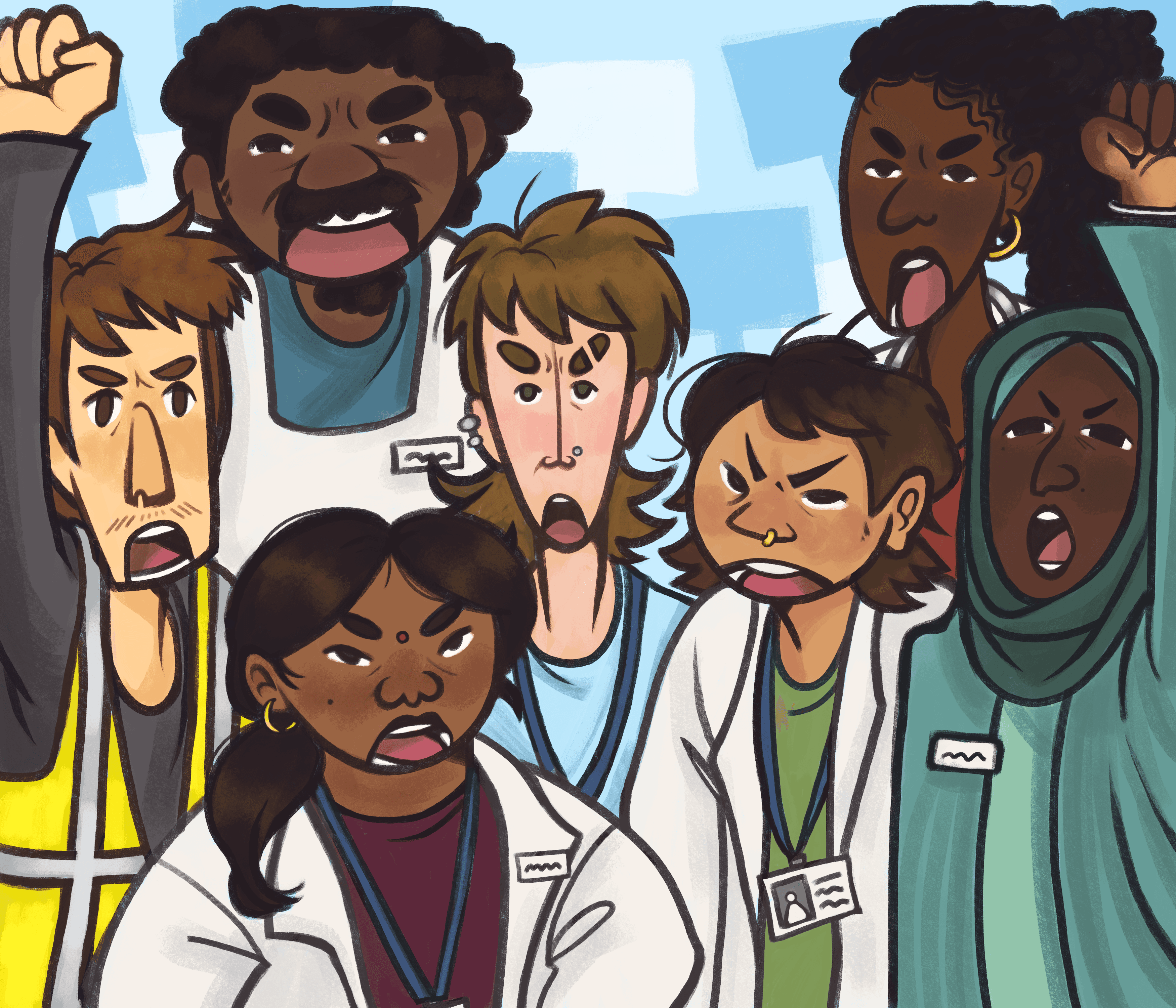
Unions play an important role in securing worker protections
By SAGE KAMOCSAY— skamocsay@ucdavis.edu
Union participation in America is at an all-time low. As working conditions worsen and average pay lowers compared to the cost of living, this decline in union membership is especially concerning. Workers are increasingly left without necessary protections — a reality that could be avoided if we reincorporate unions into common practice.
Workers should understand that their employers are materially interested in paying as little as possible for as much labor as they can get. A worker cannot obtain truly livable conditions and wages through the trust of their employer or the ballot box alone; those provisions, unfortunately but realistically, must be fought for and won in opposition to employers.
This is what unions do: They bring together the common people and provide them an avenue through which to fight for good working conditions. They harness the power of the masses to compel high-up businessmen to listen to their demands. If enough workers want to change a policy, unions can force employers to make that change via the passion of their members. In theory, this goal can be achieved through more civil means, like private discussions between union representatives and company heads. But the real power of the union lies in what they can do if companies refuse to listen.
Strikes are a common example of this power. Union members will refuse to work until their demands are met, targeting a company’s bottom line. Profits decrease, stock prices fall, and C-suite staff salaries are threatened. When lower-level employees don’t work, they don’t produce value for the company. Even with replacement workers, employers often struggle to outlast a prolonged strike. It’s a war of attrition — the winner will be whoever can afford to continue the strike. However, unions typically pick fights they know they can win — and it is far less costly to organize a strike than to endure one. Companies thus often lose this game of tug-of-war, and in many cases, ultimately meet union demands rather than risk long-term financial damage.
Strikes can also help to raise public awareness for a cause. Demonstrations allow non-workers to see the plight of the strikers and can drastically bolster the effects of strikers’ efforts, putting further social and monetary pressure on company owners to improve working conditions.
Unions can also facilitate change through the judicial system. Large unions often have lawyers who can bring lawsuits against their companies and the government to the courtroom in order to secure restitution and empirical institutional improvements.
But what are these conditions, exactly? What do unions seek to protect through strikes and litigation? Wages are one example — with the minimum wage currently below what’s realistic for living, unions can incentivize companies to pay their workers fairly. Unions can also help employees secure better job benefits, shorter hours and safer facilities, all of which help to give them better and more fulfilling lives while making sure they are properly compensated. Any union worth its salt is also a democratic process; the issues that workers are most upset about are the ones that will be bargained for by the union representatives. Unions are designed to help workers in real, tangible ways.
With all this being said, unions are facing increasing attacks from the government. Federal workers are being stripped of their right to organize; the National Labor Relations Board (NLRB) has been hijacked by the Trump administration to represent the wishes of employers and the Federal Mediation and Conciliation Service, which helps to mediate labor disputes, has laid off 95% of its workforce; an action that will cause mediation to grind to a halt, leaving labor disputes unsolved.
The effectiveness of unions in protecting their hard-working members is in jeopardy. While now may not be the easiest time to join a union, it certainly remains important to do so. Even if you can’t join one yourself, go out and support workers on the picket line. With the support of the masses, unions can stay safe and powerful — which is exactly what we as a society need.
Written by: Sage Kamocsay— skamocsay@ucdavis.edu
Disclaimer: The views and opinions expressed by individual columnists belong to the columnists alone and do not necessarily indicate the views and opinions held by The California Aggie.