






Bezos Earth Fund gives grant to UC Davis AI nutrition project
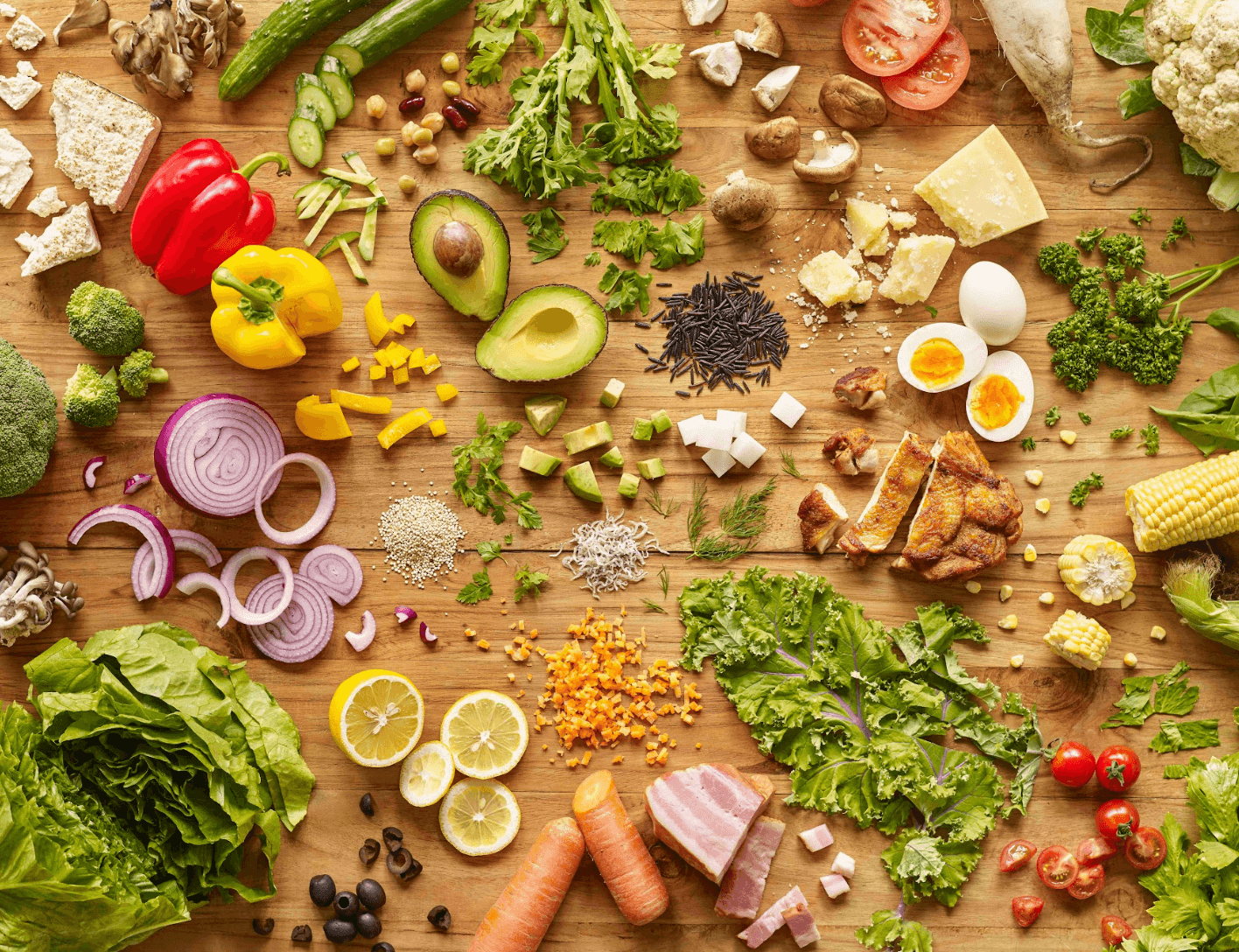
Swap it Smart seeks to develop healthy and ethically sourced recipes using artificial intelligence
By RIVERS STOUT— campus@theaggie.org
On Oct. 23, the Bezos Earth Fund announced that they will donate $2 million to the Periodic Table of Food Initiative, an organization managed by the American Heart Association, in order to create the Swap it Smart project. Led by two UC Davis professors, the project plans to develop artificial intelligence (AI)-based recipes aimed at developing healthy and ethically sourced foods using large language models (LLMs) and machine learning.
The grant was issued alongside 14 others, all aimed at using AI to benefit the environment and as part of an investment into AI technologies.
Started by UC Davis Professors and Co-Principal Investigators Ilias Tagkopoulos and Justin Siegel, Swap it Smart aims to use AI to create recipes for both chefs and the general public, using an app.
“We got an award from the Bezos Earth Fund and this consortium of multiple parties to use AI and create meals that are nutritious,” Tagkopoulos said. “They will probably use ethically sourced foods that are sustainable and will have the right nutrients to support our diet.”
The Bezos Earth fund acts as a philanthropic arm for its namesake, Amazon founder Jeffrey Bezos. It was founded in 2020 with an initial commitment by Bezos of $10 billion for grants to address issues in the climate and nature.
“At the Bezos Earth Fund, we’re focused on making AI work for the environment — not the other way around,” Amen Ra Mashariki, the director of AI at the Bezos Earth Fund, said in the grant press release. “These projects show how AI, when developed responsibly and guided by science, can strengthen environmental action, support communities, and ensure its overall impact on the planet is net positive.”
However, the fund has recently faced some scrutiny, with allegations that the non-profit has acted to further Bezos’ economic and political interests. Both the fund and Bezos himself faced criticism early this year when they cut funding to the Science Based Targets initiative, an international climate certification group. The move was seen by some as a bowing down to the Trump administration and its distancing from climate change action.
Tagkopoulos’ and his partners’ labs have been working with AI in the form of machine learning and LLMs in the context of food sciences for years. However, the Swap it Smart project is new and has yet to be completely fleshed out. Tagkopoulos indicated that it will take years and more funding to fully develop, but the one-time $2 million grant is getting it started.
“We have no idea [how it’ll work],” Tagkopoulos said. “We will work with our partners at the American Heart Association and the Periodic Table of Food Initiative to get the right data, then we will develop the methods, AI methods and computational methods to mix and match foods that are more sustainable and nutritious.”
While Tagkopoulos is hopeful that the project will work toward a greater good, UC Davis postdoctoral scholar, AI ethicist and researcher Carrie Alexander noted that using AI puts a strain on natural resources and can be harmful to the environment.
“We should remember how costly the environmental implications of AI are,” Alexander said. “That is often not thought about or seen, and we have not adequately addressed it. It’s always in the background.”
The largest issue with using AI is the large energy resources needed to power and cool energy and data centers — mostly water, according to Alexander. While LLM providers and Big Tech companies have not always been transparent about the environmental costs to develop and use their models, estimates and predictions by researchers at Cornell University place AI as a big driver of data-center construction in the United States, greatly increasing energy and water needs to develop and power these models.
“There are definitely environmental implications that mean we will be leaning more heavily on those resources in order to fuel the [creation and use of models],” Alexander said.
When asked about the possible contradiction created by an AI tool designed to help the environment, Tagkopoulos answered that the use of LLMs was not inherently different from any other use of natural resources.
“I don’t know if they’re bad for the environment,” Tagkopoulos said. “Anything that consumes power can be intense on resources. Whether the benefit you get for the human race and our planet is bigger than the resources it actually consumes is a different story.”
Another risk posed by AI models in health guidance are issues referred to as a “hallucination,” or what AI ethicists such as Alexander call a “lie.” They happen when an LLM provides a nonsensical answer that ranges from harmless to deadly. A Center for Countering Digital Hate report revealed the ease by which people could get ChatGPT, an LLM that Tagkopoulos said Swap it Smart would use, to encourage self-harm and enable harmful habits related to eating disorders.
“I think there are a lot of cases where something is inaccurate or can’t be used without being checked,” Alexander said. “Maybe something is added that’s toxic, or an allergen. I don’t want to sit here and speculate to find ways to knock out ideas without checking out their safety precautions; I want to hear them out. But what we know about LLMs is that they would need safety precautions, but they would require effort and in some ways possibly defeat the advantages posed by AI.”
Tagkopoulos said that their project would use domain experts in order to verify that recipes do not contain any hallucinations. He added that the app they hope to develop would likely not have the same domain experts but would have additional automated safety features built into the AI and programs to verify safety.
Celebrity chef and influencer Stephen Cusato, who also runs the YouTube channel “Not Another Cooking Show,” said that he has doubts about the use of AI for culinary purposes.
“There’s [a] sense in having an entity to bounce ideas off of, but you still have to be a cook,” Cusato said. “I’m not trying to be someone who doesn’t embrace the world that’s changing but there’s a level of balance. The ability to taste food an AI lacks. You have to be rational and know when to approach it.”
Although Cusato feels his brand is safe from AI due to the repertoire he has developed with viewers, Cusato noted that there’s a limited audience interested in seeing LLMs used in the food space.
“Anything AI-related with my audience seems to invoke a viscerally negative reaction,” Cusato said. “I also have an older audience. My [core] audience ranges from their 30s to 50s. The channels you see with AI videos, you can bet [that] they have an 18 [to] 25 [demographic].”
While he believes there’s limited use for AI in the kitchen, Cusato commented that he wouldn’t want to be secondary to it.
“My recipes are the result of the picky eater inside of me that was a kid and now has all the knowledge I have of 20 years of cooking,” Cusato said. “I’m a control freak. I would never give control to the AI.”
In order to safely make use of AI, Alexander said that two things can be done: slowing down development and having productive conversations between people critical of AI and industry members.
“It seems people, more often than not, tend to be in camps about AI,” Alexander said. “I don’t sense that there’s a lot of openness, to the point that we should say, ‘Yes we should look at this and pause.’”
In the meantime, Tagkopoulos, along with Siegel and their partners, are focused on developing Swap it Smart and keeping the health of both potential app users and the environment in mind.
“Everything we [at the lab] do looks toward planetary health as a whole,” Tagkopoulos said. “I wouldn’t be too fast to judge LLMs at this point.”
Written by: Rivers Stout — campus@theaggie.org