






Davis City Council discusses the future of the Davis Daytime Respite Center
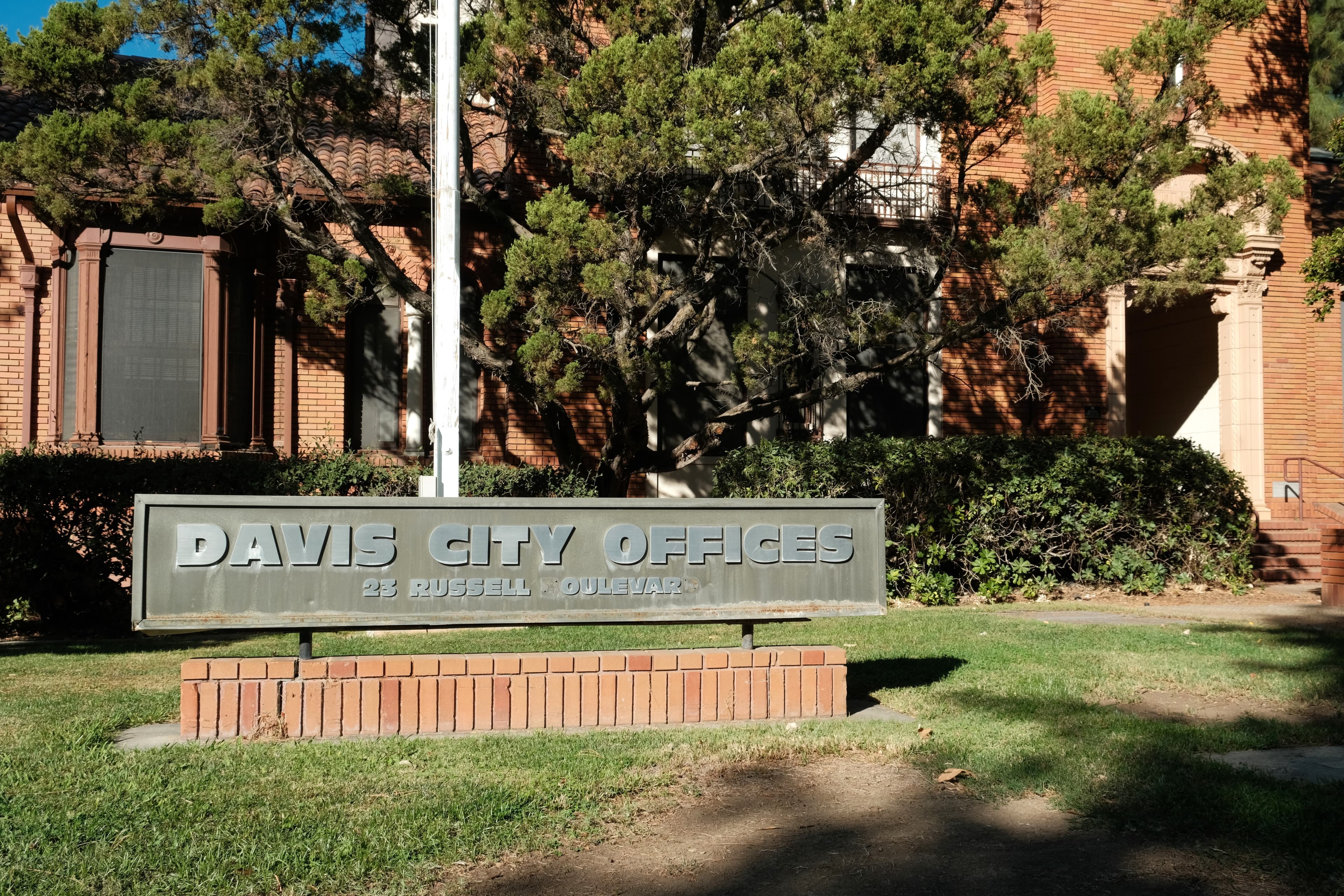
During the meeting, councilmembers and impacted community members reviewed challenges and necessary improvements
By KATYA OKS — city@theaggie.org
On Nov. 18, the Davis City Council met to discuss and review the Homelessness System of Care in Davis. The meeting focused on program updates concerning the Davis Daytime Respite Center and the Davis Homeless Outreach program.
The state and future of the Davis Daytime Respite Center, which provides resources to Davis’ unhoused population, were previously discussed at a Sept. 16 City Council meeting. The first meeting focused specifically on the feasibility of the City of Davis to continue service of the Center and to temporarily keep its current location amidst a change in providers.
Dana Bailey, the social services and housing director, reflected on what has been accomplished by the Social Services Commission since the first discussion. During her presentation, Bailey noted that as research is being conducted to find alternative locations for the center, operations were temporarily brought in-house.
The Davis Homeless Outreach Program was also discussed during the meeting. The program currently partners with organizations such as CommuniCare + Ole, Turning Point Community Services, St. Vincent de Paul and Davis Public Safety to provide outreach services to Davis’ unhoused population.
Bailey then addressed a future challenge: that policies and funding concerning homelessness and housing “are increasingly subject to change on the federal, state and local level,” making the funding that is available to the city and such programs highly unreliable.
Bailey and her team spoke about the shift in priorities they anticipate due to changes in funding.
“Yolo County [will be] required to shift funding priorities from homelessness programs as well as face [a] 5% reduction in local prevention dollars,” Bailey said.
She also mentioned that the funding that will be available will mainly focus on treatment for substance use and mental illness, rather than assist unhoused individuals in gaining financial self-sufficiency. Bailey then concluded the presentation with a set of staff recommendations.
“[We need to] continue Davis Daytime Respite Center operations at the existing location,” Bailey said. “[We also need to] pivot from a contractor model to using in-house City staff, adding two new full-time equivalent (FTE) positions to operate the Respite Center.”
The meeting then turned to a public comment section. A public commenter, who wished to remain anonymous, shared their personal experience and concerns with the Respite Center. The individual experienced homelessness in Davis in the past, and is a UC Davis alum.
“It does upset me to know there are these resources, but they’re guarded, so they’re not really helping the people that could use them, which is just a disservice to this city and to the money to wherever it’s being allocated,” the individual said. “I currently live […] near the Respite Center, and we just got broken into not too long ago. […] Again, I was in this position where I was homeless, you know, so I have compassion for other unhoused people, but I feel like something new has to happen so that there can be accountability, change and hope for these [unhoused] people. Because, if there are all these resources that people don’t know or can’t even use, what’s the point of having all this stuff allocated for them?”
Oliver, a homeless individual in Davis who only shared his first name, spoke about his experience with the Respite Center and its current shortcomings.
“The Respite Center is an invaluable resource, [but] there’s an incredible amount of potential [for the Respite Center] that is not being tapped,” Oliver said. “When I first started going to the Respite Center — when it was still communicable — we had computers, we had laundry and we had showers and on and on. Now we don’t have computers […] [nor] laundry. Why does it make sense if the city and the organizations already haven’t been able to communicate enough to meet these basic functions, why would it make sense to bring in an outside contractor to fail again?”
Oliver also discussed his personal experience with the Outreach Program and criticized it at its current state.
“The connections to care [are] garbage, the wraparound services [are] garbage, everyone ends up on the street again,” Oliver said. “I don’t know where the money goes. The outreach team, that’s just the cops light. They just come to take your stuff, tell you to go to places that you already know you can go to. We refer each other to actual services that they don’t offer.”
Davis Mayor Bapu Vaitla agreed with the sentiment that many changes must be made in order to improve the quality of the services offered by both the Respite Center and the Outreach Program.
“To me, it feels like we need to get back to basics and provide the services associated with respite: […] to me, that’s showers, shelter, laundry,” Vaitla said. “It’s not that I wouldn’t want navigation or case management services there at some point, but right now, I think we need to get back to the identity of that center being for respite, and to do it well.”
After listening to public comment and discussing amongst themselves, the City Council decided to integrate the Davis Homeless Outreach Program into the Daytime Respite Center. This decision was made not only to improve efficiency and help assist more unhoused individuals, but to provide more transparency and accessibility to said resources.
Written By: Katya Oks — city@theaggie.org