The rise of aesthetics has led to the death of subcultures
By SABRINA FIGUEROA — sfigueroaavila@ucdavis.edu
During the COVID-19 lockdown, I remember scrolling through my TikTok “For You” page, watching videos of people dressing in what they called an “alt kid” style. My feed was full of thick eyeliner, bright-colored clothes, hyperpop, anime and arguments of “alt TikTok” versus “straight TikTok” — those were the days when we felt like we were in psychosis, but I’ll admit, it was fun at the time. It was the first time we saw an emphasis on aesthetics over the actual community and the values it created.
A “subculture” is a group of people who share common interests, beliefs and values that set them apart from popular culture. That’s why there was a distinction between “alt TikTok” (characterized by quirky, non-mainstream content) and “straight TikTok” (characterized by popular dance videos and trends) to begin with. The “alt kids” wanted to create a fine line between them and the rest of the people on TikTok — some who made fun of them and others who just didn’t align with them. And it wasn’t just alt kids creating specific aesthetic communities; there was also “cottagecore,” “Y2K,” “dark academia” and more.
Although it was fun, many fast fashion companies — like Shein, Urban Outfitters and Cider — quickly milked the fashion of these subcultures as much as possible. The next thing we knew, they became trends; these small subcultures, which began as community circles, were reduced to aesthetics. All it took to be an outsider — to not be accepted by the niche group — was to fail to dress aesthetically; sometimes, however, the people not dressed in the “right” clothes are more involved in the values, interests or beliefs of the subculture the fashion used to belong to.
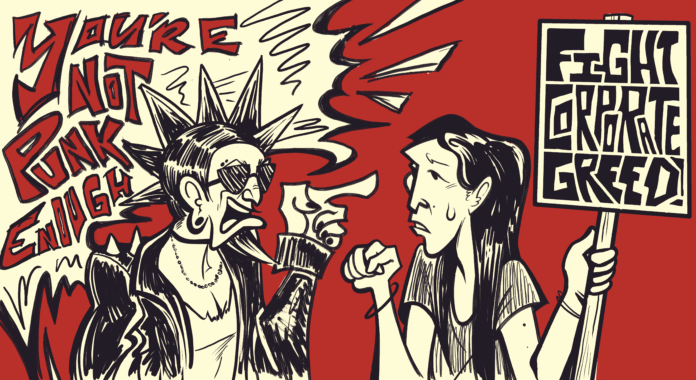
I think of the conversation between Lois Lane and Clark Kent in “Superman” (2025), where Lois essentially tells Clark that he is not a “true punk.” He argues that, actually, empathy and kindness might be “the real punk rock.” That’s a debate I’ll leave to the punk community, but the takeaway is that we often try to define a subculture based on stereotypes alone. Thus, we fail to uncover the true meaning, movements or character of the people involved in it.
This has been a trend with younger generations, specifically because we tend to be more secluded from other people to begin with. Many of us prefer to scroll online rather than go out to a mall, to the movie theater or even to a punk show; images online are all we have to focus on. Our lives are mediated and digital, fully emphasizing the visual over anything else — it’s not surprising that we care more about aesthetics than the implications behind the clothes we wear.
Focusing on aesthetics over community makes the movements behind the subcultures’ fashion or music obsolete. For example, the rise of streetwear is now just an aesthetic — its roots in 70s New York hip-hop culture and the urban Black American experience are now disregarded. The sound of punk and grunge music attempts to be recreated today, but some of it lacks the anti-establishment, rebellious and anti-consumerist messages that the movements had originally; it feels inauthentic.
We use them to differentiate ourselves in a way that’s isolating, yet we all do it so frequently that we just end up being the same. That constant replication of old subcultures’ fashion or sound makes them just that — clothes and sound and nothing more. It’s like when you repeat a word over and over so much that it starts sounding like a random noise and loses all inherent meaning.
I’m not going to tell you that you aren’t whatever you choose to be: That’s for you to decide. If you like punk fashion, grunge music, streetwear or any other alternative culture, that’s an opportunity for you to explore the meaning behind it all and give credit where credit is due. Subcultures have always been powerful avenues for expression and change; from this exploration, there may even be the creation of new subcultures, connecting people even through these tough times. Remember that the opposite of war and violence isn’t peace — it’s creation.
Written by: Sabrina Figueroa — sfigueroaavila@ucdavis.edu
Disclaimer: The views and opinions expressed by individual columnists belong to the columnists alone and do not necessarily indicate the views and opinions held by The California Aggie.