Why convenience is ruining our lives
By ABHINAYA KASAGANI — akasagani@ucdavis.edu
I spent the holidays surrounded by my parents’ closest friends, fielding endless attacks of “back in our days.” It was at dinner with a colleague of my mom’s that I felt a sense of gratitude for those that came before me; those who made it so that I did not have to single-handedly navigate this world myself. I realized that I had been dealt the answers they were forced to find on their own.
At the table, they discussed having worked day jobs (always before early classes and never after), expecting nothing more than a pack of ramen for dinner that week. Some of their struggles persist today, while others felt unimaginable for someone so young to navigate alone. The adults also talked of things like getting sofas for free after rebate and waiting in lines at 6 a.m. for the chance at discounts on rising tech. We now go online and, in a matter of seconds, are able to do the same from the comfort of our bedrooms.
While previous generations practically glamorized struggle — often condemning any technological advancement for this reason — this generation has come to aestheticize ease. Technology, which functions as an intermediary between a person and their labor, promised us efficiency and unlimited access to resources beyond the wildest dreams of our predecessors. Even while delivering on things like food, transportation, entertainment and navigation, the promise of hyperconvenience has blurred the lines between ease and dependence.
We no longer have to memorize phone numbers of those we find dear, print and mark up maps before road trips or even need to be physically present to run errands. We no longer ask strangers for directions and mostly opt for our food to be left at the door with tips administered digitally. Funnily enough, everything that once fascinated me about adulthood is now outsourced. Recently, I ordered food for pickup, only to realize that I could opt for “curbside pickup” instead, sparing me from even having to go inside — easy made easier.
Although the rise in convenience saves us time and effort, it has simultaneously made us less able to navigate the world unassisted. With everyday tasks being delegated to technology — and occasionally even crowdsourced — we’ve lost the everyday skills once required to complete them.
Navigation systems, for instance, increase our reliance on Global Positioning System (GPS) instructions while replacing our spatial awareness, dissuading us from understanding how our neighborhoods and cities operate. Ironically, the desire to never exercise our minds is what once compelled us to use them. The allure of a seamless life led us down the slippery slope of losing skills that cannot be taught formally but must instead come with lived experience.
Many kids, these days, can no longer read the room, assess and adapt to risks, problem-solve or communicate with strangers without prompting. This is not to say that this generation is inherently incapable, but that they have not been given the opportunity to rise to the occasion. The Faustian bargain of convenience has us throwing money at the problem, forgetting that, when technology fails, we will be left vulnerable and without discernment.
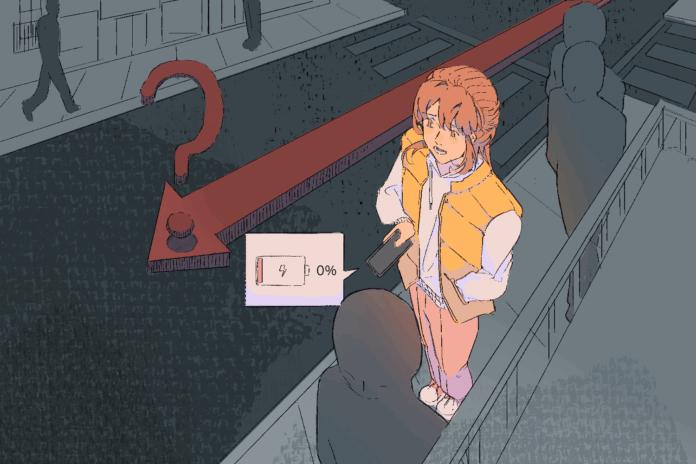
Despite living in a society lacking in street smarts, we are unable to manage by ourselves if our phones die or if the apps fail. This is not to disregard what technology has done for human progress; the primary intention of automation was to free our minds so that we could utilize our brains more efficiently. Ironically, what was meant to implore us to think more deeply and creatively is now eliminating our need for thought entirely.
What matters is understanding how to balance these tools of convenience without replacing human contribution entirely. Adapt and problem-solve amongst yourselves first; ask your search engine later. The very ease that makes things accessible also disallows you from feeling the discomfort that builds resilience and character. Observe, hypothesize and conclude until your brain hurts. Know what you’re doing and why. Being spoon-fed answers only gets you so far before you end up starved.
While convenience is useful, it cannot replace skill. Without exercising our wit, we cannot improve our craft in meaningful ways. The atrophying of our creative muscles might feel like a small price to pay in the face of convenience, yet the inability to think critically or be socially intuitive has made us reliant on both digital validation and automation.
Mourning the loss of street smarts doesn’t necessitate condemning convenience entirely; it only asks that we relearn independence for ourselves. The goal isn’t to ensure that we never receive help, but that we are not lost without it. So instead, write your essay without the use of a language learning model. Ask strangers for help, and, at times, offer it to others. Greet your delivery person at the door. While you might never have to wait in line at dawn for discounts, I would highly recommend doing so at least once — no pain, no gain.
Written by: Abhinaya Kasagani— akasagani@ucdavis.edu
Disclaimer: The views and opinions expressed by individual columnists belong to the columnists alone and do not necessarily indicate the views and opinions held by The California Aggie.