






Lower choline levels in the brain linked to anxiety disorders
This UC Davis study is the first meta-analysis to demonstrate a chemical pattern in anxiety disorders
By JOANNA ABRAHAM— science@theaggie.org
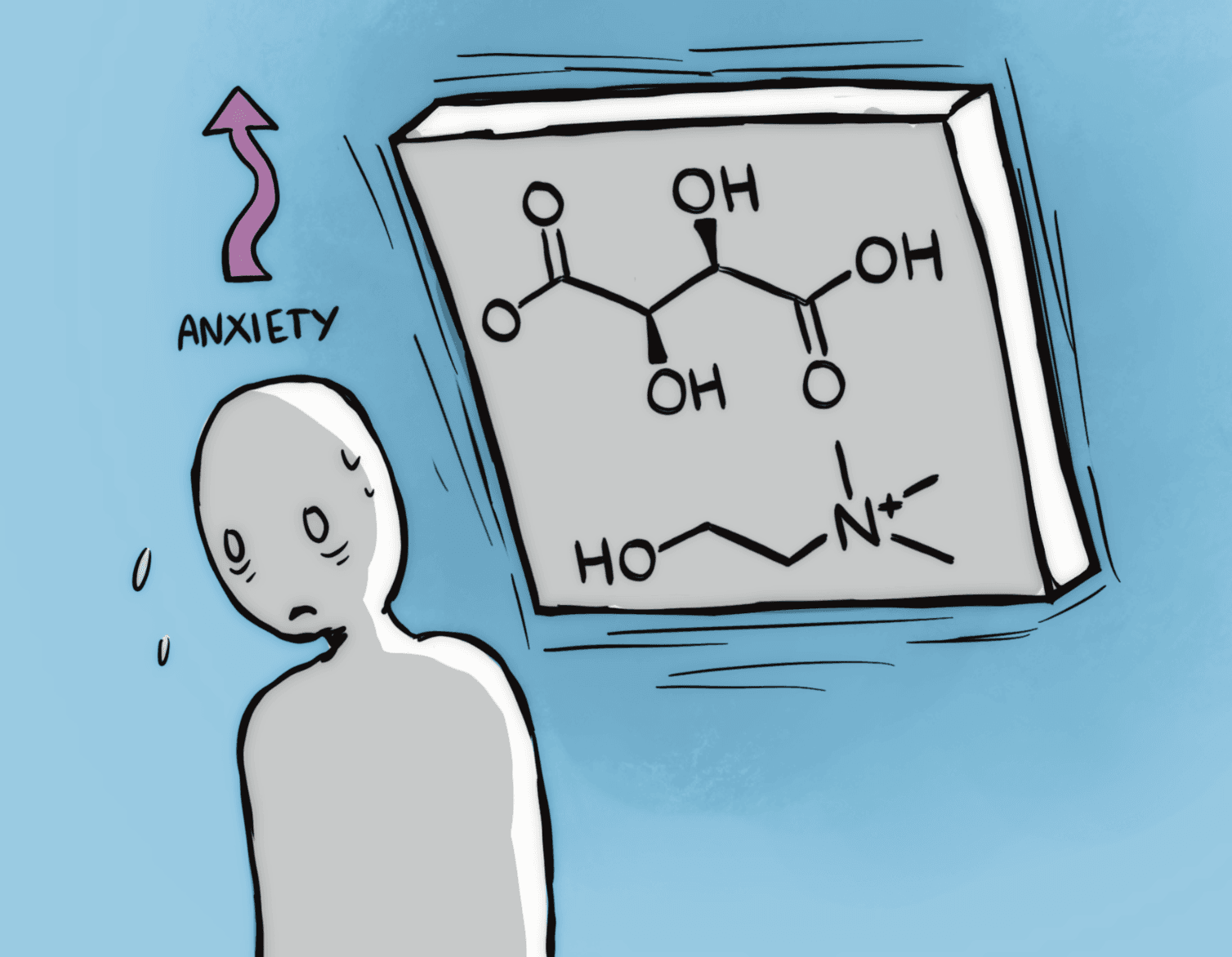
In a September 2025 study, UC Davis researchers linked low levels of choline, an essential nutrient, to several anxiety disorders — including generalized anxiety disorder, panic disorder and social anxiety disorder.
Generalized anxiety disorder, at the macroscopic level, is characterized by “excessive, ongoing anxiety and worry” that can “interfere with day-to-day activities,” according to Mayo Clinic. Social anxiety disorder demonstrates similar symptoms, but it is rooted in a fear of scrutiny or negative judgment by others. Panic disorder is characterized by frequent and unexpected panic attacks that are not linked to substance use or other mental health conditions. These attacks are often described as a “sudden wave of fear” and a “sense of losing control,” according to Mayo Clinic.
The UC Davis study, however, aimed to characterize anxiety disorders at a molecular level.
The study was a systematic review and meta-analysis (a study that collects and analyzes data from multiple existing studies) of 25 existing data sets on anxiety disorders; specifically those that used 1H-MRS, proton-magnetic resonance spectroscopy — an imaging technique used to identify metabolites (substances produced as a result of metabolic processes in the body) in neural tissue, such as choline, glutamate, GABA and myo-inositol.
The goal of the study was to identify patterns in the relative abundance and location of certain neurometabolites in patients, with and without anxiety disorders, using pre-existing datasets. A key finding was that choline levels were about 8% lower in those with anxiety disorders. This was especially observed in the prefrontal cortex, a region of the brain that aids in sustaining attention, making decisions and processing emotions.
“An 8% lower amount doesn’t sound like that much,” Richard Maddock, a co-author of the study and a professor of Psychiatry and Behavioral Sciences at the University of California, Davis, said in a press release. “But in the brain, it’s significant.”
Choline is an essential nutrient present in foods such as beef, eggs, soybeans, chicken and kidney beans, according to an article published by the National Institute of Health (NIH). It can also be taken as a dietary supplement. In terms of its function, choline is necessary in the production of two major phospholipids (phosphatidylcholine and sphingomyelin), which are a major component of the cell membrane, as well as acetylcholine, a neurotransmitter involved in several memory, mood and muscle contraction pathways.
Currently, anxiety disorders are understood in terms of two neural mechanisms, as outlined in the study’s introduction. The first is the prefrontal cortex’s inability to effectively regulate “threat” reactions in the limbic system and brainstem. The second is that lower threat and arousal circuits are amplified by the prefrontal cortex.
So, why monitor levels of choline? Measuring the levels of metabolites like choline in the brain provides insight into the processes that occurred to produce them. Because choline is necessary in the production of certain phospholipids (a part of the cell membrane), changes in choline levels reflect “changes in membrane dynamics or phospholipid metabolism,” according to the study.
“This is the first meta-analysis to show a chemical pattern in the brain in anxiety disorders,” co-author Jason Smucny, an assistant professor in the Department of Psychiatry at UC Davis, said in a press release. “It suggests nutritional approaches — like appropriate choline supplementation — may help restore brain chemistry and improve outcomes for patients.”
However, a definitive link between increased dietary choline intake and reduced anxiety levels has not yet been established; further research is still needed. Still, researchers hope that these findings can serve as the basis of treatments and interventions for anxiety disorders as a whole.
Written by: Joanna Abraham — science@theaggie.org