





Invisible artists: Curators handle the behind-the-scenes of exhibitions
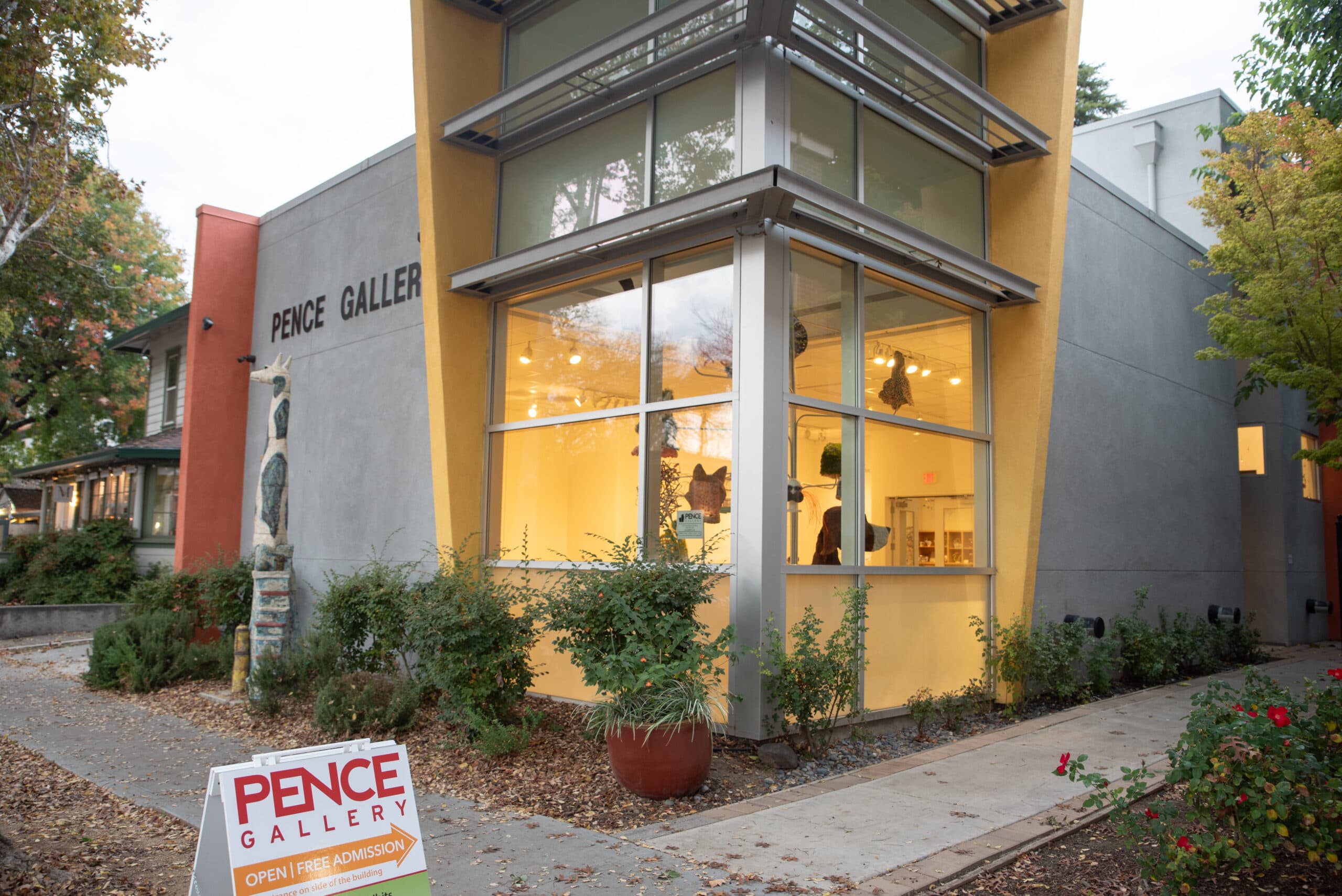
Pence Gallery Art Director and Curator Natalie Nelson shares the process of making curatorial choices
By IQRA AHMAD — arts@theaggie.org
On any given day at the Pence Gallery in Downtown Davis, visitors can encounter paintings exploring identity or sculptures made from unexpected materials calling attention to emerging or fundamental issues in society or the environment. What they may not realize is that each exhibition is the result of years of planning, collaboration and careful curatorial consideration.
For Natalie Nelson, art director and curator at the Pence Gallery, bringing art exhibitions to life involves more than just selecting visually beautiful, palatable pieces. Being a curator is about telling stories, fostering a dialogue among observers and creating a connection between the artist and the community.
“I feel like I’m trying to tell their stories as much as they’ve told me,” Nelson said. “Not everyone can make sense of a piece. Our job as curators is to give people the tools to engage with the work, invite them to ask questions and to present the work in a way that is engaging to the public.”
Nelson shares that her role exists in connecting an artist and their work to an audience. While artists create the work, curators shape how that work is experienced. From organizing artist talks to coordinating exhibitions, Nelson aims to translate creative expression into shared understanding.
Pence Gallery Artist Talks, which Nelson regularly hosts, are a vital part of that process. The gallery aims for these conversations to humanize artists, allowing audiences to engage directly with the ideas and intentions behind their work.
“I think you really get a good sense of where the artist is coming from, and because you can ask questions, it makes them seem more down to earth,” Nelson said.
These exchanges allow Nelson to determine what pieces to select when taking into consideration the interests and perspectives of individuals in the community.
“The art-going public is actually pretty sophisticated,” Nelson said. “We have a lot of students who are taking classes, a lot of people who travel, and they may not have a degree in art history, but they really ask questions and seem interested.”
When artists bring their work into the Pence Gallery, Nelson works alongside them to determine placement and selection. Sometimes, unexpected pieces become central to the exhibition.
“One artist brought in this painting I had never seen before, and it was really gorgeous,” Nelson said. “He didn’t think it really went with the show, but not only did we find a place for it, it became a key part of the show.”
Curators must also narrow selections to ensure exhibitions feel cohesive and visually engaging. Nelson intends to balance artistic goals and visions with audience experience.
“I’m always balancing what the artist wants to say about their work […] and how the Pence [Gallery] wants to appear community-centric,” Nelson said.
These decisions are not made alone. At the Pence Gallery, exhibitions are reviewed by a committee and planned up to two and a half years in advance, reflecting the level of thought and intention behind each show.
A crucial part of Nelson’s work involves finding artists to showcase at the gallery. This often means visiting studios, attending local exhibitions and staying attuned to new artists.
“I make a lot of studio visits,” Nelson said. “Emerging artists are my favorite kind, because you can be emerging at any age. So many artists are extremely talented and really haven’t had the exposure.”
Sometimes, these discoveries happen unexpectedly. Nelson recalled encountering an artist, Gregory Shilling, whose work in oil painting and graphic design immediately impressed her.
“I saw his work and knew he needed a full show,” Nelson said. “He was incredibly talented but just hadn’t had the opportunity yet. He was even more amazing than I knew.”
While curating is deeply creative, it also involves logistical and financial realities. Budget constraints, staffing limitations and physical space all shape what is possible for an exhibition.
“There are times when an artist has a vision that’s bigger than what we can physically or financially support,” Nelson said. “It becomes a conversation about how to adapt to those ideas while preserving their intent.”
Nelson has spent more than two decades at the Pence Gallery, but her curatorial skills developed gradually. Early in her career, she focused on community-based shows; over time, she grew more confident in pursuing exhibitions with individual artists.
One exhibition she is most proud of, “Seastruck” by Mitra Fabian, explored ocean ecology and climate change, incorporating unconventional materials such as a piece of plastic from the ocean.
“It was the first time I really took a risk and said, ‘this is important,’” Nelson said. “The exhibition had paintings, ceramics and installations. It wasn’t just about beautiful paintings. It was about ideas.”
Taking risks, she explained, is essential to curatorial practice.
“You learn that part of your job is to say, ‘This matters, this is worth showing,’” Nelson said.
For Nelson, the true measure of a successful exhibition is not attendance numbers or sales, but the response it elicits among observers.
“People told me the show [‘A Place in Mind’] made them cry,” Nelson said. “The artist, Jose Arenas, has such a poetic and beautiful way of showing the immigrant experience, especially with his own connection with his family. It made people reflect on their families and their own lives. That’s when you know the work has really connected.”
Nelson hopes students and community members continue to see the Pence Gallery as a welcoming space for reflection and discovery for years to come. Currently, the gallery is hosting “When They Reminisce Over You” — a solo exhibition by Chicano Artist Manuel Fernando Rios — which will be celebrated via an Artist Talk on Feb. 21 at 2 p.m. Visitors can also view “Charlene Will: Here for A While” until Feb. 28 and “Maris Kaplan: Amateur” until Feb. 18.
“We’re free, and there’s always something new,” Nelson said. “It’s a place where you can take a break, experience something different and let your mind open.”
Written by: Iqra Ahmad — arts@theaggie.org