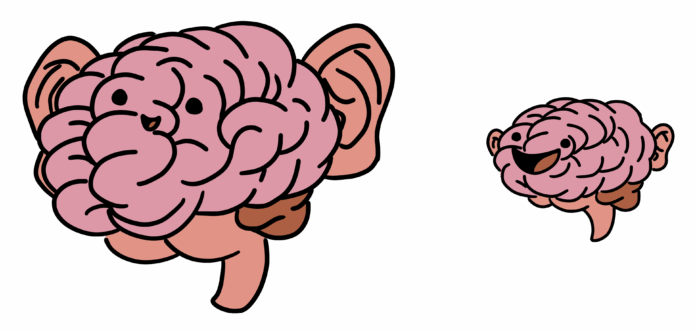
Exploring the toxicity of intellectual prejudice
By VIOLET ZANZOT— vmzanzot@ucdavis.edu
I’ve never understood the true definition of “smart,” and yet, I can certainly say that I’ve spent too much time feeling dumb. It’s this weird, ambiguous feeling — to feel a certain way about your own intelligence — because, while it shouldn’t be, it can be such an emotional experience. If your brain is a separate entity from your heart, why can thoughts hurt so badly?
The pain that comes from feeling dumb is interesting to me. It echoes the expression: “The opposite of love is not hate, it is indifference.” I don’t think the opposite of being smart is being dumb, but is it indifference?
I first asked myself this question (I will pose it to you now) as I was thinking about a boy I liked. Our forms of intelligence are very different, so I was pondering whether or not he and I would be compatible. I had chatted with him earlier that evening, and I remember him claiming that he isn’t as smart as me — that he doesn’t know as much as I do. I found this odd, considering I wouldn’t even be confident saying that I’m the smartest person in an empty room.
This is the question I asked myself later: Does having the conscious awareness to consider our own intelligence inherently demonstrate some kind of intelligence to begin with? In other words, does wondering exactly how smart we are indicate that we possess a certain level of intelligence?
I certainly tell myself that thinking “I’m dumb” actually means I may not be; and, whenever I feel completely lost — I think “you can’t be found if you don’t know you’re lost, right?”
I like to think that this self-reflection means something, especially considering that the real problem with self-imposed intellectual inferiority is that it involves multiple levels of perception. Beyond how we perceive ourselves, we often consider how we perceive others, how we assume others perceive us, how others actually perceive us and then how others perceive themselves. It’s a lot to read on paper, let alone process that this is how the world works. We lose empathy in the conversation around being “smart” because of these many levels of perception.
In my short time studying abroad, I’ve already noticed that Americans have a tendency to, as they say, “stick out like a sore thumb.” I am in London right now, and it’s painfully obvious that the rumors are true — we don’t come across as the brightest bunch.
This is probably the main reason why this topic has recently been at the forefront of my mind: to be perceived as less intelligent because of the prejudice associated with my accent has certainly been thought provoking.
Misjudgements are ignorant because they lack empathy. Empathy, it seems, is a key aspect of intelligence. If we cannot understand the language of someone else’s thought processes, any assumptions about their intellect may as well be errors in our own translation. It is foolish to assume our own knowledge is greater than others because they think in a language we are unable to understand.
Written by: Violet Zanzot— vmzanzot@ucdavis.edu
Disclaimer: The views and opinions expressed by individual columnists belong to the columnists alone and do not necessarily indicate the views and opinions held by The California Aggie.