What women love, the world will hate — that is, until they love it
By VRITI SHAH — features@theaggie.org
The music industry has dominated popular culture for centuries, from iconic artists like Elvis Presley, The Beatles and Michael Jackson to newer artists like Justin Bieber, BTS and Harry Styles.
As these artists achieved their claims to fame, they all shared one thing in common: women. Each of their fanbases are significantly dominated by women.
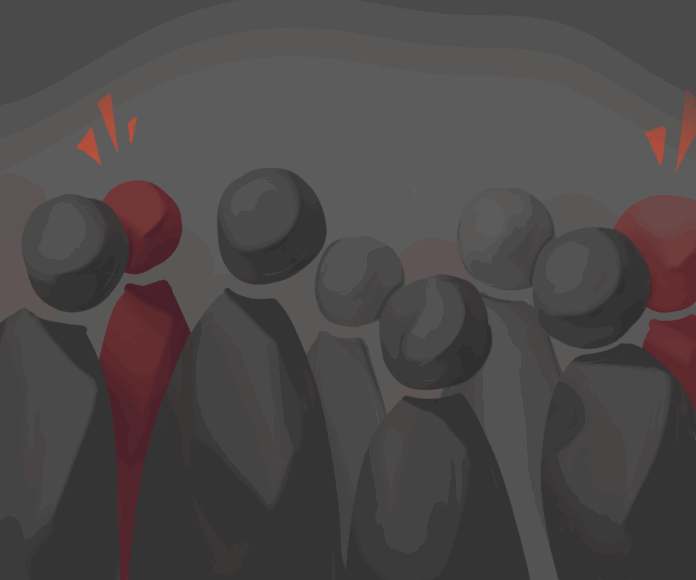
However, as quick as women are to join fanbases of many upcoming popular artists, the media is equally as quick to shame them and categorize their “fangirling” into “obsession.”
“Specifically, females tend to identify with many of the more marginalized fandoms, while males comprise a fair amount of the more socially accepted groups,” an article from the New York University’s Applied Psychology Opus reads.
Lucia Holmboe, the co-director of events at Partridge Records, a local music store in downtown Davis, commented on the judgement women face for their music choices.
“Today, women are still getting made fun of for their interests, musical or otherwise,” Holmboe said. “Some of the most popular musicians of our day — like One Direction, BTS, Taylor Swift and more — are looked down upon and not seen as being ‘real music’ due to having a predominately female fanbase, despite any of their successes or achievements. If these same artists had predominantly male fanbases, I’m almost certain they would be taken much more seriously.”
When the Beatles were first rising to fame, it was predominantly women who cheered them to their peak. However, before the Beatles had established their right to fame, women were ridiculed for fangirling over the band, hence creating the term “Beatlemania.” Now, looking back at the Beatles’ career, most would agree that their fame and quality of music is a no-brainer. In fact, many think of the Beatles as “certified dad rock”: providing a masculine, classic edge to the band.
It’s even become a common phenomenon for male Beatles fans to “test” the knowledge of a female Beatles fan.
“Personally, as a female Beatles fan, I’ve had men of all ages question whether or not I was a ‘real’ fan and question my knowledge, just because I am a woman,” Holmboe said.
Another, more recent, example of misogyny toward women in music fandoms can be found in Taylor Swift fans, also known as “Swifties.” For decades, Taylor Swift fans have been ridiculed, harassed and stereotyped for enjoying her music.
“It is especially harmful to young girls, as we are teaching them to be ashamed of their interests and expressing themselves,” Holmboe said. “This can have a larger impact later on in life, over time making them apprehensive to express themselves on various matters throughout their lives. We should be celebrating all women and their passions, and teaching young girls that it is a good thing to express yourself, about music or otherwise.”
In fact, Swifties were ridiculed online for their excited behavior at Taylor Swift’s The Eras Tour, with online critics comparing the noise to that of an “exorcism.” Comparably, when sports fans — a widely accepted “more masculine” fandom — are screaming at athletic games, they are praised as a reason for a team’s win.
“I think that girls being excited over music isn’t a crime,” Mia Hadrich, a first-year environmental policy analysis and planning major, said. “I think that it’s something that needs to be celebrated. And, no matter what music it is, you’re always going to have very joyous and happy people at concerts [and things], especially at Taylor Swift concerts.”
For many, this may call into question why we’re seeing this backlash toward female fandoms in the music industry to begin with.
“There’s historical precedent that I think can inform us [on the backlash Swifties face for screaming at concerts] if we look at like, have you heard of, hysteria?” Sarah Elizabeth McCullough, the associate director of the Feminist Research Institute, said. “Around the early 1900’s, [women] would sometimes get labeled hysterical — this was a medical diagnosis that could be many things, but [was] oftentimes kind of mapped onto women not really fitting into social norms and expectations […] While we don’t necessarily have that [hysteria] as a medical diagnosis anymore, I think that the legacy is still with us.”
McCullough continued to describe the medical diagnoses of hysteria towards women portraying emotions.
“We still often deem women who are having an excessive emotion as hysterical — in other words, there’s something wrong with us,” McCullough said. “[Saying that] this is not a ‘natural outpouring of emotion’ ridicule[s] and pathologize[s] [women] and, you know, that includes women’s pleasure, passion, excitement over music.”
McCullough also called for the importance of reflecting on our past to create a change in our present.
“One of the most important things that we can do is to understand how the present moment is informed by the past, particularly by histories of oppression,” McCullough said, “That historical element [is] helping us to understand, like, ‘Oh why is this happening now?’ […] It’s because we haven’t actually fully dealt with our past. We haven’t fully dealt with biases of the past that are still impacting our present.”
Written by: Vriti Shah — features@theaggie.org