And why it isn’t
By MOLLY THOMPSON — mmtthompson@ucdavis.edu
I was talking to my mom the other day, driving home from my hometown gym.
“I just can’t do the things I used to be able to do,” she told me, frustrated. “It’s like, no matter how hard I try or how much effort I put into it, I can’t seem to run as fast or do as much as I could do a few years ago.”
Her observation is true; with age and time and all the other complicated factors of life, we all find ourselves faced with the harsh reality that what we were once able to accomplish easily now seems out of reach. As we grow, we change. But that’s the operative word: change. It’s all too easy to feel that just because things are different, they’re inherently worse — but that’s not necessarily true.
We often see changes as losses; when something in our life shifts, we harp on what we’ve had to let go of as a result. We mourn what we used to have, what we used to be able to do or how we used to feel before something changed — our childhood friendships fade when we leave for college, we don’t read or spend as much time outside as we did when we were kids, our grades are lower than they were when we were freshmen and it’s harder to sprint than it used to be.
But what we’re overlooking is that change is not intrinsically bad. Yes, we often lose aspects of our life over time, but we can’t ignore the fact that we gain just as much, if not more. Maybe our childhood friendships fade because we’ve made so many more incredible connections in college, bonds that we wouldn’t trade for anything in the world. Maybe we spend less time outside or reading books than we did as kids because we’re busy doing other things that fulfill us in different ways. Maybe our grades dip a little as upperclassmen because we’re more involved in clubs and internships than we were a few years ago. It might be harder to sprint than it used to be, but maybe it’s easier to run longer distances. Change comes with loss, but what we gain is often worth the sacrifice.
For some people (like me) it can sometimes be hard not to think of changes exclusively as bad things. I worry if relationship dynamics feel different than they used to and I tend to think that operating differently or prioritizing different aspects of my life than I once did is a failure. But the truth of the matter is that being different isn’t always negative; it doesn’t mean things have taken a turn for the worse. In fact, I’ve found that more often than not, change is more of an indicator of growth than decline.
My relationship dynamics might be different simply because people change over time, and relationships change with them. Change is growth — it can mean we’re growing closer, not farther apart. It can also be neutral; it doesn’t have to be good or bad, things can just be different. It’s not a failure to prioritize different aspects of my life than I once did, it’s a product of learning. It doesn’t mean I’m backsliding — if anything, it’s something to be proud of.
The real failure would be if we never allowed ourselves to change. If we hold on too tightly to the way things are just because they’re familiar or comfortable, we’ll never grow. Life is not stagnant, at least not if it’s worthwhile. C’est la vie.
My mom, in her frustration over her inability to run as fast as she used to be able to or do as much as she could when she was younger, was forgetting all of the things that she can do now that she never used to be able to. Of course her disappointment is valid, but it shouldn’t discount her pride in the abilities she’s gained over the years as well.
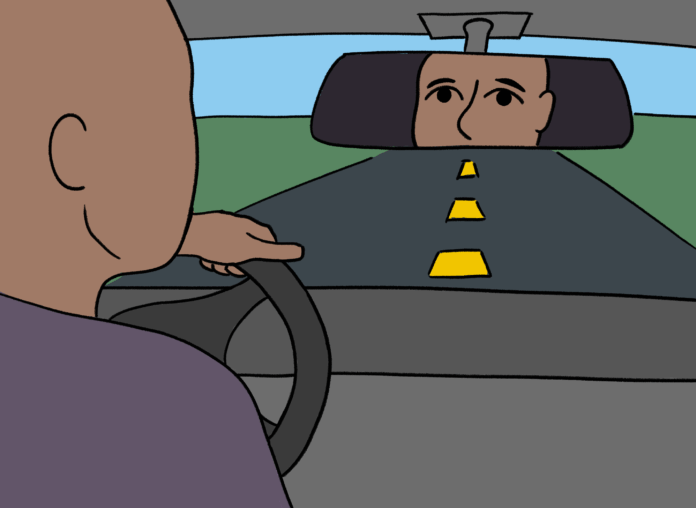
Accepting changes can be difficult, and it’s okay to miss the way things used to be. At the same time, it’s just as important to appreciate all of the beauty in the way they are now, even if they’re different than they were before. Take your eyes off the rear view mirror — you’re missing everything you can see through the windshield.
Written by: Molly Thompson — mmtthompson@ucdavis.edu
Disclaimer: The views and opinions expressed by individual columnists belong to the columnists alone and do not necessarily indicate the views and opinions held by The California Aggie.