55.5 F
Davis

Davis, California

Tuesday, December 23, 2025
Home Blog Page 103

UC Davis women’s track and field takes home third in MPSF Championship

The win brought about many new Aggie medals and personal bests 


By CAROLYN (CARI) FENN — sports@theaggie.org


The UC Davis Women’s Indoor Track and Field team recently traveled to Spokane, Washington to compete in the Mountain Pacific Sports Federation (MPSF) Championship. After the extensive two-day competition, the Aggies ended in third place, falling just behind Long Beach State and the University of Hawaii with 108.33 points. 

One of the strongest performances for the Aggies came from Brianna Weidler, a third-year animal science major, in the 3000m and 5000m runs. In the 5000m, she placed first, recording a time of 16:21.38, with the next person coming in 10 seconds later with a time of 16:31.81. While Weidler didn’t get her personal best in the 5000m, she still finished strong with a first-place finish.

Weidler also dominated the 3000m with Madison Kackley, fellow Aggie teammate and second-year undeclared major, coming in right behind her. Weidler set a new personal record in the 3000m, finishing with a time of 9:21.00, which beats her previous 9:34.27 time. Weidler came out with another first-place finish, and Kackley received the second-place title with a time of 9:40.83

Weidler’s performance this weekend comes as no surprise as she has been setting new records throughout her time in Davis on both the cross-country and track-and-field teams. At the Husky Classic in Seattle, just a few weeks prior, Weidler achieved a personal record and set a new school record in the 5000m. Previous to the Husky Classic, Weidler beat the record for the 5000m in December 2023 at the Sharon Colyear-Danville Season Opener.  

Although Weidler gave a strong performance at the tournament, she wasn’t the only one of her Aggie teammates to reach the podium. In the other running events, Kackley won first in the women’s mile with a time of 4:52.30

The Aggies also placed third overall in the 4×400-meter relay with a season-best time of 3:46.66. The relay team consisted of Cierra Kinsey, a first-year cell biology major, Alexys Ford, a fifth-year psychology major, Janae Oneal, a fourth-year sociology and organizational studies major and Maya Shinnick, a second-year undeclared major. 

In the field events, many Aggies reached the podium. Jayme Hendrickson, a third-year neurobiology, physiology and behavior major, placed first and set a new season best in the indoor pentathlon high jump with a 1.68m jump. The difference between a pentathlon high jump and a normal high jump is that the athletes have to partake in four other events during that same day: the pentathlon 60m hurdles, 800m, long jump and shot put. While Hendrickson didn’t place as high in the other events, her performance in the high jump is an impressive feat with the schedule she had that day. 

In the standard women’s high jump event, Elizabeth Churchill, a second-year human development major, placed second with a new season-best record at a height of 1.68m. Like Churchill, Kerrington Smith, a fourth-year pharmaceutical chemistry major, also placed second in her event, the triple jump, with an impressive distance of 11.88m. Additionally, Kylee Davis, a second-year African American studies major, placed third in the long jump with a jump of 5.82m

In the weight throw, Ashpreet Kler, a third-year molecular and medical microbiology major, claimed the first-place title with an 18.72m throw. The second-place thrower didn’t come close to Kler’s score, with a distance of 17.76m, giving Kler a secure 0.96m lead.

While not every one of the Aggies medaled in their events, some of them achieved new personal or season bests. Even though Oriana Jalal, a fourth-year NPB major, did not medal in the 800m — placing 10th in the race — she accomplished a season-best record of 2:16.81. This also occurred with Chloe Arriaga, a fifth-year NPB major, who recieved 10th place in the women’s mile, achieving a record of 5:03.04, which is less than half of the average woman’s mile time of 10:37.

The last runner to achieve a new personal best was Hope Bergmark, a third-year undeclared major, who finished in fourth place in the 5000m. She completed the event with a time of 16:48.64 and a new season-best record. 

Looking now at the field events, three other Aggies achieved new personal or season bests. In the high jump, Lauren Spellman, a third-year environmental science and management major, achieved a new season-best record with a 1.63m jump, taking home fifth place in the event. Aiza Sarwar, a second-year NPB major, took home a season-best record in the triple jump event. Sarwar finished in 12th place with an 11.24m jump, beating out her previous 11.17m season-best record.

The last stellar performance of the meet came from Hailey Hernandez, a second-year sustainable agriculture and ecology major, who set a new personal record in the weight throw. She finished fifth in the event but threw a distance of 17.34m, beating her previous personal best of 17.25m.

By the end of the tournament, three Aggies appeared on the MVP report. Weidler was tied for second overall (meaning of all men and women who competed) with three others from the tournament. She also achieved second place in females overall and first place for females in the track event. In both of her second-place finishes, she was behind Long Beach State third-year Hailey Fune, who had competed in more events than Weidler and, as a result, claimed the top spot.

The two other Aggies that placed in the MVP report were Kackley who placed second overall in the female track list and Kler, who tied for second with five others in the female field list. 

Next, the Aggies will compete in the NCAA Championships in Boston, Massachusetts on March 8 and 9. While the indoor track-and-field season will be coming to an end after this upcoming tournament, the Aggies will be immediately jumping into their outdoor track-and-field season. Although it’s hard to predict how the Aggies will perform in the outdoor season, if the indoor season has shown anything, there are some stars to keep an eye on.


Written by: Carolyn (Cari) Fenn — sports@theaggie.org

Whole Earth Festival set for May 10 to 12 with the theme, ‘Can You Dig It?’

As the event approaches, student representatives discuss the relation of the theme to sustainability and opportunities for volunteers


By AALIYAH ESPAÑOL-RIVAS — campus@theaggie.org


The Whole Earth Festival (WEF) is scheduled for May 10 to 12 at the UC Davis Quad. Composed of student art, education, food booths and live music, the free event aims to teach attendees about sustainability. The festival is open to both UC Davis students and the public. 

According to the official website for WEF, the festival started as a small art class project that taught visitors about activism, wellness and environmental sustainability. Since the establishment of Earth Day in 1970, the project has evolved into a fully student-led event hosted during Mother’s Day Weekend. 

This year’s theme is, “Can You Dig It?” — a theme chosen to call people toward the event’s message: sustainability, according to Katherine Krinsky, a third-year English major and logistics coordinator for WEF. 

“When we were deciding the theme, we talked about how it’s calling people to be inclusive,” Krinsky said. “It’s like, can you get with the messages and core values of the festival, which at its core is sustainability.”

The event itself is zero-waste, with a team of student volunteers to help with the various sustainable practices that the event upholds. According to Alex Ikuma, a third-year physics major and chaos control coordinator for WEF, there are many different groups students can volunteer in to help during the festival.

“We have the Whole Earth Reusable Cooperative [WERC], where students help transport our reusable dishware to a dining common to wash,” Ikuma said. “Students can participate in the Compost and Recycling [CNR], helping sort the compost and recycling during the event.” 

In addition to WERC and CNR, students can help watch booths for vendors, manage the flow of vendors coming in and out of the event or volunteer to help at a student booth. Sarah Glick, a third-year political science major and coordinator for the kids’ space at WEF, wants to provide a fun educational experience for children at her booth. 

“Festivals usually have a lack of child-friendly environments,” Glick said. “I want to take an educational route to teach kids about sustainable actions and caring about the earth.”

Glick hopes to achieve this by having the Davis Library promote library cards and bringing the local non-profit, Farm to Fork, to teach about healthy eating. Additionally, Glick plans to host crafts and activities for both children and families to enjoy. 

While the festival is still underway as plans are finalized, coordinators are excited for the Davis community to experience the event. 

“I’m excited to see it all come together for the community,” Krinsky said. “It’s magical to watch it all happen so well and quickly; one day, you’re in the quad, and two days later, you’re in a festival.” 

Looking towards the future, students interested in volunteering can check out the WEF Instagram (@wholeearthfestival) for updates and interest forms. Although students may be intimidated by the commitment of volunteering, Ikuma hopes students will see the opportunity with optimism.

“I think it scares students when they hear they have to commit and volunteer; they think it will be intensive work,” Ikuma said. “But we hope those who volunteer see the opportunity as rewarding, seeing the festival happen and knowing you directly contributed to it.” 


Written by: Aaliyah Español-Rivas — campus@aggie.org

What is concert etiquette and why is it dying out?

Students and experts share their thoughts about social norms and rules for live shows 


By SABRINA FIGUEROA — features@theaggie.org 


After the COVID-19 pandemic shut concerts down, live music has finally made its full comeback with several major artists including Beyoncé, Taylor Swift and Harry Styles touring the world again. However, people are beginning to notice that something about concerts has changed. 

In the past year, fans at concerts have been throwing objects — or “gifts” — on the stage, sometimes hitting the performers. For example, singer-songwriter Bebe Rexha was hit in the head by a phone last July and had to be rushed off stage to the hospital. Other times, these alleged “gifts” simply overstep the boundaries the artists have with their supporters, such as when a fan at Pink’s concert threw their mother’s ashes on stage. 

The odd behavior doesn’t stop there. Sources have reported excessive shoving inside and outside pit areas, people constantly obstructing others’ views by trying to film the artists and repeated disrespectful shouting at the performers. Most recently, this phenomenon was seen at multiple Mitski concerts where fans yelled the phrase, “Mother is mothering,” even after the singer expressed discomfort with it.

Mallory Erickson, a third-year English major, shared another incident she experienced with other concertgoers.

“I went to a concert back in November that was in Oakland, and I just remember getting weird looks for singing along to the songs and dancing,” Erickson said. “I was so caught up in trying not to be so loud or distracting that it made [the concert experience] kind of unrewarding. It felt so competitive when it’s not supposed to be.” 

People are beginning to mark these shifts in behaviors as the “death of concert etiquette.” Concert etiquette is a set of unwritten rules and norms that are expected of people attending musical performances to ensure a safe and comfortable environment.

Frequent concertgoers and experts have tried to explain the etiquette’s decline, suggesting that it may have been due to the COVID-19 pandemic. 

Jessica Preciado, a first-year evolution, ecology and biodiversity major, offered her experiences at post-pandemic concerts. 

“[After the pandemic], something I have noticed — and not just at concerts but at, like, grocery stores too — is that people don’t really mind for the space of others or they feel entitled to things,” Preciado said. “It’s like we forgot how to socialize with people we don’t know.” 

Lucy Bennett, a lecturer at Cardiff University with expertise in the relationships between musicians and fans, explained that the pandemic shutdowns deprived younger audiences of properly learning the “correct” way to act at concerts. 

“It seems that, for some individuals, the notion of being there at a gig equates with physical participation, whether that is throwing something or screaming or engaging in a ‘stampede’ in a crowd,” Bennett said. “There is a strong re-centering here of a live, physical event — an almost frantic grasping of a live moment by a crowd that has not been able to attend live gigs due to lockdown.” 

It is also possible that the decline of concert etiquette may be a result of the overuse of social media, such as TikTok. Young audiences have grown accustomed to seeing videos of spectacles reach a massive like count or following simply for the content being funny or entertaining, and now they want to do the same thing. 

“People always say, ‘You can get famous on TikTok for anything, it’s so easy to get views and followers!’ and I feel like people try to do and record the craziest or funniest things at concerts to get the attention of others and go viral; especially since now you can become an influencer and get paid to post on social media,” Preciado said. 

Bennett expressed the same sentiment and added that it has to do with both social media and parasocial relationships between the artists and their fanbases. These relationships are one-sided, where closeness is falsely believed to exist between a fan and a celebrity. 

“Some fans experience a parasocial relationship — a sense of knowing their favorite musicians — even when they are one amongst potentially millions that follow the artist. This is then where a live concert can play a strong role,” Bennett said. “The artist is physically there in front of the audience, and there is a visible chance for a fan to be noticed, to attempt to make themselves more distinct in a sea of other fans, if only for a moment — yet a moment that can be immortalized on social media and shared with many fans online.” 

Erickson also shared some unwritten rules she follows at concerts and thinks others should, too. 

“To be honest, I would say to just be nice to the people around you and also follow basic hygiene routines,” Erickson said. “It’ll make you and others enjoy the experience so much more.”

Preciado listed other examples of concert etiquette 

“For one, I think people should be more conscious about shoving because it could create a dangerous situation,” Preciado said. “I also think people should be careful about smoking in indoor venues just because you never know who could be in the crowd [such as] immunocompromised people or asthmatics.”

Regardless of whether you agree or not, concert etiquette has been found to be an important part of fan culture and creating an enjoyable environment at a live show. It can help foster a sense of community between fans and help with safety. 

“[Recently], it’s been brought to light how a lot of people will faint or fall down because of how rough people are in the pits, ending up with them getting trampled and even dying,” Erickson said. “I think we need these rules to remind us to be careful and mindful of others.” 


Written by: Sabrina Figueroa — features@theaggie.org


Meet the Aggiemation Eggheads

UC Davis’ beginner-friendly animation club welcomes creators of all experience levels


By SAVANNAH BURGER—arts@theaggie.org


Established in 2021, Aggiemation Eggheads is a workshop-based club that invites students of all experience levels to learn how to animate and work on animation projects here on campus. Any student can join and learn how to work with countless mediums of animation, including stop motion, two-dimensional digital programs, rotoscoping and traditional line work. No experience in any type of art, including drawing, is required to join the club and learn how to animate. In fact, the vast majority of members this quarter are STEM majors, with arts and humanities majors being a minority. 

While previous years have focused on members’ personal projects, the club has established a new system for this year and those following. Instead of smaller individual projects, the whole club is working together to create one short film that will be completed and ready for presentation by the end of the 2023 to 2024 school year. This approach is centered on teaching newcomers how to animate with a “learn-by-doing” model. Fall quarter has been spent working on everything that has to do with pre-production, winter quarter will tackle the actual animation and spring quarter will focus on post-production.

“Before, we were trying to put out a project per quarter, which is just really not enough time for development, writing and animating,” Emma Mitchell, a third-year English major, said. “So now, we’re spreading that over an entire year. It’ll be nice to not be on a time crunch.”

Mitchell has been a member of Aggiemation Eggheads for a year and is the creator of the original pitch of this year’s project. The short film, which is yet to be named, is a multimedia animation featuring both two-dimensional digital and stop-motion animation. The film is geared to be a post-apocalyptic, supernatural yet heart-warming story. When Mitchell pitched this idea for the club’s short film, which was ultimately selected by a majority vote from the other pitches members made, she wasn’t sure hers was going to make it.

“I was honestly so nervous to do my pitch. Especially because it was so unlike everything else that was being pitched,” Mitchell said. “But everybody was so sweet and kind, and I appreciate that somewhere like this exists on campus.”

Nathaniel Yi, a first-year undeclared major, is a brand-new member of the club. Yi enjoys what the club has to offer, especially the aspects of character design and collaborative brainstorming. Because of his participation, he’s leaning toward declaring himself as a cinema and digital media major. Yi encourages other students to be a part of the club.

“You don’t really have to know anything,” Yi said. “You don’t have to have any animation or filmmaking experience at all.”

Students interested in the club can join at any point of the school year. Each meeting begins with a recap of the previous week’s progress, followed by a half-hour-long workshop. The workshops focus on a different aspect of animation production every week, which varies from animating techniques some weeks to writing and sound design other weeks. In addition to this, the club also hosts occasional guest speakers. In the past, speakers from animation studios such as Pixar, Laika, Nickelodeon and Marvel have been invited, all with the intent of giving members an opportunity to network within the animation industry. 

“Aggiemation is a place to find people that are passionate about the animation industry in the same way that you are,” Merritt Hill, a fourth-year art studio and cinema and digital media double major, said. “It might be a starting point of someone’s career.”

Hill is a co-president of the club this year and has been a part of Aggiemation Eggheads since the club has been established. They are exceedingly proud of how the club is operating this year and stress how important the club is as an outlet for students’ creativity.

“I don’t want people to feel like they’re barred from joining the creative industry just because they didn’t have enough money to pay for art school,” Hill said. “I want people to feel like at Davis, they can harness their education towards what they’re passionate about. I want Aggiemation to be a part of that.”

You can find Aggiemation Eggheads by attending their weekly meetings in Wellman 201 between 6:30 p.m. and 8 p.m. on Mondays.

Written by: Savannah Burger — arts@theaggie.org

California’s creepiest cryptids

Six mysterious creatures you may meet in the golden state 


By SAVANNAH BURGER—arts@theaggie.org


Across the country, there have been numerous reports of mysterious animals, creatures and human-like entities stalking around both rural and urban areas. Some of these sightings date back hundreds of years, with creatures matching accounts of old Indigenous stories still being reported to this day. A number of the most obscure and iconic of these cryptids can be found in our beloved state, California.

California has witnessed the sight of many creatures that have scared the wits out of its inhabitants. While some cryptids have been sighted more than others, no one can deny that each one would be horrifying to see in person. Whether they creep around forests, neighborhoods or even lurk in the depths of lakes, it seems that Californians can walk straight into an unidentified creature at any turn.

To start off, one cannot talk about the cryptids of California without mentioning the quintessential behemoth himself: Bigfoot. While Bigfoot creatures have been featured in various stories and visual depictions for hundreds of years in multiple countries, there has been an especially dense record of spotting this big guy in the Pacific Northwest and especially so in California. 

Bigfoot was popularized following the 1967 Patterson-Gimlin footage of a bi-pedal creature (thought to be Bigfoot) walking across a clearing in a forest located in Willow Creek, California. Although there is major discourse over the validity of the film, it is still unclear whether the mysterious film is a hoax or not. 

As Bigfoot has been majorly popularized and used in marketing in the last 50-or-so years, it’s more than likely that a lot of reported sightings are hoaxes. However, there are many people that swear by their accounts, fear Bigfoot with their lives and go so far as to suggest that there are actually multiple sasquatches, Bigfoot simply being one of many. Whether you believe this or not, be vigilant the next time you go camping.

Another group of cryptids that are known from their cameo on camera are the Fresno Nightcrawlers. First spotted in 2007 on a CCTV camera monitoring a Fresno resident’s home, the Fresno Nightcrawlers are depicted as tall, white, disembodied pairs of legs that come down to a singular point; no feet. In the footage, they slowly and silently walk across the field in front of the security camera. Nobody has debunked this video yet, and the nightcrawlers were spotted again on camera in 2011 in Yosemite National Forest. Are they aliens? Inter-dimensional beings? Nobody has figured it out yet.

On the scarier side of things, not many have heard of the California Dark Watchers. Lurking around the Santa Lucia Mountains that run through Monterey and San Luis Obispo Counties, the dark watchers are pitch-black, humanoid figures that are dressed in cloaks and wide-brimmed hats. They appear between the late afternoon and sometimes even twilight. Known to stay stationary on mountaintops, they also stalk hikers. There’s been accounts written by Spanish conquistadors in the 1700s, describing them as “los vigilantes oscuros,” which directly translates to “the dark watchers.” Watch out for them on your next hike.

Another well-known cryptid, the Tahoe Tessie, is like the Lake Tahoe version of Loch Ness’s “Nessie” in Scotland. There have been sightings of the large, black, serpentine creature since the 1950s, with some sources claiming that lumberjacks recounted seeing the beast in the early logging days of California during the 1800s. Many suspect Tessie lives in an underwater tunnel beneath Cave Rock. 

Although many still believe in the slippery serpent, UC Davis’ Tahoe Environmental Research Center insists that the serpent is not real. Charles R. Goldman, professor of limnology and zoology who founded the university’s Tahoe Research Group, determined that the creature could very well be something like a 1,500 pound sturgeon, or simply the effects of pareidolia, the tendency to perceive something meaningful from abstract visual patterns. The possibility of Tessie’s existence still isn’t zero, though.

Driving through Southern California at night? You may want to be cognizant of what could be prowling along the road. The Riverside Monster has been reported seen around Riverside, complete with inhuman tallness, long limbs, no nose, a large, gurgling mouth and glowing eyes. 

First spotted at night in 1958 by a man named Charles Wetzel, he described speeding away from it and immediately reporting it to the Riverside police. Although there haven’t been many other sightings since, some theorize that the Riverside Monster is either an undiscovered species, an alien or simply a vulture that was wildly misconstrued.

Finally, the west coast’s take on the famous Jersey Devil. The Lone Pine Mountain Devil, presumably located in the eastern Sierras, is a winged, bat-like flesh-eater that was allegedly first seen in the late 1800s by a group of Spanish settlers.

 According to their story, there were multiple devils that flew around and brutally attacked the group. This flying creature is believed by some to be a guardian of the area, targeting those who disrespect nature or trespass on their territory. Truth or hoax, it’s still a scary thought for those traversing the Sierras.

Whether it be frightful true stories or tall tales, the urban legends of California cryptids are quite intriguing, at the very least. Whether you take people’s accounts seriously, it’s not outside the realm of possibilities that something science has not identified yet could lurk around our beautiful state. Watch out!


Written by: Savannah Burger—arts@theaggie.org


Making friends in college requires time, effort

Students share their experiences forming friendships at UC Davis 


By JULIANA MARQUEZ ARAUJO — features@theaggie.org 


When students think about the difficulties of college, the social aspect can often be overlooked or misconstrued. Each individual has their own experience coming into a new environment, and while one person may consider the task of forming friendships to be effortless, another person may find it daunting. 

However, making true friends is a process that comes with time and patience.

For example, Isabella Lejano, a third-year psychology major, said that it took a while for her to start socializing with people outside of her immediate circle.

“I really started socializing with people and making friends, like, the spring quarter of my second year,” Lejano said. “I think for the first year or so, I took time to just get comfortable with school work and the workload, and then I was like ‘Oh, I can manage this, let’s go out.’”

Before she felt comfortable enough to broaden her friendships, Lejano formed bonds through on-campus housing. 

“If you choose the right dorm — for example, I was in a health sciences and all-female building — it can be really easy to bond with people. That’s how I made a lot of my friends during my first year,” Lejano said.

For most people, the act of being sociable and building connections is familiar, but making friends beyond high school can be a very different experience from what they’re used to.

“I was in a lot of extracurriculars throughout high school so it was easy to make friends,” Lejano said. “But once I got here, I realized that I actually had to branch out; I couldn’t just stay in my little bubble. So, I guess I didn’t really know what to expect, but once I got the hang of it — figuring out how to talk to people and how to approach people — it became a lot easier.”

Finding a community in college can affect one’s experience just as much as the educational aspect, especially for students who are away from home or struggle with socializing.

For students like these, college can become very isolating without community, but it doesn’t have to be. 

Jaqueline Moron, a second-year Spanish major, provided a positive mindset on forming bonds while having an introverted personality.

“I came to college knowing that everyone was going to kind of be in their own little world, and since I like keeping to myself, I don’t really put myself out there. I see it like this: if I meet someone, then I meet someone,” Moron said.

Even if students don’t like to participate in social events, they shouldn’t be discouraged if they haven’t found their community yet. Rianna Asuncion, a third-year psychology major, shared how intimidating it was for her to form new friendships.

“I came into Davis with my two friends from high school, so we kind of went through freshman year together, but we also branched off and made different friends,” Asuncion said. “I was intimidated at first because I came from a really small high school, so I was scared of being able to make friends here, but I was surprised that everyone was really nice. We’re all in the same boat, just trying to get through classes.”

As lonely as it can feel to navigate college, many other students struggle with making friends too. Students assume that finding deep connections in college is easy, but it takes real effort.

In Lejano’s case, she wished she had explored more opportunities to form bonds with fellow students. She even shared some slight regrets in her friend-making journey. 

“I’m pretty okay with how my [journey] ended up because I’m happy with the friends I have, but if I could change something, I would’ve said yes to more things,” Lejano said. “For example, when freshman orientation groups asked to hang out, I should have said yes because that was an opportunity to meet more cool people within my major and classes that I’m taking.”

Asuncion shared a similar sentiment. 

“If I could do something different, I would have joined more clubs. I wasn’t really familiar with what we offered for clubs until last year, so I think that would have been cool to start from the very beginning and then build a community through that,” Asuncion said.

It’s never too late to put yourself out there. Even walking through busy areas like the Memorial Union, you can find resources, connections and opportunities everywhere. 


Written by: Juliana Marquez Araujo — features@theaggie.org

Davis City Council begins general plan update process

As the council starts to update its general plan, the Davis community shares thoughts 


By ZOE SMITH — city@theaggie.org


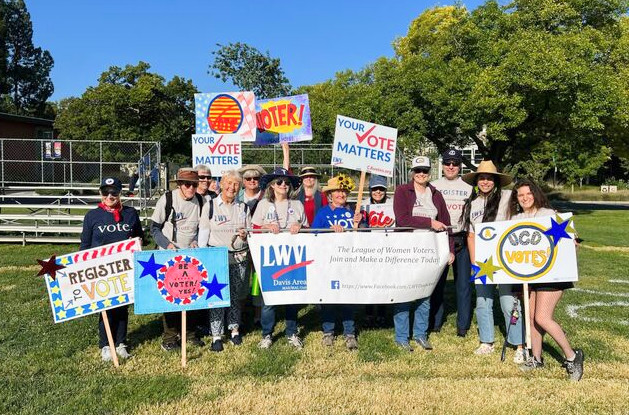
On Feb. 20, the Davis City Council began its general plan update process. The need to update the city’s general plan was brought to the city council’s attention by the Davis League of Women of Voters (LWVDA) who put together a General Plan and Community Vision Committee Report called “A Vision of Our Future in Davis: Ideas and Thoughts from the Community.”

This report was initially released to the public on Nov. 6, 2023, after being sent to the city council for review on Sep. 28 of last year. The LWVDA were invited to do a presentation on their report on Feb. 6 at the Davis City Council Chambers. 

Mary Jo Bryan, past LWVDA president and chair of the General Plan and Community Vision Committee, gave the report to the city council alongside Michele Famula, the current president of the LWVDA and member of the Davis league board. 

“We just felt that the report was valuable, that it said to the city council [that] there are a lot of people out there that want to be a part of the process,” Bryan said. “They want to know what’s going on.” 

The original plan was last amended in 2007 and has needed updating for years due to the city’s growth. A general plan articulates a community’s vision for long-term development and serves as a basis for decision-making. Ruth Coleman is a LWVDA member and was involved in some of the focus groups for the Vision of Our Future in Davis report. 

“The experience was very rewarding because there was this real hunger and a real enjoyment that all the people that we met with had an opportunity to meet, serve across disciplines, across interests and start sharing their ideas of imagining what data could be,” Coleman said. 

The state of California mandates that each city’s general plan addresses the elements of land use, circulation (i.e. roads and transportation), housing, conservation, open space, noise, safety and environmental justice. The LWVDA report surveyed over 900 Davis locals on the importance of each item and addressed what the community wanted the city council to update. 

“I’m really optimistic that this general plan is going to bear good fruit,” Coleman said. “I happen to have a daughter who can’t afford to live in Davis, so I’m very hopeful that we can start to find ways to broaden the inclusivity of the city.”

Sherri Metzker, community development director for the city council, surveyed cities in the greater Sacramento area. She found that it took between one to two million dollars to update their plans, which is the average cost for a big project like this.

“The current general plan was adopted in 2001,” Metzker said. “That took about seven years to create. From my experience, that’s about average. I know it sounds horrendously long, but it, unfortunately, is a very complicated document and sometimes requires a great deal of discussion.”

The city council has discussed updating its general plan for over two years. The council’s next step is to find a consulting firm that can assist them in developing a request for a general plan update proposal. 

The council is also taking the steps to form two committees when updating the general plan — one for community engagement and another for solicitation and staff input. 

“The council wants to be very involved in the evolution and progression of this particular general plan to update,” Metzker said. “What this will do is allow for the council to comment on things and make changes to the plan as it moves through the process.” 

At the city council meeting on Feb. 20, public commenters were concerned if the general plan update would create any affordable housing to support the large population of UC Davis students who are unable to find apartments on and off campus. 

“We want to incorporate as many opinions and get as much feedback as we can from various members of the community,” Metzker said. “That’s an important part of the implementation and development of the general plan itself.”

UC Davis professor Catherine Brinkley was a public commenter at the meeting. Brinkley teaches her undergrad students how to do a general plan revision for class. Brinkley suggested creating small grants for local agencies to do workshops and outreach around the general plan update process so that student representation is involved in the updated plan since it wasn’t involved in the downtown plan. 

“It’s important to get everybody’s opinion,” Metzker said. “It’s important to come up with a process where that can happen in the most expeditious way possible.”


Written by: Zoe Smith city@theaggie.org

Five bands compete at Battle of the Bands for performance spot at upcoming Whole Earth Festival

The event was hosted by KDVS and ASUCD Entertainment Council on Feb. 24, where the audience chose Sacramento-based band Granada to win


By VINCE BASADA — campus@theaggie.org


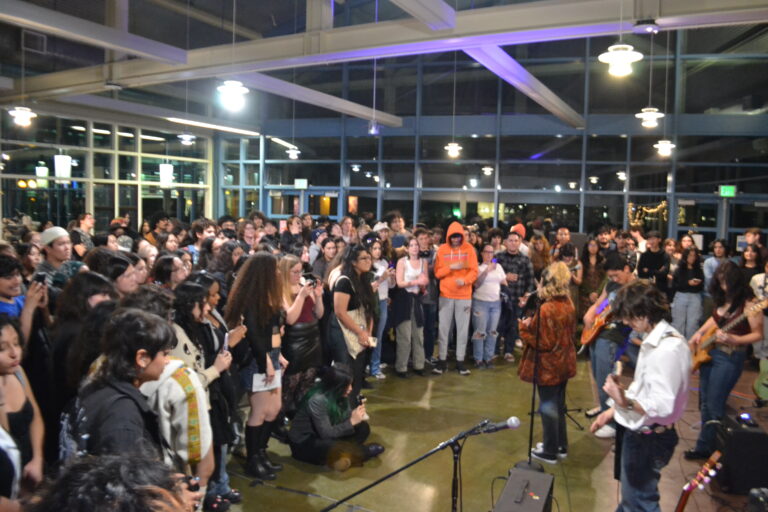
KDVS and the ASUCD Entertainment Council (EC) hosted a Battle of the Bands event on Feb. 24, showcasing five local bands who competed for a chance to perform at next quarter’s Whole Earth Festival (WEF). The free event, which was held in the Coffee House (CoHo), was attended by an estimated 200 people.

The winning band, Granada, is a Sacramento-based progressive and alternative group. They took the win after an energetic closing performance that drew the audience into a mosh pit and ended with much applause. Granada’s members include bassist Michelle, guitarist and vocalist Breezy and drummer Cameron. The Battle of the Bands was their third show, having formed six months ago.

“We all have good confidence, so I think we thought we were going to shoot high and we did,” Cameron said. 

“The crowd was amazing, and I feel like that gave me a lot of confidence too,” Michelle said.

All three members said that music has been a long-time passion for them and expressed gratitude to the audience for showing out.

“I’ve been doing music for about 15 years, but guitar is a more recent development, and doing something in a group like this is really new,” Breezy said. 

The bands in order of performance were: Illbie, Fire Trial, In Ether, Star Vista and Granada. Originally, KDVS and EC advertised that eight bands would perform, however, due to varying mitigating circumstances, only five were able to come to the event. 

Near the venue’s entrance, representatives from KDVS, EC and WEF tabled with information on upcoming events and opportunities.

Highlights from the night, aside from Granada’s closing act, included the band In Ether, who had formed just three weeks before the show. Their performance included an acoustic guitar solo, which proved popular among the crowd.

Attendees voted by marbles after the performances had ended. The results were announced soon after, with Granada narrowly taking the win with 89 votes to In Ether’s 85 votes. 

Aside from a performing slot at WEF, the winners also received a cash prize of $200 to split amongst themselves. 

Siya Pun, a third-year cognitive science major and EC unit director, said that planning for the event began over a month prior and presented an opportunity for interunit cooperation.

KDVS and EC have hosted a similar event in the past, and both groups expressed interest in pursuing future collaborations.

“Working alongside different units was a huge goal of ours, [and we had] a lot of our own staff members work with other units and their staff and strengthen unit efforts,” Pun said. “I’d love to see more collaborations happen in the future with WEF and KDVS.”

KDVS Events Directors Ani Bagmanian and Scala Reyes said that over 20 bands submitted performances for consideration after opening the event application, many of them based locally.

“We really wanted to showcase local artists, and this has been an event that was done a few years ago with [EC], and we were excited to bring it back,” Reyes said. “We wanted to be able to platform a lot of bands that maybe have not been [highlighted] in Davis to bring some fresh faces to the scene.” 

Bagmanian noted that no one is turned away at KDVS-paid events for lack of funds, but added that the show’s free entry helped to make it more accessible to students.

While only the winning band received payment for the show, Reyes expressed her appreciation for all the performers who came out to showcase their work and passion. 

“You know, they were donating their time to come out here and perform,” Reyes said. “We’re really grateful that they were all willing to do so.”


Written by: Vince Basada campus@theaggie.org


Is ‘plant-based’ really for the planet?

How much of a difference is your oat milk really making?


By MOLLY THOMPSON – mmtthompson@ucdavis.edu 


20 years ago, you would have never been able to walk out of an ice cream parlor with a scoop of vegan, oat milk “frozen dessert” on your cone. But nowadays, it is almost expected for any given California culinary establishment to offer plant-based options. Alternatives to animal products are more trendy than they have ever been. A lot of that can be attributed to recent research suggesting that products derived from plants are significantly less harmful to the environment than conventional equivalents. While this may very well be true, it isn’t always the case. 

In any situation, a blanket statement is not always going to be applicable. A multivitamin won’t cure every deficiency, you shouldn’t always listen to your parents and losing weight isn’t always healthy — one size doesn’t fit all. Our world is just too complicated for anything to have a true panacea. In the case of sustainable eating, there are too many contributing factors to take into consideration for any rules to be universally germane. 

We are told that livestock require more land and water to care for than plants and that bovine animals produce high levels of methane and carbon dioxide. Though this is generally true, it doesn’t mean that vegetarian or vegan foods always have less of an environmental impact than animal products. 

A large portion of the carbon footprint of groceries comes from emissions during production and transportation. The process of getting a product from farms to fridges involves many steps of processing, packaging and inspection. Each step takes energy and resources that come from fossil fuels and release greenhouse gasses. 

Most conventional groceries originate thousands of miles from where they are sold to consumers — transportation accounts for nearly one-fifth of all carbon emissions within the food industry. Ingredients are shipped back and forth for different stages of production, resulting in massive additional environmental costs. This is true of all foods, not just animal products. The only reason we can buy pineapples at Trader Joe’s in February is because they are flown in from China or Thailand. 

So naturally, the best solution to this problem is to buy locally sourced foods. That’s why we are always told that we should buy produce “in season” — because it is more likely to be locally grown. While this is good advice in theory, we can’t all get the foods we need from producers within a few zip codes. So, we take what we can get, and we sometimes buy tofu instead of pork to ease our consciences. 

As someone who has been through a “vegan for the environment” phase and has come out the other side regularly buying yogurt and ice cream, here is my conclusion: not all groceries are created equal (No duh, Molly, tell me something I don’t know). What I mean by that is an Impossible Burger doesn’t always have less of a carbon footprint than your standard burger patty. If your conventional burger has a turkey patty that comes from a local restaurant or a small, independent farm, it will be a more sustainable choice than a mass-market veggie patty made from soybeans grown on a factory farm in Brazil or Argentina. 

If your only options are beef or tofu from Safeway, then yes, tofu is going to be the more environmentally friendly choice. Granted that soybeans take a lot of water to grow, cattle require insurmountably more. (As an aside, beef is, by a longshot, the food with the largest environmental impact. It produces, on average, 10 times the amount of greenhouse gasses per unit than chicken or fish and more than 30 times that of tofu.) 

But if you’re choosing between tofu from Safeway and chicken from an independent, local grocery store, then it’s winner-winner chicken for dinner. Cow’s milk requires more water to produce than almond milk, but if you can get Straus milk in a glass bottle that can be returned and reused, then that is going to be better than almond milk from a factory farm in a plastic carton that will end in the landfill. (Another aside: oats are much less resource-intensive than most other alternative milk sources, so you can feel good about yourself when you buy an overpriced oat milk latte — it’s for the planet, I don’t make the rules). 

I know we are all just baby adults doing our best to survive out in the vast, predator-filled expanse that is this societal landscape. I don’t expect myself (or anyone else) to be out here buying $17 eggs that were pooped out of a gluten-free chicken in someone’s backyard next door. It’s not about being perfect; it’s about making small choices when we can. 

If you are walking down E Street for ice cream, go for Davis Creamery over Baskin Robbins. But if you have a BOGO coupon for Baskin Robbins, see if they have a dairy-free flavor. Just like nothing is always true, nothing is make-or-break. It’s true that our choices impact our world, and it’s important to be aware of that, but what’s bona fide and realistic is not what we are always told. 


Written by: Molly Thompson — mmtthompson@ucdavis.edu 


Disclaimer: The views and opinions expressed by individual columnists belong to the columnists alone and do not necessarily indicate the views and opinions held by The California Aggie.


New UC Davis research center combines biology, engineering to study bird flight

The center captures data on bird flight dynamics and maneuvers


By KRYSZEL BACTAD — science@theaggie.org


UC Davis is establishing a new research facility to study bird flight and rehabilitation. The facility was brought to fruition by the main lead Christina Harvey, an assistant professor of mechanical and aerospace engineering at UC Davis, and Michelle Hawkins, the director of the California Raptor Center and a professor at the UC Davis School of Veterinary Medicine. 

This new bird flight research facility aims to advance the understanding of biological flight to inform the development of uncrewed aerial vehicles (UAVs) and the conservation efforts of the Raptor Center. 

The flight hall of the facility is equipped with infrared motion capture cameras and high-speed, high-resolution cameras to capture data on the flight dynamics and maneuvers of birds flying through the hall.

“What we can do is track [the birds] with the motion capture pieces, but also use the high-speed and the high-resolution imaging to create this complete 3D shape of the bird,” Harvey said. “We can build up models of how we think the animals are responding to their environments so we can build up a control system model.”

These models and data on bird flight act as a framework for the optimization of UAVs. This bioinformed approach seeks to explain how birds fly and how UAVs can be adjusted to emulate highly adaptable and maneuverable dynamics in complex environments.

“What we’re looking at is to identify the useful bits,” Harvey said. “And then with those useful bits, we’ll send the engineers in and they can write true optimization codes that optimize for an objective function.”

 Hawkins said the bird flight hall is also a win for the Raptor Center, as the facility also doubles as a rehabilitation center for injured birds that come into the Raptor Center. 

“We hope that the knowledge that we learn about healthy normal flight in some birds will help us to evaluate the flight of birds that are in rehabilitation so that we can be as confident as possible that they are ready to go when we’re ready to release them,” Hawkins said.

The imaging data from the flight facility would provide Hawkins and the Raptor Center with more insight on how healthy birds fly, from data on birds’ range of motion and joint movement to energy levels. This data set would provide a reference point for birds that have been rehabilitated to a healthy normal state.

“My goal is to watch these birds fly away from here and be successful going back out into their lives in the world, and any tool that I can add to that toolbox — that’s gonna help us to get those birds back [to the wild],” Hawkins said. 

Current methods for evaluating the health and readiness of these birds rely mainly on expert opinion, so providing any type of quantifiable data would enhance the success of the Raptor Center’s conservation efforts. 

Combining biology and engineering also opens doors to future developments in both conservation and engineering.

“There isn’t anything like creating that environment for people that just gives you a way to go from being a pure mathematician or physics engineer to someone that can contribute to conservation, can contribute to understanding the natural world around us,” Harvey said. “It feels bigger than what I thought engineering was when I started.”


Written by: Kryszel Bactad— science@theaggie.org


Las consecuencias de la marihuana y por qué se consume

La droga más usada para el disfrute y para enfrentar situaciones difíciles puede llevar a problemas cognitivos, problemas para dormir, y otros problemas somáticos 


By KATIE HELLMAN — science@theaggie.org


El cannabis, también llamado marihuana, hierba o mota, es la droga ilegal a nivel federal más usada en los Estados Unidos. La marihuana afecta partes del cerebro que controlan el movimiento, la memoria, el aprendizaje y la toma de decisiones. Se la considera una sustancia de Schedule One dentro de la ley de sustancias controladas, ya que tiene un potencial de abuso alto y no está aprobada para el uso médico federal. Actualmente, es legal  en 24 estados y en el distrito de Columbia para usos medicinales y recreativos.


Los investigadores de UC Davis Health y los científicos de la Universidad de Washington, encuestaron a adolescentes en un estudio de seis meses de duración publicado en  Psychology of Addictive Behavior (La psicología del comportamiento adictivo) con el objetivo de demostrar por qué los jóvenes consumen marihuana. 

“The study tested whether internal cannabis motives (coping and enjoyment) mediated longitudinal associations between cannabis demand, use (hours high), and negative consequences,” the study reads. “Mediation models revealed that enjoyment motives mediated the association between amplitude and persistence and use. In addition, coping motives mediated the association between amplitude and negative consequences.”

 “El estudio examinó los motivos internos de la marihuana (afrontamiento y placer) mediaban las asociaciones longitudinales entre la demanda, el uso (horas en efecto) y las consecuencias negativas de la marihuana”,” detalla el estudio. “Modelos de mediación revela que los motivos de placer son la razón mediada entre la amplitud y las consecuencias negativas. “Además, los motivos de afrontamiento mediaron la asociación entre la amplitud y las consecuencias negativas.” 


Mientras más demanda y deseo sentían los adolescentes por el cannabis, más probabilidades había de que lo utilizaran por placer y como afrontamiento, según los resultados del estudio. Los adolescentes que se encontraban en esta categoría también tenían más probabilidad de consumir mayores cantidades de la droga y sufrir efectos secundarios negativos. 


Un estudio que detalla las consecuencias autodeclaradas del consumo de marihuana reveló que los problemas de productividad, de relaciones, de paranoias y de la administración del tiempo eran solo algunos de los problemas que sufrían los consumidores de marihuana.


“Los problemas de sueño, cognición (incluida la atención y la concentración), motivación y los problemas de memoria fueron los efectos negativos de la marihuana que más mencionaba este grupo de jóvenes” según el estudio. “Otros tipos de consecuencias autogeneradas incluyeron la alimentación (por ejemplo comer demasiado), problemas pulmonares o de tos, sentirse antisocial o incomodidad en público, dificultades físicas (por ejemplo, sentirse mareado, enfermo, descoordinado), no cumplir con obligaciones y gastar demasiado dinero,”


Actualmente, el cannabis es una preocupación de salud pública; alrededor del 15 por ciento de los jóvenes declaran que han usado marihuana en el último mes y alrededor del 9 porciento de los usuarios se vuelven adictos. El riesgo de acabar convirtiéndose en adicto al cannabis o de desarrollar un trastorno por consumo de cannabis aumenta si la edad de inicio del consumo de cannabis es más temprana. 


“La marihuana está relacionada con el fracaso escolar . . . en comparación con compañeros que no la consumen, los estudiantes que fuman marihuana obtienen calificaciones más bajas y tienen más probabilidades de dejar los estudios de bachillerato,” dije el Instituto Nacional del Abuso de Drogas. Además, “dosis altas de marihuana pueden causar psicosis o pánico cuando se está drogado” y “ se empeoran los síntomas psicóticos en personas que ya tienen esquizofrenia y puede aumentar el riesgo de psicosis de largo plazo en algunas personas,” explica el folleto.    


A pesar del aspecto adictivo de la marihuana, las personas que la consumen y quieren limitar o eliminar el uso de la droga, puede hacerlo con la ayuda de métodos como terapia del comportamiento, educación psicológica, y programas de hospitalización o ambulatorios. 


Written by: Katie Hellman — science@theaggie.org


Traducido por:


Brooke Byrnes

Giselle Castañeda

Ximena Francisco 

Ariadna Teodocio

Los estudiantes de UC Davis usan el arte como una forma de aliviar el estrés

Las actividades artísticas pueden ayudar a combatir los inviernos abrumadores


Por JULIANA MARQUEZ ARAUJO — features@theaggie.org


El comienzo del trimestre de invierno, aunque provee un nuevo comienzo, viene con una serie de desafíos. Para los estudiantes, simboliza el comienzo del trimestre más repleto e intenso de todo el año académico. Aunque algunos estudiantes no sientan los efectos del cambio de las estaciones, es difícil ignorar un aumento de los niveles de estrés que muchos estudiantes experimentan durante el invierno. 


Este fenómeno está relacionado con la condición conocida como “depresión estacional”, en la cual las personas sienten tristeza causada por una estación específica del año. Los estudiantes sienten lo corto que son los días de invierno cuando se sientan en clase viendo el atardecer antes de las cinco de la tarde. Este clima oscuro y sombrío es acompañado por la pérdida de motivación y sentimientos abrumadores de derrota.


“Definitivamente siento depresión estacional”, dijo Larissa Fitzhugh, estudiante de primer año de agricultura sostenible y sistemas alimentarios. “Suele llevar más tiempo y energía hacer la misma cantidad de trabajo que puedo hacer en otras épocas del año”.


Ella afirmó que para tener éxito académico, tuvo que sacrificar su propia salud mental. Muchos estudiantes comparten este sentimiento, ya que puede ser difícil prestar atención a la salud cuando se acumula el trabajo académico. Sin embargo, en medio de un período estresante, promover la autoconciencia mediante la expresión de la creatividad con el arte puede ser liberador.


El arte se presenta de muchas maneras. Algunos disfrutan escribir poesía y otros prefieren dibujar o pintar. La música, el baile y la fotografía – traen a la superficie las buenas emociones dentro de uno y ayudan a liberar las emociones negativas.  


“Me gusta tejer, es una buena manera de relajarme mientras hago algo que disfruto.” Dijo Fitzhugh. “También es lindo tener en las manos un producto final del cual me puedo sentir orgulloso. Me hace sentir bien, incluso cuando inicialmente pienso que no va a tener efecto”

 El proceso artístico no solo se trata del desarrollo de la creación. Aunque los resultados no salgan perfectos, es gratificante haber creado, liberado o aprendido algo nuevo. Los cambios positivos en los niveles de ánimo siempre se revelan al final. 

Muchos estudiantes son conscientes de la falta de atención que le tienen a su salud mental. Lo difícil es comenzar el proceso.

“Quiero aprender a conocer más mi cuerpo y estado mental para poder determinar cuándo tengo que tomar un descanso de mis trabajos escolares,” dijo Chris Meza, un estudiante de música en primer año. 


Es importante para la salud darse cuenta cuando es tiempo de tomarse un descanso de algo que nos provoca angustia mental. Después de todo, no vale la pena perder la estabilidad mental por una mala calificación. La mentalidad de que el resultado sí vale la pena no es siempre saludable. Para algunos puede ser agotador.  


Los pasatiempos artísticos tienen la capacidad de ayudar a los estudiantes a comprender que el mundo no se acaba por una mala calificación. Explorando su lado artístico puede guiarlos a entender que la vida va más allá de sus compromisos escolares. 


Meza afirma que estar en la universidad no es la única prioridad en la vida estudiantil y varias veces es difícil poder mantener el equilibrio entre otras obligaciones y el trabajo académico, especialmente cuando ambos toman mucho tiempo del día.


Durante estos momentos frustrantes, los estudiantes que se enfocan solo en la escuela terminan ignorando pasatiempos y actividades que les traen felicidad con el propósito de completar metas más importantes, como sus calificaciones. 


 Lo que varios estudiantes no se dan cuenta es que al ignorar su salud emocional sufren las consecuencias 


“Usualmente pierdo toda la motivación de esforzarme en mis clases, en cambio solo hago lo mínimo sin tratar de superarme o desafiarme a mí mismo dice Meza. “ y a veces esto también tiene correlación con mis pasatiempos, porque tampoco puedo hacerlos. Pierdo la motivación de hasta de tratar de disfrutar de mis pasatiempos.”


Rendirse en un aspecto se vincula con otros factores importantes. Imagínate una línea de dominós, uno cayendo encima del otro. Descansar es la llave para triunfar y estar satisfecho con cómo llegaste a tener éxito.


“Cuando necesito tomarme un descanso de todo, saco mi piano o guitarra y toco unas canciones que ya conozco o sino aprendo una canción nueva.” Meza dice “ es una manera de relajarme y tocar música. A veces toco cuerdas al azar y busco una melodía.


La rutina de explorar instrumentos musicales, como hace Meza, crea mucha emoción en la práctica. Genera un objetivo fuera de la vida académica. Lo maravilloso del arte es que puede ser subjetivo. Como consecuencia, no hay tanta presión por que el resultado final sea de la mejor calidad, ya que el arte puede ser personal, así que no hay necesidad de que sea juzgado. 


Leilani Velasco, un estudiante de primer año estudiando arquitectura, comparte su proceso de sus esquemas y como promueven la tranquilidad. 


“Puedes poner música como sonido de fondo y seguir el ritmo,” dice Velasco. “Dibujar, en mi opinión, es uno de esos pasatiempos que no requiere mucho pensamiento ni estrés, al menos que tú quieras.”


Ella afirma que el arte debe ser beneficioso en un sentido emocional. Hay una comodidad familiar cuando participas en estas actividades. Cuando alguien asocia los dibujos o la música con la paz y relajación, el mismo sentimiento de calma resurge cada vez que lo practican. 


Velasco comparte otros aspectos curativos que vienen con el proceso de crear arte. 

“Para cada bosquejo, me gusta ir en mi bicicleta y ver los edificios de la escuela que puedo dibujar. Puedes sentarte afuera del edificio por horas y observar cada detalle, incluyendo la gente que pasa caminando. Es muy sanador para mí, de muchas maneras.”


Un enfoque artístico para reducir estrés es beneficioso y necesario. Nunca es tarde para hacer un cambio en una rutina destructiva y liberarse del triste invierno. 


Escrito por: Juliana Marquez Araujo — features@theaggie.org


Traducido por:

Ruby Lara

Bryan Nakama

Anahí Reyes-Atristain

Kathy Sanchez

Review: ‘The Artful Dodger’ depicts a modernized take on ‘Oliver Twist’

Despite their difference in character portrayal, both stories leave you contemplating social issues like abuse and gender inequalities


By LORENA ALVAREZ — arts@theaggie.org


There is a lot of debate about what is better: novels or their adaptations. Many strongly stress that adaptations fall short of their counterparts. While it may seem absurd that cinematic adaptations can do novels justice, it is possible. Hulu’s “The Artful Dodger” is an example, showing what it means to take a classic novel and adapt it to modern demands, making it new. 

For those who have not seen it, the show is a sequel to Charles Dickens’ “Oliver Twist.” Dickens’ novel follows Oliver Twist, an orphan, who is abused and taken advantage of by his elders. As the child is forced to be an accomplice to thievery, Twist experiences immense fear and pain as he worries about disappointing those who care for him. In the end, it is revealed that Twist is an heir to a great fortune and will assumedly no longer live such a difficult and dangerous life. 

Hulu’s sequel follows Dodger’s attempts to stray away from thievery and deceit all while entertaining modern viewers with the chemistry between Dodger and Lady Belle Fox. Despite the humor and romance, the first season does not do Dickens’ characters justice. 

The novel illustrates the physical pain Twist endures at the hand of adults like Fagin, a thief who misguides children into crime. In doing this, Dickens’ emphasizes Twist’s innocence.

Fagin plays a big role in the text as he taunts Twist and his beloved book collection. Twist’s goodness is emphasized as he implores Fagin to return the books Oliver had borrowed from Mr. Brownlow, the kind man who saved him from an abusive apprenticeship. 

His willingness to give up his freedom and be one of Fagin’s pawns characterizes Twist as a boy who wants nothing more than to remain good in the eyes of the people who treat him with kindness. 

Rather than depicting Twist as one of Fagin’s victims like the sequel illustrates Dodger, the show conveys Twist as a snobby man who has succumbed to a life of thievery. The plot twist that Twist, a man who passes as a gentleman, has stolen the gold before Dodger has had the chance completely changes Twist’s characterization as an innocent child who is taken advantage of. 

In depicting Twist as someone who is more than willing to expose Dodger and illustrating him as a deceitful man, the series abandons the novel’s value of innocence.

Twist is characterized as a cruel and daunting man as he taunts Dodger, reminding him that he can end his career as a surgeon in any moment by simply revealing Dodger’s past as a thief. 

“I have to speak a truth I can no longer hold inside,” Twist said in episode 7 of the show. “it has only been a day or so, but I must speak the truth.”

In drawing out the truth he “needs” to speak, the performance conveys Twist as someone who gets pleasure out of making others uneasy, a villain. 

Despite their characterization differences, both the book and the series critique social inequities. While the novel follows a young orphan’s hardships and attempts to remain moral, the show illustrates two surgeons’ journeys through unique obstacles. Through Dodger’s attempts to be moral, the show explores how easy it is to be influenced into wrongdoing and the difficulty in breaking gender boundaries.

 This difference in social commentary allocates “The Artful Dodger” its success despite its villainization of Twist. In centering the plot around Dodger and Lady Belle Fox’s chemistry and breaking gender norms through Lady Belle Fox, the series has catered the adaptation to today’s viewers.


Written by: Lorena Alvarez — arts@theaggie.org

El Departamento de Bomberos de UC Davis lanza un programa para mejorar la salud mental y las necesidades básicas

Health 34 está disponible 24/7 para ayudar a la gente a encontrar recursos y artículos de primera necesidad antes de que ocurra una crisis. 


Escrito por MADISON PETERS – campus@theaggie.org


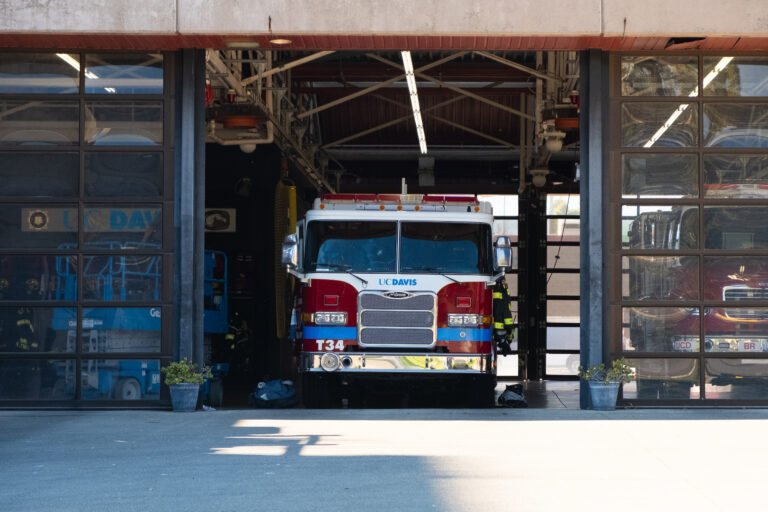
El 5 de Septiembre del año 2023, el departamento de bomberos de UC Davis lanzó Health 34, un servicio (no funciona para emergencias) dedicado a reducir situaciones graves de salud mental y también provee acceso a artículos de necesidad básica en la universidad. El programa está disponible todos los días y horas del año.  

El jefe del departamento de bomberos en UC Davis, Nathan Trauernicht, inició Health 34 para combatir las inequidades en el sistema de emergencias y otras instituciones, específicamente las que están dirigidas a la salud mental. 

Trauernicht dijo que aunque hacía siete años que estaban planificando un programa de este tipo, decidieron presentarlo al consejo del canciller después de ver que la salud mental estaba empeorando a causa de la pandemia. 

“Uso la frase, “reinventar la compasión,” dijo Trauernicht. “Como institución, cómo podemos hacer algo diferente a lo que hemos estado haciendo que obviamente no está funcionando para todos los que necesitan ayuda? ¿Cómo podemos guiar a la gente a los recursos y cómo encontramos qué obstáculos impiden el acceso a estos programas? Luego, como quitamos esos obstáculos para alcanzar el objetivo de prevenir una crisis donde podamos?”    

. Trauernicht explicó que si alguien tiene algún problema, ya sea de ansiedad por sus estudios, de inseguridad alimentaria o de vivienda, puede llamar al número de siete dígitos: 530-754-3434. Allí puede hablar con un proveedor de Health 34 que puede escucharlos o dirigirlos a los recursos que necesitan sin ningún costo.

“Esencialmente, somos navegantes de los servicios y educadores sanitarios disponibles 24/7, 365 días al año para estar a tu lado cuando nos necesites, para ofrecerte recursos y tranquilidad, y para asegurarnos que estés procurando tu bienestar continuo,” dijo Trauernicht.

Este programa es único en el sentido de que los miembros del equipo pueden venir a conocer al cliente en persona, siempre y cuando se encuentre en el campus de UC Davis, según Stormi Homdus, una proveedora de Heath 34.

Al recibir una llamada, Homdus dijo que los miembros del equipo Health 34 llegan en una furgoneta climatizada, que cumple con la ley de discapacidad ADA y que proporciona un ámbito seguro para hablar. Todas los proveedores tienen amplia experiencia tanto en el sistema de urgencias como de paramédicos.

La furgoneta también está dotada con artículos como compresas de hielo, lápices, desodorante, productos de higiene femenina y comidas de larga duración.

Homdus habló de la gama de servicios que ofrece Health 34.

“Si no tienes acceso o no quieres ir a la sala de urgencias, pero necesitas una compresa de hielo, te podemos ayudar con eso,” dijo Homdus. “Ansiedad, depresión [o] pensamientos de autolesión, cualquiera puede llamarnos en esas situaciones. Hemos ayudado a personas con alojamiento de urgencia — tenemos la capacidad de iniciar este tipo de gestiones y hasta hemos ayudado a la gente a trasladar sus cosas. 

Proveemos aperitivos, comida o cualquier otra cosa para mejorar un poco la vida de la gente. 

Los servicios que brinda el programa no solo están disponibles para estudiantes de UC Davis sino también para el profesorado, la población sin alojamiento y cualquier otra persona con dificultades en el área de Davis, según Blythe Clark, proveedora del programa Health 34. 

Dijo Clark que la meta del equipo es atender a cada caso con compasión y amabilidad.

“Hay un gran beneficio en la relación humana y el hecho de que alguien conteste el teléfono,” Clark dijo. “Hay una voz al otro lado de la línea que está aquí para estar contigo cuando el mundo se siente inmanejable. 

Desde su inicio, Health 34 ha respondido con éxito a más de 235 llamadas de asistencia y ha tenido más de 1000 interacciones, según Clark.  

El programa colabora con varios recursos de la universidad, tales como Aggie Compass, The Pantry, el Centro de Recursos LGBTQIA+, los Servicios de Salud y Bienestar y muchos más. 

Health 34 también puede guiar y proporcionar transporte a estos servicios, pero además ofrecer sus propios servicios durante las horas en las que no están disponibles estos recursos, según Trauernicht. 

Cuando se le preguntó sobre las metas para el próximo trimestre, proveedora del Health 34 Destiny Rogers dijo que espera vincularse con recursos tanto dentro como fuera de la universidad. Además, desea que la gente se empiece a sentir más cómoda para llamar cuando necesitan ayuda.  

“Nuestras metas es ser visibles y llegar a la gente, asegurarnos de que nos conozcan,” dijo Rogers. Una de nuestras metas es comunicar a la gente que estamos aquí para ayudarlos en todo momento. Queremos que se sientan cómodos al utilizar nuestros recursos, que sepan que son tan importantes como cualquier otra persona y pueden llamar a toda hora. A la gente le cuesta aceptarlo pero realmente estamos ahí 24/7 y esperamos que la gente lo aproveche” 

Además, Clark dijo que el programa quiere saber qué piensan los estudiantes y cómo pueden mejorar el servicio. 

“ Si los estudiantes nos conocen y ven un lugar en el que creen que seriamos útiles o han tenido contacto con nosotros y tienen comentarios, estamos dispuestos a aprender de ellos.” dijo Clark. Trauernicht animó a la gente a pasar por la furgoneta Health 34 si la ven en el campus para obtener cualquier recurso que puedan necesitar o incluso simplemente para conversar.

Trauernicht en el fondo quiere que Health 34 reimagine cómo se presta el cuidado a una comunidad. “No importa quién seas o de donde vengas, todos tenemos dificultades,” dijo Trauernicht. “Queremos hacer de UC Davis un lugar donde se reconozcan las dificultades que forman parte de nuestras vidas y que nadie tenga que pasar por ellas solo. Por favor, pide ayuda pronto para que podamos poner a la gente en contacto con los recursos disponibles antes de que lleguen a un punto de crisis.”


Escrito por: Madison Peters — campus@theaggie.org


Traducido por:

Ximena Calderon

Christopher McKerracher

Rosa Mendez

Rodrigo Villegas

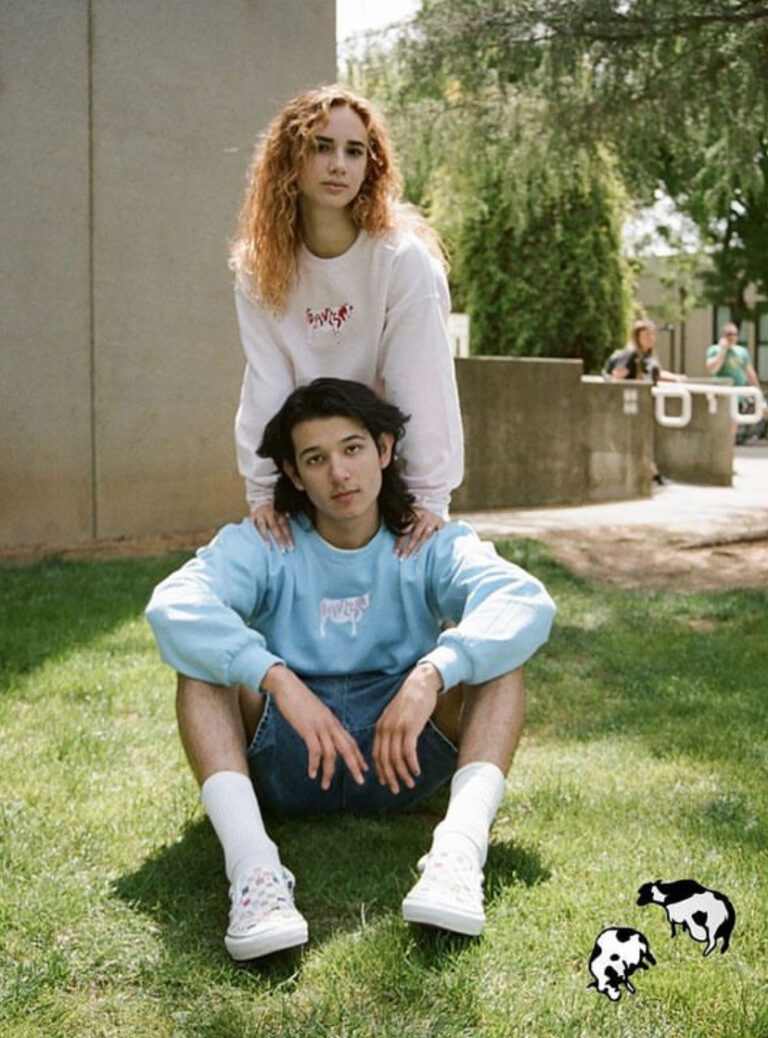
Estudiantes de UC Davis discuten su marca de ropa única, we2cow.

Los fundadores Brianna Romine y Ian Gomez cuentan cómo empieza la compañía, como la dirigen y a dónde está yendo.


By YASMEEN O’BRIEN — features@theaggie.org


Probablemente has visto su icónico diseño de una vaca que adorna el vestuario de estudiantes de Davis y los accesorios en venta en el Davis Street Market (puestos de venta al aire libre) y varias tiendas en el centro de Davis. La marca de prendas we2cow rápidamente ha subido a la fama en Davis y se ha convertido en miembro establecido de la comunidad. Fundada por Brianna Romine y Ian Gomez, la compañía llama la atención con sus productos originales inspirados por Davis.


Su primera inspiración ocurrió en 2021 durante el primer año de Gomez en UC Davis. Comenzó con un simple viaje de compras. Gomez estaba buscando ropa de UC Davis en la tienda de libros pero no encontró nada creativo que tuviera algo más que un emblema clásico. Además, costaban mucho por algo que probablemente no usaría mucho. 


En esa época, a Romine por casualidad le habían regalado una máquina de bordado a pesar de no tener experiencia con la artesanía. Poco después de la experiencia que tuvo Gomez en la tienda de libros decidieron dibujar unos diseños de Davis y bordar una sudadera para él. 

“La intención solo fue que Ian tuviera una prenda original que realmente le gustara,” dijo Romine, una estudiante de sociología de cuarto año. ”Y para aprovechar mi máquina de bordado.”


La sudadera que bordaron tenía el gráfico de la vaca, diseñado por Gomez. Cuando empezó a usarla por la ciudad, la gente lo halagaba y le preguntaba dónde la había conseguido. Gomez y Romine empezaron a crear prendas con el diseño de la vaca para amigos que lo pedían, pero cuando empezaron la cuenta de Instagram de we2cow y a vender en tiendas locales, la compañía rápidamente ganó popularidad.


Atribuyen una gran parte de su éxito a la “Rifa de San Valentín” donde le pedían a la gente que siguiera ciertas instrucciones para conocer mejor su marca a través de las redes sociales, y la gente se entusiasmaba con la posibilidad de ganar el sorteo.


Esta estrategia les agregó mil seguidores y también aumentó sus pedidos. Romine recuerda que la gente llegaba temprano al Davis Streek Market para reservar un artículo antes de que ella y Gomez pudieran terminar de armar su puesto y colgar sus prendas. 

“Había mucha demanda al principio. Era un poco agobiante,” dijo Romine. 

Romine se transfirió a UC Davis en el otoño del 2022, entonces al principio ella estaba bordando todo en San Diego—donde ella y Gomez crecieron—y tenía que enviarle la mercancía a Gomez o viajar en avión a Davis con una maleta llena de articulos de we2cow.  


Parte de lo que hace que la marca we2cow sea atractiva es la originalidad y la creatividad de sus diseños.


“El 99% del tiempo lo hacíamos nosotros mismos,” dijo Gomez, un estudiante de cuarto año que se especializa en Ingeniería de Sistemas Biológicos, dijo. “Pues, Bri es la que hizo todo. Yo usualmente me encargo del diseño y las redes sociales, y Bri es la que hace todo el trabajo manual.”


A medida que crecía la compañía y tenían que completar 100 o 200 pedidos a la vez, el dúo decidió contratar a alguien que realice los bordados en otro lugar. Gomez explica que es una decisión muy reciente que ahora les permite vender su mercadería en negocios del centro de la ciudad, como la heladería The Davis Creamery y la tienda de libros Avid Reader Bookstore.

“Ian y yo, al principio de todo esto,pensamos: ‘somos estudiantes antes que nada’”, dijo Romine. “Así que era muy difícil encontrar tiempo.”


Cada sudadera, camiseta y sombrero puede tardar de 40 minutos a una hora cuando Romine los hace ella misma. Recordó un momento estresante cuando vendió sus diseños en el Davis Whole Earth Festival, un festival organizado por UC Davis para la sostenibilidad ambiental.

“Ian se iba del evento solo para hacer más productos en casa para que tuviéramos lo suficiente para vender”, Romine dijo.

Romine dijo que para prepararse para el evento tenían tres máquinas que bordaban por “24/7” y corrían entre ellas alternando los artículos para asegurarse de que estaban aprovechando el tiempo al máximo y haciendo la mayor cantidad de ropa que podían.


Antes de we2cow, la pareja había comenzado una línea de ropa diferente con diseños originales, pero tuvo mucho menos éxito. We2cow les permitió llegar a mucha más gente a través de su arte.


“Fue increíble crear algo que tuviera impacto,” dijo Gomez. Romine estuvo de acuerdo y agregó:


“Principalmente queríamos crear algo que fuera único para Davis, y que realmente nos gustara,” digo Romine. “Esperábamos que a otras personas también les gustara. 


“Disfruto cuando la gente se acerca a nosotros y nos dice que realmente les gusta el diseño y nos muestran que hemos tenido un efecto”, dijo Romine.


Agregó que la gente generalmente compra artículos de we2cow para sus seres queridos, especialmente para familiares o amigos en casa porque los diseños representan la cultura de Davis.


Andrew Bass, egresado de UC Davis, agradeció el trabajo duro de la compañía y reconoció la influencia que ha tenido en la universidad y el pueblo.


“We2cow ha tenido un impacto en Davis porque es un ejemplo de la cultura alternativa propia del lugar: ofrece mercancía única hecha por estudiantes,” dice Bass. “Cuando me pongo y veo su mercancía fuera de Davis me da un sentido de orgullo. Ahora vivo en San Francisco y todavía llevo su ropa todo el tiempo.”


Gomez y Romine se van a graduar e irse Davis a finales del 2024. No están seguros si la empresa va a continuar después de que se gradúen.


“De verdad no sabemos qué ocurrirá, pero creo que ambos esperamos que el negocio crezca lo más posible,” dice Romine.


“Creo que estamos limitados porque nuestra línea de productos es específica para Davis,” comenta Gomez.


Más allá de lo que pase en el futuro, we2cow les ha permitido conectarse con otros estudiantes creativos, dejar su marca en los residentes de Davis y ser una parte esencial de la escena artística de la comunidad.


Aquellos que quieran aprender más sobre la marca pueden encontrar we2cow en Davis Street Market los sábados, en su tienda de Etsy, en Davis Creamery y en Avid Reader, o seguir su página de Instagram @we2cow para más información.


Escrito por: Yasmeen O’Brien — features@theaggie.org


Traducido por:
Lilliana Espinoza

Lizbeth Espinoza

Cristal Mora

Lucas Wang