58.6 F
Davis

Davis, California

Monday, December 22, 2025
Home Blog Page 160

Best hiking spot: Lake Berryessa

Students say that Lake Berryessa is the perfect getaway spot for hikers


By KACEY CHAN — features@theaggie.org 

Lake Berryessa (Aggie)

Surrounded by the Vaca Mountains, Lake Berryessa is the largest lake in Napa County. According to UC Davis students, this scenic hiking spot is the perfect place for a day trip with friends. In the annual Best of Davis survey sent out by The California Aggie, Lake Berryessa was awarded the best hiking spot with 31.6% of the vote. The area is known for being the perfect spot for a variety of activities including stargazing, swimming and hiking.

For Raaghav Saxena, a former student at UC Davis and a member of the UC Davis Outdoor Trips Discord, a trip to Lake Berryessa typically involves hiking with good company. 

“Primarily, it’s just hiking around the general ar

ea of the lake,” Saxena wrote in a Discord message. “We just go to an area with parking near the lake and walk around the perimeter. […] The southeast section especially is amazing!”

Saxena also recommends swimming in the lake with friends.

Mari Hoffman, another former student at UC Davis, agrees that hiking is the best way to enjoy Lake Berryessa. 

“A trip to Lake Berryessa for me has always been about the hiking!” Hoffman wrote in an Instagram direct message. “I love seeing the beautiful views of the pristine lake and getting some miles in with my friends.”

Salvatore Martinez, a second-year global disease biology major, said that Lake Berryessa is also the ideal spot for a nighttime adventure. 

“I’ve been trying to explore the outdoors more this year,” Martinez said in an email. “Lake Berryessa is absolutely stunning at night with very little light pollution and a quiet, calm atmosphere.” 

A particularly unique feature of Lake Berryessa is a strange hole that occasionally appears in its center — resembling a weird optical illusion for those not in the know. Fondly, and perhaps unfortunately, named the “Glory Hole” by nearby residents, it is actually a drainage feature that acts as an overflow valve for the reservoir. According to Alta Journal, Lake Berryessa is actually a man-made lake constructed for the Monticello Dam, which confined the water flowing from Putah Creek. 

Students searching for a peaceful getaway from the dreary goings-on of school should consider a hiking trip to Lake Berryessa (which may or may not feature an idiosyncratic, scary vortex in the middle). 


Written by: Kacey Chan —  features@theaggie.org 

From a linear to a circular economy

How donating and reusing can create a more sustainable way of living


By MAYA KORNYEYEVA — mkornyeyeva@ucdavis.edu


In the United States alone, an estimated 11.3 million tons of textile waste — 85% of all textiles — fills up landfills each year, along with 40% of all food produced. Each person on the planet accounts for roughly 1.2 tons of single-use plastic waste annually, and the situation is only getting worse: an alarming trend shows a rise in global waste by 70% in 2050 due partially to population growth and urbanization but also to the apathy that a majority of us exhibit towards our planet and resources.

Over the last century, the U.S. and many other nations have adopted an economic model that revolves around linear product development, otherwise known as “cradle to grave.” In the cradle, natural resources like precious metals, fossil fuels and organic materials are harvested from the earth and transformed via numerous manufacturing processes to be made available for use. After the product is no longer needed — or its functionality has been exhausted — most people toss it in the trash and forget about it. This is when the product arrives at its grave: a landfill somewhere remote where it can rest for potentially thousands of years before degrading.

In recent years, a new economic concept has been bounced back and forth between lawmakers and activists; namely, the idea of a circular economy

In a circular economy, the product follows a path from “cradle to cradle,” and never reaches a definitive “grave.” Instead, after it is no longer useful in its original form, it can be recycled and disassembled for reuse as a new product. While this method requires substantially more responsibility on the part of governments, companies and the public, the benefits are well worth it. 

For one, a circular approach to product development would mean a reduction in the money that is wasted on products that will never hit consumer homes. According to the environmental news and data platform Earth.org, $500 billion is lost each year due to under-wearing and failure to recycle clothes. If hundreds of billions of dollars go down the drain and disappear on just textiles, how much more money is simply vanishing when we direct our attention to electronic or food waste? With this in mind, repurposing used materials can essentially put money back into the manufacturer’s pocket and prevent over-extraction of limited natural resources. 

Recycling can also save space. Rather than sending millions of laptops or flatscreen TVs to the landfill, the plastic, metals and glass can be removed and the rest of the materials melted down, leaving the environment cleaner and less polluted as a result. 

Donating, just like recycling, can also incentivize companies to cut back on new product manufacturing, thereby minimizing the need for excessive or wasteful material.

The beauty of donation is that a product can be immediately reused by someone who truly needs it, especially when they are already faced with few affordable options. Donating also ensures that nothing goes to waste and that an item unnecessary to one person can make a big difference for someone else. 

UC Davis has a lot of organizations that ensure our college campus is sustainable. One example is the Aggie Reuse Store, an on-campus thrift store that has a number of items available for students at no cost. At this ASUCD unit, you can bring in a sweater you no longer need and find a new T-shirt for yourself instead, or donate some accessories or school supplies. In this way, the Aggie Reuse Store promotes creative upcycling and a consistent flow of products for those in need. 

Aggie Compass is another on-campus organization that provides students with zero-cost supplies and basic needs, including groceries and hygienic products. One of the services offered by Aggie Compass is the ASUCD Pantry in the Memorial Union, where students can find grocery items from bagels to orange juice to potatoes at no cost. 

These initiatives are exactly what institutions and communities should pursue, for the sake of securing a way of living that is minimally wasteful and thereby protecting our collective future. We need to collectively alter our behavior to incentivize donating, reusing and repurposing household items to minimize global pollution and protect our environmental resources. 

Contrary to the common misconception, we do not have an infinite supply of raw materials to utilize for the creation of an infinite amount of things. There are limits, and we must respect those limits and think of the future rather than brush off the inevitable build-up of waste caused by rampant overconsumption.


Written by: Maya Kornyeyeva — mkornyeyeva@ucdavis.edu

Disclaimer: The views and opinions expressed by individual columnists belong to the columnists alone and do not necessarily indicate the views and opinions held by The California Aggie.

Picnic Day Schedule 2023

I am not open to suggestions


BY ANNABEL MARSHALL — almarshall@ucdavis.edu


9:00 am – Read the group chat full of “Are you ready to partyyyyy!!!???!!??”  and consider going back to sleep and ignoring everyone.

10:00 am – Mimosas at Cheryl’s. Thanks for hosting Cheryl!

11:00 am  – Obviously, by this time you will be blacked out. Send several texts to your dorm crush asking them if they are happy with the way life turned out for them.

11:15 am – Visit the Engineering Alumni Lounge and high five Dean Richard L. Corsi.

12:00 pm – Text your mom.

1:00 pm – Subvert expectations by stealing not a cow, but several freshmen.

2:00 pm – Vodka shots.

2:30 pm – Send a long, rambling email to Picnic Day Chair Jesse Goodman thanking him for his hard work and asking how the technology management minor is going.

3:00 pm – Find a group of high schoolers on campus and pretend to be a tour guide. Tell them Geidt is pronounced “Gut.” Tell them Anatomy is a good GE for non-STEM majors. Tell them the Eggheads come alive at night and roll at bikers like barrels in Donkey Kong.

3:25 pm – Watch the Battle of the Bands. Tell yourself you’ll look them up on Spotify the next day. Immediately forget the name of all the bands.

4:00 pm – Have a nice cry.

4:05 pm – Watch the hotdog dogs do their little race.

5:00 pm – Forget your roommate’s name. Call them Clancy for the rest of the day.

6:00 pm – Take a nap.

7:00 pm – Wake up, unsure of who those people stealing your lamps are.

7:05 pm – Impulse buy three of the following four things: concert tickets to a show for which you do not have transportation, a $100 Target gift card, helicopter lessons and an exotic animal.

8:00 pm – Break something in your friend’s house. Offer to fix it and, in the process, break it even more.

9:00 pm – Sit through someone who bought an overpriced film camera attempting to learn how to use flash on the fly. Homeboy, read the manual.

10:00 pm – There’s nothing like good ol’ fashioned public urination.

11:00 pm – Facetime your ex. If they pick up, ask them if they want to learn how to fly a helicopter to see Ed Sheeran in Vancouver.

11:55 pm – Biochem quiz on Canvas.

12:00 am – Venmo the guy going to get McDonald’s. I think his name is Rick.

1:00 am – Stay far away from those weirdos doing a massage train at the function. I never, ever need a stranger touching my trapezius. Eat your fries standing in the kitchen, like an animal.

2:00 am – Go home.

3:00 am – Go back out.

4:00 am – Exchange thirty Instagram handles with people you will never see again.

5:00 am – Start figuring out where the Panamanian White-faced Capuchin cage is going to fit in your room.


Written by: Annabel Marshall — almarshall@ucdavis.edu 

Disclaimer: (This article is humor and/or satire, and its content is purely fictional. The story and the names of “sources” are fictionalized.)

Best bar and pub: Sophia’s Thai Kitchen

The popular Thai restaurant was voted as Davis’s best bar by UC Davis students


By MADELEINE YOUNG features@theaggie.org

Sophia’s Thai Kitchen was voted as Davis’s Best Bar and Pub by students with 42.6% of this year’s vote. Sophia’s has been a cornerstone of downtown Davis since 1995 and was actually the first Thai restaurant in Davis according to its founder, Kevin Wan. The restaurant’s bar didn’t open until 2001, after Wan graduated from UC Davis in 2000.

“I love being a place where people have made memories,” Wan said. “We get many Davis residents and UCD alumni who come back and say ‘We had our first date here’ or ‘We came here every week during college.’ Some even have brought their college-aged kids back after I’ve seen those kids in baby carriers. It’s pretty special to know you hold a special place in people’s formative times.”

The tropical bar has a lively atmosphere, and its deck often features a live DJ and disco ball on many weekend nights. Wan talked about what makes Sophia’s a special place in the Davis bar scene. 

Courtesy of Kevin Wan

“As a bar, we strive to be everyone’s third space, a place you go when you aren’t at home or work,” Wan said. “We are very much a Davis bar, opened by a UCD grad and 27-year local, and [everyone] who works here lives in Davis.”

In addition to great drinks, the restaurant and bar also holds trivia nights, hosts local bands and serves great food that is popular among students. 

“We’ve [had] the pleasures of [bringing] a lot of firsts to Davis — first trivia night, first mojito on a drink menu,” Wan said. “We’ve brought lots of live music from bands big and small, The Lumineers played on our deck, as well as Lord Huron, Dawes and The Head And The Heart.”

Wan expressed his gratitude for winning Best of Davis but also paid tribute to the other bars in Davis that didn’t make it through the COVID-19 pandemic. 

“It’s an honor, but the feeling is mixed because I am sad some other bars didn’t make it through the pandemic,” Wan said. “The Davis bar scene definitely isn’t the same as it once was. I hope over the next year or so, some more bars will open up and [the] Davis nightlife can return to having the thriving, bar-hopping vibe it once had. I miss those days.”


Written By: Madeleine Young features@theaggie.org


Best Restaurant: The Dumpling House

The local hotspot is voted Best Restaurant by UC Davis students 


By ALEX UPTON — features@theaggie.org


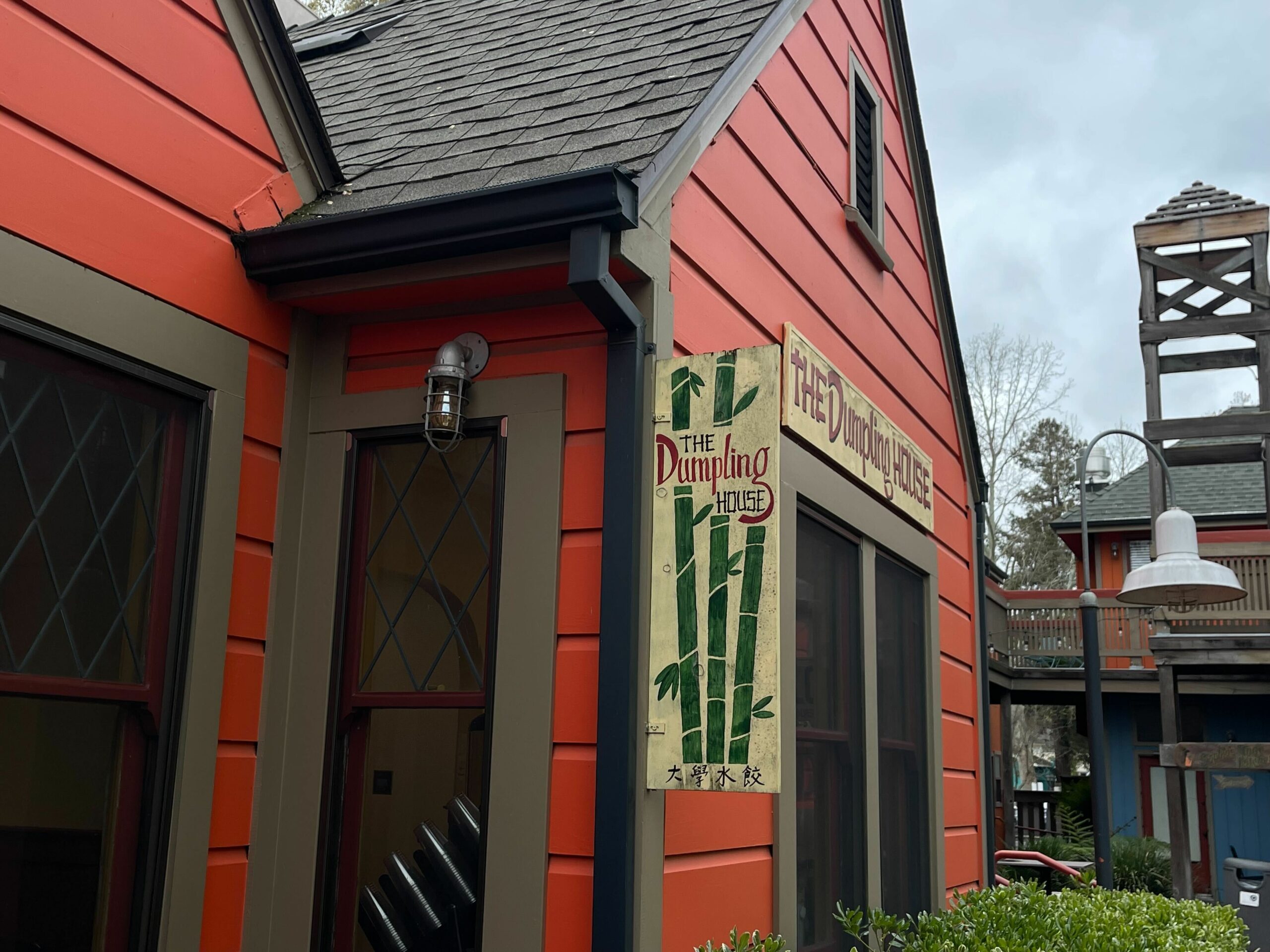
The Dumpling House, located in the heart of downtown Davis, was voted Best Restaurant by UC Davis students, receiving 35.8% of votes in the competitive category. Despite popular neighboring restaurants such as Sophia’s Thai and Davis Noodle City, The Dumpling House manages to keep a strong and steady customer base.

The restaurant was originally a London Fish ‘N Chips restaurant and still contains elements of this cuisine, embracing a quirky menu that includes both dumplings and fish ‘n chips. 

Courtesy of Alex Upton

Restaurant Manager Ivy Mai has worked at the Dumpling House since 2012, experiencing both a four-year closure and a remodel during her time working for the restaurant. Like many of the businesses in downtown Davis, the restaurant operates out of a converted house that gives it a close-knit feel. Mai talked about how this atmosphere and her bond with her coworkers contribute to the store’s ambiance. 

“I love working here, we treat everyone here like a family member, we are happy every day and we work together as a team,” Mai said. 

Mai’s favorite item on the menu is the pork and chive dumplings., which she says are not only delicious but also have a sentimental value for her. 

“I started out as a waitress here in 2012, and then if it wasn’t busy, I would try to make dumplings, and then I learned how to make them from my co-worker,” Mai said. Now, making dumplings is her favorite part of working at the restaurant.

UC Davis student Mili Molinari agrees with Mai that the pork and chive dumplings are the best item on the menu. Molinari is a second-year environmental engineering major and lives near The Dumpling House, so she eats there often. She said that she appreciates the consistency of their food and the welcoming environment. 

Clearly, the friendly staff is a big draw for students, as Molinari made a point of describing how welcoming everyone is when she comes in. 

“The food is really good; it’s a super friendly environment,” Molinari said. “And I really like the staff here, they’re super nice.” 


Written by: Alex Upton — features@theaggie.org


Best Grocery Store: Trader Joe’s


By LILY FREEMAN — features@theaggie.org


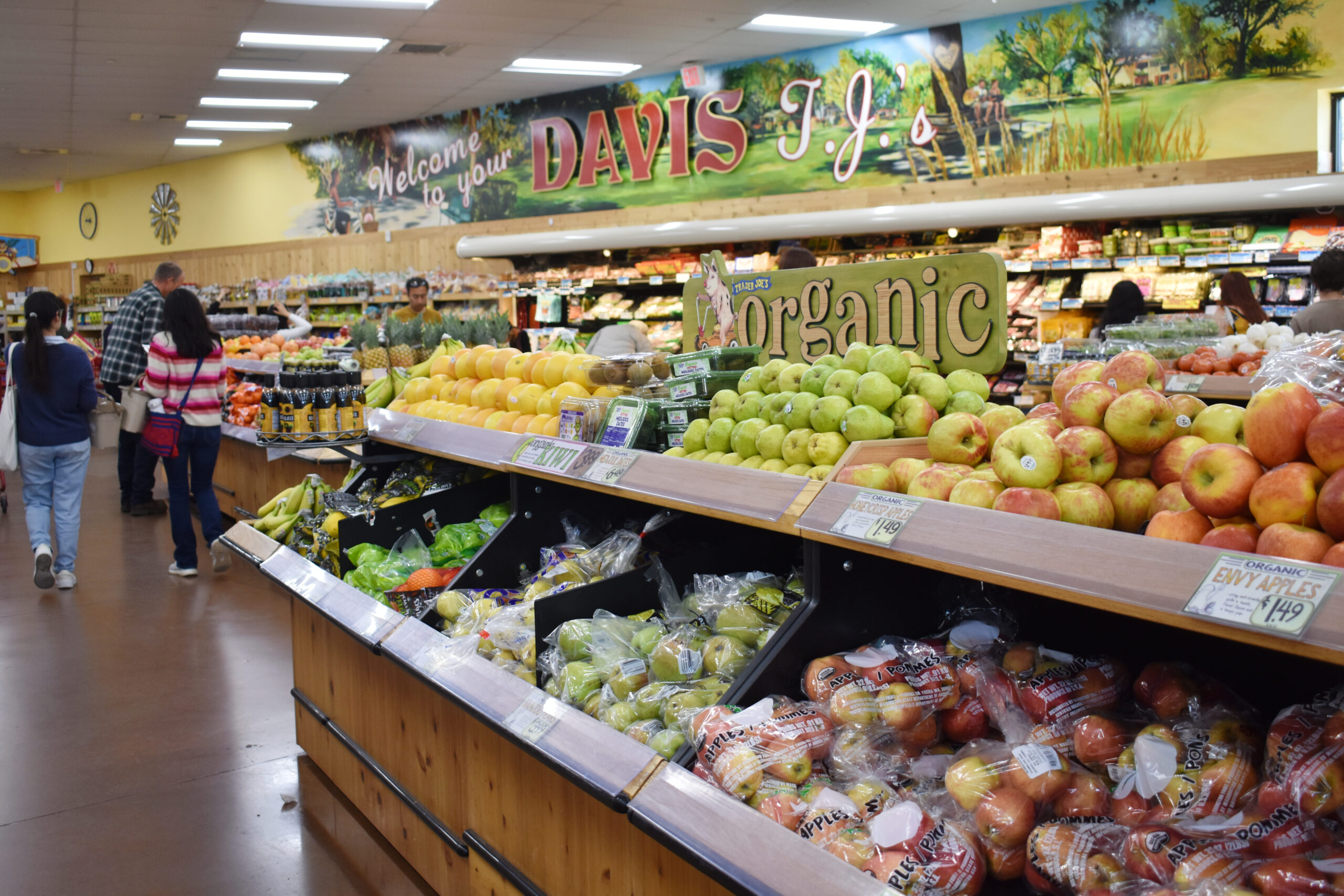
Famous for its high-quality food selection, affordability and engaging crewmembers, Trader Joe’s provides the best grocery shopping experience most college students could ask for. Whether it’s purchasing one-of-a-kind snacks on the way to class or stocking up on the frozen essentials (vegetable gyoza, jasmine rice) to get through the quarter, it is clear why 64.6% of surveyed students believe it is the best grocery store in Davis. 

Trader Joe’s is a heavily trafficked grocery store in Davis. (Kayla Bruckman/Aggie)

Not only are their snack and meal varieties unique, but Trader Joe’s also creates an inviting environment that keeps customers looking forward to their next shopping experience. 

“I always feel welcome in that store,” Ella Swadley, a second-year human development major, said. “It is my favorite grocery store mostly because of the community that it brings together.” 

The store appeals to customers of all kinds, from families with bright-eyed children thrilled to complete the scavenger hunt for the store mascot, Agnes the Cow, to students in need of a midterms pick-me-up via the seasonal stickers and lollipops offered at checkout. 

Emmeline Thomsen, a second-year design and sociology double major, explained why Trader Joe’s is her go-to grocery store. 

“It is a lovely environment to shop in because of the friendly workers that are always engaging and kind,” Thomsen said. “As a design student, I also love the colorful signage. It brings a more fun element to shopping. Of course, they also have delicious food, ranging from fun snacks to yummy frozen meals that are essential as a college student.” 

Amelia Swanson, a second-year sustainable environmental design major, said that she is hooked because of the affordability of the grocery store. 

“As a student, I am always searching for where I can get the most bang for my buck,” Swanson said. “Trader Joe’s makes it too easy. They know how to make everything they sell exciting and fun while keeping it cheap enough to give me the power to try it all.” 

Aside from its versatile and affordable product selection, Trader Joe’s is backed by upbeat workers. America Negrete, a fourth-year wildlife, fish and conservation biology major, described her experience as a crewmember at the grocery store. 

“I’ve been working at Trader Joe’s for a year now, and I can confidently say that it was one of my greatest decisions to apply,” Negrete said. “There is never a boring day. The environment is so welcoming and I’ve made some of my closest friends through the job. Most of us are students so we all have a deeper understanding of what we are going through and connect so well.” 

Max Isensee, a fourth-year political science major and crewmember at the Davis location, agreed.

“As an employee, Trader Joe’s has led me to making so many friends and connections,” Isensee said. “The job is all about human interaction and customer service, which is why customers keep coming back.” 

Open from 8 a.m. to 9 p.m. every day, expect not just an average grocery shopping trip but a well-rounded experience created by both the exciting products and passionate workers when stopping by Trader Joe’s. 

Written by: Lily Freeman — features@theaggie.org

Best Student Club: Rocky Horror Picture Club

Rocky Horror Club wins 35.8% of the vote for its unique and engaging performances


By SYDNEY AMESTOY — features@theaggie.org

 

If you’re looking for a club on campus that will offer you a unique experience, look no further than UC Davis’s very own Rocky Horror Picture Club. The club puts on interactive screenings of the cult-classic film, “The Rocky Horror Picture Show” monthly; these popular shows helped the group win best student club this year with 35.8% of the vote. 

The club puts on elaborate productions with live performances alongside a screening of the movie. Members of the club can perform or work behind the curtain in the technical realm. President and third-year neuroscience major Natalie Pearl created the club along with another student early last year. There was a previous Rocky Horror Picture Club on campus that did not return after the pandemic. 

“We play the movie on the screen,” Pearl said. “We do it in Rock Hall, and we act it out in front of the screen, and the audience yells at us and throws stuff. And it’s just such a beautiful, weird experience that you can’t really get anywhere else.”

Pearl explained more about why the film has a ‘cult-like’ following, both on and off campus.

“It’s like a parody of old horror movies,” Pearl said. “It’s like a parody and a love letter at the same time. And it’s a musical. And it’s about embracing your sexuality. And it doesn’t really have a plot. But it’s so fun.”

James Barton, a second-year biological sciences major and one of the original cast members in the club, spoke about his experience with the club over the last year.

“We love seeing people who come back every single month,” Barton said. “It’s so much fun. We love seeing people learn the lines and learn where to look and what stuff is going on. We love seeing the outfits and the creativity. We were so excited when we found out that we got voted [for Best of Davis].”

The club’s next show is on April 14 in Rock Hall at 7 p.m. Part of what keeps people coming back month after month, according to Pearl, is that each month’s showing has a different theme: months have been based around Mario, Star Wars, Pride and more. Since the club’s first performance took place on April 15 last year, this will be an anniversary show that is Davis-themed. You can find more details on Instagram at @rockyhorrorclubatucd.

Written by: Sydney Amestoy — features@theaggie.org
Best ASUCD Unit: The CoHo


By RACHEL GAUER— features@theaggie.org


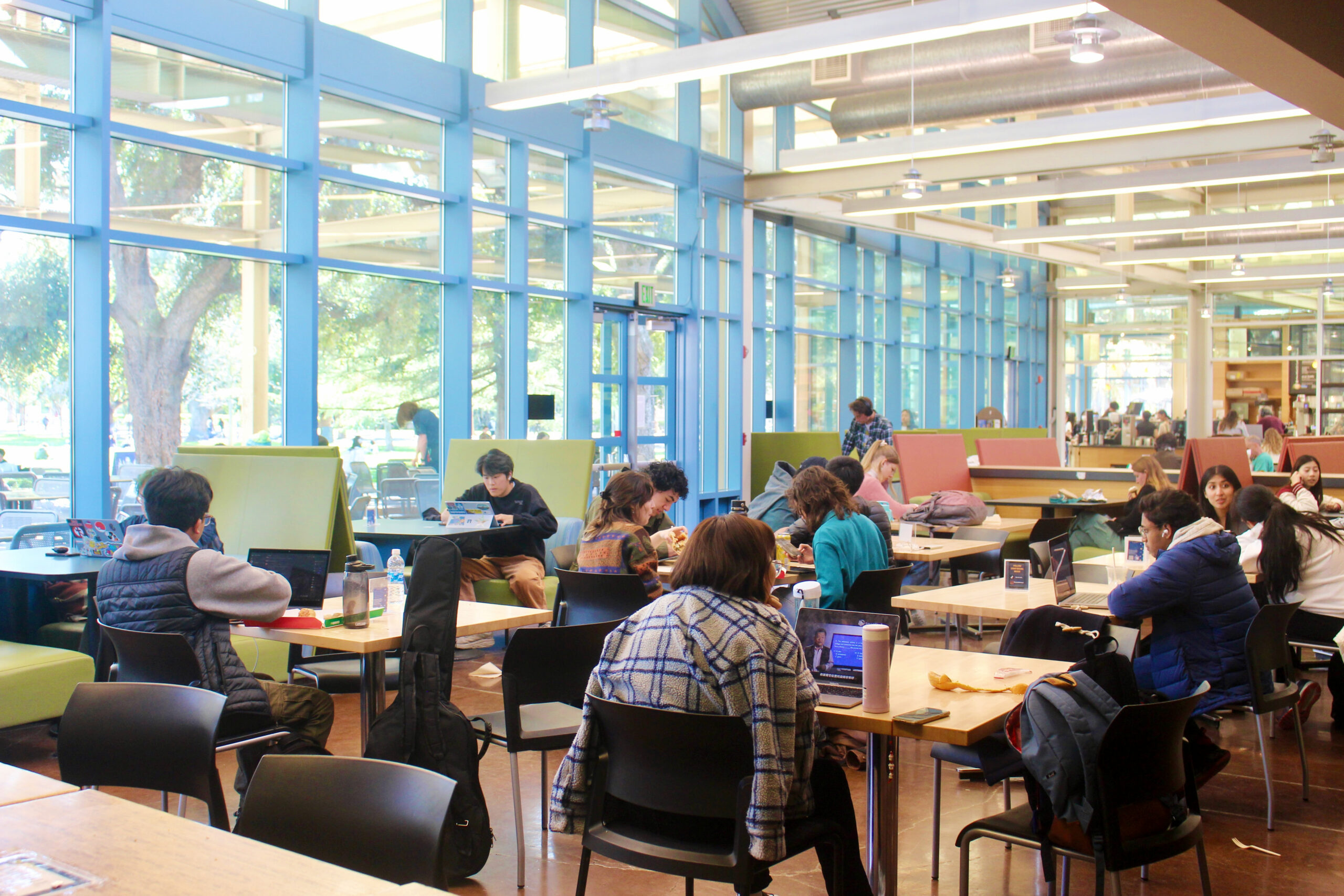
Established in 1968, The ASUCD Coffee House (or to many, simply ‘the CoHo’) provides a centrally located meeting place, study area and on-campus dining option. Students often deem the CoHo the main star of the Memorial Union, with its spacious dining room, delicious pastries and community-oriented feel, all of which contributed to it winning the title of Best ASUCD Unit this year with 50% of the vote. 

For third-year political science student Audrey Laskey, the CoHo serves as a convenient on-campus location for both socializing and relaxing.  

“I feel like the CoHo is a lot of students’ ‘home base’ when on campus,” Laskey said. “I always see people I know [there] and I love that I can interact with friends and be productive simultaneously. Even if I only have a few minutes in between classes, it’s always my go-to spot when I need somewhere to chill for a bit.” 

The Coffee House also reflects Davis’s mission to be a sustainable university. Sophie Kamenov, a second-year cognitive science major and CoHo cashier, described the cafe’s sustainability efforts.

“One of the [main] Davis vibes is being eco-friendly,” Kamenov said. “Here at the CoHo, we use environmentally safe cups, straws and utensils. We also have our very own compost and recycle machine. We ensure quality food and service while also attempting to do our part in reducing greenhouse gasses.” 

The CoHo was originally established nearly 50 years ago to create an environment similar to the one Laskey described — one that acts as both a coffee shop and a gathering place for students. 

Kamenov began working at the CoHo earlier this school year, a decision that she said was partly due to its welcoming environment.

“I think [the] CoHo was nominated as the Best ASUCD Unit for Best of Davis for multiple reasons,” Kamenov said. “However, the strongest reason for me would be the student culture. It is unmatched anywhere else on campus.”

The Coho, in the MU, is a relaxing place to grab a coffee and study with friends. (Jersain Medina/Aggie)

Though the dining options are frequented by many, it is the CoHo’s overall environment that students point out as being particularly outstanding. Laskey also commented on the impact that the CoHo’s culture has on the overall “feel” of Davis.  

“Everyone that works [at the CoHo] is super amiable and it’s a great place for meeting up with friends, which I think really reflects Davis as a whole,” Laskey said. “I think one of my favorite aspects about UCD and the city of Davis is the tight-knit community, and the atmosphere at the CoHo does a great job at fostering that.”


Written by: Rachel Gauer — features@theaggie.org


Canvas Jumpscare


Drawn by: Priscila Jiménez Corrales –– pjimenez@ucdavis.edu 

Disclaimer: (This cartoon is humor and/or satire, and its content is purely fictional. The story and names of “sources” are fictionalized.)

Why coffee shops shouldn’t charge extra for non-dairy milk

Sustainability and inclusivity are just some of the benefits of making alternative milk more affordable


By EMILIE BROWN — emrbrown@ucdavis.edu


As a coffee aficionado and a proud planet-conscious consumer, I have always been on the lookout for ways to reduce my carbon footprint. So when I see a coffee shop or cafe promoting their eco-friendly values and offering non-dairy milk options like almond, soy or oat milk, I am all for it. But the majority of the time, these same coffee shops charge extra (a lot extra when you’re a broke college student) for milk alternatives. It’s time to spill the beans on why coffee shops need to stop charging customers who choose planet-friendly milk options more.

First and foremost, if coffee shops truly value sustainability, charging extra for alternative milk goes against their purported environmental principles. It’s like saying, “We care about the planet, but only if it doesn’t cost us anything.” It is a classic example of greenwashing, which is when companies claim to be environmentally conscious but repeatedly fail to back up that statement with meaningful actions.

Moreover, the argument that these shops charge more because milk alternatives cost more doesn’t hold water. It’s true that alternative milks are, on average, slightly more expensive than cow’s milk, but the price difference is minuscule. A standard gallon of alternative milk costs just $1.62 more than cow’s milk, which means that the average cafe drink costs as little as $0.06 more to make with a milk alternative than with cow’s milk. Yet some coffee shops have the audacity to charge as much as $1.25 extra for alternative milk. Coffee shops are profiting off of you making smart, environmentally conscious and health-conscious choices.

Additionally, charging extra for alternative milk perpetuates a classist coffee culture. It creates a divide between those who can afford the extra cost and those who can’t. It’s a luxury that not everyone can indulge in, and it’s unfair to penalize customers who are trying to make sustainable choices on a budget. The pursuit of eco-friendly living should not be a privilege reserved only for the wealthy, but rather an option available to everyone.

Here in Davis, so many students look forward to a refreshing, energizing cup of coffee to fuel our labs, discussions, lectures and assignments. But most of us need to save money for essentials, so we are torn between wanting to choose the eco-friendly option and not wanting to spend the extra money every time we buy a coffee.

Charging extra for alternative milk also goes against the spirit of inclusivity. Many people choose alternative milk options due to dietary restrictions, lactose intolerance or ethical reasons. By charging extra for these choices, coffee shops are essentially penalizing customers for their personal preferences and needs. It’s time to show some empathy and understanding toward the diverse needs of coffee drinkers and make alternative-milk options an inclusive and affordable choice for all. 

As consumers, we have the power to demand change. Next time you visit your local coffee shop, speak up, express your concerns and ask that the shop reconsider its pricing policy for alternative milks. Together, we can encourage coffee shops to align their practices with their proclaimed eco-friendly values. After all, a small change in pricing can lead to a big change for the planet. Let’s work together to create a coffee culture that truly values sustainability, inclusivity and affordability. Cheers to a brighter, greener and more delicious future!


Written by: Emilie Brown — emrbrown@ucdavis.edu

Disclaimer: The views and opinions expressed by individual columnists belong to the columnists alone and do not necessarily indicate the views and opinions held by The California Aggie.

El consejo de la ciudad de Davis discute el problema actual de la crisis de vivienda, recomendaciones para el informe del estado sobre el Crecimiento a Largo Plazo

En la actualidad existe un debate sobre las medidas en que la ciudad de Davis deberá desarrollarse en su tierra periférica


Por ANTHONY W. ZAMMIKIEL —  city@theaggie.org 

Traducido por JOSÉ HERNANDEZ

Read this article in English.


El 4 de abril, el consejo de la ciudad de Davis recibió una actualización del subcomité detallando el informe del estado sobre el Crecimiento a Largo Plazo, el cual se refería a la expansión hacia el exterior dentro de la periferia de Davis. El subcomité de Crecimiento a Largo Plazo que incluye al alcalde de Davis Will Arnold y miembro del consejo Bapu Vaitla, entregaron recomendaciones detallando como la ciudad debería “desarrollar un marco propuesto para comprometer a la comunidad en visualizar a futuras necesidades de viviendas y expectativas sobre el crecimiento periférico.”

La comunidad de Davis está dividida sobre la medida en la que la ciudad debe continuar desarrollándose en la periferia y cómo los nuevos desarrollos abordarán la crisis de vivienda asequible, lo cual es un problema actual en el estado de California y en Davis. 

“El enfoque intencional del subcomité fue desarrollar un conjunto de criterios provisionales mediante los cuales se evaluarán proyectos propuestos y potenciales de anexión y desarrollo,” se lee en el estatus del reporte. “Los criterios provisionales servirían como un puente y darían una guía para la consideración de tales propuestas hasta que se elabore y adopte un Plan General actualizado.”

El subcomité se dio cuenta que a la hora en que la reunión del subcomité empezó, había cuatro planes de vivienda desarrollados para que el consejo los considerara. Tres de los cuatro estaban localizados dentro de la periferia de Davis y los cuatro requerían que la comunidad de Davis votará para cambiar el anterior uso de tierra de la agricultura para un uso residencial. En un mínimo, los cuatro planes proponen desarrollos que requerirían que el consejo considerara cambiar la designación de 745 acres. Este número está sujeto a cambiar según lo determine el consejo sobre si permite que los desarrollos prosigan. Si el consejo permite que los desarrollos prosigan, ellos entonces requerirían a la comunidad de Davis, votar basados en la Medida de requerimientos J/R/D. 

Elizabeth Foreman, una residente del norte de Davis, cree que los desarrollos vienen con aspectos positivos y negativos. 

“He estado en Davis desde que tengo memoria y se siente como si se hubiera convertido en un lugar de tierra de nadie donde la gente normal no puede darse el lujo de estar aquí, y pienso que la ciudad tiene la idea correcta en empezar a construir todos estos nuevos desarrollos,” Foreman dijo. “Quiero decir, tenemos toda esta gente viniendo y la población está aumentando y no tiene sentido porque deberíamos dejar de construir nuevas casas y nuevos condominios porque los vamos a necesitar pronto.”

El subcomité estableció principios preliminares de guía para que el consejo los considere cuando apruebe los proyectos de desarrollo de periferia, incluyendo una estipulación que los proyectos de periferia necesitan contribuir para satisfacer el “Regional Housing Needs Assessment,” que requiere que Davis desarrolle 530 viviendas de ingresos muy bajos y 350 viviendas adicionales de bajos ingresos para el 2029. 

“La ciudad está en camino de cumplir sus moderados y por encima de los objetivos de ingresos moderados en este ciclo, pero las unidades de bajos ingresos y muy bajos ingresos continúan siendo un reto,” las recomendaciones de desarrollo y evaluación del comité decían. “Desarrollos que superan los requisitos de porcentaje total de viviendas asequibles especificado en la sección 18.05 del Código Municipal de la Ciudad de Davis serán fuertemente preferidos, al igual que los desarrollos que brinden una combinación de asequibilidad más ponderada hacia unidades de ingresos extremadamente bajos y muy bajos de lo que exige el Código. 

En el desarrollo de recomendaciones enfocándose en viviendas asequibles, el subcomité se dio cuenta que desarrollando la periferia de Davis requiere considerar la medida en la cual estos desarrollos puedan positivamente o negativamente impactar los ecosistemas de los alrededores. Ellos señalaron que cualquier y cada desarrollo debe promover y priorizar la transportación que no contribuye a las emisiones de combustibles fósiles en curso y no debería interferir con el plan de la ciudad para ser neutral en carbono para 2040.

Las consideraciones ambientales que el subcomité señaló en su evaluación han sido sujetas a discusión y debate a través de la comunidad de Davis. El “Sierra Club chapter” representando al condado de Yolo preparó cuestionarios para los candidatos en las elecciones del distrito en todo Davis sobre las posiciones de los candidatos en el desarrollo de la periferia. 

La comunidad de Davis también permanece dividida sobre si el desarrollo en la periferia abordaría la crisis de viviendas asequibles dentro de la ciudad.

Maricela Lopez, una estudiante de tercer año estudiando Estudios Americanos, comentó cómo el proceso de vivienda dentro de Davis se ha vuelto más y más difícil, con los estudiantes experimentando estrés adicional cuando tienen que buscar vivienda fuera del campus. 

“Usualmente, los estudiantes están en su propia cuenta y a veces son víctimas de contratos de arrendamiento y viviendas que son menos que adecuadas y explotadoras,” Lopez dijo. “La vivienda estudiantil, en particular, es un tema increíblemente tedioso y estar entrelazada con discriminación, desventaja y explotación, es muy difícil navegar y sentirse empoderada cuando se busca una vivienda.”


Escrito por: Anthony W. Zammikiel – city@theaggie.org

Traducido por: José Hernandez

Nomination period for the Golden Heart awards extended

The city of Davis extended nominations for the annual awards that recognize Davis youths’ contributions to the community


By ALEX UPTON — city@theaggie.org 


The city’s annual Golden Heart awards nomination period for 2023 has been extended to April 17, according to a press release on Tuesday. These awards recognize outstanding youth in the community and, in particular, what the city describes as “non-traditional” achievers. There are two award categories, the service award and the personal challenge award. 

The awards were created in remembrance of former Holmes Junior High School student Andrew Mockus, who was tragically killed by his peers in a 1992 incident when he was 14. In 1994,  the Davis city council adopted the Golden Hearts awards, proposed by Recreation and Park Commission which reaffirmed and expanded its commitment to support Davis youth following the event. 

Kellie Vitaich, the community services program coordinator for the city, discussed other steps the city has taken to protect its youth after the death of Mockus. 

“The city has a variety of programming that spans the needs and interests of teens in our community, though that may not necessarily be a direct impact of the death, but as a continued focus towards the well-being of our youth,” Vitaich said. 

Vitaich said that any Davis student between 7th and 12th grade making a positive impact in their community is a good candidate for the award. She explained that there are many different circumstances under which a youth may be awarded for their actions and that the recipient selection committee tries to award youth who are not typically recognized in other forums. 

“Previous recipients have been recognized for volunteer work in their communities, overcoming medical challenges (such as childhood cancer, heart issues or cerebral palsy) and personal obstacles (such as the loss of a parent or sibling) or excelling in school while learning English as a second language,” Vitaich said. 

Mayor Will Arnold said that it is a priority to make sure that “Davis youth feel seen and heard.” 

“Their perspectives are so valuable as we navigate today’s issues,” Arnold said. “The Golden Heart awards honor young people who have demonstrated resilience in the face of hardship and who have devoted themselves to the service of our community. I look forward to meeting the award winners and drawing inspiration from their experiences.”

Written by: Alex Upton — city@theaggie.org

Davis city council discusses the city’s ongoing housing crisis, recommendations for Long Range Growth Status Report

Debate is ongoing about the extent the city of Davis should develop into its periphery land


By ANTHONY W. ZAMMIKIEL city@theaggie.org

Lea este artículo en español.


On April 4, the Davis city council received a subcommittee update detailing the Long Range Growth Status Report, which concerned outward expansion within the Davis periphery. The Subcommittee on Long Range Growth, which includes Davis Mayor Will Arnold and Councilmember Bapu Vaitla, delivered recommendations detailing how the city should “develop a proposed framework to engage the community in visioning for future housing needs and peripheral growth expectations.” 

The Davis community is divided about the extent that the city should continue to develop into the periphery and how new developments will address the affordable housing crisis, which is an ongoing issue in the state of California and in Davis. 

“The intended focus of the Subcommittee effort was to develop a set of interim criteria by which to evaluate proposed and potential future annexation/development projects,” the status report read. “The interim criteria would serve as a bridge and provide guidance for consideration of such proposals until such time that an updated General Plan is crafted and adopted.”

The subcommittee noted that at the time the subcommittee meeting started, there were four proposed housing development plans for the council to consider. Three of the four were located inside the Davis periphery and all four required the Davis community to vote on changing the previous agricultural land usage to residential usage to go forward. At a minimum, the four proposed developments would require the council to consider changing the designation for 745 acres. This number is subject to change as the council determines whether to allow the developments to proceed. If the council does decide to allow the developments to proceed, they would then require a Davis community vote based on Measure J/R/D requirements. 

Elizabeth Foreman, a resident of North Davis, believes that the developments come with positive and negative aspects.

“I’ve been in Davis since as far back as I can remember, and it just feels like it has become this no-man’s-land place where normal people can’t afford to be here, and I think that the city has the right idea to start building all these new developments,” Foreman said. “I mean, we have all these new people coming in, and the population has just been booming, and it doesn’t make any sense why we should stop building new houses and new condos because we are going to need them soon.”

The subcommittee established preliminary guiding principles for the council to consider when approving periphery development projects, including a stipulation that periphery developments need to contribute to satisfying the Regional Housing Needs Assessment, which requires Davis to develop 530 very-low-income housing units and an additional 350 low-income housing units by 2029. 

“The City is on track to meet its moderate and above moderate-income targets in this cycle, but very low- and low-income units remain a challenge,” the subcommittee assessment and development recommendations read. “Developments that exceed the total affordable housing percentage requirements specified in Section 18.05 of the City of Davis Municipal Code will be strongly preferred, as will developments that provide an affordability mix weighted more heavily towards extremely low- and very low-income units than is required by the Code.”

In the development recommendations focusing on affordable housing, the subcommittee noted that developing the Davis periphery requires considering the extent to which these developments could positively or negatively impact the surrounding ecosystems. They noted that any and every development should promote and prioritize transportation that does not contribute to ongoing fossil l emissions and should not interfere with the city’s plan to be carbon neutral by 2040.

The environmental considerations that the subcommittee noted in its assessment have been subject to discussion and debate throughout the Davis community. The Sierra Club chapter representing Yolo County prepared questionnaires for candidates within the district elections throughout Davis about candidates’ stances on periphery development. 

The Davis community also remains divided on whether developing into the periphery would address the affordable housing crisis within the city. 

Maricela Lopez, a third-year American Studies major, commented on how navigating the housing process within Davis has become more and more challenging, with students experiencing additional stress when it comes to searching for off-campus housing.

“Usually, students are left to their own devices and will sometimes fall prey to leases and housing that is less than adequate and exploitative,” Lopez said. “Student housing, in particular, is an incredibly tedious topic, and being intertwined with discrimination, disadvantage and exploitation, it is hard to navigate and feel empowered when searching for housing.”


Written by: Anthony W. Zammikiel  — city@theaggie.org

Politicians should defer to medical experts

The potential abortion pill ban sets a dangerous precedent for government officials making medical decisions that conflict with scientific evidence 


By THE EDITORIAL BOARD


On April 7, a federal judge in Texas ruled to suspend the Federal Drug Administration’s (FDA) approval of the abortion pill mifepristone. A federal appeals court prevented an outright ban on sales but upheld other parts of the decision that would, if further upheld by the Supreme Court, restrict access to mifepristone in the U.S. significantly, including prohibiting mail order delivery and reducing the number of pregnancy term days before it is no longer usable from 70 to 49. 

The ruling is only the most recent action in a string of anti-abortion legislation since the overturn of Roe v. Wade, but this case in particular has dangerous implications for the power of legislative bodies to subvert decisions made by federal departments and undermine the authority of scientific research. 

First approved by the FDA in 2000, mifepristone is taken alongside misoprostol to end a pregnancy in its early stages, and is also, in some cases, used to safely manage miscarriages. According to an article published by NPR, misoprostol-only medication-induced abortions are still considered safe and effective for the pregnant person, and are often prescribed when mifepristone isn’t readily available; however, patients experience fewer side effects when taking both pills, and it often reduces the need for a second procedure.

Restricting access to mifepristone would make medication abortions harder to obtain, even in states where access to abortions isn’t currently being threatened. The Editorial Board contends that abortion is healthcare, and the decision to end or carry a pregnancy to term is between pregnant persons and their doctors. 

The Texas ruling follows a similar pattern to politicians attempting to ban COVID-19 vaccine and mask mandates, and even ban mRNA vaccines altogether. Government officials have a history of not listening to scientists or governmental health organizations in favor of pushing their own political agendas. Politicians and court judges should recognize the areas they do not have expertise in and respect the decisions of the experts in those fields.

Beyond its effects on abortion access, this decision could open the door to future invalidations of FDA approvals of drugs that are important to the health of millions of U.S. citizens. Even some anti-abortion legislators oppose courts overturning FDA approvals. According to ABC News, pro-life Republican Rep. Nancy Mace of South Carolina spoke against the ruling on CNN.

“This is an FDA-approved drug,” Mace said. “I support the usage of FDA-approved drugs. Even if we might disagree, it’s not up to us to decide as legislators or even as the court system whether or not this is the right drug to use or not.”

The bipartisan backlash against the Texas court decision should be evidence enough that this is not the right way to approach legislation, no matter your political ideology. 

Science should inform policy, especially when it is backed by trusted health organizations and federal health departments, and policy should never undermine science. The Editorial Board urges you to vote for politicians who protect healthcare and respect the authority of medical experts.


Written by: The Editorial Board

A sneak peek into the entertainment lineup for Picnic Day 2023

Indie music, stand-up and African dance all have a place on this year’s stage


By CORALIE LOON — arts@theaggie.org 


With Picnic Day 2023 just around the corner, local artists and performers are getting ready to celebrate another year of Aggie pride and Davis community. The official Picnic Day website has been counting down the days until this well-loved tradition, and many are stoked for the return of on-campus classics. Events include Doxie Derby and cow milking as well as a long lineup of local entertainment that brings together musicians, dancers, comedians and more. 

Music has always been a staple of the Picnic Day magic, spreading good vibes and celebration. One act featured this year is Rainbow City Park, named after the local Davis park and play structure. Originally formed by band members Chris O’Keefe and Dwight Struthers, the band came to its current form after adding members Nick Nassab, Ryan Williams and Danielle Judith.

Judith, a singer, guitarist and keyboardist, reflected on finding the other band members through Facebook, which helped them realize they had mutual friends in the Sacramento area. 

“I ended up reaching out and we ended up jamming and it worked out,” Judith said.

The indie-rock band will be releasing new music this May across streaming all platforms and will be announcing new show dates this summer.

On Picnic Day, Rainbow City Park will be playing two shows — one at the Sound Waves Stage on campus at 12:40 p.m. and another at Turtle House, an art-centered housing co-op, at around 4 or 5 p.m.

Judith shared her excitement about the other musicians set to perform at Turtle House alongside Rainbow City Park.

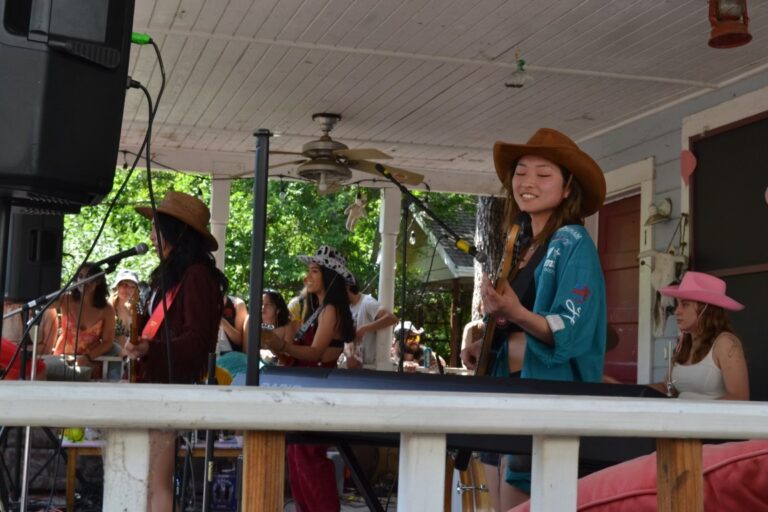
“There’s just a bunch of different bands from a bunch of different genres that are coming together to play on this porch, so I’m really stoked for that,” Judith said.

For lovers of music, alternative spaces and good times, Turtle House will be a great place to check out on April 15. But for those also interested in seeing what on-campus clubs and organizations will be showcasing, Afrovibe’s performance is something you definitely won’t want to miss.

This African dance group specializes in African and Afro-Caribbean dance styles. Their slogan is “catch the beat, feel the vibes,” and that perfectly describes how they hope their art is perceived. Afrovibe will be performing at Sounds of the Horizon Stage at 11:30 a.m.

Dionna Eaglin, the internal vice president of Afrovibes, joined the group without experience in African dance, but soon grew to love it. 

“We’re really welcoming and supportive and I just want our vibes to rub off on [the audience], so that they can also have a good time while watching us and maybe even dance themselves,” Eaglin said.

Tayven Thompson, a fourth-year political science and African/African American studies double major, has been on the dance team since she was a first-year student. For Thompson, finding such an open and accepting community was a relief.

“The Black community at Davis is pretty small,” Thompson said. “So just having that safe space, especially as a freshman, and coming into that environment made me feel very welcomed, and it made me feel like I actually belong here at Davis.”

She and Eaglin hope that Picnic Day will be an opportunity for people to have fun, vibe and enjoy all that African dance has to offer. Anyone interested in joining the dance team is encouraged to come to tryouts on April 21 from 6 p.m. to 8 p.m. at the U Center.

But Picnic Day doesn’t just feature music-based performances; it also welcomes other student organizations and entertainers, including UC Davis’s Stand Up Comedy Club (StUCC). Featured this year are comedians Hannah Hayes and Jay Light, who will be at the Sound Waves Stage at 12:10 p.m. (making it the perfect set to watch before Rainbow City Park).

Hayes, a second-year communication major, joined StUCC this past fall and performed her first show in November.

“My dad was a stand-up comic, so I thought ‘Oh, maybe I’ll try it out,’ and it was honestly a lot of fun,” Hayes said.

So far, she has nothing negative to say about her experience in the organization.

 “I love all the people in the club, they’re all really funny and really supportive and so nice. It honestly just [feels] like such an amazing organization and group to be a part of.”

Hayes enjoys story-based comedy, as well as incorporating material from her own life into her sets.

“I also like making fun of things,” Hayes said. “I find that to be a lot of fun.”

StUCC events are the perfect opportunity to decompress, let loose and bring a little joy to your day, which is what Picnic Day is all about. Hayes encourages anyone who’s interested in comedy or making new friends to attend a StUCC meeting, which take place on Tuesdays and Thursdays at 7 p.m.  More information can be found on the group’s Instagram page.

Regardless of what you’re most excited to see this Picnic Day, we’re sure you’ll find something worth your time and hope you take the opportunity to see what local artists and performers have to offer to the community.

This is just a snippet of what’s to come; if you want to check out what other entertainment will be happening on Picnic Day, check out the Picnic Day Entertainment page for all official events.

Let the picnic begin!

Written by: Coralie Loon — arts@theaggie.org