55.5 F
Davis

Davis, California

Tuesday, December 23, 2025
Home Blog Page 221

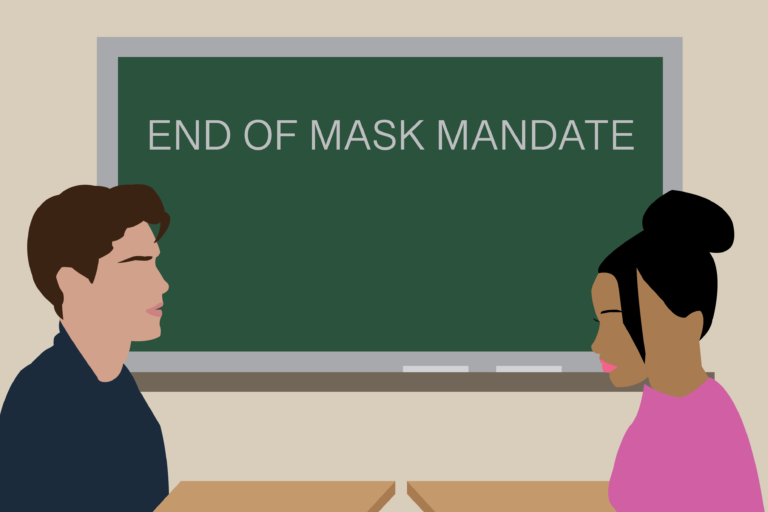
UC Davis enters first quarter without mask mandate since 2020

Changes to COVID-19 guidelines allow students the option to return to classes post-spring break without masks

By ANGELINA ANGELO and MONICA MANMADKAR — campus@theaggie.org


This quarter, students have the option to not wear a mask in indoor settings on campus. The mask mandate was lifted on March 19, the first day of spring break, but in a newsletter sent out on March 8, Chancellor Gary May stated that people who choose to wear masks are encouraged to do so. Masks are still strongly recommended by UC Davis Public Health Officials for both the unvaccinated and vaccinated individuals. 

The university supports those who wish to continue to mask indoors, including those who are immunocompromised or otherwise concerned,” the announcement regarding the change to indoor masking states.

Provost Mary Croughan predicted that many students will continue to wear masks even though they are no longer required to protect themselves and others.

“Just like our return to in-person instruction in fall of 2020, this change will likely take two weeks for students to become more comfortable, make adjustments and return to a sense of normalcy,” Croughan said.

With over 99% of students and 96% of staff vaccinated, the positivity rate for COVID-19 has been consistently low since the omicron spike in early winter quarter. In the last 30 days, the positivity rate has been 0.15% with 83 positive results among 55,256 asymptomatic tests. 

“The virus is doing exactly what [the medical community] expects a virus to do,” Croughan said. “The virus will likely continue to mutate, and while the future is unknown, we have strong precautions in place. We have high vaccination rates, treatments for early-onset sickness and a great testing program. We also still strongly encourage wearing a mask, as it reduces your risk of infection by 95%, according to officials.”

Croughan shared that some instructors are particularly happy with the lifted mask mandate, as they have experienced issues teaching through a mask, while others feel anxious about the new protocol. In addition to faculty concerns, some students express heightened anxiety with the upcoming change.

“It’s interesting to see that we are heading in the right direction for a more maskless school year, but it is still important to be cautious about a potential uptick in cases as we are all returning to campus post-spring break,” said Jack Fagan, a first-year undergraduate student. “Wearing masks around campus, for the time being, is important for now.”

Croughan said she sympathizes with students experiencing fear and anxieties and recommended students contact instructors individually.

“I recommend students to visit the Student Disability Center to receive support,” Croughan said. “For short-term adjustments or issues, students should also reach out to individual faculty members or their advisors. Hybrid and adjustment options are solely up to faculty and the Academic Senate.”

Continuing in spring quarter, faculty also have the option to submit a request for student assistance to lecture capture all in-person instruction. Many faculty are taking advantage of this program, while some lecturers prefer to record themselves, according to Croughan.

Along with instructors and the administration, many students working on campus have also had to adjust during these unknown times. Alessandra Beelen, a third-year biochemistry and molecular biology student, shared her thoughts on the lifting of the mandate as it pertains to her position as a community advisor living in Segundo.  

“On a practical level, my job will be easier, as many residents have not been following the mask policies,” Beelen said. “There will be less documenting that will need to be done, and on a safety level, I don’t think that much will change as our residents hang out in other settings maskless already. It’s been odd telling them to wear a mask in the halls when I know they are elsewhere not wearing masks.”

Despite changes in masking policy, the testing policy will remain the same as winter quarter. Students and staff who have not received their booster shot or are not vaccinated will continue to get tested every four days, while the vaccinated public are expected to test every two weeks. All students living in residence halls will also return to testing every two weeks.

Any further updates can be found on the Campus Ready dashboard.


Written by: Angelina Angelo and Monica Manmadkar — campus@theaggie.org



Upcoming events in April

Live music, talks, campus events and more to check out in Davis this April

By CLARA FISCHER — arts@theaggie.org


“Sankofa” (Veterans Memorial Theatre, 7 p.m. on April 1, 2 and 9 and 2 p.m. on April 3 and 10)

Sandy Lynn Holman, equity specialist, educator counselor, activist and founder and director of the Culture C.O-O.P., has partnered with Bike City Theater Company to produce “Sankofa.” The workshop play is adapted from Holman’s children’s book entitled “Grandpa, Is Everything Black Bad?” Both the book and the play seek to explore African diasporic history and identity in a positive, family-friendly setting to highlight the importance of cultural competency, diversity, equity and inclusion. Tickets are available at the door, and will be “pay what you can” style. 


“The Sum of Us” (Mondavi Center for the Performing Arts, 7:30 – 10:30 p.m. on April 3)

Heather McGhee, author of the New York Times bestseller “The Sum of Us” and speaker in a viral TED talk exploring the same themes, is coming to Davis to discuss the devastating true cost of racism from an economical standpoint. Her talk will break down this issue and provide clear steps for further action, which will then be followed by a Q&A session moderated by Elisa Joy White, Ph.D. and Associate Professor of African American and African Studies. Tickets for the event can be purchased here


“Achieving Sustainable and Inclusive Development: Emerging Issues in Research and Policy” (Walter A. Buehler Alumni Center, 4 – 5:30 p.m. on April 11)

Join UC Davis Global Affairs and Dr. Mari Elka Pangestu (UC Alumna Ph.D. ‘86), the World Bank Managing Director of Development Policy and Partnerships, for a symposium on the current approaches and challenges to achieving sustainable and inclusive development. The event will feature a panel of UC Davis faculty experts who will highlight ways in which their research centers are contributing to “green, resilient and inclusive development,” as well as a keynote speech delivered by Dr. Mari Elka Pangestu. The link to register for the event can be accessed here


Picnic Day (UC Davis Campus, 9 a.m. – 5 p.m. on April 23)

One of Davis’ most beloved traditions, Picnic Day is finally fully back in-person after two years of the event being celebrated virtually due to COVID-19. Originating in 1909 as a community picnic held by the University Farm to showcase their new dairy barn, the event was taken over by a student committee in 1912, and has since established itself as an unshakeable part of the Davis culture. This year, the festivities will include a multitude of new and old traditions, starting off with the parade at 10 a.m. All will follow the theme “Rediscovering Tomorrow” which, according to their website, was chosen because “… right now, everyone has the opportunity to rediscover what their future holds.”


Las Cafeteras (Mondavi Center for the Performing Arts, 7:30 p.m. on April 28)

Experience the fusion of Afro-Mexican beats, rhythms and rhymes (with a positive message to boot) in East LA band Las Cafetara’s performance. The group pulls inspiration from a variety of different genres and sounds while singing in English, Spanish and a mix of the two to create music with purpose. Tickets for their April 28 show at the Mondavi Center are available here.


Written by: Clara Fischer — arts@theaggie.org


Yolo County Point in Time Count conducted on Feb. 23

Point in Time Count indicates how many individuals are experiencing homelessness

By SHRADDHA JHINGAN city@theaggie.org


In a press release published on March 4, Yolo County announced that the “2022 sheltered and unsheltered Point in Time Count (PIT) was conducted on Feb. 23.” According to the press release, this was the first time that the PIT was held since 2019 due to a rise in COVID-19 cases in winter of 2021. 

“Several County, community-based providers, and volunteers spread throughout the County to complete the count,” the press release reads. “Their effort proved an overall success, with the first time using an online survey tool to facilitate a smooth process.”

As part of the PIT count, each member of the team either conducted a survey in-person or counted visually if an individual declined to participate. Participants remain anonymous in the survey.

The survey was utilized to obtain demographics on individuals experiencing homelessness in Yolo County. This includes ethnicity, age, race, the duration of time the individual has been in Yolo County and how long they have experienced homelessness in order to determine and better understand what programs would help individuals experiencing homelessness. The press release also describes what the PIT is.

“First conducted in 2005, the PIT count is an unduplicated count of persons experiencing homelessness on a single night within the last 10 days of January (delayed by Omicron in 2022),” the press release reads. “Communities are required to collect basic demographic and household information. In addition, communities must identify if a person is chronically homeless, indicating long-time or repeated homelessness and the presence of a disability.”

Gary Sandy, the Yolo County supervisor and chair of the Yolo County commission to address homelessness, described that there were a large number of individuals volunteering towards the effort. The results of the survey will allow Yolo County to allocate resources more efficiently, among other things, Sandy described.

“This year’s Point In Time Count relied on a large number of community volunteers,” Sandy said in the press release. “They diligently crisscrossed the County to secure a reliable estimate of the numbers of homeless and unhoused. An accurate county count will enable us to better coordinate our resources, maximize State and Federal funding, and strategically address the needs of those who lack housing.”

The PIT is required by the U.S. Department of Housing and Urban Development (HUD) to be submitted by the end of April. Once finalized, it will be available on Yolo County’s website.

The 2019 PIT for Yolo County can also be found on the website. The PIT found that on Jan. 19, 2019, there were 65 individuals experiencing homelessness. However, the report also notes that the actual figure representing people who experienced homelessness in 2019 would be higher because families and individuals “move in and out of homelessness.”

In 2020, Secretary of HUD Marcia Fudge described in a video the results from the 2020 PIT for the U.S. Fudge stated that the data was from before the COVID-19 pandemic, which has most likely increased the number of individuals experiencing homelessness. 

“The results are startling,” Fudge said. “On any single night in 2020, roughly 580,000 experienced homelessness in the United States. Between 2019 and 2020, homelessness increased significantly among people sleeping outside or in places not meant for living, and among those who have experienced homelessness for a long time while also struggling with a disability. For the first time in many years, veteran homelessness and homelessness among families did not improve.”

In Yolo County, there are various programs and organizations to help those experiencing homelessness. One of these programs is formerly known as the Neighborhood Court program, now called Yolo Restorative Justice Partnership, which was created by the Yolo County District Attorney.

Marshall Aaron, a paralegal at the Yolo County District Attorney’s Office, explained what the programs entail as of 2017. Those who are experiencing homelessness and “who have low-level misdemeanor crimes” are connected with a social services practitioner and a case plan is created. The individuals are then connected with resources to complete the case plan, and after six months the charges can be dismissed. 

“We then go out into the homeless encampments and we find individuals that are referred to us or look for individuals that have already been signed up to participate in the program and we go there — bring snacks, bring water, bring Gatorade,” Aaron said in a video. “We even bring phones we buy so that we can have continued contact with them when we find housing for them. We then transfer their camp to a more permanent housing location.”

For students who may be experiencing homelessness, there are various programs and options which can be found on Aggie Compass’ website.

Written by: Shraddha Jhingan — city@theaggie.org


Yolo County Board of Supervisors approves expenditure plan for $1.5 million state grant for fire preparedness and mitiga

Officials are hopeful that the funds will help reduce the impact of California’s catastrophic wildfires

By LEVI GOLDSTEIN city@theaggie.org


On Feb. 22, the Yolo County Board of Supervisors approved an expenditure plan for a $1.5 million state grant for fire preparedness and mitigation.

According to Yolo County Office of Emergency Services (OES) Manager Dana Carey, the board set up listening sessions with Yolo County residents following the LNU Lightning Complex fires in 2020 to discuss suggestions for damage mitigation projects and improvements to emergency response efforts. These discussions inspired a partnership between the Board of Supervisors and Senator Bill Dodd to allocate funds from the state budget to Yolo County in order to help reduce the harm of wildfires in the region. 

The OES provides centralized coordination for emergency response teams, such as fire and police departments, during major emergency events and organizes prevention and preparedness efforts. According to Carey, in the event of a wildfire, the OES will monitor fire responders’ radios to gauge whether it will spread into Yolo County and then manage the response. 

“If we think it is going to be something larger than just a day-to-day fire response, then we will start working with the Yolo County Health and Human Services [Department] to stage activation of shelters,” Carey said. “We’ll work with the 911 service agency for what we call mass notification […] for evacuation purposes. We will have to evacuate animals in a lot of cases.”

Carey said that the OES operates the shelters by providing basic needs for evacuees. They also manage the repopulation process and coordinate recovery programs for people heavily impacted by the fire. According to Carey, funding is essential for emergency services operations. 

“It’s a huge job, and without a steady source of funding for emergency management agencies, a lot of them don’t have enough staff to do the work,” Carey said. 

Most of the funding for the OES comes from grants. At the Board of Supervisors meeting on Feb. 22, Carey presented a list of suggestions for mitigation and preparedness projects that could receive grant funds. The list was compiled in cooperation with the Yolo County Resource Conservation District (RCD) Fire Safe Council, according to RCD Project Manager Tanya Meyer. 

According to Meyer, community-organized fire safe councils are more grassroots efforts for fire response and prevention, such as local outreach and education. However, the Yolo County Fire Safe Council (YCFSC) was founded in 2021 as part of the Yolo County RCD. Being an official organization has advantages. 

“Many fire safe councils become nonprofits, 501(c)(3)’s, and they can apply for grant funding, but that takes a ton of work,” Meyer said. “So the Conservation District, we apply for grant funding all the time. We’re really good at getting grants and managing grants. We have offered to these local fire safe councils to be their fiscal agent for projects.”

The expenditure plan ultimately approved by the Board of Supervisors was informed by the LNU fire listening sessions and the advice from the YCFSC. According to Carey, the plan includes improvements to emergency alert systems where technology does not reach, fuel reduction efforts such as removing invasive eucalyptus trees and clearing dry brush and installing better address signs that are easier for responders to see from the road. 

The projects funded by the state grant, as well as community grassroots efforts, can reduce the risk of a wildfire spreading or creating excessive damages.
“They’re always going to happen, so the faster we can put them out and the more defensible space we have around the areas where they frequently happen, it just has a better chance of not turning into a larger fire,” Carey said. 

Written by: Levi Goldstein — city@theaggie.org

The joys of spring

The Editorial Board shares what we’re looking forward to in spring quarter

Anjini Venugopal, Editor-in-Chief

There is a simple joy that comes from laying on a field of grass with a group of friends, a good book and/or a favorite snack (it’s like Clue: Anjini on the West Quad with baby carrots and “Crying in H Mart”). Now that the sunset is at 7:30 p.m. or later, it’s the perfect way to get in some extra sun too — just remember your sunscreen and allergy medication and be wary of the far-too-bold squirrels.


Margo Rosenbaum, Managing Editor

Spring is my favorite season at UC Davis for many reasons, including the fact that it is when many animals are born on campus. If you are looking to view them up close, visit the various animal science facilities and check out the young cows, sheep, goats and my personal favorite, the spindly-legged newborn horses.


Sophie Dewees, Campus News Editor

Despite the fact that I’m nearing the end of my third year at UC Davis, I have never attended an in-person Picnic Day. I’m looking forward to seeing the baby animals, participating in many of the on-campus activities that the day is known for and creating new traditions with friends. 


Maddie Payne, City News Editor

While spring brings some much needed sunshine after the depressing winter months, those sunny days can quickly turn swelteringly hot, especially as June approaches. While I often flee to air conditioned buildings to avoid the peak heat, my favorite part of these days is emerging in the evening to a beautifully warm summer night, which I love to spend relaxing outside with friends, chatting over some gloriously cold beers.


Eden Winniford, Opinion Editor

Now that the weather is getting warmer, I can’t wait for barbecue and bonfire nights with friends. There’s nothing better than eating s’mores and hot dogs while hanging out around a fire.


Katie DeBenedetti, Features Editor

Even though I frequent the Arboretum throughout the year, I would say I’m most excited to spend spring afternoons walking through the blooming flowers in sunny weather — even if it means having to take three types of allergy medicine to avoid a sneezing fit. Nothing beats a walk downtown along the Arb to grab a coffee and a snack, then coming back to lay in the grass, reading or chatting until the sun sets as late as 8 p.m. 


Allie Bailey, Arts and Culture Editor

There’s no better way to beat the Davis heat in the springtime than to take a trip to Putah Creek. Grab a floatie, a cider and a speaker and hike out as far as you can bear in 90-degree weather before floating back down to the parking lot; if you don’t mind critter-filled water, hit the rope swing for a final dip. 


Omar Navarro, Sports Editor

This spring quarter will be my first one since 2019 and also my last one if everything goes well. Something about the weather being warmer just makes me excited and feel like I can do a lot more things. This spring I look forward to meeting with friends and just getting together to watch the NBA Playoffs or maybe even go to some baseball games, as it is something I haven’t been able to do since 2019. 


Michelle Wong, Science Editor

Especially after two years of online spring quarters, I have come to look forward to walking between classes — feeling the warm sun on my face as I look up at the sky and just getting my body moving after hours of sitting behind a screen. Something about listening to your favorite tunes and watching everyone else go about their day gives a sense of being a “real” college student. 


Written by: The Editorial Board


Shocking moves, trades catapult new contenders

With many blockbuster trades, is this the start of something new? Looking at every big move in this whirlwind NFL offseason

By MARLON ROLON — sports@theaggie.org


 During the last week of the NFL season, two fan bases get to dream of watching their team hoist the Lombardi trophy. Of course, only one team is crowned the Super Bowl champion and one fanbase gets to enjoy the championship euphoria, while the other fanbase is left heartbroken. One of the most exciting times comes during the offseason — where hopes, aspirations and dreams are planted.

The 2022 NFL offseason has been one of the most memorable offseason in recent memory. The salary cap increased to $208.2 million — a $25.7 million increase from last year. The higher cap provided more flexibility for teams which gave free agents an opportunity to earn lucrative contracts. 

The NFL has never seen so much movement from star free agents going to new teams, to teams trading away impactful players for draft capital. With so much movement around the league, new teams have emerged as legitimate playoff contenders. People say the NFL is a copycat league: Teams who added star players within their divisions encouraged opposing teams to go out and make a splash signing in order to compete for the division crown — and, that’s exactly what some of them did. 


Free Agency Summary


On March 8, Aaron Rodgers announced he would stay put in Green Bay after much speculation that he would either retire or sign elsewhere in pursuit of a ring. The Packers signed Rodgers to a 4-year extension where he’s set to earn $150.8 million in the first three years of the deal. This move is seen as a head scratcher to some but necessary to others. Rodgers has been on the record of being unhappy with the Packers organization. Rodgers had said multiple times that he wants to be surrounded by players who give him the best opportunity to win another Super Bowl. Therefore, the move of trading one of the best receivers, Davante Adams, and another reliable receiver in free agency, Marquez Valdes-Scantling, is surprising. The Packers seem to have gotten worse with the loss of playmakers and how they maximize Aaron Rodgers’ remaining years has yet to be seen.  

The Rodgers news was big and put some quarterback news to rest, but that would not be all that day. The Seattle Seahawks agreed to trade QB Russell Wilson and a fourth-round pick in the 2022 draft to the Denver Broncos in exchange for three players and five total draft picks. The Seahawks seem to be in a rebuilding situation, but with so much draft capital with proper draft management their future is potentially bright. The Broncos on the other hand are putting all their chips on the table with this trade. With Wilson at the helm, they’re contending for the AFC West title — 2015 being the last time they won the division — and anything short of the playoffs or possible Super Bowl in the near future might be seen as a failed experiment.

The Indianapolis Colts were on the move, trading away QB Carson Wentz to the Washington Commanders for draft capital. Wentz will get another fresh start with a chance to revive his career in Washington after his lone season in Indy. The Colts will get the Commanders 2022 and 2023 third-round picks; the teams also swapped their second-round picks. The Colts held the 47th pick, but with the swap, they moved down to No. 42 in the upcoming draft. After reports that Wentz was also an issue off the field, it was clear why the Colts would look in a different direction.

 On March 10, the Los Angeles Chargers made a splash trading for prominent pass-rusher Khalil Mack. The Chicago Bears traded away a six-time Pro Bowler for the Chargers’ 2022 second-round pick and their sixth-round pick in 2023. The Chargers are another team to look out for, as they already had some talent on the defense with Pro Bowl caliber Joey Bosa who is coming off a 10.5 sack season. Adding the services of Mack makes the Charger defense scary, and not only is the defense much improved, but also their star signal caller Justin Herbert is one of the best young quarterbacks the league has to offer, so the Chargers could be a serious threat in the AFC West. The Chargers were not done; however, as they also lured free agent CB J.C. Jackson from the Patriots, signing him to a five-year deal worth $82.5 million including $40 million guaranteed. 

A few days later on March 12, the Dallas Cowboys traded WR Amari Cooper along with a sixth-round pick to the Cleveland Browns for a 2022 fifth-round and sixth-round pick. The Cowboys played it smart here by dumping Cooper’s big contract to another team that’s willing to pay him $20 million a year. Sure, Cooper is an elite receiver that is only 27; however, his inconsistencies of disappearing in the game happen randomly throughout the season. But when he is on his game he is more than capable of being a go-to guy in crunch time. By trading him away to the Browns, the Cowboys saved $16 million in cap space. 

The drama was far from over on March 13, as Tom Brady shockingly announced his comeback from his brief 40-day retirement. Brady’s comeback has Tampa Bay back in contention to battle for the NFC crown. Especially with many superstars going to the AFC, the path to make a run for another Super Bowl appearance has never been so wide. 

The Dallas Cowboys and DE Randy Gregory had initially agreed to a deal; however, on March 15, Gregory had a change of heart and decided to sign with the Broncos to a five-year, $70 million contract. Gregory’s change of heart at the last minute was a surprise, but according to his agent a language change in the contract made him not want to play for the Cowboys. There were clauses within the contract that Gregory didn’t agree with and the fact that Wilson recruited Gregory made it easier for him to sign with the Broncos. 

The following day, another pass-rusher went off the board as Chandler Jones signed a three-year, $51 million contract with the Las Vegas Raiders. To make room for Jones, the Raiders opted to trade edge rusher Yannick Ngakoue to the Colts in exchange for CB Rock Ya-Sin. With the Chargers and Broncos making significant moves, the Raiders needed to improve their defense to keep up with their division. Pairing Jones with Crosby makes the Raider pass rush scary as the duo is now constructed to get after Herbert, Mahomes and Wilson.

The Buffalo Bills made a significant move in signing prized free agent and two time Super Bowl winning outside linebacker Von Miller to a six-year deal worth $120 million. The Bills were 13 seconds away from reaching the AFC championship game last season, but Mahomes torched their defense to send the Bills home. Buffalo has improved their defense and should have no problem going up against any team in the AFC, especially with rising star quarterback Josh Allen leading the team.

With the big name players almost all off the board, the Raiders sent shockwaves throughout the league when they traded their 2022 first and second-round picks to the Packers for WR Davante Adams. Adams is highly regarded as the top receiver in the NFL and the Raiders gave Adams a five-year contract worth $141.25 million. Adams will play for his childhood team and with college teammate Derek Carr. Las Vegas’ offense now has Darren Waller, Hunter Renfrow, Adams, Josh Jacobs and of course, Carr. The Raiders are loaded, but the AFC West is stacked with talent on both ends of the ball. The deals for wide receivers were not done, as the Los Angeles Rams added to their offensive firepower in signing WR Allen Robinson to a three-year contract. Robinson is set to make $45 million with $30 million being guaranteed. The Rams lost some instrumental pieces on defense during free agency but they are still the team to beat in the NFC.

In one of the biggest and most questionable moves of the offseason, Texans traded QB Deshaun Watson to the Cleveland Browns for three first-round picks (2022-2024), a third-rounder (2023), and two fourth-rounders (2022, 2024). Watson signed to a five-year contract that’s worth a record-breaking $230 million guaranteed. Before the addition of Watson, the Browns were considered to be one of the most talented teams in the NFL. They have a formidable defense and the best running back tandem in Nick Chubb and Kareem Hunt in the league. Also, with the addition of Watson — granted he plays — and Cooper, they should be considered Superbowl contenders. This trade spoke for the Browns that they’re betting their entire future that Watson will take them to the promiseland. Cleveland gave up a lot here, especially for a player that is facing cases of sexual misconduct. There is also potential discipline to be imposed by the NFL — if found guilty, Watson faces a lengthy suspension. The Texans, on the other hand, acquired a massive draft pick package to help with their rebuilding process. 

After the free-agency frenzy slowed down, the Atlanta Falcons traded their longtime QB Matt Ryan to the Colts. The Falcons received the Colts 2022 third-round pick. The Falcons then added free agent QB Marcus Mariota to a two-year contract. Mariota will get an opportunity to play an entire season after being the Raiders backup for the past two-years. In the limited playing time that he got in Las Vegas, Mariota looked capable of being a starter with his mobility in the pocket and his decent arm. 

In an offseason with shocking WR moves, one of the bigger ones was yet to come. The Chiefs shockingly traded six-time pro-bowl WR Tyreek Hill to the Miami Dolphins in exchange for a 2022 first-round and second-pick, fourth-round pick, and 2023 fourth and sixth-round picks. Before trading away Hill the Chiefs signed star WR JuJu Smith-Schuster to a one-year deal and  signed free agent Marquez Valdes-Scantling to a 3-year, $30 million deal. Kansas City is still dangerous with the likes of Mahomes, Travis Kelce and the newly added talent but the AFC West is now up for grabs as the Chargers, Broncos, and Raiders have vastly improved and we have yet to see what the Chiefs do to replace the explosive Hill. 

On the flip side, the Miami Dolphins are another team that has improved during free agency, especially with the addition of Hill. The Dolphins gave Hill a four-year, $120 million extension including $72.2 million guaranteed making him the highest paid receiver in NFL history. QB Tua Tagovailoa will now have a premier target who is considered the fastest receiver in the NFL. There’s more, the Dolphins upgraded their position at running back by signing Raheem Mostert and Chase Edmonds to help Tua on the ground. This tandem has a lot of potential, and Tagovailoa is now entering the biggest season of his young career. 


Power Shift


The NFL is changing in terms of teams becoming aggressive in pursuit of trading away assets for star players. The increase in the salary cap has a lot to do with that. Additionally, players who play certain positions have more leverage in asking for more money as the market rises. This is forcing teams to trade them for draft assets or other players similar to what the NBA does. Players are now choosing to be traded to a team that they desire, something that would rarely happen before. Teams would trade players away to teams that offered the most value. In today’s game, players threaten to sit out for the season if they’re dealt to a team they do not wish to play for. Davante Adams is a perfect example; he was franchise tagged by Green Bay, but he made it clear he would not play on the tag. Adams wished to be traded to the Raiders to play with his college teammate and got the payday he desired for so long — something the Packers were not willing to grant until the last hour when they attempted to match the Raiders offer. However, it was too late, Adams felt unappreciated and chose his hometown team instead.

The Rams are a perfect example and the blueprint of trading for star players or signing them through free agency for a chance to win a Super Bowl, like they did last season. Teams are going all in as it has been evident in the 2022 offseason. Teams are willing to mortgage their future by trading away their draft picks for a proven player that can take them over the hump just like Matthew Stafford did in winning a Super Bowl in his first season with the Rams. This offseason can potentially change the way teams approach free agency moving forward, depending on who wins the Super Bowl by season’s end. If a team who was aggressive during free agency wins, expect an offseason like this one to be the new norm. But if it backfires big time, these teams could regret it down the line. 


Written by: Marlon Rolon — sports@theaggie.org


What makes villains compelling?

An analysis of how to craft the perfect antagonist

By ALEX MOTAWI — almotawi@ucdavis.edu


It’s hard to create a complete story without a villain. Whether it’s just one really bad person, an omnipotent being obsessed with ending the world or even the mind of the protagonist themselves, villains are the genesis of many stories. While reviews I’ve read can sometimes gloss over villains and focus on the protagonist, a great villain will turn any average story into a legendary one and should never be overlooked.

First, let’s break down general villainy into two categories I call the everyman villain and the supernatural villain. As completely different ideas, they deserve to be looked at separately — is it really fair to compare the typical James Bond villain, a normal person with extreme aspirations, to the all-encompassing evil-spreading vermin-spawning eye that is Sauron from Lord of the Rings? 

So what makes an everyman villain worth remembering? Well, one part of it is their motivation. A well-crafted everyman can get away with their main motivation being to just spread evil, but most strong villains have a reason behind their actions and a specific goal they are willing to do anything to accomplish. A second thing that can turn an average everyman into someone that can elicit a visceral reaction from onlookers is a token personality trait or distinguishing feature of the villain. Something weird that they do that just makes people cringe and makes the villain memorable. The last thing I look for when analyzing an everyman villain is nuance. Is there a reason we don’t know about that explains some of their actions? Are they all bad, or do they have a bright spot deep down inside them? They’re often not all bad since the villain thinks they are doing the right thing.

To be a legendary villain, a villain of the everyman archetype needs nuance. They need to have realistic motivations that explain their devious goals, and they need to exist beyond their evil plan. No human being has a one-track mind and tunnel-visions on anything so deeply that they forget the rest of the world, so why would a villain? The last sign of a quality everyman villain is if they draw parallels to people or situations from the real world, as it makes them more relatable.

Here are a few everyman villains I remember and why they stand out. I was never a Harry Potter fan, but Voldemort comes to mind. He has a specific goal (purify the bloodline), a distinguishing feature (his nose) and is a fictional representation of Adolf Hitler. A second example would be Baron Vladimir Harkonnen from Dune. His main motivator is greed, which is a very human emotion, he carves a memorable figure and has very evil mannerisms. I feel he is missing depth as a person, but he just emanates evil so powerfully that you have to get invested in his defeat.

The second type of villain would be the omnipotent evil. This isn’t usually a human and comes more in the form of a god or extraterrestrial creature. They play with the world like chess pieces, and it’s important that they drive fear into the minds of others. To work well, they must feel invincible and unstoppable. In this archetype, nuance isn’t nearly as important; a showcase of power over the heroes is integral. 

Really, Sauron from Lord of the Rings is the quintessential omnipotent villain. They are mysterious, inhuman and all-powerful. They just feel unstoppable and amass massive armies like it’s nothing. A second example would be Ruin from the Mistborn book series. A literal god, he is feared because he changes the very rules of society and can control people by speaking right into their minds. It feels like he is everywhere and unavoidable, which does wonders to inspire fear and hate.

Lastly, I want to mention who I think is the best villain in media — Darth Vader. Vader defies the molds and manages to be a manifestation of both types of villains. He is the mouthpiece of Palpatine (who is also a great villain) in that his motivation is to restore order to the galaxy, which is not necessarily a bad thing. We all know what makes him memorable (the suit and voice), and he has a bright spot deep inside. He works as an omnipotent being as well as the force makes him effectively unkillable, and his stature and reputation strike fear into the minds of everyone. He fits both styles, and above all, is full of nuance. He’s a (theoretically) unstoppable villain that everyone remembers, and that is only enhanced by the fact that he exhibits humanity. Darth Vader defines Star Wars; it’s hard to say that about most other villains (his only equal here is Megamind in the film “Megamind”, but Megamind isn’t really a villain).

Overall, crafting the perfect villain is not a science — it’s an art. It’s not as simple as it seems. It’s not easy by any stretch of the imagination, and it speaks volumes that the current best villain of all time was envisioned in the 1970s (It’s Darth Vader, and in most publications, The Joker comes second). Nothing can complete a story like the perfect villain, and I can’t wait to see what comes next in the world of villainy.


Written by: Alex Motawi — almotawi@ucdavis.edu

Disclaimer: The views and opinions expressed by individual columnists belong to the columnists alone and do not necessarily indicate the views and opinions held by The California Aggie.


Oblique Strategies: A tool for the creative

The best advice you’ll ever get, in a pack of cards

By OWEN RUDERMAN — opruderman@ucdavis.edu 

As students, we can get locked into a certain way of thinking. It’s easy to tunnel vision on a problem or get stuck in a creative rut. Writer’s block always seems to strike at the worst possible moment. But what if there was a tool that could spur creative thinking? Something that could force you to look at an issue from a different angle? Meet Oblique Strategies.

Oblique Strategies is a deck of cards containing “over one hundred worthwhile dilemmas.” Developed by Brian Eno and Peter Schmidt in 1975, they exist as a tool to foster creativity. One of the cards simply says, “Accretion.” Another suggests, “State the problem in words as clearly as possible.”

When I bought the pack of cards for $65, I wasn’t sure what to expect. And when I opened them up for the first time and read a few of them, I felt like I was scammed. The cards seemed useless and nonsensical. The box looked cool though, so they sat on my shelf for about a year, accumulating dust, used only as decoration.

But then I started my first quarter at UC Davis, and with it, my first creative writing class. I quickly found myself blocked, unable to effectively write. I was trying to brute-force the problem, but I ended up sitting at my desk staring at a blank word document for what felt like hours. So I dusted off the pack of Oblique Strategies and picked a card. “Water.” That’s all it said. But for some reason, it got the gears turning. I began to write about fire.

As it turns out, the cards actually are useful, I had just been using them in the wrong way. Sure, you can take the cards at face value and apply them literally, but you can also use them more broadly to help you think.

This is how I think Brian Eno, one of the creators of the cards, used them. Often considered the “father of ambient music,” Eno has had one of the most innovative and influential careers in popular music’s history. The Oblique Strategies give an insight into how his mind works and how he solves potential problems.

As students, having access to a tool to overcome creative blocks is a must. But if you don’t want to shell out the 65 bucks for Oblique Strategies, there are plenty of other options. Eno created a free website of Oblique Strategies prompts, and there are many other creativity tools for sale. Tools like these can help students to break through periods of uncertainty or doubt, and can help us to approach an issue in a different, previously unknown way, with a new perspective.

Life as a student can be incredibly isolating at times. When I’m stuck on an assignment, it feels like I’m struggling alone. A tool like Oblique Strategies can provide the help necessary to overcome those hardships. It can offer thought-provoking advice when I need it most.

Sixty-five dollars is a lot of money for a pack of cards, I know. But for me, it’s been worth it. I encourage you to give the Oblique Strategies, or some other creativity tool, a try. If nothing else, take this as a sign that it may be useful to start thinking a little more outside the box.

Written by: Owen Ruderman — opruderman@ucdavis.edu 

Disclaimer: The views and opinions expressed by individual columnists belong to the columnists alone and do not necessarily indicate the views and opinions held by The California Aggie.


Pediatric emergency physician Nathan Kuppermann receives national mentorship award

Society for Pediatric Research recognizes one academic pediatrician annually with the Maureen Andrew Mentor Award

By BRANDON NGUYEN — science@theaggie.org


The national Maureen Andrew Mentor Award recognizes one academic pediatrician annually for a remarkable record of mentorship and leadership. “The Maureen Andrew Mentor Award honors the contributions of Dr. Maureen Andrew to the field of child health research,” according to the Society for Pediatric Research, the organization that gives out this award. “The award recognizes outstanding mentor leadership that generates excitement, creativity, and scholarships leading to outstanding research and teaching.”

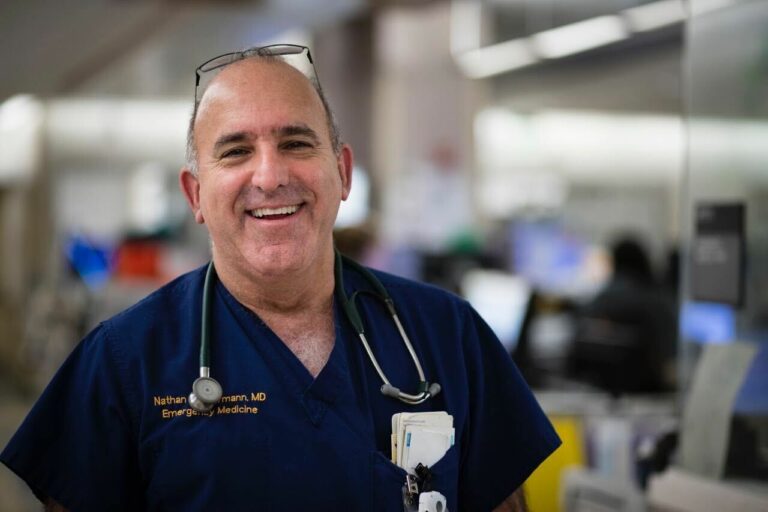
This year, Dr. Nathan Kuppermann, the chair of the Department of Emergency Medicine who trained as a pediatric emergency physician at UC Davis Health, received the Maureen Andrew Mentor Award for his impact on countless students and mentees in the field of pediatric research. 

“I will tell you that I have won other awards in my career, but this is perhaps one of the most meaningful because this one is around mentorship,” Kuppermann said. “I have received good mentorship from my mentors and this is the way that we pay it forward. The award nomination was initiated by a group of my mentees, so it’s particularly meaningful because I feel like the most lasting impact that I can have is to train a new generation of individuals to help kind of push the science forward so we can continue to take better care of ill and injured children.”

Throughout his career, Kuppermann has mentored many students, faculty, residents and fellows at the UC Davis Medical Center, and, on top of his mentorship, his leadership led to the creation of many national organizations to advance pediatric research and health care. Some of the few national organizations he helped create include Pediatric Emergency Medicine Collaborative Research Committee of the American Academy of Pediatrics, the Pediatric Emergency Care Applied Research Network and the Clinical Research on Emergency Services and Treatments Network of Kaiser Permanente.

Dr. Leah Tzimenatos, a pediatric emergency medicine physician and vice chair of the Department of Emergency Medicine at UC Davis Health, described how Kuppermann stands out as an academic pediatrician.  

“I was really excited for him when I heard the news, and honestly I was not very surprised,” Tzimenatos said. “[Dr. Kuppermann] is a very phenomenal mentor, and there are a number of things that make him stand out, but a couple of them are just the sheer number of successful professionals in the field of pediatric medicine that he has mentored over the years. He mentors everyone from medical students to residents to fellows, kind of through the breadth of training and then has a number of faculty mentees as well, and he is truly committed to each one of his mentees.”

Aside from being a recipient of the Maureen Andrew Mentor Award, Kuppermann has underscored the importance of his philosophy and values as a pediatric researcher and mentor in leaving behind a lasting legacy on his mentees entering the medical field. This could not have been done without guidance from his very own mentor at Boston Children’s Hospital, Dr. Gary Fleisher, an important figure in Kuppermann’s life who taught him how to approach pediatric research. 

“In terms of what this award means to me is that, rather than awards that recognize a single accomplishment or a single research study, this is just more meaningful to me because it really reflects a career of trying to kind of give it back and, again, to pay it forward,” Kuppermann said. “I want to make sure and I expect my mentees to do bigger and better things than I have done. This award is more of a philosophy of life, rather than an individual research award, that on the inside is very meaningful to me.”


Written by: Brandon Nguyen — science@theaggie.org


Students recommend thrift stores near, in Davis

UC Davis students discuss some of their favorite cheap and trendy thrift stores

By SOPHIA PLACHE-CREECH — features@theaggie.org

Thrifting can be a great way for college students to fulfill their shopping desires without breaking the bank. Several UC Davis students shared their experiences with thrift stores in Davis and recommended some of their favorites. 

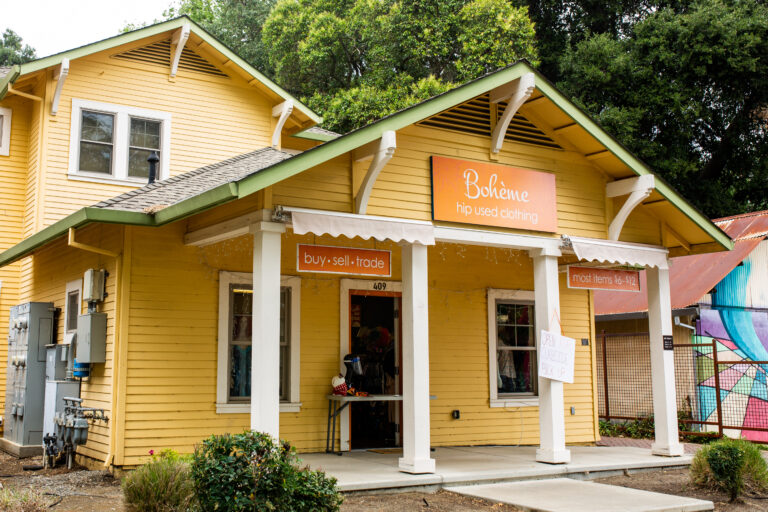
Located at 409 3rd St in downtown Davis, Bohéme Hip Used Clothing boasts a range of styles for men, women and tweens alike. 

Second-year psychology major Ana Sanchez said that Bohéme is her favorite place to go for affordable clothing. She also pointed out that Bohéme’s inventory is expansive and versatile.

“I’ve found anything from clothes to shoes and bags to accessories there,” Sanchez said. 

Further from campus but also on 3rd St, the SPCA Yolo County Thrift Store is beloved by many students. The shop has a wide variety that includes clothing, household items, jewelry, accessories, electronics and more.

All of the store’s merchandise is supplied through community donations, which second-year sociology major Natalia Stehlin said is her favorite part of the store.

Second-year cognitive science major Rachel Greenbaum also shared why she loves the SPCA Yolo County Thrift Store.

“I find great clothes like pants or shorts for less than $5 as well as miscellaneous items like pots and pans for less than $2,” Greenbaum said. 

Greenbaum said that she also found one of her favorite thrifted items to date at the store. 

“One of my favorite jeans that I wear all the time was only $3,” Greenbaum said. 

Another great place to look for secondhand clothing and accessories is the Davis Craft and Vintage Fair, which occurs every other Sunday from 10 a.m. to 4 p.m. in Central Park. Second-year biology major Jasmine Jackson said that she routinely stops by. 

“The downtown craft fair normally has thrift pop ups,” Jackson said. “There are random bins you can dig through, and there is always super cool stuff there. You can get some great finds.” 

The thrift store chain Goodwill also has a location in Davis, slightly further from campus, on 1640 E 8th Street. Third-year chemical engineering major Cannon Nielson said that Goodwill usually has a good inventory of clothing for men, women and children as well as household items. 

“If you really want to find the heat, the Goodwill is a [place] to find it,” Nielsen said. “Every time I go to look around, I’m guaranteed to leave with more than what I originally planned to buy.”

If you want to venture a little outside of Davis, there’s also the Goodwill Outlet in Sacramento. Second-year design major Olivia Hurley said that the outlet has bins that have lots of trendy items for extremely discounted prices. 

“The bins are the place to walk out of with three bags full of clothes on your wrist for under $12,” Hurley said. 

However, she also warned that the low prices and fun pieces can be tempting. 

“I always advise on the side of caution because too many people grab things they would never wear because it’s so affordable,” Hurley said. “I’ve definitely fallen victim to this. But this does also allow for great experimentation in your closet, which I love.” 

Written by: Sophia Plache-Creech — features@theaggie.org

Open mics in Davis you can’t afford to miss

Whether you’re a poet, musician or just an observer, these local spots welcome performers

By CORALIE LOON — arts@theaggie.org 


For lovers of self-expression, open mics can be a sought after opportunity to share words, art, music and more in a low-commitment and casual setting. The best part is that it’s open to everyone, no audition or special experience needed! If you are an artist, poet, creative thinker, musician, comedian or simply someone who wants to try something new, here are some open mic opportunities in Davis to add to your list:


John Natsoulas Gallery

On the first and third Thursday of every month, John Natsoulas Gallery hosts “Poetry in Davis” starting at 7 p.m. This event is perfect for poets and poetry lovers, but also welcomes you to share other forms of performance. At 7 p.m., one or a few featured authors will read, with an open mic following. If you also are a lover of visual arts and are interested in browsing their current exhibitions, this event may be perfect for you.


Aggie Open Mics

Aggie Open Mics (@aggieopenmics on Instagram) is a student organization dedicated to providing “a safe place for students of all backgrounds to express themselves creatively and feel heard in a variety of media.” This club is open to any UCD student with an interest in music, poetry, dance or storytelling — you can hear from the club’s hosts and previous performers here. If you are interested in either attending an open mic or being a part of the organization, check out their linktree (linktr.ee/aggieopenmics) and keep an eye on their Instagram page for information on upcoming events. 


The CoHo

Right here on campus, the ASUCD Entertainment Council has hosted a series of open mic nights at the CoHo. The assistant director of the CoHo shared that the next open mic event will be on April 14 from 1 p.m. – 3:30 p.m., so make sure to check back on their Instagram (@asucdec) their Facebook (@asucdEC) for more information about signing up.


Turtle House

Turtle House (@turtlehousedavis on Instagram) is a cooperative living community that hosts events and concerts, often featuring local bands and artists. On Sunday, Feb. 6, they hosted their first “Sunset Open Mic,” and since then have hosted a second one. They currently don’t have a consistent open mic schedule, but if you’re interested in this unique community’s events, you can find updates and new event postings on their Instagram, @turtlehousedavis, or their Facebook, Turtle House (@HolyShellter).


As a bonus, for our 21+ crowd, here are a few more open mics:


Sophia’s Thai Bar & Kitchen

As well as amazing drinks, food and ambience, Sophia’s Thai Bar & Kitchen offers open mic nights every Thursday. Unfortunately, live music and open mic events have not been occurring during the Winter season, but should begin again some time this Spring, so stay tuned!


G Street Wunderbar

For those looking for a classic bar setting (or maybe a quick game of pool), check out G Street Wunderbar in downtown Davis. They host an open mic every Thursday that starts after 9 p.m., along with a band that’ll back you up in any musical number you might want to play.


Written by: Coralie Loon — arts@theaggie.org


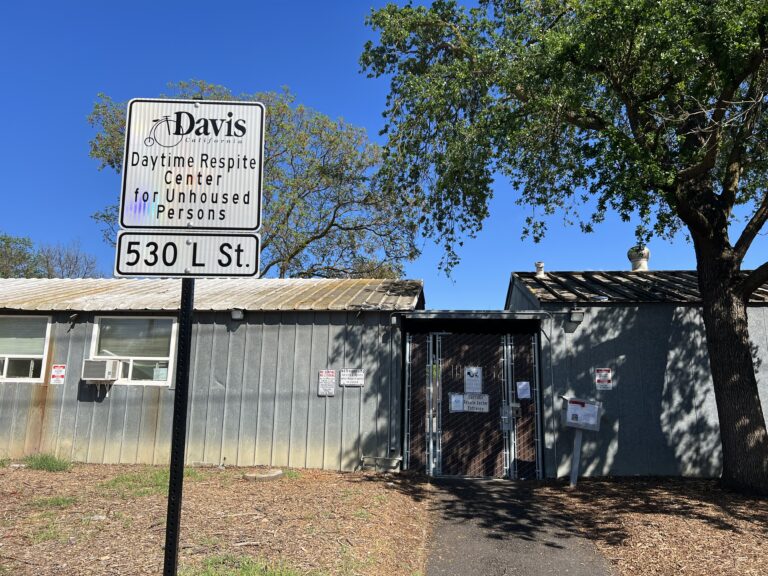
Davis social services commission extends Daytime Respite Center through June 2023

City hopes to eventually offer nighttime services for people experiencing homelessness

By RACHEL SHEY city@theaggie.org


On Feb. 28, the Davis social services commission approved an extension recommendation which would extend the Daytime Respite Center through June 2023; the extension was approved on March 1 by City Council. 

The Daytime Respite Center was started with the purpose of providing a daytime shelter for people experiencing homelessness and providing a panoply of services, according to City Council member Dan Carson.

“Some of it is just a daytime shelter component, some of this is about people having a place to do their laundry and get some food during the day and part of it is about being able to connect up with services,” Carson said. “There are counselors who will help folks try to get linked up with permanent housing. Some folks can get signed up for regular medical coverage like mental health care and substance use services.”

The center has provided numerous tangible services for individuals experiencing homelessness in Davis. Associate Clinical Director of Behavioral Health Tegwin Millard told the Davis Vanguard that the respite center has done 951 loads of laundry and that 1,174 showers were taken at the center. 

The respite center also allows dogs. It has provided services to a few hundred people experiencing homelessness since its inception despite volunteering challenges, Carson said. 

“Since the place opened, there’s been 10,000 visits; there’s 524 individual people who use it; on a quarterly basis, it’s about 1265 guest visits and every month they have about 50 new intakes,” Carson said. 

Communicare Health Centers’ Chief Behavioral Officer Sara Gavin told the Davis Vanguard that the center had hoped “to be reliant on some more volunteers.” This challenge was coupled with criticisms from neighbors of the project. The city has attempted to address these criticisms by sending out quarterly updates regarding the project’s progress. 

“[…] Staff began to generate quarterly program updates to send via email to neighbors and other interested parties,” the staff report reads. “Davis Manor Neighborhood Association representatives also shared the updates with their respective contact lists. The quarterly program updates include client intake data, services provided, resource linkage information, police calls-for-service reports, and other highlights of the program.”

The biennial Point In Time (PIT) count in Davis in 2019 found that there were 190 people experiencing homelessness on any given night, according to the staff report. The next PIT count will take place soon and will provide more information about people  experiencing homelessness in Davis. 

The initial fund that started the Respite Center has run out. The current funding will likely come from the City of Davis General Fund, according to Carson. 

“Initially, when we got this thing going in February of 2020, there was funding from the CARES Act, which was a different COVID-19 assistance program, and then we got some money from the federal government,” Carson said. “Those were one-time dollars that have been spent, so we’re now extending the contract, and the general fund is the revenue source for now, although we’ll see if we find other revenue sources.”

There are currently no nighttime shelters for people experiencing homelessness in Davis. After Project Roomkey was announced to end this year due to declines in COVID-19 cases, the city of Davis attempted to start a new nighttime shelter to aid those who had been using Project Roomkey. However, the project ran into issues, according to Carson. 

Over the winter, we worked with Heart of Davis, a nonprofit group, to create an overnight shelter, which was going to be at the Migrant Center at the outskirts of town,” Carson said. “It did provide some services for a few weeks, but Heart had a very difficult time finding people who had the skills to manage a facility like that. We’re retooling it, working with a different nonprofit organization, to try to bring back a shelter to the Migrant Center.” 

The city isn’t out of ideas yet; Carson said that they are currently thinking about a sanctioned campground and are preparing for the debut of Paul’s Place, a new transitional housing shelter, which will be located on H Street. 


Written by: Rachel Shey — city@theaggie.org


Equal pricing doesn’t make Equitable Access an equitable program

Students who opt out of the program face a lengthy refund processes and a difficult time accessing required materials

With a new quarter comes preparing for classes, reading endless syllabuses and, more often than not for many on the Editorial Board, opting out of Equitable Access. The quarter system is known for its rapid-fire nature, and for those choosing to opt out, needing to fill out the online form before the quarter even begins is ridiculous. Although Equitable Access was launched in 2020 with good intentions, the uniform, flat fee is a poor solution since everyone has different textbook needs. 

This program was advertised as reducing the burden textbook prices have on students and streamlining the process of accessing course materials. The quarterly opting-out process, however, is both burdensome and inefficient. Students are able to opt out on their own on Equitable Access’ site until the Sunday night before the quarter starts, but afterwards will need to email Equitable Access to opt out until the 20th day of instruction, which is the final deadline. 

Since Equitable Access is likely receiving a huge volume of emails during the first few days of the quarter, it can take days for them to respond and, according to the UC Davis Store’s website, two to five business days after that for the refund to appear in a student’s account. Not everyone has the financial security to wait around for almost $200 when they may need to pay rent, car insurance, utilities and more by a set date. Given how emailing Equitable Access lengthens the refund process even more, students should be able to opt out on Equitable Access’ site until the 20th day of instruction. But students should not be automatically opted into a $169 program in the first place — instead, everyone should be opted out by default and have the choice to opt in. 

To defend automatically opting all students in, UC Davis compares Equitable Access to the fees that support essential services such as Unitrans and mental health resources. This is a poor comparison, however, since these two other fees are significantly less than Equitable Access and were voted on by students. We understand that textbook publishers might not have agreed to participate in Equitable Access without all students being opted in by default, but this decision was made by administration with many students feeling little to no agency, and its high cost and lengthy refund process can put unnecessary strain on vulnerable students. 

UC Davis emphasizes the ease of accessing materials with Equitable Access, but Equitable Access also makes obtaining textbooks significantly less convenient if not impossible for students who have opted out. Some niche books are best available from the bookstore, but the campus store stopped selling most print materials outside of Equitable Access after the program launched. These print books can be specially ordered through the bookstore for those opted out of Equitable Access, but the current shipping estimate is two to two and a half weeks, over one-fifth of the entire quarter. Equitable Access is convenient, but only for students able to pay for it — everyone who opts out, including the vulnerable students it seeks to help, are significantly more inconvenienced.

Equitable Access is also unnecessary for some classes, since many instructors are aware of the strain expensive textbooks put on students and go out of their way to provide free, open-access materials for their courses. This quarter, two members of the Editorial Board have zero Equitable Access materials and were still automatically enrolled in the program. This is unacceptable — even though the money isn’t charged if you opt out before the quarter begins or is eventually refunded otherwise, some students are being charged for something that provides absolutely no service to them. At the very least, students with zero Equitable Access materials should be automatically opted out. 

Of course, buying all new materials would cost a fortune without Equitable Access, but many students buy used books, borrow from the library or find free PDFs online. Students have other priorities like food, rent, utilities and many more, so buying expensive textbooks may seem less necessary. $169 can be a month of groceries for a thrifty shopper, a large portion of rent or an important safety net. Although this can be more affordable for some students than buying textbooks, other students voiced their concerns over the price point when the program was launched. 

We understand that UC Davis cannot mandate all instructors to use open-source textbooks for their courses. Switching textbooks can be a lot of extra work for instructors, since some may have materials they’re more familiar with, and e-books with access codes for online homework greatly reduce the amount of time spent grading. 

However, encouraging instructors to adopt open-source textbooks and providing them with support to find relevant free materials would increase equity by removing the price tag from vital learning sources altogether. Additionally, making UC Davis lab manuals downloadable for free so students can print them out would help lower the cost of STEM materials. This isn’t unheard of — when classes were online due to the COVID-19 pandemic, some lab classes provided the manuals as a PDF on Canvas (and some still do). 

Equity is defined as providing different levels and types of support to groups with different needs in order to achieve equal outcomes. Since Equitable Access treats everyone uniformly, it would be more apt to name it “Equal Access.” We appreciate that UC Davis is concerned about textbook prices and wants to help students succeed, but Equitable Access in its current form is not the best solution. UC Davis predicts the cost of Equitable Access will go down over time (and it has), but that does little to help its current students who are struggling to afford the program right now. 


Written by: The Editorial Board


‘This is NOT OK.’ New UC pharmacy benefit manager leaves some employees without coverage of insulin, other medications

Professor Jonathan Eisen takes to Twitter to share how some medications are not covered by the new pharmacy benefit manager for UC PPO plans

By MARGO ROSENBAUM — campus@theaggie.org

This is the first installation of The California Aggie’s two-part series on the struggles of students, faculty and staff in receiving coverage for some medications and medical equipment by UC health insurance plans.

In early March, UC Davis professor Jonathan Eisen received a letter in the mail that his UC preferred provider organization (PPO) insurance plan no longer covered his preferred types of insulin as of Jan. 1. The clinical transition letter was dated Feb. 14, yet he received it after March 1. 

Eisen, who was diagnosed with type 1 diabetes at age 15, said his insurance had always covered his insulin throughout his 17 years as a professor at UC Davis, eight years at the Institute for Genomic Research in Maryland, seven years in his Ph.D. program at Stanford University and four years of undergraduate studies at Harvard.

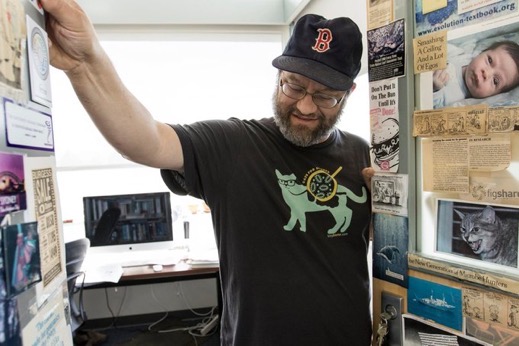
Eisen, who is a professor with appointments in the UC Davis Department of Evolution and Ecology, the Genome Center and the Department of Medical Microbiology and Immunology, took to Twitter to share the news with his over 65,000 followers. “This is NOT OK,” read his tweet on March 7.

“I was frustrated and kind of pissed off, and also felt like this triangulated a lot of things that I’d heard a lot of people talking about, which [were] problems with pharmacy benefits and insulin coverage,” he said in an interview with The Aggie.

On Jan. 1, Navitus Health Solutions took over the administration of prescription drug benefits for UC employees and retirees on Anthem Blue Cross PPO insurance plans: UC Health Savings Plan, UC Care and CORE. The prescription benefits for these plans were formerly managed by Anthem IngenioRx. Pharmacy benefit managers, such as Navitus, manage prescription drug benefits and costs for health insurers, large employers and other institutions. 

“Every prescription benefit manager (PBM) uses its own formulary, which is a list of drugs that are covered by the plan,” a UC advisory sent in January reads. “While the Anthem IngenioRx and Navitus formularies are similar, there are differences, which could affect your individual medication costs.”

Approximately 15% of UC Davis employees are on Anthem Blue Cross plans and, therefore, were impacted by this change to Navitus, according to UC Davis Health Care Facilitator Guerren Solbach.

For over 10 years, Eisen has been using Novolog and Lantus brands of insulin. According to the UC formulary and UC benefit plan website, the new pharmacy provider covers other brands of insulin, like Humalog, but not the two brands Eisen previously used and prefers.

Although Eisen said he was given a grace period until March 31 to acquire Novolog and Lantus at the price he paid under the former plan, he would have preferred to have received notice of this before the beginning of the month. “This is NOT OK either,” Eisen’s follow-up tweet read

When Eisen initially learned about the changes to UC insurance benefits, he did not imagine the changes to be this significant, he said. Insurance provider shifts happen frequently, and while it is “annoying and painful,” they do not usually result in large differences in coverage.

Yet, that was not the case this year as the pharmacy benefits are now decoupled from healthcare benefits. Previously, Anthem Blue Cross provided both pharmacy and healthcare benefits, but now Navitus provides pharmacy benefits for Anthem Blue Cross PPO healthcare plans.

“It’s confusing; it’s slow; it’s cumbersome,” Eisen said. “Now your information is in multiple places, and it’s lame. There’s no other way to put it.”


Eisen’s diagnosis

In 1984, Eisen was experiencing the classic signs of diabetes — he regularly experienced fatigue, had to go to the bathroom frequently and felt sick for months. At the time, Eisen was a pitcher for his baseball team and in between each inning, he had to run down a hill to the bathroom. Eisen detailed his diagnosis in a TED Talk in 2012.

“​​I was literally peeing out all the sugar that was accumulating in my body,” he said.

After pitching a good game, he went on his first-ever backpacking trip in Old Rag Mountain in West Virginia with an Eagle Scout friend and his brother. He drank their supply of water that was meant to last for two days in about 15 minutes and submerged his face in puddles to drink extra water like a dog, he said. 

“I was dying; I was literally dying,” Eisen said.

Eisen said he “somehow” survived the backpacking trip and started telling his father, an endocrinologist for the National Institutes of Health (NIH), about how he was feeling. 

After not being able to stand at a party for his father’s NIH lab, “something clicked” in his father’s head, Eisen said. They left the party and bought a urine sugar testing kit. Eisen’s blood sugar levels were off the charts — Eisen’s father instantly knew he had diabetes and brought him to the emergency room.

“​​I was very, very, very sick,” Eisen said. 

Eisen’s weight had dropped from 170 to 120 pounds and he was experiencing “full-blown” diabetic ketoacidosis, which is a serious, life-threatening complication of diabetes where the body does not have enough insulin for blood sugar to enter cells to be used as energy, according to the Centers for Disease Control’s definition. 

“My body was basically digesting itself,” he said. “They immediately diagnosed me as a diabetic — it took like five minutes […] My body was suddenly for the first time in five months starting to work.”

Since Eisen has type 1 diabetes, his pancreas makes little to no insulin — a necessary hormone that regulates metabolism and blood-sugar levels. People receiving treatment for type 1 diabetes inject synthetic insulin or use an insulin pump to manage their blood-sugar levels and prevent damage to their heart, kidneys and other organs.

Thirty-eight years later, Eisen has been on 10 to 15 different types of insulin and has finally perfected a regime that functions well for him. After finding the medications and doses that worked for him, Eisen said he did not want to change his insulin as a result of the change to Navitus as the UC PPO plan’s pharmacy benefit manager.

“So you just don’t want to switch when you have something that’s working,” Eisen said. “Insulin regimens are very complicated and you develop them [and] fine-tune exactly how you’re getting yourself insulin for decades with all sorts of feedback that you learn and with your medical team.”

Dr. Polly Teng, an assistant professor in the Division of Endocrinology at the UC Davis Medical Center, said patients should talk to their diabetes provider or endocrinologist before making changes to their insulin types or intake. It is possible, however, to switch brands of insulin as long as they are within the same category of fast-acting or long-acting insulins. 

“We do have different types of insulin that have a different duration of action — differences in how quickly the medication works,” Teng said. “So generally, if we’re switching someone with diabetes from one insulin to another, we want to make sure that we’re still switching them to the same category type of insulin.” 

The insulin doses given are the same regardless of the insulin formulation, she said, which makes it easy to do a “one-to-one switch from one insulin to another insulin.” 

“The general concept [is] that patients should not expect a difference in the insulin dosages with the switch, and they should also most likely not see any significant differences and how their glucose responses,” she said. 

Graphic by Kellie Lu / The Aggie

Complications with applying for an exemption

It was initially unclear to Eisen which insulin would be covered by the new pharmacy benefit manager for his UC Health Savings Plan. 

Navitus, which is partly owned by Costco, uses Costco Pharmacy for mail-order prescriptions. In January, Eisen attempted to transfer his prescriptions to Costco and was told in February that his preferred insulin Novolog would not be covered, but a generic version of it would be. His doctor wrote a new prescription for the generic version of Novolog, but after the clinical transition letter from Navitus was sent in March, Eisen said he learned this generic insulin would not be covered either.

After waiting on the Navitus call line, he learned he would either have to switch to different insulins, such as Humalog, or apply for an exemption. ​Since Navitus sent the initial clinical transition letter so close to the deadline, Eisen was left with very little time to decide. 

“It’s just awful,” he said. “A letter I received on March 1 seems like it was written in December because it’s talking about things in the future that are going to change. And they’re giving you a heads up that they’re not going to cover my insulin anymore in January, but now it’s March.” 

After reading scientific literature and guides from diabetes organizations, Eisen said he found that Novolog and Humalog are not exactly equivalent. 

“If I switch to the Humalog I’m going to have to completely change my insulin delivery system with my pump and learn how to do it, and I’ll probably be under worse control for a while,” Eisen said. “This is horribly stressful.” 

According to the new policy, exemptions for medication coverage can be made “with prior authorization and “for medical necessity. “In this case, the member pays coinsurance on the cost of the brand-name drug, or (for UC Care members) the Tier 3 (non-preferred) copay,” the policy states. 

Eisen said he was unwilling to switch insulin and decided to apply for an exemption. Eisen could be paying “something like $8,000 [or] $10,000 a year,” out of pocket for insulin without an approved exemption, but it is possible that some of those funds would be covered by his insurance if he went over his deductible, he said. 

Insulin prices in the U.S. have tripled in the past decade, and on average, the medical costs related to diabetes in the U.S. can reach over $9,500 per year

“If I buy insulin at the regular cost, it’s literally going to be thousands and thousands of dollars for the year,” Eisen said. “Insulin, even though it shouldn’t be, is insanely high priced. I mean, just completely ridiculous prices.”

Furthermore, Eisen said he and his doctor had to wait on the phone to initiate the exemption request. While Eisen’s doctor was able to get through to Navitus, Eisen said he was on hold “forever” and eventually hung up.

While Eisen was originally “not confident” that his exemption would be approved, he received a message that Navitus will cover his preferred insulin, Novolog. 

“Well — good news for me — I have been told that Navitus has been instructed to cover the insulin I have been using,” he tweeted on March 23.

The request for Lantus was initially rejected by Navitus, Eisen said. But on March 28, he received a call from Navitus that they would also cover Lantus insulin.

“I got a call today saying that my Novolog and Lantus insulin would indeed be covered by Navitus,” he tweeted on March 28. “Yay. I am very happy. Now I want to know what is going to happen to others who were harmed by the new plan …”

Teng, the endocrinology professor, said that her patients with diabetes have not experienced many issues with getting their insulin covered since the switch to Navitus. Two of her patients, however, are encountering challenges with coverage of GLP-1 agonists: medications that increase pancreatic insulin production and insulin sensitivity, improve cardiovascular outcomes and have weight loss benefits.

“Navitus has put a lot of roadblocks for us to continue these patients on these higher doses of medication,” Teng said.


Support from the community on Twitter

On Eisen’s Twitter thread, many UC employees have responded saying they have also experienced challenges contacting Navitus or with getting exemptions approved for their medications. Eisen said that some UC employees and their families experienced other medications beyond insulin not being covered.

“Many people are experiencing similar things at UCs and other institutions and are equally frustrated or more so,” he said.

Eisen said he received over 100 direct messages with advice and was offered free insulin by some people on Twitter. He said he has never gotten that many messages about any of his tweets. 

“Clearly, this hit a nerve, and a huge number of people, first of all, couldn’t believe that this is happening and other people are like, ‘Yeah, I can believe it because it happened to me this year and last year,’” he said. “So I got lots of support.”

Seth Sanders, a professor of religious studies in the Jewish Studies Program at UC Davis, tweeted about what he had heard from colleagues and friends affiliated with the UC. With the clinical transition letter being sent so late, “you really couldn’t ask for a more terrorizing type of announcement,” he said in an interview.

Elena Fuchs, an associate professor at UC Davis, tweeted on Eisen’s thread about also being impacted by the switch to Navitus.

“This is us too,” Fuchs tweeted on March 23 on the thread. “They are suggesting a switch to a medication that will NOT work for us but according to them it’s the same thing.”

Crystal Kolden, an assistant professor at UC Merced, responded to Eisen’s tweet stating that Kolden’s son had also been impacted by the switch to Navitus.

“We received the same letter template saying they won’t cover my son’s albuterol inhaler,” Kolden tweeted. “Whoever switched to Navitus at the UCOP chose poorly.”

The time and effort Eisen and his doctor spent applying for an exemption paid off for Eisen since his exception was approved by Navitus, but he said he is unsure whether others have had luck getting their medications covered.

“Also – would like to know if this is going to be done for other diabetics […] will try to find that out too,” he tweeted in the thread on March 23. “And also – what about other people who had their Rx meds changed to not being covered — would like to know what is going to happen there [too].”

The UC acknowledges and apologizes for complications from switch to Navitus 

The University of California Office of the President (UCOP) Strategic Communications and Media Relations declined an interview on March 24 with The Aggie, but Associate Director of Media Relations for UCOP Ryan King said via email that the UC has been working closely with Navitus to resolve any issues employees are facing and forwarded The Aggie a letter sent to members of UC medical plans with pharmacy benefits administered by Navitus on March 21. 

Signed by Vice President of Systemwide Human Resources Cheryl Lloyd and Executive Vice President of UC Health Dr. Carrie Byington, the letter informed impacted community members how Navitus and the UC are addressing these problems. The letter states that it was sent “to acknowledge — and apologize for — the problems many members of the UC community are experiencing with Navitus Health.”

Last year, UC Health and UC Systemwide Human Resources selected Navitus to administer pharmacy benefits starting in 2022, because it provided the UC with the “best overall flexibility, service, and affordability,” the letter states. 

The decision was made after a committee made up of UC Health, Systemwide HR, UC faculty with pharmacy expertise and UC’s retiree association conducted “an extensive formal bid process,” according to the letter. 

The UC acknowledges that the change has resulted in some members experiencing changes in their prescription drugs, “time-consuming authorization processes” and denials by Navitus, causing “unnecessary anxiety and frustration.” The letter states that the UC has “heard from too many members who have been negatively impacted by this change.”

The letter states that Navitus failed to meet the scheduled target date for mailing a clinical transition letter, which could explain why Eisen did not receive his notification until early March. The UC’s letter stated that this caused “hardship and worry for faculty, staff, retirees and their family members.”

Navitus has faced challenges with customer service staffing, explaining the customer service call waiting times “that far exceed Navitus’ standards and UC performance guarantees,” according to the letter. To combat these delays, Navitus has signed onto a number of customer service improvements.

As a result of the delay in mailing clinical transition letters, Navitus has initiated a number of measures to help members with the transition in medications and has provided an extended transition period, for drugs that are not covered, to the end of April, beyond the extension to the end of March that was initially promised. 

UC Health, Alliant (a UC consultant) and Navitus will audit and review the protocols Navitus uses for denials to ensure they follow Navitus’ internal guidelines, industry standards and Medicare guidelines and to identify and correct any gaps, the letter states. 

“We take these problems — and our responsibility to ensure that members of UC health plans have access to the prescriptions they need — very seriously,” the letter states.

Beyond information in the UC’s letter, King said he could not provide any further information at the time as to why Navitus was selected as the new prescription benefits manager or how costs are changing for members with PPOs.

A Navitus spokesperson provided a statement to The Aggie on March 29 stating that the pharmacy benefit management company works “with customers to develop the best formulary for all their employees.” They said that “providing our customers and their members with access to quality, appropriate prescription drug coverage is Navitus’ top priority.”

According to the statement, Navitus cannot comment on individual employee coverage situations, but they “we are working closely with the University of California to address their concerns and ensure we are providing the highest level of customer service to their employees and access to the medications they need.” 

Eisen received the UCOP letter last week along with others impacted by the switch to Navitus, and he took to Twitter to share his grievances and lingering questions.

“Clearly, this touched a nerve and 100s of people shared stories of how they were also harmed by the new UC system as well as by other switches in pharmacy benefits in their systems,” he tweeted on March 22

While Eisen said he is glad that the UC is “doing something here” and acknowledged the challenges and frustrations people faced as a result of the switch to Navitus, he tweeted that “(1) the whole system really should be switched back to a better one w/ more coverage and (2) unclear how much impact these changes will have.”

With regard to the consultant brought in to monitor Navitus’ actions, Eisen tweeted that the funds could be used elsewhere — perhaps to cover more medications and medical equipment.

“I think some of this will help but it remains to be seen whether or not anything will improve,” he tweeted in the same thread. “There is still no commitment to actually cover drugs that Navitus says are not covered.”

Switch to Navitus is likely an effort to save money

Beyond what was stated in the UCOP’s letter, Eisen and other UC employees on PPO plans are left wondering why the UC changed its pharmacy benefit manager to Navitus. 

“The previous system worked very well in my opinion — it was not perfect, [but] no system is,” Eisen said. 

Health Care Facilitator for UC Davis Solbach was not involved in the decision-making process but said the switch to Navitus was to save money.

“It was to keep the Anthem premiums from going up,” he said. 

The Navitus website states that its “lowest-net-cost philosophy provides clinically sound, cost-effective alternatives, such as generics or less expensive brands, creating a high-performance formulary that consistently delivers the lowest net cost.”

After getting approved for his preferred insulin, Eisen still believes he should not have had to put in as much time and energy into advocating for his medications, he said.

“Mind you, none of this should ever have happened in the 1st place – this was just a poor set of decisions to switch to a company and a pharmacy benefits plan apparently designed to save money by forcing costs and pain onto UC employees,” Eisen said in a tweet on March 22.

Yet, Eisen acknowledged that the UC was trying to improve the situation.

“But at least they were trying to do something to back track the disaster,” he said in the same tweet thread.

Next steps for Eisen

In addition to sharing his frustrations with the UC insurance plans and Navitus, Eisen said he has gained a reputation for posting about his grievances with academia, such as critiquing the under-representation of women in conferences. 

“I have made a point to tell people that if you observe something that you think should be shared, but you don’t feel comfortable sharing it, I will,” he said. 

Eisen said that as white man with tenure and a full professor position at UC Davis, which he says is “an institution that is generally supportive” of his work, he acknowledges his privilege in academia, especially in comparison to younger faculty, or people from traditionally underrepresented groups.

“The risks for me for sharing this information are enormously less than the risks of a student, or a minority or a junior faculty member who doesn’t have tenure yet,” he said.

Because of his “position of perceived privilege,” Eisen felt comfortable sharing this information on Twitter, especially because he knew others were likely experiencing similar challenges.

“If you’re not going to use your privilege for something to help other people, what the f*** do you have it for?” Eisen said. 

After 17 years at UC Davis, Eisen said this experience may cause him to consider working elsewhere. Eisen acknowledges that the UC, and UC Davis specifically, is not perfect — most faculty have frustrations with certain aspects of their institution. While he said he likely would not take another position right now, this is the first time when he has understood why people take other jobs outside of the UC system. 

“I don’t think I’ve ever seen anything this pathetic,” Eisen said. “It’s embarrassing. Even though people recruit me for jobs every like three months to apply for things, I’ve never once even remotely considered it before. I’m going to consider it now because this is just a bad sign.” 

Written by: Margo Rosenbaum — campus@theaggie.org


Ultrasounds on abalone improve spawning for endangered species

Information from noninvasive ultrasounds is able to tell researchers which animals are the most mature and ready to reproduce

By SONORA SLATER — science@theaggie.org


Giant sea snails that graze on plankton and algae, abalone are sometimes called the ‘bison of the ocean.’ Abalone meat and shells have been popular for hundreds of years, and much like bison, their commercial popularity paired with climate change, ocean acidification and the die-off of their main food source has contributed to the species’ current endangered status. 

There was once a robust commercial fishery for abalone along the West Coast, but as of 2018, harvesting wild abalone is illegal in the state of California. In order to fulfill the demand that still exists and to raise their numbers up from endangerment, aquaculture and captive breeding efforts are underway — but abalone are notoriously difficult to spawn. 

Scientists at UC Davis have discovered a creative new way to improve spawning efforts, according to a recent press release, and it involves repurposing a tool that already exists: an ultrasound transducer. 

Their research was published in February in the journal Frontiers in Marine Science, and it was funded through a grant from the U.S. Navy Pacific Command Fleet.

Jackson Gross, an assistant professor in the UC Davis Department of Animal Science and the corresponding author on the paper, had seen a video of a land snail crawling across a transducer and was convinced that the method could be applied to sea snails like abalone as well.

“There were a lot of naysayers initially,” Gross said. “But I was like… I’m pretty sure this is going to work.”

Sara Boles, first author on the paper, explained why spawning abalone with traditional methods can be so difficult.

Abalone are gastropods,” Boles said. “So in order to observe their gonad visually, you actually need to remove them from the surface that they’re on.”

Isabelle Neylan, a fifth-year Ph.D. student at UC Davis and a coauthor on the paper, elaborated on what this looks like.

“They’re basically giant snails, and they suction to the surface,” Neylan said. “So to get them unstuck is a process. You’re basically using a spatula or a gift card, getting up under them and popping them off. We’ve gotten very good at it, and sometimes it’s necessary, but the less you can interfere, the better.”

Abalone are hemophiliacs, which means that they lack the ability to clot, according to Boles. Because of this, if they sustain an injury during the removal process, they can essentially bleed to death. 

When you have a hundred animals in a population, every one of those animals is precious,” Gross said.

Because of this, the team didn’t use the endangered black abalone for their research. Instead, they used farmed red abalone as a proxy species, as it is biologically very similar but has higher population numbers; although, they have since had the opportunity to perform successful ultrasounds on black abalone as well.

Apart from the problem of removing the animals for inspection, it can also be very difficult to get accurate results with a visual inspection due to similarities in the appearance of male and female abalone. The main tell is a slight difference in color when they are in season, with the male gonad appearing white and the female’s bright green. But even then, there is no guarantee that they’re ready to spawn.

So, how does the ultrasound transducer solve these problems?

“First and foremost, it’s noninvasive,” Boles said. “When you’re working with an endangered species, you want to reduce any handling stress. Even if you don’t injure them when you remove them from the tank, the act of removing them off the tank can induce stress, and you don’t want to stress out endangered animals.” 

Boles and the rest of the team found two ways to do an ultrasound on the abalone, with a set-up that is remarkably similar to what you would use on a human woman.

“I’ve assisted on many many abalone ultrasounds, but I’ve never assisted in one on a human, which is bizarre and cool,” Neylan said. “But it’s the same technology.”  

 The first method involves performing an ultrasound through the sides of a container while the entire tank is submerged in water. The second uses clear transparency film. 

“[The abalones’] feet immediately suction to whatever surface they can,” Boles said. “We line the bottom of their buckets with clear transparency film, like you use on an overhead projector, and I can actually ultrasound right through that clear material.”

Apart from improving convenience and animal welfare, the ultrasound is also able to provide more detailed information than a visual analysis could.

“The ultrasound has the ability to see the changes in the thickness of the gonad, which is indicative of the maturation process,” Boles said. “So it’s been very reliable in predicting which animals will spawn when induced.”

According to the press release, they were able to use this information to create a gonad index score ranging from one to five, which “indicates the abalones’ readiness to reproduce,” with abalone measuring in the three to five range being the most optimal candidates for spawning.

The ability to take quantitative measurements in order to choose the most ideal candidates is extremely important, according to Gross, because the spawning process can take a lot of resources — so it’s important to get it right the first time.

“You stress out the abalone to spawn it,” Gross said. “Once you do it, you might have to wait months before you can do it again, to allow the animal to recover. There’s a lot of labor and timing and coordination and people involved in spawning days, and even after the spawning days, there’s a lot of work involved in the care of the larvae […] now for the first time, we can watch and say, okay, these animals are ready.” 

Gross went on to explain that, traditionally, there aren’t as many animal welfare regulations applied to aquatic animals, especially invertebrate aquatic animals. This could be a step toward using technology to explore more humane ways to study them. 

“More people are starting to think: ‘Hey, these animals could be more complicated than we want to let on,’” Gross said. “That was kind of the point here, was that we needed to come up with a better way to increase this animal’s population that takes animal welfare into account. I think this opens up the door for [exploring other] health metrics of the ocean and how these animals are handling a climate change scenario. We’re just kind of at the cusp of starting to explore that.” 


Written by: Sonora Slater — science@theaggie.org