53.5 F
Davis

Davis, California

Tuesday, December 23, 2025
Home Blog Page 239

UC Davis researchers discover mysterious protein clusters’ function on cell body of neurons

Study of hippocampus neurons in the brain reveals the connection between electrical signaling and specific gene expression

By BRANDON NGUYEN — science@theaggie.org

Over 30 years ago, James Trimmer, a distinguished professor of physiology and brain biology at the UC Davis School of Medicine, discovered enigmatic protein clusters on our hippocampus, a major component of the human brain involved in learning and memory formation. Just recently, Trimmer and his lab uncovered the identity of these clusters on neurons to be calcium channels involved in signal transduction to activate targeted gene expression. 

Nick Vierra, a postdoctoral researcher at the Trimmer Lab at the UC Davis School of Medicine, described why these proteins form clusters on neurons. 

“These clusters are groups of proteins, or calcium channels, on the neuron, and by the cell clustering the proteins together, it’s much more efficient for the cell to activate signaling pathways,” Vierra said.

Neurons send electrical signals from one neuron to the next as a mode of communication transmission. This electrical signaling is facilitated by clusters of ion channels on the dendrites and synapses, but the clusters that Vierra studied are on the cell body of the neuron, which previously remained largely unknown in terms of its functionality. 

“We have known the function of other types of ion channel clusters, for example those at synapses, for a long time,” Trimmer said. “However, there was no known role that these much larger structures on the cell body played in the physiology of the neuron.” 

Aside from the protein clusters’ location on the cell body being a mystery, Vierra further explained why these clusters are an important focal point for studying brain biology.

“These clusters — you see them in many different organisms all the way down to sea slugs, and vertebrates have taken this calcium channel and clustered it,” Vierra said. “Because this clustering is preserved across different species, it’s an indication that it’s really important in biology. They help control calcium signals in the neurons, so calcium is kind of the master regulator that triggers a bunch of different biological responses.”

A key finding in their study published in the journal PNAS highlights the importance of the joint partnership between potassium channel clusters and these cell body calcium channel clusters. When Vierra uncoupled these two clusters in his experiment, one of the different biological responses that was deactivated as a result was gene expression. This cluster coupling in enabling electrical signaling is critical to what the paper defines as a process of “excitation-transcription coupling.”

Dismantling functional roles on the neuron bit by bit has offered exciting potential for the rise in therapeutics that could aid in neurological disorders and diseases, and Vierra echoes this optimism in how these cell clusters could be targets of study for drug development.

“​​What we seem to have found is that the calcium signals that come in on the cell body, the part where the nucleus is, are really important for triggering some types of gene expression,” Vierra said. “Clinically, where this information can be really useful is in some patients who have mutations in this channel which are predicted to make it so they’re not clustered anymore. And these individuals end up having very severe neurological disorders, so these results could provide perhaps a molecular explanation for some of the symptoms that these patients exhibit.”

Written by: Brandon Nguyen — science@theaggie.org 
Gen Z is growing up, leaning into nostalgia as a result

How the older end of the generation is dealing with its newfound adulthood 

By CLARA FISCHER — arts@theaggie.org

Gen Z, I hate to be the bearer of bad news, but someone has to say it: We’re getting old. Though we may not quite be at the corny lack of self-awareness stage of our parents’ generation, we are slowly (but surely) starting to become more mature by the day.

Gen Z encompasses anyone born from 1997-2012, so it includes some that haven’t hit double digits yet, while those on the older end of the spectrum are nearly eligible to rent a car. This means that one part of Gen Z is going through a very different phase of their lives than those of us who are high school age or older. Since the majority of us are now at least young adults, there seems to be a collective feeling of sentimentality for times past. 

Not too long ago, there was a time when the internet went through a serious phase of 90’s nostalgia. You couldn’t escape the cult-following of the hit sitcom “Friends,” old bands were reuniting and the culture longed for the simpler times before the internet.

This wasn’t anything out of the ordinary, as research has shown that nostalgia tends to show up at watershed moments in people’s lives. Given that those who were children in the 90’s transitioned into adult life in the 2010s, it makes sense that they would collectively reminisce on a shared experience to cope. 

Now, after a couple of years have passed, it’s our generation’s turn to engage in this rite of passage.

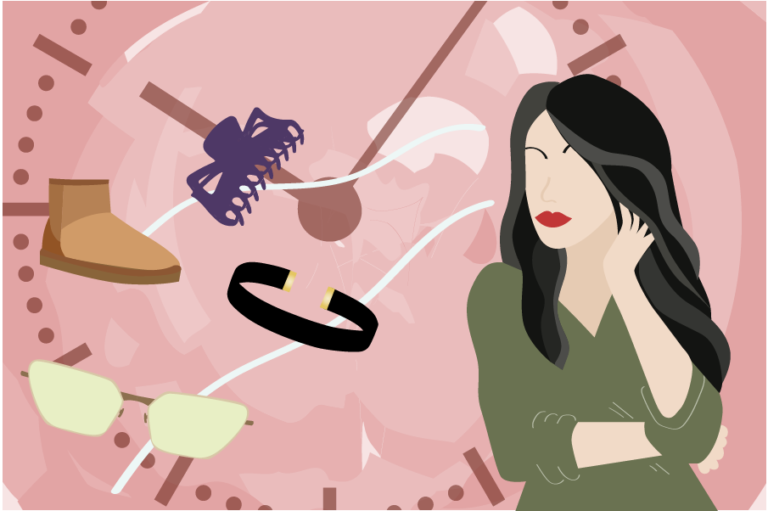
And if the recent Y2K revival is any indication, young adults are feeling nostalgic. The ongoing craze for everything from low-rise jeans to butterfly clips seems to be endless, and it’s oddly nostalgic to see these trends come back in a slightly different manner.

Not only are fashion and beauty fads making a comeback, but there is also an ongoing revival of 2000s pop culture. 

Britney Spears, one of the era’s most notorious “it” girls, has been making headlines for a wildly different reason than the antics of her days spent clubbing with Lindsay and Paris. Her struggle to end an abusive conservatorship has resulted in fans sparking the #FreeBritney movement, with several networks even releasing documentaries about the landmark case. 

Similarly, country singer-turned-pop superstar Taylor Swift recently began rerecording her discography in order to reclaim the rights to her songs from her ex-manager Scooter Braun

Both of these women were defining figures of Gen-Z’s childhood who have recently come back into our lives in an entirely new way. Their grown-up, real world issues seem to reflect on the newfound maturity that crept up on an entire generation without their knowing.

Moreover, it appears that the musical era of our generation is slowly drawing to an end. Many of the iconic musicians we grew up with are nowhere near as relevant as they were 10 years ago (though it could be argued that some of them have reached legendary status) and are being ushered out by a new host of teenage stars. 

Take Olivia Rodrigo for example — the breakout star dubbed by many as Swift’s protegé. Her first album debuted at the top of the charts, breaking records and even passing Swift’s “Fearless” re-recording in sales.

Not only does Rodrigo mirror Swift in her songwriting abilities, but she has come under scrutiny for many of the same reasons as her idol did back in the day. Both women have gone through very public breakups, and subsequently experienced backlash for writing about their heartbreak, being deemed “dramatic” by critics (which both Rodrigo and Swift themselves have slammed for being sexist in nature). 

It’s interesting to see that the new generation faces many of the same issues we did, and will likely grow up in a similar culture to ours.

Rodrigo leads the charge for the new generation of teen superstars, along with the likes of other musicians, actors and social media influencers that are setting the stage for a new era. Maybe in a decade, we’ll be idolizing the fashion choices, A-listers and pop culture drama of the 2020s.

Written by: Clara Fischer — arts@theaggie.org

Students express concern about multiple blackouts, spotty WiFi at The Green

Students were directed to finish up their assignments on campus during multiple WiFi outages and blackouts

By KATHLEEN QUINN — campus@theaggie.org

The student housing complex, The Green, opened its doors in September 2020. With a 3,300-bed capacity, it constitutes the nation’s largest student housing project according to Good Day Sacramento. However, according to many students who moved into The Green at the beginning of fall quarter 2021, there have been multiple blackouts and WiFi issues that have impacted studying, assignment submission, elevator usage and prevented entrance to parts of the complex.

The Green opened the first two buildings of the complex on Sept. 15, 2020, with the remaining opening up in September 2021. 

Deleo Garcia-Lopez, a second-year environmental policy and planning major, said that since he moved into The Green in September, there have been five or six backouts.

“It isn’t a lot, but relative to living here for two to three months, it’s more than enough,” Garcia-Lopez said.

Michael Sheehan, the associate vice chancellor of housing, dining and divisional operations, said the power for The Green is run through PG&E and provided by the City of Davis.

“I believe there have only been a few unplanned outages that were caused by wind events or some other disruption to the incoming power source,” Sheehan said via email.

The Green is considered a Transfer Student Housing Project and currently houses 1,000 first-year transfer students. In Fall 2020, UC Davis admitted 3,022 transfer students

Josefina Flores, a fourth-year psychology major and transfer student, has been living at The Green since the second week of September this year, said one of the power outages lasted almost four hours.

“I remember I was washing clothes when the power went out, so my clothes were all wet,” Flores said.

The power outages impacted key fobs which Flores said she uses to get in and out of certain parts of the building. 

“The power outage shut it off and it caused an error,” Flores said. “I couldn’t get in because the key [fob] wasn’t working.”

The elevator has also become inoperable multiple times since the start of the quarter. 

“Elevators stop working [when] the power goes out,” Sheehan said via email. “If someone is stuck in an elevator then UC Davis Fire will respond to assist.”

According to Sheehan, The Green was designed to have net-zero energy consumption. 

“In order to achieve this, The Green has an all electric infrastructure which is served by a 5.5 Megawatt PV System,” Sheehan said via email.   

Sheehan said that PG&E has scheduled daytime outages that it uses to bring the solar panels online.

“Students are notified about these outages and additional resources are provided in the community center to mitigate some of the scheduled impact,” Sheehan said via email. 

Garcia-Lopez said that the communication they received was to go to campus to complete assignments in the event of a blackout or WiFi outage.

“It’s not really like ‘Oh, we’ll get it done,’ it’s more ‘Please go somewhere else so we can avoid this issue,’ and ‘Please go to campus so you can finish your assignments or whatever you need to get done,’” Flores said.

According to Flores, even when the power was turned back on, the WiFi was still out. 

“I had to go to a friend’s apartment because I needed to turn in an assignment, and I couldn’t access it,” Flores said.

Alex Shvakel, a third-year medical and molecular biology major, said he moved into The Green in late September.

“I remember last time it was 8 p.m. or 9 p.m. at night, people were rushing to the library and the discord was like ‘Oh my gosh, everyone from The Green is coming to campus,” Shvakel said.

Shvakel estimated that one of the WiFi outages lasted almost a full day. 

“The WiFi went out at around 3 p.m. and it didn’t come back on until 12 p.m. the next day,” Shvakel said.

According to Sheehan, issues arise with all new student housing projects, but there does not appear to be significant differences between The Green and other new properties they have worked on. 

Garcia-Lopez said that after moving away from home for the first time, he expected a lot of problems. 

“But I think coming to a place like The Green, you would hope that these issues weren’t as prominent as they are,” Garcia-Lopez said.

According to the housing fee schedule, living at The Green is $3,056 per quarter for a double with a shared bedroom in a shared apartment and up to $6,744 for a single-occupancy studio per quarter.  

“I don’t think the price equates to what we are experiencing,” Garcia-Lopez said.

Shvakel said that compared to a sublease he experienced off-campus during the summer, The Green is a good deal.

“I’m just very grateful to be here,” Shvakel said.  

Sheehan confirmed during one of the recent rain storms there was a leak that impacted a smoke detector on the fourth floor laundry room.

“Leaks are not uncommon for new construction particularly with a project the size of The Green,” Sheehan said via email. 

Garcia-Lopez said he does not think students will receive an explanation for the blackouts soon unless there is an outcry from students.

“I think it’s just the way this place was built,” Garcia-Lopez said. “I think it was just made to look good to have people to move in.” 

Written by: Kathleen Quinn — campus@theaggie.org

Correction: An earlier version of this article misspelled Josefina Flores’ name. The article has been updated to correct the error.

Chamber music groups playing at Mondavi Center throughout December

The programs feature Dvorak and the Brandenburg Concertos

By RACHEL SHEY – city@theaggie.org

On Dec. 5, the Alexander String Quartet came to the Mondavi Center to play two pieces by Antonin Dvorak. Currently composed of two violins, a viola and a cello, the quartet also occasionally collaborates with one of its original founders, making it a sometime quintet. They are a well-known chamber music quartet and have been famous for years, according to violinist and quartet member Frederick Lifsitz. 

“The quartet started in New York City and it became obvious to the people in the quartet that they had to give up their other obligations, the Metropolitan Opera, the other things they were doing, in order to focus on the quartet,” Lifsitz said. “They won a competition at Carnegie Hall and they won a concert artist guild in New York, and they won the London Prize in London, which catapulted the quartet very quickly into concerts throughout Europe and the United States.” 

The quartet has collaborated with UC Davis and played at the Mondavi Center for years, treating it as a sort of home base. Now based in San Francisco, the quartet doesn’t have to go far to visit UC Davis and enjoys the small-town atmosphere and natural environment in Davis.

We used to perform at UC Davis in what was a barn for horses,” Lifsitz said. “It still had that odor of horses, not that I minded it. Sometimes we played in the great science halls. But there was no great space for music, and when Mondavi was built, we were invited by the director to become the ensemble in residence.”

Lifsitz described the halls as “wonderful, really world class.” 

“The small hall of course is unique with the large window that you can see people cycling and walking by, and you see the beautiful trees changing with the seasons, and the big hall is one of the finest halls in the world,” Lifsitz said.

Robert Besen, who has been the quartet’s manager since 1999, commented that the music choice for the performance was perfectly in line with the mood of the season. 

“When I had the initial conversations with the Mondavi administration about programming for this season, they said, ‘Convey to the quartet that we want to do whatever they want to do, but it would be really nice if they choose some music that’s joyful,’” Besen said. “And that naturally led to Dvorak — there’s a straight line there.”

Lifsitz observed that Dvorak’s music is often delightful to audiences, suffused with joy and Czech melodies. It’s also good music to match the holiday atmosphere of December. 

“He’s a composer of huge gifts, who had the ability to tap into what was most precious to him, the poetic life of a Czech community and Bohemian melodies,” Lifsitz said. “He never forgot the things his mom sang to him or the things he heard in the village outside of Prague that he lived in. He was an extraordinarily principled and hardworking man. It’s music that we love. The minute we start playing it, we see audiences go, ‘Wow!’ Sometimes people will hold hands, if they’re together. Sometimes people will just smile.” 

The Alexander String Quartet is not the only group to visit Davis. The Chamber Music Society of the Lincoln Center stopped by the Mondavi Center on Dec. 10 to play the Brandenburg Concertos on their tour. According to violinist and member of the society Daniel Phillips, the society is similar to a symphony, but for chamber music. 

“The idea was to have a group of chamber music players, just like you’d have a symphony,” Phillips said. “There’s a core group of players who are in the troupe, so to speak, like repertory theater.”

Flutist and member of the society Tara Helen O’Connor added that the group has grown significantly. 

“That’s how it started out, and then over time, it’s really expanded into a much larger organization,” O’Connor said. “The Chamber Music Society doesn’t only play in New York City at Alice Tully Hall. They do a significant amount of touring. It’s a really international organization now under the directorship of David [Finckel] and Wu Han and there’s a lot going on.” 

The Brandenburg Concertos are a staple of the society and of the holiday season, according to O’Connor. Phillips said that the pieces involve unique combinations of instruments.

“The concertos as a whole — they’re very festive pieces that use a lot of people onstage, at least for a chamber music event,” Phillips said. “It’s the chamber music world’s version of ‘The Nutcracker.’ It happens every year around this time, and we have sold-out crowds in New York City, dying to hear them again.” 

O’Connor is excited to play live again, after the pandemic restricted live performances for such a long time. 

“After a year of COVID-19, two years of COVID-19, I’m just so excited,” O’Connor said. “The halls that we get to go play in all of these places are stunning. Each hall, it almost feels like it outdoes the next one. We’re really excited about coming everywhere with this group. And after a tour like that, it’s also so nice to come back home and play for your home audience.”

Written by: Rachel Shey – city@theaggie.org

Davis businesses encourage residents to buy local

Shopping small this holiday season is as important as ever, according to local business owners

By LEVI GOLDSTEIN city@theaggie.org

Every November and December, consumers across the U.S. rush to buy holiday presents for friends and family, as well as food for Thanksgiving and Christmas dinners. From corporations to local businesses and retail to restaurants, everywhere experiences a boom in sales, according to CBSNews. Local business owners in Davis are encouraging consumers to be more conscious about their spending choices. 

Nov. 27 was Small Business Saturday. According to the U.S. Small Business Administration, the holiday was founded in 2010 by American Express. The U.S. holiday falls on the Saturday after Thanksgiving every year and is meant to encourage shoppers to buy from small, local, independent and family-owned businesses during the holiday season. 

There are many benefits to buying small and local. Nandi Robinson wrote for the Michigan State University Center for Community and Economic Development in 2010 that spending money in your local community ensures that your sales taxes are spent on local infrastructure and community development. Moreover, you help create jobs for community members. 

Melissa Showalter, the co-owner and co-founder of Davis Cards and Games, agreed. 

“We support Davis, California and Yolo County,” Showalter said. “We pay taxes in this city and Amazon doesn’t.”

Showalter and her daughter Gretchen founded Davis Cards and Games in March 2016. The business is a tabletop roleplaying, board game and card game retailer. They also hold organized tournaments for a variety of games for players from all demographics. 

Their goal as a business is to create a place for gaming where everyone of every age and gender feels welcome. Showalter thinks that their respect and care for customers, as well as integrity and transparency, is what keeps customers returning to Davis Cards and Games as opposed to buying from a chain store. 

“We never put things above [Manufacturer’s Suggested Retail Price],” general manager Michael Schwartz said. “There are a lot of products that are very popular and desirable. A lot of places will sell those products at sometimes three times the price. We know that by not doing that we are leaving money on the table. But the more important thing for us is community.”

For Davis Cards and Games, online sales increased significantly during the holiday season this year. They put all their stock online in April 2020 to continue selling during COVID-19 quarantine. 

Davis Cards and Games also partnered with Healthy Davis Together during the pandemic. Healthy Davis Together handed out gift cards from Davis Cards and Games and other local businesses as incentive for residents to get tested for COVID-19 and get vaccinated. 

Lorin Kalisky, the owner of Upper Crust Baking, believes that buying from small, local businesses is favorable to buying from large corporations. 

“We’re very concerned about quality,” Kalisky said. “We use high quality ingredients, we do things by hand. I think that our stuff is just better.”

Kalisky also thinks that shopping locally is important for the town as a whole. 

“It’s those businesses that give our town its character and make it unique and different from everybody else,” Kalisky said. 

Upper Crust Baking was founded in 1986 by Kalisky’s parents. The storefront, which Kalisky refers to as a “local cafe bakery boutique,” opened in early 2019 after he’d taken over the business. Upper Crust can also be found on Saturdays at the Davis farmer’s market. 

The business employs both traditional French and Jewish baking tradition, and sources most products and ingredients locally. 

“We have this great network of farms and producers throughout Northern California,” Kalinsky said. “We try to get local produce because we live in America’s farm-to-fork capital. We’re privileged to live in this region. The agricultural diversity that we have in Northern California is greater than almost anywhere in the world.”

Kalisky is passionate about the Davis community.

“We as a local bakery had a responsibility to stay open [during the pandemic] and to continue baking for the community,” Kalisky said. “That idea of service to a community is very important to me, very close to my heart.”

Upper Crust Baking experiences increased sales during Thanksgiving as well as Christmas, despite struggling throughout the rest of the winter. They also excelled during the pandemic. As hobbyist home baking was trending during quarantine, people bought local ingredients from Upper Crust, as the business didn’t experience the same stock shortages as chain grocery stores.

Davis Cards and Games is planning to move to a bigger location and convert the old storefront into a Virtual Reality escape room experience. Upper Crust Baking is hoping to soon reopen their indoor seating after being closed for COVID-19 safety. 

Written by: Levi Goldstein — city@theaggie.org

Students reflect on highs, lows of returning to campus

From extracurriculars to exams, students discuss the transition to in-person operations and what parts of in-person learning they wish continued

By LYRA FARRELLfeatures@theaggie.org

As the first in-person quarter since the COVID-19 pandemic comes to an end, many feel a new appreciation for the activities that they missed out on during the four virtual quarters. For others, it has been jarring to suddenly return to in-person exams and large lecture halls again. Some students say there have been some growing pains arriving on campus, or returning to it, during this transitional quarter, but the consensus is that students are happy to be back — and eager to share their favorite fall quarter moments.

Nishi Nair, a second-year sociology and economics major, said being back in person enabled her to finally join and feel connected in student organizations since their meetings are no longer held online.

“I think my favorite part has just been getting involved in extracurricular activities,” Nair said. “My first year at Davis was last year and it was all remote and all at home, so I didn’t join any extracurriculars because it just felt like more time on Zoom.” 

Nair said that she felt even her academic possibilities were limited by her first year being entirely virtual. 

“Especially with classes, I never felt like I really transitioned to college last year because it felt like I was still in high school,” Nair said. “But this year, getting to really interact with my professors and being able to absorb the information better when I’m in class and getting to make that connection with my professor and even with other peers, I get to finally meet people in my major and we get to bond over the classes we’re taking.”

Maddie Iwanyc, a third-year biological sciences major, said one of her favorite parts of being back on campus is finally getting to be a Residence Hall Community Advisor (CA) — a position she applied for before the COVID-19 pandemic. 

“I’m currently a community advisor on campus so I would say one of my favorite parts of being back on campus is being able to finally fulfil my role,” Iwanyc said. “I wasn’t able to do it last year since not many students were on campus, but now that I’m back, it’s been great getting to know my residents and just seeing people transition back into somewhat of a normal school year and seeing them have the opportunities that many people missed out on last year.”

Makenna Stever, a fourth-year applied mathematics major, is a part of an a cappella group on campus which remained active over quarantine, although she said they were missing many important components necessary for a fully enriching musical experience. 

“During the entire year that we spent in quarantine, it was really tough to learn music,” Stever said. “We tried our best to do things in a new, adjusted way, but it was difficult. I didn’t get to see my friends, and we really weren’t making music all together as a group at the same time. So now, getting to see everyone’s faces and getting to actually work on stuff in person is just a breath of fresh air; it just takes the stress right off of my shoulders, and it was something that I was really missing.” 

Though students are happy to be back, many have found the transition somewhat challenging. In Iwanyc’s experience, going back to in-person exams has been difficult after getting to take them from the comfort of home last year. 

“I had a genetics test which wasn’t open-note, it wasn’t collaborative, it wasn’t over Canvas, you didn’t get extended time,” Iwanyc said. It was the 2-hour time, you had to sit there [with] a scantron, a pencil and that was that […] I don’t want to say it was a shock — but not having done that for a year and a quarter, I was out of practice.”

Kara Beightol, a third-year psychology major, also preferred the quieter environment that online exams allowed.

“I find though that I prefer online testing, not because we get open notes or anything but because it’s a lot easier to sit on your own in your room and do a test and not feel stressed out about having 100 students around you,” Beightol said.  

Although Beightol finds it more difficult to focus on in-person tests, she finds it helpful to now be surrounded by peers during normal class time. 

“When you’re in class, it’s much easier to pay attention and focus when you have people that are working with you,” Beightol said.

Nair says that ultimately, her favorite part of returning to in-person instruction has been making connections that she previously wasn’t given the opportunity to make.

“This year, getting to join a bunch of on-campus groups and clubs and getting to not only join, but meet in person and make new friends has been such a different experience,” Nair said. “I especially love living […] a life separate from what my home life was.”

Written by: Lyra Farrell — features@theaggie.org 

Review: ‘The French Dispatch’ is Wes Anderson at his apogee

Despite classic features that make it unmistakably Anderson, the film still transcends the director’s previous works

By JACOB ANDERSON — arts@theaggie.org

It would be difficult to underscore the degree to which Wes Anderson has informed the general population’s conception of an “Auteur Film.” His visual texture and mordant, fast-talking characters are fairly unique in modern cinema and loudly so. A five-second clip of one of his films would be totally sufficient for anyone to identify it (hell, maybe a frame would do), and it could be said that his style has been so broadly successful as a product of its identifiability or, more cynically, its branding. 

Where the flavor of comparable but less commercially successful “Auteur Films” is frequently buried in their structure, characters or less blindingly yellow and symmetrical visual compositions — components that require the digestion enabled by fully watching a film — Anderson’s supreme talent has proven to be making his specialties as prominent as possible, such that even those who’ve never seen one of his films could probably describe his rhythmic francophile twee-ness with some kind of accuracy.

With this knowledge in tow, it won’t shock to hear that Anderson’s newest film has reconstituted his same trusty aesthetic. The differences that alight “The French Dispatch,” though, run below its immediate visual sameness.

The film is structured as a series of four farcical articles inspired by The New Yorker, variously strange and funny, and each with narration provided by the writer of the article in question. In violation of what one would expect of similar anthology-style films, the stories are remarkably consistent, sauntering between charming, parodic and heartfelt with uncommon grace that never falters throughout the film’s two hours. The tone remains serene and refined even through moments of cartoonish action and heartfelt denouements that validate without contaminating the film’s casual attitude. Even more remarkable is how the narrator of each story comes alive completely, with personalities arresting enough to come through any journalistic pretense that may exist — sometimes in just a handful of lines.

“The French Dispatch” is a film that lives through its subtleties: Its multilayered narrative works at full capacity, harboring clusters in all possible places within its folds that make the film feel full from start to finish. It’s a film as polished as the writing it worships, precisely calculated to stimulate and nourish.

It should be noted that the film’s ambition is small. As adroit as it is, much of the effort present is in the pursuit of capturing something that already exists: the upper-class tannin-obsessed nonfiction of a magazine whose hay day has long passed. “The French Dispatch” is elaborate nostalgia, and in anchoring itself in such a way, it fetters some of its potential. Even with this restriction, however, the film is doubtless Wes Anderson at his best.

Written by: Jacob Anderson — arts@theaggie.org

New helium recovery system at UC Davis decreases costs, increases sustainability

Liquid helium, used to cool superconductive magnets, has faced supply shortages in recent years, and the new recovery system will allow UC Davis to have their own, reusable supply

By SONORA SLATER — science@theaggie.org

Helium is known by most for its role in filling party balloons — but with a boiling point of 4.2 K, or -452 F, liquid helium also has a unique cooling ability used in chilling magnets for superconductivity and materials science research, as well as MRI machines. 

However, helium gas on Earth is a non-renewable resource created through millennia of radioactive decay, and when released to the air, it can easily escape to outer space where it is lost forever. According to Peter Klavins, a research specialist in the UC Davis Department of Physics and Astronomy, as the amount of people and machines that utilize liquid helium rises with the dawn of new technology, the supply of helium is dwindling, resulting in supply shortages and skyrocketing costs. 

The UC Davis Physics Building now houses a solution to this problem: a helium recovery system, which, according to a recent press release, captures, purifies and reliquifies approximately 90% of the helium used for research. This both “advances the College’s commitment to sustainability” and cuts costs dramatically.

Klavins explained that the new helium lab was part of a renovation finished in October 2019, shortly before the pandemic. 

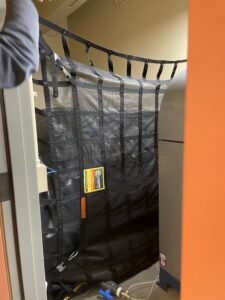
A large balloon bag that acts as a ‘compressor’ is located in the basement of the UC Davis Physics building and is used to capture helium gas to be recycled. Photo by Sonora Slater.

“Helium, nowadays, is really a valuable resource,” Klavins said. “We use liquid helium to cool huge superconductive magnets, and the number of people who are using superconductive magnets has just increased over the years.” 

Rahim Ullah, a graduate student in the Department of Physics at UC Davis and a member of the Taufour Lab, talked about what an essential role liquid helium — and subsequently liquid helium reuse — plays in physics research. 

“The physics that we want to explore happens at low temperatures, and the easiest way to do that is to use liquid helium,” Ullah said. “That’s where you can see interesting properties, like superconductivity, and strange magnetic phenomena. Because we have helium recovery, it’s possible and affordable for us, otherwise it wouldn’t be sustainable.” 

According to the press release, without helium recovery research, groups would need to pay $1,700 for liquid helium every week — now, they buy a few $200 cylinders of helium gas a month, and liquefy it themselves to make up for the small amount lost in the recovery process. 

So how does it all work? Ironically, it involves what is essentially a giant helium balloon.

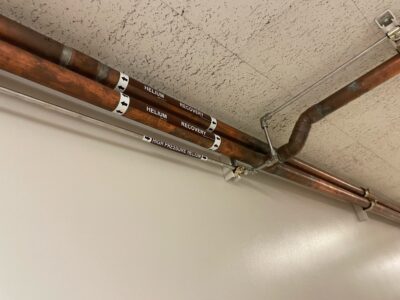
According to Klavins, portable helium liquefiers used directly as magnet coolers are connected to pipes running through the building. When the helium gas within boils off, it travels through the pipe to the basement, where a “compressor,” essentially a giant balloon bag, captures the gas. Once it senses pressure building, the helium gas is compressed and sent through stainless steel pipes to the purification room. 

Helium that has been used as a coolant runs down to the basement in the top set of pipes and is later sent through the stainless steel pipes below to be purified. Photo by Sonora Slater

The gas, which upon entry is around 98-99% pure helium, is initially placed in a chamber to be “dried,” where any extra moisture from the air is removed. This is then purified of any residual oxygen, nitrogen or hydrogen. Finally, it is reliquified to be sent back up for use, leaving at 99.9995% pure helium. 

“Industrial liquifiers have been around forever, but they’re huge and require a lot of training to be able to operate,” Klavins said. “What’s nice about these portable units is that they were really designed for academic research use, so if it needs to be used by a postdoc student, a graduate student, it’s manageable.” 

As far as what it’s used for, Klavins explained that while liquid helium and superconductive magnets have many uses, one of the main ones at UC Davis is studying the physical properties of new materials. 

Valentin Taufour, an associate professor in the Department of Physics and Astronomy at UC Davis and group leader of the Taufour Lab, elaborated on the intersection between materials science and superconductive magnets.

“Materials is actually the biggest branch of physics nowadays, because there are many properties that we’re not able to explain with our current laws of physics,” Taufour said. “So we study, at a very low temperature, how they react to changes in a magnetic field. We study their fundamental properties. It’s sort of a booming field of research right now.”

According to Ullah, who studies magnetic phenomena, the goal of understanding underlying theory and properties is equally applicable to magnetism — once there is better understanding, engineers can work toward application. According to Taufour, one big thing industry magnets are currently being used in that is likely to expand in the future is the manufacture of green technologies, such as electric motors. 

Klavins explained that another benefit of the helium reuse system is a hiring advantage for the university — there’s certain types of research that can only be sustainably done in a facility where helium liquidation and reuse is possible. 

“We’re not limited as much by the supply, like some other campuses are,” Klavins said. “If the supply is down, their research might suffer, but we’re able to keep going because we essentially have our own supply. And without this, we couldn’t have a large condensed matter program.” 

Taufour expanded on the same idea. 

“In the past, people have done experiments and just wasted helium,” Taufour said. “That is no longer an option. If we didn’t have the liquifier, we couldn’t do what we do. If we didn’t have this facility, there’s a whole category of research, where if someone tried to come here to do it, they’d just have to go somewhere else.” 

According to the press release, financial support for the new Helium Lab comes from faculty research funding and a $10,000 gift from Klavins and his spouse, Distinguished Professor of Chemistry Susan Kauzlarich, along with gifts received through the department’s Liquid Helium Laboratory Fund.

Written by: Sonora Slater — science@theaggie.org

Culture Corner

The Arts Desk’s weekly pick of movies, TV shows, books and music

By ANGIE CUMMINGS — arts@theaggie.org

Movie: “Chicago” dir. by Rob Marshall (2002)

This recommendation is a bit of a personal one, and this powerful, musical 1920s period piece is one of my childhood favorites (although it’s not a film specifically meant for children). “Chicago” was originally a Broadway musical, and this 2002 film adaptation with its star-studded cast was, in my eyes, an instant classic — not to mention, it won the Academy Award for Best Picture in 2003. With Renee Zellweger, Catherine-Zeta Jones, Richard Gere, John C O’Reilly and Queen Latifa leading the many lively musical numbers throughout the film, you will begin to yearn for the wild and exciting (and crime-filled) times of prohibition-era Chicago jazz clubs. This movie never gets old because once you’ve memorized all the lyrics and ad-libs throughout the film, it is the perfect sing-along whether you’re watching it alone in your room or with a group of friends. This movie is the perfect example of the great film genre of “women who do wrong and yet we are all on their side” because in all honesty, he had it coming (a reference to the classic song “Cell Block Tango”). Bonus: the soundtrack stands alone as a masterpiece that you can listen to anytime on most major streaming platforms. 

TV Show: “Kath & Kim” (2002-2007)

Need a new sitcom that will crack you up despite not fully understanding much of the dialogue? “Kath & Kim” is the show from Down Under that you need in your life. With four seasons of this dysfunctional, suburban mother-daughter duo, you are sure to have a good time. The show functions as an easy chance to fully develop your authentic Australian accent, especially if you rewatch your favorite episodes over and over again as I have done. You’ll never get tired of the little things Kath and Kim do, no matter how many times you watch the show, and I can almost guarantee that anyone you introduce it to will enjoy it just as much (this theory has been tested on friends and family members of all ages and senses of humor). Once you get past their incredibly thick accents, perfectly permed and highlighted hair and admirably flashy appearances, you have two utterly hilarious characters with some pretty questionable ideas. Every episode is available for you to binge or moderately consume on Netflix, and I would recommend you prioritize starting “Kath & Kim” over all else. 

Radio Show: Series 2 “Cillian Murphy’s Limited Edition” on BBC Radio 6

If you’ve recently been in a bit of a music rut like me, this easily accessible radio show is a great push in the right direction. Who knew that a 45-year-old, classically trained Irish actor would have such an eclectic music taste to share with the world? Definitely not me. After listening to a total of four hours of his show, I gained a new appreciation for musical genres I previously didn’t pay any mind to, as well as for a smooth Irish accent. Not only does Murphy provide middle-aged man classic music suggestions like “Modern Love” by David Bowie and profess his love for the Beatles and the Velvet Underground, but he shares songs by amazing contemporary artists he has found through some incredibly niche sources. One of my top songs from the whole show, “Silly Games” (1979) by Janet Kay, came out of a contemporary British film called “Lover’s Rock” (which is now at the top of my watchlist). The show is full of hidden gems like this one and, to put it plainly, could impress even the snobbiest of your indie/underground music listening friends. I’ve always had a bit of a hard time discovering new kinds of music and artists on my own and I think this show, led by my new favorite Irishman, was a great introduction into the brilliance of music radio shows. You can listen to each episode of Murphy’s show on the BBC Sounds app for free. Pro tip: It’s a great thing to listen to as you stand in the 10-mile-long covid testing line at the ARC. 

Book: “Green Girl” by Kate Zambreno (2011)

Categorized as psychological fiction, “Green Girl” is a quick read that follows protagonist Ruth through what some might consider a relatively mundane experience of being lost as an American in her early 20s in London, grieving the recent loss of her mother and a complicated breakup. This novel is reminiscent of a stream of consciousness, giving a glimpse into Ruth’s psyche by an unnamed narrator, who could be an older Ruth reflecting or even her mother watching over her from beyond. Ruth has shaped some semblance of a ‘self’ through pop culture, idolizing models and actresses and just generally everything in the world that tells young women who they are. As you read the book, it is so easy to just pity Ruth and her extremely contradictory mix of self-absorption and self-hatred, but it’s also clear that in some way or another we’ve all been a green girl. This concept comes directly out of Shakespeare’s Hamlet, and has been explored by many, most notably being the show “Girls,” whose characters have been pegged as just as narcissistic and self-destructive as we watch Ruth become. Not to get too annoying, but it is quite a generally-accepted experience in late-stage capitalism to have a slight existential crisis in the face of the heavily marketed, branded and rigid ideas of womanhood we are faced with. While I’ve previously been criticized by those who know me for only really reading sad and bleak or even nihilistic books, I still assert that this particular book can give so much to anyone who reads it (even if it’s just knowing a new sad story about a sad girl and her toxic thoughts). 

Written by: Angie Cummings — arts@theaggie.org

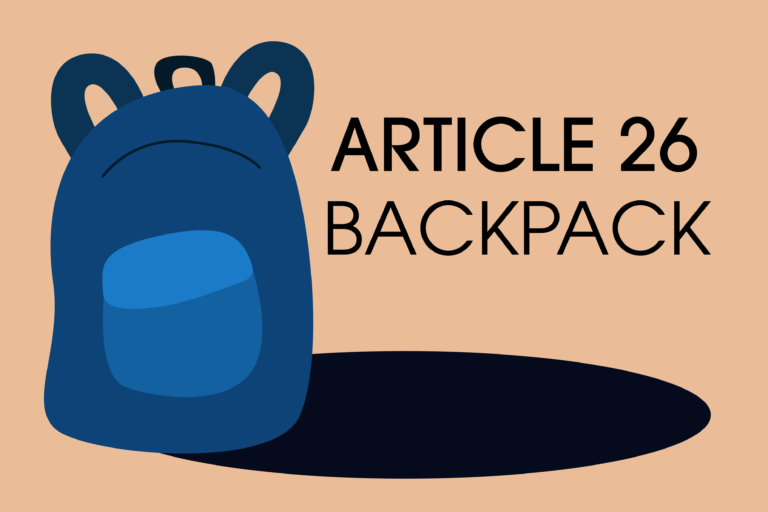
Article 26 Backpack from UC Davis allows students to safely store academic resources

0

Backpack aims to provide refugee students and those from areas of conflict a secure location to store information and documents

By SIMRAN KALKAT — features@theaggie.org

Many students at UC Davis may take access to school as well as education materials and documents for granted, but for refugee and at-risk students, accessing schoolwork can be a challenge.

Article 26 Backpack, commonly referred to as Backpack, is a free cloud-based universal and secure tool for uploading and storing important educational materials and documents created at UC Davis. Students can use Backpack to upload their CVs, resumes, cover letters and other important education-related documents. Backpack is also available in six languages (English, French, Spanish, Arabic, Dari and Farsi), which makes it especially helpful for international students.

Michaela Krulee, a fourth-year political science-public service and economics double major as well as a lead intern at Article 26 Backpack, describes the various teams and projects Backpack operates.

“Article 26 Backpack was created in 2016, as a way to help Syrian students and young people who had fled the war to protect their important educational and career documents, allowing them to connect, or reconnect, with universities, employers or scholarship agencies wherever they were,” Krulee said via email.

The Backpack team has been hosting workshops and information sessions to enroll students, particularly those with a need for Backpack. They partner with various organizations and non-governmental organizations (NGOs) to connect with students and individuals all over the world and enroll refugees and displaced peoples in Backpack. 

When the Taliban took over Afghanistan this summer, the Backpack team was ready to respond to the crisis. Kiana Alirezaie, a fourth-year international relations major and an intern on Backpack’s Afghanistan team, worked closely on this new effort.

         “When the Taliban took over, that was a big thing for us,” Alirezaie said. “We did a lot of translation work. I speak Farsi [and] my team lead spoke Dari which is what Afghans speak, so we did a lot of translating materials and documents.”

         Alirezaie and the team spent a lot of the late summer of 2021 reaching out to Afghan organizations and getting active on social media to raise awareness about Backpack and reach Afghan students and refugees who needed a safe place to store their educational materials.

Getting these students access to Backpack was an important step in helping to make sure their documents and materials could remain secure during a tumultuous period in their lives. During the Taliban’s takeover, Alirezaie said that she noticed a surge of students who signed up for Backpack.

        The Backpack team is currently reaching out to and working with other organizations around the world to make Backpack accessible to students in other nations.

         “We are incredibly excited to be partnering with a Rwandan-based NGO called Kepler in order to enroll Burundian and Congolese refugees and other displaced people in Backpack,” Krulee said via email. “This collaboration was made possible through support from the Mastercard Foundation.”

         As the lead intern at Backpack, Krulee oversees the ongoing projects and supports the various teams at Backpack.

“We currently have teams working in Rwanda, Hong Kong, Burma, Colombia, Afghanistan, the Arab World and most recently domestically in California with AB 540/DACA holders,” Krulee said via email.

         The Mochila team at Backpack works with Deferred Action for Childhood Arrivals (DACA) recipients and AB 540 students. Sarahi Nunez, a fourth-year international relations and Spanish double major as well as an intern on the Mochila team, discussed the importance of the Backpack, particularly for DACA students, and what drew her to work with Backpack.

         “When Dr. Watenpaugh proposed the idea of having a team specifically for undocumented students, I knew I had to get involved because I have close family members that are undocumented and are students,” Nunez said via email. “At the moment we are working on information gathering, building materials and making connections to expand Backpack to DACA and AB540 students for their use.”

         After talking with a cousin who is a DACA student, Nunez said that she realized the importance of a tool like Backpack for other undocumented students who were worried about the safety of important files, not just for school, but also for renewing their DACA status.

         “[DACA and AB540 students need to protect their] proof of residency, documents for applications like citizenship applications, marriage petitions, photos, etc,” Nunez said via email. “There are various applications to use Backpack for undocumented students and we hope to have workshops and materials to inform students who want to learn more.”

         Although the intended purpose and focus of Backpack is to assist refugee students and students from areas of conflict, Backpack is open for all to use.

         “Students at UC Davis should know that Backpack is not just for refugee or displaced students — it is for everyone,” Krulee said. “We have made it our mission to enroll every single person in Backpack so that we can destigmatize what it means to be a refugee, promote digital dignity and make the tool accessible to all.”

         Students can follow Backpack’s social media accounts @thearticle26backpack on Instagram and @a26backpack on Twitter to keep up with the program and get more information on how to enroll.

Written by: Simran Kalkat — features@theaggie.org


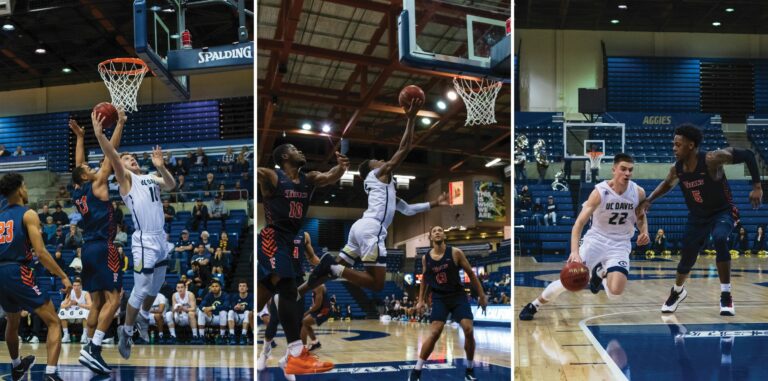
UC Davis men’s basketball 2021-22 season preview

After last years rollercoaster season, the Aggies hope the return to some normalcy sparks a special season

By OMAR NAVARRO — sports@theaggie.org

When the UC Davis men’s basketball team was forced to pause basketball activity due to local county guidelines in early December 2020, no one around the team knew what was next. Not only could they not play, but they also couldn’t practice as a team or do any team activities. All that was left was wait, see and hope that the pandemic got better in the county. They eventually returned to action after seven long weeks, and strung together some wins — six of their last seven regular season games to be exact — that ultimately led them to the Big West Tournament, where they would fall to the No. 1 seed UC Santa Barbara. Nonetheless, with the UC Davis campus reopened and classes once again in person, the team welcomes a breath of some kind of normalcy again. 

“It’s definitely good to have school kind of regular again,” second-year and two-time Big West All-Second team selection Ezra Manjon said. “It feels good to see everybody on campus and be in in-person class. It feels like a normal college year again.” 

Not only do students feel relieved to be back, but it has re-energized the team as well. 

“It’s awesome. This is such a great place and so vibrant when the students are back so it’s great to have that,” head coach Jim Les, who is entering his 11th season at the helm, said. “There are still some protocols in place which is great because it keeps everyone safe, but to have everyone back and moving toward close to normal is a great feeling.” 

As mentioned, protocols are still in place, but having the ability to return has given the team something they didn’t have last year — a normal offseason. They could train together, build chemistry and play as a team rather than previously, before last season, when they worked out individually. 

“A normal offseason for us was huge,” Les said. “We were able to have our normal summer, our normal preseason, whereas last year, we didn’t have any of that. In fact, our preseason [last year] we were out at the Dairy Courts, working out one-on-one with gloves and masks on. So, it’s nice to have that behind us and have a normal offseason so we could grow, work and continue to prepare for the upcoming season, so [I’m] excited about that and how hard this group has worked.”

After losing in the Big West Tournament semifinal last year and finishing the season at 10-8, the Aggies commence their non-conference play in Logan, Utah against Utah State before they have their home opener against Eastern Washington on Nov. 12. This will mark the first time UC Davis will play a home game with fans in the arena since March 2020, something that the team was missing last year. 

“Can’t wait just to have some energy and enthusiasm from our students, the band, from our fans, season ticket holders and fans of our program,” Les said. “Can’t wait. [Last season] you really had to self-motivate. That wasn’t always easy, but [the team] rallied around each other, cheered for each other. We made up for the loss, but thank goodness we don’t have to do that this year.”

To continue their tough tests before Big West Conference play, they travel to Pepperdine on Nov. 17, then take on Causeway rival Sacramento St. on Nov. 23 at the Golden 1 Center, home of the Sacramento Kings. 

“[The team] is super excited,” Manjon said about the team’s energy. “I think it’s going to go really well. Our team is looking really nice right now. Our last scrimmage we did really well, so I’m really confident about this team.”

After the Causeway Classic, the team will begin a non-conference homestand against Academy of Arts (Nov. 28), Pacific University (Dec. 1) and UC Merced (Dec. 4) before they face arguably their biggest test of the non-conference games at Oregon State. The Beavers won the Pac-12 Tournament last year and made a run in the NCAA Tournament before they lost in the Elite Eight. Although they are missing some pieces from last year, traveling to Corvallis will not be an easy task. 

On Dec. 19 they take a trip down the I-5 to Stockton, where they will play Pacific once again before closing out non conference play on Dec. 22 against the University of Portland. To limit travel last season, Big West Conference play consisted of doubleheaders against the same team. This time around, it is not the case, so when the Aggies open up conference play against UC Riverside on Dec. 28, they will have to travel to Hawaii just two days later. For the first games of winter quarter, UC Davis hosts the Big West favorite UC Irvine in an early season clash. They then play UC San Diego on a Saturday afternoon game on Jan. 8, before they begin a road trip to visit CSU Bakersfield, Cal Poly, CSUN and UC Santa Barbara between Jan. 13-22.

They return home on Jan. 27 to play Cal State Fullerton and Long Beach State, before they return to the road again on Feb. 1 to face UC Riverside once again. On Feb. 5, they host Hawaii, and the following week make a trip to Southern California to visit UC San Diego and UC Irvine for the second time. Although they do have a lot of away games early in conference play, that will eventually turn for the better for UC Davis, as they will have a four-game homestand between Feb. 17-26 in a crucial part of the season, playing Cal Poly, CSU Bakersfield, UC Santa Barbara and CSUN in the final home games of the year. To finish off the regular season, they once again travel to Southern California and play Long Beach State on March 3 and their final game will be March 5 against Cal State Fullerton.

“This is a talented group,” Les said. “It’s a group that we feel is very deep, and I think our fans are going to love watching this team and watching them grow. Our expectation is come March, we are going to be in the hunt for a Big West title.”

With only three upperclassmen on the roster, the team will be very young as Les mentioned. But, with the return of stars like Manjon (15.6 points and 3.3 assists a game last year), 2020-21 All-Big West Conference Second Team selection Elijah Pepper (14.7 points and 5 rebounds a game) and 2021 Big West Conference All-Academic Team selection Caleb Fuller (10.3 points and 3.4 rebounds a game including a 30-point game last season), the core of the group will be set and has major experience. Not only that, but they expect big contributions from Christian Anigwe, who did not play last season until mid-December due to NCAA transfer policies that were later updated but provided great minutes when the team wanted to run a smaller lineup.

“I think [the fans] are going to get to know a lot of the new guys,” Manjon said. “We got Christian Anigwe, our big man; I think he’s going to surprise a lot of people. I think Aggie fans should look forward to seeing Christian play. Obviously Elijah Pepper, who’s a bucket. Ade [Adebayo] is a guy you also have to watch out for. He’s a crazy defender and has blocks. Caleb Fuller, you guys know him, great scorer. We got a transfer from Nevada, Kane Milling, who’s a sniper from the three-point range. We got a lot of pieces that are going to be really good this year.”

As Manjon mentioned, contributions will come from those he named as well as everyone on the team. Coach Les has shown in the past that he does not fear playing younger players if need be, so throughout the season, it will be interesting to see how he maneuvers the rotation. As for Manjon, he hopes to enhance not only his on-court success but off-court as well. 

“I think the biggest thing for me this year is being a leader on and off the court,” Manjon said. “That leadership [role] is something that has been passed down to me [since] my freshman year. My [second year] it was a little bit wacky because of how weird the year was but now I think I’m ready to step into that role and lead the team to win some games this year.” 

Overall, the Aggies have entered the season focused and reenergized, as they hope to get back to the NCAA Tournament like they did in 2017. Having gotten one step closer last year, UC Davis is projected in third in the Big West preseason media poll. The non-conference games will be a good test for the team, but the return of a more normal schedule could be what the Aggies needed as they look to go dancing one more time.

“We’re thinking, get to March Madness and win games,” Manjon said. “That’s the goal right now. The goal is to get better everyday and win one game at a time, but the ultimate goal is to get to March Madness and win games. I think this group can definitely win a lot of games.” 

Written by: Omar Navarro — sports@theaggie.org

UC Davis finalizes report of baseball program investigation

The university’s investigation of UC Davis Baseball has concluded violations of hazing and a culture of drinking within the program

By OMAR NAVARRO — sports@theaggie.org

UC Davis released their final report on their investigation into the baseball program on Friday afternoon. After interviewing eight university employees and 13 current/former players the university concluded there was evidence that proved the allegations of hazing and culture of alcohol within the program existed.

“I want to thank the investigators for their focused approach and the witnesses for their cooperation, even while under heightened media scrutiny,” said UC Davis Chancellor Gary May in a statement.  “As I have often stated, the health and wellbeing of our students is our top priority. When allegations of misconduct of any kind are reported, we won’t hesitate to take appropriate action to determine the facts. Let me reiterate, as I stated during the summer, that UC Davis has zero tolerance for hazing.”

In a 113 page report released by the university, they responded to allegations of hazing, allegations of sexual misconduct and allegations of a culture of substance abuse. In relation to the hazing allegations, they found in their interviews a longstanding tradition that involved the initiation of new players. 

In the investigation, they got firshand interviews from people who attended these initiation events from January 2016 to January 2020. There were a multitude of events and challenges for the rookies including “Beer Boxing,” where two players competed head-to-head until one vomited, “Don’t F— Your Brother,” in which the two initiation teams raced to drink a jug of alcohol, among other challenges as well. 

In response to the allegations of sexual misconduct, the university found that older players “made comments that one would reasonably expect to scare the rookies” according to the report. However, the interviews suggest that it was more of a scare tactic and that the rookies knew it was a joke as well. But, the allegations of substance abuse found a culture of drinking within the program, even leading a recruit to leave after a quarter because he felt that the team cared more about partying than baseball. 

The investigation resulted in the resignation of head coach Matt Vaughn after 10 years at the helm. Specifically, they found that Vaughn “failed to take appropriate steps to address a concern brought to his attention about possible hazing involving the baseball team in 2018.” UC Davis will now begin a head coach search to try and find his replacement. 

In addition to this, Intercollegiate Athletics (ICA) implemented new actions for the team for the remainder of this season. Unsupervised team activities on and off-campus are prohibited, a sport administrator will travel with the baseball team and there will be a reduction in the non-conference baseball game schedule for the 2021-2022 season. As a whole, ICA will now have training for all student-athletes in addition to what they already have in regards to their student handbook. They also partnered with RealResponse, a company that provides an anonymous reporting tool for student athletes as an additional channel for students to seek help or share concerns when situations arise. 

“Creating a welcoming and healthy environment for all of our students requires that we provide a safe space for them to come forward and speak confidentially about their concerns,” said UC Davis Director of Athletics Rocko DeLuca in a statement with the release of the report. “We are deeply saddened that students who have been a part of the baseball team experienced events that negatively impacted their health and wellbeing. We appreciate those who reported their concerns as well as those who participated in the investigation. Their actions will help the baseball team create a healthy, supportive culture.” 

This story is developing. Please check back for future updates. 

Written by: Omar Navarro — sports@theaggie.org

Sensationalizing tragedies is unethical

Media coverage and social media’s response to Astroworld demonstrates desensitization to tragedy

On Nov. 7, Travis Scott’s “Astroworld” concert in Houston became a mass casualty event, killing eight people that night and as of Nov. 11, one other. By now, most people have heard about the event — from the news, social media, conversations with friends — but much of the content and buzz around the tragedy hasn’t focused on the eight people who lost their lives, let alone the many others who were injured or traumatized by the event. 

Headlines like “Fans claim ‘The Simpsons’ Predicted Astroworld Tragedy” and rumors of Travis Scott being spotted at Dave & Buster’s post-concert have been prominent in newsfeeds. And while there are some articles that honor the victims in a respectful way, like the New York Times tribute to the eight individuals killed the night of the concert, many stories focus on the celebrities involved, rather than the victims, for clicks.

While as journalists we are taught to grab an audience with our headlines and lead with the juicy details that are going to make readers want to know more, we also know that we cannot forget humanity in that process. Yes, hooking our audience and making content that is entertaining and informative is our job, but it is also a main principle to do so in the least harmful manner. The way that this event has been co-opted by certain media outlets to increase profit and by all of us personally for some twisted form of entertainment is a prime example of both the desensitization and sensationalization toward tragedy that the internet has created.

Over the past few days, TikToks of the chaotic crowd at Travis Scott’s concert have collected millions of views and likes. There are hundreds of comment sections on social media platforms, not to mention real life conversations with friends, obsessing and gossiping about who’s at fault, what charges will be brought against Travis Scott, and is Kylie Jenner going to stand by him? 

It’s no surprise that due to the ubiquity of social media and constant availability of the news, in combination with the unfortunate reality that the past few years have been violent and deadly, there seems to be an increasing cultural desensitization to death. But at what point does it become unethical to profit — either monetarily, or in rich conversation and stimulation — off of real people’s tragedies and lives? Even though these topics need to be reported on, the goal should be to inform rather than to reel readers in through shock factor. 

Unfortunately, the Astroworld festival was not the first tragedy to go viral this fall. The case of the missing woman, Gabby Petito, who was presumed to have been murdered by her then boyfriend, Brian Laundrie, was all over Tiktok, Instagram and media outlets in September.

There were search parties, TikTok theories and endless “breaking news” cycles while authorities were searching for Laundrie, but after Laundrie’s body was found and the mystery was “over,” society at large lost all interest suddenly and entirely, but the two families still have to recover from being shoved into the spotlight while grieving. 

It’s neither entirely the media’s fault, nor is it ours as consumers that we are so invested in tragedies. Like driving past a car accident on the highway, it is somewhat impossible not to look out the window at the scene. But that only happens once in a while — not every time we turn on our phones.

With death and tragedy so readily available online, it can be both overwhelming and desensitizing. It’s sometimes difficult to remember that though these tragic stories often get reduced to money-making headlines and “entertainment,” they are the stories of real people’s lives, and they can affect our lives. So, even though it’s not realistic, or socially responsible, to completely stop writing or talking about tragedy, we can all try to be more careful to notice how we discuss these real, terrible events — both to honor and respect the people affected, and as a service to protect ourselves.

Written by: The Editorial Board

ASUCD fall 2021 election results announced

Three independent candidates and three BASED candidates were elected to fill the six available Senate seats

By SOPHIE DEWEES — campus@theaggie.org

In this fall’s election, seven candidates ran for six seats in ASUCD Senate, two candidates ran for external affairs vice president (EAVP), one candidate ran for transfer student representative and one candidate ran for international student representative. 

Continuing the trend of historically low voter turnout in ASUCD elections, only 762 students, or 2.4% of the undergraduate population participated. Voter turnout was down this election by 3.6 percentage points from last fall. 

For Senate, Radhika Gawde (Independent), Gaius Ilupeju (Independent), Dennis Liang (BASED), Celeste Palmer (Independent), Kelechi Orji (BASED) and Sofia Saraj (BASED) were elected. 

BASED received 328 or 43.04% of the votes and independent candidates received 434 or 56.96% of the votes.

EAVP Shruti Adusumilli ran as an independent and was re-elected for the position.

Tariq Azim and Keven Zhou ran uncontested for transfer student representative and international student representative, respectively, and were elected. 

With 606 votes in favor, 69 against and 179 abstaining, the Elections Committee Restructuring Amendment passed.

The Commission Numbering Acronym Amendment passed with 685 votes for, 29 against and 140 abstaining from voting.

Finally, 698 students voted to pass the PELP Acronym Amendment, 28 students voted against and 137 abstained.

Written by: Sophie Dewees — campus@theaggie.org

Humor: UC Davis switches to new parking app, turning every parking lot into a used car lot

“All cars are 50% off! Even the ones that still have owners”

By IAN COSNER — iacosner@ucdavis.edu 

Parking has always been a nightmare, but what better way to usher in an already confusing and difficult transition into in-person school than to completely rehaul the parking system! 

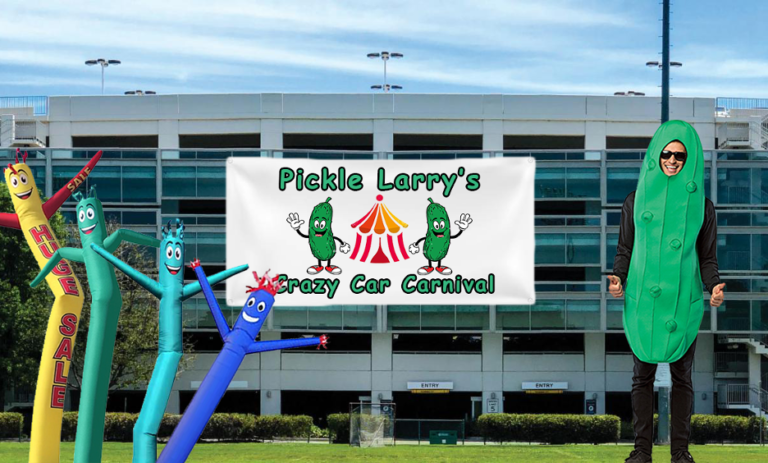
Last year, UC Davis planned on ending its school parking pass system in exchange for a new partnership with ParkMobile, a parking app that allows students to pay for parking through their phone. As horrendous as that sounds, luckily there was a miscommunication and Davis accidentally donated all the parking lots to Pickle Larry’s Crazy Car Carnival, a used car lot whose owner planned on donating their own land to the university.

So what does that mean for the average begrudging student that has to wake up an hour earlier, waste money on gas and parking and deal with traffic because of in-person school? Well fret not, because all the possible problems that would’ve happened with the ParkMobile app, such as: 

A 69% increase in fares for students and staff; a buggy app that can’t differentiate between the parking lot and Putah Creek; an array of signs on campus that are both pointless and not pointless due to the app not registering the difference between teacher and student parking and requiring you to do the thing it should be designed to do itself.

These grievances are all relics of the past, because under the reign of Pickle Larry, you no longer need to worry about parking fees, lettered zones or tickets. The Crazy Carnival allows all students and staff to park wherever they like on campus completely free of charge! The only catch is that if your car is in any school parking lot, Pickle Larry is legally allowed to sell your car for profit. 

That’s right, folks — the Car Carnival has come back with a vengeance, looking to stake a profit off of your barely functional 2000 Pontiac Aztek. Cars are being sold for dirt cheap, no matter the condition, because the second they leave the lot, Pickle Larry no longer has the rights to your car. And while Larry is the kind of person that’s always been known for his preposterous prices, this time the panicked, perplexed pawnman has found himself in quite the pernicious pickle.

“I’ve always prided myself as being a common, sensible man,” Larry said. “I’m just a normal down-to-earth guy, like everyone else. I put on my pickle suit one leg at a time. A true dealer of the people, you could say.”

When the Aggie asked if he meant “dealer for the people,” Larry responded, “Oh no, no no no. I’m a dealer of the people. I take the cars of other people and sell them. Sometimes even with their consent.”

While the situation may not be ideal for most non-pickle students, UC Davis has stated the Car Carnival will have full reign of the parking lots until the school can scrounge up enough money from unnecessary stuff like janitors, stop signs and UC Davis Health medical services to buy back the land. So, while we embrace the Car Carnival, make sure to keep an eye out for any plotting pickles planning to pilfer your Porsche. Whether losing your car is worth free parking is up to you, but hey, at least you don’t have to download an app. 

Written by: Ian Cosner — iacosner@ucdavis.edu 

Disclaimer: (This article is humor and/or satire, and it’s content is purely fictional. The story and or names of “sources” are fictionalized.)