54.1 F
Davis

Davis, California

Tuesday, December 23, 2025
Home Blog Page 252

Project Roomkey has provided more than 49,000 nights of shelter to 500+ Yolo County homeless individuals

More than 61 permanent transitions to housing have been achieved through the program

    Project Roomkey, a partnership between Human Services Agency and Yolo County Health on the local level, has provided 49,244 nights of shelter to around 533 members of the homeless population between March 16 and Nov. 17, averaging to 92 nights per individual, according to a press release published by Yolo County on Nov. 20. 

    “While Project Roomkey was never intended to be a permanent housing solution, the program’s increased stability and access to case management services has resulted in over 61 permanent housing transitions to date […],” the press release reads. 

    Deputy Director of Police Services Deanne Machado said via email that Project Roomkey has helped the local community “[…] by temporarily providing shelter to the community’s most vulnerable, unhoused population.”

    “In the absence of Project Roomkey, these individuals (many of whom are immunocompromised) would have likely continued to live unsheltered on our streets or in a congregate setting of some kind, both of which are particularly hazardous during a pandemic for this population,” Machado said via email.

    Homeless Program Coordinator at Yolo County Health and Human Services Nadia Waggener further explained how Project Roomkey has helped the community.

    “When we house our most vulnerable neighbors, the impact can be felt in our streets, in our hospitals, and in our bottom line,” Waggener said via email. “Project Roomkey (PRK) allows our community to live our Yolo values: serving our elderly and disabled neighbors while creating a safer community. PRK has moved people off the streets and into dignified living conditions where our seniors and disabled clients can receive medical care, case management and rest.”

    Allowing people to access stable, safe living conditions also reduces calls for emergency services and the strain on hospitals during the COVID-19 pandemic, Waggener explained. 

    District Two Yolo County Supervisor Don Saylor noted that Project Roomkey has also allowed California to provisionally satisfy the long-term aim of “functional zero” in relation to homelessness, which means that there were more spaces available than people without houses. 

    “Yolo County has long supported the “housing first” model in serving our unhoused community members,” Saylor said via email. “This model focuses first on stable housing, then provides wraparound services to help clients address their needs, such as applying for benefits and enrolling in treatment services.”

    Saylor explained that the housing first model was also used in 2014 in the Bridge to Housing Program, which provided temporary housing to 53 people in a motel and services to support them. Ultimately, the program was able to find permanent housing for most of them. 

    “We have demonstrated that supportive housing programs can help unhoused individuals transfer to permanent housing and improve their overall quality of life,” Saylor said.

    While participating in Project Roomkey, individuals meet with case workers to decide the next steps forward, such as applying for low-income units, subsidies and affordable apartments, all of which may have long waiting lists.

    “For some, this may involve reunification with family and for others this may mean some sort of independent living setup,” Machado said. “There are some subsidized housing options in Davis, and several former Project Roomkey clients have secured their own apartments through subsidies.”

    Machado said that some individuals “[…] return to homelessness due to a variety of factors,” while others enter the Davis Emergency Shelter Program run by the Interfaith Rotating Winter shelter after leaving the program. Others also go to Room and Boards or to homeless shelters such as Davis Community Meals/Housing.

    Most elderly clients live on a fixed income—which averages around $910 monthly—making it necessary to find apartments under $1,000, according to Waggener. Clients depend on subsidy programs through Yolo County Housing and other low-income housing options.

    “Our staff is working to connect as many current PRK clients to affordable or subsidized apartments before the end of the program,” Waggener said.

    Yolo County and its cities are currently working to determine long-term options and what can be done next, such as a new permanent shelter in Woodland, according to the press release.

    “Project Roomkey is an example of the ‘Yolo-way,’ serving the people of Yolo County through a collaborative partnership among public, private, and non-profit agencies,” Saylor said. “I’m grateful to the team of staff and volunteers who helped serve our unhoused community members in this capacity.”

 Written by: Shraddha Jhingan — city@theaggie.org

Davis City Hall reopened June 15, in line with Yolo County loosening restrictions

On June 15, the Blueprint for a Safer Economy was retired, ending local restrictions on businesses and removing capacity limits

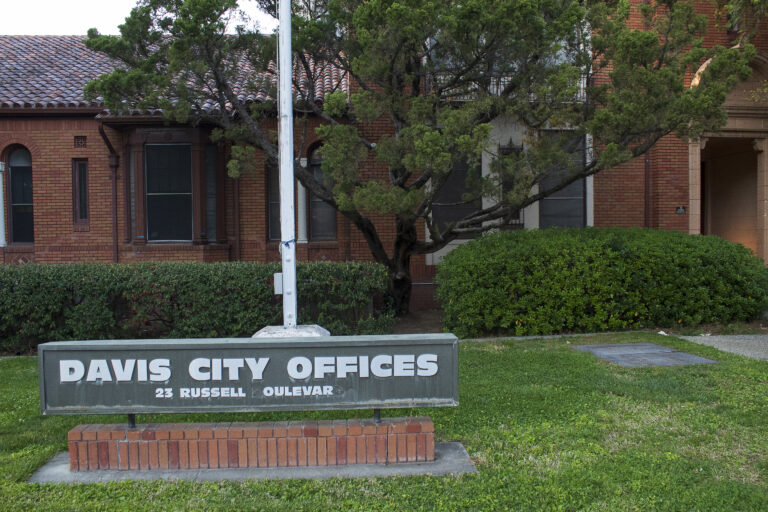
In a news statement published on June 11, the City of Davis announced that City Hall reopened on June 15 for the public. The public will be able to access City Hall and reach staff at certain hours, according to the news statement.

    “City Hall will open to the public with the hours of Monday through Friday, 8:00 a.m. to 4:00 p.m.,” the news statement reads. “General business hours remain 8:00 a.m. to 5:00 p.m. to contact staff via telephone and email. Welcome back to your City Hall!”

    Barbara Archer, the communications & customer service manager for the City of Davis, explained via email what the reopening of City Hall entails.

    “City Hall is now open to the public from 8 am to 4 pm,” Archer said. “At this writing, public meetings for City Council, commissions, and 2 x 2 (joint meetings with other agencies) are still on Zoom, but that is subject to change.”

    People are able to visit City Hall for things “such as building permits, encroachment permits, fire permits, camp registration, utility bill payments and business licenses,” according to the news statement.

    The news statement also reiterates that “until further notice,” public meetings such as the ones that Archer mentioned will still be held in a virtual format on Zoom.

    Archer also explained what it has been like dealing with city matters remotely for the past year.

    “City staff really rose to the occasion during the pandemic,” Archer said. “Staff got creative with online programming. Customers were able to get some permits online. The City maintained its excellent level of customer service throughout the pandemic.”

    Archer added that the City of Davis was able to work with various local entities and create relationships with them.

    “The City worked closely with the County, UC Davis and the school district on the Healthy Davis Together project and other COVID-related policy matters and formed lasting collaborative relationships,” Archer said.

    The news of City Hall reopening is in line with Yolo County announcing in a press release on June 15 that activities and business would be fully reopening “in alignment with the retirement of the State of California’s Blueprint for a Safer Economy.”

    This means that “the color-coded tier system for counties” has been removed. 

According to the press release, starting June 15, there will be no more restrictions on capacity limits. Those who wish to travel should follow recommendations from the Centers for Disease Control and Prevention (CDC). 

There are also no more restrictions on capacity limits, as well as “physical distancing” for “attendees, customers and guests,” though “workers on the job must” continue to practice physical distancing. 

More information regarding the use of masks, and restrictions for schools, workplaces or employers, events and more can be found in the press release.

Public Health Officer for Yolo County Dr. Aimee Sisson further discussed restrictions in the press release.

“With our local case rate very low and the majority of Yolo County residents vaccinated, now is an appropriate time to loosen COVID-19 restrictions,” Sisson said.

Though cases are lower compared to those during previous stages of the pandemic, Dr. Sisson highlighted that the pandemic is not over yet.

“While the Blueprint framework is ending today, the pandemic is not,” Sisson said in the press release. “The virus that causes COVID-19 continues to circulate in Yolo County. Those who are not yet vaccinated remain at risk of infection and should continue to protect themselves and others from COVID-19 by wearing masks indoors.”
Written by: Shraddha Jhingan — city@theaggie.org

UC Davis Health warns that contagious Delta variant calls for further urgency toward vaccinations

The Delta variant has more efficient transmissibility with selectively advantageous mutations in its spike protein

With recent anticipation and plans for students to return to campus this coming fall, the Delta variant of the coronavirus has brought yet another wave of cases that continue to plague the population of both the vaccinated and unvaccinated alike. 

“​​For most of June, there were fewer than 10 patients with active COVID-19 at the UC Davis Medical Center on any given day,” according to a recent UC Davis Health press release. “On several days there were five or six. This week, it’s ranged from 18-25 patients daily. And UC Davis Health experts expect that to go up.” 

Dr. Brad Pollock, the chairman of the Department of Public Health Sciences at the UC Davis School of Medicine and a distinguished professor trained in epidemiology, describes how variants like the Delta variant arise from the original coronavirus.

“Like many other viruses, there are opportunities for the virus to sort of get better at what it does, that is, to mutate,” Pollock said. “So with large numbers of people infected and lots of viral replication going on all the time, there can sometimes be what we would call errors. Random mutations that occur in the genome for the virus can confer a selective advantage. The major changes that have occurred with these variants, and these are sometimes called variants of concern, is that the virus has gotten to be more infectious. Another one is that the virus could theoretically become what we call more virulent or create more disease.”

The Delta variant is just one of many mutations that the original coronavirus has undergone but has become stably effective and potentially more dangerous. Though this variant has not caused any patient to feel sicker, it has become far more contagious.

“This virus is thought to be about 60% more contagious than the original wild type strain,” Pollock said. “That means that it’s just that much more likely that if you’re in some proximity to somebody who is infected and you’re not protected yourself, you’re more likely going to acquire the infection.”

Fortunately, those who were vaccinated but still ended up falling ill to the variant have not required hospitalization and have experienced a milder version of symptoms of the coronavirus. 

Dr. Christian Sandrock, a critical care doctor at the UC Davis Medical Center working with patients infected with the coronavirus, further explains the dangers behind the Delta variant.

“The Delta variant isn’t necessarily more deadly,” Sandrock said. “It’s definitely more contagious, and it spreads more rapidly, particularly in non-vaccinated communities. This variant just has some features associated with the spike protein and some of the other proteins that help enhance transmissibility and also better evade our immune system. What we have seen–again, it’s anecdotal–is that certainly the age group between about 30 and 50 seems to be hit a little bit harder.”

According to the recent UC Davis Health press release, Sacramento County has the third highest COVID-19 case rate in the state, with 11.5 cases per 100,000 people over the last seven days. The county’s vaccination rate is around 50%, well below the statewide rate of 63%. 

While both Pollock and Sandrock agree that the variant, which accounts for the rise in the majority of cases currently, will not lead to another quarantine period, they both warn that a return to normalcy requires getting the unvaccinated population vaccinated as soon as possible. 

“You probably heard that Pfizer was working on trying to get FDA approval for a booster, and the federal authorities FDA and the CDC are saying, well right now, that’s not the real problem,” Pollock said. “And they’re right, because the real problem right now is that we have 40 to 50% unvaccinated. It has nothing to do with the booster shots. This has to do with folks that are not protected at all who can harbor the virus, and the more people who get infected, the more likely that there is to be a mutation that arises that is even more favorable than the Delta variant.”

To avoid future outbreaks like the coronavirus, Sandrock, in the same vein as Pollock’s view of prioritizing the urgent need for vaccinations, provides insight into the need to improve our public health system. 

“To really survive a larger pandemic or a deadly outbreak, there has to be strong public health infrastructure and societal cooperation to that public health infrastructure,” Sandrock said. “So not only does there need to be society’s investment in public health but also society’s trust back into the public health community. And we do not have any of that right now, which is the most surprising part of the pandemic right now. So the one lesson is that this needs to reverse itself or the next pandemic is going to be exceedingly more deadly.”

Written by: Brandon Nguyenscience@theaggie.org

Supernova 2018zd observed by international team of researchers approximately three hours after star explosion

UC Davis assistant professor and graduate students help identify a new type of supernova 

By AARYA GUPTA — science@theaggie.org  

UC Davis assistant professor of physics and astronomy Stefano Valenti and graduate students from the Department of Physics, Azalee Bostroem and Yize Dong, were part of a team of international astronomers that recently discovered supernova 2018zd, or SN2018zd. Their research was recently published in Nature Astronomy on June 28. 

“This supernova was discovered just after its explosion, so we collected a complete set of data, which allowed us to do a comprehensive study on this object,” Dong said via email. 

The discovery of supernova 2018zd was part of the Global Supernova Project, a key program spearheaded by the Las Cumbres Observatory and Physics Professor at UC Santa Barbara Andy Howell. Through this project, 200 scientists across the globe are currently studying 500 supernovae using 40 telescopes, over the course of three years, according to the Las Cumbres Observatory website

According to NASA’s website, a supernova is the “largest explosion that takes place in space” and “is the explosion of a star.” 

Bostroem stated that the two main types of supernovae are thermonuclear and core-collapse supernovae, which can be differentiated by identifying the type of star and the way that star exploded. 

“Low mass stars, like the Sun, form really dense stars called white dwarfs at the end of their lives,” Bostroem said via email. “If a white dwarf accretes gas from another nearby star, it can explode as a thermonuclear supernova. On the other hand, stars that are more than 10 times the mass of our Sun fuse iron in their cores. It is the collapse of this core into a neutron star that produces iron core-collapse supernovae.” 

However, Bostroem explained that there are stars that lay amid these two extremes. Some stars are simply too large to form thermonuclear supernovae but also too small to form core-collapse supernovae. According to Dong, Ken’ichi Nomoto, a professor from the University of Tokyo, predicted in 1980 that these stars form electron capture supernovae, a third type of supernova, when they explode. 

“In this work, we confirm SN2018zd is an electron capture supernova,” Dong said. “The progenitor of this supernova is identified as a super-asymptotic giant branch star, and [these] types of stars are thought to be ended with electron capture supernovae.” 

Before the discovery of supernova 2018zd, Messier 1—more commonly known as the Crab Nebula—was the primary candidate for confirming the existence of electron capture supernovae. According to NASA’s website, the Crab Nebula, located 6,500 light-years away from Earth, was observed by Chinese astronomers in 1054. 

“We thought that the supernova that produced Crab Nebula was an electron capture supernova, but we didn’t have enough evidence to confirm that since that supernova exploded one thousand years ago,” Dong said. “Now, with the discovery of 2018zd, we have more confidence to say that electron capture supernova[e] exist in nature, and Crab Nebula may be the remnant of [an] electron capture supernova.” 

Bostroem added that for supernova 2018zd, their team of researchers were able to record observations tied to all six characteristics of an electron capture supernova: “progenitor identification, circumstellar material, chemical composition, explosion energy, light curve and nucleosynthesis,” according to the abstract of the paper.

Supernova 2018zd have “extremely low luminosity and special line features at late phase,” Dong said. Specifically, weak carbon, oxygen, magnesium and iron lines are apparent in the late-time spectra of supernova 2018zd. 

“I collected the late-time Keck spectra for this object when it was very faint,” Dong said.

These specific observations were taken via twin telescopes at the W. M. Keck Observatory in Waimea, Hawaii—among some of the largest telescopes in the world according to an article published by The Guardian—about 600 days following the explosion. 

 “The Keck spectra provide[s] strong evidence that this object is an electron capture supernova. In order to confirm that 2018zd is an electron capture supernova, we need to identify six features, and Keck data were used to confirm one of those features.” 

Bostroem explained that their data revealed there was more nickel than what is normally observed in a core-collapse supernova. 

“What makes supernova 2018zd unique among other electron capture supernova candidates is that we had observations of the star before it exploded, we discovered it soon after explosion and we collected observations of the full evolution until almost 2 years after it was discovered,” Bostroem said.  

Written by: Aarya Gupta — science@theaggie.org 

More than a year after the start of the pandemic, local businesses continue to adapt

As Delta variant spreads, officials encourage adhering to public health and safety guidelines in order to stay safe while supporting local businesses

Throughout the pandemic, California’s small local businesses have experienced an economic downturn. As vaccinations rise, public health guidelines have allowed businesses to open back up. 

In Davis, many businesses and services are reliant on or are greatly impacted by the number of students that are in town. Fifty three percent of Davis’ population is composed of students, according to UC Davis

As a result of the pandemic, students were dispersed all around the world, so there was a lower number of students in town during this last school year compared to pre-pandemic numbers. Although businesses have largely reopened, many students have left Davis for the summer, which during the pandemic decreases the already comparatively lower amount of students in town.

Former Yolo County Public Information Officer Jenny Tan explained in May how she has seen businesses and other establishments in Yolo County adapting as more of them start to open up this spring.

“We’ve seen a variety of things, for example more outdoor seating, signs up that talk about face coverings still being needed, as well as workers following the State and CalOSHA guidance,” Tan said via email. “As we reopen, we all need to remember the health measures we’ve been following for over a year can still help to keep us healthy.”

Following health and safety guidelines, such as the one mentioned above, it is important to continue supporting local businesses, Tan explained.

On July 27, Yolo County announced in a press release that face coverings are still required indoors, as COVID-19 cases rise, especially because of the Delta variant. 

“As a result of rapidly increasing case rates, testing positivity rates, and number of COVID19-positive patients in hospitals, additional layers of protection are needed to slow the spread of COVID-19 amidst a fourth surge,” the press release reads. “Wearing a face covering in indoor public spaces reduces both the risk of getting and transmitting COVID-19 and does not limit business occupancy or operations.”

Communications Coordinator for Yolo County Frank Schneegas explained how the Delta variant has had an impact on COVID-19 cases in Yolo County.

“[…] Rising case rates, testing positivity, and hospitalizations are largely due to the predominance of the highly infectious Delta variant, which is over twice as contagious and may double the risk of hospitalization compared to the original virus,” Schneegas said via email. “Since the statewide transition to Beyond the Blueprint on June 15 Yolo County’s COVID-19 case rate has risen eight-fold from 1.2 to 10 per 100,000 residents.”

Businesses are still operating however, “since the June 15 transition to Beyond the Blueprint,” Schneegas said.

Schneegas noted the importance of getting vaccinated and adhering to public health guidelines in order to ensure the health of the community and continue supporting local businesses.

“Please get vaccinated as soon as possible and wear a mask in indoor public spaces, even if you are vaccinated,” Schneegas said. “We need to take steps to reduce the prevalence of COVID-19 to ensure the health and safety of our community and support local businesses by preventing surges in cases that could impact business operations.”

Ultimately, especially as a result of the pandemic, it is more important than ever to continue supporting local businesses, especially as many students are away from Davis for the summer. 

“If you can, support local businesses,” Tan said. “They are part of the backbone [sic] of our community. If you are going to be coming back to Davis for the next school year, you want to be able to still visit your favorite restaurant or store. Some things you can do to support your local business is to shop local, order online, or share that you like the business on social media.”

Written by: Shraddha Jhingan — city@theaggie.org

Six new COVID-19 deaths reported in Yolo County

Infection rate and testing rate in Yolo County spiking due to the Delta variant 

On Aug. 12, Yolo County reported six new COVID-19 deaths. This increase in deaths is accompanied by a rise in case rate.  

    Yolo County Public Information Officer Frank Schneegas said that not all the deaths occured recently.  

“[…] We recorded six new deaths, and one of those deaths was from April,” Schneegas said. “The other five occurred between the 26th of July and the third of August.”

Schneegas noted that people who have been vaccinated can also contract COVID-19.  

“Yes, vaccinated people can get COVID-19 and yes, vaccinated people in Yolo County have gotten COVID-19, but I think it’s almost a bit of a statistical trick almost, as the proportion of vaccinated people increase, the number of vaccinated people who get COVID-19 will also increase,” Schneegas said. “This was always going to happen because no vaccine is 100% effective, but they are still very effective, though that doesn’t mean no one will contract COVID-19.”

Schneegas said that the vaccine still provides protective benefits.  

“​​The people who are dying from COVID-19 and who are being hospitalized from COVID-19 are overwhelmingly unvaccinated,” Schneegas said.  

Yolo County’s COVID-19 dashboard does not currently display the number of vaccinated people who have contracted COVID-19. Schneegas explained that the county has sought that information but has not yet received it.  

According to UC Davis Health Director of Business Development Tod Stoltz, Healthy Davis Together has collected some statistical information regarding the number of COVID-19 cases who have been vaccinated.  

“We don’t necessarily know the vaccine status of everybody that is coming in to test, but when we call our positive cases to notify them that they’re positive, we ask if they’re vaccinated, and about 25 to 30% say yes,” Stoltz said. “About 25% of those who are testing positive are vaccinated. That’s higher than I think we expected. It’s not outrageous compared to what we’ve seen or read about around the world about the Delta variant having breakthrough infections.”

Healthy Davis Together also collects information on COVID-19 variants, Stoltz explained.  

“Everybody who tests positive, we immediately genotype to see which variant they are,” Stoltz said. “We’re pretty much all Delta all the time. Delta variant has absolutely taken over in Davis.”  

The number of tests administered by Healthy Davis Together has also been on the rise, fueled by people returning from vacation, according to Stoltz.  

“I think a lot of people are starting to use our testing to help create a sense of peace of mind after perhaps a risky event or risky activity,” Stoltz said.    

Written by: Rachel Shey — city@theaggie.org

Davis City Council approves modified design of Gandhi statue. Hopes to prevent future acts of vandalism with new design

Controversy over the presence of Gandhi statue continues to put local Gandhi supporters and protestors at odds

At the Davis city council meeting on Jul. 20, the city council unanimously voted on a modified design of the Gandhi statue that was recommended by the Gandhi Statue for Peace Committee. 

    Davis City Manager, Mike Webb, explained the vandalism of the original statue that occurred on Jan. 27. 

    “[The original statue was] damaged by vandalism beyond repair,” Webb said. “The statue was cut from its base and significantly damaged.”

    The original statue featured Gandhi in a standing position while the new design features Gandhi in a seated position. With this new design, the city hopes to thwart future acts of vandalism. 

California Advocacy Director of Hindu American Foundation, Easan Katir, noted his reaction upon hearing the news. 

“I think the council did what [they were] supposed to do, which is to reflect the attitudes and beliefs of their constituents,” Katir said. 

    During the Davis city council meeting on July 20, the council listened to various public comments from the community. 

    Gowri Kowtha, a Yolo County resident, submitted a public comment regarding his approval of the statue’s reinstallation. 

    “Mahatma Gandhi believed in peace, not war, and his statue in Davis is important to the entire Indian community,” Kowtha said. “We appreciate your attention to this matter.”

    Khan Foreman, a Yolo County resident, submitted a public comment regarding his disapproval of the statue’s reinstallation. 

“I am opposed to replacing the previous Gandhi statue with a new one,” Foreman said. “I believe that this controversial issue needs to have more discussion. There’s a lot of concerns around Gandhi as an individual around things like anti-blackness and misogyny and other forms of bigotry, as well as questions about his tactics.”

    Webb explained how the City of Davis accepted the statue as a deed of gift in 2016 during the Davis city council meeting. 

    “That deed of gift placed some certain responsibilities on the city in the acceptance of that gift,” Webb said. “[These responsibilities included]—but [were] not limited to—taking reasonable precautions to protect and preserve that artwork in gratuity, to ensure that it is placed where it can be viewed by the public, not permit it to be defaced to the best of the city’s ability and also not sell or dispose of the work and then to make all possible efforts not to remove the art from the city’s collection once it was accepted.”

    Webb provided further insight regarding the history of the statue leading up to its reinstallation.

    “Since the installation, there have been a myriad of local gatherings at the statue, both in celebration of and some in opposition to Gandhi,” Webb said. “Since that installation, there have also been three different instances of vandalism.”

    The third vandalism occurred on Jan. 27 when the statue “was cut from its base and significantly damaged,” Webb said. 

    Webb explained how the city was obligated to replace the statue. 

“Installing a replacement statue is consistent with the city’s deed of gift and our contractual commitment to preserve and protect the statue,” Webb said. 

    Davis Mayor Gloria Partida addressed concerns during the city council meeting regarding the replacement statue due to the moral controversy of Gandhi as an individual. 

    “I would be really interested in having a conversation about moving the statue to a different location because of some of the concerns around security,” Partida said. “I am concerned about this being in such a prominent location when there is such a controversy and when there is an obvious displeasure from a segment of our community that feels a reminder of injury when they look upon this statue.”

    Partida emphasized the Davis community’s emphasis on inclusion. 

“The work he has done is indisputably important,” Partida said. “We pride ourselves on being a community that is inclusive and incorporates all the considerations of all the people that live here. The Sikh community obviously has issues with Gandhi, and I just can’t believe that we would completely ignore that.”

Partida addressed the controversy regarding the Gandhi statue and Gandhi in general. 

“I think it is important for us to acknowledge that there is some controversy when there is controversy,” Partida said. “If the community wants to have something that points out that we have controversy, I think that that’s something we should follow.”

Katir added a final note regarding the importance of the Gandhi statue. 

“I think it’s wonderful that here in the middle of California, we can have a reminder that there once was a person who freed several nations through nonviolent means,” Katir said. “That is an elevation for all of mankind to not resort to war and violence but to do things more peacefully. That is what we could use as a model going forward for the rest of history.”

Written By: Jelena Lapuz — city@theaggie.org

Pandemic offers opportunity to reexamine test-taking formats and the science behind them

Increased frequency of open-note exams due to virtual classes results in mixed opinions among students

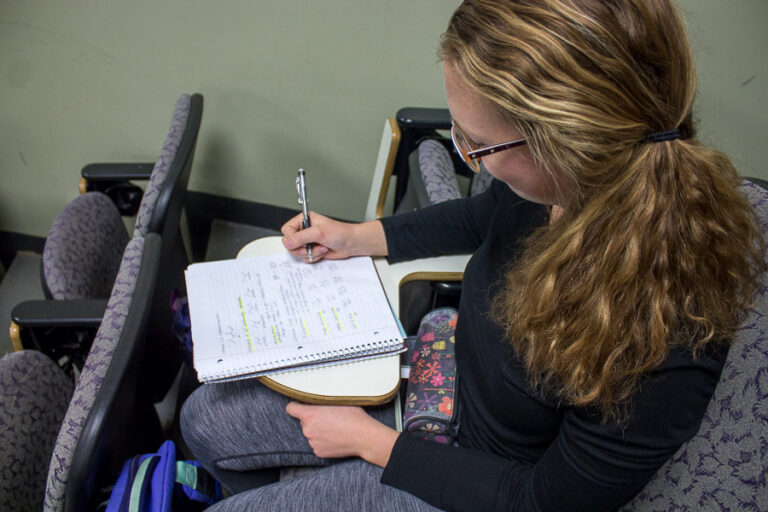
Is it B or C? B or C? The multiple-choice answers toggle back-and-forth in your mind as you glance up at the clock to see that there are only two minutes remaining. This exam is worth 60% of your grade, and you know you remember writing down the answer to this question in your notebook last week—but the test is strictly closed-note. Frustrated, you close your eyes and try to picture that page, willing the answer to appear in your mind, but it refuses, so you choose at random and give up, pressing ‘Submit’ and closing your laptop before you have to watch the Canvas confetti mock you.

The logistics of exams were a bit different this year, with virtual classes making cheating methods much more obtainable. As a result, many professors opted for open-note tests in order to level the access to information, a change that students had a variety of opinions on. 

Fifth-year cognitive science major Bryce Joseph-Nelson stated he had almost exclusively closed-note tests before the pandemic, although students were sometimes allowed a single notecard to include some information on. In contrast, throughout the pandemic, almost all of his classes had open-note exams. However, he found this new pattern to have certain flaws.

“What I found a little bit frustrating was that a lot of my open-note tests were classes that were all memorization classes, and it felt as if I could just give up on actually learning the material at that point,” Joseph-Nelson said. “Like, I will look this up regardless of if I know it or not, just to triple-check, so I think it takes away a little bit of the pressure to learn it initially.”

Brandon Lu, a fourth-year economics major, also talked about his experience with testing this year. 

“All of my tests were open note,” Lu said via Discord. “The main constraint of tests I had were time constraints, and differentiated tests to prevent cheating. For the most part, all of my classes took [an] ‘as long as it’s your own work, I don’t care how you get the answer’ approach to class.”

Lu expressed a somewhat different opinion than Joseph-Nelson regarding the change. 

“I do feel less stressed out with open note tests, because I have a life line in the form of notes,” he said via Discord. “The feeling is akin to going into a duel armed with a sword, and having notes is like having armor. Whether you’re victorious is still up to you, but the odds are a little more in your favor.”

In order to contextualize memory as it is tied to learning, Charan Ranganath, a professor in the Department of Psychology, as well as the director of the Memory and Plasticity program, offered an explanation of short-term memory (STM) versus long-term memory (LTM). 

“These terms mean different things to different people, but the way memory researchers use them is to say that LTM is your store of memories for events, and knowledge about the world, and STM is the ability to control and use information in LTM, along with information from the outside world, in order to accomplish a goal,” Ranganath said via email. 

In addition to his work as a researcher, he described his experience with tests this year as a professor.

“The pandemic made me double down on using quizzes and testing as a learning and retention tool,” Ranganath said via email. “The major challenge with online instruction has been to balance learning with the significant issues that students faced during the pandemic. I had to be flexible for people who didn’t have regular internet access, so students had lots of time to complete the tests, and we couldn’t be around to monitor students to minimize cheating.”

He went on to say that because of a desire to give students who followed the rules equal opportunity to those who cheated, he made all exams and quizzes open-note. 

“I feel that it really reduced the effectiveness of the tests as learning tools, but at the end of the day, it was more important to me to consider the students’ perspective,” Ranganath said via email. “Many students were understandably stressed to the point of near collapse, and giving them flexibility really made a difference in helping them stay afloat. But I would want things to be more challenging in the future because that dramatically increases how much students will learn.”

As UC Davis transitions back into in-person instruction in the fall, this unintentional pandemic experiment in widespread open-note exams may no longer be necessary. But if the goal is to encourage effective learning to the highest degree, is the long-term solution to stick to closed-note tests, or to try something new?

“I would like for open note tests to continue, and to further the idea, I would like any change that takes the pressure off high impact, short time duration assignments, which are mostly tests,” Lu said via Discord.

Joseph-Nelson offered a point in favor of the open-note format, acknowledging that with the widespread availability of the internet it’s a much more realistic approach. However, he also gave the opinion that test-taking in general may not be the best learning format. 

“I feel like the classes in which I have the best retention are always the classes in which there’s some kind of project or something like that, where I have to actually engage with information and present it in a cohesive package,” Joseph-Nelson said. “That’s always been how I keep information best, looking back.”

However, Ranganath emphasized that many studies have been done highlighting the benefits of test-taking in the learning process. 

“A lot of research suggests that tests can play a crucial role in helping you retain more information,” Ranganath said via email. “Tests shouldn’t be about evaluating students, they should be a learning tool! In general, the more you have to struggle to pull up the right information, the more effective that test is going to be to help you retain it. So, closed-note tests should be much, much better for retention. The catch is, if you get it wrong, you need feedback so that you learn the right answer. So, ideally you’d either see the right answer shortly after you make your response, or you’d get to consult your notes right after a question.” 

Ranganath further explained how this might play out in a real classroom environment, recognizing nuance in how different methods might work best for different subject matters.

“Testing is known to be good for retaining specific pieces of information like, say, vocabulary words for your Spanish class,” Ranganath said via email. “It’s not clear that those kinds of tests will encourage you to think critically, and give you the kind of deep understanding so that helps you to form your own opinions on controversial issues. It’s also not clear, though, that projects or essays or homework do that either. In general, writing essays will probably make you better at writing essays, and doing oral presentations will make you better at oral presentations. (oral presentations probably also are fantastic ways to promote memory), and those are valuable skills even if you don’t gain a deeper understanding of the material.” 

Joseph-Nelson concluded by expressing an underlying desire to learn the material in the most effective way possible, whatever that may be. 

“I feel like the goal of a class should be to teach information in a meaningful way,” he said.

Written by: Sonora Slater — science@theaggie.org

Yolo County issues health order requiring masks indoors

The order is an effort to slow the rising COVID-19 case rate within the county, which is largely due to the Delta variant

By YAN YAN HUSTIS HAYES — city@theaggie.org

Starting July 30, Yolo County residents will be required to wear face coverings in indoor public spaces regardless of their vaccination status. 

According to a press release, since June 15, Yolo County’s COVID-19 case rate has risen from 1.2 to 10.0 per 100,000 residents. The order will remain in place until the case rate falls below 2.0 per 100,000 residents for seven consecutive days. 

According to the press release, the increase in positive cases and hospitalizations is largely due to the rise in the Delta variant which makes up about 88% of positive samples during the week of July 18.  

In Tuesday’s press release, Yolo County Public Health Officer, Dr. Aimee Sisson stressed the importance of mask wearing as a benefit for both individuals and local businesses in a statement. 

“With case rates as high as they are and rising, everybody needs to add an additional layer of protection in the form of a mask when they are indoors,” Sisson said. “Putting on a mask is a simple act that will help keep businesses open and protect residents from the highly contagious Delta variant.” 

Yolo County Communications Coordinator, Frank Schneegas urged Yolo County residents to help combat this forth surge by getting vaccinated. 

“It is important that everyone twelve and older get vaccinated as soon as possible,” Schneegas said via email. “The prevalence of the Delta variant highlights the importance of getting vaccinated not only to protect oneself but everyone else in the community as well.” 

While vaccines are the best form of protection, face coverings are an important part of stopping the spread, Schneegas added. 

“Unvaccinated people are 6.5 times more likely to get infected than fully vaccinated persons,” Schneegas said. “Vaccines continue to be the best form of protection against severe illness, hospitalization or death from COVID-19, but masks are once again needed to prevent the spread of COVID-19.” 

More information on case rates, testing sites and where to get vaccines can be found on Yolo County’s website

Written by: Yan Yan Hustis Hayes — city@theaggie.org

UC Davis alumnus opens first home-based restaurant in Alameda County

Akshay Prabhu, a pioneer in the home restaurant industry, discusses legalizing home restaurants, creating his app Foodnome and opening Bao House

By LYRA FARRELL — features@theaggie.org

UC Davis alumnus Akshay Prabhu, who graduated in 2015, recently opened the first legal home restaurant in Alameda County: Bao House in Berkeley. He is also the founder of the app Foodnome, which certifies home cooks, allowing them to prepare, cook and sell their dishes to the public from their own home kitchens. As an undergraduate student at UC Davis, Prabhu studied neuroscience, but he said that he always had a passion for sharing his homemade bao buns with his community; he just did not see a cost-effective way to do so.

“I was [a neurobiology, physiology and behavior] major, and I really enjoyed it, but […] I’d always wanted to be in the food industry,” Prabhu said. “Sometimes it felt like it was harder to get into the food industry than it was to get into neuroscience for me.”

In an effort to break into the food industry, Prabhu first thought about renting out commercial space for a restaurant in Davis or elsewhere in Yolo County, but despite a small number of available spaces, the cost of rent and utilities the spaces would require made this an unrealistic aspiration for him. Prabhu decided to devise a more cost-efficient solution: a mobile food cart. During his third year at UC Davis, Prabhu was working at UC Davis’s Bike Barn, so he had access to leftover bike parts and decided to use them to build a bike-operated cart that he and a friend could sell steamed buns out of.

However, according to Prabhu, when he went to the Yolo County Health Department to get a business license, they gave him and his friend a list of requirements to meet. 

“They were like, ‘You need a three-bin sink on the cart and every time you park, employees need access to the restroom’—it was all these crazy rules,” Prabhu said.

The California Aggie contacted the Yolo County Health Department via phone for comment and they did not respond as of July 27. 

Even without the capacity to meet these expectations, Prabhu did not give up his dream of selling bao buns when he graduated from UC Davis. As an alumnus still living and working in Davis, he began to welcome community members into his garage for “pop-up dinners.” 

“I was working at the UC Davis medical center […], so I was just commuting to [Sacramento] and working half-time, and the other half-time I was running pop-up dinners,” Prabhu said. “I had this old redwood garage on Olive Drive […], and I made a [do it yourself] coffee shop and had people come by and study in the garage, and then we would have ‘pop-up dinners’ at night.”

As Pradhub’s operation gained popularity in the community, it was featured in an article, exposing it to the Yolo County Health Department, who promptly shut it down.

“The health department got wind of it and issued a cease and desist,” Prabhu said. “I [thought], ‘This health code is kind of broken. How is someone supposed to start a restaurant or get into the industry if you don’t just suddenly have $300,000 for a loan to start a brick-and-mortar?’”

Without the option of ‘pop-up dinners,’ Prabhu began to look into a law that allows cooks to operate restaurants from their own home kitchens. 

“I found out about this law, AB-626, which the COOK Alliance—a non-profit based around Oakland—was working on, and I contacted them,” Prabhu said. “I kind of turned into a lobbyist overnight.”

From that point on, Prabhu would go back and forth between his work at the medical center and the State Capitol to lobby for AB-626 to pass.

“I’d just go up and down and sometimes I’d bring some other cooks with me and we’d try to talk to people,” Prabhu said. “We held a few rallies and then we got the bill passed which was super exciting; and then I was like, ‘Oh man, maybe I can finally start doing this legally in Yolo County.’”

Since the law passed in California, Prabhu and some fellow cooks began to think about other ways that they could make an impact in the world of home restaurants. 

“[AB626] was featured nationally on [National Public Radio] and it started getting a lot of press and so we got enough traction where Riverside County passed the law,” Prabhu said. “Me and a few of my friends were sitting around and were like, ‘Hey, we passed this law […]—maybe we can build a business helping cooks start home-based restaurants,’ and that was the birth of Foodnome.”

Prabhu and his friends moved to Riverside after signing onto a sublet from UC Riverside students and began trying to build a clientele. 

“We started looking for people who wanted to start home restaurants down there, and started building a community and [tried] to figure out what the needs of home cooks are. [Ultimately], we built an app, a marketplace for them to run their businesses,” Prabhu said.

Foodnome is “the first legal marketplace for home-based restaurants,” according to its website, and has both a system for certifying home cooks to operate restaurants from their homes and a platform for ordering home-cooked meals from certified restaurants. According to Prabhu, the positive impact of Foodnome has been especially apparent to cooks affected by COVID-19.

“A lot of cooks were laid off and a lot of caterers left their work, so we have a lot of people who are former restaurateurs or line cooks or even just stay-at-home parents who have basically been cooking [through] Foodnome full-time and they’re […] able to support themselves, pay their rent and mortgage,” Prabhu said. 

In one case, a cook was awarded money to rent his own commercial space when his food became popular in his community due to Foodnome legalizing his home restaurant.

“We have one cook who has been so successful […] that his local city gave him a $25,000 grant to start a brick-and-mortar. It’s been a cool way for communities to build, for people to know their neighbors—the cooks have been making $25 to $45 an hour, and [it’s] all family-operations,” Prabhu said. 

Some families, according to Prabhu, now rely on Foodnome as a source of income.

“We have a lot of parents that have adult children with autism that have to stay at home to take care of their kids and family, so they can’t get work in a more traditional sense,” Prabhu said. “By being able to have people come to them and serve food from their house, they can make an income while still being able to take care of their family, so I think that’s pretty special.”

According to Prabhu, after his long involvement in the movement for the legalization of home-based restaurants, he doesn’t plan on re-entering the field of science.

“Realistically, I’ll probably stay in this world,” Prabhu said. “I think if I had graduated high school and I could have done anything, it probably would have been starting a restaurant, and this is kind of close to that. Helping other people start restaurants and also running my own restaurant feels ideal to me.”

As of now, Riverside, Solano and Alameda counties have signed onto AB-626. On July 1, 2021, Prabhu opened his own home restaurant, Bao House, in Berkeley, where he now lives. Bao House is currently open on Friday afternoons and offers bao buns, curry and sides.

“It was a pretty surreal experience,” Prabhu said. “It felt like a cumulation of so much time and effort and working. I grew up in the Bay Area so it’s kind of cool to be able to do this in my home county. I’m super grateful and excited for the future.”

Written by: Lyra Farrell — features@theaggie.org 

Healthy Davis Together adapts operations in response to reduced need

City of Davis receives funding from American Rescue Plan, officials emphasize pandemic is not over yet

By JELENA LAPUZ — city@theaggie.org

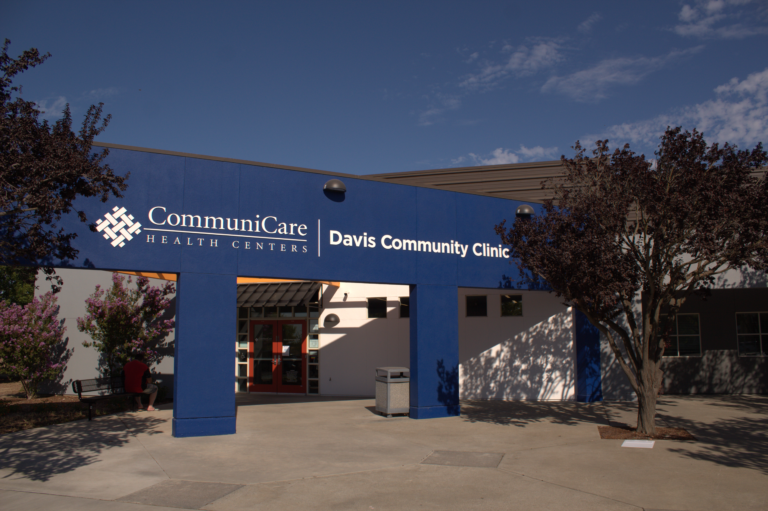
Healthy Davis Together has been a staple in the Davis community’s fight against the COVID-19 pandemic. Due to a decrease in need, Healthy Davis Together has focused operations to three CommuniCare clinics in Davis, Woodland and West Sacramento. 

Lucretia Maas, the director of nurses for CommuniCare Health Centers, explained how the collaboration between CommuniCare and Healthy Davis together began in March. 

“Healthy Davis Together approached us about potentially collaborating on vaccine efforts,” Maas said. “Since March, we have been utilizing our vaccines and staff to move forward and vaccinate our patients and the community members of Yolo County with Healthy Davis Together.”

Evan Priestley, the director of operations for CommuniCare Health Centers, emphasized the importance of the partnership between CommuniCare and Healthy Davis Together. 

​​ “It’s been a really intimate partnership that’s evolved during different phases of COVID and is a really great example of innovative partnership,” Priestley said. “Aligning our resources really made sense for the efforts that we’re trying to pull off.”

Maas described CommuniCare’s current focus in regard to future operations 

“At this point, we’re persisting forward to get vaccines delivered to as many community members as possible,” Maas said. “A little over 47% of the Yolo County members are vaccinated so we have a little ways to go.”

Priestley explained the reasoning behind CommuniCare’s current shift. 

​​ “The Healthy Davis Together operations are moving onsite intentionally in terms of promoting access and remaining open to the public,” Priestley said. “By having Healthy Davis Together move onsite to a location that’s easier to access for the hardest-to-reach part of the population, that improves access overall for the general public.”

City of Davis councilmember Dan Carson noted the positive changes in the community now that more residents have been vaccinated. 

“The number of new infections has dramatically slowed in our community,” Carson said. “I think this will be documented as one of the most effective public health interventions ever of its kind.”

Priestley noted the contrast in the community in regard to vaccinations. 

“There were pockets of the community that were very eager to get vaccinated,” Priestley said. “There were also pockets of the population that were not eager to be vaccinated due to a number of different reasons. I think that’s reflective of the diversity of the population that lives in Yolo County.”

Carson urged people to continue their efforts to ensure the health and safety of the community. 

“This isn’t over,” Carson said. “We still have work to do to defeat this pandemic and we’re taking it seriously as a city to see this through.”

Maas explained that one of the goals of CommuniCare is to be as inclusive as possible while providing care.

“We as Communicare are part of the community and we’re here to serve the healthcare and mental health needs of everyone, whether or not you have insurance,” Maas said. “We are definitely here during the pandemic to help people stay healthy, but also to reverse the pandemic by getting as many folks vaccinated as possible.”

Carson described the Davis City Council’s continued focus on ensuring the safety of the community. 

“Our very first goal that we adopted is that we want to ensure a safe, healthy and equitable community,” Carson said. “The very first objective under that goal is about guiding our community successfully until the end of the pandemic.”

Carson explained that the City of Davis received funding from the American Rescue Plan.

“We want to make sure that we use those funds to stabilize our city government, […] but we also want to make sure we use that money to help our business sector, nonprofits, come up with a post-COVID economic development action plan,” Carson said. “We want to make sure we have a good business climate here.”

Carson left a final message regarding the successful partnership between the City of Davis and Healthy Davis Together. 

“I would just celebrate the fact that the partnership that our city has had with the campus and Healthy Davis Together has been a remarkable one, and I think it’s helped all of us,” Carson said. “It’s led to a situation where the campus can more or less fully reopen with in-person classes this fall. Undoubtedly, it’s saved lives both on and off campus in our community.”

Written By: Jelena Lapuz — city@theaggie.org

Davis City Hall reopened June 15, in line with Yolo County loosening restrictions

On June 15, the Blueprint for a Safer Economy was retired, ending local restrictions on businesses and removing capacity limits

By SHRADDHA JHINGAN — city@theaggie.org

In a news statement published on June 11, the City of Davis announced that City Hall reopened on June 15 for the public. The public will be able to access City Hall and reach staff at certain hours, according to the news statement.

“City Hall will open to the public with the hours of Monday through Friday, 8:00 a.m. to 4:00 p.m.,” the news statement reads. “General business hours remain 8:00 a.m. to 5:00 p.m. to contact staff via telephone and email. Welcome back to your City Hall!”

Barbara Archer, the communications & customer service manager for the City of Davis, explained via email what the reopening of City Hall entails.

“City Hall is now open to the public from 8 am to 4 pm,” Archer said. “At this writing, public meetings for City Council, commissions, and 2 x 2 (joint meetings with other agencies) are still on Zoom, but that is subject to change.”

People are able to visit City Hall for things “such as building permits, encroachment permits, fire permits, camp registration, utility bill payments and business licenses,” according to the news statement.

The news statement also reiterates that “until further notice,” public meetings such as the ones that Archer mentioned will still be held in a virtual format on Zoom.

Archer also explained what it has been like dealing with city matters remotely for the past year.

“City staff really rose to the occasion during the pandemic,” Archer said. “Staff got creative with online programming. Customers were able to get some permits online. The City maintained its excellent level of customer service throughout the pandemic.”

Archer added that the City of Davis was able to work with various local entities and create relationships with them.

“The City worked closely with the County, UC Davis and the school district on the Healthy Davis Together project and other COVID-related policy matters and formed lasting collaborative relationships,” Archer said.

The news of City Hall reopening is in line with Yolo County announcing in a press release on June 15 that activities and business would be fully reopening “in alignment with the retirement of the State of California’s Blueprint for a Safer Economy.”

This means that “the color-coded tier system for counties” has been removed. 

According to the press release, starting June 15, there will be no more restrictions on capacity limits. Those who wish to travel should follow recommendations from the Centers for Disease Control and Prevention (CDC). 

There are also no more restrictions on capacity limits, as well as “physical distancing” for “attendees, customers and guests,” though “workers on the job must” continue to practice physical distancing. 

More information regarding the use of masks, and restrictions for schools, workplaces or employers, events and more can be found in the press release.

Public Health Officer for Yolo County Dr. Aimee Sisson further discussed restrictions in the press release.

“With our local case rate very low and the majority of Yolo County residents vaccinated, now is an appropriate time to loosen COVID-19 restrictions,” Sisson said.

Though cases are lower compared to those during previous stages of the pandemic, Dr. Sisson highlighted that the pandemic is not over yet.

“While the Blueprint framework is ending today, the pandemic is not,” Sisson said in the press release. “The virus that causes COVID-19 continues to circulate in Yolo County. Those who are not yet vaccinated remain at risk of infection and should continue to protect themselves and others from COVID-19 by wearing masks indoors.”

Written by: Shraddha Jhingan — city@theaggie.org

Disability rights activists speak out about the plan to return to ‘normal’ in the fall

The Disability Rights Advocacy Committee and UC Access Now are putting pressure on the UC system to retain remote learning options for students with disabilities

By KATHLEEN QUINN— campus@theaggie.org

As the UC plans to fully re-open campuses in the fall, students with disabilities said they feel like the gains made during the pandemic in terms of accessibility are being undone. 

Sarah Thuebet, a third-year communications major and the president of ASUCD’s Disability Rights and Advocacy Committee (DRAC), said that the committee is partnering with the Veterans Committee and the Transfer Re-Entry Center to write a resolution challenging the decision to remove online options. She hopes the resolution will be drafted in early fall and presented shortly thereafter.

“We’re really frustrated by this,” Thuebet said. “Not just for students with disabilities, there are a lot of students who have really benefited from remote learning.” 

 Sheila Kulkarni, an alumnus of UC Davis and a current graduate student in chemistry at UC Santa Barbara, is now an organizer with UC Access Now, a UC-wide disability advocacy group.

Kulkarni said that since the start of the pandemic, professors have emphasized leniency and allowed students extra time on assignments.

“We should have been doing that regardless,” Kulkarni said. “Where was this energy when people [were] having to prove their disabilities over and over again to the school to get the same grace that’s extended to everyone now because of COVID-19?” 

DRAC released a survey to students asking for their opinion on the removal of online options in the fall. Though it has only received approximately 100 responses so far, 60% were in favor of continued remote learning options. 

“We want to be able to have that option to be online or not,” Thuebet said. 

According to the Student Disability Center (SDC) website, the center is planning for in-person instruction with classrooms at full capacity. 

Jennifer Billeci, the director of the Student Disability Center, said that her office will be treating requests for online learning as an accommodation that will be reviewed on a case-by-case basis. 

“I would encourage those who feel like an accommodation makes sense for them to contact us and contact us early,” Billeci said. “It’s not going to be an easy accommodation, so early gives us more opportunity to make it effective.”

Richard Tucker, the chair of the Academic Senate at UC Davis, said that outside of faculty with medical exemptions, all courses that were not previously virtual will be held in person, on campus.

“Faculty who have a medical exemption from returning to campus will be allowed to apply for permission to continue with emergency operating status for their courses,” Tucker said. “We’re looking at those applications, but I’m not anticipating that very many remote courses will be added through that process.”

Megan Lynch, a second-year master’s student in horticulture and agronomy at UC Davis and the founder of UC Access Now, sent a “Demandifesto” to the leaders in the UC system in July 2020 in an effort to highlight the challenges that students with disabilities face at the university. 

“It was conceived rather naively, perhaps as a short-term thing, because I had faith that as a public institution—that the people we had entrusted with their six-figure salaries to run this place—would actually want to improve these things once it was brought to their attention,” Lynch said.

According to Billeci, the SDC is trying to make it easier for students by maintaining a hybrid appointment model where students can sign up for appointments both online and in person.

“Our goal in life is to make it so easy [to get accommodation] that you forget about us,” Billeci said. “If we are doing it right, we melt into the background.”

Kulkarni said that they disagree with the university’s plan to re-open campuses to full capacity in the fall.

“A lot of disabled, immunocompromised or immunosuppressed people are not going to be able to do that or are going to have to jeopardize their safety and health to be able to contribute to this fantasy of normality,” Kulkarni said.  

Though there is some resistance to returning to campus, Belleci said that the current student requests for remote learning accommodations have been few relative to the student population.

“It’s hard for us to gauge how many people might need this in order to continue,” Billeci said. 

Lynch said that the pandemic has presented an opportunity to reassess how the education system works and remove barriers that are counterproductive to students’ education. 

“Think about all those things that you’d like to see shifted, and think about how disabled people have been dealing with a lot of those issues for a lot longer,” Lynch said. “Definitely don’t let them push us back to ‘normal,’ because that normal was not good for everybody—in fact, it was not good for most of us.” 

Written by: Kathleen Quinn — campus@theaggie.org

UC Davis professor and others discuss lifelong task of navigating gender and sexual identity

During June, four individuals reflected on their experiences learning how to express their identities in unfamiliar spaces

Tory Solorzano, a dancer, prior professional makeup artist and current worker in operations and office management jobs, says that he was unintentionally outed by a voicemail left on his mother’s answering machine when he was in high school. Driving in traffic on their way home from dance rehearsal, Solorzano’s mother asked him if he was gay.

“I’ve never wanted to get out of a car on a freeway and run,” Solorzano said. “I wasn’t ready to tell her, even though all the signs were there.” 

As a member of the dance team in high school, Solorzano was always his authentic self. He never tried to hide anything, except admittedly saying the actual words, “I am gay.”

Though it took a while to get over his unprompted outing, Solorzano said that he felt glad that it happened. Without it, he doesn’t know when he would have found the courage to tell her.

 “We’re so close, and I would never want to do anything to disappoint her,” Solorzano said.

Coming out to parents and friends about sexual orientation and gender identity is an enormous hurdle, but what comes next? Navigating the reality of identity is a lifelong task, and each new social environment brings with it a new set of unique challenges.

Dr. Rachel Bernhard, a political science professor at UC Davis, said that as a teenager, she found investigating her sexuality “sort of easy and sort of hard.” While she found herself attracted to male presenting people early on, her attraction to women required further deliberation.

“I couldn’t really tell whether I wanted to be that woman, or be with that woman,” Bernhard explained.

When she concluded that she was bisexual, she recollects feeling “weirdly nervous” about coming out. Despite having liberal parents and growing up with gay relatives, she dreaded the possibility of an adverse reaction from family members.

“People sometimes have emotional reactions that aren’t in keeping with their political or ideological stances, and I was just really afraid of that,” she said. 

As it turned out, they were very accepting, and as an adult, Bernhard says she experiences far less trouble expressing her identity to the world. While it may not come up in every conversation, she explained that anyone in her personal or professional life either knows that she is bisexual, “or could easily find out.”

Bernhard explained that by proudly displaying a rainbow on her social media profiles and being open about her sexuality, she hopes to help foster a sense of community, especially amongst her colleagues and students.

While admitting to a relatively positive experience in navigating her sexual identity, Bernhard explained that she and her queer colleagues struggled to navigate the job search in the political science field, a “stodgier discipline” often dominated by straight men.

When she was on the job market, she recalls relating with other queer women about the difficulty of deciding how to dress for interviews. They struggled to decide how to express their style authentically without presenting as unprofessional or making too bold of a statement.

Berhard also said that when applying to graduate school, she had an unpleasant and invalidating exchange with a professor. She decided to write her diversity statement about her experience being bisexual, which led to a response from one of her professors, questioning bisexuality as real diversity, since “we don’t know who the gay people are so we can’t discriminate against them.” 

Bernhard said that despite these setbacks, she believes her experience as a queer woman has likely made her a better professor. Through this interaction with her professor, and other negative experiences she’s had as a student, Bernhard said she learned to better recognize differences among her own students.

“I never want my students to have an experience like [I did],” Bernhard said. “If they’ve been stigmatized in our society and it feels painful or shameful to share, I bring a lot of awareness about that to conversations with my students, and I hope that that makes me a better teacher and advocate for them.”

Lauren Lamboy has worked in the live production industry for three years. As a cis woman, she prefers defining herself as gay, because she doesn’t like the word “lesbian.” Lamboy discovered her sexuality when she was 14, after developing a crush on one of her teammates.

“It was definitely hard for me to accept because right away my first thought was, ‘Oh god, my life is going to get harder,’” she said. 

Coming to terms with her sexuality came gradually over time, but she expressed difficulty telling people. “I didn’t really want to talk to anyone else about it yet because I wanted to be able to accept myself first,” Lamboy said.

When she did start telling people, Lamboy said she worried that they wouldn’t believe her. To compensate, she made being gay a significant part of her identity. 

“I would wear things with rainbows on them, I even had a rainbow flag in my room,” Lamboy said. 

But over time, she learned to feel more comfortable with who she was.

“I liked who I was as a person so I didn’t feel the need to wear it on my sleeve so much,” she said. “I felt like I could be prideful without exerting it so obviously in all situations.”

Lamboy said that while struggling with depression in high school because she was not able to truly express her sexuality, she found a lifeline in the music industry.

“One thing that really saved my life was going to concerts,” she said.

Over time as she attended more shows, Lamboy began to pay closer attention to the lighting and production techniques rather than the actual performances. When she realized that she could potentially be involved in the industry without being a musician herself, she found every possible way to get involved.

Lamboy said that even now, working in the live music field, she is still learning what it means for her colleagues to know that she’s gay. In an industry that Lamboy describes as a “boys club,” run predominantly by men, oftentimes being gay works in her favor. Once people realize that she likes women, Lamboy said that she notices her co-workers tend to open up more, presuming that she can relate to their experiences.

At other times, Lamboy said that she feels pressure to hide her sexuality and leans heavily on her identity as a woman. Lamboy explained that she feared that men were giving her job opportunities because they were attracted to her, and said “I was afraid that if I made it known that men aren’t my preference, that they wouldn’t want to work with me anymore.”

Juliet Bost, a third-year political science—public service major at UC Davis, is queer, and said that if asked, they would also identify as nonbinary.

After discovering their sexuality in middle school, Bost said that they read every piece of gay and queer literature that they could find at the library to better understand themselves. When Bost finished a book, their mom would help return it to the library.

When Bost’s mom returned their books, labeled “Are You Gay?” and “How Do You Know if You’re Gay,” she had questions. 

“Of course she’s a smart woman, but even someone who’s only paying half attention would know this meant something,” Bost said.

One day, when she picked Bost up from school, and they neared the block of their apartment, Bost’s mom asked them about their sexuality.

 “I was like, Mom, I am not having this conversation in our Honda minivan, let me out,” Bost said. “But we kept circling the block until she got answers.”

Bost later came out to their father through an email, with the subject “Serious-ish Stuff.”

Though Bost’s family and friends were generally accepting of their sexuality, Bost struggled to come to terms with what it meant to be gay before the legalization of same-sex marriage in 2015. They said they also struggled to decipher how much of their guilt stemmed from the outside pressures to fit in, and how much was internalized shame.

“I still feel that [shame], I think, especially with gender,” they said.

Bost’s exploration with their gender identity came much later, after they took an introductory gender studies class during their sophomore year of college. After the class, Bost decided to try using they/them pronouns. 

Bost has been using they/them pronouns since 2019, but hasn’t found the need to explicitly come out in every setting. Because it’s not as central to how they see themselves, they’re not as willing to “sacrifice that feeling of comfort” to ensure others correctly refer to them in every conversation, especially in sports.

Bost, a competitive taekwondo athlete, describes martial arts as “masculine patriarchy on steroids,” and a “true litmus test to see how far we’ve really come with gender.” With little room to move between the binaries in the sport, Bost has not come out to any of their teammates.

At the time they were coming out and trying new pronouns, they didn’t see taekwondo as a safe place to practice them. 

“I definitely didn’t feel like I had the self-confidence to defend my use of pronouns if anyone were to challenge me on that,” Bost said.

Bost explained that if anyone on the team ever talked about their relationships, they were always heterosexual ones. “No one really talked about being divergent from that identity, or being anything other than cisgender,” they said.

Bost recalls there being one other person on the team that openly identified as being queer, but when conversations about sexuality came up, “people got uncomfortable, the air shifted a little and it was a weird vibe.”

Though Bost said that they don’t feel closeted, they do feel nervous about how their teammates would react if they found out that Bost was nonbinary.

Solorzano is a gay male and has been married to his husband for six years. He said that from a young age, he knew he was different. Growing up with a single mother, he was often told that the absence of a male role model had something to do with why he’s gay.

“I don’t think it has anything to do with it, and I think that’s pretty lame,” Solorzano said. “I consider my mom to be my mother and my father because she was a strong woman to be able to support me.”

Despite their close bond, Solorzano admitted that coming to terms with his identity was hard on his mother. “In the Black community, it’s just something that’s not really welcomed, especially if you are pretty involved in the church,” he said.

When Solorzano was unintentionally outed through a voicemail in high school, his mother told him it was no one’s business and not to tell anyone else in the family that he was gay. When relatives asked Solorzano about his love life, his mother would jump in to tell people he was too busy dancing or performing to date anyone.

 “I always felt like she was making up excuses for me,” he said.

After Solorzano’s mother found out that he was gay, she didn’t speak to him for six months, even though they lived in the same home. Solorzano said that he idolized his mom, and his biggest fear was upsetting or disappointing her.

Solorzano said that if it weren’t for his grandmother who, before she passed away, warned his mother that she was going to lose him, he’s unsure if their relationship would have improved. Though breaking the news with his mother was the hardest, the rest of his loved ones proved supportive and accepting of who he is.

As he has done since high school, Solorzano says he lives his life as his most authentic self. When picking jobs, he has always sought out environments where he can comfortably express himself. 

“If I didn’t feel comfortable I wouldn’t work there,” he said. “I feel like it’s kind of hard to meet me and not know that I am gay.”

Despite always being forthcoming about his sexuality, Solorzano said that being openly gay in the workforce brings a set of challenges. Solorzano has found that working under queer management can cause the expectations for employee performance to be very high.  

“Gay people are amazing; we tend to do anything and everything very well,” Solorzano said. “We typically make our presence known and show what we can do, and I feel like sometimes that’s taken for granted.”

Bost said that discussing identity can feel a lot like learning a new language. They explained that in the beginning, the words and rules can be foreign and uncomfortable: “When do you bring it up? When is it out of place? When do you use this word?”

“With this new language of identity comes a new culture, in a sense, with differing norms and customs that conflict with a dominant way of being,” Bost said. “Just like any new language, fluency takes time. You build your vocabulary, master various grammar tenses, and spend hours or years practicing. Like many language learners, you may always talk about your identity with an accent. But overtime, you learn to adopt, to nurture, and to embrace this way of thinking—and embrace you.”

Written by: Mia Machado — features@theaggie.org

Mia Machado wrote this article as a guest contributor for The California Aggie. After submission, the article went through The Aggie’s typical editing process. Anyone interested in submitting an article as a guest contributor should email managing@theaggie.org.  

Fire breaks out at Suntree Apartments

Four apartments were damaged by the fire

By SHRADDHA JHINGAN — city@theaggie.org

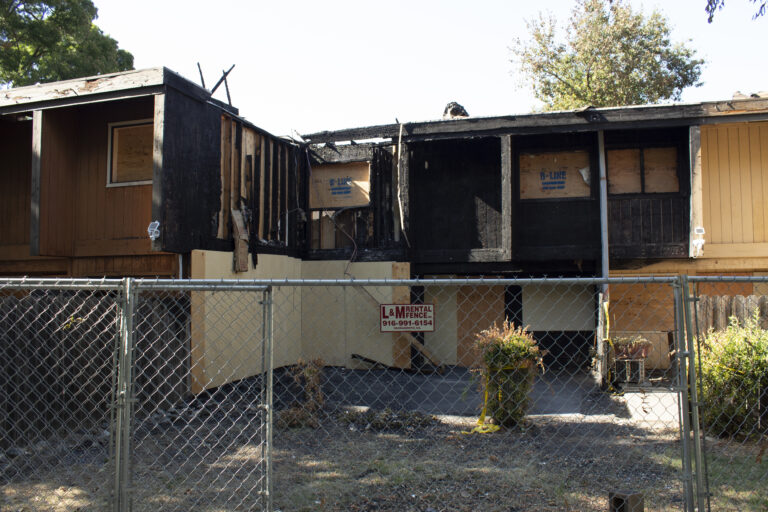
At 3:43 a.m. on July 10, emergency services received a call about a fire at Suntree Apartments on 2033 F Street. 

Diane Parro, the director of community engagement for the City of Davis, explained the damage the fire caused.

“There was a structure fire in an 8-unit apartment building,” Parro said via email. “Four apartments are heavily damaged and uninhabitable while four that were protected by a firewall were spared any damage.”

Parro explained that 15 residents “have been displaced but are all uninjured.”

“Tandem Properties, owners of the property, have assisted the displaced residents with new living arrangements,” Parro said.

Two firefighters from the City of Davis obtained minor injuries.

“Two Davis firefighters received minor injuries that were evaluated at a local hospital and they were released right away,” Parro said. 

The Facebook post about the fire states that City of Davis firefighters were joined by other fire departments.

“Fire departments for other cities and UC Davis Fire Department joined City of Davis firefighters to fight the fire,” the post reads.

According to Parro, these included “crews from UC Davis, Woodland, Dixon and West Sacramento.”

Parro explained that the source of the fire is still being investigated.

“The cause of the fire is still under investigation and no information is available at this time,” Parro said.

Ultimately, the fire was able to be controlled. 

“The damaged apartments have been secured and all residents displaced have new accommodations,” Parro said.

Written by: Shraddha Jhingan city@theaggie.org