54.1 F
Davis

Davis, California

Tuesday, December 23, 2025
Home Blog Page 253

UC Board of Regents to discuss long-term tuition increase at July 22 meeting

The increase includes an additional amount above current inflation and would go into effect for incoming students in fall 2022

By KATHLEEN QUINN— campus@theaggie.org

On Thursday, the UC Board of Regents will vote on a new tuition increase after holding off decision-making during the height of the pandemic. 

The proposed increase would not go into effect until fall 2022 and would affect undergraduate and graduate students separately.

“Under the plan, tuition for current UC undergraduates, along with those who enroll this fall (2021), would stay flat for the duration of their enrollment, up to six years,” said UC senior communication strategist Stett Holbrook, via email. “The increase would apply to new and continuing graduate students, but not until fall 2022.”

The undergraduate shift for 2022 includes a 2% rise in tuition in addition to the current rate of inflation, with somewhat smaller increases above inflation until the 2025-2026 school year, according to the proposed adjustment for student charges

The intention, according to the regents, is to create stability in assessing student tuition moving forward. 

Ryan Manriquez, the ASUCD president and a fourth-year political science and communication double major, said he has been speaking with other student representatives throughout the UC system who will attend the July 22 meeting.

“Any increase in student tuition and fees is ultimately going to harm students, whether it’s now or in six years,” Manriquez said.

Nicholas Stapleton, a 2021 UC Davis computer science alumnus, said a public institution’s first responsibility is to all Californians.

“I understand the need to increase costs to cover inflation, and I appreciate the rolling cohort system, but the rate that tuition has increased since the 1970s has grossly exceeded the rate of inflation,” Stapleton said.

The tuition and fees of the mid-1970s for in-state residents were $630. Adjusted for inflation, this would make the yearly cost of attending UC Davis a little over $3,000 and not the current yearly rate of over $14,500.

The Board of Regents proposal states that the additional funds would go to mitigating a proposed budget shortfall and addressing deferred maintenance and technology infrastructure needs which it states could cause further liability.

According to the proposal, “campuses have delayed needed investments in their technology infrastructure and financial systems and, in some cases, are now using platforms that are no longer supported by the vendor, creating potential risks to data security and business processes.”

This statement in the proposal comes after a massive data breach that exposed students and staff to identity theft by leaking personal information including social security numbers.

The proposal cites a decrease in state funding as part of the shortfall it projects, however, Governor Gavin Newsom’s budget revision in May included over $950 million for the UC system, as well as $150 million in federal funds for on-campus repairs and energy efficiency using it as an incentive to not raise student tuition and fees.

“I don’t think it’s valid, especially when you have millions of dollars that the governor is proposing for the system to have right now,” Manriquez said. 

The proposal states that the increase is necessary regardless of the proposed base support funding provided by the state’s 2021-22 Budget Act.

Enrollment in the UC system has increased dramatically since the previous tuition increase, which the proposal said has reduced the amount of benefit provided by the UC system per student by 36%, according to a display presented in the proposal. 

“Undesirable consequences of this decline in resources can be seen in several metrics directly related to the student experience, including a deterioration in the student-faculty ratio, larger class sizes, a substantial backlog of campus deferred maintenance needs, and a decline in the percentage of students who would, knowing what they know today, choose to attend the UC campus at which they enrolled,” the proposal states.

Aidan Kato, an incoming third-year political science major, said he considers the rise in tuition to be a “necessary evil.”

“Right now, we are getting way less of a bang for our buck,” Kato said, citing the student per contribution estimates in the proposal. 

Sterling Beauchamp, a third-year applied mathematics major, said the issue is probably more complicated than most students would like to imagine.

“I think transparency would go a long way in helping the process,” Beauchamp said.

Holbrook said that the university has been exploring a multi-year plan for several years and that the intention is to increase predictability and provide better budget planning for campuses.

According to Manriquez, there are many other ways that the UC system “can get out of the red” without raising student tuition.

“I can tell you one thing that our students are not millionaires and it’s millionaires making these decisions at the Board of Regents right now,” Manriquez said. “Is asking it of students really the right way to go?”

Written by: Kathleen Quinn— campus@theaggie.org
Chancellor Gary May’s campus safety task force makes eight recommendations for policing

The final report details plans for reforming the Police Accountability Board and improving responses to mental health calls

By REBECCA GARDNER — campus@theaggie.org

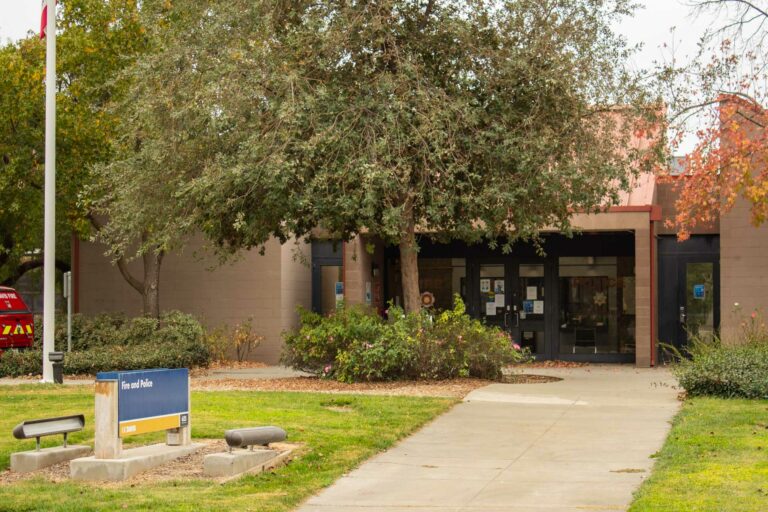
On June 15, Chancellor Gary May’s campus safety task force published its final report containing eight recommendations for forthcoming reforms to campus policing. 

May charged the Task Force on Next Generation Reforms to Advance Campus Safety in June of 2020 in the wake of George Floyd’s murder and in response to the ensuing national conversations about policing. The task force was asked to consider how safety can be best achieved on UC Davis campuses in Davis and Sacramento.

Motivated in part by the previous pepper spray incident of police violence, UC Davis has worked to make reforms to campus policing in the years following, according to May. Reforms in the tenure of current UC Davis Police Department (UCDPD) Chief Joseph Farrow include a 33% reduction in officers. The improvements to campus safety will be a continuous effort, as the task force’s eight recommendations are currently being implemented and will continue to be enacted in the two following academic years.

Members of the task force worked for 11 months, discussing and assessing policing at UC Davis during this time. Town hall meetings were held to gather feedback from undergraduate and graduate students, medical and nursing students, international students, alumni, staff and faculty. 

The final report came after the task force was granted a six-month extension to gather community input. A preliminary report was issued on the original due date in December 2020.

Kevin Johnson, the dean of the UC Davis School of Law and the co-chair of the task force, said that in the next academic year, community members can expect greater transparency and a review of the powers of the Police Accountability Board (PAB). He added that a mental health crisis unit may be created.

“I was pleased with the report and accepted all 8 recommendations,” May said via email. “The task force conducted a thorough, comprehensive review and sought extensive input from our campus community before producing the report. It’s important to note that we will continue to operate in a mode of continuous improvement.”

Reviewing the Recommendations 

Perhaps the most significant recommendation of the task force is to review the authority and power of the PAB.

Established in 2014 in response to two instances of alleged misconduct, the PAB is composed of students, staff and faculty from the Davis and Sacramento campuses. The board’s role is to oversee the campus police department and independently review complaints and allegations of misconduct.

However, the PAB is limited in that it is unable to review incident reports, audio recordings and body camera footage directly. Currently, an investigator from the UC Davis Office of Compliance & Policy reviews and then provides a summary of this information to the PAB.

Furthermore, if allegations of misconduct are verified, the chief of police is not required to accept sustained allegations of misconduct, as stipulated in California state law. The chief also determines how officers are penalized for misconduct, as California state law prohibits police personnel records from being shared. 

“It’s California state law that doesn’t allow those police officer records to be shared, so that’s why it would be very difficult for the PAB to determine penalties [when] they don’t know the history of the officer,” Farrow said. “I know people don’t like it when I say you have to trust the chief because the chief knows exactly what’s in that personnel folder.”

The board does not currently review use of force incidents by default; unless a complaint is filed in response, the PAB only conducts an investigation when instructed by the chancellor or the chief of police.

“The way the system works is that any use of force is automatically reviewed by me,” Farrow said. “We do a complete investigation. I’m the fact finder. I can tell if they are within or outside of the policy. So that’s how the current system works. But I also have the ability to immediately send it to the PAB. So if I get one and I look at it and go ‘the optics of this one look bad,’ to have transparency, I send it to the PAB.”

Farrow accepted six of the nine sustained complaints since the PAB was established in 2014. He said that he is open to the recommendations made in the task force’s report, which calls for hiring an outside consultant to review issues concerning the role and scope of the PAB.

“I try to remain neutral and independent,” Farrow said. “What I don’t want to do is have a voice and say on how the board is made up, how it operates, how it is controlled. Some people would see that as a conflict because the board is set up to advise and regulate the police department.”

While most allegations have been dismissed prior to reaching the PAB, only 15% of allegations investigated by the board were sustained, according to the Davis Faculty Association’s (DFA) follow-up analysis of the annual PAB complaint report data. 

 “This pattern of allegation disposition suggests either that UCD police officers have performed in an exemplary fashion since 2014 or that the UCD complaint review process has not been effective at surfacing and addressing UCD police misconduct during this period,” wrote Donald Palmer, the author of the DFA report.

Another major existing issue is that many community members don’t know about the existence of the accountability board or know how to file a complaint, according to Farrow. He said that he thinks the police department needs to increase community awareness of the PAB. 

As a direct outcome of the task force, after any interaction, officers will distribute a business card with a QR code which will bring the community member to a survey in which they can provide feedback concerning the encounter or file a complaint.

The task force’s fifth recommendation calls for improving responses to mental health calls.

According to Farrow, UCDPD receives multiple calls each week requesting welfare checks with varying degrees of urgency. The most frequent type of mental health response that involves campus police occurs when officers are on patrol.

Farrow said he has been pleased with how UCDPD handles crisis response. According to him, there has never been any use of force or arrests in his four years during responses to mental health calls. 

While Farrow is proud of the conduct of his officers, Farrow said that he understands some individuals are afraid of the police which prevents them from calling to receive help during a crisis or mental health emergency. 

“It’s time that we come up with a better system that removes the chances of escalation or allows more people to participate because they aren’t dealing with uniformed police officers,” Farrow said. “Ultimately, I think it is a good thing.”

By the fall of 2022, the “best practices in the field” should be implemented at UC Davis, according to the final report. The task force supports deploying mental health professionals and social workers in response to mental health emergencies. Campus leadership is advised to form a workgroup to create its new approach.

Because consensus on disarming UCDPD could not be reached, the task force recommended that the department’s use of arms policy be regularly evaluated. However, with the fourth recommendation, the task force favored barring UCDPD from participating in the Law Enforcement Support Program—formerly known as the 1033 program—which allows local law enforcement agencies to receive surplus military-grade equipment from the federal government.

Farrow said that he accepts the ban, explaining that “there’s nothing really that I can think of that we would want from that program.”

While the intention of the ban is to prevent the militarization of the campus police department, and the potential resulting repercussions, Farrow said the lost ability to gain surplus technology wouldn’t bring the consequence of militarization. 

The task force’s third recommendation is to implement alternative approaches to public safety and policing. With the closing of the campus holding cell facility in 2018, moving away from the criminal justice system, the task force recommends that UC Davis implement its own restorative justice program. 

Aligned with UCDPD’s visions of “contemporary policing,” the task force recommends modifying sworn officer’s uniforms, given that they are still identifiable as UCDPD. Currently, Aggie CORE officers (unarmed, non-sworn officers) wear polo shirts.

The final recommendation of the task force is to acknowledge the legacy of the Pepper Spray Incident, which the university has previously spent hundreds of thousands of dollars scrubbing from the internet. 

Considering the backlash generated by past failed attempts at erasure, the task force recommended acknowledging the 10-year anniversary of the incident on November 18 with a healing session. It also suggested considering “creating a plaque, or other public acknowledgment, commemorating the student activism.”

Addressing Abolition

The abolitionist position is mentioned throughout the report, and the report hints that the abolitionist perspective was well-represented within the task force, stating that “some members of the Task Force demanded ‘abolition’ of the UC Davis Police Department (UCDPD).”

However, vocal abolitionists in the UC Davis Cops Off Campus group refused to participate in or collaborate with the task force altogether. 

“Policing task forces have a singular function and that is to re-empower policing when it is under public scrutiny,” wrote the UC Davis Cops Off Campus group in a collective statement to The California Aggie. 

Ultimately, while May has said that “abolition is a possibility,” the task force dismissed abolition as a feasible plan. The consistent explanation offered is that if UC Davis were to dismantle UCDPD, the campus would fall under the jurisdiction of the Yolo County Sheriff’s Office.

The ASUCD Police Research Task Force, which published a separate report with its own recommendations, wrote that there should be an effort to “Understand, Acknowledge, and Respect Abolitionist Movement.”

The task force on Next Generation Reforms to Advance Campus safety’s report suggests that the campus police department is preferable to the presumed alternative—the Yolo County Sheriff’s Office.

“To offer the full consequences of abolition, the report should clearly differentiate between the Yolo Sheriff Department and the UC Davis Police Department and note that, if the campus police department was abolished, the Sheriff’s Office would assume jurisdiction,” the report states in the meeting notes included in the report. “Victims of assault/abuse are treated respectfully from UC Davis police. Survivors are more likely to report to UC Davis police than city police.”

The report supports its claim that preserving campus police is in the best interest of victims of abuse and survivors by explaining that UCDPD works in conjunction with the UC Davis Center for Advocacy, Resources and Education (CARE) in a manner that external police officers do not.

While the report states that the task force “spent significant time discussing abolition, including exploring its meaning and ramifications,” members of the Cops Off Campus group were not satisfied with the task force’s examination of the abolitionist mission.

In an email to The California Aggie, the Cops Off Campus group wrote in their collective statement:

We are perplexed at the idea that this task force has engaged the idea of abolition. The word appears in their statement but it is apparent that they lack a basic understanding of the idea. This is clear in their suggestion that abolishing campus police would simply mean their replacement by other local police, when abolition is explicitly a positive project to replace policing with safer practices distinct from the historically, intrinsically racist institution of the police. The best way to care for our community is not to put it under one or another police jurisdiction; it is to address the ways in which the community is not sufficiently provided and cared for at present. The incapacity to conceive of anything beyond a jurisdictional change within the permanent existence of the police underscores both their ignorance of abolition and their poverty of imagination.

This story was updated on July 18, 2021.

Written by: Rebecca Gardner — campus@theaggie.org 

UC Davis Baseball program suspended due to allegations of misconduct

The university’s Office of Compliance & Policy is investigating, all team activities are suspended indefinitely

By OMAR NAVARRO— sports@theaggie.org

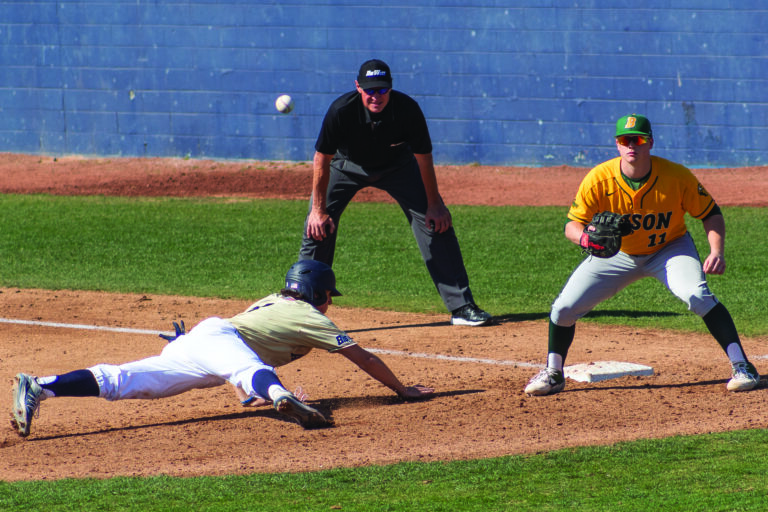
The entire UC Davis Baseball program was placed on suspension pending an investigation due to “allegations of misconduct” that the university was made aware of. The team will not be able to hold any activities at this time and the coaching staff was also placed on administrative leave.

UC Davis News and Media Relations released a statement regarding the start of an investigation on Wednesday.

“The safety of students is of utmost importance to UC Davis. The University has learned of allegations of misconduct involving the varsity baseball team,” read the statement. “The UC Davis Office of Compliance & Policy is investigating these allegations, and the entire baseball program also has been placed on suspension pending the outcome of this review.” 

As the statement reads, the investigation is being conducted by the UC Davis Office of Compliance & Policy. Although the university expects it to last into the “first couple months of the fall quarter,” there is no timeline regarding when the team can resume activities. 

UC Davis also added that confidential resources, such as Student Health and Counseling Services and the Ombuds Office, are available for those who are interested.   

“We are committed to conducting a thorough assessment to determine the best path forward to provide a safe and inclusive experience for all team members,” concluded the statement. 

While the initial release did not include what the allegations were, Chancellor Gary May’s weekly check-in on July 16 directly identified the main allegations as hazing.

“We are responding to credible allegations of misconduct primarily related to hazing,” wrote May. “A thorough investigation is underway, and we will take appropriate action at the conclusion of the investigation.”

The NCAA has held a firm anti-hazing stance, which is reflected on the rules put in place to prevent hazing. 

“The university has a posture of zero tolerance with respect to hazing,” May added. “Our students’ health and well-being is our No. 1 priority.”

This story was updated on July 17, 2021. Story is developing and will continue to be updated.

Written by: Omar Navarro — sports@theaggie.org

Provost Mary Croughan provides her monthly update on students’ return this fall

The update plan includes policies on vaccinations, masks and campus operations

By EMILY REDMAN — campus@theaggie.org

In an email to UC Davis staff and students, Provost Mary Croughan shared a Fall Quarter planning update for the month of June.

As aligned with the UC-wide vaccine mandate in the fall, students and faculty are strongly encouraged to receive a COVID-19 vaccine as soon as possible. Those who do not receive the vaccine will be required to continue to do asymptomatic testing every four days to access campus facilities.

“People currently in California can go to My Turn to schedule a vaccine appointment,” Croughan said.

All students and UC Davis employees are encouraged to complete a survey in their Health-e-Messaging portal to declare their vaccination status by July 15. If fully vaccinated, they are also encouraged to upload an image of their vaccination card.

Fall instruction will be at full capacity, contingent on Centers for Disease Control and county regulations. Attendees will be required to wear face coverings while indoors regardless of their vaccination status.

“Instructors will not be required to do so since it may impede the ability of students to understand the instructor,” Croughan wrote in the planning update.

Students who have medical needs that require accommodations for returning in the fall are encouraged to visit the Student Disability Center webpage.

Those who cannot return to campus for any reason can request a leave of absence through the Planned Educational Leave Program (PELP). Due to the pandemic, PELP has allowed students to take additional time off.

According to the Office of the University Registrar’s webpage, “undergraduate students may PELP for additional terms during spring 2020, fall 2020, winter 2021, spring 2021 and fall 2021.”

The university is optimistic that international students will be able to receive visas to return to campus in the fall, according to Croughan.

“Wait times for processing visas continue to decline in many countries,” Croughan said. “The number of students who have had their visa issued or renewed has been steadily increasing.”

Research projects are expected to be back on campus full time, options are open to request approval for travel, campus visitors will be welcomed back upon the completion of a symptom survey and campus events are permitted as long as they comply with health guidelines.

Future updates will continue to be available on the Campus Ready webpage.

Written by: Emily Redman — campus@theaggie.org

Entertainment Council prepares for 2021-22 school year in partnership with Mondavi Center

Sunset Fest is approved for Fall Quarter 2021 and is set to take place during Fall Welcome Week

Aggies returning to campus in the fall can expect quarterly movie nights and many other events put on by the Mondavi Center in collaboration with the Entertainment Council (EC). 

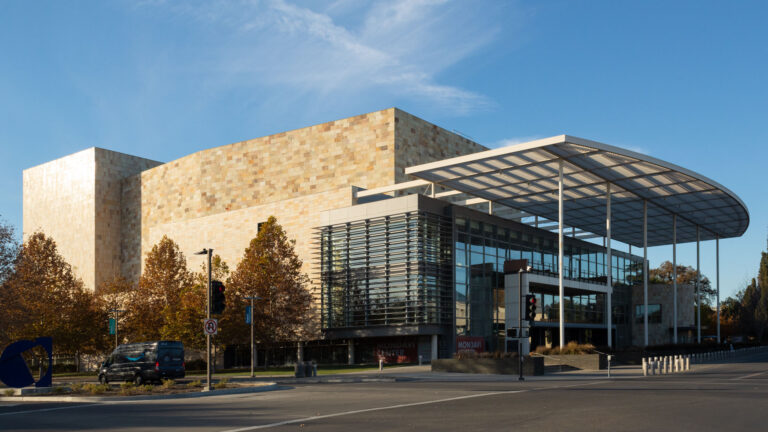
Although details of the films are still being finalized, each quarter’s film will be selected by the EC students and shown on the screen in Jackson Hall in the Mondavi Center, seating 1,800 people.

“Jackson Hall is a wonderful place to see a film, not least because of our fantastic new Meyer sound system,” said Jeremy Ganter, the associate executive director and the director of programming at the Mondavi Center.

Ganter has been with the Center since its opening and has held his current position for 15 years. 

“Partnering on projects with UC Davis students is truly one of the best things about working at the Mondavi Center,” Ganter said. “We are always so happy to team up with EC and other student groups, as they are professional, creative and a pleasure to work with.” 

In addition to quarterly films, the Mondavi Center is working with KDVS DJs to plan live events including potential silent discos. 

As in previous seasons, the Mondavi Center is planning to co-present at least one live concert with EC in Winter or Spring Quarter of 2022.

According to the EC’s new unit director Ashley Hicks, a fourth-year communications major, the first movie will likely be shown early in Fall Quarter. 

“We want to frame the initial movie screening as a welcome back to campus, so it is highly likely that it will be a free screening,” Hicks said. “We haven’t selected the movie yet, but we are hoping to do an indie film.”

Members of the council also have aspirations of continuing the tradition of hosting Sunset Fest during welcome week, which will likely be a full-capacity event if permitted.

 “This event will be outdoors, and we are hoping to present it as a large and joyful live event after such a depressing year of isolation, a revival of sorts,” Hicks said. 

Throughout the past year and despite the unpredictability, the EC was able to work with the Mondavi Center for their virtual Open Mic Nights, allowing students to be able to share their artistic and performative abilities.

These events came after the Entertainment Council’s longstanding tradition of hosting their own Open Mic Nights at the CoHo for many years now. 

 “We will continue to work alongside the Mondavi Center for the promotion of their Open Mic Nights, however, the Entertainment Council will likely reinstate our tradition as campus looks as though it will be fully functioning in the fall,” Hicks said. 

The first Open Mic Night of the year is usually held near the second half of Fall Quarter. More information on the Entertainment Council’s Open Mic Nights will be released closer to the beginning of the school year. 

Written by: Nicholas Murphy  — campus@theaggie.org

UC Davis hires new College of Letters and Science dean

World-renowned geophysicist Dr. Estella Atekwana will join UC Davis in August 

Estella Atekwana, a geophysicist and the dean of the College of Earth, Ocean and Environment at the University of Delaware, will become UC Davis’ new dean of the College of Letters and Science effective Aug. 1, 2021. 

Before becoming a professor, she received her Ph.D. from Dalhousie University as well as her Master’s and an undergraduate degree from Howard University in Geology/Earth Science. 

Ari Kelman, the interim dean of the College of Letters and Science since March 2020, said Atekwana has a remarkable record as a leader in higher education. 

“At every stop along her career, she has earned the respect of faculty, staff, students and alumni,” Kelman said.

The College of Letters and Science is UC Davis’ largest college, encompassing 55 undergraduate majors from comparative literature to statistics.

Atekwana said in an email sent to students in the college that she knew immediately that UC Davis was where she wanted to be, adding that she felt “inspired” to be part of the university’s growing success.

Beitong Li, a fourth-year triple major in economics, statistics and linguistics, has been a Letters and Science Ambassador for the past two years. 

“I believe it’s great to have a new dean because it means things will change a little bit,” Li said. 

Atekwana’s research background is in geology, and her research includes studies of the Albertine Rift, an extremely biodiverse area in central Africa created by the Earth’s tectonic plates pulling away from each other. 

“Dr. Atekwana is a world-class scholar who understands both the potential for world-changing research and also the extraordinary demands on researchers in a variety of fields,” Kelman said.

She has received awards both nationally and internationally for her work from organizations including the American Geophysical Union, the Geochemical Society and National Association of Black Geoscientists.

“Davis is a tier one research university, that sets us apart from other universities which might have a different focus, so I say it’s amazing,” Li said. “She cares about it because it’s a part of her background or identity—obviously that’s a great thing.”

As a dean at the University of Delaware, Atekwana created a fellowship to support historically underrepresented graduate students and created a 10-year strategic plan for the university, entitled The Changing Earth: Working Together for a Sustainable Future.

Kabir Sahni, a third-year communications and international relations double major, served on the recruitment advisory committee for the new dean. 

“One of the biggest things for me I wanted to see within the College of Letters and Science was someone in leadership that represents a large part of the school,” Sahni said. “I wanted to see diversity and inclusion programs implemented within the college.” 

Atekwana has been working in academia for the last 30 years at the University of Delaware, Oklahoma State University, Missouri University of Science and Technology and Western Michigan University. 

“I think her own experience in the laboratory and the classroom informs her interactions with faculty and students in ways that are likely to be inspiring and transformative for the L&S community,” Kelman said.

Sahni said that though Atekwana’s accomplishments as a geologist are impressive, a dean’s most important quality, for him, is a strong understanding of the student experience.

“I think the end goal is to realize that at one point, [a dean was] a graduate assistant and then a professor,” Sahni said. “So they know the kind of spaces that we would be ascending and where we are trying to go.” 

Written by: Kathleen Quinn — campus@theaggie.org

UC Davis alumna killed in Russia is remembered by professors, friend

Friends and family of Catherine Serou have created GoFundMe pages to support efforts to honor her memory

By SOPHIE DEWEES — campus@theaggie.org

Catherine Serou, a 34-year-old UC Davis alumna who was studying in Russia, was found dead on the morning of Saturday, June 19. She went missing four days earlier after sending her mother a text that read: “In a car with a stranger. I hope I’m not being abducted.”

After earning two degrees from UC Davis, a Bachelor of Arts in 2017 and a Master of Arts in 2019, Serou began pursuing a master’s degree in law at Lobachevsky University in Nizhny Novgorod in the fall of 2019. She had planned to study Russian before applying to law school in the U.S. 

According to Michael Siminovitch, a professor of design and the director of the California Lighting Technology Center, Serou was an “outstanding student” who had a bright future in law.

“She was being pursued by all kinds of law schools,” Siminovitch said. “And she was like, ‘What should I do?’ and I said, ‘Go. Don’t think, just go.’”

Siminovitch served as an advisor for Serou, and the two worked on a research project into energy efficient lighting in collaboration with the U.S. Navy. Having served in the Marine Corps, including a tour in Afghanistan, Serou had a strong interest in the project, according to Siminovitch.

“Here we had a student who was smart and knew about lighting and was a veteran, and so it was a win-win all around,” Siminovitch said. “She was very anxious to work on the project.”

Thomas Maiorana, a professor of design, taught Serou in his furniture design course and remembers her as a focused student.

“She was super present and would pay close attention to any kind of instruction and then approach her projects with a kind of intensity and rigor,” Maiorana said. “It was clear she was in school to learn.”

For Siminovitch, Serou’s death was “close to home.”

“It’s just a really sad story,” Siminovitch said. “Here’s this person who’s vibrant and seizing the world and adventuresome. That took a lot of nerve to pack up and go off to Russia to study Russian and law. That’s a huge undertaking for a young person.”

Since her death, friends and family members have created fundraisers to remember Serou and cover administrative and memorial costs. 

Her sister, Marie-Claire Serou, started a GoFundMe page to pay for funeral fees and repatriating Catherine Serou’s remains.

“Catherine Serou could do anything,” Marie-Claire Serou wrote on the fundraiser page. “Brilliant and beautiful, she found joy in learning, growing, eating, traveling, building, crafting and caring for animals.”

Jenna DiCarlo, a friend of Catherine Serou and an incoming UC Davis fourth-year double majoring in international relations and history, also started a GoFundMe page for a memorial plaque in the UC Davis Arboretum to “preserve Catherine’s impact on campus.” 

DiCarlo, now the president of the Davis College Republicans (DCR), met Catherine Serou through joining the club in her first year at UC Davis. 

“She was a big role model for everyone in the club, and she was always super selfless and always put other people’s needs before hers,” DiCarlo said. “You always walked away from a conversation with her feeling really good.”

After donating to Serou’s family fundraiser, DiCarlo said that she and other members of DCR wanted to honor Serou and her impact on the UC Davis community. 

“She was a twice-over alumni, she got both her bachelor’s and her master’s at Davis, she was a peer mentor and she was just an overall big part of the community for so long,” DiCarlo said. “We thought what better way to honor a great alumni than by having a memorial plaque for her somewhere on campus just to show that she was important to us, and she was very loved.”

Written by: Sophie Dewees — campus@theaggie.org

Is chiropractic science a myth?

The line between myth and science is more blurred than ever before

Chiropractic offices have been sprouting up across the country faster than science can keep up with, and it’s leaving many with questions. Are chiropractors doctors? Are the treatments backed by science? Can a chiropractor solve my issue? All great questions. The fact of the matter is that chiropractic science practiced by professionals can ease some problems but is not the cure-all it’s advertised as.

To start with the facts, it has been proven that chiropractic aid is able to modestly help low-back pain. While there is not yet extensive enough data, current data also suggests that it may be helpful to ease neck problems and non-migraine headaches as well. With evidence that it can be beneficial, I think chiropractic services do have a niche in our society, but it’s not all roses. 

If you have low-back problems that you haven’t been able to shake, maybe give a chiropractor a shot, but for other issues, the spinal adjustments you are getting from a chiropractor aren’t helping.

We still don’t even understand how chiropractic services even help in the first place, just that it helps to an amount similar to taking painkillers. Even where we have proven results that chiropractic works, the evidence behind it is precipitous. We have evidence that it can help low-back pain, so for other treatment areas, all services rendered are completely void of merit.

Because of the science containing varying amounts of scientific merit, the quality of care obtained from seeing a chiropractor heavily depends on the chiropractor themselves. To set a baseline, true chiropractors in California are part of a government body that requires licenses to practice. When seeing a licensed chiropractor, you can be sure that they have graduated from a college with a pre-health degree as well as a specialized degree, which takes on average 3.3 years post-graduation. These modern licensed chiropractors, while practicing a largely unexplained science, are mostly reputable. They can be trusted to keep patients safe, though one bad apple can spoil the whole bunch.

On the other hand, chiropractic aid was invented by some “out-of-the-box thinkers,” to put it very nicely. The originators around 100 years ago claimed that “subluxations” (spinal adjustments) which are the foundation for chiropractic today, could solve over 95% of all diseases. Supposedly the creator was even able to cure deafness in a person by simply readjusting their back. Is this the look you want from a “genius” creating a health science?

The entire profession revolves around “subluxations,” which is the realignment of spinal bones being able to fix problems and maintain health. There is zero scientific basis behind this being at all true, yet it is still the foundation of chiropractic teachings at schools today. Practitioners are tirelessly trying to find evidence behind the process as the relevance of their careers are predicated on its merits.

Effectively, if “subluxations” truly don’t exist, then according to Dr. Harriet Hall, “the whole rationale for chiropractic collapses, leaving chiropractors no justifiable place in modern medical care except as competitors of physical therapists in providing treatment of certain musculoskeletal conditions.” The entire profession was built on a probable falsehood which is putting chiropractors in a tough bind. If they admit the truth, then they are glorified physical therapists practicing a fake science, but if not they are deluding themselves and their patients. That is a bind I would not want to be in.

If you have low-back problems, there is a solid chance that a licensed chiropractor could help you out. As with all doctors, your quality of service is very highly influenced by the practitioner. If you feel like your “guru” helps you out, then go on ahead, but for others, chances are there is someone better qualified than a chiropractor that can help you using a strategy proven to work.

Licensed chiropractors fall under what we colloquially recognize as doctors even if they don’t have an M.D., the treatments are not backed by science, and one can solve your exclusively low-back problems. In reality, all the skepticism behind chiropractors is well-founded—the profession was borne out of legend, but most of today’s stories do contain a grain of truth, and chiropractic is no different.

Written by: Alex Motawi — almotawi@ucdavis.edu 

Disclaimer: The views and opinions expressed by individual columnists belong to the columnists alone and do not necessarily indicate the views and opinions held by The California Aggie.

Nature documentary forced to retract literally everything

To be fair, you should’ve known not all cows are Geminis

This week, Netflix released a massive apology due to misinformation in their latest nature documentary. Apparently, you can’t trust an unpaid intern to type up a “rough script” for a six-hour show. Netflix subscribers took the news without issue, mostly because no one had seen that documentary. They were all busy rewatching “Avatar: The Last Airbender” for the eighth time.

The real story, however, lies in the fact that 17 separate people approved this documentary before it was released to the public. 

Yes, Netflix has gotten a bit sloppy recently. (What’s going on with “Riverdale?” Not even the writers know.) But seriously, someone read this aloud in a room full of producers and sound engineers, and no one batted an eye. 

And, no, obviously it wasn’t Sir David Attenborough. Have some respect. He’s a seasoned professional and would never imply that penguins can be trained to smoke a joint. Don’t even joke about that. 

Additional retracted statements include: 

  • Camels’ humps invert when they’re thirsty
  • Armadillos instantly fall asleep to the sound of Samuel L. Jackson’s voice
  • Axolotls could live to be 100 but they choose not to out of spite
  • The red in a ladybug’s coloring represents passion, while the black represents the bubonic plague
  • Chameleons are all Libertarians 
  • I am the Walrus
  • Zebras are both the perpetrators and victims of systemic racism
  • A duckbill platypus will hover about a foot off the ground when approached by a predator or by a Scientologist

Some have raised questions about this mishap, painting it as evidence of our educational systems’ failures. Surely, they argue, any high school graduate should be able to find an issue with the statement “North American freshwater catfish are often secretly 60-year-old men.”

I, however, see this scandal for what it is: despicable carelessness on the part of Netflix. Any self-respecting writer would never publish something that is so obviously flawed. 

Written by: Annabel Marshall — almarshall@ucdavis.edu 

Disclaimer: (This article is humor and/or satire, and its content is purely fictional. The story and the names of “sources” are fictionalized.)

How Hollywood plans to help solve COVID-19

 “We Are the World” 3?

The U.S. has backed a World Trade Organization (WTO) proposal to temporarily suspend intellectual property rights for the COVID-19 vaccination. This has come after weeks of pushback against the proposal by many industries, some more surprising than others. Lee Fang of The Intercept reported that Hollywood has been actively lobbying against this proposed waiver. 

Despite there being language in the proposed waiver draft that specifically excludes the wholly amazing pop culture products of our current entertainment industry, organizations like the Recording Industry Association of America (RIAA) have come out against it. According to Neil Turkewitz, a former RIAA official, this waiver that will not apply to the entertainment industry should be opposed because it is only being done for some stupid reason called justice

Hollywood, however, doesn’t just plan to sit back and watch another tragedy unfold without making it known to the world that they really care about it. Despite that time a bunch of people secure in their mansions sang “Imagine” to people who probably lost income needed to pay rent at the outset of COVID-19 and that other time they took responsibility for microaggressions in the midst of a movement about police reform, one Hollywood executive thinks the third time’s the charm.

“Those things were a failure because it just didn’t have the production value,” they said. “This time we’ll go big and get it right. I think some have floated a ‘We Are the World’ sort of thing for India. Who knows though?”

This executive continued, “Nobody really asked ‘The Industry’ to get involved in this waiver fight, but we decided to make sure that these people weighing actual concerns of this waiver’s effectiveness think about us too when considering this matter that won’t affect us.”

Currently, the scope of this project is undecided and on hold after the Biden Administration’s announcement. At the moment, it is titled Very Important Responsibility to Together Unite Everybody, Save International Great Neighbors and Allies, and Lead International and National Growth (VIRTUE SIGNALING).

Written By: Ean Kimura — etkimura@ucdavis.edu

Disclaimer: (This article is humor and/or satire, and its content is purely fictional. The story and/or names of “sources” are fictionalized.)

The UC Davis Symphony Orchestra reflects on artistic struggles during COVID-19

Music director, professor and cellist detail elements of performance that are lost online and hopes of returning to live performance

By LYRA FARRELL — features@theaggie.org

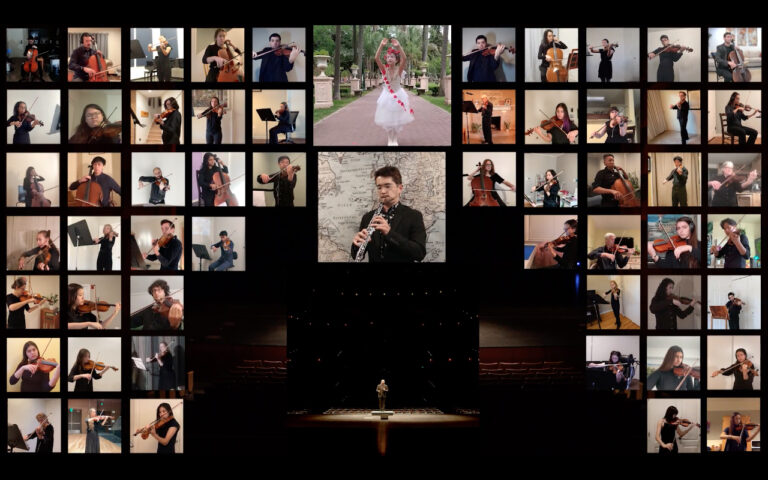
In normal years, the UC Davis Symphony Orchestra (UCDSO) would gather in the Mondavi Center in front of a large audience for a live performance during Fall Quarter. This past year, however, performance has taken on a completely different form as each musician recorded themselves playing from home and submitted their audio tracks to be edited together. In fall 2020, the UCDSO put together a virtual performance in collaboration with an opera singer, in which each orchestra member can be seen playing their instrument in individual boxes.  

Jacob Bleha, a third-year biological sciences major who has played the cello for the UCDSO since his freshman year, spoke about the making of the virtual concert. 

“It was weird listening to a recording and playing along with that rather than playing with a whole group because you don’t feel the vibrations of the music; you don’t communicate with each other; you don’t look at the conductor; you don’t move as a group,” Bleha said. “You play along with their recording, and that was a lot more difficult.”

While members of the orchestra played their instruments from home, Christian Baldini, the director of the UCDSO, made the decision to record himself conducting from an empty Mondavi Center to emphasize the element missing from the performance: the audience.

“I think we wanted to portray this absence,” Baldini said. “As an audience member, I desperately need to experience live music, to go to concerts. From the performance perspective, […] it’s not the same if we’re doing it to an empty house, so that’s kind of the message we wanted to send out, this melancholy of, ‘We are doing a part of what we normally do and we are definitely missing the other part, which is you.’”

Laurie San Martin, a UC Davis professor and the chair of music, has composed pieces for the UCDSO and discovered certain barriers in teaching music remotely that don’t exist for other subjects.

“There’s lots of things that have been difficult [to teach], but music theory has had the hardest time translating [to online], I think, because of the […] mechanics of the music,” San Martin said. “It’s really not the same if you connect it to hearing it, playing it, singing it, being in the same space.” 

Because the remote orchestra classes Baldini taught in Spring Quarter of 2020 and Winter Quarter of 2021 couldn’t rehearse in person, he used the course time to promote a greater understanding of inclusivity in the world of orchestral music by inviting various composers and musicians from different backgrounds to speak.

“It was a very large written seminar, essentially,” Baldini said. “This is a really important mission, not to just perform the music that, maybe you fell in love with because of Beethoven […], but there’s another side: [for example], why are female composers not represented, why are African American composers neglected on the concert platform?”

Baldini says that the orchestra’s return to in-person performances this Fall Quarter of 2021 is looking likely. 

“Our goal and our plan is to return with a full orchestra,” Baldini said. “We don’t really know what the situation is going to be, whether public officials will say, ‘You can only have this much audience capacity,’ or not, but the most important thing is that it looks more and more likely since the vaccination rates are so high and the positivity rates for [COVID-19] are so low.”

Although Bleha admits that he and his peers have had a different relationship with their instruments without rehearsal of any kind over the past year, he doesn’t think it’ll take long for the orchestra to get back to their original sound once they resume rehearsing together.

“I think it’ll come naturally, it’ll come smoothly for all of us, we’ll get into the swing of things again, and it’ll go back to normal soon enough,” Bleha said.

San Martin has recently been able to oversee the return of in-person performance for small UC Davis ensembles. In her experience, an irreplaceable component of live music is the physical sensations one can feel around them in the room. 

“Feeling the music is […] one of the things that makes live performance so much richer—it’s not just our ears that are listening; it’s the vibrations and our whole body feeling this, so it’s an amazing thing to be back in the concert hall,” San Martin said. 

Written by: Lyra Farrell — features@theaggie.org 

‘You just gotta follow your passions,’ said political science and evil science student who is taking over the world with giant robot ants

It’s all about finding a balance between school and world domination

“I’m more than just a mad scientist hell-bent on seeing the world conform to my every whim,” said UC Davis student Jeremy Bearimy. “And it’s exhausting that people only see me as that. I mean, I’m a real person! I’m mult-dimensional. It’s not all killer robots and laser beams.”

Bearimy is a third-year political and evil science double major, and while he’s won multiple awards for his inventions of great villainy, he wants the world to know he’s more than just a death ray. When prompted for an interview by some very persuasive, giant robot ants, I got the pleasure of sitting down with Bearimy and digging into the great mind behind the Lactose Intolerance-anator and the Spider Smoke Bomb.

“Evil science has been in my family for generations. And while I do love it, I just always felt like I needed to be more, y’know? My dad’s been bugging me to apply to some maniacal villain scholarships, but college is supposed to be the time where I get to experiment and be myself,” said Bearimy. “I don’t wanna look back after I’ve taken over the world and feel like I missed out on all the ultimate frisbee and acapella groups.”

The political and evil sciences double major started making strides last year after joining the school’s all-male acapella group, Tone Deaf. The group made nationals last year due to Bearimy’s new “Boy Band-anator,” which gave each member of the group rippling abs, self-autotuning voices and terrible late ‘90s fashion. While many opposing groups had complained that using such a device was considered cheating, Bearimy’s “Put Them Somewhere Else-anator” was able to force-teleport any of their competition to the moon, forcing a win by default. 

But it didn’t stop there. Bearimy also participated in this year’s ASUCD Open Mic in the CoHo, where his stand-up bit about the chemical reaction that makes airline food taste bad killed the crowd.

Not literally of course, but most of the crowd did pass out due to all the laughing gas bombs Bearimy had let loose throughout his performance. 

“So this is for you my fellow students. If a little Jeremy with barely any understanding of quantum laser physics can become an acapella star, then you can too. Follow your dreams, and you can take over the world. Just like I did.”

Lord Bearimy, ruler of humanity and incredibly handsome dude, is more than the super science god that controls all aspects of our reality. He’s also just like any other student that puts on their lab coat and evil science goggles one step at a time. All praise Lord Bearimy.

Written by: Ian Cosner — iacosner@ucdavis.edu 

Disclaimer: (This article is humor and/or satire, and its content is purely fictional. The story and or names of “sources” are fictionalized.)

2020-21 Goodbye Editorial

We’re not crying you’re crying

By The Editorial Board

Anjini Venugopal, Editor-in-Chief

By Margo Rosenbaum

Anjini, we have come so far from our time as features writers at The Aggie. Under the mentorship of the outstanding Olivia Luchini, I watched your journalism skills blossom. Before every desk meeting, I loved waving to you as I zipped past on my bike on the way to Lower Freeborn. Who knew two years later we would go on to lead The Aggie? 

I still remember your call last summer to offer me the role of managing editor. Even though my phone crackled with poor service, I could hear the warmth and excitement in your voice at the prospect of working with me, which instantly soothed my nerves about the responsibilities of this role. In the few short months before Fall Quarter, we climbed a steep learning curve together. As we became more comfortable in our roles, we asked fewer questions to our predecessors and instead turned to each other for help. By the time the school year began, I realized how grateful I was to see your face every day on my Zoom screen. I have learned so many life lessons from you this year, from how to be a thoughtful leader to the superiority of Roboto. Your ideas about outreach and engagement help me think critically about necessary change at The Aggie. Your pitches about data journalism and digital storytelling help me consider ways to keep The Aggie relevant. Your dedication to our publication, talent as an editor and skills on the pickleball court continue to amaze me. Above all, I am so lucky to call you my wonderful, smart friend.

Anjini, my fellow features baby, high school journalism star, tea lover, em dash extraordinaire and Aggie partner in crime, I can’t wait to spend another year leading this team with you—and this time, we get to do it in person! <3

Margo Rosenbaum, Managing Editor 

By Omar Navarro

Since this year was my first taking over the sports desk on the Editorial Board, I absolutely had no idea what to expect. Not only did I have to assume the role, but it all had to be remote—which made me 10 times more nervous than I already was. While I knew I could always still ask people whatever dumb clarification questions I had, my social awkwardness did not allow me to do so in fear of asking the wrong questions. Enter Margo, who not only had the answers to my many questions (and there were a lot), but also was very understanding in what was a wild school year for us all.

    The amount of time and effort you put in as managing editor is absurd to me. Not only that, but the way you organize virtual events, look over the articles and still have the energy to thoroughly answer whatever question arose for me at the time is something that I appreciate more than you know. This school year was incredibly difficult for me for a variety of reasons, and you were always so patient and helpful with everything. Even in a remote setting where one could get extra tired or lose motivation, you still found a way to be there and somehow have the energy everyday (you have to teach me your ways). I couldn’t have asked for a better managing editor and I am incredibly grateful for that—even though I have a hard time showing it. Although this isn’t a goodbye per se, it (hopefully) is a goodbye to interacting with you and the rest of Ed Board remotely. Thank you again, and good luck in your adventures this summer. I hope to see you and everyone in person next year. 

Sabrina Habchi, Campus News Editor

By Sophie Dewees

Sab, I cannot even begin to tell you how thankful I am to have met you this year. From playing pickleball a minimum of 10 times a week (and hearing you yell “get it together, Dewees” every time we partner together) to listening to “Stacy’s Mom” on repeat to getting out of the car to dance to “Disco Inferno” while waiting for the train to pass, I can honestly say that my life is made better every day because you are in it. You are so KIND, hilarious and easily my favorite friendly, neighborhood polisci major. This year on Ed Board you’ve brought inspiring ideas, managed to write incredible editorials in the most unlikely of places including the top of a mountain and made every meeting and event for The Aggie better with your energy and contagious laughter (even if it is sometimes incomprehensible). You are one hound p my all-time favorite coach, and I’m so lucky to call you one of my closest friends. Even though you’ll be off in SoCal next year (well whose fault is that?) doing incredible things or whatever it is San Diegans do (wait, you’re from San Diego right?) I know that we’ll stay friends and I’ll be cooking you stir-fry, drinking fancy tea from England with you and letting you talk me into hanging out despite my mountain of schoolwork for years to come. You’re absolutely going to kill it at UCLA next year buddy (fours up!) and I cannot wait to see all that you’re going to accomplish. Your visits to Davis need to happen A$AP Rocky. Love you forever, lady.

Eden Winniford, City News Editor

By Allie Bailey

The Eden I know (and love) today is not the Eden I expected to get to know when we first met over Zoom in the fall. It’s not like there was anything wrong with her—she was very sweet, and had plenty of good ideas to share, but she was a little harder to get to know on an Ed Board full of big personalities. Especially compared to the rest of us, she isn’t the loudest person in the Zoom room. But slowly but surely, Eden shined through our screens. At first, it was a clever comment in the chat, then, a snarky reply to Sabrina giving her a hard time, and now, you never know what you’re gonna get. 

Eden is like fine wine and good cheese; she only gets better as time goes on. I knew I’d like her when we first met, but over the course of the year, I’ve grown genuine admiration and appreciation for her. She is bubbly and kind, but also strong-willed, bright and an integral presence at Zoom meetings and pickleball games alike. An informed member of Ed Board, she consistently offers new ideas and insightful perspectives, and she always brings that bit of sass to keep things exciting. I am thrilled that I don’t have to end this paragraph with a goodbye. Eden, it has been an absolute blast working with you while also becoming your friend. I can’t wait to continue what we’ve started. 

Calvin Coffee, Opinion Editor

By Sabrina Habchi

If you’re lucky enough to know Calvin Coffee, chances are you adore and respect him. In fact, I think you’d be very hard-pressed to find anyone who has anything bad to say about him. He is the definition of cool, calm and collected, his kindness knows no bounds and he is easily the funniest out of the nine of us Editorial Board members. He fearlessly leads our meetings with the frequent “alright, we’re in business” and “what are we thinking here?” and the occasional “I gotta catch a cat.” 

Although his part-time job is smack talk, Calvin is just as good at taking it as he is at giving it. With that being said, it’s very important to him that you know he likes sports. I am pretty confident he won’t ever come close to speaking in a legitimate New Zealand accent (oi, gov!). His page is filled with beaver TikTok, whatever that means. And the man thinks it’s die in instead of die up, effectively causing every frat star to shudder every time he utters (well, yells very loudly) those words.

It’s going to be weird not seeing you every day, Coffee, but I’m glad that we’re both ending up on the correct side of the same state. I’m not sure I’ll ever have the pleasure of meeting anyone who uses as many sound effects, who has perfected the art of pushing my buttons or who talks as much smack (even when you’re losing) as you. Cheers to many more years of me calling you to come kill a Black Widow during an NBA playoffs game (did I mention you like sports?), hearing your iconic phrases and having to watch the TikToks you send in Safari. 

I can’t think of a finer person to call my pickleball pal, you know what I’m saying?

Sophie Dewees, Features Editor 

By Eden Winniford

I remember meeting you during one of my last times in Lower Freeborn and thinking, “I bet we’re going to become friends.” The pandemic put that on hold, but eventually I was right—we became fast friends over socially-distanced games of pickleball and post-vaccination hangouts. Our paths at The Aggie are so similar—we both started out as first-year writers, moved up as co-assistant editors of our respective desks and then became second-year editors, the two babies of the group. But we’re also different in ways that balance each other out and make us a great team. Like how I can’t cook to save my life, but you’re great at cooking and I’m happy to wash dishes (side note: when are you making me dinner?). 

I always admire the energy and dedication you bring to your role as an editor. You’ve taken on so many projects this year, from podcasts to Best of Davis, and the content your desk puts out is consistently incredible. We collaborated together on a project to map out Best of Davis winners, and I was so impressed by your enthusiasm and how quickly you answered any questions. In Editorial Board meetings, you consistently bring such creative and important ideas, and you never fail to write impactful and persuasive editorials.

I’m so glad we’re both second-years, since it means we’ll be stuck with each other at UC Davis for two more years. I can’t wait to go on more hikes with you, talk with you about Spanish classes and finally get around to that movie night. I’m so lucky to be your co-worker and friend.

Allie Bailey, Arts & Culture Editor

By Madeleine Payne

With all of our editorial meetings being over Zoom this year, the first time I really met Allie was through her incredible writing. She quickly volunteered to take on one of our most challenging editorials during the first few weeks of Fall Quarter—a daunting task when you’re writing with people you don’t really know yet—and she absolutely crushed it. When someone can write so clearly and eloquently about a topic you’re passionate about but struggling to verbalize yourself, like Allie did that week, it’s the best feeling in the world. After that editing session, I remember thinking how lucky I was to be working with such an amazing writer and I couldn’t wait to read what else she would write that quarter.  

    As the year progressed, I learned that her writing style mirrors the grounding presence she brings to our meetings with her confident and witty contributions. She is really good at being able to take a step back and recenter us when we stray too far on tangents and I’ve always admired how she is never afraid to speak her mind if she disagrees with someone. Occasionally, you can find her joining our meetings while lounging by the pool in her mini black sunglasses, munching on a delicious looking gluten-free snack or serving looks in her many gorgeous fits that would make even the most accomplished closet connoisseur jealous. 

Yet no matter how much I love that she showed up to our meetings in pearls one time, my favorite thing about Allie is how fiercely kind she is. She is never afraid to speak up when she thinks someone is being too mean or reach out to you if she can tell you’re having a bad day. I’ve absolutely loved working with her this year and I can’t wait to read more of her eds, play many more games of pickleball with her, and (finally) attend some of the couch concerts she hosts.

Omar Navarro, Sports Editor

By Calvin Coffee

There’s no one I would recommend more to if you want to sit down and really talk about sports than Omar, our sports king. Not only is his mind vastly knowledgeable about classic games big and small, much like LeBron James, his thoughtful approach to the intricacies and forces at play not only in sports, but in our world and culture is unmatched. 

Omar is the wise owl of our Editorial Board—always ready to drop ideas that get to the heart of what many struggle with today. He’s also a great follow on Twitter (please give him his account back @jack). 

I’m bummed that we couldn’t have this past year in-person because I know we probably would have caught many games downtown, but discussing and reminiscing about random sports stuff before or after Ed Board meetings were always a highlight to me. 

He’s equally kind as he is driven and knowledgeable. His wealth of experience as the leader of sports for The Aggie, his world-class kindness and amazing talent as a writer make him an editor I would absolutely love to write for and one I have very much enjoyed working with. And I cannot wait to see the work he continues to do at The Aggie.

It has been an absolute pleasure working with Omar, I wish him all the happiness and success. I’m very lucky to call him a friend. 

P.S. I hope the Cowboys and Eagles are actually good this year so the rivalry can really resume. Go Birds.

Madeleine Payne, Science Editor

By Anjini Venugopal

Whether she’s asking a follow-up question in an endorsement interview for ASUCD senate candidates or pulling off a miraculous comeback on the pickleball courts, Maddie’s persistence never fails to impress me. As we’ve all learned over the past year, being informed about science is critical—her leadership on the science and technology desk this year has fostered a strong group of science writers and her hard work has directly allowed the entire UC Davis community to read informative, detailed articles about COVID-19 as well as topics some of us would never have even known existed. In our daily Editorial Board Zoom meetings Monday through Thursday, Maddie, despite being an Aries, is actually quite patient when providing practical and reasonable solutions when we (OK fine, it’s usually me) get stuck on whether a word is appropriate in a given context, and it makes our editorials that much stronger. On top of her work at The Aggie, she is a prolific contributor to our out-of-context wall quotes that spark a lot of joy when school and existing during a pandemic become particularly tiring. Maddie also has impeccable music taste, which makes it even funnier to me that we first met in a psychology of music course. I recently discovered that each time Spotify has refused to let me add a song to our collaborative Editorial Board playlist, it’s because Maddie has already added it. 

Maddie, I’m still not sure why you always accidentally message me instead of the group on Zoom, but I look forward to another year of me pointing at you—not through a computer screen—and saying “women in STEM” whenever there’s something even slightly related to science. Here’s to spending time in the Aggie house with its fantastic air conditioning, walking to get coffee downtown and thinking of some better words when we next play Chameleon.  

Written by: The Editorial Board

SR #20 passed at June 1 special session

Standing with the Boycott, Divestment, Sanctions (BDS) movement, the ASUCD Senate voted for the boycott of four major companies on campus

Internal Vice President Emily Barneond called the special session to order on June 1 at 8 p.m.

This special session was held to continue the discussion on emergency SR #20 which stands beside Boycott, Divestment, Sanctions (BDS) and calls for the boycott of four major companies that support the Israeli occupation of Palestine.

    Before the discussion began, Vice President Emily Barneond clarified that the meeting would be adjourned at or before 11 p.m., and the senate would not consider any items not on the agenda.

    Senator Kabir Sahni opened the floor to any members of the public present to express their opinions on the resolution.

    “The authors of this resolution reject the premise that there is a foundation of anti-Semitism in the Palestinian liberation,” Jacobs, a member of the public, said. 

Jacobs also stated that they would like to see teachings about anti-Semitism on campus.

    Another member of the public, Em, expressed concerns about UC Davis students being “forced to pay for these human rights injustices.”

    After hearing from community members, Senator Lauren Smith motioned to move into senate discussion.

    “The authors [of the resolution] have not stated the positive impacts on Palestinian students,” Smith said. “There are only three sources for this resolution, and two of them are UC sources.”

    The senate became divided when Smith called supporters of the bill “anti-Semitic.” At this point, Senator Kristen Mifsud said she felt she must ask the conversation to remain civil.

    “We need to recognize that everyone here has a close proximity to different communities,” Senator Maahum Shahab said.

    Senator Michael Navarro motioned to call the resolution into question. 

    The vote was called in favor of the resolution with eight votes. 

Written by: Emily Redman — campus@theaggie.org

Editor’s Note: Members of the public, Jacobs and Em, who spoke at the meeting chose to provide a short name to protect their identities.

UC moves forward with COVID-19 vaccine mandate

While the draft policy proposed a mandate contingent on full FDA approval, the UC has announced plans to require vaccinations under emergency-use authorization
By REBECCA GARDNER — campus@theaggie.org

The University of California will require COVID-19 vaccines for students, staff and faculty returning to campus in the fall, altering its previous plan to wait for the vaccines to receive full approval from the U.S. Food and Drug Administration (FDA).

The UC Office of the President (UCOP) published a draft policy in April 2021, stating its intent to mandate the COVID-19 vaccine for all personnel, trainees and students accessing UC facilities. In the initially-proposed policies from both the UC and the California State University system, the enforcement of the mandate remained contingent on full FDA licensure of one of the existing vaccines.

The Pfizer-BioNTech, Moderna and Johnson & Johnson vaccines remain under Emergency Use Authorization. 

Pfizer and Moderna have both applied for full approval which will likely take months to receive. Full FDA approval is expected to increase vaccine acceptance, according to The New York Times.

On June 11, Chancellor Gary May wrote in his weekly update to the campus community that the UC system’s final vaccine policy will be issued on July 15. 

“Under the forthcoming vaccine policy, UC will allow narrow medical exemptions and consider requests for accommodations based on disability or religious belief,” May stated in the update.

The university announced that all students and UC employees must verify their vaccine status or state their intent to obtain medical or religious exemption by July 15. Students, faculty and staff are expected to comply with the mandate within two weeks of returning to campus, according to the June 10 statement from UCOP.

In an email to The California Aggie, May stated that he believes the vaccine is safe and effective for all populations.

 “If anyone has concerns about vaccine safety, I encourage them to speak to their doctor,” May wrote. “For the vast majority of healthy people, I do believe the vaccine is safe and effective.”

As a limited number of courses will be offered remotely in the fall, May encourages students who can’t receive the vaccine due to health reasons to discuss possible classroom accommodations with the Student Disability Center

 “If concerns about COVID-19 will impact a student’s ability to attend classes in person, I encourage them to look into their options as soon as possible,” May stated. “Taking a leave of absence for the fall is one possibility.”

UC Davis shared that while fully vaccinated students are no longer required to participate in weekly testing, everyone is required to “wear a face covering in certain settings and circumstances.” Students with approved exemptions from vaccination will be required to wear masks in public. In the classroom, only instructors will be exempt from masking.  

Alan Sanchez, an incoming fifth-year applied statistics major, said that while he chose to receive the vaccine, he doesn’t wholeheartedly support the mandate.

“If people don’t want to take it, they shouldn’t be forced to take it,” Sanchez said. “Instead of [the UC] just deciding what to do, they should focus on the people’s voices.”

UCOP spokesperson Ryan King explained that the shifted policy followed a consultation period in which campus leaders indicated strong support to move forward with the mandate.

 “Over the past several weeks, President Drake has been consulting with chancellors, Academic Senate representatives, UC Health leaders and other university stakeholders on the proposed policy,” read a statement from the UC on June 10.

Sanchez expressed concern about the UC moving forward with the mandate without full FDA approval.

“It’s bound to backfire,” Sanchez said. “I’d say if it was 100% approved, most people would be glad to take it. There are people who are still skeptical about it.”

Alejandro Ramos Hurtado, an incoming third-year wildlife, fish and conservation biology major, said that he views the mandate as an essential measure to protect those returning to campus.

“I think it’s necessary for going back to in-person classes,” Ramos Hurtado said. “It’s the best that can happen with what is available.”

Students can verify their vaccination status through the Health-E-Messaging portal.  

Written by: Rebecca Gardner — campus@theaggie.org