53.5 F
Davis

Davis, California

Tuesday, December 23, 2025
Home Blog Page 254

SR #23 passed at June 4 ASUCD Senate meeting

The resolution acknowledges the Tiananmen Square Massacre and calls for the divestment of the partnership between UC Davis and the Chinese Ministry of Education
By MADDIE DULEY — campus@theaggie.org

Internal Vice President Emily Barneond called the ASUCD Senate meeting to order at 6:10 p.m. on June 4.

Graduating senators then offered farewell statements reflecting on their time in ASUCD and thanking the members of the table for all of their hard work this year.

New officers were sworn in, and each took their oath of office. These officers included Ryan Manriquez as president, Juliana Hernandez as internal vice president, Devin Santiago-Vergara as student advocate and senators Sergio Bocardo-Aguilar, Rashita Chauhan, Mallika Hari, Owen Krauss, Ambar Mishra and Harris Razaqi.

The table then moved to chairperson confirmations. Each nominee introduced themselves and provided their qualifications for the role. Jared Lopez was confirmed as the Ethnic and Cultural Affairs Commission chairperson, Gabriela Tsudik was confirmed as the Academic Affairs Commission (AAC) chairperson, Radhika Gawde was confirmed as the Internal Affairs Commission chairperson, Ashley Chan was confirmed as the Gender and Sexuality Commission (GASC) chairperson and Stephen Fujimoto was confirmed as the Research and Data Committee chairperson.

After confirmations, the Western Workers Service Association presented their quarterly report. Elena Sanchez, the operations manager of the association, began by sharing how the association operates and what they are working to achieve.

“We organize what we call unrecognized workers,” Sanchez said. “These are folks who are working but are not technically recognized as employees of employers. These [employees] are all categories of workers who suffer the worst wages, who are oftentimes exploited at work, don’t get paid for all the hours that they work and therefore also face other conditions brought on by poverty.”

According to Sanchez, the association goes door to door in low-income neighborhoods and meets with the leaders of these neighborhoods to give them resources so that they can help strengthen their community and fight for better treatment and higher wages.

Following the presentation, the table brought up the nominees for ASUCD unit directors. Each nominee introduced themself and provided their qualifications for the role. Amanda Portier was confined as the Picnic Day unit director, Aparna Manoj was confirmed as the Mental Health Initiative unit director, Cozette Ellis was confirmed as the Whole Earth Festival unit director and Karl Zahlhaas was confirmed as the unit director for the Center for the Environment.

The elections committee then provided their quarterly report. Karolina Rodriguez, the elections committee chairperson, shared that undergraduate voter turnout was 1,786 voters, which exceeded numbers from Fall Quarter.

The Students Sustainability Career Fair Committee then provided their quarterly report. Alana Webre, the chair of the committee, shared that committee members have been working on several successful social media campaigns regarding career tips, sustainability and environmental field facts.

“We also hosted an environmentally-focused resume and cover letter workshop with Internship and Career Center advisor Lynn Fowler,” Webre said. “We’re planning our events and social media campaigns for the summer and the adjustment to in-person learning in the fall.”

The DREAM Committee then provided their quarterly report. Alejandro Cervantes, the DREAM committee chairperson, shared that the committee has created a financial assistance voucher program which will be providing about 65 student applicants with financial support.

“We [also] have partnered with the AB540 Undocument Student Center [and] partnered with a famous undocumented account on Instagram to deliver an investing and budgeting workshop virtually through Zoom,” Cervantes said.

The table then moved to legislation, beginning with SB #112, which was introduced as emergency legislation. Senator Michael Navarro provided author’s comments.

“I’m proposing this bill, so [the ASUCD budget] doesn’t get cut off during the Spring Quarter, but it extends to a full length of a year to ensure that every committee is able to use the proper money as they wish,” Navarro said. 

SB #112 passed unanimously.

The table then moved to SB #99, and Senator Kabir Sahni provided author’s comments.

“This bill is structurally reforming the Bylaws in a way that’s really necessary,” Sahni said. “It’s to prevent future confusion […] by making committees an actual body to check on the status of committees.”

SB #99 passed unanimously.

The table then moved to SB #108, and GASC Chairperson Ashley Chan provided author’s comments. 

“This bill is just to ensure that [sexual assault] training gets done, and this bill is expanding that training to all members of ASUCD’s legislative branch,” Chan said. “We want all legislation that comes out of the body to be coming from a place of understanding and to not harm any survivors but to empower and support them.”

SB #108 passed unanimously.

SB #109 was then brought to the table, and Senator Sahni provided author’s comments. 

“This is a bill on the Student Police Relations Committee which has been dead for the past two years,” Sahni said. “This bill is just dissolving it all together.”

SB #109 passed unanimously.

The table then moved to SB #110, and Hernandez provided author’s comments. 

“SB #110 is a senate bill to update the requirements of the Internal Affairs Commission and general internal restructuring,” Hernandez said. “We wanted to provide space within the IAC [Internal Affairs Commission] to be able to review spending bills.”

SB #110 passed unanimously.

The table then moved to SR #23 that calls for the divestment of the partnership between UC Davis and the Chinese Ministry of Education. Tenzin Youedon provided author’s comments.

“I want to acknowledge that tomorrow will mark 32 years since the Tiananmen Square massacre,” Youedon said. “Thirty-two years ago, the Chinese military fired tanks on peaceful demonstrators who were students calling for free speech and free press. This is one of the many human rights abuses that the Chinese Ministry of Education has worked to remove from conversations here at UC Davis.”

 SR #23 passed unanimously.

The table then moved to SR #16, and Claudia Reyes-Rodriguez provided author’s comments. 

  “We have included a UC Davis Principles of Community statement on behalf of undocumented students,” Reyes-Rodriguez said.

The bill articulates the harmful effects of the words “alien” and “illegal” being used to refer to undocumented students and advocates for the removal of this language at UC Davis.

“The resolution includes statements on behalf of peers, who have shared how the use of these words make them feel,” Reyes-Rodriguez said. “[They] included the words worthless and visible and dehumanizing.”

SR #16 passed unanimously.

The table then moved to SR #18, and Emma Tolliver, a second-year English and political science major, provided author’s comments. 

“We’re asking the ASUCD Senate to pass a resolution affirming the support of the CRC [Convention on the Rights of the Child],” Tolliver said. “By passing this resolution, UC Davis would become the first university to affirm the Convention on the Rights of the Child, making UC Davis a national leader in protecting and advocating for children’s rights.”

SR #18 passed unanimously.

SR #19 was then brought to the table, and Senator Sahni provided author’s comments.

“Since the announcement of equitable access last year, the backlash toward the program has been nothing short of consistently abundant,” Sahni said. “We’re hoping that this resolution encourages those behind equitable access to reevaluate its purpose and characteristics.”

SR #19 passed unanimously.

SR #21 was then brought to the table, and Hernandez provided author’s comments.

“This bill is requesting the Academic Senate to reform the planned educational leave program for undergraduate students,” Hernandez said.

Allowing undergraduate students planned educational leave at least three times during their academic career would give them the same opportunities as graduate students, and they should be awarded the same flexibility to achieve academic success, according to Gabriela Tsudik, the Administrative Advisory Committee chairperson.

SR #21 passed unanimously.

The table then moved to SR #22, and Juliana Hernandez provided author’s comments.

“This resolution is to gather statewide support for a grant that would allocate funds for a UC-wide open educational resource program to lessen the burden of textbook costs for students from marginalized communities and different economic backgrounds,” Hernandez said.

SR #22 passed unanimously. 

Hernandez adjourned the meeting at 1:12 a.m.

Written by: Maddie Duley — campus@theaggie.org 
Members of ASUCD commissions gave quarterly updates at May 27 ASUCD Senate meeting

The seven commissions of ASUCD reported on their Spring Quarter updates and spoke on plans for Fall Quarter

Internal Vice President Emily Barneond called the Senate meeting to order at 6:10 p.m. on May 27.

    The meeting began with the introduction and confirmation of chair member nominees in the Administrative Advisory Commission and the Environmental Policy and Planning Commission. All nominees were confirmed with no objections. 

    “The interview and selection process for these nominees is very thorough,” Senator Kabir Sahni said. “I am fully confident in the selection of these candidates.” 

Next, the senate discussed the confirmation of Ashley Hicks for the Entertainment Council director. She was nominated by President Kyle Krueger after an interview process. She was confirmed in a motion by Senator Ryan Manriquez and a second by Sahni.

 The confirmation of Itzel Gallardo as the Fair Trade Committee chair was motioned by Sahni. The Fair Trade Committee member nominees Emily Moore, Angela Catan Cabico, Jasneet Raul, Hannah Devoe Bireschi, Rachel Callegari and Anthony Llorens were confirmed in a motion by Senator Annoushqa Bobde. 

Brittany Mason from the ASUCD Library Committee provided updates from the library including a survey that will go out to students analyzing how the library has been serving them. There will also be a blog post and video about library procedures for the fall. 

Each ASUCD Commission provided its quarterly updates regarding Spring Quarter.

The Environmental Policy and Planning Commission (EPPC) provided their Spring Quarter updates. In the fall, the EPPC plans to implement the ASUCD Sustainability Audit which will measure the sustainability of ASUCD projects over $1000. The Environmental Sustainability Student Coalition under EPPC created partnerships between environmental groups on campus. The update also included the introduction of the recently added Fair Trade Committee. 

This past Spring Quarter, the Internal Affairs Commission (IAC) had two major projects including election reform and internal reform through the creation of new positions. There was a new chair selection, and IAC membership decreased by four. For the future, the IAC has goals of hosting an annual Bylaw clean-up project, and IAC will increase membership to full capacity.

The Business and Finance Commission informed the Senate table in their quarterly update that the commission is going to be dissolved next year. Many members resigned throughout Spring Quarter. 

The External Affairs Commission (EAC) had accomplishments this quarter including Senate Bill #71 which will introduce resolutions at the next senate meeting. The EAC hosted Student Activism week during week five of Spring Quarter. In the future, they hope to bring in different speakers and continue the tradition. 

During Spring Quarter, the EAC implemented a new budget and expanded its social media presence. In the fall, the EAC plans to engage in a number of projects that focus on arts and cultural engagement.

During Spring Quarter, the Academic Affairs Commission (AAC) introduced legislation SB#12 and SB#95, two emergency resolutions. AAC has also been working this quarter to implement Syllabus to Schedule Builder, which is a program that will provide an opportunity for professors to upload their syllabi during course selections. This is a system modeled after current UC Irvine technology.

Commission members have met with members of Academic Senate to provide a revision for the GE requirements of ethnic and Indigenous studies starting Fall Quarter. Further planning by AAC for Fall Quarter includes the advocacy for continued extended P/NP deadlines. 

After the quarterly updates from commissions, the senate introduced new legislation. This included SB #108 which will strengthen the implementation of sexual harassment training, SR #15 which stands in solidarity with the Tibetan community, SR #18 which affirms the UN Convention on the Rights of the Child and SR #19 which provides insight into students’ attitudes toward Equitable Access. 

In consideration of old legislation, Senator Tenzin Youedon motioned the emergency SR #20 which stands beside Boycott, Divestment, Sanctions (BDS) and boycotts four major companies who support the Israeli occupation of Palestine. 

Speakers from the public were invited to present their arguments for and against the resolution. 

A select few students from the Jewish community on the UC Davis campus expressed concerns of an increase in anti-Semitism should the resolution pass. 

Senator Lauren Smith said that pro-BDS resolutions have been introduced before but have not passed because of the fear of repercussions for Jewish students.

Author of the resolution Alida Jacobs provided a rebuttal to Smith’s claim, stating that BDS resolutions have shown no evidence of a spike in anti-Semitism. 

Multiple students from the public stated that the presence of these companies on campus will be traumatizing for Palestinian students, as they are reminded of the experiences of their friends and family at home.

Senator Kristen Mifsud spoke out about the last three BDS hearings, stating that she saw increased anti-Semitism toward students in the UC Davis community after senate discussions. 

Seeta Chaganti, an English professor at UC Davis, said that standing with the boycott fights the status quo in a larger sense and “sends a strong and clear message about our opposition as a campus.”

Many brought up that all other UC campuses have adopted this BDS resolution.

“By voting yes on this resolution you are against the destruction of homes and lives,” graduate student Dahlia said.

In a point of information, Senator Mifsud sent wishes for the community to treat each other with respect after this debate.

To hear from all the members of the public and to have a vote on this resolution, there was a motion made by Senator Mifsud to amend the agenda to move the adjournment time to 12 a.m.

Any motion to amend the agenda does not prevent the presiding officer from adjourning the meeting at 11 p.m., Berneond said.

There was a motion to override the presiding officer by Senator Youedon to extend the meeting minutes to 12 a.m.

There was a motion to override the Bylaws in order to keep the meeting going by Senator Mifsud.

The meeting was adjourned with no vote on SR #20 at 11 p.m. by Barneond.

Written by: Emily Redman — campus@theaggie.org

The Editorial Board reflects on a year of hardship and perseverance

We did it, Joe

As the school year comes to a close, and we approach what will hopefully be a return to in-person instruction in the fall, the Editorial Board wants to take a moment to reflect on the past year or so. It hasn’t been easy, but despite it all, we’ve persevered, and that’s worth taking the time to appreciate.

First things first, to all of our fellow students, congratulations—you’ve made it this far. When the world shut down during finals week and we all took that first test online in Winter Quarter 2020, none of us could have anticipated another four quarters of glitchy Zoom calls, awkward breakout rooms and far too much time looking at a laptop in our bedrooms. All that and more was in store, and we took it like champs. 

Living during a pandemic is hard for everyone, but as college kids we’ve overcome a lot. We were robbed of one of the most special years of our lives; one of the last years many of us will get to go to school and learn in a community of curious and excited peers; a time to explore, grow and make connections on campus; and for Davis students in particular, the chance to bike around our beautiful campus, bursting with life as the first warm days of spring arrive. 

Time management took on a whole new meaning as we navigated pre-recorded lectures that piled up way too easily and a dropoff in motivation with less opportunities for breaks, socializing or just going outside. Days blended together without the chance to do something fun on the weekends, and Saturdays became designated days to catch up on those aforementioned lectures. As used to it as we are now, those first few months, well, sucked.  

While COVID-19 inarguably took a specific toll on students, administrators and instructors deserve praise as well. While there were exceptions, so many of them went to great lengths to ensure that we could continue learning in the most productive ways possible. To all the professors that were more lenient with deadlines, who extended time to take tests or even just acknowledged the mental toll the situation was taking on us all: Thank you. You made this year a lot easier. 

All of these challenges didn’t come without silver linings, though. As we learned how to balance school, extracurriculars and downtime all from the comfort of our own rooms—to the point where our rooms were no longer so comfortable—we were forced to slow down, to take a step back and be prudent about how we spend our time. 

We discovered the beauty of flexibility; when coupled with the impending doom of a pandemic, it might’ve made it easier to fall behind, but during regular schooling, it can give us the opportunity to take advantage of life without jeopardizing academics. Going to Putah Creek instead of lecture can be the mental health day that makes the rest of the week doable, but only with the option to watch the recorded lecture later.

We can’t look back on this year without acknowledging some of the worst moments in our country’s history: some of the deadliest days in U.S. history, continued unwarranted and unjustified killing of Black Americans by police, heightened anti-Asian sentiment and violence and a deadly attack at our nation’s Capitol Hill. These atrocities and their outcomes continue to harm American citizens, and moving forward from this hard year can’t be done without acknowledging and addressing them. 

    Optimism doesn’t make up for lost life or a socially and politically divided state, but there was some good in the last 14 months that is worth noting. We saw, despite violent protest, Joe Biden get elected as 46th president of the U.S., and Kamala Harris, the first female, Black and Asian American vice president, along with him. Biden’s political agenda is proving to be quite progressive, to the surprise of some democrats, including a strong proposed investment in infrastructure and jobs and formal recognition of June as Pride Month.  

Before the election, the COVID-19 vaccine broke the record for fastest vaccine ever created, and the subsequent rollout has reached millions of people across the globe. Many, many more are still without access, but the rate of vaccine production is increasing, giving rich countries the opportunity—and moral obligation—to send supplies to poorer countries. 

And really, the most impressive part of this year has been the sheer resiliency of the human race in the face of something almost no one was prepared for (even if we could have been). This pandemic affected us all differently, but we all share the experience of having to adapt to seemingly unbearable circumstances, and as much as we’ve lost, we should be proud for making it this far. Here’s to pushing on, and making it to the beginning of the end.  

Written by: The Editorial Board 

Woodland Promise Program increases educational access for local high school graduates

One component of the program will cover up to two years of all community college educational fees

On May 10, the City of Woodland and Woodland Community College (WCC) announced the Woodland Promise Program, which is set to launch in the fall of 2021. 

City of Woodland City Councilmember Vicky Fernandez described the program as a collaborative effort between WCC and the city of Woodland with two distinct components. 

“Woodland Promise is a new type of local partnership between the city and the community college district,” Fernandez said via email. “This program actually has two parts: a fee-waiver program called Woodland College Promise and a scholarship program called the Woodland Stars Scholarship.” 

    The Woodland College Program will cover up to two years of college fees for eligible students, and the Woodland Stars Scholarship will offer up to $1000 for students, based on a combination of factors including civic engagement, academic achievement and time spent in internships related to their studies. 

Fernandez thanked voters for approving this opportunity to invest in educational access and emphasized the importance of diversity as a guiding principle in making decisions at the city level.  

“Woodland is proud of its diversity, and the City Council and City Staff want to lead and make decisions with equity and inclusion in mind,” Fernandez said via email. “We’re thankful that voters approved Measure J and gave the City the resources to invest directly in our young people.” 

    While the full impact of the program has yet to be assessed, local officials and the community college district are hopeful that they will extend the program, according to Fernandez.  

    “Locally, the City is committed to funding Woodland Promise for two years and then reexamining the data and outcomes to assess if we should continue our support,” Fernandez said via email. “The community college district, WCC, City Council, and City Staff all hope to continue the program beyond the initial two years.” 

Fernandez sees the Promise Program as an indication of Woodland’s continued commitment to investing in and supporting its local youth. 

“The Woodland Promise Program demonstrates our commitment to Woodland’s youth,” Fernandez said via email. “It also encourages our youth to get involved in our community. I believe it’s a valuable investment in our city’s future leaders.” 

Woodland Community College President and Yuba Community College District Interim Chancellor Art Pimentel explained that while the Promise Program has been implemented in other communities, Woodland’s College Promise is unique in its comprehensive approach to educational access.  

“This is a unique program because it covers the first two years of enrollment costs for a student that is a recent high school graduate, and it covers 100% of fees like those for student representation, health care, even parking,” Pimentel said. “Most cities don’t cover those fees or offer the $1000 scholarship.” 

    Pimentel said that the program will not only enrich the individual lives of its participants, but also the community as a whole. 

“This is part of a comprehensive strategy where access to higher education also delivers educated students to our communities and local businesses,” Pimentel said. “The more educated individuals we have within our communities, the higher the quality of living for our residents.” 

Pimentel hopes that in the future, the Woodland Promise Program would serve as a model for similar programs in neighboring communities. 

“It would be ideal to have other cities within the district to develop a summary framework and embrace this concept,” Pimentel said. “We did a presentation to the Clear Lake City Council, and they are planning to develop a similar program.” 

Right now, the program is focused on promotion and enrollment, according to Pimentel. 

“We’re doing several press releases and working closely with school districts,” Pimentel said. “We just want to promote this very unique program. Enrollment is open.” 

More information about the program and eligibility can be found on the Woodland Community College website

Written by: Yan Yan Hustis Hayes — city@theaggie.org

Tips and tricks for bumping into someone from high school

We’re talking about some scary stuff

Ay, can we get Stephen King on the line? I have a feeling this concept could really inspire his next film. 

You’re walking through CVS to pick up your prescription. Bam. You see Jake Longstein from high school. Let me give you the summary. He’s living on a houseboat with a couple of buddies and is trying to get sponsored by Red Bull (says he’s shot them a few emails from beersandbabes4dayz@gmail.com). Oh, and he wants you to know that he’s gotten really into astronomy—from a 10-minute segment on the Joe Rogan podcast where they discussed alien sightings. If that doesn’t send shivers down your spine like the Grady twins do, I don’t know what will.

Now that you’ve met Jake, let me introduce Laura, who you bumped into downtown. You and Laura played soccer together and had one weak inside joke that was carried out for way too long. But don’t you worry, Laura will carry this conversation. She wants you to know that she really “found herself” at college. She had three boyfriends throughout the school year and already has their accounts pulled up on Instagram for your viewing pleasure. They all look like they live in regularly-power-washed colonial homes with fathers in finance. She’s also going to exhaustively tell you the story of one specific night she had at college.

Chills, right? I’m covering my ears and looking away too. 

Finally, I want you to meet Maia. Your mom loves her and you took P.E. together, but unfortunately, you have nothing in common. There she is, looming at the end of Safeway’s aisle four. Between the two of you lies Lay’s new chip flavor and utter awkwardness. Considering that we all might bump into our version of Maia this summer, let me give you some tips.

I’ve developed the Kate Conversation Code (still working on trademarking it—don’t tell, but I might contact Jake for some advice on getting sponsored). My technique consists of three stages of conversation. Stage 1 is nostalgia, stage 2 is current events and stage 3 is getting personal. As you approach this high school friend, you must prepare a discussion topic that falls into the stage 1 category. If you find yourself really hitting it off, you may advance to stage 2. Once it begins to get awkward, as it most certainly will, you must activate stage 3. Come out of left field with the most personal question, but be sure to storm away before they can answer.

Allow me to demonstrate. As you approach Maia, you remember Mr. Hopson, your tenured history teacher from sophomore year. 

“Do you remember Mr. Hopson, I swear that guy had dementia.” This will last you two minutes maximum. Onto stage 2. Politics? Too soon. Celebrity drama? That’s the money move. 

“This is so random, but did you see that John Mulaney just left his wife and is now dating Olivia Munn?” Blank stares. Oh, crap. Think fast. 

“Do you still not get along with your mom?” Stage 3 has been initiated, I repeat stage 3 has been initiated. RUN!

Written by: Kate Harges — klharges@ucdavis.edu 

Disclaimer: (This article is humor and/or satire, and its content is purely fictional. The story and the names of “sources” are fictionalized.)

Yolo County District Attorney’s Office working to decriminalize mental illness and addiction court program

Mental Health Court sees decrease in time spent in jail and hospitals for participants

Yolo County announced in a press release that the Mental Health Court (MHC) is working to decriminalize mental illnesses. Its goal is to provide a support program to individuals who have committed crimes as a result of mental illness and substance use disorders through a collaborative program. 

Yolo County District Attorney’s Office Chief Deputy Johnathan Raven oversees MHC and the Addiction Intervention Court, as well as other departments where the role of mental illness is being addressed in the criminal justice system. Raven explained that the program’s goal is to decrease the number of crimes committed by people experiencing mental illnesses.

“The belief is that this individual would not have committed the crime if it were not for their mental illness,” Raven said. “Unfortunately, there are many people in our society who have serious mental illnesses and are not becoming well through the current system which treats them. What we are trying to do is explore these individuals and their reason for committing crimes to see if we can help them become productive members of society and not be convicted of a felony, which will only impede their ability to obtain housing and employment.”

    MHC has developed through the collaborative effort of the Yolo County District Attorney, Public Defender, Probation Department, Health and Human Services Agency, Yolo County Superior Court and other nonprofit partners such as CommuniCare, Yolo Conflict Resolution Center and National Alliance on Mental Illness. These partners have enough leverage in the local criminal justice system to provide insight and enact changes in its handling of mental health, according to Raven.

The holistic approach of MHC goes beyond talk-therapy and medication, delivering wrap-around treatment focused on mental health, substance abuse, housing, vocational education and physical health. Participants attend group therapy and are taught various topics including life skills, sleep hygiene, diet and exercise.

Individuals must be assessed and recommended by a team consisting of a probation officer and social worker before being admitted into the 18-month program. Although the program can be a lot of work for participants, they are given help and assistance from the MHC team, according to Raven. 

Some outcome measures for the MHC program, ending on June 30, 2020, are provided in the press release. The program notes a decreased number of arrests, the days in jail and days in a local or state hospital for its participants. Despite its results, Raven wishes it could have existed for Yolo County individuals 10 to 15 years ago. 

    “What’s more important is seeing how we have turned around the lives of these individuals,” Raven said. “Seeing the successes of people going from a psychotic state to wanting and doing what they need to in order to get better—getting jobs and apartments and graduating from our program—is one of the most uplifting and satisfying experiences that I have had in my 25 years of working as a prosecutor.”

    Aparna Manoj, UC Davis third-year Neurobiology, Physiology and Behavior major and Co-Director of the UC Davis Mental Health Initiative (MHI), notes that the pandemic increased the need for mental health resources for students and community members alike.

    “This pandemic has had a huge impact on mental health for everyone as a whole,” Manoj said. “The need to address specific mental health aspects and intersections such as access to basic needs and grief counseling was emphasized, and [MHI] has been able to direct its focus to figuring out what our students and community members really need.”

“Most of the topics in our Mental Health Conference were centralized to what we experience in Davis,” Manoj said. “But connecting an international population to models of what mental health care looks like in the United States and in California gave attendees, especially those who were health care professionals, more resources and ideas on what they could do for their communities and patients.”

    To commemorate the closing of May and Mental Health Awareness Month, the interviewees also shared their vision for the future.

    According to Manoj, mental health has strongly intersected with advocacy and policy in many nations recently and has an impact that can not be ignored in UC Davis, home to a very global and diverse student population.

    Raven is excited for the continued role of MHC in decriminalizing mental illnesses in Yolo County and hopes that mental health is addressed by public defenders as well. 

    “I hope we see the defense side start trying to place lower level cases in the world of mental health diversion,” Raven said. “We rely on them and their relationship with the individual, so I hope that the defense side will start working with us to direct more cases into the mental health diversion program we have.”
Written by: Jazmin Segura - city@theaggie.org

Non-invasive device developed by UC Davis engineers utilizes light to measure brain blood flow

Engineers and neurologists collaborate to create a device that could help brain injury and stroke patients  

Cerebral blood flow (CBF) is essential to human brain functioning, and yet current imaging techniques are costly and usually do not provide continuous measurements for physicians. Recognizing this problem, Vivek Srinivasan, an adjunct associate professor of biochemical engineering at UC Davis, and his team have developed a method to measure cerebral blood flow non-invasively—functional interferometric diffusing wave spectroscopy (fidWS).

    “fiDWS can assess optical BFI signals, driven either by neural activity or cerebrovascular reactivity, with an unmatched combination of speed and brain specificity,” said Wenjun Zhou, an assistant project scientist in the Department of Biomedical Engineering at UC Davis and the first author of the study, via email. “The methodology and its variants are projected to achieve increasingly competitive cost.”

    Ryan Martin, an assistant professor in the Department of Neurology at the UC Davis Medical Center explained that there are a number of current methods to measure CBF, such as through transcranial dopplers which measure the velocity of blood flow in the brain, or CT perfusion scans. There are also indirect methods to measure CBF, such as by subtracting the intracranial pressure measurement from the mean arterial pressure in the body. However, Martin elaborated that the main problem with current methods being used is that they are not very practical—some can only be used once or twice a day or require intensive labor to perform.

    In order to develop this new method, Zhou explained that their team used the knowledge that near-infrared light can propagate diffusively in the adult human brain through the scalp where it can be collected and measured. Through the use of near-infrared light-based Diffusing Wave Spectroscopy (DWS) and Diffuse Correlation Spectroscopy (DCS), experimenters are able to derive a blood flow index (BFI) which serves as a surrogate for CBF. Zhou stated that DWS/DCS can perform continuous optical BFI monitoring of the adult human brain with relatively low instrument cost.

    However, this technique also comes with a drawback—there is a limit to the signal-to-noise ratio that can be achieved, contaminating desired brain signals. According to their published paper, “Extracerebral contamination can confound results in neurosurgery if weakly regulated scalp blood flow is mistaken for dysregulated CBF, or in a brain-computer interface, where an incorrect decision is made in response to a systemic, corrupting physiological change.” Thus, in order to optimize their fiDWS system, Zhou explained he and his team spent multiple years engineering and developing it to ensure the final quality.

    “In fiDWS, we use a strong coherent reference light to boost (interfere) weak sample light from the brain, so that the interference signal, containing sample dynamics information (i.e. BFI), can be directly measured by a non-scientific CMOS sensor,” Zhou said via email.

    Martin explained that there are multiple clinical advantages to the fiDWS method, such as the increased opportunity to manipulate blood pressure and to make sure the cerebral blood flow stays within the desired range. He emphasized that such functions are necessary to make sure the brain continues to be metabolically active by having a constant blood flow.

“How we’re going to use this [device] clinically is it’s still very rudimentary, but it allows us to titrate blood pressure parameters on patients,” Martin said. “We can use it to assess reperfusion after someone’s had a stroke and they’ve gotten to remove the blood clot that’s causing the stroke. So there’s lots of practical things that the NIRS [near-infrared spectroscopy] device that we use now, or have used, doesn’t really provide.”

Martin explained that the engineers are currently looking for ways to make the device smaller and more practical to be taken into a patient’s room to use. He believes that with time, they will be able to start testing the device on patients to collect data on how well it functions. Martin added that he thinks there is certainly opportunity for the fiDWS device to be used as a treatment and diagnostic tool in neurocritical care. 

      “Beyond monitoring in cardiac surgery, neurotrauma, ischemic stroke and neonatal intensive care, fiDWS promises to facilitate assessing CBF at the point of care, in athletes or soldiers after head injury, and possibly even in portable devices that monitor brain activity,” Zhou said via email. 

Written by: Michelle Wong — science@theaggie.org

The gentrification of thrifting

Thrifting has become increasingly popular but this new trend has some hidden costs

In recent years, thrifting clothes or buying secondhand items has become increasingly popular. The intention in doing so varies from person to person, whether it be out of necessity, environmental consciousness or wanting unique vintage pieces. Some people, however, do so to make a profit off of cheap items that they can upsell online. This act, due to its impact on lower income communities, has been considered gentrification

According to Merriam Webster, the definition of gentrification is “a process in which a poor area (as of a city) experiences an influx of middle-class or wealthy people who renovate and rebuild homes and businesses and which often results in an increase in property values and the displacement of earlier, usually poorer residents.” 

Specifically, this trend has been made infamous by the “Depop cult,” in which middle-class and wealthy individuals have a propensity for buying cheap or affordable items from thrift stores and reselling them on second-hand sites like Depop or Poshmark, which ends up making these items inaccessible to poorer communities. 

Thrifting or buying second-hand has become a staple in younger generations, especially given Generation Z’s tighter budgets and increased focus on environmentalism. 

The McKinsey Report found that much of Gen Z’s behavior is anchored around truth-seeking, individualism and believing companies must address environmental and social issues.

 As Gen Z becomes more conscientious of their purchasing behaviors, it comes as little surprise how popular thrifting and buying secondhand or vintage items is among young people. 

Forbes even said, “[As] the retail industry has slumped, dragged down by disappointing earnings and an unending trade war, resale is exploding.”

In addition, as more people stayed inside because of COVID-19, online secondhand purchasing is set to increase to 69% between 2019 and 2021 with the retail sector shrinking by 15%. 

However, an increasing amount of middle-class and upper-class people have been going to local thrift stores and Goodwills in which they find hot-ticket items to buy at affordable prices and sell at much higher prices on Depop, Poshmark or other sites to earn a profit. 

Previously, thrifting was associated with uncleanliness and often stigmatized with the status of being poor, as poorer individuals often had no other option but to thrift their clothing. Those who were more affluent and had an environmentally sustainable focus tended to splurge on much more expensive, high-quality and low environmental impact pieces.

 Yet with the rise of thrifting, financially stable people can purchase low-impact and nice pieces of clothing from thrift stores at much lower prices. 

Even as thrifting is touted as a sustainable and ethical way to shop for clothing, it has become popular among financially-able people working the system to make themselves profits and taking clothes from people who actually need to thrift for their clothes, not just as a hobby or for quick cash. 

According to the 2020 Resale Report, resale is projected to overtake “traditional thrift and donation segment by 2024.”

Low-income individuals often rely on thrift stores for nicer, quality pieces especially to wear for job interviews, college interviews or clothing to wear in their workplace. However, with the increased amount of middle-class and upper-class individuals thrifting and upselling clothes, prices have increased in thrift stores and the selection of sizes offered have decreased, all of which negatively affect those who thrift out of necessity. 

If you are someone who tends to over-shop at thrift stores and take advantage of the affordable prices, try to donate your own nice pieces of clothing you no longer use and purchase more from small, sustainable businesses. 

We all want the best deal or craziest, cheap find, but it comes at the cost of taking things from other people who simply may not have the same privileges.

Written by: Muhammad Tariq — arts@theaggie.org

Tenant dies due to injuries sustained in May 8 Solano Park apartment complex fire

The California State Fire Marshal’s Office is currently conducting an investigation regarding the cause of the fire, and the investigation results will be available to the UC Davis community once completed

Counseling resources are available to students during this challenging time. Students can schedule a free video or phone appointment with counseling services at (530) 752-0871, or through Health-e-Messaging. Faculty, staff and adults can contact the Academic and Staff Assistance Program by calling (530) 752-2727.

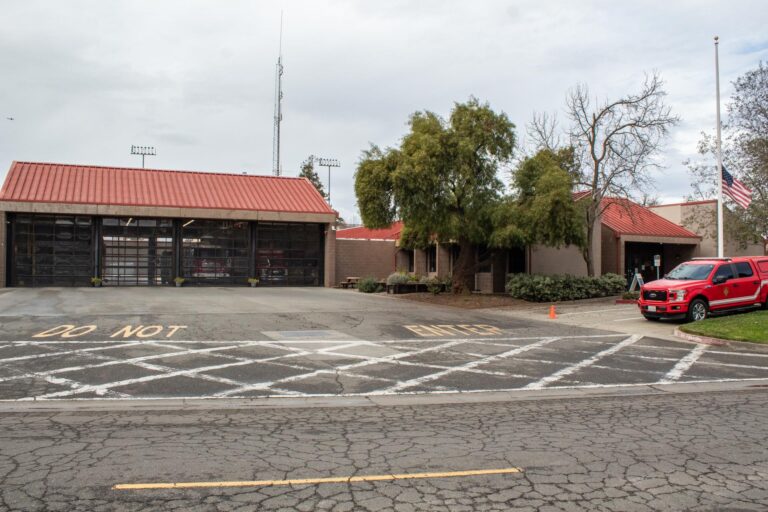
    On May 8, the UC Davis Fire Department responded to a fire in the Solano Park apartment complex, a campus apartment complex located near the Arboretum.

 The fire department was dispatched by the 911 center due to a heat detector activation in one of the apartment units at 11:25 p.m.

    “Upon arrival, UC Davis fire crews were alerted to the possibility of a person still inside the residence and immediately began a search of the apartment,” said Nathan Trauernicht, the UC Davis fire chief. “Firefighters located one person in the apartment who was transported to the hospital. The fire was then brought under control.”    

Trauernicht said that extinguishing the fire was second priority behind searching for the person still inside the apartment. 

    “Once the rescue was complete, the fire was under control within just a few minutes,” Trauernicht said.

    The apartment unit that sustained the fire was housed by graduate student Mohamed Alkaoud and his wife Hissah Almousa.

    “Hissah was in the apartment during the fire,” said Michael Sheehan, the associate vice chancellor for housing, dining and divisional operations. “Tragically, it was announced that Hissah passed away as a result of her injuries.”

    UC Davis said it is working to support Mohamed Alkaoud as much as possible during this difficult time. 

    “Our entire campus community mourns the tragic loss of Hissah and grieves with Mohamed and the residents of Solano Park,” Chancellor Gary May said.

    Residents of the apartment complex were housed on campus and given complimentary access to the dining commons until the complex was cleared for occupancy on May 14.

“We wanted to do everything possible to assist the students and residents that were displaced by this incident,” Sheehan said. “Supporting them was and is a top priority.”

Residents affected by the move and accommodations that they have undergone may file an insurance claim through the university’s insurer or with a private insurance company, according to Sheehan. They may do so if they have renters’ insurance and would like to apply for monetary compensation.

    The investigation regarding the cause of the fire in the Solano Park apartment is being conducted by the California State Fire Marshal’s Office. 

    UC Davis will share the results of the investigation once it is complete. So far, the building’s electrical systems and structure have been examined and cleared. 

    “The California State Fire Marshal’s Office has jurisdiction for fire investigation on all UC campuses,” Trauernicht said. “The investigation is still underway regarding the cause and origin [of the fire at the Solano apartments].” 
Written by: Maddie Duley — campus@theaggie.org

Study analyzes impact of frequent wildfires on California lichen biodiversity

Chaparral shrublands, found all throughout the state, are facing increasingly frequent wildfires that may threaten the native lichen communities

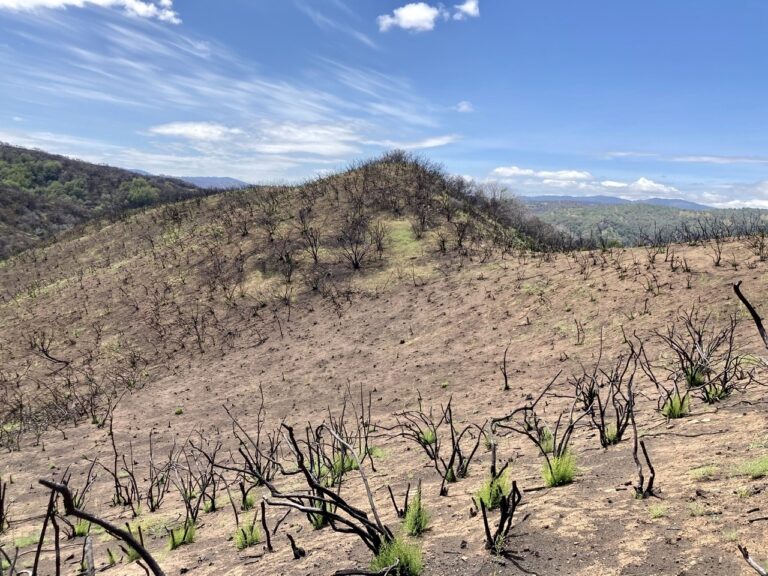
A collaborative study that looked at the impact of wildfires on chaparral ecosystems and long-term lichen recolonization in California was published in the journal Diversity and Distributions on May 10. The paper was co-authored by Alexandra Weill, a fire ecologist and past UC Davis graduate student researcher, Jesse Miller, an ecology lecturer at Stanford University, and John Villella, a lichenologist. 

According to a recent press release from UC Davis, “the study indicates that lichen communities may not receive the window of opportunity they need to return to chaparral shrublands after wildfire.”

Found all across California, chaparral ecosystems are dominated by shrubs rather than trees. Lichens are composite organisms made up of both fungi and algae that are able to grow on the side of these shrubs as well as on rocks and branches, according to Villella. The dense population of California, among other factors, has contributed to increased fire danger in these areas. 

Weill elaborated on the study’s argument about the challenge posed by wildfires. 

“Historically, the forests in the mountains have had sort of these low-intensity fires,” Weill said. “But the chaparral ecosystems, they’re dense, you’ve got these tall shrubs sort of edge-to-edge, and while there historically has been fire there, it was different, not these larger, high-intensity fires. Fires in the chaparral ecosystem occurred about every 45 years.” 

The abstract of the study notes that the majority of chaparral lichen taxa may be lost if fire intervals shorten to 20 years or less, which has already taken place in some parts of California. 

Weill went on to explain how the study began. 

“I was studying fire and I was pretty far into my dissertation research,” Weill said. “I met Jesse when he was a postdoc at UC Davis, and he was like, you know, I’m teaching this class about lichens, you should take it. I knew almost nothing about lichens. I think the extent was that in my college biodiversity class there was like one day where we gathered lichens. It was like, I really should be focusing on my research, but this class seemed cool, so I decided to take it.” 

According to Weill, during the class she worked on a project that was a very small-scale version of the recent study. After the class, Miller asked her if she wanted to apply with him to a grant from the California Lichen Society (CLS) and revamp her project. 

“We’re very grateful to the California Lichen Society for the grant they gave us,” Miller said. “I’m not sure that we would’ve been able to do this study without it.”

As for how Villella got involved, he explained that he has known Miller for quite some time. 

“I met him when he was an undergrad,” Villella said. “We worked together for several years, and we’ve just maintained a friendship since then. We’ve worked on many projects together, many of which involved lichen.”

Miller shared why he believes collaboration to have been of particular importance in this project. 

“I think with fire, it’s this huge challenge we face both as scientists and as a society,” Miller said. “Problems like this are sometimes referred to as ‘wicked problems.’ They have no clear, easy answer. So with wicked problems, I think it’s really important to take sort of a holistic approach, looking at it from all these different viewpoints. So we got input from several experienced experts.”

Villella added his thoughts on how the three co-authors’ unique perspectives made the project work. 

“I’m sort of the lichen expert, and then Jesse did sort of the statistical part, and Allie brought in the fire ecology perspective,” Villella said. “She also came up with the idea.” 

Miller talked about the approach that the team took in their research. 

“We’ve known for a while that lichens aren’t very tolerant of fires, but what we don’t know so much about is how much time it takes for them to grow back after disturbances like fire,” Miller said. “It’s just difficult to do such long-term studies. So we took this approach called a chronosequence approach; instead of waiting a hundred years to see what happens, we just went around and looked at areas of lichens that had burned at different times.” 

According to the study, their team compared lichen communities at sites that burned 3, 13, 22, 30 and 65 years previously, among other old-growth chaparral sites that don’t have a recorded fire in the last century. 

“We were lucky, there were a lot of sites with very different fire history, which is pretty rare in such a small geographic area so it was a really unique opportunity,” Miller said. 

Villella explained why he found this study important, and why there is value in protecting lichen biodiversity. 

“I think that people don’t realize that they’re really important to the ecosystem for a number of reasons,” Villella said. “First, they’re moisture sponges. They act as a filter and a gathering mechanism for moisture, which is really important in these dry areas. They’re also a home for many different vertebrates, and those in turn become food for birds.”

As far as the impact of increased fire frequency and intensity on ecosystems, Miller offered one solution. 

“It might seem like the answer is to try to just stop fires from burning, but it turns out that trying to suppress fires just ends up with more severe fires when they do burn,” Miller said. “Frequent fire keeps fuel down, and makes fires easier to control when they do burn. So funnily enough, the answer might be more prescribed fires.” 

Villella said something similar. 

“Prescribed fire is a really useful tool for managing landscapes, especially in California where there’s been a historic suppression of fire, although that’s starting to change,” Villella said. “Our point was to also be careful to protect some landscape from burning to protect the lichen diversity as a source population for the lichen to recolonize.” 

However, Weills explained that the logistics of using prescribed fires in chaparral ecosystems is slightly more complex than it may first appear. 

“In Southern California in particular, controlled burns are much more complicated than in other places,” Weills said. “In the forests there’s not much debate, but in chaparral there is sort of more debate.”

She went on to explain the reasoning behind this debate.

“The thing is that there’s no lack of fire, fires haven’t really stopped there,” Weill said. “So what do prescribed burns do? Well, maybe if we have a fire when we decide rather than when someone sets one, maybe it’s safer for people, maybe there’s less fuel, maybe we can do it so we’re protecting some of the older, more diverse native chaparral. But to do it frequently enough to reduce the risk, you might be pretty much getting rid of chaparral.”

She elaborated that this doesn’t mean they shouldn’t use prescribed burns, only that doing so will require caution.

“The goal is to strike this balance very carefully,” Weill said. “It’s not just going in and burning it, It’s thinking about, ‘Do we burn some of these areas to protect others?’”

Apart from exploring fire management possibilities, Miller said that the study aimed to bring awareness to ecologically important remnant chaparral patches. 

“If people even know what lichens are, that’s still above average. Most people don’t know what they are at all,” Miller said. “This whole project originated because I was teaching this class at Davis; I think that just having basic natural history education is hugely important.”

Weill cited similar thoughts, mentioning how chaparral ecosystems exist all across California, making them especially relevant to California residents who both walk through them frequently and have a disproportionate effect on the potential for wildfire. 

“These systems are close to so many of us,” Weill said. “It’s really cool. I think me and Jesse both think lichens are awesome. They’re things you can sort of pass by and not appreciate them; they’re such a cool part of nature, but they’re easy to miss. 

In reference to the lichenology class she took, she praised how it’s impacted her.

“I’m not exaggerating when I say it was life-changing,” Weill said. “Once you start learning about lichens, you really start seeing them everywhere.” 

Written by: Sonora Slater — science@theaggie.org

Correction: The original version of this article misspelled Jesse Miller’s name. The article has been updated to correct this error.

UC Davis rocks are hidden all over campus

This rock painting community aims to brighten your day 

As my years at UC Davis come to an end, I finally decided to let others know about my favorite thing about Davis: #UCDavisRocks, a Facebook community that paints rocks and hides them around campus for others to find. Kimberly Pearson, who works in The Arts Administrative Group at UC Davis, and her colleague Martha Garrison started the Facebook page in March 2018. 

    “I had found a couple rocks in my hometown of Esparto and joined their local rock group,” Pearson said via email. “Martha Garrison found some painted rocks in the Arboretum and I thought it would be fun to start a rock group here on campus. The name ‘UC Davis Rocks!’ just seemed to fit.” 

    Pearson found that what makes the UC Davis Rocks community so enjoyable is the encouragement and excitement she receives from individuals who find the rocks and post them online. On the back of each rock, there’s a reminder to post the found stone on the Facebook page. 

    “It has been fun doing group rock painting parties with folks on campus,” Pearson said. “I’ve gotten to know a few of the members of our group personally as well. Everyone has been very supportive and nice.” 

    Anyone is welcome to participate in this community by painting rocks and hiding them in their favorite spots. People are encouraged to keep the rocks or rehide them around campus for others to find. Nothing about this group is limited in its art, as rock designs range from beautiful flowers to uplifting quotes. 

    “[There are] no rules for the group other than spreading kindness,” Pearson said. “I write on the back of my rocks to please share on Facebook and either keep or rehide. Sometimes I will hide a bunch of rocks but not all or very few get posted. I just like to think they are out there making people happy.”

    While some people paint rocks in groups or as a family bonding activity, Pearson likes to paint rocks by herself, using Pinterest pages for inspiration.

    “I’ve always enjoyed art, but I’ve never thought of myself as an artist. I tell everyone that I’m just a good copier,” Pearson said. 

    The Davis community is one of many rock painting communities, all of which aim to spread a little bit of joy in the everyday routine and give someone a smile. Finding rocks is half of the fun; the rest comes from painting them and knowing that someone out there found your little creation on a random day. 

    “I love to paint the rocks. It’s very relaxing and stress reducing,” Pearson said. “I have a section of my kitchen counter set aside with all my art supplies so I can just sit down and paint at any time.” 

    When big holidays roll around, painters roll out the themed rocks that range from Snoopy Valentine’s Day hearts to black cats with witch hats for Halloween. I found a few Valentine’s Day-themed ones a couple of years back as I was on my way back to my dorm.

    “I do love the fall themed rocks I do with leaves, pumpkins, scarecrows and Halloween images,” Pearson said. 

    There have also been instances where people specifically request rocks from Pearson and the group, which she was happy to do.

    “I met one person that was a visiting student here from Brazil living with a host family here in Davis,” Pearson said. “She found a rock I believe and private messaged me about painting some rocks for her host family. I was happy to do so and actually painted some rocks for her to take back to Brazil with her. She was so appreciative and gave me flowers. We are actually friends on Facebook still.”

    Both students and faculty are a part of the Facebook community that holds 984 members, all of whom look for rocks on campus. But the group is more than just a place to freely paint caring messages on stones—it’s also a community that cares about each other and hopes to bring comfort with the messages they write. 

“There was one instance where a person from campus messaged me about painting rainbow rocks for a memorial service for a friend of hers who also had worked on campus that had passed away,” Pearson said. “This person had always loved rainbows and she wanted to be able to hand out a rainbow rock to everyone that attended. We had a rock painting party in her department and invited anyone from the UC Davis Rocks group to come help paint rainbow rocks. We painted over a 100 rocks.”

Written by: Itzelth Gamboa — arts@theaggie.org

Aggie Square offers new way for UC Davis students to experience education

UC Davis is developing a new creative and hands-on learning environment on the Sacramento campus that offers unique quarterly programs for students

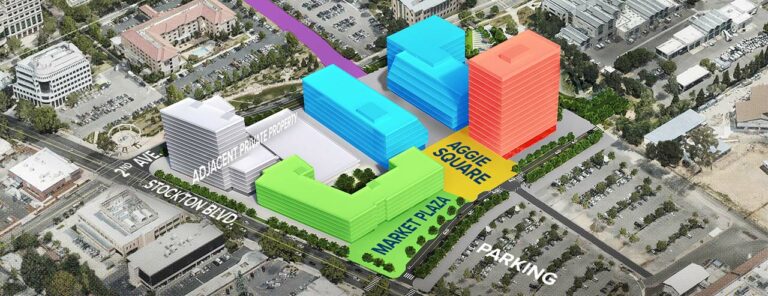
Aggie Square is an innovative, exploratory program on the Sacramento UC Davis Health campus where students can live, work and assist the community in quarter-long programs called “experiences.” Development and planning began in 2017 in a collaboration with Chancellor Gary May and Sacramento Mayor Darrell Steinberg, as stated on the Aggie Square website. Since then, the program has virtually launched its first quarters of the immersive learning experience, Quarter at Aggie Square (QAS).

    The physical campus of Aggie Square has not yet been constructed. The plans to construct a multi-use residential structure and the Alice Waters Institute project were approved May 2021 by UC regents. The first phase of construction is set to begin mid-2021, according to the Aggie Square website. 

“Phase 1 plans [are] comprised of: a lifelong learning office and classroom building; two science and technology buildings; housing, primarily for students; community serving uses; a parking structure and public spaces,” according to the website.

Aggie Square as a whole is a centralized learning environment where students, professors and community members can collaborate and have opportunities to make lasting impacts on the Sacramento community.

“It’s an innovation hub,” said Tanya Perez, the communications lead for Aggie Square. “It is where industry, university and community are supposed to come together and overlap in ways that make all three stronger.”

    The programs for QAS consist of quarterly immersive learning environments where small “cohorts” work closely on topics of current social, community and political issues.

“Studying with QAS was different compared to my regular class experience because of the small cohort size,” said Kyerah Kyles, a third-year community regional development and African American/African studies double major. “There were less than 13 people in our cohort and we all took the same classes together so it really gave us the opportunity to connect with each other since we shared the same joys and challenges.”

Kyles participated in the Transformative Justice Studies experience, but the QAS experience has also provided cohorts in Advancing Health Care Equity and Multilingual Education for California since fall 2020.

    “The Quarter at Aggie Square programs are going to change each quarter,” Perez said. “They do things with the community that are right there surrounding that area.” 

    Located in Sacramento, Aggie Square provides close proximity to government and medical buildings where UC Davis students can participate in hands-on learning.

    “They’re encouraging faculty to come up with something that they would like to teach in an immersive sort of way,” Perez said. “All of your classes would be related to a certain subject for a quarter.”

    Within the set list of classes each quarter, QAS also provides internship and community engagement opportunities

“The ability for students to immediately apply what they’re learning in the classroom to current sociopolitical issues and an internship experience is not new, but it is unique in that their entire Quarter at Aggie Square quarter is dedicated to a central, multi-faceted experience,” said Angela Taylor, the program coordinator for Quarter at Aggie Square, in a blog post.

To stay in line with UC Davis’ environmental goals and policies, efforts have been made to ensure that the new constructions are beneficial to the community as well as environmentally conscious through the holding of community and stakeholder meetings, according to the Aggie Square website. 

The meetings resulted in a Community Benefits Partnership Agreement. Some of the highlights of the agreement are $50 million for affordable housing, jobs for local community members, an annual fund for neighborhood priorities and Broadway and Stockton improvements.

“Aggie Square will meet or exceed LEED Silver by incorporating measures that will result in significant energy savings, construction waste reduction, recycled material use and water conservation,” said Matt Dulcich, the director of environmental planning for the project.

    Ways in which they will achieve this include all electric heating and cooling systems, as well as increasing accessibility by making safer walking and biking paths across campus and easier access to transit lines, according to Dulcich.
Written by: Emily Redman — campus@theaggie.org

Manetti Shrem Museum reopens with new exhibitions

Two new exhibitions are available for visitors to experience after the museum staff’s hard work through the pandemic

The Jan Shrem and Maria Manetti Museum of Art reopened on June 3 with timed tickets. New exhibits such as “Wayne Thiebaud Influencer: A New Generation” and Arnold Joseph Kemp’s exhibition “I would survive. I could survive. I should survive,” have been curated and installed to welcome visitors back.

    “In ‘Wayne Thiebaud Influencer: A New Generation,’ visitors will be able to explore Professor Thiebaud’s career achievement through the works of a new generation of contemporary artists, many of whom are his former students, and who were profoundly influenced by him in a variety of ways,” said Rachel Teagle, the founding director, via email. “Ideas of identity, self-making and self-reflection are explored in Arnold Kemp’s exhibition ‘I would survive. I could survive. I should survive,’ curated by Manetti Shrem Scholar-in-Residence Sampada Aranke. Both exhibits feature works made or reworked during the pandemic, which shows the vitality and promise of painting, even during the most challenging times.”

    The pandemic temporarily closed the museum but the staff continued to work hard to bring art to the public. Through a number of projects that utilized online resources, the Shrem Manetti Museum staff created activities to bring the magic of art to those at home. 

“Within a few weeks of the campus closing, we started Manetti Shrem Museum At Home, a themed weekly newsletter to keep our community connected and engaged with art,” said Randy Roberts, the deputy director, via email. “It featured long-read essays from art scholars and faculty, activities such as a See & Sketch campus walk and also inspired Build it With Brandon, a YouTube tutorial series on crafts made from toilet-paper tubes.”

Their work continued to bring important perspectives and topics to light despite the circumstances.

“We also launched interACT, making our Zoom webinar platform available to amplify BIPOC voices,” Roberts said. “Through this platform, the museum hosted the Black Fall Welcome, Davis Cherry Blossom Festival, and many other important events and programs.”

    In addition to collaborating on online experiences, the staff observed proper protocols to work on the exhibits in preparation for reopening.

    “There were many unknowns that came with the pandemic, and timing was definitely among them,” Roberts said. “However, a subgroup of museum staff began proactively drafting reopening plans and scenarios in late 2020, covering everything from reconfiguring office space to rethinking how to safely accommodate visitors. Installing new exhibits for visitors to see was also a major challenge during lockdown, with museums closed and shipping heavily impacted.”

During the Manetti Shrem Museum Virtual Re-opening Ceremony on May 23, Teagle expressed the importance of the long-awaited reopening. 

“The museum is the community that you have helped us form, and we are very hopeful that before the end of these exhibitions, we will have an opportunity to celebrate together, and that will be the real party, but this is a great start,” Teagle said. “It’s been a big year. There’s been loss, there’s been joy. How lucky we are to have art as part of what heals us as individuals and as a community, and we need you. We need you back in the museum to help us complete our community.”
Written by: Christine Lee— campus@theaggie.org

NRA shows us nonviolent ways guns help us every day

It’s just a fancy candle holder, what’s the big deal?

Guns get a bad rap. After all, it’s people who kill people—with guns. But that last part isn’t important. Because it’s people. Bad people. Terrible people. Maybe even people you know. But definitely not people you know, actually, just other people, who are bad people. The point is, guns aren’t to blame. 

People always ask me, a liberal Californian college student and thus representative of gun owners of the U.S., why do I need so many guns? But that’s a stupid question. Why did you even ask that question?

There are plenty of reasons to own a gun that do not involve murdering someone. Like a paperweight. And that’s the subject of the National Rifle Association’s (NRA) latest campaign. 

It’s called Guns for Good. (I pitched Weapons for Welfare and Sexy Rifles but apparently, they weren’t taking suggestions.) 

Tell me more about guns? Stop rushing me. It’s my article. If you stopped interrupting me, I could get on with this.

Anyway, do you remember after the Cambridge Analytica debacle (excuse my language) when Facebook ran that huge ad campaign like everyone would just forget about what happened and then everyone did seem to sort of forget what happened? It’s like that. For guns. 

Aren’t people more likely to use guns accidentally or to die by suicide than in self-defense? Enough rhetoric. It’s time for some gun appreciation. Gunprecciation, if you will, and you won’t, which is fair enough.

Reusable straw. Back scratcher. Shot glass. (Haha, “shot” glass.) Hockey stick. Guns can do all sorts of things. They can be the best man at your wedding.

So if you see subway poster ads of a Winchester rifle being used as a tulip vase, don’t assume it’s Banksy’s newest era. It’s just the NRA showing us one of the plentiful non-violent ways guns can be used every day. And they’ve got all sorts of catchy taglines.

“Sure, some people use unregulated guns to do some terrible stuff. But others use them to remove the cobwebs in their ceiling corners,” reads a recent NRA Instagram ad. “And that cancels out, we think.” Golden. It’s a masterclass in PR.

After all, what’s there to worry about gun violence when you consider the aesthetic of hanging an ATI Crusader in the nursery? Plus, guns deter criminals. Who would rob people crazy enough to mount a double-barrel shotgun above their two-year-old? (Is this bordering on slander?)

We can all marvel at the utterly unproblematic, pseudo-patriotic American devotion to firearms. 

Written by: Annabel Marshall — almarshall@ucdavis.edu 

Disclaimer: (This article is humor and/or satire, and its content is purely fictional. The story and the names of “sources” are fictionalized.)

A vaccine for chlamydia may be possible, according to UC Davis researchers

A discovery regarding T cells can help the creators of a future vaccine know how to produce the best immune response

    Research at the Center for Immunology and Infectious Disease at UC Davis found that tissue-resident immune cells are not necessary for secondary protection in the female reproductive tract, suggesting that a vaccine can potentially be made against the female reproductive disease chlamydia. The protection is provided through circulating immune memory, which contributes to the potential for a vaccine. 

    A total of 1,808,703 cases of C. trachomatis infections were reported in 2019, making it the most common notifiable condition in the United States that year, according to the Centers for Disease Control and Protection (CDC). The highest rates of chlamydia were reported among adolescents and young adults, with two-thirds of all reported cases being among individuals between the ages of 15-24 in 2019, according to the CDC. 

    The Center for Immunology and Infectious Diseases has a mission to “advance the understanding of immunology and infectious diseases through excellence in research and mentorship of scientists and educators.” Stephen McSorley is the director of the Center for Immunology and Infectious Diseases, a professor of anatomy, physiology, and cell biology and a contributor to this study.

    McSorley has been working on chlamydia for a long time and directed the study as a principal investigator. His role was to talk to the students in his lab about their ideas and give them advice and mentorship along the way while they perform the experimental work. They also discuss the impacts of their findings and publish them together, according to McSorley.

    McSorley’s lab has been working with T cells for the past few years, which controls all the other parts of the immune system such as antibodies and defenses against pathogens. CD4 T cells, a population of T cells, are crucial to preventing chlamydia infections. It is known through the study that mice without CD4 T cells are able to resolve chlamydia infections, but humans need the presence of CD4 T cells that recognize chlamydia to resolve the bacterial infection, according to McSorley.

    “The idea for a vaccine would be to make an army of CD4 T cells that would be able to combat infection, and then you would not get chlamydia,” McSorely said. 

    The specific issue the lab has been dealing with is related to memory. Memory is important for the immune system so that if an individual gets sick again, their immune system is prepared to fight it off. A vaccination is like an artificial way to try to develop memory in the immune system, according to McSorley.

    “Unfortunately, memory is complicated in immunology and it’s broken into different populations of memory cells. It is not clear which populations of memory cells are important for each different infection,” McSorely said.

    A new population of memory cells called tissue resident memory cells was discovered a few years ago. These are cells that scientists think go into your tissues and stay there to protect you against the second infection after you resolve one infection or you have a vaccination. An example of these tissues can exist in the female reproductive tract, according to McSorley.

    Researchers initially thought that the immune system circulates around the body all the time instead of taking residence in the tissues. However, McSorley’s lab determined that it was necessary for the T cells to be resident in the female reproductive tract for the vaccine to work, but getting them to stay is difficult  since it is not well understood how the T cells become resident.

    The study shed some new light on the previous thought process of the lab. Jasmine Labuda is a graduate student in the Department of Anatomy, Physiology, and Cell biology at UC Davis and is a part of the McSorley Lab. Her role in the study consisted of leading the study, designing and performing the experiments, analyzing the data, writing the manuscript and creating the figures of the paper. 

    “The main question of the study was to understand whether lymphocytes that are resident in the issue or that circulate through blood or lymph [systems] are required for protection against chlamydia infection,” Labuda said. “The main way we answered this question was using a technique called parabiosis.”

    The experiment consisted of immunizing one mouse against the infection that would generate both the tissue resident lymphocytes and the circulating lymphocytes and surgically joining that mouse to another mouse that had not been infected. This allowed the circulatory cells to transfer from one mouse to the other. The mouse that had not been infected with chlamydia was challenged with the infection to see if the circulating cells were protective. 

It was found that the circulating cells were indeed protective and that resident T cells were not needed to be immune to the bacterial infection. 

“My overall takeaway from this work is not just related to chlamydia but overall vaccines that protect against sexually transmitted diseases in the female reproductive tract,” Labuda said. “Not all infections that affect a certain tissue are going to have the same vaccine, so it really varies pathogen to pathogen.”

Written by: Francheska Torres — science@theaggie.org