52.4 F
Davis

Davis, California

Tuesday, December 23, 2025
Home Blog Page 255

UC Davis Health launches pediatric Novavax COVID-19 clinical trial

Enrollment is open for participants ages 12-17 in the Novavax COVID-19 clinical trial

UC Davis Health is taking the next step in the fight against COVID-19 by beginning to enroll children ages 12-17 in a clinical trial to test the Novavax COVID-19 vaccine. The trial is currently in Phase 3 clinical trials with the National Institutes of Health (NIH)

    “The Phase 3 study is the largest of the pre-approval clinical trial phases and the goal is to evaluate the effectiveness and safety in the targeted patient population,” explained Maureen Johnson R.N., the senior vice president of consulting resources and operations at Regulatory Pathways Group INC. “Phase 3 is the last clinical trial phase completed before the Sponsor (i.e., pharmaceutical company who is studying the investigational drug or biologic) requests approval from FDA to market their investigational drug/biologic.”

Johnson continued, “The FDA’s decision ultimately hinges on benefit-risk determination, meaning the benefits of the treatment need to outweigh the risks—this is also where comparisons are made to other existing/available treatment options.”

    There are currently three COVID-19 vaccines with an emergency use authorization in the U.S.: the Pfizer/BioNTech, the Moderna and the Johnson & Johnson vaccines. The Pfizer and the Moderna vaccines are both based on novel mRNA technology while the Johnson & Johnson vaccine is based on a modified inactivated adenovirus. Unlike the current emergency-use-authorized COVID-19 vaccines, the Novavax vaccine works slightly differently. 

“This is more of a traditional protein based vaccine, unlike the mRNA vaccines from Pfizer and Moderna, or the DNA vaccine from Johnson & Johnson. The spike protein subunit is made in a moth cell system, then harvested, purified, and combined with a unique adjuvant that enhances the immune response,” said Dr. Dean Blumberg, the chief of pediatric infectious diseases at UC Davis Children’s Hospital, via email. 

      The Novavax trial at UC Davis Health is being run locally by Dr. Stuart Cohen, the chief of the Division of Infectious Diseases and the director of Hospital Epidemiology and Infection Prevention at UC Davis Health. The hospital has been included in the adult Novavax phase III trial since December, but they are only now beginning the pediatric portion of the trial. The pediatric portion of the trial is being run by Dr. Dean Blumberg.

“The pediatric portion of the study is similar to the adult portion,” Blumberg said via email. “Study subjects keep diaries to look for any side effects. Blood is drawn to check the immune response. And swabs are taken when there are symptoms of COVID-19 to look for infection in order to determine efficacy. It’s important to study children because their immune systems are different, and of course they are different sizes from adults. We want to make sure that the vaccine is safe and effective in different age groups, and make sure that the dose is appropriate. For some vaccines smaller doses may be sufficient in children because of their strong immune systems. And with other vaccines larger doses may be needed as their immune systems are relatively naïve compared to adults.”

As explained in an email by Dr. Nicole Glaser, a professor of pediatrics at UC Davis School of Medicine, the physiology of children is fundamentally different than that of adults. 

“As we often say in Pediatrics, ‘children are not small adults,’” Glaser said via email. “Physiology in children differs from adults in several ways, and immune function is one of them. For example, many diseases are either far more severe or far more mild in children than adults. Chicken pox, for example, has minimal symptoms in children but adults can become severely ill. [COVID-19] has different complications in children and can cause a systemic inflammatory syndrome that is not seen in adults. For this reason, vaccine effects might be different in children compared to adults.”

Glaser explained the difference between adult and pediatric clinical trials.

“The structure of the trials is similar but before a trial is approved in children, the investigators generally need to prove a higher anticipated level of safety compared to an adult trial,” Glaser said via email. “Since children cannot consent to a trial on their own, the investigators need to show that there is not a large risk to them.”

Novavax has publicly stated that they expect to file for an emergency use authorization (EUA) for adult patients in the 3rd quarter of this year. As for pediatric patients, Novavax currently hasn’t publicly stated when they anticipate filing for an EUA. However, according to Blumberg, he “would expect filing for emergency use authorization for 12-17 year olds will likely be at the end of the year at the earliest, more likely next year.”

Despite EUAs expected to be filed within the next 12 months, Blumberg noted that the pediatric and the adult Novavax COVID-19 vaccine trials are planned to follow the patients for the two years, until 2023.

“The study participants are followed for 2 years to look at the persistence of protection and the immune response,” Blumberg said via email.

Written by: Justin Weiner — science@theaggie.org
Club Life During the Pandemic—UC Davis Tennis Club

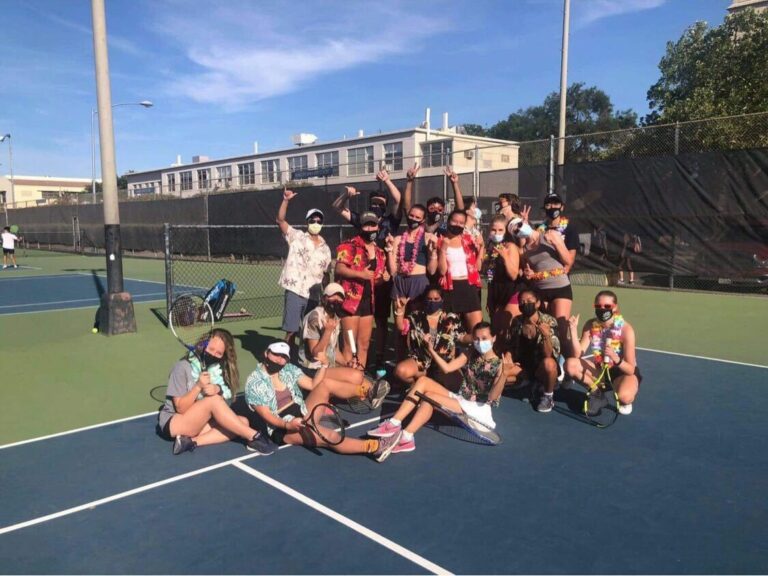
UC Davis tennis club describes activities during COVID-19

As COVID-19 struck and social distancing became the norm, professional sports have taken major hits in both viewership and actual competition since March 2020. To make matters worse, people no longer had the freedom to safely and enthusiastically gather and play sports with social distancing in practice. As the UC Davis Tennis Club learned, it was no different in facing these struggles. 

The UC Davis Tennis Club is home to players of various skill levels and occasionally visits other UC campuses for competitions. The club thinks of its members as family and, pre-COVID, apart from weekly practice sessions, they also spent time with each other often. Like many other UC Davis sport clubs, the tennis club was a channel for people to meet new friends and enjoy a mutually loved sport. COVID-19, however, forced the club to make some changes to its activities that its members less than enjoyed.

“The pandemic initially made club activities less fun because we were separated into groups of nine,” said Chandani Madan, the president of the UC Davis Tennis Club. “Though, later on club activities began to resume in a more normal manner.”

The groups of nine rule made club activities less appealing to its members, as stringent restrictions made participating in entertaining club activities seem tedious. A lot of the experience in clubs is the camaraderie, and removing that by lowering the number of people together among other things was an adjustment that took time. 

“It was harder, and I was less willing to partake in club activities because we had to sign up to reserve a spot to play, since there were limited people allowed to play at a time,” said Sofi Liz, a member of the tennis club and a third-year animal science major. “Because of [COVID-19] we had to cancel practice and hit around. Normally during that time we would be able to meet new people to hit tennis outside of practice and to make friends.”

Besides the groups of nine rule, members were also required to keep their masks on at all times, even during practice. Over time, these masks got a bit annoying and when it was sunny during the day, it made these practices even harder.

“The pandemic inhibited more competitive activities because masks would become stuffy in the heat,” Madan said. “The competitive players played on Sunday mornings making this less of an issue as it was cooler.”

The discomfort of wearing masks didn’t just end with tennis practice, however. Members expressed their concerns about how club activities were less effective for bonding and obtaining social energy from friends. Meeting together and bonding with the club were crucial experiences that make these clubs entertaining. 

“It is now much harder to bond with club members because it is a lot harder to hangout with people after club practices—since we don’t want to hangout with people from different households,” said Yasser Abdul Bagi, the upcoming president of the club for the next school year. “Even during practice, it’s harder to bond with people because everyone is wearing masks, so you don’t really see anyone’s facial expressions.”

“Having to play with masks on makes it harder to breathe and run around the court,” Liz said. 

The future looks much brighter however, as recent trends make the next school year filled with a lot of potential for the club. With more and more people getting vaccinated by the day, the UC Davis Tennis club looks forward to continuing their club activities as is. 

“Future club activities will likely remain as they are right now. We don’t practice in the summer, so heat won’t be as big of an issue when wearing masks. I hope pandemic conditions get better and the mask requirement gets removed,” Madan said. “Social distancing violations never happened, but should a member test positive, the tennis club will follow any guidance provided by sports club and student health. We will cooperate with both to the fullest extent to help in contact tracing.”

COVID-19 certainly placed a lot of obstacles between the club members and their activities. Normalcy was lost this year but its members are now optimistic as things are looking up and they hope to have overcome the hardest times of the pandemic. 

“During the fall when sports clubs were relegated to Zoom, I lost all motivation to be in the tennis club. I had always loved being with my friends in the club, but Zoom made it way different, and not in a fun way,” Bagi said. “Once we got back in person during Winter Quarter, I regained my motivation for the club.”  

Written by: Justin Yu-Hsun Chu — sports@theaggie.org

An exploration into Davis’ funky bathrooms

There’s no denying this school has some weird bathrooms. Let’s talk about it

Some may try to tell you that the icons of UC Davis are things like cows, water towers or bikes, but I argue our most iconic feature is the other-worldly vibes emitted from some of the campus bathrooms. We have it all, from lore to all-green tiling, and it’s high time these destinations throughout UC Davis get the appreciation they deserve. There are entire Reddit threads dedicated to the discussion of our restrooms, and while some may be fear-inducing, they must be embraced for what they are—weird bathrooms that have their own histories that might be best left untouched. 

There’s no discussion of bathrooms at this school without a mention of the highly-rated single-person restrooms in the Spanish mission-style building we know as Hart Hall. Not only do these restrooms give plenty of privacy, but there’s enough extra space in this cement room for anything you might want—if you bring a desk and chair, it would be the perfect place to set up and finish up some missing assignments, or if you have a mat with you, the room is spacious enough for an entire Chloe Ting workout. Some might not have experienced these wonderful spaces yet, and I urge you to run, not walk, into the back entrance of Hart Hall come Fall Quarter 2021. Don’t ask why you’re given enough room to throw a small kickback, just appreciate the serenity and mystery of the Hart Hall bathrooms. 

Then there’s Haring Hall, home to what are likely the most infamous bathrooms on campus. While the women’s restroom here is the standard multi-stalled neutral-toned setup, the random cluster of empty lockers and the rickety-looking bed frame is an entirely different story. While the lockers have no explanation, the qualified historians of Reddit have some theories (in other words, take these with a grain of salt). There are accounts of this bed frame existing in the Haring Hall bathroom for years now, and apparently, there was once even a mattress but that has been gone for some time. One interesting theory claims the bathroom bed was due to the mystery of women’s health decades ago, “they [the men in charge?] thought women would need a bed to rest on during their menstrual cramps,” according to Reddit user “Teacreama.” Regardless of its historical or medical validity, the idea that the women of UC Davis were provided with a resting spot only a few feet away from public bathroom stalls only adds to the lore of the Haring Hall bathrooms. 

Perhaps the most hair-raising restroom discovered (so far) has been the women’s restroom in the basement of Hutchinson. Here, we have what some might call a step up from the steel bed frame; this is of course an old and oddly worn-in-looking cot, complete with a few loose chains on the floor. This room definitely curates its own puzzling aura, and I personally do not understand how anyone could use this restroom for anything other than a stop on a ghost hunt. In regards to this particular basement bathroom, every bone in my body is telling me to not look too much into its history or purpose, and just accept it exists. 

As previously mentioned, another enigmatic restroom is the floor-to-ceiling emerald green tiling in the 24-hour study room of Shields Library (a peculiar place regardless of its “Wizard of Oz”-Esque bathroom). The first time I entered this bathroom I was running on minimal sleep and had just finished perhaps the worst essay of my liberal arts career—I was immediately taken aback. The lavishness of this deep emerald room compared to the fluorescent lighting and grey color scheme of the study room forced me to ask, had I been transported to a nightclub? Weeks later, I revisited this bathroom with a clear mind and got no further in my investigation. Along with the other mysteries of UC Davis restrooms, perhaps it is for the best that the secrets of this bathroom remain unsolved, that might be what makes them all so iconic. 

This is in no way a fully exhaustive list of this school’s eerie and unexplainable restrooms, but hopefully, it gets you excited to go back to campus next fall and take all the vibes in on an extended bathroom break from a yawn-inducing lecture. 

Written by: Angie Cummings — arts@theaggie.org

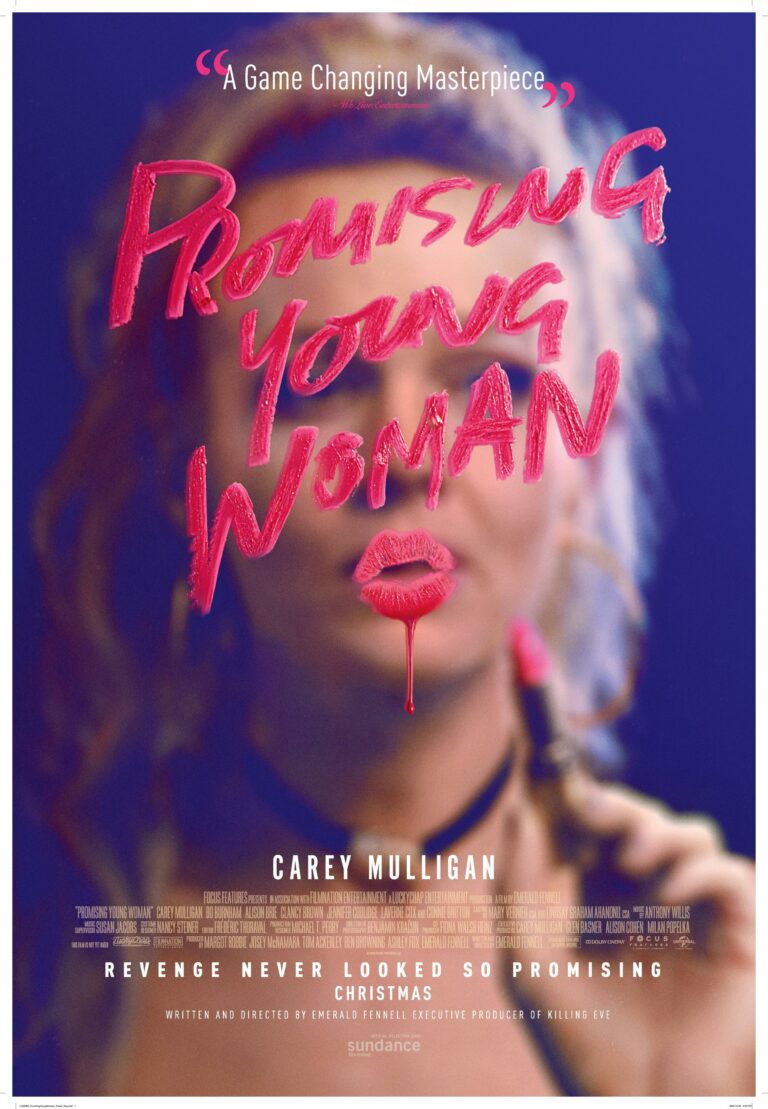
Review: ‘Promising Young Woman’

Emerald Fennell’s debut feature disappoints

“Promising Young Woman” came out on Jan. 25, 2020—more than a year ago. In that time, it’s earned at least $15.2 million and sits at a cool 90% on Rotten Tomatoes, which as the website says, denotes “universal acclaim.”

    Is $15.2 million a lot of money? For an indie film, absolutely. For a blockbuster, absolutely not. But with a budget reported to be under $10 million, the film probably broke even at least. When we put all these facts together, it would appear that “Promising Young Woman” was a completely reasonable success across the board, especially when you take into account that the film came out in one of the worst years for the film industry in the last century, missing the formal beginnings of lockdown in America by a few short weeks.

    What I’m saying is that the average viewer would have no reason to think “Promising Young Woman” to be anything but a modern, competent, revenge thriller—respite from the flashy corporate repetition of superhero movies, maybe even something with some art in it. This is a tall order to ask of American film, especially since the 2008 recession, which shook the industry to its core and all but killed the gambler’s spirit in financiers that had driven occasional innovation since the dawn of the motion picture.

    So many movies today have what might be called “USC Gloss”—a spirit of smooth, flowchart-like polish that feels more like an alien’s imitation of a movie than anything originating in an artistic process. The “USC” part of that term originated in the rich-kid fueled film programs at universities across the nation, whose task appears to be to pump out as many coddled trust-fund alumni as possible. This saturates the industry with people who have the unconditional monetary support necessary to pursue a career as risky as filmmaking, but have no original thought or life experience beyond getting blackout drunk at frat parties five times a week and watching every David Lynch movie.

    So then, knowing that director (and “Killing Eve” showrunner) Emerald Fennell read English at Oxford before becoming a highly successful actress straight out of school, that all her characters are higher educated, stressless psychopaths with unexplained and seemingly unlimited pools of money, that such a thing is not just, in her eyes, the base state of the world—one in which everyone is a handsome, studious medical school graduate—but it is so unquestionably that it doesn’t even need to be acknowledged, does “Promising Young Woman” have said gloss?

    With a film that attempts to examine a certain type of real-world evil so common and despicable as to be ubiquitous among its characters yet simultaneously appears to be ignorant of its (apparently class-based) biases, it’s only a matter of time until the viewer begins to question Fennell’s authority and dissociate from her cruel, sterile world of affluent adult-babies. 

    The core of “Promising Young Woman” is, unfortunately, allegorical. Details of character and visual experience are afterthoughts, conduits designed to aid the spread of a moral message, and as a result have no life of their own. Characters who repeat stock dialogue suddenly burst into the perspective and arguments of the writer, and the stylish, neon pop crust surrounding the movie—complete with gratuitous chapter title cards—is unmistakably purposeless. It feels like a fake movie, like someone has copied down the practices of popular modern filmmakers without examining the why of each, and used them to construct a shabby shell around an existent point that really, really should have just been an essay.

    What is gained by making a didactic, sermonizing movie like this? If the characters don’t matter and the filmmaking doesn’t matter, why should this exist at all? The answer appears to be that Fennell made this film for the express purpose of teaching the audience. There’s no room for exploration or examination of the central ideas, and nobody learns anything by the time the credits roll—it’s about getting one brief idea from the director’s head into the world. There is no love for the process of making movies here and apparently no value in any of its possibilities beyond the most utilitarian and cynical. All of this is meant to say that “Promising Young Woman” is, on some level, insulting. Using film as a stepping-stone to such a simple and inappropriate goal tramples the potential inherent to the medium—an unthinkable opportunity cost.

    Quentin Tarantino, who American filmmakers (including Fennell, if this movie is anything to go by) worship today perhaps more than when he was at his peak, was a high school dropout who worked at a video store for half a decade. As cartoonish and hokey as his movies are, Tarantino is not ignorant of the world he lives in. His decision to retreat into the universe of exploitation films and Fellini and the French New Wave is an informed one. It’s difficult to say the same of Fennell.

    “Promising Young Woman” won the Oscar for Best Original Screenplay this year. Is this really it? The best screenwriting that we have to offer? An experiment in sheep-herding in which the director had to create “mood boards” mid-production to establish that her protagonist had depth because the script didn’t? If so, maybe we should just call it here, wrap it up. End of the show, folks, go home.

    One of the most bizarre things I’ve heard people say about “Promising Young Woman” is that because it addresses such a horrible, so-often-ignored issue in society, it shouldn’t be treated the same as other films. To which the most reasonable response is: wouldn’t such a terrible thing be best handled by, like, a good movie? Carey Mulligan puts forth noticeable talent in her performance, teasing emotion out of a protagonist that seems to have none, and the events come one after another in a sensible enough way, but none of it is enough to recover anything from the film’s shallow conceit. Everyone, but especially those who have actually suffered, deserve something better.

Written by: Jacob Anderson — arts@theaggie.org

How to study for Ochem finals while your country continues to commit war crimes

Can we stop breaking the Geneva Convention for 5 minutes?

In the days following their country’s most recent act of violence and pure unadulterated evil, UC Davis students struggle to focus on their studies. With political unrest and long-stemming systematic discrimination of minorities a constant, for some reason students just can’t be bothered to remember all the weird s*** Carbon does.

“I really enjoy my studies, and UC Davis is a fantastic school for animal sciences, I’m just… between bovine sperm and keeping up to date on the newest atrocity my country is committing, one of them is far more likely to keep me up at night.”

I must admit, as a professional humorist journalist, it’s truly disheartening to hear how much of a toll it takes on students like myself everyday. Who knew that the feeling that you’ll never make meaningful political change in a government that will continue to exploit its people, violate human rights and kill innocent people all around the globe for oil would be a detriment to students?

When asked about the phenomenon, leading UC Davis psychology professors said this: 

“We’ve done a lot of research on the topic and we’ve found quite the result. None of these students are experiencing any psychological ailments. We found that a recent, new strain of water bears had escaped into the school water supply and was making people sad. Now that we’ve filled the water with forty times the amount of fluoride as usual, things should return to normal soon.”

When asked how this relates to psychology and how exactly water bears can make people sad, they continued with: 

“Well we don’t know. We aren’t zoologists. But it seems far more likely than the possibility of students who move from all over the world meeting and interacting with new people from differing backgrounds, developing relationships, learning about new cultures and bettering themselves as people while also studying and researching the sciences and arts for the good of humanity for them to not only be ignored and disrespected by older generations, but  to have those currently in power go against everything they believe in, regardless of party, and hurt innocent people for malicious reasons because over the course of history they’ve established a system that always works out in favor of the rich and the majority so that even though we were told that college was our only option and if we didn’t go it was the ultimate sin to be unemployed and receive help from your family or we would die in a ditch somewhere after being drowned in debt because jobs now require a master’s degree, 8 years of experience and a letter from the current president saying you’re “pretty neat” for you to even be considered for a job that pays less than minimum wage with no benefits because companies destroyed the concept of worker’s rights and unions by bribing their way through our government system while also continuing to take trillions of tax dollars through government bailouts and laying off people who were barely making enough to survive, who are then forced to apply for an unemployment system that doesn’t exist because the majority realized it could gaslight, gate keep, girlboss its way into stealing every penny that goes into social services and education because no one cares and the less educated the people are the easier they are to manipulate, while on top of that social media apps that are worth more and are stronger than most countries make trillions of dollars off of the continued misinformation and couldn’t care less about the consequences of their actions, the world continues to hate the current generation of students because they got educated like the world told them to and now they want change but know they have no chance of ever having it before the point of no return…

…But nah, we think it’s these black bears we found bathing in the water tower that made all our students sad.”

Written by: Ian Cosner — iacosner@ucdavis.edu 

Disclaimer: (This article is humor and/or satire, and its content is purely fictional. The story and or names of “sources” are fictionalized.)

America needs to reinvest in pro cycling

We need to move on from Lance Armstrong 

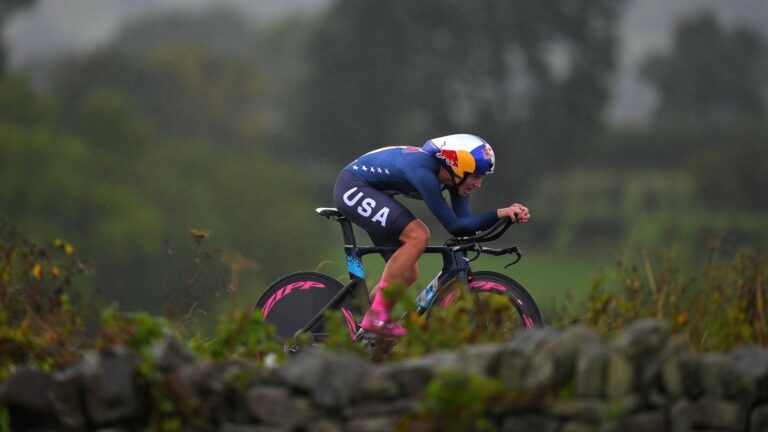
Professional cycling is an incredible sport. There is something about watching  riders push themselves to their absolute limit that never gets old. As one of the most accessible and relatable sports in the Pantheon of athletics, you are missing out if you don’t give professional cycling another chance. Although it is not as popular as it should be in America, I recommend you get back on the wild ride that is cycling—trust me, you don’t want to miss it. With races and personalities of all types, there is something in the professional cycling peloton for everyone.

The sport has changed dramatically since Lance Armstrong and his U.S. Postal Service days almost 15 years ago. Most importantly, the steroid era of cycling is over. The days where riders had to take performance-enhancing drugs (PEDs) to even keep up with the pro peloton are long gone. Now cycling has extremely stringent rules on using these drugs and enough testing for them that they have largely disappeared from the minds of most cyclists and cycling fans. The days of the steroid era led by American “legend” Lance Armstrong are over for good and the users have gotten their titles struck from the record. All seven titles won by Lance Armstrong have been stripped—just like his reputation. What is commonly referred to as the “Dark Era” of cycling is over, making cycling a safe sport to come back to once again.

Gone are the days where riders are able to stay competitive into their late 30s with the lone exception of Alejandro Valverde. Tadej Pogacar, the most recent winner of the Tour De France (TdF), is the second-youngest rider to ever pull out a TdF win behind Henri Cornet from 1904. Because of our constant leaps forward in training, young riders are taking over the world and, starting last year, have become the biggest stars in the sport, ushering cycling into a Golden Age.

The technology used in cycling for training and racing is at an all-time high, and it is helping current riders break all the old records in cycling. Instead of PEDs, today all the new hype is about “aero.” Aerodynamics happens to be extremely important in a world all about traveling over 30 miles-per-hour outside with only your legs as power. So important that current riders undergo literal wind-tunnel tests to gauge how “aero” they are and correct their form to better face the wind. Just ten years ago, only the best riders in the sport could even afford tests like the ones every rider takes today. 

The actual gear used by riders is also the best it’s ever been. I swear the bikes they use now are more expensive than my current car, and a new best form of brakes comes out every other year. In fact, bicycles have gotten so light that the governing body, Union Cycliste Internationale (UCI), instituted a minimum bike weight (6.8kg/15lbs) for safety reasons. People are coming up with new ways to be more aerodynamic every day with things like the “supertuck”, so much so that the UCI is starting to ban “aero” strategies due to safety reasons. Our current cyclists are going “too fast” even with best-in-class safety equipment. 

If you don’t fit in with the tech nerds, you can hear the salt flow from current cycling “boomers” all the time. Cycling has reached its peak of older riders stating things like “I’m riding just as well as I’ve ever been, just now I’m losing,” or “I’ve been riding better than when I won five years ago, but now I’m not even on the podium.” Listen to the current pros or major cycling figures complain about how cycling was back in their primes in the same way MLB and NFL influencers talk about the “good old days.”

The peloton is the fastest it’s ever been and the media around it is better than ever. Spectators no longer have to slog through the first 80 miles of a race to get to the good part. If that’s not your forte, just watch the 5-minute highlights of the races with all the best moments and watch the interviews where the riders scream in celebration and cry happy tears at the finish line. I am personally partial to the around 30-minute extended race highlight videos, but there is something for everyone. In addition, teams and riders have been putting out more content than ever before with teams like EF-Nippo along with riders like Chris Froome and Alex Dowsett teaching the world about a great sport.

As Americans, we have been out of the scene for a while, so here are the current stars and teams to keep an eye on. The only American team in the World Tour peloton right now is Education-First Nippo. They have bright pink jerseys and are led by the lovable Hugh Carthy and Magnus Cort Nielson. They also have a YouTube channel with some interesting videos, along with collaborations with super cool brands like Rapha. 

The current American hopefuls are Sepp Kuss, Brandon McNulty and Joe Dombrowski. Sepp Kuss from Colorado is a young top-tier climber on a really solid team who could be the next big star, Dombrowski is a peloton mainstay who got his first stage win in a World Tour in this year’s Giro d’Italia, while Brandon McNulty is a young rider with large goals. Kuss currently rides on Team Jumbo-Visma as a domestique in support of Tour de France favorite Primoz Roglic, while the duo of Dombrowski and McNulty are steady contributors to the team United Arab Emirates.

The pro-peloton is blooming and has been faster than ever since its return after COVID-19, so it’s time to put the Lance Armstrong debacle behind us and enjoy cycling for the sport it is. Trust me—you won’t regret it.

Written by: Alex Motawi — almotawi@ucdavis.edu 

Disclaimer: The views and opinions expressed by individual columnists belong to the columnists alone and do not necessarily indicate the views and opinions held by The California Aggie.

Instagram for Kids is both disastrous and inevitable

Falling into social media is unavoidable, but we also have the power to change it 

No one asked for it, but Mark Zuckerberg is here to deliver anyway. Zuckerberg’s announcement to build an “Instagram for Kids” is faced with backlash from 150,000 activists and parents, as well as 40 state attorney generals. Instagram for Kids is created with two goals in mind, according to Vishal Shah, the app’s vice president of product: increasing safety for teenagers and building a safe version of the app for users under 13. 

    However, activists allege that Instagram is using children as “pawns in its war with TikTok for market share.” Parents also argue that pushing Instagram onto kids—even a “kid friendly” version—only serves to expose kids to the toxicity of the app, from the “relentless fear of missing out” to the “never-ending focus on appearance.”

    Meanwhile, state attorney generals cite Facebook’s previous failures to protect kids on their platform, such as Facebook’s Messenger Kids app that allowed children to bypass parental restrictions and chat with strangers due to a design flaw. 

    More so, Instagram for Kids fails to acknowledge a more sinister reality: that an app filled with kids and only kids becomes an accessible paradise for child predators. Instagram for Kids will never accomplish what it tries to create. And while I cannot ascertain its exact motivations, it is obvious that this app comes with more shortcomings than it can—or care to—foresee.

    Instagram for Kids is short-sighted in trying to quarantine kids under 13 from the toxic ideals of its main app. What happens when these kids turn 14 and “graduate” to the main app? If anything, more focus should be placed on reforming the main app to be safer for kids.

As someone close in age to the target audience of Instagram for Kids, there is no appeal in joining a sanitized app when it is so easy to circumnavigate age restrictions on the real deal and secret accounts are easier to hide as kids get more tech-savvy. 

I got my first (carefully monitored) Facebook account at 11 to play games on it, and I joined Instagram in sixth grade. Between the time I was born—2002—to the creation of Instagram in 2010, I spent eight years unaware of an app that would come to hold a lot of power in my life, whether I liked it or not. To find someone completely off the social media grid is a rarity. Shameless as it is, yes I do care about my followers-to-following ratio and how many likes on a picture I get, and I have found validation from the app.

And, for the next generation after me—the very generation that Instagram for Kids is targeting—I can only imagine how much more pronounced these effects will be, to be born into an age of social media and not know of a time without it. Activists, parents and politicians are right to call out Instagram for Kids. However, there is an inevitability that comes with social media that we need to accept.

Instagram for Kids is not a gateway into the hazards of social media, especially for a generation that does not know a time without it. As a member of Generation Z, Instagram was created in 2010, and I was still able to distinguish between a time where it was not a “necessity” for me to document every fun moment of my life onto a square grid. For Generation Alpha that was born into the Instagram era, I imagine it is hard, almost impossible, to escape from social media’s sphere of influence.

Accepting that social media is inevitable allows us to redefine our approaches in combating the more toxic aspects of Instagram culture. Instagram is an app that changes within itself constantly. The creators of Instagram, in their first-ever Instagram post, break all the “unwritten rules” we see today on Instagram. Instagram co-founder Mike Krieger’s shot of a marina, from its tilted angle to the somber Instagram filter and lack of caption betrays the typical Instagram shot you would find today, where photos are curated rather than spontaneous. 

If the original intent of Instagram can escape the people that created it, there is a degree of malleability to the app. However, the persistent curated, fear-of-missing-out culture Instagram has created is reflective of our own priorities in the current digital landscape. Movements such as “Make Instagram Casual Again,” moving toward its original goal of uncurated spontaneity, become aestheticized because although we are posting different pictures on the ‘gram, our priorities still remain the same.

Choosing to not participate in social media is an acknowledgement of its influence—and this comes with consequences. During the pandemic, social media played a big role in forming connections in college, from using Facebook groups to find roommates to Discord for classes to Instagram and Snapchat for group chats. You can tether yourself away from social media, but you run the risk of shutting yourself out from a world that is already dependent on it.

Given the interconnectedness of social media and our lives, we need to redefine social media to align with our individual motivations—are we able to break the status quo? Are we able to use social media in a meaningful way?  Social media may be inevitable, and the pressures of social media will continue, but more thoughtful use of social media will not be changed by a ploy from big tech companies, nor can it be changed by avoiding it altogether. 

Written by: Renee Wang — reswang@ucdavis.edu 

Disclaimer: The views and opinions expressed by individual columnists belong to the columnists alone and do not necessarily indicate the views and opinions held by The California Aggie.

Yolo County residents reflect on Asian American and Pacific Islander Heritage Month

Resolution that condemns anti-Asian racism passes in over ten local entities

The month of May was Asian American and Pacific Islander (AAPI) Heritage Month. Its official website explains that the month honors “the generations of Asian and Pacific Islanders who have enriched America’s history and are instrumental in its future success.”

    Manager of downtown Davis business Kobe Mini Mart Thomas Koh described how his experience operating a small business stocked with Asian foods and merchandise during the pandemic has generally been positive. 

    “Davis is a small town, but it is an educated town,” Koh said. “People are more liberal and more relaxed, and they know what’s going on.”

    Koh further explained that even before the pandemic, he experienced a few racist comments on occasion, but nothing as extreme as the violence recently seen in the news. 

    “There were a few verbal things here and there,” Koh said. “It is easy to write it off. Other than that, there’s nothing much.”

Aileen Yang, a third-year design major, who is also of Asian descent, explained the importance of AAPI Heritage Month.

“It’s important to acknowledge and recognize the struggles that Asian Americans and Pacific Islanders have gone through,” Yang said. “The model minority myth makes it seem like there are no struggles, but that’s not true at all.”

    Koh commended the city of Davis for its support of Asian businesses during the pandemic. 

“I think Davis is a very, very good town,” Koh said. “It’s amazing. People are so supportive. I think there are more people who are supportive than people who are racist.”

Yang emphasized the importance of supporting small Asian-owned businesses in Davis. 

“A lot of them are family-owned and are directly influenced by the people who come, and their earnings from that,” Yang said. “They’re not large franchises, and customers are helping out people’s livelihoods.”

Koh emphasized the importance of community support during the pandemic. 

“The community is really nice and I’m very grateful that Davis is such a diverse community,” Koh said. “People are very supportive even in this time of separation.” 

Lisa Yep Salinas, a Yolo County resident and survivor of multiple anti-Asian racist incidents, explained how she was inspired by the memorandum condemning anti-Asian racism recently released by President Joe Biden. She described her own experiences with anti-Asian racism since the pandemic began.

These incidents occurred at local grocery stores or in their parking lots, in which the agitators blamed her for COVID-19, swore at her, used racial slurs and even committed physical assault with a shopping cart. 

“My experience is just the tip of the iceberg,” Salinas said. “Asian Americans have been suffering big time.”

Salinas described the role she played in the passing of a resolution that condemns anti-Asian violence in numerous local entities including, but not limited to, the Yolo County Board of Supervisors, Yolo County Board of Education, Yuba Community College Board of Trustees, the City Councils of Davis, West Sacramento, Winters and Woodland and the Public School Board Trustees of Davis, West Sacramento and Woodland. The resolution was also passed in Dublin, Irvine, Elk Grove, Roseville, Sacramento and the Sacramento County Board of Education.

    “It wasn’t about me,” Salinas said. “It was about letting other people who have been brutalized know that they are not alone. This is happening to other people.”

    Salinas described her dream of eliminating not just anti-Asian racism and violence but all targeted violence. 

    “My dream goal would be that there is no more anti-Asian violence and no violence towards any specific race or people,” Salinas said. “If we’re going to dream, let’s dream big. Let’s just get rid of racism and violence and hate.”

Salinas noted her involvement in a national rally called United Against Hate, which took place on May 15 in 14 different cities. A booth representing this event was held at the Davis Farmers Market on that day as well. She commented on the importance of education and patience in addressing and unlearning racism. 

“We can all agree that this racist violence and hate is wrong,” Salinas said. “I appreciate that people have gone out of their way to learn more about AAPI history and culture and what’s going on. If we can all be patient with each other and help each other—because there’s been so much trauma—we need to unlearn things and learn more from each other.”

Written By: Jelena Lapuz — city@theaggie.org

Be kind to yourself and others

The Editorial Board encourages you to show compassion and kindness toward all people, including yourself, and especially others struggling with their mental health

Any student can schedule individual counselling sessions with the Student Health and Wellness Center by calling 1(530)752-0871. The phone number for the 24/7 National Suicide Prevention Lifeline is 1(800)273-8255 or text RELATE to 74174 to confidentially chat with a Crisis Counselor. Speak with a trained counselor, available 24/7, through The Trevor Project at 1(866)488-7386. Yolo County’s 24-hour crisis line is 1(530)756-5000.

    As Mental Health Awareness Month comes to a close, the Editorial Board wants to acknowledge the many students currently struggling with their mental health. With exams to take, degree requirements to meet, bills to pay and internships to secure, college is an undoubtedly stressful time. According to surveys from the American College Health Association in 2018 and 2019, 60% of college students said they had experienced “overwhelming anxiety” within the past year and 40% of students experienced severe depression that impacted their normal functioning in the same time frame.

    On top of the normal stressors of student life, the pandemic has placed an even greater strain on young people. Throughout the COVID-19 pandemic, reported symptoms of anxiety and depression have increased for all age groups, but the trend has been more pronounced for young people. According to a study from the Centers for Disease Control, young adults experienced the largest increases in unmet mental health needs and symptoms of anxiety or depression between August 2020 and February 2021. 

During these challenging times, it is important to be kind to yourself. To mitigate burnout, establish good study habits that allow you to take breaks and practice self care. Some forms of self care that the Editorial Board recommends are: taking walks through the Arboretum, petting the Tercero cows, hanging out with friends safely, taking bubble baths or playing a quick game of pickleball. 

In addition to practicing self care, reaching out for support from those around you, such as friends and family, can help to improve mental health. Speaking with friends in similar situations can help individuals feel less alone. Friendships can impact people’s health and wellbeing on a biological level, as adults with strong social support experience a reduced risk of depression and high blood pressure. 

Speaking with peers or family members, however, is not always enough to help individuals who struggle with mental health concerns. Talk therapy with psychiatrists, psychologists and therapists can help individuals identify stressors in their life and develop strategies to manage their symptoms. Of the people who participate in talk therapy, 75% experience some kind of benefit, according to the American Psychological Association.

While talk therapy provides many benefits, its high cost makes it inaccessible for many individuals. The average price of talk therapy runs between $65 per hour to $250 or more. With many students unable to afford private therapists, UC Davis must extend the reach of their free mental health resources. Although UC Davis ranks highly in mental health awareness, their current counselor availability is unable to adequately meet student demand. The UC Davis Mental Health Initiative, among other student-run groups, encourages mental health discourse and provides mental health resources in areas where the university is lacking. 

    As students, we can illustrate compassion toward others to help navigate the challenges of college life amidst a pandemic. Small acts of kindness, such as opening the door for someone, saying thank you or even just smiling can change someone’s day. 

Being kind toward others will also benefit your own happiness. People who receive acts of kindness become happier as a result, however, those who deliver the acts of kindness benefit even more. In one study, participants who delivered acts of kindness experienced increased happiness, boosts in life and job satisfaction and decreased depression. Another study showed that engaging in prosocial behaviors, actions that have the intent of benefiting others, mitigates the negative effects of stress.

    To benefit your own mental health and the happiness of others, it pays to be kind—both to yourself and to others. It’s hard to regret treating others with the kindness and grace you want yourself. 

Written by: The Editorial Board

Police logs

 Who’s setting off bottle rockets? It’s not even July!

May 8

“Respondent can hear ‘large’ dog loose in the area—no visual, respondent thinks it’s big by the sound of its barking.”

May 11

“Driving ‘squirrly’ into the bike lanes and erratic speeds.”

“Several juveniles on the roof running around.”

May 15

“Respondent saw subject using a hatchet to chop at a tree.”

“Party with bonfire.”

May 16

“Complaint of bottle rockets heard going off in the Greenbelt area behind residences.”

May 17

“10 loud subjects in backyard. Loud music. Subjects throwing bottles against fence.”

May 18

“Doing donuts in intersection.”

“Drums heard in area.”

Senate Bill #97 passed at May 20 ASUCD Senate Meeting

ASUCD senators voted to establish the Herbicide Free Committee (HFC) as a permanent committee under ASUCD

On Thursday, May 20, the ASUCD Senate meeting was called to order at 6:10 p.m. by Internal Vice President Emily Barneond. 

Senator Maahum Shahab, Tenzin Youedon, Michael Navarro and Annoushqa Bobde were all absent.

Adrian Lopez, the senior director of government relations, gave a presentation to showcase what the Government and Community Relations unit at UC Davis has been working on. 

“The ultimate goal is to be able to secure positive legislation policy change for the university and also to be able to secure state resources and federal resources,” Lopez said.

Lopez presented a budget overview of the campus in which $15 million was allocated for student basic needs as well as $1.5 million allocated for immigrant legal services.

Another key component of the budget was the $4 billion affordable housing grant program.

Next on the agenda was the Bike Barn quarterly report presented by the business manager, Clara Ginnell.

The Bike Barn reopened during July 2020 and has remained open ever since.

Ginnell explained that bike sales have been fairly consistent, making up 83% of the annual budget.

As for bike rentals, Ginnell explained that the Bike Barn has exceeded budget expectations.

 “We’ve seen an influx of rentals in the past couple of months as families and prospective new students come through to tour campus,” Ginnell said.

In preparation for the upcoming year, the Bike Barn recently went through a hiring process to aid in the transition of the next generation of Bike Barn employees. 

The former generation includes five senior employees who are set to graduate this spring.  

The meeting then moved into the Entertainment Council’s quarterly report presented by unit director Galit Sarai Hara-Salzberg. 

Hara-Salzberg explained that the Entertainment Council is looking to grow its relationship with the Mondavi Center.

“We want to give students more of a reference that the Mondavi Center can be a student space and plan on doing quarterly movie nights at the Mondavi in partnership with KDVS,” Hara-Salzberg said.

For the Entertainment Council’s largest event, over 600 students attended the “Come Hang with Phoebe Bridgers” event hosted on Thursday, Feb. 25

Looking forward, Hara-Salzberg mentioned the possibility of holding Sunset Fest in person for the upcoming school year.

Senator Kristin Mifsud questioned if there were any preliminary plans for Sunset Fest to which Hara-Salzberg replied, “We’re still trying to figure out the logistics, however, it has been accounted for in our budget.”

Commission Chair of the Environmental Policy and Planning Commission (EPPC) Sydney Cliff introduced and confirmed new commissioners to the EPPC.

“These commissioners are all very motivated and passionate about improving sustainability, both on campus and within the larger community,” Cliff said. 

Senator Lauren Smith motioned the meeting into confirmation of the EPPC commissioners. 

Barneond then pushed the meeting into Students Sustainability Career Fair (SSCF) Committee confirmations.

The chair of SSCF, Julia Pano, introduced the soon-to-be confirmed SSCF committee members. 

Senator Kabir Sahni made a motion to confirm Alana Webre, a third-year environmental policy and planning major, as the new chair of SSCF.

Sahni then made a motion to confirm the committee nominees as SSCF members.

Chair of the Transfer, Reentry and Veterans Committee (TRVC) Tariq Azim presented the committee’s quarterly report.

On Monday, May 3, the TRVC held a “Fall Planning Listening Session” which discussed issues affecting all students with an emphasis on transfer students.  

“Right now, freshmen and transfers have the exact same orientation which is useless for transfer students who already have a taste of the college experience,” Azim said.

For future outreach, Azim talked about TRVC collaborating with the Aggie Mentors Committee (AMC) to increase the number of transfer and reentry student mentors and mentees.

TRVC is set to be dissolved as Constitutional Amendment #70 was passed to create an ASUCD Transfer Student Representative (TSR) in the ASUCD Executive Branch.

Chairperson Julia Camilleri presented the quarterly report for the Sexual Assault Awareness and Advocacy Committee (SAAAC).

SAAAC is working to amend the existing Chapter 20 bylaw, which states ASUCD elected officials and ex-officio members receive training from the Center for Advocacy, Resources and Education (CARE). 

Camilleri said that, in reality, the training does not exist and “SAAAC is working to amend the bylaw right now to make sure it is sustainable and more importantly, that it is enforced.”

Education efforts throughout April, Sexual Assault Awareness Month, included the discussion of how sexual assault should be framed as a violent act and not a sexual act.

The last major project that the SAAAC is tackling includes identifying the lack of emergency blue lights on campus, especially with the City of Davis being poorly lit in general.

Co-chairs Arron Wright and Wanzhu Zheng presented the STEM committee quarterly report.

The interdisciplinary STEM panel is a project that the STEM committee is working on to motivate students to branch out and explore disciplines outside of their major.

“Steps that we’ve been taking include emailing professors with different research interests compared to the courses that they are currently teaching,” Zheng said.

Citlali Plaza, the unit director of the Housing Advising for Undergraduate Students (HAUS), presented HAUS’ quarterly report.

“We’ve had a lot of great meetings with different communities on campus as well as campus partners to assess the needs of certain student populations,” Plaza said. 

HAUS is continuing to work on posting information about move in and move out tips and has also sent out a survey to get an updated count of how many apartments in Davis have vacancies for the fall.

Barneond moved the meeting into public discussion, during which there were no comments. 

Senator Lauren Smith introduced SB #97, which would establish the Herbicide Free Committee (HFC) as a permanent committee under ASUCD as opposed to a special committee that automatically dissolves after one calendar year. 

During the following discussion, Sahni voiced concern about the bill and suggested that HFC exist under EPPC as a task force instead.

“I truly do not see a value in reviving a committee with two active members into a permanent committee of the ASUCD Senate,” Sahni said.

In response, Mifsud questioned Sahni’s argument to the bill.

“This bill seems very much in tune to the same Fair Trade Committee bill that was passed last week without any problems, and shares the same exact purposes that would ensure campus officials follow through with their promises,” Mifsud said. 

Smith voiced similar sentiments. 

“HFC’s purpose deserves to last longer than just one year, and I think ASUCD owes that to them and to our campus,” Smith said.

Senator Amanjot Singh Gandhoke made a motion to divide the house. 

Barneond motioned for a roll call to see who would vote in the affirmative to pass SB #97, to which six senators voted yes, 1 voted no and 1 abstained.

The responses given for this roll call vote to pass SB #97 are completely non-binding.

As a previous EPPC Chairperson, Hunter Ottman gave a historical rundown on why HFC was established as a committee. 

“HFC is an initiative that was started in order to get the UC system to limit and/or remove their usage of certain herbicides on [the] UC Davis campus,” Ottman said. 

After Ottman’s speech, Sahni clarified that he would be voting yes on SB #97.

Senate Bill #97 passed unanimously.

Barneond adjourned the meeting at 9:50 p.m.

Written by: Nicholas Murphy — campus@theaggie.org

Books and TV shows that celebrate Asian American and Pacific Islander (AAPI) heritage

Members of the AAPI community share their recommendations of media that share AAPI stories

In a continued effort to celebrate Asian American and Pacific Islander (AAPI) culture, community members have compiled their recommendations of books and TV shows created by and about AAPI individuals.

“The Making of Asian America” by Erika Lee

Trisha Talla, a second-year biochemistry and molecular biology double major and the community service coordinator for the Filipinx Association for Health Careers (FAHC), recommended this account of Asian American history. It details how generations of Asian immigrants and their descendants have impacted Asian American life, from the arrival of the first Asians in the U.S. to the present.

“I highly recommend reading this book, as Lee examines the diverse backgrounds of a bunch of Asian Americans, including Chinese, Japanese, Korean and other  ancestral families,” Talla said. “She also talks about the different experiences, obstacles and types of oppression that they face in the United States.”

“The Ocean in the School: Pacific Islander Students Transforming Their University” by Rick Bonus

According to Katherine Parpana, the interim director of the API Retention Initiative, this book is a collection of stories about the experiences of Native Hawaiian and Pacific Islander students attending university.

“This is an important record of stories if we are to understand the resources our scholars need in order to thrive in school,” Parpana said.

“The Spirit Catches You and You Fall Down” by Anne Fadiman

This true story takes a look at Western medicine through the lens of Hmong culture as it relates to childbirth and postpartum care. A family’s daughter, Lia Lee, is diagnosed with epilepsy, and the Hmong and American cultures handle this part of her identity differently.

“I think this is so relevant to many of our experiences, as we grapple with both our Asian [or] Pasifika cultures and identities in addition to our American ones, especially in times of great difficulty,” Parpana said.

“The Spirit Catches You and You Fall Down” was also one of the UC Davis Campus Community Book Project (CCBP) books. The author, Lee’s sister and Lee’s former doctors came to speak at a CCBP event. Karpana noted that this book is also significant because of its setting in Merced, which is one of few ethnic enclaves of Hmong folks.

“Dear America, Notes of an Undocumented Citizen” by Jose Antonio Vargas

This memoir details Antonio Vargas’s experience as an undocumented immigrant who came to the U.S. from the Philippines at the age of 12. Parpana noted the relevance of this story, as the Asian undocumented population is 1.7 million, according to a 2015 Center for Migration Studies survey, with California having the largest population.

“At its core, this is a story about keeping a family together,” Parpana said. “I believe so many of us strive to do this in so many ways and sometimes we must grapple with barriers like government paperwork in order to simply get by.”

“Joy Luck Club” by Amy Tan

This novel focuses on four Chinese immigrant mothers and their four American-born daughters in San Francisco. The mothers meet to play Mahjong and form a group called the Joy Luck Club. Structured similar to a mahjong game, the book has four parts divided into four sections.

Parpana stated that “Joy Luck Club” is one of the only books centering around Asian Americans that was offered in K-12 education. It was also the first major film centering around Asian Americans, released in 1993, since the 1960s and not again until 2020 with “Minari.” 

“This book is important in understanding the lack of diversity in film and media in general and our ability to tell our own stories,” Parpana said. “In this case, stories about pain, what it means to heal and how we pass those lessons down to our children as a form of cultural wealth.”

“This Bridge Called My Back: Writings” by Radical Women of Color 

“This Bridge Called My Back” is a collection of poems, essays, art and other written works by women of color. It features AAPI women artists, educators, poets and practitioners. The book emphasizes the way multiple identities intersect and impact the experiences of women of color.

“I selected this book because of its intersectional and feminist approach to deconstructing the inequities women face, including Pacific Islander and Asian women.” Parpana said.

“Gameboys” (2020), dir. Ivan Andrew Payawal

Elijah Punzal, an intern for the Bulosan Center for Filipino Studies, recommended the web series “Gameboys,” which is available on both YouTube and Netflix. The series takes place in the Philippines during the COVID-19 pandemic and follows the growing relationship of two gamer boys, Cairo and Gavreel.

“I have never had the opportunity to really watch queer work that is from the Philippines,” Punzal said. “I think once I was able to find it, remove my sense of cultural displacement and shame and fully enjoy it, I found it super meaningful.”

“Gaya Sa Pelikula” (2020), dir. Jaime Habac Jr. 

This web series follows the story of Karl who is forced to live on his own and struggles to become financially independent. He seeks help from his neighbor to move in with him to pay his monthly rent, and the two develop feelings for each other.

“I think these shows are very beautiful in the way that they both address the social-political climate of queerness in the Philippines but never use queerness as a weapon,” Punzal said. “The conversations that they have are very authentic, in my opinion, compared to older incarnations of media from the Philippines that tried to accomplish a similar thing.”

Written by: Liana Mae Atizado— features@theaggie.org

UC Davis researchers map information encoded in tomato and rice root cell types for the first time

Gene discovery could potentially improve growth and fitness in plants in stressful conditions

After 10 years of embarking on a “very, bold risky project,” UC Davis researchers recently published a paper in Cell, according to Shiobhan Brady, a professor of plant biology and lead author of the study, via email. 

For the first time, researchers mapped information encoded in tomato root cell types and figured out how this information changes when the plant is grown in a controlled environment within the laboratory or in the field, Brady said. Other researchers involved in the project, including Julia Bailey-Serres, professor of genetics, similarly mapped out genes in rice root cell types. 

“By generating an atlas of gene expression in tomato root, we were able to find genes that could potentially improve plant growth and fitness in response to harsh environmental conditions,” said Mona Gouran, a graduate student in plant biology, via email. 

Researchers also analyzed the molecular function of the exodermis, defined to be “an outer cortex layer,” according to the paper. 

“It is supposed to be important in making a plant grow better under drought—and we found the genes and compounds in this cell type that makes the barrier that is supposed to help in keeping water inside the plant,” Brady said.

Roots play an integral role in plant growth, despite being underground, Brady said. 

“Each cell type performs a certain function,” Brady said. “If we can understand how they work and how they adapt to harsh environments, then we can harness this information to grow plants that can better respond to drought.” 

In the future, Brady said she hopes that the discovery of these genes can be used to assist in improved growth of tomato and rice plants in stressful conditions such as drought.

“We hope that this information can directly be used to breed plants better able to cope with climate change,” Brady said. “We are excited about the work in tomato, given the long history of tomato research at UC Davis.” 

    Gouran said that while the tomato plant was used as the model species in this study, these findings can be tested and studied in other closely related crops and vegetables.

“Hopefully the community will embrace and use this knowledge and our extensive public data resources,” Brady said. “We hope that our data will help inform research in other crop species as well.” 

    Lidor Shaar-Moshe, a postdoctoral student affiliated with the Brady Lab, said she carried out the cross-species analysis, which assessed the degree of similarity in gene expression of equivalent cell types across tomato, Arabidopsis and rice plants.  

    Shaar-Moshe said that it is estimated that dicots, like Arabidopsis and tomato, and monocots, like rice, are separated by approximately 180 million years of evolution. Even among the dicots, Arabidopsis and tomato plants are separated by about 150 million years of evolution. 

    “Despite these evolutionary distances, we found that the meristematic zone, a cell population that resides close to the root tip and gives rise to all root types, is conserved among the three species at the level of expression profile and gene function,” Shaar-Moshe said via email. 

    This newfound knowledge can be used to develop better root systems, according to a news article published in the College of Biological Sciences. 

    “Given climate change has created unfavorable conditions for farmers around the world, it is exciting that this study can serve as a great resource for scientists in the plant science community to help breed for crops that could perform better in face of a changing climate,” Gouran said. “This is especially important as plants serve as a major food source for humans, therefore engineering plants that are more resilient will help us to have a more sustainable food system as a result.” Written by: Aarya Gupta —science@theaggie.org

The rollercoaster of a year for UC Davis Athletics and the sports world

From not knowing what was next to eventually having fans in attendance, the culmination of the school year fosters in a new era with hope 

The month of March 2020 will forever be remembered as the moment when it seemed like the country—and most of the world—got turned upside down. The level of uncertainty that clouded the situation of the pandemic will be a moment that will be lodged into the minds of everyone. Like with everything else, the sports world was left at a standstill when COVID-19 hit initially in the states. With the cancellation of the National Basketball Association (NBA) season, National Collegiate Athletic Association (NCAA) Tournament among many other things, executives and fans alike wondered how long it would take to recover. 

UC Davis Athletics was put in an interesting position when the pandemic hit. After a successful fall season and the completion of both men’s and women’s basketball regular seasons, all that remained was each team’s respective tournaments and all other spring sports that had just begun or were preparing to begin. But, when mid-March came along, the uncertainty came as well. 

“When everything went down in March, our basketball teams were just getting ready to compete in the Big West basketball tournament,” said UC Davis Director of Athletics Rocko DeLuca. “Within the span of about 48 hours, we went from preparing for a basketball tournament to shutting things down and we didn’t know until how long. It’s been a pretty crazy 14 months.” 

The summer was long and although the NBA and other leagues began to slowly come back, fans got to experience what it was like to watch their favorite teams with no fans in the stands. As the collegiate athletic season approached, universities across the country began to prepare and tried to find ways to make it work. For UC Davis after the Big West Conference canceled fall sports, they were left in a situation where they had to figure out what they were going to do next—without assurance that they would be competing. 

“The overwhelming majority of our student-athletes wanted to compete, practice and be around their teammates.” DeLuca said. “A lot of the hard work was from our sports medicine facilities, strength and conditioning and equipment offices just to try and make sure we were providing a safe environment for practices.” 

The tide began to turn a little in fall despite the postponements and cancellations. Like most of the collegiate world, UC Davis was able to get clearance to prepare for their basketball season in late November. With teams able to finally be together and practice as a team, the school prepared with some hope. Yet, like we saw around the country, the rise of COVID-19 cases around the holidays made its way to Davis and Yolo County as well—bringing again more restrictions. After all the work done to get to that point, this period around fall brought some discouragement among a lot of people.

“Those were some pretty dark days because we felt really positive about how we were positioned with all our protocols and everything,” said DeLuca, regarding the pause in the late months of 2020. “In between that period of time, we had to take a week-long pause department wide just as people came back to campus. Some of the numbers were skewing more positively than what we anticipated.”

Still, after being able to get past those moments and since mid-January, things began to pick up once again. Basketball was able to resume, teams began to practice in groups and as time went on, teams began their seasons within county guidelines. Soon after, the school received the green light to begin hosting fans at limited capacity—something that really gave athletics the extra boost they needed.

“April was the first month we were able to have fans,” DeLuca said. “Just being able to see the family members, friends of the student-athletes be able to show up and see them compete again in person was awesome.”

Being able to experience a lot of the sport’s senior days, UC Davis Women’s Lacrosse winning the MPSF Championship and many other moments with fans in the stands gave the university and its student-athletes a time to reflect about the reality of what they had just experienced in previous months. Between the months of April and May when fans were allowed in, DeLuca estimates that there were around 9,000 total fans that were able to safely experience UC Davis sporting events—a number that was difficult to fathom back in late 2020.

As the UC Davis Athletic season has wrapped up, all eyes are on next school year. The NBA has begun their playoffs with teams hosting thousands of fans in the stands depending on their location and they expect to be back at full capacity when the 2021-22 season tips off. The NFL is on a similar boat, as they expect that the majority of the teams will have their stadiums available at full capacity when the new season rolls around. With concerts, UFC and many other events now being held at full capacity, there is a sense of normalcy creeping back into the social life of the country. But, although UC Davis is expected to reopen at a full capacity as well come this fall, where athletics lands on attendance remains to be seen.

“Attendance wise, I’m going to be working with campus on what our capacity will be this fall,” DeLuca said. “I would love for it to be 100%. The [Sacramento] Rivercats announced that they would be at 100% capacity, but I’m going to take my lead from campus and the county health folks.”

Regardless of where UC Davis will stand come the new school year, this past year was memorable for something other than the play on the field. The amount that has changed in the last 14 months and the level of planning that was required to make these sports even happen this past year was massive. All sports leagues and teams around the country also fall under this, as we are now approaching a time where we are getting closer to what life used to be. Still, even after this is all in the rearview mirror, it is important for everyone alike to take deeper appreciation for the things we often otherwise took for granted—and only that way will we be able to look back at this year in its true nature. 

Written by: Omar Navarro — sports@theaggie.org

UC Davis students reflect on their ‘unprecedented’ first-year experience

Three freshmen share highlights, expectations and advice from their first year at Davis

    The 2020-2021 school year has been full of “unprecedented times,” and for first-year student Kate Boyce, phrases frequently used early in the pandemic such as the “new normal” no longer apply, as restrictions due to COVID-19 are no longer new and certainly not normal. It is, however, almost the end of this abnormal year, and UC Davis freshmen are reflecting on their first year of college—some from home, some from campus and some from other locations around the world.

The California Aggie interviewed Kate Boyce, a first-year international relations major, Katie Moreno, a first-year political science major and Carlyn Marsh, a first-year managerial economics major. 

Below is a transcript of the interviewees’ responses to selected questions that has been edited for length and clarity.

How has your first year of college been different from what you thought it would look like a year ago?

Kate Boyce: Of course, it’s a lot different than I thought it was going to be. I think I just really wanted to go to college. Probably looking back a year ago, I thought that my fall quarter would be normal, and I kept saying to myself, “It’s going to be fine. The pandemic will be over by then. It can’t go on that long,” and then I slowly realized that things were going to be online. I did recruitment for sororities at home. Everything that I was planning on doing, I did at home. 

When I got here in winter quarter, I was able to meet my big, and I was able to see people pretty minimally, but oftentimes, I just kind of spent time doing work and online activities for my sorority and extracurriculars and [my] research. It wasn’t the greatest, but now that it’s spring quarter, […] I’m able to see more people because I’m vaccinated, so now it’s kind of feeling more normal or like what I would expect. It’s kind of overwhelming, but I’m just going to have to get used to that.

Katie Moreno: I thought this year was going to be this big transition to Davis and living in the dorms, but it was really nice to have an extra year at home because I feel like I wasn’t completely ready to move out. I’ve just enjoyed this year kind of being a little slower and just spending a few extra moments with my family.

Carlyn Marsh: I’m living in the dorms, in Currant Hall, and I moved in fall quarter. I think I expected things to open up a little bit earlier than they did. I was kind of going along with two sets of expectations: one where everything would be pretty much shut down the entire year and another where things opened up midwinter, so I got a little mixture of both because things definitely didn’t open midwinter, but things are opening up during spring, which is great.

What have been the highlights of the school year for you?

Kate Boyce: My mom was pushing me to join a sorority, and I kept telling her “no,” but I’m happy that she forced me to because I feel like I wouldn’t have met people and wouldn’t have felt comfortable moving to campus in January. I think that was probably the highlight because I was able to meet a lot of my friends that I have now. I was also able to take on an undergraduate research position winter quarter. I’m just really excited that I’m able to do something in an area that I’m interested in. It helped me understand that college is more than classes.

Carlyn Marsh: It’s been really nice meeting people, because everybody comes from such different backgrounds. Because you don’t have a roommate [that] you’re super close to […] and because Greek life is not in person and you don’t have in-person classes, the people you’re meeting don’t come together with any type of common values or interest. The people you’re friends with are literally just people you meet, and you’re like, “They’re fun, they’re interesting.” A lot of people I’m friends with, I have nothing in common with. You just like them for who they are, because you didn’t have access to all the ways of meeting people that are usually based on having similarities.

What have been the hardest parts of your year?

Kate Boyce: Seeing people hang out and post on Instagram, even though I knew that when I wasn’t vaccinated, I was not supposed to be doing that […] was kind of hard because I wanted to go out and meet more people, but I just knew that it wasn’t the right time. Also adjusting to having to find coping mechanisms for myself when I’m lonely or I have anxiety about things like work or friends or my family without my mom or any of my friends was hard.

Katie Moreno: It’s just been hard because it feels like you’re doing a lot of stuff on your own. It’s kind of a two-sided thing where it’s always hard being so isolated, but it got easier and I feel like it’s been a really good year for growth. Also, […] everyone in my family got [COVID-19] in December, so that was a weird period because I was in class and then I kind of had to take care of everyone else because they were pretty sick.

How have you been able to connect with classmates while living at home?

Katie Moreno: For a lot of my classes I go to office hours, and there’s usually students that go to office hours consistently every week and we all ask questions and I reach out to those students, and those are the students that I study with for class. I also have an internship for PLS 21, which is a computer and technology course, and I’ve met some cool people through that internship. I’ve also been talking to people in my pledge class for my sorority, and that has been really nice, because I’m actually going to be roommates with two of them next year.

What are the biggest ways in which COVID-19 has impacted your first year experience?

Carlyn Marsh: I think of two things. The relationships you build during this really weird time are ones that I think have a very strong value because anytime you go out with your friends on the weekends, there are so few people there that the people you’re meeting and spending time with are people that you’ve spent a considerable amount of time knowing and interacting with. I feel like you have better connections with more people. 

With that, moving into next year, people are going to be able to know what it’s like to have nothing open and so when things are open, they’re going to really take advantage of it. For first-years, we really only have three years left and essentially 25% of our college experience was deficient, so it’s going to be about making the other 75% feel like 100%.

What advice do you have for next year’s first-year students?

Kate Boyce: Take any chance you can to meet people, because this year has been really hard to do that. Half of my class isn’t even on campus so there’s so many more people that I haven’t met yet, and I feel like since everything’s going to be normal-ish next year, and there are going to be a lot more people in Davis, take every opportunity you can to make friends, because that is what college is about.

Katie Moreno: My advice for freshmen next year would just be to literally start over every day like it’s a new day and just enjoy it. School can be really stressful but COVID-19 showed that you have to take things day by day. 

Carlyn Marsh: Don’t listen to what other people tell you about how things “used to be.” I feel like a lot of times, some of the older students try to tell you what their first year was like and you’re trying to morph it into what your year has been like, but you can’t do that because circumstances are different and times change. If you’re listening to people and trying to model your first year off of what theirs was like, you have to realize that was three years ago, so just live your own year and ignore the “helpful” advice people are trying to give you.

Written by: Katie DeBenedetti — features@theaggie.org