55.4 F
Davis

Davis, California

Thursday, December 25, 2025
Home Blog Page 334

Birdstrike student improv team explores new comedy outlet with “Birdcast”

Team shares its podcast creation journey, emphasizes importance of creating laughs during crisis

The absence of campus life this quarter has led student organizations to find creative alternatives to function and connect. Birdstrike Theatre, an improv team at UC Davis, has developed a podcast called “Birdcast.” Under normal conditions, Birdstrike meets twice a week and performs in-person shows at UC Davis where they showcase their improv skills to an audience. 

The team, like the rest of the world, has had to adjust to the circumstances of the pandemic and adapt to functioning as a remote team. 

“Adjusting to remote practice has been a constant work in progress and we’re constantly evaluating how everyone feels about the team’s new direction,” said Adam Castro, a fourth-year design major and co-director of Birdstrike. “We still have practice twice a week and we begin each practice as we normally do, by checking in with everyone to see how their weeks are going and how they’re feeling.”

“Birdcast” was started in lieu of in-person shows as a way to continue making content and reaching an audience despite obvious obstacles. The podcast includes two hosts who begin each show: Castro and Tyler Pruyn, a fourth-year English major and co-director of Birdstrike. The podcast continues with the rest of the ensemble spread out over the course of five games. 

The general structure of the podcast is a combination of short- and long-form games, along with special features like a segment called “Commercial Break.” Pruyn shared how the audio-only podcast format gave the team freedom to explore new depths of their comedy. 

“We can be innovative with our improv, as in we can go to places we’ve never been before,” Pruyn said. “Actually, putting sound effects in there is something that’s been really fun. And then just working on our voice work. Something that all of us struggle with, because we have 15 shows a year traditionally, is just finding new characters to do. This has been really helpful in creating new characters because all you have is your voice and you don’t have anything else.”

Still, the podcast has come with difficulties because of its inevitable variation from a regular improv show. Specifically, it’s difficult for the group to adjust to the lack of an audience, a key feature of an improv show. Because of this, Birdstrike has potential plans to incorporate shows on Zoom where the audience can interact. For now, “Birdcast” will continue to be posted every other week on YouTube, along with the occasional previously performed shows posted on Birdstrike’s Facebook page. 

Whether it is on stage or online, Birdstrike remains a tight-knit community for the team. Despite the adjustments, Taylor Davis, a third-year political science and history major and member of Birdstrike, said it remains important for the Birdstrike team to continue putting smiles on people’s faces, especially during such trying times.   

“I think it is super important to keep creating content and keep laughing during this time,” Davis said. “It can be way too easy to remain isolated during this time, get bogged down in horrible news, work and not be able to look with any certainty to normalcy down the line. Our main goal has always been to entertain people and make people laugh. Especially when so many people are going through scary and uncertain times, by continuing to create, we hope we can continue to bring laughter and happiness to our community.”

Written by: Nora Farahdel — features@theaggie.org

Is “fair trade” always fair?

The label doesn’t always mean ethical 

I am a lifelong vegetarian and have never known the taste of meat, so when products like Beyond Meat and Impossible Foods made their way to the market, I was eager to see what fake meat had to offer. Of course, I was just one of many. Impossible Foods and Beyond Meat have been lauded as a unique solution to the ever-growing problem of climate change — proving that the combination of human ingenuity and conscious consumerism will save our planet from the brink of destruction. 

The idea of sustainability and ethical consumerism has become more prevalent in American culture. Nielsen, a marketing research firm, found that chocolate with environmental claims or fair trade labels on the packaging sold more than regular chocolate. This trend can be observed in overall consumer culture. Millennials, for example, are willing to pay more for products that promise sustainability and a positive social and environmental impact.

But being a conscious consumer requires more effort out of our shopping sprees than simply looking out for fair trade labels. Sustainability is just one of many factors that need to be considered when engaging in ethical consumerism. How brands ensure the livelihood of workers, artisans and laborers is equally important. But oftentimes, the brands that tout sustainability fall short of this.

Anou is a website for Morrocan artisans and cooperatives to sell their products around the world and connect to a wider market. Despite the global demand for products like Morrocan carpets, many of the artisans and weavers live in poverty. This is because most of the market is centered in large tourist cities such as Marrakech and Fes, or because of intermediaries in the supply chain. Many weavers and artisans have formed cooperatives in an attempt to overcome these barriers and have greater access to looms, high quality yarn and other products. Anou is simply a community for these creators to sell their craft to a global market while keeping the artisans at the center of their platform. 

But a few years ago, a fair trade business owner visited one of Anou’s cooperatives looking to buy “fair trade” rugs. The business owner had an issue with the prices on Anou’s website, claiming they were too high and was surprised to find that the prices on Anou were the same as the prices at the workshop. Anou places artisans first and allows them to set the prices for their own products, which is why the fair trade owner found little difference in price. Initially refusing to buy the products, the business owner eventually pressured the artisan to give them a 10% discount, only to sell the $45 rugs for $366 on their website — an 813% markup — and falsely promised that all purchases would go directly to the artisan and her family to lure buyers looking for “fair trade” rugs. 

The “fair trade” label is significant to many consumers, signaling that their purchase is ethical. But it can be difficult to understand that “fair trade” doesn’t always mean what we think it does. The people buying these rugs at a price mark-up may have thought they were engaging in ethical consumerism. But the prices set by the owner under the guise of “fair trade” cheated the artisans who made the rugs.  

Fair trade products are supposed to be made with “rigorous social, environmental, and economic standards.” This means that the entire supply chain is sustainable and that producers are treated and compensated fairly for their products. In this particular case with the business owner and Anou, there was a lack of transparency over prices and a manipulation of the fair trade label.

It’s not easy to be a conscious consumer. For most people, it’s infeasible to sit down and review the dark underbelly of every single company or wholesaler from which your products come. It’s hard to track the entire life cycle of a single product. In Morocco, many in Anou’s artisan community had allergic reations to the low-quality craft material used to make their products, putting their lives at risk to make their wares. 

The story of Anou’s artisans is just one example of both the complexities of the fair trade label and the impact of consumerism. Many of these artisans are women using their craft to support themselves and their families. Fair trade, then, necessarily requires that these women are empowered to be at the center of decisions surrounding their products. 

Written by: Simran Kalkat — skkalkat@ucdavis.edu 

Disclaimer: The views and opinions expressed by individual columnists belong to the columnists alone and do not necessarily indicate the views and opinions held by The California Aggie

Police Logs

We get it, you work out

April 30

“Just saw bear walking south-west toward pond area.”

“Turkey with broken foot.”

May 1

“Subject working out, dropping weight loudly.”

May 3

“Kids on bikes approximately 14-15 years of age, smashing school crossing signs.”

May 4

“Loud bass music.” 

May 5

“Snuck out to meet up with boyfriend.”

“Ripped an airpod out of his ears.” 

“Kids playing with phone.” 

May 6

“Respondent did not receive stimulus check.”

“Teen neighbors climbed fence into the respondents’ yard to retrieve basketball. Respondent is upset and wants subjects admonished.”

Davis Congressman introduces legislation to increase testing, tracing capacity

Representative John Garamendi seeks to employ more government workers to combat spread of COVID-19

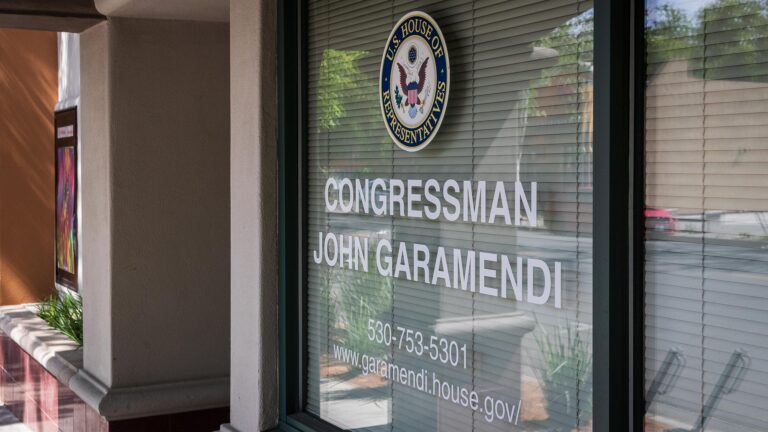
On April 21, U.S. Congressman John Garamendi introduced legislation that would expand the country’s COVID-19 testing and tracing abilities. Garamendi is a Democrat in the House of Representatives who represents the 3rd District, which includes Davis. 

Garamendi explained in a tweet that reducing the number of COVID-19 cases and reopening the country will require a large amount of testing and contact tracing. 

“The coronavirus pandemic has put an unprecedented strain on our society, and our nation requires a significant scaling of testing and contact tracing in order to flatten the curve and lift stay-at-home orders,” Garamendi wrote. 

Tracing entails asking a patient positive for COVID-19 about their recent contacts, then encouraging them to self-isolate for two weeks, according to the CDC website.

“In contact tracing, public health staff work with a patient to help them recall everyone with whom they have had close contact during the timeframe while they may have been infectious,” the Centers for Disease Control and Prevention’s website reads. “Public health staff then warn these exposed individuals (contacts) of their potential exposure as rapidly and sensitively as possible.”

In order to increase testing and tracing capacity, the legislation — the Undertaking National Initiatives to Tackle Epidemic Act (UNITE Act) — calls for an increase in volunteers in various government agencies as well, according to a press release.

“The Undertaking National Initiatives to Tackle Epidemic Act (UNITE Act) would expand volunteer opportunities within AmeriCorps and the Federal Emergency Management Agency (FEMA) and direct those agencies to enhance testing and contract tracing to identify and monitor the contacts of infected individuals,” the press release reads. 

Garamendi explained in a tweet that the UNITE Act will also reinstate and offer benefits to the Peace Corps, which was suspended on March 15. 

“The bill would also ensure that @PeaceCorps volunteers, whose service involuntarily ended in March due to the global pandemic, will receive benefits & priority placement in these domestic programs so they can continue to use their skills by facilitating testing & contact tracing,” Garamendi wrote.

Volunteers would further be responsible for “providing nutritional assistance to vulnerable populations; and administrative duties such as staffing call centers to disseminate public-health related information to the public,” the bill reads.

In a telephone town hall, Garamendi explained that the UNITE Act would be responsible for employing as many as 500,000 people in the AmeriCorps. 

“I will be introducing [the UNITE Act] to use the AmeriCorps as a foundation for the employment of anywhere between a half a million and a hundred thousand Americans — young and old — to become part of a Health Corps,” Garamendi said.

Currently, AmeriCorps members receive “a modest living allowance,” according to its website.

The bill also calls the President into action, urging him to use government agencies to expand testing and tracing capabilities.

“It is the sense of the House of Representatives that—the President should fully utilize the competencies of the Federal Government workforce to battle the outbreak of coronavirus, the worst global health emergency the United States has faced in a century” the bill reads. 

Since March 14, Garamendi has also voted for the Families First Coronavirus Response Act, which increased aid for those economically impacted by the crisis. 

“This bill responds to the COVID-19 […] outbreak by providing paid sick leave, tax credits, and free COVID-19 testing; expanding food assistance and unemployment benefits; and increasing Medicaid funding,” a summary of the bill reads. 

In the press release, Garamendi stressed his confidence in service organizations and their ability to help fight the pandemic through robust testing and tracing. 

“The UNITE Act empowers America’s service organizations to perform testing and contact tracing across the country and deliver the aid and support our communities require during the pandemic. I understand how capable America’s service organizations are to expand our nation’s testing and contact tracing to meet the needs of our country’s pandemic response,” Garamendi said in the press release. 

Written by: Eden Winniford –– city@theaggie.org

Third-year UC Davis student files lawsuit against UC demanding pro-rata fee refund

UC, CSU systems sued

Disclaimer: The refunds demanded from this lawsuit would directly impact The California Aggie. Campus News Reporter Alex Weinstein is a volunteer writer and does not receive a stipend. 

Two lawsuits were filed on April 27 alleging that the UC and California State University (CSU) systems breached contract in closing campuses and not rendering certain services. The plaintiffs call for students to be reimbursed. 

This may be a challenge, however, as the university is currently facing a major financial crisis. In a recent letter to Gov. Gavin Newsom, UC President Janet Napolitano claims that “direct assistance that UC campuses will receive through the CARES Act will not be sufficient to cover even the first month of [the UC’s] COVID-19 response.” 

The plaintiff named in the case against the UC, Claire Brandmeyer, claims that despite these losses, students should still be paid back. Brandmeyer is a third-year student at UC Davis majoring in psychology with a minor in gender studies.  

“I feel like they’re doing the bare minimum,” she said about the university’s response. “I feel like they have the money.” 

The claims in the lawsuit detail certain fees and expenses that students pay toward the university. Plaintiffs claim that some of these services are not being rendered. 

For Spring Quarter 2020, the total campus-based fees amount to $641.74, according to the UC Davis Finances website, and the student services fee was $376. 

Many fees listed in the suit, however are still partially being used: the ASUCD fee is still going toward paying senators, administrators and funding other online programs, The California Aggie fee is still going toward staff salaries, the campus expansion initiative fee continues as construction is ongoing, the 24-Hour room remains open, counseling and tutoring services are offered online and professors continue to commute to campus to record or broadcast lectures. 

When asked about a partial refund for some of these fees, Brandmeyer and counsel gave conflicting answers. 

“I am looking for a full refund,” Brandmeyer said. 

Noel Garcia, an associate attorney at Cowper Law, PC, one of the three groups representing Brandemeyer and her class, said the refund was considered a pro-rata, or proportional, refund of fees paid for the entire year. 

“However, it’s a full refund for the spring quarter fees,” Garcia said. 

An answer from the plaintiff, however, differed from that given by the counsel. After being informed of some of these ongoing programs, Brandmeyer said, “all the fees that we are paying for, what we are not using is the money that I think should be returned.”

The total of fees, according to Garcia, is $1,100 averaged across all UC campuses — a combination of campus-based and student services fees. 

The UC as a whole, however, is at over a $310 million loss for Spring Quarter 2020. 

Garcia said CSUs and UCs have multi-million or multi-billion dollar endowments to sustain them.  

“Not only was it admitted that they have money in reserves, but that they’re not willing to use it to bail themselves out right now because they want to get those monies from people in the future,” Garcia said. ”So instead of using the money they have, they’re tapping into money that’s already been paid by the students, and essentially pushing those losses off on the students.” 

She referenced a recent panel of higher education leaders that spoke about endowments.

Many endowments are donated for a specific cause. Donors stipulate that these funds need to go toward a specific project or type of program. This panel also discussed the existence of unrestricted endowments — those with no direction on where the funds are allocated. 

“This seems like precisely the time to use the vast unrestricted endowments available to the UC System,” Garcia said via email. 

According to James Hyatt, the UC Berkeley Vice Chancellor and CFO Emeritus, however, endowments are not “as great a source of flexibility as one would think.”

“If [donors] view their endowment that they give for particular purposes to be used as a fallback fund, […] they may not be as receptive to giving future gifts to the university,” Hyatt said.

The question of redirecting restricted endowments was also discussed during The California Aggie’s interview with Garcia and Brandmeyer. 

“It falls directly in line with whether or not [the UC] can reallocate funds from students that were paid for a specific purpose,” Garcia said. “Is it legal for the schools to take fees already paid by the students for a specific purpose and move them to pay for something else? Is it legal for them to do the same thing with endowments? Those are all things that will be played out in this lawsuit.”

Garcia said the legality of transitioning funds and the outcome of this case was to be determined by the court. This argument would then shift the financial burden onto the endowment funds

The UC has $21.1 billion in endowments, according to a 2019 report, though it isn’t specified how much of that is in restricted funds. Across the 226,125 undergraduates who attend UC schools, at $1,100 each, the suit would be seeking approximately $249 million in refunds. 

Assuming the unrestricted endowments have not already been allocated, this situation raises the question of whether the university can ethically use endowments as a bailout. 

“[The UC] has made several statements about how they’re constantly saving and putting away money for a rainy day,” Brandmeyer said, but she didn’t offer a source for these claims, where this money is or how the UC accumulates it. The UC is a public university system, meaning that, by nature, it is not-for-profit. 

When asked for comment, Kelly Ratliff, UC Davis’ vice chancellor of Finance Operations and Administration, said tuition funds and fees are being used for what they are normally used for, although there are extra expenditures in some other areas. 

In a previous article, The California Aggie explained the current use of tuition funds and fees,and this breakdown is also explained on the UC Davis Finances website

The suit claims that CARES Act funds, along with other government stimuli, do not excuse the university from returning the service fees. 

At UC Davis, the “CARES Act Emergency Relief Grant Fund [will provide] emergency financial aid assistance to students for expenses related to the disruption of campus operations due to the coronavirus pandemic,” according to a recent school-wide email from the financial aid office. UC Davis is providing nearly $17 million in stimulus funds to the 71% of undergraduates who qualify for financial aid due to disruptions from COVID-19. 

“This does not absolve University of California, however, of being required to disgorge the wrongly-retained monies that Plaintiff and the other Class members paid for fees,” the suit said. “The CARES funds are intended to be used as emergency cash grants, not as a vehicle for universities to retain money that is not theirs to retain.”

The UC Office of the President (UCOP) has not changed its stance on refunds, saying on its website that though some or all instruction for all or part of Academic Year 2020–21 may be delivered remotely, tuition and mandatory fees have been set and will not be refunded.

When asked for comment, UCOP media strategist Stett Holberg said the UC has provided more than $300 million in prorated housing and dining refunds systemwide for students who chose to leave campus housing. Holberg did not offer comment on the lawsuit. 

The lawsuit does not discuss room and board refunds, and at the time of publishing, UCOP did not reply to a further request for comment relevant to the suit. 

“I love Davis, and I love going to Davis and I love living there,” Brandmeyer said. “I’m truly [pursuing this suit] because I can see the pain and the suffering with my own eyes. I feel like they’re not taking this seriously enough.”

Written by: Alex Weinstein — campus@theaggie.org

Looking into Last.fm

Exploring the possibilities of the music tracking website

There’s a sense of mystery surrounding one’s musical habits. Sure, you know more or less what genres and albums you’ve been loving lately, but the actual statistics often prompt some sobering realizations. Even with the stats, I can hardly believe that I: a) have listened to “Pure Heroine” by Lorde 60 times in the last seven days and b) have heard a cumilitive three hours of “Cyber Sex” by Doja Cat. For some, these numbers are too frightening, but for many, the ability to look is too good to refuse — and that is where music tracking website Last.fm comes in.

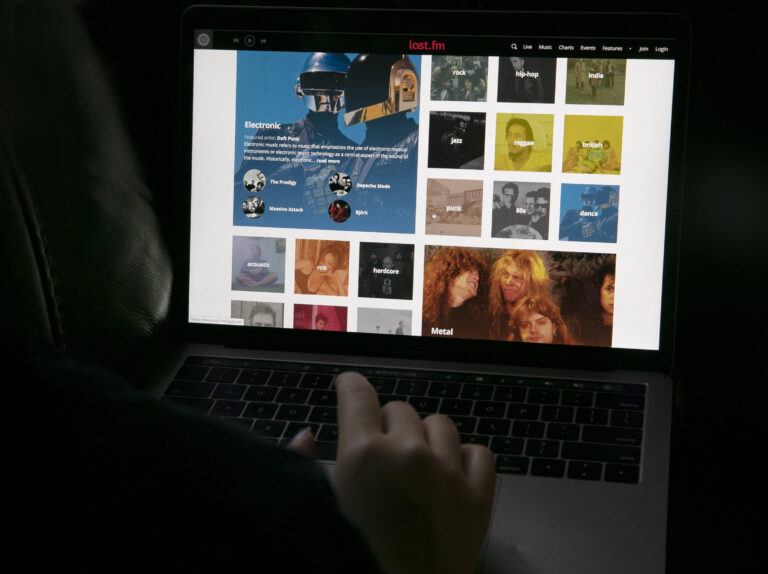
The site can be paired with all common music streaming services to track your scrobbles. Scrobbles — song listens that are tracked and logged — are displayed by the site in your charts, where you can see your top artist, album and song for various amounts of time. Your scrobbles are analyzed to tell you how many new artists you are discovering and what time of day you listen most. Last.fm is free, but for $3 per month you get access to monthly and yearly listening reports and early access to new features.

Last.fm was popular in the early 2010s, but it quickly lost popularity in 2014 when tracking-based music recommendations became more common. The personalized playlists that made the site unique became obsolete. 

The second feature it boasted was the ability to connect like-minded listeners, but because of the confusing web interface and lack of individuality, it never developed into the social network it wanted to be. Users still have the ability to check out what friends are listening to, but it’s not a likely place to meet people to talk to about your favorite band. Last.fm creates a profile for your music. It’s a place for you to look back and review your own listening habits while letting you listen without fear of judgement.

The greatest feature of Last.fm is the ability it has given its users to access their own data. Developers have thought of new ways to take your scrobbles and categorize and visualize them. All you do is type in your Last.fm username and the tools sort your listening habits. Because of how outdated the site is, many interesting add-ons have been taken down. For the time being, these six are still up and running:

Last Wave  

This site graphs your listening history in a beautiful and interesting way. The graphs display your music in waves, where the thickness of each line represents the amount you have listened to that artist/song/album. You can customize the colors and size of the graph, and it is easily downloadable and shareable.

Last.fm Collage Generator

This is the site’s most popular tool. The generator creates a 3×3, 4×4, or 5×5 collage based on your Last.fm charts. You can customize the image based on album, artist and playcount. The visual of all the album covers is eye-catching and frequently shared on social media. 

nicholast.fm

If you were wondering what you were scrobbling last summer, this tool can tell you which songs you played and how many times you played them. It lets you look back on your monthly and yearly scrobbles while also displaying how many unique tracks you listened to and your average song repetition. This tool is eye-opening: I learned that I listened to one song from the “Freaky Friday” soundtrack 54 times in June 2019, so I have been re-evaluating my relationship with music.

Last.fm Mainstream Calculator 

This program compares your scrobbles to other listeners’ on Last.fm to calculate an overall “mainstream percentage.” After reading your data, you get assigned a title based on how mainstream you are (I was lovingly labeled “cool”). Other than being really accurate, it’s fun to see how common your tastes are compared to others. It also has the added bonus of seeing your friends’ mainstream percentages.

Explr.fm

Explr.fm is an interactive mapping tool that shows which countries from which you’ve scrobbled artists. You can look further by clicking on the country which will tell you the artists born there and how many scrobbles in total you have heard from that country. It is a bit buggy and sometimes assigns artists to the wrong country, but overall it’s really interesting. You can also check out where your friends are listening from.

Last.fm to csv

For people who are really hungry for data, this tool fetches data from the Last.fm API, and transforms it into a CSV document. Basically, it lets you see every song you have listened to along with the exact day and time you heard it in one big text file. I don’t necessarily understand what to do with it, but it’s cool to see that I was listening to “Call Me Maybe” at 3 a.m. on a Tuesday. Plus saying CSV makes me feel like a hacker.

Because the site only tracks from the moment you sign up, if you didn’t previously have a Last.fm account, you will not be able to see an accurate display of your data. Now that you know about it, go sign up! The longer you’ve had your account, the more interesting your graphs will be. It’s slow catching up in the beginning, but after a few weeks you will be obsessed!

Written by: Livvy Mullen — arts@theaggie.org

Enter 100 gecs — pop music’s logical conclusion

Like something out of a warehouse in early 2000s East Berlin.

Do you remember the first time you heard something that would change everything? One can only imagine the sensation of Beatlemania, of experiencing Woodstock, of living in the Bronx during the rise of hip-hop. There is a palpable sense of weight, of a heftiness that underscores its cultural relevance. I was lucky enough to experience one such moment of significance during an outdoor Radiohead show; when the rain began to fall during “True Love Waits,” I proceeded to cry like a big Jewish baby. Another came during a Mild High Club show on Halloween, when a costume-filled dancefloor erupted into chaos after the band covered Steely Dan’s “Deacon Blues.”

My most recent life-changing listen came when I left my house for my daily government-sanctioned walk a few weeks back. A friend was blowing up our group chat, one that was usually reserved for article sharing and illegal streams of hard-to-find ’80s anime. He sent a link which led to a song called “money machine” by 100 gecs. Almost immediately, I was floored.

The irony of these impactful musical moments, ones that carry this weight to them, are that they give an incredible sense of lightness to the listener. In the case of 100 gecs, it feels as if walls are being torn down, as if the ball has finally unhinged from its chain. “money machine” begins with what sounds almost like a country-inspired guitar riff, albeit deep-fried and processed, sitting next to the opening lyrics of “hey, you little piss baby/you think you’re so f-cking cool?/you think you’re so f-cking tough?/you talk a lot of big game for someone with such a small truck!”

And this is when the beat drops. The track sounds as if it’s becoming rapidly infected, with an array of industrial snares and basslines, ones that speed up as the vocal delivery does. After about a minute and forty seconds, the track creeps into darkness, maligning itself with screamo elements before ending abruptly. 

But the most insane part? It is perhaps one of the most danceable tracks I have heard in a long, long time. The chorus of “feel so clean/like a money machine” genuinely makes you want to bust a move, and not one that would propel you to the top of TikTok either. Indeed, this is part of the charm of 100 gecs and a factor in their musical clout. It feels like they are everything an act in the algorithm age isn’t: honest, natural and most of all, barely marketable. 

There are no studio executives sitting around a table in Hollywood, drinking Icelandic glacier water, already late to a cryotherapy appointment, bickering about how to get these guys on Spotify’s Hot New Finds playlist. The sonic elements, as well the 100 gecs’s nomenclature, defy this wholeheartedly. I mean, can you imagine trying to pitch a track called “xXXi_wud_nvrstop_UXXx” to a board room at Universal? It is refreshing to see a band stay this true to their vision. 

After “money machine,” I decided to queue “1000 gecs,” the band’s debut album. I was rattled by one track, but an entire collection of them had me absolutely shook. “800 db cloud” begins with a beautifully tender vocal-piano combo and quickly accelerates to a pace that features elements of hardcore, drum ‘n’ bass and the most electrifying, pure punk guitar riffs and distorted vocals. It sounds as if a demon possessed the last quarter of the track, as if those warnings of playing albums backward for fear of conjuring Satan were actually true. Again, the vision of 100 gecs is so unique and so clear, it is undeniably exciting and enticing.

 My personal favorite, “hand crushed by a mallet,” opens sounding like something out of a warehouse in early 2000s East Berlin. A rapid eurobeat is jolted awake by autotuned vocals, infused with a bit of dancehall as it goes on, and finally, an exceptional bassdrop that is incredibly danceable. The last line of the track, fittingly, is “if I wasn’t me/I’d copy me, too.” 

As the album goes on, you begin to understand more and more of the vision that Laura Les and Dylan Brady, the duo behind the project, are crafting. All they really want to do is have fun with music, to create sonic landscapes that they would enjoy playing around in. The only instrument I play is kazoo, but I’ve been lucky enough to sit in on bands practicing and warming up. They too, like to have fun with their output. The track “I Need Help Immediately” is a testament to this. 

This is the most interesting track I have come across in a very long time, sonically speaking. Not because I jam out to it or because I’ll never skip it, but because it made me take pause. “I Need Help Immediately” is a smorgasbord of various musical stylings, a vignette of different sounds and effects that lasts almost a minute and a half. It sounds like playing around on a casio keyboard or a pirated copy of Ableton. It is, in so many ways, the sounds of “the process. It is completely okay if you don’t like it, or if it doesn’t scratch the dopamine receptors in your brain. Because it is exactly the sound of trying to get to that place — something every musician has to tackle at the beginning of a piece. 

100 gecs are blowing up, with pop juggernaut Charli XCX and alt darling Kero Kero Bonito hopping on a remix of their track “ringtone.” They are moving fast, and that’s awesome. They deserve it. With the recognition they get, the more that cultural weight mentioned earlier grows. But I am begging that the hype machine, the countless algorithms and vast corporate interests don’t take away from the most interesting musical act of the decade so far, just to market some form of “anti-pop” or “alternative lifestyle music.” Please. Just let the listeners have this. 

Brady and Les feel as if they are cultivating an era of intersectionality through their music, through their blurring of genre, their world building and their rejection of anything but their own vision. (Which includes always having fun in the booth.) They usher a renaissance in the world of pop that must be noticed — lest you fall to the cultural wayside for ignoring them. They will be no doubt ones to watch. In many ways, the logical conclusion of pop music could very much sound like 100 gecs. 

Written By: Ilya Shrayber — arts@theaggie.org

Music that defines us

Historic moments of political upheaval, social unrest marked by era-defining music 

Singer-songwriter Alicia Keys debuted her new song “Good Job” during a CNN virtual town hall on April 24. Originally written for the personal heroes in her own life, Keys rebranded the song as an ode to the first responders and others who stepped up during the fight against COVID-19.

“A lot of times people don’t feel like they’re doing a good job,” Keys said in an interview with CNN. “They feel underwater and like there’s never going to be a brighter day. Fast forward to now, with where we are now, and it’s almost like the song was written for this and I didn’t know it.”

Connecting to music during an uncertain and tumultuous time in history is not uncommon. Historians have referred to nursery rhymes of different time periods to better understand what was occurring culturally and politically. 

Artists look to what is going on around them as inspiration for their music, creating a piece of art that resonates deeply with people and becomes a reflection of the world at large. Whether it be an inspiring ballad expressing gratitude for the common hero, as in Keys’ song, or detailing political criticism such as U2’s “Sunday Bloody Sunday,” songs about what the world is going through at a specific time speak to us. 

The following is a list of contemporary songs that perfectly reflected, criticized or changed the world. 

“Gimme Shelter” by The Rolling Stones (1969)

Although the song was initially inspired by people seeking refuge during a rainstorm, it is often remembered as a reflection of the social and political unrest of the time. Released in 1969 as the intro track to their album “Let It Bleed,” the song came to be known for its association with the Vietnam War and the tension in the world.The song’s legacy shows how people find meaning in music that is relevant to them, even if that is not the original intention of the music. 

“Well, it’s a very rough, very violent era,” Mick Jagger said about the album in an interview with Rolling Stone. “And Vietnam was not a war as we knew it in the conventional sense… it was a real nasty war, and people didn’t like it. People objected, and people didn’t want to fight it. [Gimme Shelter is] a kind of end-of-the-world song, really. It’s apocalypse; the whole record’s like that.”

“American Idiot” by Green Day (2004)

This title track of Green Day’s seventh studio album is one of the most popular songs from the politically vocal band. The song is heavily critical of news coverage during the Iraq War —  condemning media outlets for imbuing paranoia and thus creating the “American Idiot,” with America as “one nation controlled by the media” that cannot think for itself. 

Despite its divisive message, “American Idiot” was praised by critics for its powerful critique of the media and coveted by the band’s young, equally frustrated and rebellious fans. The song was the band’s first on the Billboard 100 charts and it received a Grammy Award nomination.  

“I Am Woman” by Helen Reddy (1972)

In 1975, the United Nations announced the first “International Women’s Year,” with “I Am Woman” as the anthem of the year. Opening with the line, “I am woman, hear me roar / in numbers too big to ignore,” the song is reflective of the massive strides taken in the fight for women’s rights throughout the 1970s. 

As second-wave feminism emerged, there were more people fighting for women’s rights, emphasizing workplace equality and reproductive rights. The song’s message aligns with what was going on at the time and was a powerful anthem for women everywhere.

“I want to thank God because She makes everything possible,” said Reddy in her acceptance speech at the Grammy Awards for Best Female Performance. Reddy was ahead of her time in many ways, but her actions proved to be just as inspirational as controversial. 

“A Change Is Gonna Come” by Sam Cooke (1964)

 This 1964 song was inspired, in part, by the time Cooke was turned away from a Whites-only motel. Despite the mildly eerie tone, the song became a ballad for the African American community during the Civil Rights movement. The line “There’ve been times that I thought I couldn’t last for long / But now I think I’m able to carry on” reflects the uncertain hopefulness that equality would one day come.

The song was recognized by the Library of Congress for its importance. It is ranked as number 12 on the Rolling Stones Top 500 Greatest Songs of all time. The message of endurance and effecting true change in the world is as relevant today as it was in the ’60s. 

“It’s been a long time coming,” said President Barack Obama in his speech after winning the 2016 presidential election. “But tonight, because of what we did on this date in this election at this defining moment, change has come to America.”

“Fight the Power” by Public Enemy (1989)

Public Enemy wrote this song at the request of film director Spike Lee, who needed a song for his film “Do the Right Thing” about racial tension in New York. And the song reflects this theme. Released in 1989, the song resonated with the injustices racial minorities face every day.

“The song broke at a crucial period in America’s struggle with race,” wrote Laura K. Warrell for Salon. “‘Fight’ demanded action… Every kid in America, white, black or brown, could connect to the song’s uncompromising cultural critique, its invigoratingly danceable sound and its rallying call.”

The song is often referred to as one of the most important rap songs ever, winning accolades including a spot on the “Songs of the Century” list compiled by the Recording Industry Association of America and the National Endowment for the Arts.  

“Where Were You (When the World Stopped Turning)” by Alan Jackson (2002)

After the terrorist attacks on September 11, 2001, many songs about the unrest the country was feeling were released — songs that even changed country music itself. Alan Jackson emerged as one of the most popular artists of the time, in part due to this song. He received his first Grammy Award for Song of the Year in 2002. 

“I didn’t want to write a patriotic song,” Jackson said in an interview with a Christian magazine. “And I didn’t want it to be vengeful, either. But I didn’t want to forget about how I felt and how I knew other people felt that day.”

“Strange Fruit” by Billie Holiday (1954)

Originally published as a poem by Jewish-American writer Abel Meeropol in 1937, this song is a haunting ballad about the lynchings of African Americans. Holiday’s voice is powerful and mystical as she sings about the “Black body swinging in the Southern breeze / Strange fruit hanging from the poplar trees.” 

Jazz writer Leonard Feather described it as “the first significant protest in words and music, the first unmuted cry against racism” in an article for the New York Times

The song was also added to the National Recording Registry in 2003. It serves as a powerful reminder of the atrocities that occured in our country’s past. “Strange Fruit” serves as an evocative memory of an appalling time. Holiday’s voice and the eerie musical composition takes the listener to that time and forces them to live in that moment, which is why this song is so important. 

This list only includes music that is relevant to the U.S., but musicians in every country and of every culture reflect on the state of current political and social affairs when creating their art. 

Written by: Alyssa Ilsley — arts@theaggie.org

Letter to the Editor

The Aggie’s tribute to Bill Withers acknowledges his struggle with stuttering 

To the Editor: 

Re “Bill Withers: remembering a laid-back legend in soul” by Andrew Williams (arts, May 8): 

Your article on Bill Withers was an excellent tribute piece to the great singer-songwriter. The piece mentioned that Withers struggled with stuttering early in his life, which other articles omitted.

Bill Withers is a PWS (person who stutters) who has been a role model to the PWS community for always speaking openly about his stuttering. Withers spoke out 40 years before the movie “The King’s Speech” brought stuttering to the forefront in a compassionate way. The biographical profile “Bill Withers Overcame Stuttering” on the Stuttering Foundation’s website cites that Withers received speech therapy during his many years in the navy, and that this gave him the confidence to pursue a career in music. It would be great if every child and adult with any kind of speech problem could receive the same level of speech therapy as Withers did in the military. It should also be noted that Withers was a bona fide hero to the stuttering community, and he forever will be.

ED DEPHILLIPS, FORT LEE, NEW JERSEY 

To submit a letter to the editor, please email opinion@theaggie.org.

Confusion emerges over face-covering requirements as businesses enforce Yolo County policies

Essential businesses, customers face unprecedented scenarios in adapting to new policies mandated by county

Local restaurants and businesses are being asked to enforce face-covering policies after Yolo County released a health order requiring that all individuals wear face coverings in public settings. 

The health order, instituted on April 27, requires individuals to wear face-coverings while shopping in grocery stores, picking up food or going to see a healthcare provider. Those who do not comply are not likely to be fined, but businesses are encouraged to refuse those who do not adhere to the policy, according to a Yolo County press release

“Individual violators are unlikely to be cited however essential businesses and other enterprises will be expected to enforce this order,” the release read. 

The health order explained more in-depth specifics regarding actions businesses can take to remind customers of the requirement. 

“In addition, an Essential Business must also take reasonable measures, such as

posting signs, to remind their customers and the public of the requirement that

they wear a Face Covering while inside of or waiting in line to enter the business,

facility, or location,” the order read.

Businesses should take all “reasonable steps” to remove those who do not wear masks in a business, yet the order also specifically states that, “Nothing in this Order, however, requires or encourages the use of physical force, threats, or intimidation.”

Despite providing businesses with the policies outlined in the health order, there is some confusion among customers and businesses about the finer details of the policy and when it becomes necessary to ask customers to remove their masks, if at all. 

Hannah Stevens, a graduate student at UC Davis in the department of communication, was asked to remove her mask while purchasing alcohol at Save Mart. 

“I gave the lady my ID, and then she stared at me for a moment — like she was waiting for something. Then she said, ‘Take your mask off please,’” Stevens said. 

Stevens, who is 25-years-old, said it is not uncommon for her to be asked for identification while purchasing alcohol, but she was uncomfortable with the idea of touching her face to remove her mask after touching her money, her ID and other items in the store. According to the Centers for Disease Control and Prevention website, those wearing a mask in public are encouraged to limit face touching, or to clean their “hands with soap and water or alcohol-based hand sanitizer immediately, before putting on, after touching or adjusting, and after removing the cloth face covering.”

Stevens said there were no signs or written indications stating that she was required to remove her mask for identification while purchasing alcohol. 

“I did think it was a little bit odd because I have gone to other stores since social distancing, and I’ve never been asked to take off my mask — even if I’m buying alcohol,” she said. 

In an email to The California Aggie, Save Mart explained its policies during the shelter-in-place order, including instituting the “required social distancing measures,” and posting signs for customers “informing of face coverings requirements.” Save Mart officials added that the “Davis Save Mart store policy is to follow the established guidelines from Yolo County.” There is no mention of requiring those purchasing alcohol to remove their face covering for proper identification in the county’s health order. 

Situations like these mark confusion experienced by customers and businesses alike in adapting to the new shelter-in-place policies without specific instructions from the county. Restaurants, grocery stores and other essential businesses face unprecedented scenarios while trying to balance remaining open for sales and keeping staff and customers healthy. 

Generally, most Davis citizens do seem receptive to the face-covering order and following social distancing rules. Derar Zawaydeh, the co-owner of Crepeville and Burgers and Brew, said nearly everyone who comes to pick up food is wearing a mask.  

“We really haven’t had to refuse service to anyone, which is a good thing,” Zawaydeh said. “I want to say 95%, if not more, [wear masks]. Hardly you get someone who comes in without a mask, and then we tell them that it is required.”

Though he does not feel like the face-covering requirement is currently preventing people from picking up food, Zawaydeh expressed some concern over the effects of restaurants opening back up for in-person dining. 

“I don’t know how that will affect business in the long term, when things are better in general, whether people will still be compliant or not,” Zawaydeh said.

That uncertainty seems to be a common theme, as essential businesses work with customers toward enforcing policies that will prevent the spread of the coronavirus.

Written by: Madeleine Payne — city@theaggie.org

UC Davis students work for Yolo County Food Bank to combat COVID-19-related food insecurity

Graduate student Eliza Oldach drives food delivery trucks, fourth-year Lily Keene assists deliveries through GIS

Amid the current crisis, food insecurity is an even greater issue for people in need. To combat this, the Yolo Food Bank recently began running a grocery delivery service made possible thanks to local volunteers who oversee distribution and package and deliver goods to households in the county. 

Eliza Oldach, a UC Davis ecology graduate student, began volunteering as a delivery driver once a week for the food bank after the shelter-in-place order was enacted.

“When shelter-in-place started, it was so obvious that things had changed so much, so quickly,” Oldach said. “All of a sudden, it felt like a lot of the choices that were available to me before were no longer choices that I had control over. But I know there are a lot of people that are doing a lot worse, and so it felt like helping was the most important thing to do as kind of a rebellion against feeling like you’re in crisis mode.”

Although she and other drivers are required to practice social distancing, for Oldach, volunteering has provided a way to continue community interaction.

“You’re physically distant, but there are these ties that I’m making and all the other volunteers are making to people living in Davis or living in Woodland [that] for sure I wouldn’t have made otherwise,” Oldach said.

The deliveries are coordinated through an app similar to DoorDash or UberEats: Volunteers are assigned drop-off locations and drive their own cars. According to Oldach, the convenience of the app makes it easy to contribute a few hours each week.

“They made it really straightforward to be involved, and it instantly felt like you were doing something useful,” Oldach said.

Behind the app, there are many volunteers and food bank employees working to facilitate easy delivery. One of these volunteers is Lily Keene, a fourth-year sustainable environmental design major. Keene works in the Geographic Information Systems (GIS) database for Yolo County Food Bank, helping with the influx of food bank requests through fixing addresses and responding to driver concerns.

“As people sign up for food deliveries, they put where their location is, but people who aren’t familiar with the software sometimes set it wherever and it’s not where their address says,” Keene said.

Keene, along with several other UC Davis students assigned to different areas of Yolo County, works to match the points with the correct addresses so delivery drivers can go to the right location. In her last quarter at UC Davis, Keene is close to completing a minor in GIS and said she appreciates gaining experience in real-world applications of the technology.

“This is some of the first GIS experience I’ve had working on something that’s real and doing something helpful,” Keene said. “I know that sitting behind a computer doing GIS isn’t my dream job, but it’s nice to know that when I’m doing it, it’s for a purpose.”

GIS provides a way for Keene to contribute in a unique way to a cause that assists people.  

“During this time, it’s hard to feel purposeful,” Keene said. “I feel like it was something that made me feel like I had a little bit of help that I could give to the situation, even though I’m not directly working with anyone.”

According to Keene, although her work involves clicking and moving points on a computer, this application of the technology for Yolo Food Bank has important impacts on a larger scale.

“I think GIS is a very powerful tool,” Keene said. “Making sure that they’re getting the correct amount at the correct time at the right address means so much more than just moving points on a map.”

To volunteer, donate or request a food delivery visit the Yolo Food Bank website.

Written by: Sophie Dewees — features@theaggie.org

Humor: Week eight of quarantine: Everybody has started a podcast

And all of them are bad

Eric and Tim erupted into laughter. 

“I love when you tell that story man,” Eric said.

“You know what, we’re smart and funny people! We should make a podcast!” Tim replied.

“You’re right. In fact…” Eric rifles through his backpack. “Let’s just do it now.” He pulls out his phone and opens a recording app.

“You sure man? Doesn’t everybody already have a podcast?” Tim questioned.

“But ours will be different.

Tim nods and smiles. “Ours will be different! Hit that record button!” Eric positions the phone between them on the couch.

“Hi and welcome to the …” The two lock eyes. They hadn’t decided on a name.

“…Eric & Tim podcast!”

“That’s such a good name,” Eric said, snapping.

“Yeah, yeah, and this is where the podcast’s opening theme will go. It’ll be the theme song from FRIENDS.”

“Dude that’s such a good show.”

Tim continues.

“This is just a podcast about two dudes, just living life,” Eric said, flashing a thumbs-up to Tim. “And we’ll keep you posted on all the interesting stuff that goes on in our lives.”

Eric Chimes in: “Yeah yeah, and my dad works at Apple. So I’m kinda like an inside source for all you tech gurus out there!”

“Dude you are an apple.” The two laugh uncontrollably for 15 minutes before regaining their composure.

“Sorry listeners, that’s this inside joke between me and Eric. It’d take too long to explain, but we’ll keep that one in there just for us, y’know?”

“We don’t have any guests on the show today, but we have a lot of friends and family members that are really interesting people, and I can’t wait for you guys to listen to them on the show. They’re all really cool people.”

“Alright, we’re out of time for today, but we’ll see all you beautiful listeners on the next episode of the Eric & Tim Podcast!”

“Yeah, yeah, and then here’s where the end theme will go. It’s gonna be the theme song from ‘Neon Genesis Evangelion’.”

“Oh yeah. People love anime references.”

The Eric &Tim Podcast is created by Eric Schule and Tim Rand. Mixing for the show is done by Tim Rand. It is recorded locally in Davis. Now available on Apple Podcasts.

Written by: Matthew Simons — mrsimons@ucdavis.edu 

(This article is humor and/or satire, and its content is purely fictional. The story and the names of “sources” are fictionalized.)

Is the United States balkanizing?

COVID-19 pandemic reveals America’s slow push toward regionalism

Another day, another coronavirus article.

These days, it seems as though every aspect of life is affected by the COVID-19 pandemic. And while it’s true that social distancing has had a tremendous impact on the everyday lives of all American citizens, the influence of the crisis on national politics should not be downplayed. 

It is abundantly clear to anyone paying attention that the handling of this pandemic has emphasized the current division between state governments and the executive branch. A widely publicized feud between Michigan Gov. Gretchen Whitmer and President Donald Trump was one of the earliest signs of a political dispute that moved beyond purely partisan lines. After previously voicing skepticism over stay-at-home orders in numerous states, the president pivoted toward criticizing Georgia’s Republican Gov. Brian Kemp last week over his decision to open up the state. 

Perhaps nowhere has this devolution of the traditional American federalist system been more apparent than in California. While Gov. Gavin Newsom came under fire for referring to California as a “nation-state” last April, his choice of words merely reflected the state’s continued disillusionment with the rest of the country. 

Even if the prospects of a “Calexit” remain a long shot, the state continues to develop its own political sovereignty. As Darel Paul noted in The American Conservative last month, California has begun isolating itself from the rest of the country. Currently, it is the only state allowed to maintain its own auto emissions standards, although the Trump administration is legally disputing this. It has also expressed direct opposition to the politics of red America, barring state employees from official business travel to states with laws considered to discriminate against sexual orientation or gender identity. California also opposes the Trump administration on issues of illegal immigration, instead supporting sanctuary cities, expanding state Medicaid and extending stimulus payments to certain undocumented immigrants.

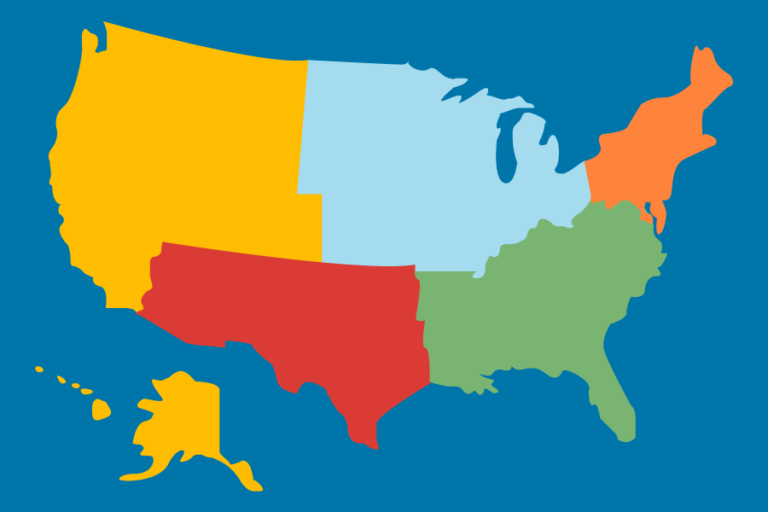
The move to reopen the American economy in the coming months has also exacerbated pre-existing regional divides in the U.S. While maintaining a commitment to its own method, California advances plans to reduce social distancing within a broader political framework, which includes frequent cooperation with the state governments of Oregon and Washington. A similar plan featuring the bipartisan governments of seven midwestern states –– Michigan, Ohio, Wisconsin, Minnesota, Illinois, Indiana and Kentucky –– has likewise been implemented, with the group expressing their desire to coordinate in reopening the economy. 

The stark division between states in their approach to addressing the pandemic is part of a broader and much more troubling trend that has effectively divided America. Stark political differences and an almost irreparable cultural divide drives Americans to see one another as belonging to two fundamentally different nations. While there are a number of bipartisan efforts during this crisis, much of the political rhetoric surrounding these efforts focuses on the inherent differences between red and blue America.

In some ways, the political debate ripping America apart has hastened as states decide how to re-open, with most states’ strategies separated along explicitly political lines. Indeed, most red states are rural, have limited international travel and lower population density –– with blue states characteristically the opposite. Naturally, this would lead to the former opening up earlier and the latter taking a much more nuanced approach.

Simultaneously, the division between these states in strategy is now the target of a superficial culture war –– a sort of politically appropriated catastrophe utilized by either side for political gain. At such a time, this type of disunity is extremely disheartening for those invested in the future of this country. State officials are speeding across the country to cut deals in McDonald’s parking lots. Governors are sending national guardsmen to defend testing kits from federal officials. This is a level of fundamental dysfunction eerily reminiscent of the late Soviet Union. 

It’s unlikely that the current pandemic will facilitate any sort of drastic division in the U.S. –– that is, an actual direct challenge to the sovereignty of the federal government. But it will nonetheless expedite an already collapsing collective faith in the American system. As competing factions of the American electorate debate over what the future of our country should look like, the decisions made in the coming months will vastly impact the ability of the country to take pride in a shared national identity.   

Written by: Brandon Jetter — brjetter@ucdavis.edu 

Disclaimer: The views and opinions expressed by individual columnists belong to the columnists alone and do not necessarily indicate the views and opinions held by The California Aggie

Commentary: Fads of Generation Z’s juvenescence

Underlying implications of fads, changes over generations

As a materialistic nation, embedded in American culture is a want for what we don’t have. Fads come and go, but their existence embodies memories of the past, specifically our childhood. Seeing that the majority of current undergraduate students are Generation Z, these post-millennials experience an “inside joke” relationship surrounding fads that left as fast as these fads came. 

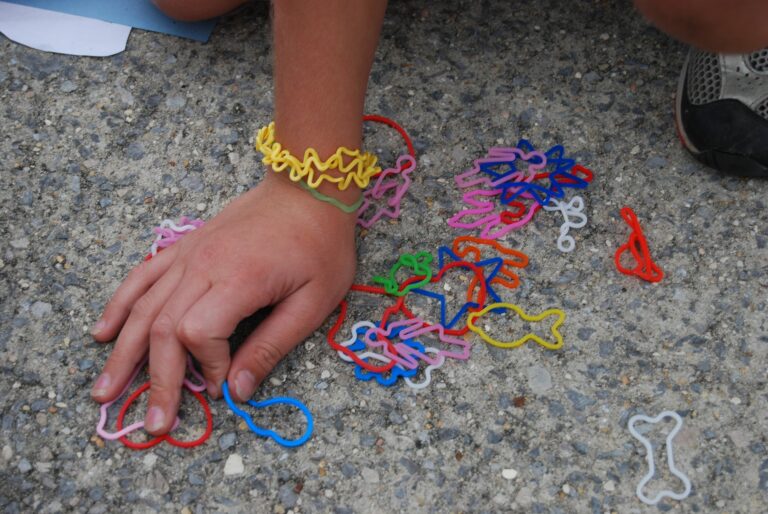
In retrospect, toys and trends that were to die for during adolescence now remain distant memories of the past. These fads, however, shaped the childhood of many individuals. Silly Bandz, Heelys, Webkinz and Tech Decks were some of the many trends that have bonded Generation Z on a level that no other generation could fully understand. 

“[Fads] brought people closer together,” said Kyle Cronin, a first-year ecological management restoration major. “Those that didn’t have much in common now had something in common. It was a big way of keeping friends and making friends.” 

 Every generation has distinct fads from their childhood that render a unique jargon of what was considered “cool” at the time. Of course, if Jimmy or Suzy had the latest and greatest, then everyone else had to have it too — or so we thought for the time being. These trivial items united individuals, while simultaneously isolating others. 

As a result of materialism, economic hierarchy is a necessary part of the conversation. Keeping up with consumerism is inherently pricey. Devon Meyer, a second-year political science major, was perplexed thinking back to the amount of money her parents must have spent on these fads that she would “never touch again.” 

While those who could afford to invest in the materialistic nature of fads swam in their clout and popularity in juvenescence, those who did not have the means to partake in the trends were marginalized. 

“Those that didn’t have [Vine], are kind of left out even today,” Cronin said. 

Not only were they isolated when the fad was considered “cool,” but they are also isolated from the experience of these inconsequential trends that we look back on and bond over today. Financial means, however, are not the only way in which fads divided individuals. 

“Heelys made me feel left out because my mom would never let me get them,” Cronin admitted. 

The empty feeling of lacking the experience of the “coolest” trend of the time is now referred to as “FOMO” or fear of missing out. Fads engrave a deep desire to be “cool” and to fit in with the crowd from a young age. 

“[Fads] really laid the groundwork for a lot of us to seek validation and approval from others, external from ourselves,” said Ethan Wellerstein, a second-year international relations, philosophy and Spanish triple major. 

The dopamine rush of engaging in consumerist values have “conditioned” individuals to “seek external validation” by the means of following the latest trends. As the generation to witness the rapid evolution of technology, Generation Z was arguably the last age group to undergo non-technological dominant fads in childhood. 

“We had a good number of physical [fads] that were tangible,” Wellerstein said. “Our [fads] weren’t solely digital.” 

Comparing Pokémon cards to Fortnite, for example, the players are required to interact with other people for the game to work. Rather than isolating oneself to a screen, Pokémon cards require face-to-face socialization, which is lacking in many modern fads. The new form of socializing is formatted by computer-mediated communication through the means of a device. 

Fads in contemporary times are still “trying to make us look better [by] following whatever everyone else is doing,” according to Meyer. Now, however, they are digitized to showcase to the entire world, not just your friends on the playground. 

“For some reason I felt so compelled to buy [Silly Bandz], to have a rainbow fruit loop collection of rubber bands going up my arms,” Meyer said. Now, you need to have “at least over 1,000 followers” to be considered relevant in the digitized world we live in. 

In their childhood, Generation Z would become aware of the latest trends by word of mouth or advertisements on such popular television channels as Disney or Nickelodeon. Now, with on-demand streaming at our fingertips, these advertisements are minimal. Instead, social media advertisements target individual interests by monitoring online activity

Fads still come and go in an endless cycle of consumeristic attraction to materialistic trends, whether they’re tangible or digital. Inevitably, fads create hierarchies, defining individuals by their material possession and knowledge of popular culture. Although controversial in the morals embedded in the meaning of fads, they do play a significant role in childhood — and create a good laugh looking back at old pictures when a few rubber bands would make or break your popularity. 

Written by: Sierra Jimenez — arts@theaggie.org

Inspiration in art: Three students are finding ways to be creative in quarantine

Student artists use quarantine as “an opportunity” to dive into their passions 

Maxine Aiello, Natalie Tate and Sally Ellberg are three UC Davis students that have found comfort in art, utilizing creative outlets in order to present a new narrative of the world. By analyzing their styles, backgrounds and intentions, these artists each provide a unique understanding of how art surpasses pen and paper, as well as how it can become an integral part of every person’s life. 

Aiello, a fourth-year studio art major, makes art focused on the environment and climate change, using recycled materials for sculptures. She is responsible for the mirrored pieces on the trees throughout UC Davis’ campus — creating living designs out of her passion for the environment. 

In her studio art major, she discovered the therapeutic aspects of doodling, finding it to be an easy and effective way to stimulate a creative mind.  

“I doodle a lot for someone that loves art and takes it seriously,” Aiello said. “I would say that doodling is the most fun, freeing and beneficial. It may not turn out as a masterpiece, but it’s a way for you to find out what you like to draw if you can find patterns in the things that you doodle. For me it was aliens, […] so eventually I went with it and started developing the doodles a little more into a particular style with a particular message. I use them as a metaphor for ourselves, often portraying the less beautiful sides of our personalities.”

One of Aiello’s main inspirations is Agnes Martin, an artist who paints with lines or grid patterns, advocating for personal discovery through art.

“[Martin] said she paints with her back to the world, which I think is great advice you need to follow when making art,” Aiello said. “You need to tune into yourself and shut out the rest.”

Tate, a second-year biological science major, also finds solace through her art and has used quarantine to develop her interest in portraits. She works in color as well as black and white, experimenting with different compositions in order to portray feeling and reaction. 

“I saw quarantine as an opportunity to really dive into my passions and hopefully teach myself something new,” Tate said. “I love how experimental art is — there’s so many abstract styles that I’m drawn to, and I’m constantly getting new inspirations and ideas from other artists. At the moment, portrait art is my absolute favorite just because they capture so much emotion and I love to play around with different facial expressions and color schemes.”

Ellberg, a fourth-year biological sciences major, shared the inspiration behind her paintings, which incorporate female power and natural beauty. Her artwork portrays dancing women, angry tigers and orange trees, all of which are composed with vibrant colors.

Ellberg said quarantine has allowed her to continue to craft her art, finding ample free time among the endless days. 

“A lot of my inspiration comes from a compilation of artists I have been following on Instagram for the last few years,” Ellberg said. “Try discovering artists you really like and you might notice a theme — like materials used, content depicted, et cetera — that is similar in all of them. That’s ultimately how I found my style: realizing through all my favorite artists that they were all abstract with elements of nature and women.”

Written by: Athena Aghighi — features@theaggie.org