59 F
Davis

Davis, California

Thursday, December 25, 2025
Home Blog Page 335

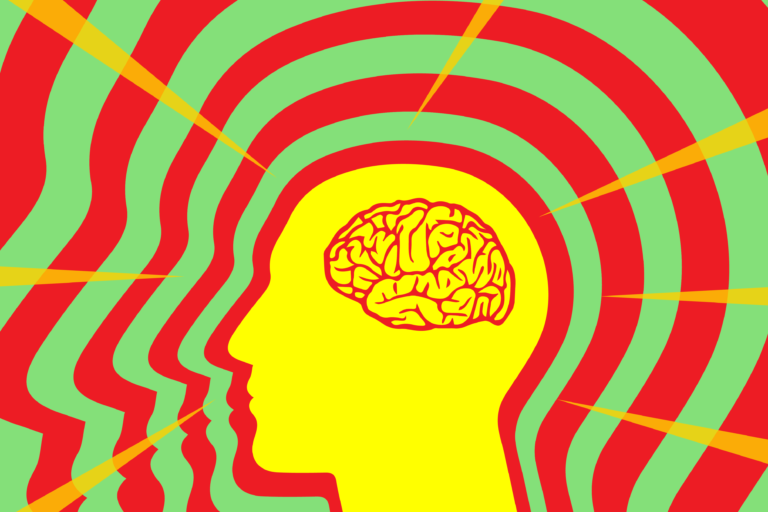
Psychology study on oxytocin uncovers possible ways to alleviate social withdrawal symptoms for individuals with mental illnesses

Experiments with mice illustrate “social vigilance,” “behavioral inhibition” also seen in humans

To “flatten the curve” of the novel coronavirus, individuals have been asked to stay in their homes and distance themselves from others. Many find this unprecedented social distancing stressful, yet avoiding social situations is a common tendency in individuals with autism and psychiatric illnesses, including depression and anxiety disorders.

Therapies for these symptoms remain widely misunderstood, as effectiveness of treatments varies among patients. UC Davis researchers, in collaboration with scientists across the U.S., studied how oxytocin, a neurotransmitter produced by the hypothalamus, affects social behavior. Through experiments with mice, researchers investigated whether pharmacological therapies should target oxytocin in order to alleviate social withdrawal in mental illness, said Alexia Williams, a postdoctoral student in biological psychology and lead researcher of the study.

“This study aims at identifying which oxytocin receptor downstream molecular pathways mediate different aspects of motivated social behavior,” said Natalia Duque-Wilckens, a postdoctoral researcher at Michigan State University, via email. 

This study’s approach stems from previous research which identified that individuals are less likely to engage in unfamiliar social situations after exposure to stressful situations, said Brian Trainor, a professor in the department of psychology. If an individual had a previous negative social experience, that person will often be more cautious in the future and the person’s motivation to engage in new social situations will diminish as a protective response. 

“What our lab has been focusing on lately and kind of bringing more attention to you is this idea of vigilance and that it’s not just that individuals are avoiding social situations after a bad social experience, they’re actually paying attention to other individuals,” Trainor said. 

Through behavioral tests with mice, researchers created stressful social experiences, like exposing the mice to a “bully” mouse. The researchers observed that the mice not only started to avoid the stressful situation, but also displayed “social vigilance,” where they paid attention and orientated themselves toward it, as though they were watching, Trainor said. 

“We study behaviors in rodents that we think are in some ways reminiscent of some behaviors that people show,” Williams said. “For example, rodents after they’ve experienced some sort of stressful experience, they’ll avoid social contact. We consider that to be similar to how people will function. People choose to isolate themselves when they’re feeling very anxious or feeling very depressed.”

This behavior displayed in mice has been studied by developmental psychologists for a long time. Behavioral inhibition, a combination of avoidance and vigilance, is one of the biggest risk factors predicting whether a child will have an anxiety disorder, Trainor said. 

“Not only are [the mice] avoiding these situations but they’re paying attention to it,” Trainor said.

After observing the mice’s behavior, the researchers studied their neural circuitry. The researchers focused on understanding the nucleus accumbens (NAc), an area in the brain known to mediate motivated behaviors and express oxytocin receptors. When activated, these oxytocin receptors promote social approach, Duque-Wilckens said. 

The researchers investigated how cellular activity, through different molecular pathways, is modified by oxytocin receptors. By using different drugs that activate or inactivate only one or a subset of these pathways, Duque-Wilckens said the researchers were able to better understand the role of oxytocin in social behavior. 

The study’s results suggest that the oxytocin receptors in the NAc modulate social approach using a specific downstream pathway. Activating that pathway can reverse the negative effects of stress on social behavior, Duque-Wilckens said. 

“This is the first study to show that different oxytocin receptor molecular pathways regulate distinct behaviors,” Duque-Wilckens said.

Because pharmacological manipulations of oxytocin receptors usually result in changes in all downstream molecular pathways, knowing which pathway to specifically manipulate may boost efficiency and effectiveness of potential therapeutic outcomes, Duque-Wilckens said. 

In the long term, this research may have benefits for people suffering from psychiatric disorders that cause social anxiety and reduced social motivation. In the short term, preclinical and clinical studies could better use drugs to manipulate specific downstream pathways of oxytocin, Duque-Wilckens said.

“The reason why [the study] is important is that there’s a lot of interest in coming up with different ways of treating depression,” Trainor said. “There’s a lot of interest in maybe trying to use oxytocin to treat depression or anxiety, but the problem is we really don’t know how.”

A few treatments have been created for people who struggle with depressive or anxiety disorders, but less than half of the people who take them actually see a recovery in their symptoms, Williams said. To create effective treatments, researchers must target both social avoidance and social vigilance, and understand how different neural circuits are activated.

“Maybe we can design a drug that targets oxytocin systems and maybe that will help people who aren’t seeing any relief with the treatment they’re being given,” Williams said.

Although this study has not created a cure for social anxiety or depression, it has led researchers closer to understanding the neural activity of individuals impacted by these stressors, Trainor said. 

“People get excited and they want to know the cure for social anxiety and it’s not that simple,” Trainor said. “You can’t just give someone oxytocin because you don’t know what parts of the brain is going to go to. And then depending on what the sort of basal activity is that could influence what kind of response you got.”

After concluding this study, the researchers were left with additional unanswered questions. Because different downstream pathways within the NAc can affect behavior so differently, Duque-Wilckens said she is interested in exploring how receptors in other important brain areas use pathways to modulate different functions of oxytocin.

“[Williams] showed that when you put oxytocin specifically into this part of the brain, called the nucleus accumbens, it has the effects that people would like to see with oxytocin, reducing effects of stress,” Trainor said. “But if you put it in another part of the brain, exactly the opposite [happens].”

This study helps to emphasize the importance of science to improve human experience and health, Williams said.

“I hope that people take mental illness seriously and understand the value that goes into research to try to understand what leads to some of these behaviors and what can we do to help people that really struggle with that,” Williams said. 

Written by: Margo Rosenbaum — science@theaggie.org
Coronavirus sparks increase in anti-Asian hate crimes across U.S.

Asians, Asian-Americans have been targets of racial discrimination due to paranoia, misinformation

Since news of the coronavirus pandemic became public, Asians and Asian Americans have become the recent targets of racial discrimination. Asians and Asian Americans are blamed nationally for the cause and spread of COVID-19, resulting in a significant increase in anti-Asian hate crimes. These hate crimes include derogatory remarks, verbal attacks replete with racial slurs, racist vandalism and, in some cases, physical assault. 

Ayanna Yonemura, a professor of Asian American Studies at UC Davis and lecturer at Sacramento State University, admitted that she was saddened but not surprised. 

“If we look back at U.S. history, we do see issues of discrimination and scapegoating against Asian Americans,” Yonemura said. 

It goes hand-in-hand with the long-existing myths that Asians are dirty and unhygienic, Yonemura further explained, and pre-existing stereotypes about Asians and Asian Americans. 

Yonemura viewed this situation as a rude or abrupt awakening of the fact that the nation has more to work on. She emphasized the importance of finding ways to support various Asian advocates and civil rights organizations, as well as taking this opportunity to work with those who do not necessarily identify as Asian or Asian American. 

“I want to take this opportunity to express my concern and my empathy for people who are feeling targeted and people who are feeling afraid,” Yonemura said. “It’s enough of a burden for any human being right now to be afraid for the health of themselves and their loved ones.”

Davis Mayor Brett Lee, who is Asian American, explained that discrimination against Asians and Asian Americans has always existed, but now it has become more visible.

“This current COVID-19 situation has not created racism where it did not exist,” Lee said. “It sort of opened the door for people to express underlying racist views.” 

Lee said the City of Davis does not support the blaming of people’s race in any way, and condemns discrimination and xenophobia in all forms. While Lee was not familiar with any hate crimes that occurred specifically within the City of Davis, he assured that the Davis Police Department would take any reported incidents very seriously. 

“I think this has really shown what racism is — at some level — all about, which is trying to find an easy ‘other’ to blame,” Lee said. “As a society, we can do better, and we absolutely should do better.”

Stacey Salinas, a senior historian of the Bulosan Center for Filipino Studies, had more to say on how Americans can help fight anti-Asian discrimination with knowledge and awareness instead of ignorance and prejudice.

“We must reorganize and rethink what our federal government’s cultural beliefs are,” Salinas said. “It would fall on us to continue building an Asian platform.”

Salinas also emphasized that taking action against this issue is simpler than one might think. 

“Just remember that you matter,” Salinas said. “As long as you’re present — you don’t have to be the person driving the movement, you can be the person sitting in the backseat or even be in the passenger seat — because as long as you’re part of being present, then that’s another thing to add to the movement of being recognized and having a voice.” 

Written By: Jelena Lapuz —  city@theaggie.org

Sociology Department Chair publishes groundbreaking research on California prison, probation trends

Grattet’s research is “first of its kind,” “never been done before”

UC Davis Sociology Department Chair and Professor Dr. Ryken Grattet recently published innovative research on changes to probation and prison populations in California since Senate Bill 678 passed in 2009.

In cooperation with UC Berkeley Assistant Professor Mia Bird, Grattet’s report assesses the impact of SB 678 on California probation operations since the bill became law in 2009.

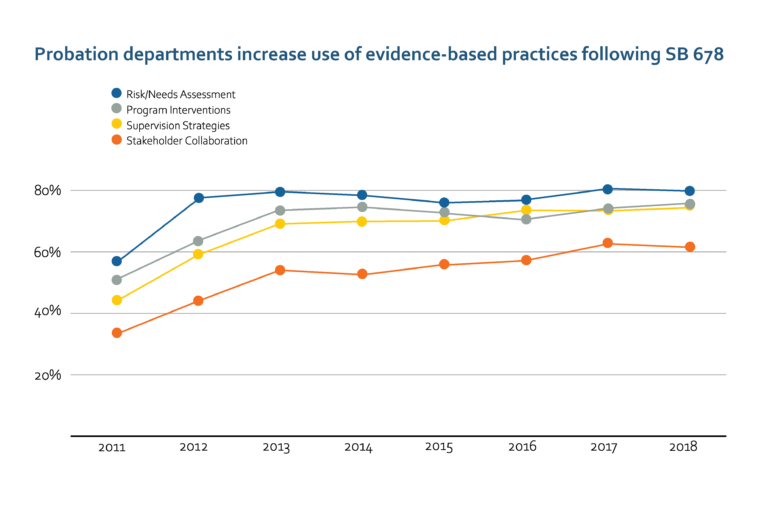
According to Grattet’s report, the California Community Corrections Performance Incentives Act has “reduced prison population, reduced prison revocation (returning to prison after probation), reduced state correctional expenditures, increased funding for probation departments, transformed the culture of probation departments and led to substantial increases in the use of evidence-based practices, and did not lead to increases in crime rates.”

The study primarily focuses on the immediate policy impacts of SB 678. Impacts were measured by changes in prison population and analysis of the evolving culture of probation work.

“Prior to the reform, the [probation officer] profession was more focused on law enforcement activities,” Grattet said. “What we’ve seen and documented in the aftermath of the reform is a gradual increase in the what we call the ‘social work’ parts of the job.”

Grattet’s research was commissioned by the California Probation Resource Institute (CaPRI). 

Brian Richart, the president of the Chief Probation Officers of California organization, explained the impact of Grattet’s research on California law enforcement practices. 

“There is the accountability piece and there is the rehabilitative piece to what we do,” Rickart said. “Probation officers are a synthetic blend of a variety of disciplines.”

CaPRI commissioned Grattet’s research on the effects of SB 678 in order to understand which procedures and operations are most effective in achieving California’s prison reform goals.

“The focus of the legislation 10 years ago was to reduce the prison population by providing a meaningful alternative that could positively impact crime trends in California as well,” Richart said. “Given that California tends to lead more than follow in probation trends, we thought it would be best to focus on probation trends in California from a research perspective. We want to build some infrastructure and build some capacity for California to do that.”

A press release published on April 29 served to inform the community about the research findings. Richart explained that the goal of SB 678 and CaPRI is to educate and train law enforcement and politicians about effective “evidence based practices” regarding prison reform.

“We conducted our press release last week to let the world know that their paper existed,” Richart said. “We want to serve to educate the industry and policymakers so that they can see what works and make well informed policy decisions moving forward.”

SB 678 was the first of many additional California prison reforms and realignment goals. 

“California is in many ways, leading the country in terms of downsizing their reliance on prison and jails,” Grattet explained. “There’s still a long way to go but this particular piece of legislation was in many ways the moment where the reform really kicked off.”

Richart noted that Grattet and Bird’s research is truly unique. 

“[It is the] first of its kind, never-been-done-before in California,” Richart said. “[They are] on the leading edge of something new.”

Written by: Hannah Blome — campus@theaggie.org

Mental Health Initiative celebrates fourth annual mental health awareness month with daily events

MHI officials talk about organization’s mission, implications of hosting events online

Every May, in celebration of Mental Health Awareness Month, the UC Davis Mental Health Initiative (MHI) hosts daily events geared toward destigmatizing and improving understanding of mental health. The student-run campus organization focuses on a different intersection of mental health during every Zoom event, placing high value on inclusivity and encouraging diversity in the demographics who join. 

“We want to invite people to learn more about how mental health is not simply just a one-type model where you go to therapy with a white therapist and they assume you’re able-bodied and they assume you have enough money,” said Deborah Widjaja, a fifth-year neurobiology, physiology, and behavior major who co-directs the MHI. “Mental health really is more than just that — it’s community care, it’s culturally relevant, it is justice-seeking, it is caring about your neighbors, caring about yourself.”

 During the month, online events can be accessed from the organization’s Facebook page. These events include themes such as sexual assault, masculinity, autism, mass incarceration and basic needs. Widjaja said observing the events, especially when the theme doesn’t apply directly to someone’s identity, can be illuminating, as the events are meant to foster improved understanding of the realities of others, in addition to an understanding of oneself. 

“It’s a learning space, so you come in there to learn more, to humble yourself on what it is that you don’t already know — and I think that should be the mindset of everyone,” Widjaja said. “I don’t think people should shy away from knowing or honoring something or someone else because you don’t know how to. You go there because you don’t know how to, and so you go there to learn how to.” 

  In addition to daily events, the MHI also posts stories to its Instagram, featuring DIY videos and recipes. To kick off the month, they hosted a “Livestream with Llamas,” which had 850 total guests in attendance. 

Widjaja said the new online format of the events is a factor that makes attendance much easier, especially for those whose anxiety may have prevented them from joining before. 

“Let’s say you just woke up from a nap,” Widjaja said. “You can literally just roll […] to your side and open your laptop or your phone and just jump in on the event. I think that’s a lot of flexibility. I think this is especially useful for folks with a high level of anxiety […] or some level of just not wanting to be around people, because sometimes people just don’t. Maybe you’re introverted, maybe it’s just not your day.”

Inara Chatoor, co-publicity coordinator of the MHI, emphasized the importance of not letting the global pandemic overshadow the importance of Mental Health Awareness Month. 

“[A] great thing about carrying on with our events without focusing too much on the pandemic is that it […] gives a little sense of normalcy, where just because there’s a pandemic doesn’t mean the other intersections of mental health automatically do not matter anymore,” Chatoor said. “We still wanted to continue on with our month, because we wanted to acknowledge that for the people in those communities, for the people struggling with those intersections, they still have a platform; their feelings are still valid.”

With the new online operation, the MHI’s events are open to UC Davis students as well as anyone with access to the Zoom links. Chatoor recounted that one event’s turnout included a variety of geographic representation.

“It was people tuning in from [places] like Canada, Seattle,” Chatoor said. “That’s the small positive side of having these virtual events is that we can reach out to people, whoever it may benefit, and it’s not limited to people who can show up at Wellman Hall at 7 p.m.” 

The MHI strives to create the right online environment to discuss mental health: one where anonymity is also an option among speaking out. 

“Nobody is asking you to give your name and major, or three facts, any of that kind of stuff,” Chatoor said. “It’s all for folks to learn. It’s all for folks to be in a comfortable space, talking about an intersection which they are passionate about, or which they want to learn more about and have a discussion on. We’re just trying to show everybody that it’s okay to pause and think about your mental health. It’s okay to start the dialogue, it’s okay to start advocating about it, and just to take a breath.”

 Written by: Lyra Farrell —  features@theaggie.org 

There has never been a better time to play video games

There has never been a worse time to develop video games

Video games can be a vital distraction from the monotony of quarantine life, but for the developers that worked hard to crunch these games out, the near-future landscape of games looks bleak.

Video game sales are near an all-time high. “Animal Crossing” is breaking worldwide records. “Doom Eternal” had the best sales weekend in the history of the franchise. And professional drivers like Travis Pastrana are staying sane by competing in “Forza” online. Everyone is finding their own way to stay sane or fill up some time, and video games provide the perfect solution.

“Gaming is one of those areas that people are diverting to from other activities that they would have done in a normal world,” Mat Piscatella, an analyst at marketing research company the N.P.D. Group, said to The New York Times. “The game sales that are coming out are breaking franchise records.”

But while franchises are selling at an all-time high and companies are doing better than ever, video game developers and publishers are scrambling to tackle this indefinite crisis. The release of the most anticipated game of 2020, “The Last of Us: Part 2,” has moved from May 29 to June 19 due to concerns over physical sales. Factories are closed, leaving no means of producing a game physically in the midst of a pandemic. Even worse, the entire plot of “The Last of Us” was leaked online. For invested fans like myself, avoiding spoilers is becoming a headache.

Companies like Ubisoft were ahead of the curve and learned all they could from their studios in China about how to successfully work from home. 

But some developers are equating working from home during the pandemic to the same experience of “crunch.” For those unfamiliar with the term, “crunch” refers to the strenuous work conditions in video game development in the final stages of a game’s development where developers can work up to 100 hours a week with lengthy periods of overtime. 

Not to mention that parents working from home also have to homeschool their children in the time warp of a quarantine workday. Being stuck at home can suck all of the motivation and energy out of us — for developers, that’s on top of the hours and work it takes to create a video game with hundreds of developers at home trying to collaborate. Under these conditions, we cannot expect the quality of our games to be the same come fall, winter and spring. 

Any sort of collaborative or creative work necessitates a creative and collaborative environment. Now, without that, video game development is in a terrifying spot. The biggest gaming event of the year, E3, is cancelled. And along with it, a multitude of opportunities for developers both big and small to show off their work that has been in the making for years. Many who were expecting to nail down marketing deals and financing for games at E3 this year are now scrambling to find ways to fund their game. For independent developers, lag in certification and funding could be a death sentence for their studios and projects. 

But amid all of the trouble that developers are experiencing, for me, there is no better time to play video games than right now. Waking up and checking on the turnip prices in “Animal Crossing” is becoming a habit. “Animal Crossing: New Horizons” was seemingly designed with a quarantine lifestyle in mind. The game gives players their own new world. A world that seems intentionally slow and annoying at times, but one that we could all use to give us a means of escape — and so has taking breaks throughout the day to play “Fortnite” with my roommates. Both of my newfound traditions are vital elements to find the motivation in a situation where it’s all too easy to fall into anxiety or the slowness of indistinguishable days. 

It’s easy to criticize and complain about technology when it comes to stealing our data, dictating how we act and making us feel lonely. But technology can also provide us with the tools to be social when we are stripped of all traditional means of socializing. Video games provide us with a virtual space to hang out with friends, but more than any other source of entertainment, games are an interactive distraction from the anxiety-inducing environment that is our new reality. 

With the world in turmoil, video games are helping us now more than ever — we should support those who are struggling to make them. Without our support, the creative work that we love won’t be present in our future. Sending a message of encouragement to your favorite developer or creator could go a long way in our fight to return to normalcy. We should thank them not only because these games are fun to play, but because they allow us to escape the tedium of quarantine.

Written by: Calvin Coffee — cscoffee@ucdavis.edu

Disclaimer: The views and opinions expressed by individual columnists belong to the columnists alone and do not necessarily indicate the views and opinions held by The California Aggie

Atheism to orthodoxy: Russia’s convoluted relationship with God

Seventy years of atheistic rule later, God finds its way into the Russian constitution

Following decades of atheism in the Soviet Union, the resurgence of the Russian Orthodox Church signals a new nation. Today, television stations broadcast live sermons, citizens line up for holy water and Christmas trees light up Moscow’s Darwin museum. President Vladimir Putin even vowed to rebuild Christian churches in war-torn Syria back in 2017. 

With plans to instate God’s will into the Russian constitution, the necessary separation between church and state diminishes.

Currently, the constitution defines Russia as a secular state, stating, “no religion may be established as a state or obligatory one.” Including God in the document would be a major amendment, especially given Russia’s complicated history with religion.

The amendment would also rule out gay marriage in Russia by officially defining marriage as a union between a man and a woman. 

“We can and should address the fact that family and marriage are relations between a man and a woman,” said Duma lawmaker Pyotr Tolstoi. “If it is fixed at the constitutional level, this will remove a number of questions that they are trying to ask us in the European Union.” 

         Additionally, the amendment would notably exclude members of other religious groups, such as Muslims, who already face marginalization from the government. Russia’s Supreme Court even previously declared Jehovah’s Witnesses, a Christian denomination known for their outspoken beliefs, as an extremist organization. 

Ironically, just 30 years ago, two-thirds of Russians claimed no religious affiliation

         During Vladimir Lenin’s reign of the early 20th century, atheism had a simple definition. Instead of disbelief in God, it implied the absence of religion entirely, a seemingly natural symptom of the Soviet Union’s development into a modern society.

Although churches and monasteries were still legal, officials found ways of shutting them down, like in the 1931 demolition of Moscow’s Christ the Savior Cathedral. In a time of social instability and reconstruction, the Orthodox Church was a political threat. 

After successful attempts to demote the church, Stalin welcomed religion back into public life during World War II, seeing it as a way to promote patriotism and win the good will of allies. Once Nikita Khrushchev entered office in 1953, his anti-religious campaign transformed atheism from the absence of religion to the commitment to science and rationalism — a vision that aligned most with communist ideals.

Just before the fall of the Soviet Union in 1991, Mikhail Gorbachev brought the Orthodox Church back one last time before it became state-sanctioned. At the time, religion seemed to be the solution for the nation’s growing moral crisis. Indifference became the dominant principle.  

In the post-Soviet era, Putin continues to invoke God in his public speeches, which gives the church a more prominent place in Russian political life. He presents himself as a defender of traditional morality by supporting conservative ideas. Despite his efforts, the truth remains as such — most Russians don’t abide by Orthodox morals. 

Although the majority of Russians identify as Orthodox Christians, just 6% attend church weekly and only 17% pray daily. In 1920, the Soviet Union was the first country to legalize abortion. Today, the rate of abortions is more than double that of the U.S., even with strong objections from the Orthodox Church. Premarital sex and divorce are also less stigmatized in Russia than in other countries. 

Russia seems like it would be the last country to put God into its constitution, especially with a former KGB member as president. Although some view it as a tactic to get Russians out to vote for the other proposed amendments, Putin’s trivial intentions have irreversible consequences.  

Enshrining God into the constitution doesn’t make the government any more righteous than before — especially when many political decisions are free of moral substance. If the Orthodox church does not speak for everyone, then when the decisions of the people are concerned, it should not speak at all.

Written by: Julietta Bisharyan — jsbisharyan@ucdavis.edu

Disclaimer: The views and opinions expressed by individual columnists belong to the columnists alone and do not necessarily indicate the views and opinions held by The California Aggie

The forced obsolescence of aging superstars

Creative liberties should persist outside of age, gender

I used to roll my eyes as a kid when my parents sat me down in front of their desktops to listen to a musician from their generation. As children, we can find it difficult to understand the magnitude of these artists’ influence in the world. Our society loves to ravenously consume the next, flashiest thing that flitters into our vision. What happens when yesterday’s stars aren’t ready to be cast aside?

It would be wrong to speak about the artists of today without recognizing the influence of past performers. Lady Gaga’s 2009 VMAs performance “Paparazzi” can be likened to Madonna’s controversial “Vogue” performance at the same awards show. The One Direction craze that defined my middle school career is still overshadowed by the infamous Beatlemania of the 1960s. 

I’m inspired by these people: yesterday’s performers who still produce music today. Artists like Paul McCartney, Bruce Springsteen and Madonna are still cranking out albums and cashing checks. This is all pretty impressive considering that they’ve been at this process for as long as they have. Creatively, I can see myself burning out in the next three to five business days. That’s what makes these people superstars as opposed to just momentary bodies in the orbit of fame. 

Yet a lot of the noise surrounding these particular artists revolves around their artistic vision in relation to their age. The ways that artists present themselves in their music is crucial to both the success of their records and the satisfaction of the artists themselves.

Bruce Springsteen’s most recent release, “Western Stars,” is an album about horses. The only personal vendetta I have against this record is that I am terrified of horses. But nevertheless, I wasn’t a huge fan of the album, and I can attribute that to my own personal taste. 

Madonna’s most recent record, “Madame X,” is an ode to the eponymous character who is Madonna’s secret agent alter ego. In a teaser video, Madonna reveals that Madame X is not only a secret agent, but someone who inhabits many different personas, such as a head of state or a student. 

These two albums by Madonna and Springsteen are more similar than they seem. They were actually released on the same date: June 14, 2019. They are also very similar conceptually. Both Springsteen and Madonna aim to reclaim a nostalgia for past lives and experiences — the American west and globe-trotting, respectively. And they were both released by aging music idols.

Both albums, however, diverge in their critical reception. 

“Madame X” aimed to highlight the many different personas that Madame X — and thereby Madonna — can manifest. Springsteen is doing the same thing, changing himself for nuanced art, but in a different way. Both Madonna and Bruce Springsteen seem to strive for the same artistic trope, similar to Beyonce’s Sasha Fierce or Nicki Minaj’s Roman. 

Despite these clear artistic similarities, critics ripped into Madonna’s album much more than Springsteen’s album.

 “Western Stars” reviews were largely positive. Critics praised the cinematic aspects of the album and Springsteen’s ability to metamorphose into a cowboy for the sake of his art. Pitchfork’s review only alluded to Springsteen’s age once and finished off the piece by touting Springsteen’s continued heroism in his old age. 

On the other hand, Critics claimed that Madonna’s direction was worrisome. But they should be reviewing an album, not an artist’s mental state. Many of the reviews were riddled with sly allusions to Madonna’s age. Pitchfork references “falling asleep at the wheel” and asks readers if we’re all “getting too old for this.” I’m all for a holistic review, but there’s a line between a review and a personal attack.

You don’t “worry” about artists. You worry about your grandparents. You worry for the people who you feel aren’t capable enough to hold their own in the world. You definitely don’t need to worry about Madonna. Multimillionaire status doesn’t come without the ability to put in work. 

Many people frame this issue as one of ageism, but it would be unwise to ignore the sexist tropes that are hidden beneath uppity music terminology and review jargon. 

With these two aspects at play, the cards are stacked against artists like Madonna. We’ve watched it happen all over pop culture. The film industry struggles with the same dynamics, as it has for years. 

All artists should be able to explore whatever identities or perspectives they see fit. To assess the quality of art through the lens of an artist’s age or gender identity is to do a great disservice to the power and value of art itself.

Written by: Isabella Chuecos – ifchuecos@ucdavis.edu  

Disclaimer: The views and opinions expressed by individual columnists belong to the columnists alone and do not necessarily indicate the views and opinions held by The California Aggie

Inspiration in art: Three students are finding ways to be creative in quarantine

Student artists use quarantine as “an opportunity” to dive into their passions

Maxine Aiello, Natalie Tate and Sally Ellberg are three UC Davis students that have found comfort in art, utilizing creative outlets in order to present a new narrative of the world. By analyzing their styles, backgrounds and intentions, these artists each provide a unique understanding of how art surpasses pen and paper, as well as how it can become an integral part of every person’s life. 

Aiello, a fourth-year studio art major, makes art focused on the environment and climate change, using recycled materials for sculptures. She is responsible for the mirrored pieces on the trees throughout UC Davis’ campus — creating living designs out of her passion for the environment. 

In her studio art major, she discovered the therapeutic aspects of doodling, finding it to be an easy and effective way to stimulate a creative mind.  

“I doodle a lot for someone that loves art and takes it seriously,” Aiello said. “I would say that doodling is the most fun, freeing and beneficial. It may not turn out as a masterpiece, but it’s a way for you to find out what you like to draw if you can find patterns in the things that you doodle. For me it was aliens, […] so eventually I went with it and started developing the doodles a little more into a particular style with a particular message. I use them as a metaphor for ourselves, often portraying the less beautiful sides of our personalities.”

One of Aiello’s main inspirations is Agnes Martin, an artist who paints with lines or grid patterns, advocating for personal discovery through art.

“[Martin] said she paints with her back to the world, which I think is great advice you need to follow when making art,” Aiello said. “You need to tune into yourself and shut out the rest.”

Tate, a second-year biological science major, also finds solace through her art and has used quarantine to develop her interest in portraits. She works in color as well as black and white, experimenting with different compositions in order to portray feeling and reaction. 

“I saw quarantine as an opportunity to really dive into my passions and hopefully teach myself something new,” Tate said. “I love how experimental art is — there’s so many abstract styles that I’m drawn to, and I’m constantly getting new inspirations and ideas from other artists. At the moment, portrait art is my absolute favorite just because they capture so much emotion and I love to play around with different facial expressions and color schemes.”

Ellberg, a fourth-year biological sciences major, shared the inspiration behind her paintings, which incorporate female power and natural beauty. Her artwork portrays dancing women, angry tigers and orange trees, all of which are composed with vibrant colors.

Ellberg said quarantine has allowed her to continue to craft her art, finding ample free time among the endless days. 

“A lot of my inspiration comes from a compilation of artists I have been following on Instagram for the last few years,” Ellberg said. “Try discovering artists you really like and you might notice a theme — like materials used, content depicted, et cetera — that is similar in all of them. That’s ultimately how I found my style: realizing through all my favorite artists that they were all abstract with elements of nature and women.”

 Written by: Athena Aghighi — features@theaggie.org

Humor: To avoid coronavirus election delays, GOP unveils plan to “Vote by Male”

Expanding limited voting opportunity to greater numbers of fewer people

The coronavirus pandemic threatens to throw America’s elections into chaos. Luckily, Senate Republicans have proposed a brilliant plan to guarantee that our elections can safely go ahead across the country, no matter what. The bill guarantees widespread voting access for as many eligible voters as possible simply by redefining “eligible voters” as narrowly as possible. Republicans claim Democrats have no room to complain because the bill is almost exactly the same as their failed “Vote by Mail Act” that they proposed in January 2019 — just with a few minor edits and spelling changes. Reporter R.E. Porter obtained a leaked copy of the bill: 

A BILL

To amend the Help America Vote Act of 2002 to allow all eligible voters to vote by mail in Federal elections, to amend the National Voter Registration Act of 1993 to provide for automatically voter vote R registration.

Be it enacted by the Senate and House of Representatives of the United States of America in Congress assembled,

SECTION 1. SHORT TITLE.

This Act may be cited as the “Vote by Mail Male Act of 2019 2020”.

SECTION 2. FINDINGS. 

Congress finds the following:

(1) As of early May, 16 states have postponed their primary elections due to coronavirus concerns. The President cannot postpone the general election without an act of Congress, but state governments could use their emergency powers to “drastically curtail in-person voting locations” or even to “take back the power to determine which candidate wins their state in the general election,” given that there is “no constitutional obligation that a state support the presidential candidate who wins a plurality of its vote — or that the state hold a vote for president at all.” Scary! Yes, that’s right, most of us Congressional Republicans are just as afraid as anyone of another four years of Trump, even though we’re too Goddamn gutless strategic to say it — but we simply don’t want to give up our own power in the process.

(1) (2) An inequity of voting rights exists in the United States because voters in some States have the universal right to vote by mail while voters in other States do not.The goal of more equitably distributing the inequitableness of this inequity can be achieved not by adopting universal vote by mail rights, but by adopting universal vote by male for Rights, given that women are more likely to vote for DemocratsThus, voting by male rather than by mail could result in more Congressional seats for Republicans!

(2) (3) Many voters often have work, family, or other commitments that make getting to the polls and waiting in line for hours on election day difficult to impossible, especially for disabled voters.If we send only the strong, rugged, Republican men to the polls, these concerns can easily be avoided. And since men represent less than half of the population, the lines at the polls will be shorter too!

(3) (4) Voting by Mail Male is cost-effective. We always say we care about this when we really don’t, so this is just a bonus. However, this makes sense logically since proper conservative God-fearing men with good old-fashioned traditional values all know that women can’t handle money

(4) (5) Voting by Mail Male typically increases decreases turnout in all elections. For obvious reasons, we’d like to keep voter turnout as low as possible. This goal is made more feasible by limiting voting to the gender that generally favors Republicans.

(5) (6) A crucial component of a modern voting system is making it easy, affordable, and accessible to register to vote.

SECTION 3. PROMOTING ABILITY OF VOTERS TO VOTE BY MAIL MALE  IN FEDERAL ELECTIONS.

(a) VOTING BY Mail Male IN FEDERAL ELECTIONS. — 

(1) IN GENERAL. — Subtitle A of title III of the Help America Vote Act of 2002 (52 U.S.C. 21081 et seq.) is amended by inserting after section 303 the following new section. This is too wordy and jargony to hold Trump’s attention, and we can’t lose that before that moron signs this into law for us! The President is far too brilliant, busy, and handsome to waste time reading this. Cut and paste the following into law, Mr. President, Sir!

“SEC. 303A. PROMOTING ABILITY OF VOTERS TO VOTE BY MAIL.

“(a) In general.—If an individual in a State is eligible to cast a vote in an election for Federal office, the State may not impose any additional conditions or requirements on the eligibility of the individual to cast the vote in such election by mail, except to the extent that the State imposes a deadline for returning the ballot to the appropriate State or local election official.

“(b) Provision of ballot materials.—Not later than 2 ?weeks before the date of any election for Federal office, each State sShalln’t mail ballots to individuals who are registered to vote in such election.

“(c) Accessibility for individuals with disabilities.—All ballots provided under this section shall be accessible to individuals with disabilities in a manner that provides the same opportunity for access and participation (including for privacy and independence) as for other voters.

“§ 3407. Ballots (2) provided for voting in Federal elections

“Ballots mailed pursuant to section 303A(b) of the help America Vote Act of 2002 (individually or in bulk) shall be carried expeditiously and free of postage.”.

(2) TECHNICAL AND CONFORMING AMENDMENTS .—

(A) TABLE OF SECTIONS.— The table of sections for chapter 34 of title 39, United States Code, is amended by adding at the end the following:

“3407. Ballots provided for voting in Federal elections.”.

Author’s note: Some of the original clauses of the Vote by Mail Act of 2019 have been shortened or paraphrased for brevity’s sake, but still accurately reflect the contents of each clause so as to emphasize the irony of the “edits.” Some clauses and entire sections of the original bill have been omitted for comedy’s sake.

Written by: Benjamin Porter— bbporter@ucdavis.edu

(This article is humor and/or satire, and its content is purely fictional. The story and the names of “sources” are fictionalized.)

UC Davis Professor Heghnar Watenpaugh awarded Guggenheim fellowship

Watenpaugh focuses on UNESCO world heritage site

On April 8, the John Simon Guggenheim Foundation awarded UC Davis art history professor Heghnar Watenpaugh with a fellowship to support her research on the medieval city of Ani on the present-day Turkey-Armenia border. She is one of the 175 artists, writers, scholars and scientists awarded a fellowship, selected from a pool of 3,000 applicants. Prior achievement and potential are the basis for the foundation’s decision. 

“It is a tremendous honor to receive this fellowship,” Watenpaugh said via email. “Such prestigious awards are tremendously important, they lend prestige and authority to any research project.”

Declared a world heritage site in 2016 by UNESCO, Ani served as a cultural and trade center on the Silk Road during the 10th and 11th Centuries A.D. Watenpaugh specializes in the history of art, architecture and urbanism in the Middle East as well as cultural heritage and museum studies, which makes Ani a specific point of interest for Watenpaugh’s research. Several of Ani’s architectural feats, like the citadel, still remain, serving as a testament to the ingenuity of their medieval architects. 

“I have always known about Ani, since it is such a central cultural and religious site for Armenians,” Watenpaugh said via email interview. “I was only able to visit Ani as an adult. Ani is a stunning site, and no visitor can leave unimpressed.”

Watenpaugh’s current project is based on an article from 2014 titled “Preserving the Medieval City of Ani: Cultural Heritage Between Contest and Reconciliation” for the Journal of the Society of Architectural Historians, according to the UC Davis website. The article won the Ömer Lütfi Barkan Article Prize from the Ottoman and Turkish Studies Association. 

“I am writing a book that will tell the history of this city, and examine the impact these modern visitors had on the city and the way the city transformed them in turn,” Watenpaugh said via email.

She expressed the importance of studying Ani and the vantage point it lends. 

“Ani is an example of a stunning cultural heritage site that is caught in contentious political and historical processes,” Watenpaugh said. “The history of Ani sheds light on dilemmas shared by other cultural heritage sites in danger in post-conflict societies like Jerusalem, Belfast, Mostar, Bamiyan, or Beirut.”

According to a press release, the foundation has granted more than $375 million in fellowships to over 18,000 individuals since its establishment in 1925. This year’s class of fellows are represented by 53 scholarly disciplines and artistic fields, 75 different academic institutions, 31 states and the District of Columbia and two Canadian provinces; fellows range in age from 29 to 82.

More of Watenpaugh’s research and information about the lectures she teaches are available on the Art History Program website

Written by: Josh Madrid — arts@theaggie.org

Shelter-in-place advice, based on your Hogwarts house

Like horoscopes but for houses

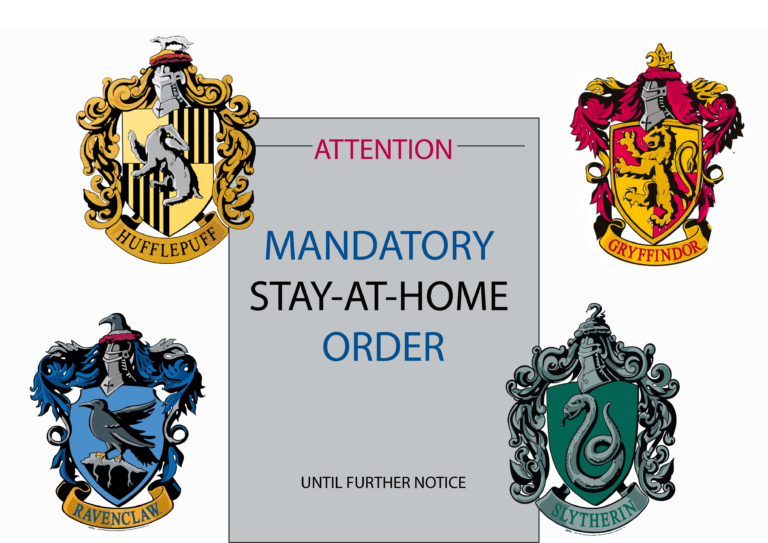
J.K. Rowling’s Hogwarts houses are such a popular concept that just about everyone on the face of the planet knows what house they belong in. With that said, in these messy times of staying at home while handling schoolwork, housework and maybe even actual work, these are my guesses on how you’re handling this situation based on your Hogwarts house.

Ravenclaw

This quarter goes out to the Ravenclaws. There’s a big difference in being the “smart” house to being the house that values intelligence and creativity. Wherever creativity is, adaptation soon follows. In 2020, adapting is definitely the solution to all of your problems. School continues and professors give three-hour lectures instead of the regular two (because of the pausing and note-taking and all), so you’ve put your best foot forward in handling the situation in a thought-out and timely manner. This is probably what’s best, and it’s not something that everyone can do. 

You’ve created a schedule for yourself each day, prioritized what’s important and tried to follow through to the best of your abilities. Google Calendar is now your best friend, and I can assure you that no one looks better in those blue light glasses than you do. This time has been going well for you, though I must admit your sleep schedule is beyond fixable. Two a.m. is not a good time to sleep, Ravenclaw — you and I both know that. You are currently the type of person that will get everything done even if it kills you. But the truth of the matter is, you can’t go around with a bad sleep schedule, terrible eating habits and headaches from staring at social media all day and say that you’re “thriving.”

Hufflepuff

You can’t do it all, little badger. Hufflepuffs are using this time to do things they never had the time to do because without having to drive everywhere, get dressed or physically attend meetings or class, everyone has at least an extra hour in their day. There are so many opportunities to get ahead on work, read a little more, pick up a new hobby or binge-watch a new show. This was supposed to be the perfect time to do everything — I know, I had that thought too, and it sounds like a beautiful idea. But let’s be honest, that’s all it was — an idea. 

Taking on something new was going well for a while, but some weeks are better than others. Some weeks it’s hard to simply open up your laptop and go to lecture, while other weeks you’re an entire week ahead on your readings and are speaking up in class. Everything is fluctuating, and it’s important to remember that this is completely okay. 

Hufflepuffs, there is a very fine line between giving your work your all and completely burning out because of it. It’s not okay to beat yourself up for not doing one reading today. It’s okay to have lazy days and it’s hard for Hufflepuffs to grasp that concept. Solely focusing on doing work and using this time to improve yourself is one thing, but not focusing on your mental health is something to watch out for. It’s important to remember that as attentive as you are with your friends, you should also check in with yourself. Take the advice you’re giving everyone and use it.  

Slytherin

You are doing surprisingly well, Slytherin. If not for the sheer determination to get a good grade, then for the idea that you’re not going to allow a blow to your GPA. This is the time for perseverance, and this is what you’re best at. You are the type to find something that benefits you in every situation, and this stay-at-home order is no different. 

You are most definitely the type of person who gets ready for meetings from the waist up, and I don’t mean throw-on-a-new-T-shirt kind of ready. I mean style your hair, maybe do a little makeup and throw-on-your-best-smile type of get ready. You go to office hours, speak up in class and even have the video on while you’re in a Zoom lecture. 

At this moment, what’s important for you to notice is that you’re trying. You’re striving for your best and that’s wonderful, but keep in mind that these are uncharted waters, so it’s okay to simply be your best and not the best. 

Gryffindor 

This time is the worst for you. Out of the four houses, you are by far the most social. You miss hanging out on the Quad and having a white chai; you miss the sound of hundreds of bikes (and bike crashes) around campus and you even miss the long lines at the CoHo during lunch. It hasn’t been going great, and with your splash of arrogance, it’s easy to fall behind on classwork. Procrastination has never been easier, and this is a big problem for you Gryffindors. But not to worry, because you have your friends by your side. 

At the moment, your friends are your biggest support system. And as the extroverted person you are, you’ve heavily relied on them during these times. If you’re in Gryffindor, you’ve most likely set up FaceTime calls with your friends and enjoy the weekly Zoom meetings that school organizations are still putting on. You’ve even resorted to having FaceTime study sessions with your friends. By simply having them on the phone and doing work, you get to enjoy your time being alone without feeling entirely lonely. 

A quick tip for Gryffindors during these hard times: Try using the Netflix Chrome extension. It lets you watch Netflix with friends and chat with them through a built-in chat box. It gives you a movie night with friends in the comfort of your own home and jammies. 

With that said, it is important for all the houses to remember that this is an unprecedented time, and it’s okay to not be productive. It’s okay to fall a little behind — not having any motivation is understandable. Sometimes it’s best to take a step back and do what you love doing for a couple of hours. Whether this means binging Netflix, playing Animal Crossing or simply scrolling through Instagram for a while, take a couple of breaks here and there.

Written By: Itzelth Gamboa — arts@theaggie.org

Culture Corner with Andrew Williams

The Arts Desk’s weekly picks for movies, books, music, television shows

Movie: “Death of Stalin” dir. by Armando Iannucci

Scottish director Armando Iannucci refits the demise of Joseph Stalin to his own satirical lens, conjuring up either hearty laughs or prolonged looks of shock depending on your personal opinion of the late Soviet Union. Shenanigans ensue when Stalin croaks and his inner circle jousts for their position. Shots are fired and insults fly high. Making matters more bizarre, all the bickering is delivered in an assortment of haphazard accents — mostly British and none Russian. With the plot being so ambitious and off-the-walls, the execution had to be on point. Taking up the mantle of this task was a cast of comedic stalwarts including Steve Buscemi as a jovial scheming Nikita Khruschev; Jeffrey Tambor as meek surrogate ruler Georgy Malenkov; and Rupert Friend as Stalin’s chronically drunk and petulant son Vasily. All in all, “Death of Stalin” is about as fun as it is absurd — and boy is it absurd.

Book: “Phantom Tollbooth” by Norton Juster

My father is an architect and like many architects, he gravitates toward everything architecture. So naturally, when deciding on what to read to his 8-year-old son, he picked up a novel written by an architect. “Phantom Tollbooth” by Norton Shuster is a tale of three characters: a boy, a watchdog (a literal fusion between a watch and a dog) and a stuffy humbug. They set off together on a quest to restore Rhyme and Reason — two princesses —  to their rightful place on the throne. While meandering through the bustling word-market of Dictionopolis and traversing the mines of Digitoplolis, the audience is swept into Juster’s love for everything that has to do with knowledge. His contagious admiration for a child’s curiosity is brimming on every page. This book masters every respectable grade school’s teacher dream: to make learning fun. Although the novel is meant for children, I revisited it this past week and found a new appreciation for Shuster’s wit and nuggets of wisdom. Flipping the book shut, I found I had heightened senses and refreshed appreciation for the time that’s tick, tick, ticking away.

Album: “James Blake” by James Blake

There is an often cycled mantra in the design world that “less is more.” James Blake’s 2011 debut album embodies this mantra to a tee. Blake breaks down his art to the minutiae, removing anything that isn’t essential to the feeling being conveyed. More often than not, that feeling is isolation. The wispy electronic soundscapes, deep blue piano and torn soulful voice paint a collage of despondency. His lyrics are even minimal, building more an underlying tone than a precise message. Although I would not recommend heavy doses, his music can be a tonic to alleviate the ache of moments when we feel most alone. When it seems like the world has tuned you out, James Blake is here and he gets it.

Television Series: “Mad Men”

The Dos Equis Man better start hunting for a new day job because Donald Draper is officially the most interesting man in the world. Draper, played by Jon Hamm in his breakout role, is a dashing, debonair and deeply depressed ad-man working on Madison Avenue in the 1960s. The writing department of “Mad Men” pulls no punches, depicting boardrooms and bedrooms laden with all the -isms: sexism, racism and a hefty dose of alcoholism. Yet within all the vulgar humor and frankly infuriating decision making by the protagonist, there isn’t much not to love. The performances by the women of “Mad Men,” namely Christina Hendricks as Joan Holloway and Elisabeth Moss as Peggy Olson, steal the show. Aesthetically, the show hits the nail on the head at every point from set design to Roger Sterling’s impeccable double-breasted suits. But beyond that eye-pleasing facade, we find the show’s core — a swirling mess of insecurity that taps into places even great television rarely ever can.

Written by: Andrew Williams — arts@theaggie.org

Ahmaud Arbery’s killing was a modern-day lynching

We cannot allow for systematic racial brutality to go unchecked 

On Feb. 23, Ahmaud Arbery, a Black man, went for a run outside his home near Brunswick, GA. A former high school athlete, Arbery was known as an avid runner by friends and family. Shortly after 1 p.m., Arbery was confronted by two White men, a father and son, Gregory and Travis McMichael. The two men allegedly suspected Arbery of burglary, grabbed two weapons — a shotgun and a handgun — and followed him around a residential neighborhood in their truck. Eventually cornering him, they shot Arbery three times, killing him. Unfortunately, this incident is not the first of its kind, and it won’t be the last. 

Before recusing himself from the case, District Attorney George E. Barnhill, in a letter to the Glynn County Police Department, stated that the McMichaels were within their rights. “A private person may arrest an offender if the offense is committed in his presence or within his immediate knowledge,” Barnhill said, citing a state law. But even so, this does not give the McMichaels the right to be judge, jury and executioner.  

“Ahmaud Arbery was out for a jog,” said S. Lee Merritt, a lawyer for Arbery’s family, in a statement Saturday. “He stopped by a property under construction where he engaged in no illegal activity and remained for only a brief period. Ahmaud did not take anything from the construction site.” 

More to the point, no individual has the right to take the life of another on the basis of their own “suspicions.” 

“The law does not allow a group of people to form an armed posse and chase down an unarmed person who they believe might have possibly been the perpetrator of a past crime,” said Michael J. Moore, Arbery’s defender, in an email to The New York Times.  

We, the Editorial Board, want to acknowledge the personal and honest reaction from Chancellor Gary May who asked in a Twitter post, “What if I were running in Brunswick, GA on February 23?” Many of us will never have to ask ourselves this question. 

Americans often like to think they live in a post-racial era, where a country that twice elected a Black man no longer sees color. But for Michael Brown, Eric Garner, Trayvon Martin, John Crawford, Dante Parker, Tanisha Anderson, Tamir Rice, Walter Scott, Freddie Gray, Philando Castile, Atatiana Jefferson and hundreds of other young, Black individuals, this is not the case. 

For two months, the McMichaels were walking free until citizens, politicians and celebrities led a nationwide outcry, underscoring a broader issue of racial brutality. It is unsurprising that a justice system built on the premise of protecting White people and White property continues to fail to protect Black bodies, and shielded two White killers of a Black man. 

White people make up five times more of the total U.S. population than that of Black people, yet Black people are 2.5 times more likely to die as a result of excessive use of force by law enforcement. The reality for Black citizens is that they are constantly under suspicion, and even if they follow the law to a t, they still face brutalization and murder. 

Take Philando Castile, for example. On July 6, 2016, Castile, who was driving with his girlfriend and four-year-old daughter in the car, was pulled over by Officer Jeronimo Yanez. After being asked for his license and registration, Castile informed the officer, as is required by law, that he had a firearm and a license to carry. Despite telling the officer that he was not reaching for his gun, Castile was shot seven times. 

Perhaps even more disturbing than the alarming rate of excessive use of force against Black Americans is the lack of accountability. For decades, lynching mobs went without prosecution, and today, officers standing trial for excessive force or manslaughter are often acquitted. This cannot be the case for the McMichaels.  

The way forward requires not only justice for Arbery but a recognition of a continued systemic failure that allows for murder to be excused as self-defense or an honest mistake. Whether we would like to admit it or not, we all see color and we all have biases. For one, all police departments should implement implicit bias training. We all, and especially those who swear to protect and serve, must acknowledge and confront our prejudices or else the life and death consequences of these prejudices will persist.  

On a more personal level, we must admit to ourselves that we are not free of our own partialities. And we should not be ashamed to confront this fact. What does warrant shame, however, is to continue on in ignorance of these uncomfortable truths. Such ignorance may protect us from feeling embarrassed, but it does nothing to protect innocent people like Ahmaud Arbery.

Written by: The Editorial Board

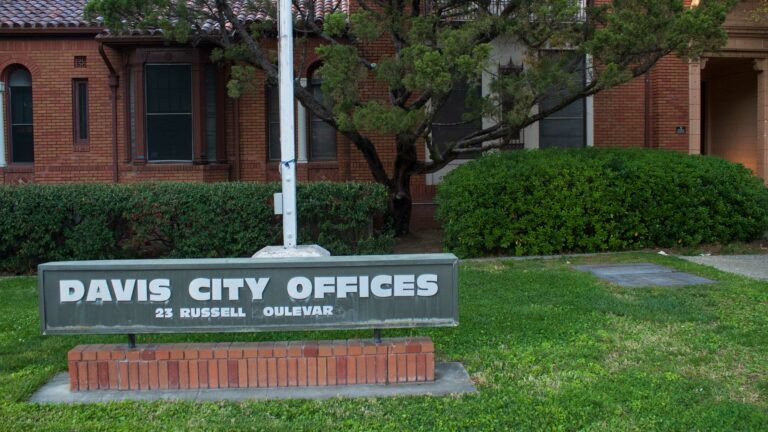
Davis City Council discussing plan for potential sports complex

Mayor Brett Lee explains necessary steps before process can begin 

The Davis City Council is currently looking into the possibility of building a new sports complex. The council remains in the discussion stage on several aspects, such as location and most importantly, finding the funds to do so. 

Davis Mayor Brett Lee explained the city council’s current approach to the sports complex and the impact that COVID-19 has had on any future plans. 

“We had what was called a sports park task force made up of community members looking at the need for additional sports facilities and what it might look like,” Lee said. “After they had done their work, we hired a consulting firm to dig a little deeper into it and their report was presented to the city council a couple weeks ago.”

After the consulting firm presented the city council with a few recommendations on how to begin planning, most of which involved spending a fair amount of money, the city council chose one recommendation with which to move forward, said Lee.

At the moment, the city council will consider making a “request for proposals by some private entities.” There is a belief that a private entity may be interested in partnering with the city to handle most of the upfront costs that would come with building the sports complex, according to Lee. 

Lee explained that due to the city’s current shelter-in-place orders and the majority of businesses in Davis shutting down as a result of the COVID-19 crisis, the city’s finances have taken a hit. This makes it even more difficult to fund such a project. 

“Cities up and down California and probably across the U.S. are not receiving as much tax revenue as normal,” Lee said. 

For this reason, attempting to partner with a private party that is willing to cover some or all of the costs would be the best idea during this time. 

“Without actually testing the waters, it’s hard to answer some folks because they say there’s a lot of private entities that would be happy to build six soccer fields in exchange for naming rights and being able to run tournaments there, which sounds a bit too good to be true,” Lee said.

Nonetheless, the city council will move forward with that idea and open up the option for private entities to present their proposals, if they do in fact have any interest in working with the city and contributing to a potential sports complex. 

Lee also explained that the consultants’ report highlighted that there is a shortage of sporting facilities in Davis.

“We do have a shortage of sporting facilities, whether it’s baseball, softball, soccer, things like that, so there are additional needs,” he said. “Right now, the city doesn’t have the ability to go out and actually pay for those ourselves. So in the interim, we’re seeing if there really is an interest from outside entities to come and help fund facilities like that.”

The city council has not yet figured out where the sports complex would be located, although their original report contained “general magnitudes” and the required acres for this project. The sports complex could be located either in one individual location, or across multiple separate locations throughout Davis, according to Lee.  

Some members of the community have already expressed the desire for more sports facilities. Once a specific proposal is put together, the city plans to gather input and solicit feedback from the community, said Lee. 

Lee describes the current planning for the sports complex as “conceptual,” without much knowledge yet regarding location, cost or how many fields will be constructed. 

“We are going to wait and see if there is any private interest in developing those facilities first and then based upon what we find from that we will figure out what our next steps are,” Lee said. “There’s still lots of steps to go.”

Written by: Rain Yekikian — sports@theaggie.org

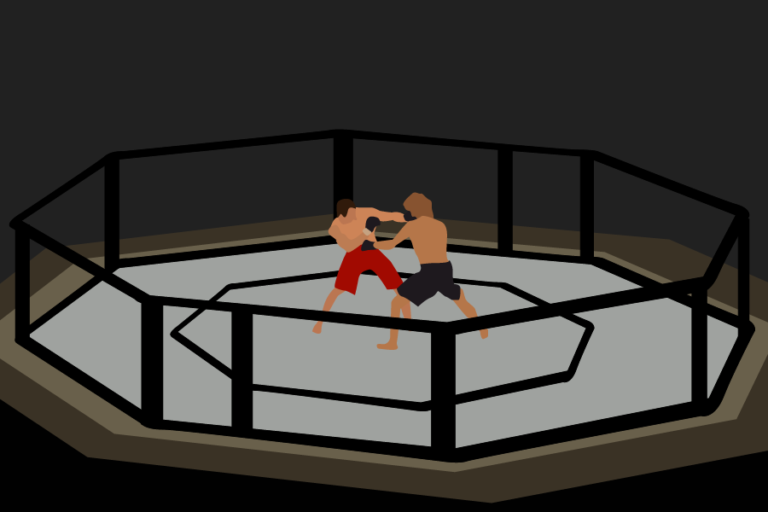
UFC 249 defies pandemic practices

Event goes on despite heavy criticism, satisfies sports-hungered fans

Advertised as one of the most stacked cards in recent history, UFC 249 brought an official end to the near two-month sports drought last saturday, amid the coronavirus pandemic. 

After first trying relentlessly to make the event happen back on April 18, UFC president Dana White released a statement marking May 9 as the official date of the event in Jacksonville, Florida. Even though stay-at-home orders had been lifted in some states, sporting events were still not allowed. In the state of Florida, however, employees of professional sports organizations are considered essential workers, thus giving White the ability to bring the event to the mainstage.

Headlined by a lightweight championship bout between Tony Ferguson and Justin Gaethje, UFC 249 was held in an empty VyStar Veterans Memorial Arena. Although the event was approved to go on despite safety concerns, questions were raised regarding whether the UFC had the capabilities to continue while also ensuring public safety. 

White’s resistance to public and governmental scrutiny is nothing new — he has defied many critics throughout his career. But this seems like his biggest risk so far. 

Outlined in a 30-page health and safety precautions document, the UFC presented its plan for keeping the event sanitized and safe. The document has not been released to the public, but UFC did provide details about certain precautions that it was taking. White told Yahoo Sports there would only be about 150 people from the company in the building on fight night, and distancing would be a priority. 

  “We’re gonna go so overboard making sure everybody is healthy and safe that I just don’t see how we can possibly f— this up,” White told Sports Illustrated. 

White’s claim seemed to hold true, as it was reported that the company used 1,200 coronavirus tests on 300 people throughout the week leading up to the fight. Fighters were tested upon arrival to the hotel housing all fighters. 

“It’s just more calm,” said bantamweight champion Henry Cejudo in an interview with ESPN. “Obviously, we know we’re fighting, but it doesn’t feel like fight week. It’s deserted, which is actually kind of peaceful.”

During the week leading up to the fight, it looked as if there was a possibility the event would go on without any concern. That ended, however, on the Friday before the event, when one of the fighters tested positive for COVID-19. Ronaldo Souza was scheduled to fight Uriah Hall, but was immediately pulled after he and two of his cornermen tested positive for the virus. 

Souza arrived in Jacksonville from Orlando, where he was staying with family and training for the event. Upon arrival, he informed UFC that a family member may have been infected. At Friday’s weigh-in, Souza arrived wearing a mask and gloves, still awaiting the results from his test. Once the test came back positive, all three men left the host hotel and self-isolated off the premises. 

Unsurprisingly, questions and criticism were abound after the positive test result. But the event would go on as planned. All 23 other athletes tested negative for the virus, so the card would continue with 11 fights. 

When it came to fight night, the event itself ran rather smoothly. Besides the fighters themselves, nearly all who were present wore a mask and gloves. The set-up was different from any previous UFC event, as announcers, crew members and others were separated in order to follow social distancing guidelines. 

The card was both exciting and filled with great fights. Four of the five matches on the main card ended in technical knockouts, including the main event between Ferguson and Gaethje, which resulted in Gaethje pulling off the upset. 

The one action that raised some eyebrows came from color commentator and post-fight interviewer Joe Rogan. It’s tradition at UFC fights for Rogan to join the fighters after the bout to interview them, but the UFC announced prior to the event that these in-ring interviews would not be held. Instead, fighters would be taken to an isolated area outside of the cage where they would be interviewed by Rogan from a separate location. 

It is unknown what changed, but after the conclusion of all but a few fights, Rogan joined the fighters in the octagon and proceeded to interview them normally. Wearing no gloves or mask, he stood right beside them and even shook the hands of some fighters after the interview was over. This went against the safety precautions the company stated it would follow. 

Nevertheless, the event served sports fans their first taste of new action in almost two months. It was a great event, but questions remain about whether it should have even been held to begin with. 

White made it clear that he fought hard to make this event happen, and even secured the support of President Donald Trump. But that doesn’t mean the decision to hold it was a perfect one. 

The weigh-ins were held in the host hotel ballroom and included the traditional faceoff. Faceoffs are typically done for promotional purposes, so why this was instituted is unknown. This was unnecessary given the circumstances and the fact that the UFC was going to proceed with the fights the next day regardless. Doing this before the fighters’ tests results came back appeared irresponsible. 

Souza, who eventually tested positive, did not yet know his results when he arrived at the weigh-in. Although he had a mask and gloves on, he faced-off against his opponent and fist-bumped White as he left. To make matters worse, White did not wear gloves or a mask during the face-offs, hugging and fist-bumping everyone.

The criticism leading up to the event came from almost all places but one. Interestingly enough, no one who was set to participate in the event had anything critical to say. Stephen Espinoza, the president of Showtime Sports, reported that all participating fighters and their teams were required to sign a contract stating that they would be in danger of losing their purse and bonuses if they said anything negative about the UFC’s protocols. 

White doubled down on this claim, telling Yahoo Sports that these types of agreements had been in place for other events and would only come into play if the claims made by someone were untrue. That explanation seems fair, but a third party who chose to remain anonymous shared the non-disparagement clause of the document, showing that that may not have been the case. 

Fighters in the UFC have rarely been vocal due to the nature of the company. Since White is in charge of the money and making the fights happen, some athletes fear that saying or doing anything that goes against the UFC could negatively affect their careers. 

“My fighters and my employees have been told: If you’re not comfortable coming back to work, you don’t have to,” White said in an interview with Sports Illustrated. 

Fighters only get paid when they step into the octagon, so refusing to do so because of the pandemic may have an impact on their future long after this is over. White’s fear tactics have long been criticized by former fighters, and it seems as if UFC-249’s non-disparagement clause is another one of those tactics.  

“We don’t need it decided in the court of public opinion,” said Mark Shapiro, the president of Endeavor, the live-events conglomerate and primary owner of the UFC.

Continuing with the event was obviously done without regard to public opinion. The value that the event brought outweighed any other concerns in the eyes of both the UFC and ESPN. Only time will tell what impact this may have on sports going forward, but it is possible that the layout presented last saturday night may be one that leagues like the NBA and MLB replicate. 

White has tried for years to grow the UFC and make it as big as other major sports organizations. UFC 249 was another example of how far he is willing to go. Being the only official sporting event taking place in the U.S. at the time, all eyes were on the UFC, just what White has always wanted. It seems likely that more events will continue regardless of what else is going on in the world, but whatever happens, good or bad, it will be on White. 

Written by: Omar Navarro — sports@theaggie.org