53.5 F
Davis

Davis, California

Tuesday, December 23, 2025
Home Blog Page 354

Employee at UC Davis Health tests positive for COVID-19

UC Davis researchers continue work to identify possible treatments, vaccine

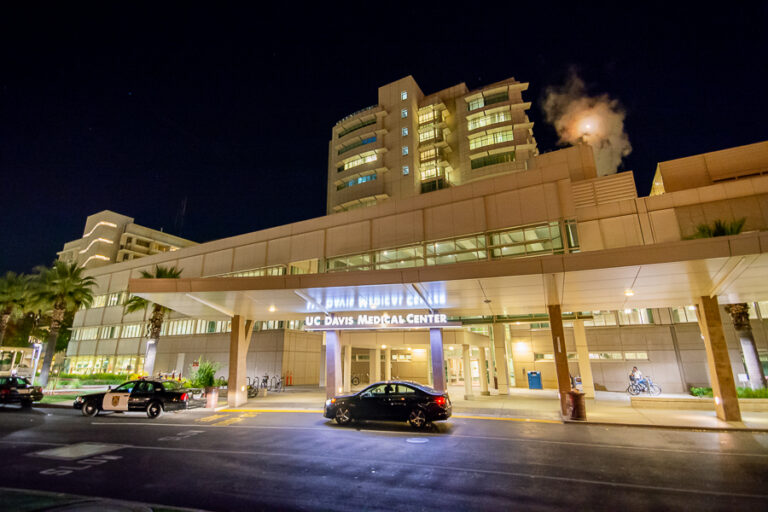
An employee on the UC Davis Health campus in Sacramento tested positive for COVID-19, according to an announcement from UC Davis Health made today, March 20.

The employee has not been at work since Friday, March 13. UC Davis Health said it was notified about the infection yesterday, and it is thought that the employee contracted the novel coronavirus through community transmission since their job does not involve caring for coronavirus patients. The Infection Prevention Team is currently conducting an investigation to ensure the safety of other employees and patients, according to a statement from UC Davis Health. 

UC Davis Health is taking several steps to mitigate the spread of the disease, including allowing eligible personnel to work from home when possible, restricting hospital visits to prevent the possible entry of the virus and advising employees to follow the current public health directives in the state of California when they are not at work.

Yesterday, Gov. Gavin Newsom introduced statewide shelter-in-place directives. Additionally, the UC Davis main campus has suspended operations, according to a March 18 announcement. Staff members are continuing to help care for crops, animals and facilities deemed necessary, and campus firefighters and police remain on duty, according to a March 20 email from Chancellor Gary May to the campus community. Employees and staff at the medical and veterinary centers, respectively, are also still working.

The email from May noted that while other research is “ramping down” due to the virus, UC Davis Health has run its first tests on patients recommended by the infectious diseases team. The center plans on testing up to 200 patients a day in the coming weeks. 

“Clinical pathologists, infectious disease physicians and scientists at the UC Davis Medical Center, School of Medicine, California National Primate Research Center [CNPRC], and Center for Immunology and Infectious Diseases [CIID]” are currently working on developing a vaccine for COVID-19, according to a March 19 press release. They are also researching reagents and diagnostic tests related to the virus. 

The research involves “isolating, cultivating, and culturing coronavirus” from a patient treated at UC Davis who is the first community-infected individual in the U.S. Specifically, the team is examining genetic differences between the coronavirus that emerged at UC Davis and other cases in both the U.S. and other countries.

 The researchers plan on identifying how COVID-19 “attacks and invades cells” and “what treatments might work against it.” Collaboration between the medical center, the CNPRC and the CIID has enabled the UC Davis Clinical Laboratory to begin testing soon, which will ideally help meet increasing demand.

A current virus model is also being developed for primates, as rhesus macaques will likely be affected by COVID-19, according to Chinese researchers. This model may aid in identifying possible vaccines and treatments, and it could help illuminate why the infection is predominantly dangerous for people older than 60. 

The researchers have applied for more funding from the National Institute of Health and are currently utilizing funds from both the campus and the primate center to continue their work.

Written by: Rebecca Bihn-Wallace — campus@theaggie.org

Strong public transportation can make cities more affordable

Affordability means more than just housing

In recent years, Americans have been leaving the big coastal cities for other locations deemed more affordable. There’s a possibility, however, that New York City isn’t as unaffordable as it may seem at first glance — it might even be more affordable than many “cheaper” cities.

A report from earlier this year in the Citizens Budget Commision (CBC), a non-profit organization based in NYC, examined the issue of affordability from a holistics lens, taking into account each cities’ median income and transportation costs. The report found that NYC is comparatively more affordable than cities like Houston, Phoenix and Portland— cities that are perceived to be the cheaper option.

Housing is what people spend most of their income on. In 1969, The Brooke Amendment to the U.S. Housing Act of 1937 mandated that, “rent in public housing projects may not exceed 25% of a tenant’s income.” 

“Families who pay more than 30 percent of their income for housing are considered cost burdened and may have difficulty affording necessities such as food, clothing, transportation and medical care,” according to the U.S. Department of Housing and Urban Development (HUD). 

But a report from the Joint Center for Housing Studies at Harvard University found that in 2016, about 38.1 million people spent more than 30% of their income on housing. Since the aftermath of the Great Recession, real home prices have been increasing throughout the United States, in some places more quickly than others, causing millennials to migrate to different states.

But housing is just one of many factors when it comes to considering a location’s affordability. “A city’s location affordability depends on three factors: the cost of housing, the cost of transportation, and income,” according to the CBC report. The Location Affordability Index (LAI) from the U.S. Department of Transportation and HUD is an indicator of housing and transportation costs at neighborhood levels. HUD calculates the LAI for eight different types of households, which are categorized by various characteristics. 

The CBC report used the median household — a two earner and two children household making the median household income — when making comparisons across the different cities. It also made use of the Center for Neighborhood Technology’s 45% of income benchmark for affordability — 30% of income on housing and 15% on transportation.

When looking at the costs of housing and transportation, NYC ranks as the 10th most expensive city, behind Denver, San Francisco, Baltimore and others. Monthly housing costs for NYC are $1,778 — the fifth most expensive among 20 peer cities in this analysis by the CBC. But NYC’s transportation costs — at $832 — were the lowest among the peer cities. 

A location’s affordability is measured by looking at these costs relative to income, and that is where the results might be surprising. NYC has the eighth highest median household income. When looking at the LAI, which takes all this information into account, NYC ranks as the eighth most affordable city — ahead of Denver, Atlanta, Houston and others. NYC’s high housing costs are offset by it’s much lower transportation costs, but it still spends 45.3% of income on housing and transportation, making it out of reach for many individuals and families. 

All of this underscores the importance of investing in transportation infrastructure that can make cities more competitive and affordable places to live in. NYC’s lower transportation costs are likely due to a high usage of public transportation. Owning a car isn’t cheap — it comes with many small but significant costs, such as gas, insurance and maintenance, all of which can quickly add up (especially when there are multiple cars).

This isn’t to say that NYC is a feasible option for everyone — it still doesn’t fall under the 45% affordability threshold. But when taking the different factors of affordability into account, it becomes clear that transportation plays a much more important role in determining affordability than it may seem. Paying attention to housing prices is important, but it is equally important to think about public transportation, walkability and other modes of mobility when deciding where you call home.

Written by: Simran Kalkat — skkalkat@ucdavis.edu

Disclaimer: The views and opinions expressed by individual columnists belong to the columnists alone and do not necessarily indicate the views and opinions held by The California Aggie

Guest: COVID-19 will devastate the medical system

Medical providers are grossly underprepared to test or treat the virus 

The author of this op-ed is a nurse who works in Sacramento. The name of the author has been omitted in order to protect their identity.

We knew a pandemic was coming, or at least we should have. 

We had warnings like H1N1, the “swine flu,” in 2009, when I was a young nurse in Baton Rouge caring for a female patient who would eventually become the first swine flu fatality in Louisiana. Despite her steadily deteriorating condition, the doctors treating her were repeatedly told by the state health department that she didn’t meet existing CDC criteria for H1N1 testing, a simple nasal swab. By the time she was finally tested, she was in intensive care and on a ventilator. She stays in my memory wherever I go.

Fast forward to late January of 2020, when those of us who pay attention to such things began reading about a new virus infecting people in China. By the time the CDC had already confirmed a travel-related case in the U.S., healthcare professionals knew that we may be at the beginning of a very nasty epidemic, possibly a pandemic.

I am a registered nurse (RN) who currently works exclusively with communities of vulnerable, low-income seniors in Sacramento County. I started to worry when the disposable N95 masks I use when assessing patients with flu-like symptoms were out of stock at my usual medical supply place. When I saw they weren’t available on Amazon, I was able to find them from random retailers on eBay, but the price was 10 times higher than it should have been. By mid-February, I was completely out of masks. My friends in healthcare were all seeing similar warning signs. 

On Feb. 21, Sacramento County suspended its mandate requiring healthcare workers that are not vaccinated against the flu to wear masks while working. Hospitals in the area reversed basic, fundamental policies of asking employees with coughs to wear masks. Instead, a policy was issued forbidding staff from wearing masks “to prevent passing on germs if they are ill,” — if only there were any masks to be found. At hospitals all over the greater Sacramento area, N95 respirators left supply room shelves and were secured with charge nurses for rationing. 

Part of my job requires that I assist seniors with the transition from hospital and nursing facility care to in-home care, which means I regularly visit Sacramento’s hospitals and nursing facilities.

On Feb. 24, I developed symptoms consistent with my seasonal allergies. That same day, I raised concerns with my employer, a non-medical non-profit, because we did not have a pandemic protocol, and it was likely that we may need one very soon. I told my supervisor and the director of human resources that most of our social support services could be provided over the phone to reduce the risk of person-to-person transmission. I was told that wasn’t how things were done. As the only healthcare professional in the organization, I asked to be part of putting our pandemic policy together. No one shared my urgency on this matter, and my input was never requested, despite my years of nursing experience. 

I finished out the work week blaming the blooming trees for my symptoms. When I started running a fever on March 2, I came home early from work and emailed my doctor. I asked what steps were necessary to rule out infection with COVID-19, as I was terrified I had contracted and then unknowingly spread the virus to a large number of vulnerable seniors living in close quarters. She told me I didn’t meet the existing CDC criteria for COVID-19 testing and prescribed an antibiotic for what she assured me was nothing more than a sinus infection. I worked from home for a bit and then voted on March 3, before my fever climbed over 102 degrees Fahrenheit. 

On March 4, California’s first COVID-19 fatality was recorded close to where I live in Roseville. I could barely stay awake that day, fighting a bad cough and shortness of breath as my fever nearly reached 103 degrees. I didn’t work or leave the house that day. 

Early morning on March 5, I emailed my doctor and requested again that I be tested for COVID-19 because I could not recall ever being this sick as an adult. I explained again, this time with more urgency, my fear that I was infected with COVID-19 and had potentially exposed nearly 700 elderly people to the virus. My doctor admitted that she had no test kits or personal protective equipment necessary for test sample collection. She referred me to the Placer County Department of Health and Human Services to find out for myself how to get tested. I called and was unable to reach anyone in the department who could answer my questions about testing, so I directly emailed Dr. Aimee Sisson, the health officer and public health director of Placer County. She responded asking for my doctor’s information in order for them to coordinate, rule out the flu and then have me tested for COVID-19.  

That afternoon, I called the emergency department at Sutter Roseville to inform them that I was an RN exhibiting symptoms of COVID-19 and had been sent there for testing after speaking to my doctor and the county’s director of public health. They confirmed I was on the list for testing and asked me to wait for a nurse to meet me by the isolation tent next to the ambulance entry. I was given a mask and told to have a seat inside the tent.

After five hours in an unheated, unsealed and dirty tent outside Sutter Roseville, I was told that my flu test was negative and that my COVID-19 sample would be sent to the Sacramento County Public Health Lab for testing, with preliminary results expected within 48 hours or so. I was told to self-quarantine at home until further notice.

When I informed my employer of the same, I asked to work from home while waiting for my results. I begged my employer to keep my work phone on, do check-ins over the phone and help sort the worried well from the symptomatic sick. I explained how doing so would take some of the burden off first responders, primary care providers, nurse advice lines and emergency rooms during a COVID-19 pandemic. It seemed obvious to me that even if I was not available in-person, I could still use my knowledge and skills to help prepare us for the virus.  

I was ignored and forced to exhaust all of my accumulated paid time off. On March 11, my employer sent out an organization-wide email issuing new policies and practices “effective immediately” that were inconsistent with evidence-based best practices for pandemics.

On March 13, I emailed Dr. Sisson and her team again, asking why my test results were still unavailable after eight days. While I was already beginning to recover from being very sick, I explained my fear that my illness was due to COVID-19 and that I could have spread it to at least one nursing home and the three communities where I work.

I remain in quarantine to this day, still waiting for my results. I don’t know why there has been a delay in my results, and neither does Dr. Sisson or her team. All we know is that my test was sent to Sacramento County for processing, and that no results are available yet.

I am a healthcare professional who does important work. While doing my job, I potentially exposed a large number of elderly patients, the most vulnerable group, to COVID-19. Yet my test remains unprocessed.

My experience is common among healthcare providers in the Sacramento area, California and the broader U.S. Many of us are at home waiting on results while even more have yet to be tested. We got sick on the front lines of this pandemic, and we will be the ones caring for everyone else through the dark days ahead.

I tried to warn my employer that our organization was on a collision course with disaster. I tried to warn my patients that a pandemic was knocking on our door. Right up until I left work at lunch with a fever on March 2, I was educating others on the dangers posed by this virus and effective methods to prevent its spread. It now seems I was likely transmitting the illness while trying to prevent it.

Some of those I came into contact with during the last week of February are now sick, and some of the ones who are sick are quarantined. People I care about will die — this is all but guaranteed. The same crisis unfolding in Italy will soon happen here in the U.S.

The window of opportunity to prepare has already closed. There aren’t enough masks, tests or time. There is a very real possibility that there won’t be enough ventilators. The CDC warned our government that this was coming, and instead of enacting proper precautions, the federal government offered only a naïve hope that COVID-19 would magically go away. The CDC has now issued guidance for healthcare workers on using bandanas and scarves as masks due to extreme shortages of masks, one of the most basic forms of protective equipment.

President Donald Trump’s willingness to repeatedly lie to the public has contributed to the speedy spread of the virus. On Feb. 26, Trump told the public not to worry because the number of  COVID-19 infections in the U.S. was “going very substantially down, not up.” Statements like these directly contradict the warnings issued by global and domestic health officials who urged us to be proactive. When the president suggests that the virus and threat it poses will magically disappear in the spring, it is no wonder that the eventual response is too little, too late. Those with the power and resources to contain the virus have already failed to do so, and the scale of this failure has yet to be fully understood. 

In what has quickly become an uncertain time, the only certainty is that life as we know it will continue to change. When this pandemic is eventually taught in history, there will be a clear distinction between life before and life after the virus. 

As we watch disaster unfold, I urge that we learn from the arrogance and ignorance that landed us here. We are doomed to repeat the same failures if we don’t. 

Written by: An anonymous nurse in Sacramento 

Disclaimer: The views and opinions expressed by individual columnists belong to the columnists alone and do not necessarily indicate the views and opinions held by The California Aggie.


Yolo County issues mandatory shelter-in-place, fifth COVID-19 case confirmed in county

UC Davis has moved to “suspended operations”

Yolo County announced Wednesday that it would be instituting a mandatory shelter-in-place effective instantly through April 7 and applicable to all residents. The order restricts all non-essential activity in an effort to slow the transmission of the novel coronavirus COVID-19. 

“You and those you live with should remain at home,” states a press release on the Yolo County website. “You are allowed to leave your home for specified reasons to make sure you have the necessities of life such as getting food and medical supplies. You are also allowed to go outside to take care of pets, go on a walk, exercise outside, and enjoy nearby parks, so long as you do not congregate in a group and maintain at least six feet of distance between you and other people.”

Hours after the shelter-in-place mandate was announced, a fifth county resident was confirmed to have tested positive for coronavirus. That person, “an elderly adult with chronic health problems,” acquired the disease through community transmission, according to The Davis Enterprise.

The announcement comes just one day after the city of Davis urged residents to shelter-in-place. Yolo County’s mandatory, county-wide directive is not a suggestion and violators may be penalized — the county, however, has said its intent is not to punish residents, “rather, the role of law enforcement is to educate and inform with legal action reserved for significant violations.”

Essential services that provide food, shelter and social services are allowed to operate. These include but are not limited to pharmacies, food and convenience stores, child-care facilities, gas stations, banks, laundromats and restaurants (for delivery or take-out only).

Included in the county’s list of non-essential businesses and services are religious institutions, gyms, large gatherings of people and nonessential medical care that should be postponed if possible.

UC Davis

As a result of advisory notices from both Yolo and Sacramento counties to shelter-in-place, UC Davis is moving to “suspended operations.” The status is enacted when “current conditions pose a safety risk or logistical challenges that are more severe and there is a substantial interest to having a limited number of individuals travel to, or remain at one or more campus locations,” according to university policy.

University employees are working remotely as much as possible. Students are encouraged to take their finals from their place of shelter, however, the library, computer labs, study spaces and classrooms remain open through Sunday, March 22 to ensure students are able to access computers and WiFi.

It was announced recently that both UC Irvine and UCLA had canceled their commencement ceremonies. In their most recent comment on the situation, UC Davis officials told The California Aggie that UC Davis is still planning to have commencement.

Other campus updates:

  • Aggie Compass, located in the East Wing of the MU, will be distributing food tomorrow, March 20, from 9 a.m. to noon, and weekly grocery bag pickups will take place every Thursday.
  • The Mondavi Center has canceled all remaining public events for its 2019–20 season. Those who have purchased tickets will be contacted.
  • Unitrans has further scaled back operations, implementing Weekend Service today through at least March 27. The bus lines that are currently operational are the G, K, M P, Q, O and V-MU lines, beginning at 7 a.m.
  • The CoHo remains closed until at least March 30. Dining commons remain open.

Written by: Hannah Holzer — city@theaggie.org


Xenophobic message spray-painted on container near Toomey Field

UC Davis, ASUCD officials encourage students, staff to uphold Principles of Community

A shipping container in Toomey Field, located at the edge of campus on Russell Boulevard and A Street, was grafitied with xenophobic rhetoric that read, “The Chinese Communist Party = a danger to society,” accompanied by a crudely drawn photo of a man wearing a surgical mask, on the morning of Tuesday, March 17. The graffiti has since been painted over.

On March 14, many current and former ASUCD officials released a statement encouraging students to “uphold the Principles of Community in this time, especially in regards to xenophobia and discrimination attached to the coronavirus.”

This graffiti is part of a rise in racist and xenophobic propaganda all over the world, taking place in the wake of the ongoing COVID-19 pandemic thought to have originated in Wuhan, China. From the alleged assault of an Asian teenager on a Philadelphia subway to #ChineseDontComeToJapan trending on Japanese twitter ー these incidents seem to be increasing in frequency.

Chancellor Gary May has repeatedly condemned hate speech on campus, including last October, when racist graffiti was found on the Social Sciences building. He again condemned hate speech in the university’s campus directives for Spring Quarter, where he and co-signatories Provost Ralph Hexter, Academic Senate Chair Kristin Lagattuta and Vice Chancellor of Human Health Sciences David Lubarsky said, “Now more than ever, let us collectively confront and reject any and all manifestations of discrimination.”

Video Formerly Present (ALEX WEINSTEIN / AGGIE): https://theaggie.org/wp-content/uploads/2020/03/Video.mov

Written by: Alex Weinstein — campus@theaggie.org


The numbers revolution: Rise of analytics in sports is breaking old traditions

A multitude of “hidden” numbers tell a bigger story

It has always been a commonly held belief that, in sports, the team with the best players will win. In the past, decision-making — whether coaching within the game or outside the game at the front office — has commonly been based on traditional practices or “gut-feelings.” Decision-making roles in professional sports have predominantly been taken up by former athletes, as many assume that a former athlete can best identify team needs and properly evaluate player talents. 

Since the start of the new millennium, however, a grand shift has taken over nearly every sport at almost every level. Instead of former athletes, teams have hired graduates from Harvard, Yale and other elite universities. “Ordinary” people with degrees in statistics or mathematics are now filling front office and coaching staff roles. The analytical age has come upon the sports world, and it keeps growing every year. 

For the most part, strategy and player evaluation in sports has gone away from the “eye test.” It has now been identified that there are a multitude of “hidden” numbers that tell a bigger story. A team that lacks talent can still remain competitive, and a team that is bursting with talent can maximize its potential through utilizing data. That is where analytics comes into play.

The earliest and most popular use of analytics in the modern era can be traced back to the 2002 Oakland Athletics. Michael Lewis’ 2003 book, “Moneyball,” tells the story of how the A’s and general manager Billy Beane used “sabermetrics” to change the way the team acquired talent under tight financial constraints.

According to the Society for American Baseball research, sabermetrics is “the search for objective knowledge about baseball.” It was defined and made popular by American Baseball writer Bill James in 1980, but, since then, researchers have tried to advance the process of statistical analysis to challenge the traditional ways by which players are measured.

According to the best available data at the time, Beane and the A’s management made note of the fact that teams with a high on-base percentage scored more runs, thus translating into more victories. After a series of minor lineup tweaks and personnel changes, the A’s went from a mediocre ballclub to one that went on a then-American League record 20-game win streak and won its division. Although the team never won a World Series title during that era, the A’s were consistently in the postseason mix and competitive without having big names filling out the roster. 

Baseball seems to be the sport most ahead of the pack when it comes to the numbers game, mainly because the game relies on statistics so heavily. But, a recent shift in the National Basketball Association (NBA) has also taken place, with the Houston Rockets leading the charge.

Despite having never played or coached at the NBA level, Daryl Morey was hired as the Rockets’ general manager in 2007. Since then, Morey has become the pioneer of analytics in basketball. He holds a computer science degree from Northwestern University and an MBA from M.I.T., but, in the sports world, that meant nothing — until he stepped in. 

The main thrust of Morey’s philosophy is that since a three pointer is worth more than a regular two-point basket, it is more efficient to shoot threes instead of other jump shots. In essence, the more three pointers a team takes, the more points the team will be able to score, and the more games the team will win. 

By simply looking at the Rockets’ statistics from this season, you can see that nearly half of the shots they take are from three. They have led the league in three pointers, leading each of the last four seasons by a wide margin. This is all part of Morey’s design: trying to tip the odds in Houston’s favor by playing the numbers game.

“We need a lot more randomness in the NBA so people can compete and not know before the start they have no chance,” Morey said at the M.I.T. Sloan Sports Analytics Conference in 2016. “There are very few teams who can win the championship in a given year.” 

While his team is not the most talented in the league, Morey can find a way to close that talent gap through a moneyball-like approach. Like the Athletics, however, the Rockets have yet to reach the pinnacle that is winning a championship in their sport, but they have been making some deep playoff runs and were one win away from a Finals appearance during the 2017-2018 season. 

The Rockets are the most well-known among the NBA franchises for following analytics, but data is being used more across all teams in a variety of different ways as they try to find a way to use the massive amount of information they now have at their disposal. 

In comparison with the other major professional sports leagues, the National Football League (NFL) lags behind. The NFL has slowly become younger, according to a 2018 article published by The Ringer, and the availability of new data — like those of “player-tracking” — has changed decision making on and off the field in the way rosters are built and what plays are called in certain situations. 

Decisions that were once made because of “gut-feelings,” like 4th down plays or even draft picks, are now seen in a different light among some front offices across the league. Football is rooted heavily in the notion of imposing your will onto the other team, so it isn’t all that surprising that the NFL has been slow to adapt, but more teams have begun the shift. 

As with baseball, we are starting to see even younger faces take the head coaching reigns in the NFL. This new crop of coaches seem to have more confidence in the value of analytics, as opposed to older coaches who tend to stick to tradition. There are some teams more ahead of the curve than others, but, overall, there is still a long way to go in the analytics revolution.

Analytics has not only taken over professional front offices, but also the fans, who are now consuming more stats and numbers everyday. There are constant reports, analyses and even websites dedicated to giving fans an even deeper look into their team’s specific data. Websites like FiveThirtyEight.com, advancedsportsanalytics.com and many others are easily available to anyone who would like to get informed on more than just the traditional metrics.

The prevalence of analytics has been met with open arms in some cases but also heavy criticism in others: The responses differ depending on who is running a team. One example of such criticism is that of Hall of Famer and former New York Yankee pitcher Goose Gossage.

“The game is becoming a freaking joke because of the nerds who are running it,” Gossage told ESPN in 2016.  “I’ll tell you what has happened, these guys played rotisserie baseball at Harvard or wherever the f— they went and they thought they figured the f—ing game out. They don’t know s—.” 

Though his criticism may seem harsh, there are those who feel a similar way across all major sports.

For so long, player evaluation across all leagues was seen by some as unfair, as there is more to a player than just height, build, speed and strength. The constant advancement of analytics can be tied to improving the way players are evaluated. The problem with that, however, is that sports are an imperfect science. No matter what numbers, formulas or strategies are created, there are millions of unaccounted for or “intangible” variables in sports that make it nearly impossible to guarantee success.

The flaw in analytics is that it looks at a player as nothing more than a few numbers, instead of taking into account the wide-range of human factors that have a tremendous impact on the game. Those are all things that may be a part of the next analytics breakthrough, but as of now, everyone is trying to find a way to figure it out and reach the mountaintop. Still, sports have changed drastically and those once thought of “unbreakable” traditions are becoming easier to forget. 

Written by: Omar Navarro — sports@theaggie.org

Through the artist’s eyes: Bianca Ocampo discusses life as a student singer

Finding solace, balance as a self-made artist

Dream-pop student music group Urbanation, headed by fourth-year psychology and communication double major Bianca Ocampo, has amassed an impressive following as they move toward the release of their indie-rock album, scheduled to be released later this year. The album touches on life as a student, and the band looked back on opening for Beach Fossils at ASUCD Entertainment Council’s Winter Quarter event “Petrichor.” 

The Bay Area group met by playing different house shows and they have been performing together since Ocampo’s second year, when she began performing unexpectedly in an effort to share her lyrics about the uncertainty of being a young adult. She realized early on that inward lyrics of struggle hit a vein with students. 

“When I make music, it’s usually about a really sh-tty situation,” Ocampo said. “Once I started putting things out there, I realized that I could take this period of time where I had no idea what I was doing and transform it into a song that people listen to. It’s a way to cope with things.”

One of her songs, “Shouldn’t You Be Doing Something Too?” is about the identity crisis she went through when she decided she no longer wished to pursue a career in medicine. Many students have felt the gravity of the moment when the life they thought they wanted isn’t for them anymore. 

“I feel like that song marked the beginning of this process,” Ocampo said. “I felt like I could keep doing this [music].”

Ocampo writes and produces all her music. A strong dedication to her craft and the catharsis it brings along with it is what keeps her motivated to balance music with her packed school schedule.

“Being busy with school and work makes me want to pick up my guitar more and have that outlet,” Ocampo said. “Davis is a good place to be creative.”

Her vulnerable lyrics resonate with the anxiety-ridden young adult life for the mistake-filled fiasco that it is, in all of its splendor and headache. She says it’s a balancing act, and she’s been working on her upcoming album for more than a year.

“I’ll record something, take the bus to class, listen to it all day, and on the bus ride home think, ‘This is terrible,’” Ocampo said. “And then I’ll love it the next day.”

Ocampo said she wonders what her music would be like if she quit school and worked on her music full-time. It’s the constant need to reevaluate what’s important that keeps her writing new songs.

“I’m trying not to get too caught up in the little details,” Ocampo said, saying she wants to reach as many people as she can.

“I want people to be able to relate to my music,” Ocampo said. “I feel that I focus on the lyrics the most. It’s like people are listening to my diary.”

Ocampo says she relies on her family and close friends as her main support network, and in the pursuit of a career in such a cutthroat industry, it seems to be the right choice. Her family attended her most recent, and biggest, performance at the Mondavi Center. 

“They were actually at Petrichor,” Ocampo said. “I was really happy they could make it to this show.”

Urbanation is available to stream on Spotify. 

Written by: Josh Madrid — arts@theaggie.org

The portrayal of religion in current media

 Religion is portrayed in many different ways than our parents or grandparents experienced 

The topics explored and the themes portrayed in today’s media are vastly different than what was tolerated just 50 years ago. For example, when Lucille Ball got pregnant during her run as the star of “I Love Lucy,” showrunners consulted with a priest, a rabbi and a minister in order to ensure that no viewer would be offended by the show’s depiction of a pregnant woman. The series never even uttered the word “pregnant” throughout the story’s arc. 

In today’s era of HBO and minimal censorship, concerns like those seem trivial. Whether or not something is offensive to people who are religiously affiliated with the many sects of Christianity does not seem to be a priority in the minds of those working in media today.

This is presumably correlated with the decline in religious affiliation in many countries, specifically the U.S. The American public in general is focusing less and less on religion, according to studies conducted by the Pew Research Center. And an NPR poll discovered that only about four in 10 millennials consider religion to be important in their lives.

This change is reflected in current media. We are no longer in the age of “I Love Lucy,” where purity, heterosexuality and the perpetuation of the nuclear family are deemed the only acceptable ideals. So how has this decline in religious affiliation affected the way religion is portrayed and received by the media? 

One impact of this has been the increase in religious tolerance and diverse representations of religion in the stories that are told. An article in The New York Times discussed where religion comes into play in television. 

“Given the sheer number of series in the age of peak TV and the recent focus on diversity of all kinds, there should be room for religion and religious diversity, too,” according to Margaret Lyons and James Poniewozik.

There are several examples of religious diversity on mainstream and network television. For example, a notable storyline on “Orange is the New Black” was Cindy’s conversion to Judaism. The storyline subverted stereotypes and was handled in a respectful manner in regards to the Jewish and Black communities. Other examples include the way Abed on “Community” broke down stereotypes as a Muslim character. 

Kanye West serves as a pivotal figure who includes Christianity in his mainstream fame. His most recent album “Jesus is King” included hyper-Christian themes and received mixed reviews. It was criticised most notably for its lyricality and perpetuation of extreme religious ideals.

“Revelations in recent weeks — that he admonished his wife for wearing tight clothes, asked collaborators to abstain from premarital sex, and began keeping a Christian scorecard that includes limiting himself to two curse words a day — suggest his interpretation of the gospel has been more dogmatic than faithful,” stated an article in Pitchfork

Although West was able to continue his success despite his preaching of strict Christian scripture, other publically Evangelical Christians have not fared as well with the general public. This is, in part, due to the intolerance that is often associated with these types of Christians and their churches. Characters like Angela Martin on “The Office” are depicted as annoying and judgemental — and this extends beyond the realm of fiction. Strict conservative Christian sisters Bethany Baired and Kristen Clark became infamous when popular YouTube commenter Cody Ko filmed a critique of their YouTube channel. They became one of the most hated and criticised channels on the platform due to their antiquated beliefs and intolerant messages. 

More progressive versions of Christianity, however, fare better in the public eye. For example, the first episode of the second season of “Queer Eye,” featuring a devout Christian mother and her gay son, is one of the most popular and beloved episodes of the season. The episode details the struggles people in the LGBTQIA community face in the church, but ends on a positive note, suggesting that anyone can find peace in their spirituality, no matter what that looks like. 

One of the most noteworthy differences in the way the media has evolved when it comes to the exploration of these topics is the way spirituality can be depicted outside the realm of a specific religion. One example is Michael Schur’s “The Good Place,” a sitcom about a non-denominational afterlife. The rules of The Good Place are based around moral, ethical and philosophical concerns, rather than relying on traditional religious beliefs. It barely touches upon institutional religion itself — in the first episode, Ted Danson’s character remarks that, in respect to the afterlife, “Every religion got it about 5% right.” 

The afterlife in “The Good Place” has no version of a God, rather it focuses on the impact that humans have on their own fate. Although the “I Love Lucy” era may have deemed “The Good Place” to be an offensive display of sacrilege, today many people find solace in its message and accept that everyone’s view of spirituality and religion may look different from their own. 

Written by: Alyssa Ilsley — arts@theaggie.org

Police Logs

Don’t call 911 for the time

February 27

“Ongoing issue with employee associated to red sedan doing donuts in the plot.”

“Drone has been flying over her house for the past several hours. Believes it’s a safety/privacy issue.”

February 28

“Passenger was “ghost riding” with much of his body elevated and hanging out of the passenger side window.”

“Loud party in front and back of residence.”

“Loud music. Smoking and drinking. Standing on vehicles.”

February 29

“Dozens of cars in the area with more arriving; unknown on address of the party.”

March 1

“911 hang up. Elderly woman asking what time it was, disconnected prior to dispatch getting more info.” 

March 2

“Subject ordering food via Grubhub, eating the order, then complaining to Grubhub that they didn’t receive the order.”

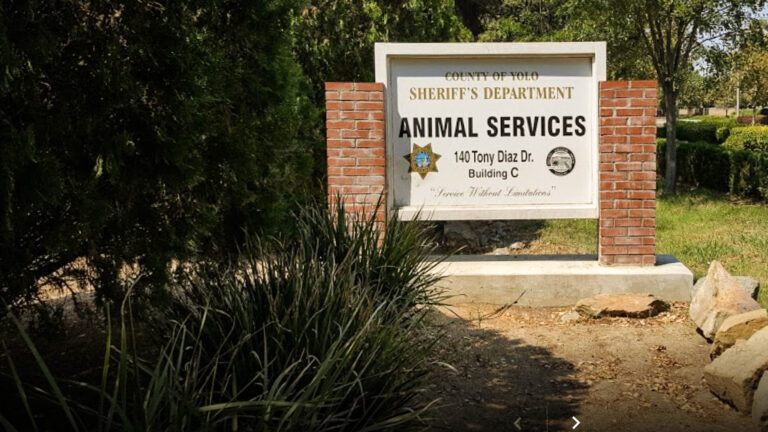
Yolo County officials discuss new approach to supervision of animal shelter

County and Winters approves Joint Powers Agreement (JPA)

The Yolo County Board of Supervisors discussed the potential formation of a Yolo Animal Services Planning Agency Joint Powers Agreement (JPA) in a meeting held on Feb. 25, 2020, which would help to supervise animal services in the county. The Davis City Council also held a meeting on Jul. 30, 2019 to discuss the formation of JPA. 

The formation of the JPA is a new method of running and supervising animal services in Yolo County. 

“The Joint Powers Authority is a completely new approach to running the shelter and to animal services,” said Dave Rosenberg, the chairman of the Board for Unleashing the Possibilities. “Currently, those things are done by the County of Yolo under the jurisdiction of the sheriff. The Joint Powers Authority, [if] agreed upon, will put the animal shelter and animal services under the jurisdiction of several government agencies, including the County of Yolo, the City of Davis [and] the City of Woodland.”

The process of forming the JPA in Yolo County, which mostly began in 2018, could take time to implement, according to Jenny Tan, the public information officer for the county. 

“The process of forming a JPA began in earnest in the fall of 2018, though its formation was recommended in a study done by the UC Davis Koret Shelter Medicine Program and the Yolo [Local Agency Formation Commission] in 2013,” Tan said via email. 

A study found that the Yolo County Animal Shelter was “inadequate, outdated and compromising the program’s ability to serve the community,” according to the Yolo County Board of Supervisors’ meeting agenda. The JPA would serve “as a means to provide participating jurisdictions with increased control over budget and operational decision making,” according to the meeting agenda. 

In the Davis City Council meeting, the possibility of short-term implementations relating to animal services was discussed. These potential short-term implementations will not interfere with the formation of the JPA, as they can be simultaneously executed during the discussions pertaining to the JPA and shelter. 

Furthermore, these changes would not only improve the delivery of services in Davis, but they would also contribute to the overall process of forming a JPA to supervise animal services in Yolo County. After the discussions, Sheriff Tom Lopez proposed several ideas that could be implemented in the short-term in Davis, including foster services and the utilization of social media to promote shelters. 

The JPA was approved by Yolo County but has yet to be approved by Davis and Woodland, according to Tan. 

“The JPA is currently in the process of being approved by Woodland and Davis,” Tan said via email. “The County and Winters have already approved this planning-only JPA.”

As the JPA is still being discussed, it is not immediately clear what changes it would bring to animal services in Yolo County. Changes may include “the building of a brand new, modern, state-of-the-art animal shelter for this county,” Rosenberg said.

Written by: Shraddha Jhingan — city@theaggie.org

Five professors share their favorite books

Professors from different departments share their favorite non-academic reads

Just like their students, professors are indecisive — half of those contacted couldn’t decide what their all-time favorite non-academic book was. So here is everything close to it.  

Sociology Professor Erin Hamilton — “Less” by Andrew Sean Greer

Greer’s comic novel is described as satrically funny, but it somehow manages to weave in serious topics. At the start of the novel, the main character learns that his ex-boyfriend is about to get married and, to avoid being the politely-invited-but-unwanted-guest, the protagonist begins a literary tour around the world. 

“I loved this funny love story about a middle-aged man coming to terms with his life and career,” Hamilton said via email. “I related intensely to his realization that he’s not ‘all that’ — which I think is what middle-age is basically about — and enjoyed traveling with him around the world on his ‘book tour’ concocted to escape the humiliation and pain of his ex-boyfriend’s wedding. It was charming, it was funny, it was real.”

Hamilton admits that although she only read the book once, she did internet stalk the author afterwards. She recommends the book to her students.

“I would read it for pure enjoyment — to laugh and commiserate with another human being,” Hamilton said. “I would also read it because it is beautifully written, and the social world astutely observed. If you don’t take my word, take the Pulitzer’s! The book won the award in 2017.” 

Earth and Planetary Sciences Professor David Osleger — “To Kill A Mockingbird” by Harper Lee

A staple in all public school curriculum, this novel follows young Scout as she makes her way through her adolescent life. The book touches on important topics like racism, class and structural inequalities that are still relevant today. 

“Just having finished my third reading of the book (the first being in high school), it reminds me to remain open-minded about everyone because we seldom know all the details,” Osleger said via email.

The book focuses on Scout’s father, Atticus Finch, a well-respected lawyer in town, who defends Tom Robinson, a Black man accused of raping a young white woman. 

“The point-of-view through the innocent eyes of a pre-teen girl gives the book a purity of thought that is priceless,” Osleger said. “Also, “Scout” is just a cool name for a girl. If I had one instead of two sons, I would have lobbied my wife to name her that.”

Political Science Professor Robert Taylor — “Invisible Man” by Ralph Ellison

Taylor keeps track of all the non-academic books he’s read on an Excel document: He rates them and logs comments, in true political science professor fashion. Although he couldn’t name a favorite book, he did share his top 12 favorite list of fictional works in the order that he’s read them. For this article, he chose to highlight “Invisible Man” by Ralph Ellison, number five on his list. 

Taylor finds that the book aligns with today’s political movement. “Invisible Man” follows an unnamed narrator, a Black man, who wins a scholarship to an all-Black college. In order to receive the scholarship, however, he has to endure a humiliating competition for the pure joy and entertainment of his town’s white elites. 

“Its black narrator-protagonist demands recognition from a racist society,” Taylor said via email. “The phrase ‘see me,’ as an insistent command, serves as the work’s mantra. Note, however, that its mantra is not ‘see us.’”

“This is definitely not a work of black nationalism or even of black identity politics more generally,” Taylor continued. “Neither does the book find redemption in the “Brotherhood,” its shadowy stand-in for international progressivism and communism. Far from it. Racism, like communism, is just another kind of collectivism, another refusal to recognize and value the individual human being.”

Taylor cited evidence from the book to explain why it’s one of his favorites: “The protagonist’s task is therefore ‘not actually one of creating the uncreated conscience of his race, but of creating the uncreated features of his face. Our task is that of making ourselves individuals’ (p. 354).”

Design Professor Simon Sadler — “Jimmy Corrigan: The Smartest Kid on Earth” by Chris Ware

Because Sadler isn’t entirely interested in reading outside of the job, he recommends a graphic novel — but he also admitted that he’s not a fan of graphic novels. With that said, because he just finished this novel, he said it’s been on his mind and is hard to forget. 

“For me as an architectural historian, it’s a graphically stunning exploration of Chicago in 1893 and a century later,”  Sadler said via email. “It’s a meditation, in passing, on race, sexuality, abuse, Americana.” 

Jimmy Corrigan is a quiet, 36-year-old man who shrinks himself into the world in order to not be noticed. He’s lived most of his life without a father, but when a letter comes in the mail, he can’t help but feel angry and hopeful at the same time. 

“If you’re interested in narrative technique — and oh, wow, wow, graphic design — it could well change what you think you know,” Sadler said. “We’re talking rabbit holes here. Portals. Physically it’s a test of eyesight. But now you’ve got me thinking about it, I’m going to buy Ware’s more recent book, ‘Building Stories,’ and give that a go too.”

Design Professor James E. Housefield — “Labyrinths” by Jorge Luis Borges 

Despite Housefield’s insistence that asking him to pick a favorite non-academic book is like asking a parent to pick their favorite child, he settled on “Labyrinths.

“Each of my contenders is the best for a certain moment,” Housefield said via email. “I have a logjam of favorites that are tied, including ‘Don Quixote’ by Cervantes, ‘Tristram Shandy’ by Laurence Sterne, and others that I love to re-read often.”

After considerable persuasion, he settled on a book. 

“Most recently I’ve been reading ‘Exhalation” by Ted Chiang,’ Housefield said. “I could argue that my favorite is the one I’m reading at any given moment. Chiang’s collection of short stories reminds me of my favorite in that type of writing, ‘Labyrinths,’ by Jorge Luis Borges.”

Labyrinths is a collection of short stories and essays written by Borges. 

“It’s my favorite because it shows how much fiction can build new worlds,” Housefield said. “More than that, it demonstrates how an elegant and intelligent storyteller can create exceptionally convincing worlds from a few well crafted lines of language. Borges also reminds us that inspiration comes from engaging with the creations of the past. In his essays, we see other creators through the eyes of a deeply creative writer.”

Although Housefield has never read the book cover to cover, he opens the book and does a quick re-read of some stories quite frequently — so much so that he has lost track.

“His works are manageable and magical at the same time,” Housefield said. I would hope that many will marvel at his ability to evoke a previously unimagined world in just a few words or pages. It’s not always easy – there may be struggle – but it is manageable and worth meeting Borges halfway.”

In a matter of a few pages, students can dive into a different story, and maybe that’s exactly what we need in our busy lives.

“Be patient if the language seems foreign, for that is part of the effect and

that strangeness inhabits the heart of the impact his writing can make,” Housefield said. “In our busy world we need to return to reading. Perhaps it will be easier to begin with short stories. Pro tip: Read his stories and parables out loud to a friend, or group of listeners.” 

Written By: Itzelth Gamboa — arts@theaggie.org

No one can be honest on social media

 Even our private accounts are for the public

I’ve had quite a tenure on Instagram. Many of us were in our tender ages during the app’s inception in late 2010, and I’m sure we all watched the app’s transformation from an unassuming photo-sharing platform to a multimillion-dollar Internet superpower. 

I could say the same thing for Snapchat. Before streaks and filters, we were just chatting with our friends. It was a world in which we hid from our parents and teachers. 

As these platforms evolved, we discovered new ways to manipulate them and our online presence. Meme accounts cropped up, followed by video pages. Influencers began, well, influencing. Snapchat gave us scores in the form of streaks for keeping up with our friends.

Now, counter to the overtly public nature of social media, we’ve experienced a move toward privacy. Suddenly, my best friend has a list of “close friends” on Instagram and my roommate has a “private” Snapchat story. Hell, I’ve got both! We’ve developed our external personas online, but now it’s time to curate our deeply personal sides — also online. 

And so begins the rat race: Who has the most sloppy, most hilarious, most honest private account? At first, we were spamming timelines with our favorite memes and ugly selfies that we weren’t bold enough to post on our “real” accounts. This candor falls under the “relatable” trope, which is one that has been around since the early days of social media. We’ve all linked ourselves between random, blanketed postings about “just girly things” or “#relatable” experiences. The future of online relatability are finstas (“fake Instagrams”), which are just private Instagram accounts, and private Snapchat stories.

I don’t know why or how I got sucked into this mess, but I did. My finsta, which was built off the remnants of an eighth grade Lana Del Rey fan account, became a treasure trove of groveling captions and deadpan selfies. I detailed my friendlessness and crippling acne insecurity over a span of many posts. 

Now, private Snapchat stories have become a host of pictures of crying users, binge-drinking and ranting. We’ve taken social media and all of its performative aspects and flipped it on its head. Finstas and private stories became their own entities governed by one rule: honesty.  

Social media is based upon our crafted personas. As much as we’d like to say that we are wholly these people, we just aren’t. The person who posts filtered selfies is just as unreal as the person who posts pictures of literal trash on the ground. When we acquaint ourselves with our imperfections, it allows us to be more invested in each other because we can appreciate all of each other’s facets. 

This unrelenting honesty has transformed how we interact with each other. Specifically, when someone is candid about their mental health and life experiences, they are often seen as more approachable. 

This assumption often transcends social media and can serve a great benefit to our social lives. Our newfound comfort with the uncomfortable can open us to a lot of connections and experiences with others. Oversharing has become the norm. We’re now more likely to embrace our neighbor who is crying about their exams on Snapchat because we can easily relate to them. 

Nowadays, the most captivating people are the ones who are provocative in their discussion of mental health. Take Billie Eilish’s “idontwannabeyouanymore” or XXXTentacion’s “Jocelyn Flores,” for example. 

I’m all for being open. I’m a big oversharer, much to the chagrin of my friends. I can’t help but perceive, however, that there’s a demographic being missed in our honesty revolution. Being “reserved” nowadays has been completely disfigured. If you aren’t telling everyone about your trauma and personal life, you’re more likely to be seen as closed-off or “quiet.” 

Some people don’t feel the need to post their crying selfies online, have “private” accounts or disclose details about their mental health to their friends. Just because someone isn’t buying into the idea of full disclosure doesn’t mean that they’re doing you a disservice. 

We’ve begun to approach everyone with the expectation that they will, at some point, open up to us. But this actually closes off a lot of connections that could be made with others. We’re setting ourselves up to be let down when we expect everyone to be so open. We’re not entitled to everyone’s story. 

Written by: Isabella Chuecos — ifchuecos@ucdavis.edu 

Disclaimer: The views and opinions expressed by individual columnists belong to the columnists alone and do not necessarily indicate the views and opinions held by The California Aggie

Cars are ruining your park experience

To fully escape the city, we need to leave our cars behind too 

When I was in Grand Teton and Yellowstone National Park this past summer, I quickly came to appreciate the long hikes and evening walks that were completely void of the sights and sounds of loud and crowded cities. National parks are a place to disengage from the technology and modernity that follows us incessantly in our day-to-day lives. For many of us, ironically enough, the park experience still seems to be shaped by a car.

Visitation numbers to national parks have ballooned over the past century. In 1904, the National Park Service received 120,690 visitors. In 2019, that number grew to over 327 million. With an increase in visitors comes an increased presence of automobiles inside national parks. National parks truly are an American treasure and should be freely enjoyed by all, but they were also created to protect and conserve the wildlife, natural resources and integrity of the environment. The increasing visitation numbers and traffic have made this task a lot more difficult.

For much of the late 19th and early 20th Century, the Department of the Interior was weary of allowing automobiles into national parks. Part of this reservation toward automobiles came from a conservationist standpoint, and part of it was due to concern over park safety. In 1907, Hot Spring Reservation became the first federally protected area to allow for automobiles to enter. With public pressure and influence from automobile clubs, this trend quickly expanded to other parks.

The expansion of cars into national parks has significant environmental costs. A report by Don Shephard from the National Park Service found that the road dust and exhaust for automobiles is one of the leading causes of emissions from within national parks. The report concluded that one of the most impactful ways to cut down on emissions is to reduce the presence of cars. The 1980 Yosemite General Management Plan called for a gradual “[removal of] all private vehicles from Yosemite Valley” by restricting car usage and bringing in more public transportation.

Some national parks have already taken action. The Island Explorer buses in Maine’s Acadia National Park were established in the 1990s as a partnership between the National Park Service, the Department of Transportation and other local businesses and agencies. In its first year of operation, these buses replaced almost 43,000 cars and recreational vehicles. This had a significant impact on the environmental quality of the park, having eliminated two tons of haze-creating pollutants. 

In 2000, Zion National Park implemented a shuttle system once traffic congestion became too severe to ignore. The shuttle system saw approximately 6.3 million riders in 2017. This approach has helped to alleviate the issue of overcrowding and ecological degradation while still improving visitors’ experiences, and it also shows that conservation efforts don’t have to mean diminishing access to national parks. 

Environmental concerns are just one of the many reasons to limit automobiles in national parks. These parks capture and maintain the beauty and marvel of the Earth’s environment despite the rapidly evolving landscape around us. 

We talk about detaching from our phones, work responsibilities and other nuisances when we visit our parks, but immediately return to the confinement of our car afterwards. The opportunity to experience these beautiful spaces, robust with wildlife and nature shouldn’t be marred by unrelenting and endless traffic. 

There is so much more to gain from a car-less experience in these parks aside from an intimate experience with nature, and maybe it’s time we give it a try.

The week that I spent in Grand Teton and Yellowstone National Park was the perfect escape from the monotonous thrum of school and responsibilities. My family and I hiked trails together, encountered bears and formed a six-hour long friendship with another family on the trail. In the evenings when we weren’t looking for wildlife, I was left with some down time to re-read “Harry Potter and the Prisoner of Azkaban” on a park bench, ten feet away from a bison. 

As amazing as my week was in these parks, I still wished I had left behind my most obvious memory of a noisy city — the car — so that I could have had a fuller, more abundant experience. 

Written by: Simran Kalkat — skkalkat@ucdavis.edu

Disclaimer: The views and opinions expressed by individual columnists belong to the columnists alone and do not necessarily indicate the views and opinions held by The California Aggie

UC audit demonstrates inadequate documentation of admissions processes

 Lack of diversity among students admitted by exception

Phase II of an internal admissions audit of the UC recently revealed that UC campuses have been poorly tracking the profiles of specially admitted students — students admitted due to a special talent rather than on the basis of academic achievement. 

These students fall under the systemwide “admissions by exception” policy, which grants admission to students who may not necessarily meet all of the requisite academic qualifications but who demonstrate “potential for academic success” at the UCs. These can include people from homeschooled or rural backgrounds, students from extremely disadvantaged backgrounds and students with special talents in athletics, music or other activities. 

Up to 6% of a UC incoming freshman class can be accepted according to these terms, with up to 4% coming from disadvantaged backgrounds. But according to undergraduate admissions system-wide, these individuals constituted less than 2% of acceptances during the last several years at the UCs. 

The criteria for students specially admitted without a disadvantaged background — for example, veterans, adults or students with disabilities — was also found to be “contradictory.” The audit maintains that due to a lack of information, it could not analyze the special admissions process.

Still, the conclusions the audit drew may reflect a lack of diversity in special admissions enrollments, at least those that took place between 2017 and winter 2020. 

For example, 21% of students admitted by exception were white, and 39% were white international students. By comparison, African American students made up 9% of students admitted by exception, and Asians and Latinos each made up 14%. Native Americans and Pacific Islanders both constituted less than 1% of these enrollments. The demographics of the remaining 2% of students admitted by exception are unknown.

Both audits were implemented in response to the national college admissions scandal in spring 2019. The scandal implicated parents and students at UCLA, UC Berkeley and other high-profile universities. The parents at UCLA, for example, bribed a soccer coach to recommend their daughter’s acceptance to the university, although it remains unclear whether she qualified for the Division I women’s soccer team there. As such, the UC pledged to monitor these acceptances more vigorously. 

While Phase I of the audit previously implemented further controls over the admissions process in response to the scandal, Phase II was designed to assess the accuracy and efficiency of these regulations. 

But due to the difficulty in tracking and assessing the demographic profiles of these types of students, the data in the audit remains incomplete. 

“Most campuses either did not sufficiently document or did not retain their admissions decision approvals in accordance with the systemwide records retention schedule,” the audit said. It noted that “some locations found that admissions offices did not document approvals in a consistent manner,” adding that some campuses didn’t track the admissions in a centralized system. 

And while several campuses have committees designed to assess such decisions — one UC has a group addressing accepted students whose academic qualifications do not meet minimum university requirements — the audit found that the universities lack sufficient documentation regarding the criteria and decision-making processes themselves. 

Recommendations from the Phase I audit stipulated that freshman applicants evaluated on qualitative factors needed to have “two independent documented evaluations” justifying their admittance. Phase II recommends that committees dealing with these special admissions exceptions need to clearly establish leadership, objectives, membership qualifications, review criteria and decision-making practices, among other things.

When assessing the verification process — by which the UCs determine whether an applicant actually participates in all of the activities they list — the Phase II audit took a random sample of 25 verifications out of the 2,000 verifications included in the first audit. The Phase II audit identified issues with documentation and follow-up, causing problems with the applicant approval process.

For example, applicants may have a legitimate reason for not being able to obtain verification for an extracurricular activity and can thus receive a “permanent excusal,” but the audit discovered that reviewers failed to follow up on nearly half of these excusals. Other applicants were missing necessary forms. 

The audit also explained that the individuals granting these permanent excusals may have done so without the knowledge of systemwide admissions. 

Moreover, some documents authenticating participation in certain activities were either not submitted or incorrectly submitted. According to undergraduate admissions system-wide, the UC cancels approximately 100 applications each year due to a lack of verification responses, but cancels fewer than six applications annually for “admitted falsification.” 

Phase II of the audit also recommends compliance with Assembly Bill 1383, requiring that “each student admitted to the University of California by exception be approved by a minimum of three senior campus administrators.” 

The bill, enacted in Oct. 2019, also stipulates that student athletes admitted on the basis of athletic talent must participate in athletics for at least a year. By comparison, many of the students implicated in the college admissions scandal earlier last year did not participate in the athletic programs they were purportedly recruited for once arriving on campus. 

Currently, the overall undergraduate admissions system is working on complying to the regulations in this bill during the 2020-2021 fiscal year.

Written by: Rebecca Bihn-Wallace — campus@theaggie.org

City of Davis urges residents to shelter-in-place, UC Davis closes ARC, campus

Gov. Gavin Newsom issues directives to practice social distancing in response to COVID-19 pandemic

The City of Davis released a message urging residents to shelter-in-place and practice social distancing in response to the spread of the novel coronavirus, COVID-19. This message comes after seven Bay Area counties were ordered to shelter-in-place, with Gov. Gavin Newsom saying Monday that he plans to expand this order to the entire state.

On Monday, President Donald Trump and the White House recommended that gatherings throughout the nation be limited to no more than 10 people for the next 15 days. As of today, there are now cases of COVID-19 in all 50 states — there are over 5,700 coronavirus cases nationwide and the death toll in the U.S. has surpassed 100.

As of this morning, the California Department of Public Health reported 472 positive cases of COVID-19 in the state with 11 deaths total. On Sunday, Newsom directed bars and nightclubs in the state to close, and on Monday, he recommended that all movie theaters, gyms and restaurants — except for take-out service — close temporarily. In response to these directives, UC Davis announced it would be closing all campus eateries as well as the Activities and Recreation Center. 

UC Davis remains operational, and all dining commons are open, “with more space for social distancing,” according to an article on the university’s website. The CoHo, BioBrew and CoHo South, operated by ASUCD, however, will be closed both this week and the following week. There are plans to reopen these facilities with reduced schedules on March 30, the first official day of Spring Quarter, though all classes will be remote.

UC Davis also recently announced that it would be suspending all of its international and U.S.-based study abroad programs through the summer.

After UC Berkeley officials announced Saturday that a graduate student had tested positive for coronavirus, UC Davis Provost Ralph Hexter released a statement to the campus community via email, highlighting a response plan “for the eventuality of a member of our campus community testing positive for COVID-19.”

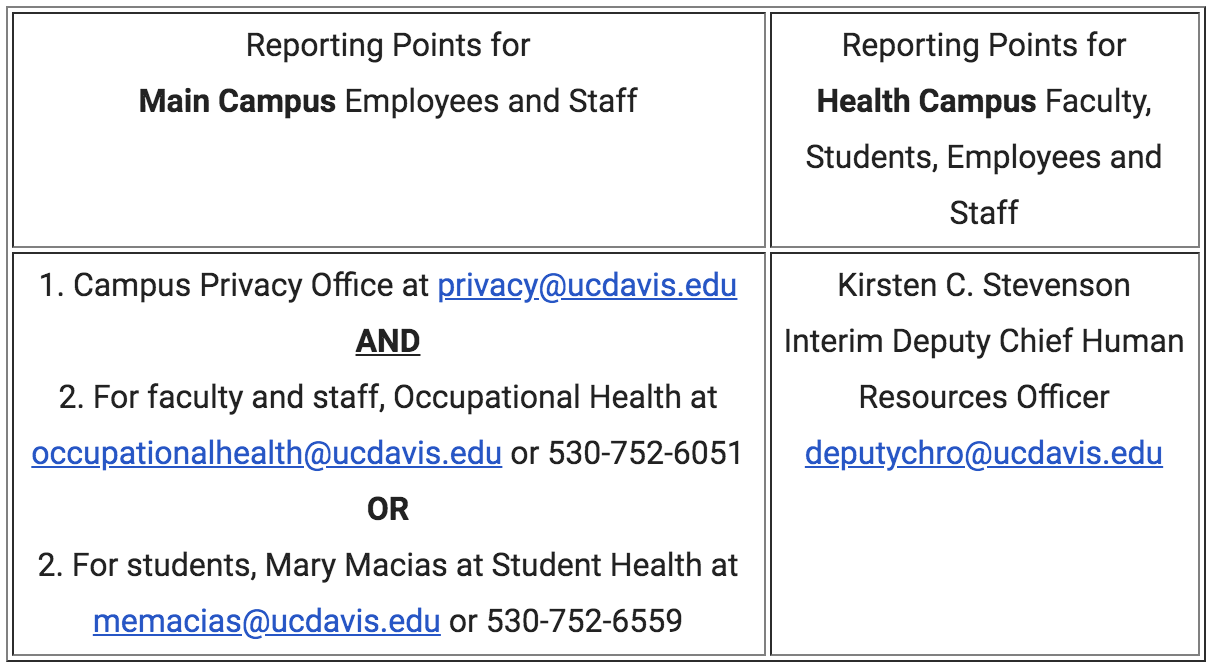
According to Hexter’s statement, if “you have personal knowledge of testing positive yourself for COVID-19, or an immediate family member testing positive, or know of a colleague who has tested positive,” immediately contact the following: 

Written by: Hannah Holzer — city@theaggie.org