53.5 F
Davis

Davis, California

Tuesday, December 23, 2025
Home Blog Page 353

UC Davis students launch new ‘trinity’ trend, this time with desserts

Davis Dessert Trinity challenges students with a sweet tooth to eat at Davis Creamery, Sweet & Shavery, Yolo Berry Yogurt in one night

Students in Davis have started a new trend named the Dessert Trinity. It follows the same style as the Davis Trinity, which includes drinking the three strongest alcoholic drinks in the city in one night. 

The student who started the Dessert Trinity is graduating in June and wished to remain anonymous to protect the integrity of the trend. The student explained why friends wanted to create an alternate challenge to the alcohol trinity.

“A lot of my friends are turning 21, and they don’t like alcohol,” the student said. “People get really wrecked after doing the Alcoholic Trinity, so I thought: ‘Why don’t we do something that we like?’ So, desserts. That’s how the Davis Dessert Trinity was created.”

Students completing the Dessert Trinity must visit the Davis Creamery first and order a Cow Grande or Simple Fudge Brownie Delight. At Sweet and Shavery, they should get a combo crepe and small custard, parfait or Italian ice. The last stop is an eight-ounce cup of Yolo Berry Yogurt. 

One weekend, after thinking of the Dessert Trinity, the student joined a group of friends to complete the challenge.

“I and all of my friends have sweet tooths, so we thought it would be no problem,” the student said. “After the first one, I was challenged, but it was satisfying because ice cream is great. The second one was like, ‘We’ll do it just to do it.’ When we went to Yolo Berry, it was nice that it was self-serve, because all of us had different portions that we could stomach.”

Kailyn Bunt, a second-year animal science major at UC Davis, has worked at Sweet and Shavery for seven months. She described how the newly-founded trend has already gained some traction in the city. 

“During my shifts at least, we’ve had three or four people come in and talk about the Davis Dessert Trinity,” Bunt said. “I think there’s been a lot of interest in it. I find it really interesting — I think it’s kind of cool. I know there’s a few places I’ve tried before, so I think it would hurt to do it.” 

 Yet, Precious Andrad, a fourth-year international relations major at UC Davis, worked at the Davis Creamery for two years and has not yet heard about the challenge nor served any students completing it.

If a worker isn’t aware of the challenge, the founder said students should show them its Wikipedia page and ask for the listed dessert. 

The owner of Yolo Berry Yogurt, Lee Pflugrath, also said he hasn’t served anyone doing the challenge yet, but he thinks the Dessert Trinity is a good idea and wanted to support it.

“I always help young entrepreneurs to start stuff,” Pflugrath said. “It was one of those things where I liked [the] project, it looked like a great idea and well put-together. I really believed in [the] project.”

The founder explained that these specific locations were chosen to be part of the Trinity because they are local and a vital part of the UC Davis student community. 

“I asked myself which dessert places characterize Davis, so I didn’t do the chains,” the student said. “I knew Davis Creamery and Yolo Berry were for sure because I knew a lot of clubs do fundraisers there, and they’re staples to being a Davis student. And Sweet & Shavery was close and provided a diverse selection of desserts — rather than just ice cream.”

Bunt agreed that the Dessert Trinity will help these local dessert stores by drawing in more students.

“I think it definitely does make business a little bit better,” Bunt said. “We are a community-owned store, so having students [be] more involved in the community and not a chain is better.”

If and when COVID-19 becomes better controlled in the community, the founder illustrated how the Dessert Trinity will be publicized, and described the reasons for starting it with friends.

“We’re probably going to make memes so that we can popularize it after the coronavirus is out, hopefully,” the student said. “We are excited to make a new trend. First, because we don’t like alcohol and alcohol poisoning. And second, because we want to leave our mark on Davis since most of us are leaving.” 

Written by: Eden Winniford –– city@theaggie.org

Emperor Trump is stark naked, but at least half the population doesn’t care

The president’s handling of the global pandemic should cost him re-election, but will it?

For months, the American people listened to President Donald Trump downplay the threat of coronavirus, calling it the Democrat’s “new hoax,” and then, as cases began to rise, dismissing it as something that would just disappear, “like a miracle.” On March 9, he called it nothing more than the “common flu.” Four days later, he declared a national emergency. 

Even then, when the battle against the virus was at our very doorstep, he refused — and still refuses — to declare a national lockdown and only recently utilized his emergency powers to increase production of critical medical supplies. As governors across the country pleaded with the president for aid, he told Fox News that such assistance was conditional upon the behavior of the states, saying “They have to treat us well, also. They can’t say ‘Oh, gee, we should get this, we should get that.’” 

In some ways, as conservative columnist Max Boot said, we can’t really blame Trump for his grossly incompetent response to this global pandemic — he never lied about who he was. Trump has simply never been pushed to provide even minimal data to back up his answers. 

Yet I’m frustrated, angry and, like many Americans, scared. As hospitals in various states, including my home state of Michigan, find themselves overwhelmed with patients and short on critical medical supplies, they are forced to provide treatment based on who has the best chance of survival. That means pulling patients, whose conditions do not improve, off ventilators and giving them end-of-life care. Ironically, the “death panels” Sarah Palin and other Republicans lied about in their attacks on Obamacare have become a reality under their chosen president. 

We are all feeling the effects of this virus to varying degrees. Many of us have lost our last months of college with friends, not to mention our jobs and ability to pay the bills. Some can’t even feed their families or themselves. But what unites many of us is our shared fear of losing someone we love. 

I drop off food at my grandmother’s porch, telling her I love her through a glass window. I feel tears well up when I contemplate the idea that my parents could get sick, and there might not be a ventilator for them. I feel a lump in my throat when I know my aunt goes to the frontlines of this war when her hospital lacks the basic tools to protect its nurses from the same virus that ravages its patients. 

There is a frustration that is almost overwhelming when I think about how much of this crisis was preventable. Even if Trump hadn’t disbanded much of the pandemic team or ignored the National Security Council’s pandemic playbook managed under the Obama administration, there were innumerable measures he could have taken to slow the spread of the virus — the first being an admission that there was a crisis, the second being the institution of a lockdown. 

Instead, fearing for his chances of re-election, Trump repeatedly lied in a silly, misguided and ultimately futile effort to protect the stock market from major losses. It was only with massive hits to the Dow Jones Industrial average and catastrophic stock losses that the president admitted that the virus was an issue and not a flu-like disease that would magically disappear. But even as cases mount at a rate of 20,000 a day, states are responding haphazardly and chaotically with little direction from the federal government. 

We can’t slow the spread when some states refuse to mandate a shelter-in-place order, or even refuse to enforce it where it has been implemented. This doesn’t work if only some do their part. The nation slowly bleeds out as we wait on our elected officials to take critical action, putting us on a trajectory far grimmer than that of Italy. 

As the crisis continues to unfold in the coming months, I implore my fellow Americans to pay attention. The leaders of this nation must protect their citizens and residents. At the end of the day, America has a wonderful set of ideas and principles, but America is only the people that live in it. Our leaders must make decisions solely based on protecting the lives of citizens and residents, not partisan pettiness or religious magical nonsense.

For those who would say Trump couldn’t have predicted this, tell that to the advisors who warned him for months. And for those who would say now is the time to support and not criticize the president, you can support him while also demanding that he take action to save Americans. In fact, doing so is the most critical form of support you could lend him at this time. 

If you’re assuming a landslide Trump loss in November and think you can stay home, the latest Gallup Poll has Trump’s approval at 60%, and Fox News has his approval at 51% — surpassing President Obama’s numbers going into his re-election. 

For those who love to chant “not my president,” he is your president, so you better vote in November to change that. Americans can no longer afford to remain blissfully ignorant of the nation’s politics. It is now a matter of life and death. 

Written by: Hanadi Jordan — hajordan@ucdavis.edu

Disclaimer: The views and opinions expressed by individual columnists belong to the columnists alone and do not necessarily indicate the views and opinions held by The California Aggie

Davis City Council passes ordinance halting evictions, suspending fees for water shut-offs during COVID-19 local state of emergency

City’s landlords cannot evict renters unable to pay rent due to pandemic, related workplace closures

The Davis City Council has unanimously passed a city-wide ordinance that will put a halt to both commercial and residential evictions for non-payment for the duration of the COVID-19 local emergency, provided that tenants can prove they have been financially impacted by the pandemic. The ordinance also authorized the city manager to waive penalties for non-payment of city utility bills and suspend water shut-offs.

News of the ordinance was announced on the city’s website on March 25. Councilmembers said the moratorium on evictions is intended to provide relief to the many Davis workers impacted by COVID-19 and subsequent shelter-in-place orders.

“Many people who have served us in Davis shops and restaurants are suddenly unemployed or underemployed and need our help,” said Councilmember Dan Carson in the announcement. “I’m glad we will be able to help our residents who are struggling to make ends meet because of the health emergency. We must all take a compassionate approach in this time of crisis.”

Under the oridance’s terms, tenants will have to provide notice of their inability to pay to their landlord within 10 days of their rent’s due date. They must also provide documentation that proves loss of income or financial impact due to the outbreak  — either from illness itself or from disruption caused by shelter-in-place orders — within 30 days of their rent due date. Landlords cannot initiate no-fault evictions, except out of immediate necessity due to hazardous conditions unrelated to COVID-19.

Tenants must, however, pay whatever portion of their rent they can, according to the city’s announcement. Moreover, the ordinance only defers the rent payments rather than eliminating them altogether — once the state-of-emergency is lifted, landlords can once again seek any outstanding rent from their tenants.

The moratorium on evictions will remain in place until the state of emergency is lifted, according to the city’s announcement. Tenants must complete back payments of any unpaid rent within six months of the expiration of the ordinance.

  Additionally, the ordinance allows the city manager to suspend penalty fees for non-payment of city utility bills, as well water shut-offs, throughout May 2020 — and past this date, if deemed necessary. Unlike the rent deferrals, utility customers will not need to provide documentation of their inability to pay.

Written by: Tim Lalonde — city@theaggie.org

West Village announces resident with coronavirus, later backtracks due to lack of confirmation

Resident currently in self-quarantine, apartment complex currently taking preventative measures

Sol at West Village, a UC Davis apartment complex, emailed residents on March 26 that a resident had tested positive for COVID-19. On March 27, however, the complex sent out a second email, stating the resident displays symptoms and visited Kaiser and UC Davis Health but had not yet tested positive.

“Earlier, we received and shared a notification that a resident at Sol at West Village had been diagnosed with COVID-19,” the email reads. “We have since received clarification that they have symptoms consistent with COVID-19 but have not received a confirmed positive test result.”

Lynse Griswold, a community ambassador for Sol at West Village, explained the information was given to them by UC Davis. She confirmed the resident is in isolation and said the complex is dedicated to maintaining a healthy environment. 

“As for the person who may have tested positive: They have isolated themselves, they have self-quarantined,” Griswold said. “Our property and our management have taken certain precautions to ensure the safety of all of our residents and staff members. The situation has been handled, as far as we know.”

The first email detailed preventive measures being taken, including staff members sanitizing shared spaces more frequently.

Sol at West Village has also closed all amenities to discourage social gatherings, according to Griswold. 


Written by: Eden Winniford city@theaggie.org

Mullet mania: Why is the most notorious 80s haircut making a bold comeback?

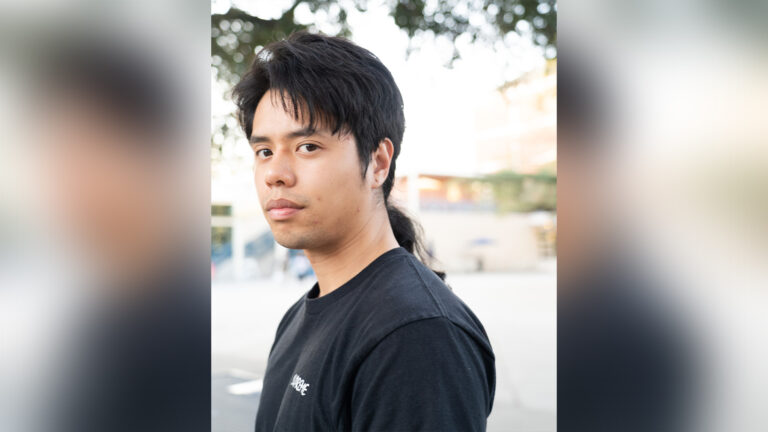
Three “mulleters” on campus discuss their look

This past year, I noticed a reemergence of a fashion statement so bold and so shocking, one that was thought to be lost long ago in the age of glam rock and unfettered redneck masculinity. I’m talking about the ape drape, the squirrel pellet, the achy breaky bad mistakey — the mullet. The term was coined by the Beastie Boys after “mullet head”(meaning dimwitted), and can be spotted at the football field, art studio or fraternity house. Students not around for the mullet’s heyday are willingly opting-in for what is often considered hair-do faux pas number one. 

The mullet is one of the few haircuts that draws an immediate visceral reaction — forcing you into a double-take as you stammer, “Is that what I think it is?” The advent of the mullet goes way back to centuries before it found infamy in contemporary Western culture. Ancient Roman chariot racers, Native Americans and even Benjamin Franklin with the “skullet” (barren scalp in the front, party in the back) proudly donned versions of the hairdo. 

Those not wary of its presence in the annals of history may have become acculturated to the hairstyle by its takeover in the 1980s when the tousled mane flowed down the backs of superstar rockers like David Bowie and Paul McCartney. Since the 1980s, the mullet went into deep hibernation, and many — myself included — came to the conclusion that it had seen its final day. 

And yet in the face of all odds, it carries on. I caught up with three “mulleters” on campus to find out why.

For Sam Cohen-Suelter, a fourth-year communication and cinema digital media major, the mullet started out as a joke, but has since expanded into a signature ‘do.

“I think at first I was doing it for a joke,” Cohen-Suelter said. “I’ve done weird things with my hair before so it wasn’t completely off-brand, but the first time I did, I was like, ‘I kind of mess with it.’” 

Cohen-Suelter noted its versatile benefits, as the bold choice offers nearly limitless options.

 “I really like long hair, but I don’t like it getting in my face,” Cohen-Suelter said. “Instant fix. Another one is to even tie it up. You have a short little ponytail and put it through the back of your hat.”

Since adopting the mullet, Cohen-Suelter has seen the style pop up all over, including in the realm of competitive Super Smash Bro events. Cohen-Suelter cited the elite-level German gamer, Mustafa Akçakaya, professionally known as “European Mew2King,” as an influence on his decision to rock the “ape drape.”

“I play Super Smash Brothers competitively and one of my favorite players has the same haircut,” Cohen-Suelter said. “So I was like, ‘I gotta replicate it.’ This is the best player in Germany. His gamer tag is ‘Ice.’ He’s got the trucker hat. It looks good. It looks really good.”

According to Cohen-Suelter, the mullet is a look you have to grow into. He had his own mullet epiphany while out on a run.

“It’s only been like the past month or so where I’m like, ‘Holy sh-t, what is that on my head?’” Cohen-Suelter said. “I’m pretty down for it. Once I went for a run, my hair was just really sweaty. I just pushed it up and it didn’t fall down to the sides. I just looked up and it was perfect.”

While contemplating what to do for his next fraternity composite picture, Evan Swanson, a fourth-year international relations major, decided that he wanted to go all in. He wanted something unabashedly “frat,” and the mullet fit the bill.

“The only reason I grew it was for the composite picture because I just thought it’d be really funny to have a mullet,” Swanson said.

Swanson’s mullet legacy will live on long after he leaves the campus.

“I think having it hung up [in my fraternity house] for the foreseeable future is pretty cool,” Swanson said. “It’s definitely something that when I come back when I’m older and I’m ever in town, I’ll be like, ‘Yeah man, I remember doing that. I was that guy.’”

Holly Murphy, a second-year environmental policy and analysis major, proudly repped the mullet for its versatile qualities. Like Cohen-Suelter, they choose the mullet life as a joke, but since then they have come to enjoy its fluidity.

“I’d always been wanting to do something a little more masculine, and I have a very feminine face,” Murphy said. “Recently, I like to dress more androgynous and more masculine, and I think with long hair and bangs you just can’t really do it. So it was time to be more androgynous — let’s cut the hair.”

At first, Murphy was rather self-conscious about the mullet, but they eventually found themself growing quite fond of the look.

“There was a little moment of self-consciousness that was kind of scary, but then once you rock it, you get into it,” Murphy said.

They cited inspiration from the Queer community of the 1980s, when lesbians rocked the style to break barriers and proudly identify themselves. They elaborated that the Queer community has truly transformed the mullet to fit their own unique style.

“It’s a big thing within the Queer community, especially with lots of lesbians in the 80s, because it’s short in the front and you can do a lot in the back,” Murphy said. “It’s kind of an in-between. And then we start seeing women and nonbinary people rocking this more masculine look. I think what the gays really started doing was looking at this farmer chic or hick chic and started taking it and turning it into their own thing.”

The three mulleters have found their choice in hair-do generally well-accepted within the Davis community. Murphy received praise in the form of a shout-out on the app Wildfire and Swanson was all the rage among his fraternity brothers, even passing the test of approval from his girlfriend. Cohen-Suelter’s mullet also drew a crowd at an In-N-Out Burger drive-thru when a bewildered employee pointed it out to their co-workers. 

The mullet is a symbol of rebellion against the status quo. You can take issue with the optics, but you have to respect the courage to rock it. 

“There’s definitely a little bit of attitude that comes with having a mullet,” Swanson said. “I feel like it says something about you, where you’re giving vibes that say ‘I’m bold.’”

Written by: Andrew Williams — arts@theaggie.org

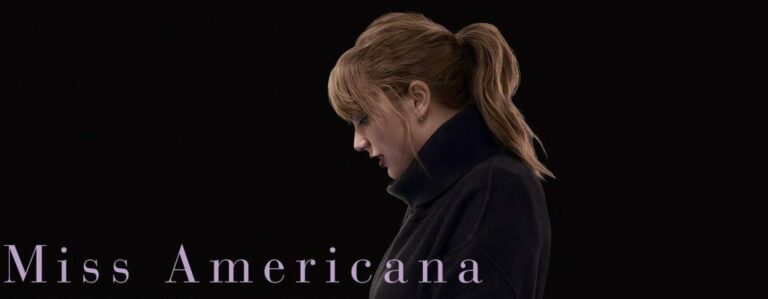
How female artists like Taylor Swift and Megan Thee Stallion have stood up against sexism and exploitation in the industry

A clapback to the patriarchal music industry 

Women in the music industry have been challenging the patriarchal nature of the business by extending a big middle finger to The Man. Musicians like Taylor Swift and Megan Thee Stallion have gained considerable popularity for stances they have taken against the sexist roots of the music industry. Sexism remains a pertinent issue in major industries, and women have and will continue to clap back until justice is achieved. 

Released on Feb. 27, Taylor Swift’s official music video of her hit song “The Man” spurred chatter over her rather unique exhibition of sexism in not only the music industry, but also in reality. Swift plays her male alter-ego “Tyler Swift” in order to mock the absurdity of sexism. 

The music video includes examples of double-standards evident in American pop-culture, highlighting toxic masculinity, mansplaining and the objectification of women. Tyler Swift lives a lavish and rather promiscuous lifestyle as an egotistical power-hungry man praised for doing little to no work while tyrannizing others. 

Multiple scenes in the music video are chock full with the sexualization of women while Swift’s alter-ego mascarades around with women at his feet. Swift parades down a hallway of 19 hands, high-fiving them along the way. The 19 hands are a reference to the 19th amendment of the Constitution declaring women’s right to vote. By celebrating one of his “conquests,” however, the scene is ironic in the sense that people haven’t realistically changed the dehumanization of women since. 

Other intentional references are made to certain individuals who have caused controversy in regards to gender norms. The significance of the tennis scene is a direct reference to Serena Williams’ episode with the chair umpire in the 2018 U.S. Open. Williams’ reaction was seen as ridiculous while the male reactions (which, in some cases, were worse), were regarded as “passion” for the game. 

The last scene of the music video is of Taylor Swift as the director, telling her alter-ego Tyler to be “sexier” and “more likable,” signifying the underlying sexist norms placed on women by the entertainment industry. She then mockingly applauds Loren Gray for her part in the tennis scene as “tennis ball girl,” in which she solely rolled her eyes. 

Taylor Swift indirectly claps back at Scooter Braun and Big Machine Records (who own Swift’s first six studio albums and have caused a public, contentious contract disagreement) by peeing on the wall of graffiti and a sign prohibiting scootering. In Swift’s own way, she was able to utilize her creativity to fight against sexist norms in major industries — and, from the looks of it, she succeeded. 

In fact, Swift is not alone. The female rapper and singer Megan Thee Stallion recently gained immense popularity after suing her record label, 1501 Certified Entertainment. The label allegedly took a vast majority of her income, the rights to her music and basically ran her entire music career without any say from the musician herself. 

The release of her third EP, “SUGA” was much more of a hassle than it needed to be. Simply wanting to discuss renegotiating her contract, 1501 blew her request way out of proportion. The record label basically buried their own grave. 

Granted a temporary restraining order against 1501, Megan went ahead and signed a management deal with Roc Nation in September of 2019 and they have helped her stand her ground against 1501. She started to tweet the hashtag #FREETHEESTALLION to raise awareness of her mistreatment. Ironically, Megan was the first female rapper on the label — but she was obviously not treated with the level of respect she deserves. 

In Megan’s interview with Rolling Stone, she expressed her appreciation to the court’s denial of 1501’s request to dissolve her restraining order, which would ultimately stop her music from being released. 

“To be clear, I will stand up for myself and won’t allow two men to bully me,” Megan said. “I want my rights.”

Prior to the legal affairs, Megan was featured on the front cover of Rolling Stone magazine with the headline, “women shaping the future” — and she has stood true to that statement, along with other women in the industry such as Swift. 

Written by: Sierra Jimenez — arts@theaggie.org

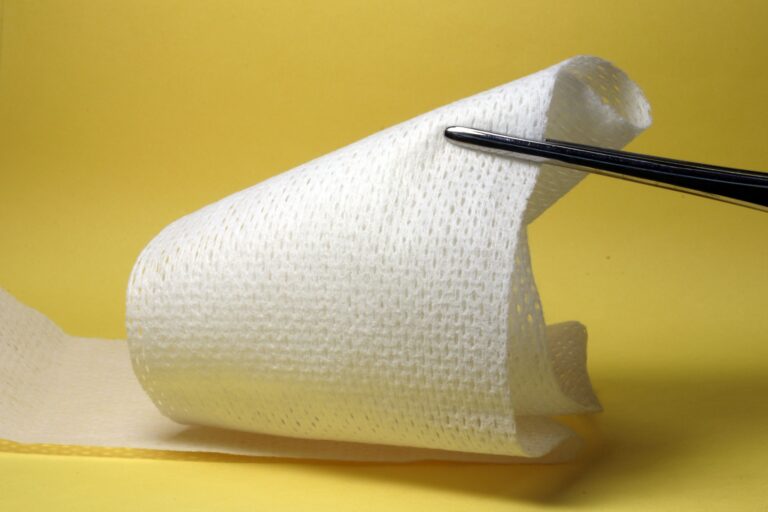
Intelligent bandage could help treat chronic wounds using electric forces

Multidisciplinary, multi-university research attempts to produce smart bioelectronic bandage

Two professors from UC Davis teamed up with researchers from UC Santa Cruz and Tufts University to promote faster healing for chronic wounds. Marcella Gomez, an assistant professor in the department of applied mathematics at UCSC and a faculty affiliate for the Research Center for the Americas, hopes to work on optimizing their design while considering their interwoven objectives for the project.

“The significance would really be two fold,” Gomez said. “If successful, on one end, we will be demonstrating dominion over nature and we will have done this by reducing the task of controlling a complex biological process to a systematic engineering problem. On the other end, we are developing new technology that integrates distinct research fields in a novel way to advance biomedical applications.”

The biomedical community generally believes that the migration of cells toward the site of a wound is due to cues from the chemical gradient and the space available around the site. But Min Zhao, a professor in the dermatology department and the department of ophthalmology and vision science at UC Davis, explained that their team found otherwise.

“What we found is that actually at the wound, there are electrical indigenous, naturally occuring electric fields as well,” said Zhao. “We have a unique facility that we can measure that and then when we put cells in an electric field we can actually see remarkable migration of the cells. And what’s more important is that this electrical guided migration seems to be a predominant effect.”

In other terms, the negative pull of electric fields occurring within wounds could be directing cells to move toward the center of the wound in order to heal it, according to Rivkah Isseroff, a distinguished professor in the department of dermatology at UC Davis and the chief of dermatology at the VA Northern California Health Care System. Both Isseroff and Zhao had been involved in this field for years before the government put out a call for a bioelectrical wound healing program which brought together their multi-university team.

While there are other already developed electrical devices or published works concerning smart bandages, Zhao explained that the uniqueness of their research comes from this focus on bioelectricity. Isseroff added that what sets their research apart is the utilization of machine learning to understand what electrical impulses are required to improve healing. In comparison, other electrical bandages do not take in information from the wound itself. 

“Electric fields are part of tissue formation and tissue regeneration,” Isseroff said. “So what our group is doing now is using machine learning to harvest that information and give it back to a wound that’s not healing.”

For Isseroff, this research is personally important, as her clinical work involves treating many patients with chronic wounds. As she currently advises the team about how they will apply their research to patients in the future, Isseroff hopes she will be able to help her own patients as well. She emphasized that the production of their smart bioelectrical bandage would not only benefit severely wounded soldiers, but also the general population.

“Even with the best of care and unlimited financial resources, we can’t always heal chronic wounds,” Isseroff said. “So I’m very excited about this work [and] hoping to be able to bring treatments that are sorely needed to a large patient population.”

Written by: Michelle Wong — science@theaggie.org

Employees at UC Davis Medical Center test positive for COVID-19

UC Davis Health prepares for expected surge in coronavirus patients in the upcoming weeks 

Employees of UC Davis Health have tested positive for COVID-19 in the last week, according to an internal email written by David Lubarsky, the CEO of UC Davis Health, that was obtained by The Sacramento Bee

One of the infected staff members is a 48-year-old emergency room nurse who wished to remain anonymous, according to The Bee. Despite Lubarsky’s stated confidence that the infected staff member contracted the virus in the community, the nurse believes she contracted COVID-19 at work from an elederly emergency room patient on March 15. In The Bee article, the nurse argued that emergency room personnel should be wearing personal protective equipment (PPE) constantly in the upcoming weeks to prevent any possible virus transmission.

“Basically we’re walking into the virus itself,” she said in The Bee. “There’s a lot of evidence that suggests you can walk around with no symptoms at all and still spread the virus, so the idea that we can work in an emergency room and not have to gown up with (personal protective equipment) until we have a patient that meets certain criteria is, to me, preposterous. I think we should just always have the gowns and gloves available.”

In Lubarsky’s email, dated March 23, he warned that the UC Davis Medical Center (UCDMC) is expected to experience a surge in coronavirus cases in the upcoming weeks.

“Moving forward, the overwhelming majority of infections will be community-acquired, because we are all members of the community,” Lubarsky wrote. “And while we practice contact/droplet precautions here at work, we simply can’t be as protected outside of work.”

Lubarsky said UCDMC is taking proactive measures such as conserving PPE through online COVID-19 testing and utilizing closed dental offices for supplies, making more room in emergency rooms and intensive care units for additional patients as well as encouraging staff members to stay home if they are not feeling well.

Lubarsky emphasized that although coronavirus transmission is possible, the hospital must maintain its mission to treat all patients in need of essential procedures and surgeries, reminding staff that UC Davis Health follows national guidelines for “essential surgeries” developed by experts.

Written by: Hannah Blome — campus@theaggie.org

Yolo County conducts widespread outreach to hard-to-count populations before 2020 Census

Student, immigrant communities among hardest to measure, officials say

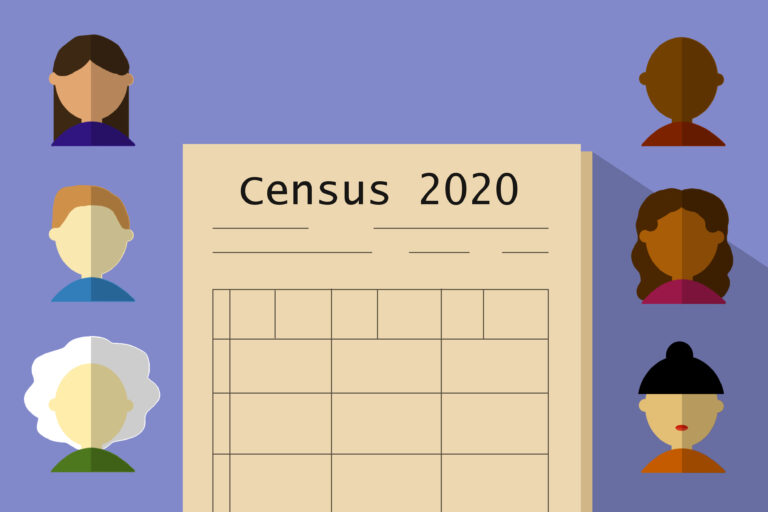
Yolo County officials are partnering with other local organizations in an effort to reach out to historically hard-to-count populations — a group that includes both students and immigrants —- for the 2020 census.

The 2020 census will take place in March through April of this year, according to the Yolo County website. During this time, the U.S. Census Bureau will attempt to collect information on every individual and their home location in the U.S. Households will receive mailers inviting them to fill out a census survey online, via phone or by mail. Those who don’t self-answer the survey will receive phone calls and then door-to-door visits from census workers in April, according to the site. 

A lot is at stake during a census, according to Jenny Tan, the public information officer for Yolo County. Beyond the useful data it provides, the census plays a critical role in the federal government’s allocation of public funding, as well as assigning the number of representatives per district in the U.S. House of Representatives. Tan listed some of the public programs, services and institutions that rely on federal funding for their operations.

“Not a lot of people know that the state gets over $70 billion in federal funding every year, and that’s based off [of] census numbers,” Tan said. “Our county also gets money based on census data — we get about $16 to 17 million every year. All of that money gets funneled back into the community — it goes toward hospitals, schools, Title I and Title III. It goes toward Pell Grants, WIC, CalFresh, Medicaid, Medicare [and] after-school programs.” 

Even on an individual level, residents have a big impact on how much money their communities receive, Tan said — a single uncounted resident means the loss of tens of thousands in federal funds.

“For each person that doesn’t take the census survey, the community loses out on $1-2,000 a year,” Tan said. “The census is every 10 years, so if one person [doesn’t reply], that’s $10,000 to $20,000 that the community loses out on. In an apartment of four, that’s $40,000 to $80,000.” 

There will be many challenges in counting certain communities during the 2020 census, however, according to Tan. Immigrant populations are among these, both because of language barriers and distrust of the federal government among some migrants. In July 2019, President Donald Trump signed an executive order that would add a question regarding citizenship status to the 2020 census, Vox reported. The order was struck down by the Supreme Court, however, ensuring that the census would not include the citizenship question.

Nevertheless, Tan said, the threat of immigrants’ information being shared with the federal government has only compounded distrust among some, making many immigrants reluctant or afraid to participate in the census.

“There’s just been so much fear and anxiety around being an immigrant — what your status is,” Tan said. “Last year, they were talking about having a citizenship question on the census, and that really spurred that on even more. California is the state with the highest percentage of immigrants that live here, so the state as a whole and the county realized [that]  we need to do a lot more in terms of getting everyone counted.”

Much of the messaging around the 2020 census has emphasized the confidentiality of any data collected, as well as the lack of a citizenship question. A page on the census website titled “Fighting Census Rumors” responds to questions about a citizen question with an emphatic “no.” 

“The 2020 Census does not ask whether you or anyone in your home is a U.S. citizen,” the site reads.

The county has partnered with smaller, local non-profits as part of its outreach efforts. Jessica Hubbard, the executive director of the Yolo Community Foundation, said that these local groups typically have long-standing relationships in their communities, which makes them effective coordinators and attaches familiar, trusted faces to census outreach efforts.    

“[Local non-profits] have existing relationships and ways of reaching [hard-to-count] populations,” Hubbard said. “It’s truly invaluable because this is a message that’s not coming down from the federal government, it’s not coming from an organization like mine — it’s coming from a non-profit people know and trust and have a relationship with.”

Another one of the largest groups among hard-to-count populations in Yolo County is students at UC Davis, according to Tan. For most students, the 2020 census will be the first census they participate in as adults, as they had previously been counted under their parents. Moreover, they may not realize they will be counted in their current location, not a permanent address elsewhere. 

“Students use our roads, they use our hospitals, they sign up for public assistance programs — so they’re using the services here,” Tan said. “Once that student graduates, another comes to take their place […] even though that population may be changed out frequently, it’s a pretty stable [measure] for the population of Davis and Yolo County.” 

Written by: Tim Lalonde — city@theaggie.org

Here’s a bunch of good stuff to watch: 30 TV shows, 100 movies online now

The best of what’s on Hulu, Amazon Prime, Netflix, Kanopy, Tubi, Crackle, Vudu

My friends watch a lot of movies and television, so sometimes I forget that the amount of media I consume is abnormally — perhaps even disturbingly — extensive. That said, I am now uniquely equipped to recommend what’s good out of what’s currently available to stream — as if my hundreds of hours of watching have prepared me for the situation we all now find ourselves in: indoors and eager to be distracted. And readers, if you’re not convinced to take my recs based on viewing hours alone, my long-time best friend Blake Panter, who always actually watches the movies I recommend him, vouched for my top-notch taste, so there you have it.

Without further ado, here’s the best of what’s currently available and where to find it (streaming services include popular options like Netflix, Hulu and Amazon Prime as well as Kanopy, which UC Davis students have limited access to, and free, ad-sponsored services like Tubi, Crackle and Vudu).

** indicates Hannah’s highest honors

Movies

  • Drama
    • A Single Man (Netflix)
    • An Education (Crackle)
    • Annihilation (Hulu)
    • Blade Runner (Netflix)
    • Carol (Tubi, Vudu)
    • Carrie Pilby (Netflix)
    • Cold War (Amazon Prime)
    • **Crouching Tiger, Hidden Dragon (Netflix)
    • Dead Poets Society (Vudu)
    • Eighth Grade (Amazon Prime)
    • **First Reformed (Amazon Prime)
    • Funny Girl (Crackle)
    • Good Will Hunting (Hulu)
    • Guava Island (Amazon Prime)
    • Harold and Maude (Amazon Prime)
    • Heathers (Hulu)
    • Hunt for the Wilderpeople (Hulu)
    • If Beale Street Could Talk (Hulu)
    • Inglourious Basterds (Netflix)
    • Kill Bill Vol. 1 & 2 (Netflix)
    • Kramer vs. Kramer (Crackle)
    • Lady Bird (Amazon Prime)
    • **Lady Vengeance (Tubi)
    • Léon: The Professional (Crackle)
    • Magnolia (Netflix)
    • Man on the Moon (Amazon Prime)
    • Marriage Story (Netflix)
    • Marie Antoinette (Crackle)
    • Memento (Tubi)
    • Metropolis (Kanopy)
    • Moonlight (Netflix)
    • Mona Lisa Smile (Tubi)
    • Ordinary People (Crackle)
    • Pretty in Pink (Amazon Prime)
    • Roma (Netflix)
    • Sabrina – 1954 version (Crackle)
    • Sunset Boulevard (Amazon Prime, Crackle)
    • **The Congress (Tubi)
    • The Exterminating Angel (Kanopy)
    • The Farewell (Amazon Prime)
    • The Irishman (Netflix)
    • **The Last Black Man in San Francisco (Amazon Prime)
    • The Purple Rose of Cairo (Vudu)
    • The Social Network (Crackle)
    • **The Virgin Suicides  (Amazon Prime)
    • There Will Be Blood (Netflix)
    • To Catch a Thief (Amazon Prime)
    • **V for Vendetta (Vudu)
    • **Vox Lux (Hulu)
  • Comedy
    • Booksmart (Hulu)
    • Bridget Jones’s Diary (Amazon Prime)
    • Clue (Amazon Prime, Crackle)
    • **Ferris Bueller’s Day Off (Netflix)
    • Goodfellas (Netflix)
    • **Groundhog Day (Netflix)
    • Hot Rod (Netflix, Amazon Prime, Crackle)
    • My Best Friend’s Wedding (Hulu)
    • Obvious Child (Netflix)
    • Planes, Trains and Automobiles (Amazon Prime, Crackle)
    • The Invention of Lying (Netflix)
    • When Harry Met Sally (Hulu)
  • Documentaries/Docuseries
    • Amy (Kanopy)
    • Cults and Extreme Beliefs (Hulu)
    • Dear Zachary: A Letter to a Son About His Father (Kanopy)
    • Faces Places (Kanopy)
    • Grey Gardens (Kanopy)
    • Jim & Andy: The Great Beyond (Netflix)
    • Knock Down the House (Netflix)
    • Little White Lie (Kanopy)
    • Marina Abramovic: The Artist is Present (Kanopy)
    • **Searching For Sugar Man (Netflix)
    • **Three Identical Strangers (Hulu)
    • Tickled (Hulu)
    • **Wild Wild Country (Netflix)
  • Thrillers/Psychological Thrillers 
    • Charade (Amazon Prime)
    • Donnie Darko (Tubi)
    • Eyes Wide Shut (Hulu)
    • Hereditary (Amazon Prime)
    • Melancholia (Tubi)
    • Midsommar (Amazon Prime)
    • Rosemary’s Baby (Netflix)
    • **Take Shelter (Crackle)
    • **The Love Witch (Amazon Prime, Vudu)
    • **The Handmaiden (Amazon Prime)
    • The Talented Mr. Ripley (Netflix)
    • **Under the Silver Lake (Amazon Prime)
    • Under the Skin (Netflix)
    • Zodiac (Crackle)
  • Feel-good
    • Big Fish (Hulu, Crackle)
    • Bye Bye Birdie (Crackle)
    • Julie and Julia (Netflix)
    • **Midnight in Paris (Netflix)
    • Moonstruck (Amazon Prime)
    • Mouse Hunt (Tubi, Crackle)
    • Roman Holiday (Amazon Prime, Crackle)
    • Royal Wedding (Tubi)
    • **Sing Street (Tubi, Vudu)
    • **Stranger Than Fiction (Crackle)
    • The Intouchables (Tubi, Vudu)
    • Yes Man (Netflix)

TV Shows

  • Comedy
    • Arrested Development (Netflix)
    • Billy on the Street (Netflix)
    • Bob’s Burgers (Hulu)
    • Bojack Horseman (Netflix)
    • **Derry Girls (Netflix)
    • Episodes (Netflix)
    • **Frasier (Hulu)
    • **Fleabag (Amazon Prime)
    • John Mulaney specials (Netflix)
    • **Pen15 (Hulu)
    • **Schitt’s Creek (Netflix)
    • Shrill (Hulu)
    • Seinfeld (Hulu)
    • Sex and the City (Amazon Prime)
    • The Good Place (Netflix)
    • Unbreakable Kimmy Schmidt (Netflix)
    • Veep (Amazon Prime)
    • Wet Hot American Summer First Day of Camp (Netflix)
    • 30 Rock (Amazon Prime)
  • Drama
    • Atlanta (Hulu)
    • Downton Abbey (Amazon Prime)
    • Forever (Amazon Prime)
    • Girls (Amazon Prime)
    • **Maniac (Netflix)
    • **Modern Love (Amazon Prime)
    • Russian Doll (Netflix)
    • The Crown (Netflix)
    • The Newsroom (Amazon Prime)
    • The People vs. OJ Simpson (Netflix)
    • **The Sopranos (Amazon Prime)

Readers: If you take us up on any of these recommendations, send us an email and let us know what you thought!

Written by: Hannah Holzer — arts@theaggie.org 

Yolo County confirms first COVID-19 fatality

Elderly Yolo County patient with underlying health issues dies after contracting COVID-19

On March 22, Yolo County reported its first confirmed death caused by COVID-19. The patient was elderly with other health-related issues besides the virus, according to a press release on the county’s website.

“This fatality occurred in an older adult with underlying chronic health problems,” the press release read. “The infection was community acquired and was previously reported as the 6th confirmed Yolo County case.”

Old age and previous health problems are high-risk factors cited by the Centers for Disease Control and Prevention that may put someone at higher risk of developing severe complications from COVID-19.

“Based on currently available information and clinical expertise, older adults and people of any age who have serious underlying medical conditions might be at higher risk for severe illness from COVID-19,” the website read.

As of Monday, there are eight confirmed cases of coronavirus in Yolo County. In neighboring Sacramento County, there were 88 reported cases and four coronavirus-related deaths as of Monday, according to The Sacramento Bee.

According to a recent article in The Bee, however, the number of people in the county infected with the virus could be much higher than what is currently being reported — because testing is “so far behind where it should be,” the actual number of infected people “could be 20 to 100 times higher than what’s been reported.”

“The federal government has been ‘woefully inadequate’ in delivering test materials like swabs and reagents, county health director Peter Beilenson said, forcing public health officials and healthcare providers to ration tests to the most vulnerable cases,” The Bee’s article explains.

After the recent coronavirus-related fatality in Yolo County, County Chair Gary Sandy reminded residents about the seriousness of the disease in the press release. He highlighted the importance of adhering to the shelter-in-place order issued by Yolo County, effective March 19 until at least April 7.

“Our first COVID-19 death in Yolo County marks a grim turn in the local course of this disease,” Sandy said. “Our thoughts are with the individual’s family and friends. It is a sad reminder that everyone must shelter in place. It is imperative that we stop the ongoing spread of this virus. It is the personal responsibility of every Yolo County resident to observe the health protocols. It is now a matter of life and death.”

Written by: Eden Winniford –– city@theaggie.org
Managing Editor Hannah Holzer also contributed to this report.


Culture Corner with Ilya Shrayber

The Arts Desks’ weekly picks for movies, books, music and television shows.

Movie: “Police Story” (1985) dir. by Jackie Chan  

Democracy is flailing, COVID-19 is spreading and the stock market is the worst it’s been since the 1930s or something like that. So you owe it to yourself to kick back, relax and watch Jackie Chan beat the living daylight out of hundreds of corrupt officials and their henchmen. Set against the backdrop of a 1980s Hong Kong, “Police Story” is the ridiculous tale of Chan Ka-Kui (Jackie Chan), who botches a sting operation, pisses off his superiors and causes general mayhem, all in the name of higher justice. Intoxicating colors and rapid cinematography define the film’s energy — fun, yet deeply gripping. “Police Story” is hilarious, even for an international audience. At the same time, it has moments of tragedy, serious drama and character development. But at its core, it’s just a really fun piece of filmmaking. If you’ve never seen a crime lord fall through multiple panels of glass in a Hong Kong shopping mall, can you really call yourself a cinephile?

Book: “5,000 km per second” by Manuele Fiore 

Near the end of the first chapter of “5,000km per second,” Piero, our main character, gets an earful from Nicola, his best friend: “You saw her for three minutes! You can’t be stuck on her already!” Immediately, he responds: “Seven minutes. And I think this is it!” Never have I felt more attacked by a piece of literature. That being said, there are quite a few reasons you should pick up a copy of “5,000 km per second.” It could be the art: beautifully analogous watercolors that convey just as much emotion as they do plot. It could be the narrative: A not-quite love story that bounces from Europe to Africa and then back again. Or it could be the message at the center of it all: A simple glance is sometimes all it takes to change your life, for better or worse. On a sunny day, I sat down and finished the graphic novel on the Quad in about an hour. I hollered with laughter, I quietly shed a few tears and when I finished it, I smiled. 

Album: “Hippies” by Harlem  

Growing up in San Francisco meant that there were always at least a couple of stinky, grimey, degenerate-filled house shows happening on any given weekend. They were energetic, electric and, most of all, a ton of fun. Harlem is kind of my go-to band when people ask me what the sound of these shows are. At its core, it is frantic, catchy garage rock jams that just make you want to dance. No synthesizers, tons of fuzz pedals. Fifty percent chance of a broken amp and 100% chance of someone slapping the bag while they play. Put simply, it’s what someone who works at The Co-Op would call “straight bangers.” Hippies itself is filled to the brim with certified earworms — seriously, every song on this record could be a single if it wanted to, and that’s saying something. With pure guitar riffs, alkaline lyricism and a penchant to explore youth in urbanity, Harlem jumps over a fence that separates good artists from great; they capture a moment in time, a feeling. 

TV Show: “Seinfeld” 

With a dozen things happening at once, and another dozen up in the air, the ample time one has to relax should be spent in any fashion that makes you crack a smile. For myself, that looks like gathering a plethora of blankets, wrapping myself up like a bean and cheese burrito and watching “Seinfeld.” It is, in every sense, escapism. A simpler time, “Seinfeld” somehow took the malaise of everyday life and weaved it into hilarious narratives of friends living in The Big Apple. The show has, in many ways, just been something of a mood booster. It is quite hard to juggle the many different obstacles life throws at us. But somehow, despite all that, I have found solace in a dumb ‘90s sitcom, one that can make me laugh when everything else seems to make me frown. 

Written by: Ilya Shrayber — arts@theaggie.org

Commentary: The Day the Sports World Stood Still

On March 11, the NBA took an unprecedented step in the face of an ongoing pandemic

“The NBA has suspended the season.”

That six-word tweet sent out by ESPN’s Adrian Wojnarowski on the afternoon of March 11 set off a shockwave of confusion throughout the NBA, the sports world and the country. In a span of exactly 74 minutes, professional sports across the globe were thrown into a period of unprecedented uncertainty. 

Earlier that day, I decided to make the short trip across the causeway to Sacramento to watch the New Orleans Pelicans play the Sacramento Kings. Although I am not a fan of either team, I am a fan of players like rookie forward Zion Williamson, Lonzo Ball and Brandon Ingram, so I was looking forward to watching them play. After all, everyone needs a break sometimes and, for me, I found it watching some of the world’s best players live. 

As I entered the Golden 1 Center, there was a certain buzz in the air regarding this particular game. It was going to be nationally televised on ESPN, everyone wanted to see the up-and-coming star in Williamson and it was a big game in terms of playoff seeding. Yet, that wasn’t the feeling that I got upon entering the arena. 

A few hours earlier, NCAA President Mark Emmert announced that the NCAA Men’s and Women’s Basketball Championship Tournaments would be held without fans and only with “essential staff and limited family attendance.” Wojnarowski also reported the day before that the NBA Board of Governors would join a conference call with league commissioner Adam Silver to discuss options that included moving games to neutral sites, playing games without fans or even, more drastically, suspending the league for a period of time. 

This was all in response to the growing coronavirus crisis that was growing and continues to grow rapidly across the globe. Seemingly every sports league and large event had begun taking precautionary measures, but it seemed like no one truly understood the magnitude of this situation. 

I walked around the arena and went down courtside to see the players go through their pre-game warm-up routine. Williamson, Ball, Ingram and several others were all there, as I watched in awe. For me and everyone around me, there is always a sense of amazement when we see the athletes we watch on television right in front of our eyes, and this case was no different. 

After standing there for about 20 minutes, I got a Twitter notification on my phone. It was the Wojnarowski tweet announcing that the NBA season had been suspended. As I looked up, it seemed like all the fans around me began to receive the news, one by one. We all began talking to each other in confusion about what just happened — the moment seemed surreal. Questions began to arise as we wondered whether this game would be played. It was a circumstance that was hard to wrap our minds around. 

It slowly became known that the NBA’s decision was in response to the news that Utah Jazz All-Star center Rudy Gobert had tested positive for the coronavirus. The game between the Jazz and the Oklahoma City Thunder earlier in the day was postponed shortly before tip-off because of this news and was the first domino to fall. The Utah team was quarantined in Chesapeake Arena until the early morning, when they were finally given the green light to return back to their hotel. According to Wojnarowski, Gobert’s All-Star teammate Donovan Mitchell was the only other Jazz player to test positive for the virus. A team chartered plane returned to Salt Lake City on the afternoon of March 12. 

At that moment, it was believed that that evening’s games were to go on as planned, then the league would suspend its operations the next day. That meant that the game I was attending in Sacramento would be the last NBA game for an indefinite period of time. The fans, still buzzing, filed into their seats as we approached tip-off. Everyone was ready to see their last glimpse of basketball for the time being.

Time began to run out before tip-off and the Pelicans never made it onto the court. Again, there was confusion in the arena. On-court personnel just stood there looking around and eventually everyone went back into the tunnel. It was finally announced that the game had been postponed. 

ESPN’s Andrew Lopez later reported that the Pelicans refused to go onto the court, as one of the game’s referees, Courtney Kirkland, had officiated a Utah Jazz game earlier in the week. Out of precaution, the NBA decided to suspend the game — and thus came the beginning of the suspended season. 

In a span of about 12 hours after the NBA’s decision, Major League Baseball and the National Hockey League also suspended their seasons indefinitely. Many big college basketball conferences like the Big 12, Big East, ACC and several others canceled their respective tournaments. Major League Soccer suspended their season for at least 30 days. All remaining NCAA championships were canceled, and the NCAA’s spring recruiting period was suspended for a minimum of two weeks. 

The sports world, and the nation, were turned upside down in a matter of hours. What once never crossed the minds of fans had now become reality: There would be no sports for the foreseeable future.

For die-hard sports fans all across the globe, sports serves as an escape. An escape from problems, stress and the hardships of the real world. For a couple hours at least, everything in life takes a backseat, and you can enjoy the thrills of victory or the agony of defeat watching your favorite team play. To many, it is much bigger than a game. 

From the outside looking in, that may seem dramatic, but every sports fan shares a similar story — which is why this sudden sports stoppage hurts so many people. It took away something that for many may be their only escape from the troubles of life. In a way, sports seem to exist in a world of their own, isolated from everything else. This pandemic interrupted all of that, and the once seemingly far distant reality of life had now crossed into the games we love. 

We are paying full attention to this now. It seemed at one point like something that would pass, but the necessary attention was not given to this outbreak from the beginning, in sports and across the globe. This indefinite break cuts deep for fans of the game, but if that means keeping athletes who unknowingly carry the virus from spreading it to others or from passing it to those who are less healthy, then so be it. We are learning that containment is our best recourse, and that requires that drastic measures are taken.

We are all going to be without most sports for what has the potential to be a very long time. That makes what’s happening miserable. For fans like me, sports serve as an outlet of self-expression and a means of forming bonds with people you might otherwise never talk to. Whether it’s going to the stadium, getting together to watch the game with your friends or even just watching it alone, it is an experience that is nearly impossible to recreate any other way. 

The coronavirus pandemic is a problem much bigger than sports and we must understand that. For everyone, March 11 became a wake-up call that this is a serious issue. The sports world and the real world has now become intertwined, and this unforgettable day will live in the mind of many, far after this crisis subsides. For now, it is important to take care of ourselves. 

 It was the right thing to do — as much as it pains us to realize. And whenever this is over, we will hopefully grow an even greater appreciation for something that we once took for granted. 

Written by: Omar Navarro — sports@theaggie.org

Measure G supporters hopeful for measure to pass with additional votes still uncounted

Vote-by-mail, provisional, conditional ballots reviewed by Yolo County Elections Office

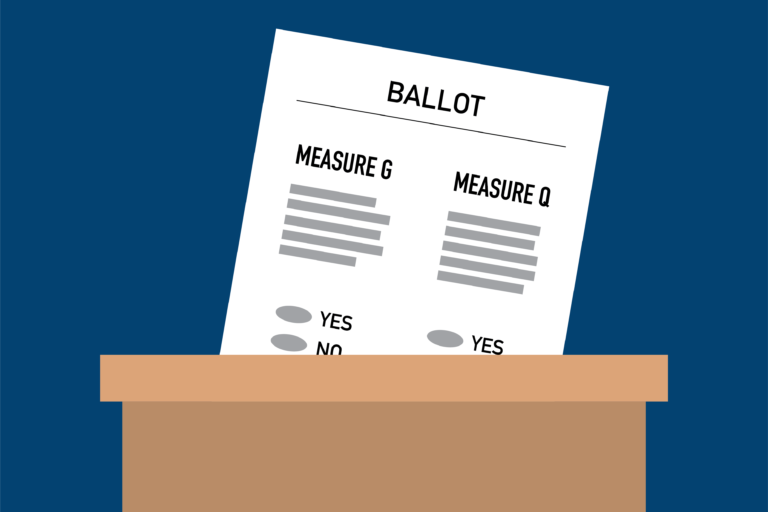
Some Davis school community members are still hopeful for Measure G to pass, as more ballots are expected to be counted from the California primary. The measure is currently approved by 65.06% of Davis voters, less than two points away from the two-thirds majority needed for the measure to pass. 

According to the Yolo County Elections Office website, 12,717 votes have been cast for Measure G, and 8,274 of those votes approved the measure. At the time of this writing, thousands of votes remain to be counted which could affect the final results of Measure G. When the unofficial results for election night were released, the Yolo County Elections Office commented on the discrepancy between what is currently posted and what the actual results may potentially be.

The Yolo County Elections Office posted an update two days after the results were released, describing the numbers in detail. In total, 24,869 ballots still need to be counted, 18,336 of which are vote-by-mail ballots. 

Many voters for Measure G remain hopeful that these ballots will put them over the two-thirds threshold. During the Davis Joint Unified School District Board of Education’s meeting on March 5, school board members discussed the campaign and their hopes for the results. Victor Lagunes, the president of the Davis Teachers Association, described the actions taken by community members to campaign for this measure. 

“Some of our efforts were that we reached over 10,000 homes with fliers and information,” Lagunes said. “We wrote an enormous number of letters to the editor, postcards that were hand-signed and delivered — lawn signs popped up everywhere.” 

He added that he is hopeful that the measure will pass. 

“We were able to penetrate the noise of misinformation, and we are still in the running,” Lagunes said. “While there is uncertainty, I’m looking forward to seeing a comeback that, in a word, would be epic.”

Sandra Royval, the president of the Davis chapter of the California School Employees Association, shared a similar sentiment of gratitude and hopefulness. 

“We’re still very hopeful — everyone’s keeping their heads held high,” Royval said. “It was this huge effort to try and make things right by our teachers.”

Trustee Joe DiNunzio commented on the cooperation of community members to campaign for Measure G. 

“I’ve been involved in a lot of partial tax campaigns over the last 18 years that have been here in Davis,” DiNunzio said. “I can honestly say that this was the most compelling campaign that I’ve seen. It was a true integration of teachers, staff, parents and community members — all of whom shared a vision for what they wanted to see happen in our district.”

If passed, Measure G would levy a parcel tax of $198 a year for Davis residents to encourage competitive salaries for retaining teachers within Davis public schools. In total, this would raise $3 million a year in additional funding for the school district. 

School leaders claim that the bill will reduce the discrepancies in salaries between Davis teachers and teachers from other districts, in an argument posted on the Yolo County Elections Office website in favor of the measure. 

“Currently, Davis teachers and staff are paid less on average than those in other schools in our region,” the argument reads. “Measure G fixes this systemic problem and ensures high quality public education into the future.”

But those who oppose the measure claim that it will raise taxes for schools in Davis to an unreasonable level. 

“In 2016 we approved Measure H, a $620/year parcel tax supporting Davis schools,” the opposing argument reads. “In 2018 we approved Measure M, giving our schools 11 million annually for 30 years. Now, we are being asked to raise taxes yet again.” 

The passage of other measures on the ballot seems more certain. For instance, Measure Q, which suggests a continuation of the 1% sales tax until repealed by voters, passed with 80.27% of voters on the measure voting yes. Nevertheless, it will take a few more days for the final results of the California Presidential Primary election to be posted. 

Written by: Madeleine Payne — city@theaggie.org 

UC Davis student showing symptoms of COVID-19 unable to get tested

Lack of tests for COVID-19, resources impact UC Davis students, community

Disclaimer: The identity of the UC Davis student who disclosed having symptoms similar to COVID-19 has been kept anonymous in order to protect them.

A UC Davis student recently disclosed to the university that they had symptoms similar to those of COVID-19, the disease caused by the novel coronavirus. The student started feeling symptoms, such as chills and a fever, on Wednesday, March 18. This came around the same time as the first reported case of COVID-19 by a member of the UC Davis Health community on the Sacramento campus, which was announced through the UC Davis Health Newsroom and in an email to UC Davis students from Chancellor Gary S. May.

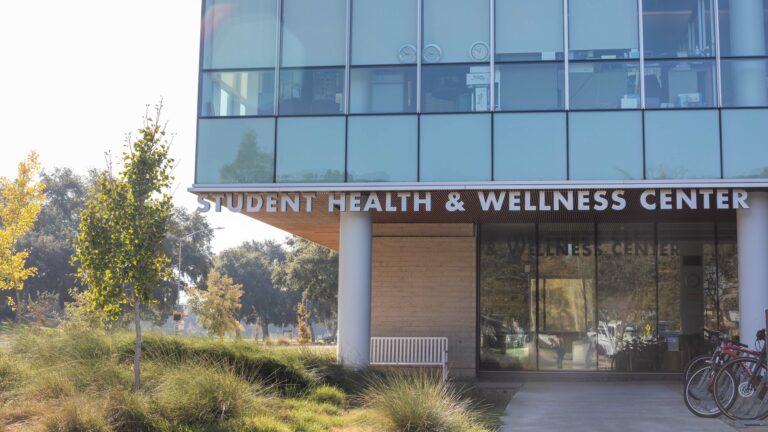
“By 9 a.m., I started coughing, and my cough was so bad that I couldn’t breathe,” the student said. “I essentially had to skip my final to go to the [UC] Davis Student Health and Wellness Center.”

The student saw a doctor around 2 to 3 p.m. the next day where they were told that they probably had influenza, also known as the flu. They were swabbed for the flu and tested negative. The doctor then listened to the student’s lungs three times with different devices to test for pneumonia, determining that their lungs sounded fine. The student was told that it could be early onset pneumonia, which couldn’t be determined because they didn’t have X-rays, or it could be coronavirus or another viral infection. They were then told that they couldn’t be tested for COVID-19 but that, given their age, they should be fine.

After testing negative for the flu and pneumonia, the student followed the campus reporting protocol that was sent to all UC Davis students via email and contacted the phone number listed for Mary Macias, at UC Davis Student Health.

In the campus-wide email, UC Davis said it must “plan for the eventuality of a member of our campus community testing positive for COVID-19” and said it “has an obligation to review, verify, and report when this happens.” University officials, however, told the student showing signs of a viral infection that could potentially be COVID-19 that it only reviews and reports positive tests, and that it is unable to administer testing for the virus.

The student’s symptoms, including a fever above 101 degrees Fahrenheit, have lasted for three days so far. The student tried reaching out to the Student Health and Wellness Center, the UC Davis Medical Center (UCDMC) and a hospital in Roseville, none of which would test for COVID-19.

The student woke up today around 1:30 a.m. with a slight fever and said they began coughing uncontrollably and couldn’t breathe. Their housemate drove them to the Sutter Davis Hospital Emergency Room, where they were again tested for the same things with all of the tests coming back negative. Blood work and a respiratory pathogen test were also conducted, but those were fine. A doctor then sat the student down and told them that they probably had COVID-19 but that they couldn’t be tested because their symptoms weren’t bad enough since they could still breathe on their own.

UCDMC recently developed a rapid testing process for COVID-19, according to KCRA3, enabling the center to get patients’ results the same day. As of Thursday, when the first test was conducted, UCDMC had the capacity to administer 20 tests per day, although it is working to administer 1,000 tests per day. 

The student found out about the tests at UCDMC and called in the hopes of being tested, but they were declined since they didn’t have a primary care referral. The student then called another hospital, but they were not able to be tested there either because they are not a resident of Sacramento County. From there, the student was redirected to the Yolo County Health & Human Services Agency, which had already previously declined them testing. 

The student called their primary healthcare physician in Los Angeles to see if they could be referred to a hospital for testing, but they were again declined and told that there were a low amount of testing kits and that treatment wouldn’t change whether or not they tested positive. Their symptoms may worsen, according to their primary care physician, in which case they were recommended to get steroids to enable easier breathing.

“I definitely think they [hospitals] should test people more — that way, I know who is positive,” the student said. “Because I have no idea where I got it.”

The student decided to stay in Davis out of concern for their family at home, not wanting to potentially pass along the virus if they do have it.

Hospitals are currently prioritizing testing those who have traveled to areas affected by COVID-19, those who have come in contact with a known person with COVID-19 or those in immunocompromised states, as per the Centers for Disease Control and Prevention regulations.

“I feel like the system isn’t just,” the student said. “I feel like people don’t take it seriously until they test positive [for COVID-19]. People don’t take the shelter-in-place seriously.”

Written by: Kaelyn Tuermer-Lee — campus@theaggie.org