52.4 F
Davis

Davis, California

Tuesday, December 23, 2025
Home Blog Page 352

How do you shelter-in-place?

The Editorial Board stays busy while attending UC Zoom

Kaelyn Tuermer Lee, Editor-in-Chief 

While this is not what I envisioned my senior year looking like, I’ve come to really enjoy the things I used to take for granted. I’ve been playing ukulele and writing music, going for walks and (attempting) to paint. I also realize how lucky I was to be able to enjoy such beautiful, isolated nature back at home during spring break, and to be able to spend time with family.

Hannah Holzer, Managing Editor

Never one to be bored, my brain has kicked into overdrive — I suddenly need to read all the books, watch all the movies, bake everything and craft like no one’s crafted before. This has resulted in about 50 half-finished projects, the contents of which are strewn about my house.

I am so appreciative that my parents put up with all of this, and I’m as grateful as they are that they serve as taste-testers for my first attempts at bagels and chocolate caramel pie.

Kenton Goldsby, Campus News Editor 

Sitting at home has left me with ample time to really sit and meditate on the cherished moments in life: picking fresh fruit from trees, planting flowers and breeding hybrids, going hunting for fossils along the river, catching bugs in my little net and feeling beyond frustrated when my fishing pole breaks. Yes, I have played tens of hours of Animal Crossing: New Horizons since it came out two short Fridays ago.

Stella Tran, City News Editor 

I thought that I would spend my last quarter of senior year with friends who I never got a chance to say goodbye to. As I saw them leave though, I went back to my family. My days are now spent with a bubbly 12-year-old cousin who surprises me with her optimism as we cook and ride on scooters. While I sorely miss UC Davis, I am grateful to be with family during uncertain times. 

Hanadi Jordan, Opinion Editor 

Living away from my family in Michigan means the time we are able to share is few and far between. While under unfortunate circumstances, I am grateful to be with my family at this time. I get to see my kid brother grow taller instead of marveling at his height between visits, and hang out with my big brother, who I only ever see one month out of the year. We might be experts in pushing each other’s buttons, but there’s no one else I’d rather get cabin fever with. 

Claire Dodd, Features Editor 

For anyone bored in quarantine: Did you know “salon-grade” scissors are available on Amazon for $12.99? Looking back on it, this may not have been the most responsible purchase, given the world’s current situation — however, I will say that cutting off more than five inches of my hair proved to be an interesting distraction while sheltering-in-place with my family.

Liz Jacobson, Arts & Culture Editor 

I used to think that my time at UC Davis was all about getting my B.A., but my time sheltered-in-place has switched my priorities to earning my MRS. Just kidding. But what’s not a joke is how much time I’ve spent sewing a sunflower-patterned tank top, baking focaccia bread, learning to embroider, getting through the stack of books by my bed and taking long, pensive walks. The start of classes has saved me from becoming the heroine of a Jane Austen novel. 

Dominic Faria, Sports Editor 

This halt in the world-wide sports schedule is no doubt an anomaly. As a sports fan, I have never been given such a reprieve from the neverending, cyclical sports calendar. But despite the loss or the postponement of almost every major sporting event, in this period of crisis I have spent my time re-watching my favorite moments in sports — taking all that joy in once more while holding on to hope that I’ll have moments like those to celebrate in the future.

Cecilia Morales, Science Editor 

A little ashamed to say I’ve been spending far too much time on Spotify making playlists and listening to music. I have also really loved reaching out to friends more, making my Davis apartment cozier and cooking during this shelter-in-place. Most of all, I am extremely grateful to be in this position of just having to pass time. 

Written by: The Editorial Board
Engineering inclusivity: College of Engineering dean discusses women in STEM

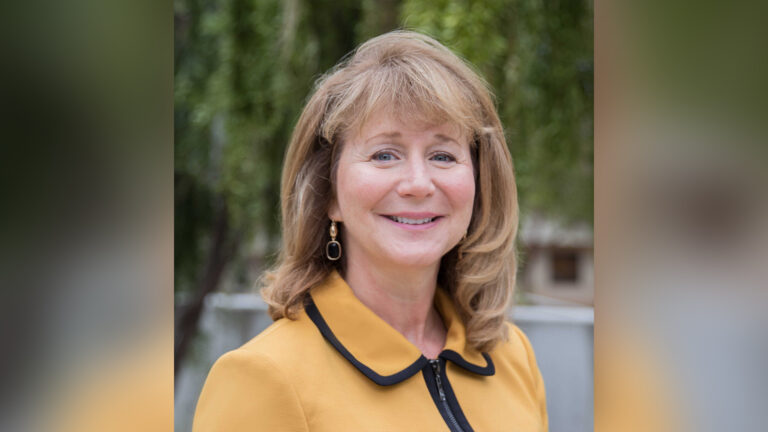
Jennifer Curtis, first female dean for UC Davis College of Engineering, spoke about experience as female engineer

The California Aggie spoke to Jennifer Curtis about her experience for Women’s History Month. Our HERstory series will continue throughout the month of March.

In STEM-related fields, particularly engineering, men significantly outnumber women. According to Forbes, women made up 14% of engineers in 2016 — in other words, one out of every seven engineers is a woman. To many, this percentage might seem small, but it was even smaller in the 1980s when Jennifer Curtis, the first female dean of the UC Davis College of Engineering, was in graduate school. For Curtis, being the only woman in the classroom was a common experience. 

“Way back in 1979 when I started college, Purdue actually was one of the leaders in terms of the percent of women studying engineering,” Curtis said. “That changed drastically when I went to Princeton for graduate school. Then I was the only woman in my class.”

A future for females

As a student, having female faculty to look up to helped Curtis realize her goals.

“I was lucky, in both Purdue and Princeton, there was one woman engineer faculty member,” Curtis said. “Just her presence, seeing that she was doing the career that I was envisioning for myself, personally, it made all the difference to me, knowing that it was possible.”

Since the 1980s, the statistics in engineering have drastically changed, according to Curtis.

“Now, in our college, for instance, we have 25% women engineering faculty,” Curtis said. “This is a huge difference, [compared to] one.”

Seeing people like herself working as engineers inspired Curtis to succeed. According to Curtis, having faculty representation of the student body can only improve students’ education. 

“When you look at different groups and identities, you might not always see that person to look up to,” Curtis said. “I want to make sure our students always can see that role model or interact with that role model. I know for me it made a world of difference.”

Collaboration and community

Curtis has found a uniquely interactive community of engineers while working at UC Davis.

“I just really felt the spirit of community here and also […] all the interdisciplinary projects,” Curtis said. “I had never seen that much collaboration in a large, public institution.”

UC Davis is also different because of its dedication to promoting inclusivity.

“A lot of institutions today, they certainly support diversity, but the level of commitment and the level of heart commitment is different here at Davis than other places,” Curtis said.

The power of mentorship

Mentors and advisors helped guide Curtis throughout school and helped her choose a career path. She did not have any engineers in her family and chose the engineering major based on the suggestion of her high school counselor. 

“He just said he saw that I always liked chemistry and math,” Curtis said. “Now I look back, and he was pretty progressive. I mean, this is 1978 and he was telling me, ‘You should be an engineer.’”

As mentorship greatly enhanced her education, Curtis is dedicated to providing similar opportunities to engineering students at UC Davis, particularly by providing information about potential career paths for new students. 

“Thirty-five percent of our students in our engineering college are first-generation,” Curtis said. “I’m very passionate about having those students know right away what engineering […] is and getting them involved in some engineering projects [and] connecting them with alumni mentors.”

By interacting with alumni, Curtis believes students can make an informed decision about their major and learn the benefits of having a degree in engineering.

“I’m passionate about having as many students as possible who come into my college finish with that engineering degree,” Curtis said. “If they have that degree, the world of opportunities is going to be so broad for them.”

With programs such as Leadership in Engineering Advancement, Diversity and Retention (LEADR) and a new engineering student design center opening in October 2020, Curtis hopes to provide further opportunities for engineering students and ultimately encourage students to complete their engineering degree.

   “That’s something I’m very passionate about: Retention of our students to engineering and having students understand what engineering is right away and how engineers can make an impact on the world,” Curtis said.

Written by: Sophie Dewees — features@theaggie.org

Unconventional finals week affects exams — and students’ performance

Moving out of the dorms, proctored or canceled finals, and more: How the evolving COVID-19 pandemic played a role in many students’ finals week anxieties 

Quarter-system students face an additional source of stress amid the evolving coronavirus pandemic: Dealing with the fallout that was Winter Quarter finals. COVID-19 puts universities across the nation into uncharted territory, leaving many students and faculty alike with no cohesive plan for fulfilling coursework and taking exams. 

This unique situation led to myriad finals week experiences. While some professors elected to cancel exams completely, others converted them to take-home exams and some navigated ProctorU for the first time. Many courses even had to change exam plans multiple times, given that the university announced that finals would be moved completely online only five days before finals officially began — leaving many professors and students scrambling. 

Farah Shuaib, a first-year psychology major, recounts how the dorms were buzzing with worried chatter surrounding how certain classes were going to adjust their exams. 

 “Just sitting and waiting was so stressful for people, because obviously you want to know if you should start studying hard for [an exam] or not,” Shuaib said. “For chemistry, I was just sitting, I was not doing anything to prepare because I had no idea what the final was going to be. I think everyone was excited at first for online exams, […] but the next day, when they realized that now the teachers had to come up with something, it got a lot scarier.”

Shuaib did not receive updated information about the status of one of her exams until March 13, just three days before finals week began. Additionally, Shuaib, like many students, had to learn how to use ProctorU, which she said was stressful at first. 

“It’s a little unnerving with the camera, because although you can’t see them, you get the idea that someone is watching you and hearing you, and it’s a little uncomfortable,” Shuaib said. “It was really nerve-wracking hearing someone talk on your computer and have control of your cursor even.”

Taking exams on ProctorU required students to learn how to use new software on their own time. These exams require an empty room, reliable internet connection and a strict time frame, which can be difficult to coordinate, especially when sharing living spaces with roommates or family. 

Additionally, many freshmen, including Shuaib, were faced with deciding whether to move out of the dorms or not for the duration of Spring Quarter. Residence hall students received an email March 17, mid-finals week, that they had until March 25 to decide whether or not they were going to remain in the dorms for the rest of the academic year. If they elected to move home, they were required to have all of their personal belongings out of the room by March 25. Shuaib says that deciding whether or not to stay on campus added stress to her finals week.

 “It was on my mind for like a week, wondering what’s best,” Shuaib said. “Being home or being somewhere where I can pay attention?” 

Similarly, Kathryn Nguyen, a first-year animal science major, was planning to leave campus for just over a week when she found out that the following day she would need to have all of her belongings packed up to take home. When she learned that she would need to be ready to move out in 24 hours, she still had two exams to take, which added to the stress of the week in her opinion.

“While I was stressed out about [moving out] and worrying about my family as well, I had to take my CHE 2B final on Monday at 8 a.m.,” Nguyen said. “It was extremely stressful, and the system even submitted my exam [before it was complete] due to technical errors. I emailed the TA about it, but the only thing that they could let me do was opt out of the final or take an incomplete. I ended up opting out, […] but this was an extremely upsetting experience.” 

Nguyen struggled to complete her exam and pack up her belongings in such a short span of time and recalled how the uncertainty over her grade made it more difficult to focus on packing and study for her exam the following day. She ultimately had to take her ANS 2 exam on her way home from school since she was unable to leave as early as planned, having not finished packing up her room. Nguyen said this made it very stressful for her to complete the exam.

“I had to drive down to SoCal, and I did not know if I would be able to make my ANS 2 final exam online,” Nguyen said. “I took it while we were driving using my mobile hotspot. The internet went out a couple times, and it was the most stressed I had ever been in my life.”

While some courses had stricter exam policies, other courses opted for take-home or cancelled exams in light of the unforeseen circumstances. Rachel Callegari, a first-year political science major, said she only had to take two of her four originally scheduled exams. 

“My political theory final was changed so the professor gave everyone 100% on the test,” Callegari said. “My stats final wasn’t canceled, but he made it optional to take. He said that he would weigh our first two midterms more heavily if you didn’t take the final, and I was happy with my grade on those midterms so I opted not to take the final.”

Of her two remaining exams, both were adjusted, allowing unproctored Canvas assignments to fulfill the final exam requirement. Callegari said that because of her professors’ flexibility, she was actually able to perform well on her exams.

The stress of the evolving situation, both globally and on-campus, however, did affect many students’ performance on exams, like Shuaib. She and many students said they were more stressed than usual during finals week, saying the uncertainty of their exams and the rest of the school year affected their ability to prepare for exams. 

“When I heard the news — this may be a little selfish — but I got really sad, because first of all, it’s a pandemic and that’s scary on it’s own, but I was also thinking about Spring Quarter,” Shuaib said. “Getting the news that Spring Quarter was going to be an empty campus was a little devastating, and that kind of ruined my syke for finals week.”

Written by: Katie DeBenedetti — features@theaggie.org

Save your diet, save the world

As consumers, moving to a plant-based diet will help ensure the long-term survival of the planet

Climate change is still a fundamental crisis facing our world today. It may not seem as immediately urgent as COVID-19, but it is every bit as dangerous, with irreversible effects. Wildfire seasons are months longer, massive storm surge chances have increased by 200% and Greenland lost an estimated 600 billion tons of ice in 2019 alone. But one of the main ways consumers can course correct the devastating effects of climate change is to change lifestyle and diet. 

Agriculture is having a field day when it comes to methane and greenhouse gas emissions contributing to climate change in our atmosphere. The Environmental Protection Agency’s (EPA) recorded contribution of emissions from agriculture — around 9% of U.S. greenhouse gas emissions — are far lower than the number estimated by the U.N. 

Agriculture is also one of the few things that consumers have control over. What foods we eat is something we can control for cheap. Controlling the efficiency of our energy, however, is much harder and more expensive — take solar panels, for example. Yes, we can carpool and take public transportation, but to really make a significant and lasting change we need to consistently reduce our carbon footprints.

Since 1988, just 100 companies make up 71% of global greenhouse gas emissions, according to the Carbon Majors Report. These actors should be responsible for most of the heavy lifting to combat climate change, but it doesn’t mean we should just sit back and expect them to. We, the consumers, are the ones who buy products from these companies. Sure, these companies lobby and fill the pockets of politicians to get tax breaks and lax environmental regulations, but at the end of the day, we buy their products all the same.

In the past, our choices may have been limited to just their products, but we now have more options than ever to vote with our wallets and buy elsewhere. Money is the only thing that talks in our current system. If these companies feel obligated to maximize their profit in the short term, then we have to make fossil fuels and damaging practices to the environment seemingly impossible. We need to apply every pressure we can on these companies.

The responsibility of the future of our planet depends on us. This problem may not be entirely our fault, but it is too late for us to use that as an excuse to do nothing. If we want to ensure the long-term survival of the planet and ourselves, we need to change the way we live –– right now. If we all do something, no matter how big or small, we can reverse course. 

The vast majority of meat we eat in the U.S. has been raised and killed under cruelty and suffering that is nothing less than speciesism, which assumes human superiority over other species. Many factory farms provide the exact conditions under which a zoonotic pathogen like COVID-19 can originate and spread to humans. And we are doing all this at a scope and rate that is larger and quicker than ever before. 

Why do we want to kill and milk animals — is it because it tastes good? Maybe that argument is defensible on a personal level, but doing so at a scale that damages the long-term survival of our species isn’t worth the taste of meat. 

The average American eats 218 pounds of meat every year. If we cut that number down by adhering to a global diet, then we could put a dent in global emissions faster than we think. Researchers have found that a worldwide shift to a plant-based diet is necessary to keep climate change under the expected 2 degrees Celsius increase over the next 12 years. Consumers in the U.S. need to cut their beef consumption by 90% and their milk consumption by 60% to accomplish this. 

Yes, I know vegans can be obnoxious sometimes. But the energy wasted on poking fun at vegans undermines the gravity of the reasoning behind why many vegans choose that diet. 

I’m sorry, but I’ve tasted some pretty great Impossible and Beyond meat that rivals the best burger — your craving for meat is overblown. Condescension shouldn’t be tolerated anywhere, to be clear, but the objective of veganism and plant-based diets should be the most recognizable aspect of such lifestyles. Trying to preserve our planet and limit the damages being done to it by harmful industries should not be treated as a joke. 

If we were all part-time meat and dairy consumers, the world would be a much better place. If we all reduced the amount that our consumption damages the environment we would be far better off for it. Plant-based diets are the diets of the future –– that is, if we want a future that is survivable. 

I never thought I could give up cheese or chicken before transitioning to a vegan diet, but it was far easier than I anticipated. I’m not asking anyone to completely remove meat from their diet, but I am asking that we all inform ourselves as to how what we consume affects us (and those around us) in the long term. Information is power, and we, as consumers, can weild it. Cutting back on meat and contributions to fossil fuel industries will ensure a survivable future for us all.

Written by: Calvin Coffee — cscoffee@ucdavis.edu 

Disclaimer: The views and opinions expressed by individual columnists belong to the columnists alone and do not necessarily indicate the views and opinions held by The California Aggie.

“Taking our personal health seriously” — implications of California’s shelter-in-place order

Order prioritizes public health, highlighting need for individual hygiene, disrupting service-industry jobs

In the wake of the rapidly-escalating COVID-19 pandemic, Gov. Gavin Newsom mandated a statewide shelter-in-place order. The executive order declares that all nonessential persons must remain at home.

“To protect public health, I […] order all individuals living in the State of California to stay home or at their place of residence except as needed to maintain continuity of operations of the federal critical infrastructure sectors,” Newsom wrote. 

The Department of Homeland Security website outlines critical sectors, which include healthcare and transportation. These professions are selected based on their level of impact on community wellbeing.

“Functioning critical infrastructure is imperative during the response to the COVID-19 emergency for both public health and safety as well as community well-being,” the website reads. “Certain critical infrastructure industries have a special responsibility in these times to continue operations.”

Newsom cited concern over public health and the importance of slowing down the spread of the virus.

“This Order is being issued to protect the public health of Californians,” Newsom wrote. “The California Department of Public Health looks to establish consistency across the state in order to ensure that we mitigate the impact of COVID-19. Our goal is simple, we want to bend the curve, and disrupt the spread of the virus.”

The “curve” refers to the projected number of COVID-19 cases expected in a specific area over a certain period of time. Livescience writer Brandon Specktor explains that bending the curve will spread out the cases and reduce the strain on hospitals, ultimately allowing more lives to be saved. 

“The faster the infection curve rises, the quicker the local health care system gets overloaded beyond its capacity to treat people,” Specktor wrote. “A flatter curve, on the other hand, assumes the same number of people ultimately get infected, but over a longer period of time. A slower infection rate means a less stressed health care system, fewer hospital visits on any given day and fewer sick people being turned away.”

Despite the order’s intent of protecting public safety, its closure of dine-in restaurants, bars and salons has resulted in mass layoffs of employees. To decrease this financial burden, California has granted some resources to affected workers, including unemployment pay and temporary grace periods from mortgages and bills. 

“If you have been financially affected by COVID-19, you may be eligible for services such as: Unemployment insurance [,] Paid family leave [,] Disability Insurance [and] Relief from financial institutions,” the California Coronavirus Response website reads. 

Although there are significant financial and personal impacts of the quarantine, Edison Adler, an first-year undeclared major in life sciences at UC Davis, focused on the positives. He highlighted the attention that the stay-at-home order has brought to maintaining individual health for public safety.

“The quarantine brings up the concerns about personal health and how it affects everyone,” Adler said. “One person can mess up the entire system that we all revolve around. It’s all bad: we’re all stuck in our homes and some of us are actually very sick, so we’re very concerned about what’s going to happen to us. But I think a positive thing to come out of this is the discussion about taking our personal health seriously.”

California’s COVID-19 Toolkit website similarly echoes the role of personal hygiene in the overall fight against the virus. 

“The state is mobilizing at every level to proactively and aggressively protect the health and well-being of Californians, but we cannot fight this outbreak alone,” the website reads. “Californians need to know how critical it is to stay home, learn how to stay healthy and where they can get help. These actions are critical and there is no doubt our collective efforts save lives.”

 Written by: Eden Winniford –– city@theaggie.org

Player Spotlight: Kate Graham

UC Davis Women’s Lacrosse midfielder talks college career

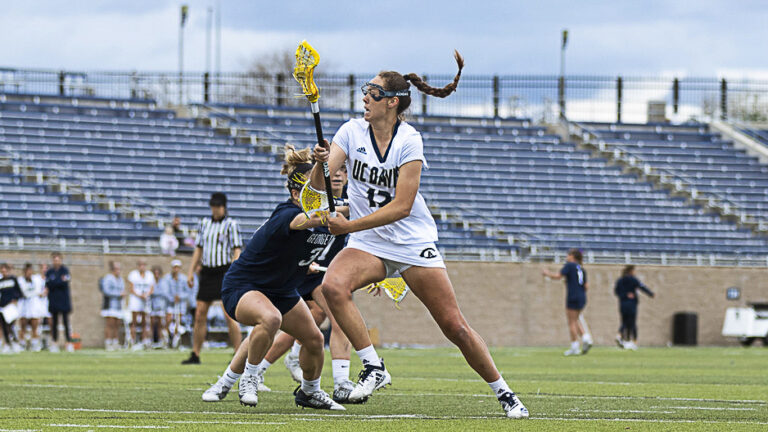
Senior midfielder Kate Graham is a force on the UC Davis women’s lacrosse team. The San Francisco native and sociology-organizational studies major began playing lacrosse in the second grade when she and her two best friends decided to join the local club team. Despite never having any exposure to lacrosse before that, she fell in love with the sport and has continued playing ever since. 

During her high school career, Graham played lacrosse, basketball and waterpolo all four years and earned multiple All-Marin County Athletic League awards for each sport. As a midfielder on the UC Davis team, Graham’s career has only picked up. In her freshman year Graham started all but one game and scored 13 goals and recorded 16 assists. She continued to improve in her sophomore year, starting all 14 games and scoring seven goals and compiling seven assists. By her junior year at UC Davis, she started 17 games, scored 14 goals and was selected for the All-MPSF team for the first time. 

The Aggie sat down with Graham to discuss how she’s grown as a player at UC Davis, her collegiate career so far and her plans for after college.

The California Aggie: What made you choose UC Davis?

Kate Graham: I was kind of lost during the recruiting process. I’m pretty indecisive, so I never knew. I was like, “Oh, maybe I’ll go to the East Coast. Maybe I’ll go to a football school, maybe I’ll go to a school that has 10 people or 30,000.” Davis was the first school that showed interest in me, and I wasn’t really sure what direction I was going to go in at that point. So I held off and just went to other things, explored other options and then I came back to a Davis camp. I tell this story a lot, but when you go to camps and tournaments and you talk to girls who are committed to schools, a lot of times they don’t acknowledge you as much because they’re the cool, committed girls. And I remember I came to Davis camp and all the committed girls were so talkative, so willing to ask you questions — be kind to you. A specific alumni, Natalie Garces, asked me who I was and what I was doing there. I instantly was like, “Oh, these people are normal and nice.” So I fell in love with the school.

TCA: How much has changed for you as a player since your freshman year?

KG: Well, the rules have changed, they change every year. And we’ve had a bunch of coaching changes. I was recruited by a coach, they left, and then I had a new coach my freshman year. They left, and now I’ve had Suzanne [Isidor]. So I think in that formal aspect, a lot has changed. But when it comes to playing, I would say I’ve learned to play for my team, with my team. And everyone on the team plays the exact same way, like we’re a family on and off the field. I think that bond has only grown since my freshman year to my senior year — these girls are my best friends. I know they have my back. So you can play with so much more trust and compassion on the field.

TCA: What advice would you give your freshman self coming into your college career at UC Davis?

KG: Go hard, [play with] energy. Don’t be afraid to fail, make mistakes, do weird things. Make yourself uncomfortable on the field because it’s just gonna pay off. Don’t just do what you’re good at, do something challenging — practice your behind the backs, practice with your left hand, because it’s all gonna pay off in the long run. Make yourself uncomfortable.

TCA: How do you prepare for games mentally? Do you have any rituals or anything that you have to do pre-game? 

KG: I used to be super superstitious in high school. I would eat the same sandwich, eat a jolly rancher, glue a penny onto my locker — I was psycho about it. And coming into college, I was kind of the same way. But this year, I’ve just let it all go and I am just way more calm and casual. It feels so much better to just be like, “It’s fine. I know what I’m doing. I’ve done this for so long, I don’t need a ritual.” Although, I do brush my teeth before every game, every single time. I brush my teeth like a normal person. And then before the game, once I’m done eating and drinking or whatever, I brush my teeth [again].

TGA: Given the career and the success that you’ve had here at UC Davis, what do you think has helped you become the player you are today?

KG: It sounds cheesy, but my teammates, wholeheartedly. When I came in freshman year, everyone just boosted my confidence [and] boosted everyone else’s confidence. We talk about trust and trusting every person who comes off the bench. So as soon as you step off the bench, those girls respect you and they know that you’re supposed to be out there for a reason. So I would just say my teammates — people pumping you up during practice, congratulating each other, staying after and doing extra work after practice, it all contributes to it. But having that strong unit that backs you up and supports you and gives you that confidence only reiterates the confidence that you already had for yourself.

TCA: As a senior who’s wrapping up the end of your career here at Davis, what are you going to miss most about playing lacrosse?

KG: Probably the team. Not only that — because I know that they’re going to be my friends forever — but probably just the fact that to play competitively and to get to be competitive. It’s not weird that you’re competitive, you know, because it’s so legit. I’ve played competitive sports, all these girls have, our whole lives. Where does that energy go? What do you channel that aggression and that competitive edge towards? So I’ll have to find another outlet.

TCA: What do you plan to do after you graduate? 

KG: I’m actually not worried at all. We have the [Aggie] EVO system, which is for athletics, it helps you plan for what you’re doing in the future. So I’m just looking around. I’m from the Bay Area, so I am lucky that I am from a place that has lots of job opportunities. I’m thinking about relaxing in the summer, taking my time and then hopefully landing into something in the fall. But honestly, who knows. I could be on a boat, I could be in another country — totally going with the flow. For one time [in] my life, I won’t have a schedule. So why not enjoy it?

TCA: Do you have any personal goals for the rest of the season?

KG: I think just having fun, wholeheartedly, like it’s my last year playing a competitive sport ever. I want to enjoy every minute of it. And I think we’re in the position to do that — great coaches, great support, great players. This is a year where we can beat a lot of people. I think the goal, of course, is to win the MPSF. We’ve won the regular season twice and then lost the championship twice. So capitalizing on that would be super cool, but besides that like having fun. It’s a sport. It’s a game. It’s supposed to be fun. Enjoy our time here.

**Since the interview with Graham, all remaining UC Davis athletics events for this year have been suspended.  

Written by: Priya Reddy — sports@theaggie.org

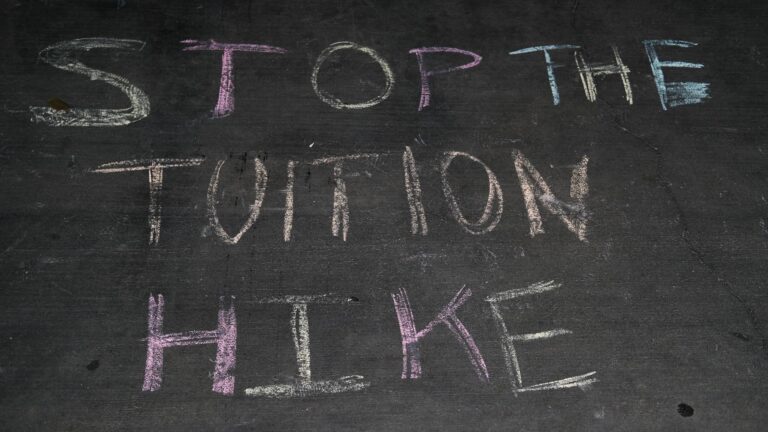
Vote on tuition increase for UC system postponed, future uncertain with COVID-19

Currently unknown how COVID-19 will impact proposed UC tuition hike

The vote on a UC-wide tuition hike, opposed by many, including Gov. Gavin Newsom, has been postponed again, after it had been previously postponed due to a clerical error. The latest vote, scheduled to take place at the UC Regents March 20 meeting, was pushed back due to discussions regarding the outbreak of COVID-19. Planned to be reevaluated, the tuition hike could be further postponed by the continuation of this crisis. 

“Nobody knows the hit the economy is going to take in California or the world, and we don’t want to be in the position of being even more tenuous with our financial plans,” said Regent-designate Debby Stegura during the Regents’ March 20 meeting.

The planned tuition increase is one of two plans initially proposed. The Regents decided to continue with a planned cohort-based tuition model instead of a standard tuition increase.

“Under the proposed tuition plan, UC would institute a one-time increase of systemwide charges for each incoming undergraduate class, or cohort, comprised of the following: Tuition, the Student Services Fee and Nonresident Supplemental Tuition,” said Sarah McBride, a media and communications strategist at the UC Office of the President, via email. “Under the plan, those costs would remain the same throughout a student’s attendance at the University. The charges students pay at the time of their enrollment would be what they pay annually for the duration of their time at UC — up to six academic years.” 

The cohort tuition model has supporters on the UC Davis campus. Chancellor Gary May, in a February interview with The California Aggie’s Editorial Board, voiced his support for both the cohort-based model as well as a tuition increase more generally. Former ASUCD External Affairs Vice President Adam Hatefi supports the model, but thinks that a tuition increase is not “necessary at this moment.”

“We don’t need this increase until two or three years from now,” Hatefi said. “At that point, our enrollment growth is going to catch up with our funding increase, and then we’ll need to increase tuition.”

Newsom increased UC funding for the 2020-21 fiscal year by 5%, the second consecutive year of increased state funding. With the required enrollment growth from every UC campus, the UC will not be able to keep up with the rate of inflation, and a UC tuition hike would be necessary in two to three years, according to Hatefi. 

“The University has raised tuition only once in the last eight years, by approximately $300 (or 2.5 percent), and campuses rely on tuition as well as State support to hire faculty, academic advisors and support staff,” McBride said. ”Recent increases in State support have partially addressed these needs, but it is not realistic to expect the State to cover all of UC’s costs, which is why a tuition increase is critical to maintaining UC’s high-quality of education.”

While some argue that the UC does not need to raise tuition at this time, UCOP remains stagnant in its position that a tuition increase is necessary to preserve the standard of quality education.

Written by: Alex Weinstein — campus@theaggie.org

Sports world left in limbo amid coronavirus outbreak

How COVID-19 has impacted athletics across the globe

The entire world of sports has been catapulted into a state of uncertainty following a series of unprecedented events in response to the COVID-19 pandemic. 

The U.S. recently became the country with the most reported cases of coronavirus worldwide. As the number of cases continues to grow every day, it is safe to say that this pandemic has impacted the world in ways that are far beyond what many could have imagined. The sports community is just one among many that has been seriously affected in this past month. 

The caution surrounding this virus began with some teams, like the Golden State Warriors and San Jose Sharks, planning to play games without any fans in attendance amid the growing fears of coronavirus that were taking place within the Bay Area at the time. Around the same time, the NCAA announced that they planned on limiting attendance at their competitions to “essential staff and limited family” as a precautionary measure to avoid community spread. 

Although it is clear that some organizations had begun taking steps to protect everyone from further spread, the fallout that ensued was unprecedented, as the world of sports came to a standstill in what felt like an instant. 

On the evening of March 11, a game between the Utah Jazz and Oklahoma City Thunder was postponed after Jazz player Rudy Gobert tested positive for coronavirus before the game began. All Utah Jazz players were told to remain in Oklahoma City for testing, and Gobert’s star teammate Donovan Mitchell tested positive as well. 

The postponement of the Jazz-Thunder game was immediately followed by the NBA’s shocking announcement that it would be suspending the rest of the season. 

NBA commissioner Adam Silver explained that the league’s main concern at this time is the “well-being of fans, players, everyone connected to our game, and the general public.” Silver’s immediacy in handling this situation is commendable, as the NBA was the first league to display such caution and officially suspend its season.

In the days that followed this announcement, other NBA teams began testing their players. There are now 14 confirmed cases within the NBA, including Kevin Durant and Marcus Smart. 

As disheartening as Silver’s decision may have been for fans in the moment, it soon became clear that the suspension of all other sports competitions was inevitable. Fears evolved into reality by the next afternoon, as Major League Baseball pushed back spring training and postponed the start of the season, while the National Hockey League suspended the rest of its season as well. Major League Soccer has also followed suit, suspending play for a minimum of 30 days.

The exponential growth in the confirmed cases of the virus and the fact that tests are still not readily available, suggests that the nation will continue to see a surge in cases before any decline. Thirty days will most likely not be enough time to determine the end of this outbreak. 

In the midst of all these adjustments, one of the biggest announcements was made on March 24, when the International Olympic Committee decided to postpone the upcoming 2020 Summer Olympics, set to take place in Tokyo from July 24 to Aug. 9. 

The committee initially appeared hesitant to go through with postponement, but after pleas from several Olympic athletes and various countries’ Olympic committees and due to the undeniable severity of the situation, the committee eventually decided it would be best to move them to “no later than summer 2021.” 

All marathons scheduled for the next few months have also been postponed, including the Boston and London Marathons — two major races that take place each year.

College sports have also been impacted by concerns surrounding the coronavirus, as the NCAA cancelled all remaining tournaments and championships, resulting in the suspension of play from conferences like the Big West, Big East and Big 12. 

The adjustments being made in response to the coronavirus have also significantly impacted the UC Davis athletic community. On March 12, UC Davis athletics announced that all remaining winter and all upcoming spring sports will be cancelled, effective immediately. 

This decision was made “in the interest of the health and safety of student-athletes, coaches and staff, administrators and fans” and extends to all practices, including those that would have been held in spring to prepare for the upcoming fall season. 

UC Davis Director of Athletics Kevin Blue recently released a letter to the Aggie community, reassuring that everyone’s health and safety remains the top priority as the athletics department continues to monitor the current situation.

The decision to suspend all sporting events and practices was soon followed by the UC Davis administration’s announcement that the campus will be switching to complete remote instruction for Spring Quarter. 

The fact that the limit for public gatherings was set at 1,000 people just weeks ago and has now subsequently been condensed to less than 10 indicates the gradual seriousness and unpredictability of this pandemic. Given this turbulent situation, shutting down all in-person operations and large events until it can be confirmed that it is safe to resume is certainly a wise decision. 

The uncertainty that the coronavirus has left not only on the world of sports but on all aspects of life across the country is unlike anything we have seen before. What originated as a possible cause for concern has developed into a global pandemic, eliminating the routines of life as we knew it before the spread of this virus. 

The coronavirus pandemic has also taken away the one certainty that sports fans have always had of being able to watch their team perform even when everything else in life felt unbearable. The reaction from the whole nation, however, has proven that this is something that extends far beyond any game or championship. 

When sports do resume, there will most likely not be a sense of true normalcy for some time. Although some fans will be excited to return to games, this virus has instilled a level of fear and cautiousness within people that is unlikely to fade away quickly. It is unlikely that stadiums will be filling back up immediately. 

As unimaginable as this situation may be, it is important to understand that sports will eventually be there to pick us up once again, as soon as it is absolutely safe to do so. The most important thing to do now is to support one another and keep ourselves safe. 

Written by: Rain Yekikian — sports@theaggie.org

Culture Corner with Liz Jacobson and Mathilda Silverstein

The Arts Desks’ weekly picks for movies, books, music and television shows

Movie: “GoodFellas” dir. by Martin Scorcese

“GoodFellas” is one of two Scorcese films we watched during Spring Break, and it didn’t disappoint. This almost three-hour film was entertaining and engaging the whole way through. The story of Ray Liotta’s Henry Hill, an associate of an Italian-American mob in Brooklyn from 1955 to 1980, gave us insight into a genre we’re not incredibly familiar with. Joe Pesci (whom Liz had only previously known as the villain in “Home Alone”) and Robert De Niro’s performances had a chaotic energy we couldn’t take our eyes off. Oh, and the outfits! 

Television: Sex and the City

It’s fast food television — bad for you, tastes good, but you can only take so much of it. “Sex and the City” follows Carrie, Samantha, Miranda and Charlotte — four thirty-something women, each with a few key character traits, who speak only in far-reaching sexual metaphors as they navigate their relationships and their taboo sexual problem of the week. It’s entertaining to see which now-famous celebrity is the love interest of the week, and the outfits are interesting, to say the least. There’s never a shortage of designer strappy sandals. It’s definitely out of date and borderline offensive in some episodes (see Season Three, Episode Four about bisexuality), but it will make for an entertaining drinking game if you count all the times Carrie says, “And then I wondered.”

Album: “Jolene” by Dolly Parton

For weeks now, The Aggie’s Creative Media Coordinator, Caroline Rutten, and I (Liz) have been singing the praises of Dolly Parton to our fellow Arts Desk writer, Andrew Williams. But alas, he has yet to embrace the Tennessee legend, so I find it necessary to recommend her here for any other Dolly deniers. Before I talk about her album “Jolene,” I would be remiss not to first recommend “Coat of Many Colors.” This biographical song has profoundly shaped the outlook I hold in life and makes me smile everytime I hear it. “Jolene” is the perfect introduction to Dolly Parton — her melodic vibrato and Southern twang come through crystal clear on “River of Happiness,” “Cracker Jack,” “I Will Always Love You” and, of course, the title track “Jolene.”

Book: Joy Luck Club

If you’re a product of the American public school system, chances are you’ve read a passage from Amy Tan’s 1989 novel “Joy Luck Club” — or, at the very least, you might have watched the 1993 film adaption (the first major motion picture to feature a majority Asian American cast). This novel follows four American-born Chinese daughters and their complex relationships with their immigrant mothers in San Francisco. It’s easy to read and simply written, but still poetic and beautiful. And during this shelter-in-place when neither of us can be with our mothers (Hi Joanne and Clare), it’s comforting to read about mother-daughter relationships and the traits we share. 

Written by: Liz Jacobson and Mathilda Silverstein — arts@theaggie.org

Yolo County shelter-in-place order extended until May 1

Yolo County officials ask people to continue staying home, provides database for coronavirus cases

The shelter-in-place order for Yolo County has been extended until May 1 due to increasing cases of coronavirus, according to a press release sent out by Yolo County Public Health Officer Dr. Ron Chapman.

“This extension is in line with the timeframes of recent federal directives and local school closure extensions and is intended to continue to slow the spread of novel coronavirus (COVID-19),” the press release read. “The original health order that was issued on March 18 only extended to April 7.”

The order says residents are only allowed to leave for necessary activities like buying food, picking up medication and working at an essential business. In the press release, Chapman said many people are doing a good job of staying home.

“I am proud of the people and businesses of Yolo County who have supported the orders to stay at home and practice social distancing,” Chapman said. “Such public health measures take time to slow, and eventually stop, the COVID-19 virus spread.”

Currently, 28 coronavirus cases have been reported in Yolo County, with eight cases confirmed in Davis. One person has died in Yolo County, an older adult with an underlying health condition.

In order to quickly educate the public about reported cases, Yolo County has created an online dashboard with additional details about those that have been diagnosed with coronavirus. The interactive dashboard provides more information about cases reported per city, and provides certain statistics about the cases — like age, gender and dates that the cases were reported.

On the dashboard’s website, Yolo County officials warn against misleading conclusions that could be drawn from the online dashboard, such as cases prevalent in certain geographic areas and false negative rates.

“Though one area may have more numbers, the virus should be considered everywhere and people need to stay at home,” the website reads. “The labs testing for Covid-19 can have a false negative rate as high as 40%. This means that up to 40% of the negative tests may actually be positive.”

In the press release, Chapman states that the differences in numbers between cities could be due to a number of factors.

“Some cities may have higher numbers due to varying reasons, such as different labs being used, doctors may be following different ordering guidelines, and residents may have differences in following the stay at home orders,” the press release states. “For these reasons, it is in everyone’s best interest to stay at home, as much as possible, through May 1.”

Written by: Madeleine Payne — city@theaggie.org

UC Davis offers on-campus voting options

Separate locations lead to confusion

On Super Tuesday, March 3, students and Davis residents alike had the opportunity to vote in the presidential primary election and other local elections at on-campus polling places. Polling places opened at 7 a.m. and remained open until 8 p.m.

Voters had the option to vote at two locations on campus: the MU or the Russell Park apartment complexes. Voters registered in Yolo County with mail-in ballots also had the option to drop off their ballots at on-campus polling stations. 

Despite planning in advance to make it easier for Yolo County residents and students to vote, UC Davis published an additional statement in response to voter confusion at on-campus polling places. 

“Registered voters should vote at their assigned polling place (which, if you have a campus address, may be the Garrison Room in the Memorial Union,)” the statement said. “If you are registered elsewhere in Yolo County, and still wish to vote on campus, you should ask for a provisional ballot.”

One Reddit user, u/korge1000, posted a thread about issues they had voting.

“Admin at UC Davis has been advertising for the last week that any student can vote at the student union building, but now they are rejecting students,” the thread said. “The poll workers are arguing that only people who live on campus can vote there but the website explicitly says that any student can vote there.” 

Students in the Reddit thread also commented on the length of polling place lines. One student claimed to have been in line for more than an hour. 

In addition to long lines at UC Davis, other campuses across the country reported similar trends on Super Tuesday. Across California and Texas, many voters faced hours-long lines to vote, according to a report from The Guardian.

On-campus polling places are one way the UC hopes to boost student voter turnout. According to the UC website, just more than half of students registered to vote in the 2018 midterm elections actually voted. 

With student voter turnout already statistically low, UC campuses aimed to improve students’ likelihood of voting. In reality, long lines at polling stations likely had the opposite effect. According to one study, every additional hour voters have to wait to vote decreases their probability of voting.

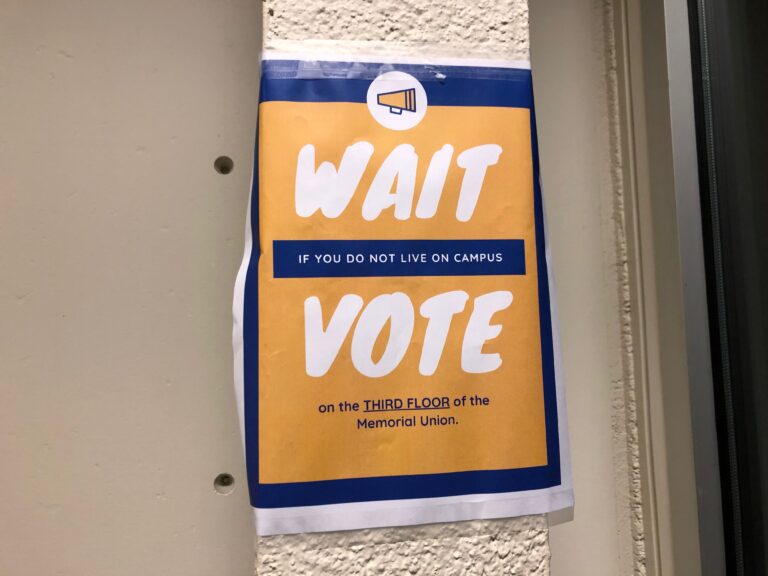
Voters also had the option to participate in same-day voter registration in the ASUCD offices on the third floor of the MU. This was in a different location than general on-campus polling places, creating some confusion for voters on March 3.

In addition to the UC system’s efforts to improve young voter turnout, student organizations have been working since Fall Quarter to register students. 

Noah Dickman, the president of the Davis College Republicans, worked early in the year to get new and returning students to register to vote.

“Our voter registration drive was in October and consisted of tabling at the Memorial Union and going door-to-door in a few neighborhoods to make sure as many individuals as possible are registered to vote.” 

The Davis College Democrats have also helped register students and community members to vote. 

“This year we registered over 600 voters,” said Molly Mermin, the executive director for the Davis College Democrats. “And we’ll be doing more throughout the general election season.”

Written by: Ally Russell — campus@theaggie.org

Thank you to those who have stepped up amid the COVID-19 crisis

We are grateful for healthcare workers, local and state leaders, UC Davis faculty and administration, community helpers

As we each do our best to navigate these unnerving and uncertain times, we might choose to take solace in the resiliency of our community. To the Davis community members eager to lend a helping hand; to our state and local leaders who have been proactive in their communication efforts; to the teachers and employees who continue to selflessly serve us and to the local, national and global healthcare workers on the front lines of this chaos: We are filled with gratitude.

In times of crisis, there is perhaps no more reassuring sentiment than Mister Rogers’ famous plea to “look to the helpers.” Fortunately, we can see these helpers in our own neighborhood. Davis City Council passed an ordinance halting evictions and authorized the suspension of fees for missed payments. The Davis Joint Unified School District, though shut down, is still providing twice-daily meals. In the Yolo County Mask-Making for COVID-19 Facebook group, nearly 100 members virtually collaborate on making homemade masks for healthcare workers, veterinarians and homeless shelters. And, on the COVID-19 Yolo Community Response Facebook page, over 4,300 people have shared information, supported local businesses, donated goods and helped their neighbors track down items like toilet paper and flour.

While our national leaders in the White House seem to have failed us now, the time when we need them most, the State of California — under the decisive leadership of Gov. Gavin Newsom — is in a better position to mitigate the spread of the virus than other states are, thanks to Newsom’s early and effective statewide shelter-in-place order.

The Editorial Board commends UC Davis administrators for actively seeking out and listening to student input when making decisions such as canceling Picnic Day. Previously, we have disagreed with Chancellor Gary May over the frequency with which campus-wide emails are sent out — we have belabored our argument to such a degree that we almost have to laugh when we bring it up with him yet again. But at this point in time, clear and proactive communication is no joke, and we believe May has undoubtedly risen to the occasion. The administration’s weekly Friday emails and May’s upbeat Facebook and Instagram posts are greatly appreciated.

Transitioning to remote instruction almost overnight is going to be a challenge, to say the least. We want to recognize the dedication of our instructors who are going out of their way to problem solve and make the most of the limited resources and tools available. We also want to acknowledge the commitment of those UC Davis employees who are ensuring that the campus maintains minimal, but necessary, operations.

To our fellow students: Please have patience and understanding for and empathy toward your instructors. We, the nine members of the Editorial Board, are all seniors, and we whole-heartedly agree that this situation is far from ideal. We recognize, however, that we are fortunate to have our health, our families, our friends and our continuing education. Finally, the health and well-being of healthcare workers, first responders and their families are being directly and exponentially impacted as cases of COVID-19 rapidly increase. Just recently, UC Davis Medical Center employees tested positive for coronavirus. These workers are risking their lives to save others, and we thank them for this ultimate act of noble sacrifice.

Written by: The Editorial Board
Handling of ASUCD election violation accusations reveals flaws in system, some in association say

Several members active in ASUCD voice concerns over Elections Committee and violation points

During this past Winter Elections cycle, ASUCD saw the largest voter turnout in its recorded history. The association also saw a slew of resulting election violation accusations, with both the independent candidate and candidates running on either the BASED or Thrive slates being accused of violations. But the system in which these violation points were assigned was called into question by some current and former members of the association.

This past election cycle, there were accusations against several candidates: two against Roberto Rodriguez-Ibarra, three against Laura Elizalde, one against Tenzin Youedon, two against Alisha Hacker, three against Alisha Hacker and Justin Weiner, three against Alexander Cohen, two against Maria Martinez, one against Derek Foster, one against Kyle Krueger and Akhila Kandaswamy and one against Ashley Lo. This information was posted outside of ASUCD’s Student Government Administrative Office (SGAO).

While Elizalde was only accused of three election violations, Edgar Malagon, the former de facto chair of the Thrive slate and former ASUCD external affairs vice president, claims there were “three complaints with each having five violation examples” — therefore, a total of 15 examples of posting violations against Elizalde. According to the ASUCD Bylaws, one posting infraction is grounds for receiving a violation point. 

Asked about these accusations via email, Elizalde said there were not 15 but three accused points and referred The California Aggie to the Elections Committee for comment. Elizalde, who earned the greatest number of votes, was elected and recently sworn in as a senator. 

This past Winter Elections cycle, there were a total of 19 violation accusations. Rodney Tompkins, a former Senate staffer and the former Elections Committee chair, explained that the typical number of total election violation points for all candidates was around “six to 10 points” during his time as Elections Committee chair.

“I don’t think — during the time that I was chair — there were as many [violation points] as there were this election cycle,” Tompkins said.

With this unprecedented voter turnout also came unprecedented violation accusations, leading many to question why none of the candidates were disqualified.

How violation points are handled

The Elections Committee is a subordinate section of the ASUCD Senate. The Elections Committee chair is appointed by the Executive Office of ASUCD, and then confirmed by the Senate. But when both the Senate and the Executive Office are controlled by the same slate — as they were during the recent Winter Elections — a question regarding partisanship arises. 

The Aggie spoke with the chair of Thrive for this past election, one of the two main slates, the chair of BASED and Tompkins, a former Elections Committee chair. Karolina Rodriguez, the current Elections Committee chair, declined to comment. 

Election violation points are assigned per each infraction, and a total of three violation points disqualifies a candidate. Violation points are assigned to any candidate who violates the ASUCD Bylaws. These points are assigned by a majority vote of the Elections Committee, all of whom are also confirmed by the Senate. 

Ultimately, despite the unprecedented amount of accused infractions seen this past election, Rodriguez assigned only one violation point to Elizalde. The committee found that “the candidate in question… informed us that they weren’t aware of the policy, but claimed they corrected their mistake after they were informed. Nonetheless, there was clear evidence that the posting policy was broken, which is why we came to the conclusion of issuing a violation point,” according to information posted by SGAO on the third floor of the MU.

“It was up to the candidates to make themselves aware of posting policies and university regulations,” Tompkins said in regards to his view of the decision. “It’s straightforward, it’s accessible, it’s not hard to find.”

Then ASUCD President Justin Hurst, however, said, “intent is more relevant with regards to severity.”

“If a rule is violated, there should be a violation point,” Hurst, the former BASED chair and academic affairs commissioner, said. “If it is a severe violation, I think that’s where intent comes in.”

A question of partisanship in the Elections Committee

At Rodriguez’s confirmation this past February, concerns were raised over how she would remain impartial, given her previous involvement with the BASED slate. In the past, Rodriguez twice ran for Senate unsuccessfully with the slate, but was later appointed Interim Senator with the slate. After that time, Rodriguez said she had detached herself from prospective candidates and disassociated herself from the BASED slate on social media in an effort to appear unbiased.

The Aggie asked sources involved in the association if they believed having the Elections Committee chair appointed and confirmed by the Senate was an exercise of partisanship.

“Oh, of course,” Malagon said. “If Thrive was also picking somebody, there would of course be a bias. Same thing with BASED.”

Moving forward, Hurst, Malagon and Tompkins believe that if the Judicial Council, an unbiased branch of ASUCD’s student government, were to select the Elections Committee chair, that would effectively remove partisanship and bias from the equation.

“In order to get elected, a lot of people form coalitions,” Hurst said. “Even when there have been periods where someone runs as an independent, they usually caucus with a slate. I think if there’s concern with the appointing process, a potential remedy could be shifting who’s doing the appointment. For example, if it was the Judicial Council themselves, that would be a good alternative.”

Written by: Alex Weinstein — campus@theaggie.org

COLA movement even more relevant in amid spread of COVID-19, organizers say

UAW 2865 wins victories for fired UCSC graduate students, now-virtual movement expanding state-wide

Negotiations between United Auto Workers (UAW) 2865 and the UC that took place during the month of March have resulted in concessions for the 82 UC Santa Cruz graduate student workers fired on Feb. 28. Yesterday, UAW 2865 announced in a press release that UCSC would allow fired workers to get a Spring Quarter appointment if they turned in their Winter Quarter grades.

This follows a previous concession UC made to the fired workers on March 16 — they would have their health care coverage reinstated.

Kavitha Iyengar, the president of UAW 2865, said that the union felt it was crucial to do everything it could to preserve jobs, given rising unemployment around the country amid the COVID-19 pandemic.

“Obviously, it is up to each affected individual to choose whether or not to be reinstated, and we respect each person’s choice,” Iyengar said in the March 30 press release.

UCSC Cost Of Living Adjustment (COLA) organizers responded today with a counter-offer, saying they were unable to respond to the offer without clarification regarding compensation for graduate students who could not find appointments or had classes removed. Strikers are currently using a flowchart that delineates the circumstances under which they will submit a student’s grade.

“The context of the global COVID-19 pandemic has only intensified the urgent need to make fired workers whole,” the organizers wrote. “The University of California cannot remain content with a wishful vision of ‘online business as usual.’ […] We are open to negotiation, as we have expressed and pushed for throughout this strike.”

They said they expected a response by Friday at 11:59 p.m. 

In a statement addressing UC hirings for Spring Quarter, the UC Office of the President (UCOP) said campuses hired lecturers and academic student employees before federal, state and local COVID-19 mandates, which led the UC to transition to remote instruction for the remainder of the academic year.

“As the current public health crisis rapidly evolves, […] UC is discussing with all of our unions the impact of COVID-19, including the impacts of shifting to remote instruction and of closing various campus facilities such as research labs,” the statement said. “The University is holding these discussions to listen to concerns from union members, which should not be misconstrued as re-opening any contracts for negotiations.”

Though UCOP said in the statement that it is committed to engaging in dialogue with graduate student workers to “address the impacts of COVID-19, housing affordability and other concerns,” it has also said it will not re-open the current UAW 2865 contract — which applies to over 19,000 graduate student workers — until 2022, when it expires.

The COLA strike has spread from UCSC, where graduate student workers in support of COLA have been withholding grades since Dec. 9 and all labor since Feb. 9, to UC Santa Barbara, UC Davis, UC San Diego, UC Berkeley and UC Irvine.

Graduate students supporting the COLA movement at UCSB are on a full strike. Supporters at UC Davis, UCSD and UC Berkeley are on grading strikes, with those at UC Irvine is on a social welfare strike, which they announced on March 20. COLA advocates at all 10 UCs, however, have held solidarity actions. 

These strikes are not sanctioned by the union, since a union strike must be authorized by a two-thirds vote of all union members. UAW 2865 is set to hold a Unfair Labor Practice Strike Authorization vote in early April, as it announced March 4.

Though UAW 2865 has shifted gears to discussing labor protections for UC workers in the wake of COVID-19, according to Ethan Hill, the recording secretary for the Los Angeles unit of UAW Local 2865, the union is still “vociferously organizing around COLA.”

“Wildcat activists haven’t been following those procedures [of voting to sanction a strike], but we all have common interests,” Hill said. “We are obviously still [organizing around COLA] under conditions of COVID-19, but those problems overlap a lot.”

Graduate workers in support of the movement echo that sentiment. Now that all UCs will be finishing their academic year remotely, living conditions become working conditions for students, faculty and staff alike. 

The COLA movement is prefaced on the idea that all UC graduate students are cost-burdened, meaning that they spend over 30% of their paycheck on rent. Those who support the movement advocate for campus-specific COLAs, which are meant to bring them out of rent burdens. They say that the 3% annual salary increase their contract gives them isn’t enough to make up for rising costs of living across California, where over half of renters are cost-burdened.

A Gallup poll conducted online from March 20–23 found that 38% of part-time workers saw their jobs cut, hiring frozen or hours reduced due to the pandemic. Graduate students who work second and third jobs to bring themselves out of their rent burden will experience increased financial struggle. 

This motivated UC Berkeley’s COLA movement to dedicate its first week on strike, which began March 16, to being a social welfare strike.
In a press release, UC Irvine’s COLA movement said its strike means “conducting business/class/work as usual but instead will be focusing their efforts on tending to the social welfare of all UCI students and workers.” It said the strike was driven by knowledge that the public health crisis highlighted inequities among undergraduate students and the added labor for graduate students converting classes to an online format.

In a previous discussion between UAW 2865 and UC’s bargaining teams, the UC’s head negotiator reportedly said it was “a privilege” for graduate students to work for the UC.

Ashley Teodorson-Taggart, a cultural studies Ph.D. student at UC Davis, has previously discussed COLA with her students while serving as a TA for her Winter Quarter class and participated in teach-ins, marches and sickouts. 

This is her last quarter before taking her qualifying exams. Her partner is also a TA and they have five children, all of whom are in different grades. 

Teodorson-Taggart said she — and other graduate students and professors — used spring break to get up to speed with the online platforms they will be using in Spring Quarter.

“There is no such thing as compartmentalization — [we don’t have] childcare, so it’ll just be a lot of headphones and laptops,” Teodorson-Taggart said. “The kind of precarity that exists right now is something graduate students go through even without the pandemic, so it’s important for them to have some kind of financial security.”

Teodorson-Taggart and her family recently bought a house and may have the luxury of social distancing, but their situation isn’t common for graduate students. The UC Irvine press release noted that the COVID-19 pandemic increased risks for many students living in “cramped or inadequate housing conditions due to low wages,” who couldn’t practice social distancing.

UCOP’s statement said the UC’s “highest priority” is the health, safety and well-being of all its community members, adding that it was sympathetic to cost of living issues, especially housing.

The Public Policy Institute of California said in a 2020 report that 13.4% of California rental units were overcrowded — more than twice the national rate and the highest in the nation. In Davis, a $1,003 monthly rent — a 5.1% increase from 2019 — is the average. The city has a 0.6% vacancy rate.

Emi, who requested her last name be withheld due to privacy concerns, is a first-year mathematics graduate student at UC Davis. She shares an apartment with three other people and pays over $1,000 each month.

Her landlord doesn’t allow subletters, so if she wanted to leave early she would have to break her lease. This quarter, she said she’ll be working in an apartment with a constant stream of ants, adding that both she and her cat have previously found mice in the apartment. To move to Davis from her undergraduate program in New York took all her savings.

“I’m one minor medical emergency from having nothing,” Emi said. 

Emi said she came to Davis because, during recruitment, the mathematics graduate program marketed the city as having a “friendly, collegial environment where graduate students were valued.”
Of the financial and mental toll research, teaching and grading has taken on her, Emi said, “It says a lot that UC and academia says ‘This is what you have to do to do this work.’ It’s exploitation when it’s convenient.”

This exploitation is particularly apparent in STEM research, according to Anthony Aylward, a COLA supporter and bioinformatics Ph.D. student at UCSD.

Researchers have written about the number of Ph.D. students in STEM increasing, since they can perform valuable scientific research for very little money. Yet, they say there isn’t a proportionate expansion of jobs that Ph.D. students can enter into after they finish their programs.

“The university pays us more than humanities students, but we still have our own kinds of stresses,” Aylward said. “We came here [to the UC] because we wanted to be deeply invested in the work that we’re trying to do. But at some point, if you have a huge spike of living all across the state, that becomes a problem and detrimental to that work.”
Emi believes the COLA movement isn’t just about the raise graduate students will get and the mental space it will free up for research. She hopes achieving a COLA will be a preliminary step to changing higher education, and said academia, more broadly, was a “site of violence and dispossession” built on the displacement of [Native] communities.

“COLA is the specific site of violence, but it’s a symptom of a broader problem,” Emi said. “Research is worth something valuable. No one deserves to be exploited by an institution, and we’re trying to show you can still ‘research’ and learn together in ways that don’t rely on a system based on violence.”

That goal is something the UCSC movement aims to work on moving forward, despite the remote quarter. It’s connecting movements across campuses by holding state-wide General Assemblies and creating COLA “office hours”, where folks can talk with COLA organizers. 

Strike University, launched on March 30, is an additional digital initiative created by COLA organizers UC-wide that aims to provide “public education, free and accessible for everyone.” 

The UC Davis COLA movement has not announced official plans, but organizers told The California Aggie that they are mindful of the impact any kind of work stoppage will have on students, given the differing amounts of access people have to the Internet and housing.

“We are committed to organizing for a COLA and are also looking to support mutual aid efforts in the area,” UC Davis COLA said in a statement. “We believe that the fight for a COLA and the need to address the precarious conditions facing those most oppressed in this country during a pandemic are related. This means that we have to organize for people’s causes as a whole, not just for our own.”

Teodorson-Taggart agrees, saying the movement was particularly resonant in advocating for workers’ rights through holding those in power accountable for those who move in and out of public education, especially since “the world is shifting day by day” due to the pandemic.

“A lot of the changes that may happen by and large won’t impact current grad students,” Teodorson-Taggart predicted. “But I’m not participating in [this] movement because I have any anticipation [that] things will get better for me in terms of compensation — I want to leave something that’s sustainable for people who fill those roles in the future.”

Written by: Janelle Marie Salanga — campus@theaggie.org

Can’t decide how you feel about Pete Davidson? Neither can the rest of us

For every amount of praise Davidson receives, he is involved in double the amount of controversy — and the American public can’t get enough of it 

Pete Davidson has become quite the controversial character over the last few years. The Staten Island native made a name for himself as one of the youngest “Saturday Night Live” cast members, joining the cast in 2014 at just 20-years-old. 

His career at SNL has been a bit turbulent. When featured in sketches, he is often seen breaking character. He has a few characters and impersonations under his belt, but they usually fall flat and feel more like Pete Davidson playing the character rather than immersing himself in it. 

Where he truly shines on the show is when he was featured as himself as a guest on the Weekend Update segment. As himself, he is able to do a charismatic, rambling sort of stand-up routine on controversial topics such as the charges against R. Kelly’s sexual abuse charges or the rise of sexually transmited diseases

Davidson is so good in these segments due to his self-deprecating humor and the way he infuses his own life into the controversies he speaks about. Davidson has never shied away from his personal traumas — he frequently jokes about his late father, a firefighter who died in the 9/11 attacks, as well as his Borderline Personality Disorder and Crohn’s disease.

His fearlessness in discussing these topics, as well as the rash decisions he makes in his personal life (like getting a Hillary Clinton tattoo on his leg), has led him to be seen in the public eye as SNL’s resident “bad boy.” 

Davidson became a household name only after his whirlwind romance with pop star Ariana Grande. The two started publically dating in May of 2018, and by June, rumors started circulating that the two had gotten engaged. By October, the two had split.

Since then, Davidson’s career and personal life have been somewhat turbulent. After the breakup, he posted a cryptic message on his Instagram profile, hinting at his suicidal thoughts. Fans and friends of his called the police and he was accounted for before anything happened. He then joked about the ordeal on another Weekend Update segment. 

More recently, his Netflix special debuted on Feb. 25 and, on March 13, his starring role in the coming-of-age film “Big Time Adolescence” where he simply played a dramatized version of himself hit the small screen on Hulu.

He spoke in an interview with Charlamagne Tha God about possibly ending his SNL career.

“For what I can do on the show, which is just barely anything — and it’s just Weekend Update,” Davidson said. “I feel like I’ve done 30 of those and I just feel like, ‘Yeah, I’ve done as much as I can over there.’”

As far as his work as a comedian, people seem to be torn on how talented a performer he truly is. Third-year English major Tyler Justin Pruyn is a member of the Birdstrike Theatre Improv group on campus. As a comedian himself, Pruyn understands Davidson’s appeal, but doesn’t appreciate his style.  

“I think he is a different comedian,” Pruyn said. “I don’t find him charming, but he seems like a cool guy. I’ve seen both his SNL and stand-up stuff. I think both rely on you liking him as a person.”

Pruyn’s opinion was similar to critics who reviewed his Netflix standup special, “Pete Davidson: Alive from New York.” Jason Zinoman of The New York Times critiqued that Davidson’s unique form of charisma is what makes him so hard to understand.

“Such incongruities mark his man-child persona,” Zinoman writes. “Swagger alternates with sensitivity. An indifferent stare periodically turns into a gaping grin. Like the biggest stars, he’s fun to look at. But you can’t do it for long without worrying a little.”

This is in part what makes Davidson such a decisive character. Some lean more towards empathy in regards to him, while others find him more unsettling and disturbing.  

Another member of the Birdstrike Theater, Chloe Wasil, a second-year theatre and dance major, said she doesn’t have much of an opinion of Pete Davidson either way. 

“He probably gets by on his cool-boy attitude, I don’t find him particularly funny,” Wasil said. “I like watching him, but I don’t think his content is anything spectacular or even new.”

It will be interesting to see where Davidson’s career goes from here. After his critical comments about the series, it is unknown whether he will return for another season of SNL. He will also be starring in a Judd Apatow film titled “The King of Staten Island,” which is slated to debut this summer.

Written by: Alyssa Ilsley — arts@theaggie.org