58.6 F
Davis

Davis, California

Monday, December 22, 2025
Home Blog Page 449

Got microbes?

A snapshot of the dairy microbiome from dairy cows to consumer food products

Dairy products house a variety of nutrients and are capable of supporting both human health and microbial life. UC Davis research offers a glimpse at the microbial life maintained by dairy milk during its production and provides clues as to how dairy food products influence human gut microbiome and health.

Dairy faces its own bacterial environment before it becomes processed. Milk can be contaminated by cow hides, food, feces, human handling and milk production equipment. Pasteurization, controlled milk heat-treatments inside of silos, aims to remove bacteria.

Mary Kable, a research molecular biologist at the United States Department of Agriculture Western Human Nutrition Research Center and associate adjunct professor in the UC Davis Department of Nutrition, worked to identify microbial communities inside of raw milk between tankard transportation and the beginning steps of pasteurization.

When raw milk is collected from dairy cows, it undergoes pasteurization, where the milk is heat-treated to remove microbes and food-borne pathogens, and then converted into dairy products.

After assessing over 800 tankards, Kable found several microbial communities surviving the first step of pasteurization.

“After pasteurization, I found that strains of Turicibacter, a bacterium found in feces, remained prevalent in milk and Staphylococcus remained in smaller quantities,” Kable said. “Overall, the quantities of bacteria that lead to spoilage did not change.”

A factor in the presence of microbial communities lies in silo cleaning.

When raw milk is pasteurized, it is concentrated in streams and separated into different dairy components: fresh milk, cream and skim milk. After pasteurization, silos are cleaned in place, or rather rinsed in place, which could miss the small nooks needed for dairy processing and leave room for bacterial biofilms to bloom.

Dairy products can be nonfermented, or maintained fresh without microbes, or fermented with select cultures of microbes for dairy processing. Nonfermented dairy products include 1 percent or 2 percent milk to increase shelf-life and avoid spoilage. Fermented dairy products can consist of cheeses, yogurts, kefir and butter.

“Fermented dairy products, like yogurt and cheese, contain lactic acid bacteria such as Streptococcus thermophilus and Lactobacillus bulgaricus, at a much higher concentration than in other foods like fruits and vegetables,” said Maria Marco, a professor in the UC Davis Department of Food Science and Technology. “The microbes grow in dairy products, consume lactose sugars and change the texture of milk into the desired fermented dairy products based on their proportions. Research shows that exposure to lactic acid bacteria improves the human immune system.”

Once consumed, the lactic acid bacteria create transient changes in the human gut microbiome, lasting for only a few days.

“A recent study of over 100,000 people from 21 different countries showed a lower disease risk, especially of the risk of stroke, for those consuming two servings of dairy per day,” said Danielle Lemay, a research molecular biologist at the United States Department of Agriculture Western Human Nutrition Research Center and associate adjunct professor in the UC Davis Department of Nutrition.

“Dairy consumption is associated with reduced risk of chronic diseases, such as osteoporosis which is a loss of bone mineral density, and cardiovascular disease,” Lemay said. “Dairy consumption also improves exercise recovery and reduces muscle loss in the elderly.”

Lemay’s research will now focus on lactose intolerant people, determining how dairy consumption shapes their health outcomes and gut microbiomes.

Written by: Foxy Robinson — science@theaggie.org

Finding the pathway to love

Researchers study the effects of oxytocin, alcohol, methamphetamine on pair-bonding in Titi monkeys, prairie voles

With Valentine’s Day having just passed, the topic of love is a frequent conversation starter and comes with lots of questions. What causes people to fall in love? How do close relationships form, and what causes them to end?

The answer may lie in observing monogamous animals, such as Titi monkeys and prairie voles, since they form partner bonds similar to humans.

“People often ask me if humans are monogamous and I avoid the question a little bit, but what I think is the important similarity between these other mammals and humans is that as adults both sexes can form these long term and very affiliative, selective relationships, and a lot of males do help take care of kids,” said Karen Bales, a professor of psychology at UC Davis. “These are commonalities we can study in these species that you can’t study in say a rat.”

Bales studies both Titi monkeys and prairie voles and pointed out that, in terms of relationships, humans are more attached to loved ones than these mammals.

“What is different is that humans have the capability of maintaining very close selective relationships not just with our partner but also with our parents, kids and friends,” Bales said.

“Adults (mammals) are not that attached to their kids. A way to measure attachment is whether one gets upset when someone is gone. The adult Titi monkeys do not get upset if their kids leave.”

Observations of socially monogamous mammals like prairie voles can also tell us more about what neurologically causes pair-bonding in humans.

“Studies in prairie voles have been predictive for human research: neural mechanisms that have been found to regulate pair bond formation in prairie voles have been later found to be involved in social attachments in humans,” said Andrey Ryabinin, a professor in behavioral neuroscience at Oregon Health State University.

Hormones such as oxytocin have also been shown to play a role in pair bonding in both male and female mammals.

“A lot of what I’ve done has been looking at manipulations that are developmental,” Bales said. “We’re researching how being exposed to a bunch of extra oxytocin the day a prairie vole is born effect[s] the ability as an adult to form a pair-bond.”

Bales also studies the effects of oxytocin on non-human primate mammals, such as Titi monkeys.

“We have been doing experiments where we give a little extra nasal oxytocin or temporarily block oxytocin and looking at changes in females,” Bales said. “We studied the males first and now our current funding is to study the neurobiology of pair-bonding in female Titi Monkeys, and I expect there will be differences.”

Ryabinin is also studying the effects of drugs and alcohol in prairie voles in an effort to see the effects of these substances on pair-bonding.

“In these studies, the drugs were not simply administered to the animals by an experimenter without any control by the animal,” Ryabinin said. “Instead, our prairie voles were voluntarily self-administering the drugs. Most of our studies have been with alcohol, but some also examined the effects of methamphetamine. We found that voluntary alcohol consumption had an unexpected sex-dependent effect on pair bonding. Alcohol inhibited pair bonding in males but enhanced it in females. In contrast, methamphetamine inhibited pair bond formation in both male and female prairie voles.”

Ryabinin has concluded that different substances affect pair-bonding through slightly different mechanisms, and his lab is currently studying those mechanisms.

On a different note, research that is based solely on human relationship formation and how we select our partners is also currently being conducted at UC Davis.

“Generally speaking, relationship initiation is a pretty extensive and lengthy process,” said Paul Eastwick, an associate professor of psychology at UC Davis. “It’s a process that can take anywhere from months to years. This is even true in the modern technological age.”

Eastwick also studies ideal partner preferences, which are sets of traits humans say they value and want their partner to have.

“Traits can include things like attractiveness, ambition and trustworthiness,” Eastwick said. “There is general agreement that these traits are positive. But other than that individual differences in who says they care about what particular quality, say you care about attractiveness and I care about ambition, is basically uncorrelated with how much attractiveness and ambition ultimately appeal to your immediate romantic partner. People don’t seem to have a lot of insight into the traits that are uniquely appealing to them.”

Eastwick also explained how certain inherent factors or situations dictate how we select romantic partners.

“If you live in a part of the country that is more religious, for example, you’re more likely to date people that are religious.”

On top of this, people generally tend to date people who are similar to them in terms of levels of attractiveness, a concept known as assortative mating.

Ultimately, relationships among both humans and animals are areas of extensive research and both neurological and social aspects of our lives may affect how we form bonds with partners.

Written by: Jessica Montross — science@theaggie.org
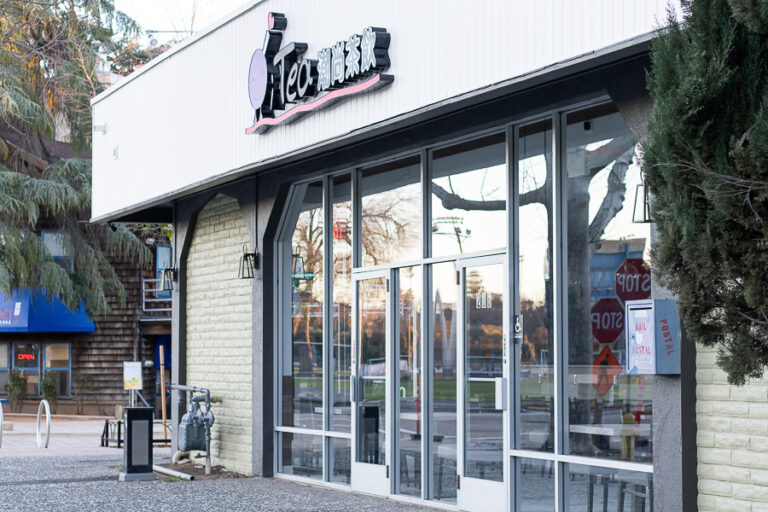
Newcomer i-Tea to open at location of closed textbook store

Boba shop caters to students as a hangout spot

The building on the corner of Third and A Streets, formerly occupied by Off-Campus Books, will be separated into two eateries, one of which will become i-Tea, a boba tea shop.

According to Jacky Ruan, the president of 168 Eat & Entertainment Enterprises, the company is opening the Taiwanese franchise in Davis in addition to its location in Sacramento, which UC Davis students often go to. The shop has already begun training employees and is looking to host a soft opening by the end of February.

A wall was built to isolate the original bookstore into two establishments. The restaurant next door will start construction around when i-Tea opens and will likely feature Chinese cuisine. The boba shop’s menu will include boba drinks, fruit drinks, fruit tea, ramen and various appetizers. Other amenities include electrical outlets for students to use, a community area and an intended outside hangout spot.

“We picked this area because it’s very convenient,” Ruan said. “We’re going to have a nice patio buildout for people to hang out.”

The establishment will be across the street from the Social Sciences & Humanities Building. The company looked into other locations in downtown Davis, but ultimately decided to buy out the bookstore’s lease. The prime location, however, proved to be challenging in the construction process. The Third Street Improvements Project halted the shop’s construction for nearly six months and inhibited resources from getting through the blocked streets.

In addition, Ruan said the City of Davis was slow in approving its plans, and reluctant in accommodating changes such as installing more glass windows. The project was proposed around a year and a half ago, and racked significant costs in vacant rent.

i-Tea will be located directly across from another boba shop called RareTea, which recently replaced ShareTea. First-year environmental science and management major Alice Kilduff expressed concerns over the proximity of the two shops.

“i-Tea will be a good addition, but it’ll spark a bit of competition,” Kilduff said. “If we look at it from more of a conservative standpoint, the boba might become better due to this competition, or it could just fall apart.”

First-year managerial economics major Kady Adams is familiar with and enjoys the Bay Area i-Tea locations, but also questions the necessity of another boba shop given the high concentration of shops near campus.

“I feel like you could do other things instead of a boba place right next to it,” Adams said. “If they put them next to each other, one’s going to get more business than the other. One’s going to have to close. I’m sure the rent is a lot.”

In the past, the Sacramento location hosted events for UC Davis student groups and often delivered to students’ homes. For first-year neurobiology, physiology and behavior major Jacquelyn Mae dela Cruz, the addition of another boba shop means more to choose from, whether after class or through delivery.

“I like the variety,” Mae dela Cruz said. “[the boba shops] are not going to run out of business.”

Davis can expect two new additions to downtown after months of waiting for the space to be occupied.

“The excitement’s already gone, let’s put it that way,” Ruan said. “We’ve been dragging and dragging and dragging, but we’re finally there.”

Written by: Renee Hoh — city@theaggie.org

Dreaming America: poetry by undocumented youth

Poetry performance provides space for cultural understanding

On Feb. 21, the International House hosted a reading of “Dreaming America: Voices of Undocumented Youth in Maximum-Security Detention.” The 2015 book features poetry written by undocumented, unaccompanied children detained at the Shenandoah Valley Youth Center in Virginia, one of two maximum-security detention centers that have a contract with the U.S. Office of Refugee Resettlement (ORR). The other center is located in Woodland, Calif.

Acme Theatre Company, a youth-run theatre company based in Davis, performed 12 poems from “Dreaming America.” The performance was followed by a moderated community discussion.

Emily Henderson, director of the Acme Theatre Company, spearheaded this project.

“I’m a theatre artist, and I really believe that theatre has an opportunity to humanize stories, to personalize stories,” Henderson said. “When I read this selection of poems, I felt like it was an opportunity for the youth in our theatre company to dig deeper into the issue of immigration.”

The poems were read in both English and Spanish. In addition to being read by members of Acme Theatre Company, poems were read by local community leaders. Garth Lewis, Yolo County’s Superintendent of Education, and Gloria Partida, Mayor Pro Tempore of Davis, both participated in the performance. Julie Burns, Supervisor of the Yolo County Office of Refugee Resettlement program based in Woodland, also participated. Other readers included Ramon Urbano of the Yolo Interfaith Immigration Network, Eliana Kaimowitz of Immigrant Integration Fellow and Rabbi Greg Wolfe of Congregation Bet Haverim. Several members of SPEAK, a student-run organization that seeks to support undocumented students at UC Davis, were also present and participated in the reading.

“I was very concerned about bringing this together,” Henderson said. “This is a very divisive topic, and even when advocates are in agreement that we should be supporting youth, particularly unaccompanied, detained minors, I was worried there was going to be a lot of schisms within the ranks. I think those schisms do exist and are important, and I was very grateful we were able to share it together.”

Unlike traditional poetry readings, the performers presented in the center of the room with the audience surrounding them on all sides. This created an intimate, interactive experience.

“I think there’s something about when you have actors moving in three-dimensional space that helps the poems come alive,” Henderson said. “It was something Anoosh [Jorjorian] and I talked about: whether we would just provide a music stand and a microphone, and we decided we wanted to stage it in the round [formation] to help bring the poems to life.” Jorjorian is the Program and Outreach Manager at International House.

The poems reflect a wide range of trauma, pain, memories of the past and hope for the future. The youth in these centers often flee violent situations in their home countries and or seek work in America, all in search of a better future. Often these children undergo long and dangerous journeys to arrive at the American border and face treacherous conditions to cross it. Apprehended by ICE officials, unaccompanied minors fall under the care and custody of ORR and are taken to facilities where they receive housing, physical and mental healthcare and access to educational and legal services.

Youth who are considered violent or have criminal histories can be transferred from these staff-secured facilities to one of the two maximum-security detention centers. Several of the poems were collected from children subjected to isolation and who struggle with self-harm and suicidal tendencies. In the past, detained youth have spent between 49 and 67 days in the Yolo County facility. They are then typically released to family members or group homes.

Cypher McIlraith, an actor with Acme Theatre Company, read the poem “I have a dream” and felt that they connected with it on a deeper level.

“It was about a kid who was in a very dark place, and they didn’t care what happened to their life,” McIlraith said. “They seemed vaguely suicidal, and that is something I have had to struggle with myself, not for the reasons they’re probably dealing with it, but for my own personal reasons. I felt very connected to [the poem], and it was very powerful.”

Gray Blair also performs with Acme Theatre Company.

“Just the fact that these are kids my age are going through things I’ve never had to deal with, I’m reading the descriptions of these kids who traveled so far, and knowing they were my age,” Blair said. “I don’t really know the word, it’s different. I have friends who have family who immigrated from the area. The way that these kids are being treated, it’s not that bad here, but it’s still a lot worse than I wish it was.”

Blair advocated for a poem titled “From the earth” to be included in the performance.

“There’s a lot of levels to why I like the poem so much, partly because it’s so short and easy to memorize,” Blair said. “It’s going to stay with me forever now. But also, just something about the poem made me really want to get to know the person who wrote it, I guess. It’s short, it’s concise, it’s well-written.”

“From the Earth” brings attention to the unseen labor that is integral to American food industries.

“Most people my age, outside of our small community of social activist teenagers, don’t really think of where their food comes from,” Blair said. “There’s a level of metaphor. You see these beautiful things like these poems, and they’re like delicious fruit. But you need to stop to wonder what is going on with the person who made them or where they came from. It adds another layer of appreciation of anything beautiful.”

Henderson hopes to use the theatre company to lift up the voices of undocumented youth. While this has been their only performance of “Dreaming America,” she is optimistic that other groups and venues will want to work with them.

“If anyone is interested, they should absolutely reach out to me,” Henderson said.

The moderated discussion ended on a hopeful note, outlining ways to help undocumented youth. The consensus was that the most important thing to do is to stay educated on immigration-related matters and current events, as well as to educate friends, family and other members of the community on these issues. Events such as the “Dreaming America” poetry reading help disrupt patterns of bias and fear in local communities. Exposure to different voices reminds documented individuals that the handful of stories presented by the media does not represent all undocumented people.

Safe Yolo lists local immigration events online. Other organizations that help undocumented people include NorCal Resist and Yolo Interfaith Immigration Network.

Written by: Cheyenne Wiseman – arts@theaggie.org

UCOP, State Auditor butt heads over funding transparency

Auditor raises concerns over implementation of recommendations

UC President Janet Napolitano recently faced inquiries from California State Auditor Elaine Howle regarding her office’s failure to disclose $175 million in reserve funds to the Board of Regents.

The aforementioned audit took place in 2017 and has since been a source of controversy regarding the UC Office of the President’s perceived lack of transparency in relation to funding matters.

“We are still concerned about the lack of sufficient transparency related to fund balance amounts,” Howle said in a progress report released in Feb. 2019.

UCOP Director of Media Relations Claire Doan stated in an email to The California Aggie, however, that the assumption the UC did not disclose the $175 million “is incorrect.”

“Regents policy requires that we annually present the operating budget for review and approval,” Doan said. “These funds were made up of fund balances and reserves; they were not hidden. They were used to fund temporary one-time projects and initiatives, among other priorities.”

An article published in the San Francisco Chronicle reported that Napolitano was supposed to implement the recommended policies, limiting reserves and returning money to campuses, by last April.

“The audit found that $32 million of the reserves came from fees paid by campuses that could have been spent on students and that much of it should go back to the campuses,” the article stated.

Zoanne Nelson, UCOP’s chief strategy officer, told the Chronicle that UCOP does not “accumulate money just to accumulate money” and is allocating more money to campuses in light of increased transparency.

Howle, however, identified the “absence of sufficient reserve policies” as an area of great concern. She stated in her report that this allows UCOP “to retain and maintain virtually an unlimited amount of fund balances and reserves.”

“UCOP is currently working with the State Auditor to address areas of disagreement on the other recommendations,” Doan said.

The sources of disagreement between the UCOP and the state auditor are both practical and time-related. According to the Chronicle article, UCOP does not believe that a standard number should be set for reserve funds, preferring to allocate different amounts for specific programs.

Howle wants the UC budget to be released this April so California legislators can incorporate it in processes related to the state budget. However, UCOP would prefer the budget be released this May, when the Regents meet.

According to documents sent to The California Aggie by Doan in October of last year, the California State Audit (CSA) was dissatisfied with the implementation of several other recommendations issued to UCOP.

A number of recommendations made by the CSA, which were supposed to be implemented in April of 2018, have been marked “pending.”

Recommendation #5 asks UCOP to combine the “disclosed and undisclosed budget into one budget presentation.” UCOP states that they “engaged in a project to simplify, clarify, and present a transparent annual operating budget to the Regents.” According to the CSA, however, this recommendation is one of the many that have been marked “pending.”

“[UCOP] did not implement the State Auditor’s recommendation for developing its budget by April 2018,” the CSA document stated. “The failure to do so may hinder the Department of Finance, the Legislature, and the Governor when making decisions regarding the UC’s portion of the fiscal year 2018-19 state budget. Moreover, the Office of the President was not forthcoming about its decision to delay providing us with its budget information.”

While UCOP considers Recommendation #11, which asks UCOP to determine how to “restructure salary ranges to make certain the ranges encourage employee development and ensure pay equity,” the CSA asserts that no action has been taken in this regard.

“It was unclear to us what actions the Office of the President planned to take to restructure its salary ranges because its response largely reiterates how its current salary setting system works,” the CSA stated.

The CSA also stated that UCOP’s executive director of human resources was “unable to provide any evidence of any action taken regarding a determination of how the Office of the President would restructure the salary ranges and confirmed that that analysis would begin next fiscal year.”

Timeliness appears to be a recurrent issue in the documents as well.

“Had the Office of the President started this process sooner, the results of the above analysis would be responsive to our recommendation,” the CSA stated.

Other recommendations marked as “pending” by CSA are Recommendation #20, asking UCOP to publish the “results of its review of fund restrictions and fund commitments and any funds it anticipates reallocating to campuses,” #21, which asks for the implementation of budgeting “best practices”, and #28, which was supposed to “[e]stablish spending targets for systemwide initiatives and administrative costs.”

Other pending items include Recommendations #29, which asks that UCOP publish its review of “systemwide and presidential initiatives,” including funds allocations to UC campuses, and #30, which asks that the budget and accounting tracking systems be “restructure[d].”

“Moving forward it will be important for the Office of the President to transparently share these challenges with its stakeholders and the impact that the need for a new system may have on its ability to complete our recommendations by their due dates,” the CSA added.

Despite the CSA’s commentary in the document, UCOP has listed all of the CSA’s recommendations as “fully implemented” as of October, 2018. And Doan stated that UCOP has dedicated “over 17,000 hours” to the state’s recommendations since the audit was released in 2017.

“By March, we will have presented 34 times to the Board of Regents on this issue, in an effort to significantly improve our budgeting and salary classification processes and budget presentation,” Doan said.

UCOP will finalize its reserve policies this year.

“We are also establishing a replicable annual process to evaluate fund balances, reserves and commitments within the context of the UCOP budget,” Doan said. “In the May 2018 presentation to the UC Board of Regents, then Lt. Gov. Newsom made supportive comments about the increased transparency of the UCOP budget and fund balances[…] The Department of Finance determined that UCOP’s budget, including the information about fund balances, sufficiently met the April 2018 CSA […] recommendations and chose to disburse $50M in 2018 – funding that had been withheld pending the outcome of this work.”

The Regents have also hired Sjoberg Evashenk, an independent firm, to aid in the implementation of adequate and transparent reserve fund policies, in accordance with the recommendations of Howle.

Written by: Rebecca Bihn-Wallace — campus@theaggie.org

Majority of political contributions from UC employees go to Democrats, Taking a fifth year, A good week for Aggie women’s sports: Your Weekly Briefing

Happy Friday Aggies,

As Week 8 comes to a close, hopefully so have your midterms. Rain is forecasted on and off through next Saturday — mood —  so stay dry, Aggies. A lot happened this week, here’s what you need to know.

Photo of the Week:

QUINN SPOONER / AGGIE

On campus:

A report published by Open Secrets showed that “During the 2018 election cycle, UC-affiliated donors contributed $3,437,446 to Democratic congressional candidates and $78,727 to Republicans.” Putting into question whether left-skewed politics are bleeding into curriculum. Read the full article.

Chaz Cruz is the new director of the Cross Cultural Center on campus— alliteration, am I right? Cruz brings a background in organizational leadership and a passion for contributing to marginalized communities, and said that there are “a lot of problems that need to be addressed in making sure our society is more equitable. It will take a lot of people to do that and I am willing and I am here to work with as many people as possible to make sure we uphold those values.” Read the full article.

In city news:

Update on the F Street murder — Halyley Gilligan will face trial at the end of May for murder and felony use of a firearm against her ex-boyfriend, Jamie Kinseth last October. At the arraignment on Feb. 15, Gilligan testified that her actions were in self defense, but forensic evidence conflicts with her narrative. Read the full story.

Features:

DAVIS WHALEN / AGGIE

Forced to take a fifth year, student Karen Bretz shared a familiar narrative about grappling with the consequences of changing majors. Despite great efforts in extracurriculars and joining clubs, Bretz explained how it took time for her interests to come into focus. She lends her story to guide fellow students in finding pride in an extended education. Read the full story.

Arts:

JAMIE CHEN / AGGIE

Rosie Schwarz shared some high school literature nostalgia. Her picks: The “Twilight” series, “Catcher In the Rye”, “One Flew Over the Cuckoo’s Nest”, and “Waiting For Godot”. Read the full article.

Sports:

JUSTIN HAN / AGGIE

A good week for Aggie women’s sports:

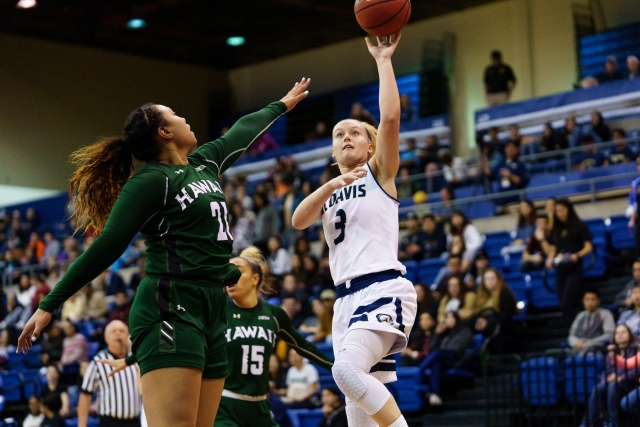
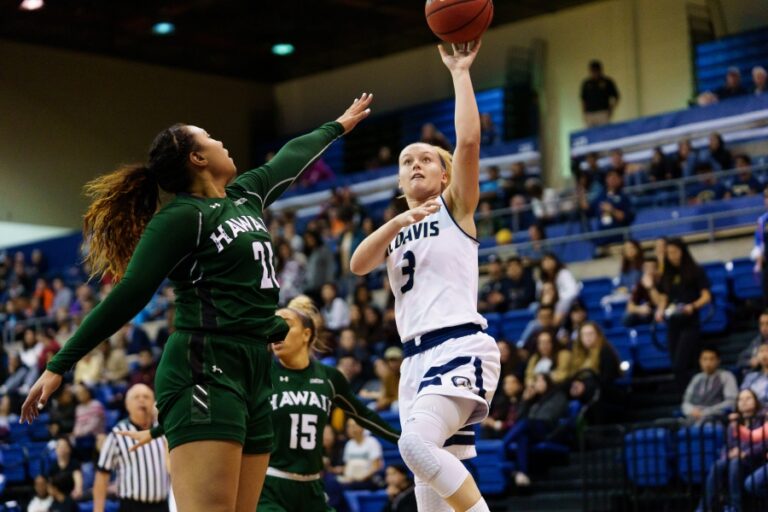
UCD women’s basketball earned its tenth straight win last Saturday against Hawaii, and women’s softball took home first place at the annual Aggie Invitational this past weekend— winning five of six games.

Science:

IAN CAMPBELL / COURTESY

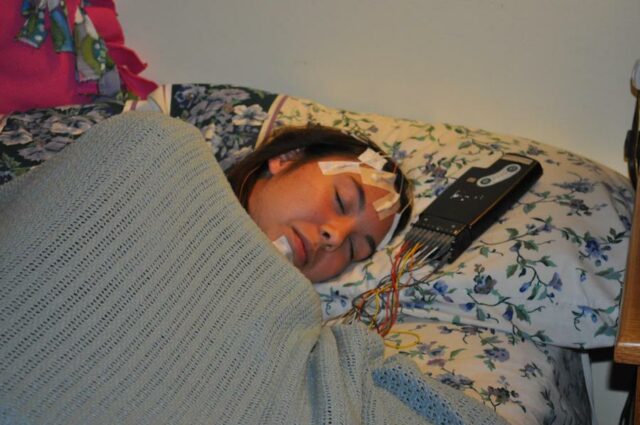
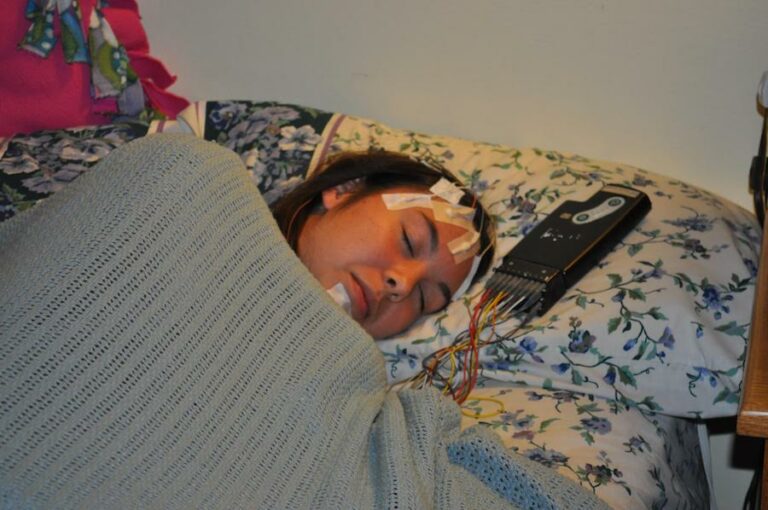
A recent study by the UC Davis Sleep Lab found that decreased sleep in adolescent correlates to a significant decrease in waking EEG power, or electrical activity in the brain. Associate project scientist in the department of psychiatry and behavioral sciences, Ian Campbell, said, “This idea that sleep is not important, that I can stay up all night and study and still perform well the next day is not a good approach to life.” Read the full article.

Opinion:

COURTESY

Top of the news this week:A UC Davis professor thinks cops “need to be killed”

On a lighter note, Re: The Oscars Best Picture squabble— “Why “Black Panther” didn’t win Best Picture”.

Benjamin Porter writes, “Rewarding “Black Panther” simply for breaking racial barriers may seem like a morally good, progressive and politically correct thing to do, but this wouldn’t be based on merit — it would be tokenism.”

Editorial:UC Davis is not just a STEM school

Liz’s Weekly Recs:

Television: Foreveravailable on Amazon Prime Video

Movie: Empire Records

Novel: Eleanor Oliphant is Completely Fine by Gail Honeyman

Album: X100PRE by Bad Bunny

More…

That’s all for your Aggie Briefing, check back next week.

To receive the briefing in your inbox, subscribe to our newsletter.

— Grace Simmons

Humor: CALPIRG member released from contract with the devil after collecting pledges

What the devil are those $10 pledges for?

The California Public Interest Research Group, or CALPIRG, was founded to raise money for some respectable causes in the least respectable way possible. Over the years, thousands of unsuspecting Aggies have been approached by what appears to be a happy, friendly fellow collegiate. Faster than one can say “Gunrock’s left bicep,” a member of CALPIRG can whip out a tablet computer and trap an Aggie with their five-minute spiel to pledge $10 per quarter for the environment. Many Aggies have been late to class or missed buses due to the phalanx of CALPIRG members stationed outside the Silo, impeccably positioned to intercept a student coming from any direction.

No one is certain where the pledge money goes or what CALPIRGers have accomplished. Most importantly, no one knows anybody in CALPIRG. Who are they? Where did they come from? The only being who might know the answers to these questions is God, but Ephesians 4:20 says, “God Himself is not certain where the members of CALPIRG came from.”

All we can guess is that members have some quota of pledges that they need to reach. No one has ever obtained the required amount, which is why they come out of the shadows Winter Quarter to collect that moolah.

No one… until today.

UC Davis student George Faust convinced his 666th person to pledge to CALPIRG this morning. As soon as the final student finished typing her name into the tablet, there was a puff of smoke, and the devil himself appeared before Faust. The prince of darkness sneered and handed Faust a scroll.

“Congratulations! You have been freed from your contract with me by getting your last CALPIRG pledge,” the devil said.

“Rad!” exclaimed Faust. “Can I have my family back now?”

The devil nodded, saying, “Sure thing, my dude.” He snapped his fingers, and Faust’s parents appeared before him.

A few members of CALPIRG looked longingly at Faust. One day, they too would see their families again and be freed from their own deals with the devil.

“Hi! Would you like to pledge $10 to h-”

“NO.”

Today would not be that day.

Written by: Madeline Kumagai — mskumagai@ucdavis.edu

(This article is humor and/or satire, and its content is purely fictional. The story and the names of “sources” are fictionalized.)

UC cancels contract with online journal publisher in push for open access

In boycott-esque movement, UC chooses to not renew $11 million subscription, sticking to university’s principles on scholarly communication

The UC made a collective decision Thursday to terminate its subscription to the world’s largest scientific publisher, Elsevier. This decision takes place in the wake of months of unsuccessful contract renewal negotiations that ended without an agreement.

The two were unable to reach an agreement because the UC stood firmly behind the initiative to make its publicly-funded research accessible on a global scale for free. Elsevier, who has had to mediate between the UC and the California Digital Library (CDL), was simply unable to accommodate this request.

Earlier in 2019, The California Aggie reported on the status of the UC-Elsevier contract renewal. Back in January, it was estimated that the school paid $11 million per year for its campuses to access content on Elsevier’s database. At the time, it was noted that the institution was searching for a resolution that included open access content — a resolution which ultimately proved unachievable.

Open access would allow readers, UC-affiliated or not, the ability to read any article produced by the UC free of charge through the Elsevier database.

The UC feels that the advantages of free, universal access to scholarly journals includes an acceleration of scientific discovery and increased communication of knowledge throughout the world. Making the research available to a greater population would ensure that knowledge would not be limited to only those who can pay for a subscription.

A press release issued on Feb. 28, 2019 from UCOP made it clear that the long-term goals of the UC and online journal were not aligned.

“‘Knowledge should not be accessible only to those who pay,’” said Robert May, the chair of the UC’s faculty Academic Senate, in the release. “‘The quest for full open access is essential if we are to truly uphold the mission of this university.’”

An email following up The Aggie’s coverage from Jan. was sent on Feb. 27, containing a letter sent from Elsevier to editors in the UC system.

The message expressed that the CDL has been pushing a multi-payer model, which would make open access exclusive to those within the UC system. The letter specifies that while Elsevier has created a proposal which they hope will satisfy both the CDC and the UC’s needs, it was still possible that an agreement may not be reached.

The very next day, news of the contract termination broke. Elsevier released a statement in response to the CDL, expressing that it believes the UC was “mistaken” in its characterization of the publishing giant’s stance during negotiations. That statement was also sent to The Aggie.

“During the negotiations for a contract covering academic publishing and access to academic literature, we have put forward a unique model that supports CDL’s multi-payer open access request,” Elsevier’s statement reads. “It is disappointing that the California Digital Library […] has broken off negotiations unilaterally, but we hope we can bridge this divide with them soon.”

UC President Janet Napolitano issued her own statement on the matter.

“‘I fully support our faculty, staff and students in breaking down paywalls that hinder the sharing of groundbreaking research,” Napolitano said in a press release. “‘This issue does not just impact UC, but also countless scholars, researchers and scientists across the globe — and we stand with them in their push for full, unfettered access.’”

Written by: Claire Dodd — campus@theaggie.org

New studies show political contributions from UC employees overwhelmingly go to Democrats

Students, staff discuss whether political ideology leaks into classroom environment

A recent report showed that the majority of individual political contributions from individuals associated with the UC, as well as contributions made by UC political action committees (PACs) go to Democrats. This opened up a discussion about whether political ideology has leaked into the classroom setting and influenced students’ educational experiences.

The report, published by Open Secrets — a group that falls under the Center for Responsive Politics, a nonprofit, non-partisan research group — analyzed political donations from the 2018 election cycle. During the 2018 election cycle, UC-affiliated donors contributed $3,437,446 to Democratic congressional candidates and $78,727 to Republicans.

The political candidate who received the largest amount of funding from UC PACs or individual employees was Beto O’Rourke who unsuccessfully ran against Ted Cruz for the position of Texas state senator.

The study specified that donations are not on behalf of the UC as an institution but rather by UC PACs and individual employees.

Ryan Gardiner, a third-year political science — public service major, and current chair of the Davis College Republicans (DCR) said he was not surprised to find out that contributions overwhelmingly go toward Democratic candidates and said the political ideology of UC faculty has affected his educational experience.

“There are instances where [… ] what [professors] choose to teach is geared towards their point of view, and I think that gets a little tiring when it really is only coming from one side,” Gardiner said. “It’s not just Republicans that suffer, everyone suffers when you don’t hear from the other side.”

Aaron Latta, a fourth-year political science major and the executive director of the Davis College Democrats, had a different take on how political ideology comes into play in classroom settings.

“Political donations are not evidence of partisan indoctrination on our campuses,” Latta said. “On campus, there are hundreds of registered student organizations all servicing various ideals, creeds and missions.”

Latta also added that he believes UC faculty and administration “go out of their way to be apolitical in the classroom.”

UC Davis Professor Christopher Hare studies American political behavior, working to better understand why people vote the way they do. Hare is a self-identified conservative. Hare mentioned studies which corroborate data suggesting that individuals associated with the UC donate largely to the Democratic party.

Certain industries and professions, such as those in motion pictures, media and academics, tend to skew politically left, while those employed in the industries like oil, construction and agriculture usually contribute to more conservative platforms, Hare said.

“It’s not a problem in and of itself that so many people out here are Democrats,” he said. “But when that starts to influence the curriculum, it’s more negative than positive.”

Overall, Hare said he believes the UC Davis faculty and staff are more “fair-minded.”

Without the perspective of being a student, Hare could not comment on how professors’ political ideologies potentially impact the educational experience. Instead, he focused on the clear lack of conservative perspectives among faculty.

“It’s not that professors are trying to keep conservative ideas out, it’s just that there’s not a lot of ecosystem here so it’s difficult to present the other case when you’re not even aware of it,” Hare said. “When you’re having debates, even if you’re trying to be fair, it’s difficult if you haven’t been regularly exposed to some sort of thoughtful arguments on the other end. That can be quietly dangerous.”

Written by: Ally Russell — campus@theaggie.org

Davis woman will face murder trial in May for killing ex-boyfriend

Yolo District Attorney has presented evidence for murder charge in preliminary hearings, contradicting claims of self-defense

Davis resident Hayley Gilligan maintains that she shot her ex-boyfriend in self-defense last October. The prosecution, however, has presented evidence that disputes her accounts of events in preliminary hearings, according to The Davis Enterprise. After an arraignment on Feb. 15, Gilligan will stand trial on May 28 for murder and felony use of a firearm.

Early in the morning on Oct. 20 last year, police responded to an emergency call saying a man had been shot on the 900 block of F St. in Davis, according to a press release from the Davis Police Department.

“Detectives determined that a 29 year old female shot a 35 year old male,” the press release said. “The male victim was pronounced deceased at the scene. The female was questioned by detectives and arrested.”

The release identified the shooter as Hayley Gilligan, who was taken to Yolo County Jail on homicide charges. The male victim was later identified as Jamie Kinseth. Gilligan’s lawyer, Mark Riechel, told KCRA 3 that Kinseth had previously dated Gilligan. Riechel also said the shooting was in self-defense, claiming his client was afraid for her life when she shot Kinseth.

“Once he was inside, she got very scared,” Reichel said. “Obviously, fearing for her life, this is what happened.”

Gilligan told the police responding to the 9-1-1 call that the shooting was in self-defense, but evidence presented by the prosecution in preliminary hearings contradicts her account of events, according to The Enterprise.

Gilligan told police in a conversation captured by the responding officers’ body cameras that Kinseth had abused her in the past, according to The Enterprise. Kinseth forced his way into Gilligan’s apartment and began threatening her, Gilligan said, refusing to leave after she warned him she had a gun and would call the police. Gilligan stated that she ran to her upstairs bedroom to grab the gun, and heard Kinseth rummaging for something in the kitchen downstairs. When Gilligan entered kitchen, she said, Kinseth turned his back to her.

“It seemed like he was trying to grab a knife or something,” Gilligan said in the video, The Enterprise reported. “He had his arm up to hit me and I just kind of instinctively (shot him).”

Evidence that challenges this narrative includes a forensic examination of a bullet wound on Kinseth’s head, suggesting he was shot a point blank range — not from across the room as Gilligan previously stated — and a blood stain in between Kinseth’s body and Gilligan’s bloody sofa seemed to indicate the body was dragged after the shooting. And despite Gilligan’s statement that he had forced his way into her apartment, The Enterprise recounted substantial evidence presented by the prosecution that Kinseth had been living there the whole time — including a prescription medication bottles with his name on the label, a dresser containing men’s clothing and a cat that had been microchipped in his name.

The DA is seeking a murder conviction along with a felony charge for the negligent discharge of a firearm, according to a complaint submitted to the Yolo County Superior Court. The charges entail that Gilligan shot Kinseth willfully, with “malice aforethought.”

Furthermore, the prosecution now alleges the special circumstance of “lying in wait,” the DA’s website reports. “Lying in wait” means that the accused planned the murder ahead of time and waited for the right opportunity to kill the victim, using the element of surprise to gain the upper hand, according California jury instructions. If proven in court, these special circumstances will make the charge first-degree murder, a capital offense punishable by the death penalty or life in prison. The DA’s website indicates it will not seek the death penalty.

Judge Paul Richardson found the prosecution’s evidence sufficient to proceed to a jury trial for murder in May. The trial will take place in Woodland at Yolo Superior on May 28 at 8:30 a.m.

Written by: Tim Lalonde — city@theaggie.org

Feb. 14 reports: ASUCD holds Town Hall, Senate meeting

Action-packed Valentine’s Day with back-to-back open forum preceding weekly Senate meeting

The ASUCD Senate held a public town hall in the Coffee House on Feb. 14 in an effort to create a space for individuals to give feedback on how ASUCD could better represent the student body. The Facebook event page showed that 33 individuals marked “going,” yet the event was attended by only approximately 20 individuals.

Outgoing ASUCD Vice President Shaniah Branson began the meeting by reminding the participants of the UC Davis community agreements. She acknowledged that topics brought up may provoke mixed emotions and challenged both the Senate and the crowd to make room for all perspectives.

The town hall was not held to address any specific issue, but instead fulfilled a requirement in the ASUCD bylaws that the Senate schedule one town hall meeting per quarter. The open forum on Jan. 22 did not qualify as this quarter’s town hall because it was held to address a specific issue.

Branson passed the microphone along to each member at the table, giving senators and commission chairs the opportunity to introduce themselves. She subsequently opened the floor for any questions from the crowd.

The gathering started off slowly, with the dwindling crowd unwilling to step up and direct any of their questions to the Senate. Fortunately, one community member took initiative, posing the question of why students should vote ‘yes’ on the Unitrans Fee Referendum.

Alisha Hacker, the author of the referendum, elected to answer and began by explaining the situation that Unitrans is currently in.

“Unitrans is in a huge deficit right now,” Hacker said. “Somewhere in the nature of about half a million dollars. Without this fee increase, Unitrans would have to cut about 15-25 percent of their services, which would affect most lines, […] so they are proposing a fee increase of $13.33 per quarter.”  

She noted that around 25 percent of collected fees would go back to student aid, which would help those who may not be able to afford the fee increase. The rest of the money left over, Hacker explained, would go directly toward paying drivers, making sure buses come on time, expanding the range of services and even helping Unitrans explore the option of hybrid busses.

After the question was resolved, there were no other audience members who had questions at the time. A Google Form for anonymous inquiries was posted on the Facebook page the morning of, and after a brief pause, Branson elected to read one of the nameless submissions aloud for the Senate to answer.

The question was directed to the outgoing senators, asking if they had accomplished any of the platforms they ran on and if not, why?

Outgoing ASUCD Senator Jumoke Maraiyesa had a lengthy answer, listing one of her main platforms as promoting The Pantry and modeling it after the UC Irvine equivalent. She is also currently working on parking infrastructure and trying to figure out what ASUCD’s role might look like in helping with parking access. She admitted that no, not all her platforms were successful or had been fully completed, but she felt confident nonetheless because she was passing these projects down to trustworthy individuals.

Hacker listed her platforms as housing fairness, voter registration and the Unitrans Fee Referendum. She named several efforts she made to support each of these platforms, such as partnering with different student groups and writing pieces of legislation to accomplish her goals.

The next Google Form question asked about a candidate running on an executive ticket in the 2019 ASUCD Winter Elections. The anonymous individual claimed the candidate in question had made racist assumptions about a black student sitting in their car during the Downtown Davis shooting, allegedly stating they were a dangerous character even though the suspect was white.

The question was directed specifically to Hacker, for the candidate in question was her running partner, Sydney Hack. A subsequent question asked the entire slate how they planned to protect black students.

Hacker said the messages the question referred to were sent in a sorority group chat that she wasn’t a part of. She went on to say that if Hack was present at the meeting, she would likely apologize for the wording of her texts because they were taken out of context. Hacker said her running partner is a kind, good-hearted person and is only trying to work to make UC Davis a better place.

The rest of the Senate replied that they would be better at representing minorities in the future.

After the town hall concluded, the Senators moved upstairs to the Mee Room to start their weekly Senate meeting. Branson called the meeting to order at 7:22 p.m.

The meeting began with the Bike Barn’s quarterly report. Student-employees Jacob Wagner and Oscar McBain described sales from the Winter Quarter, noting that there was a slight dip compared to last year, but they are expecting an increase near the end of the season to compensate.

They also emphasized a shift in focus from bike sales to promoting different accessories and stocking the store with products that will fit their customers’ needs.

Next, the Whole Earth Festival (WEF) gave a brief report on their status. They stressed their efforts to collaborate with other units, such as the Campus Center for the Environment (CCE) and the Ethnic and Cultural Affairs Committee (ECAC). Tinka Peterka, a representative for WEF, also noted that the organization applied for a grant to light the festival with solar lights as opposed to the diesel floodlights they used last year.

WEF also answered several questions about the stage situation, including what the plans were for the old stage’s disposal and how much they were planning on renting the new one out for.

The organization has a storage facility on campus for the old stage and they have yet to determine how much the rental price for the new stage will be.

Following WEF’s quarterly report came the Academic Affairs Commission (AAC) quarterly report, headed by Justin Hurst and Vanessa Fukuchi.

They spoke about several different initiatives they had planned, including a courtyard study space renovation, a sexual assault prevention project and the pilot American Sign Language (ASL) classes currently underway at UC Davis.

The Gender and Sexuality Commission (GASC) member confirmations were supposed to take place following the AAC’s report, but were cancelled and pushed to the following meeting.

Then, Branson took charge of the meeting — not as vice president, but rather as an ambassador for the UC Advocacy Network (UCAN). UCAN is a group of students and faculty that represent each UC with the purpose of providing adequate support for each student. They review funding and budget proposals and push for higher graduation rates.

A break was then held at 8:16 p.m., and the meeting resumed promptly at 8:30 p.m.

SB #38, an ASUCD Senate Bill to ensure the director of Creative Media makes the decision regarding designs of all ASUCD logos, symbols or icons was read aloud and withdrawn.

SB #46, an ASUCD Senate Bill to allow for unlimited deferments during confirmation hearings, was read aloud and withdrawn.

SB #53, an ASUCD Senate Bill to establish the Public Opinion Task Force Committee, was read aloud with a public discussion following. Senate decided to strike the word ‘committee’ from the title. They also decided that once the task force obtains opinions, they can use this data and translate it into an action plan, such as hosting a town hall. SB #53 was passed as amended.

SB #55, an ASUCD Senate Bill to clarify and revise ex-officio membership of ASUCD Commissions in Chapter Two of the Bylaws, passed as amended.

SB #56, an ASUCD Senate Bill to amend Chapter Two of the ASUCD Police Accountability Commission Representative to serve as an ex-officio member of the External Affairs Commission, passed as amended.

New legislation introduced consisted of SB #57, an ASUCD Senate Bill to remove references to the Student-Police Relations Committee from the Bylaws and SB #58, an ASUCD Senate Bill to allocate $2983.00 for Student Transportation Services to purchase new surveillance and dash cameras for their four vehicles.

There was a brief public discussion regarding Willie McCoy, a young black man from Vallejo, who was shot and killed in his car by six police officers who claimed he was reaching for his gun. Nayzack Wali-Ali, commission chair for the External Affairs Commission, said she brought this up to send condolences to his family and address how police brutality may affect individuals differently.

ECAC Commission Chair Rina Singh announced her commission’s event Pass the Plate, which has since occured on Feb. 19, and served as a space where students from historically marginalized backgrounds could meet to have conversations.

A 17 second moment of silence was then held for the 17 people who lost their lives in the Parkland, Fla. shooting, per Hacker’s request.

Meeting was adjourned at 10:39 p.m.

Written by: CLAIRE DODD — campus@theaggie.org

Brief: Meet the new CCC Director: Chaz Cruz

Cruz looks forward to developing new partnerships in his role

The Cross Cultural Center on campus has hired a new director. With an extensive background working with identity resource centers during his undergraduate, graduate and personal career, Chaz Cruz is looking forward to reaching out to different groups and people on campus while ensuring the CCC upholds its core values.

Cruz described how his past experiences influenced him to apply for the job.

“My academic background in education, a masters in organizational leadership, my personal interests of working with marginalized communities and all of my professional work ties to working with identity resources centers on campus,” he said. “For this position, I think it requires being open to working with a diverse population and being skilled in working with multiple communities. I have a positive outlook on situations; I know I’m working with and supporting a lot of people […] I think the best quality that I have is finding the most ideal solution in a given situation.”

Cruz said he is looking forward to fulfilling his responsibilities as the new director. He plans on ensuring that the CCC works with as many departments as possible and wants the CCC to develop new partnerships.

“[The CCC] has been known as a resource for the campus and the community, as being stellar in identity development, cultural competence, community building and addressing inequities,” he said.

Cruz acknowledged that he still has a lot to learn about the CCC. Since he is new, he has to learn about how the CCC has functioned thus far and said he will rely upon the perspectives of those who have been working there to plan his mission of outreach.

“I’ll have to figure out what’s been working with the center, work with the full-time and student scholar staff and figure out the things that they see need to be improved and get their take from their experience from being here at the CCC,” he said.

Another one of Cruz’s plans for outreach is to make himself accessible to other communities across campus. If he is able to create partnerships with those communities, then it will allow the CCC to reach a greater population and make a bigger impact on campus.

“Sitting on many committees opens up the opportunity for many partnerships to be made.”

When asked what he wants the UC Davis community to know about him, Cruz said a lot of his work “as a practitioner and as a scholar is informed by love.”

“I do know that there is a desire for the CCC to uphold, in the best ways possible, our values and being known as a center to do that, that is what I am most interested in doing,” he said. “There’s a lot of problems that need to be addressed in making sure our society is more equitable. It will take a lot of people to do that and I am willing and I am here to work with as many people as possible to make sure we uphold those values.”

Written by: Alexis Lopez — campus@theaggie.org

UC Davis Sleep Lab looks into the correlation between sleep need and age

Study finds shorter sleep durations lead to a decrease in EEG waves

In a recent study restricting sleep durations in adolescents, the UC Davis Sleep Lab found that shorter sleep durations led to a significant decrease in waking EEG power. This is just one part of the laboratory’s long history of looking at sleep in adolescents.

According to Ian Campbell, the associate project scientist in the department of psychiatry and behavioral sciences, the Sleep Lab started its adolescent studies in 2002 when they initially began looking into how sleep and EEG brain waves change across childhood and adolescence.

“What was special about that study, what made it different from all previous studies, is that it was longitudinal,” Campbell said. “So we followed the same people over time. Previous studies had been cross-sectional, so they compared the brain waves of like a nine year old to a 15 year old and would look at how they were different. By following the same kids over time, we are able to very precisely determine how sleep and the EEG brain waves change across adolescence.”

The study found that total sleep time between the ages of nine and 18 decreased by approximately 10 minutes per year, which was correlated with a decline in the time they spent in bed. The decline in total time in bed was not caused by earlier waking times, but rather by going to sleep later. Hans P. A. Van Dongen, the director of Sleep and Performance Research Center and professor of Elson S. Floyd College of Medicine at Washington State University, has also studied studied the effects of sleep and sleep deprivation on performance and came to similar conclusions.

“Sleep need is not the only aspect of sleep that changes with age – so is the optimal timing of sleep,” Van Dongen said. “This applies to adolescents who have trouble getting out of bed in the morning – they are not “lazy” as is often assumed, just aren’t ready to wake up yet in the early morning hours. And it also applies to older adults, who may gradually wake up earlier and earlier in the morning and think they cannot get enough sleep anymore – but may actually get more sleep if they would also go to bed earlier in the evening than they may have been used to.”

Campbell also said that the research found that this decrease in sleep duration was entirely in non-rapid eye movement sleep, with an increase in REM sleep. In addition, although Campbell and his team had prior knowledge that children have more slow wave activity than adults, they were unsure whether this was a gradual or abrupt change.

“We were particularly interested in these big slow waves because these big slow waves are an indicator of a type of recuperation that happens during sleep,” Campbell said. “If somebody has been awake longer, they will have more of this slow wave activity. If somebody takes a nap in the afternoon, then they will have accomplished some of the night time recuperation during that nap and they’ll have less of that slow wave activity at night.”

The longitudinal study showed that slow wave activity was fairly constant between the ages of six and 12, but their delta power plummeted from there until age 16. Campbell stated that he thinks that during this period, the adolescent brain changes in a way that there is a decreased need for recuperation throughout sleep, which may be driven by synaptic pruning. By comparing females and males, the team found that this change occurred earlier in females, a finding they attributed to puberty, though they are unsure whether puberty causes the EEG change or if a mechanism upstream triggers both occurrences.

“We did not think it was going to be related to puberty,” Campbell said. “We thought these were two totally independent things, that sexual maturation was one thing and the synaptic pruning that’s causing the EEG changes was something different. There’s was no reason for them to be linked in time and [we were] surprised that they were.”

With this portion of their study ending in 2012, Campbell and his team are currently running a dose-response study determining whether sleep need decreases, increases or remains unchanged throughout adolescence and into early adulthood.

There have been various previously conducted studies that looked into sleep need in adolescents. Mary A. Carskadon, professor of psychiatry and human behavior at Alpert Medical School of Brown University and director of chronobiology and sleep research at EP Bradley Hospital, published an article June of 2011 titled “Sleep in Adolescents: The Perfect Storm” about how adolescents’ loss of sleep is not driven by a lower need for sleep, but rather a combination of biological, psychological and socio-cultural influences. She believes that many people have misconceptions about adolescents being able to obtain an adequate amount of sleep by going to sleep earlier.

“For many teens this is just not feasible, given the biological process that are also reinforced by modern ‘conveniences’ that provide reasons to stay awake late,” Carskadon said. “That said, if we lived by the rule of daylight and darkness, which of course we do not, the issues would not manifest as they now do. On the other hand, I suspect that adolescents would still carve out a temporal niche that is later than that inhabited by grown ups.”

In Campbell’s current study, participants are assigned to spend either seven, eight and a half or 10 hours in bed and then come into the laboratory for performance testing, which is then compared with their prior sleep duration. The researchers will follow these participants over time to discover whether this relationship changes with age. In their most recently published paper, “shorter sleep durations in adolescents reduce power density in a wide range of waking electroencephalogram frequencies.” They found that from 10 hours in bed to seven hours in bed, waking EEG power declined significantly. As they have already conducted studies on individuals from ages 10 to 14, Campbell hopes that by studying people of ages 15 to 20 they will be able to attain a more firm answer on how daytime performance is related to age and how this changes with age.

“This idea that sleep is not important, that I can stay up all night and study and still perform well the next day is not a good approach to life,” Campbell said.  

Written by: Michelle Wong — science@theaggie.org

UC Davis Softball shows promise at Aggie Invitational

Aggies win five of six games in four days

The UC Davis softball team took first place at the annual Aggie Invitational this past weekend, going 5-1 and pushing themselves to 11-3 on the season. The tournament kicked off at La Rue field on Thursday and welcomed teams from University of Texas at El Paso, Seattle University, Idaho State and Saint Mary’s.

The Aggies swept their double header series against UTEP and Seattle University on Thursday and Friday, before losing a close game versus Idaho State on Saturday. But despite facing their first six-game weekend this season, they had plenty left in the tank headed into Sunday’s matchup against Saint Mary’s.

The Aggies gained an advantage early, scoring two runs in the second inning, providing all the run support senior pitcher Sara Cadona and junior pitcher Katie Kibby would need to shutout the Gaels. But even with a bitter winter wind kicking up dirt from La Rue field, the Aggies weren’t finished. They tacked on four more runs in the bottom of the sixth that put Saint Mary’s out for good.

“I think we learned a lot this weekend,” said Head Coach Erin Thorpe. “We were not consistent, and we didn’t play our best games, but we’re continuing to build and seeing how we respond and what we need to do to stay consistent.”

Only 14 games into the long season, the Aggies are already showing signs of a team ready to do damage in the Big West, grinding out tough wins on a tough schedule all while not fully in rhythm.

“It’s all about getting in a groove,” Thorpe said. “Our season is 57 games long. It’s really long, and it’s really grueling so we want to be playing our best ball at the right time.”

For one Aggie, the bar of excellence continues to rise, her best ball knowing no time frame. Sophomore pitcher Brooke Yanez is coming off a glittering freshman campaign in 2018 where she was named to the All-Big West First Team and won Freshman Pitcher of the Year.

Yanez continued to shine this weekend, opening the tournament by striking out a career-high 15 batters on Thursday before capturing her sixth and seventh wins on Friday and Saturday and lowering her ERA to 1.63 on the year. But in her second season, the sophomore ace is proving that her dominance may reach far beyond the chalk outline of the pitching circle.

“Brooke’s biggest asset is that she’s just a competitor,” Thorpe said. “She did a lot of work in the offseason to work on her swing and get her swing in a better spot this year, and I think she’s feeling some confidence with that now.”

So far this season, Yanez is batting .400 with two home runs – including one this weekend – providing an offensive boost to a lineup that Thorpe admits will need to find a way to support Aggie pitchers when they’re inevitably not throwing shutouts.

“It’s just going to be them kind of figuring it out through the season and figuring out what they need to do to be successful,” Thorpe said. “So, continuing to work on that consistency and getting better at that throughout the season is going to be our main focus.”

The grind continues for the Aggies this upcoming weekend at the San Diego Classic, where they are slated to play five games in three days.

Written by: Carson Parodi – sports@theaggie.org

Women’s basketball wins 10th straight game in blowout

Aggies overwhelm Hawaii with Big West title on the horizon

The UC Davis women’s basketball team made 10 straight victories with a 72-46 win over visiting Hawaii on Saturday afternoon at the Pavilion.

Leading up to Saturday, the Aggies felt it was essential to avenge their only loss in Big West play, a frustrating five-point defeat to the Rainbow Wahine in Honolulu in mid January.

“We weren’t going to lose to them twice,” said senior guard Karley Eaton. “We had a really good week of prep just getting better and continuing to improve. It was really about focusing on us.”

Looking back, that disappointing night on the island marked a pivotal point in the season and served as a wake-up call for players to reevaluate some aspects of their game.

“That game in Hawaii was a turning point for us,” said Head Coach Jennifer Gross. “We really thought there were some things in that game we could’ve done differently to pull out the win. At that point, our team really committed to making sure our details and habits were stronger. We’ve been working really hard ever since then to build those and I think we were able to showcase that today.”

The Aggies wasted no time getting off to a hot start on Saturday, streaking out to a 17-5 lead after just six and a half minutes of play. They rattled off a 9-0 run in less than a minute and quickly created some separation from their opponent, using lights-out shooting and an aggressive man-to-man defensive scheme.

Similar to many other contests this season, UC Davis leaned on its scorching hot shooting from beyond the arc, hitting 61.9 percent of its three-point attempts. The team has now shot over 40 percent from three-point range in 10 of its 24 games this season.

After just one quarter, UC Davis already held a 13-point advantage, converting 6-of-7 three-point attempts and being disruptive on defense by forcing five turnovers.

Karley Eaton led the way with a trio of early three-pointers, in addition to other three-pointers from fellow senior guard Kourtney Eaton and junior forward Nina Bessolo.

The Eaton twins went back and forth hitting three-point shots throughout the afternoon, combining to score 28 points. Karley Eaton was a perfect 5-5 from beyond from the arc and enjoyed poking some fun at her sister, who missed just once from that range.

“I told [Kourtney] she was bringing our shooting percentage down a bit by missing one,” Karley joked after the game. “We are each other’s biggest fans, but we always have a little competitive game going on.”

The game hit a bit of a lull in the second quarter when the Aggies hit a scoring drought of nearly six minutes and turned the ball over a few times. The team’s defense, however, put the clamps on Hawaii to retain the large lead.

After the Aggies took a 17-point lead into the halftime break, Hawaii started to gain some momentum in the third quarter with a 12-3 run, but back-to-back three pointers by the Eaton twins got the home team back on track.

“Sometimes that’s going to happen and you need to just find a way to get a bucket,” Gross said. “We talk about letting our defense fuel our offense, and getting a stop and pushing in transition. You have to weather those spells because sometimes that’s going to happen.”

UC Davis is quickly running away with the Big West Conference regular season title and has a chance to clinch its third straight crown in the next week or two. Nonetheless, the team would like to see improvement in certain areas of its game, in advance of the Big West tournament in March.

“We’ve been really focusing on our rebounding offensively and defensively, and also our communication on defense,” Karley said. “It’s hard to think about the tournament now because we still have four games. We just want to keep getting better and when we get to the tournament, we want to be playing our best.”

The Aggies have hit their stride on the court at the right time and seem to have came together as a group, much to the admiration of Gross and her coaching staff.

“We’re at the point now where every player is really embracing their role,” Gross said. “I just appreciate what each and every person brings to this team and I love the fact that everyone is buying in to whatever they can do to help.”

UC Davis will return to action on with a two-game road trip in Southern California against Long Beach State and UC Irvine starting Thursday. The Aggies wrap up their regular season schedule with a pair of home games versus Cal Poly and UC Santa Barbara.  

Written by: Brendan Ogburn — sports@theaggie.org