53.5 F
Davis

Davis, California

Tuesday, December 23, 2025
Home Blog Page 457

Humor: Trump appoints head of West Village to Secretary of Housing and Urban Development

The West Wing goes to West Village

This past weekend, President Donald Trump was told by his horoscope that he needed to make some changes, so he decided that Secretary of Housing and Urban Development Ben Carson was Ben CarsDONE. After kicking the House man out of the White House, Trump needed a new Secretary of HUD.

“I thought very long and very hard about this,” Trump said. “I did online research for two days to find the next Secretary of Housing and Urban Devilmen. I started at 11:55 p.m. on Monday night and finished at 12:05 a.m. on Tuesday. I finally found the right guy for the job.”

Trump continued:

“I went to this dinky town that smelled like cow turds outside of Sacramento. I had the heebie-jeebies the whole time because that’s pretty close to Nancy Pelosi-ville. But I heard about this apartment complex called ‘West Village’ that sounded right up my alley.

I went there, and when I saw college kids stepping off the buses in Gucci sweatshirts, I knew I had come to the right place. I felt right at home ‘cause there were a lot of young men who reminded me of myself: blond, very handsome and living off of their daddies’ money.

Anyway, I was interested in this place because it’s basically the Mar-a-Lago of apartment complexes. And just like me, this apartment complex has a lot of money but doesn’t know how to use it. I talked to a young woman who lives there, and she told me that they’re giving away a year’s tuition at basketball games. Why make people’s rent cheaper when you can raise it and give that money away to someone else? It’s a very stable, genius plan.

Another resident told me they changed the outdoor furniture from green to orange, my favorite color. If you got the money, why not make changes nobody asked for? Definitely something I would do. They also make their people pay $90 a month for parking but won’t let them buy campus parking passes. What a foolproof way to make money! Restaurants that are only open three hours a day and not on the weekends? Incredible. Won’t fix residents’ microwaves that have been broken for a year? Tremendous. This place has their priorities straighter than my d- [Editor’s note: the rest of this sentence was redacted for your safety.]

And then I met the guy in charge of the whole thing. He was really, really terrific. His name’s Wesley Villiger. He gave me a smile with eyes that screamed ‘end my suffering,’ which seems to be a common theme around here. He smiled more bigly when I told him I was thinking of making him my secretary, so he’s all aboard the Trump train. He also gave me what the kids call a ‘swag bag.’ I’m a yuuuuuge fan of West Village.”

Written by: Madeline Kumagai — mskumagai@ucdavis.edu

(This article is humor and/or satire, and its content is purely fictional. The story and the names of “sources” are fictionalized.)


Police Logs

0

Watering the plants

January 23

“Unoccupied vehicle with trunk open and several Amazon packages inside.”

January 24

“Misdial/ Testing new phone.”

January 25

“Subject carrying a wheelchair. Subject in roadway.”

January 26

“Male advised he pressed the wrong button.”

January 27

“Transients associated to camp are using city electricity via a light pole.”

“Party and females urinating on reporting party’s flower bed.”

January 28

“Sometime in early morning unknown left behind a metal sharp object on the porch and may have used it to tear up a sweatshirt that was left outside.”

January 29

“Bag of lacrosse equipment.”

UC Davis-developed drug could improve outcomes for chemotherapy patients

Researchers have found a drug that can help prevent cancer from returning after chemotherapy

Chemotherapy is a paradox. It kills cancer cells but once the treatment is completed, it makes it easier for tumors to re-grow. Researchers at Harvard and UC Davis demonstrated in a paper published in The Proceedings of the National Academy of Sciences, that the leftover cell debris from chemotherapy can encourage tumor growth. The good news is that a novel drug developed at UC Davis might help mitigate the pro-tumor environment and improve health outcomes for chemotherapy patients.

Today, doctors have many tools to kill tumors, but it is almost impossible to eliminate every single cancer cell. In 70 percent of ovarian cancer patients treated with chemotherapy, cancer returns after treatment. The researchers found that cancer cells can more easily regrow after chemotherapy by taking advantage of the body’s response to the increased cell debris.

“The chemotherapy will kill the ovarian cancer, which is good news, but the bad news is that the leftover dead cells can stimulate the leftover living cells.” said Dipak Paigraphy, a professor at Harvard University and an author of the paper.

Special cells called macrophages clean up debris in the human body when cells die. After chemotherapy, there is so much debris that the macrophages call for help by releasing signaling molecules called cytokines. These cytokine signaling molecules initiate inflammation, a common biological response where increased immune system resources are sent to a damaged part of the body to help clean up and promote regrowth.

“The body says, ‘something is dreadfully wrong, I’m going to turn on a bunch of chemicals that I make in my body and try to survive the insult,’” said Bruce Hammock, a professor of Entomology and Nematology at UC Davis and an author of the paper.

In cancer patients, however, this inflammation can promote the re-growth of remaining cancer cells instead of normal cells.

The research team realized that if they could modulate or control the release of the signaling molecules that promote inflammation, they could reduce the chance of cancer returning after chemotherapy.

The researchers used drugs that block the creation of the signaling molecules. In the body, special proteins called enzymes facilitate chemical reactions. A special enzyme called Cyclooxygenase-2, also known as COX-2, is responsible for producing many of the components of the signaling molecules, including the cytokines that the researchers wanted to control. Many off-the-shelf drugs like aspirin and motrin work by inhibiting this enzyme. In this project the researchers turned to a novel drug called PTUPB, which was developed at UC Davis by Sung Hee Hwang.

According to Jun Yang, a researcher in the Hammock Lab at UC Davis, the PTUPB drug blocks the COX-2 enzyme as well as another enzyme called sEH that also produces the components of signal molecules.

“The PTUPB is blocking the COX-2 enzyme and the sHE enzyme,” Yang said. “It’s blocking the way to transfer from the substrate to the product for both enzymes.”

PTUPB is a molecule that physically interrupts both enzymes and prevents them from producing the lipids that are the building blocks of the cytokine signalling molecules. Without the signal molecules, there are no messengers to raise the alarm and cause the inflammation that promotes the growth of tumor cells after chemotherapy.

The research team, led by Alison Gartung at Harvard, studied the effects of PTUPB on mice in the laboratory. They found that mice with cancer that were given PTUPB before chemotherapy had substantially better outcomes than mice who were just treated with chemotherapy.

According to Bruce Hammock, the PTUPB treatment looks promising.

“Ovarian cancer is particularly difficult because it’s so hard to get rid of. So the data from these studies in mice look really good,” Hammock said.

The researchers plan to continue testing the drug and eventually bring the drug to the public to increase the effectiveness of chemotherapy.

Written by: Peter Smith – science@theaggie.org

The Boys (minus one) are back: Vampire Weekend

Grab your Sperrys, Vampire Weekend is dropping a new album

Do you remember your first breakup? That feeling of confusion? It came out of left-field, you thought everything was going well. You felt embarrassed and shocked knowing that, to the other person, it was not as dreamy and cohesive as you viewed it. But you loved that person, and you had to trust and respect their decision. That’s how I felt when Ivy-League educated, indie-rock band Vampire Weekend broke up.

The 2016 absence of Rostam Batmanglij, once the mastermind of Vampire Weekend’s sound, left unanswered questions concerning the future of the band. After all, the band was tight and seemingly stable. Fellow Columbia University students Ezra Koenig, Chris Tomson, Chris Baio and Batmanglij met in 2006 at Columbia and first performed on-campus in Lerner Hall. With the release of their first album in 2008, their dynamic instrumental sound waves reached popularity. They differentiated themselves from the repetitious sounds often criticized of the indie rock genre by combining Afro-pop and New England groove. Their wicked smart lyrics, written by Koenig, spoke of their New York City lifestyle. Yet, their lyrics juxtaposed humbling narratives of romantic partners and their own personal history and growth. They advanced in increasing complexity and musical command with the release of each album. Pitchfork even declared “Hannah Hunt,” from their latest release “Modern Vampires of the City,” a pinnacle moment in the band’s career. Indeed, “Modern Vampires of the City” made the band “a primary source in their own right.” There was an essence of invincibility with the band, an entity so perfect with no conclusion in sight.

They may have hinted at the breakup of the original band membership with “Modern Vampires of the City,” an album overwhelmingly concerned with death. They touched on sentiments of accepting the inevitable in both getting older and the unavoidable end. They also emphasized taking your time throughout the process and the joy found in the process. The album left the band in a place of high musical and lyrical maturity and therefore at a crossroads: where does one go from the top?

A drastic change in the band may have been the most strategic move, like knowing to end a T.V. series at a high point. They reached their peak within that band dynamic, and it was time for something new to unfold. Batmanglij has since begun his solo career, one that’s equally creative as his musical feats in Vampire Weekend. He is, in a way, starting from square one but with the experience of a master to guide him.

The remaining original members of Vampire Weekend are doing the same. After six years of waiting, they are releasing their fourth album “Father Of The Bride,” teased for months on Instagram as “FOTB” and previously titled “Mitsubishi Macchiato.” Just two weeks ago, they released two singles from the album: “Harmony Hall” and “2021.” To further build up fanbase anticipation, they will drop four more songs before the release of their 18-track album scheduled for spring.

At first listen, “Harmony Hall” and “2021” were much simpler than expected. For the first taste of Vampire weekend in six years, I was expecting a bang: complicated chords found in “Campus” and the playfulness of “Diane Young.” Fan anxiety was instead met with upbeat guitar chords in “Harmony Hall” and Koenig’s soft hums within the 1:38 run time of “2021.” Moreover, “Harmony Hall” recycles lyrics “I don’t wanna live like this, but I don’t wanna die” from “Finger Back” in “Modern Vampire of the City.”  Using repeated lyrics and simple sounds, did Vampire Weekend take ten steps backward?

Of course not. It’s Vampire Weekend — they’re intentional, well thought out and precise in their actions. Koenig is once again teasing the listener, using these two singles to set the stage for what is to come when the full album releases. The singles are a platform to confront the changes and newness of the band head on.

“2021” looks to the future, asking the upcoming years to be kind to both us and Vampire Weekend. Koenig asks time, “will you think about me” and “will you think about us?” The motifs of passing time and development  is a continuation from “Modern Vampires of the City.” Yet, what’s different is the quasi-materialist approach taken in this second attempt: Vampire Weekend is not simply thinking about the concept of change, but are now enduring it. Koenig admits he doesn’t “wanna be (boy)” or the young collegiate image that the old membership represented. In this way, the revived lyrics from “Finger Back” in “Harmony Hall” are appropriate — comforting the fan base that they are still the same Vampire Weekend at heart, but the different use and meaning of the lyrics illustrate that they too are changing with the flow of time.

“Harmony Hall” also takes on a greater scope of analysis than the narration Vampire Weekend has previously done. The image of Harmony Hall could be seen as an echo chamber witnessing the horrifyingly polar opinions in our political climate — “anybody with a worried mind could never forgive the sight.” The “wicked snakes” mentioned in the chorus could be a classic Vampire Weekend biblical allusion or a manifestation of divisiveness. Another perspective would view the “snakes inside a place you thought was dignified” as a nod to their Columbia University education. Koenig criticizes the anti-semitic occurrences at Columbia, casting off the prestige of the university and the connection it held to the band. These twisted snakes may take the shape of a problematic symbol on Harmony Hall walls.

Vampire Weekend is becoming more conscious in what they represent as a band, simultaneously keeping certain aspects from their old dynamic and ridding themselves of others. They may become less lofty, trying to bring themselves down to earth. Vampire Weekend is now entering into a phase of juxtaposition, remaining timeless yet forward-thinking. Vampire Weekend is onto something new, something bigger, something better. Time will tell how it unfolds.

Vampire Weekend will kick off their “Father of the Bride” tour in May. Tickets can be found on Ticketmaster.  

Written By: Caroline Rutten — arts@theaggie.org

Free college tuition: the pros and cons

0

How students feel about a proposed free college system

Perhaps the one thing unifying all college students is tuition. It affects all students one way or another. Some receive scholarships to help alleviate the pressure of tuition costs, but most students find themselves taking out loans or emptying bank accounts to pay the hefty price tag that comes with college. The idea of making college tuition free has seen its fair share of traction, but is it really a solution or would more problems emerge? Students across campus weighed in on this illustrious topic.

Noah Dickman, a third-year political science and economics double major, spoke about the pros that would accompany a free college system.

“One positive would be that college would be more accessible to more students,” Dickman said. “You’d have a more skilled workforce as a result.”

Dickman noted that private universities would be put on the hot seat, since more students would flock to public universities if tuition was free. Dickman believes the economic ramifications of free tuition would need to be investigated more to find a possible compromise.

The value of the college degree was also discussed as being caught in the crossfire of a free tuition system.

“I think, for undergraduate students, what [free tuition] would do is make a bachelor’s degree essentially the equivalent of a high school diploma,” Dickman said. “That would mean people would have to get a master’s degree, which, unless that is made free as well, it would really only be accessible to the upper class.”

Dickman also said that admitting international students may become more prevalent if tuition was free because public universities would still need to find a way to make money.

“The UC system accepts a lot of international students because they’re able to charge nearly twice as much,” Dickman said. “If tuition is suddenly free for Americans, there may be a problem where colleges would start admitting more international students as opposed to local residents.”

Aidan Pelle, a second-year chemical engineering major, shared Dickman’s sentiments, believing that free college tuition would encourage more students to attend college. He explained how, in his own family, it’s been difficult to support himself and his siblings all going to college. Pelle stated he may end up graduating with nearly $60,000 in debt.

Pelle described how free tuition would allow students greater opportunities to explore their interests instead of trying to graduate as quickly as possible.

“Personally, I like the idea of having one or two years to test out GE’s and see what major you’d actually like to go into,” Pelle said. “At the same time, I could see a lot more people just spending time in college to get away from their own personal issues.”

In addition to having students enroll in college simply to find a safe haven, Pelle also feared that free tuition would mean colleges would remove several aspects of college life he finds enjoyable.

“I would be concerned that colleges might cut out a lot of extracurriculars and classes, since cuts would have to happen somewhere,” Pelle said. “I really like the campus here and everything that is offered with it, so it would be sad to see a lot of extra classes go if college was free.”

Pelle also commented on the value of the college degree and how, if we moved to a free system, emphasis on grades and performance would mean more than simply getting a degree in a specific field. This would put an immense amount of pressure on students to do well and maintain a high GPA since the college degree would not tell the full story of a student’s individual success.

Andrew Lewis, a fourth-year civil engineering major, believes that, for societal good, a free college tuition system would be a great step in the right direction. Lewis agreed with Pelle that encouraging students to take more time to explore their interests may actually prove to be a hindrance.

“In my opinion, if we shifted to a free system, it would have to take more of a directed and focused approach,” Lewis said. “If taxpayers are supporting people’s education, then that system should get the most utility out of it. It’s difficult because a lot of people aren’t sure what they want to do, but we can’t have people staying in college for eight years because they don’t know what they’re going to do.”

Lewis also mentioned the contrast between trade schools and colleges, and how colleges should take more time in providing students with the necessary skills to enter the real world. While trade schools are an excellent avenue to learn specialized skills, Lewis stressed how important it is for public colleges to equip students with the abilities needed for their desired field. A free system may hinder that progress, but the real costs of college now may be offset by these larger goals.

When considering the effect free tuition would have on overall college admissions, Lewis described the conflict he believes could arise when deciding how to handle accepting students.

“I think there would have to be some kind of regulations about how colleges admit applicants,” Lewis said. “The states would probably get to determine their own twists on it, and polytechnic schools would probably require higher math standards.”

While the question of a free college tuition system may not have the clearest answer, it is a polarizing topic that should be considered carefully moving forward. Students from all backgrounds know the cumbersome issues of paying for college, but these costs include more than just classes or a college experience. Time will only tell how college costs will be addressed, but one thing is clear: students are willing to compromise with both sides to find a viable solution.

Written by: Vincent Sanchez – features@theaggie.org

“Swipe Right” into dating apps

0

Students talk about dating apps in relation to the Valentine’s season

For those meeting up with their Bumble or Tinder dates for the first time, butterflies often flit around in the stomach and there are worries around whether or not the date will actually go well in-person. After establishing a strong friendship and romantic feelings, however, Bumble dates can turn into relationships that many would not expect from a college dating app.

Angelica Nemani, a second-year international relations major, started using Tinder last summer as a fun way to meet guys for more than just hook-ups. When she didn’t find anything serious or interesting on Tinder, she moved to Bumble, where she met her now boyfriend, and had her first date at Yogurtland.

There are many different kinds of expectations for college students who use dating apps. While some are looking for more serious relationships, others just want to find a way to have fun and hook-up. With the Valentine’s Day season in full-swing, many students are in the market for some sort of romantic relationship.

“I don’t think there’s a general consensus among college students regarding why they use dating apps,” Nemani said, “I will say that many of the Davis students that I found on these apps seemed to be interested in hook-ups, but I can’t generalize and say that it’s true for every college user.”

In this sense, dating apps can have various outcomes that result in happy endings, bad endings and even awkward endings. The latter of two of these possible outcomes turns many students away.

Second-year sociology major Catherine Amaya doesn’t suggest using dating apps since she believes that people have the ability to put on different faces. She has only used dating applications twice, and the first time was because her friends pushed her into it. After her experiences, she decided that she was not interested in meeting anyone through that medium.

“I think they’re weird and people can have different personalities over text than in person,” Amaya said. “I also think they are mainly used for finding something fun and not serious.”

February is the month of candy hearts and stuffed teddy bears, dating apps have the potential to be used in the spirit of the season. A 2018 article in the Business of Apps reported that, “40% of US college students say ‘;Tinder is for hookups, and Bumble is for dating’, though 54% of claim that there is no difference.”

“The only warning I have about dating apps is that there are a lot of different people out there and some have different expectations than others,” Nemani said, “If a guy or girl messages you just because they want to hook up, I don’t think it’s fair to get offended by them because a lot of people have different expectations when they start using these apps.”

To Nemani, dating apps can be a positive thing if you know what you’re looking for.

“Ultimately, I learned that you have to really get to know a person before you can jump into anything with them and even give them a chance before you actually reject them, because you might get lucky and realize that they’re perfect for you,” Nemani said.

Written by: Sierra Burgueno — features@theaggie.org

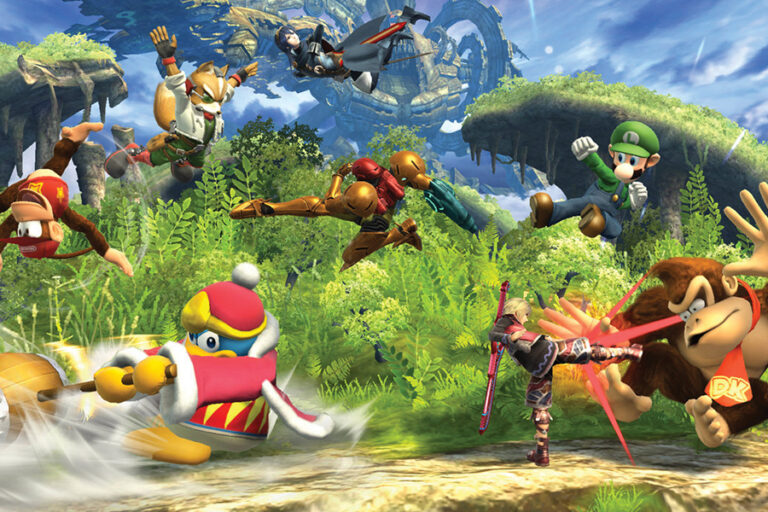
Humor: What your Smash main says about you

The list is just as unorganized as the character select menu

Super Smash Bros. Ultimate is unquestionably the most inclusive Smash game yet, possibly even the best Smash game released (apart from their menus — literally why did they decide to make the most irritating changes they could?). All of us who like to settle our problems through Smash know that there’s one character we each hold dear — our favorite, best or most troll-worthy. Our main. As your premiere authority on Smash in Yolo County, I’ve written a little list that I hope you will enjoy and will not get me sued by Nintendo: What your Smash main says about you.

Ice Climbers — Let’s just say the Lannisters approve

Piranha Plant — Most of your YouTube comments consist of “first”

Inkling — You’re either a squid or a kid

Sheik — You’re still holding on to the past when there are so many newer opportunities

Megaman — After you’re jumpin’, you’re probably gonna do some shootin’

Donkey Kong — The eyes… just don’t look him in the eyes!

Kirby — Constantly in need of that gud succ

Mii Brawler/Gunner/Swordfighter — You need to show your art to the world, but maybe you shouldn’t

Wii Fit Trainer — You’re compensating for your own lack of stretching

Sonic — Be honest: How much do you browse DeviantArt?

Ryu — You still just button mash until the bad man goes away

Ken — The hipster version of Ryu, except you swear your button-mashing is better

Rosalina and Luma — Refer to The Weeknd’s “Starboy”

Zero Suit Samus — You had your sexual awakening through video games

Samus — You enjoy screwing people (out of the win)

Dark Samus — What did I just say?

Villager — You enjoy being Satan incarnate

Isabelle — You enjoy being Satan’s little pet Cerberus

Fox — Your movement consists of mostly barrel rolls to the right

Falco — Your movement consists of mostly barrel rolls to the left

Wolf — You try to do a barrel roll, but just end up helpless off the stage

Pikachu — You’ve been that one down-B spammer guy for too long

Pichu — Just the tryhard version of Pikachu

Meta Knight — Edgelord supreme since 2008

King K. Rool — Edgeguard supreme since 2018

Lucario — You’ve finally come to terms with your breakup with Mewtwo

Mewtwo — You never gave up on your first love

Yoshi — Most friends have a love-hate relationship with you

Ness — You wish you could juggle in real life as well as you do in the game

Lucas — You gave up on juggling and prefer to just float around

Jigglypuff — You need to calm down and get some rest

Mario — The OG, tried and true is the only thing for you

Dr. Mario — The same as Mario, except you wasted your time on a useless Ph.D

Marth — People call you straight edge and to the point

Roy — Loud and proud

Lucina — Constantly trying to prove how good you actually are

Chrom — Same as Lucina, except you don’t want to try as hard

Robin — You still need to ask friends for help all the time

Ike — You used to fight for your friends, but now you just fight with your friends

Link — You name all your Legend of Zelda Characters Lonk

Young Link — You’re convinced the Gamecube controller should be used for every game

Toon Link — In a constant state of middle child syndrome

Mr. Game & Watch — You’re constantly hammered and throwing your meat around

Cloud — You still think trench coats and sleeveless turtlenecks are fashion statements

Pokemon Trainer — The most indecisive person

Snake — The concept of object permanence is lost on you

Wario — WAAAAAAHAAAAA (also, you’re very gassy)

King Dedede — Human trollface

Greninja — You have a constant oral fixation

Pac-Man — You’re constantly losing your keys

Luigi — People who bullied you in high school should watch out now

Peach — You act like a damsel in distress to get what you want

Daisy — Did I stutter?

Captain Falcon — You’re always the designated driver

Bowser — Anytime you’re losing, you make sure no one else is having fun anymore

Bowser Jr. — You’re just. Like. Your father!

Zelda — You were never the damsel in distress, just the artsy one who drew doodles and cosplayed

Ganondorf — There is no 100 percent around you

Pit — She tells you not to worry about other guys

Dark Pit — She tells guys not to worry about you

Diddy Kong — The MacGyver of the group, but you still can’t manage to pick up your trash

Olimar — You microdose LSD and have just accepted your role as The Plant King

R.O.B. — You make sure everyone knows you’re the real Nintendo fanboy

Little Mac — Getting gimped is your kink

Palutena — Not as innocent as you look

Shulk — Your accent only comes out when you’re angry

Duck Hunt — Constantly confused as to why you’re even here, but fun at parties

Corrin — You can’t do anything but be counter to what other people do

Bayonetta — Everything’s up in the air for you

Ridley — Most likely to “YEET” in any given situation

Simon — Moderator of Dank Christian Memes

Richter — Moderator of Dank Christian Memes for Devout Christian Teens

Incineroar — Always throwing shit around

Written by: Conner Shaw — cjshaw@ucdavis.edu

(This article is humor and/or satire, and its content is purely fictional. The story and the names of “sources” are fictionalized.)

The Race to Submit aims to increase financial aid applications

0

California student aid commission motivates high school seniors to submit FAFSA, Cal Grant applications for the 2019-2020 school year

As high school seniors begin to choose a university to attend after graduation, one of the factors in committing tends to be tuition and other fees. A lot needs to be taken into consideration when choosing which school to attend, so the California Student Aid Commission decided to use this as a motivating factor for students to apply for financial aid.

The Race to Submit is a program run by the CSAC to inspire and give seniors that extra push to apply for Cal Grants and the Free Application for Federal Student Aid. On its website, the CSAC exhibits a chart mapping how many students at every California public school have completed the forms. It uses the California Department of Education’s October 2017 census of senior enrollment to offer viewers a percentage and comparison mark to other schools in their area, including its own.

“Coming from a college-prep, private high school, we were very prepared for FAFSA applications when they came around,” said Caroline Crawford, a second-year design major at UC Davis and a former private school attendee. “I wish they would chart private high schools and their percentages because the majority of my high school is on scholarship and relies on these grants or forms of financial aid. It would be cool to see how we do in comparison to other schools in California, public or private.”

The site also incorporates a leaderboard with levels based on how many students attend a specific high school. As the levels get higher, the high schools shown possess a larger student body so that the leaderboard can compare institutions with similar populations. Within each level, the top 10 high schools are recognized for their respective number of applicants.

“We recognize the top five schools at the governor’s office, which allows high schools to reach out and be able to find those resources they may need to increase their number of applicants,” said Catalina Mistler, the deputy director of the program administration and services division. “Some schools do not have the resources to assist their students apply for FAFSA or Cal Grants, and with a leaderboard stating schools that excel in applying, it can help them get those resources. We want to help schools that do not have the funding to help their boys and girls apply, illustrating how helpful it may be for a student to look up their very own school.”

Mistler explained how the program originated in Riverside County and was such a success that they continued to expand in order to incorporate all the public schools in California.

“We used to always have high schools call us to pull out reports for FAFSA completion, so we built out this dashboard,” Mistler said.

The CSAC aims to increase the number of seniors applying for FAFSA and Cal Grants and recognize that first generation students may not be as well informed as others about these types of financial aid. The costs of attending college can add up and become very expensive, even for in-state students; therefore, the commission is reinforcing the benefits of simply submitting an application.

“Pretty much financial aid is based on the college you’re attending — it would not have to do with your admissions until you are admitted,” said Ailen Cornjo, a student administrator for the UC Davis admissions office. “It just reflects how much you’ll receive when attending.”

The Race to Submit will run until March 2 with weekly post updates. The program also offers support for other higher education outreach organizations that aim to provide more financial assistance opportunities.

Written by: Lauren Tropio — city@theaggie.org

A worthwhile debate or a reward to virtue signalers and trolls?

Some Catholics, Native Americans and Black Hebrew Israelites walk onto the Mall…

After video of what appeared to be a group of MAGA hat-wearing Catholic teens taunting a drum-playing Native American went viral, more videos emerged over the next few days that contradicted the original interpretation, presenting a clearer picture of the event.

A wave of people wrote angry social media posts expressing their outrage in response and helped the video clip go viral. It’s just too bad that viral posts were based off people’s first impressions of incomplete information about the stare-down between Native American elder Nathan Phillips and high schooler Nick Sandmann. The overwhelming desire to condemn the high school boys, both to express genuine anger and to posture about morals, is a classic example of virtue signalling. When aggregated together, all these individual acts of virtue signalling created a viral “product,” which Joshua Rothman of The New Yorker wrote is exactly “what our social media platforms sell to us.”

In the Covington Catholic case, it’s obvious that social media succeeded in its purpose to sell us this virality. Social media companies don’t have to do anything — our acts of moral posturing and virtue signalling do all the work for them, regardless of whether or not events are being portrayed accurately. Rothman also warns against this danger of letting our un-fact-checked reactions drive virality, and in turn, letting viral content determine “newsworthiness.” Rothman describes the Covington ordeal as a “pseudo-event” because “it exists primarily so that it can be reported upon and debated,” adding that when “the dramaturgical or rhetorical interest of a debate exceeds the interest of the real events that inspired it, that debate becomes a fantasy — an occasion for dramatizing our values, rather than testing them against the real world. This, in turn, makes our values feel hollow.”  

The question then becomes this: is this debate, and consequently the debate about the debate, even worth having? There are some decent justifications for why the conversations and meta conversations both are and aren’t worth it.

The event was highly symbolic because so many different elements that fuel today’s divisiveness were fused into one neatly packaged, pre-cooked meal of a story. Caitlin Flanagan of The Atlantic aptly compared the event to a Tom Wolfe novel. There were MAGA hats, religion, indigenous people, viral videos, virtue signalling and mischaracterization of events. The more objective videos of the entire encounter show that there is no shortage of fascinating exchanges between all the bystanders and groups present, including the Native Americans, the high schoolers and the Black Hebrew Israelites. Without the stare-down, the concerns of these various groups provide plenty of interesting topics of discussion.

It’s also worth considering the harm that this amplified virtue signalling via social media inflicts. It’s easy to assume that virtue signalling always implies inauthenticity, but that’s not necessarily the case. I’m sure many people who made social media posts about the video were authentic in their anger. And there are probably others who wanted to showcase their virtue.

But these reactions can coexist. When I first saw the video, I was disgusted, and while I didn’t make my own Facebook post about it, I proudly clicked the “angry” reaction on just about every post I saw about the incident. Despite my authentic reaction, I’m also guilty of perpetuating an incomplete narrative about an event that I didn’t entirely understand, simply because, on some subconscious level, I hoped that people would see that I too was outraged. When confronted with more facts, however, many people, myself included, were able to adjust their opinions and realize that they may have rushed to judgement. This type of reflection is a good sign of our ability to overcome the power of virtue signalling, viral videos and sound bites. Celebrating this would likely have more positive outcomes.

On the other hand, continuing to over-analyze every aspect of the event only promotes the dangerous idea that everything that happens on social media is valuable. Prolonging the lifespan of this story also feeds the tribalism that we thought caused it in the first place. For example, it allows Breitbart News to continue generating narrative after narrative of how this proves that everything’s fake news.

It can be beneficial to discuss how the media can learn from this event, but some of the scrutiny goes too far into the weeds, damning the media even more. In Deadspin, Laura Wagner writes that efforts from media outlets like The New York Times to amend errors of their initial reporting is a type of virtue signalling itself because they are saying that admitting wrongfulness means they can always be trusted. Maybe that’s part of it. But to be that cynical of honest attempts to correct errors demonstrates the real problem exposed by all of this virtue signalling in the first place: we can’t believe each other about anything anymore. Jane Coaston wrote in The New York Times Magazine in 2017 that with virtue signalling, “almost any public utterance of concern becomes easy to write off as false — as mere performance.”

It’s important to note that the new videos and information that came to light did not totally exonerate the boys. While Sandmann’s actions seem to be of a less sinister nature than they seemed in the original video, some of the other boys were actually making Tomahawk-chops and being as obnoxious as (in)humanly possible, and Sandmann’s statement about trying to “diffuse” the situation is dubious.

Yet at this point, you may not have known that the boys weren’t 100 percent innocent because the second part of the story has mostly been about the media and its botched coverage of the initial event. This area of focus suggests that perhaps the debate has now overshadowed the actual event and become a “fantasy,” just as Rothman warned.

So, is the debate worth having? I don’t know, but I do know that I’m tired of it. To prevent the debate from becoming a fantasy (if it hasn’t already) and to prevent myself from becoming a fanatic, I will now shut the hell up.

Written by: Benjamin Porter — bbporter@ucdavis.edu

Disclaimer: The views and opinions expressed by individual columnists belong to the columnists alone and do not necessarily indicate the views and opinions held by The California Aggie.

After delays, construction on Third Street is finally wrapping up

0

Project predicted to finish by February, within budget

Originally projected to be completed in November of 2018, the construction on Third Street will finish in February, if weather permits. The project is in Phase V, the final stage of the Third Street Improvements Project, which centers around increasing pedestrian access and bike safety, upgrading infrastructure and overall beautifying of the area.

The initial four phases emphasized underground improvements, such as the continuation of a storm main pipe in Phase IV, while the latter phase primarily focuses on above ground beautification of the Third Street section located between A and B Streets.

“This week, the contractor is setting the street lights and installing landscaping,” said Michael Mitchell, the city project manager for the Third Street project, via email. “After that, the major items of work is paving B and Third intersection and University and Third, and installation of the art piece at University/Third.”

Planning began in 2006, and Phase I initiated in 2012 when the project secured $3.3 million in Federal STIP grant funds, totalling the budget to approximately $11.4 million. Despite the delays, the project will not go over the designated budget.

“The budget was sufficient and a significant portion was obtained from grant funding,” Mitchell said. “We will not experience any cost overruns.”

Ali Moghaddam, the owner of Ali Baba and a member of the planning committee for the project since 2009, noted that more efficiency and attention to deadlines could have prevented the three-month delay.

“I’m just honestly excited for [construction] to be done so I don’t have to worry about this [any]more,” Moghaddam said. “A lot of attention was paid to this, but even with all the money and attention, there’s still places that could’ve been done more efficiently.”

Some obstacles that proved to be challenging included providing parking to Third Street residents and maneuvering machinery in and out of the small area. The one-way car crossing and limited access to Third Street near the Quad District of UC Davis also proved problematic. Aside from the pedestrian sidewalks, much of the street under construction was fenced off, creating narrow walkways for pedestrians.

“Traffic control was a major issue,” Mitchell said. “Third Street is a gateway to the University with many bicycles and pedestrians. These had to be controlled around the construction site in a safe and efficient way.”

Fences and uneven surfaces also lined the storefronts and restaurants of Third Street The city notified passerbyers that businesses were still open and how to safely access them.

“Another challenge was keeping the businesses opened the entire time,” Mitchell said. “Bridges were built for customers to get to the entries when the area beneath the bridges were in construction.”

Signs were posted directing people toward restaurants, their entrances and parking lots for automobiles. Moghaddam was pleased with the provided signage around his restaurant on Third St.

“When they were excavating and doing all the digging and fences were everywhere, they did a pretty good job of creating those white bridges, and they got us those signs for the restaurants and businesses so people could maneuver through it,” Moghaddam said.

However, the construction still impacted the amount of foot traffic for Moghaddam’s eatery, which saw a decrease in sales.

“People still came, but it definitely affected it,” Moghaddam said. “I used a Square Register, and everyday it gives you sales and compares it to last year’s sale on this day. On average, it was 3 to 4 percent down from last year.”

Mason Short, a second-year communication major at UC Davis, lived on University Ave. during the summer of 2018 and frequently passed by Third Street to get to campus. Short noted the early construction hours were a disturbance to shops and residents since Phase IV. Despite the additional signage, Short also expressed that the area was still difficult to maneuver.

“I got used to just because I was walking through it everyday, but definitely when I first started walking through it, everything was confusing,” Short said. “I had to go around certain ways that would take you a lot longer to get places. For certain stores, it was kind of confusing on how to actually get into them.”

Following the tedious construction, Davis residents can anticipate street improvements such as the installation of an art piece, patterned pavers, new bike locks and street lighting, among others.

Written by: Renee Hoh — city@theaggie.org

Champions League action resumes with knockout stages

0

Europe’s premier club competition is the best that soccer has to offer

After a two-month hiatus, the 2018/19 UEFA Champions League returns this week with the start of the knockout stages. The last 16 teams remaining will face off against each other over two legs, with a three-week break separating the home and away fixtures. The victor of each matchup will be decided by the final aggregate score, with away goals scored acting as the tiebreaker.

The Champions League is currently going through a period of transition, marked by some important rule changes.

For the first time in the competition’s history, a video assistant referee (VAR) will be utilized during matches, starting with the upcoming Round of 16. VARs can be used in situations that have a significant impact on the outcome of the game, such as plays involving goals scored, red cards, decisions on penalty kicks and identifying the correct player for a yellow or red card. The technology has already been implemented in the FIFA World Cup, Germany’s Bundesliga, Italy’s Serie A, Spain’s La Liga and other various domestic cup competitions. The English Premier League will begin using VARs next season.

UEFA is considering scrapping the away goals rule, which has come under much scrutiny over the years, but that decision won’t take effect until next season at the earliest. The rule was implemented in the mid-1960s, when it was much more strenuous for a team to travel to away matches, and scoring a goal on the road was a huge accomplishment. In today’s landscape, while teams travel by luxurious charter flights that typically only last a few hours at most, scoring an away goal just doesn’t mean as much. As a result, UEFA is considering getting rid of the rule to discourage teams from playing a more defensive style.

Manchester United vs Paris Saint-Germain

This match-up looked massively different back when the teams were drawn in mid-December.

Manchester United was in the midst of a nightmarish run under former manager Jose Mourinho, who was subsequently fired one day after the draw. Since then, interim manager Ole Gunnar Solskjaer has injected an immense energy into the club, as United has gone 7-0-1 in the Premier league and won both of its FA Cup ties since his appointment.

Solskjaer has been able to unleash the attacking prowess of the Red Devils, led by the likes of Paul Pogba and Marcus Rashford. Both players have scored a half dozen goals apiece in the eight league games and will look to keep the momentum going against Les Parisiens.

Paris Saint-Germain has been nearly spotless this season with the exception of a couple slip ups in the past four weeks, when the team dropped out of the Coupe de la Ligue and suffered its first Ligue 1 loss to Lyon.

PSG will be missing superstar forward Neymar for at least nine more weeks, after the Brazilian suffered a metatarsal fracture in his right foot in a Coupe de France game in late January.

Predicted Winner: PSG

Roma vs Porto

It would be an understatement to say that this has been a strange and frustrating season for Roma. After falling one game short of reaching last year’s Champions League Final, the club decided to sell top goalkeeper Alisson Becker and talented midfielders Radja Nainggolan and Kevin Strootman over the summer. The club was able to take advantage of a relatively easy group to advance to the knockout stages but is fighting to keep a spot in the top-10 in Serie A. Last week, Roma suffered an embarrassing 7-1 loss to Fiorentina to fall out of the Coppa Italia.

Porto has a wealth of experience playing in the Champions League, having participated eight times in the last decade. The team currently holds a slight first place advantage in the Primeira Liga in Portugal, with the hopes of winning the league for the second year in a row.

Predicted Winner: Roma

Ajax vs Real Madrid

Ajax overcame a lot of obstacles to reach the knockout stages, advancing through three qualifying rounds in July and August and going undefeated in the group stage. The team has fared well in Eredivisie play and is always a tough opponent to play on their home turf in Amsterdam. Nonetheless, they are a considerable mismatch for the Spanish giants Real Madrid.

Real Madrid is going through its worst season in 20 years, having lost 10 matches in all competitions. The club has had to adjust to life without Cristiano Ronaldo and deal with the sudden resignation of former manager Zinedine Zidane over the summer. Julen Lopetegui was the man chosen to succeed Zidane but was fired in late October after a catastrophic start to the season. His replacement, Santiago Solari, has led the club to a 9-2-1 record in La Liga since then.

No matter what happens in league play, Los Blancos always seem to get up for Champions League matches. The three-time defending champions should have no trouble advancing to the next round.

Predicted Winner: Real Madrid

Tottenham vs Borussia Dortmund

Up until three weeks ago, nothing could go wrong for Tottenham. The Spurs enjoyed their best ever start to a Premier League campaign and were steadily keeping pace with leaders Liverpool and Manchester City. The team pulled off a miraculous comeback to escape the group stage of the Champions League and also found itself 90 minutes away from heading to the Carabao Cup final.

In a span of 14 days in January, Tottenham’s season was turned upside down, as attacking stars Harry Kane and Dele Alli both sustained injuries in back-to-back games against Manchester United and Fulham. One week later, the team was knocked out of the Carabao Cup and FA Cup within four days. Both players are hoping to return to action at some point before the end of the month and could potentially be available for the second leg against Dortmund.

Borussia Dortmund currently holds a seven-point lead atop the Bundesliga and has been firing on all cylinders for the majority of the season. The team’s dreams of unseating Bayern Munich as the champions of German football for the first time since 2012 are starting to become a reality. Forward Marco Reus, the second-leading goalscorer in Bundesliga, leads a lethal attack along with midfielder Jadon Sancho.

Predicted Winner: Borussia Dortmund

Liverpool vs Bayern Munich

Bayern Munich has struggled this season in the Bundesliga but still sits within striking distance of Dortmund in second place. Veteran striker Robert Lewandowski leads all scorers in the Champions League with eight goals thus far, but will have to play without fellow attacker Thomas Müller who is suspended for both legs of this match up.

Liverpool was leading the Premier League for most of the season in search of its first title in 29 years but has seen a dip in form as of late. The Reds narrowly slipped by Napoli to escape the group stage, which propelled them to a wildly successful 8-0 run in December. A close 2-1 loss to Manchester City in early January ended the Reds’ undefeated run in the Premier League and has catapulted the team into a rough stretch that included two shaky wins and a pair of consecutive draws.

Liverpool will need one of those special European nights at Anfield next Tuesday to give them confidence to head into the second leg at the Allianz Arena. The Reds will benefit from the return of center back Virgil Van Dijk in that second leg, after he serves his one game suspension for getting a yellow card against Napoli.

Predicted Winner: Liverpool

Lyon vs Barcelona

Lyon has been in good form lately, handing PSG its first Ligue 1 loss two weeks ago and losing just once in 2019. The club pulled off a shocking road win over Manchester City early in the group stage and got another point from them later on but will need a miraculous upset to take down mighty Barcelona.

As expected, Barcelona is leading La Liga and cruised through the Champions League group stage without breaking a sweat. The team was looking to avenge its historic loss against Roma in the semifinals last season, when it let a three-goal lead slip away in the second leg. Barcelona, led by Lionel Messi, shouldn’t have much trouble dismantling Lyon on the way to its 12th consecutive appearance in the quarterfinals.

Predicted Winner: Barcelona

Atletico Madrid vs Juventus

Juventus, the only team left in Europe with an unbeaten mark in league play, has enjoyed unparalleled success this season in Serie A, boosted by the summertime arrival of Cristiano Ronaldo. Nonetheless, the Italian side showed some vulnerability in the group stages with shocking losses to Young Boys and Manchester United. Overall, Juventus has come excruciatingly close to tasting Champions League glory in recent years but lost both of their appearances in the final since 2015.

Atletico Madrid knows the struggle of heartbreaking defeat in the Champions League better than most teams in Europe. Ronaldo, in his time with Real Madrid, has tortured Atletico in this competition, knocking them out four times in the past five years. The Portuguese legend helped deliver an extra time win in the 2014 final and netted the game-winning goal in a penalty shootout victory in the 2016 final.

World-class striker Antoine Griezmann and his teammates will hope to change their fortunes with Ronaldo wearing a different jersey this time around. Atletico has proven to be a resilient bunch in the face of adversity and always has a chance with superstar goalkeeper Jan Oblak in front of the goal.

Predicted Winner: Juventus

Schalke vs Manchester City

Manchester City continues to go toe-to-toe with Liverpool atop the Premier League, in search of its second title in a row. Despite having unbelievable success in England recently, the Champions League is the one competition that has always evaded the Citizens, who have only made it past the round of 16 twice in the last decade. A victory in this year’s tournament would be huge for the legacies of all-time team greats like forward Sergio Aguero and center back Vincent Kompany. Manchester City would need a meltdown of epic proportions to prevent them from moving on to the quarterfinals.

Schalke has taken a significant step backwards this season in the Bundesliga, currently sitting in 12th place with a mere 22 points. The team was fortunate enough to end up in Group D, by far the easiest group in the Champions League this year, but really isn’t worthy of a spot in the knockout stages.

Predicted Winner: Manchester City

Written by: Brendan Ogburn — sports@theaggie.org

Hummingbirds of a feather feed together

UC Davis researchers use tiny transponders and urban feeders to study hummingbird behavior

Researchers at UC Davis studied the habits and visits of Anna’s hummingbirds and Allen’s hummingbirds to urban feeders in an effort to further understand their behavior and health. The feeders were equipped to beep every time a hummingbird visited, giving researchers information about the frequency and duration of the visits without disturbing the hummingbirds’ natural routines.

“We used Passive Integrated Transponders, which is basically a transponder in a tiny 8mm glass bead,” said Ruta Bandivadekar, a visiting research scholar in the UC Davis School of Veterinary Medicine. “The challenge is the weight of the transponder as you cannot exceed 3% percent of the body weight of the bird while marking it by any method. These tags were 0.01gms in weight so well within the limit. Because the tags were inserted subcutaneously, understanding the anatomy is very important so as to not puncture any air sacs or not injure the backbone of the bird.”

Passive Integrated Transponders, or PIT tags, transmit the unique tag number when in the range of the receiver antenna. The antenna picks up the unique tag number and stores the corresponding information.

There was data corresponding to approximately 65,500 feeder visits. Combing through that data proved to be a challenge, but the researchers developed a method to quantify the duration of each visit and detect if multiple hummingbirds were using the feeder at concurrent times. This allowed the researchers to find out which hummingbirds visited the feeder at the same time and which ones avoided each other. This new feeder system could lead to better analysis of other behavioral patterns.

“Implementation of our new feeder system on a larger scale in a region could help us understand the seasonal dynamics of [the] hummingbird population,” said Pranav Pandit, a researcher at the UC Davis EpiCenter for Disease Dynamics. “The system will be able to give us a closer look at our questions related to the ecology of these tiny wonders from the avian world.”

These transponders are expected to help improve future research on hummingbirds as well.

“There is a lot to learn about hummingbirds, and by using miniaturized technology, we can really expand our understanding of what these avian pollinators are doing,” said Lisa Tell, a professor at the UC Davis School of Veterinary Medicine. “Establishing methods for gathering baseline data is really important and could potentially help conserve and protect these amazing birds in the future.”

Written by: Kriti Varghese — science@theaggie.org

Volleyball’s Mahalia White battles back

Sophomore outside hitter discusses her cancer journey and her gradual return to the court

After a spectacular freshman year performance in which she led the UC Davis volleyball team in number of kills, Mahalia White was named Big West Freshman Player of the Week six times and became the first player in program history to be awarded Big West Conference Freshman of the Year. It seemed like the sophomore outside hitter Mahalia White could not be slowed down. That was until she received a diagnosis that changed her life.

Dealing with constant back pain near the end of the 2017-18 season, White assumed the pain was simply an injury resulting from her hours of hard work and training throughout the season. After the season was over, however, an MRI revealed cancer, specifically stage 4 Hodgkin’s lymphoma.

“When I first had my diagnosis I was very naive about it and thought we were going to get this [treatment] done very fast,” White said. “Also when I first heard, I thought that was going to be the end of my career because at first they didn’t know what kind of cancer it was. When they told me it was curable I knew it would be a long process, but now it feels like I never went through it. I know I have to be patient with recovery. It’s a blessing I can still do what I love to do.”

According to the American Cancer Society, people diagnosed with stage 4 Hodgkin’s lymphoma have around a 65 percent five-year survival rate. It would take time off of the court, a significantly lightened course load and numerous rounds of chemotherapy, but White was told she would eventually be able to return back to the sport she loves. For White, it was about being optimistic throughout her chemo treatment as well as in her current remission process.

“Now I know that I can get through anything,” White stated. “I experienced the worst thing I’ve ever been through. The little soreness I have now is worth it compared to all the time I was sick. I think to be optimistic is just that I worked so hard to get to where I am now, so I have to keep going.”

With her support system of her parents, her two brothers, her teammates and other UC Davis athletes, White was able to stay strong throughout the treatment process. UC Davis volleyball Head Coach Dan Conners and 40 UC Davis athletes from other sports shaved their heads in support of White and raised money for children’s cancer research during a St. Baldricks Foundation fundraiser. White’s mother, a breast cancer survivor who finished her treatment five months before White’s diagnosis, was one of the outside hitter’s biggest supporters, always reminding her to keep fighting.

“My family are all very close and we have a very close bond,” White said. “My mom would come visit me every couple weeks, and my brothers and dad would always check up on me to see how I was. My friends in Davis and at home did the most for me and that kind of stuff, like calling me to see how I was […was] the most sentimental to me. At that time, I just needed people to keep my mind off things, so it was good to have people be around.”

Now, just over a year since her first diagnosis, White is in remission. Recent tests and scans look nothing other than promising for the volleyball star. Now, the sophomore is back with a full class schedule, biking to classes and slowly beginning to get back onto the court. Her current training regimen includes daily conditioning and minor technical skills practice to slowly ease her way back in before the beach volleyball season begins in early March.

“Now that I am back into it, it feels good to have things keep me occupied throughout the day,” White said. “It feels good to exercise and continue to play volleyball with my friends and just have stuff going on.”

While her first goal is still to pursue a professional volleyball career, her experience and help from nonprofit organizations such as Keaton’s Child Cancer Alliance and St. Baldrick’s opened her eyes to a possible future career that she had never considered.

“For a long time I was just thinking about the right now, and now I actually think about my future a lot more,” White said. “I want to work in sports, but I want to work with nonprofit organizations that worked with injured athletes or athletes who are going through treatment because that is what really helped me to stay positive. I just want to see how far I can go with volleyball and how far that takes me.”

As far as the biggest life lesson that she took away from the process, White believes she came away with a realization about her mental strength.

“I definitely learned how to be mentally strong,” White said. “For a long time, I lost all my weight and lost my strength to do a lot of things, so being mentally strong will take you further than physical strength.”

If one thing is for sure, it’s that White will never stop pushing. Fans and community members alike are waiting for the day when she will step back onto the court and continue to show everyone her fighting spirit.

Written by: Ryan Bugsch — sports@theaggie.org

Equestrian wins first ever competition against No. 9 Delaware State

Aggies top Hornets 10-5 in inaugural meet

UC Davis Equestrian took down No. 9 Delaware State 10-5 in its first ever National Collegiate Equestrian Association meet at the UC Davis Equestrian Center last Thursday. Two UC Davis riders also earned Most Outstanding Player awards for their performances.

The equestrian program has come a long way in a very short time. The UC Davis athletics department announced the addition of equestrian to its Division I offering last March.

“We’re ecstatic, I couldn’t have asked for a better day,” said Head Coach Jessie Weisinger.

It was no small feat for UC Davis to host an event of this caliber given the considerable preparation involved in NCEA competitions.  

“To host our first event and for it to go as smooth as it did, it’s just icing on the cake to walk away with the [win],” said Weisinger.

Assistant Coach Jill Humphrey, a 2004 UC Davis alumna, said it was exciting to see the program’s first meet on Thursday. She participated on the equestrian club team back when she was an undergraduate.

“I think it makes it extra special to be back at UC Davis and see all the constant improvements and developments,” Humphrey said.  

The UC Davis-hosted competition included three events: equitation over fences, equitation on the flat and horsemanship. Reining was not included but will be featured in UC Davis’ next home competition against Fresno State in March.

The host school provides the horses for the competition. This means that competitors from the visiting team are typically not familiar with these horses, giving the home team a slight edge in terms of familiarity with the animals.

Five horses are randomly assigned to a pair of riders, one from each team. Riders are allowed a warm up before their event starts to feel out the horse, then one rider from each school gets a chance to run the pattern with the horse.

In equitation over fences, senior hunter seat rider Lily Ulrich snagged one of the two UC Davis MOP awards with a score of 87.0, the highest of the 10 riders competing in the event. Riders are judged based on how smoothly they complete the course, including the consistency of the jumps. UC Davis took four of the available five points in this event.

For the horsemanship event, senior horsemanship riders Olivia Russell and Katrina Macalello secured two points for the Aggies. Horsemanship is one of two western events where the rider must maintain a flawless composure and strive for elegance within a preordained pattern. The more effortlessly the rider can execute the pattern, the higher the judges will score them. This is the only event that Delaware State edged out UC Davis, taking three points out of five.

Going into the equitation on the flat event, UC Davis led 6-4. Freshman hunter seat rider Keely Laughlin took the top spot and the second MOP award with a score of 85.0. This event requires that the rider guide the horse through a pattern, and the judges then determine how well the horse executed the pattern. UC Davis secured four of the available five points in this event.

“We tried our best, and I’m so happy because we are literally 20 people and I know a lot of teams are 60 people, so it’s pretty impressive,” Laughlin said. “I’ve showed for a long time so I wasn’t nervous, I focused and wanted to perform my best for the team.”

To the untrained eye, it could be difficult to distinguish casual riding from the nuances of collegiate equestrian. There are patterns and intricate moves that the rider must execute. Riders from each team are paired with a horse and both riders go head-to-head with each other. This format shows the judges what each rider has in her arsenal. Some riders could make certain mistakes in a pattern, while other riders execute that same pattern flawlessly, revealing skill gaps while also evening the playing field.

Russell explained how she competed that day in horsemanship.

“I drew a horse that I’ve ridden before, I got to watch the girl I went head-to-head with ride,” Russell said, noting that it could potentially be a disadvantage to draw the second ride because the horse might get tired of doing the same pattern.

“That’s something that Coach [Weisinger] tells us when we go in for our four minutes is to get the horse back on your side. If the rider behind you was doing spins or flying lead changes over and over again, just get the horse back on your side.”

The NCEA refers to horses as “living piece[s] of equipment.” While this is technically correct, it doesn’t fully explain the dynamics going on between a horse and its rider as well as the passion for horses that all riders share.

“In this sport we have a teammate with us at all times,” Russell said, referring to what it’s like to compete in a sport where another species has an equal role in success. “But this teammate has a mind of it’s own, we can’t talk, so we have to find a middle ground to talk to them.”

The victory over Delaware State has flushed away much of the building anxiety the Aggies had about entering the fray of Division I equestrian competition.

“We’re so fresh and we’re just the underdogs anywhere,” Russell said. “We all said, ‘we don’t want to be looked down on, we have to prove ourselves.’ We were able to prove that we’re here to make a statement.”

The Aggies will travel to Texas later this month for a three game road campaign against some premiere equestrian colleges.

“This month is going to be fast and furious,” said Weisinger.

The Aggies will take on No. 4 Texas A&M on Feb. 16, before going into a grueling two day stretch the week after, against No. 6 TCU and ending against No. 2 SMU.

Weisinger got her start in college equestrian at Texas A&M, her alma mater, where she was a student athlete and later began a four year stint as assistant horsemanship coach, “Obviously there’s a lot of emotions going back home, my family and friends will be there. But they’ll be wearing navy blue and gold and they’ll be cheering for the UC Davis Aggies.”

“It’ll be good to see everybody, all the A&M girls,” Weisinger said. “It’ll be tough, but it’ll be good.”

Written by: Bobby John — sports@theaggie.org

Review: T-Kumi Ramen

New ramen restaurant hits the spot

T-Kumi Ramen had its soft opening mid-January in West Davis. Located on the second floor of the Westlake Plaza shopping center, T-Kumi Ramen offers quick-service ramen, rice bowls, snacks and boba tea.

The restaurant’s ramen is customizable: there are four different types of broth to choose from and ten choices for protein including chashu, crispy tofu, garlic prawn and soft shell crab. Other additions are available as well.

The serving sizes are big and this extends to the protein as well, with a generous amount of tofu, seafood or meat given. The broth is rich and flavorful, and the noodles are satisfyingly firm. The crispy tofu is well-seasoned and tastes delicious on its own or added to the ramen.

T-Kumi Ramen also offers rice bowls and a variety of other snacks, such as the T-Kumi Green Onion Pancake, takoyaki, bacon cheese sticks, french fries and several others. Along with classic milk teas, T-Kumi offers popular toppings for boba tea, as well as frozen tea, coffee and fruit drinks.

The food is decently priced, ideal for college students and community members alike. Ramen with tofu costs $9.75, and ramen with seafood costs a few dollars more. T-Kumi currently offers three combo deals, providing a discounted price for food and drinks purchased together.

While located far from the bustle of downtown, T-Kumi Ramen is close to many apartment complexes that are popular with students. Westlake Plaza is also home to a grocery store and several other restaurants and businesses, including the popular boba cafe Mandro Teahouse. T-Kumi Ramen, with its large seating area and casual environment, seems to be in competition with Mandro Teahouse as a hangout spot for students. T-Kumi Ramen is emerging as a friendly place to study, with customers ordering and paying upfront, where the WiFi password is displayed at the register.

Though it has not yet had its grand opening, T-Kumi Ramen has received predominantly positive reviews on Yelp and Yahoo rating websites.

T-Kumi Ramen is great for a quick bite at a reasonable price. Though it’s a 10- to 15-minute drive from campus, Westlake Plaza has its own parking lot, making T-Kumi Ramen an attractive alternative to the traffic and parking mess of downtown Davis. Soft-opening hours are 11:30 a.m. to 10 p.m. Tuesday through Sunday.

Written by: Cheyenne Wiseman — arts@theaggie.org