55.5 F
Davis

Davis, California

Tuesday, December 23, 2025
Home Blog Page 460

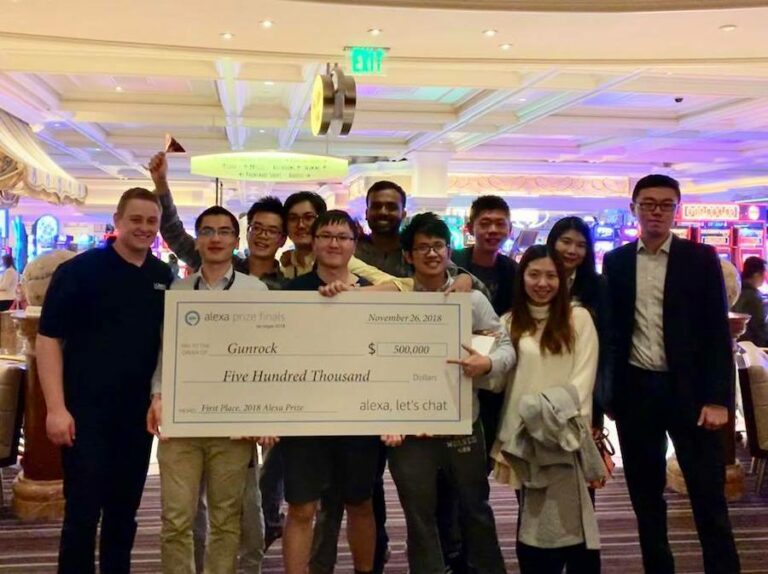
Team Gunrock Wins the 2018 Amazon Alexa Prize

A team of UC Davis students wins the $500,000 prize for its chatbot Gunrock

After nearly a year of hard work, the UC Davis student team that participated in the Amazon Alexa Prize 2018 competition won the $500,000 prize for their chatbot, Gunrock.

Gunrock was assessed on its ability to hold a conversation on a variety of topics and managed an average of nine minutes and 59 seconds in the final rounds of the competition. The team improved the chatbot by having humans converse with it, developing its ability to handle language.

“I think it is our more advanced language understanding components,” said the team’s leader, Zhou Yu, an assistant professor in the Department of Computer Science at UC Davis. “Basically, it understands the user’s utterance better.”

To make the chatbot converse more like a human, the team added disfluency and speechcon, the ability to say certain things expressively, to the chatbot response. The chatbot, however, had to be prepared for more than just small talk.

The judges of the competition had different areas of expertise, so the team had to prepare the chatbot for longer, more complicated sentences than what would constitute colloquial language.

“To extract the information from the long sentences correctly and realize what’s the people’s intent became more important,” said Chun-Yen (Arbit) Chen, a second-year computer science graduate student. “Moreover, the judges come to judge how coherent and engaged you are, and will turn your bot down right after they find that it is not coherent or engaged. This means that if you make mistakes in the middle of the conversation, they can easily ask you to stop the conversation.”

In order to prepare Gunrock for more challenging conversations, the team created advanced dialog intent detection models, sentence segmentation, opinionated content models and knowledge graphs. They also implemented new research, providing upgrades to Amazon’s conversational frameworks.

Team Gunrock has plenty of future plans, including potential applications in medicine.

“Team Gunrock plans to compete again,” said Kevin Jesse, a second-year computer science Ph.D. student at UC Davis. “We hope to boost our conversational rating to over 4.0 on a 1-5 Likert scale with an average conversation time of 20 minutes. Participating in the Alexa Prize has opened our eyes to many current difficulties in modern dialog systems.”

Written by: Kriti Varghese — science@theaggie.org

Plastic to Limit Cross-Contamination in Produce Bins

A new plastic developed by UC Davis could prevent the spread of dangerous microorganisms.

When someone walks into a supermarket and buys an apple, the purchase is the final step in a complex supply chain that brought the apple to the shopping bag. Every time the apple touched a surface during its journey, the fruit encountered organic material from previous produce; every contact held the potential for cross-contamination. UC Davis researchers are developing a unique plastic that could help combat this cross-contamination problem.

The researchers are combining previous developments of antimicrobial materials, materials that kill microbes, and antifouling materials, materials that repel microbes, to create a plastic film that could be placed on surfaces that come into contact with produce. They are focusing on the first interaction produce has with the supply chain: the bins that transport the produce from the farm to the processing facility.

“There is an indication that, despite best scientific practices, the totes and the bins which are used to transport fruits and vegetable from the farm to the processing facility, and within the processing facility sometimes, are very difficult to clean, so microbes are left on them,” said Nitin Nitin, a professor of food science at UC Davis and one of the lead investigators on the project.

This is a serious problem because if one crop is contaminated with harmful bacteria, the reused transport bins could potentially spread the pathogens to other produce.

To solve the problem, the food science researchers formed a unique partnership with UC Davis textiles and clothing professor Gang Sun. The current team is adapting an antimicrobial fabric technology developed 20 years ago by UC Davis textile scientists, for plastics.

“We are using the same chemistry we developed 20 years ago and putting it in plastic films for food contact materials,” Sun said.

The scientists create the plastic by taking pre-existing plastic used in packaging and adding a special monomer. This monomer makes the plastic antimicrobial because it allows chlorine, a molecule that kills organisms, to bind to the surface of the material. Farmers and producers will be able to “recharge” the plastic by spraying it with bleach, a commonly available chlorine solution. Although the antimicrobial function of the plastic is effective, it has limitations. Notably, when organisms are killed by the chlorine they will often stay on the surface of the plastic and new organisms can live on top of the dead layer unencumbered.

To combat this issue, the researchers are also adding another anti-fouling layer on top of the base.

“We have this plastic with the function that kills the bacteria, so we build up another layer on the surface which repels microorganisms,” Sun said.

The anti-fouling layer will help keep the plastic free of potentially dangerous organic material by using the special chemical properties of a molecule called a zwitterion.

“There is a zwitterion combination, it’s a chemistry where we have a positive and a negative combined,” Nitin said. “This means it is very difficult for microbes to bond to the surface.

If an organism is able to make it past the anti-fouling layer, the chlorine will kill it. The researchers stated that the anti-fouling layer will also help clear away any dead microorganisms, preventing a dangerous build-up of bacteria on top of dead layers.

When the plastic is ready to be implemented it could be an important way to limit cross-contamination in the reusable plastic bins. Still, according to Keith Warriner, a food scientist at the University of Guelph in Canada, the plastic will not completely solve the cross-contamination problem.

“It would help prevent cross contamination, but it is not a substitute for sanitizing between uses,” he said.

So far, the researchers have created a plastic prototype in the lab, but they are working to improve and test the material. They hope to have a viable, tested preliminary product by the end of next year.

Written by: Peter Smith – science@theaggie.org

Inside the Game: UC Davis Club Ice Hockey

0

Senior captain Kazunori Machida gives insight into team, program

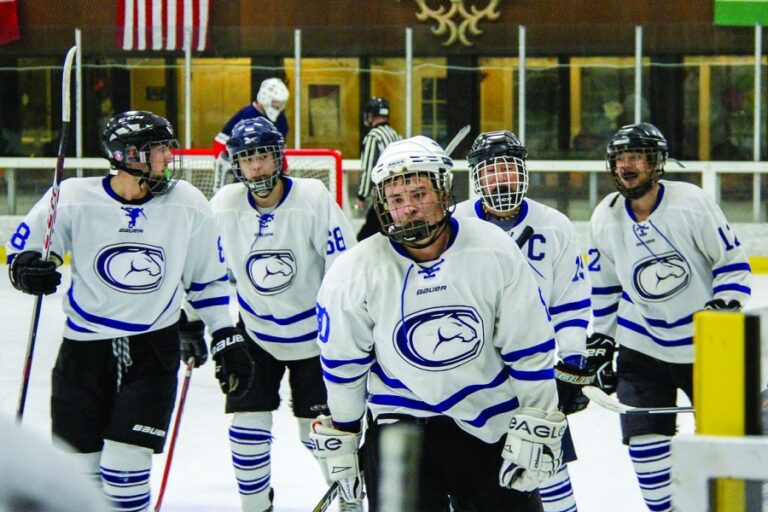
Though many students may not know, UC Davis has a club ice hockey team. The team is composed of both male and female students from all years and is supplemented by a practice team for beginning players. Even for those who can barely skate, this group of student athletes will eagerly welcome anyone who wants to try a new sport.

“It’s great we have a practice team so that beginners or people who have never played before can still learn.” said senior captain Kazunori Machida, also known as “Kaz.”. “[We] play full contact so it’d be unsafe for a new player to be out there.”

As of now, the competitive team consists of 13 players, complemented by another six on the practice squad. The team practices a short drive away at the Vacaville Ice Sports rink twice a week and play games there on weekend nights starting in Fall Quarter.

According to Machida, the practice regimen is intense but not unbearable.

“We love playing and we get to play a game or two every weekend, so it’s not a big deal.”

Machida described one disadvantage that the Davis team is, unfortunately but inevitably, plagued by every year: the quarter system. Because this is a club sport, the team doesn’t start practicing until school starts in late September, while most other teams on the semester system are practicing as early as mid-August.

“We had a pretty rough start to the year, but with the four-win streak, things have kind of turned around,” Machida said. “We’re at a disadvantage to start the year, but once we get going we’re fine.”

The team started off on Oct. 12 against Santa Rosa Junior College, which began its school year a month earlier, and unsurprisingly lost 17-3. Fast forward three months and the UC Davis team is now firing on all cylinders, riding a five game win streak into February, with the team’s most recent victory coming against Stanford on Saturday night.

Machida reflected on the team’s identity this year, specifically.

“[The players] are all in different grades which probably helps our team come together,” Machida said. “The Stanford team only has 10 players and we play full 20 minute periods so we should win, honestly pretty easily.”

Win easily they did indeed. Machida racked up two goals for UC Davis on the way to a decisive 6-1 victory. As the mid-February playoffs loom, this Aggie squad is getting hot at exactly the right time.

The team’s next home game is scheduled for Feb. 9 against UC San Diego. After that, the team will hit the road for two highly anticipated rematches against UC Santa Cruz and Santa Clara University, as both matches went into overtime in their first meeting. The team is yearning to continue its win streak and dominate all the way through playoffs.

Written by: AJ Seymour –– sports@theaggie.org

Davis Anime Club offers active community for anime fans

0

With socials events, screenings, convention, Davis Anime Club provides its members with many opportunities for involvement

The blue A-frame in front of the Memorial Union with the face of a friendly anime character is brightly visible to all. Catching the attention of passersby, the Davis Anime Club advertises itself in busy areas of the university with fliers on nearly every bulletin board in the most populated lecture halls. The Davis Anime Club (DAC) allows students to fully immerse themselves into the world of anime and Japanese culture.

Kwok-Wai Hanson, a fourth-year communication major and the president of the Davis Anime Club club, explained that the organization is able to offer a good anime experience for fans at any interest level.

“Davis Anime Club has a rich, diverse group of members, ranging from casual fans who may be familiar with a few anime to dedicated fans who are heavily engaged,” Hanson said.  

Meetings for the club are held twice a week in Wellman 126 from 8 to 10 p.m. There, anime screenings are shown featuring fan-favorites, classics and even new showings. The club also hosts workshops and activities with occasional guest speakers related to the anime industry.

“We also work closely with publishers and licensors to bring screenings right here,” Hanson said. “For example, we screened ‘A Silent Voice’ on campus during our welcome week rush.”

On the weekends, DAC can be found hosting social events at local hangouts, such as the Davis Farmers Market or Kobe Mini Mart. The members also sometimes travel to Sacramento to watch new anime films in theaters and even facilitate group trips to anime conventions, such as SacAnime, Fanime and Crunchyroll Expo.

Davis Anime Club is also known for hosting DAiCon, a huge single-day anime convention that has been on hiatus since 2013. After six years, DAC is reviving the spirit of anime at DAiCon on Saturday, April 27. The convention will have gaming areas, panels and performances, an artist alley and even guests of honor that include voice actors.

“We’re also fortunate to have industry leaders including staff from Crunchyroll attending and holding workshops about their experience in the industry,” Hanson said.

It is common for many attendees to cosplay at the event and dress up as their favorite anime characters. There will be many photo opportunities and backdrops on campus to document the special day.

Being a part of Davis Anime Club is not just about watching anime, however, but appreciating the culture and art that comes along with it.

“We are a very welcoming, social group of people where casual viewers, hardcore fans or even those who have never watched anime before can feel right at home,” Hanson said.

Being in Wellman with more than 75 students every week is something that Hanson cherishes greatly. The club has provided Hanson with the opportunity to meet new people who share the same interests and also to connect with people at local conventions.

“There is something special about being able to experience the emotions, laughter, sorrows and excitement of a show by watching with other students,” Hanson said. “I don’t think I’ll be able to do that with so many people after I graduate.”

Written by: Sierra Burgueno – features@theaggie.org

How Tulsi Gabbard threatens the Democratic status quo

A populist progressive enters the presidential race

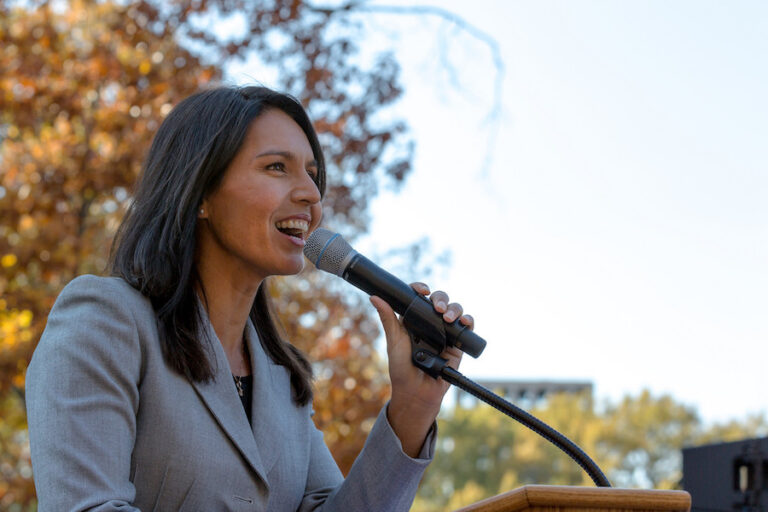
You may have missed it among the many Democrats who declared their presidential bids this month, but Hawaii Congresswoman Tulsi Gabbard has voiced her intention to run for the highest office in the land — and she may be the most interesting candidate yet.

A young, charismatic woman of color from a multicultural background, Gabbard checks all the boxes for 21st-century political appeal. Her father is a Hawaii state senator and a Catholic of Samoan descent, while her mother, of European descent, is Hindu. Gabbard eventually became the first Hindu lawmaker in congressional history and is currently one of four female combat veterans in Congress. Gabbard offers a brand of progressive, yet often bipartisan, politics. Most Democrats, however, have all but ignored her candidacy, and when she comes into frame, much of her coverage is negative. It begs the question: just what has she done to invoke such a response?

Gabbard resigned as a Vice Chair of the Democratic National Committee in 2016 to endorse Bernie Sanders for the Democratic presidential nomination — perhaps her most egregious offense in the eyes of the party establishment. It was Gabbard’s refusal to endorse eventual candidate Hillary Clinton, who allegedly ran a corrupt campaign, that speaks volumes to her ideological commitment. Unsurprisingly, Gabbard’s other attempts at crossing party lines — from her anti-war meeting with then President-elect Donald Trump to her reluctance to assign one-dimensional partisan blame for the current government shutdown — have likewise drawn the ire of Democratic Party elites. It’s her ability to reach across the aisle, a rare skill in today’s polarized political atmosphere, that provides her with broad political appeal.

Gabbard’s foreign policy is also among her most appealing platforms to voters. Gabbard, who has described herself as a “hawk on terror, dove on regime change,” has drawn extensive criticism for her 2017 meeting with Syrian President Bashar al-Assad. The purpose of that meeting, to broker a humanitarian resolution to the Syrian Civil War, was quickly eschewed from the narrative of those who wished to paint Gabbard as an Assad apologist — a ridiculous accusation considering her previous comments characterizing the Syrian leader as a “brutal dictator.”

Ironically, it’s Gabbard’s diplomatic approach to foreign policy, which now draws heavy party criticism, that was once a mainstream position in the Democratic Party. In 2004, Democratic frontrunner John Kerry was heavily critical of what he saw as the Bush administration’s aggressive, unilateral approach to a regime change in Iraq. In 2008, eventual President Barack Obama stated his willingness to meet with the leaders of countries such as Iran, Cuba and North Korea. Gabbard’s opposition to the consistently disastrous practice of regime changes in the Middle East should be a commonsense proposal among progressives. Yet she is criticized for these positions by an increasingly hawkish Democratic Party, a party that seems ever more concerned with petty political spats than legitimate policy proposals. Nevertheless, Gabbard has remained ideologically committed to ending America’s various foreign policy blunders. In 2017, she introduced House legislation aimed at ending America’s funding of suspected terror groups via the aptly named Stop Arming Terrorists Act.

Elsewhere, Gabbard’s platform outlines a compelling variety of progressive causes. While foreign policy has been the centerpiece of her campaign, she has also placed heavy emphasis on criminal justice reform, health care access and climate change. Gabbard’s congressional record on environmental issues is particularly strong; she has received endorsements from the Sierra Club and the League of Conservation Voters and played a key leadership role in the protest against the Dakota Access Pipeline.

In a crowded primary field, it remains to be seen just how far Gabbard’s insurgent, anti-establishment campaign will go. But at the very least, it can be assured that Gabbard’s emphasis on foreign policy reform will help realign the tendencies of a hawkish party establishment, while her campaign organization will pave the way for a legitimate left-populist movement in the post-Trump era. Irrespective of your views, Congresswoman Gabbard is worth your attention. Don’t count her out.

Written by: Brandon Jetter — brjetter@ucdavis.edu

Disclaimer: The views and opinions expressed by individual columnists belong to the columnists alone and do not necessarily indicate the views and opinions held by The California Aggie.

Boateng drafted into the MLS

0

Recent UC Davis Graduate Roy Boateng drafted No. 16 overall by New York Red Bulls

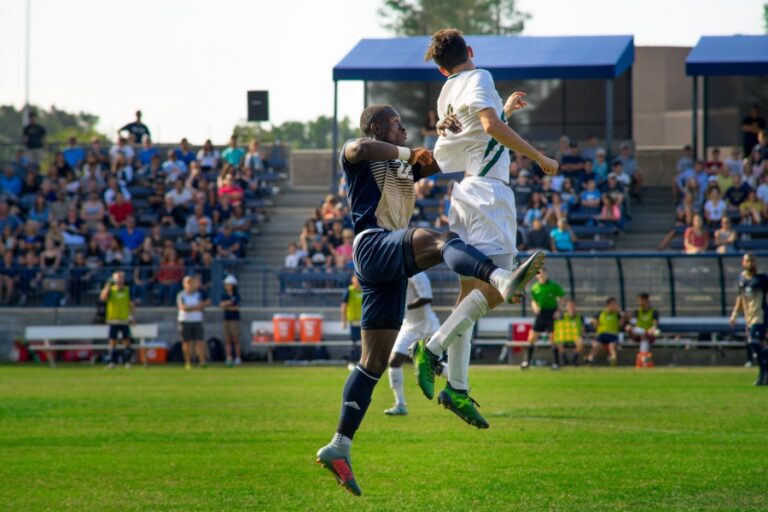
Senior defender Roy Boateng was drafted in the first round of the MLS Superdraft at No. 16 overall by the New York Red Bulls on Jan. 11. The recent managerial economics graduate was born in Accra, Ghana and came to the states as a young boy. Boateng is the third Aggie alumni drafted into the MLS; he earned one of 60 invitations to the MLS combine in early January and participated Jan. 3 through Jan. 9. Before the draft, the New York Red Bulls acquired two draft picks in a trade with FC Cincinnati for $100,000 according to the Red Bulls website, one of which was used on Boateng.

Boateng racked up a number of accolades in his four year collegiate career, earning All-Big West Conference awards in all four seasons and first-team honors in his last two. As captain of the men’s soccer team, Boateng led the Aggies and the defensive line to eight total shutouts in their recent 2018-19 season, tying the mark for most shutouts in a season since the program was brought up to the Division I level. The Aggies made it to the Big West tournament championship game back in November, but lost to UC Riverside in penalty kicks.

The California Aggie had the chance to speak with Boateng about his journey to the draft, and his feelings on playing in the MLS.

Aggie: Growing up in Ghana, what made you fall in love with soccer and when did you realize that this might be what you wanted to do as a career?

Boateng: So in Ghana, soccer is the national sport, it’s in everyday life and it’s a part of the culture. Since when I could grasp what soccer actually was (rules, etc.), I fell in love with it. I played with the neighborhood kids and it was just fun. When I got to the states, I joined soccer teams to assimilate and make friends, but I also knew I had a love for it and I have been playing ever since. It has continually been fun, and from when I was a little boy, I knew this was what I always wanted to do.

Aggie: Recently graduating from UC Davis, can you speak a little about what playing at Davis did for your progression as a player?

Boateng: Davis has been wonderful to me, and I have enjoyed every moment there playing with those guys and under Coach [Dwayne] Shaffer. [He] helped me develop as a player and as a person. Coach Shaffer helped me do that by putting me in a leadership position on the team so I think I grew a lot there. Playing so many minutes helped me gained experience. Outside of soccer, Davis is a wonderful place and a wonderful community, and everyone was just really pleasant.

Aggie: Going into the MLS combine, what were you feeling? Nervous to try out? Or excited and ready to show off your skill?

Boateng: When I got the invite, I was very happy and excited to go and play. I was the only person in my conference to get that invite and it meant a lot to me, and I went in with something to prove to represent our conference and my school. I was very excited to showcase myself.

Aggie: Overall how did you feel the combine went? Did you have any idea what teams were interested in drafting you after you completed the combine?

Boateng: When I finished, I felt like I did well and I was happy with my performance. After it was over, I knew I defended well and showcased what I did on the field. I had some peace to a certain extent, and there is always going to be some anxiety leading up to the draft because you never know what will happen, but I was happy with my performance at the combine.

Aggie: What was that feeling like when you were drafted in the first round by the New York Red Bulls?

Boateng: I was filled with every possible good emotion at once. It was incredible. I got up out of my seat and all of a sudden forgot where I was supposed to walk to the podium, so it was a really cool moment. I was hoping New York would pick me, but I wasn’t expecting it at that time. I just kind of closed my eyes and when I heard my name I was elated.

Aggie: What has the support been like from your family and friends when they found out you were drafted?

Boateng: It was incredible. I couldn’t really check my phone at the time, but it was going crazy with a lot of text messages and calls of congratulations from friends and family, so that was really cool. They were a part of it [the moment] because I never would have gotten where I am without them, so I am very blessed from the support from my friends and family.

With the 2019 MLS season set to start in early March, look for Boateng to step onto the field representing the Red Bulls and the UC Davis Aggies.

Written by: Ryan Bugsch — sports@theaggie.org

After controversial termination of counseling director last year, hiring process underway

Two remaining candidates: one currently holds interim position, other chief of mental health at CA State Prison, Sacramento

Following the controversial termination of UC Davis’ former Counseling Services Director, a group of staff and students comprising the official Recruitment Advisory Committee (RAC) has been actively involved in a months-long hiring process to fill the position.

Two applicants remain: Dr. Paul Kim, who currently serves in the role of interim counseling services director and has served as director of multicultural services for UC Davis’ Student Health and Counseling Services (SHCS), and Dr. Ruben Valencia, who is the current chief of mental health at California State Prison, Sacramento, the largest mental health program in the state of California with 200 mental health staff. Valencia is also a former UC Davis counselor and clinical director of the academic and staff assistance program.

Last academic year, counseling services worked with over 5,100 unique students — the first time the university broke the 5,000 mark in an academic year, according to Kim.

“Increase in utilization is absolutely due to more demand and more acuity,” he said. “[It] may also be due to the work we do around stigma reduction and having multiple entry points.”

At CSP Sacramento, there are over 15,000 mental health appointments every month, according to Valencia. He said his primary concerns lie both with quantity and quality — ensuring demand is met and the care provided is the best it can be.

In their respective public forums open to community members, both Kim and Valencia spoke about the necessity of improving student knowledge of existing resources, supporting staff, maximizing resources before asking for additional support and increasing involvement with students.

Sarah Hahn’s termination

Last year, the university’s termination of former Counseling Services Director Sarah Hahn drew campuswide attention. Hahn maintains that her termination was retaliation for concerns she had raised about whether UC Davis had appropriately allocated student fees meant specifically for the hiring of an additional 12 counselors.

The planned hiring efforts were part of an ongoing systemwide mental health initiative which would bring the university in line with nationally recommended staff-to-student ratios. An investigation published in The California Aggie last year revealed a portion of these funds had been misallocated.

During his public forum, Kim said that in addition to hiring a new clinical director, a sports psychologist and a postdoc, the university is currently in the process of filling three new counselor positions. The hires will be on a 10-month, furloughed basis, but the positions are permanent.

“It’s important we get fully staffed,” Kim said.

As part of her official settlement agreement with the university, Hahn agreed to resign from her position in exchange for a severance pay of $12,394.83, according to an official copy of the agreement obtained by The California Aggie via a California Public Records Act request.

Following her termination, the Facebook page “Defend Student Allies: Save Sarah Hahn” received support from over 600 students.

According to fourth-year neurobiology, physiology and behavior major Shradha Shah, a current co-chair of the Student Mental Health Coalition and one of three student members on the RAC, the backlash resulting from Hahn’s termination provided an incentive for SHCS “to be more transparent in this process and to increase student involvement.”

“The three of us had an equal voice and vote as the other members of RAC who were faculty/staff, and we could freely share our experiences through the process as long as we up-kept candidate privacy,” Shah said via email. “I do believe this increase of involvement and transparency was due to the uproar of Sara Hahn’s upsetting termination, and I hope in the future this effort will be continually made by administration.”

Hiring Process

During the hiring process, which has taken several months, members of the RAC narrowed down the pool of candidates to just a handful of individuals who were then interviewed, Shah said.

The RAC is composed of individuals representing various groups on campus, including the “Counseling Center, Student Health, Student Mental Health Coalition, Student Disability Center, Student Support and Judicial Affairs, Office of Educational Opportunity and Enrichment Services and the Community Resource and Retention Center,” according to Jennifer Billeci, the director of the Student Disability Center.
After narrowing down the pool of applicants, and after one applicant dropped out, only Kim and Valencia remained. The RAC asked both questions about accessibility, budget allocation and representing marginalized communities, Shah explained.

Both Kim and Valencia had their own, separate public forums on Jan. 17 and Jan. 22, respectively. An hour-and-a-half was also set aside for the applicants to meet with students at a student luncheon, and interview sessions were scheduled specifically for Kim and Valencia to meet with counseling services staff. Some of these staff members served on the RAC.

Billeci said the public forum was advertised via Student Affairs and Undergraduate Education, and Shah said both she and another student member of the RAC used their Student Mental Health Coalition platform to “involve and educate as many students as possible” via the group’s monthly newsletter and talking about the hiring at meetings and through presentations.

Despite these efforts, few students were present at both Kim and Valencia’s public forums. The livestream of the forums was not made publicly available and was accessible only to those who explicitly requested access.

Improving access to services

At their respective public forums, both Valencia and Kim responded to the same presentation topic: what they would do to improve access — one of the most pressing issues for university counseling services — at every level, both by maximizing existing resources and advocating for additional resources.

Improving access to services is one of the most critical on campus issues identified by the chancellor’s Mental Health Task Force.

Following the publication of a multi-part Aggie investigation and a particularly contentious Mental Health Town Hall, May convened a special task force to assess mental health needs on campus. In its report sent to the chancellor, the task force — composed of administrators, faculty and students — recommended the university focus on improving access to services, increasing its suicide prevention efforts, improving transparency and expanding student involvement in mental health-related conversations

Notably, not a single UC Davis clinician sat on the task force. Furthermore, according to the official task force report’s summary of the individuals interviewed, it appears no input from UC Davis clinicians was taken into consideration.

During his presentation, Valencia said he has been following what’s been happening at UC Davis during his time at CSP Sacramento by reading The California Aggie reports, watching the Mental Health Town Hall live-stream and reading through the task force’s recommendations report, which he frequently referenced.

“Pro-tip for any people who might be wondering what to do as a good employee: if your boss’ boss’ boss ever convenes a task force and puts your primary stakeholders — the students — on it to come up with recommendations, you should probably pay attention,” Valencia said. “And you should probably try to implement those recommendations wherever you can.”

Shah, who sat on the task force, said the group found that “a large percentage of students did not have the basic understanding of where to access mental health care on campus.”

“To me, this is a failure on SHCS’ part,” she said via email. “Students should be educated from the moment they walk onto this campus where they can access help in times of distress, what services their tuition pays for, and how important their mental health is during their time here. [And] with such a diverse student population our staff should reflect this same diversity and have the proper skillset to serve the different marginalized, underserved, and underrepresented populations of our campus.”

Both Valencia and Kim say they are committed to improving the student population’s ability to navigate on campus resources more comfortably.
Currently, a singular, standardized guide with all of the mental health resources both on and off campus is in production, Kim said. Looking through all of the resources available to students, however, Valencia said he became overwhelmed.

Valencia also spoke about his personal passion for hiring a staff of culturally-diverse counselors. In his position at CSP Sacramento, he saw a critical need for more Spanish-speaking counselors, and the prison now has the most Spanish-speaking clinicians the prison has had in recent years. He also spoke about overseeing specialized services for marginalized groups like the prison’s transgender population.

During the question-and-answer portion of his forum, a member of the audience asked Valencia about his response to the insufficient number of community referrals available and the conception of “treat ‘em and street ‘em,” the idea that students have a limited number of counseling appointments.

“We need to stay true to our mission,” he said, adding counseling services does not have the ability to influence what happens in the community. “[We] must put boundaries on what we can do.”

And Kim, at his forum, when asked about what he feels is the campus’ responsibility to provide care to students with the most intensive needs, said it is “to help a student get the appropriate care for whatever they’re presenting you with.”

“I don’t think that means that you’re always in a position to provide that care,” he said. “If someone would benefit from ongoing therapy […] unfortunately given the resources that we have, that’s not something we can do. That being said, I do think we have a responsibility to those students. And that’s when we’d use the full range of what we have to offer.”

Final decision

A final decision about the position will be made by the hiring managers who will take input from the UC Davis community, students, counseling services and the RAC into consideration.

“Next steps for the RAC include collecting and organizing community comment and feedback, conducting a final RAC meeting to discuss our impressions of each candidate, and forwarding our recommendations to hiring manager,” Billeci said via email. “Once we turn over our findings to the hiring manager(s), the process usually takes just a few more weeks.”

When a final decision is made, Shah hopes the new counseling services director stands by students to advocate for their needs while also taking full advantage of existing resources.

“There are so many missed opportunities to outreach to students and create more accessibility, from working closer with community providers, to creating peer counseling programs, or simply even educating students at freshmen orientation,” she said. “I’m looking for a new counseling director who will take the initiative to create accessibility in as many places and ways as possible.”

Written by: Hannah Holzer — campus@theaggie.org

PG&E files for bankruptcy

PG&E received claim of $30 billion, took necessary steps to figure out how to handle costs

The Camp Fire that consumed Butte County in 2018 and the Tubbs Fire that burned 36,000 acres in Santa Rosa in 2017 had one major commonality: the equipment was owned by PG&E. The Tubbs fire, however, was later said to be started by private equipment.

Most recently, the Camp Fire took 86 lives and destroyed 150,000 acres, resulting in $30 billion in claims. The fire was deemed the deadliest and most destructive wildfire in state history. With back-to-back years of wildfires, PG&E faced numerous lawsuits and liability claims, leaving minimal options but to file for bankruptcy.

On Jan. 14, that is exactly what the utility did. Under the state law signed by Gov. Jerry Brown, companies have to give notice before filing for bankruptcy. PG&E’s bankruptcy will be official on Jan. 29. About 12 hours before the company gave its notice and filed for bankruptcy, CEO Geisha Williams resigned.

PG&E’s connection to Valley Clean Energy — which provides UC Davis’ electricity — might be cause for concern for students and staff, but campus community members can be reassured that the lights will stay on.

“We are monitoring this situation very closely, and from my perspective, this situation will end up being similar to the 2001 situation where PG&E filed for bankruptcy and they still delivered energy,” said Jim Parks, the director of customer care and marketing for Valley Clean Energy. “We will post relevant details on our website and social media.”

It has been predicted that PG&E will be able to lower the $30 billion in claims to $22 billion. From there, the company will have to come up with a finance solution to overcome its debts.

“It’s difficult to say exactly what shape PG&E will take after bankruptcy,” said Dr. Keith Taylor, a community economic specialist and recognized leader in utility cooperative governance. “The only way that taxpayers and ratepayers can guard against a corporate bailout is a) if they demand a seat at the table, and b) if that seat results in some form of equity. This would require policymakers to seriously engage with the associations representing electric co-operatives, municipals or so-called ‘consumer-choice’ models.”

While this may be a loss to PG&E, it may prove to be another company’s gain.

“The ratepayer’s best ally right now is probably the National Rural Electric Cooperative Association, which represents over 40 million Americans who own their utility as co-ops; NRECA should absolutely be consulted with, and seen as a partner in making sure ratepayers get the best deal possible,” Taylor said. “Otherwise, the powerful lobbies representing investors and for-profit utilities will game the system in their favor.”

PG&E said in a press statement that it “does not expect any impact to electric or natural gas service for its customers,” according to The Sacramento Bee.

The company also made statements about its goals of investing in safer equipment and its continual efforts to update policies and the delivery of services in a fire-prone environment like California.

PG&E also filed for protection under chapter 11 and the federal bankruptcy code, as this chapter permits the company to stay running while dealing with its current situation. The downside to this is that Pacific Gas and Electric Co. is trying to get the authority to spike its rates by 6.4 percent next year. Having a rate increase like this would provide around $1.1 billion in additional revenue to support wildfire prevention and pay off its claim.  

“PG&E was able to issue bonds to cover damage from the 2017 wildfires — these bonds were passed through into hire electricity rates for consumers,” said Erich Muehlegger, an associate professor and graduate program chair in the economics department and member of the Davis Energy Economics Program. “Second, a bankruptcy will allow PG&E to renegotiate contracts for renewable power that were signed a decade ago at much higher prices.”

Although more time is needed to see how the situation will play out, everything will remain the same for PG&E customers, for now.

Written by: Lauren Tropio — city@theaggie.org

Solano Park Apartments pantry looks to expand hours

Pantry, Treasure Trove are new programs to benefit student resident families

The Solano Park Apartments Pantry, a space that provides food to local residents, hopes to increase its weekly hours through volunteer engagement. The Solano Pantry began last summer to help fight food insecurity. It is one of three ongoing initiatives, including the Farmers Market Free Farm Fare and the Treasure Trove.

The Yolo Food Bank has supported the Solano Pantry by delivering non-perishable food items to the Solano Park Apartments every Saturday. It also delivers produce donated by farmers market vendors for Free Farm Fare, a project that brings fresh food from the Davis Farmers Market to Solano Park. Another element that makes the Solano Pantry possible is Solano Park Apartments’ partnership with Aggie Compass, as Aggie Compass supports a student worker to cover the regular Thursday shift.

While both Free Farm Fare and the Pantry focus on providing food to residents, Treasure Trove connects residents with items recovered mostly through “From Landfill to Goodwill,” a resource recovery drive that takes place in the residence halls at the end of the academic year. Items include kitchen appliances, such as microwaves, and other items including new bike helmets.

The Treasure Trove fulfills important needs student needs, according to Iracema Rodriguez, a resident advisor at Solano Park Apartments.

“When I arrived with my husband from our country — from Mexico —  we didn’t arrive with anything,” Rodriguez said. “We didn’t have kitchen appliances, so I would [have] liked to have this in place four years ago. The Treasure Trove is so good for the people living here.”

The three programs began when Lisa Papagni, the assistant director of student housing, saw a need within the Solano Park Apartments community.

“For the student community in general, food insecurity is a big issue,” Papagni said.

Papagni went on to describe how the Solano Pantry was founded.

“Yolo Food Bank offered to provide pantry goods for us on a pilot basis to see how it went,” Papagni said. “I had already set aside a pantry space and had it ready in hopes of getting a pantry started, and so we were ready to have that go really any moment that food could be delivered.”

Alicia Marzolf, a second-year clinical nutrition major at UC Davis involved with Free Farm Fare through Food Recovery Network, spoke about seeing the inception of the Solano Pantry while being part of starting Free Farm Fare. Both began with conversations at a Yolo County meeting about food insecurity.

“It kind of just happened that — oh they have this need, and Yolo Food Bank [said] we can fill that need,” Marzolf said. “It was kind of spontaneous.”

The resident assistants support the programs — they are available to open the Solano Pantry and Treasure Trove if residents experience any urgent needs for resources. Residents can also check the Pantry’s hours through the Facebook page.

According to those involved with the Pantry, including Rodriguez, there is a demand for more volunteers. Currently, the Solano Pantry is open twice a week: Thursdays from 12 to 3 p.m. and on Saturday afternoons.

“It’s hard for the mothers to come with kids, and also the students are so busy, so it’s so hard to attract the residents to help,” Rodriguez said. “So, sometimes we come to open — the RA’s [resident advisors] — and yes, we need help. If we can have one person open one more day of the week, or even two more days of the week, it would be good.”

The Solano Pantry and Free Farm Fare are well-used programs at this point, according to Papagni.

“It’s a really popular resource for our student families,” Papagni said. “A lot of families are really utilizing it, so that’s really nice.”

Written by: Anne Fey — city@theaggie.org

How mental health shapes younger generations

UC Davis Medical Center partners with local schools to promote early mental health detection services and treatment strategies.

Some people hear a phone ring only to realize that the phone never even made a sound. Others notice sudden shifts of movement when walking around a dark, unfamiliar setting. These experiences point to brief moments of psychosis — a collection of experiences impairing clinical, cognitive and functional capabilities. Only, these experiences fit within cultural norms. People experience them and quickly move on, overlooking a spectrum of psychosis experiences and the people who frequently come to face them, especially young adults.

Up to one in four individuals will experience psychosis-like moments in their lifetime, according to Tara Niendam, the executive director of UC Davis Early Psychosis Programs (EDAPT and SacEDAPT). Psychosis affects 2 percent of the worldwide population, with 31.7 new cases per 100,000 people each year.

Sacramento County alone reports that 475 new individuals experiencing psychosis each year.

EDAPT and SacEDAPT want to change the detection of early psychosis, in which individuals experience psychosis moments with the past two years, starting with youth in Sacramento schools. The program uses strategies to reduce the duration of untreated psychosis among schools. There is an app to screen students for treatment referrals and to provide mobile health engagement, increasing awareness and acceptance of mental health conditions among educators and families.

“It becomes hard for students to stay focused and listen in their classes,” said Jacqueline Rodriguez, the coordinator for Student Support and Health Services for the Sacramento City Unified School District. “The more we can intervene early, the more we can build resiliency and skills within students.”

The SCUSD is comprised of 27 sites. Four of its sites partner with SacEDAPT, training staff about early mental health awareness and how to recognize signs and symptoms with the goal of creating positive outcomes for students.

One in seven individuals who complete the psychosis screening tool were identified as experiencing psychosis-spectrum symptoms, such as social withdrawal, disorganized behavior and difficulty with memory or attention. Identified students are then referred to personalized psychological care and treatment at the EDAPT and SacEDAPT clinics.

“Students who face depression describe it as a feeling under a lead blanket,” said Khalima Bolden, the assistant director of the EDAPT and SacEDAPT programs. “You feel like you’re not engaged. They experience a drop in their grades and performance, but they don’t know why. These kinds of outcomes impact someone’s trajectory. Now, they have to do other things to compensate for this moment in their lives.”

EDAPT and SacEDAPT host workshops for teachers and education staff, increasing their awareness and understanding of mental health concerns facing their students, which enables them to spot eligible students for the psychosis screening and identify strategies to support them.

“Since the start of the early identification, educational staff have noted an increased understanding of mental health and empathy toward students encountering these conditions,” Rodriguez said.

Another barrier to mental health treatment lies in cultural stigma.

“For one woman, it took a year because her family wanted to try cultural intervention strategies,” Niendam said. “There was also a language barrier during the meeting, but also there were concerns with western medicine. There is a memory of institutionalization and there’s a lot of fear that is carried within great aunts and uncles.”

School psychologists and educational staff work together to validate students’ concerns and ensure that they are successful in their coursework.

“We need to take time to reduce the stigma among families,” Rodriguez said. “Building relationships starts with listening, being understanding and gathering information, including signs and symptoms, to share with SacEDAPT. The more we can educate them, the more we can prevent these problems from happening for our students and reduce stress within families.”

Families can therefore act as helpful support systems or sources of stress among students, based on the families’ relationship with the mental health system. By building relationships with families and recognizing their cultural values and the mental health stigma, students can receive the support they need to improve their mental health and stay on track with their education.

“We have a fragmented mental health system,” Niendam said. “It requires support in the same way that any medical system takes to treat diseases like cancer and diabetes.”

Written by: Foxy Robinson—science@theaggie.org

Weaving and Wordwork: A Scandinavian Design Partnership

Local Olsens honored in exhibition

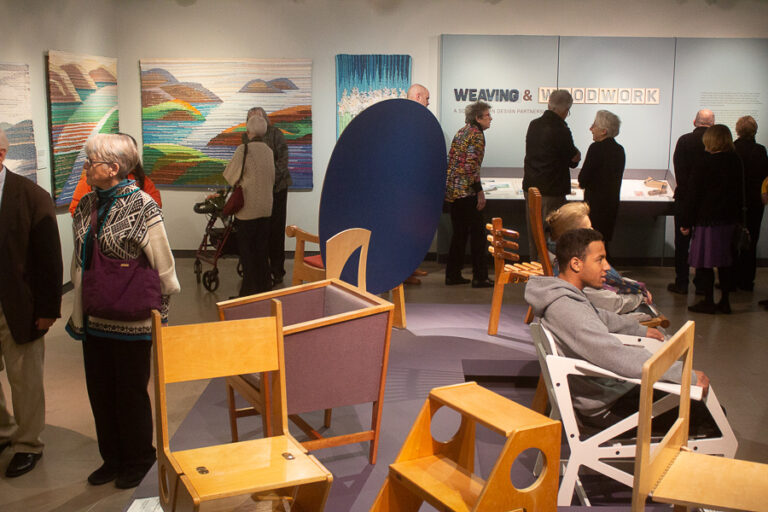
On Jan. 24, “Weaving and Wordwork: A Scandinavian Design Partnership” debuted at the UC Davis Design Museum. The exhibition honors the careers and creations of UC Davis design professor emeritus Helge Olsen and his wife, Birgitta Olsen.

Helge Olsen was a pioneer of the UC Davis Design Department. His wood furniture work channels inspiration from his Danish roots. His wife, Birgitta Olsen, weaves tapestries with cotton materials.

The Olsens hail from Scandinavia, Helge Olsen from Copenhagen, Denmark and Birgitta Olsen from Sweden. The couple moved to the United States where Helge Olsen became a founding faculty member of the UC Davis Design program in teaching furniture making. After raising two children here and being active members of the community, the Olsens have made their home in Davis.

Helge’s furniture is rooted in Scandinavian design but is also true to Danish design tradition. Many of the pieces are dual-purpose and were made with the intent of wasting as little as possible.

Birgitta’s tapestries are rich in color and textures and are inspired by the Central Valley and her life in Davis. Like her husband, her pieces are sustainable in nature; the cotton strips coming from old, discarded clothes and fabrics. Some of the tapestries are on loan from UC Davis and Davis City Hall.

When asked what influences her work, she credits train views and her children’s passions. Everything around her inspires her creations. One tapestry is a scene of her son running in the Arboretum, another features her son swimming freestyle in bright blue water.

“I think it’s really admirable that someone can take the time to do all of this,” said Ilya Shrayber, a third-year transfer and design major. “And the results really speak for themselves, I think. It’s really beautiful. I’m kind of floored by all the colors that come out. And I’m stunned that she can create the gradients that she does just with cotton woven into tapestry. It’s killer. I’m really enjoying myself.”

Tim McNeil, a professor of design and the director of the Design Museum, was one of the co-curators of the exhibition. The exhibition aims to be both an homage to the Olsens and their art, as well as a celebration of the city of Davis. While weaving and woodworking don’t seem to go hand-in-hand at first thought, McNeil recognizes how the two complement each other.

“They seem very harmonious,” McNeil said. “I’m sure some of that is the fact that they’ve been produced by two people who are very close together, so there’s certainly some influence there, but also their Scandinavian upbringing [is an influence]. There’s a sensibility in their work, a simplicity, a form of purity that’s very rooted in Scandinavian design tradition. A sense of sort of fun and playfulness.”

Helge has dedicated part of his career to working with people with disabilities. Inspired by this and as part of design student Zoe Martin’s undergraduate honors project, the exhibition aims to be accessible to those who are visually impaired and blind. All of the tapestries are allowed to be touched and visitors are encouraged to sit in the furniture. In the back of the exhibition, there is a “Create and Print a Tactile Design” activity, where drawings are printed in a raised form, like Braille.

“I think the more people that can consume the art the better,” Shrayber said of the exhibition’s accessibility. “It’s a breath of fresh air. “

“Weaving and Woodwork: A Scandinavian Design Partnership” is on display in the Design Museum until Apr. 21 and is free and open to the public. The Design Museum is located in Cruess Hall, Room 124. It is open weekdays noon to 4 p.m. and Sundays 2 to 4 p.m.

Written By: Liz Jacobson — arts@theaggie.org

Same Song, Different Dance

0

MLK 365 March For The Dream

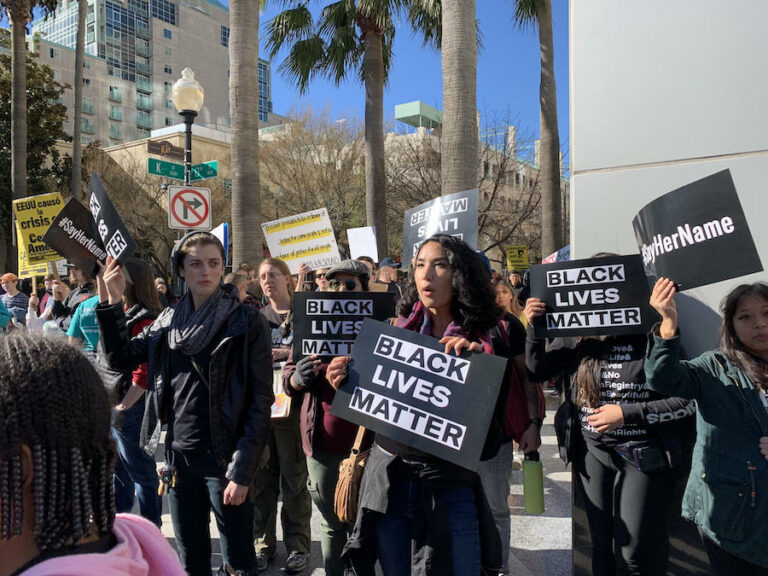
An escalation of engines revved as a fleet of motorcycles turned onto 13th St. in Downtown Sacramento — their large bikes sputtering as they parked in a neat line in front of the Convention Center entrance. Following not far behind was a crowd of nearly 30,000 people marching in the ‘March For The Dream’ Martin Luther King Day celebration put on by the MLK 365 organization.

The large men unmounting from the bikes wore black leather motorcycle jackets embroidered with ‘Buffalo Soldiers MC’ in bold yellow lettering across the back. Each had unique patches fixed to the chest and sleeves; upon closer inspection, these denoted various military accomplishments.

These ex-military and armed force men make up the Western Frontier of the National Association of Buffalo Soldiers and Troopers Motorcycle Club, one of the five divisions  volunteering their time to serve their communities.

“I don’t join clubs,” said Carl Goldwire, a seventeen-year member of the North Bay chapter. “But once I learned the history and the meaning of the Buffalo Soldiers, I wanted to be a part of sharing this rich history.”

It was hard to hear over the Black Lives Matter chants around us, but he stood relaxed, puffing away at the cigar between his crooked teeth. He was older, but the grey hairs only sparsely tickled his head.

In 1866, long before Dr. Martin Luther King Jr. was born, Congress allowed six all-black regiments to form within the U.S. Army — four infantry and two cavalry. This act by Congress was a peacemaking that came as a result of the nearly 200,000 U.S. colored troops that fought in the Civil War as volunteers.

From 1866 to 1891 these six units fought in the Indian Wars, earning the name Buffalo Soldiers from the Native American opposition. The creation of these all-black regiments was a significant step considering this preceded the Civil Rights Movement by nearly 100 years. It wasn’t until 1948 that President Truman signed executive order 9981 abolishing discrimination “on the basis of race, color, religion or national origin” in the U.S. Armed Forces.

Today, the legacy and spirit of the Buffalo Soldiers lives on in communities nationwide through the 115 chapters of the Buffalo Soldiers Motorcycle Club (BSMC).

“We come to events like this to show our support for the community, to show that we are here to help,” said Charles Byrd, a member of the BSMC Sacramento chapter. “I’ve been in [the BSMC] for four years, and before that I was in the army for 14 years.”

Among the many diverse faces in the crowd were young people, walking with their families, girl scout troops or nuzzled in their mothers chests.

“Every year we raise money for a scholarship for young folks,” Byrd said. “We take donations and hold events like one we did at the Harley Davidson dealership when they had a launch. We sold hotdogs and hamburgers.”

The Western Frontier awards annual scholarships to highschool graduates in the community, raising money throughout the year.

“We want to be that positive role model in the community, we want to ride our bikes in a positive light,” Byrd said. “I feel honored that I get to be part of that history.”

This forward thinking message is also at the root of the March For The Dream event. MLK 365’s Executive Director and founder Sam Starks approached the celebration of Martin Luther King Day differently.

“This is not a petition march, we are not marching for anything like the Women’s March or the Black Lives Matter — they are marching for something,” Starks said. “Ours is really creating an engagement where people can reach out to someone who doesn’t look like them and to build understanding.”

Unlike other marches that celebrate the life of Martin Luther King Jr. one day a year, Starks sees the March For The Dream as day one of a year long practice.

“Building that beloved community that Dr. King would talk about,” Starks said. “We realize we have to create opportunities for practice, to practice those values that he and others died fighting for.”

Starks talked about his 18 year old daughter and how he is optimistic that her generation will be the one to change the world, how young people are unafraid to ask questions and are willing to engage in tough conversations.

“Perfection is in the gray, it’s not in the black and white,” Starks said. “And it’s in the asking of questions, it’s in the challenging and perfecting of the idea — that’s where it is. This millennial generation is cued up to take us to that.”

At the close of the march, Starks stood in the bed of a large truck with a microphone, addressing the large crowd outside the convention center. Amidst the smiling faces and MLK posters, there were also Black Lives Matter supporters chanting louder and louder, drowning Starks recitations of King.

Starks explained that the Black Lives Matter Sacramento group has been attending the march for years, voicing their rejection of the law enforcement-sponsored event. But this year was different.

“When the Black Lives Matter people came as they traditionally do, I said ‘let them through,’” Starks said. “Every voice should be heard.”

Following persistent chants, Starks invited Tanya Faison, the Black Lives Matter Sacramento founder, to the truck-bed stage. He urged the audience to listen.

“I just saw this as an opportunity to practice before the crowd, to put Dr. King’s values into practice,” Starks said. “This happens every year, but this was a moment.”

Though Starks employs different strategies, MLK 365 acknowledges, celebrates and affirms the work of the Black Lives Matter movement and other organizations that practice activism to hold other institutions accountable.

“All of these marches, all of these organizations are calling for the same thing: a community of understanding and human values,” Starks said. “They just use different ways to approach it. Same song, different dance.”

The next dance in MLK 365’s year-long practice is just that, a follow up conversation.

For more information visit <https://marchforthedream.org>

Written by: Grace Simmons — features@theaggie.org

How To House: Tips for first-years looking for off-campus housing

0

People who have lived off-campus share their experiences and tips

Winter Quarter comes with constant questions about housing options, specifically for first-year students and those looking to live off-campus for the first time. There are a number of options, including houses, townhouses, apartments and second-year housing through UC Davis.

First-year students filled the ARC Pavilion on Jan. 24 at the ASUCD Housing Day and flipped through the “Davis Housing” magazine put in the mailbox of every on-campus resident. For current first-year students, top priorities vary greatly: for some, it’s whether or not Wi-Fi is provided with the rent; for others, it’s the people they want to live with. Sometimes, it’s proximity to campus or Unitrans bus stops, but for many, price is the deciding factor. “Davis Housing” even lists apartments by lease term, how many minutes from campus, internet availability, size and location.

“For me, the number one priority was to be as close to campus as possible and to be in a place where I’m around other students of UC Davis,” said first-year computer engineering major Prajwal Singh after Housing Day. “The other thing was: was it furnished or not, because I don’t want to pay extra for furnishing.”

Third-year psychology major Breanna Rodriguez is a Resident Advisor (RA) this year, but unlike other RAs on campus, she lived off-campus her second year, which she often discusses with her residents.

“I’ve been trying to be as vocal as possible with it, which may seem annoying if I’m pushing it too much,” Rodriguez said. “But yeah, I feel like it’s something that not a lot of people can get from their RAs, because a lot of RAs have been RAs or living in the dorms their entire time. I’ve just been trying to like, be as helpful as possible with my experience.”

Rodriguez picked her roommate and housemates in Fall Quarter of her first year, and the next step in their process was to settle on how much they were willing to pay. She and her friends stuck to the lowest amount that any of the four of them wanted to pay. Over winter break, the group did some searching based on established criteria, and once they got back, they started making lists of all of the places that they liked and individually ranked them. Using these lists, they narrowed it down to five options. Rodriguez and her friends ended up touring three of those places and picked a two-bedroom, one-bathroom apartment.

“Something that I’ve been trying to preach to my residents is to not get one single bathroom if there’s going to be like, four or more people,” Rodriguez said. “And also when it comes to a bathroom, make sure that your bathroom has windows and not just vents. Mine had just vents and we got mold like, every single week.”

In addition to her advice about bathrooms, Rodriguez discussed other important things to ask management about — particularly what additional payments are on top of rent, including gas, laundry, electricity, water and WiFi. She also recommends that students look at recent Yelp reviews to get a better idea of what other students think of a place and its management.

Most significantly though, Rodriguez said that it’s important that first-year students like the place they pick, given their priorities. Second-year neurobiology, physiology and behavior major Taylor Phan agrees with this.

“Make sure you like the apartment,” Phan said. “Don’t settle. There’s a lot of apartments in Davis, so I don’t think there should be a reason that students go settle for something that they hate.”

Phan went through the process of searching for housing after her first year and is currently searching for a new place to live. Last year, she and her roommates and housemates signed a lease in late January, and she described how her mentality back then is quite similar to her housing mentality this year.

“Even though Davis has ample housing, it’s really up to [what everyone does],” Phan said. “There are always a few apartments that are really good that everyone likes, you know […] You also have to take into account the lottery system, first-come, first-serve system, waitlisting, stuff like that.”

Phan thinks that she should have looked earlier when she was a first-year because by the time she began to search, there was already limited availability. This year, however, she and her housemates are working together to call every apartment complex they’re interested in. She thinks it is “crazy” that apartments are placing people on waitlists as early as January.

Phan advised that first-year students take a look at everything the apartment offers — WiFi, garbage services, electricity and printing. Like Rodriguez, she urges students to explore Yelp reviews.

There’s also the issue of roommates. While some students know who they want to live with and go from there, Phan said students should remember there’s always the option of figuring out other priorities, and then using Facebook to connect to other students who are looking for roommates. Rodriguez recommended that no matter who students choose to live with, some sort of routine in terms of chores should be established so that everyone is responsible for maintaining a clean environment.

According to Rodriguez, location is what a lot of first-year students worry a lot about, but she thinks that there’s no need to be overly concerned.

“I wouldn’t worry too much about location,” Rodriguez said. “I know most people are super used to living on campus and biking everywhere, but Unitrans is awesome, and it will get you where you need to get at the right time […] It’s not as hard as you think.”

Written by: Anjini Venugopal — features@theaggie.org

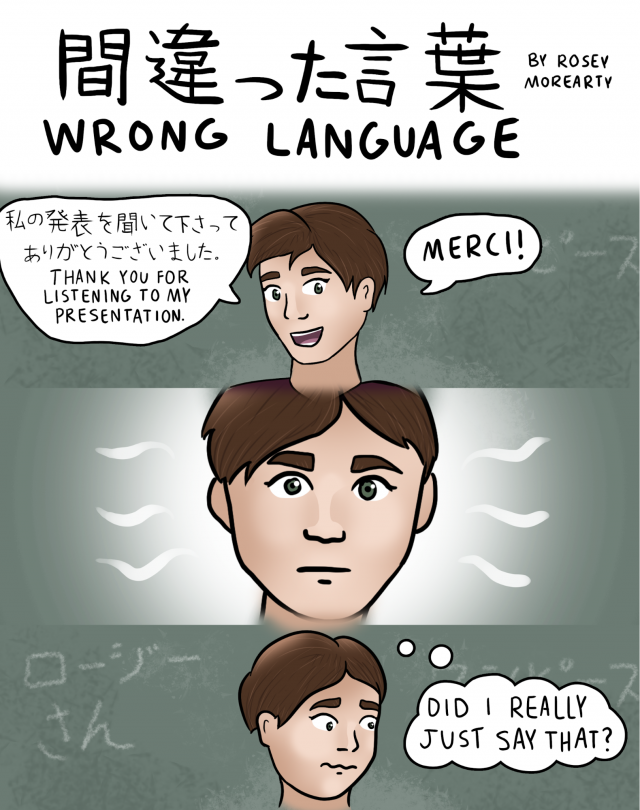
Cartoon: Wrong Language

ROSEY MOREARTY / AGGIE

ROSEY MOREARTY — rosey@morearty.org

Local church, campus group accused of restricting leadership roles for queer people

LGBTQIA members of University Covenant Church, Catalyst speak about being in these groups

“Five years. I spent five years at University Covenant Church involved on both staff and volunteer levels building relationships, investing in youth, and being a Guinea pig for the staff to figure out how to approach the LGBT community […] In reflection, I wonder if it was all a waste of time.”

These are the opening words of a blog post by Jordon Friend, a former UC Davis student and former member of University Covenant Church (UCC) in Davis.

Friend and two other individuals — both members of the LGBTQIA community — spoke to The California Aggie about their previous and current experiences being out and involved with UCC and Catalyst, a Christian group on campus related to UCC.

UCC’s Lead Pastor John Fanous said that sexual orientation has never been an issue within the UCC, saying that the church doesn’t “really distinguish on sexual orientation,” and that it is “not a factor at all.”

Although UCC leaders have said they want to provide a fully accepting space where LGBTQIA-identifying individuals feel welcome, enforced restrictions barring LGBTQIA individuals access to leadership roles as well as celibacy requirements have affected both Friend and others.

Difference in treatment at UCC

Friend’s account of how he was treated by the leadership of the church as someone who didn’t fit into the heterosexual norm is extensively detailed in his public online post. He alleges he was forced to go through obstacles that a straight member of the church would never have to.

“The elder team and leaders at UCC would like to think the difference in treatment doesn’t really exist,” Friend said, adding, however, that in order for him to be deemed suitable for a staff position he was subject to a four-month process and extensive conversations. “No one who volunteers at my level ever needed a four month process to come to the conclusion that I was, indeed, fit to be on staff.”

Friend said he was also forced to retell his story numerous times — an emotional ordeal for him — “hoping to ensue some sort of empathy.”

Requirements imposed on him by UCC leadership included pursuing a life of celibacy and refraining from dating.

“They also had me agree to check in and give results on how their ‘gay leader’ experiment was going,” he wrote in his post. “Then they said they still weren’t sure if they trusted me. After sticking around for so many years, after serving with all my heart, after being completely vulnerable. They said to build trust I needed to take down my blogs. To make it real official, I signed a contract.”

UCC Lead Pastor John Fanous said that all leaders sign an agreement acknowledging a set of expectations, and denied Friend’s claim that his contract was altered due to his sexuality.

“I don’t think he signed anything that was different than any other leaders,” Fanous said. “That is so against anything we believe. I don’t think that happened.”

Friend provided The California Aggie with an email containing details about a meeting where he and UCC leadership discussed additional clauses to the standard contracts, signed in April of 2017.

The email discussed a volunteer leadership proposal for Friend. In this position, he was subjected to mandatory check-ins to an individual named “Kyle.” Additional clauses pertaining to Friend included: “the volunteer agrees to not undermine the Covenant position on human sexuality. The volunteer signs the Covenant leadership agreements. The volunteer remains accountable to Kyle while in this role.”

An additional clause shows the apparent motivation behind UCC agreeing to have Friend as a leader: “Kyle shares his learning in the coming year on LGBTQ care strategies with the ET so that we can all learn more about how to best uphold truth and love.”

Celibacy requirements at Catalyst

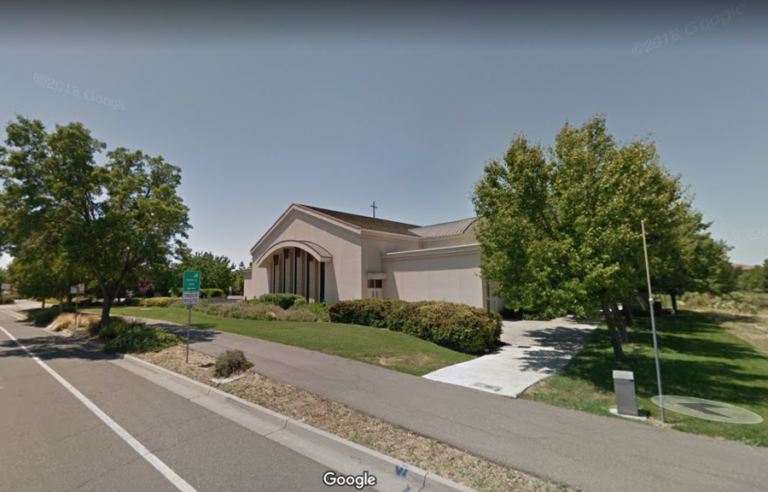
The UCC’s reach extends beyond its building on Mace Boulevard. It has a presence on the UC Davis campus via Catalyst, an Evangelical Christian group associated with the church.

Andy Lee, a fourth-year wildlife, fish and conservation biology major and a former member of Catalyst leadership, recognized a strong connection between the two organizations, stating “whatever UCC believes, Catalyst also has to operate on.”

“Catalyst is definitely more vocal with loving people, but the stance is the same,” Lee said. “I think Catalyst tries to love queer folks, but UCC’s stance is that same sex love is not ordained by God. UCC’s love is a little conditioned. A lot of times, they love you but they don’t celebrate you wholly.”

Lee stopped his involvement with Catalyst at the beginning of this school year due to a combination of family and personal issues along with a sense that he did not feel “loved, accepted and celebrated” by the leadership at Catalyst, especially after the leadership suggested that he should find another church in their emails to each other.

Like Friend, Lee also said that there were specific expectations enforced for members of leadership at UCC and Catalyst who are also members of the LGBTQIA community as well as restrictions on access to these leadership roles for these individuals in the first place. For example, if Lee had wanted access to a high-ranking role, he’d have to remain celibate.

“They have different levels of what you can do as a queer person,” Lee said. “For example, if you were running the slides in the background, they don’t care. You’re not seen. [But] I was a worship leader, I’m kind of up front every other week, so they cared if I was seeing someone. I was able to lead worship, but technically I wasn’t able to pray or preach. If you want to lead or preach or pray at a higher level, as Jordon mentioned, you had to say you would be celibate.”

After Friend’s blog post was publicly posted, Lee sent a letter to UCC’s head pastor and three leaders of Catalyst. He subsequently received a response back which, he said, “didn’t make me feel welcome.”

In the email Lee sent, which was obtained by The California Aggie, he described elements of his experience that had made him feel not fully welcome. Specifically, he said he promised to not make his dating life public, “even though that wasn’t the case for straight couples.”

“I have worked very hard to make Catalyst an inclusive space for queer people during my two years in leadership,” Lee wrote. “It hurt me that I was held to a different standard at the time, but I thought it was worthwhile if it could help gay people in the future of Catalyst. Therefore, this in no way [is] attacking Catalyst or its effort to support queer people. I understand the struggles we have gone through together.”

Lee also mentioned the struggles he faced applying to become a member of Catalyst leadership.

“I was hurt when I applied to be a leader at the end of freshmen year and again sophomore year,” Lee wrote. “I was loved by the community of Catalyst as a whole, but to serve as a leader I was held to different expectations and I had to hide myself. I felt mislead. The community was so loving, and the environment was accepting, however, leadership was not. I felt that the whole topic –– our lives –– was sugar coated and brushed over.”

During his time involved with Catalyst, Lee’s primary goal was to inspire positive change and acceptance of queer people. He said he never saw these goals become a reality.

“Jordon [Friend] put a lot of intentional effort to direct people towards UCC and Catalyst, me included,” Lee wrote. “He genuinely convinced me that it was worthwhile to serve at a church that was not affirming […] I felt that I was called to serve on leadership to fight for queer rights. However, in my time while serving, nothing came to fruition. From my understanding, queer people still felt uncomfortable, no matter what we did or what I did.”

After being made aware that this article about their group was in the works, Catalyst leadership attempted to dissuade individuals from sharing any negative criticism or sentiments.

“Support Staff has built enough trust with each one of you that you will do your absolute best to not spread lies, shut down gossip if you hear it, and only share positive opinions/comments with other people,” a private Facebook post, which was obtained by The California Aggie and authored by Julia Hall, one of Catalyst’s student leaders, stated.

Hall and the Catalyst leadership team clarified the purpose of this post to The Aggie, stating via email that “there is no underlying negative connotation about the queer community in the post.”

“We were solely preparing our leadership team for the possibility that there would be an article written about us, and encouraging them to stay positive if they heard any kind of negativity,” she said. “We received information of comments that others had shared with us during the same time you originally reached out to us that clearly led us to believe the article would not represent us in a positive light.”

“It’s okay to be gay, but you can’t act on it”

Nick Bua, an acquaintance of Friend’s and someone currently attending UCC, sees both sides of this story.

“They’re really trying to be a safe place to the best of their abilities, based on what they know,” Bua said. “The church was extremely silent in [Friend]’s time, so I understand how he feels. Now, they’re at least trying to be mindful.”

According to Bua, there are still “restrictions” today in the roles that people in same-sex relationships can have at UCC.

“[UCC is] restricting teaching roles and upper leadership,” Bua said. “[Friend] couldn’t [be in that role] since he is in a same sex relationship. In my opinion, there shouldn’t be a cut off. Like, ‘Yeah, you’re safe here in this church, but once you get comfortable there’s restrictions.’”

Bua described a three-pronged model for LGBTQIA involvement and theology in churches.

“Side X is historically pray the gay away and seeing being gay as a sin,” Bua said. “Side A is the affirming side: you can be gay and have a same sex marriage, and God will still love you. For Side B, being gay is not a sin. You’re born that way and you can’t control it. It’s the middle. It’s okay to be gay, but you can’t act on it. You can’t have a same sex marriage. They believe in celibacy and heterosexual marriages.”

Despite the restrictions inherent in the upholding of the “Side B” model, Bua saw a positive change when the church’s leadership decided to take a stance and side with this point of view.

“In the past year or so, UCC chose Side B,” Bua said. “They’re trying to be less silent on the issue. It’s like a slow moving vehicle. It’s frustrating, but that’s how any big things are. In the last few months, they have actually said words like ‘gay’ out in the open.”

Similarly, Fanous described UCC as somewhere in the middle of the theological path.

“We tend to have conservative churches who have no [queer] space, or liberal churches with very different theologies,” Fanous said. “I’d like to think we bridge that gap and offer something different. We’re excited to provide that queer space that historically has not been there.”

Bua’s frustration extends to theology — specifically, what fits into the church’s version and what doesn’t.

“It’s been hard [after coming out], but they’ve been learning what to say and what not to say,” Bua said. “They’re pretty receptive. The only thing is the very obvious barrier of the theology. They’re open to it, but they really want to make sure the theology is consistent. There aren’t theology checks at the door for other issues. They watch [sexuality] a lot more closely.”

Despite Bua and Fanous’ optimism and hope that UCC will strengthen its ties and support of the LGBTQIA community, Friend is still hurting from his experiences.

“Finding a church community has been so hard,” Friend said. “I want so badly to find somewhere that holds true to the things I loved about UCC, but that’s been difficult. Straight folks have it a little easier when it comes to Christianity: they search for a church that has the type of music they want, preaching style and community involvement. I have to first find a church where I can feel comfortable holding my boyfriends hand during service, then I can consider other things.”

Written by: Deana Medina — campus@theaggie.org