54.1 F
Davis

Davis, California

Tuesday, December 23, 2025
Home Blog Page 465

Police Logs

New year, new calls

December 26

“Reporting party sent money to Hong Kong to unknown person.”

December 27

“Unknown male arrived at reporting party’s residence to perform landscaping, per reporting party she didn’t hire anyone and felt it was odd.”

December 28

“Reporting party can hear knocking and scratching noises on windows, and possible people walking through bushes — reporting party has not seen anyone or any animals.”

December 30

“Baby playing with phone, saying hello. Spoke with father.”

December 31

“Resident requested animal control for a cat that has been scratching at her front door.”

January 1

“Reporting party would like female subject removed from premises who had been hostile to her earlier. Female now has a cup of hot tea in her possession and reporting party is concerned in any employees contact her, she may try to throw the hot drink.”

January 2

“Advised he is stuck in bed, requested staff assist and declined medical.”
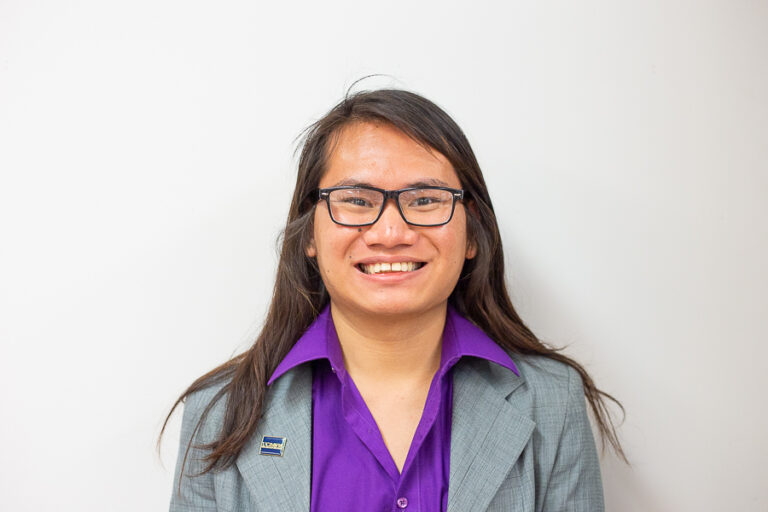
Senator Ko Ser Lu Htoo resigns

Htoo cites frustration with ASUCD president in resignation post

ASUCD Senator Ko Ser Lu Htoo, elected in the winter of 2018, announced her resignation from the senatorial position in a written farewell address to the Senate on Jan. 7.

“Although we have made great progress in the community, these past two quarters have been about fighting against one another and attacking an individual who doesn’t have similar views instead of working together to find common grounds,” Htoo wrote in a Facebook post.

Htoo ran on the BASED slate on platforms of increased resources for the LGBTQIA community, increased engagement with the International Center and the development of outreach efforts by the ASUCD Senate with the campus community. She was endorsed by The California Aggie.

In her Facebook post, Htoo mentioned feeling that some of her colleagues in the Senate were not interested in working for causes that she holds dear, such as the minority and LGBTQ community at UC Davis.

Last October, Htoo announced a complete opposition to working with ASUCD President Michael Gofman, citing his alleged disrespect to members of the LGBTQ community — an allegation Gofman firmly denied.

While thanking some of her colleagues for their cooperation and support, Htoo also indicated that ASUCD President Michael Gofman was one of the reasons for her resignation.

“My colleagues, this is the fight I have fought for a very long time to make sure our Association president is doing the best he can to make sure we are being represented, to make sure the people that elected him to be represented and advocated for them,” Htoo wrote on Facebook. “I have watched this president for one year and it has become a clear image that he failed to uphold his responsibilities and represent all of us.”

In an email to the California Aggie dated Jan. 10, Gofman declined to comment on Htoo’s resignation.

Written by: Rebecca Bihn-Wallace — campus@theaggie.org

The Amalgamation of Country Music

Country music’s adaptation to the twenty-first-century

It’s no secret that country music has changed in the last 20 years. The content within most of the songs that top the Billboard charts have evolved into something utterly unrecognizable to “classic” country, i.e. songs about “Achy Breaky Heart[s]” and rivers named “Chattahoochee.”

On one hand, it’s a beautiful thing; country music is now more of an open calling, near flush with the pop genre with hints of modern rap influence sprinkled throughout. This is, in many ways, where any fan of the musical arts should take pride, for progress is akin to evolution, and any partition of arts is a poison.

On the other hand, the lyrics seem to have degraded over time. Songs that used to top the charts once dealt with “Friends in Low Places” and mothers inadvertently letting their children grow up to be cowboys. Seldom heard is such content on the radio for 21st century country; those lyrics required a steel guitar (and definitely a cowboy hat).

Country music is a now a product of development, adapting with the times and to popular radio culture, thus producing a more progressive sound. The lyrics may still be catching up, but the instrumentals deserve a level of appreciation.  

This blending of genres is highly prominent in the melodies and lyrical flows of modernized country. Most songs in the Top 100 on Billboard embody this new musical algorithm. With an apparent deviation from the “down home” roots of the genre, county music has veered away from fiddles, banjos and acoustic drum sets, and now utilizes looped guitar tracks and electronic drum pads; many of these tempos contain snap and clap-type effects often heard in trap music.

These rhythms are now well-known in country. Although opinions differ on the genre’s evolution, the more optimistic listeners would consider this a testament to the musical brilliance and widespread popularity of the rap, hip-hop and pop genres, from their influential aesthetics to flows which render the totality of the genre so catchy.  

Although it happens less now than it did in the early 2000s, rap-country collaborations used to be all the rage, possibly the catalyst to the genre’s expanse; honorable mentions go out to collaborations such as Nelly and Tim McGraw in 2009, Nelly and Florida Georgia Line in 2012, Ludacris and Jason Aldean in 2011, and the kings of smoke, Snoop Dogg and Willie Nelson also in 2009.

In fact, more so now than ever, musicians of color are topping the charts for country music, and they are amassing a diverse fan base while producing some integral content relative to their experience as a musician of color. This cultural breakthrough, at its finest, can be directed to its predecessor, a man that stepped on stage in 1927 to display his prowess at the harmonica during a country music radio show in Nashville — the legend, DeFord Bailey, a grandson of slaves and master of instruments now living in perpetuity in the Country Music Hall of Fame.

Surely his influences live on in Jimmie Allen, the first black man to score a career No.1 in 2018 on Billboard with his debut single “Best Shot.” And not alone at the top, Kane Brown met the same success when his album ranked No.1 on the Billboard Top 200 charts, but not without meeting some racial flack on Twitter. Sad to say the “haters” probably know little about the roots of country, and even less about the legend of DeFord Bailey.

Yet the structural disparity of country has kept female artists from meeting the same success. As of a year-end survey, only six female artists charted the top fifty on Billboard (2018). To add to the fact, Miranda Lambert, a country superstar selling albums in the millions, was only able to reach No.1 on country radio by collaborating with Jason Aldean.

This imbalance did not go unnoticed by Lambert. “Yes, I had to sing with someone with a penis to get a No. 1, [but] I do like this person, Jason Aldean, a lot […] so it was a great song with an old friend,” Lambert said in an interview with the Washington Post.

All eyes should be kept on the lopsidedness of female popularity in country; it shouldn’t require male-female collaborations for females to receive recognition. The fight shall rage on, and our hope lies with the rising stars in country to (re)pave the way, much like our own Cam Marvel Ochs, a UC Davis alumna who chose a career in country music stardom over psychology.

From writing songs for Miley Cyrus to signing deals with Sony Music Entertainment, Marvel Ochs is making strides for the genre. She is a prominent figure in music, producing award-nominated content while maintaining her integral love for home: UC Davis. Her footprints are everywhere in country music and on campus. Just look to The Spokes, an all-female acapella group that she started during her time in Davis. Cam provides hope for any rising musician, proving the requirement for a dream is but a mere spark of creativity.

Though the realm of country has expanded by taking on new, diverse faces that are paving the way for the future of the genre, it doesn’t keep those considered to be “interlopers” away from the craft. These breakthrough artists like AJ McLean (Yes, Backstreet Boys’ AJ McLean) are considered snakes in the grass to some and superstars to the rest. Certain fans are not too thrilled about arrivals such as these, calling their music the “worst country music of 2018,” and whether their judgment is on point or not is up for consideration.

Recently, in a red carpet interview, McLean said that he would be entering the country game to shake things up. His exact words were, “I’m coming in to disrupt country.” As to how much disruption he has actually caused must be weighed against his most popular, debut song, “Back Porch Bottle Service.”

The song sings as the title suggests: “Damn girl you lookin’ gorgeous / Just keep lightin’ me up like them tiki torches on a… / Back porch bottle service.”

One thing is for certain, the song doesn’t exactly handle the most groundbreaking content, but it’d be wrong to consider this bad art, because art is art — a creation from the soul. And to deny the will of the artist is to deny the power of creativity. McLean’s form of “art” is without a doubt hard to grapple with, and that’s understandable.

Concerning the tune, McLean’s song has the obvious pop influences with a pinch of urban roots in the lyrics. The guitar is looped, as is the drum track which holds the tempo, and his lyrics (ignoring the prosaic content) have a smooth flow that could have easily been placed over some 808s rather than an acoustic guitar. This seems to be the common theme with most of the songs charting the Top 100, although McLean’s song did not reach that level of hype, possibly due to its lyrical insipidity.

To find such depth in modern country music, once had by artists such as Merle Haggard, Patsy Cline and Conway Twitty, a suggestion would be to opt out of country music altogether and transition to folk music. That is not to say the depth no longer resides in country music — take Sturgill Simpson, for example, or Rick Trevino. Both musicians are prominent figures in country music and produce a wide range of songs with philosophical content in the lyrics. But in folk music, the focus is less about the tune and more about the story to be told.

Country music is not dead, but is instead adapting to its new and diverse life. The hope is there, maybe not so much for former Backstreet Boys, but for the overall inspiration that’s fueling the culture. To acquire the depth that many demand in their country, it requires a bit more digging. But to witness the future, the natural blending of musical genres and cultural amalgamations, the product stands before us. One but needs to turn on their radio.

Written By: Clay Allen Rogers — arts@theaggie.org

Other Collective brings dis-orientalist expression to campus

0
TALIA BASMA / COURTESY

New student-run cultural magazine Other Collective offers students publication experience

University settings create ample opportunities for students to establish a voice for themselves through clubs and campus publications. Through increased effort, students work to bring these opportunities to fellow classmates who often do not see their own opinions and experiences predominantly on campus.

According to its Facebook page, Other Collective has a goal of creating a platform for “individuals affiliated with the culture and issues surrounding the regions of West Asia, Central Asia, South Asia, the Caucasus, and North Africa (countries encompassed by the Middle East and South Asia Studies program at UC Davis).” The publication hopes to spark discussion and story-sharing from students in relation to the previously listed areas. This publication was created in order to challenge “the media’s stereotypical clumping or antagonizing of these cultures as a result of today’s polarized global/political climate.”

Fourth-year English major Talia Basma serves as the arts and culture editor for Other Collective. She was brought into the publication based on her background in creative writing. She and the rest of the editors began collecting pieces for online publication during the summer of 2018 for their eventual launch in Fall Quarter 2018.

“The idea behind Other Collective is to give students at Davis a space to talk about what it means to be ‘other,’” Basma said. “Many of the people on the team are part of that group of people who have to mark ‘other’ on the identification box of so many forms and applications that we come across in our lives.”

Basma noted the importance of the publication considering today’s political climate, which she sees as driven predominantly by stereotypes.

“So much of the news and things we see online are coming from a stereotyped or orientalist viewpoint,” Basma said. “So, we decided to take things into our own hands and become a dis-orientalist magazine.”

The publication is currently up and running through their website, publishing only online for now. Basma stated that their goal is to eventually move into the medium of a physical, in-print publication as well.

“Since we are so new, our focus is to increase awareness, participation and readers for the magazine,” Basma said. “We are hoping to curate a print for next year that will be a periodical collection of the best work we have to offer.”

This sense of community has been one of the most impactful aspects for students involved in Other Collective. Members have found comfort in each other’s shared “otherness,” discovering a newfound ability to share the unique feelings that accompany this.

“All of us have different career paths and hobbies, but we all have the background of ‘other’ that bonds us,” Basma said. “We want this magazine to be an outlet for anyone who has ever felt out of place, [we want it to be] a space to connect with other people so no one ever feels alone.”

Written by: Olivia Luchini — features@theaggie.org

Robotic lawn mower that cuts grass, greenhouse gas emissions misplaced since Nov. 8

0

After using the Miimo robotic lawn mower to cut grass on campus, the machine is now missing

Outside Voorhies Hall and the Educational Opportunities Program (EOP) building, a white plastic Roomba-like machine used to roam around the lawn, automatically shortening the grass on its own. It’s quiet, very quiet. As of Nov. 8, however, the robot has been missing — it was last seen on that Thursday back in the dock it resides in at night.

The campus robot is Honda’s Miimo lawn mower, a quiet, self-contained device with an electric wire, which is in charge of mowing the lawn in a very specified, small green area. When programing the machine, perimeters are set for a specific area and it continues to mow 24/7, said Tyson Mantor, the superintendent of ground and landscape services.

According to Miimo’s website, the machine mows and charges independently and uses a microcomputer, timer and sensors to provide “automated, precise, unattended grass cutting.”

“It goes over the area like a roomba in the house,”  said Matt Forest, the UC Davis grounds supervisor.

The machine does have its limitations, so it only works in this particular location at UC Davis because it is small, Cary Avery, the associative director of grounds and landscape services, explained.

“We have such a large campus, so we can only utilize it in very specific situations,” Mantor said. “It is very cool to use in small courtyards, since it takes so much time for our guys to go in and hand mow that area.”

After around two months of using the machine, grounds and landscape services have had no problems using it other than the occasional shut down due to being dirty.

“It sensed that it was dirty and stopped,” Forrest said. “We blew it out and cleaned it up and reset the password.”

As for the disappearance of the mower, Forrest said that it was either misplaced or stolen.

“When Honda offered to leave it with us on campus, I was not concerned that security would be that big of a deal,” Forrest said.

Forrest said that stealing the machine is useless since in order to use it, one needs to know how to program it, which requires its dock.

“It is missing and we’d like to have it back,” Forrest said.

The California Air and Water Resource Board contacted UC Davis about whether it would be interested in trying out a new robotic lawn mower made by Honda, Avery said. UC Davis agreed. After several conversations over the course of six months, grounds and landscape services were able to bring a new Miimo to campus.

“We are really doing this for the Honda Cooperation as a test site,” Avery said.

The Miimo is not on the market yet, Forrest said, since it has not been approved for retail release in California.

“We will [be] giving them feedback and see how it works,” Forrest said. “It’s pretty handy and does it’s thing, but it does have limited applications.”

Using the Miimo lawn mower reduces the amount of greenhouse gas emissions released Mantor said; grounds and landscape services is always looking for sustainable and green technologies.

“We are very interested in any new technologies that reduce emissions, pesticide use, and we want to experiment more with battery operated equipment,” Avery said.

Mantor has hope that UC Davis can implement more of these technologies in the future.

“The technology shows promise and I’m looking forward to using more [of this] technology,” Mantor said.

Written by: Margo Rosenbaum — features@theaggie.org

Humor: Spider-Man is the most powerful being in existence and there’s no argument against this

BAGOGAMES [CC BY 2.0] / FLICKR

Sponsored by “Spider-Man: Into the Spider-verse,” in theaters now

Around 3 a.m. this past Wednesday — or maybe it was Tuesday, I can’t remember now — I determined that Spider-Man is the most powerful thing anyone has ever dreamed up. I understand that this is likely a controversial opinion, and I’m sure many of you readers want to argue with me, maybe smash a glass over this, possibly flip a few tables in unbridled rage at how inconceivably stupid I am for saying this. Unfortunately for you, I have no reason, nor desire, nor real ability to respond directly to you, so just sit down and read my words knowing that I am right and there’s nothing you can do about it. Oh look, my ethos is already leaking all over the place. Get webbed, b—.

So, exhibit A: HE GOT BIT BY A FREAKING RADIOACTIVE SPIDER. I don’t understand how this doesn’t just disqualify everyone else from this useless competition in the first place. Having been bit by three spiders in my life, I can tell you first hand that spider bites hurt and itch a lot. Unbearable, writhing pain shoots up your body, numbing your flesh just enough to keep you from ending your time on this Earth. And Peter Parker got bit by a radioactive one. People literally destroy their bathrooms just to kill a common house spider, and this guy lets the spider bite him so hard it injects its slick, spidery powers into him. Badass. I’m pretty sure Spyro would die immediately if the same spider even brushed against his soft eggplant complexion. Thank u, next.

Exhibit two — and this is important, so listen closely: HE WEARS RED, WHITE AND BLUE. He’s a symbol of America, the strongest, most deadly nation in the history of the world. I know, you all will probably think “bUt wHaT aBoUt ThE aCtUaL hErO cApTaIn AmEr—” no, shut up. Captain America is nothing but an American Zero. For all intensive purposes, he’s just a placeholder when Spider-Man isn’t there. No, that spider bit Spider-Man, man, and that means he has the powers of the American taxpayer behind him. Do Rick and Morty have that? I didn’t think so. There isn’t any other argument.

But if there is any other argument, I point to exhibit 1A: he’s SO DAMN FAST. Superman, faster than a speeding bullet? Get webbed, b—. Spider-Man downs him before he even leaves the ground, easy. Oh no, Goku’s going Super Saiyan? Uhhh get webbed, b—. Spider-Man’s already web-slammed him into the ground before he dyes his hair. Oh boy, Sonic has all the chaos emeralds? Shlip shlap. Whebbed b—. Spider-Man webs the rings out of him and then takes them for himself.

There you go. Proof that your imbecilic minds can’t even realize how dumb you are to think Spider-Man isn’t the strongest guy ever. Just go watch “Spider-Man: Into the Spider-Verse” to see why they paid me to say all this and you’ll understand.

Written by: Conner Shaw — cjshaw@ucdavis.edu

(This article is humor and/or satire, and its content is purely fictional. The story and the names of “sources” are fictionalized.)

Breaking the ice: winter brings three newly-elected Davis school board members

Q&A featuring school board member goals, challenges

The Davis Joint Unified School District welcomed three new school board trustees in the Nov. 6 election. The trustees were sworn in to begin their four-year terms at the end of 2018. Each trustee differs in experiences and perspectives but both share an affection for and desire to improve the city of Davis.

Elected in 2014 for his first term, incumbent Tom Adams boasts a long career in education and serves as the deputy superintendent of the California Department of Education in Sacramento. Adams also received his doctorate in history from UC Davis.

UC Davis psychology professor and Stanford graduate Cindy Pickett served on the Montessori Parent Advisory Committee and the district’s Parcel Tax Oversight Committee, among others. She is also focused on closing the achievement gap and promoting sustainability.

Joe DiNunzio is the President of Davis Schools Foundation and works with startup businesses. He also holds positions in the UC Davis Graduate School of Management and in various other DJUSD committees relevant to the budget and education.

Barbara Archer, a school board trustee from 2014 to 2018, worked with Adams during their four-year terms and expresses her faith in these trustees’ abilities to prioritize district agendas.

“The three people who were just elected — they have a lot of experience in working with the school district,” Archer said. “As a board, they will certainly respond to things that come up as the school year unfolds. A lot of what the board does is respond [to] issues you can’t anticipate, but I think the staples of board work are work on the budget and work on teacher pay.”

Archer also touched upon the challenging aspects for the board to be a voice to the whole community.

“Certainly as a board member, you do have to listen to all the perspectives and our citizenry is very engaged here in Davis,” Archer said. “They do let you know if they have opinions on things, so that is something you always have to deal with as a board member. I’m really confident in the new board’s ability to do a great job.”

The following contains transcriptions from three separate interviews. It had been edited for length and clarity.

The California Aggie: In this following term, what are some long-term goals or priorities you want to achieve as DJUSD school board member? What do you think Davis needs?

Tom Adams: I think Davis really is in a phase of modernizing and updating itself, both in terms of curriculum and instruction as well as facilities. This is why things like the continuation of parcel tax and Measure M, a bond measure, passing –– what these do really tell our kids more than anything else [is] that we’re investing in them. Right now, we recognize that we really have to increase our investment in Davis schools and really affect Davis students, saying we want to — shall we say — “up our game” on education.

Cindy Pickett: It’s always easy to listen to the loudest voices –– people that come to the school board meetings or write letters to the board –– but there’s a lot of people in our community who have something to say or are affected by our policies that don’t feel comfortable coming forward. I want to make sure we as a board make decisions that are taking into account those individuals, and so one of my goals is to reach out to different communities and ask them how do they feel about “X” or “Y” so that we can make more informed and more culturally sensitive policies and decisions.

Also, being realistic, I think a lot of districts get themselves in trouble because they are overly optimistic about the financial future, and I’ve seen that be a problem again and again. I want to hopefully avoid that track and make sure we have rainy day funds and that our reserve is healthy.

Joe DiNunzio: The first one was fiscal sustainability. We need to think about how we can build an enterprise at the school district that is sustainable over time. There are some very specific challenges we have to grapple with, including teacher compensation and making sure teachers and staff are compensated fairly.

The second one is positive transparency. Davis is blessed with people who are very involved in the community. We have to make a concerted effort so that we as a board are transparent in what we’re doing and how we make decisions.

The next is safety and support, that is something is paramount that we make sure our students, teachers and staff are operating in an environment where they feel supported, where they feel safe […] We’re also talking about emotional and social safety.

The fourth is inclusiveness. We continue to have an achievement or opportunity gap in our district, as is the case across California and across the nation. Inclusiveness also means having different cultural perspectives, learning approaches, so thinking about how we can include that into our process is important.

The last thing is innovation — we need to have a growth mindset. How can we be continually better at what we do and not be complacent. Innovation means we think about ultimately getting to a place where we truly deliver on differentiated learning and recognize what we are trying to do is develop and deliver an excellent education to every student based on his or her need.

TCA: With the passing of Measure M, a facilities bond, many community members are suggesting various improvements to structures and curriculum. Which direction do you hope to see Measure M go in?

CP: You have to focus on the basics first, which are the classrooms and making sure there’s resources for the teachers so that they can give or provide a 21st century education, but that requires a 21st century science lab. Focusing on classroom improvements and safety measures and then from there thinking more broadly. The reason why MPRs are important is that it brings a community together, and that’s one of our priorities as a district — that inclusion of belonging that requires space for those activities to happen.

JD: I think it will help contribute to providing the tools or resources at a facility level to support an excellent education. Teachers have, for decades, been thinking about how they tailor their programs and experiences to their individual students. It’s about continuing to provide them with the training and resources and support to get there. It’s important to recognize that that investment should serve our whole community.

TCA: Each fall, UC Davis welcomes a large influx of new students who need housing. Is the school board concerned with creating more housing opportunities for both students and local residents?

TA:  In Davis, we would have to go through extraordinary measures to do that, but what we are seeing in terms of Davis trends are the cost of housing in Davis is going up, and with that, family size is going down. We want [Davis] to be open to everyone and get some more housing to ease up the tight housing market. This is something we have to pay attention to because all of California is dealing with a housing shortage. The great thing is that it will definitely help our schools because, right now, our enrollment is basically flat — it has been flat for a while. If it wasn’t for the interdistrict transfers, we would probably have to close a school and lose out on millions of dollars, so we’ve been lucky.

CP: When you get young families, typically they have less income, and they need more affordable options. And so what were seeing in Davis is that our enrollments are down and that we do bring in students from other districts, and ultimately, that’s due to the housing situation. Young families can’t afford to come into Davis and that affects schools — it affects how many programs we can offer. I do think that when [UC Davis] students have more options they then free up homes. There’s a domino effect. More housing will not only ensure the sustainability of the city but also the health of schools.

JD: It is extremely important for us to address the housing issue for students and for people in general. The city is doing an effective job of starting to work more closely with the university to think about how we create a comprehensive plan to address housing. You can’t just address one narrow part of the issue. We need housing for students, we need affordable housing for the people to live here and support the growth of our community. [The university] has a long-range plan to grow, and that’s fantastic.

TCA: Recently, the name change proposal for North Davis was faced with opposition from parents. Do you have any recommendations for how Dr. Mary Ellen Dolcini can be honored or how, personally, transparency can exist?

TA: If there’s going to be a name change, we really have to do it in a manner where people have ownership of the name and not imposed on them. Mary Ellen Dolcini herself — I met years ago — is a wonderful person and educator. I personally think she’s been a great role model for Davis, but it’s also an issue of we don’t seem imposing something on people. But if they start looking at her record, they will see that she’s a person who we should honor in the district.

CP: If the community of the school doesn’t want the change, it’ll be heard to rename the school, but that’s definitely not our only option. I’m very hopeful that the committee will come up with some good options that will garner what the community supports.

JD: I feel very strongly that an open and transparent process is extremely [necessary] for any decision we make. At the end of the day, trust is extraordinarily important in any process, particularly is important in a public process. Even if we don’t agree, understand how the decision was made and trust that it was done in a thoughtful way. Openness and transparency is critical in maintain[ing] trust, and trust is critical for being able to manage a school district and the difficult [decisions] that need to be to made.

TCA: Davis has such a tight-knit, charming community that features many fun local gatherings, parades and such. Which Davis events do you enjoy going to?

TA: The thing that I’ve always loved about Davis are — because I’m a runner and not that I’ve set any records — but I’ve always loved the Turkey Trot. I love the Labor Day Run because of the affiliation with our sister city in Japan, and then lastly the Pride Run. It’s my way of supporting the community. Those are some of my favorite things to do.

CP: Sometimes I complain about having to wake up early on a Saturday, but I like [American Youth Soccer Organization] soccer teams and Davis Little League baseball games. There’s so many people in the community that are involved; both those organizations are very inclusive. It’s fun to be out there watching your child play and talking to other parents. It really does build this community to see these families year after year.

JD: I love both Celebrate Davis and Discover Davis. I’m vice chair of the Davis of Commerce so I am biased, but I think they are both fun community-wide events. I love going to the student performances, all of the orchestras, madrigals, the Glee Club, all of our dramatic performances. I love going to the elementary school choir performances. I think they’re awesome. Taking off Davis City hat off for a moment, the Mondavi Center has an incredible program of speakers and artistic performers and musicians; my wife and I go to quite a few of those and enjoy them. I’m big on sports, so I like going to college and high school sporting events.

Written by: Renee Hoh — city@theaggie.org

City opens applications for affordable housing, social service grants

Davis accepts proposals for community development, housing investment

This month, the City of Davis invited local nonprofit organizations to submit proposals for the Community Development Block Grant and Housing Investment Partnership, grant programs that support services such as “meals, shelter, transportation, elder care services and healthcare to low-income residents,” according to the city’s press release.

Applications from organizations that serve these goals — such as Citizens Who Care, CommuniCare Health Centers and Yolo Community Care Continuum, all of which have received funding in the past — are due to the city by Thursday, Jan. 10. The applications will be analyzed, and recommendations will be made by the Social Services Commission in March.

In April, City Council will decide which groups will receive grants, and awards will be finalized after approval by the U.S. Department of Housing and Urban Development, which funds the grants.  Through the two annual grant programs,, the city expects to distribute approximately $800,000.

CDBG and HOME funding continues this year, though President Trump has been aiming in the past two fiscal years to cut the grants. Trump’s 2019 budget request eliminates CDBG and HOME on the basis that they have “not demonstrated sufficient impact.”

Experts anticipate that these attempts to end CDBG and HOME will be unsuccessful. Despite last year’s budget request, Congress agreed to increasing funding for CDBG and HOME by 7.8 percent and 43.4 percent, respectively. These increases, however, come after continued cuts. Based on a report from Urban Institute, a Washington, D.C. based think tank, “real-dollar funding for the core program has shrunk tremendously over its lifetime.”

Lisa Baker, the chief executive officer at Yolo County Housing, which has been contracted by the city to manage grants, confirmed this trend in a written statement.

“Both programs have seen declines in funding over time, with the exception of 2018, where there was a slight increase in funding,” Baker said via email.

She also noted the impact of the government shutdown upon the grants.

“Without the passage of the federal budget and given the current shutdown, the amount of funding the City can expect is unknown,” Baker said via email. “Grant applications will be based on prior year allocations as a gauge for potential funding amounts.”

Once the true amount becomes known, allocations will be adjusted accordingly.

Because of a drop in funding in the past, the grants have consistently been competitive, according to Social Services Commission member Georgina Valencia, who noted that the commission has been discussing finding ways to add to the funding.

“One of the things that we hope as a commission is that we can find other ways to garner resources,” Valencia said. “I don’t have an answer on how we would bring those resources together, but [we want] to garner some resources to help with providing more money.”

The commission’s criteria, she said, in making their recommendations has to do with both the size of the organizations and who they serve.

“We’re really looking to smaller organizations which have the biggest impact as possible, and that are more innovative in the way they’re doing things,” Valencia said.

Two organizations that have received grants, the Short-Term Emergency Aid Committee and Davis Community Meals, credit CDBG with allowing them continue to operate their regular programs.

Bill Pride, the executive director at Davis Community Meals, indicated that CDBG has helped with their shelter resource center, street outreach program and Interfaith Rotating Winter Shelter, the last of which is a collaboration.

“We’ve been receiving the Community Development Block Grant funding for at least 20 years or so, and it’s been very instrumental in keeping our programs open,” Pride said.

Liane Moody, the executive director at the Short-Term Emergency Aid Committee, also commented on the funds received.

“We use our CDBG Davis funds that we’ve gotten in the past to supplement our food programs,” Moody said. “People in Davis donate food, but we often have to supplement that with fresh produce, meat, dairy, to put in our food packs for people, and […] we use CDBG Davis funds for that.”

She added that CDBG has helped with the organization’s food closet, which is open five days a week, in addition to other food programs.

“I know that we’ve been grateful to have the funds that the city is able to contribute,” Moody said. “It goes to a really worthy cause.”

Written by: Anne Fey — city@theaggie.org

Reboots and reimaginations

In a world of rapid progression, TV can’t seem to let go of the past

It’s safe to say that television has changed a lot in the past 50 years. Gone are the days of flipping through channels or watching tacky game shows because there is nothing else on. Television has evolved from black and white consoles to high definition, from the introduction of TiVo allowing viewers to record live broadcasts to streaming sites offering endless viewing options at the click of a button.

Viewers themselves have changed as well. They are more picky and demand more from the content they choose to watch. There is a move toward increasingly niche and specific programming in the market because viewers can watch whatever they want whenever they want. The world the viewer is living in has changed as well. The social and political climate is vastly different than it was even a decade ago and would be almost unrecognizable to viewers of the past.

So, why is it that television shows from decades ago are suddenly being rebooted, recreated and reimagined? What is it about old shows that our rapidly progressing world can’t let go of? There are so many changes in television, yet, especially in the past few years, more and more reboots are on the rise.

“Will and Grace,” originally running from 1998 to 2005, returned with its original cast in 2017. That same year, the 1980s soap opera “Dynasty” was recreated for The CW and Netflix. “Fuller House,” a continuation of “Full House,” set when the children of the Tanner family are grown up, has been airing on Netflix since 2016 and has been renewed for a fourth season.

It’s hard to pinpoint exactly why these reboots began and what makes them so successful. Before a racist tweet by lead actress Roseanne Barr got the show cancelled, the reboot of the the classic 90s sitcom “Roseanne” set records for the ratings the premiere received. Fans still couldn’t let go of the Conner family, and “The Conners” continued on ABC without Barr. These shows are attracting viewers and getting renewed for more seasons to come in 2019. They are not one-hit wonders, not some fleeting moments for fans to get their fix of nostalgia. These shows have staying power, and until the next greatest thing in television comes along, there will only be more to come.

This could be because nostalgia is a powerful tool. With all the anxiety in the world, people have always found comfort in reruns. Now, people get to see that their favorite characters have survived and that their original quirks and charms have endured the hardships of the times. This lets the viewer feel like they can make it through as well. With so many shows on air, it is nice to see a familiar name. The New York Times likens the appeal of recreating old shows to that of a high school reunion — it is nice to know where everyone’s favorite characters have ended up.  

There is also greater opportunity to take ideas, characters and storylines further due to advances in technology and the concept of streaming. For example, Netflix launched a readaptation of “Sabrina the Teenage Witch” called “The Chilling Adventures of Sabrina,” which aired in 2018. The newer format allowed for an edgier Sabrina, with more realistic looking magical powers. Similarly, the age of streaming allowed for a revival of overly niche shows that simply could not survive on network television. The 2003 sitcom “Arrested Development” was cancelled by Fox after only three seasons due to ratings; despite that, the show generated a cult following and gained critical acclaim. The show’s episodes have found even more success as viewers watch seasons with streaming services. With so many subtle jokes and running gags, the show just works better in the era of binge watching. In 2013, Netflix gave the show a chance to finish telling its story from where Fox had cut it off by picking it up for a fourth season.

Certain shows are also able to grow beyond their original limitations due to today’s social and political climate. For example, the 1975 sitcom “One Day at a Time” was readapted in 2017 with an all Latino/a cast. While the show is still a multi-camera sitcom with a laugh track and 30-minute episodes, that’s pretty much the only thing old-fashioned about this remake. Not only does the show have more cultural representation than the original, but it also has an LGBTQ character and speaks to topics such as mental illness and sexism. The reboot took the format of the original show — the struggles of a single mother raising two children — and expanded it to be more relatable to a modern audience.

Similarly, the reality TV show “Queer Eye” was rebooted in 2017 on Netflix. The show originally aired in 2003 and was titled “Queer Eye for the Straight Guy.” The two shows have a similar premise of a “fab five” group of gay men with expertise in different aspects of culture, fashion and food who perform makeovers on people in need. While the original show focused mainly on making over straight men, however, the new adaptation has expanded to set its sights on helping anyone in need of a confidence boost. While the original series has faced some criticism for adhering to stereotypes of certain sexualities, the revival has worked to patch up those issues. Also, in a more modern era, the new show can focus more on gaining true acceptance of all spectrums of humanity. Because the original Fab Five fought to normalize the LGBTQ community for its viewers, the reboot has the opportunity to truly humanize and nuance the ideas of sexuality.

Overall, television reboots of old shows from different decades are not inherently bad things. While some have criticized the market for lacking creativity in storytelling, the temptation to recreate old favorites with modern technology and ideas is understandable. With all the creative progress and advances that have taken place within the past few years, it makes sense to take advantage of a chance to go back and improve upon a work that was once limited.

Written By: Alyssa Ilsley — arts@theaggie.org

Embracing the full scope of Martin Luther King, Jr.’s dream

Ignoring King’s more radical vision does a disservice to his legacy

In the highly-publicized parts of the 1963 “I Have a Dream” speech that we’re taught in elementary school, Martin Luther King, Jr. dreams of a world where people live in harmony and are not judged by their skin color. It’s a compelling vision, and it’s the centerpiece of the Martin Luther King, Jr. who’s publicly celebrated today.

But how many of us were taught that in the same speech, King said “We can never be satisfied as long as the Negro is the victim of the unspeakable horrors of police brutality?” How many of us learned that, in King’s words, “This is no time to engage in the luxury of cooling off or to take the tranquilizing drug of gradualism?” Or that he said “There will be neither rest nor tranquility in America until the Negro is granted his citizenship rights. The whirlwinds of revolt will continue to shake the foundations of our nation until the bright day of justice emerges”?

By and large, we aren’t taught that King was vocally opposed to the Vietnam War and was “increasingly compelled to see the war as an enemy of the poor.” He was clear in his belief that he could not condemn “the violence of the oppressed in the ghettos” without condemning the violence enacted by the United States. He spoke against militarism and imperialism, recognizing that war is destructive to the poor in both the invading and the invaded nations.

We are not taught that King was deeply concerned with poverty and the deleterious effects of capitalism. In 1952, he wrote that “capitalism has outlived its usefulness. It has brought about a system that takes necessities from the masses to give luxuries to the classes.” He led the Poor People’s Campaign and planned a mass movement of the economically disenfranchised across racial lines. He articulated class solidarity as a weapon against racism. He stood in solidarity with striking workers and encouraged a citywide work stoppage in Memphis to support the strike.

Boston Globe columnist Jeff Jacoby recently wrote that racism “is only a minor problem now” and “In less than two generations, America transformed itself from a largely racist society to a largely non-racist one.” While it would be impossible to deny that, in many important ways, the United States is less racist now than it was 50 years ago, saying racism is over is a shockingly ignorant claim. It’s one that’s enabled by the whitewashed version of King and the Civil Rights Movement that nearly all of us are taught in school –– America was racist, then Martin Luther King, Jr. had a dream and we all lived happily ever after.

Racism is still alive and well in America. Police kill Black people at disproportionate rates, and Black people are incarcerated at much higher rates than whites. By 2020, the median white household “will own 86 percent more wealth than its black counterpart,” largely due to systemic racism in housing and financial policies. America still has a largely racist society, and it will continue to have one as long as we deny that fact in favor of a feel-good narrative of peaceful progress.

It’s an insult to the legacy of King, the many people who fought alongside him and those who continue to fight for racial justice to celebrate a whitewashed version of him. That version may not offend anyone, but it fails to challenge and change individual and systemic racism in a time when we are desperately in need of challenge and change.

Written by: The Editorial Board

Legislation recognizing death of Natalie Corona not passed at special Senate

Controversy erupts at Senate meeting — critics question necessity of Corona-specific resolution

A special session of the ASUCD Senate was held on Friday after the association cancelled its weekly scheduled meeting on Thursday due to security concerns following threats of violence made to association members in response to a controversial statement posted by the Ethnic and Cultural Affairs Commission (ECAC).

The special session was specifically called to order for the consideration of emergency legislation intended to honor slain police officer Natalie Corona, who was killed while responding to a traffic incident in Downtown Davis. Two security guards were stationed outside the ASUCD meeting.

The meeting quickly became tense when the legislation was opened for public comment. The legislation included mention of the “thin blue line” symbol, which the authors argued was how police officers honor their dead.

The symbol was the subject of ECAC’s controversial statement, which made national headlines and was posted just one day after Corona’s death. The commission criticized community members for posting images of what they claim is the “Blue Lives Matter flag” in support of Corona.

The flag doubles as both a symbol for Thin Blue Line USA and the Blue Lives Matter group, both of which support U.S. law enforcement. Critics of Blue Lives Matter, however, say the group is a reactionary backlash to Black Lives Matter. ECAC called the flag, synonymous with both groups, “anti-Black” and “disrespectful.”

During public discussion over mention of the thin blue line symbol, members of the audience pointed to the controversy surrounding the alleged racist connotations of the “thin blue line.”

A representative from the Young Democratic Socialists of America (YDSA) group at UC Davis said they view the thin blue line symbol as racist because of its birth during the civil rights movement. They condemned ASUCD President Michael Gofman’s Facebook post which heavily criticized ECAC’s statement.

Mohammad Qayum, a fourth-year political science major, requested that the audience and the senators present put aside politics and focus on honoring the fallen police officer. The representative from YDSA replied that Senate resolutions are inherently political and, thus, the discussion could not separate politics from the matter.

Other audience members voiced frustrations over the fact that Natalie Corona was being honored in this resolution while there were no resolutions honoring other individuals who have tragically been killed, such as those who die from homelessness.

Some audience members began chanting “Black Lives Matter” during the meeting, until the meeting was called to order.

ASUCD Senator Jumoke Maraiyesa alleged that the lack of people of color in attendance at the session was a result of those individuals feeling unsafe. Maraiyesa later walked out of the meeting but returned before it was adjourned.

ASUCD Senator Atanas Spasov motioned for the mention of the thin blue line in the resolution to be removed. The motion was passed with six senators voting yes.

The meeting was adjourned early by ASUCD Vice President Shaniah Branson.

A public forum will be held from 5 to 7:00 p.m. at the CoHo on Tuesday, Jan. 22. The forum will allow community members to discuss the opinions surrounding this legislation before ASUCD votes on or amends the resolution.

Written by: Sabrina Habchi — campus@theaggie.org

Editor’s note: An earlier version of this article stated that Senator Jumoke Maraiyesa left the meeting but did not mention that she later returned before the meeting adjourned. The article has been updated to reflect this correction. The Aggie regrets the error.

Memorial for slain police officer Natalie Corona held at UC Davis

Thousands gathered to honor Corona’s life, memory


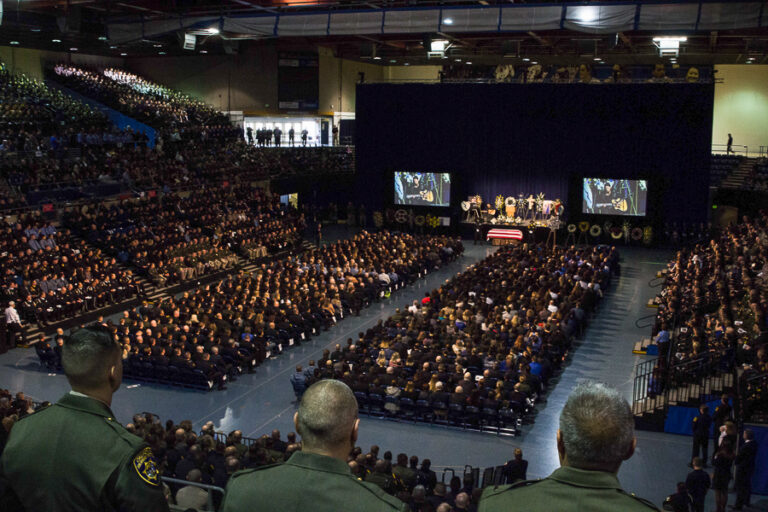
Thousands gathered in the ARC Pavilion to honor the life and memory of 22-year-old Davis Police Officer Natalie Corona on January 18. Corona was killed in the line of duty by 48-year-old Kevin Douglas on Jan. 10 while responding to a three-vehicle collision.

UC Davis administrators advised students to find alternative ways of commuting to campus to make parking spaces available for officers and other attendants paying their respects. The university’s website projected a turnout of an estimated 6,000 officers and other individuals at the service.

Certain parking structures were closed and streets were blocked along La Rue Road, Russell Boulevard and Anderson Boulevard during the procession of Officer Corona’s remains following the ceremony, with individuals lined up along the route.

In addition to those at the ceremony in the Pavilion, individuals gathered around outside of the ARC to watch the ceremony on large screens and at home via livestream.

Although Corona was not from Davis, her family requested the memorial service be held here.

“Davis is the community she loved and was so dedicated to serving,” said Emily Galindo, the interim vice chancellor of Student Affairs in an email to students.

The memorial service began with a video montage of Corona’s life, a musical procession placing her coffin at the front of the stage and a song performed by Billy Ray Cyrus, a friend of the family, dedicated to Corona. Testimonies from fellow officers and the Corona family followed.

Corona’s father worked as a police officer and began taking Corona on ride-alongs at a young age. “Being a police officer was in her blood,” said Officer Eric Labbe, who worked alongside Corona.

Labbe’s sentiment was reiterated throughout the ceremony by other speakers. Along with her parents, Corona’s three younger sisters were also present at the service.

According to the Davis Police Chief Darren Pytel, Corona began working with the Davis Police Department in January 2017 as a community service officer while she attended Woodland Community College. That July, she was presented with the opportunity to attend the Sacramento Police Academy, but had to wait six months due to an injury.

During that time, despite no longer having a paid position with the Davis Police Department, Corona maintained her commitment to being a part of the DPD by volunteering, even after she was assured a position would be waiting for her when she recovered. She attended the Sacramento Police Academy last January and had just finished her field training on Dec. 12, 2018 after graduating. She was a solo officer for just a few weeks before her death.

During his testimony, Labbe encouraged officers from Davis and the surrounding areas present in the audience to join in with shouts of agreement while he listed characteristics describing the young officer.

“There will always be a seat reserved in my briefing room for you,” Labbe said, addressing Corona.

Davis Police Chief Darren Pytel spoke next, addressing the crowd in attendance as well as the Davis community. He spoke of Officer Corona’s resilience, enthusiasm and can-do spirit. Pytel mentioned a bet he had made predicting that Corona would eventually end up as police chief herself one day.

Pytel awarded Corona’s family a Purple Heart and Medal of Distinction award at the ceremony for her service. Addressing members of the Davis Police Department and officers in attendance from across the state, Pytel spoke about moving forward after this tragedy.

“We are resilient, let’s not be divisive,” he said. “Let’s use this as an opportunity to join together to find ways to protect the community.”

Corona’s father and three younger sisters also spoke. Following her father’s speech, the entire ARC Pavilion rose to their feet in a standing ovation.

The ceremony ended with a final prayer and the beginning of the gauntlet and procession which would take Corona’s remains to her final resting place.

Written by: Ally Russell — campus@theaggie.org

Cartoon: Language Class

Written by: ROSEY MOREARTY — rosey@morearty.org

Researchers Study Sierra Nevada Lakes In Changing Climate

Crucial factor identified in effort to better understand how global warming will alter alpine lakes in the Sierra Nevada mountain range

UC Davis researchers published a study in December examining how climate change is affecting lakes in the Sierra Nevada. The researchers worked with data that had been collected at Emerald Lake in Sequoia National park over the course of 35 years and found that while air temperature around the lakes rose during that time span, the temperature of the water varied widely and was driven by the level of snowmelt in the area.

“The rate of air temperature warming that we measured in that basin in the Southern Sierras was really high, over a degree per decade,” said Steven Sandro, an assistant professor in the Department of Environmental Science and Policy at UC Davis and a researcher in the study. “The response in lake temperature over that same period was highly variable, and the reason it was highly variable is because the lake was responding to changes in snow deposition much more so than changes in air temperature.”

The findings are based on the remarkably strong correlation between snowpack, layers of snow that accumulate in high altitudes, and lake temperature as demonstrated in the scientist’s paper. A snowpack is a mediator between the lakes and climate because lake temperature is affected by the snowpack, which in turn is changing due to climate change.

“Snow is like a master variable that really controls how these lakes function. If we lose the snowpack, we lose a lot of the functionality of our lakes,” said James Sickman, a researcher at UC Riverside and a co-author on the paper. “I think the biggest effect of climate change in the Sierra Lakes is going to be the effect on the snowpack.”

Still, snow is only one intermediate variable. The researchers want to create a picture of all the large factors affecting how individual lakes react to climate change. UC Davis graduate student Andrianne Smits is leading a project to deploy additional sensors across the Sierra Nevada to monitor a variety of alpine lakes.

The researchers want to understand how variables like the steepness, size or altitude of the slopes around the lake influence the water temperature and how those factors interact with the changing climate. For the past two summers, Smits and a field team, which included UC Davis students, have hiked to a variety of remote Sierra lakes to deploy sensor arrays which monitor lake temperatures at different depths and provide information about the ice cover. The scientists hope they can use the data to build models which will give the public a better idea of how the lakes will change and allow conservators to target vulnerable lakes.

“What we are trying to do is build a model that will allow us to know what kinds of lakes in the Sierra are more sensitive to climate change, so which are going to change more than others, which are more responsive to climate,” Smits said. “Some lakes are going to do the same thing every year regardless of climate, and others are going to change very rapidly.”

According to Sickman, this type of research is crucial because lakes are important and scientists have much to learn.

“They provide a lot of environmental services for Californians, beyond recreation,” Sickman said. “Most of our most important watersheds are up in the Sierra Nevada, so we need to do these kinds of fundamental studies of how the chemistry, biology and hydrology of the Sierra Nevada function, and how they are being affected by our actions.”

Written by: Peter Smith – science@theaggie.org

Aggies battle back in season, lose championship game

UC Davis Aggies men’s soccer loses in Big West Championship to UC Riverside 4-2 in penalties

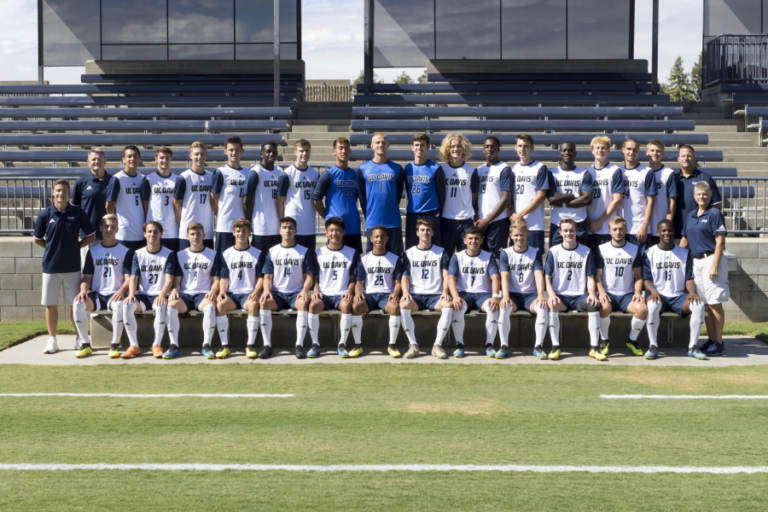
After an strong 7-1 start to the 2018-19 season, the UC Davis men’s soccer team proved why it should be considered a top-level squad. At one point, the Aggies were ranked the No. 17 team in the nation by United Coaches Poll and No. 25 by College Soccer News.

In conference play, however, the Aggies hit a rough patch, losing three and tying one in their first five games. Still playing with the same tactics of constant movement, passing and switching the ball between lines, what started out as a formidable squad appeared to be dissolving.

“Right before conference began we unfortunately had a few injuries that occured at that time, and there were four significant players in the team that all were injured within the same week,” said Head Coach Dwayne Shaffer. “It took us a little bit of time to regroup and get ourselves going again. Another factor is at that time [start of conference] that’s right when school begins. Veteran student athletes are prepared but we had a large group of freshman, and it takes them a while to acclimate.”

After a 1-0 loss to UC Santa Barbara on Oct.17, the Aggies knew that they would have to fight harder in order to clinch a spot in the Big West Tournament. Proving that they still had something left, the Aggies were able to defeat Cal State Fullerton and Sacramento State, on Oct. 20 and 27 respectively, to earn the fifth seed in the Big West Tournament.

“We have a really experienced coaching staff, and Shaffer’s coaching experience helped us to battle back from the bad position we were in but we also just had great senior leadership,” said junior goalkeeper Wallis Lapsley about entering the tournament. “Ultimately, for the season and the playoffs we were at our best so I am proud of that.”

Not unfamiliar with the high pressure and high level of play brought to the tournament, the Aggies did what they do best in the playoff atmosphere: win. Defeating CSUN 3-2 in the first round of play, UC Davis took the semi-final game with UC Irvine with double overtime into penalties. Going back-and-forth with made and missed shots, the Aggies closed the narrow 6-5 victory to head to the championship game.

UC Davis had one more game before they could hold up the championship trophy, facing off against UC Riverside in the Big West Championship on Nov. 10. UC Riverside, being new to the championship finals, gave the Aggies a hard fought battle, keeping the game 0-0 all the way through double overtime. For the third year in a row, penalties were the deciding factor in the championship game.

“It’s [penalties] something we prepare for,” Lapsley said. “It is a difficult part of the game, but that is just the way the game is, that you have to end with a winner and a loser and penalties were the only way to finish the game. When you win in penalties, it’s total elation but when you lose it stinks, so I think we did what we needed to do ahead of time and it is just a coin flip in those situations.”

The Aggies were not able to secure the same result as their semifinal game however, losing 4-2 in the shootout. The Big West tournament victory for UC Riverside was its first in program history. The Aggies ended the year with an 11-4-5 overall record and five seniors graduated from the team.

“They [graduating seniors] have all contributed to the program in various ways, and all of them have had a positive influence on the program,” Shaffer said. “They have also had a positive impact and influence on the young players in the program, so I have been very happy to be able to coach these guys, and they will all be successful young men in whatever path they choose. I am excited for them.”

UC Davis looks to continue their high level of play in the 2019-20 season and bring home a Big West championship.

Written by: Ryan Bugsch — sports@theaggie.org