53.7 F
Davis

Davis, California

Saturday, December 20, 2025
Home Blog Page 542

Is environmentalism for everyone?

MEENA RUGH / AGGIE

An argument for no climate boundaries across nations and race
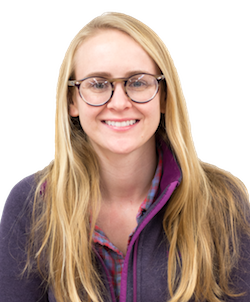
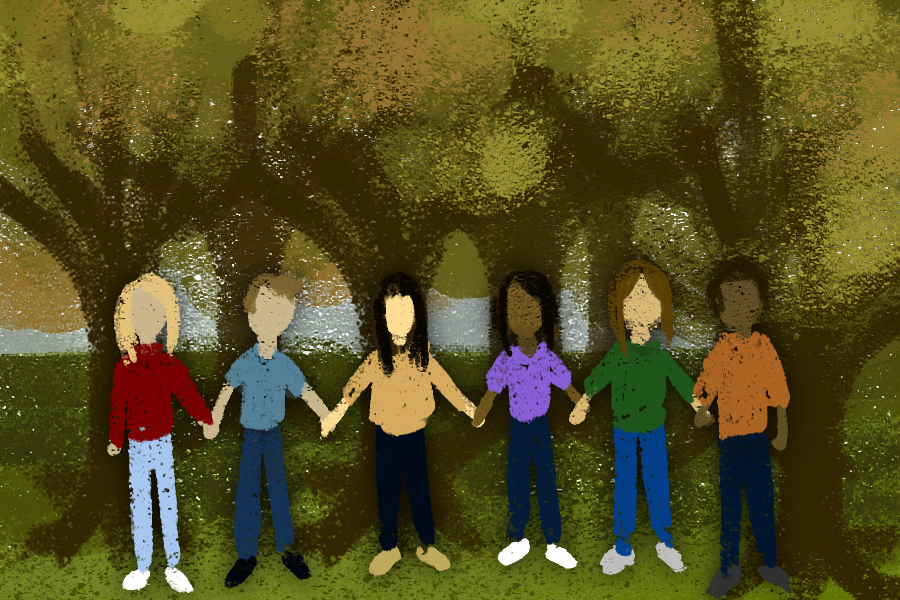
Reflecting on my childhood, I realize that my relatives and friends all showed the same level of disinterest in climate change. In fact, I don’t remember discussing climate change in school very much, either. In my lifetime, I’ve noticed environmentalism used to be a concern for fewer people. But today, more people — regardless of race, ethnicity or socioeconomic status — are paying attention to environmental issues.

A few factors have been shown to contribute to an individual’s relationship to the environment. For instance, wealthy people have larger carbon footprints because they use more energy, consume more and live in bigger houses. But wealthy people are more likely to adopt green practices, like switching to organic produce, because they can afford to.

While people in poorer countries lack the resources to live “greener” lives, a study by Dr. Malcolm Fairbrother of Bristol’s School of Geographical Sciences found they are no less concerned about the environment. However, they typically care more about clean air and water rather than climate change.

Everybody wants and deserves a healthy environment. Environmentalism isn’t just a luxury for people who are rich or white.

Some have argued that American environmentalism has its roots in racist ideology — since early environmental pioneers like Madison Grant were racist old dudes. They have also argued that environmentalists like John Muir cared more about the treatment of animals than the treatment of some groups of people.

Some have claimed that the environmental movement has become “too white” in recent years, since politicians like Al Gore and celebrities like Leonardo DiCaprio have become faces for the movement. But others say that we’re moving toward a return to environmental justice, which developed decades ago in response to mainstream environmentalism.

In the 1980s, mainstream environmentalism was criticized for being “too white” and only caring about majestic animals and landscapes.

More recently, environmentalism has seen social-justice battles. The Standing Rock Sioux opposed the Dakota Access Pipeline, Miami activists continue to fight climate gentrification and the Movement for Black Lives advocates for the end of environmental racism.

“Communities of color, which are often poor, are routinely targeted to host facilities that have negative environmental impacts — say, a landfill, dirty industrial plant or truck depot,” says the National Resources Defense Council’s website. “The statistics provide clear evidence of what the movement rightly calls ‘environmental racism.’”

Poor communities risk more exposure to pollutants than rich ones. Even though we still see disparities between wealthy and low-income communities, the environmental movement has diversified over the years. And we have to keep learning to work with our differences and inequalities to make the environment better for everyone.

American culture has diversified as well. It’s complex, even on the individual scale, and to claim that environmentalism is “too anything” is narrow-minded. We have to start thinking about a healthy environment as a basic human need which everyone deserves.

As a developed country (where people consume more and use more energy), it’s our responsibility to set the example. We should be passing eco-friendly laws and creating cutting-edge green technologies that can be passed along to less-developed countries.

How do we make sense of all this gobbledygook? Altruism, which works well with environmental justice. We make “greener” choices, hoping that our personal actions can make a difference because they create a culture of caring. And, hey, maybe this will influence voting, too. We set the example for the environmental standard we hope to achieve, live within our means and lend a helping hand to the less fortunate.

In short, we do everything that Miss America has been telling us to do for the last century.


Written by: Jess Driver — jmdriver@ucdavis.edu

Disclaimer: The views and opinions expressed by individual columnists belong to the columnists alone and do not necessarily indicate the views and opinions held by The California Aggie.
Dissecting the mentor/mentee relationship

ANH-TRAM BUI / AGGIE

What it means to be a mentor, mentee to another person

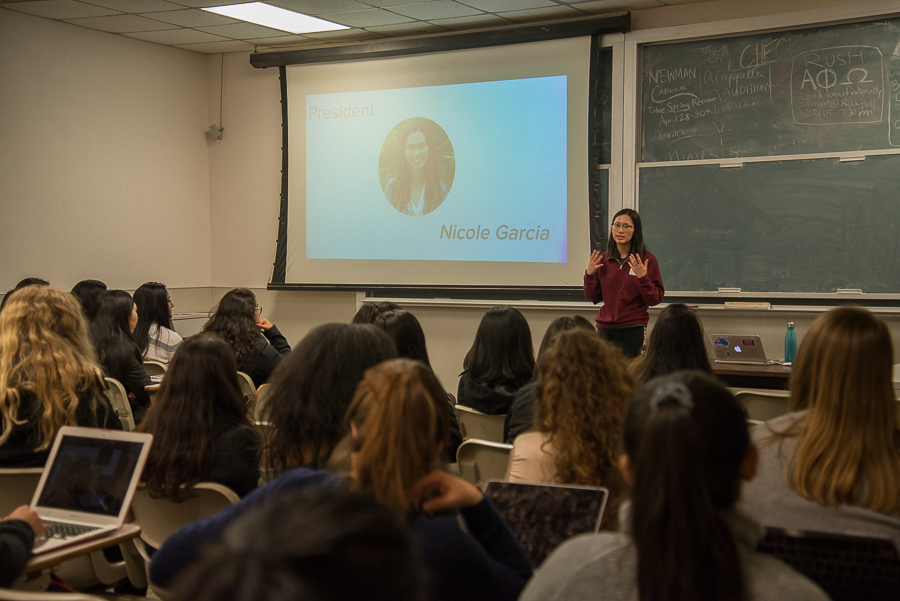
Coming into college, students may lack direction or identity. Through time, experiences and relationships, students can eventually become more prepared for the world after college, both professionally and personally. However, having a figure to look up to and follow in their successful route also aids students in finding their personal direction and confidence in their intended track.

Many students turn to mentors for guidance. Especially as underclassmen, students can look to their older peers or workplace supervisors for inspiration on how to push through the difficulties of college and the working world.

Disha Bahl, a fourth-year genetics and genomics major, had the opportunity to be mentored by several distinguished individuals working in her intended career path. She noted that her biggest takeaway from her mentors is having the guidance to excel through college.

“No one in my family has been to college and this is my first time navigating,” Bahl said. “Having someone there to reassure you and reassure you of your qualities is very helpful; it’s hard to do it alone.”

Bahl said that each of her mentors have been crucial in teaching her different skills and helping her grow in various aspects. She met each of her mentors at different points in her life, working for different companies in various industries. After developing relationships with her respective superiors, Bahl began to look to each of them as mentors, as they took an interest in her outside of the workplace and began advising her on her personal and professional life.

“[My first mentor] helped hype me up and made me believe in myself,” Bahl said. “[My second mentor] was also really encouraging and wanted to talk about my career and my future. My last mentor was actually here at Davis, and has been helping me study for the MCAT and applying for med school.”

Students can also find mentors in older peers who have traversed their way through difficult classes, roommate struggles, job applications and other hardships that young college students may have yet to experience and work through.

Candice Liou, a second-year communication major, found a mentor through a campus club and notes having a streamlined professional college experience by having this knowledgeable figure there for her. Several clubs on campus have facilitated mentor-mentee programs where they pair students up to establish this relationship. Students have the opportunity to be paired with a mentor to help guide them through their college hardships, a and this was something Liou took advantage of.

“As a fifth-year, [my mentor] gives really good advice,” Liou said. “She has a lot of experience and her own struggles; she has made her own mistakes that she advises me to avoid.”

Liou specifically relies on her mentor for help with applications and interviews for potential jobs or club-related leadership positions. Having an older mentor gives Liou the opportunity to get tailored help and answers from someone who has gone through similar experiences in years prior.

“[My mentor] told me that for interviews, I should make sure I’m super attentive,” Liou said. “She also advises me to try out for different clubs [that I don’t know about] such as Consult your Community because she knows that I’m interested in consulting.”

Liou also noted that having an older mentor who has gone through various ups and downs provided her with a mature figure to help her learn how to handle difficulties she may face as well. Liou was able to gain a more mature perspective about things such as rejection and failure from her mentor.

“[Without my mentor] I would probably have a really different mindset on rejection and my professional life overall,” Liou said. “I learned that rejection is just a part of life and not something you should necessarily beat yourself up about. Rejection serves a purpose and that is to steer you in a different direction or make you improve as a person.”

Eventually, students have the opportunity to pay it forward and become mentor figures to others. Bahl, ready to pass on her experiences to younger individuals, now sees herself as a mentor to younger students.

“I have a lot of experiences I feel like I could transfer to other people to benefit them,” Bahl said. “I recently got a little in Davis Women in Business and I feel like I’ve been a pretty solid mentor for her so far.”

Bahl said that after going through difficulties of working through internships and hardships of life, she finds herself at a place where she can be a successful mentor to a young and maybe naive individual.

“I navigated the ups and downs, and I’m at a point where I’m more comfortable in my professional career and personal life,” Bahl said. “I feel like I’ve learned a lot and can give that back to other people. A lot of people come up to me and ask me for advice; if people are coming to me for advice, I feel like I must be doing something right.”

Leslie Leon, a third-year human development major, became a mentor due to her interest in providing help to other people.

“I really like to help and influence people to get ahead, whether that’s personally or academically or just in any way that may help them,” Leon said. “I feel that all the experience that I’ve had, whether professionally or personally, I can use to help give people advice and seek people out to help.”

Though acting as a mentor generally means providing help and growth to another individual, Leon finds that she has grown and learn from being a mentor to others as well.

“[After being a mentor], I’m able to understand that everyone has gone through different experiences,” Leon said. “Just because someone doesn’t agree with you or follow the advice you give them, it’s not because they’re wrong and you’re right or you’re wrong and they’re right, but everyone has a different life experience that shapes their perspectives on the world.”

For students hoping to one day become a mentor to others, current mentors note that it’s an experience that comes only when an individual may be in the right time and place.

“If you’re not confident with yourself or you don’t feel like you have a solid grasp on yourself then there’s no point in being a mentor,” Bahl said. “You should do it only if you’re at a point in your life you feel like you can benefit someone else.”

Leon stressed the importance that a mentor role can play in the life of a younger individual, and that entering into such a role shouldn’t be taken lightly.

“Only become a mentor if you have that will and that drive inside of you to help others, to fully commit to mentoring someone,” Leon said. “Your mentee is looking up to you for any type of help, whether professionally or academically or personally; as a mentor, you’re that foundation to the beginning of their growth.”


Written by: Alyssa Hada — features@theaggie.org

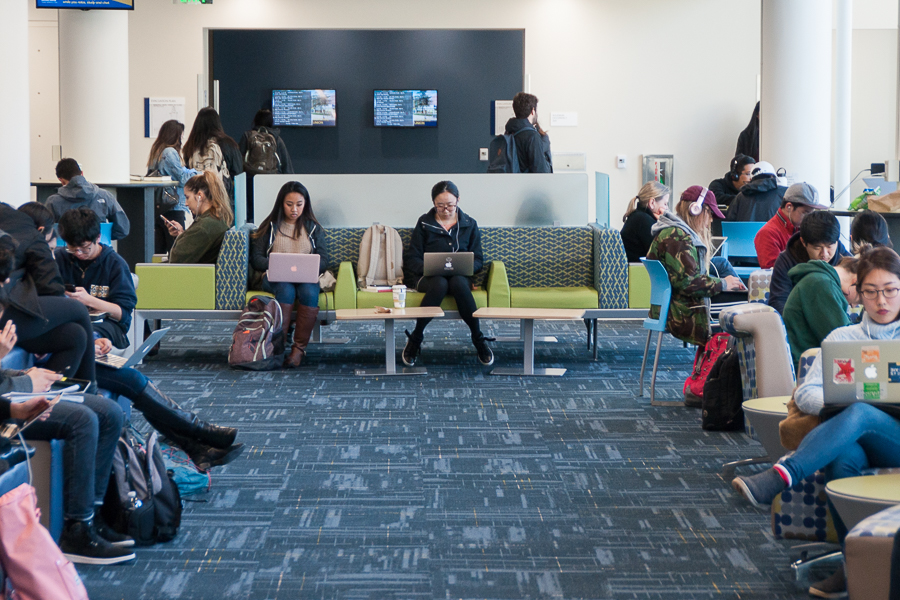
Eight study spots for this coming finals season

JESSE STESHENKO / AGGIE

A guide to Davis’s on-campus study spots

With finals season just around the corner, Davis students scramble for a place to focus and absorb all the material they have learned this quarter. The California Aggie has compiled a list of eight study spots on campus, so it’s time to buckle down and get to work.


8.Peter J. Shields Library

Misery meets company in the Peter J. Shields Library. What better place than a library to lie to yourself about being productive? But not to worry — this finals season we may even encounter visits from the CoHo for some caffeine boosts and therapy fluffies to ease your stress. Shields offers various levels of study environments, from the chatty first floor group study lounges to the dead-silent fourth floor, not to mention the 24-Hour Room for all you procrastinators.


7.ARC Cyber Lounge and Student Lounge

If you’re looking for a study spot where the wifi is stronger than your will to study, the ARC Cyber Lounge is the place to be! With Peet’s Coffee and the Proshop nearby, the ARC lounge seems to be a popular location among Davis students. If you’re looking to relieve some stress during your study break, the cyber lounge is conveniently located near the gym, where you can sweat instead of cry.


6.Science Laboratory Building

If you love the sunlight and enjoy people-watching during your study breaks, the upper floors of the Science Laboratory Building are an ideal study space for you. Its second and third floors offer several indoor study lounges and small meeting rooms for students to use. Another perk to studying in this building is the BioBrew found on the first floor, where students can find warm coffee and snacks perfect for the rainy and cold Winter Quarter weather.


5.The CoHo

The CoHo is the place to be if you are one of many caffeine-addicted college students. Not only does the CoHo house the best coffee on campus, but it also serves a variety of foods — an ideal way to reward yourself after countless hours of studying. In addition to the food, the CoHo offers an abundance of seating from large booths to barstools. If you’re looking to surround yourself with other Aggies hard at work, the CoHo is the place for you.


4.Silo

The Silo, much like the CoHo, offers a variety of eateries such as the newly renovated Spokes Grill, Peet’s Coffee, Crepe Bistro and The Gunrock. With the refreshed menu also comes several new seats for Aggies to settle down and get to work. The Silo offers less of a “hustle-and-bustle” environment for students looking for a study spot less crowded than the CoHo.


3.Quad

The Quad is another favorite study spot for many Davis students. With its close proximity to the MU and lively atmosphere on the lawn itself, if weather permits, the Quad is the perfect location for those who are seeking an outdoor study spot. Additionally, the Quad has several hammocks, perfect for a power nap during study breaks.


2.Memorial Union

Though the MU may seem to be extremely crowded during finals season, it still remains one of the top destinations for students to study. The bustling college environment along with the multitude of seating and outlets throughout all floors contribute to the MU accommodating hundreds of students everyday. If you are looking to find motivation to study, the MU is a fitting choice, as you will be surrounded by countless students busy at work.


1.The Death Star

Although navigating your way through the Death Star may seem like a daunting process, a peaceful and serene atmosphere awaits. Not only is its name fitting to the stress most students will be feeling come week 11, but it offers various shaded outdoor study spots. Another bonus to studying in the Death Star is its close proximity to ShareTea, a bubble tea favorite among Davis students. May the force be with you this finals season!


Written by: Sneha Ramachandran  — features@theaggie.org

Chancellor creates three task forces to improve student life

IAN JONES / AGGIE FILE

Task forces to review affordable housing, food security, mental health care

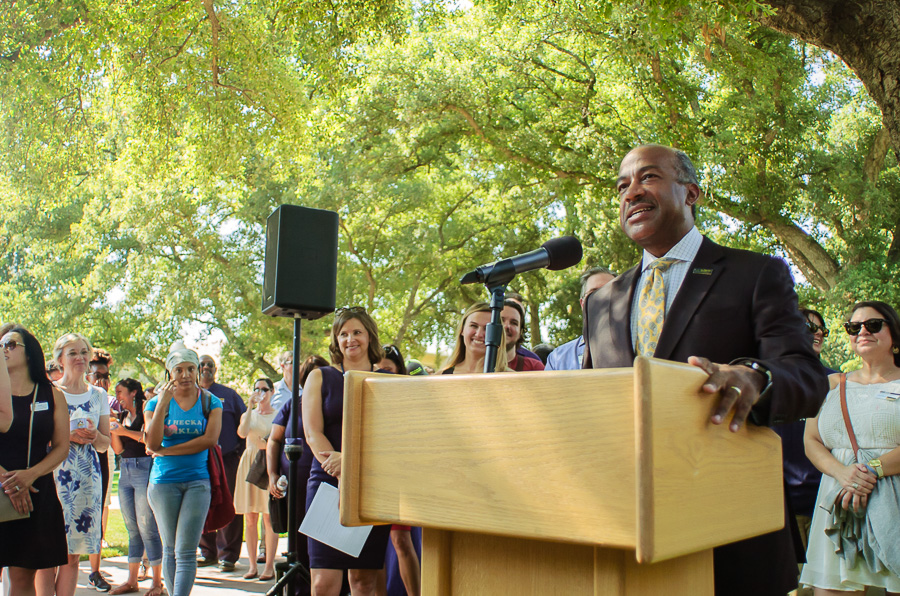
UC Davis Chancellor Gary May created three task forces to investigate and promote affordable housing, food security and mental health care. Each task force will submit an analysis report of recommendations for future improvements to the chancellor by June 30.  On Twitter, May stated that the task forces were conceived in response to “critical student needs.”

“These are issues that have tremendous impact on our community,” May said via UC Davis News.

David Campbell, the associate dean of the College of Agricultural and Environmental Sciences, will head the affordable housing task force. Campbell holds multiple degrees in political science and much of his research focuses on community engagement and promotion programs.

Campbell has given lectures on the importance of community involvement and is the author of several publications related to nonprofit organizations and public administration.

May appointed Francene Steinberg, professor and chair of the Department of Nutrition, to lead the food security task force. Steinberg is a registered dietitian for the American Dietetic Association. As the leader of the food security task force, Steinberg will be reviewing the the UC Davis community’s access to nutritious food.

According to the United Nations World Food Programme, a community’s food security must be determined based on three standards: availability, access and utilization.

Steinberg will analyze these components of food security at UC Davis, then provide the chancellor with a summary of her findings and recommendations for future improvements.

Cameron Carter, the interim vice chancellor for research at the Office for Research and a professor of psychiatry and psychology, will spearhead the task force for mental health. Carter is responsible for significant research by the university into human behavior and mental disorders, and has authored a significant number of publications on cognitive neuroscience. Much of his research is designed to promote the advancement of therapies and solutions for schizophrenia, OCD and other mental disorders.

“How can we continue to provide the resources our students need effectively and efficiently?” May said to UC Davis News. “That’s what I’m asking the task force members to help me determine.”


Written by: Jacqueline Moore — campus@theaggie.org

Racial climate on college campuses

MORGAN TIEU / AGGIE

Universities have a role in reducing racism by altering curricula

Executive director of the University of Southern California Race and Equity Center Dr. Shaun Harper spoke at UC Davis about his research on Feb. 22. The seminar, titled “How Universities Sustain Racism in America”, was part of the UC Davis Forums on the Public University and the Social Good.

Harper and his team have visited 50 colleges and universities across the United States and collected data from 10,000 interviews with students, staff and faculty to better understand racial climates in institutions of higher education. At each institution, 300-700 interviews were conducted and were compiled along with local news articles and questionnaires to create an image of the racial climate at each site. The findings are then compiled in a report delivered to the institution and include lengthy recommendations each institution can take to improve their racial climate.

Universally, minority students reported feeling isolated, overwhelmed and singled out at colleges and universities. Being the only minority person in their departments, faculty members, such as professors and advisors, reported a feeling of “onlyness”, as well as fatigue in dealing with daily grievances. All but one university out of the 50 surveyed had reports of racial slurs being said to minority students and staff.

Despite the great diversity in America, 87 percent of college presidents are white, and so are 79 percent of full-time university faculty members. Such grave imbalances have inspired Harper since he was a child to push for changes.

“Black people in my town were disproportionately very poor and not in positions of leadership and authority,” Harper said. “It’s not because my people don’t want to be in positions of leadership, or that we want to be poor. I knew it wasn’t that. I also knew that it wasn’t because we don’t work hard or we don’t put forth the effort. My mom cleaned white people’s toilets in their homes, doing backbreaking work. I knew there had to be larger explanations. I’ve been on a quest for this my entire life and career. Not just to better understand them, but to address them and correct them.”

UCD Provost Ralph Hexter, the director and series sponsor of the UCD Forums, said he was only slightly surprised by Harper’s results.

“Yes and no,” Hexter said. “When I say, yes, this was so powerful and cogent an argument. But when I say no, it’s because — though I wouldn’t be able to put it so forcefully, much less with the kind of research and experience behind it — I understand and have for some time understood that, to quote the titles of the first two chapters in [Harper’s] forthcoming book, ‘the university was born racist and still is racist.’”

Harper included in his lecture a clip from CNN where young children looked at images of people of different skin tones while being asked questions about which color corresponded to being “dumb” or “beautiful”. The children, black and white alike, pointed to images of black and brown children as embodying negative attributes and white children as exemplifying positive attributes. Even at five years old, these children were equipped with damaging stereotypes that are often not adequately challenged in a school curriculum. Children do not seem to be born racist, but rather become racist through teaching and learning.

“We need to change the curricula in our schools of education and our schools and be very, very intentional in doing the work to disassemble racism,” Hexter said.

By the time most students graduate from a university setting, they are unlikely to have had any formal curricula regarding race. Dr. Maisha Winn, a professor in the UCD School of Education and the co-director of Transformative Justice in Education, said educational researchers in many age groups can work together to create better curricula regarding race.

“Higher education researchers help us think about what we should be doing in that P-12 age range,” Winn said.

After noticing schools had sometimes done little to change their institutional practices when delivered a racial climate report, Harper now revisits the site with his team to publicly announce the results of the studies. Harper’s work indicates a disconnect from the values of diversity championed by universities and the painful experiences many students and staff still encounter.

“When you seek the truth from oppressed people, marginalized people, people of color on college campuses, they will give it to you,” Harper said. “But you have to be in pursuit of how they experience this place so differently than their white counterparts.”


Written by: George Ugartemendia — science@theaggie.org

Davis experiences a reduction in DIY shows

VENOOS MOSHAYEDI / AGGIE FILE

With Third Space closed, underground musicians struggle to book events

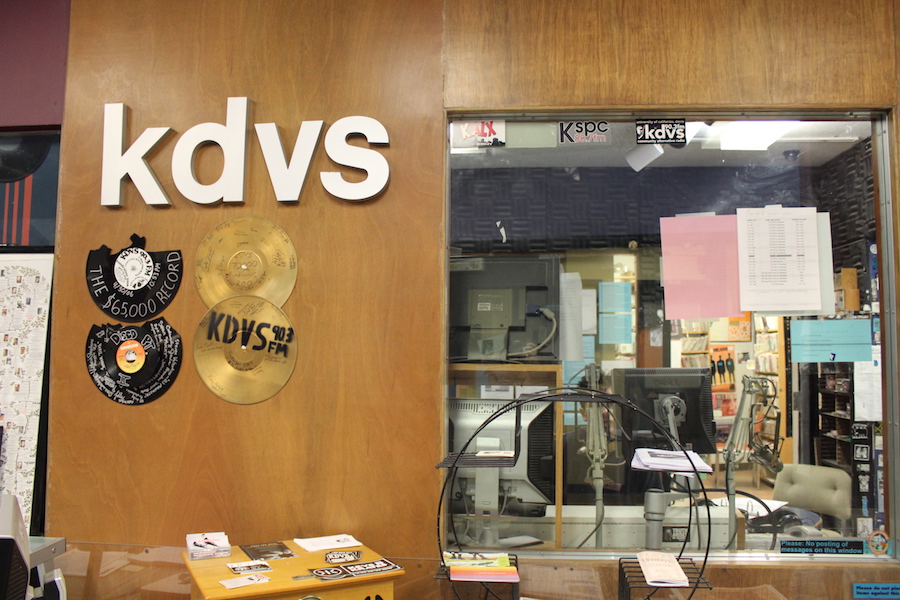
KDVS held yet another show at the Turtle House this quarter, featuring KDVS DJs, Xris and Da Rap Nerd. The music was undetectable from outside — the sound completely trapped in the vicinity of a dimly lit basement led by a small flight of stairs. The event was OK Radio’s “Indie Given Nights,” and it opened with East Bay rapper Danny Palidin and local hip hop artist Paul Willis.

People began pouring in, and soon the room was swarming with sweaty bodies. Despite the amount of discomfort and lack of breathability, everyone was too engrossed in the music to notice. For many, The Turtle House basement was an escape from the world above.

Unfortunately, it also serves as one of the few venues left in Davis where artists can perform freely without noise complaints. Its sound-proof basement enables musicians to play loudly and late into the night.  

It’s been a tough year for underground music in Davis, especially after the shutdown of Third Space Art Collective. Official venues in Davis, like the Mondavi Center, tend to cater to genres like classical, bluegrass, folk and jazz.

Owen Martin, the KDVS events director and a third-year sustainable agriculture and food systems major, says that, without official venues, musicians need to opt for other solutions, transforming their own homes into temporary venues. The main issue in hosting DIY events in a house is running the risk of never hosting there again — one noise complaint and the show is over.

“It’s been immensely difficult to host shows,” Martin said. “The only venues left in Davis for this manner of thing are people’s personal homes. Unfortunately, either not many people open up their homes, or when they do say they’re interested in hosting, I give them dates and none of them work for them. Currently, the only shows I’ve been able to book have been at established house venues, Papa’s Palace and Turtle House. While there are live performances at local eateries such as Woodstock’s Pizza, they’re fundamentally different from what we strive for at house shows. It would be nice to see another Third Space pop up in Davis or more people open their houses.”

Mitchell Rotter-Sieren, the KDVS general manager and a fifth-year chemical engineering major, has noticed a downturn for underground music in Davis this year. Though this decline is largely affected by venue complications, it may also be impacted by a decrease in local bands.

“There used to be KDVS bands, and when they formed, they accelerated the music scene because they were passionate about it. There were bands that constantly played shows, but they’re not around anymore,” Rotter-Sieren said.

Unlike a fraternity party, the purpose of DIY shows isn’t to get a large crowd, but rather a genuine audience. KDVS hosts shows to support upcoming artists and, in turn, provides music for people that wholly appreciate it. Sadly, there aren’t as many shows as anticipated.

“The point isn’t to get as many people as possible,” Rotter-Sieren said. “It’s for the people who enjoy this to congregate and enjoy it together. The problem about being niche is the off-years. Ideally, the music world would thrive and still be niche. That’s just not the way it works, I guess.”

In spite of recent struggles, locals continue to show immense support, making it possible for DIY shows to continue in Davis. After all, the primary goal of these events is to gain support for indie musicians.

To those like Rotter-Sieren, underground music culture became an integral part of their college experience. Fourth-year psychology major Kenzo Mann and his friends were even inspired to create their own band, Knobby, on the rise this year. Regardless of the obstacles that come with DIY shows, there’s a beauty in being able to perform in an unofficial venue such as someone’s basement.

“I always prefer playing in people’s houses,” Mann said. “House shows always seem to be the most energetic, which is a large part of why I love playing them. I also really appreciate the DIY atmosphere at house shows […] I love to see people taking matters into their own hands when it comes to music.”

The Midnight Avocados, a progressive indie rock band in California, was able to connect with KDVS last month through an online DIY booking forum they use to network with artists and bookers in the West Coast.

Austin Coleman, the head vocalist, pianist, writer and manager of the band, has faced similar hurdles when booking shows. But despite this hassle with booking events, there’s an indescribable vibrancy in DIY music that makes musicians want to do it over and over again.

“Gigging for starting bands is difficult today,” Head said. “Either you’re not their type, or don’t have the following. We break out teeth trying to get shows, even in the Central Valley, where we are situated. Having performed the Bay Area several times already, the equation usually comes out the same: DIY house parties and events are more alive today than ever.”

For Head, musicians strive to produce sound by any means necessary. Whether it means giving up food or comfortable sleep, this blinding passion has no limits.

“The best part about being in this group is being able to do what we love for a living,” Head said. “Musicians are odd creatures willing to give up materialism in exchange for melodies. We’ve slept in vans, went days without eating and have gone weeks without making a single dollar, but when you are on stage, none of that matters and you are never blinded by why you chose this profession.”


Written by: Becky Lee arts@theaggie.org

Humor: Budget Cuts: Select faculty to be sacrificed to Gunrock effigy

MICHELLE GORE / AGGIE

Administrative bloat goes bye-bye

This tape was found in a deep, dark room, hidden in the bowels of Wellman Hall:

“I walked into the room, and all I could hear was a chanting, rhythmic and cyclical. ‘Guuuuuunnnrooooooccckk… Guuuuuuuuuuunnnroooooccckkk…’ echoed off the walls of this godforsaken corner of Wellman Hall.”

The tape skipped, crackling slightly.

“I could see, far in the distance (the room was larger than any kind of real-world proportions) some torches and a circle of hooded figures that were swaying, back and forth, back and forth.

“Suddenly, out of the darkness, a hooded man appeared before me. It was Gary May.

“‘Did you bring any sacrifices?’ May had asked me. He was smiling ear to ear, breathing heavily. I made no reply. ‘What department are you from?’ I told him I was from The Aggie. ‘Ah yes, very good. Follow me.’

“I followed him to the other side of the room, where to my horror I found piles of charred bodies at the feet of an 100-foot-tall bronze statue of Gunrock, whose visage looked angry, but as it saw me, I could see his horse mouth turn up into a smile.”

“‘Gunrock will be quite pleased with what we have brought him today. No money means budget cuts, which means a very happy Gunrock.’”

“Down in the flaming circle I saw faculty from every department, but mostly the humanities. In fact I think it was the entire humanities faculty — also the entire managing staff of The Aggie.”

The tape skipped ahead.

“I have hidden in a corner of the room, hoping that they won’t find me. Wait….I hear footsteps… NOOO-”

That was all we found.


Written by: Aaron Levins — adlevins@ucdavis.edu

(This article is humor and/or satire, and its content is purely fictional. The story and the names of “sources” are fictionalized.)

A Co-op for Scientists

JAMIE CHEN / AGGIE

Core facilities help faculty members, students share resources across campus

Scientists across UC Davis have become part of a co-op where they collectively share laboratory equipment. A relatively new program is helping researchers reduce the cost of experiments as well as employ experts on the technologies that people from any discipline can use.

“It’s called the Research Core Facilities Program, and it was created in 2015 […] it was developed to do a better job of coordinating the shared scientific resources that we have,” said Julie Auger, the executive director of the RCFP. “So those are laboratories that have very expensive technologies or highly expert personnel, that are generally too expensive or too hard to find for individual faculty members to get access to.”

Instead of creating a lab and buying equipment for every scientist wanting to do research, the core facilities house a few expensive technologies that nearly anyone can use for their projects. There is also a listserv for individuals to find specific tools.

“They [the facilities] often start out when somebody wants to buy a very expensive piece of equipment… these things cost 200, 300, $400,000,” Auger said.

After the initial purchase price, service contracts can be bought to insure the machines will be fixed if anything goes wrong. The contracts usually cost 10 percent of the purchase price every year.

“So after the first year of warranty is up, if you have a $400,000 electron microscope that you’ve purchased, you have to put out $40,000 that next year,” Auger said. “So if you have something where only one person has access to it, and they only use it 20 percent of the time, because it’s unlikely that all of their research is dedicated to that one piece of equipment, it sits idle 80% of the time, yet that one person is responsible for all of the cost of maintaining it.”

Core facilities have a recharge for using the resources. The price varies due to the type of equipment needed, how much the facility staff needs to be involved in running the experiment and other factors. A recharge is leveled on researchers to cover the costs of running the facilities, as the core program does not make a financial profit.

The RCFP just launched a program that offsets the cost of core facilities to scientists who are trying a type of technology they have not used before in their research. This Pilot and Feasibility Program may award money to researchers up to four times this year.

Instead of purchasing expensive lab equipment for new employees at UC Davis, the school offers them the opportunity to use core facilities for a negotiated period of time free of charge. According to Auger, it is more cost-effective for departments to cover the costs of using equipment at a core facility rather than buy new machines.

Garry Pearson is the Greenhouse Manager and oversees part of the 170 greenhouses and related facilities UC Davis has. As a core facility, Pearson and his team not only work with scientists to help set up their experiments, but they also design and create about 25% of the equipment used.

“We service about 100 faculty in their research projects, so I like to say that we grow everything from artichoke to zucchini and everything else the researchers can think of in between,” Pearson said. “We have approximately 170-180 projects, they are spread across all of the disciplines within the college.”

Even though most research is done by faculty and postdoctoral students, graduate or undergraduate students working with them can have access to the projects done in partnership  with core facilities.

“Initially, what a faculty researcher will do is they would either have a master’s student or a PhD student that they would develop project protocol,” Pearson said. “If it’s a greenhouse related activity then they would present us with a space request. So then we would provide them with our perspective on where this could fit into the game plan,”

For microscopic experiments, a core facility with a flow cytometer and related equipment are available elsewhere on campus. These machines examine cells and how they react to fluorescent dyes.

“I’d say predominately graduate students [are using the equipment],” said Bridget McLaughlin, co-director of UC Davis Flow Cytometry Shared Resource. “Sometimes, undergraduate students [use the equipment], and I think it’s a wonderful technique for an undergraduate to learn, to introduce to all aspects of cell biology and fluorescent detection.”

To examine elements at parts per billion or parts per trillion, the inductively coupled plasma mass spectroscopy technology can be used at the Interdisciplinary Center for Plasma Mass Spectrometry. This technique has been used to date artifacts, determine the life history of fish based off their ear stones, or otolithes and see if there is a correlation between toxic metals and autism.

“It’s a pretty diverse range of things, there’s never a dull moment, there’s always a new method to tackle. We seem to be going international, we’re getting clients from all over the world that specifically want to do the fish-otolithe method, because we’re kind of known for that now,” said Justin Glessner, a spectroscopist in the facility.  “We’re an all-inclusive facility, we feel like we are a public resource, we’re publicly funded, and we want to just have open access for this type of capability for whoever needs to use it.”

A common sentiment that is expressed about the core facilities is the idea of saving money, and that in the long run it will lead to further investment in new technology for UC Davis. However, the advantages of consolidating expensive equipment to a few spaces extend beyond financial reasons.

“I think the chief benefit to having equipment that is available to investigators centrally located in a core facility is that those investigators have the access to the expert staff who have years of experience with the pitfalls and also the successful strategies for obtaining good quality data,” McLaughlin said.


Written by: Rachel Paul — science@theaggie.org

Humor: I LIVED IT: I survived being mansplained to

MICHAEL VADON [CC BY-SA 4.0] / WIKIMEDIA COMMONS
And I lived to tell the tale

Last week, I thought I was going to die. Not because my questionable habits of drinking 17 cups of ShareTea boba per day or sleeping 30 minutes a week had finally caught up with me, but because I was mansplained to.

It started out innocently enough, as most interactions do. I was minding my own business at the CoHo with a very large set of headphones on and a sign around my neck that said “Do not talk to me” when the unthinkable happened: I was approached.

This guy came up to me, looked both ways before speaking and then knelt down to my level, because I am very short and he wanted to make sure I could hear him loud and clear. He later reevaluated his stance and instead grabbed a chair and sat backward on it, like a teacher who was trying to be relatable.

“You know,” he started. At the time, I didn’t know, but was very curious about what input he had to contribute. “Women aren’t people,” he said with questionable confidence.

This made me think for a good minute. Was I not a person? All this time, I had thought that I was, but after a man had explained it to me, it all started to make sense. At that point I began to question everything, but part of me still felt the urge to resist because something about that statement just didn’t seem physiologically accurate.

I told him that I definitely was a person and wasn’t really sure where he got the idea that women aren’t.

Nevertheless, he persisted. “Well, actually, you’re wrong,” he continued. “Women aren’t people because that’s my opinion, so it’s a fact now.”

I was fascinated and engaged all at once. His logic was rock-solid and there really was no disagreeing with it.

I smiled and told him I completely understood what he meant now and thanked him for imparting his wisdom upon me, a simple girl who was only knowledgeable about cooking, cleaning and ShareTea boba.

I guess the moral of my story is that being mansplained to actually isn’t so bad and is actually kind of helpful. When I was first approached, I was ignorant and afraid, thinking I was going to die, when all this poor guy wanted was to completely alter my thoughts and feelings in favor of his own. That’s obviously not terrifying at all, and I feel fine now! In the end, I was just being crazy and emotional and forgot my place, but I’m so glad I had a man explain it to me.


Written by: Lara Loptman — lrloptman@ucdavis.edu

(This article is humor and/or satire, and its content is purely fictional. The story and the names of “sources” are fictionalized.)

Sixth annual climate conference: growing resilient forests

MICHELLE GORE / AGGIE

Yolo Interfaith Alliance for Climate Justice holds annual climate conference

The Yolo Interfaith Alliance for Climate Justice will be holding its sixth annual conference on Saturday, March 10 from 1 to 5 p.m., hosted by the Unitarian Universalist Church of Davis. Doors for registration open at 12:30 p.m.

The agenda for this year’s conference is “Deepening our roots, growing resilient forests.”

“Each conference deals with a different aspect of giving information about climate change and tries to have workshops to help people know what they can do about climate change,” said Jim Craner, a member of the Yolo Interfaith Alliance for Climate Justice.

The conference features two keynote speakers: E. Gregory McPherson, a renowned urban forest researcher for the U.S. Department of Agriculture at the Pacific Southwest Research Station in Davis, and Daniel Barad, the Sierra Club’s biomass campaign organizer, who will address the public on how to make California’s urban and Sierra forests more resilient to climate change.

“These are two very important speakers for anyone who cares about either the urban or the Sierra forests,” said Lynne Nittler, a Yolo Interfaith Alliance for Climate Justice organizer. “There has been a major study published last week with one set of ideas of what can be done, but our speaker has a different suggestion.”

McPherson warned about the threats that Northern California forests face.

“Maybe our biggest threat is ourselves,” McPherson said. “People abuse and neglect trees and take them for granted. Urban forests have a lot of species that are vulnerable to drought because they come from climates that receive more rainfall than here. Many of them have suffered and died.”

McPherson will talk about how to identify and protect trees as well as what should be planted where.

“My presentation will try to make the point that it really takes our continued commitment to our urban forests to create and sustain an urban forest that will benefit our children’s children,” McPherson said. “It is the legacy we have inherited from generations ago — who put in the resources, time and love to plant and care for these trees. It is up to us to step up and perpetuate and improve what we have inherited.”

Nittler strongly encourages students to attend the conference.

“Our conference is free, but we do suggest a $10 donation at the door,” Nittler said. “We are so glad to have students attend. It is just a 20-minute bike ride from campus, entry is free and there will be a variety of workshops. Refreshments will be provided as well.”

The event will also feature a children’s literary group and a community singing group in between the two speakers. In the last hour, guests will have a choice of 10 different activities. There will also be two discussion groups, one with each speaker, which will allow guests to ask questions about the conference.

“It is a mission of building awareness and educating and then leading through action,” Nittler said. “We are in desperate times with the climate. If we don’t stop it, it sweeps over everything.”


Written by: Rabiya Oberoi — city@theaggie.org

The blood price of American news

PHIL ROEDER [CC BY 2.0] / FLICKR
Foreign commentary on America’s strengths and flaws

Fish need water, and we need the news.

There was a point in my life when I hated the news. News bookmarks on Chrome were deleted; political pages on Facebook were unliked; Sunday newspapers at coffee shops went unpurchased.

That attitude thankfully changed — and with it came a newfound thirst for updates that not only keep me informed as a citizen, but as a writer. There exists a romantic idea that the free press is synonymous with the word “America,” and it’s not entirely wrong.

This idea is a bit murkier in Russia, where state control of the media can make the lives of reporters opposed to Russian involvement in Ukraine and Syria exceedingly miserable. Citizens still require news, but the news they receive isn’t as sovereign as it could be.

Questions of independent reporting aside, finding news outside the purview of the Russian government is actually pretty easy. Website access to The New York Times and The Atlantic — not known for their favoritism toward Russia — is readily available, although loading The Aggie’s website requires an IP address change using a VPN.

Repressive? Not for an American student, even one with local interests in mind. There is a certain power in the free press, however, that I could only have discovered by living in Russia.  

Recently, a Russian friend of mine — a fellow student — asked me to watch “The Post” with her at a movie theater in the heart of St. Petersburg. Newly released and fully dubbed in Russian, I couldn’t refuse. (I’ve seen it before, but watching a snarly Tom Hanks boss around a newsroom in another language is 10 times better.)

There was irony in watching a uniquely American film that explores media independence and government accountability — marking a turning point in our history — amid a sea of Russian movie-goers.

I wondered if the significance of the Vietnam War, the Pentagon Papers and the Watergate scandal was lost on them, just as the significance of the Siege of Leningrad from 1941 to 1944 is often lost on us.

After the movie, my friend and I talked about Watergate and the media’s role in ending an unpopular war and removing a crime-tainted president from office in the early 1970s.

What stood out most, however, was her wish that Russia’s media would eventually attain the independence of the American press, as codified in the First Amendment and later reaffirmed during the cultural bloodbath of the Vietnam era.

Her words struck a chord. We are two countries with a historical animosity that has produced tensions and saber-rattling, but also excellent spy novels and avenues for important cultural exchange. I’ve written before about the need to mend old wounds and move forward, to allow different worldviews to flourish with the same end-goals in mind.

In this case, an American movie in Russian dubbing unlocked a conversation that shows the power of our media. Our free press is one of America’s greatest strengths.

I had another conversation a few days after a school shooter killed 17 people in Parkland, Fla., and it was just as illuminating. My Russian hostess, with a measured dose of wisdom, offered the following: In Russia, there are crazy people, too — they just don’t have the same access to guns as we do in America.

Her implication is obvious. I’ve felt the same for years, but hearing it from a Russian’s point of view — one born during the Soviet era, at that — felt strangely liberating. It was a moment of shared reflection that bore an uncomfortable truth.

Our culture of violence, mostly manifested through an obsession with guns, is one of America’s greatest failings.

I am never more proud to be an American than when I travel abroad, and I suspect it’s the same for many others. Traveling is a form of representation — we present the world an individual version of the American collective. But I can’t help but feel the burden of my country’s problems, even as I represent its assets.

The good and the bad, the beautiful and the ugly — they can make their case known in every society on the planet. Ask around and you’ll find people criticizing their own government as much as anything else, even as they proudly wave its flag. This sentiment exists in America, and it exists in Russia. How’s that for news?


Written by: Nick Irvin — ntirvin@ucdavis.edu

Disclaimer: The views and opinions expressed by individual columnists belong to the columnists alone and do not necessarily indicate the views and opinions held by The California Aggie.
Realizing my privilege in education

JESSE STESHENKO / AGGIE

The factors that separate us start affecting us earlier than imagined

There are many social determinants of education: money, access to good teachers, extracurricular activities, school infrastructure. From the first day a child enters school, there are factors that abruptly put them ahead or behind students of the same age bracket. These discrepancies exponentially increase as the years progress, and by high school graduation, there’s a clear difference between who has privilege and who doesn’t.

I grew up in a comfortable middle-class family in Cupertino, Calif. Many of my peers had more in terms of money. They could afford expensive, long-term, one-on-one tutoring, private SAT coaching classes and costly extracurricular activities like tennis and piano lessons. It isn’t that I went without — during my junior year of high school, my parents spent a considerable amount of cash on tutoring and SAT coaching classes, not to mention violin and vocal lessons since seventh grade. When college applications came around, some of my classmates spent close to $10,000 on private counsellors to help them with their essays. I relied on the generous and affectionate help of family and friends. Some of my peers benefited from their wealth and ended up in old-money institutions like Yale and Wellesley. Most of them, however, ended up in the UCs and CSUs. And that’s when our bubbles simultaneously burst.

When telling one of my friends in my first year at UC Davis about an experience in my SAT class, she was stunned and told me that her school didn’t offer an SAT class. I realized that not only had she never heard of such a concept, but she also didn’t have a single acquaintance who took such a class, either. Another time, my friend shared that he used to have to go to Back-to-School Night with his parents because they didn’t know enough English to understand what his teachers were saying — and there I was mocking my parents for not pronouncing words like “espresso” correctly in Starbucks. By the end of the year, I felt like a spoiled brat. The 13 years of schooling I had plus immeasurable support, both financially and emotionally, put me well ahead of many of my peers. And I was so ashamed when I realized that what I thought wasn’t sufficient was more than many of my classmates could ever imagine, let alone ask for.

If one of my classmates wants to call me out for having privilege, I will totally, unreservedly own up to it. What I will not do is point back at them and explain why they have privilege, too. And that’s what too many people are doing. A common argument made is that low-income, minority, and female students get “special” help. It is not “special” to grow up in neighborhoods that are rough or go to schools that have poor resources. It is not “special” to not have your parents around when you need them or to need to work two or three jobs to pay for college. And it certainly isn’t special when primary education doesn’t prepare you well enough for university education. That’s the opposite of special.

This isn’t to say people of privilege don’t have problems. I have friends who lost a parent or were primary caregivers to ailing ones. I had classmates who battled cancer, lost their homes to foreclosure or were abused by relatives. I’d like to think the system wouldn’t look at them as affluent, but as humans who have suffered because of their circumstances. You can’t tell these things by looking at a person — which is why we should stop declaring who’s better off and who isn’t.

So far, UC Davis has provided me a first-class education, plenty of resources to succeed and lots of wonderful and generous mentors. But I also recognize the reason I was able to hit the ground running was because of the privilege I was given growing up. There are certain issues that will never affect me — and for no personal fault of theirs, some of my peers will be victim to those same issues. That realization has deeply humbled me. If anything, the breadth of diversity at UC Davis has made me realize the importance of counting my blessings. And I have become a better person because of it.


Written by: Samvardhini Sridharan — smsridharan@ucdavis.edu

Disclaimer: The views and opinions expressed by individual columnists belong to the columnists alone and do not necessarily indicate the views and opinions held by The California Aggie.
Humor: Coho Hacks: Annual hackathon to be held while coders wait in line for their food

TAYLOR LAPOINT / AGGIE

A new take on multitasking

You’ve heard of hackers, you’ve heard of the CoHo and you’ve probably heard of “Coho Hacks.” But what you probably haven’t heard of is a combination of the three. My job today is to explain what any of that means.
Commonly, when people refer to CoHo hacks, what they mean to say is “I’ve figured out a way to cheat the school of money” (I’m not here to get into the ethics of it). But I’m guessing what you’ve never realized is that the CoHo actually hosts an annual hackathon for students to battle their love of all things stressful in an environment that probably doesn’t need any more chaos added to it. The CoHo Hackathon is an event in which students eager to show that they took a CS10 class are required to do whatever you do in hackathons — all while waiting in line for their food.

The thing is, you’ve probably never noticed this because it doesn’t look any different than any other extremely overwhelming encounter you might have had at the CoHo. If you’ve ever stood in the vicinity of a student frantically typing on their computer, drinking a Redbull and standing somewhere inconvenient, you may have inadvertently been a part of the CoHo Hackathon. And let me tell you — there’s more to this event than anything you can probably wrap your non-hacker brain around.

Not surprisingly, this event has seemed to polarize the Davis community, like everything else in this school. There are two sides to every story, and this event specifically seemed to have both of them.

“I just think it’s a really cool way of integrating a high-stress environment with another high-stress environment,” one student said.

“I just don’t know why this school has to always do things like this,” said another student who wasn’t participating.

But regardless of whether or not you are a hackathon supporter… well actually, it doesn’t matter what you think because it’s happening anyway.

Many people are confused how this event started, but most people don’t care. Origin stories can be tricky, but after asking three different people, I came to understand a central theme: the CoHo. From there, I was able to deduce that this event was created by CoHo employees one winter morning (important detail) when they told an eager student that the best CoHo hack of all was programming software while trying to find silverware or drinking coffee while writing JavaScript (if that’s the correct terminology). From then, the hackathon spread like a virus and the possibilities became endless, prompting Davis students to push the boundaries of both technology and, most importantly, the students around them.

I thank the CoHo employees for gracing our school with such a beloved tradition that all the tour guides will be sure to touch on as they lead swarms of fourth-graders through the CoHo at lunch time. So, please, I urge of you: While members of the CoHo eat lunch at their communal table, go up to them and ask what they have planned for the next annual hackathon. It’s the least you can do.


Written by: Rosie Schwarz — rschwarz@ucdavis.edu

(This article is humor and/or satire, and its content is purely fictional. The story and the names of “sources” are fictionalized.)

The Evolution of Dice

ALLYSON KO / AGGIE

The story behind the the common game piece

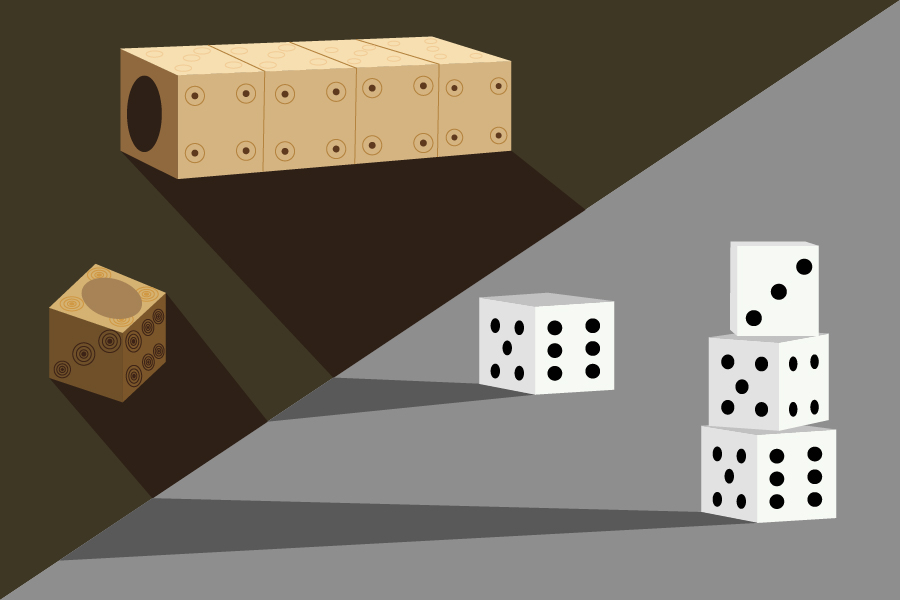
Small objects are a reflection of human history, so it’s no surprise that we can learn a lot about changing worldviews through the evolution of dice. Cubic dice have been found in small numbers at various archaeological sites and date to the last 2,000 years. A recent paper analyzes the design of dice to understand social changes in history.

“We have an increasing understanding of board games found in archaeological contexts,” said Alex de Voogt, a co-author of the paper and the assistant curator at the American Museum of Natural History. “Game pieces and dice are usually found separately or in isolation. We started studying dice to answer some basic questions about their design and then [the paper] came as a follow-up when we started looking at them in more detail.”

The design of the dice isn’t the only thing that can tell us about human history. It turns out the materials used to make the dice could carry a story of their own.

“I would be interested in knowing exactly what materials these bone dice [were] made out of,” said Christyann Darwent, an associate professor in the Department of Anthropology and the chair of the Anthropology Museum. “Because they [were] probably made out of antler, they could be made out of limb bones of animals, but they could also be made out of ivory.”

Ivory at the time was a driver of the economy. When Vikings made their way to Iceland, they wiped out the entire walrus population to attain the ivory found in their tusks. The impact on the walrus population back then, which made people move toward Greenland, is seen on elephants today.

When studying objects, archaeologists look at both style and functionality of the object. In the case of dice, style would be how the numbers are put on the cube and functionality would be the shape of the cube. Normally, it can be hard to tell if an object is designed for better functionality or style. The way numbers are put on the dice doesn’t affect the function of the dice; dice provide a convenient way to separate style and function, making it easier to analyze how style and functional attributes change over the years in ways that relate to peoples’ worldviews at the time.

“So what we think is that it didn’t matter so much in Roman times that a die was not exactly a cube because the way that the die rolled and the number that came up didn’t matter,” said Jelmer Eerkens, a co-author of the paper and a professor in the Department of Anthropology.

In Roman and early Medieval times, it was thought that the world was controlled by supernatural beings or gods. Nothing was random. Everything was dictated by a supernatural entity.

“The outcome of the games were thought to be predetermined by other things, not things like chance,” Eerkens said. “As peoples’ worldviews changed and concepts like probability and chance started to enter people’s’ minds, [it] affected the way the dice appeared and they became true cubes and they also eventually came to be essentially balanced in the way that the numbers were put on the dice.”


Written by: Kriti Varghese — science@theaggie.org

The Winter Blues: A Week 10 Playlist

JEREMY DANG / AGGIE

Boost your mood with these tracks for an effective study session.

With only a week to spare before the dreaded days of finals set in, it’s time to hit the books and pick out that perfect spot in the library. But a successful study session is only complete with the right music to set the tone. Check out some of these tunes to get you in the right mindset for the study-filled week to come.


“Wait” by M83

In the days leading up to finals week, instrumental tunes are a vital component of any effective study playlist. Although this M83 track isn’t entirely instrumental, the ethereal melodies serve as the perfect backdrop to a productive and distraction-free study session.


“Mystery of Love” by Sufjan Stevens

Off of the film soundtrack for the critically acclaimed “Call Me By Your Name,” “Mystery of Love” sees Sufjan Stevens lend his signature soft-spoken sound to the beautiful song. Not only does this track masterfully complement the cinematic experience of “Call Me By Your Name,” but it also offers a serene and relaxing vibe for any listener. For similar tracks, check out Stevens’ other songs off the soundtrack, such as “Visions of Gideon” and “Futile Devices (Doveman Remix).”


“Rollercoaster” by Bleachers

Although slow, melodic tunes may seem like the go-to for a stressful study session, sometimes an upbeat track can serve as a refreshing change of pace. Bleachers, led by frontman Jack Antonoff, is known for its ‘80s-inspired sound that is sure to lighten up your mood amid those Winter Quarter blues.


“The Louvre” by Lorde

Although Lorde’s most recent album “Melodrama” could serve as a study playlist in and of itself, “The Louvre” is one of my personal favorites. The New Zealand-born singer lends her calming voice to this catchy track for a tranquil listening experience.


“The Way Life Goes” by Lil Uzi Vert feat. Oh Wonder

I often find that the best playlists are the most diverse. Change up the vibe with this track from rapper Lil Uzi Vert and alt-pop duo Oh Wonder. Don’t let the stress of final grades consume your life because, like the song says, “you’ll get over it.”


“Next Year (RAC Remix)” by Two Door Cinema Club

Power through those practice tests and study guides accompanied by the musical stylings of Two Door Cinema Club. In comparison to the original track, this remix is the perfect addition to your Week 10 playlist. The lyrics inspire hope of a better tomorrow or “next year” and might be just what you need in times of stress.


“The Ways (ft. Swae Lee)” by Khalid

All things Khalid considered, this 20-year-old R&B star is the quintessential artist for anyone looking to relax and unwind. This time, the young singer is collaborating with Swae Lee on Kendrick Lamar’s newest album for Marvel’s “Black Panther.” True to form, Khalid never fails to disappoint. Don’t miss out on his Davis performance on May 7.


Written by: Sydney Odman — arts@theaggie.org