54.2 F
Davis

Davis, California

Friday, December 19, 2025
Home Blog Page 541

Students for Justice in Palestine hold protest, construct “apartheid wall”

RAUL MORALES / AGGIE

Protesters say wall between Israel, Palestine hinders movement, freedom of Palestinians

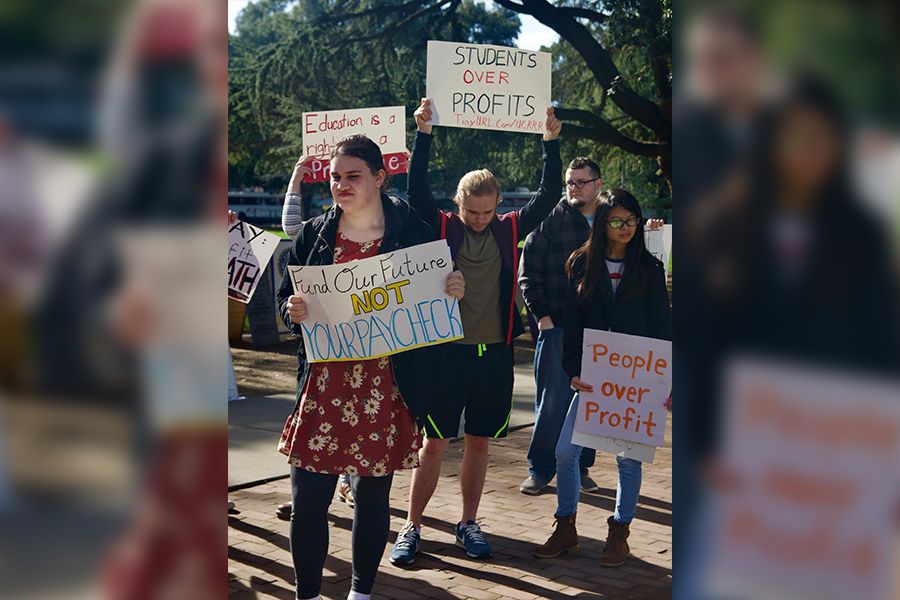
On March 5, members of Students for Justice in Palestine gathered on the Quad and constructed a mock “apartheid wall” to represent the wall separating Israeli and Palestinian land. Members of Students for a Democratic Society also participated.

“We want to highlight the daily struggles that Palestinians go through because of the wall: how it impedes their lives, restricts movement, restricts freedom and hinders any chance of peace in the region,” said ASUCD Senator Khadeja Ibrahim, a third-year political science major.

According to Ibrahim, this year the wall was also supposed to correlate with the Trump administration’s proposed wall between the U.S. and Mexico.

During the event, protesters voiced their disapproval of Israel’s actions and held signs with statements such as “Brick by Brick, Wall by Wall, Apartheid has got to fall,” “Make Israel Palestine Again” and “Justice is our Demand, Palestine is our Land.”

Around 40 to 50 students participated in the event.

The “apartheid wall” itself was constructed of individual panels propped up on the MU, facing the Quad. One panel stated: “Stop U.S. aid to Israel” and depicted an Israeli flag with bloody hand prints. Another had a quote from political activist Angela Davis: “Support BDS and Palestine will be free” — referring to the Boycott, Divestment and Sanctions movement.

Several students spoke of their motivations behind protesting.

“As an anthropologist who researched Palestine and who was refused entrance into the country, I’ve observed first-hand how colonialism restricts academic research and believe academic boycott of Israel should be taken seriously,” said Muneeza Rizvi, a Ph.D. student in the Religious Studies Department .

Also present at the scene that day were representatives from Aggies for Israel, a student-run organization dedicated to preserving positive relations between the U.S. and Israel.

AFI members suggested an alternative view of the situation.

“I think they’re giving their side, which is fine, but they’re not giving both sides,” said Charline Delkhah, a fourth-year managerial economics major and the president of AFI. “They’re not willing to talk about both sides.”

This protest was a continuation of annual protests held by SJP on the matter. In 2010, SJP set up a similar mock “apartheid wall” at UC Davis.


Written by: Clara Zhao –– campus@theaggie.org

Editor’s note (updated 3/16/18 at 12:45 p.m.)

The article has been updated to clarify student motivations behind the protest.

Pay your interns

CAITLYN SAMPLEY / AGGIE

Unpaid internships minimize diversity, detract from workplace

For graduating seniors looking for a full-time jobs and continuing students applying to a summer programs, the phrase “unpaid internship” is all too familiar. And while the idea of gaining hands-on professional experience may sound enticing, accepting an unpaid position is a luxury many students cannot afford.

In addition to basic costs like food and travel, many summer programs require students to relocate and find and pay for temporary housing. Students are expected to fund such costs of living while working jobs with little or no compensation. For many, this is an impossible task. Many students, especially those of low-income backgrounds, simply do not have the means to work without pay.

The result of such exclusionary employment is simple: Students with less money are restricted in their opportunities to gain work experience — and ultimately, in entering the job market.

In January of this year, the United States Department of Labor issued new guidelines as to how unpaid internships are defined and issued. The new standards require that the work of interns complement rather than replace the work done by paid employees and that interns be trained in an “educational” manner rather than an instructional one. These new standards are bundled under a “primary beneficiary test,” which lists the requirements employers must pass before hiring an unpaid intern. Many have argued that these new guidelines make it easier for programs to hire interns without pay.

Students applying to full-time, paid positions after graduation are only eligible if they have prior work experience — say, the kind of experience acquired during an unpaid internship. But according to a 2017 report by the nonprofit group Pay Our Interns, low-income students and people of color are less likely to successfully enter a job market after graduation because they lack prior experience.

The report further describes unpaid internships as “a blight marring the face of the American job market.”

Preventing a diversity of students from applying to such positions only furthers a homogenous workforce. The diversity of its constituents — whether in terms of background or experience — is the driving force behind improvement and ingenuity. Asking students to perform work at the level of a professional without pay is not only questionably unethical, but also damaging to the future job market.

This spring, while college students apply for those sought-after internship programs that put their classroom knowledge to the test, remember that such positions come with a price — or rather, for none at all.


Written by: The Editorial Board 

The glorification of narco culture

ALLYSON KO / AGGIE

How broader culture has grown to love cartels

This article contains major spoilers for the Netflix show “Narcos.”

 

Television and news have consistently been complacent in glorifying and packaging narco culture for viewer consumption. This is most readily evident in “Narcos,” the popular Netflix series, which glamorizes drug use and cartel violence and at times makes the viewers sympathize with Pablo Escobar’s character.  

The final moments of “Narcos” Season 2 shows Escobar running for his life before he gets shot. Because the show humanized Escobar so intensely, I felt bittersweet watching this scene. Even though he ordered thousands of killings, I couldn’t help but feel sad for the man during his last moments. He lost everything.

Clearly, the media has an obsession with crime and violence. Hollywood has repeatedly shown mob bosses as heroes — just look at “The Sopranos” or “Scarface.”

Media depictions of narco culture blur the lines of reality and fiction for dramatization purposes. “Narcos” idolizes Escobar and cleanses his acts of violence through presenting his character as a family man. The show turned him into a martyr.

From an entertainment standpoint, I love “Narcos.” However, I am critical of how the show inaccurately frames many of the atrocities Escobar committed. Even Escobar’s son has criticized the show for depicting false truths — for “insulting the history of a whole nation.”

As a result, the viewers take these scenes as the truth. I’m guilty of this myself. Even though “Narcos” is a TV show, I couldn’t help but feel that it was at times a documentary — I learned about historical events of which I had no prior knowledge.

For this reason, “Narcos” has caused outrage for Colombians. It has spread misconceptions about the country and continues to repeat the same old stereotypes about Colombia — that cocaine is readily available and that there is still massive violence going on. “Narcos” and Pablo Escobar do not represent Colombia as a whole. These are antiquated notions that repeat the same harmful messages that have circulated for years.

Moreover, the media has an obsession with the dangerous aspect of cartel culture. The popularity of “Narcos” has only further increased hype around narco television series.

“El Chapo” is another Netflix show that focuses on the leader of the Sinaloa Cartel, Chapo Guzman. In this genre of television, there’s an overexposure to drug and cartel violence, and they only show the bad side of these countries while never showing the positive.

Moreover, it is important to talk about the prominence of how narco glorification has seeped into Mexican-American culture. According to Time, “narcocorridos” is “the name given to the traditional-sounding foot-stompers that chronicle the lives of the drug lords and their murderous henchmen.” Narcocorrido is a popular genre of music that idolizes cartels, drugs and violence.

I grew up listening to narcocorrido songs, and it wasn’t until I was in one of my Spanish classes, where we analyzed the genre, that I realized the messages these songs were sending.

The song “Contrabando y Traición,” by the popular band Los Tigres del Norte, mentions drugs, killings and abuse. Many artists in the narcocorrido genre explicitly talk about killing and doing drugs, while some songs even praise and support El Chapo.

Nonetheless, these super-famous artists in the narcocorrido genre exaggerate and even lie about their lifestyles. The same thing can be see in the U.S. music industry. Rapper Future has gone on record and “admitt[ed] that the stories he tells in his music aren’t always exemplary of his actual lifestyle.” Artists who sing about living these crazy, drug-filled lifestyles are merely putting on a show. I urge listeners and viewers of narco music and TV to be aware of fraudulent claims in the media, as these are constructed and packaged for consumption.

I want to see positive depictions of Hispanics for once. I’m tired of hearing and seeing the same stereotypes of narco culture being circulated with such popularity.


Written by: Alejandro Lara — amlara@ucdavis.edu

Disclaimer: The views and opinions expressed by individual columnists belong to the columnists alone and do not necessarily indicate the views and opinions held by The California Aggie.

Humor: Sacrificing virgins leads to low number of students in computer science

JAMIE CHEN / AGGIE

Fingerblast that keyboard

Davis Cru, the campus crusade for Christ, has teamed up with the dog people coalition to spread the ideals of diversity, inclusivity and equity: D.I.E.


“The pen is mightier than the sword, but both work just as well stabbed into the throat of a non-believer,” said half-poodle, half-human Dalta, who was removing her G2 Pilot .38 from the neck of a Davis Stand-up Comedy Club member, clearly an atheist.

“This is the sequel to the crusades,” said Ted Cruz, the leader of the Cru-sader revivalist movement. “It’s just a damn shame that there aren’t any relics or historical artifacts to steal from atheists, since they don’t conform to a collectivist ideology.”

The upsurgence of modern crusaders wasn’t a massive surprise, but their predilection for nailing virgins to the cross in comradery for Jesus certainly was.

“This makes our movement a little less edgy,” Satanist Antwon DeLay of the Davis Satanists Society said. “We are now competing against Cru, and they’ve got the support of Woodland and Dixon.”

Computer science majors seem to be the primary target, given the proliferation of virgins in the major. Apparently this is a prerequisite for entering the major — or heaven.

“I haven’t had any experience with girls,” said Ian Maxwell, a third-year computer science major. “But I can type 230 words per minute, which will certainly come in handy when I finally get to play with a vagina.”

“I can’t believe Drew Hanson is bashing us for nailing virgins to the cross. Like, isn’t that totally metal?” said Katherine Weaver, a longtime opponent of Hanson’s work, as she hammered a nine-inch nail through the hand of Ian Maxwell.

“This is my last humor piece,” said writer Drew Hanson, standing on the outer edge of the Golden Gate Bridge. “I don’t think I can have a more significant contribution to society than pointing out and making a mockery of their bullshit and double standards. If they don’t get this, then it’s already too late.”


Written by: Drew Hanson — andhanson@ucdavis.edu

(This article is humor and/or satire, and its content is purely fictional. The story and the names of “sources” are fictionalized.)

An Earful: Women Rock

CINDY CHEUNG / AGGIE

A few of the front-of-stage women in rock music

As a teenager, the alt-rock musicians that dominated my local radio station, headlined festivals and who ultimately cultivated my musical tastes were male.

Bands like Pearl Jam, Young the Giant, the Killers and Death Cab for Cutie were the formative sounds of my teenage years, but for many young females, the image of a woman standing at the front of a stage, confidently wielding an electric guitar, remains an anomaly.

Jessica Hopper, a senior editor and music critic at Pitchfork, writes, “men writing songs about women is practically the definition of rock ‘n’ roll.” In her book, “The First Collection of Criticism by a Living Female Rock Critic,” Hopper doesn’t pretend these females rockers don’t exist; she flaunts their talent. “We deserve better songs that any boy will ever write about us,” Hopper writes.

So here are some of the women making the rock music we deserve — and good music, at that.


Margaret Glaspy

It’s not often I come across a lyrically deliberate break-up album and, well, like it. Glaspy’s first full-length release, “Emotions and Math,” follows the trajectory of a long-distance relationship from its lovey-dovey peaks in “No Matter Who” to the wallowing loneliness of “Somebody to Anybody.” But no matter how clichéd the love lyrics, Glaspy growls her way through catchy melodies to produce, yet again, an incredible song.

And of course, she put on a stellar NPR Tiny Desk Concert.


Haley Heynderickx

Heynderickx is Portland’s newest burgeoning rock artist, and the distinctly folk sound behind her precision guitar playing gives her last name a dual meaning (she’s a declared Jimi Hendrix fan).

Her single “Om Sha La La” boasts fun back-up vocals and an increasingly aggressive declaration of “I need to start a garden” around minute two of the track. “First, I’m Sorry” explores not only the depth of her musicianship, but also the diversity of her lyricism; she describes in the caption of her live version that the song is dedicated to “the women who say ‘I’m sorry’ too much.” She croons behind a distinctly melancholic guitar riff, “You had me first / I’m sorry. / You are by my shelf / To hold up my own self / I’m sorry.”


Jay Som

Underneath this Bay Area native’s whispery, lush vocals are loud lyrics — and even louder guitars. “Feel like a firefighter when I take off your shoes / And more that’s in-between / The knots are loose / I’ll cut them just to see you through,” she hushes in “The Bus Song.” From more fun and polished tracks like “The Bus Song” to the garage-band feel of earlier works like “Rush,” Jay Som’s Melina Duterte doesn’t skim through her musical projects.

Duterte’s lyricism is a manifestation of her juxtaposing stage presence: a confident declaration of the stage, tinged by her modesty and grace — even when backed by a full band.


Big Thief

From a technical standpoint, Big Thief is a four-man, one-woman band. From a listener’s perspective, Big Thief is synonymous with Adrienne Lenker, the guitarist and lead singer of the musical project. The band’s 2017 album, “Capacity,” was acclaimed by many, with Lenker’s voice and emotional lyrics as the driving force of the work.

Lenker is the bright spot in the band’s dark and hazy music; she reels about familial relationships and losses in the track “Mythological Beauty,” circling the perspective of the lyrics between herself and her mother and even her future daughter: “there is a child inside you who is trying / to raise a child in me.”


Written by: Ally Overbay — arts@theaggie.org

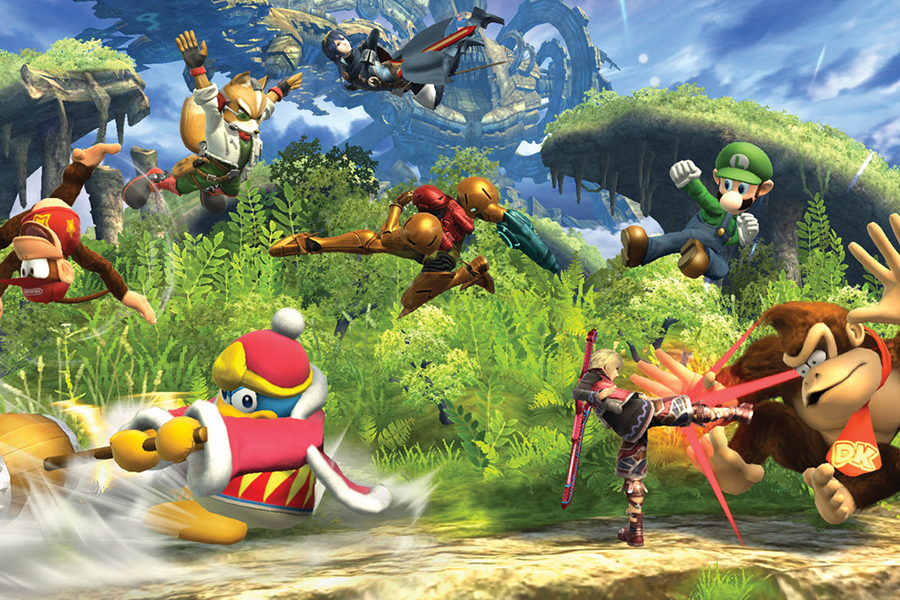
Melee smashes its way into the present

BOGOGAMES [(CC BY 2.0)] / FLICKR
Cult following of 17-year-old game finds footing locally, internationally

The video game industry is undeniably massive, producing plenty of games on the largest and smallest of scales throughout a calendar year. Typically, a game upon release will have a lifespan, depending on various factors like audience base and quality, that can last months or even years before the game is finally shelved and playerless.

While it sounds morbid, there are just too many games to keep each one relevant for all time. So what about a game that came out in late 2001? Shouldn’t it be shelved and dead? For most games, yes. If they were released 17 years ago, there usually aren’t many people playing it today. But there is an outlier: Super Smash Bros. Melee.

Commonly referred to as just “Smash” or “Melee,” this game not only has a fanatic fanbase, but a growing one. The game Melee is simple enough. Players choose from a roster of 26 characters and fight each other until, inevitably, one player is pushed off the playable map. The presence of Smash is commonly seen as a casual party game; it is what the game was made for after all, yet the growing community isn’t one of only friends on couches, but of competitors in tournaments.

In recent years, e-sports have become more and more relevant, yet mostly for the newest games and games being specifically designed with a competitive edge. Smash has neither of those prerequisites; it is neither new nor designed for competition.

So where is the appeal in this nearly 20-year-old game? Chris Do, an active member of the Smash community and a third-year English and political science double major, spoke about the unique aspects that may be convincing players to stick around and play.

“There’s always this drive that there’s someone who’s going to be better than you,” Do said. “There’s always a goal ascertainable through the action of play. That differs from a lot of other games […] Like if I’m playing Tetris, for example, the goal is just to keep playing. For Melee there is a goal, you have to get better everyday. You can see that […] in post tournament matches. You can figure out what you were doing wrong afterwards […] All the play is up for the player to decide.”

Michael Chase, a fourth-year English major, also shared his thoughts as to why Smash remains popular.

“I think Melee is a very complex game, you can never top out in skill,” Chase said. “Anything that is competitive just requires skill and a certain absence of randomness. [Melee] works on a competitive level because random elements are removed from the game and […] there’s so much opportunity for mastery in all the different areas of the game. Whether it’s like, having to know 20 plus different [character] matchups in the game, having to also outthink your opponent, being able to recognize patterns on the spot and also the technical aspect of like teaching your hands to move in a certain way and getting the internal timing of the game down.”

The most amazing part about Smash isn’t truly that it’s still played, but that its competitive scene is not only alive, but thriving with rankings ranging from local communities, like Davis, to the international level. Michael Chase spoke about his experience in the more local competitive scene.

“I probably went to about two tournaments a month my first year [competing], just like local tournaments in Salinas, Monterey or San Jose,” Chase said. “There was a point where I was like six months into competitive smash, and there was a player in my local community. I lived in Salinas at the time, in the Monterey area. He had been playing for about 10 years and I remember the first time I beat him in a tournament. It was like the best feeling ever.”

The smaller tournaments can be found in the back of comic book stores or even in dedicated players’ homes, yet at the national level larger venues are required. GENESIS, one of the largest Smash tournament series, just wrapped up its 5th event on Jan. 21 of this year.

The event, properly called GENESIS 5, attracted an attendance of just over 2,900 people, awarded the winner of the Melee bracket over $6,000, and filled the Oakland Convention Center. Naturally, with the event so close, many from the Davis community made their way down for the event.

Brian Chen, a second-year biological sciences major, played Super Smash Bros. 4, a newer sequel to Melee, at GENESIS 5. While Melee and Smash 4 are sequels, they boast enough differences to earn their own tournament brackets. Chen placed 129th in the tournament out of 674.

“I beat some ranked people from other regions,” Chen said. “[I] almost took a set from one of the best SoCal players, and SoCal is known as the best region. There was a lot on the line for my pride and my region, and I think I represented it really well.”

While the Smash community is hyper-competitive, the game is classified as a “fighting game”; the real joy isn’t to be found in the often stressful tournament matches.

“In the end, we all come together for a common passion,” Chen said. “That is the love of video games and the love of Smash […] A lot of people are building bonds over just such a simple game.”  

Chase’s enthusiasm similarly promoted interest in seeing the community grow and adding potential new players.

“I have never met anyone that puts me off in this community. Everyone is so friendly,” Chase said. “We usually offer about two tournaments a week [in Davis] […] The best way to start would be to follow the [Davis Melee] Club’s Facebook page because then you can find out when the events are and choose for yourself whether you want to go to a tournament, which might have a more competitive mindset, or just go meet some people and hangout.”

The 17-year-old game seems to be one of the sweetest fruits the video game industry has to offer. It may be focused on beating the life out of friends, family or strangers’ characters, yet the power it has to bring people together isn’t malicious. What you’ll see at tournaments and at home on a couch are not grudges or hard feelings, but a community of like-interested individuals hoping to have a good time playing a game they love. The Davis Melee Club meets frequently for any would-be competitors.


Written by: Nicolas Rago — arts@theaggie.org

Film Review: Black Panther

ALLYSON KO / AGGIE

Marvel film proves more than an action movie

The highly anticipated Marvel film “Black Panther” made its debut on the big screen on Feb 15. The movie uses its platform to address many social issues while incorporating classic Marvel humor. It’s an action thriller that makes time for talk. With a stellar cast of some of the biggest names in the African American community, such as Chadwick Boseman, Michael B. Jordan and Lupita Nyong’o, the film is projected to reach $1 billion at the box office worldwide, according to Bloomberg.

The score is the bridge between African and African American culture throughout the movie. African drums were met with engineered hip-hop sounds, which gave them film two dimensions to play off of. T’Challa (played by Chadwick Boseman) was surrounded by sounds of Wakanda (a fictional African country). Erik Killmonger (played by Michael B. Jordan) represents a young, contemporary African American man. He was accompanied by familiar American music sounds. He grew up in Oakland, Calif., which has a musical vibe of its own, distinct from African sounds. The two worlds come together in the score and the exceptional soundtrack.

The CGI is absolutely breathtaking from start to finish: everything from the rural scenery in Wakanda to the streets of South Korea and the several action-packed fight scenes. Movies like “Black Panther” are worth seeing on the big screen to fully appreciate their visual quality.

Aside from the visuals, messages embedded in the screenplay address several social issues facing our nation today.

Marvel is no stranger to acceptable, cheesy humor. Drawing inspiration from popular culture, phrases like “What are those?” make their way into a movie with a $200 million budget. However, the heavy word “colonizer” was used to address one of the two caucasian actors in the film, Everett K. Ross (played by Martin Freeman). A subtle way to get the watcher to think about a part of history in which the grave consequences had a rippling effect stretching to the present day.

It was empowering to see the guards and many of the strong warrior figures portrayed by women. The military general Okoye (played by Danai Gurira) defies societal gender roles with the determination to do what she feels is best. She plays a key role in preventing the technology of Wakanda from falling into the wrong hands. Shuri (played by Letitia Wright) is the head of the technological advancements of the city as well as the younger sister of T’Challa. She is the head of Wakanda’s STEM industry — an industry that in our world is dominated by men.

W’Kabi (played by Daniel Kaluuya) touches on the highly controversial topic of immigration. His character believes that immigrants bring problems wherever they go and they must be kept out — it’s a mentality of “us vs. them.” However, T’Challa learns to understand that building bridges is better than building walls. Foreign aid and relief is necessary of those who can do more.

The film was spearheaded by African American director Ryan Coogler, known for his other works such as “Creed” and “Fruitvale Station” — a great example of diversity, not only in front of the camera, but behind the camera as well.

“Black Panther” is currently screening at Regal Six on F Street in downtown Davis.


Written by: Josh Madrid — arts@theaggie.org

College with a sibling

JESSE STESHENKO / AGGIE

Students describe pros, cons of attending college with siblings

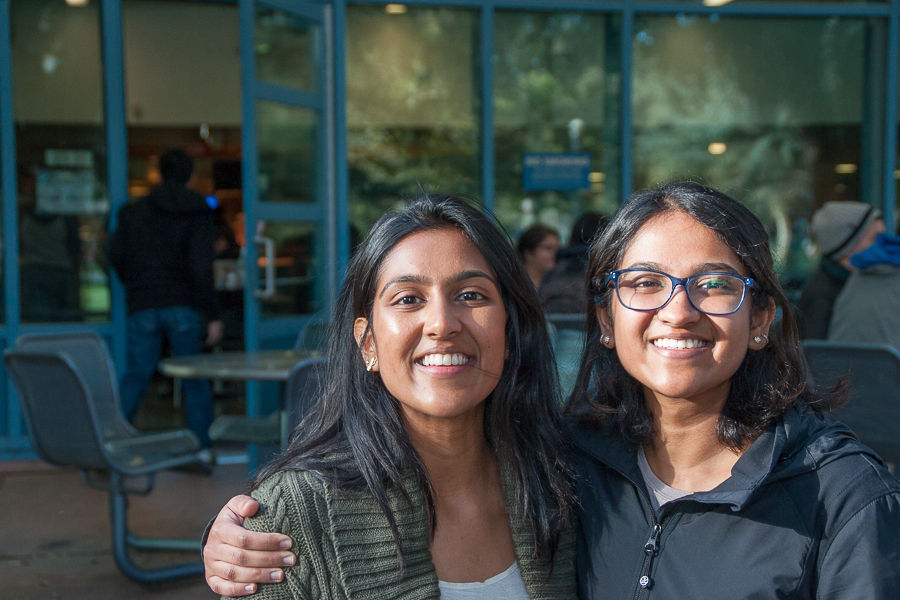
Right before the first week of Fall Quarter, Sneha Shastri could feel the anxiety welling inside her. She had experienced a particularly rough morning thinking about what her new life as a UC Davis student would be like. Later that afternoon, she received a text message that told her to look outside. When Sneha peered out the window there was Shruti Shastri, her older sister, with Dutch Bros in hand and a smile on her face.

In fact, Sneha, a third-year transfer neurobiology, physiology and behavior major, is no stranger to the UC Davis campus. Shruti, who is almost four years older, also attended UC Davis for her undergraduate career and is now a second-year student at the UC Davis Veterinary School.

“This was like the only campus [I’d visited],” Sneha said. “I’ve visited so many times when she was an undergrad, and like we went to Picnic Day together, the Whole Earth Festival. We had done so many things.”

Despite her familiarity with the UC Davis campus, Sneha made the decision to come, and admits she is happy with her decision. Davis practically a second home to the sisters. Having gone to school together for their whole lives, attending college with each other was not a strange experience.

“I think we’ve always been pretty close,” Shruti said. “We’ve gone to school together so many times like elementary school. [When] I used to be in fifth grade and she was in first, I used to go to her classroom and help out and we used to teach them how to read. And we went kind of to the same high school as well when we were living in India together.”

The two sisters spent their childhood living in Southern California before moving to India with their parents in 2005. They moved back to the Sacramento area seven years ago when Shruti began her freshman year at UC Davis as a biology major.

“We lived in Mumbai, so it’s a very metropolitan, big, loud city,” Shruti said. “[Davis] was a super quiet cow town, and so it took awhile to get used to that and the pace of Davis. But I absolutely love Davis now. It took a couple years, but we’ve been here for so long.”

Even though the sisters don’t live together currently, they get a lot of face-to-face time. Shruti lives at home in Sacramento and commutes to school. Sneha lives in Davis but visits home in Sacramento practically every weekend.

“I’ll see her during the week sometimes too,” Shruti said. “Since she has a place here, if I have a big test the next day or something then I can always crash at her house and sleep over and study all night, that kind of stuff .”

Having a sister in town means there are perks for Sneha, too, including rides to school and study breaks at In-N-Out.

“The good part is that if I forgot something at home, then I can ask my sister to just bring it for me,” Sneha said. “Or my mom will make me food and she’ll send it through my sister.”

Going to school with a sibling means more than just crashing on couches and free rides to school, though. It’s the perfect opportunity for Shruti to pass down her wisdom and experiences as a UC Davis undergraduate, like what classes to take and which teachers to avoid.

Another example Shruti notes is that Sneha will soon be studying abroad, something Shruti never got to experience herself. Yet despite the bit of sibling jealousy she felt, Shruti pushed her younger sister to go for it when she was feeling unsure.

“I was able to push her to do that because I felt like I had missed out on that experience as an undergrad,” Shruti said. “So I felt that, [and] by just being here, whatever experiences that I had, I could help her to make the best out of her experience.”

Another set of UC Davis siblings that find support in one another are twin brothers Jordan and Preston Leung. Preston graduated last spring and majored in biomedical engineering while Jordan is currently taking a fifth year to finish up his degree in mechanical engineering.

“We were pretty close [growing up],” Preston said. “I mean you hear stories about twins being really close or not close, but I think we were the pretty close-type. We did everything together, we had very similar interests, similar activities, sports, everything.”

Although practically joined at the hip through a lot of their lives, one of the first actions that one brother took to distinguish his identity from the other was by doing choir in high school. As freshmen, the brothers decided to take another step in the direction of independence and chose to dorm separately. Incidentally, they both ended up only a building across from each other in Tercero.

“I think that was when it was starting to deviate a little bit, just because we were around different people,” Jordan said. “I would hang with my floormates a little more and he would hang with his floormates, but then we still knew each other and would still intermingle. I would come home and go to my dorm and I wouldn’t see Preston, and that was very weird for me.”

Once enrolled at UC Davis, both brothers quickly switched out of their original majors of food science and environmental science. They both decided on biomedical engineering in order to pursue a pre-med track. About halfway through undergraduate, though, Jordan realized that a pre-med track wasn’t for him.

“[We were] taking similar classes and [I was] seeing certain subjects that would light me up and certain subjects that wouldn’t light me up, and those that would light Preston up and those that wouldn’t,” Jordan said. “I remember he would talk a lot about [physiology] and for me I was like ‘I mean it’s cool’ but I never really got too into it. That struck me because I was like ‘I’m pre-med’ but I wasn’t so into it. And we both did an HRI internship, which is a health related internship, at the UC Davis Medical Center, and I remember I just really didn’t like it at all.”

Growing up, Preston was a little more sure in himself than his younger brother of 13 minutes. Despite having a little more independence and passion, he felt more comfortable with Jordan at his side. And when they were both finding their groove in college, both brothers began to notice their individuality more than ever.

“I was like ‘I think I know what I want’ and just kind of [went] for it, and then I think I saw Jordan as someone who would affirm that, being that person that would be with me, but I wouldn’t feel necessarily dependent,” Preston said. “I would feel more like ‘oh it’s good to have Jordan next to me.’ So seeing him kind of go in his direction, it kind of was like ‘oh Jordan has his own thing, oh that makes sense.’ I didn’t realize that, and I don’t know why it didn’t really come to mind in that way until college.”

While Jordan and Preston may have found different interests in their college journeys, they still found that one of the most valuable aspects of going to school with a sibling is automatic access to a wider network of friends.

“[Your network] gets larger, so the people that know Preston, will eventually know me because I’m his twin brother, so that’s kind of nice,” Jordan said. “A lot of people [are] like ‘oh that’s Preston’s friend’ and someone’s like ‘oh are you Preston?’ like they’ll mistake me for another twin, it happens all the time.”

In fact, Preston claims that when he was attending UC Davis, not a day would go by without someone confusing the two. Preston compared the experience of going to school with a twin brother like going to school with a clone.

“We share a lot of similar friendships, and I think that really helps us and when he knows someone, I know that person more deeply because of that,” Preston said. “It’s a very intimate connection that we both get to share with people.”

With such proximity, though, comes the tendency to compare. Jordan claims it becomes easy to compare himself to his brother because their lives are so overlapped.

“I think the comparison thing is really key because sometimes you feel like when you go to college you want to explore and find your own thing, but we’ve always been together,” Preston said. “I think the best way is to encourage each other, but sometimes if you’re afraid, you kind of look at each other and don’t take that step of exploring or discovering your own thing. [It’s] more comfortable to do it together.”

While there are some difficult aspects about going to school with your sibling, there are plenty of advantages as well. One thing that the Shastri sisters and Leung brothers both have in common, though, is a desire to forever stay close and supportive of their sibling even after college.

“I think that’s the hope,” Jordan said. “I would love to be a part of what Preston’s doing […] I want to be able to be a huge support for him and what he’s doing [in his future].”


Written by: Marlys Jeane — features@theaggie.org

To vote or not to vote?

TAYLOR LAPOINT / AGGIE

Students explain importance — or not — of voting in ASUCD elections

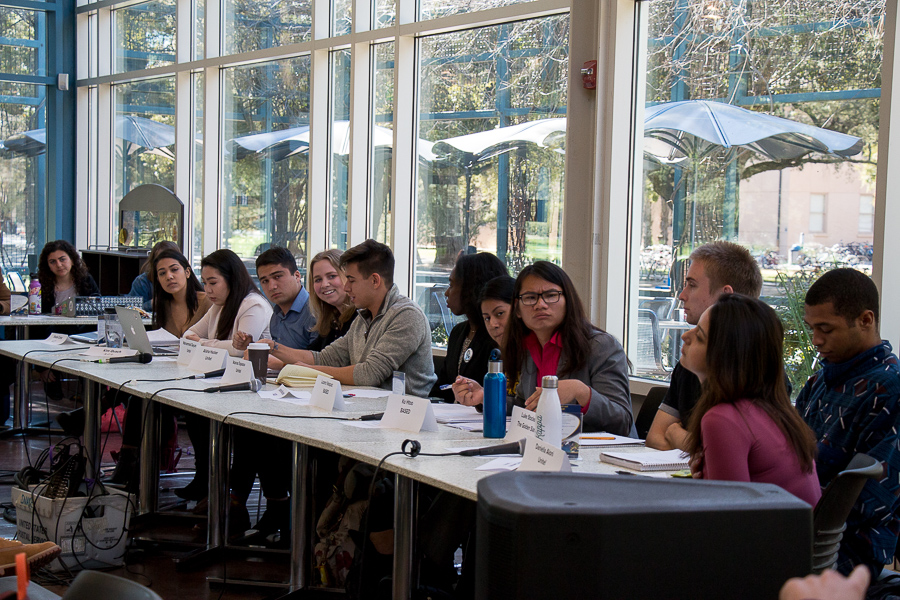
With the winter 2018 ASUCD election cycle now over, the UC Davis student body has elected its new ASUCD president, vice president and senators for the next year. However, it is slightly misleading to say that members of ASUCD were elected by the entire student body when voter turnout was less than 10 percent.

Interviews with students in the CoHo revealed a great deal about the attitudes toward ASUCD and how a disconnect in communicating the importance of ASUCD’s work to the student body can create indifference toward the organization.

“I got emails and have no excuse for not knowing about it, but with everything going on with school I don’t really put much thought into it,” said Alex Majewski, a third-year chemistry major. “Since I don’t really have an immediate answer for what student government does for me, I feel like if they made students more aware of how it might affect them it might give them more incentive to go out and vote or at least take more interest in it.”

An interview with Teak Hahn, a first-year environmental science and management major, demonstrated the impact of spreading information about candidates by word of mouth, showing how engagement with certain interest groups can get more people to vote, even if they weren’t particularly engaged with the process in the first place.

“I’m on the women’s water polo club team and my captain Sophia told us all to vote for particular candidates because they said they would help us with the current issue with the Rec Pool,” Hahn said. “Currently they’re trying to renovate it so they make a pool that’s a lot smaller than the pool we currently practice in so we’re trying to fight against that. My captain spoke to some of the people running and the people she told us to vote for said that they would do something about that.”

Even though Hahn did vote, she said that she would not have if she had not been informed about the pool issue by her water polo captain.

“I do believe it’s important to vote but I’m a little bit skeptical about the power that these people have,” Hahn said. “I honestly don’t know enough to say whether or not they have the power to make real change.”

Hahn shared why she thinks there is some disconnect in motivating people to vote.

“I think something that’s really important is that the issue is relatable for people,” Hahn said. “I noticed when I was reading the bios that all of the issues that they wanted to address were things that were relevant to them, but if it doesn’t resonate with the people voting, then it’s going to be more difficult to get them to vote for that cause if they don’t really believe in it.”

However, her case proved that when issues are important to smaller groups, it can be a key motivating factor.

“I think people are lazy and if they don’t have enough faith in the system that it will create real change, they have to see the change, then it’s not going to matter to them and they aren’t going to vote,” Hahn said.

Parker Nevin, a fifth-year cognitive science major, revealed that he did not vote in the election and is bothered by how candidates seem to do such a large amount of promotion without actually informing people of their positions and qualifications.

“I don’t know much about ASUCD or their function or what their powers are,” Nevin said. “I see all of the advertisements everywhere but they’re not very substantive. It just doesn’t seem like they have much content. It’s just like, ‘BASED’ or some hashtag and I just don’t care.”

Nevin thinks that it would not be difficult for the candidates to be more effective in spreading more relevant information.

“I think what they would have to do to get me more interested is show me what they’re capable of, what they’ve done in the past and what they plan to do in the future other than trying to spread hashtags around,” Nevin said.

While Nevin was outspoken regarding what he refers to as a lack of readily available information on the candidates, he admitted that he had never actively sought out information. When asked if he had ever sought out information regarding ASUCD candidate credibility, Nevin’s response was telling.

“No — I suppose that’s on me, but I think it would be easier if there was some sort of information about them that was as readily available as the, I don’t want to say propaganda, posters with names and hashtags and phrases, then I would probably know enough,” Nevin said. “However, if I was really interested in voting in the first place, then I could seek out more information.”

Nevin later spoke on the topic of what he thinks makes certain people more likely to be involved with the process and to care about voting.

“My guess, from a sociological perspective, is that they probably know someone who is involved with ASUCD, or they are in a group that is directly affected by ASUCD,” Nevin said. “It’s possible that there are personality types that are more predisposed to go and search that out. I consider myself a very politically involved individual, but when it comes to ASUCD, I guess my assumption, to be completely honest, is that they don’t really have much real power, that it’s sort of a way to get talented kids into the grad school of their choice. I hate to be that cynical.”

The degree of cynicism and skepticism present in the CoHo interviews is given a thick layer of irony by the fact that ASUCD is responsible for running the CoHo.

“ASUCD runs the student coffee house, a common hangout for students,” said Shellan Saling, a fourth-year international relations major and the campaign manager for the Unite! slate. “Without ASUCD, the Coffee House may not exist. Students should care.”

Saling continued by describing more of the important positions that candidates take and why their advocacy is important.

“ASUCD has also been at the forefront of fighting for more affordable student housing in Davis recently by showing up to Davis City Council meetings to represent the entire UC Davis student body,” Saling said. “Students need to understand ASUCD has a direct impact on us.”

Despite low turnout, Saling believes that the executive victory and three out of six senate seat victories prove that Unite!’s campaigning and promotion was successful in reaching students.

“Unite! won bottom line, therefore we are effective,” Saling said. “Our slate as a whole looks for issues that may not be as publicize[d], for example, the platforms increasing free entertainment ran on by Brandon Clemons, clubs and disability activism ran on by the executive ticket. These were issues affecting many of our students but had not been given representation yet. We also made a[n] effort to reach out to lesser known groups or groups not often represented in elections.”

ASUCD Elections Chair and fourth-year sociology and social services major Naeema Kaleem spoke on why she thinks it is so important to be involved and to make an informed vote.

“The folks that are elected decide what to do with a $13 million budget, some of which is comprised of student fees,” Kaleem said. “Our campus climate today scrutinizes how administration uses student fees, so why not hold other entities that utilize student fees accountable? Accountability is a buzzword thrown around in the Association, but it actually carries a lot of weight, as folks who are elected make decisions that directly impact communities across campus.”

Kaleem also explained how elected officials in the senate and executive office work with ASUCD units to try to improve the services that students engage with on a daily basis.

“The executive office and senators work with almost 30 ASUCD units that the average student uses almost everyday,” Kaleem said. “The elections committee worked extensively with our amazing creative media team to engage the student body with ASUCD units through events and social media efforts.”

Kaleem thinks that generating more interest in the elections process requires increased efforts from all parties involved.

“From an elections committee perspective, the responsibility of creating more interest in ASUCD elections [and] ASUCD as a whole lies with three groups: current sitting senators, candidates running in the election and the student body,” Kaleem said. “That was the point of this quarter’s tagline of ‘It Takes 2 Minutes’ — that if senators truly did their job and educated students on who to vote for, how to vote and how the Association impacts students’ daily lives, voting really would take two minutes.”

While Kaleem is optimistic about the efforts that can be taken to increase the level of student engagement with ASUCD, her insider experience has left her with some of the same cynicism that is reflected in the student body.

“Having been in ASUCD for two years and running two elections so far, I can say that the senate table does an abysmal job of educating voters and promoting elections and then complains that unqualified/undeserving folks are elected to office,” Kaleem said. “Candidates, however, have the responsibility of finding communities on campus to represent in their capacity as an elected official, and finding issues that affect those communities. This is when the student body comes in — if they are unhappy with election results, instead of complaining, they must hold their elected representatives accountable by going to senate, committee and commission meetings and making their concerns heard.”

Kaleem believes that the key to making ASUCD’s work a greater concern in the minds of students is for the elected representatives to do as much as possible to ensure that the student body knows how to and feels welcome to be proactive in catalyzing change.

“Contrary to popular belief, ASUCD can be accessible — but only if those elected to represent students ensure that the space is inclusive and welcoming,” Kaleem said.


Written by: Benjamin Porter — features@theaggie.org

Police Logs

NICKI PADAR / AGGIE

Who is Monica?

Feb. 19

“Heard only for last 10 minutes, loud yelling from male, repetitive statement, only thing reporting party can make out is the name ‘Monica.’”

“Male on Olive Dr. touching cars with a rock causing damage to vehicles.”

“Male outside randomly screaming.”


Feb. 21

“Transient male near the Covell entrance was pushing female down and sitting on her — female also had a small child in a shopping cart.”


Feb. 22

“Transient male has returned and is currently in the shower of men’s downstairs restroom.”

“Testing new phone system.”


Feb. 23

“Reporting party advised roommate is pounding on reporting party’s door and demanding to be let into reporting party’s room — reporting party has locked himself in the room and will stay separate till police department gets on site.”

“Reporting party’s vehicle was hit this afternoon and believes neighbor may be responsible.”


Feb. 24

“Unknown male subject rang doorbell and tried to open reporting party’s apartment door with a key.”


Feb. 25

“Cleaning, vacuum and buzzing noises coming from business.”

Davis students pedal for polar bears

JAMIE CHEN / AGGIE

Students bike in freezing conditions to help preserve Arctic

Eight elementary schools in Davis have been participating in a drive to aid polar bears for the last month. So far, they have raised enough trip points to ceremoniously adopt 18 polar bears, following the efforts of over 1,000 students over 18 school days.

Polar Bears International, the organization charged with protecting the adoptees, specializes in protecting polar bears. It conducts ground research, promotes its findings and forms outreach initiatives like the Polar Pedal. Melissa Krouse, the program manager of Polar Bears International, explained the importance of emphasizing other means.

“When we burn fossil fuels for transportation, we add more and more carbon dioxide into the atmosphere,” Krouse said. “This buildup acts like a blanket that traps heat around the world, disrupting the climate and melting Arctic sea ice. Bike commuting improves health while reducing congestion and the carbon emissions that melt Arctic sea ice. The link to polar bears is direct because most vehicles burn fossil fuels.”

Davis is often rated as one of the top bike-friendly cities. The city endorses a variety of programs in order to maintain this status. Safe Routes to School focuses on maintaining clear paths for students from their homes to their elementary, middle and high schools. In 2013, Safe Routes surveyed many of the bike paths lacing through the city and developed maps leading to every school in Davis. Lorretta Moore, the Safe Routes to School program coordinator, explained that parent volunteers are the key to inspiring enthusiasm in children.

“We organize programs, and they make them awesome,” Moore said.

Amber Welsh, a bike-to-school coordinator and parent of a student at Willett Elementary, explained that Davis schools are made for bikes.

“All of our elementary schools are built without parking,” Welsh said. “They’re designed as neighborhood schools. When people bring their kids to school in a car, they make a big impact on the neighborhoods by parking in front of people’s houses. It becomes a safety issue.”

Welsh is in charge of a school program that monitors childrens’ routes to school. By scanning a barcode on their backpack, parent volunteers can log each students’ mileage as well as inform their parents that they’ve made it to school safely and on time. This is the second year they’ve participated in the Polar Pedal, supported by a grant from Kaiser Permanente.

“When we do the Polar Pedal, we encourage kids to use these methods to get to school, even when it’s a little more difficult to do so — [such as] biking or walking in the rain,” Welsh said.

Moore and Welsh both congratulated students on persevering through trying conditions. Between Feb. 19 and 23, temperatures fell below freezing during commuting hours.

“Students were biking in a mean temperature of 38 [degrees] at 8 a.m. The coldest day that they biked for that month would have been 29 degrees,” Moore said.

Currently, Welsh and other parent volunteers are calculating which classroom accumulated the most trip points. The winning class will have a party with Klondike bars and will be able to name the adopted polar bear.

“Really what we’re hoping is that these kids have wonderful memories of biking or walking to school [and] will grow up and seek out communities that have similar infrastructure,” Welsh said. “That’s why we’re trying to encourage this at such a young level. It makes the kids think about how their actions are impacting other forms of life — like polar bears in the Arctic — and global warming.”


Written by: Genevieve Murphy-Skilling — city@theaggie.org

Last week in Senate

HANNAH LEE / AGGIE

Funding for Student Advocates for Mental Health passes Senate

The ASUCD Senate meeting was called to order by Vice President Adilla Jamaludin on Thursday, Feb. 2 at 6:12 p.m. Senator Andreas Godderis was absent.

The meeting started with a Cultural Humility and Allyship presentation by Ethnic and Cultural Affairs Commission Chair Julienne Correa. The presentation included awareness training on how to work with individuals from diverse cultures on campus. An additional goal of the training was to bring awareness and understanding of issues that diverse groups experience regarding privilege of various demographics. Topics highlighted were identity, ethnicity, race, prejudice, stereotypes, racism, oppression and intersectionality.

Legislative matters proceeded after the training. First was discussion on the Administrative Advisory Committees Quarterly Report. The topic was the Degree Map template, which allows students to figure out what courses they need to take to fulfill their major and minor requirements. The Degree Map tool provides a template for students to enter the class loads at various points of their tenure at UC Davis. The tool also allows users to compare their major and minor requirements with other universities.

Discussion followed. Senator Jake Sedgley questioned if the presenters had heard of MyDegree as an alternative tool to use. The presenters acknowledged they had heard of MyDegree with a comparison of MyDegree and the Degree Map.

Up next was consideration of old legislation. The first item was ASUCD Senate Resolution #5, which supports the requests of Student Advocates for Mental Health. A proposed $25,000 funding request for the resolution was debated. Controller Jin Zhang asked why the group included the $25,000 clause. Officials from the group responded that the Beyond the Budget organizers will be able to identify the communities that need to be served within this legislation. Also, the group wanted to assure autonomy in their community decisions free of administrative supervision. Additionally, a concern was expressed that Student Affairs would be denied funding if they had student advocates from the Mental Health Initiative. Further discussion followed. Amendments were made. The measure passed without further objections.

Next was ASUCD Senate Resolution #X which would “demand justice” for student organizers who participated in the #DemocratizeUC movement and sit-in “against proposed tuition hikes and support their actions moving forward.” Discussion of the resolution centered on the language of the resolution. After debate, the resolution passed without objections.

Senate Bill #42 involves the maintenance of compost vehicles. Discussion on how long the maintenance problem existed and where the funding of $70 will come from occured. Upon resolution, the measure passed without objections.

Other business included ASUCD Senate Bill #43 to allow $80 to reserve the Memorial Union Patio for the Disability Rights Awareness Resource Fair. The measure passed without objections. Senate Bill #44 pertains to the increased price for renting out classroom and impact on KDVS broadcast operations. This is a temporary resolution until a permanent solution is determined. SB #44 passed without objections.

New legislation was then brought to the table. Senate Bill #45 would allocate $1,400 for line item initiations that included Chaos Control, Education, WERC (Reusable Dishes Program) and Whole Earth Festival for fiscal year 2017-2018. No resolution was met.

Later, public discussion took place. Ongoing outreach for the To Boldly Go Campaign was discussed.

Public announcements came next. Volunteers for the Suicide Prevention Center of Yolo County were requested. A moment of silence was observed for the mass shooting in Parkland, Fla. The solemn moment was followed by an announcement that the Cross Cultural Center is hiring. Next was an announcement that the Cross Cultural Center will hold an event titled “Affirming Narratives for Shithole Countries” in support of ECAC’s event titled “Navigating Hate Crimes on Campus.”  

As she has done in recent weeks, Jamaludin critiqued the state of the Senate. She also spoke about the upcoming ASUCD Senate Town Hall on March 8 at 6:10 p.m.

“First off, there have been people repeatedly who come to Senate who don’t help clean up and push the tables,” Jamaludin said. “Pick up your stuff before I start calling you out by name. [The] Town Hall is coming up. It’s going to be there at [Center for African Diaspora Student Success]. Please be punctual. This is our first Senate Town Hall in a long time and be prepared for some tough questions. I’m here for you all if you want to talk about how the association can do better. I want to give you what’s in my brain. I really enjoyed my meetings for those who came out to me.”

The meeting concluded with ex officio reports and a rundown of the elected officer reports.

The meeting adjourned at 11:11 p.m.


Written by: George Liao — campus@theaggie.org

The Crocker Features Artwork from E. Charlton Fortune

ZOË REINHARDT / AGGIE

Female impressionist exhibit currently on display

The Crocker is exhibiting art from a very important California artist until late April. E. Charlton Fortune was an American artist whose career peaked during a time of cultural transformation regarding gender relations in Western society.

Born in Sausalito, Calif. in 1885, Fortune’s works are emblematic of American Impressionism, yet retain a distinct Californian flavor. The lush color and vibrant quality of the California landscape echoes throughout the paintings of this artist.

In one piece, a cove dotted with houses is illuminated, revealing a wide array of richly colored yellow and brown squares. In another, the red brick rooftops hum passionately against a backdrop of mountains laden with green.

While labeled Impressionist, Fortune frequently broke traditions associated with European Impressionism. Her works feature the loose, painterly brushstrokes associated with the Impressionist movement, yet the palette of these paintings tends toward a degree of saturation uncommon in Impressionist painters.

Another thing that sets Fortune apart from other painters of her time is the female perspective she brings to an ostensibly Impressionist form. The shortening of her given name, Euphemia, to simply “E.” was an attempt to conceal her gender from the art world.

Always a free spirit, Fortune was determined never to marry and spent most of her life traveling and painting in the western U.S. and Europe. She could often be seen riding her bicycle to find the perfect setting for one of her many landscapes.

“I think it is really important to showcase women’s perspective in art. If it wasn’t happening before, it needs to happen now,” said Sofia Vallejo, a fourth-year human development major.

Fortune’s artworks are available for viewing at the Crocker Art Museum in Sacramento until April 22, 2018. For those who are on a budget, the Crocker is completely open and free to the public the third Sunday of every month.


Written by: Isaac Flores — arts@theaggie.org

UC Regents will vote on nonresident tuition hike on Wednesday

PRIYANKA SHREEDAR / AGGIE FILE

Proposed $978 tuition hike

At the upcoming UC Regents meeting which will take place from March 13 to 15 at UCLA, the Regents will vote on a proposed tuition increase for non-California residents who attend the UCs. The proposed tuition hike is an increase of $978 — a 3.5 percent hike. The fee increase would result in an additional $34.8 million for the UC.

In May, the Regents will vote on a proposed tuition hike of $342 for in-state students. The UC Regents were originally supposed to vote on the proposed tuition hikes earlier this year, in January, but after widespread student backlash — including at UC Davis — the vote was delayed.

In the online Executive Summary of the action item on the “Approval of Nonresident Supplemental Tuition,” the Regents are asked to approve the tuition hike “because ongoing discussions with the State are unlikely to change.” Earlier this year, California Governor Jerry Brown proposed a smaller increase in state funding to the UC for 2018-19 than expected.

“In January, the Board decided to table full consideration of the 2018-19 budget plan until May,” the summary states. “Between January and May, the Board asked for complete presentations of the University’s cost structure and financial aid programs. In addition, further discussions with the State were sought in the event that additional levels of State support for the University’s budget could avoid the need for increases in student charges that were proposed in the budget plan.”

Included in the same action item is a recommendation for a cancellation of “previously approved increases to employer contribution rates to the University of California Retirement Plan.”

The Regents will vote on this action item on Wednesday, March 14.

The student group Students for a Democratic Society is planning to hold a “Rally & Teach-in to Save Public Education” on March 14. Participants have planned to march from the SCC to the Memorial Union at noon and hold a teach-in at 12:45 p.m. at the MU.

“Education is a RIGHT!” the Facebook event page states. “#DemocratizeUC!”


Written by: Hannah Holzer — campus@theaggie.org

Cheating allegations in SOC 46A

JEREMY DANG / AGGIE

Controversy over academic honesty suspicions in sociology class

SOC 46A — Intro to Social Research, a sociology class taught by professor David Orzechowicz, has recently experienced turmoil due to allegations of multiple students in the class cheating by using Quizlet, an online site which allows students to study for tests using pre-made flashcards with answers, to answer questions on online exams. Answers to Orzechowicz’s quizzes were posted on Quizlet.

A third-year communication major currently enrolled in SOC 46 explained the way that the class is structured.

“Basically, we take our quizzes every Monday night or Wednesday night of the week,” the student said. “Every class we have a team reading quiz, which is basically pulled from the quiz the night before. As a team, we go through that and explain the question that everybody missed. Then, we usually lecture and then we usually do team assignments that are 10 points.”

The student commented on what occurred after she took her own quiz a few weeks ago.

“I took my quiz after my midterm on Monday night,” the student said. “The next morning, I got an email from him and it was a mass email that said ‘I have concerns that you have been involved in academic dishonesty.’ We really didn’t know what we did. We went to class, and the environment was really tense and everyone was really freaked out. He was like ‘If you got the mass email, you guys are pulled from your teams, I’m really disappointed by the 30 percent of students who engaged in academic dishonesty.’ At this point, I don’t really know what is going to happen.”

The student described how Orzechowicz told the students who received the email to come to his office hours to discuss future actions. According to her, Orzechowicz changed some of the quiz questions by switching the wording and students who “picked the answer that was the correct answer last year” were sent the email.  

At Orzechowicz’s office hours, she explained the way that she used Quizlet when taking her quizzes.

“When I went to his office hours, I told him I used [Quizlet] to check my answers,” she said. “He said, ‘Well, that’s considered academic dishonesty and if I could believe that all of you were checking your answers on it then it would be okay, but some of you did it within six seconds.’ And I was just like, ‘Well I’m not one of those people, I obviously checked my answers, I took a long time taking my quiz.’”

The student also discussed what happened during the class that took place directly after Orzechowicz’s office hours.

“He put us back into our teams but we all missed out on 20 points,” she said. “We had a 10-point penalty from our quizzes and the day that he took us out of the teams, we missed out on teamwork which is also 10 points.”

When asked whether Orzechowicz’s actions were justified, the student said the situation could have been handled better.

“If someone’s taking the quiz within six seconds, that means they’re not learning the material and that’s a bigger form of academic dishonesty where you should have concerns,” she said. “If people are taking it for 15 to 40 minutes, then they’re using Quizlet to check their answers. It’s different. [Also] everybody’s midterm grade was really low — mine was not low, but everybody else’s was low. That’s another factor. Why wouldn’t you look at people’s midterm grade? If they don’t know the material and they’re using Quizlet just to cheat, then their grade wouldn’t reflect that.”

Due to this situation, the student noticed changes in the class environment.

“The environment of the class is shattered,” she said. “I feel like we’re walking on thin ice — I feel like I have to cite everything, I feel very paranoid. The trust is really broken. I actually really like the class and I like Dr. O as a professor and a lecturer. It just makes you paranoid and scared — it’s not really a good learning environment.”

The California Aggie reached out to Campus Judicial Board Advisor Shawn Knight for a response on this matter. Knight responded with information on university policy toward academic dishonesty.

University policy dictates that a student cannot use outside resources to complete a quiz or exam, regardless of format (in person, take home, etc) without explicit permission form the instructor,” Knight said via email. “Whether or not it is Quizzlet [sic] or any other website, a student cannot look up answers to their quizzes or exams unless an instructor has provided explicit permission to do so.”

An anonymous mass email was sent by a student in the class to what appears to be all the other students in the SOC 46A class. The email was forwarded to The California Aggie. The author of the anonymous email expressed concerns about the treatment of the students accused of cheating.

“While I personally have no problem with Dr. O modifying the quiz questions upon suspicion that students in the class had access to quiz answers from previous years, his choice to address the class and accuse one third of students of academic dishonesty and to immediately exclude them from further participation was disturbing and disruptive for a number of reasons,” the email stated. “It created a classroom environment that was not conducive to learning [and] it was difficult to focus on the material.”

The author of the email stated they were not one of the students who used the Quizlet nor were they punished in any way, but they state that how the situation was handled was “inappropriate and damaging to the class as a whole.”

“In light of this, I’d like to suggest some strategies to address this situation,” the email stated. “My intent isn’t to get Dr. O in trouble, but I want to ensure that this doesn’t continue to impact our class and that other students in the future don’t experience this again.”

The student who spoke with The California Aggie, however, said she disagrees with the author of this email.

I don’t really know what everyone else in the class is going to do, but speaking for the 30 percent, I don’t think we are going to do anything,” she said. “He has that discretion as a teacher to take points away from us so it’s not really in our best interest to do anything about it.”

Orzechowicz did not respond to requests for comment.


Written by: Sabrina Habchi — campus@theaggie.org