53.8 F
Davis

Davis, California

Friday, December 19, 2025
Home Blog Page 540

UC Regents approve nonresident tuition hike

Nonresident UC students will pay $978 more, effective fall of 2018

The UC Regents have just approved a 3.5 percent tuition hike for nonresident students. This tuition hike, an increase in tuition of $978 per nonresident student, will be effective in the fall of 2018.

The tuition hike was approved with a 12-3 vote after UC President Janet Napolitano urged Regents to approve the increase. According to the LA Times, the Regents will rescind the decision if the California legislature ends up increasing funding to the UC.

The impact of the 3.5 percent increase in nonresident tuition will have a $5 million impact on UC Davis. The tuition hike will amount to an overall $34.8 million for the UC.

“We all know that we have to pass this,” said regent Hadi Makarechian at the Finance and Capital Strategies Committee meeting on March 14. “All I’m saying is that we really have to organize all the students so they understand it’s not us — you have to run this institution, you have to build housing, you have to repair.”

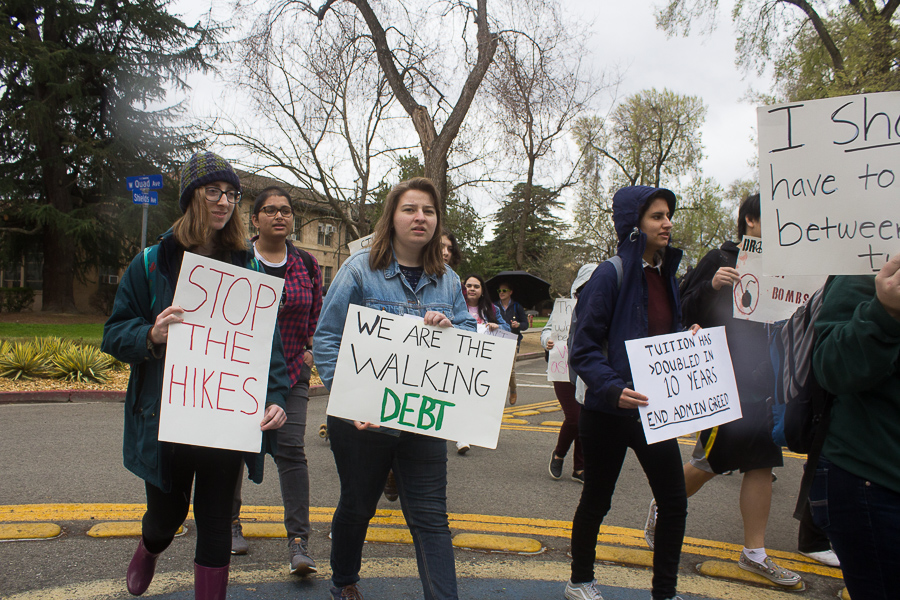
The Regents meeting, currently being held at UCLA, was met with widespread student backlash. At UCLA, the LA Times reported that students staged a “Shut Down the Vote” campaign, asking for a rejection of the proposed tuition hike. Students at UC Davis organized the “Rally and Teach-in to Save Public Education!” from 12 to 2 p.m. on March 14.

“Without [these] tuition increases and without borrowing from something to put in some place else, […] this institution is just going to die,” Makarechian said. “We have to approve this, I guess.”

The Regents will vote on the proposed 2.7 percent tuition hike for California students in May. The 2.7 percent increase would amount to $342 per student.

“Even though we’re postponing in-state tuition decision — awaiting hopefully changes in the state budget — this is one that we had determined to go ahead [with],” said chair of the Board of Regents George Kieffer at the Finance and Capital Strategies Committee meeting.


Written by: Hannah Holzer — campus@theaggie.org
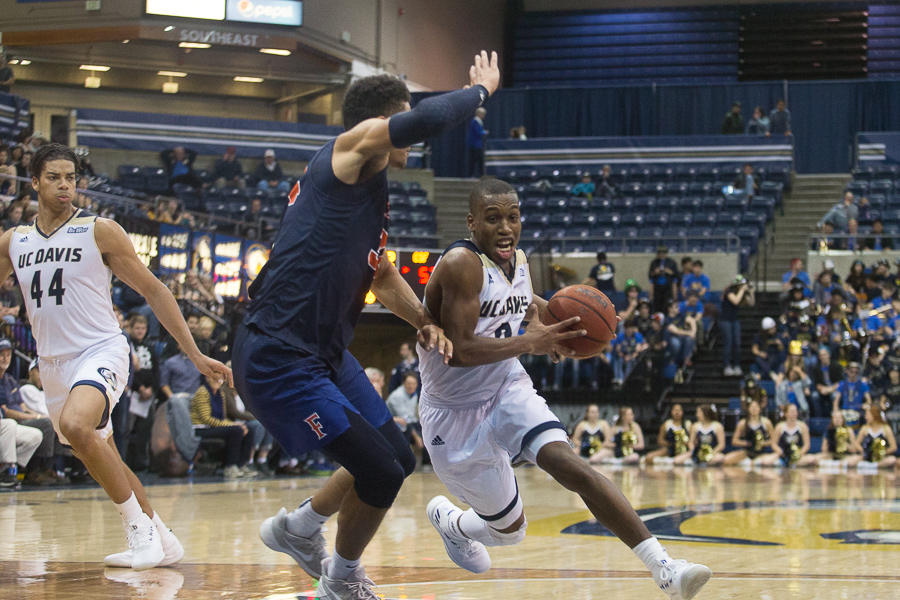
 

Semifinal Heartbreak

ZACK ZOLMER / AGGIE

Fullerton upsets Aggies in Big West tournament

UC Davis men’s basketball, the champions of the Big West Conference in the regular season, fell short of riding the winning momentum to a Big West tournament crown. After a quarterfinals victory over UC Riverside, the UC Davis men’s basketball team was defeated by the Cal State Fullerton Titans, 55-52, in the conference semifinal.

UC Davis was tested in the team’s quarterfinal game against UC Riverside, but prevailed nonetheless. Trailing after the opening ten minutes of the contest, the Aggies exploded for a 14-1 run over the next four minutes of play to go ahead by 10. Instrumental in this first-half effort was sophomore guard Joe Mooney, who scored 12 of his career-high 15 points off the bench in the first half. The Aggies entered the halftime break up 35-24.

It was a different story in the second frame, however, as poor shooting and questionable ball security allowed the Highlanders to chip away at the Aggies’ lead. UC Riverside tied the game at 49 with 6:43 to play.

UC Riverside’s scrappiness was not enough to overcome a timely response from the Aggie starting five. Thanks to a flurry of offensive activity from junior guard TJ Shorts II, senior guard Michael Onyebalu and junior forward AJ John –– all of whom finished with double-figures scoring –– UC Davis capped a 13-5 run and captured a 62-54 lead with just over 90 seconds left in the ballgame.

To the Highlanders’ credit, the men from Riverside showed tremendous reserve in the face of adversity. The eight-point Aggie lead appeared to have all but finished the contest, but the Highlanders hit four threes in the waning moments to make the game breathtakingly close on several occasions.

To keep the Aggies afloat against the unexpected barrage of Riverside triples, it came down to key, crunch-time free throw shooting. Both Onyebalu and Shorts were able to deliver, converting a pair of foul shots each in the final seconds to secure the first round victory.

In this primary matchup, Shorts stuffed the stat sheet with 15 points, seven assists, five rebounds and three steals, living up to the hype as the newly crowned Big West Conference player of the year. But while clutch free throw shooting was paramount to the Aggies’ success in game one, a less satisfactory night at the line quickly became UC Davis’ downfall in game two the following evening.

Cal State Fullerton entered the semifinal matchup against UC Davis having defeated the Aggies in both of the two programs’ regular season meetings, so it clear that the Titans possessed the blueprint necessary to upset the number-one seed in the Big West.

But if the first half was any indication of how this particular meeting between the two teams would go, the Aggies had all signs pointing their way to advance to the conference final game. UC Davis scratched and clawed its way to a 31-25 lead at the break and even opened the second half on a 9-2 run. With just over 14 minutes left, the Aggies were still ahead by 13 points, their largest lead of the evening.

But 14 minutes is often an eternity in basketball. And similar what occured in its quarterfinal contest, UC Davis turned sloppy play and inefficient offense into an opportunity for the opposing team to make a comeback.

Quite simply, the Aggies fell apart in the final 14 minutes of the game. In the contest leading up to that point, UC Davis was shooting a respectable 43 percent from the field and had turned the ball over seven times. But over the remainder of the ballgame, after John nailed a three to put the Aggies up 40-27, UC Davis shot an abysmal 23 percent, making just four of its final 17 attempts. The Aggies also committed five turnovers over that same stretch.

Whether this decline was due to poor shot selection, fatigue or just better defense from the Titans, UC Davis appeared to run out of gas on the offensive end. The defense, on the other hand, remained strong for the Aggies. They held Fullerton scoreless from the field over the final four and a half minutes of the contest, keeping the game close while the Aggies’ scoring struggles continued to the bitter end.

With the Aggies trailing by just one point, junior forward Garrison Goode made a timely play by rebounding Shorts’ contested layup that missed off glass. Goode was immediately fouled as he went up for a putback, giving Goode two free throws and the Aggies to an opportunity to take the lead, or at least tie the game with just eight seconds remaining.

Goode was unable to hit either of his foul shots, causing UC Davis to immediately foul the first Fullerton player to rebound the ball. That player was Arkim Roberston, who now had the chance to put the game on ice with free throws of his own. Robertson sunk the first to put the Titans up 53-51, but could not connect on the second, thus allowing junior guard Siler Schneider to collect the rebound and draw a foul while sprinting to the opposite hoop. Miraculously, the Aggies now had a clear path to extending the contest to overtime, but that was dependent on Schneider connecting on both of the upcoming foul shots to do so.

The starting guard from Kansas rattled home the first shot. The score stood at 53-52 in favor of Fullerton. Everyone in the Honda Center took a breath as Schneider lined up for the all-important second attempt. In one of the most heartbreaking moments of this otherwise improbable season, Schneider’s shot went up –– looking good all the way –– and ultimately rattled in and out, falling into the Titans’ possession. With virtually no time left on the clock, the game was finished.

Fullerton added two free throws at the tail end, but the result did not change. The defending Big West Champion Aggies had fallen 55-52 in the semifinal game to bring their thrilling six-game win streak that had earned them a top seed in the tournament to a screeching halt.

John was the only Aggie who scored in double figures versus the Titans that night, with 13 points on 5-7 shooting –– including three triples. The rest of the team had much more trouble finding the basket. Even the conference’s best player, Shorts, could only muster eight points in the 33 minutes he played, going just 4-14 from the field. This was no doubt an unusual night for UC Davis, but the Titans are a quality team that deserves credit for responding to adversity and completing the three-game sweep of one of the conference’s best teams. They advanced to the Big West final where they defeated UC Irvine by a large margin –– 71-55.  

While UC Davis’ hopes of a repeat NCAA tournament appearance were crushed on Friday night, there remain a multitude of positive takeaways from this season. By virtue of having the best record in the Big West following the completion the regular season, the Aggies have secured a spot in the NCAA’s National Invitation Tournament. While it’s no March Madness, the NIT will give UC Davis men’s basketball another opportunity to compete on a national stage.

But what is especially impressive about this year’s group is the team’s ability to shine in adversity. Losing a proven starter and one of the team’s best players in senior forward Chima Moneke was a major blow. The loss could have completely demoralized this team had it not been for the strong leadership from head coach Jim Les and the team’s core group of veterans.

The Aggies won seven of their final nine games until they fell to Fullerton. The effort from seniors Onyebalu and guard Arell Hennings was instrumental in leading the team in the right direction. John filled the starting role typically reserved for Moneke and became a key contributor. Shorts’ brilliance down the final stretch of the season earned recognition as Big West player of the year. Each Aggie elevated his game his own way when the ship could have easily sunk.

But there still remains the nagging question of what might have been for UC Davis had Moneke never been suspended. The circumstance around his absence is still unclear, but in the wake of this tournament loss, one wonders how much of a difference such a talented player like Moneke would have made –– in the postseason especially.

Moneke, despite appearing in just 21 games this season, still finished fourth in the Big West in both rebounding and points per game (the top three in each category all played in at least 30 games). His ability to produce on both ends of the floor could have easily changed the complexion of so many games, not to mention a contest decided by a mere three points.

For now, though, it appears as if Moneke played his last basketball game as an Aggie back on Feb. 1, and this year’s Aggie team still has a national tournament to play in. And final positive note for the future: The Aggies will be losing just two seniors (outside of Moneke) to graduation this Spring, meaning that next season’s roster will be packed with experienced returning starters as well a heap of transfers and freshman that will be anxious to leave their mark.

UC Davis will battle Utah in the first round of the NIT on March 14. The game is set to tip off at 6 p.m. in Salt Lake City.


Written by: Dominic Faria — sports@theaggie.org

Guest: Unitrans 50 years ago

KAILA MATTERA / AGGIE

President of ASUCD from 1966 to 1967 shares the story of Unitrans’ conception

In the fall of 1965, I had just returned to UC Davis for the beginning of my second year. I was 18. One September night, in 100 Hunt Hall, I heard the journalist Robert Scheer speak about the history behind the U.S. involvement in Vietnam. Already skeptical about the war that was behind the drafting of several of my high school friends — the ones who didn’t go to college — I made a deeply personal commitment to help stop the war and bring our troops home.

So in the spring of 1966, I was putting together a platform for a long-shot bid to become ASUCD President. I had heard that the administration at UC Santa Barbara was running buses between Isla Vista and the campus. Since Davis had high concentrations of student housing on Sycamore, Anderson, F. Street and J., I thought a bus service was something that could work in Davis. And I thought ASUCD should run the service.

I ran for office as an anti-Vietnam-War candidate, certainly not as a let’s-have-a-bus-system candidate. In May 1966, I was elected. Soon I joined 99 other student-body presidents from across the country in signing a full-page ad in The New York Times calling for the U.S. to begin the process of extracting itself from Vietnam. Although we could take out an ad, probably few of us could vote, since being 21 was a requirement.

Still, we could try to undermine the prevailing in loco parentis — in place of our parents — model of university-student relations.

In June, I met with Ed Spafford, one of Chancellor Emil Mrak’s closest advisors, and told him that ASUCD was interested in buying a couple of busses. We wanted the administration to approve the purchase and agree to maintain the equipment.

Ed Spafford was a savvy guy and he offered this: The campus would allow two of its existing small fleet of busses to be used for a trial run. This was okay with me as long as it didn’t undermine the plan for ASUCD to run the trial, and eventually the system, if it came to pass. Spafford agreed.

We ran the trial over several weeks in the fall of 1966. We totaled up the ridership. Since we had no data to measure the results against, we declared the trial a success. Then we began to plan for the service that eventually became Unitrans. In Spring 1967, at the end of my term, Rich Klecker, the incoming ASUCD Vice President, took the baton and, with Tom Matoff, the first student manager, made it happen.

Today, Unitrans carries 4 million riders a year. Without it, Davis would be very different in terms of congestion, fuel consumption, pollution and acres devoted to parking.

How do we view all of this? It’s tempting to see Unitrans through a private-sector lens, like a kind of a startup company: inspiration, concept, test-marketing, branding (How brilliant was it that the first two busses were London double-deckers? Not my idea, by the way.), business plan, seed money, going live, strategic partnerships.

It’s tempting, but that description misses the mark because it mischaracterizes the motivation at work. And it takes the inception of Unitrans out of its true historical context.

Let’s look at what was happening in the world at large around the time of Unitrans first ran on Feb. 28, 1968:

First and foremost, our friends and contemporaries were being drafted, killed, wounded, lost and traumatized in a war that made no sense;

But if you were 18, 19 or 20, you were not allowed to vote;

Phase one of the TET offensive, which exposed the disinformation about U.S. progress in the war, was just coming to conclusion around Feb. 28;

Senator Eugene McCarthy had mobilized a peace army, mainly young, mainly students, to accomplish the seemingly impossible task of deposing the incumbent President at the ballot box;

On Mar. 12, McCarthy took 42 percent of the vote in New Hampshire; Robert Kennedy joined the race a few days later; on Mar. 31, Lyndon Johnson withdrew from the race for president;

On Apr. 4, Dr. Martin Luther King Jr., who was in the process of becoming a leading voice against the war, was assassinated. On June 5, Robert Kennedy, the only electable anti-war candidate, was killed in a hotel kitchen in Los Angeles.

Richard Nixon would win. The war would drag on for six more years. Tens of thousands of our brothers and sisters were cut down, as well as more than a million Vietnamese in their own country.

We, the young, the students, the draftees, wanted a say, wanted a voice and wanted the vote. And to get those tools, we were willing to show — had to show — that we could build stuff and run things — things like Unitrans, the CoHo, the Experimental College, an FM KDVS and a daily Cal Aggie.

The 26th Amendment, declaring the right to vote at the age of 18, took effect on Jan. 1, 1972. On Apr. 11 of that year, I was privileged to be elected to the Davis City Council. At the time, public transit was on the radar in Washington and Sacramento. The City partnered with ASUCD in pursuing legislation that would allow municipal transportation funds to be passed through to Unitrans.

Again, around 1980, I was lucky to be representing Davis on the Yolo County Board of Supervisors at the inception of YoloBus, another great partner of Unitrans.

Dozens of people joined their volunteer efforts together to make Unitrans a reality. Hundreds, perhaps thousands, have built it out and continue to do so. Their contributions were and continue to be profoundly communitarian. And, as they have been to me, these contributions were profoundly rewarding to all who made them.

Bob Black was the ASUCD president from 1966 to 1967.


Written by: Bob Black

Disclaimer: The views and opinions expressed by individual columnists belong to the columnists alone and do not necessarily indicate the views and opinions held by The California Aggie.

Guest: Speak freely — but be watched

RAUL MORALES / AGGIE FILE

Campus “watchlists” threaten freedom of speech for students

A diverse group of student activists came together on Mar. 5 to build a mock apartheid wall at the Memorial Union. The wall was intended to represent the similar structure that cleaves the Palestinian West Bank today. The powerful symbolism is clear: Whether in Palestine or Mexico, the construction of these physical structures are a stark reminder of our tendency to “otherize” and “dehumanize” humanity for political purposes.

The wall and the subsequent demonstration is, and should be seen as, a bright source of pride for students on campus. It is a reminder that the powerful ideals of principled activism and fiery commitment to change are alive and well at the university.

What is disappointing, however, is the quiet, ominous atmosphere of fear that swirls behind the organizing scenes of such demonstrations. Despite promises of the right to unequivocal “free speech,” many students in reality are threatened relentlessly by the concept of being put on campus “watchlists.” These watchlists — exploding recently in popularity on university campuses, especially after the Boycott, Divestment, Sanctions (BDS) movement — aim to keep close surveillance on students. Or simply put, they essentially serve to try and intimidate campus activists from speaking certain political views.

Prominent among these watchlists is the infamous Canary Mission. The organization claims to document “individuals and organizations that promote hatred of the USA, Israel and Jews on North American college campuses.” In reality, the organization is little more than a blunt, archaic propaganda weapon — designed to spread fear and crush free speech on college campuses like ours.

The fear of these watchlists is far-reaching and tendril-like; it at once puts more pressure on activist leaders organizing and discourages those who are more unsure from joining. Individuals who are on watchlists like Canary Mission — often for nothing more than joining registered student organizations or speaking their political views on campuses that are ostensibly the birthplace of “free speech” — run the risk of being blacklisted from jobs, having difficulty during traveling or even being refused entrance into Palestine.

What is perhaps most disturbing is that certain student organizations on our campus help strengthen and perpetuate this watchlist system. In a chillingly McCarthy-esque tone, Canary openly invites students to “expose hatred” and raise the “alarms” on other students who may be mobilizing for a cause they disagree with. Thus it is not uncommon for events about Palestine to be swarmed by students equipped with body cameras or other recording devices, the threat of Canary hanging silently in the air. What purpose does such action serve but as a blatant attempt to intimidate and silence the other side?

Neither watchlists like Canary nor the student organizations that help perpetuate it will be enough to stop activism from gaining momentum. Neither the fear of being blacklisted nor subtle threats by fellow students will be enough to crush the commitment to speak and advocate freely on our own campuses. The passion is too bright, and the causes are too strong.

But watchlists like these remind us of the many ways — directly or indirectly — that fear can be spread and our core freedoms threatened. And they remind us of how, for many students, “free” speech will continue to only come at a high, high price.

Adnan Perwez is a third-year studying political science and history at UC Davis. He has been involved in activism through a variety of organizations, including Muslim Student Association West, Students for Justice in Palestine and the Council on American-Islamic Relations. He currently serves as the president of the Muslim Student Association at UC Davis.


Written by: Adnan Perwez

Disclaimer: The views and opinions expressed by individual columnists belong to the columnists alone and do not necessarily indicate the views and opinions held by The California Aggie.

Humor: Toddler starts studying and drinking to keep up with competitive workforce

CAITLYN SAMPLEY / AGGIE

2 years old and no internship? Is he even trying?

One local toddler is a total failure. He’s 2 years old, and he’s barely made a LinkedIn. It’s like he didn’t even read all of those articles about how much more competitive the job market is getting. It’s almost like he can’t even read at all… nonetheless, this baby is beyond bamboozled by his short resume and has resorted to drinking.

“You wanna… you wanna know what’s frickin’ stupid?” Drunk Toddler said. “I… I am like TOP DOG of my daycare… and you think you can get a job when you’re top dog, right? No! Nope!”

The parents of Drunk Toddler started to get suspicious when they found out that the juice from all of the sippy cups in the house had been suspiciously poured into that one drawer that you just throw miscellaneous menus into. They grew concerned when they found a handle of Smirnoff behind the crappiest block tower ever.

“Honey, what’s this?” one mom asked the baby as he looked over the materials for his “Intro to Shapes” midterm with glazed eyes.

“It’s my special juice, Carol,” Drunk Toddler spat back. “Why don’t you try some so you’re not such a stick in the mud?”

Drunk Toddler has been taking as many classes as he can to show employers that he’s motivated. He’s taken Intro to Colors, Intro to Shapes, Animal Sounds History and even a physical education course on proper tantrum thrashing.

“Anything to boost the skills section of my LinkedIn, man…” Drunk Toddler said. “You wouldn’t believe it, but I pale in comparison to some toddlers. Mary Pulkins, an 18-month chump, already has a bachelor’s degree in the alphabet… Apple has been scouting her for months. And me? I can’t even figure out what blue is! I don’t know!”

Drunk Toddler threw his Fisher Price laptop against the wall and took another swig from his sippy cup. A total mess, he waddled to the kitchen for dinner.

Over some tense knife-to-plate noises and a lot of gibberish talk from Drunk Toddler (we’re unsure if the gibberish stems from the alcohol or the fact that he’s a baby), his brave mom broke the silence.

“You don’t have to give your life up for a career, son,” she said. “There are so many beautiful things in this world for us to enjoy outside of the hellish workforce of the 21st century. We have family, friends, music, art, food and more — these beautiful things that we only get to enjoy in the limited amount of time that we have on Earth. Why let those things go untouched for the sake of a resume that could never define your true worth? Why die without truly living?”

A hush fell over the room and a violin swelled in the background. The family grabbed hands and looked into each other’s eyes, finally appreciating the true meaning of existence for the first time in Drunk Toddler’s life. He pushed his sippy cup of vodka off of his highchair, symbolically accepting a life outside of the stress he had created. He had but one response for his wise mother.

“What’s it mean to ‘die’?” he asked.

His mother picked up the vodka sippy cup from the floor and took a fat swig.


Author’s Note: Drink responsibly… and don’t let your babies drink.


Written by: Olivia Luchini — ocluchini@ucdavis.edu

(This article is humor and/or satire, and its content is purely fictional. The story and the names of “sources” are fictionalized.)

Review: “Black Panther,” The Album

CAITLYN SAMPLEY / AGGIE

Star-studded record revolutionizes movie soundtracks

Since its Feb. 16 release, the phenomenon that is the “Black Panther” film has swept the nation. The superhero flick is characterized by an A-list cast, almost all of whom are black. While this is not the first black superhero movie, it has quickly become the most successful. Coupled with a great storyline and the cultural equality movements of today, the movie delivers in all aspects that a movie should. From the actors to the directors to the soundtrack, Black Panther celebrates black culture in a blockbuster way like never before. One of the main component of the film is its critically acclaimed soundtrack, overseen by none other than Kendrick Lamar and featuring the likes of Travis Scott, Anderson .Paak, SZA and The Weeknd. Much like the “Black Panther” movie, the album goes above and beyond what we’ve come to expect in cinema.

The album is kicked off by the now internationally famous song “All The Stars.” The song pairs Lamar with his fellow Top Dawg Entertainment label-mate SZA. Beginning with the song’s familiar, pounding drum beat, the tune leans on Lamar’s incredible flow and lyrics before giving way to SZA’s intoxicating hook. To date, the music video for the song has over 60 million views and counting.

After “All The Stars,” the up-and-coming British singer Jorja Smith commands the song “I Am” all by herself. The song is both haunting and catchy at the same time. Over a slow, sticky beat, Smith croons, “When you know what you got / sacrifice ain’t that hard / feel like dependin’ on me.” The track perfectly fits into the storyline of Black Panther, creating in the song the image of a tortured superhero.

Finally, we reach the meat of the soundtrack. The hard-hitting track “King’s Dead” is anchored once again by Lamar, who receives verses from Jay Rock, another Top Dawg Entertainment artist, as well as Future and British musician James Blake. The song has a heavy, pulsating drumbeat paired with equally tough verses from the featured artists. It all culminates in a song that serves to trigger your adrenaline. The song could be your next gym song, or just hype up a scene by Black Panther’s star, Chadwick Boseman.

10 years ago, it would be shocking if a soundtrack song made its way onto the radio. Nowadays, Black Panther is going so far as to normalize that fact. Its abundantly clear that with the help of Lamar, the movie and soundtrack are both shooting to the top charts, but for their own reasons, in what comprises a truly incredible feat.


Written by: Rowan O’Connell-Gates — arts@theaggie.org

How the moon was formed

SIMON LOCK AND SARAH STEWART / COURTESY

Model shows moon forming from vaporized Earth material

Research from Harvard University Ph.D. candidate Simon Lock and UC Davis professor Dr. Sarah Stewart updates the traditional lunar formation theory. A massive body slammed into the Earth, creating a huge spinning cloud of vaporized rock called a synestia. Portions of the synestia eventually formed the moon, and, after sufficient cooling, the Earth.

The synestia model can account for a larger impact than traditional moon forming models and erases some of the problems found in previous theories.

“The model that’s in the textbooks predicts that most of the moon is made out of the thing that hits us, and the reasonable assumption is the thing that hits us must look a little different,” Stewart said. “But the moon looks very similar to the Earth, in many ways. In bulk elements, it looks very much like our mantle, and in isotopic ratios of many elements, it is almost an identical twin. That’s been the hardest part.”

Isotopic ratios in materials are similar to fingerprints in forensic studies — unique amounts of compounds are found in materials due to properties such as heat and pressure at the time of formation. The moon and the Earth have extremely similar isotopic ratios, indicating they have the same source material, but the moon was likely formed at a higher temperature than the Earth.

“If you look at the major rock-forming elements — magnesium, silicate, aluminum, calcium —  [the Earth and moon] look almost the same,” Lock said. “Same proportions, same ratios. But, if you look at things that are more easily vaporized — potassium, sodium, germanium, copper — the moon is much more depleted in those elements relative to Earth. This has been a conundrum that we’ve known since the Apollo era.”

The synestia theory helps explain the differences in volatile compound ratios by forming the moon earlier than the Earth, when the synestia was hotter and more active, vaporizing away elements like potassium and sodium from the rock mixture.

“Our model, because you have a much more energetic impact, you have a lot more mixing between the two bodies,” Lock said. “If the moon forms inside the Earth, it acquires the isotopic composition of the vapor around it, with some small differences. When it separates away from the synestia, it takes its Earth-like isotopic composition with it.”

While no synestias have been visually observed with telescopes or detected through radiation signatures, Lock and Stewart said this is to be expected. Synestias are thought to only exist for dozens or hundreds of years, a blink of an eye on the cosmic scale where processes take place over millions or billions of years.

“The problem with trying to detect synestias is that they are very short-lived,” Lock said.

Detailed modeling work suggests many other planets and moons may have gone through synestia stages as well. The results may bolster research outside of the planetary science community, informing future work of geologists and atmospheric scientists curious of how planets accreted material and gathered up initial atmospheres.

“This study is truly transformative,” said Dr. Nicolas Dauphas, a professor at the Origins Laboratory at the University of Chicago. “It is not often that one encounters a study that makes you re-evaluate your fundamental understanding of a process and this study definitely falls in that category.”

The moon forming from a synestia solves some of the problems associated with the classic giant impact theory. More experimental data can help further describe what conditions were like during and after a massive impact like the one which created the moon.

“The next step for a synestia theory is more detailed simulation of both chemistry and physics of the synestia, which may involve very massive computer simulations,” said Dr. Matija Cuk, a research scientist at the SETI Institute and one of the co-authors of the study.

The synestia team was previously been covered by The Aggie in 2016 and 2017.


Written by: George Ugartemendia — science@theaggie.org

New Professor Studies African Genetic History

BRENNA M. HENN / COURTESY

Brenna Henn researches African genetics, human origins

The bookshelves taking up one wall of Brenna Henn’s office are mostly empty. She’s still moving in, having only arrived at the start of this year as a new associate professor in the anthropology department. Henn’s research focuses on evolutionary and population genetics, particularly in southern Africa.

“We study evolutionary and population genetics in under-represented human populations, mainly from southern Africa,” said Meng Lin, a postdoctoral researcher in Henn’s lab, in an email interview. “We pair genomic data and complex phenotypes collected from the communities, and use computational approaches to address our questions.”

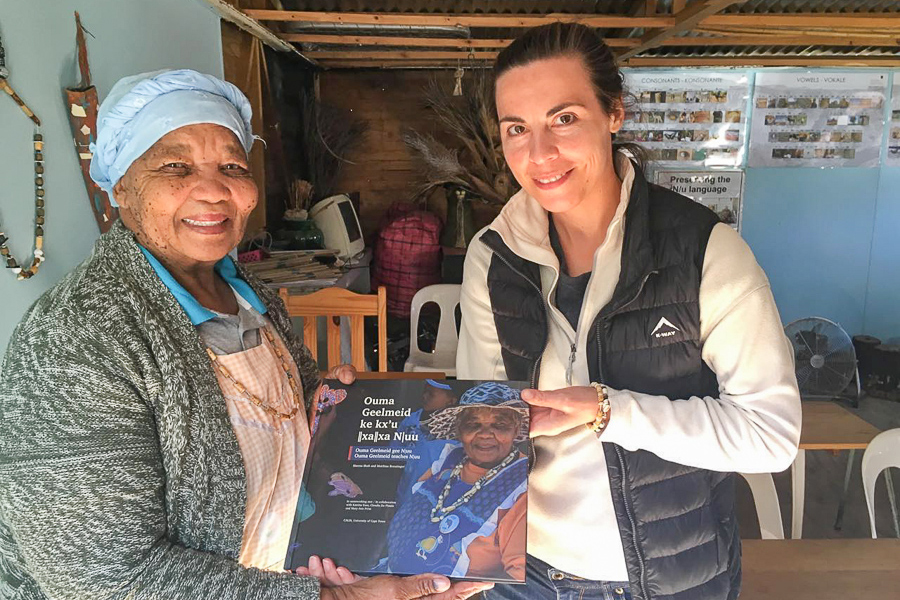
Henn became interested in African genetics as an undergraduate and remained focused on that field throughout her graduate and postgraduate studies. As a Ph.D. student, she went to eastern Africa to collect data on a local KhoeSan-speaking population. KhoeSan languages include speech sounds called clicks that occur as consonants. She followed the click language down to southern Africa, where a native population called the KhoeSan live, and collected genetic data to compare to the samples collected in eastern Africa.

“When I did that, I found that the southern African populations had incredible amounts of genetic diversity,” Henn said. “Much more so than the east African populations, and we ended up modeling that, if there was a single location for a human origin for the modern human populations, like the ancestral population for everybody alive today, then actually southern Africa’s more likely to be the location than eastern Africa because of the amount of genetic diversity that they’ve retained in these KhoeSan populations.”

This discovery was rather controversial, as eastern Africa was regarded by most paleoanthropologists as the likely origin of humans, not southern Africa. However, genetics says human populations with the most diversity are older, since the relatively small groups that left Africa and migrated across the world would have limited genetic diversity compared to the ancestral population. That’s why the KhoeSan are particularly interesting.

“The KhoeSan exhibit more genetic diversity than other human populations,” said Alicia Martin, a postdoctoral research fellow at the Broad Institute of MIT and Harvard, in an email interview. “Genetic studies have shown that this high level of diversity indicates their uniquely early divergence from other populations, splitting about a hundred thousand or more years ago. They have also remained relatively isolated throughout human history until fairly recently, highlighting their importance on the human evolutionary timeline.”

The KhoeSan are a hunter-gatherer society found in the southern half of Africa; they have been involved in many of Henn’s studies. One project on skin pigmentation genes were conducted on the KhoeSan. Previous studies had been done on other populations: Europeans, some Hispanic and East Asian groups, and African-Americans. Nothing had been done on native Africans, and the results were again unexpected.

“When we started working on the KhoeSan population, it became clear very quickly that there wasn’t just twelve or even fifteen genes involved,” Henn said. “That barely explained 25 percent of the variation in the population, so there were probably many, many, many more genes involved in skin pigmentation, because it’s a perfectly heritable phenotype, there’s almost no environmental effect on baseline skin pigmentation. So we think there are upwards of fifty genes involved, actually, sort of at a minimum right now, and that was really different from what people had thought before.”
The results from these and other studies show that the information available from the usual Eurasian sources may be limited. Africa itself is a highly diverse region, ecologically, culturally, and genetically, and yet relatively little data exists on its populations.

“Genetic studies have been enormously Eurocentric to date, and African populations have largely been left out primarily due to cultural, funding, infrastructural, and historical reasons,” Martin said. “These study biases mean that we haven’t explored the connection between traits and genetic data especially in Africa. This is a very important gap because humans have evolved in response to environmental exposures such as UV radiation, pathogens, etc, and these vary dramatically across global populations. Without studying the full spectrum of genetic and phenotypic diversity in globally diverse populations and especially in Africa where humans originated (and thus have the most genetic diversity), we are left with an incomplete view of human evolution and the genetic architecture of evolutionarily important traits.”

Many of Henn’s projects were wrapped up in the past year, including a paper published in January on a genetics program that tracks mutations in a population. One ongoing study focuses on height, analysing its genetics similarly for the skin pigmentation project  — whether the same genes are present, how heritable it is, and so on. Height was also studied primarily in European populations before, and found to be 80 percent heritable. Interestingly, it’s about the same for the KhoeSan. Data like this could help determine the ancestral state of this phenotype, and help us further understand our own genetic history.

With fewer studies to oversee, Henn has found herself thinking about what to focus on for the next five years. The height study and other ongoing projects will surely take more time, but there are plenty of traits unexplored in African groups like the KhoeSan or KhomaniSan which might lead to new discoveries.

“Brenna has performed the largest genetic studies in KhoeSan populations to date,” Martin said. “More generally, her work has been integral towards understanding the genetic origins of modern humans in Africa. Additionally, her close ties with the KhoeSan community have served as an example of how field work should be conducted, in which researchers engage deeply with the community and discuss with participants and leaders how their involvement has made an impact on scientific advances.”


Written by: Kira Burnett — science@theaggie.org

MaHellYeah! brings Davis community together for head-shaving fundraiser

JULI PEREZ / AGGIE

Fighting for a cause in Davis

Keaton’s Child Cancer Alliance and the St. Baldricks Foundation hosted and partnered with SuperCuts to shave heads at de Vere’s Irish Pub in downtown Davis to raise money for childhood cancer research on Thursday, March 9. The event, “MaHellYeah” was held for UC Davis’ freshman outside hitter Mahalia White. 40 heads were shaved and $26,000 was raised, donations are still being made.

White was diagnosed with stage IV Hodgkins Lymphoma the day after her 19 birthday in December. White, one of the UC Davis women’s volleyball top performing players earning the Big West Freshman of the Year title, fought through her freshman season with unexplained back pain starting halfway through the season.

Stage IV Hodgkins Lymphoma is an advanced stage cancer of the blood, and when it reaches this stage, it has spread to other organs outside of the lymphatic system.

The atmosphere was positive at de Vere’s as people chatted in line to get their heads shaved. At de Vere’s, no hair was safe, including beards. The event drew a diverse crowd, all of them enlisted themselves in the battle against childhood cancer.

While White was unable to attend the event due to her chemotherapy treatment, she still watched the event via Facebook live streaming and spoke to The Aggie.

White is very appreciative of all the participants willing to shave their heads.

“When I started losing my hair, I was very depressed about it,” White said. “When I shaved my head, I felt better, but I still didn’t look the way I wanted to look especially when it wasn’t my choice. So, when I see people willingly lose their hair for people like me going through treatment, all the support means a lot to me.”

UC Davis women’s volleyball Head Coach Dan Conners stepped in to fight for the cause.

“It feels great, I feel free,” Conners said after having his hair shaved.

Conners spoke on White’s diagnosis in a post-shave interview.

“Obviously we’re all bummed out, but Mahalia is a resilient kid and she’s got such a positive spirit about it,” Conners said. “We’re just supporting what she needs, which is more of that positive spirit.”

The women’s volleyball team has responded to news of White’s diagnosis with open arms and support.

“We visit with her when we can and definitely try to see how she is feeling every day,” said sophomore blocker Jackie Graves.

The team has also responded by creating bracelets with the label “MaHellYeah” to help create awareness surrounding the disease. Then students and supporters started tweeting with the hashtag #MaHellYeah to help spread the word through social media.

Other sports within UC Davis athletics also supported White for this event. Men’s water polo redshirt freshman attacker Jack Stafford has family members afflicted by cancer and wants to support other athletes as much as possible.

“When I found out another student-athlete had cancer, I wanted to do anything I [could] to support them,” Stafford said. “As a college student, I don’t have a plethora of money, so the best way to do this was to shave my head.”

Loyal fans of UC Davis women’s volleyball came out to support White and the team. UC Davis alumnus Martin Mangrich has been a fan of women’s volleyball ever since he graduated in 2005.

“I can get my head shaved to help with cancer research,” Mangrich said. “I should do it.”

Volleyball season has ended, but the team is currently practicing, and the team misses her energy.

“We definitely feel her absence on the court,” Graves said. “But we understand how positive she is and how much she wants to be with us, and it allows us to keep moving forward for her.”

For the 2017-18 volleyball season, White was the team’s top offensive generator with 398 kills. White performed consistently throughout the season, despite some pain in her back about halfway through the season. White believed her position as outside hitter caused her back pain since the outside hitter needs to constantly jump and results in excessive impact on the spine and knees.

White recounted an away game at UC Irvine when she had to be pulled out of the game because of excruciating back pain.

“Something about that day my back was in pain for the whole day, it wasn’t like the other days where it would go away,” White said. “I warmed up and everything, but every time I jumped and just moving in general really killed my back.”

Even though back pain affected her play, White still had a team high 17 kills that game in October 2017.

“You gotta’ do what you gotta’ do,” White said.

Mahalia’s mother, Patsy White, has noticed the outpouring of support for her daughter and reflects on how vital it has been.

“Everyone lives up to the standard of Aggie family, it’s a beautiful support system she’s been given,” Patsy White said.

Patsy White believes that the support from her team and herself will help Mahalia’s battle with this advanced stage cancer. Patsy White is a cancer survivor herself who had her final chemotherapy treatment in July 2017 and knows too well the struggles that Mahalia faces and will continue to face.

“I know what it feels like, that news from the doctor that you have cancer,” Patsy White said. “Your first reaction is ‘oh my god, am I going to die?’ ”

White recalled the day she learned of her daughter’s diagnosis.

“I remember it was Dec. 4, 2017 — I’ll never forget the date that I got the call from her,” Patsy White said. “I knew she had the MRI done, and that they finally had the results. I remember me telling her that they called her into the office and closed the blinds, and that’s never a good sign when they do that. Her first reaction was to call me. When she called me, she cried and my heart clenched. My daughter is one of the strongest young ladies you would come across, she doesn’t cry about too much of anything. As she was with me over the phone, I definitely knew something was wrong, and I was almost in tears myself.”

Those afflicted with cancer are not the only people who battle with the disease. Doctors, researchers and medical experts also need to grapple with disparities in the world of cancer research.

Around 1.4 million cancer patients are diagnosed every year, Mahalia White is one of 70,000 cancer patients diagnosed every year in the United States that fall in the adolescent young adult population, which makes up 5 percent of the cancer patient population.

Dr. Marcio H. Malogolowkin, the chief of hematology oncology and professor of pediatrics at UC Davis explained the competitive environment of funding for cancer research.

“Pediatrics researchers are competing with other researchers who research for the other 95 percent; it’s very hard to compete,” Malogolowkin said. “So we depend on foundations, like St. Baldricks, those are important dollars because we don’t get it from the government.”

Malogolowkin highlighted some important aspects of UC Davis’ Comprehensive Cancer Center that other centers cannot do. Like the cross pollination with adult oncologists like Dr. Scott Christensen, medical director of UC Davis Cancer Care Network, who works primarily with adult patients.  

“Where we are very unique is when compared to other centers, we are co-located, so that the pediatric program and the adult program work at the same building,” Malogolowkin said.  “So, our interaction and our ability to share, co-share and integrate these patients is much easier than other programs.”

Malogolowkin hopes to improve outcomes for patients like Mahalia White who are part of the adolescent young adult group. Unfortunately, outcomes for the group have not improved as quickly as patients under 15 and older than 39.

This may be for many reasons, according to Malogolowkin.

“This could be biological, psychosocial, or a lack of experience with this patient population,” Malogolowkin said.

With her diagnosis and experience with stage IV Hodgkins Lymphoma, White wants to advocate for childhood cancer awareness one day.

Donations can still be made through the end of the year through St. Baldricks.

Patsy believes her family’s experience with cancer will help Mahalia in her battle against cancer.

“She comes from a strong line of women who have had cancer and are survivors,” Patsy White said. “She’s a fighter.


Written by: Bobby John — sports@theaggie.org

Aggie sports desk Team of the Quarter: Women’s basketball

JORDAN KNOWLES / AGGIE FILE

Team earns title due to record, player stats, multiple conference recognitions

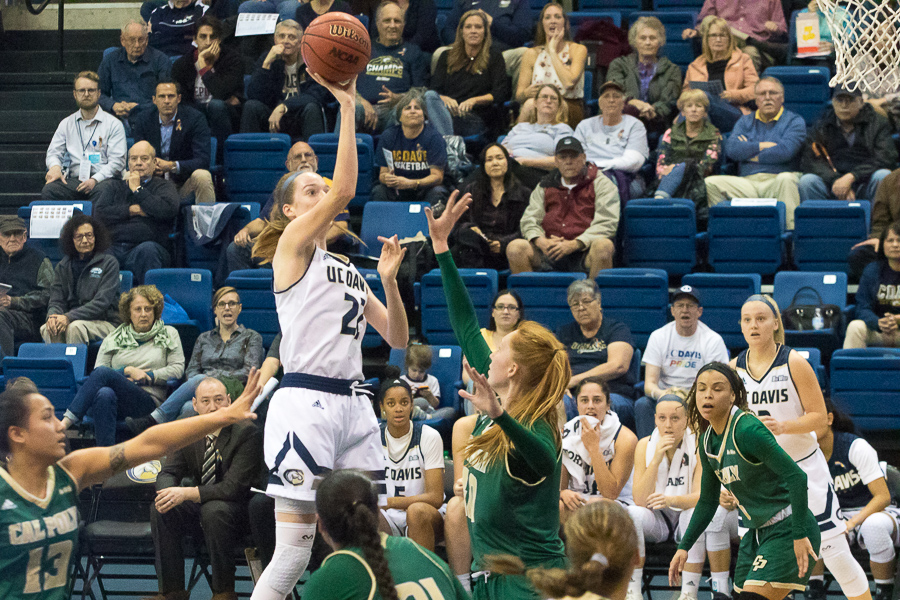
UC Davis’ women’s basketball team had another record-breaking year in leading the league with a 24-5 overall record, earning them the title of Team of the Quarter by The California Aggie’s sports desk. The team earned a second conference regular season title with a 14-2 record in conference play and earned the league title. The Aggies enjoyed a 10-point win over UC Riverside on Feb. 24 during “Senior Day,” and secured the first place title with still a week left to go in the regular season. UC Davis is the first Big West school since 2009 to win outright conference regular season titles, matching the team’s record for Big West wins with a number of 14.

On top of its record, the women’s team, including head coach Jennifer Gross, received several honors towards the end of the regular season. Gross was named the Big West Conference Coach of the Year for the second year in a row, following in the footsteps of previous women’s head coach Sandy Simpson, who received the honor twice for the 2007-2008 and 2009-2010 seasons. This is the first time since 2001 that a coach has received the award for two consecutive years.

Junior forward Morgan Bertsch made the the All-Big West first team for the second season in a row. This honor marks Bertsch’s third time being an All-Big West selection, and she is the third player from UC Davis to make the team twice in a single career. She scored double figures in each of the 29 regular season matches; her standout night was on March 1, when she scored 34 points against Cal State Fullerton — third on UC Davis’ all-time single-game list. Bertsch also shot .561 from the court, the third best in the league, and led her team with a 19.8 ppg, the second best in the league. The junior Aggie is only 27 points away from tying Staci Stevens’ single-season scoring record from the 1987-1988 season. Bertsch’s honors round out by placing third in the league on blocked shots (1.7 bpg) and fourth in free throw percentage (.777).

Aside from appearing in the most career games in UC Davis history, fourth-year forward Pele Gianotti received a special nod in her selection for the All-Big West second team. She has set the university’s record for games played and consecutive games played at 125 and has not missed a single game since enrolling at UC Davis. In addition to tying a career-high 26 points in a game this season, Gianotti is in the top 15 in the entire league in six different categories and led the team in rebounding at 5.7 rpg, putting her in the top 15 in the conference.

Senior guard Rachel Nagel received the first honor of her career when she was selected to join her teammate on the conference’s second team. Nagel rounded up the season by hitting double figures 14 different times and earning a career-best 23 points during the team’s contest against Seattle in late November. She finished third on the UC Davis team in scoring with a 10.4 ppg, shooting 47 percent from the field and set the bar high by shooting 43 percent from passed the arc — the best number of the entire team.

Fourth-year guard and forward Dani Nafekh finished up the senior class’ nominations with her honorable mention selection. This is Nafekh’s second all-league honor, following in the footsteps of her second-team nod during her junior year season. She ended the season with 72 assists, a 66.9 ppg, shooting 42 percent from the field, and shooting about 41 percent from beyond the arc. Nafekh also finished in double figures seven times over the course of the season and broke her own season-high in mid-January with 18 points when she and the team faced UC Riverside.

Freshman forward Cierra Hall represented women’s basketball’s newest Aggies by being one of five student-athletes to be selected to the All-Freshman Team. She appeared in all but one game this season and similarly reached double figures seven times. Hall also set two career highs with 12 rebounds in mid-January against UC Riverside and 17 points during the contest against Long Beach State on Feb. 1. Hall concluded her first season at 6.5 ppg and 4.8 rpg and she was on par with her older teammates’ numbers with shooting 42 percent from the field and 44 percent  from beyond the arc.

UC Davis’ program is the only one in the entire Big West Conference to have one first-team player since they joined the Big West Conference in 2007. Hall’s achievement makes it the fourth year in a row and eighth time ever that the Aggies have been home to one of the league’s top freshmen; she joins her current teammates Nafekh and Bertsch in that honor.

For the second consecutive year, the Aggies’ first place standing clinched an automatic berth into the Women’s National Invitational Tournament — making this year the sixth time in 11 Division I seasons that the women’s team has made it into the postseason. The performance of the women’s basketball team lead the seven members of the sports desk to unanimously select them as the standout team of Winter Quarter.


Written by: Kennedy Walker — sports@theaggie.org

Review: “It’s Bugged”

ZOË REINHARDT / AGGIE

Art to give you butterflies in your stomach

The phrase often goes that “art is all around us.” If one counts a bug as a medium or representation of art, then there are 10 quintillion individual examples and 30 to 40 million species of such art. That’s a lot of art.

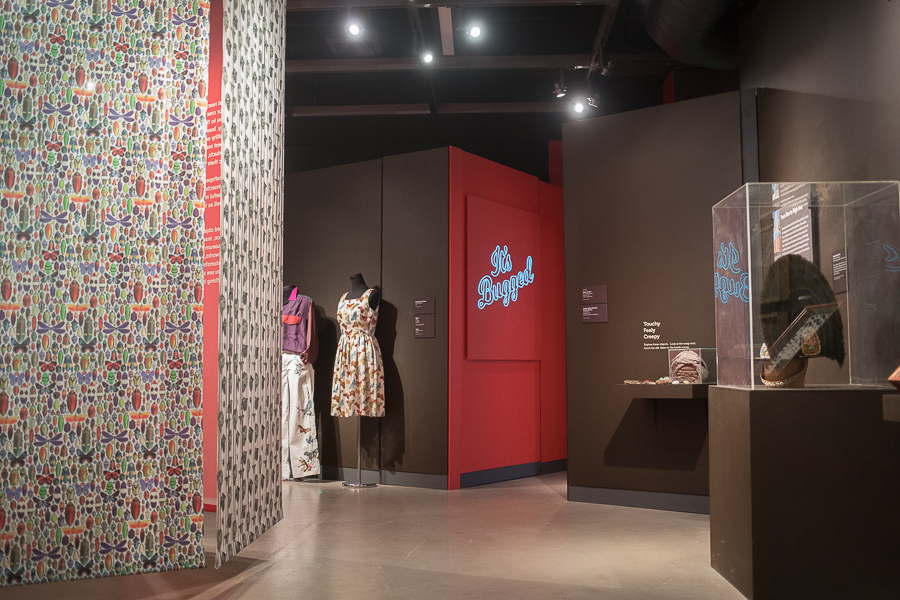
“It Bugged: Insects’ Role in Design,” an art and design installation, is currently on display in the UC Davis Design Museum, located in Cruess Hall. The exhibit features work from the JoAnn C. Stabb Design Collection, insect specimens from the UC Davis Bohart Museum of Entomology and original work from faculty and students — all of which incorporate bugs either in design or in the production of raw materials.

Placed all around the small exhibit are various insect specimens (in glass cases, don’t worry), not only adding a sense of context and scientific legitimacy to the exhibit but also placing these bugs as art themselves. Without having to face the potential of being stung or touched by one of these insects, their bodies, wings, legs and antennae become fascinating to study. Their colors are bold, their bodies and legs oddly shaped. Inspecting such bodily details and comparing them side by side with other bugs took up the vast majority of my time in the exhibit.  

By emphasizing the physical bug as a piece of art, the stage is set for a grander appreciation — if they themselves are spectacular, what they produce is even more so. Ann Savageau’s stand-out piece of the exhibit was her “Wasp Trilogy,” which utilized paper made of hornets’ nests. Each piece of her trilogy layers the wasp paper to create an intricate swirling design with an open space in the center. One could speculate that such open space is the central nature of bugs in our ecosystem and the various ways they take form and importance.

Savageau also had “Totems” located in the back of the exhibit. While credit is due to the artist for her embellishment and paint work, the main attractions of the piece — the etchings “carved” on the large tree branches — are made naturally by the larvae of beetles in the Sierra Nevada Mountains. No two totem poles looked the same, each etching with a different thickness or line shape.

In addition to celebrating the natural beauty that bugs produce, it should be noted how humans utilize their talents. The process of extracting silk from silk bugs was emphasized in the exhibit, as well as the significant role bugs have in the creation of red dye. Indeed, bugs produce carminic acid as a defence mechanism, which can also act as a natural red dye. Two silk Asian robes and a bright red “Peruvian Highland Textile” display demonstrate the end product of using these two raw, bug-made materials, respectively. Bugs then become a part of our creative process, a necessary means in the beauty that we create.

This exhibit illustrates the centrality of bugs in our society. Even the sheer number of bugs that share the Earth with us puts into perspective how great in quantity they are needed for a functioning ecosystem. Moreover, through our interactions with them, they have gained a place in our modern society: from the functional use of fabric development to the natural beauty that they help produce, they hold a pinnacle role. While these roles can be overlooked and all too often taken advantage of, “It’s Bugged” makes one appreciate our small insect friends and the beauty they add to our experience. No if, ands or bugs about it.

The installation is open until April 22 and is free of charge. More information can be found on the UC Davis Arts Administrative Group’s website.


Written by: Caroline Rutten — arts@theaggie.org

Living within a culture of academic pressure

KAILA MATTERA / AGGIE

How much is too much?

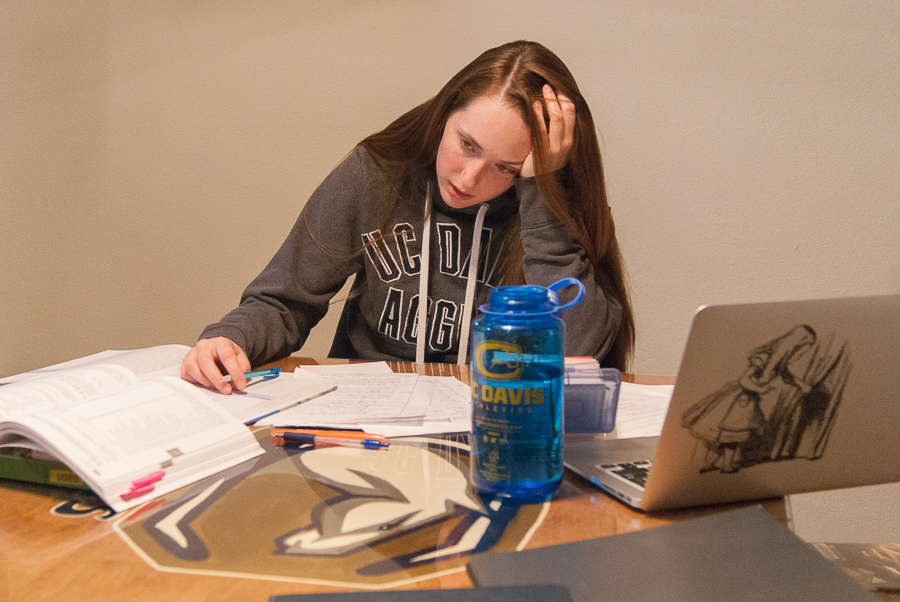
To most students, finals season is understood to be a dreaded time plagued by all-nighters, excessive periods of time spent at the library and copious intakes of caffeine. High levels of stress cause many students to experience mental and physical health deterioration during this time, but few students acknowledge and address the issue.

Shrishti Tyagi, a third-year biological sciences major and a team coordinator for the Mental Health Initiative, attributes students’ overwhelming stress levels to the overly-competitive environment created for students attending a renowned research university.

“I think as a UC school it’s very competitive in general, and a lot of students are not only doing academics, they’re also working part-time, they’re in clubs, they’re doing research,” Tyagi said. “I think it’s just the stress of everything else we do in our lives, and all of it adds up. Finals week is just kind of that build-up where you have to be able to balance everything out and make sure you’re still doing well.”

According to Catrina Chan, a fourth-year psychology major and a former member of the Student Health and Wellness Committee of ASUCD, students’ unwillingness to acknowledge their stress-induced physical or mental health issues and seek out help derives from their lack of knowledge of the different services and resources that were specifically made to help students deal with stress.

“I think that it’s a lack of knowledge of all the resources that we have on campus,” Chan said. “Even I’ll admit, I’m in my fourth year now, and there were resources that I did not know about until Winter Quarter last year. We have the counseling center, the mind spa, the nap map, the hammocks in the quad and massage chairs in the Women’s Research Center.”

Maria Navarro, a third-year Chicana and Chicano studies major, places societal norms at the root of the problem, saying that in today’s culture, admitting that you need to seek out help for any matter is heavily frowned upon.

“I think it has to do with societal norms and how we’re not really used to seeking out help,” Navarro said. “Growing up, we don’t realize that it’s okay to ask for help. Sometimes it takes so much to get to a certain point where you can feel comfortable doing so.”

Many would argue that we live in a culture that glorifies mental and physical health decay when it comes to academics. All too often, we see or hear students trying to outdo one another in terms of who has a heavier workload, who is more stressed out or who has had the least amount of sleep. According to Tyagi, this type of mentality has become ingrained into students’ minds to the point of normalization.

“I think there’s that notion of ‘if you study more, you’re a better student,’ which I don’t think should be the case,” Tyagi said. “I think it’s so in-built now that even someone like myself doesn’t realize when I do it. It’s such a norm to [say] ‘I had two hours of sleep and I’m on my fifth cup of coffee right now.’”

This process of normalization starts early on in students’ academic careers and resonates with them through college, according to Shreya Deshpande, a second-year cognitive science and sociology double major and a staff member of the Mental Health Initiative.

“When students prepare for [the] college admissions process, it’s a competitive environment,” Deshpande said. “This competitive mentality carries through college and it translates into students thinking that the more work they do, the more they’re valued as a student, which causes them to make these sacrifices.

Deshpande believes that while it may be difficult to completely eliminate this toxic mentality from students’ minds, there are steps that can be taken to help prevent students from succumbing to it.

“Talking about self care, calling out the unhealthiness of a lack of sleep and keeping conversation positive is one way to get folks to realize the importance of putting your health first,” Deshpande said.


Written by: Emily Nguyen — features@theaggie.org


Editor’s note: A previous version of this article misidentified Catrina Chan as the publicity director for the Mental Health Conference. The article has been updated to reflect this change. 

Public forum held on Temporary Protected Status for Salvadorans

FARAH FARJOOD / AGGIE

Speakers provide perspective on situation

On March 1, Yolo Interfaith Immigration Network held a community forum at the Davis Senior Center on the revocation of Temporary Protected Status for Salvadorans.

The forum consisted of three speakers: Sasha Abramsky, a journalist and lecturer in the University Professional Writing program at UC Davis; Maria Elena Martinez, a native Salvadoran and TPS recipient for a time in the 1990s and Cori Ring-Martinez, a Salvadoran-American activist.

TPS has been given to peoples from 10 different countries. It allows those who have been affected by natural disasters abroad to live and work in the U.S. for a limited amount of time. There are approximately 250,000 Salvadorans under TPS in the U.S., which is the most of any country.

On Jan. 8, President Trump announced the end of TPS for Salvadorans, forcing those currently living under it to either leave the country, find another form of citizenship or immigrant status or remain in the country illegally.

Abramsky, who recently wrote an article on TPS revocation in The Nation, laid out exactly what would happen if TPS were to be terminated.

“Essentially there’s 400,000 people who are now about to lose their legal status, which means that they’re been living here for twenty years and suddenly they are either going to have a choice of going back to a country that they haven’t been to for a generation or going underground and becoming undocumented,” Abramsky wrote in the article.

Martinez described her experiences in El Salvador in the 1980s, her journey from El Salvador to Mexico and finally to the U.S. and the state of El Salvador today.

“As a child [in El Salvador], I saw many things that were normalized,” Martinez said. “Walking to school, I saw dead bodies on the street in San Salvador. That’s what I saw. Not every day, but frequent enough to where the teacher had to lecture us about it.”

Ring-Martinez, who spent three years in San Salvador, El Salvador’s capital city, from 2013 to 2015, described the sense of fear that persists there today.

“There’s such a palpable sense of fear in San Salvador,” Ring-Martinez said. “You go out in the street and you know you have to be on guard at all times […] The gangs are family members, friends, friends of friends. A lot of times they don’t have a vision of a future.”

Abramsky pointed out how most Salvadoran-Americans in the U.S. are contributing, working members of society.

“[Terminating TPS] is gratuitous,” Abramsky said in the article. “There’s no need to do it. There’s no danger in this community, in leaving them here. It’s a gratuitous example of whim and hubris, of the ability to impose harm because Trump and his administration has the power to impose harm. I cannot think of a more despicable use of state power than this.”

There are two bills, one in the House and one in the Senate, which have been introduced to save TPS: the American Promise Act and the SECURE Act.

The Trump administration hopes to end TPS by September 2019.


Written by: Dylan Svoboda — city@theaggie.org

Second SDS administration meeting held; two administrators present

SCREENSHOT FROM SDS FACEBOOK PAGE

Discussion centered around student transportation to UC Regents meeting

On March 2, Students for a Democratic Society met with Sheri Atkinson, the interim associate vice chancellor, and Mayra Llamas, the interim executive director of the Community Resource Centers. Atkinson and Llamas were the only two administrators in attendance. Students at the meeting voiced disappointment over Chancellor Gary May and other administrators’ absences.  

Amara Miller, the head steward of the UC Davis unit of the UC Student-Workers Union UAW 2865 unit and a Ph.D. candidate in the Department of Sociology, moderated the meeting.

Students posted the same signs in the meeting room in Olson Hall that were shown at the first SDS administration meeting. Two of the signs stated: “I can’t believe we still have to protest this shit” and “We are on stolen Patwin land.” Another sign said “Students over Profit,” with a link to the “Rollback, Redistribute, Restructure the U.C.” petiton and a fourth sign listed May and other administrator’s salaries — many of which exceed $400,000 annually.

Students and administrators at the meeting addressed the topics of coordinating meeting times for the future, reviewing student necessities and accessing timelines to correct student problems. SDS members encouraged further proactivity and initiative by administration, expressing that they do not want to be the only ones advocating for their success as students at a public university.

Students also discussed the problematic nature of UC Board of Regents meetings being held at UCSF — the only UC campus with no undergraduate students. Students centered their discussion on directing administration to advocate for future meetings at more convenient locations for undergraduates.  

However, Atkinson told attendees that while she’s “happy to continue to have meetings, […] having a continuous space set up like this [monthly] is not something that” both parties are in agreement of.

Thomas Jara, a second-year biotechnology major and a SDS member, was vocal at the meeting. Jara and others were under the impression that the meetings would be monthly. As students ran out of time at the one-hour meeting that day, they talked about how there are plenty of important issues to address at future meetings.

Connor Gorman, a fifth-year physics graduate student and a trustee on the statewide executive board of UAW 2865, outlined the current necessity for meetings until demands are met.

“It’s clear there’s material for quite a few meetings,” Gorman said. ”If, in like four years you actually address all the concerns and we were in a fully democratic university that prioritizes students and workers — and not admin and policing — then we can discuss not having regular meetings. But I don’t think that’s gonna happen for a while, and having regular meetings is a great way to get people to come.”

Sydney Lewis, a third-year English major and SDS member, talked about how students do not want this to be an echo chamber of empty agreement.

According to Lewis, if they “funnel it into small action groups, then it’s going to be 10 students talking for everyone,” which Lewis said is what they are fighting against.

Miller outlined student necessities that were agreed upon at the previous SDS-administration meeting.

“Admin will let the whole student population know far in advance if and when tuition hikes are proposed,” Miller said. “I do want to note that Gary May did agree to this and did say yes to this demand. Admin also agreed to reach out to UCOP and inform them that Regents meeting scheduled on non-school days would be preferable, and live-streaming them, and that we shouldn’t have to go looking for those dates or locations. Admin did acknowledge this. We haven’t yet received an email that this has been discussed with UCOP.”

The agenda picked up where the last meeting’s agreements over student access to Regents meetings left off. Miller read off this agenda to attendees. UC administration has agreed to set up need-based transportation to the Regents meeting, and students who are interested must sign up using the UC Regents Meeting Registration Form Google Doc.

“UC Davis will bus and house students for free to any UC Regents meeting provided that students stay the whole day and provide a written account of the experience,” Milller said. “UC Davis should be responsible for advertising this program that would allow students to attend the UC regents meetings and confirming transportation to March 14 and 15 Regents meetings. Admin will advocate for these needs to legislators and show actual support for students and workers in a public way. This includes advocating to UCOP for salaries made equitable across UC workers, including impoloring them to reduce salary of chancellors to prevent another Katehi-level event [and] working with city government to establish rent control.”

According to Miller, administration has done some work to start conversations around food and housing insecurity, but could do more.

“Admin did commit to provide more affordable housing, but didn’t commit to a certain price, saying they would follow the market,” Miller said. ”They were willing to explore affordable and free food options, they are currently working on increasing availability of fruits and vegetables. Discounts including lowering prices at MU and Silo, increasing community gardening space and enhanced communication about food availability.”

Regarding re-evaluating the militarization of the UC Davis Police Department, Miller mentioned vagueness from the administration in the face of these demands at the last meeting and read off their language verbatim.  

“‘The police are looking at the way cops are being trained — no information has been given yet about exactly what that training is or the ways UC admin is looking into that,” Miller said. “The ‘are you opposed to lethal force’ question — it’s unclear what the answer actually is.”

Atkinson did not reply to the demilitarization demand. She did mention that three task forces have been set up following the last meeting on the issues of mental health, food insecurity and affordable housing. According to Atkinson, the task forces have already been chaired and that, “If you want to send follow-up feedback, you can contact those people.”

One student asked about student input on the task forces. Atkinson said a number of students were appointed to each task force, but did not have any specific names or other information about the process of that choosing.

Students in the meeting mentioned how the March 14 and 15 UC Regents meeting is scheduled for week 10 of Winter Quarter. The meeting is also located at the UCSF campus, creating a geographic barrier for UC Davis students. According to SDS, UC administration needs to advocate for accessible meeting times and locations with greater student input.

SDS member and first-year sociology major Aj Ballesteros called for more student control of the UC Regents’ meetings times and locations.

“The upcoming Regents meetings is in week 10 — that’s literally a week before finals,” Ballesteros said. “Also, the fact that it’s in the other half of the state makes it inaccessible to us distance-wise. If we don’t go, it’s because we aren’t able.”

The UC Regents are set to consider a tuition hike at the March meeting. Jara stated that it is imperative for as many students to go to the meeting as possible because tuition hikes increase food and housing insecurity, especially for those already suffering financially.

Becca Payne, a fourth-year studying technocultural studies talked about how, with limited spaces available for free transportation, students who need free transportation must be prioritized.

Atkinson was interested to hear input on how the administration should select students to go if not all students who want to go are able to. Payne urged Atkinson to ask May to send out an all-student email to inform students who may be unaware that the university is providing access to Regents meetings.

“Sounds like folks are interested in centering the centers and marginalized communities,” Atkinson said. “I want to make sure we’re on the same page for what that [outreach] email would include.”

Students talked about advocating to the centers that support marginalized communities and having students from the Cross Cultural Center go, especially in light of funding cuts to the CCC. Ballesteros talked about prioritizing students of color and students from disadvantaged socioeconomic statuses for free UC transportation and housing, because tuition hikes “disproportionately affect people from those groups.”

Payne talked about not wanting to make people self-select their labels and identities and mentioned an open space for free-form answers. Some students found issue in having to “prove your worthiness” in explaining their marginalization, and that certain students within certain marginalized groups should be prioritized without explaining any experience.

Payne said instead of asking about a student’s socioeconomic status, it might work to ask the student if they believe they are financially secure enough to not need university transportation.

At the first SDS-administration meeting attended by May, requirements for attending the Regents meeting were set forth, including documentation, having students take notes and keeping a list of students in attendance. Lewis said these requirements are condescending and that administration was asking for unnecessary proof that students went to the meeting. Lewis proposed a sign-in sheet and Atkinson said that was open for discussion.

“I understand wanting documentation — that students actually went to the [Regents] meeting, but what was proposed at the last meeting was more like a homework assignment,” Lewis said. “It seemed a little excessive.”

In reference to how May talked about students returning to campus with a “write up,” Jara proposed that students returning from Regents meetings could conduct a public forum at UC Davis to relay information to others who weren’t able to attend. Jara wants administration to focus more directly on student outreach — ‘‘I really want to stress emails,” they said.

According to Ballesteros, “an email isn’t enough.”

“It should be done, but I wanted to see it taken further,” Ballesteros said. “I think there should be awareness campaigns of what the Regents are and how they’re making decisions that affect us and we have no control over that.”

Kelechi Ohiri, a third-year organizational studies major and a student assistant to the chancellor, questioned the positionality of students in the room.  

“My question is: who are we centering when are doing this advocacy?” Ohiri asked. ”As the […] only black woman in this room — and no disrespect to anybody, but I’m just being honest —  I wonder, when we talk about these things in rooms where folks most directly affected by these problems are not present, we at least speak that and name that. I’m very aware of positionality.”  

According to Jara, the meeting was ultimately ineffective. Jara acknowledged the university’s willingness to bus students to Regents meetings at UCLA and UCSF but said that it is nonsensical for Regents meetings deciding on undergraduate and graduate policies to be held at UCSF, a campus without undergraduates.

“The real question is [whether] the administration will continue to work with us or give us just another town hall and no action after,” Jara said. “Students should be included in the process of the university — not just consulted from time to time.”

While Atkinson publicized new task forces, Jara believes that mental health care and food and housing security should be a right given to students automatically, not something that task forces must be created for.

“We wanted [all] the admin [present] and all we got was Sheri in a small room which is a repeated process of admin.,” Jara said via email. “Also, the task forces made by the admin only do so much (their job is to send a report not necessarily an action) and the task forces will split up the Students. Also it seems absurd that we have to make task forces for mental health, food and housing in the first place those things are human rights.”


Written by: Aaron Liss — campus@theaggie.org

Editor’s note: An earlier print edition of this article misattributed quotes to Becca Nelson. It has been correctly updated with attribution to Becca Payne.

Police Accountability Board holds Winter Quarter public meeting with low turnout

MACLEAN HARTFORD / AGGIE

PAB investigated five cases out of 18 reported complaints, lack of body-camera usage, problems with transparency

On Feb. 21 in the Garrison Room of the Memorial Union, Police Accountability Board members held a Winter Quarter public meeting and unpacked their 2016-2017 annual report. The board reviewed complaints and grievances concerning UC Davis police officers from the UC Davis campus and Sacramento UC Davis Medical Center campus. UC Davis police serve both locations.

In attendance was Megan Macklin, a program manager for the Office of Campus Community Relations, Staff Assembly member Peter Blando and alternate Academic Federation member Kara Carr. Wendy Lilliedoll, the director of investigations for the Office of Compliance and Policy, also serves on the Administrative Advisory Board of the PAB and was present at the meeting.

The board members talked about the lack of students and community members at their quarterly meeting — there were none at the Feb. 21 meeting — and discussed outreach on Facebook and rescheduling for more accessible times.

“We tend to get zero to two people as members of the public,” Lilliedoll said. “We tend not to have a lot of folks that have questions for us, but we certainly welcome that. It is open to anyone who comes in, and we don’t have a prepared agenda. We describe what we do, who we are. Last public meeting, we had the police chief here.”

At this meeting, the police chief was not present, nor were any police representatives.

Of the 18 complaints submitted to the PAB from June 2016 to June 2017, 17 cases were reviewed and five of the 17 were investigated. The 2016-2017 report concluded that 12 cases did not proceed through investigation, either because the “PAB received insufficient information to proceed (eight cases), or because they were dismissed as outside of PAB’s purview (four cases).”

According to the report, cases designated as “outside of PAB’s purview” may include cases where the UC policy overrides PAB’s scrutunity.

Five cases accused officers of excessive use of force. Two other complaints cited intimidation by police officer. Both were dismissed. Another complaint included in the annual report included assault by police officer, which was dropped for “insufficient evidence.”

One complaint currently under investigation is a case from Sacramento that reported an officer who allegedly failed to identify why the complainant was stopped and excessive force was used. Of the four excessive force complaints that have been completed, the two that were investigated found that allegations against the police were “unsustained” and “unfounded,” according to the annual report. The other two were not investigated due to lack of information.

The vast majority of complaints don’t proceed through investigation. Lilliedoll responded to whether it is a function of PAB to find complaints unfounded, or if a lack of evidence — such as camera footage — makes it impossible to proceed. According to Lilliedoll, some reports are also too vague, or may be anonymous. It also may, however, be due to the lengthy interviewing process that reporting parties must agree too.

“Typically, if there is a matter than should be investigated, we charge an investigation and it’s counted in those five,” Lilliedoll said. “Maybe, when the investigator goes to investigate, they’re unable to get the complainant to follow-up. That would be reported in the five. The other, the twelve, would be situations where someone submits a complaints to me, or a letter someone wrote to the police department, but they haven’t identified the officer involved. They say ‘I was treated badly,’ but they haven’t given me enough information. I write back and say I need more information, and then the person never responds.”

Another situation in which a complaint becomes dismissed is when “someone makes a complaint but the circumstance they allege is not a violation of policy,” which is when the PAB begins to explore the need for adjusting certain policies and protocols.

When asked if there are situations where there might be a problematic policy to analyze, Lilliedoll said that “if it comes back that the police officer was following their policy, the board might say, ‘OK, I know that’s considered to be accepted.’” However, Lilliedoll said they might ask UC Davis police if “maybe we should have a different standard on a college campus when we’re engaging with this particular population than you might have somewhere else.”

Blando said that investigating officers can be hindered by policy.

“Sometimes it’s a policy issue,” Blando said. “Based on the policy, well, they’re exonerated, because they followed exactly what the policy says they should do. But maybe you should take a look at this policy for review. The complaint is perhaps against the police department, their behavior, what they did, but if the police officer is following their policy or what their training says they should do, they’re following the proper procedures. It doesn’t look great, or there’s some concern about it, but the police officers is exonerated because they’re following their training and policy.”

In explaining the function of her department, Lilliedoll talked about how the Office of Compliance and Policy is a third party that investigates for the PAB.

“The trained investigators in my department have an opportunity to talk to both the person who made the complaint and the officer involved and any witnesses,” Lilliedoll said. “They also have the opportunity to correct relevant evidence — like to the extent that there is body camera footage or car camera footage, police reports, [and] any information that the witnesses or parties prevent.”

The PAB has asked UC Davis to make a decision regarding UC-wide body camera usage as part of recommendations included in the 2016-2017 annual report. UC campuses are currently not mandated to but are allowed to use body-cameras if the individual police officers buy one themselves.

The board members say UCOP may have provided a hurdle to the usage of body cameras at individual UC campus. UCOP has asked individual campuses not to make a decision regarding body camera usage, although some individual officers choose to use body cameras. There is no current law requiring this, which has led to accusations against the police regarding lack of transparency and abuse of power, specifically in the Picnic Day Five case and in the case of a UC Davis protester facing four charges.  

Currently, the “Police Chief has noted that the UCDPD is waiting for direction from a forthcoming UC systemwide policy,” according to the annual report. Lilliedoll stated that “there’s no specific policy in terms of who needs to be wearing it and when it needs to be activated” and stated the police department has “been asked by the system not to come up with an individual campus policy” regarding body-camera usage.

Key findings that the PAB addressed in the annual report included the “use of body camera footage” and “something that the PAB has returned to over and over again in terms of being useful in these situations to have a concrete policy that the police is expected to follow with respect to when body cameras are used.”

Another potential hurdle Lilliedoll alluded to was a lack of follow-up when a complainant doesn’t want to go through what the committee admits can be an arduous process.  According to Lilliedoll, the PAB won’t investigate a case when the complainant “[doesn’t] want to go through the formal investigation process, which involves sitting down with the investigator and going through this whole thing.”

Lilliedoll says sometimes they just wants the “PAB to know about it,” but they aren’t able to do anything. A full investigation would not allow whoever reported the complaint to remain anonymous, and can only take place if the complainant sits down with an investigator and goes through a questioning process.

When asked if students are perhaps not motivated to report due to the arduous investigation or emotional labor process, or if they feel like they deserve a level of anonymity, Lilliedoll replied saying they “need to have factual information about what actually happened.” Still, Lilliedoll said that they “aren’t trying to create an artificial hurdle to making complaints.”

“We don’t go out and poll and ask people if they want us to do a review,” Lilliedoll said. “If it doesn’t come to us, we don’t review it. Any member of the public that has a concern should come to us. There’s the website, or they can call us directly, or they can fill out a form and take it to the police department.”

Blando discussed how the lack of civilian access to police information can sometimes also be a problem regarding transparency and accountability.

“We haven’t bridged the gap between privacy issues, because there’s a lot of legal issues with the privacy and what we can disclose publicly at these sessions,” Blando said. “The police chief and the investigators have all the details, and [we don’t]. That’s the constraint, in terms of the PAB committee members and in talking to consistency group, we can’t say specifics.”


Written by: Aaron Liss — campus@theaggie.org