54.2 F
Davis

Davis, California

Friday, December 19, 2025
Home Blog Page 539

Chancellor Gary May delivers first State of the Campus address

SHANE COONEY / AGGIE

Updates on university revenue, projects for classroom renovation, construction delivered

Chancellor Gary May delivered his first State of the Campus address in the Multipurpose Room of the International Center on Mar. 1 at 2:10 p.m.

UC Davis students, community members and the Representative Assembly of the Davis Division of the Academic Senate were all present.

Chancellor May welcomed the attendants and spoke on appointments made within the university, financial figures and plans he and his staff plan to continue.

Among May’s appointments were Kelly Ratliff as vice chancellor of finance, operations and administration, Joseph Farrow as the UC Davis chief of police and Dana Topousis as chief marketing and communications officer.

May discussed the “university-wide strategic effort” To Boldly Go, which focuses on the state of UC Davis 10 years from now. The effort is composed of 23 members and is accepting submissions from community members of ideas to implement.

“I personally read every submission to date,” May said.

May delivered UC figures related to revenue, specifically citing UC regents decision to delay a raise in tuition and fees and California Governor Jerry Brown’s proposition to increase 3 percent of the UC’s budget rather than 4 percent as he had in recent years.

It was said that UC Davis is nearing its 18 percent non-resident student cap. Plans to generate new revenue include increased masters programs and creating more “self-supporting degrees.”

Internal audits are usually conducted every five years if there is a change in leadership. Reportedly, internal audits are to be held every five years regardless.

Millions of dollars have been distributed to the university in research funding and millions have been raised in fundraising in the past fiscal year: $783 million in sponsored research funding in 2016-2017, $250 million in fundraising in 2016-2017 and $114 million so far in the 2017-2018 fiscal year.

May reported that UC Davis is almost at its 39,000 enrollment capacity, with 95,207 applications submitted for the next school year — 3.6 percent more than last year.

Renovation on Walker Hall as a graduate student community center is set to open in Fall 2019. Other projects regarding infrastructure were discussed, such as the progression with what is temporarily being called California Hall, set to be the largest lecture hall on campus, seating 600 students for Fall 2018. $25 million are to be distributed for the renovation of classrooms across campus and 600 more bike parking spaces are to be installed as well as wider walking/biking paths.

Chancellor May addressed a student housing task force working on acquiring 6,200 to 8,500 beds for students through 2030. Three other task forces were announced: one on affordable housing led by David Campbell, the associate dean of social and human sciences; another on mental health led by Cameron Carter, the interim vice chancellor for research and a food security task force headed by Francene Steinberg, the chair of the Department of Nutrition.

May highlighted faculty and student excellence in his address, pointing to professor emeritus Gary Snyder being inducted to the California Hall of Fame and assistant professor Zhou Yu being honored by Forbes for her work in computer science.

Student-athletes were also highlighted, such as UC Davis alumna Brita Sigourney’s bronze win at the Winter Olympics.

With 44 percent of students at UC Davis being first generation students and a reported 27 percent of students representing underrepresented minorities, the university has now met the numerical threshold to become a Hispanic Serving Institution.

The address’ conclusion revolved around a project in partnership with the city of Sacramento titled Aggie Square.

Aggie Square will be a “new technology and innovation campus” built in Sacramento. The project has been in development between Chancellor May and Sacramento Mayor Darrell Steinberg.

“The public really needs to see the value of a research university in this political climate,” May said.

Four sites are in contention for the the Aggie Square innovation hub.

Chancellor May’s address ended at 2:56 p.m.


Written by: Elizabeth Mercado — campus@theaggie.org

UC Davis students celebrate Holi at annual Rang de Davis

RAUL MORALES / AGGIE

Indian Student Association, Indian Graduate Student Association host annual Holi event

On March 3, the Indian Student Association and the Indian Graduate Student Association collaboratively hosted UC Davis’ annual Rang de Davis, celebrating the Hindu holiday Holi, which is commonly known as the “festival of colors.” Located on the lawn by the Arboretum Gazebo, the festivities began at 11:30 a.m. and lasted until 3:30 p.m.

Holi has been celebrated for over 2,000 years as a welcoming of spring and a festival of love. Historically, celebrants wore white and gathered with close community members to light bonfires, throw gulal (color powder), eat rich foods and dance. Today, most Holi festivals consist of family and friends spending the day playing Holi, which consists of smearing powder on each others’ faces, playfully throwing powder and playing with pichkaaris (water guns).

Students and community members in Davis paid the traditional celebration homage with vibrant, colorful powders and iconic Bollywood songs. At one point in the afternoon, it began raining, later even hailing. However, the weather did little to dampen the spirits of the dancing crowd, who responded by enthusiastically continuing to pelt each other with handfuls of rainbow-colored powder.

Hemali Patel, a fourth-year managerial economics major and the president of ISA, described the logistics and planning that led up to the event.

“Organizing events isn’t easy, but it’s something I love doing, so it’s always fun. We have been working on [planning the event] since mid-January,” Patel said. “It’s hectic, but it’s a lot of teamwork and collaboration.”

Patel went on to explain why ISA and IGSA put on this celebration every year.

“The goal is for everyone to have fun,” Patel said. “We want to celebrate what Holi is […] and it’s a great way for everyone to relax.”

For ISA, the profits made from various events held throughout the year helped fund the budget for this celebration. Patel stated that at the end of the year, after its culture show, ISA donates all of its remaining proceeds to charity.

ISA Vice President Vrinda Gupta, a third-year Asian American studies and international relations double major, briefly described the intertwining roles of ISA and IGSA in the event planning.

“IGSA and ISA really collaborated a lot and they really helped,” Gupta said. “ISA ordered the rang, which is the color, and figured out the DJ logistics and reserved them [the DJ]. A lot of it [the planning], after you get the administrative work down, is just promoting, advertising and selling tickets. Luckily for us, last year our Holi was really successful, folks were really excited just to come by word of mouth.”

IGSA President Satyabrata Sarangi, a fourth-year Ph.D. student in electrical and computer engineering, elaborated on the event planning timeline.

“We started the preparation around September, once we were done with Diwali, and then we started the meetings with the Arboretum [staff],” Sarangi said.

Sarangi explained how IGSA and ISA planned to educate students who decided to partake in the cultural celebrations.

“We have three posters depicting the history of Holi and how Holi is celebrated in India,” Sarangi said. “Arboretum interns will be there to demonstrate things so whoever enters the event will know what the history of Holi [is] and how it is celebrated there.”

IGSA and ISA sold 400 tickets for the event. Including Arboretum staff members and the board members of both student organizations, the total number of attendees reached an all-time record of 450.

Gupta went on to relate the event to Indian representation and presence on campus.

“I think one of the biggest things for me, personally, and I feel like for a lot of ISA, is that it’s just really great to have this event so we can have some representation here on campus and to kind of just have a space where we’re able to celebrate ourselves and our identity,” Gupta said.


Written by: Priyanka Shreedar — campus@theaggie.org 

ASUCD Town Hall Hosted at Center for African Diaspora Student Success

TAYLOR LAPOINT / AGGIE

Fear, anger expressed at first public forum since controversial election results

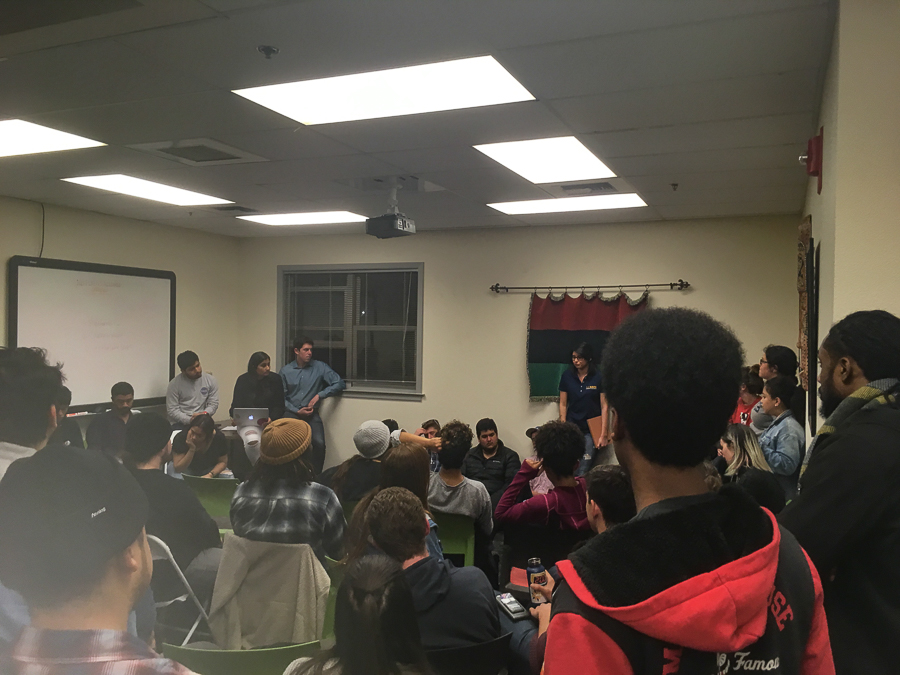
The ASUCD Senate held a public town hall in the Center for African Diaspora Student Success on March 8, reinstating what is, according to the ASUCD Bylaws, supposed to be a quarterly gathering.

Outgoing ASUCD Vice President Adilla Jamaludin began the town hall by thanking the CADSS for allowing usage of the space for the meeting and apologizing for any perceived intrusion. She stated that the reason for the town hall being at CADSS was because the government wanted to better engage with communities face-to-face, “especially those who are most marginalized.”

“In my opinion, I think that we’ve done a terrible job,” Jamaludin said in regard to ASUCD’s student engagement.

The floor was opened up for questions shortly after the introduction of each ASUCD representative. Attendance included outgoing ASUCD President Josh Dalavai and incoming President Michael Gofman and Vice President Shaniah Branson, as well as most senators and commission chairs. The intended structure of the meeting was to alternate between questions from those in attendance and questions that had been gathered online.

The floor opened with a member of CADSS speaking about how she felt ASUCD was encroaching on CADSS space. She noted that most members of the African diaspora in attendance were only there because ASUCD had come into their space while they were studying or otherwise utilizing the center.

The student stated the demographic was “still the minority in this space.”

Senator Gaven Kaur said she felt responsible for feelings of encroachment. She mentioned that while she conversed with Dr. Kawami Evans, the Interim Associate Director of CADSS, about utilizing the space, Kaur failed to contact the organizers of the community. The purpose, she said, of the town halls is to promote inclusivity, not make people feel isolated in their own spaces.

A question was then read from the online form, asking how commissions came to be within ASUCD. Gofman answered and said that commissions have been created throughout the timeline of ASUCD. He was cut off by Becca Nelson, the chair of the Gender and Sexuality Commission, who criticized Gofman for speaking about commissions when he had not attended any of her commissions’ meetings.

Another member of CADSS turned the topic to newly-elected Senator Jumoke Maraiyesa. Mention of Maraiyesa was met with cheers from the audience, and a question was asked concerning how those returning to Senate would be helping Maraiyesa achieve their goals.

Julienne Correa, chair of the Ethnic and Cultural Affairs Commission, said she had already begun working with Maraiyesa on stopping hate crimes on campus, mentioning that a task force was in the works to address such incidents and relay the information to university administrators. A few other senators also included that they had talked with Maraiyesa and looked forward to working with them on achieving their goals for the upcoming term.

A little while later, Maraiyesa joined the crowd, having left class to attend after being informed of their role in the discussion.

“None of you [except Rahi] made any attempt to talk to me during my campaign,” Maraiyesa said. They later said they felt obligated to come to the event because they did not want people to put words in their mouth and wanted they and their community to be properly represented and respected by ASUCD.

One senator responded that there were 22 candidates in the election, so it was hard to meet everyone before the results came in. This statement was met with a groan from the audience.

Maraiyesa also mentioned during their emotional speech that there was a rumor that law enforcement would be in attendance at the town hall. This statement was met with shock and anger from the audience, with members of CADSS specifically outraged.

One student in attendance asked how anyone could think it was a good idea to bring law enforcement into CADSS, knowing the strained relationship between the black community and law enforcement.

Dalavai interjected to clear up the confusion; he said that Aggie Host Security offered services to ASUCD after hearing rumors of a student protest unrelated to the town hall gathering. He said that this was not the first time such an offer had been made from law enforcement, and that each time Aggie Host asked if security was needed at an ASUCD gathering, their offer had been declined.

The elections results, which have been a source of controversy since their announcement, were also brought up. Kelechi Ohiri, a fourth-year sociology major and one of the student assistants to the chancellor, asked to address the “elephant in the room.” Ohiri asked for Gofman and Branson to clarify their platforms, their commitments to campus communities, and their steps to action items that Ohiri believed were not clear to many of those outside of ASUCD.

Gofman and Branson reiterated their platforms and talked about their commitments to increasing transparency, ending housing and food insecurity and bridging the gap between the four-year student experience and the transfer student experience.

Branson said that she recognized that the election has caused a lot of controversy, and said that students are right to feel that way. She also said that allegations that Gofman is racist are “not something we stand for.”

Other criticisms of Gofman included his relationships with the Davis College Republicans and Aggies for Israel. Gofman refuted these criticisms, saying his personal political views have nothing to do with his capacity to act as ASUCD’s new president. Gofman encouraged people who wanted to have a conversation to come to his office so he could begin reaching out to communities.

“I am not the best advocate for any of your communities,” Gofman said. “But I want to make sure that the people who are are given the proper resources.”

A student in attendance countered Gofman’s point by saying that is not the responsibility of campus communities to come to Gofman, but his responsibility to reach out to the communities and initiate these conversations. Gofman took the contact information of a few students who wanted to talk.

Senator Yajaira Ramirez Sigala criticized Gofman’s relationship with his agricultural fraternity, Alpha Gamma Rho. She levelled claims against the fraternity concerning sexual assault, rape and racism.

“I don’t feel safe sitting at the same table as you,” Ramirez Sigala said to Gofman.

Russell Thomas, a third-year gender, sexuality, and women’s studies and American studies double major, asked for Gofman and Branson to publicly denounce white supremacy, gay and trans oppression, ableism and Zionism, among other ideologies. Gofman said that he refused to denounce Zionism, saying that as a member of the Jewish community he does not wish to denounce a historically-oppressed group’s movement.

Gofman and Branson agreed to denounce the other listed ideologies with nods and quiet affirmations.


Written by: Taylor LaPoint — campus@theaggie.org

Corrections (updated 4/3/18 at 9 p.m.)

A previous version of this article incorrectly quoted Becca Nelson. The comments were instead made by ASUCD Senator Yajaira Ramirez Sigala. 

This article previously stated that Nelson was requested to make a public denouncement, which is false. Shaniah Branson was asked to make the denouncement, not Nelson.

Humor: I take it back: A response to my article about missing the rain

ISVEND09 [CC BY 2.0] / FLICKR
I can’t keep up anymore

For those/most of you who don’t avidly read my articles every single week, I will quickly summarize what I will be referencing in this article. And for those of you who do read my articles every single week, please stop sending me love letters, I’m getting sick of it. Anyway, all you need to know is that I wrote an article saying I missed the rain, and then it rained.

As a result of this coincidence, people went wild. Everyone began to think that I was in control of the weather. People started calling me “Holy Celestial Spirit,” and before I knew it, I was getting frantic emails from teachers and students alike asking me to help control the weird stuffy climate of the Olson Hall classrooms. I tried my best to replicate my skills, but to my surprise, I was unable to conjure my mystical charms and control the weather again. People still went wild, but this time, not in a good way. My love letters turned to angry hate mail, and after a couple long hours I decided it was time for me to do the only thing I could do — take it back. So without further ado, I present to you my “I take it back” episode of The California Aggie.

While this decision to take everything back might seem rash and absurd, I assure you that it’s not. You might think to yourself, “But Holy Celestial Spirit, please don’t take everything back, I need your words of truth and wisdom to help me,” and I will assure you once again that you’re actually probably correct. Just as the Quad preacher once said, “A humor article is mightier than a sword.” And to him I would say, “Maybe, but I’m not sure.” But until I do know, I figure I’m in no position to speak of the truth or falsity or anything at all other than the Meta.


Written by: Rosie Schwarz — rschwarz@ucdavis.edu

(This article is humor and/or satire, and its content is purely fictional. The story and the names of “sources” are fictionalized.)

Computer science professor named one of Forbes’ “30 under 30” in science

SHUJIA WANG / COURTESY

Zhou Yu recognized for work with multimodal analysis in AI  

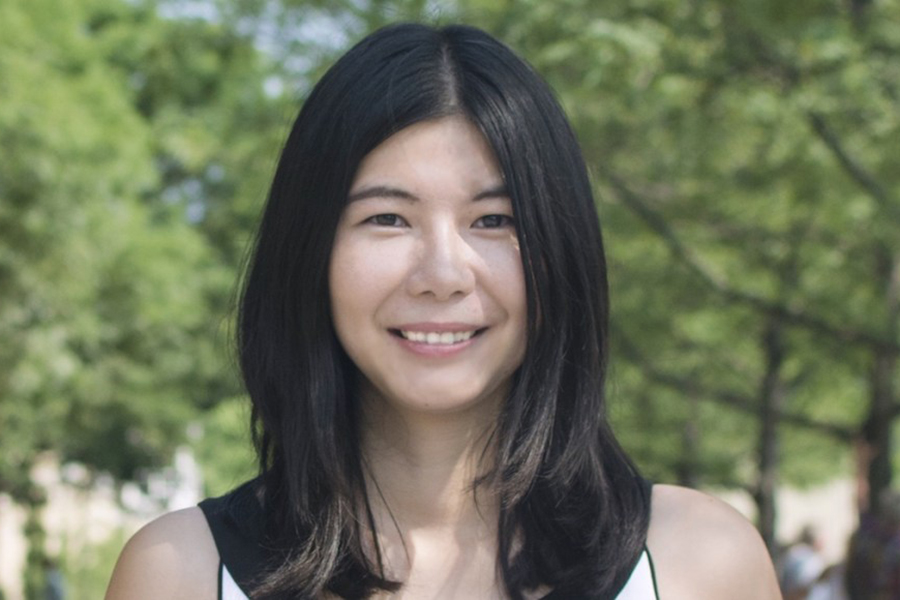
Assistant Professor Zhou Yu of the Department of Computer Science was named one of Forbes’ “30 under 30” in the field of science for 2018. Holding a doctorate from the Language Technology Institute from Carnegie Mellon University, as well as undergraduate degrees in computer science and English, Yu’s research is interested in the intersection of language and machine learning. Beyond receiving the accolade, Yu is excited about the possibilities it will bring her.

“It is very hard for me to get exposure to the general public, not only in my academic community,” Yu said. “So it opens up different opportunities for me to collaborate with other people so they can hear about my research.”

She develops intelligent interactive systems that are able to meaningfully communicate beyond simple commands. Unlike personal assistants like Apple’s Siri, which operates on a natural language interface, where linguistic data like verbs and clauses function as controls, Yu works with multimodal analyses of language for her machine-learning work. This means that data is not only being pulled from linguistic information, but also from spatial and visual cues. In other words, multimodal analysis looks at the meta features of language, such as nonverbal communication, to create a more sophisticated chatbot. Equipped with all this data, these multimodal chatbots are able to do more than communicate.  

“My work is very interdisciplinary within the AI field itself, and it also has a wide application field,” said Yu. “Having worked on different applications for example, I collaborated with Educational Testing Service to work on automatic systems that could help people to improve their language conversational abilities, like learning English.”

She also collaborated with researchers from the University of Southern California during her Ph.D. on an interactive chatbot that could give a prediction if the interlocutor with the AI had depression or PTSD. The system would look at linguistic cues, facial affects and rate of speech to make its prediction. The system is not only built around the importance of what you say, but in how you say it, Yu explained. Many people with depression have what Yu calls “a cold flow” of speech, or a choppy voice, and the machine would pick up on this and quantify it for its prediction.

Yu is currently working on a project for Amazon where she received a $100,000 grant to create a chatbot for the Echo platform. The work is part of a challenge to develop a social chatbot that can maintain a conversation for the longest period of time possible. She is also working on how to evolve robots through the combination of natural processing for both dialogue and vision.

Yu is very excited about the current state of AI development overall, and feels very hopeful about its future. UC Davis students shares her enthusiasm.

“I think that the position that AI is currently in is astounding, and as we’re converging into an era with an emphasis of human thought coupled with machine learning, I think there’s more of a likelihood of more and more creations passing the Turing test,” said Amber Kumar, a fourth-year design major who is minoring in computer science and communication.

The Turing test was developed by the computer scientist Alan Turing in the 1950s and is essentially a metric to determine if a computer exhibits human-like intelligence.

“In regards to Zhao Yu’s work, I believe that her focus on linguistics is especially fascinating and important, as the proper use of words can create a setting for the user to feel more at ease with the technology,” said Kumar.

Yet with the strides in artificial intelligence shortening the gap between us and robots, many feel an unease. There is even an aesthetic principle to describe this feeling: the uncanny valley. It theorizes that there is a point in robotic development where the human-likeness of robots, described as an uncanny similarity, will bring a feeling of disgust in the human viewer. However, this disgust, which can lead to a negative understanding of robots, might not mean much about whether the production of artificial intelligence is good or bad.

“I don’t think that human apprehension surrounding human-like robots tells us anything about whether these developments are good or bad,” said Zoe Drayson, an assistant professor in philosophy and an affiliated faculty member with the Center for Mind and Brain. “There is lots of research on human disgust reactions which suggest that what we find distasteful doesn’t track any moral properties of the world, and I’d be inclined to think the same is true of our tendency to be ‘weirded out’ or feel uneasy around human-like automata.”

As for Yu, she is compelled in her research to develop algorithms that directly benefit human well-being. She wishes people weren’t so suspicious about artificial intelligence.

“It’s more about trying to help people, pushing humanity forward instead of saying robots are going to take over humanity,” Yu said. “That’s totally not what we wanted from the first place.”


Written by: Matt Marcure—science@theaggie.org

6 Documentaries To Binge-Watch This Spring Break

Check out these informative and enthralling films to broaden your horizons


Netflix shows and rom-coms can quickly become redundant and overwatched. If you’re looking for some fresh content to stimulate your brain and broaden your outlook on the world, check out some of these inspiring and critically acclaimed documentaries that may strike a chord.


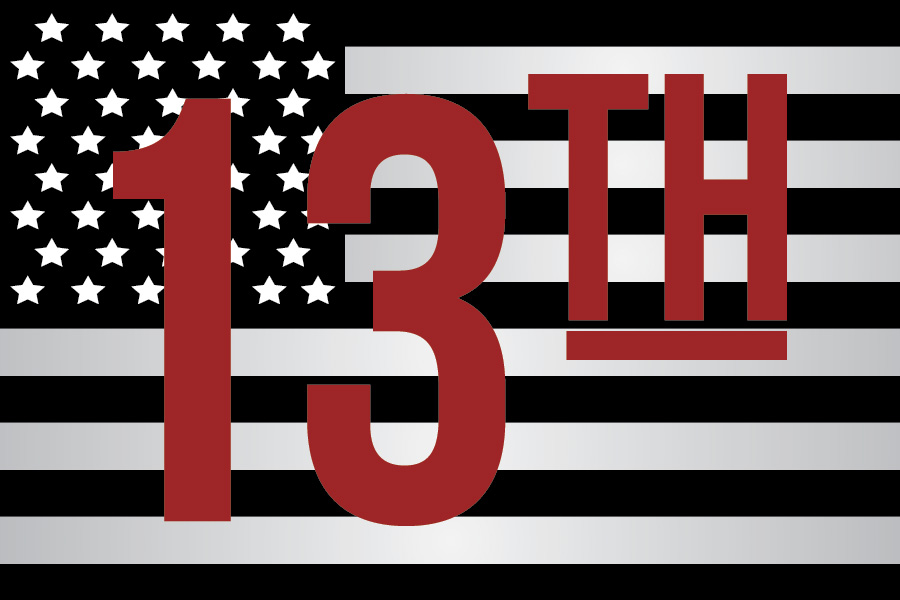
“13th,” directed by Ava DuVernay

“13th,” a Netflix original, transcends the limits of the race relations conversation in the United States as it explores the systemic racial inequality evident in the mass incarceration of African Americans in America’s prisons. DuVernay artfully approaches these issues to create a historical masterpiece that will not only inform audiences, but also allow them to reflect.


“Bowling for Columbine,” directed by Michael Moore

Amidst all the controversy surrounding the issue of gun control in the current political climate, perhaps it would be poignant to take it back a bit, specifically to 2002. Following the Columbine shooting, Michael Moore investigates the nature of gun culture across America in the Academy-Award-winning film “Bowling for Columbine.” Moore travels all around America searching for the causes behind what ultimately led to the Columbine shooting in an informative, yet entertaining fashion.


“I Am Jane Doe,” directed by Mary Mazzio

Nearly 2 million children worldwide are exploited each year in the sex trade industry, a business that rakes in around $99 billion per year, according to EqualityNow.org. The United States is no exception to these statistics. “I Am Jane Doe” follows the legal battle surrounding several mothers whose young daughters were sold on a commercial sex trafficking site called Backpage.com and the harsh realities surrounding this cruel industry.


“The White Helmets,” directed by Orlando von Einsiedel

Only 41 minutes long, this short documentary film depicts the harsh realities of the conflict in Syria as three volunteer rescue workers risk their lives to help those devastated by the continuous violence wreaking havoc on the Middle East. For those looking to know more about the Syrian conflict affecting thousands across the globe, “The White Helmets” is a must-watch.


“The Hunting Ground,” directed by Kirby Dick

With the recent development of the #MeToo and #TimesUp movements, the fight for justice for victims of sexual assault is on the rise. Victims have turned to survivors, and perpetrators are finally being held accountable for their inexcusable actions. “The Hunting Ground” further dives into these issues, specifically on college campuses. Follow the experiences of several college students who were silenced in their fights for justice not only by the pressures of society, but also by the universities meant to protect the students themselves.


“Jim & Andy: The Great Beyond,” directed by Chris Smith

Relive Jim Carrey’s critically acclaimed portrayal of Andy Kaufman from “Man on the Moon” in “Jim & Andy: The Great Beyond.” 18 years later, Carrey recalls his evolution into Kaufman, in addition to the development of his career as a whole throughout the process. For those interested in the behind-the-scenes aspects of Carrey’s iconic comedic genius, this documentary will keep you enthralled from start to finish.


Written by: Sydney Odman – arts@theaggie.org

Uncover museum gems around Bay Area, Yolo County

ALLYSON KO / AGGIE

Art to fill your week of spring break

If you’re not recovering from finals stress by relaxing in Hawaii or partying in Cabo this spring break, join the club. For those staying local this break (or for those looking to plan future Saturday outings during the quarter), the following is a list of museum destinations in the area. As you wait for Spring Quarter to arrive, spend a day or two exploring the broader world of Bay Area art.


Museum of the African Diaspora, San Francisco

According to its website, “MoAD offers programs that showcase the art, history, and cultural richness of the African Diaspora. Our goal is to explore and celebrate the beliefs, practices, traditions, and customs connected to these movements.” Starting March 28, three new exhibitions will be on display. Along with “Digitalia” and “After the Thrill is Gone,” MoAD’s emerging artists program will focus on Andrew Wilson and his work in an exhibit called “Equivalencies: Abandoned Bodies.” An entrance fee of $10 seems a small price to pay for a thought-provoking experience.


San Jose Museum of Art, San Jose

SJMA showcases modern and contemporary art. Some of the exhibitions and collections being featured during break include paintings by Raimonds Staprans, works by The Propeller Group (ending on March 25), “Show Your Work: Art and Math,” and “Crossroads: American Scene Prints from Thomas Hart Benton to Grant Wood.” With a college ID, tickets are $6. Visit SJMA’s website for hours and more information.


UC Berkeley Art Museum and Pacific Film Archive, Berkeley

BAMPFA hosts a multitude of events differing every day from gallery talks, lectures and discussions to art labs (drop-in art making) and workshops to readings by poets and other writers. Take a look at the online calendar to see which days are of most interest to you. Saturdays and Sundays have the most events lined up every week.


Crocker Art Museum, Sacramento

The Crocker Art Museum was one of the first art museums established in the United States. Most notably on display right now (through May 13) is “Power Up,” which features pop art by famous nun, printmaker and activist Corita Kent. The museum is also showcasing “Hopes Springing High” and “Faith Ringgold: An American Artist,” which are in recognition of Black History Month. College students pay $8 for admission or can get in for free the third Sunday of every month. Other nearby museums can be found on the Sacramento Area Museums website.


Asian Art Museum, San Francisco

Through its collections, exhibitions and programs, the Asian Arts Museum aims to “inspire new ways of thinking by connecting diverse communities to historical and contemporary Asian art” The exhibitions currently on view include artist Fu Shen’s paintings and calligraphy, “When Pictures Speak: The Written Word in Japanese Art,” “Ascend” and “Collected Letters” by Liu Jianhua. Students pay $10 instead of $15.


Mexican Museum, San Francisco

Although garnering recent controversy for a majority of its oldest artifacts turning out to be inauthentic, the Mexican Museum in San Francisco still boasts an authentic contemporary collection. Currently the museum resides in Fort Mason, and its only exhibit on view right now is one dedicated to the works of Fernando Reyes. However, in 2019, the Mexican Museum will move into a new $86 million home. The Fernando Reyes galleries will end on March 15, so check out museum’s website for updates on a new exhibition.


Sonoma Valley Museum of Art, Sonoma

SVMA’s mission is simple: “Building Community through Art.” For those into contemporary art, the Sonoma Valley Museum of Art has recently moved into “modern and contemporary work, bringing a new perspective to the area.” Current exhibitions on display through April 15 are “An Eye for Adventure: Photographs by Jack London” and “Libros de Artista: Artist’s Books from Mexico and the Mexican Diaspora.” With ID, college students pay $7 for entry.


di Rosa Center for Contemporary Art, Napa

Another financially friendly option is the di Rosa museum, located in Napa. For $5, it has two galleries on view dedicated to the exhibition “Be Not Still: Living in Uncertain Times,” with different artists featured in each gallery. In pictures, the museum itself seems like an art piece. The metal building contrasts with the green foliage all around it and the body of water in front.


The Museum of Craft and Design, San Francisco

The MCD is “devoted exclusively to modern and contemporary craft and design” and “showcases designers, makers and artists through an exciting and distinctive series of craft and design-focused exhibitions and public programs.” Available to experience until May 20 are the exhibitions titled “Tom Loeser: Please Please Please” and “t.w.five.” With ID, students get $2 off general admission price.


Marin Museum of Contemporary Art, Novato

A free option, the Marin MOCA is hosting “Nathan Oliveria: The Figure Over Time” until April 22.

The following are all quirkier museums and more focused on a single object as opposed to traditional concepts of art.


Pacific Pinball Museum, Alameda

With a collection of over 90 playable pinball machines, the Pacific Pinball Museum’s mission statement is “to teach science, art and history through pinball, and to preserve and promote this important part of American culture.” It is located in Alameda and admission is $20 with no discounts for students. However, the entrance fee gives you access to play on all the machines. It also allows you to come in and out of the building throughout the day in case you need a break from all that pinball playing.


American Bookbinders Museum, San Francisco

In North America, San Francisco is the place to be if you are at all interested in the exploration of bookbinding and bookbinders. The American Bookbinders Museum hosts daily tours at 11 a.m and another round at 2 p.m. for $15. The museum brings up a good point on its website that might make you more curious about what it has to offer: “In the age of digital media our relationship with the book is evolving, making this the ideal time to tell the history of this object and memorialize its significance in regards to where we are today.”


Western Railway Museum, Suisun City

For $10, you can learn all about electric railways and even take a ride in some vintage cars. Starting on April 4, there is a limited time 11-mile scenic ride available that takes passengers through the vibrant green California countryside brought on by winter rain. Visit the museum’s website for more information.


Written by: Cecilia Morales — arts@theaggie.org

Eastern Ghouta feels drastic civilian losses

Syrian Civil War, intervention, international law


In 2011, Syrian protesters responding to the reverberations of the Arab Spring called for the overthrow of their government. President Bashar-al Assad ordered the military to violently silence opposition, giving way to a civil war that rages on today. At the end of February continuing into March, over 1,000 civilians died in Eastern Ghouta, a suburb of Damascus where rebel forces persist.

Although the conflict has evolved considerably since 2011, UC Davis comparative literature professor Noha Radwan resonates with the issue. Radwan reflected on the march following President Trump’s inauguration.

“Imagine if Trump had actually called the military to start shooting at people,” Radwan said. “When the military shoots at civilians of the same country, then this is the result that we have. It’s really atrocious.”

The seeming absurdity of this comparison is instructive as it informs the current violent crisis in Syria. It also allows Americans to relate to the political climate in Syria, which is often ignored. Radwan also spoke to this dissonance.

“When something happens in Paris, you see the victims, you see the mothers crying for the children and the mothers look like our mothers,” Radwan said. “When you see the same crisis happening in Syria, just the different outfit, and the different language and the different means of grieving, the alien culture, puts a distance between us. Most people are embarrassed to admit this, but it’s true.”

A challenge is thus presented to attract U.S. attention in the midst of a long, complicated and seemingly “alien” conflict. The crisis in Eastern Ghouta consists of consistent shelling by Syrian government and Russian forces. The area has been so aggressively bombarded because it is one of the remaining rebel-held enclaves. The Syrian government attacked Ghouta in 2013 with sarin gas.

Who is fighting this war? What are they fighting for? With these questions and more context in mind, are human rights or humanitarian laws being violated and if so, will the perpetrators ever see the inside of a filled courtroom? Martin Luther King Jr. Professor of Law William S. Dodge, who specializes in international law and court conflicts, spoke to the issue and its context.

“It’s a very complicated conflict because it has many more than two sides,” Dodge said. “The U.S. interests have been partly humanitarian, but primarily anti-terrorism. The Turkish involvement seems to be, worry about the conflict spilling over to Turkey but also anti-Kurd. Russia is mostly motivated, is partly motivated by the fact that Syria allows it access to naval facilities on the Mediterranean, but also by the desire to throw its weight around and be a player, particularly in opposition to the United States. And Iran would like to see, would like to increase its influence through the sort of Northern Middle East…and also make life difficult for the United States. And Hezbollah, which is an Iranian group, has been supporting the Assad regime.”

It seems unlikely, but ultimately impossible to guess at whether or not any party involved in the Syrian Civil War will be tried by an International Criminal Court. This court, assembled by an international treaty called the Rome Statute which was informed by the Geneva Conventions, tries criminals for serious crimes relevant to the international community.

“There are two principles that are commonly referred to [in international humanitarian law],” Dodge said. “The principle of distinction is that you have to distinguish between combatants and non-combatants. The principle of proportionality says that you have to use means that are proportional to the objective trying to be achieved. Violating those principles is a war crime and then you get into what are the possible remedies. And there’s the possibility of international mechanisms, like the International Criminal Court.”

Since Syria is not a member of the Rome Statute, the case would have to be referred by a member of the United Nations Security Council. Dodge doesn’t think it likely that the particular five members — France, Britain, the United States, Russia and China — would make this referral. Another option could be a domestic case, brought under civil, criminal or domestic law. A final and further extraneous solution would fall under the alien tort statute.

“The alien tort statute is a very old statute, it’s part of the first judiciary act of 1799 that set up the U.S. federal courts,” Dodge said. “Starting in 1980 in the case […] called Filartiga vs. Pena-Irala out of Paraguay […] The police inspector came to the United States so he was subject to personal jurisdiction here, so he was sued here, and the second circuit court of appeals held that the U.S. court had jurisdiction because torture is a tort and it’s in violation of customary law. And the plaintiffs were aliens, so it met the three requirements of the statute. And from then on human rights cases were brought in U.S. court.”

However, cases have been more and more difficult to bring under the alien tort statute. In this case, an American would have to be gravely injured or killed in order for them or their family to bring a case against a Syrian force in a U.S. court.

Human rights and grave human loss foreground the legal discourse around humanitarian law. The principles of proportionality and distinction could be interpreted as violated while the loss of life is certainly enormous. Charles Walker, a Latin American history professor, Macarthur Foundation Endowed Chair in International Human Rights and Director of the Hemispheric Institute of the Americas, impresses upon the importance of visibility for the loss of life.

“The regime has shown its absolute willingness to kill thousands of its own people to defeat the rebels,” Walker said. “I think what we need to do is adamantly stop the bombing of civilians.”

The question of U.S. intervention in a moment of such extreme crisis is a highly debated one. Dodge considers it through the eyes of the law.

“There are a number of people who make the claim that humanitarian intervention is an emerging norm of U.S., or of the international system,” Dodge said. “But at this point it’s a highly disputed point of international law.”

Interventionism is thus a questionable legal defense. For Professor Walker, a decision must be reached to protect civilians, one which does not necessarily include U.S. military intervention. He nods to the defense of state sovereignty.

“The regime would say, ‘this is Syria’s war, don’t get involved,’” Walker said. “That sounds just, but on the other hand if they are mustard gassing their people […] when do other groups get involved?”

Radwan believes that states must be allowed the opportunity for their own conflicts and is wary of the presence of the American military as conflict resolution.

“I actually have never been supportive of U.S. military intervention in any conflict in the Arab world,” Radwan said. “It is usually done for the wrong purposes, badly executed, and backfires. What the United States could possibly do is a political intervention, a strong stand against the Russian military intervention in Syria. We have to give every country its due sovereignty. But I am all for international organizations, the non-governmental communities.”

According to Radwan, much overlooked is the presence of foreign powers in the conflict. The discourse in the U.S., as pertaining to international law, has been staunchly anti-terrorist from Dodge’s perspective. This same point of view cannot comprehend the evolution of an Islamic government, which Radwan acknowledges as legitimate if requested by the people. According to Radwan, the U.S., which has funded some rebel factions, may not have the understanding or tools to productively approach the Syrian conflict, which rages on despite calls for ceasefire.

“There are a lot of people who speak in the name of Islam,” Radwan said. “Those groups see themselves as on the right side without a mandate from the people necessarily. They’re not on the right side because they’re an extension of the people’s wishes, they’re on the right side because they believe they’re on the right side, because they’re doing what God would like them to do. And that’s a very dangerous game to play. There’s nothing that says that a secular government is necessarily better, more just or more anything really that we like to see better in any way than an Islamic government. It’s just that we don’t really understand how these people understand government.”


Written by: Stella Sappington — features@theaggie.org

Editor’s note: A previous version of this article was published with the incorrect headline “Thousands benefit from user generated updates”. The correct headline is “Eastern Ghouta feels drastic civilian losses”. The article has been updated to reflect this change. 

Berkeley alumni’s Wildfire App connects college communities

WILDFIRE / COURTESY

Thousands benefit from user-generated local news updates

In fall 2017, a new app called Wildfire launched at UC Davis. The app is intended to help people within small geographic areas quickly share important local news updates, especially related to safety.

Hriday Kemburu, Wildfire’s CEO and co-founder, decided to develop the app in 2015 after almost getting mugged near a library on the UC Berkeley campus. After making a Facebook post about the incident, Kemburu was very intrigued by the way in which the information travelled.

“[I] made a Facebook post to warn students, which got hundreds of views, but quickly realized that Berkeley has thousands of students who either weren’t friends with me on social media or scrolling through their newsfeed at that moment,” Kemburu said. “We built Wildfire as a much more effective way to communicate with the people right around you in real-time.”

With Wildfire, Kemburu hoped to fill what he viewed as a gap in the way that people can use social media to quickly share information about events that can impact everyone near them, regardless of whether they personally know each other or not.

“There’s currently no effective way to spread or hear real-time information with your local community,” Kemburu said. “Existing social networks are limited to your network of friends and family. Wildfire’s about what is happening around you right now, based on your location and who’s around you.”

Since the launch of Wildfire at UC Davis last fall, Kemburu and his team of three other UC Berkeley graduates have done outreach to try to personalize the app for UC Davis students.

“UC Davis actually isn’t too far from where we’re based, so we went to campus and spoke to students to find out what they wanted to know about,” Kemburu said. “We also have a team of UC Davis students helping us curate the app specifically for you.”

Kyoko Chew, a first-year anthropology major, is one of the top users of the app at UC Davis and explained why Wildfire has been useful and informative.

“I love Wildfire because it’s super dependable as a safety app,” Chew said. “I’m pretty small in stature and coming from SF, a super urban area with a high crime rate, it’s really nice to know about local muggings, sexual assaults, etc.”

Chew also believes that the app has done a lot compared to other social media platforms to foster a sense of community on campus.

“The community on here is really cool too; it’s kind of like a huge group message for all of Davis that’s way more fun than any school sponsored forum,” Chew said. “It doesn’t have that super strict pc vibe that school sponsored forums have so you can find easily find your niche; people are so supportive when you need to pick classes and there’s tons of really good information about the school [like] secret study spots on campus.”

Jay Patel, a Wildfire co-founder and CTO, echoed the sentiments of Chew.

“There’s no other app that lets you communicate with everybody right near you — wherever you are,” Patel said. “By connecting everyone on campus, Wildfire becomes the best place to share everything from urgent safety information to relatable campus stories, and it brings the community closer together. It’s been exciting to see students UC Davis using Wildfire to announce house parties, share secret study spots, and post duck sighting videos.”

Vinay Ramesh, one of the app’s co-founders, expanded on what they do to help cater the app to different schools.

“Our method of personalizing the app experience to Davis students is honestly just talking to as many students as we can to get constructive feedback on what they like and where we can improve,” Ramesh said. “We frequently text our users at Davis and even hop on phone calls with them a couple of times a week so we can learn about new things happening on campus so we can customize categories, and the overall experience for students.”

Recently, Ramesh has also been sending emails to UC Davis students as a way to get advice about the school. Despite the app’s growing popularity and the time that has gone into it, they plan for the app to remain free on the app store.

“Wildfire is 100 percent free to use and we don’t plan on charging users to use it,” Kemburu said.

To demonstrate the app’s potential power to facilitate the rapid spread of information, Kemburu cited a safety emergency that occured on the UC Berkeley campus in October 2016.

“When there was a shooting three blocks from UC Berkeley’s campus […] several users reported the shooting on our app and Wildfire alerted 4,000 students within one mile of the shooting, a minute after it happened. Two thousand students downloaded Wildfire in the following hour. The local news didn’t pick up the shooting until hours later and the school sent an official email alert about the shooting the following day.”

In launching the app at other schools nationwide, Kemburu and his team have modified the app to include information about other types of events as well.

“Wildfire’s currently used at over 11 universities and is quickly expanding across the country,” Kemburu said. “We quickly realized that people wanted to find out about other categories of events in addition to safety happening near them. So while safety is still one of our core focuses, we’ve expanded Wildfire to include more categories, from parties to celebrity sightings.”

These additional categories include campus chatter, protest, seen on campus, safety, campus 101, memes, events, celebrity sighting, parties and campus crush.

Kemburu gave a few examples of how these features have been used, including a sighting of actor Matthew McConaughey at UT Austin.

“Thousands of UT Austin students instantly found out that Matthew McConaughey was on campus because it was reported first on Wildfire,” Kemburu said. “In fact, the official UT Austin Twitter account tweeted a screenshot of the Wildfire post.”

Of course, Wildfire has also been used to cover more serious events, like a neo-Nazi protest in Raleigh, NC. According to Kemburu, Wildfire was the first social media platform on which news of the protest broke. “Students were posting pictures, videos and discussing the event in real time,” Kemburu said.

“The goal is that Wildfire can help everyone, everywhere, find out what’s happening around them in real-time, and hopefully make the world a more informed and safer place in the process,” Kemburu said.


Written by: Benjamin Porter— features@theaggie.org

“The Big Sick”: Films with minorities don’t get a pass

ALLYSON KO / AGGIE

Kumail Nanjiani and Emily V. Gordon’s film reaffirms that details matter

After years of #OscarsSoWhite and in the throes of the #MeToo movement, it wasn’t surprising when the Academy of Motion Pictures nominated a diverse group of actors, producers and directors in 2017. A persistent and vocal public has begun to shape the course of film, and movies must tell a variety of stories, to which people all over the country can relate. There’s still a lot of progress to be made, but this year’s lineup was far better than those of years past.

While Asian Americans have been nominated for the coveted Oscar trophy, few have won in a major category. Until recently, Asian Americans played mostly technical roles in film. Admittedly, as a South Asian, there’s still a small thrill when movies about other brown people come to the Hollywood big screen — even if they fall flat most of the time. But “The Big Sick” looked different. Produced by Judd Apatow and starring Ray Romano and Holly Hunter, the movie had a strong comedic backbone. If anything, viewers would be guaranteed a laugh.

The plotline of the semi-autobiographical movie follows the tropes of most romantic comedies. Kumail Nanjiani (played by Kumail Nanjiani), an aspiring comedian, is heckled by graduate student Emily Gardner (played by Zoe Kazan) at one of his shows. Soon, they fall in love. Behind the scenes, Nanjiani’s parents, Sharmeen and Azbat (played by veteran Bollywood actor Anupam Kher), are trying to arrange his marriage to a Pakistani woman. Nanjiani can’t tell his parents about Emily, and Emily soon finds out about the arranged marriage, causing their acrimonious break-up. Soon thereafter, Emily is hospitalized and put into a medically-induced coma. Kumail comes face-to-face with the Gardners at the hospital, who know all about his evasiveness and lies and aren’t happy. Nanjiani is persistent, wins over the Gardners and finally wins over Emily, too.

The plotline isn’t anything revolutionary, save for the aspect of an interracial couple. And “The Big Sick” didn’t make a lot of money for that reason — it could easily be something for Netflix or Amazon Prime. But for those who decided to spend money on a ticket, the contributing factor was the film’s promotional tours. The claim was that the movie was going to show Muslims as “normal people.” It’s important to remember “The Big Sick” was released during the travel ban — and such a message was more than welcome. Cinema can really influence people’s opinions, and in a political environment that is so contentious, it’s wonderful to see actors and producers try to chip away at prejudice. Showing Muslims as “normal people” was a theme present throughout all of Nanjiani’s day-time talk show appearances and various other outlets. If the movie was going to do that, then it was only fair to spend money and support it.

But despite the hype, “The Big Sick” failed in several ways. It was more the underlying tone than explicit comedy that diluted its power. The main point of contention with this film is that brown women in cinema are not props at which to be laughed. All the women who came to visit the Nanjiani family were portrayed as weird and awkward and given the personality of a shoe. In contrast to this, every single white female had a character arc, even the minor ones. Not only were they portrayed as cool and funny, but they were also promoted as “desirable” in some way. Was the audience supposed to laugh when brown woman after brown woman was rejected because Kumail couldn’t be honest with his parents? Were they supposed to laugh when those women were so unbearably awkward? You do not need to embarrass brown women to raise a white woman, who is doing just fine in terms of audience likeability.

Emily held privilege over all the women who visited Kumail — at least she was given a chance. This juxtaposition illustrates why it’s so difficult to make a film that shows color: The audience suddenly becomes innately aware of their race. Kumail had so much disdain for the Pakistani women — one must wonder if it’d make other brown women feel that they need to be white to be desirable. Colorism and shade-ism are trends that need to go, and this film certainly didn’t help their exit.

The issue Emily’s film parents had with Kumail had nothing to do with him being a Pakistani Muslim — it was because he wasn’t straightforward. His parents’ expectations, on the other hand, were so racially inclined that it made them look backward; Emily was white, and therefore she was off limits. His mother saying the one thing she wanted was for him “to be a good Muslim and marry a Pakistani girl” could have been something he experienced in real life, but put next to the white family who were “progressive,” it didn’t come off well. It’s upsetting that Nanjiani and Gordon decided to make race a recurring point of conflict, but not from the family the audience expected.

As wonderful as it is that stories about interracial marriage and blending families are being produced, these films are only launched if there is a white protagonist involved. Usually the person of color must battle the world to be with them because they are just so worth it. And “The Big Sick” played into that cliché exactly: Emily didn’t even try to understand Kumail’s culture. Mainly, arranged marriages aren’t what they used to be, especially for immigrant families in the United States. In fact, many South Asians would view the Nanjiani family as broad-minded for giving him choices and chances and second chances. Unfortunately, the film used American culture as a benchmark to assess progressiveness, and that’s not fair.

When a film about people of color is released for a primarily white audience, it should portray people of color in the best possible light. As a society, we haven’t reached the point where minorities can discuss their issues — it shades the majority perspective. For many Americans — as crazy as this sounds — “The Big Sick” was the first time they had ever seen a Pakistani family or an interracial couple. South Asians would prefer to see themselves on screen reflective of the way they are in real life. Of course, “The Big Sick” did not use banal stereotyping, but are subtle stereotypes any better?

Moreover, the movie promised to further political dialogue with Nanjiani’s claim that it showed Muslims as “normal people.” But “The Big Sick” didn’t do that. There was one normal Muslim in the entire film, and that was him. His family surely wasn’t normal. Whatever the audience saw of them was confrontational and difficult. Moreover, viewers were able to see the Gardners accept Kumail, but the same could not be said of his Muslim family (when in real life they were welcoming). We know that many “traditional” American families have large hearts and broad minds — but the same cannot be said of Muslims and South Asians in films. If showing Muslims as “normal people” is as easy as not portraying them as terrorists, that’s an awfully low standard.

I suspect that part of the hesitancy to point these things out is an emerging fear to criticize people of color. That fear stops dialogue — it screeches it to a halt. No one should feel obligated to like or agree with someone because of their race, gender or sexual orientation. To do so would distill the power of all parties involved. More importantly, when a film is made to provide social commentary, even if it wasn’t the main purpose, the rest of the world can, and must, weigh in. Dialogue and dissent shouldn’t shut down just because the party at the other end is a minority; it’s almost as bad as silencing them for their opinions.

Writing this, it’s clear that the alternative to movies like “The Big Sick” are those that show South Asians as caricatures. And while there’s a lot of progress to be made with showing minorities on the big screen, what has been achieved through this film is momentum. Now, South Asian actors have bankability, and movies about them aren’t just for South Asian audiences anymore. However, viewers must not settle. Now that the ball is rolling, it is imperative that films about minorities become more nuanced. It’s not just exposure to different cultures that matters — it’s about getting the details right. To get them wrong is arguably as bad as failing to discuss them at all.

Written by: Samvardhini Sridharan — smsridharan@ucdavis.edu

Disclaimer: The views and opinions expressed by individual columnists belong to the columnists alone and do not necessarily indicate the views and opinions held by The California Aggie.

The joys of journeying journaling

JESSE STESKENKO / AGGIE

Pack your journal and leave the rest behind
At this moment, as I scramble to finish this piece by a generously extended deadline, a coffee-colored journal lies on a desk shared with a cup of lukewarm tea and and a bunch of free Russian newspapers. It hasn’t moved in a few weeks, which seems to insult its intended purpose. Amid the whirl of snow, sore feet and a bad case of hyperactivity, finding the time to write is sometimes impossible. But that’s not the worst thing in the world. Even when my journal is soaking up dry ink, I can still read what’s inside — and that’s the essential part.

I’m here to preach an eternal truth: The journal is as necessary to traveling as a pair of warm socks is to ice-fishing in Siberia. Google is full of answers to “what do I pack,” but it’s rare to see travel journals high on the list, if at all. They seem to be more of an afterthought than a source of interminable wisdom and remembrance, which is how travel journals should be viewed.

When I open my travel journal, events long forgotten and memories long tarnished by age reawaken, allowing me to revisit the past on terms I can control. I can view a photograph of a place and feel longing to go back, for example, but only by reading my own words from a distant time can I understand why I was traveling in the first place.

Even with effort, I cannot remember many of the finest details from my weeks spent traveling. At best, the memories are fuzzy. And while stories from San Francisco, Europe and Southeast Asia are certainly worth conveying to erstwhile listeners, it’s a chore to remember them all — until I crack open my travel journal.

Journaling solidifies the details of travel experiences that may be impossible to remember beyond the flashiest bits that provide good storytelling material. A good story exists in the most adventurous or outlandish memories, but sometimes the little moments at a cafe or local park are just as good. And preserving those memories is what travel journals are for.

There exists a magic to the art of writing, although I’m admittedly biased. It can offer a useful window into a world that doesn’t exist anymore. Socrates famously questioned the utility of writing, claiming it would lead to forgetfulness at the expense of memory. But it’s safe to say writing things down — in a journal, as just one example — can only preserve memory, providing we write the good stuff down in the first place.

Besides, keeping a journal handy is one of the best ways to decompress from your travels after a long day or week on the road. While the memories are fresh, writing down your experiences will help strengthen them, perhaps fueling later stories. Did that delivery guy give you the wrong pizza? Was the Eiffel Tower really worth it? Write it down! You’ll appreciate what the younger you was thinking and perhaps chuckle at stories from nights spent at bars or bartering taxi fares.

There is, indeed, something to be said for photographs. The worst cameraman with an outdated iPhone can preserve memories without doing more than pointing and clicking. The best photographers, ones who wield their lens with measured expertise, can evoke wonder, bewilderment or a dozen other combinations of feelings that transport us to another place. Photos are marvelous, evocative, mesmerizing, powerful. But even they lack the power of a well-placed word in the annals of traveling.

Photos are external. They can be misinterpreted. They show a place from the view of a camera lens. Travel journals add a viewpoint from inside the writer’s mind. I would argue we need both to complete a picture of a journey. But if I had to choose, writing would steal the show.

Keep your friends close but your journal closer.


Written by: Nick Irvin — ntirvin@ucdavis.edu

Disclaimer: The views and opinions expressed by individual columnists belong to the columnists alone and do not necessarily indicate the views and opinions held by The California Aggie.

Change in club scene

Downtown Davis shows decline in alcohol-related incidents
Downtown Davis has seen a significant decrease in alcohol-related incidents since the Entertainment Permit Ordinance was enacted in 2016 in response to a fatal stabbing at KetMoRee.

Brett Lee, the mayor pro tempore of Davis, explained that the ordinance, along with other precautions, were implemented in order to make downtown Davis safer.

“It was because of the murder at KetMoRee,” Lee said. “Unfortunately, someone was stabbed to death there. Because of that, we wanted to increase the safety for folks, so we implemented a variety of measures.”

Paul Doroshov, the public information officer for the Davis Police Department, explained the extent of the ordinance and how it may have caused a decrease in alcohol-related incidents.

“The Entertainment Ordinance was implemented as one of the efforts the city has been making to crack down on safety in the downtown area surrounding specifically alcohol consumption and establishments,” Doroshov said. “I know there has been a decrease in alcohol-related calls since then.”

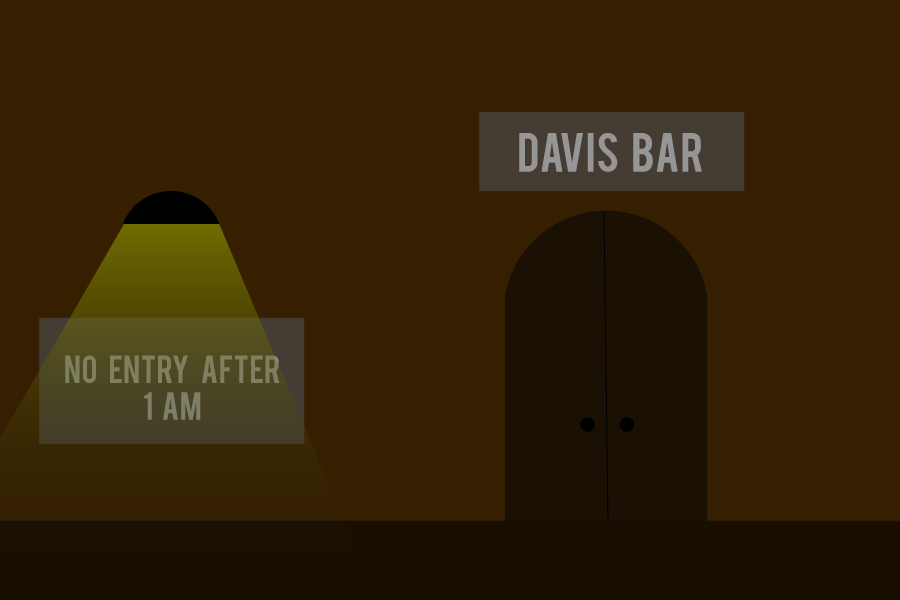
However, the ordinance comes with limitations, one of which included a requirement for nightclubs and bars to have a soft closure at 1 a.m. According to The Davis Enterprise, Tom Jobst, the owner of Froggy’s Bar, is against the ordinance, believing that there is no specific correlation between the limitations businesses now have and the lack of alcohol-related violence.

“The students at UC Davis are simply not the same students we were dealing with 20 years ago,” Jobst said in an article for Davis Enterprise. “Alcohol consumption was out of control, and that’s significantly changed. The way that people socialize is far different.”

Doroshov stated that there may be some correlation, but there are other factors that could also have contributed to this decline.

“I think the soft closure does help because a lot of times, fights and aggressive behavior break out right around that kind of hour,” Doroshov said. “I think the soft closure helps prevent that big, huge crowd on bar nights, which [also] prevents conflicts, [but] I can’t say the Entertainment Ordinance is responsible. I don’t know if any one thing is responsible — I think, if anything, it is probably a combination of serious efforts.”

Other efforts include different policing methods in downtown.

“We implemented more community-style policing where officers are around on foot engaging more that way instead of just responding when there is a fight,” Doroshov said. “We have more preventative policing, [and] we work closely with the downtown bars. We’ve made various efforts across the board to enhance safety altogether.”

Similarly, Lee emphasized that there is no direct causality between the ordinance and the decline in such violence.

“I think there is a correlation, [but] I don’t know if it’s causality because we did a fuller package of things,” Lee said. “For instance, there is better screening for people going in and out of bars, making sure they aren’t carrying weapons. The security guards who work at bars now have a higher standard of training that they have to meet. There’s improved ratios so that there’s more security staff per number of people in the bars. I think those have had an effect.”

The soft closure requirement was only one of the tactics used to lessen alcohol-related crime.

“It seems to be an important component of what we implemented. However, it is part of a package as a part of an intervention,” Lee said.

Lee also acknowledged that some of the bar owners have expressed concern, as the soft closures are a disadvantage for their businesses.

“What we asked the police to do is to work with the bar owners,” Lee said. “Some of the bar owners seemed to have really improved the security for bar patrons. Many of the bars are not happy with the soft closure, feeling as though they are losing business. What we really want to do is to take a look and see if we can change that 1 a.m. soft closure and see if we can maintain a safe environment downtown while being more accommodating to the bar owners for those who are seriously taking the changes we are making.”

Nevertheless, Doroshov noted that there is still room for improvement.

“It’s a new ordinance, [and] I think it will need time and feedback to fine-tune it,” Doroshov said. “The ordinance is not always a one-size-fits-all, depending on bars and their venues — which have different requirements — so I think that keeping that in mind helps because not every establishment is the same.”

Written by: Stella Trancity@theaggie.org

WeRise Rally takes place at Silo, Sproul Hall

NICHOLAS CHAN / AGGIE

UC-AFT union representing lecturers, librarians promotes solidarity on campus

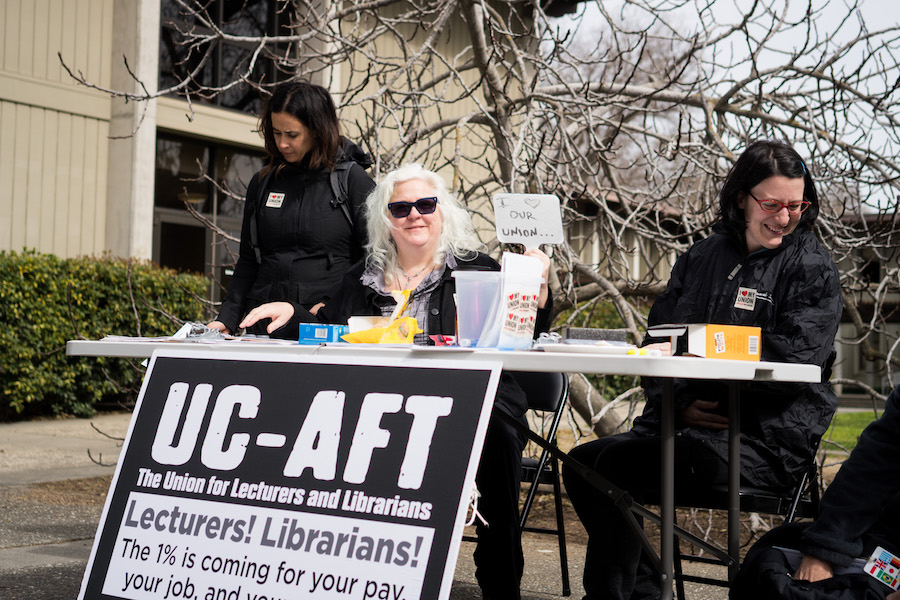
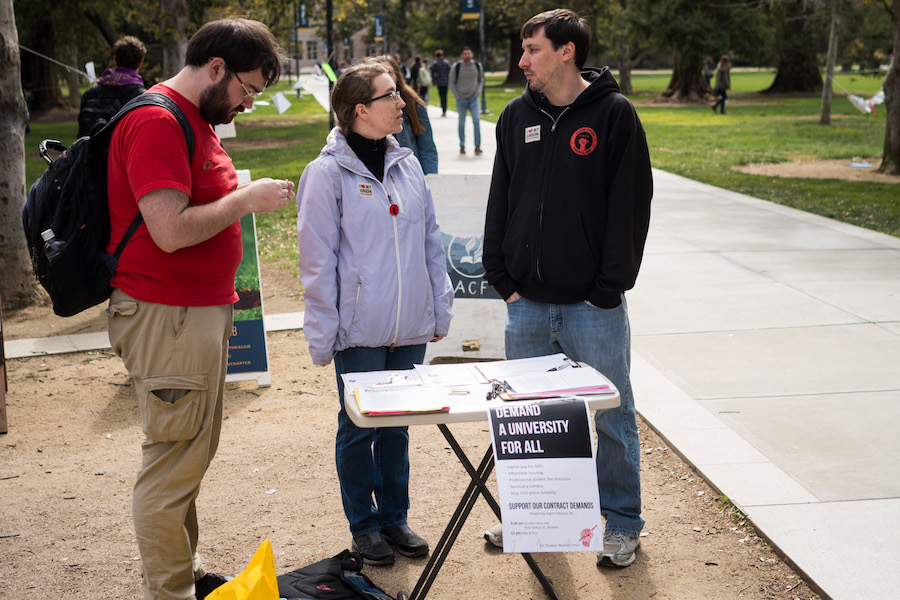
UC-AFT, a union representing lecturers and librarians on the UC Davis campus, held a rally on Wednesday, Feb. 28. Tabling in front of the Silo and Sproul Hall, union members were eager to talk to passersby about their concern regarding the Supreme Court case Janus v. AFSCME. In this case, Illinois public employee Mark Janus is arguing that his requirement to pay fair share fees to his union —  although he is not a member — is a violation of his free speech. Fair share fees are dues that workers who are not members of a union pay to the union that represents them. Arguments for this case were heard by the Supreme Court the Monday before the rally took place.

“This rally is called WeRise and what we’re doing is getting all of our union members together and aware of this Supreme Court case that is happening right now, which is called Janus v. AFSCME, which basically is being viewed as sort of an attack on all public unions around the country,” said Katie Rodger, a lecturer in the University Writing Program. “All of us could be affected by this Supreme Court case. Today is an information campaign and also a launch of what we are calling a recommitment effort, where we are going to ask our existing members to recommit to staying strong and part of our union.”

Rodger described the recommitment process and why it is significant to union members and leaders.

“[The recommitment effort] entails filling out a recommitment card which is a card that just says ‘I’m sticking with the union,’” Rodger said. “If the Supreme Court rules, for example, that we would need to start over again and sign people up for the union from scratch, this would be a way for us to know which people are already on board. It’s also a way really to energize people who might just be going to work everyday and [who are] not really too engaged with how the union has helped secure contracts and better wages and benefits for them.”

When asked how the union might approach individuals who do not want to sign a recommitment card, Rodger said union members were just hoping to get the chance to talk to those individuals.

“There are a lot of people who have problems or concerns about our union and we would really like to know what those things are because it is a union that represents all of us and we want it to be representative of people’s concerns as well,” Rodger said. “[I hope this rally will] raise our presence and visibility on campus, to get people excited, to get people really ready to act. We are not sure what action is going to look like yet; we are waiting for the Supreme Court to send down their decision but really being ready, I think, is primary.”

John Rundin, a lecturer in the classics program and the president of UC-AFT on the UC Davis campus, explained the different arguments of the Janus v. AFSCME case.

“For the longest time, the right wing in this country has wanted to defund unions and has wanted to basically destroy unions,” Rundin said. “Their strategy in this case was to claim that [the payment of fair share fees] is forced political speech. That is, when we force people to give us money even though they are not members, we are essentially forcing them to engage in political speech and that is against the First Amendment of the Constitution because you have a right to free speech.”

Rundin explained the union’s disagreement with this position, stating that a large portion of union fees supports efforts such as contract negotiation.

“The union has a lot of business here; we have to talk to the university and negotiate contracts and we also have to represent our members in various university administrative and legal proceedings,” Rundin said. “In other words, we have a lot of expenses that we incur that have nothing to do with politics, it’s simply the management of the workplace. Currently, if you’re not a member and you don’t want to support the political work of the union, what you can do is opt […] out of paying the portion of the money you pay that goes towards politics. It is true that we do a certain amount of lobbying and stuff like that, but you don’t have to pay for that […] and that’s been the state of affairs for a long time.”

Explaining the significance of fair share fees to the union, Rundin made a comparison between public sector unions and city councils.

“We are actually chartered by the state of California,” Rundin said. “We are really sort of a body of governance within the union and within the workplace. We are very democratic and we are kind of like a city council in that city councils are created by the state government. City councils have the right to raise taxes on those people who they are overseeing. Just because you don’t agree with the politics or whatever of the city council, that doesn’t mean you can stop paying. Essentially, when you say that people who are not members don’t have to pay union fees, it’s kind of like saying, ‘Oh, well, if you don’t agree with the city council, you don’t have to pay your taxes.’ That’s just not true. In order to have a functioning society, people have to pay taxes and fees of various sorts just to maintain things and keep things going. That’s our opinion: that we are doing nothing different from many other bodies.”

Rundin said he feels it is fair that both union members and non-members pay dues because the union has to represent all workers in its jurisdiction. Rundin expressed his thoughts on what he believes the Janus v. AFSCME case symbolizes.

“Basically, this is an attempt to defund public unions,” Rundin said. “It’s a major attack on the middle class. There is something like 21 million public employees in the U.S. and this is something that is aimed right at them in an attempt, more or less, to kick them out of the middle class. In most places, being a lecturer is a horrible job: it’s low pay, lots of work and no job security. Our union has managed to win for us livable pay, relative job security and all sorts of protections that other people lack. If they kill our union, that stuff will all eventually go away and eventually this job will become a very bad job.”

Rundin mentioned another reason why the union relies on fair-share fees in order to function, which has to do with temporary lecturers. There are a significant amount of lecturers on campus “here for just a quarter or two quarters” and it can take a while before the union has “a good list of who the lecturers on campus are.”

“If [the Supreme Court] decides that non-members don’t have to pay fees, we need to have people informed about how important the union is,” Rundin said. “If you talk about permanent lecturers here, lecturers who are career lecturers here, like me, tend to be members at really high rates. But, [for] lecturers who are here for a quarter or two quarters or maybe a year, [the rate] is much lower because they never even had a chance to hear from us. There is a big portion of our population that consists of lecturers who might not even be aware the union exists and therefore haven’t joined. Right away, if you’re [just] talking about those people, that’s a big chunk of our revenue that we would lose immediately [if the Supreme Court rules in favor of Janus].”

According to a flyer given out by UC-AFT members at the rally, better working conditions and the continuation of livable pay for lecturers impacts not just them, but also students: “[lecturers] support students by holding office hours, mentoring and advising, writing letters of recommendation for internships, jobs, and graduate school, nominating students for awards.” Their slogan is “lecturers’ teaching conditions are students’ learning conditions.” According to another flyer, the union will be holding workshops throughout March in support of union activity.

Written by: Sabrina Habchi  — campus@theaggie.org

UC Student-Workers Begin Lengthy Negotiations with Administration

NICHOLAS CHAN / AGGIE

Student-Workers hope to shift current power structure of UC

The UC Student-Workers Union (UAW Local 2865) at Davis hosted the first day of contract negotiations on Feb. 28 at the Memorial Union. UAW 2865 represents more than 14,000 academic student employees across UC campuses. Students presented their demands, which will be heard at the formal negotiations held at UC Berkeley.

The UC Student-Workers Union represents teaching assistants, associate instructors, lecturers, readers and undergraduate tutors across all nine UC campuses.

Demands include maintaining wages to keep pace with rising costs of living, ensuring regular and consistent pay and benefits, increasing access to public transportation and parking as well as aiming to extend current Academic Student-Employee benefits. Beginning six months before their current contracts expire, graduate students and members hope to reach an agreement with administration soon. Although agreements are usually reached through a lengthy process of weekly meetings at different UC campuses, sometimes administrators and student-workers fail to come together before the current contract expiration.

The group also aims to ensure ASEs have access to affordable housing and protect UC students and workers by declaring all UCs sanctuary campuses. It also hopes to further efforts to promote diversity, inclusivity and safe workplaces, extend childcare benefits and expand union rights, while maintaining all currently existing rights.

Civil engineering graduate student Ellie White became involved with the Student-Workers Union after her own access to secure housing was threatened.

“Our houses are going to be torn down in 2020,” White said. “Solano Park is the only semi-affordable place left to live on campus and the university is trying to replace it with units that will be much, much more expensive.”

Looking forward, White is hoping to see housing reform demands come to fruition during negotiations.

Ph.D. sociology candidate Duane Wright is another member of the UC Student-Workers Union. Wright aims to tackle the clear relationship between the union’s demands and the failure of the university to meet students’ demands.

“I see all the issues as interconnected, stemming from the undemocratic and mostly corporate nature of the university system,” Wright said. “It’s absurd that there’s an executive class that makes hundreds of thousands per year, mismanages mental healthcare funds and pepper-sprays protesters; meanwhile, students are paying more than ever and class sizes are increasing.”

Amara Miller, a Ph.D. candidate in sociology, has been a member of UAW 2865 since entering the Ph.D. program in 2011. Miller described past issues reaching an agreement.

“Our last contract campaign in 2013-2014 lasted around a year and wasn’t resolved until after several strikes and strike threats,” Miller said.

Many students enrolled in the UC system will be taught at some point in their undergraduate careers by graduate students and lecturers.

“Graduate students are responsible for nearly half of all instructional hours at the UC system and are often the main point of contact between students and faculty,” Miller said.

Although student-workers are committing to achieving all of their demands, Miller in particular is concerned about ensuring affordable housing for students, an issue for undergraduate and graduate students alike. With a significant portion of graduate student and other union members’ paychecks allocated to paying rent, many are left without sufficient funds to pay for food, health care and other life necessities.

“Our membership has been reporting that most pay over 50 percent of their income on rent, with many paying more than 75 percent and some paying literally 100 percent of their income just for rent, while being forced to take out loans just to afford food and other necessary living expenses,” Miller said.


Written by: Ally Russell — campus@theaggie.org

Last week in Senate

HANNAH LEE / AGGIE

Senator Andreas Godderis announces plan to resign from Senate

ASUCD Vice President Adilla Jamaludin called the weekly Senate meeting to order on the third floor of the Memorial Union in the Mee Room on Mar. 1 at 6:11 p.m. Senators Danny Halawi and Jesse Kullar were absent from the meeting and Senator Andreas Godderis arrived late to the meeting at 7:09 p.m. Quorum was established.

The meeting began with public discussion. Alex Park, the director of Creative Media, and Sophie Maquiling, the marketing co-director of Creative Media and a third-year design and computer science double major, discussed the unit’s opinion regarding a bill to dissolve the marketing committee within Creative Media and replace the body with a singular marketing position.

Creative Media introduced Scott Stevenson, the current business relationship manager within Student Affairs Divisional Resources as well as a UC Davis alumnus, as the desired person to fill such a marketing position.

The pair brought up marketing issues within Creative Media as it stands now. They also said the elimination of the committee would increase efficiency and transparency.

Park discussed inefficiency within the Technology, Internet and Networking Committee, another internal committee of ASUCD. He mentioned outdated technology Creative Media uses and said the situation is contradictory to the purpose of TINC which, according to the ASUCD website, is “to recommend the allocation of computer and networking equipment within ASUCD, research methods to reduce costs of computer purchases, and prioritize all Networking and Internet related requests.”

Park made a plea to the Senate table to perform its job with the benefit of ASUCD and its units in mind.

“If you want to keep TINC, make it better,” Park said.

The table questioned Stevenson about his qualifications and the goals he would pursue in the marketing position. Stevenson already works in marketing within Student Affairs, worked in graphic design at The California Aggie during his time at UC Davis and expressed interest in developing sponsor partnerships by highlighting student accomplishments.

“The biggest asset we have as a university is you, the students,” Stevenson said.

Next, during discussion of old legislation, Senator Rahi Suryawanshi brought forward a Senate resolution regarding limited housing for graduate students. Representatives from the Graduate Student Association and the association’s Housing Task Force spoke on behalf of the resolution they helped write.

The resolution, according to the ASUCD website, expresses, “solidarity on behalf of undergraduate students for graduate students and workers’ bargaining season.” The status of housing in Davis was described as a crisis, with high rent and low unit availability for students.

There was disagreement over whether to keep a line in the resolution which pointed out how UCOP “wasted money on parties” and hid $175 million in funds. A vote determined the line would stay in the resolution and the authors defended its placement as money, stating they money could have been allocated toward affordable housing.

In a vote containing 10 yes’s and two abstentions, the resolution passed as amended.

Third-year electrical and computer engineering major Stacey Wong, the director of Experimental College, then delivered a report on the unit’s status. New classes on meditation and breathing are now offered, and the quarter’s projected income is $7,960 — last quarter’s income was $5,093.

After the Experimental College unit report, the DREAM committee reported on its partnership with the lending library and the materials it has distributed to students, including iClickers and goggles.

Fair Trade UC Davis presented on its initiatives, including protecting biodiversity and advocating for equal pay.

There was a 10-minute break at 8:22 p.m. The table reconvened at 8:35 p.m.

The table participated in a Strategic Planning Activity that involved writing down areas within ASUCD they would like to see addressed on large pieces of paper.

During consideration of old legislation, Senate Bill #39, which would dissolve the Marketing Committee, was passed as amended.

Senate Bill #40, to dissolve TINC, passed as amended, as did Senate Bill #41, to dissolve the Underwriting, Sponsorship, and Advertising Committee; Senate Bill #45, to allocate $1,400 to the Whole Earth Festival budget; Senate Bill #46, to expand the jurisdiction of the Judicial Council to serve subpoenas and Senate Bill #47, to reinstate the Student Health and Wellness Committee.

Jamaludin reprimanded the table for not keeping commissions updated when bills regarding them appeared. This lack of communication has led to commissions approaching Jamaludin for information.

The Internal Affairs Commission then delivered its quarterly report.

Ex officio reports were given followed by elected officer reports.

Senator Godderis announced he will finish Winter Quarter in ASUCD, but will be stepping down from Senate due to academic scheduling conflicts with as well as a research position.

During public announcements, Environmental Policy and Planning Chair Alice Beittal announced she would be studying abroad Spring Quarter and offered her Vice Chair Lois Kim as a suitable replacement.

The meeting adjourned at 11:07 p.m.  

Written by: Elizabeth Mercado campus@theaggie.org