54.2 F
Davis

Davis, California

Friday, December 19, 2025
Home Blog Page 538

Police Logs

NICKI PADAR / AGGIE

Stop “stalking the females”

March 1

“Female transient sitting just inside store by the carts — was banging her head on the ground at one point.”

“Group of five to six college-age subjects going between their vehicle and the bathroom — subjects have been at the park for the past 30 to 40 minutes.”

“Subject at the window is stalking the females.”


March 2

“Reporting party found $100 bill on the street in front of her workplace today — wanted to document in case anyone calls — reporting party will drop it off tonight after she gets off work — incident number given to reporting party to reference.”


March 3

“Female pulled up to reporting party at light and waved a metal rod and yelled ‘don’t mess with me.’”


March 4

“In plot of complex — two male subjects appeared passed out, both covered in vomit. Reporting party asked if they needed assistance and friends declined help.”

“Occurred over the weekend, door kicked in, but nothing appears to have been stolen from inside, but unknown if subject entered residence.”


March 5

“Reporting party and several other employees receiving vague threats via text message from recently fired employee.”


March 6

“Concern of a subject dressed up in a full clown costume sitting in a maroon Toyota Highlander in the handicap parking space at the bank for the last hour.”

 

Gun control debate in wake of Parkland, Fla., shooting

GENESIA TING / AGGIE

Importance of paying attention, how to stay safe on campus

On Feb. 14 at Marjory Stoneman Douglas High School in Parkland, Fla., 17 were killed in what was pronounced the second worst school shooting in U.S. history. The New York Times reports that over 400 individuals have been killed in over 200 school shootings since Sandy Hook in 2012.

In the wake of the shooting, a national conversation and movement has ignited, known as the “we call BS” movement led by the students from Douglas High School. This is proving to be a pivotal point in the gun control discussion because unlike previous debates following mass shootings that have fizzled out, this one has stayed strong.

Regardless of one’s stance on gun ownership and control legislation, there are tactics used by all parties to advance their agendas.

“Both parties use framing strategies,” said Sam Collitt, a political science graduate student. “Mental health is a frame used by Republican politicians, gun advocates or owners that is used to focus attention on that rather than gun control, in the sense that who can own or purchase. By shifting the debate to mental health it limits the amount of attention that gun control issues get.”

Collitt also noted that this is true in reverse for liberal views, which tend to lean toward stricter gun laws.

“Given the news cycle speed, if you’re able to divert attention from gun control, for as long as the public is paying attention to it you create less demand for gun control legislation, the status quo is easier to maintain,” Collitt said.

“It makes it easier to preserve status quo in Florida in talking about mental health,” Collitt said. “Whereas in California, it is easier to preserve the status quo in talking about gun control because it is more restrictive. It is much harder to change status quo than it is to preserve it.”

NBC reported that on Mar. 7, Florida’s House of Representatives passed the Marjory Stoneman Douglas High School Public Safety Act, which raises the age to purchase a firearm to 21, puts a three-day waiting period on obtaining a gun, prohibits bump stocks and implements mental health programs in schools to impede gun use by mentally unstable individuals.

Following Florida, The New York Times reported that California will expanding its gun control policy already in place, which prohibits the purchase of a handgun under the age of 21, and is widening to include longer guns.

California already has some of the strictest gun laws in the country. It is illegal to purchase or possess military grade assault weapons; the state bans firearms with “detachable high-capacity ammunition magazines” and magazines are limited to 10 rounds. There is also a “gun violence restraining order” which allows police or family to temporarily remove firearms from a potentially unstable individual.

In an interview in the Los Angeles Daily News,  Garen Wintemute, the director of the Violence Prevention Research Program at UC Davis, said, “a gun violence restraining order could have made the difference [in Florida].” Wintemute was unavailable for an interview with The Aggie at this time.

These proposed gun control legislations directly impact the safety of U.S. citizens, especially for students on school campuses.

“Anytime a major incident like this happens, police and law enforcement always want to try and make sure we’re prepared and we’re doing the best we can,” said UC Davis police officer Ray Holguin.

The UC Davis campus is unique in that it has its own police department right on campus offering services such as 24/7 campus patrol, Aggie Safe Ride and WarnMe.

“WarnMe is our mass notification system, anybody who has a UC Davis email, faculty, staff or students, can sign up for it and we highly encourage it,” Holguin said. “This will send out a mass notification whether it be an active incident where a gun is involved, or just a chemical spill.”

In addition to this, the UC Davis Police Department is committed to proactive efforts in ensuring campus safety.

“One thing we really push, we have a simple saying here at the university, ‘if you see something say something,’” Holguin siad. “It doesn’t matter if it’s a crime or not, if something to you doesn’t look right or feel right, always give us a call so we can come and check it out and assess the situation. We highly recommend this, we want people to feel safe to call us no matter what.”

The UC Davis Police Department also conducts an Active Shooter Survival Workshop to educate faculty, students and staff on how to stay safe in the event of a firearm-related emergency.

“We really want to emphasize the mindset that if something like this does happen on campus what can we do, what should we do,” Holguin said. “We just had one on Mar. 1, right after the incident, and what we teach in that is homeland security has what they call ‘run hide or fight’ and that’s what we focus on.”

These hour-and-a-half classes are held on campus six times yearly and aim to prepare the UC Davis community in the event of an active incident.

“Now with more and more incidents happening, more and more faculty, staff and students are saying ‘we need this training,’” Holguin said. “We have seen an increase in demand for the training.”

In the wake of the Florida shooting, many campuses are initiating new protocols, but UC Davis is ahead of the game with its current procedures that have been in place and practice for years.

“We are reinforcing protocols already set in place. However, our management is always looking to work with the EOC, which is the emergency service center here on campus,” Holguin said. “We’re always working together and collaborating and making sure the information we are giving out is still the best and most up to date.”

In addition to campus safety resources, students have many options for getting involved and staying informed on this issue of gun violence.

“There are quite a lot of ways to get involved,” said Eric Medina, a third-year public service major and member of Davis College Democrats, J Street and Students for Justice in Palestine. “There is the Davis Political Review, they write on this issue without taking a stance. Then there are Davis College Democrats and Davis College Republicans who do [take stances on issues].”


Written by: Grace Simmons — features@theaggie.org

UC Davis athletics participate in 11th annual Big West Coin Drive

JEREMY DANG / AGGIE

Big West Student-Athlete Advisory Committee raise money in monthlong event for Yolo County SPCA

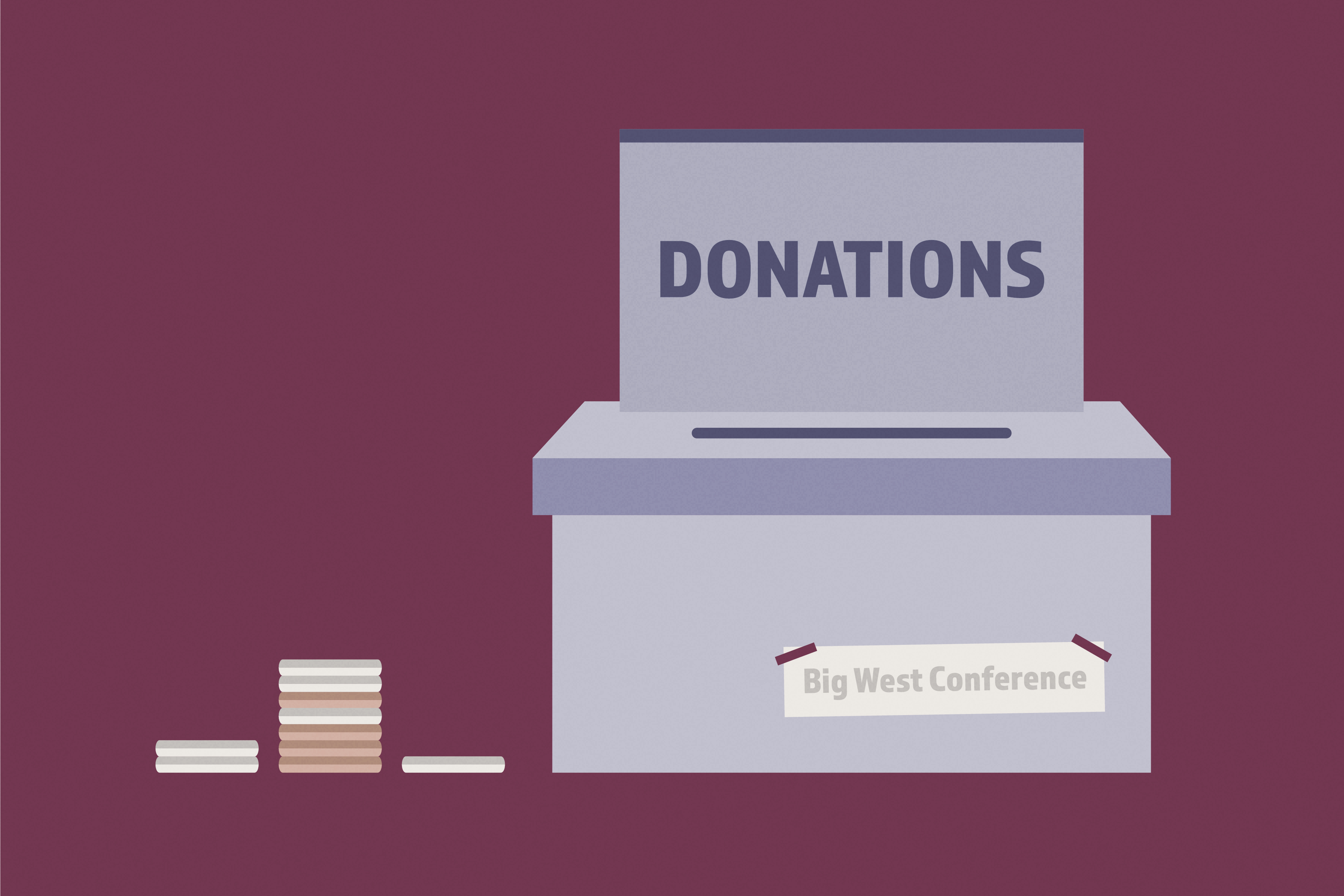
For the 11th year in a row, UC Davis Student-Athlete Advisory Committee teamed up with the other committees from the Big West schools to participate in the Big West Coin Drive. The drive took place throughout the month of February, and students tabled at various UC Davis home athletic games to collect loose change for charities of the school’s choice. For the past four years, 100 percent of the proceeds have gone to the chosen charities. This year, UC Davis selected the Yolo County SPCA –– Society for the Prevention of Cruelty to Animals –– to receive its raised funds.

The Yolo County SPCA is an organization and shelter that is dedicated to preventing cruelty to animals and finding these stray animals homes in the Yolo County area. The SPCA rescues stray animals and puts those who are adoptable into foster homes; this allows the shelter to learn about each individual animal’s personality in order to find the best possible permanent homes for them. The organization also allows different opportunities for the community to volunteer in the shelter and donate to their cause.

Fourth-year wildlife, fish, and conservation biology major Lani-Rae Green serves as one of the SAAC’s student officers, and she shared some insight on why the Yolo County SPCA was chosen as UC Davis’ charity this year.

“Davis is really […] animal friendly,” Green said. “I mean, you can’t go to the farmer’s market without seeing like five dogs. I think a lot of student athletes and people enjoy animals, and we wanted to partner with them this year for something different.”

Additionally, Green shared some of her favorite elements about being a part of SAAC and the Coin Drive.

“I think it’s just the fact that you know you can inspire people to make a change, and that it’s not just that you’re a student athlete, you just play your sport and you go to your classes,” Green said. “You can kind of step outside of that a little bit.It’s one of those things where you really know […] that the administration cares about student athletes as actual people, and [they] want to make the experience better for everybody.”

SAAC is a leadership group underneath the umbrella of Intercollegiate Athletics. It acts as the bridge between student-athletes and the athletic administration, and they work with sports teams to orchestrate different community outreach events. Each of UC Davis’ teams have one or two players that are chosen by the sport’s head coach to represent their team in SAAC and to make sure that the student athletes have a say in the program’s events and functions.

Sophomore community and regional development major and men’s tennis player Mitchell Iwahiro also acts as one of SAAC’s officers and mentioned how he got involved in the program.

“I was a representative last year, [… and] my teammate last year was an officer, and he kinda encouraged me to apply,” Iwahiro said. “Lani [Green] also reached out to me over the summer. That’s how I kinda got involved.”

Green also commented the role that SAAC plays in the UC Davis community.

“I think our main job is to coordinate events like that and to get involvement from all of the students,” Green said. “We’re kind of the segway between the students and the athletics administration.”

Aislinn Dresel, a fourth-year managerial economics and an ambassador for the swim and dive team, wraps up the trio of SAAC’s student officers and added to Green’s comments about the behind-the-scenes aspects of the organization.

“The [student] reps are the liaisons between what they hear in meetings and then giving that information to the teams, and we kinda filter that information first,” Dresel said. “We go and talk to administrators or we go to the Big West Conference office or get stuff directly from NCAA or the compliance people at the school, and then we break it down for the reps to easily interpret and communicate with their team.”

Dresel shared her favorite part about being a SAAC officer.

“I guess my favorite part [about being in SAAC] is definitely access to administrators because when you’re younger and you’re here, you think things are the way they are,” Dresel said. “I guess, as a SAAC officer, you have the ability to change things, and […] you learn the right people to talk to in order to affect change.”

Since being founded 11 years ago at the University of Hawai’i, Manoa, the Big West Coin Drive has raised over $196,000, with 2017’s total being over $20,200 –– the fifth-highest number raised in the history of the fundraiser. The highest total ever raised took place in 2013 and had a grand total of $36,271.76 raised for charities.

Dresel commented on how the progress of this year’s coin drive and compared it to last year’s turnout.

“We did halfway totals, and our halfway total this year was a lot more than it was the year before,” Dresel said. “It was triple what the halfway was the year before. It usually ends up being between $1,000 to $2,000, which I think, with it being a coin drive –– the essence of coins being very, very small –– it’s pretty solid. Our [swim and dive] coach tries to match us, so every year if [the team] hits $50, [the team’s two] coaches [each] give $20, and that’s their contribution which is really nice.”

Green also pointed out some differences that she noticed between this year and last year’s Coin Drives.
“I feel like there’s been a lot more involvement from the teams [this year],” Green said. “We kinda encourage the teams to compete with each other to see who can raise the most money and things like that.We’ve been tabling at a lot of different sports events, and we’ve gotten a lot of great input from the community.”


Written by: Kennedy Walker — sports@theaggie.org

EM Pulse: revolutionizing emergency medicine

CAITLYN SAMPLEY / AGGIE

A different outlook for physicians, students, parents

School isn’t the only place to get educated. With an increase in accessibility of informational podcasts, people have easier access to learning more about almost anything. Whether it’s while standing in front of the bathroom mirror or during those long morning commutes to work, podcasts make learning possible between busy schedules.

UC Davis emergency physicians Julia Magaña and Sarah Medeiros saw the potential in using podcasts to “meducate” other emergency physicians and medical providers about today’s hot new topics in medicine.

“We decided on using podcasting as our medium because it’s powerful to learn fast and learn the emotions of a story,” Magaña said. “This allows us to hear the story of someone who’s had a concussion or been an addict to help further improve our care for our patients.”

Unlike other medical podcasts already available, EM Pulse takes on a new angle by use of research and storytelling.

“We just interviewed an opioid addict who’s now on the other side as a counselor in our community,” Magaña said. “Then her son went through it, so she has the perspective of being an addict herself, of being a parent of an addict and now a counselor. So we start off with a story and then talk to a researcher or investigator on a particular topic.”

EM Pulse’s tagline is “bringing research and expert opinions to the bedside.” As passionate emergency physicians who work in a research institution, Magaña and Medeiros felt the need to make innovative research more accessible for emergency physicians across the country.

“When new stuff comes out — and there’s new stuff all the time — we just want to get the word out about up-to-date, interesting research to physicians everywhere, not just people that work at UC Davis,” Magaña said. “We get patients that are transferred in from other hospitals, and sometimes [physicians] are just not getting the necessary evidence in their everyday feed.”

Magaña and Medeiros not only recognize that podcasts are a powerful method for sharing information that physicians might not have on a day-to-day basis, but also that it has the power to “meducate” on the social aspects of emergency medicine.

“We realized that we weren’t interested in just the nitty-gritty medical issues,” Medeiros said. “There are a lot of podcasts out there that talk about traditional medical issues already. While those are really important, too, we could be looking at some of these issues that affect emergency medicine but more complicated that just their biology.”

The emergency room for many patients serves as more than just a medical center. It’s a place where they can receive help, support and consolidation. EM Pulse strives to raise awareness and teach emergency physicians how to best treat their patients. The podcast discusses difficult yet pervasive issues in the country like homelessness, human trafficking and drug addiction.

“People who are healthy and have a lot of money and resources only come to the emergency room when their health is really bad, but for a lot of people who don’t fall in that category, the emergency room is kind of their safety net,” Medeiros said. “We see people who are experiencing homelessness and see those challenges as more that just their medical issue. The LGBTQ community, for example, continues to face a lot of issues socially and politically, and though it’s gotten better, we still have a long way to go.”

A goal for EM Pulse is to destigmatize issues like drug addiction to prevent discrimination in the emergency room. It’s important to humanize and ensure that each patient receives the full care they need — physically and mentally.

“In the ER, I think physicians still have a lot to learn in terms of how to make their patient feel comfortable,” Medeiros said. “There are a lot of challenges out there, and drug addiction is a huge one. There’s a lot of stigma on drug use, even though we know that addiction has a biochemical basis. People assume that [addicts] get into drug use because they are weak or bad people, and that they can get out of it if they wanted to. I mean, that’s assumed about a lot of things. Like for obesity, it’s assumed if you tried a little harder you could lose the weight. All of these things are so multifactorial, and there are bigger things than just the medical side.”

While EM Pulse exists to teach emergency physicians and medical providers, it’s something that everybody can listen to. One reviewer said that the podcast is “great for people and for people that just plain like to learn.”

“Our target is people in the medical community, but we would love everybody to listen to it — anybody that just wants to learn or hear a different aspect of medicine,” Magaña said. “Because our goal is to effect change and help disperse medical evidence.”

The podcast can also prepare pre-med students to enter their careers with a new perspective in modern medicine.

“We’re not just trying to reach out to emergency physicians, but future ones as well,” Medeiros said. “I think that there’s a lot to learn at the pre-med level and for pre-med students. I wish there had been more of this stuff when I was in pre-med.”

EM Pulse operates as a team: medical physicians, guest speakers, researchers and Julia Magaña’s husband, Orlando Magaña, an audio engineer who helps produce the podcast.

“I help filter through their ideas so they don’t stray far from the message they’re trying to convey,” said Orlanda. “I’m not technically trained in medicine, so there are some things I don’t understand from a technical standpoint. […] For me, it’s a matter of making sure that they stay on track with those things, not just with the research, but when we’re actually recording. I think the other thing is making sure that technically we’re operating at a very high level. When someone chooses to download your podcast, the least you can do is offer them something that sounds good.”

All in all, EM Pulse is here to make a difference, both in medicine and in underrepresented communities.

“You can’t make change until you know there’s a problem out there,” Julia said.

Check out their new podcast about opioid addiction on March 15 from iTunes.


Written by: Becky Lee arts@theaggie.org

Humor: I thought I would never find my passion at UC Davis. And I was right.

JEREMY DANG / AGGIE

Funny how life doesn’t surprise you at all and happens exactly how you imagined it

If you have seen the movie “Lady Bird,” then you have probably heard of UC Davis. This ag school just west of Sacramento is home to many attractions, but student passion is not one of them.
Much like the protagonist of “Lady Bird,” Christine “Lady Bird” McPherson, I too am angsty, love telling lies to gain popularity and have a strong aversion to UC Davis. The only real difference between myself and Lady Bird is that she figured out that Davis is a barren wasteland far before I could even dream of reaching such an accurate conclusion.

In my time at UC Davis, I definitely thought somewhere along the way I’d find out what my passion is. Instead, UC Davis has tricked me into believing that true passion is taking four midterms in a single week, every week, for 10 weeks. While this may sound like a very impressive and cool passion to have, it’s only one of my many passions, and it’s not really my true passion.

I have searched far and wide at UC Davis for my true passion during my four years here.

At one point, I thought I had found my passion at the CoHo, but then I remembered that there’s, like, never any Pamplemousse La Croix there whenever I look for it, so I knew that my passion wasn’t located there.

I tried taking classes that interested me, but it turns out that nothing interests me because all I care about is La Croix and making “Lady Bird” references.

Then, one day, when I least expected it, it all finally clicked. Just when I thought I would never find my passion at UC Davis and that all that searching was for nothing, I realized, yeah, I was totally right.

Funny how life can just surprise you like that. But it’s even more funny how life doesn’t surprise you at all and happens exactly how you imagined it.

After four years of naïvely believing I would never be able to find something at UC Davis that truly interests me, it’s crazy to me how incredibly accurate my beliefs turned out to be, but even crazier how I am not actually surprised at all and am just trying to sound humble on paper.

In the end, my impeccable guesstimation skills have once again earned me the reward of accurately predicting yet another character flaw of UC Davis. I guess that’s why people call me the Lady Bird of the West (of Sacramento).

“Lady Bird” references aside, discovering that my passion does not exist at UC Davis has been a real journey. I didn’t learn anything about myself along the way, and if I could do it all again, I absolutely would never. In fact, I would just skip going to college altogether and invent La Croix instead.


Written by: Lara Loptman — lrloptman@ucdavis.edu

(This article is humor and/or satire, and its content is purely fictional. The story and the names of “sources” are fictionalized.)

It’s about a hike

TAYLOR LAPOINT / AGGIE

Why bad stories are so good

I wanted a word that describes a story that’s so bad it’s good. I can think of stories from my own life that fit this definition. But words shape our understanding of the world. If a certain word doesn’t exist, how can the idea exist?



I noted a few words that were similar to the word that I was looking for. In France, they havenanar,” or “a film so badly realized and ridiculous that it becomes involuntarily amusing and comical.” Think any Arnold Schwarzenegger movie ever made. In Indonesia, they have the word “jayus.” For years, I’ve carried the particular definition of “a joke so poorly told and so unfunny that one cannot help but laugh,” which I think comes from a book called “Interpersonal Communication.” But I’ve yet to find a name for the type of stories I’m talking about. So, I call them joywhoppers.  

When you’re a sophomore in high school and someone at youth group tells you that you have a bean stuck in your braces, that’s a joywhopper. When your uncle gets drunk at a Chinese buffet and uses the crab legs to impersonate Freddy Krueger, that’s a joywhopper.

They’re not just embarrassing stories or bad memories, though. They are the way we frame our own narratives, and they demonstrate the power of storytelling.

They make up for all the real, bad stories about pain and loss. They make us laugh in spite of ourselves, and they make crappy days seem tolerable, or even good, in retrospect. They’re the stories we tell, the ones we rewrite again and again.

I have a favorite. It’s about a hike.

We’re in my 1990 Toyota Celica. It’s small and low to the ground. There’s no AC and no radio. My brother Scottie, my husband Stephen and I are on our way to Briones Regional Park for a day hike. This hike will be the last hike we take together, before my brother leaves for basic training in Fort Sill, Okla.

As we pull into the parking lot at Briones, Scottie points to a sign: Gate locks at sunset.

“We have to be back to the car by sunset,” says Stephen. “Can we do it?”

On the GPS, Briones Reservoir is shaped like a sea monkey with little arms and legs that stick out from the main body of water. We’re going to hike around the sea monkey — 13.5 miles. We’re starting at noon, and, if the gate locks at sunset, we have six hours to make it around the loop and back to the car. We’ll have to hike 20-minute miles, on a route rated as “hard,” in the sleeting rain.

“We can do it,” I say, and Scottie agrees.

The rain outside feels colder and harder than it looked from inside the car. We open the Toyota trunk to grab our backpacks and hiking poles. We pull on and zip up our jackets.

Stephen’s the first to be ready, as always. He’s tall and slender, and he steps in wide strides.

“You guys ready yet?” he asks from the trailhead with his arms posturing the question. The drawstring on his windbreaker is pulled tight around his face, covering his shaved head and short beard. His blue eyes stand out against the bleak landscape.

Scottie has on a ski mask, a U.S. Army backpack, hiking pants, a windbreaker and a pair of tall, lace-up, hand-me-down work boots from my stepdad.

“You look ridiculous,” I tell him.

“I don’t care. I’m warm,” he says through the fabric.

Underneath his mask, he has a band of freckles across his nose and a mop of auburn hair that will be gone in a week. He’s athletic and strong but a small guy, which I like to tease him about.

At the trailhead, there aren’t any maps — typical for a regional park — and we realize we’ll have to rely on GPS. A service truck lumbers along the fire road. The landscape is a dishwater color above, squelchy mud below.

We walk for 10 minutes and the skin on my arms starts to show through the sleeves of my yellow windbreaker. My non-waterproof boots are soaked. Stephen takes out a new iPhone from his pocket and reads the trail GPS, covering the screen to protect it from the rain while we debate about the hike’s possible outcomes.

“I don’t want to be stuck out here past sundown,” Stephen says.

“What would we do?” I ask.

“We could always sleep in the car, I guess,” he says.

“I’m not sleeping in the frigging car,” Scottie says, which makes me laugh because Scottie’s small, but my back seat is smaller.

We make our way through the mud, glad that we brought our hiking poles because, for every step we take, we slide a little downhill. Half an hour into our hike, my brother stops to check his boot. He thinks he’s getting a blister, and he’s worried that when he goes back for his final physical fitness test, he’ll fail.

“Guys have failed for dumber stuff,” he says. He reaches down and takes off his boot, deciding that he will hike without it.

I should feel bad for my brother, walking through the mud and the rain with one shoe. But I can’t help but laugh. I walk behind him, so I can laugh better.

For every step he takes with his right foot, his boot sticks and leaves a heavy print. For every step he takes with his left foot, his sock swipes the mud and his leg almost slides out from under him. We have over 12 miles to go.

We lose the GPS signal and, without a map, we can’t tell whether we’re still on the right trail. It’s a bad combo. We dead-end at a gate with a black and orange no-trespassing sign.

We check and double-check the GPS. We look back the direction we came. For what? To see if it was the right way. I wonder how many legs the sea monkey has.

We debate going back or moving forward.

“I don’t want to get in trouble for trespassing. I could get court-martialed,” Scottie says.

“Maybe we shouldn’t go. I don’t want him to get in trouble,” I say. This is me: gung-ho until I think I might get in trouble for something. Then I turn into the fat kid from “Stand by Me.”

We hesitate before deciding to move forward. We all slide through the low cattle gate and creep along the trail. It seems no different than the rest of the trail, just wild grass, mud and scrubby oak trees. But we’re afraid of getting caught. Scottie’s afraid, and it’s wearing off on me.

“Scottie. Can you not look like a terrorist?” says Stephen.

I realize my brother is still wearing the ski mask and Army backpack, and now he has one filthy, floppy sock and a boot in his hand.

The sky begins to darken, and we pick up our pace. I give Scottie one of my hiking poles, which helps his balance in the mud. I’m starting to feel bad for him.

Stephen checks where we are on the GPS. He decides we probably won’t make it to the car in time, so he slows his pace. But my brother and I choose to run ahead. Stephen hands me the keys, and Scottie and I begin jogging.

A little while later, I can hear my brother’s feet stomping behind me.

“I can’t believe you can just keep going, Jessie,” he says.

My breaths are like the pregnant women in Lamaze class — at least how I think they look on TV. I’m tired but weightless from the endorphin rush. I want to make it to the car for us. I’m feeling very noble. We round strange corners, and I attempt to navigate using my GPS on my slow iPhone. I have bad service. One moment, the red dot that represents us is on the trail, and the next moment it jumps off the trail and into the bushes.

“I don’t know if this thing is right,” I tell my brother.

We run for 30 minutes, picking up speed going downhill, jumping over tree roots, panting in our wet clothes.

Dusk settles around the sea monkey.

Then we round another switchback and hear, “Hey! Where are you guys going?”

My brother turns to me, wide-eyed, ashen. “What the f—?” he says.

It’s Stephen. We’d taken side paths, led astray by my slow GPS and poor navigational skills, that made our route longer, and now we were running in the wrong direction. Walking, he’d caught up to us. All that work for nothing.

We jog slower through the gloom with Stephen trailing behind us and come to a couple doing minor repairs on their truck in the parking lot of another trailhead. A woman sits on the tailgate, while a man busies himself with a tool at the truck tail light. Stephen asks them for a ride to the car so that he can come back and get us, and the man agrees to take him once he’s done with his task.

“Okay, thank you. Thank you so much. We really appreciate it,” Stephen says, pressing his hands together to show his gratitude.

But the woman on the tailgate leans over and whispers something in the man’s ear.

“No,” he says. “I can’t take you. Maybe next time.”

“What?” says Stephen.

“You’re all dirty,” he says, pointing to Stephen’s muddy pant legs.

“What ‘next time’?” I ask as we shamble along the trail through the afterglow,

our eyes adjusting to the near darkness.

“We have to be getting close,” Stephen says. “We have to almost be there.”

A few minutes later, we catch sight of the parking lot — and then a silver glint. The car!

We did it. We made it.

“What’s the point to this story?” you may ask. “A lot of this story sucked,” you may also say. But that’s it. This hike was so great precisely because it was so terrible. You might say that I just liked the hike because my group bonded or because it contained a few funny anecdotes. I might agree with both of those statements. But I think there’s something special about retelling the story in its many iterations.

Last Christmas, Scottie, Stephen and I sat at my mom’s kitchen table one night and tried to tell the story of our last hike. It was a difficult time for our family. A loved one was very ill. My brother, who was on military leave with his new wife, was only going to be home for a few days. Each of us started from a different part of the hike — the boot, my poor navigational skills, the woman on the tailgate. We interrupted each other, telling all the best parts out of order.

When we tell a story, we revise the details, we exaggerate the speech. We look for symbols and foreshadowing. We notice irony. In the joywhopper, we look for humor where there isn’t any. We find humor in the absurd or the mundane, and we use it to better understand our experiences.

After all, what’s life but one big story that’s so bad it’s good?


Written by: Jess Driver — jmdriver@ucdavis.edu

Disclaimer: The views and opinions expressed by individual columnists belong to the columnists alone and do not necessarily indicate the views and opinions held by The California Aggie.

Is the end of the pandemic era approaching?

BIOLOGY POP [(CC BY-SA 4.0)] / COMMONS
Global Virome Project aims to find majority of all unknown viruses

An increasing collection of government agencies and scientific research centers are collaborating on a project, called the Global Virome Project, to find a majority of all viruses that exist in mammals in the next ten years. By having information about viruses that may “spill over” from wildlife populations and infect humans, the world would be more prepared to deal with and end pandemics.

“I’m really excited by the idea that we can bring about, I think, the beginning of the end of the Pandemic Era,” said Peter Daszak, the president of EcoHealth Alliance. “People talk about this time as a period when pandemics just happen every few years. I think we’ll see an end to that.”

Together with the UC Davis One Health Institute, EcoHealth alliance is one of the multiple partners of the Global Virome Project and has previously worked with UC Davis and internationally affiliated organizations on the PREDICT project, which also sought to find viruses. Established by the U.S. Agency for International Development in 2009, PREDICT works to increase surveillance and detection of emerging viral threats.

Working in 28 countries, PREDICT determines the risk of a virus outbreak in an area based off a number of factors that include how humans interact with the animals in that area, what viruses the animals are carrying and more. It then builds laboratories that can discover viruses and works with researchers to determine if the newly found viruses pose a threat to animal and human health. The Global Virome Project is more focused on just finding viruses, but used PREDICT to show this method of detecting and discovering viruses is possible on a large scale.

“The Global Virome Project will collect a wealth of information about viruses, their host species and related ecological data, which will enable us to change our current approach to emerging infectious diseases from chasing after the last outbreak to proactively preparing for the next pandemic,” said Eri Togami, a public health veterinarian based at the UC Davis One Health Institute.

By finding benign or harmful viruses that already exist in animals, scientists would have a greater head start on developing counter measures in case the viruses turn out to be dangerous to humans.

“The main contrast from the Global Virome project and PREDICT is, PREDICT isn’t out there to discover all of the viruses in mammalian species […] for PREDICT, it’s more real time, in the here and now, where are the areas where more resources need to be better developed to improve surveillance and detection where we think are at or are the highest risk… for a potential new threat to emerge and cause, like the equivalent of a 1918 influenza [pandemic],” said David Wolking, the senior global operations lead for PREDICT.

Although viruses from virtually any mammal can pass to humans, the groups that researchers are most concerned with are rodents, bats and non-human primates. Many of these animals live close to human populations and carry viruses that pose a risk to people.  

“But I think that the big picture is, it’s not just the animal, it’s what we do with the animal. So if bats have viruses and we don’t go out and hunt bats and kill them […] we’re not going to catch the viruses, “ Daszak said. ”That’s the real problem, our relationship with nature, we’re connected so closely and they’re so many of us on the planet now, eating so many things in remote areas so we’re getting exposed to these viruses that are a natural part of an animal’s life […] When they [viruses] get into us, they become lethal diseases.”

Deforestation, hunting new animals and globalization have all been hypothesized as factors that increase the risk of pandemics. All of these forces are man-made.

“Humans are really the force behind pandemics,” Daszak said. “It’s unfortunate, we all get very shocked and surprised when a new disease emerges and starts to kill people. What we don’t realize it’s us that’s driven that process.”

An algorithm that is used to estimate animals in a population has estimated that there are 1.7 million unknown viruses. Based off the 28 countries PREDICT has worked in, Daszak believes the Global Virome Project can find 71 percent of those viruses in ten years with a budget of $1.2 million.

The Global Virome Project has been likened to the Human Genome Project, which sequenced the entire set of human DNA. This led to many advances in gene therapies as well as gene sequencing techniques. A few of the researchers have expressed hope that the Global Virome Project will go down a similar path, that in time technology for detecting viruses and their potential to harm humans will become better and more readily available. Aside from the task of identifying most viruses that are currently unknown to science, the Global Virome Project is also developing infrastructure and training scientists across the world.

“The Global Virome Project is not just a big science project — it is a capacity building project and a global partnership,” Togami said. “In the long-term, we want to bring people together, especially between sectors that did not have the opportunity to work to with each other before. This collaborative approach will build a lasting effect to help us prepare and respond to viral threats in the future.”


Written by: Rachel Paul — science@theaggie.org

How Prenatal Stress Impacts Postnatal Environment

MORGAN TIEU / AGGIE

New research shows that prenatal stress promotes developmental plasticity

Research by experts at UC Davis, through the behavior of prairie voles, challenges earlier beliefs that prenatal stress is the sole factor in children’s health and development. This research shows that, contrary to popular belief, the negative impact of prenatal stress can be reduced by the postnatal environment.

Pluess and Belsky originated the idea that prenatal stress may increase developmental plasticity [or] increased sensitivity to the environment,” said Sarah Hartman, a postdoctoral scholar working with Jay Belsky, a professor of human development, and Karen Bales, a professor in the Department of Psychology. “Although there is some work in humans that support this idea, the studies do not answer the question if prenatal stress actually causes increased developmental plasticity like an experiment would. Furthermore, in human research, the quality of the prenatal environment is often predictive of the early postnatal environment. For example, a mother stressed during pregnancy by situations like an unstable relationship or financial difficulty will likely experience the same challenges following birth. Therefore, it is difficult to tell, in human studies, the effects of the prenatal environment separate from the postnatal ones.”

To combat this issue, the research team conducted experiments in Bales’ lab on 78 prairie voles because they have unique, human-like emotional capabilities. Pregnant mothers were either put into environments that induced prenatal stress or served as the control. The prairie voles in the prenatal stress condition experienced one social stressor per day during the last week of pregnancy and the the voles in the control condition were left undisturbed. The pups were put into the care of either low-quality or high-quality rearing parents, a process called cross-fostering, within 24 hours of birth. The pups were tested for anxious behavior and the stress hormone corticosterone after 75 days.

Prairie voles are socially monogamous, and adult males display a lot of social behaviors that you don’t see in other lab rodents like rats or mice,” Bales said. “The eventual goal of the study was to look at all of these social behaviors and their relationship to prenatal stress [and the] postnatal environment.”

The voles that experienced prenatal stress and had high-quality rearing were the least anxious, whereas the voles that had low-quality rearing parents were the most anxious. For the voles that didn’t experience prenatal stress, the quality of rearing didn’t matter. This conclusion shows that the prenatal environment plays a big role in the sensitivity a child will have towards the postnatal environment.

Don’t assume prenatal stress is inherently bad for the child, but appreciate that if a postnatal environment is highly stressful, prenatal stress will undermine healthy development,” said Belsky. “We need to improve postnatal environments given this situation.”

The results of this research will hopefully relieve stress for women who are worried about creating a healthy prenatal environment.

“The results of this study could help ameliorate some of that worry because it points to not all stress being bad for babies,” Hartman said. “In other words, just because a mother may experience some stress during pregnancy doesn’t mean that the baby is now damaged or flawed. In addition, I think the results of the study could also inform intervention work with mothers known to have had a stressful pregnancy. Because prenatally-stressed children might be especially developmentally sensitive, it may be of great benefit to provide resources and programs that would enhance and improve their early environments.”


Written by: Kriti Varghese — science@theaggie.org

Improv-ing your communication skills

MICHELLE GORE / AGGIE

Storytelling, improvisation come together to help scientists engage with audience

Communication issues occur in day-to-day life, and a recent science communication workshop tackled these issues. Participants included faculty, students, staff from the Alan Alda Center for Communicating Science and, an actor known for his role on “M*A*S*H,” Alan Alda himself.

The primary focus of the workshop was to use storytelling and improv to improve the effectiveness of scientists’ communication with the public, who usually do not have the same level of expertise and knowledge that a researcher does.

“Most of the time, we think people know what we’re talking about,” said Kat Kerlin, an environmental sciences news and media relations specialist for the Office of Strategic Communications. “And a lot of the time they don’t. You have to be really careful about that when you’re trying to get across a message.”

The workshop lasted three days and featured a variety of activities, including recorded mock interviews, emotional storytelling and nonverbal mimicking.

“It might be my most amazing three days of work that I’ve spent,” said Carson Jeffres, the field and lab director of the UC Davis Center for Watershed Sciences. “A lot of it is based on improv, so a lot of the instructors are actors. If you’re telling a story, one of the ways that people remember your story is making some sort of emotional connection.”

Getting people to pay attention is the first step and keeping that interest with an emotional connection and story is the next. However, another hurdle is walking through the complexity of the research.

“The point isn’t to dumb it down, it’s to simplify it,” Jeffres said. “When you have a simple message, it’s often clearer, and that’s really important. You don’t want to sound condescending by dumbing it down, but you do need to simplify it because we do speak a different language, even amongst the scientists. […] People will listen if you’re interested and excited about the subject as well, so being able to convey your enthusiasm along with an understandable vernacular will help tell that story.”

Kerlin added that stripping out scientific jargon and explaining research through straightforward and relatable metaphors are some of the most helpful ways to simplify the information. Continuously talking to people who have limited knowledge of the research allows a scientist to practice their explanations. Sharing pictures of the work or the researcher in the field also keeps people interested.

Actively seeking ways to help citizens understand science and helping them learn to trust the researcher’s work is one of the driving forces for Ann Willis, a Ph.D. student in the department of environmental and civil engineering. Willis created a program called Scientists for Public Engagement and Knowledge, which focuses on expanding scientists’ toolkits in expressing their work to the public in an engaging way.

“It was the morning that the news headlines were about President Trump pulling the United States out of the Paris Accords,” Willis said. “I just thought, enough. We can no longer sit on the sidelines. Scientists can no longer feel insecure about talking about what we do and what we say, because what we do is critically important. It literally saves people’s lives, and decisions like that will endanger people. We have a responsibility as professionals.”

Some UC Davis researchers have noted that because of their academic style of speaking, citizens see them as more cold and robotic rather than another human being who has interests and passions. One of the main points of the workshop was to remind scientists how important a personal connection is to the citizen.

“So much of [the workshop] wasn’t about, ‘how do you message your science,’ [but] it was just, ‘how do you connect with another human being, period’,” Willis said. “First look them in the eye, then mirror their gesture, and tell them a story that’s just a story. You know you can do this since you’ve done it all your life, and now you just have to remember how to bring the humanity back into the science and humanities. That was not a big part of any classroom training I’ve ever had. When you present at conferences, that’s definitely not the model that’s presented for new and developing scientists, so part of it, I think, is that we’re just inheriting this tradition of bad communication habits, and there aren’t better models out there.”

As a self-proclaimed lover of the environment and environmental sciences, Kerlin said she wasn’t sure what to expect taking up a journalism job as someone who didn’t directly study what she had to report on. However, she stated that her lack of knowledge in these situations actually helped her, as she could ask questions that citizens may have had and quell those fears or clear up confusion.

“I didn’t realize how much I didn’t trust scientists until I sat with them and heard about their kids and lives,” Kerlin said. “I learned about them as fuller people and saw the work that they do and was so impressed by it that I came to trust them. Most people don’t get to do that. So it’s my job to at least relay some of that to others and hopefully put across some of that trust.”


Written by: Jack Concordia — science@theaggie.org


Softball field undergoes five-month renovation project thanks to Marya Welch Initiative

DIANA LI / AGGIE

La Rue Field receives complete makeover in time for new season

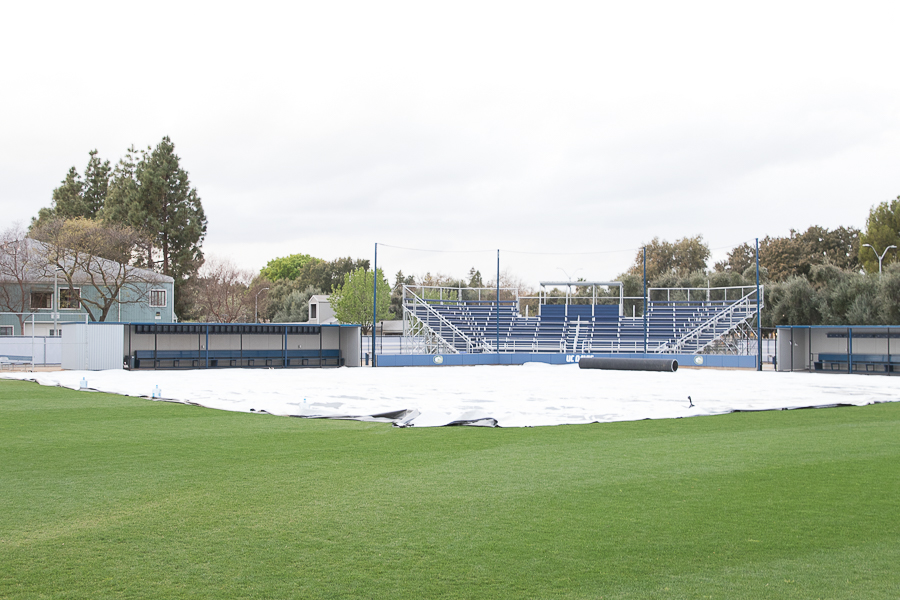
The UC Davis softball team officially kicked off its 2018 home schedule on Thursday afternoon at the newly-renovated La Rue Field, following a five-month project that gave the facility some much-needed repairs and upgrades.

The team will enjoy new dugouts and bullpens as well as a new clubhouse and locker room beyond the outfield fence.

Some major changes were made to the playing surface as well, including fresh sod in the outfield. To help handle inclement weather around the year, the renovations also involved leveling off the playing surface using laser technology and installing a completely redesigned drainage system.

For Aggie supporters, there were new bleachers built behind home plate, in addition to an outdoor press box at the top of the seating section. The field’s scoreboard and sound system were also revamped in the process.

The renovation project was originally scheduled to commence back in early 2015, with estimated costs hovering around $3 million to $4 million at the time, but was pushed off until this past fall.

The remodeling of the field began in early October and was partly funded by the Marya Welch Initiative for Women’s Athletics, which promotes women’s sports on campus and raises money for the 14 UC Davis women’s NCAA teams. The group comprises UC Davis fans and former student-athletes, among others, and ultimately strives to provide the best opportunities for current Aggies and give them the tools to compete at the highest level against their opponents.

“We have a tradition of success throughout the history of our program and, on this 50th anniversary season, we are so excited to see the fruits of the labor of all the wonderful women who have paved the way and laid the strong foundation for the UC Davis softball program,” said UC Davis softball head coach Erin Thorpe in a press release on March 5. “These facility improvements are a testament to all the student-athletes who have pulled on that Aggie jersey and represented the university with ‘Aggie Pride.'”

La Rue Field is located at the corner of La Rue Road and Russell Boulevard, directly across the street from the Segundo Residence Halls. The UC Davis softball team will play a total of 24 home games this season in their new digs.

The team began its schedule with 18 consecutive road games in February, compiling a record of 11-7. The Aggies played a pair of games on Thursday to officially reopen the field, beating Nevada by a final score of 9-4 and then falling 2-0 to Utah State. UC Davis will play another five games over the course of the next four days, including a doubleheader on Saturday starting at 11 a.m. against Valparaiso.


Written by: Brendan Ogburn — sports@theaggie.org


Cafe Culture: Delta of Venus

JESSE STESKENKO / AGGIE

Davis cafe boasts down-to-earth atmosphere

With spring break just around the corner, many students are looking for cool spots to hang out together during the brief but sweet interim between Winter and Spring Quarters.

Brightly colored, homely and eccentric, the cafe in downtown Davis known as Delta of Venus is perfect for getting work done, hanging out with friends or spending afternoons preparing for the coming quarter’s coursework. The venue boasts indoor seating as well as an outdoor patio.

“It’s really lovely in the springtime,” said fourth-year studio art major Diane Molandes.

“Especially when you can sit outside with some iced tea.”

Prince candles, vases and votive figurines line shelves amid hanging collections of art and photography. Overseeing the soft clamor of the cafe with a loving eye is a neoclassical-style painting of a full-figured Venus.

Other Venus-like figures, faintly reminiscent of the Venus of Willendorf, adorn walls while baristas pour steamed milk into cups of espresso. The sense of an easygoing and friendly community is abundant in this space.

“I have been coming here for eight years, since 2010. I like the atmosphere insofar as the people that come here,” said hydrology Ph.D. student Gugu Zikalala. “This is one of the few places I’ve been where people actually want to connect.”

Hip, urban and laid-back without being overtly hipster, the eclectic collections of art — ranging from photography to collage to sculpture — give the cafe a very open and accepting atmosphere. Plus, the unique architectural layout of the shop maximizes the sense of homeliness of the space. Overall, Delta of Venus boasts a down-to-earth and poignant feel, and the coffee was good to boot.

“There is the daytime vibe, which makes it very quiet and an amazing place to sit outside and work,” said hydrology Ph.D. student Katie Markovich. “The nighttime aspect is that Delta actually has a pretty thriving social scene around it. It is a community hub. The food is awesome, too.”

Although Davis isn’t a big city with lots of coffee options, it does have its quaint charms. With its comfortable atmosphere and well-priced beverages, undergraduate students may really enjoy Delta of Venus as a place to get work done and hang out with their peers.


Written by: Isaac Flores — arts@theaggie.org

Unpacking the parking issue

ALEXA FONTANILLA / AGGIE

Students upset with parking inconvenience, TAPS input

Student parking spaces, or lack thereof, have been an issue of contention in recent years at UC Davis. Students who drive to campus from their off-campus housing and those who commute from neighboring cities such as Woodland have voiced their complaints of a lack of parking spaces, and some are concerned that this will be exacerbated by an expanding student body.

Clifford Contreras, the director of the Transportation and Parking Services on campus, shared some statistics on various facets of the issue, and offered explanations of some of the questions students have had regarding the rationale behind permits and their prices. He began by sharing the total inventory of C permit spaces available throughout regular business hours on campus: 7,502. If the L permit spaces are included as well, then the total comes to 8,529. However, these spaces are not exclusive to the C permit. In the first number presented, A/C/Visitor share the spaces, and in the additional 1,027, A/C/L/Visitor permits share the space.

“The reason we put A there is because As can park in any C spot,” Contreras said. “They typically park in every A spot that’s available [and] they usually don’t park in C spots, but because they can, we put that letter there. Every C permit [space] is also available to anybody that buys a daily permit. We can’t separate that out because we know how many dailies are sold, but we don’t know how long they’re there.”

The revenue gained from selling parking permits and parking citations is used to run TAPS, an entirely self-supported entity. As Contreras expressed, TAPS must generate an independent source of revenue in order to maintain operations and pay for the construction and maintenance of facilities, since it is not a university-funded program.

During the 2016-2017 school year, 29,300 parking citations were issued and 9,844 citations were appealed, with 65.6 percent of the appeals being granted. Citations that seem to fall under the arbitrary notion of a “simple parking violation” category have a decent chance of being forgiven.

However, citations are not appealed for rationales such as lack of space to park in a valid C permit area. According to the numbers, there are enough spaces for all C permits. 5,254  variations of C permits were sold during the Fall 2017 and there are 7,502 C permit parking spaces available, meaning there was no numerical requirement to cap the number of permits sold.

“We do quarterly utilization surveys, including the summer,” Contreras said. “We count every vehicle in every parking space, and we do it three times a day, three days within a week, at 10 a.m., 2 p.m. and 8 p.m. We keep track of what those utilization numbers are, and if they’re starting to get over 90 percent, we start thinking that we might have to do something as it relates to building additional facilities. Iin the 31 years that I’ve been here, we’ve never capped the number of permits that we sell because we’ve always had a sufficient number of spaces”

As Contreras suggested, although there are enough physical spaces in total throughout campus for C permits, student unrest typically surrounds the idea that people are no longer able to park where they used to, in part due to a greater campus population. The main hotspots for students are the Quad and Pavillion parking structures, which aren’t able to meet the high student demand. Contreras and other officers have noticed that students will stay double parked in their cars, for instance in the Quad structure, waiting for a space that they can occupy as people may clear spaces during class breaks.

“They stay in the car, and they’ll sit there listening to the radio or doing their homework and the car is turned on, unfortunately, so you got emissions going into the air,” Contreras said.

The main source of contention, according to Contreras, is that students prefer to park in the “hotspot” areas close to classes, such as the main parking structures, but those two areas simply cannot meet student demands. Students who want drive to campus must be prepared to park in less convenient locations that may be further away from their classes.

“What happens is this lodged complaint that there isn’t enough parking to accommodate [student] needs, which isn’t really true, because our statistics bare out that there is,” Contreras said. “It’s just not where they want it to be — it’s further away.”

Jyotsna Natarajan, a third-year genetics and genomics major, shared her experiences with driving to campus.

“I’ve been driving for a year and a half or so, and definitely I’ve realized you have to come before a certain time, and it depends on if you’re going to [the] Pavillion Structure or the Quad Structure,” Natarajan said. “I have a mental timetable. If I drive to campus, I won’t move my car after 9 a.m. or before 4 p.m., [otherwise] I won’t get parking once again.”

Mounika Bhaskara, a fourth-year neurobiology, physiology and behavior major, voiced similar frustrations with her campus parking experiences, especially since she commutes from her home near Folsom — a 45-minute commute without traffic.

“Campus parking sucks, to put it in one sentence,” Bhaskara said. “I have such a hard time finding parking every single day, because I commute from home now. It’s honestly a competition, because there are so many cars trying to take one spot. It’s so unfair because right next to it, you see the A parking, which is absolutely empty. Sometimes I’ve had to either risk parking in the A permit to go for my midterm, or luckily, if I have quarters, I put them in the meter. I’ve gotten tickets because sometimes you have to park in the A and just go.”

As a commuter, Bhaskara has no other option but to drive to campus. She cannot utilize services such as Unitrans that Davis resident students can. She expressed that this issue has significantly affected her stress levels, and she has found it to be a systemic reason for her self-acknowledged parking violations. She would like to see certain changes made, such as a change in the ratio of A to C permit spaces, along with a potential dynamic display of the number of spots available in a given lot, so that students can save time from circling around the lot looking for availability.

“[The parking issue] is important because it causes so much of an inconvenience,” Bhaskara said. “You get delayed for everything. If it’s midterms, what am I going to do? It’s not like I can just leave my car somewhere, and parking tickets are expensive, who wants to risk that? I think physically the space needs to be expanded, because we are a huge campus and you can’t expect somebody to park in one [area] and walk all the way across. We should open up some of the A parking to C parking. Particular places like the arboretum […]  there’s two huge A parking [lots] right across from each other and there’s one tiny C parking there, and it’s always full. We obviously have a lot more students than faculty.”

TAPS has launched some initiatives in order to address student concerns such as those voiced by Bhaskara and Natarajan. One such initiative that has been in place since this Fall 2017 is the stacked parking service available in Lots 25, 47 and the Quad Structure. This service has increased the number of parking available in each of the lots by approximately 20 percent.

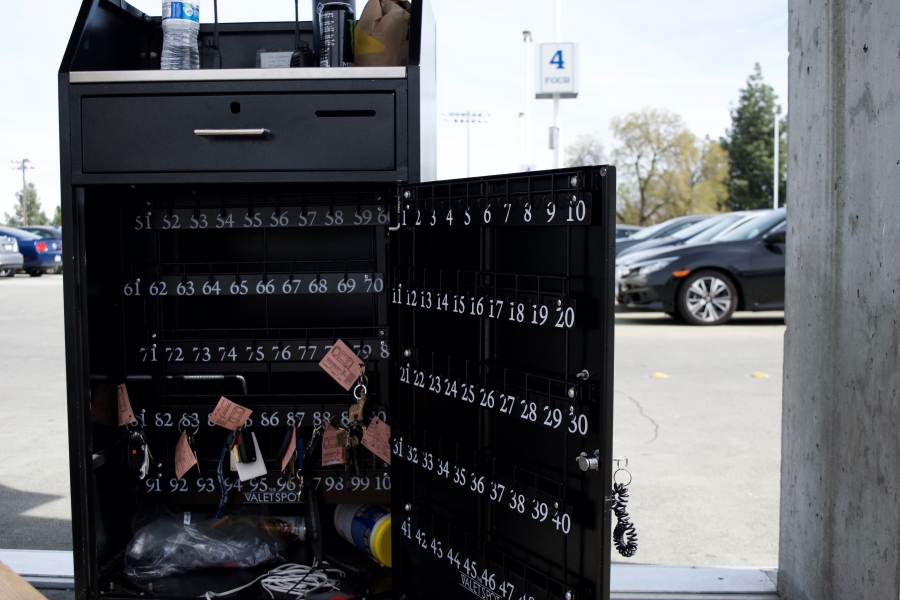
Out of the 304 additional spaces cumulatively created by stacked parking in the three Lots, 236 spaces are currently being utilized by students, with the most underused spaces being in Lot 25 east of the ARC. The outside vendors that provide this service are insured, and they are professionals, meaning that risk for students handing their keys to them should be relatively low.

“It’s an expensive service that we outsource,” Contreras said. “We contract out to an outside vendor […] but right now, if we didn’t have it, there’d be almost three hundred people that wouldnt be able to find a place to park sort of in the immediate area, and we felt it’s important to be able to accommodate their access needs.”

However, counterbalancing the notion of increasing campus parking space is the UC campus-wide initiative stipulated in the UC Policy on sustainable practices. The initiative states that “By 2025, each location shall strive to reduce its percentage of employees and students commuting by SOV [single occupancy vehicles] by 10% relative to its 2015 SOV commute rates.”

With this, and the fact the UC Davis is the most sustainable campus in the world, there is an inherent contradiction to increasing parking space. But nonetheless, there is still immediate student necessity to address. To walk that tightrope, TAPS has been working with Alta Planning and Design, an outside consulting firm that is supposed to help their Transportation and Demand Management program.

“They’re helping us put together a suite of options that expand our existing TDM program that says we need to create an incentive that encourages and rewards people who choose an alternative to driving alone,” Contreras said. “Right now we provide subsidies to people for taking the train. But maybe that isn’t enough […] maybe we ought to reduce the cost of carpools to even lower rates so that more people choose to carpool.”

When TAPS started this program 30 years ago, it decided to base the permit prices on access, meaning those with the greatest access to the parking inventory would be paying the highest prices. In this case, the most expensive would be A permit, and next would be C.

However, this doesn’t take into account the convenience factor. A permit spaces are rarely full, whereas C permit spaces are rarely empty. C permits often have to find spaces farther from their most desired location, and they don’t have the flexibility of leaving campus and returning without running the risk of losing an option to park again.

“Now people are saying we ought to consider a different approach to pricing,” Contreras said. “That’s what we’re working with Alta on. One of the approaches they want us to consider is the convenience factor.”

Currently, TAPS is working on a three-year plan that is meant to address these issues and set into motion the potential changes, such as building new parking facilities and pricing to accommodate generating that revenue. This plan should be ready to share with the campus by the end of this fiscal year.

“I know it’s not just me, because everybody complains about parking all the time,” Bhaskara said. “I feel like that’s something that the campus needs to address before they try to make other changes.”


Written by: Sahiti Vemula — features@theaggie.org

From student members to student leaders

SHEREEN LEE / AGGIE

UC Davis clubs offer opportunities for leadership, community

In order to get involved on campus, students often turn to clubs and organizations to find a sense of community, leadership and professional and personal development. With over 800 clubs on campus, students have ample opportunities to find communities that align with their cultural, professional and personal inclinations.

While joining an organization provides students with community and an outlet to pursue their interests, it also provides them with a platform to potentially gain leadership experience. By joining clubs and staying passionate and committed, students have the potential to go from participating in events and meetings as a general member to contributing more on the leadership staff.

Caroline Cho, a third-year human development major, is currently on the leadership team for Mustard Seed Ministry, a Christian organization on campus. She joined as a freshman and remained an active member of MSM throughout her experience at Davis.

“The reason why I initially became involved with [this organization] was because my dad was in Mustard Seed Ministry when he was an undergrad at UC Davis, so I already had that connection,” Cho said. “Some of my dad’s community is still here so I wanted to contribute to that.”

While Cho wanted to contribute to and be a part of her MSM’s community, she notes that her route in the organization followed a path that she didn’t initially anticipate.

“I didn’t expect to take on a role like this when I was a freshman,” Cho said. “It was weird going from a general member to a leader [in the organization]. I’m used to participating in [events], and now I’m in a more administrative role. It’s interesting to see myself in a position that I didn’t see myself in before.”

Students become passionate about their organizations for a variety of reasons; some students hope to give back, while others find like-minded community that may contribute to their personal interests. Karna Chelluri, a second-year managerial economics major, became involved with his club, the Finance Investment Club, after transferring to UC Davis from a business school.

“I wanted to keep some of the business aspect of the school I went to last year,” Chelluri said. “When I got to Davis, I wanted to look for business clubs and [my friend] told me to apply for FIC.”

The process for rising to leadership varies with each organization; some clubs require an extensive application and interview process, while other leaders are voted in by a general consensus of its organization members. When Chelluri joined FIC, he found that his previous professional and club experience gave him a leg up in joining their leadership team.

“There was an application process, and I applied to be treasurer along with everyone else,” Chelluri said, who was later offered the position of vice president instead. “I was VP at my old school’s investment group so I already had previous experience being on an executive board; I figured it would fit well.”

In contrast, Cho had a slightly different experience than students in other organizations entering into her leadership position in Mustard Seed Ministry.  

“How the coordinators are selected isn’t necessarily because someone is voted up, but who is willing to serve and it just snowballs from there,” Cho said. “I had just not been able to join ROTC and I was seeking a leadership position because ROTC played a huge portion in my life and now it was gone.”

Cho reflected on how an experience in a club changes drastically as a student goes from a new member to a veteran. Older students shape how new members of the organization are welcomed in and experience what the club has to offer. As such, young members eventually take over the leadership roles in the community, and in turn, welcome new members into the organization.

“Lowerclassmen gauge how much they’ll get out of it when they go to new orgs,” Cho said. “But when you’re an upperclassmen that’s been committed to an organization for a while, it’s less about what you’ll get out of it but more what you put into it.”

Entering into a leadership role, students are able to better understand the work that goes into planning small and large scale events. Alisha Nanda, a third-year computer science major, had prior experience with HackDavis before joining the leadership team, attending hackathons and participating in their events throughout previous school years.

“Before joining, I only got glimpses of what goes on behind the scenes and how much work goes into a hackathon, often taking things like wifi and power for granted,” Nanda said. “After joining the leadership team, I’ve come to appreciate all the small details that make our hackathon special and the hard work behind each and every aspect of the event.”

Nanda attributes her interest in joining the leadership team to her past experiences participating in hackathons.

“I was intrigued by the process of organizing a hackathon and curious to see how such an event comes together,” Nanda said, explaining her interest in joining the leadership team. “Especially since I had never experienced event planning before.”

Students on club executive teams tend to be passionate about their community and put in the time and effort necessary to improve their organization.

“There really is no fixed time commitment when you’re a leader for an organization,” Chelluri said. “For me, I’ll do anything I can to make my club better. If that means putting in extra hours, then I’ll do it.”

While finding the right club can positively contribute to a student’s college experience, student leaders emphasize the importance of maintaining community outside of any specific organization they may be a part of.

“[My organization] is an integral part of my life, but it’s important for me that I balance my friend group and have other friends outside my organization,” Cho said. “It’s so easy to get trapped inside your own organization’s bubble and not branch out at all.”


Written by: Alyssa Hada — features@theaggie.org


All Campus Center finishes construction, continues to grow

MORGAN TIEU / AGGIE

Davis Senior High School students reflect on changes

Construction on the All Campus Center at Davis Senior High School began on Oct. 25, 2016. On Feb. 7, 2018, the center was opened to students to serve as a cafeteria and study space in the middle of campus. The new building contains large windows, several lunch options and a career center to serve students.

The school had not had a centralized indoor recreation and eating space since 2010, when the school’s cafeteria closed due to problems with black mold. Though the school offers off-campus lunches, students without means to leave campus are left without a centralized space. Anthony Vasquez, the student activities director at Davis High, remarked that it was not a good image.

“On rainy days during the winter months, we don’t have any inside structure, and

students would eat upstairs in the L wing on the ground,” Vasquez said. “Special-needs students would huddle under tin roofs. The school district wanted to fix the problem quickly.”

After student and press campaigns, the $8 million project was underway.

“It’s an awesome, beautiful space,” Vasquez said. “I think there’s still more to be done to utilize it. It does provide a place that’s cool and attractive to hang out, no matter what socioeconomic status you have.”

The Career Center is another integral space in the new building. Julie Clayton runs programs focused on job searching, scholarships, travel abroad and college applications. She receives around 25 to 35 students a day as well as dozens of college representatives each year. Tabling for gap years, summer projects and activities is conducted weekly to encourage participation throughout summer months. The office also hosts a monthly series on student financial planning.

“The idea is for students to come in and get help with life after high school,” Clayton said.

The space also functions as a study area for students, with computers available for day use. Clayton explained that her office saw more visitors after being moved to a more accessible location.

“It’s a welcoming, open, friendly place,” Clayton said. “It’s got food, tables and chairs that make it feel like a college.”

Davis High senior Autumn Johansson appreciates the free area, even though she still spends most of her lunches downtown.

“In the times I have been in the All Students Center for lunch, it seems like a good mix of people,” Johansson said. “It seems like everyone can be here for a safe space to do work. They made a strong effort for that.”

Andre Clarke, another Davis High senior, likes the space but explained that he hopes more steps will be taken. Clarke said that the designated lunch space bred its own inclusivity problems and would benefit from seminars or assemblies to help students learn compassion.

“They built this really nice center for all students to hang out,” Clarke said. “I think it should be made more inclusive and space for more tables. I’ve seen some kids sitting on the ground or some kids at tables telling others ‘You can’t sit here.’”

Vasquez also explained that his student government class has high hopes for improving the space and plans to implement their goals in the upcoming years.

“It should have more interactive space for students to communicate and advertisement for their clubs,” Vasquez said. “We have TVs and space to put up accolades and trophies. We definitely have plans for it.”


Written by: Genevieve Murphy-Skilling — city@theaggie.org


City Planning Commission meets to discuss cannabis dispensaries

MORGAN TIEU / AGGIE

Four cannabis dispensaries set to open later this year

On Feb. 28, the City Planning Commission met to discuss the cannabis dispensary permit applications, continuing the Conditional Use Permit process, which will end with up to four cannabis dispensaries opening in downtown Davis later this year. The applications were all submitted before Oct. 13 last year and have been under review since then. During the meeting, as part of the application process, the commission heard presentations from each of the 12 applicants and received public testimony from residents and local business owners regarding the prospective dispensaries.

“Overall, I’m very pleased with the process and the applicant pool,” said Darryl Rutherford, a member of the City Planning Commission, via email. “I believe that City leaders, staff, and commissioners have learned a lot about this industry as well as a very complicated law that guides the structure of our City’s ordinance. There are a lot of questions that come to my mind: If we allow them downtown, how will they impact the limited parking we already have? Will businesses that are an all-cash business and have so much of and variety of cannabis products have a negative impact on the health and safety of our community?”

Both Manna Roots and Good People Farms dispensaries had workers or applicants who said that introducing the vendors to the downtown economy would bring more customers from around the city to the downtown marketplace. The CUP applicants argued that opening the dispensaries would lead to higher foot traffic patterns throughout downtown. The applicants also pointed out that residents in Davis already use delivery services to bring cannabis into the city, yet the city receives no tax revenue from these purchases. If the city were to allow the four dispensaries to open up in town, they would be able to tax and profit off of them. Many of the applicants and owners are from Davis, and all 12 claim to be looking to integrate into and benefit the downtown market and Davis as a whole.

“Our project supports the City’s stated goals in their Downtown Plan to ‘create a diverse and economically-resilient downtown and encourage local entrepreneurship,’” said Mary Kay Hoal, an applicant for the Good People Farms Dispensary. “We appreciate the City’s thoughtful approach […] In addition to helping to revitalize downtown, we will provide a larger economic impact on Davis residents, businesses and well-deserving Davis organizations. The Good People Farms is committed to investing in its hometown.”

But there are still other members of the community who are averse to dispensaries opening up downtown. During the public testimony, business owners and residents alike expressed concern about the increased traffic the dispensaries might bring in. Many had other qualms with the cannabis industry spreading into Davis, some mentioning the odor that might result from users smoking downtown or the potentially impacted parking space. A few residents have even mentioned concerns regarding “unsavory clientele” — as said by Mark Blake, the owner of Blake’s Heating and Air, in an article for The Davis Enterprise — that the dispensaries might attract.

“We’re all quiet, low-volume neighbors,” said Stacia Rusakowicz, the owner of Pomegranate Salon, which is located next to a cannabis distributor. “But we’re looking at these businesses having about 200 people a day visit them. This is a pilot program — given the issues that plague downtown Davis already, every potential impact of retail cannabis sales needs to be carefully considered.”

The applications for each of the conditional use permit dispensaries are posted on the City of Davis website, which allows residents to look up who will be owning each dispensary and where each vendor can potentially open them. The Planning Commission will continue to provide comments to the applicants before they submit their recommendations to the council. The City Council will then decide which four of the 13 applicants who have applied — one of the 12 businesses has two proposed locations — will be permitted to open their doors downtown on June 12, 2018. Customers over the age of 21 will then be able to purchase from these stores and consume marijuana in their own homes and locally allowed spaces.


Written by: Ahash Francis — city@theaggie.org