57.9 F
Davis

Davis, California

Monday, December 22, 2025
Home Blog Page 597

Mental health: Catching the warning signs before the symptoms become severe

BRIANA NGO / AGGIE FILE

Intense stress renders college students especially vulnerable to mental illness

As a college student, I can say that this period in our lives often provides us with the most stress. Between classes, extracurricular activities, jobs and internships, the workload is intense — especially at the start of the transition. The stress continues even after adjusting to the quarter system. With that said, it’s important to pay attention to stress levels because they contribute to both physical and mental well-being. College is a time when taking care of yourself is key to making it through successfully. According to the U.S. Department of Health and Human Services, 75 percent of mental health conditions occur before the age of 24. This is within the age range of college students, providing another reason to check up on ourselves routinely, as well as our friends, to see how they’re doing.

Of course, a long list appears when a person researches warning signs — but not everyone experiences the same symptoms. The symptoms that come up for mental illnesses are not by any means exaggerated or made up by people who have experienced such an illness. Having little to no energy is a common sign that can usually be felt at the start. This is different from simply being tired, which is what many people will say at first due to their uncertainty. Other early warning signs include unexplained physical aches and a change in sleeping or eating habits. These can also be observed when checking up on a friend — they’re usually demonstrated in the form of high irritability.

When experiencing a symptom, it’s also important to watch how long it lasts. Paying close attention to the body is the first thing to remember when trying to decipher what one’s feelings mean.

If you find yourself experiencing these feelings, what matters most is accepting them. Ignore what other people may think because of stigma. Acknowledge the feelings, study them and talk with someone. Accept the feelings for what they are and track them.

One way to cope with warning signs day by day is to keep a journal. It doesn’t have to be incredibly detailed; you can simply write down how you feel that day and review those comments as time goes on. Keep track of your mood and behavior and take notice of any recurring patterns. Others might make jokes about being self-absorbed, but the attention you give yourself can save your life. So much happens in college that we can start to drown in a continuous list of responsibilities. It’s important to remind ourselves to take a step back and realize the details of what’s happening.

It can be confusing to experience some of the common warning signs of mental illness. If possible, find a friend who has gone through a similar experience and who is willing to openly share what they went through. Friends who have experience with mental illness can be a great resource to confide in and ask questions. They may not have all the answers, since each experience is different, but they can help you cope or try to figure out if the possible warning signs are worth worrying about.

In some cases, these feelings can escalate to thoughts of self-harm or suicide. This is where the topic gets sensitive, but we need to get over that. These thoughts are real and affect many more people than are willing to share it with the world. Do not treat these heavy thoughts as though someone is faking or using them as an excuse. These feelings are real, the people are real and there are many resources waiting to be used by those with mental illnesses. If you or someone you know has thoughts of self-harm, it’s no longer something you can control on your own.

It’s vital to seek help way before mental health escalates to this point. Although it can be uncomfortable to talk to a therapist, they can provide further professional guidance when needed. Ignore the shame and embarrassment that is often associated with therapy. If it means getting the opportunity to live another day, take it.


Written by: Jolena Pacheco — mspacheco@ucdavis.edu

Disclaimer: The views and opinions expressed by individual columnists belong to the columnists alone and do not necessarily indicate the views and opinions held by The California Aggie.
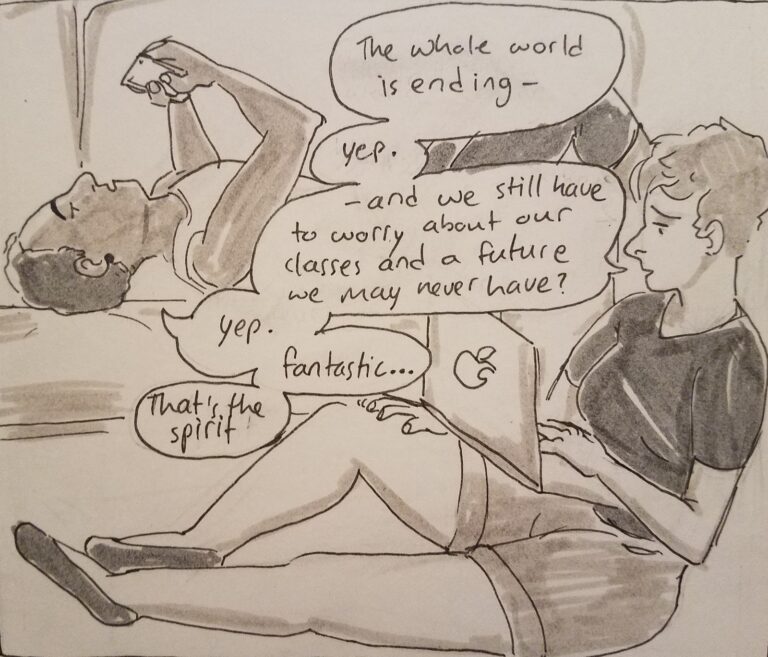
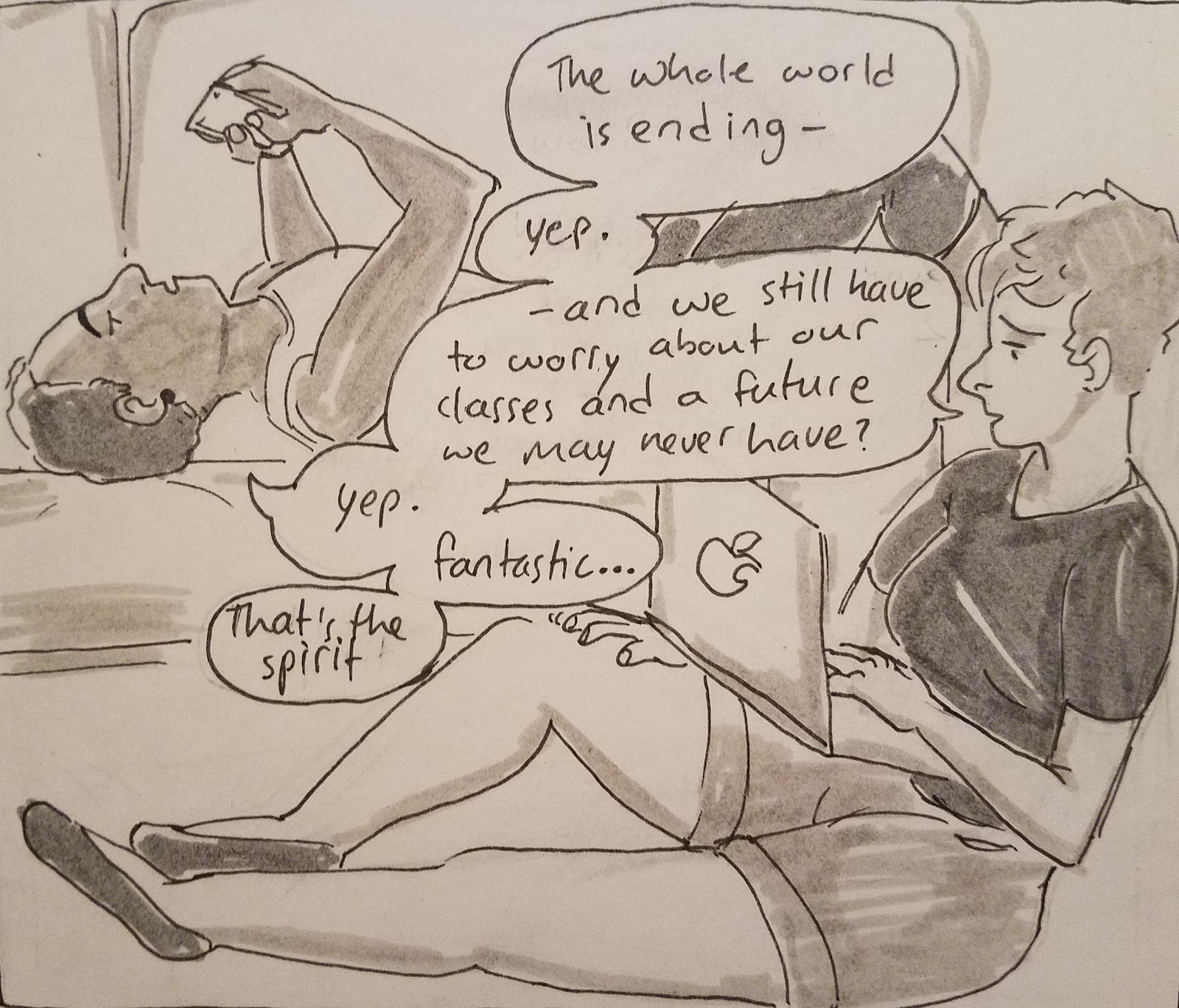
Cartoon: Always looking on the bright side

ELLIOT WHITE / AGGIE


Disclaimer: The views and opinions expressed by individual cartoonists belong to the cartoonists alone and do not necessarily indicate the views and opinions held by The California Aggie.


Humor: Escaped lab rats found in DC food, students find it tastes better

JANS CANON [(CC BY 2.0)] / FLICKR (left), VENOOS MOSHAYEDI / AGGIE FILE (right)
Rat meat brings flavor, possibility of plague to Tercero

After a catastrophic two inches of rain — more than the Davis area has seen in months which have felt like years — the H. West Laboratory for Experimental Procedures suffered a power shortage, leading to the escape of hundreds of lab rats. The rats were presumed to be dead or irrecoverable, but were later found when young sleuth Johnny Newman noticed that the Tercero Dining Commons food tasted better than usual.

“It really wasn’t that impressive of a discovery,” Newman said last Thursday. “I had just taken a bite not drowned in sauce and found that it was actually… flavorful. At first I was a bit shocked, really, that the food was appealing, that I wanted more. But that all went out the window when I pulled a six-inch rat tail out of my wok.”

The DC initially planned to sue the H. West Laboratory for their negligence in handling the rats, but have since changed their minds after receiving slightly positive Yelp reviews from students and their visiting parents. The H. West Laboratory, after weeks of intense mediation, has settled for a plea deal in which they supply the DC with rat meat at a discounted price.

“Occasionally a rat or two fell into a pot on accident, but I never thought it’d become our main selling point,” said Herald, a chef at the DC. “Students who’d normally use all their swipes at Trudy’s are now flocking here in hopes of getting vermin on their plate.”

“My parents made fun of me for gaining the freshman fifteen, but I’m just addicted to rat,” an anonymous student said. “I can’t help it.”

The DC’s’ main concern now is that the rats will spread hantavirus or the plague throughout Tercero.

“SHIP doesn’t cover plague,” a health services member said. “So if you don’t have an outside insurance company backing you up, you’re essentially screwed.”

This story will be updated as it develops.


Written by: Drew Hanson — andhanson@ucdavis.edu

(This article is humor and/or satire, and its content is purely fictional. The story and the names of “sources” are fictionalized.)

Humor: Davis announces iClicker X with facial recognition, students must now take own iClickers to class

BRIAN LANDRY / AGGIE

A sad day for students everywhere

On the ten year anniversary of iClicker, CEO Bob Trabajo announced the iClicker X with glass backing and facial recognition.

“We’ve truly done it this time” Trabajo said. “We’ve made it so that students will no longer be able to take their friends’ iClickers to class, while also creating a glass backing that’ll bring in millions to the company when students drop them in class.”

This groundbreaking technological advancement has made shareholders, teachers and UC Davis bookstores ecstatic over the high prices and “sleek design.” While students might be hesitant to upgrade their iClickers, UC Davis professors have agreed to put “iClicker X required” in their syllabuses to avoid any contradicting information.

Students have expressed concern over the accuracy of the facial recognition features.

“I look a lot different in week one of Fall Quarter than I do in week eight of Winter Quarter, when my hopes and dreams have been lost and I’m living off CoHo pizza,” said Sarah Smith, a third-year biology major. “So I just worry that this isn’t a product for the students. I can’t afford to be marked absent just because my eye bags look a little bigger one day.”  

While Trabajo assures the safety and high quality of the iClicker, a few aspects of the new product might have to be tweaked.

“I know a couple of identical twins here who’ld take advantage of this feature,” said fifth-year Allen Stanley. “And I just don’t think that’s fair to the rest of the hardworking student body.”

The future of facial recognition is just beginning. UC Davis has plans to implement it in any way they can, such as making textbooks facially activated so that students must buy new ones each year instead of borrowing them from their friends. There are many skeptics of iClicker’s chosen path, and only time and student outrage will tell if this was the right move for the trillion-dollar company.


Written by: Rosie Schwarz — rschwarz@ucdavis.edu

(This article is humor and/or satire, and its content is purely fictional. The story and the names of “sources” are fictionalized.)

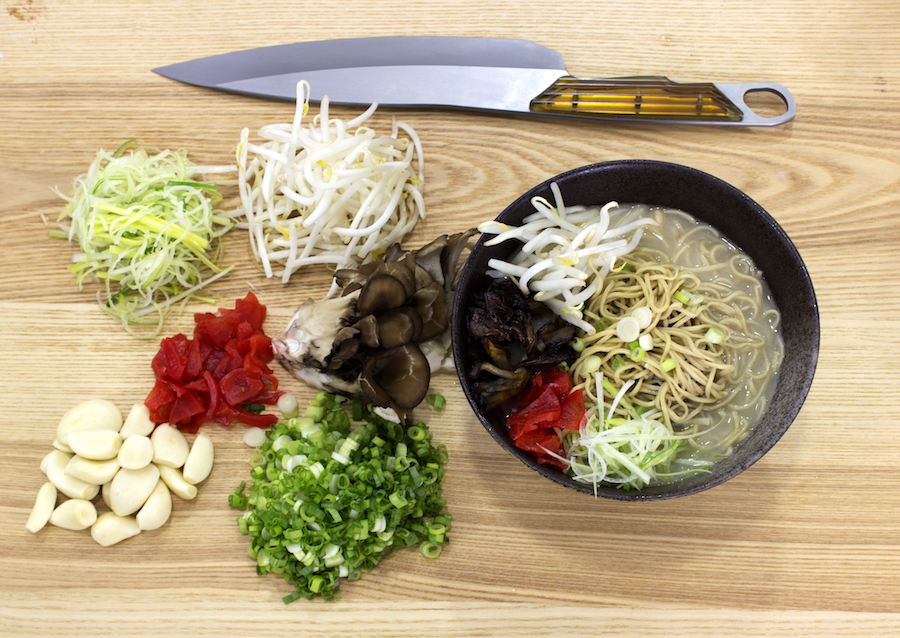
Every college student’s dream: healthy instant ramen

PAUL KREIZENBECK / COURTESY

UC Davis alumni create Smart Ramen, a nutritional instant noodle meal

Instant ramen is a staple of almost every college student’s pantry due to its low cost and quick preparation. However, these sodium-filled noodle cups are not nutritionally balanced, which was a huge concern for 25-year-old twins Tim and Tom Zheng, the creators of Smart Ramen and co-founders of Vite Kitchens. Tim, who worked in a Michelin-starred restaurant and other fine dining establishments, received his degree in economics, while Tom, a car detailer and an experienced graphic designer, received his degree in nutrition.

The product was conceived while the Zheng brothers were still attending college about two years ago. Both of them loved eating instant noodles, but never found a product that suited their tastes, especially from a health-conscious mindset.

“Instant noodles have a lot of calories, but they don’t have a lot of nutrition,” Tim said. “They’re deep-fried and made with the cheapest kind of wheat you can get, so it’s low fiber, protein, everything. It’s just empty calories in every way. I kept complaining about needing to put eggs and vegetables and whatnot in, and drinking a lot of protein powder every time I wanted to eat noodles. Then I was like, ‘I’ve looked all over. I can’t find any kind of noodle that has protein and the other stuff in it’.”

This predicament led to the idea of a healthy instant noodle product that would eventually become Smart Ramen.

However, not everything went according to plan. Smart Ramen wasn’t the first project either brother set his sights on.

“Tim went to culinary school, and I tried to join the army,” Tom said. “Then I tried to do graphic design, then I realized that I don’t like graphic design. I got rejected from the army for back problems, then I went to community college […] It just so happened to line up that we both graduated at the same time and are living in the same house.”

The original iteration of the Smart Ramen noodles was created when the twins travelled to the East Coast to visit family. Tim figured it out on the plane, and the two fine-tuned it in their hotel room. From there, the brothers continued to improve the product, using the same blend of flours from the first “rough draft,” and changing the recipe as they saw fit.

With the slogan “nutritious, delicious, and fast,” Smart Ramen is a nutrition-packed meal with 25 grams of complete protein and 25 percent of the daily value of vitamins and minerals. Additionally, Smart Ramen is prepared without MSG, preservatives or deep frying, which are common traits of most store-bought ramen.

“There’s the idea that, if it tastes healthy, then it can’t taste good,” Tim said. “You get a lot of health products, you chew into it, and you’re like, ‘This tastes healthy,’ and that’s never a compliment. We don’t want our noodles to taste ‘healthy’ — we want them to taste like delicious everyday noodles that you crave all the time.”

Instant ramen has been a hot commodity around the world due to its flexibility, fast cooking time, and filling quantity of food. Smart Ramen will feature chicken, beef and vegan versions, all created with the same healthy-eating mindset.

“As far as the research and science that goes into our noodles, our noodles are built to have a good macronutrient blend,” Tim said. “It has a balance of carbohydrates and good fats and protein. Our current target price is somewhere in the $2 range. We wish it could be cheaper, but we do not have the economy of scale that allows us to produce at $0.25 like giant factories do.”

Joan S. Frank, a UC Davis nutrition lecturer and academic coordinator who gave advice to the brothers, noted the importance of ramen for college students.

“College students worldwide live on ramen,” Frank said. “I think Smart Ramen is an excellent alternative to what’s currently available. It is nutrient dense in the sense that it’s not just carbs and calories. It actually can be a complete meal, which the other products out there are not.”

Tim and Tom also work with a dynamic range of U.S.-based companies that provide ingredients like flour, vitamin, packaging and soup base. Though the consumer merely has to prepare it like any other instant ramen — they prep the ingredients by themselves. A large pasta machine does some mixing, sheeting and cutting, but the brothers still have to measure, mold and package everything by hand. To reduce the cooking time to a typical 3 to 4 minute range, they take the noodles and put them in a steamer that partially cooks it. They’ve also incorporated microencapsulation technology into their vitamin packet so the vitamins won’t suffer from heat degradation. Small aspects of each step are important in ensuring that Smart Ramen is the full package that the Zheng brothers envisioned.

“It’s going to be a round packet,” Tim said. “It’ll weigh about 110 to 115 grams, and will have 3 packets in it: the soup packet, which is going to be a paste, the Noodtrient™ packet, which is going to be spices and nutrients, and the dehydrated vegetable packet.”

The Zheng twins’ business mentality is to keep a living wage for the people who work with them, be transparent about their business practices and always have the consumer’s interests at heart. Though they’ve done a lot of work up to this point, Tom states that there is always more research to be done and improvements to be made, something his professor echoed.

“They’re still working on it, which attests to the fact that they want it right,” Frank said. “It just shows you that just about any product can be made healthier when you think about what goes into it. Not just talking about the bottom line with what’s the least expensive ingredient, but what is the best ingredient that will make it healthy and nutritious, yet be something that people like and have fond memories of. They’re thinking about the end user, the flavors they want, what they are looking for.”

Once the product is released, the brothers plan on adding an “Aggie Discount” for current students, faculty and alumni who are interested in purchasing their product. Though they are running a for-profit company, Tim and Tom have extended an offer to anyone who is struggling with food and money: since their product testing results in spare noodles, they’re happy to give away whatever they can.

“It’s almost hard to validate that we’re doing something correctly,” Tom said. “Nobody’s written a manual.”

As part of their transparency promise, the twins are also open to showing their workspace, sharing the recipe and contents of the Smart Ramen product as well as answering any other questions or concerns that possible consumers may have.

“We want to go to the Kickstarter route because we want to be able to be transparent,” Tom said. “We want to avoid the kind of bureaucracy that might come with working with any larger companies. A big reason that we’re making these noodles is because we want them ourselves. We want Smart Ramen to be something that we would enjoy eating.”

Some of their future plans include a “crash course culinary school” series of videos, where Tim will teach proper cooking techniques in short clips, as well as plans to support Aggie Gaming and other UC Davis affiliated communities with free noodles and graphic design services.

“We want people to to understand that we’re not a business looking to make money,” Tim said. “We’re just two twins who really like noodles and being healthy.”

The two monetary aspects that they’re interested in? To have a living wage, and to order all the side dishes, appetizers and desserts at restaurants they visit.

Their Kickstarter will launch this February and other updates will be posted on Smart Ramen’s Facebook page. Additional information can be found at smartramen.com or by directly contacting Tim and Tom Zheng at Tim@ViteKitchens.com and Tom@ViteKitchens.com.


Written by: Jack Carrillo Concordia — science@theaggie.org


Note: Smart Ramen is a working name.

Writer’s Pick: My Current Favorite Books

CAITLYN SAMPLEY / AGGIE

“The more that you read, the more things you will know. The more that you learn, the more places you’ll go.”

One of the biggest woes of my college career is the limited amount of time I am physically able to allocate to pleasure reading. I think most of us — with our busy schedules — can relate. If my summer, which I primarily spent reading, has taught me anything, it’s that the benefit of reading outweighs its extra effort. The lessons learned, the emotions felt while indulging in quality literature — these are all worth the nights staying up late. In no particular order, here are some of my current favorite books.


East of Eden by John Steinbeck

My teacher in high school refused to teach her students Jane Eyre because she felt that students at that age were too young to realize its greatness. I consider East of Eden to hold such similar status. Moreover, even if you were required to read this book in high school, you should read it again. This book is especially relevant during our college years as we further discover the defining characteristics of ourselves, understand what conditions mold those personas, and make for more critical self awareness. The work studies such an idea by examining the dynamic of the Trask family through multiple generations of brotherly bonds. The question of who has control in defining that personal mold is exemplified through the Hebrew phrase “Timshel” — implying a choice in who we are and the actions we take. Displaying the intersection of familial bonds and individual autonomy, East of Eden provides food for thought in analyzing one’s place in the world.


Between the World and Me by Ta-Nehisi Coates

While I read this text as a required reading for a class during Spring Quarter, I reread it this summer and gave copies to my entire family. In my opinion, it is a defining book of our generation. At a time when race relations in America are in a paradox of progression and simultaneous racial conflict, it is important that common people attempt to understand the issue in its totality. Written as a letter to Coates’ son, Between the World and Me illustrates modern-day race relations in a personal way: a father sharing his experiences of racism and explaining the harsh realities of what his son’s existence will likely entail. An idea as complicated as racism in America often needs a personal appeal, a way for others to attempt to understand the injustice. And while there are some of us who will never truly understand or face the same oppression as a large population of Americans, being an advocate and an ally can still be a step in the right direction. It can even start with this book.

A Little Life by Hanya Yanagihara

I must admit, I have not yet finished this book. In my defense, it is over 800 pages, and the text is dense. Similar to the writing style of Hemingway, each masterfully crafted sentence is carefully thought out, packed with intense emotions, and encompassed in beautiful, simple sentences. Indeed, the sentiments illustrated in this novel are zealous. Following the lives of four college-graduated best friends, the narrative reveals each character’s background and emotional turmoil. Readers watch the friends deal with trauma and with each other, demonstrating the significance of genuine friendship. Analyzing the complexity and love found in modern day friendships, A Little Life has set a standard for commenting on the families we make for ourselves.


The Illustrated Man by Ray Bradbury

Lessons from history tend to be interesting reference points for conflicts of the present, and The Illustrated Man is no exception. Written in 1951, the book provides commentary on the provocative uses of technology, with an uncanny resemblance to the fears of technology’s widespread embedment today. The book further tackles the sectors of technology in contemporary society as it is a collection of short stories; different fictional narratives provide various perspectives for the reader to ponder. Feelings of isolation, dystopia, and societal confusion will feel all too familiar, providing a forum for reflecting on our own use of technology.

Written By: Caroline Rutten — arts@theaggie.org

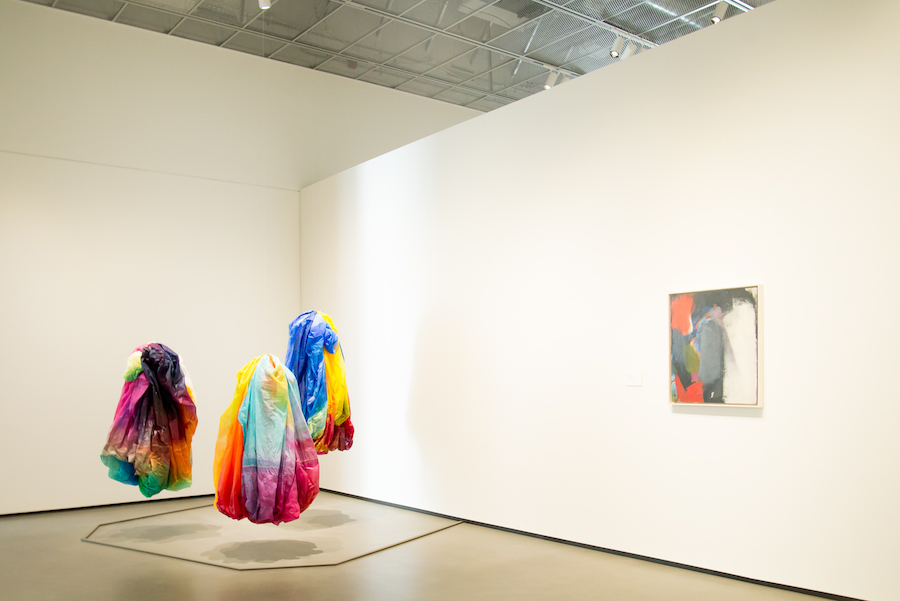
Manetti Shrem Museum Fall exhibit

ANH-TRAM BUI / AGGIE

Iconic pieces make their way back to Davis

Time to rejoice — the Manetti Shrem Museum has just reopened with two new exhibitions: Dimensions of Black and John Cage. The new work features contemporary art by African-American artists, including an interactive sound installation comprising 10 record players and a large selection of records to choose from. Highlighting the university’s long legacy of innovative art, the exhibits feature pieces that are rarely on display and are created by artists connected to the UC Davis community.

The Dimensions of Black exhibit could be found at the Museum of Contemporary Art in San Diego earlier this year. The exhibit features more than 30 prominent African-American artists from the past three decades, including Carrie Mae Weems and Dread Scott, with art rarely exhibited but now on special display at UC Davis’ Manetti Shrem.

The John Cage exhibit, for example, was first featured at UC Davis 50 years ago during its premiere, and has since made its return. The exhibit invites visitors to co-create a unique auditory experience.

A result of this interactive exhibit is a closer connection and understanding of the art itself. There is always music playing in the exhibit, and it’s constantly changing based on visitors’ swapping records.

The exhibit is reminiscent of Cage’s work during his original “33 ⅓,” in which visitors could explore an empty auditorium stocked with about 300 random vinyls, encouraged to play the records at random to make a cacophonous sound. Recreating this iconic work is incredibly special, as it pays tribute to such an iconic figure from UC Davis history.

Since the Manetti Shrem offers free entry to students and is right on campus, there should be no excuse to not check out these new exhibitions of worldly artists. The Manetti Shrem Museum always presents thought-provoking pieces that leave its audience in awe — Dimensions of Black and John Cage are no exception.

Written by: CaraJoy Kleinrock — arts@theaggie.org

Police Logs

NICKI PADAR / AGGIE

Another interesting week in Davis

Sept. 24

“Multiple subjects heard laughing at front door and banging on front door.”


Sept. 25

“Noise coming from the east of the residence at the frat.”

“Subjects playing loud music.”


Sept. 26

“Loud party.”

“Loud bass making reporting party’s residence shake.”


Sept. 27


“Open garage door.”

“Vehicle completely blocking driveway –– required towing.”


“Reporting party overheard male who was was asked to leave property by security planning to return to location at 1700 hours to ‘resume his operations […]’”


Local businesses donate to natural disaster relief funds

JERO REAL / AGGIE

Extending a helping hand

The past month has been filled with tragic news regarding natural disasters, from Hurricane Harvey, which devastated the southeastern Texas community in August, to the 7.1 magnitude earthquake that struck Mexico on Sept. 19. Even for the most sympathetic people, finding the best mode to support those directly impacted by the natural disasters can be daunting.

Local businesses have recently assumed a role for Davis residents who wish to aid in natural disaster relief. Community businesses like the Davis Food Co-op and Sudwerk Brewing Co. channeled their efforts this month towards raising money for post-disaster aid.

According to the Davis Enterprise, the Davis Food Co-op donated over $3,000 to the Feeding Texas food banks following Hurricane Harvey. The Co-op raised funds by collecting donations from customers, a process the business continued at its registers until Sept. 30.

Lis Harvey, manager of the Davis Food Co-op, was pleasantly surprised by the number of donations the Co-op received.

In a month full of upheaval, our community’s generous and immediate response has been a bright spot,” Harvey said.

While the Co-op’s donation exhibits the philanthropic nature of the Davis community, the donation is an infinitesimal portion of the fundraising necessary to account for the damages caused by this year’s hurricane season. Accuweather, an online weather database, estimates that the cost of repairing damaged communities in southeastern Texas, southern Florida and other affected areas is an unprecedented $290 billion. As a potential humanitarian crisis begins to unfold in Puerto Rico and other parts of the Caribbean following the destruction from Hurricane Maria, the U.S. government is struggling to supply aid to those affected by the storms.

Kathleen Brandl, the Dock Store manager for Sudwerk Brewing Co., reflected on her fellow employees’ desire to assist communities impacted by Hurricane Harvey and other natural disasters.

“Sudwerk really prides itself in having fundraiser events,” Brandl said. “Normally, they are locally focused, but because of the recent disaster down in Texas, we felt that it was totally appropriate to branch out.”

The Dock Store taproom hosted an event on Tuesday, Sept. 5. Fundraising was generated through draft sales during the four-hour event. Brandl stated that the event “exceeded expectations,” with over 100 people in attendance and more than $340 raised. The money was donated to the hurricane-impacted recipients of the RAICES foundation, a Texas nonprofit for underserved immigrant and refugee families.

Several local businesses are leading the fundraising campaign for natural disaster relief and making way for other organizations to follow in a similarly charitable spirit. For more information about how to aid those affected by the most recent natural disasters in the southern United States, Mexico and the Caribbean, see the information below:


United States — American Red Cross

Mexico — Global Giving

Puerto Rico — United for Puerto Rico

Written by: Eliana Sisneros — city@theaggie.org

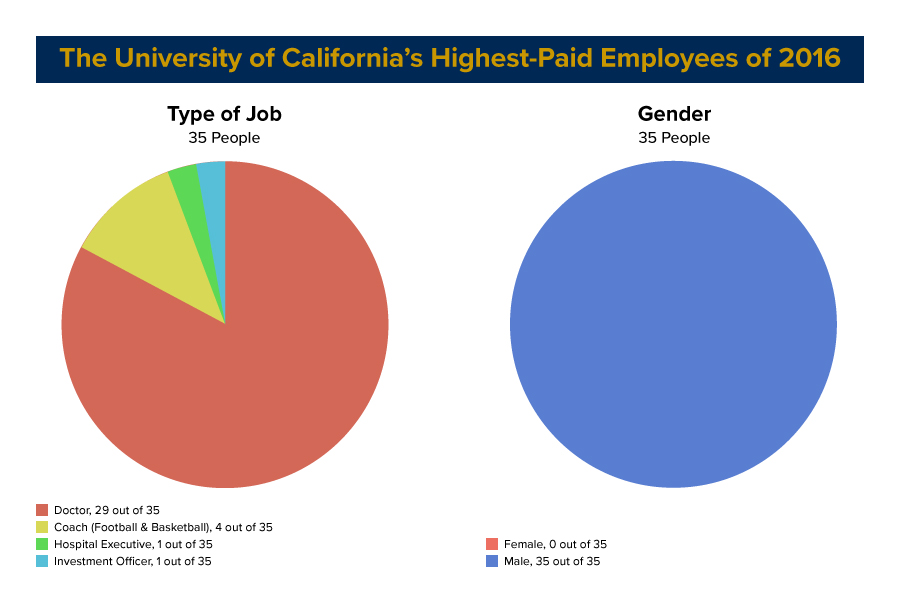
35 UC employees with highest gross pay in 2016 were men

JAMIE CHEN / AGGIE

Highest earners mostly doctors, coaches

The Sacramento Bee reported in August that all 35 of the UC employees with the highest gross pay in 2016 were men. The Bee reviewed salary data from the system and reported that of the list of 35 men, 29 serve as doctors at UC hospitals and four serve or formerly served as coaches for men’s sports teams.

UC employees are given base pay which is directly controlled by UC administrators, although pay from other sources is counted toward their gross pay. The Bee disclosed that the state-reported salaries of the 35 men ranged from $1.1 million to $3.6 million.

One of the highest earners is employed by the UC Office of the President. Jagdeep Bachher, UCOP’s Chief Investment Officer, earned a gross pay of $1.3 million in 2016.

In response to the news, Ricardo Vazquez, UCOP’s director of media relations, said that much of the reported salary for the medical and sports professionals did not come from UC sources.

“In terms of salaries, it’s important to point out that the salaries for the physicians and sports coaches come almost entirely from non-state fund sources,” Vazquez said via email. “In the case of coaches, they are paid from Athletic Departments revenues that come from ticket sales, TV rights [and] licensing, among other sources. Similarly, UC’s top-earning doctors are world-renowned health sciences faculty whose compensation comes almost entirely from clinical fees and/or research grants.”

UC compensation data suggests that the 35 on the list are consistent with the demographic of past high earners.

“As in previous years, the top 10 earning employees at UC in 2016 (based on total pay) were health sciences faculty members, typically world-renowned specialists in their fields, and athletic coaches,” the summary of the data states.

UC data also shows that 70 percent of the top-earning employees with the highest base pay in 2016 were men. Although UC President Janet Napolitano is a woman, of the twenty-two people who earned a higher base pay than Napolitano in 2016, only four were women.

Vazquez pointed out that in relation to the California state employees, the UC system has a smaller gender pay gap and has made more progress in closing said gap. The Los Angeles Times reported earlier in the year that the California Department of Human Resources found 2014 data which stated that “there is a 20.5% disparity in pay” between women and men employed by the state which they report to be “a wider gap than in the federal civil service and the private sector in California and nationwide.”

Vazquez added that in comparison to California’s overall gender pay gap of 15.9 percent and the federal workforce gender pay gap of 11.9 percent, the UC’s gender pay gap was 5.4 percent in 2014.

The Times article also projected that California would not successfully close the gender pay gap between state employees until 2044. Vazquez said that the UC system has made more progress than the civil service system and would eliminate its gap before then.

“Over the past 25 years, the California Civil Service reduced its gender pay gap by 5.3 percentage points, representing about one-fifth of the total gap between men and women,” Vazquez said. “Over that same period, UC reduced its gender pay gap by 8.3 percentage points, representing three-fifths of the total gap between men and women. In other words, if the 25-year trend continues, UC will eliminate its gap long before the California Civil Service.”


Written by: Jayashri Padmanabhan — campus@theaggie.org

Humor: Student finally figures out “Gary May” is name of chancellor and not an unfinished sentence

IAN JONES / AGGIE FILE

What may Gary do next?

First-year student Grace Hackie could be heard yelling the question “Gary may WHAT?” last Thursday into her acai bowl, which she received in exchange for one punch in the face. Hackie’s scream rang across the CoHo, and it was clear that UC Davis’ new chancellor was the origin of her distress.

Gary May didn’t necessarily “do” anything — but at the same time, he “did” everything.

When Gary May was first announced as UC Davis’ new chancellor, many students were unsure of what exactly Chancellor Gary “may” do.

Lost in a fit of fear and confusion, students chose to take out their frustrations in different ways.

Some were found on the Quad muttering to themselves in a nonsensical daze, “What are Gary’s plans?” as they sunk into the fetal position.

Others chose to create a conspiracy theory board on Pinterest, mapping out the potential actions Gary “may” take, while pinning cute apartment decor DIYs along the way.

A few heroes, though, took to the streets to protest — the only viable option for people who have no idea what’s going on.

“I think it’s really rude to leave us hanging like that,” said Karyn Defoilers, a fourth-year student with an attitude problem. “The people have a right to know.”

It wasn’t until yesterday that students began to realize Gary May was the name of the chancellor and not just a fragment of a sentence meant to torture the masses.

“It all started to make sense when I started reading The California Aggie and stopped reading the humor articles,” Grace Hackie said. “I’m really glad I’m past that phase of my life.”

Gary May did not respond to a request for comment.


Written by: Lara Loptman — lrloptman@ucdavis.edu

(This article is humor and/or satire, and its content is purely fictional. The story and the names of “sources” are fictionalized.)

Humor: For sale: textbook, used, like, once

BRIAN LANDRY / AGGIE

A brief story of tragedy

The cold light of the waiting room was piercing. I fumbled with my keys in my pocket. It had been hours. There was a line at the door. I was awaiting news. It only took something simple like this to get worked up.

I had about $100 left to my name. I’d spent the rest of my money just to get to this point, to stand here waiting in line. Now I didn’t know what the outcome would be when I got what I wanted. The blue lights became harsher the longer I stood in line.

Being a very masculine man is difficult. I’m a very, very tough guy who remains emotionally unavailable to the women in my life. The way I treat women is reflected in my favorite books, in which tough guys don’t give anything to the women who give them everything. Have you read “A Farewell To Arms?” I don’t give a shit.

Finally, I find myself at the front of the line. I hand the last money to my name to the cashier. He takes it, unaffected by my visibly exhausted and sweaty face. I take my receipt and my book. I cradle it in my arms as I exit the building.

Before I’m out the door, I read the cover of the book. It reads: “Metaphysics, Version One.” The impassive blue book becomes white hot, as it suddenly occurs to me that I needed version two. I check my person for my receipt. It is missing. I walk to a garbage bin. I set the blue book inside and zip up my jacket. I pause for only a minute, and walk into the cold, rainy night. Before long, my figure has blended into the crowd.


Written by: Aaron Levins — adlevins@ucdavis.edu

(This article is humor and/or satire, and its content is purely fictional. The story and the names of “sources” are fictionalized.)

Guest: The (Un)Associated Students of the University of California, Davis

JERO REAL / AGGIE

ASUCD must address its numerous flaws and damaged reputation

As a three-year ASUCD member and former Internal Affairs Commission Chairperson, I garnered a comprehensive understanding of ASUCD’s numerous conundrums. Though my review here is reductive, I hope to offer students an insider’s glimpse into the association tasked with representing them and recommend realistic solutions to redress ASUCD’s shortcomings and damaged reputation.

ASUCD appointed officials far outnumber their elected colleagues, and nearly all appointed positions require Senate confirmation. Yet Senators increasingly assume office ignorant of their prescribed (and admittedly administrative and bureaucratic) duties, which has led to haphazard, rushed Senate procedure — especially confirmation hearings. Prepared and experienced appointed leaders are paramount to ASUCD’s operational integrity; still, I’ve seen confirmations for Unit Directors last less than a minute. I’ve seen Court Justices confirmed who couldn’t name a single chapter of the Bylaws. Detailed, policy-grounded questions are avoided for the sake of brevity. The result is elections chairs who continually miss deadlines and fail to adequately staff their committees. The result is high turnover in Secretaries of the Department of Outreach and Recruitment (DOR) that corrodes longevity and disrupts interdepartmental communication. The result is a Marketing Committee with no visibility campaign or strategic messaging plan. The result is chaotic, antagonistic budget hearings. The result is institutional instability.

I urge Senators to adequately vet their nominees, to ensure they understand the full scope of their responsibilities and will enact meaningful reform. I suggest that the Elections Committee be expanded, with at least one role dedicated solely to promotion and outreach. The Marketing Committee needs seasoned, committed leadership (possibly the VP). DOR should be recalled from the Executive Office and made an independent body to relieve presidential pressures and ensure unbiased outreach efforts. The Underwriting, Sponsorship and Advertisement Committee should be revitalized to coordinate promotional practices. To complement legislative fixes, appointed officials must be held accountable and fired if they fail. Likewise, students ought to be informed of their ability to recall their elected representatives, a disclosure I argue should be included in all ballots.

Another glaringly obvious defect is election turnout, a problem that challenges ASUCD’s legitimacy and is partially rooted in a homogenous candidate pool and voter fatigue. The Winter 2015 Senate race was uncontested. All six students who ran won — one of whom was a first-year garnering a paltry seventy-eight votes. The past three presidential races have been virtually uncontested. To me, a candidate for President who’s unable to name any ASUCD Unit is shameful and unacceptable. Without institutionalized, community-based senator positions, folks in the LGBTQIA, African-American, undocumented and transfer communities are continually underrepresented. Without institutionalized, college-specific senator positions, the Table is monopolized by political science majors (which fosters the “wannabe lawyers and politicians” stereotype). Platforms are periodically recycled, and candidates become indistinguishable. Further, two elections per year equals two campaign cycles fueled by pandering Facebook messages and patronizing rhetoric.

I suggest a constitutional amendment to reduce the number of Senators elected at-large to six and the number of elections per year to one. In lieu, designated community-based and college-specific senator roles should be established to increase overall engagement. A larger, more diverse candidate pool partnered with fewer bothersome campaign seasons will energize voters, as slate leaders will be forced to recruit outside of traditional ASUCD spheres. Higher voter turnout can further lead to badly-needed reforms like election thresholds and the creation of an elected External Vice Presidency, so that students can directly choose who votes on their behalf at the University of California Student Association (UCSA).  

Though the topic of funding is a multifaceted issue-area, many internal remedies I’ve suggested are contingent upon sustained fiscal health. The ASUCD student fee has remained stagnant for over 30 years. This, combined with past reckless spending and a Business Manager who caves to upper Administration at the expense of students, has nearly bankrupted ASUCD and led to an intrusive Administrative role (think: the ASUCD Council on Services and Investment). ASUCD ought to pass a new fee initiative (packaged with the upcoming Unitrans fee initiative) to create a realistic operating budget tailored to 21st-century costs. This is far easier said than done, but over time and with dedicated, tactical leadership, ASUCD can increase its campus relevance. The words “For Aggies, By Aggies” are purely rhetorical until we give them power, and I’m certain that ASUCD has the potential to both motivate and embolden.


Written by: Nick Flores

Disclaimer: The views and opinions expressed by individual columnists belong to the columnists alone and do not necessarily indicate the views and opinions held by The California Aggie.

New video safety tools proposed

JEREMY DANG / AGGIE

City Council discusses ordinance regulating police surveillance technology

On Sept. 19, the Davis City Council held a meeting at the Davis Community Chambers to address the surveillance technology used by the Davis Police Department and how the department can go about using and purchasing more surveillance equipment in the future. The Davis Human Relations Commission had previously proposed an ordinance that would be in line with the American Civil Liberties Union’s recommended guidelines. The ACLU has spearheaded a national campaign for transparency with surveillance technology, stating that “surveillance technology is often proposed as an efficient public safety tool. But too often, proposals ignore not only the true financial costs of surveillance technology, but also their potential to infringe on civil rights and undermine public trust and effective policing.” The cities of San Jose and Santa Clara have recently adopted similar ordinances that fall in line with the ACLU’s guide.

Davis Chief of Police Darren Pytel gave a presentation during the meeting that provided the police staff’s recommendations for the proposed ordinance.

“What this is about is trying to strike a balance between public transparency and the need to effectively investigate criminal cases using modern technology,” Pytel said. “There is some modern technology that’s widely used in law enforcement. Some of it is simple as car- and body-worn cameras, and there’s other technology that’s used to fight crime. The issue is that disclosure of that technology and how it’s been used — whether that helps criminals commit future acts.”

Pytel described the ordinance proposed by the Davis Human Relations Commission as “onerous” as he reasoned the department would need to hire someone to sift through hours of body- and dash-cam footage. His outlined plan for the ordinance required less oversight from local government and allowed the department to purchase equipment without a warrant under “exigent circumstances.”

Mayor Robb Davis used a metaphor to describe Pytel’s proposed ordinance.“So the council could create the menu of technologies that could be used,” Davis said. “You would still need a court order to use anything that’s on the menu, but if you wanted to order off the menu, that’s where we would fall into this exigent circumstance.”

A lengthy public forum followed Chief Pytel’s presentation as residents came forward in support of an ordinance that followed the ACLU’s model, which also offers a civilian oversight component to the program. Members of the Human Relations Commission also came forward, defending their proposed ordinance to the council. Commission members Dean Johansson and David Greenwald, along with several other residents, came forward to voice their opinions in front of the council.

The council’s meeting concluded with the council voting unanimously in support of an ordinance that would closely follow the ACLU’s model and allow citizens and local government to regulate the Davis Police Department’s use of surveillance technology and require the police to go through city council if they need a particular piece of equipment.

City Councilman Will Arnold concluded the meeting with the following statement: “I’m in agreement with my colleagues […] I believe the Human Relations [Commission’s] recommendation is not too onerous. I’m excited to embrace it […] I urge our staff to move forward with crafting an ordinance for our city that is reflective of what the Human Relations Commission has approved.”


Written by: Ahash Francis — city@theaggie.org

UC Davis awarded $14 million to study Alzheimer’s disease in Latino population

BRIAN LANDRY / AGGIE FILE

Study to address disease in California’s fastest-growing demographic

The National Institutes of Health recently awarded UC Davis a $14 million grant to study dementia and possible causes of the disease within the American Latino community. UC Davis is one of nine facilities nationwide working collaboratively on this project.

At UC Davis, Dr. Charles DeCarli is a professor of neurology and one of the leading investigators in this upcoming study. Along with his team, DeCarli said he hopes to uncover any existing genetic links between the unusually high rate of dementia in Latinos.

In an email interview, DeCarli cited existing studies surrounding health disparities within African-American populations and other more specific groups as partially influencing his decision to study dementia within the Latino community.

“There are no similar studies in Latinos,” DeCarli said. “Leveraging the Hispanic Community Health Study/Study of Latinos (HCHS/SOL) cohort affords an efficient and unique opportunity to examine the impact of disparities in vascular risk factors on brain health within a large, understudied population of diverse Latinos spanning the age range of risk for stroke and dementia.”

UC Davis’ Alzheimer’s Disease Center is looking forward to seeing the results that this test might bring.

DeCarli hopes to be able to identify “modifiable risk and protective factors with the ultimate goal of developing novel interventions to improve cognitive health and prevent dementia.”

The UC Davis Alzheimer’s Disease Center staff also hopes to develop “novel treatments to prevent cognitive decline including behavioral and lifestyle changes” which may influence the risk of Alzheimer’s development, according to Sarah Farias via an email interview.

Farias is a clinical core co-leader at the university’s Alzheimer’s Disease Center. Farias said she is looking forward to working with DeCarli and others on the study.

Working alongside both Farias and DeCarli is Laurel A. Becket, a distinguished professor at UC Davis who studies biostatistics. She has been working at UC Davis’ Alzheimer’s Disease Center for the last 17 years and is also a core leader and mentor for the Latino Aging Research Resource Center.

According to the 2016 U.S. Census, California’s total population is 38.9 percent Hispanic/Latino –– in 2015, Census data stated that California’s Hispanic/Latino population is the state’s predominant ethnic group.

“Dementia is such a devastating problem that we just can’t neglect anymore, let alone 40 [percent] of California’s people,” Becket said.

Becket said she believes it is important that students recognize how common the disease is.

“Many students will encounter Alzheimer’s in older family members or friends or neighbors –– if not now, then in the future,” Becket said.

UC Davis’ highly-skilled team will collaborate with individuals from the University of Michigan, University of Illinois, Albert Einstein College of Medicine, University of Texas Science Center, Wayne State University, University of Washington, University of Miami, San Diego State University and University of North Carolina on the project.


Written by: Ally Russell –– campus@theaggie.org