61.7 F
Davis

Davis, California

Sunday, December 21, 2025
Home Blog Page 601

Textbook Time — Gotta Book It!

0
CHRISTIE NEO / AGGIE

Cheaper textbook options for students

With the first day of instruction come and gone, Aggies are on their quarterly sprint to gather all materials necessary for class. After taking a trip to the UC Davis Bookstore and seeing the full price of a brand-new textbook, students may feel discouraged by the financial burden. However, there are many other economic ways to navigate this hurdle from renting books to taking advantage of an Aggie-only textbook marketplace designed by students themselves.

Anusha Yerraguntala, a third-year biological sciences major, felt that she rushed into buying her books freshman year, since she was unaware of other options.

“Basically, freshman year, first quarter me [was] like a typical freshman,” Yerraguntala said. “I bought the books straight out of the bookstore, full price. I wanted to save money on the hardcover so instead I got the loose sleeve, but keeping track of the loose sleeve was impossible.”

Eventually, she learned about a Facebook page called “UC Davis Textbook Marketplace.” The page currently has 22,734 members, with students selling their used books for a tiny fraction of the full price and sometimes even for free. Everything from lab coats and goggles to anthropology books are sold. If a buyer is interested, they can just message the student selling and arrange the transaction.

“[The page] has literally been a lifesaver,” Yerraguntala said. “I’ve also borrowed textbooks from upperclassmen, so I’ve definitely saved a lot more money that way.”

On the other hand, students such as Alexa Morales, a second-year biochemistry and molecular science major, make a combination of textbook purchases from various places.

“I did a little bit of everything,” Morales said. “I bought a book online, I bought a book at the bookstore, and I bought books through the Facebook textbook marketplace, [which was] so convenient because you don’t have to pay for shipping.”

Morales also used inclusive access (IA) for her general chemistry series. IA is described as “a direct delivery method for the access to interactive online learning platforms being used in place of a traditional text.” IA is available for some classes, and students are notified that they whether or not they have IA via email. Additionally, professors usually will mention it on the first day of class. IA is cheaper than a physical textbook copy, but if a student doesn’t want IA they must opt out within the first 10 days of instruction in order to avoid being charged.

Although Morales did use IA, she admits to preferring a print copy of her book. It seems that something about its tangible nature, as old school as it may be, is comforting and convenient, especially if students like to annotate.

“Using online textbooks is not bad but I would always prefer the physical copy,” Morales said. “[For example] during finals, it’s right there in front of you, [and you can] write notes and all that stuff.”

Sometimes it is also a good idea to wait for the first day or so of instruction to deduce how important it is to even have a textbook. For instance, many general biology students predominantly study from their lecture notes and slides, since the material is too dense to read from the book.

“Wait for the first few days of class to see how much you need a book, and what type,” Yerraguntala said.  

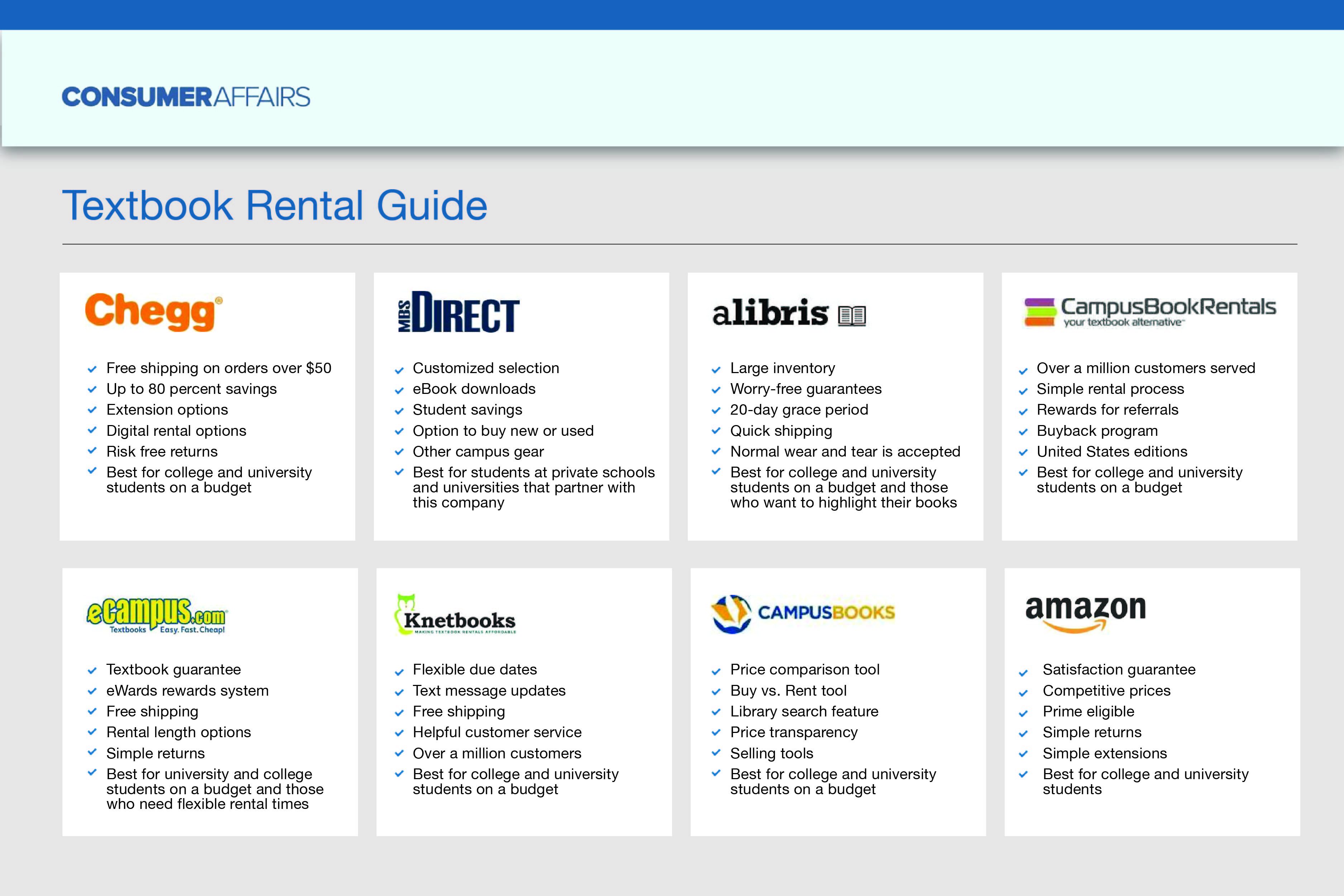
An online Textbook Rental Guide created by ConsumerAffairs is another resource students can utilize. This guide compares nine different textbook rental companies such as Chegg and CampusBooks to help students make an informed decision.

“Each one of the rental companies listed [on the guide] has reviews from our research team as well as verified consumer reviews,” said Jon Peterson, a content marketing specialist at ConsumerAffairs. “A lot of these [reviews] come from former students that have done business with these companies.”

The expert reviews provided on the Textbook Rental Guide are the best breakdowns of what each company has to offer. These reviews indicate whether or not a company’s rental period is customizable, if the company offers free shipping or not, points out possible return shipping fees that are sometimes hidden, and more.

“We are happy to provide the most educated information for students whenever they are needing to rent textbooks,” Peterson said. “All of our information is available to use at any time. We believe that consumers have the right to make the most informed purchasing decision.”


Written by: Sahiti Vemula — features@theaggie.org
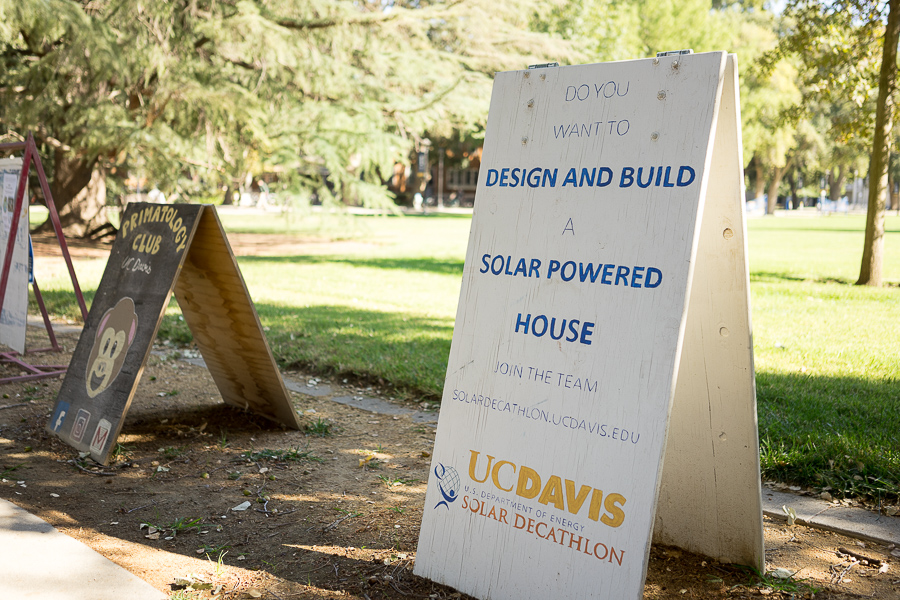
Are you looking for something to do related to your STEM major?

NICHOLAS CHAN / AGGIE

STEM clubs provide opportunity to get academic guidance and socialize

The beginning of the new school year brings new faces and new opportunities for every Aggie. During these frenzied times, it is important to highlight the resources for Aggies. For students who are in science, technology, engineering and mathematics related fields, this could mean joining a STEM-related club.

UC Davis offers a wide variety of student organizations ranging from animal science to electrical engineering.  STEM clubs can amplify the academic environment by facilitating one’s learning and providing additional support in a more intimate setting.  

“The benefit to joining a STEM-related student organization is communicating with professors since classes are so big and intimidating,” said Dadne Lopez, a fourth-year microbiology major and president of the American Society for Microbiology. “You can also get hands-on experience for lab.”

In addition, students can develop close friendships and network with other motivated individuals who are on a similar career path.

“The Plant Science club allows ambitious students to develop social relationships while complimenting their courses along with new opportunities in the industry,” said Elisabeth Doody, the president of the Plant Science Club.  “My favorite part of being in the Plant Science Club is being able to foster passion, watching peers and professionals bring passion to the club and being able to bring people together.”

On the Center for Student Involvement website, the UC Davis OrgSync search tool is a valuable resource for students to obtain more information on a multitude of organizations and clubs that may interest them.

“New members or people should know that this is a great way to network with professionals in the industry, be it ranchers, farmers, vets, or grad students, and become more knowledgeable about cattle and the industry,” said Regina Gutierrez, the president of the Young Cattlemen’s Association.

Many students in STEM clubs have developed fun and memorable experiences that they can cherish for a lifetime.

“My favorite experience was going to a science exhibit and taking four members to teach kids about Microbio during my Spring Quarter,” Lopez said.

Some STEM clubs provide unique opportunities to attend eye-opening events that can evoke passion for exciting career paths.

“My favorite experience in this club was when we went to State Convention when I was a freshman and it really hooked me, not only into the cattle industry but a business side many people don’t think about,” Gutierrez said. “I gained so many new friends from a trip and I would recommend attending to anyone.”


Written by: David Soltero — science@theaggie.org

Police Logs

0
NICKI PADAR / AGGIE

Welcome back to Davis — did you miss it?

Sept. 13

“Unknown alarm sounding within the neighborhood intermittently within last 2 days.”


Sept. 14

“Loud noises heard — items being thrown about — no visual.”


Sept. 14

“Vehicle parked perpendicular to the curb, particularly blocking northbound lane.”


Sept. 16

“Unfamiliar vehicle with transient sleeping inside.”


Sept. 17

“Complaint of loud party.”


Sept. 18

“Dog barking for 3-4 hours.”


Sept. 19

“Reporting party advised he contacted his neighbors regarding a noise complaint and the neighbors began yelling at him.”


Sept. 19

“Unfamiliar vehicle parked outside residence with the motor running.”


Sept. 19

“Occurred yesterday, cat converter taken off vehicle.”

Written by: Kaelyn Tuermer-Leecity@theaggie.org

September is official library card sign-up month

0
DIANA LI / AGGIE FILE

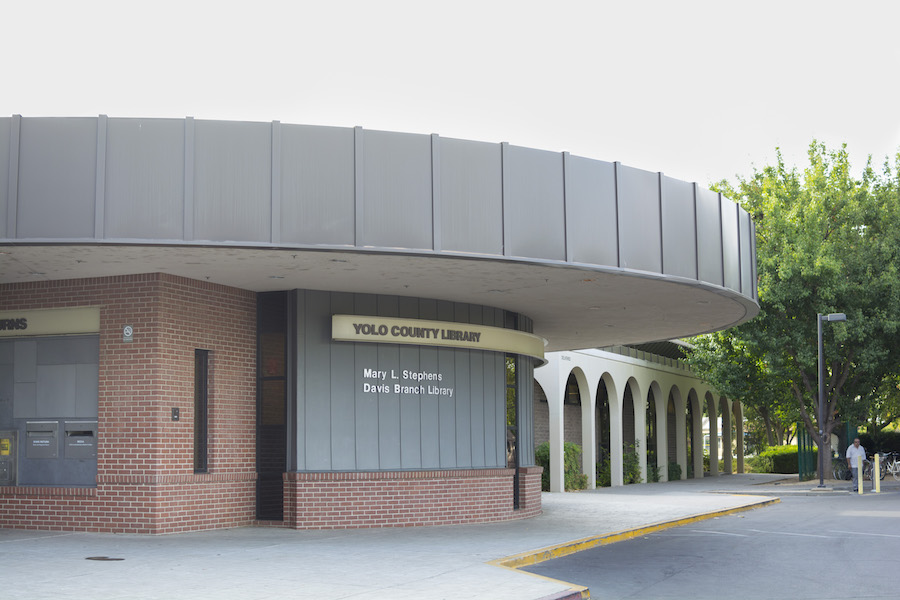
Yolo County Library gives every student in Davis free library card in September as part of library promotion


Libraries across the nation, including the Yolo County Library, joined together to recognize September as the official library card sign-up month, a campaign created by the American Library Association, the major governing and professional association for libraries in the United States. Designating this month was intended to ensure that all students have access to a local library while also raising awareness of libraries’ value in our current day and age.

The Yolo County Library prides itself on the plethora of services it provides to students and the local community. According to Crista Cannariato, the library’s regional manager, the library wanted to use this month as a way to further educate community members about the opportunities that come with having a library card.

These sentiments are shared by Beth Merrill, the librarian at Harper Junior High School in Davis, whose firsthand experiences with students have enabled her to understand the value of a place where one can always rely on receiving accurate information. Libraries’ reliability is particularly significant considering the excess of information currently surrounding us, making it especially difficult to pinpoint purely factual resources.

“With information being produced and disseminated through nonstop means, it is vital that we have ways of verifying and analyzing the information that we encounter and that we have people trained for assisting in locating and organizing information,” Cannariato said. “All of our population, rich or poor, deserve to have the opportunity for reading, listening or viewing information that will help them engage in leisure time and personal growth throughout their lifetime; libraries continue to provide an avenue for everyone to pursue their personal information needs.”

Merrill notes that the library’s ambiance also provides a pleasant environment for students, who are often forced to cope with the anxieties and stress of school. Although UC Davis students have automatic access to Shields Library, having a library card to access the Yolo County Library can still be a desirable option. Many students, including Aidan Delplanque, a fourth-year mechanical engineering major, visit the local Davis library during the school year to reap its academic benefits and rejoice in its peacefulness.

“I enjoy visiting the Yolo County Library because it’s less crowded than Shields and offers so many different types of resources,” Delplanque said. “I think it’s great to see how the library is able to bring the entire community together.”

The various resources provided by the library are useful for people of all ages and backgrounds. Cannariato notes that libraries have transformed over the years to provide a wide variety of resources, and library card sign-up month is an excellent way to remind the community of those resources and encourage them to visit more frequently.

“You can’t actually measure the value in a library card. We provide access to all sorts of free resources — downloadable ebooks and emagazines. We have computers and free wi-fi in all our branches. We recently started offering Chromebooks and Hotspots,” Cannariato said. “Another way the library serves the community is by providing community space, and we do that through free programming, storytimes for young children and educational programs for adults. We offer places for people to meet through our collaborative workspace with our study rooms. We provide services to assist students with their homework, including databases and an afterschool program that operates Monday through Thursday. It’s a space that’s open to everyone and where you can see the diversity of your community. People of all different walks of life can come and utilize their resources and enjoy community with each other.”

For more information, visit the Yolo County Library in person or on its website. The library’s Davis branch is located at 315 E. 14th Street.


Written By: Hadya Amin — city@theaggie.org


Hillary Clinton to speak at Mondavi Center on Oct. 9

0

ROGER H. GOUN [(CC BY 2.0)] / FLICKR
100 additional student tickets to be released Oct. 5

As part of the book tour for her memoir, “What Happened,” former Secretary of State and Democratic presidential nominee Hillary Clinton will speak at the Mondavi Center on Oct. 9. The event, one of 15 listed stops on her book tour website, is her only scheduled event in California.

According to the Mondavi Center’s director Don Roth, the event is “virtually sold out.”

“We’ve just never had anything at this level of popularity –– this has been amazing,” Roth said.

In the past, the Mondavi Center has hosted former President Bill Clinton, former Secretary of State Madeleine Albright and former Republican Senate Leader Bob Dole, among others.

Christian Monsees, a fifth-year political science major and the president of Davis College Democrats, said he “could not be more excited” for Clinton’s visit.

“Hillary Clinton is one of the most accomplished politicians not just on the left, but in our entire current political sphere,” Monsees said. “Whether it’s being the first lady of Arkansas, first lady of the United States, [a] U.S. Senator or Secretary of State, she’s been on every level of politics. I believe that it can only benefit us to hear her perspective on what was perhaps one of the most historic elections that our country will ever see.”

The date for Clinton’s visit to the Mondavi Center was released on her website before tickets were made available due to some last-minute contract negotiations.

Tickets were released for Mondavi Center donors and subscribers, as well as for UC Davis faculty, students and staff, on Sept. 15. Members of the general public have a slim chance of securing a ticket to the event; however, 100 additional tickets for UC Davis students will be released on Oct. 5, on “Student On Sale Day.”

“Any time we add a show, […] we always have a pre-sale, before it goes on sale to the general public,” Roth said. “We want our Mondavi Center subscribers, the Mondavi Center donors, and all UC Davis faculty, staff and students […] to have an opportunity to buy tickets. Normally, for most events, a lot of the tickets get sold to that group, but there’s usually still plenty of tickets available to the general public. This time, there will not be many tickets.”

Student tickets were priced at $25, while tickets for non-students were priced between $150 and $250. Everyone who bought a ticket to the event will be presented with a voucher for a copy of “What Happened,” which can be claimed before the event.

Since the book’s release on Sept. 12, it has received some mixed reviews. It has, however, remained in high demand –– selling 300,000 copies its first week in print, according to The Guardian. The New Yorker has stated the “memoir radiates with fury at the forces and the figures ranged against her,” and The New York Times has called it a “feminist manifesto.”

Clinton has been criticized for blaming Vermont Senator Bernie Sanders, who she defeated in the Democratic primaries, for his role in her own eventual defeat in the presidential election.

“I can understand where the frustration is coming from,” Monsees said. “I would point out that in another part she […] owns up to the fact that her campaign [did] make mistakes and only she can really take the blame for that. Obviously there are multiple reasons why Hillary Clinton lost the presidential election, so I’m glad she was willing to take the responsibility for the mistakes she made on her end.”

Fully aware that she will be addressing a mostly university-affiliated audience, Monsees said he suspects Clinton will tailor her speech to the demographics in attendance, which include college students. Although Monsees also acknowledged that the focus of the speech will likely still remain on Clinton’s version of what happened in the unprecedented 2016 presidential election.

“If there’s any chance to really get a [sense of] what was going on in her mind through that whole process, I think it will really be very fascinating,” Monsees said.


Written by: Hannah Holzer –– campus@theaggie.org

Green Infrastructure Projects Will Help Reduce Risks of Urban Flooding

DR. AMBER MANFREE / COURTESY

New book by UC Davis and UCSB scientists highlights investments California has made to help humans, wildlife thrive

UC Davis and UCSB scientists recently published a book, “Floodplains: Processes and Management for Ecosystem Services,” which recommends green infrastructure fixes to help reduce flooding risks in urban areas.

“Floodplains are low-lying areas along [rivers] that will fill up during high flows with water,” said Amber Manfree, a post-doctoral researcher at the UC Davis Center for Watershed Sciences and one of the authors of the book. “They could be forested, they could be open grassland, or any kind of land cover. The thing about them that is really great is when the water comes up and fills the floodplain, it becomes habitat for aquatic organisms. Particularly, if it’s exposed to at least some sunlight, it works as a big solar panel, and will produce a lot of food, which will very much increase the amount of productivity in the ecosystems.”

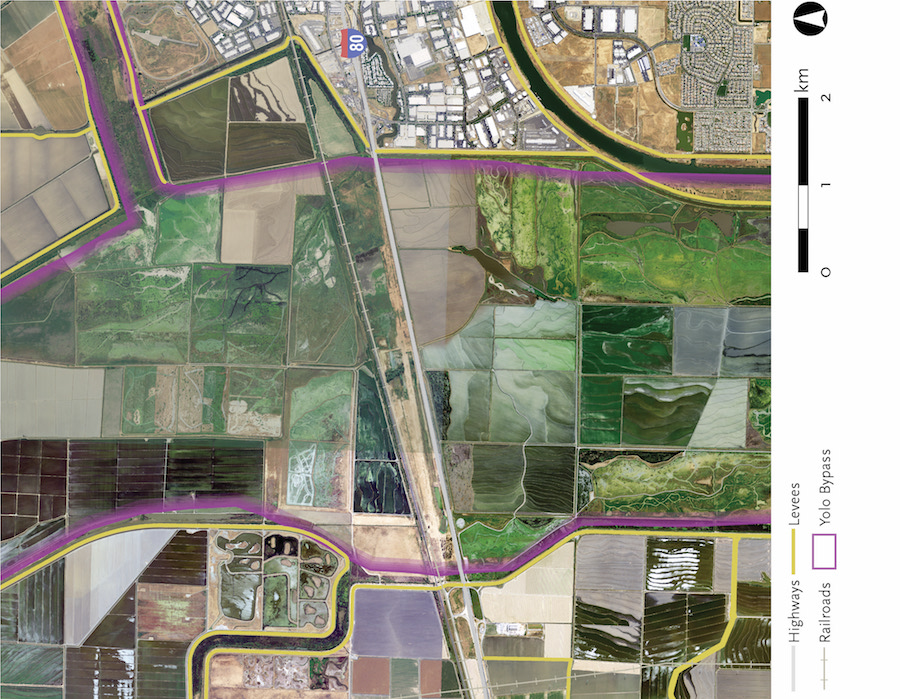
Levees and dams, “grey infrastructure,” are rigid structures built to reduce the risk of flooding. Unfortunately, they can also damage wildlife processes and disrupt complex ecosystems. Green infrastructure includes seasonal projects which can be flexible to changing weather conditions, such as the Yolo Bypass between Davis and Sacramento. The bypass provides habitat for birds and fish in the wet winters. Much of the land in the bypass is used for agriculture during the summer, taking advantage of the sediment deposited by the flooding.

“The Yolo Bypass is one of the best examples in the world on how to use the floodplain right,” said Peter Moyle, a professor emeritus at the UC Davis Center for Watershed Sciences and one of the authors of the book. “It’s got rice and other crops, and of course, pastures, too. It’s got a wildlife area, major place for overwintering waterfowl, swans and everything else. Then you have the flooding in the winter that turns out to be really good for fish. What’s so interesting is that the discovery that salmon benefited from floodplains, which is something we basically documented in my lab for the first time about twenty years ago, was new stuff.”

The Yolo Bypass, along with the Sutter Bypass, the Butte Sinks, and the Fremont Weir, help drain the Sacramento River as it winds through the Central Valley. The flowing water and rich sediment contribute to the famously productive farmland of California.

“The Sacramento system is pretty well-studied,” Manfree said. “There’s been a lot of work in understanding the system, and using it as a model to understand floodplain systems in general.”

When water reaches a level that could threaten the city, it spills over and diverts away into the Yolo Bypass area, creating excellent habitats for fish and birds. Flooding is a natural process in many rivers, and help contribute to ecosystems, but can devastate urban areas which are not prepared.

“Even with the bypasses, Sacramento remains, statistically, one of the most at-risk cities [for flooding],” said Jeff Opperman, the lead global freshwater scientist at the World Wildlife Fund and the lead author of the book, which stemmed from his post-doctoral studies.

The City of Sacramento is situated at the junction of the American and Sacramento Rivers. Historically, the city battled severe floods for decades before the Yolo Bypass was created nearly a hundred years ago.

“One of the things we feature in the book is how California has taken some very smart steps to manage floods,” Opperman said.

Other states have not embraced green infrastructure projects with the same enthusiasm. When Hurricane Harvey parked over Houston, Texas for an entire weekend, the few flood protection defenses of the metropolitan area were overwhelmed.

“Houston is like Sacramento,” Moyle said. “There are places they could build bypasses. You could create a floodplain area, you could farm it most of the time. But they’ve chosen to develop those places instead, and they get flooded.”

Much of Texas is mostly flat land at sea level, and Houston is near the Gulf of Mexico with a few river systems flowing through the urban area. Houston experiences severe floods regularly due to rampant development without proper drainage systems or green infrastructure projects such as the bypasses in California.

“The U.S. has large urban infrastructure at risk of flooding all around the country,” said Nicholas Pinter, a professor in the Department of Earth and Planetary Sciences. Pinter has researched the Houston floods and has shared some of his work at the California Water Blog.

Certain areas in the United States have not taken enough action to reduce the risks of flooding. Some homes have been flooded a dozen times or more, but remain in the same location or have not augmented their homes to better deal with floods.

“The worst repetitive loss property nationwide by losses is forty,” said Pinter. “Forty times, forty separate floods, forty payouts.”

Instead of repairing homes over and over in the middle of predictable floodplain areas, taxpayer monies could be invested in wildlife areas where threatening floodwaters could flow safely away from urban areas.

“Societies are going to go broke if they just keep fixing climate change problems as if it’s never going to happen again,” Manfree said. “Because the thing is, it’s going to keep happening, and you need to adjust to that.”

California has taken measures to invest in flood protections, such as planning to expand the Yolo Bypass, but more work needs to be done to protect the state from stronger storms and bigger floods coming in the future. Other states in the nation can invest in their own types of green infrastructure, following “The Accidental Model” of the Yolo Bypass, as Opperman calls it. The bypass was intended to save human investments in Sacramento, but has also succeeded as a wildlife area where birds and fish can overwinter and develop in peace.

“By integrating these natural features into flood management systems, we have a much better chance at finding this balance,” Opperman said.


Written by: George Ugartemendia — science@theaggie.org

New high frequency electrical chip surpasses current technologies’ speeds

MARIA INES PEREZ-VARGAS / COURTESY

Researchers successfully create chip that may pave way for next generation technology

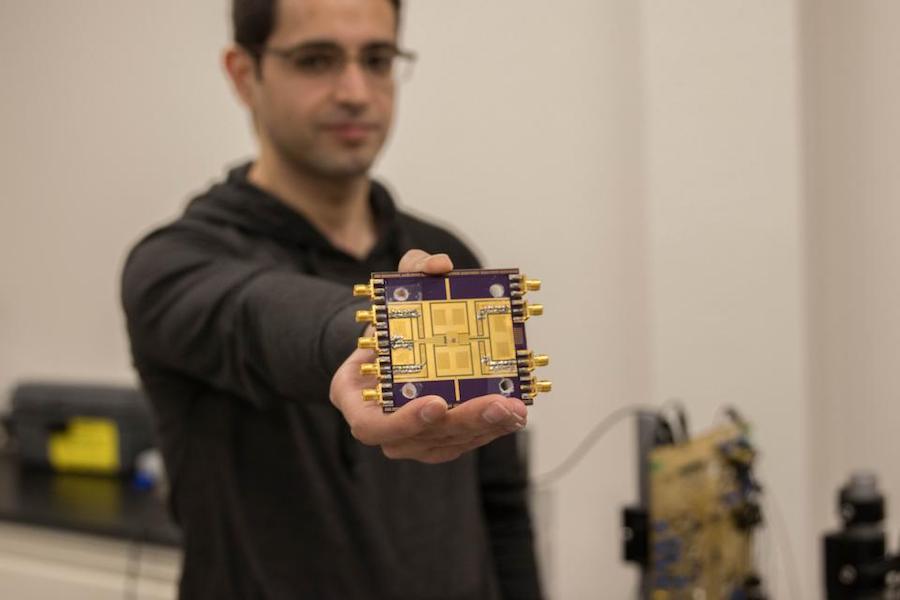
A high frequency electrical chip has been developed at UC Davis that surpasses the speeds of current technology. Graduate student Hossein Jalili came to UC Davis in 2013 to conduct research under Omeed Momeni, an assistant professor in electrical and computer engineering. They worked together to create a novel chip with a phased array antenna system.

“I’ve always been interested in mathematics and more attracted to those kinds of things rather than humanities,” Jalili said. “Engineering is an exciting field, especially electrical engineering and electronics today.”

Jalili’s work stems from Momeni’s previous Ph.D. work on terahertz integrated circuits. Their next step was to push the range of operation in these circuits higher.

“What is it that we can do to make wireless systems more effective and more usable for everybody?” Momeni said. “One of the solutions is you need to go to higher frequencies, because at lower frequencies, everything is so congested and the bandwidth is not there.”

Their current chip can reach 370 gigahertz (GHz) with 52 GHz of bandwidth, while cell phones or routers work around 800-900 megahertz (MHz) to 1-5 GHz with tens of MHz of bandwidth.

The growing problem with current systems, like 4G and LTE networks for cell phones, is that many users are on low frequencies at the same time, using up a limited amount of bandwidth. However, going to higher frequencies would open up more bandwidth for each user.

“Everybody knew to go to higher frequencies,” Momeni said. “The problem was that nobody could do it because the frequency was so high. When frequency gets high, it becomes challenging to do the design.”

Bandwidth is like a freeway: the more of it you have, the faster data can travel. Rouzbeh Kananizadeh, another one of Momeni’s graduate students, explained that most Wi-Fi frequencies are 2.4GHz, which is comparable to a road with 3 lanes. Raising that to 100GHz could be a freeway with 20 lanes.

“[Jalili’s chip] basically is a 50 lane freeway,” Kananizadeh said. “It’s high frequency, small, can be used in portable devices [for regular customers of terahertz devices], has high bandwidth, and the ‘eyes’ of the antenna can cover a large area, probably four times more than some existing circuits.”

Higher frequencies can allow for higher bandwidth, which means higher data rate. For example, a 1GB download of a movie can take anywhere from less than a second to half an hour depending on how much bandwidth is available or how “fast” it is.

“[The chip is] basically a signal generator that can change its frequency in a very wide range and, at the same time, radiate the signal into the air at a specific direction,” Momeni said. “If you look at your internet routers at home or your cell phones, they all have a signal generator inside and an antenna that radiates a signal. [Jalili and I] did the same thing, but at much higher frequencies than a cell phone or router would operate.”

A phased array antenna system consists of multiple smaller antennae sending out the same signal to direct a single narrow signal toward another object in a specific direction. One advantage of this system is its ability to shift its beam electronically, rather than mechanically, which creates potential for various applications. Higher power is achieved because the transmitted power can be funneled into a narrow beam and is less sensitive to interference. Beam-forming is one of the major concepts that will be incorporated into 5G, the next generation of cellular networks.

“If you want to get enough power and better performance, instead of having one source of power, you want to have an array of sources and have them all be coherent and synchronized,” Jalili said. “That was our goal to implement those kinds of array structures.”

Integrated circuit design for lower frequencies (radio frequency and microwave) has been studied extensively and is well-established in the engineering community, while integrated circuit design for higher frequencies (millimeter and terahertz) is an emerging field. Much of Jalili and Momeni’s work has been realized through trial and error in their designs and simulations.

Though higher frequencies can allow for faster data rates, there are a lot of limitations that have yet to be solved. Lower frequencies usually work better indoors, since they can pass through walls, while higher frequencies cannot.

“The bandwidth is available, but it’s hard to use it to actually get the advantages out of it because of the limitations on the circuitry,” Jalili said.

The research on this specific chip is still relatively new and will require additional testing, as well as advancement from other areas of electrical and computer engineering. However, Jalili and Momeni see their work improving various real-life applications, like spectroscopy imaging, radar imaging, safety and security detection, and the sensors of self-driving cars. Kananizadeh also stated that faster, simpler circuits can help the telecommunications industry go greener, since it takes money and energy to create and sustain systems like large server rooms.

“One of the excitements of my life is that you work so hard for a couple of years, and you come up with an idea that nobody has ever done before,” Momeni said. “It opens up the possibilities to do different things in the future for everybody.”

Written By: Jack Carrillo Concordia — science@theaggie.org

“Before I die…” art wall inspires Davis locals

0
KRISTINA KASSEM / BEFORE I DIE GLOBAL PROJECT

Yolo Hospice, City of Davis collaborate on art wall

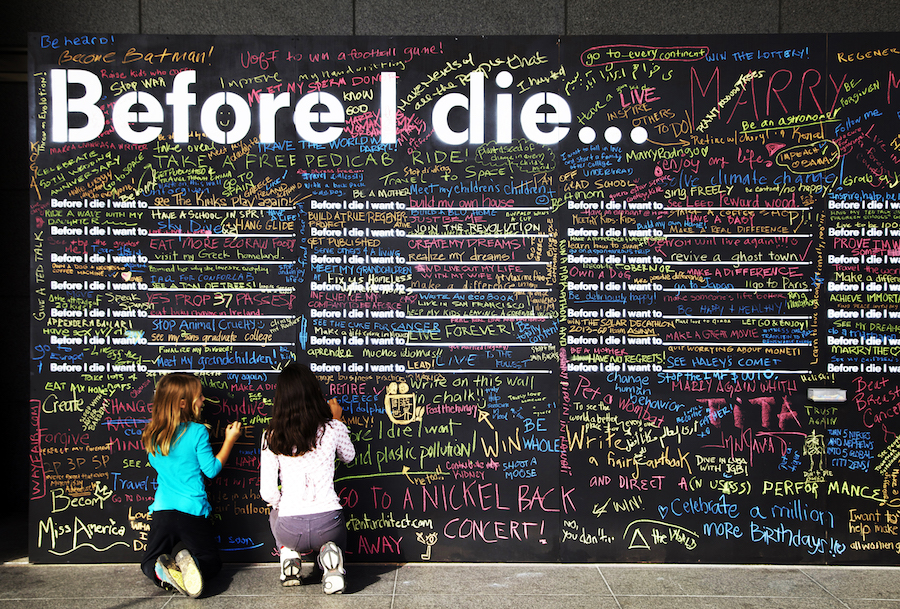
In a time when the world may seem divided by politics and discrimination, art can be the answer to lessen this chaos. The City of Davis and Yolo Hospice are working together to bring the “Before I die…” art wall to downtown Davis. People of diverse cultures can come together through creative expression such as this project.

The art project will showcase a six-foot wall by the side of the Regal Cinemas Davis 6 theater. The “Before I Die…” piece will be on the south-facing wall on First Street, between E and F streets.

This project is designed such that people come up to the wall and fill in the blanks with their thoughts about what they want to do before they die. Candy Chang is the artist who started this piece — which has slowly become a global project.

Louise Joyce, a community relations manager for Yolo Hospice, described how meaningful the project was for Chang and those at Yolo Hospice.

“It started for Candy Chang because she lost a loved one — a beloved woman who was very close to her — and lost her very suddenly, and she was very devastated,” Joyce said. “She’s always utilizing positive spaces to bring us together just as humans to build that bridge. She had the same experience then that we are having here.”

Yolo Hospice is a nonprofit organization specializing in serving patients, loved ones, and community members who are affected by terminal illnesses. This is a unique form of health care which emphasizes the quality of life.

“Here at Yolo Hospice, we are about serving you in the chapter of your life when you have diseases that are terminally ill and you have, for example, six months to live. We provide comfort, care and pain managements. We also surround you with social workers and volunteers,” Joyce said. “That’s the service we provide, but we are also very passionate about people having conversations about death and dying. They will be able to ease their suffering this way when they reach that chapter in life.”

As taboo as the topic of death may sound, Yolo Hospice and the City of Davis are trying to encourage people to bring death into conversations via this art project’s new lens,

“It’s just a beautiful and synchronous event to work with Rachel Hartsough to collaborate with the city, and that it was also on their radar,” Joyce said. “We love to use the arts in conversations about death and dying, and we want people to be mindful about death and dying. It is a conscious, crazy and beautiful art project for people to really contemplate about their life.”

“Before I die…” may be only one wall in Davis, but this one wall is contributing to a worldwide effort to bridge the gaps of humankind. Rachel Hartsough, the arts and culture manager for the City of Davis, noted the extent of the project’s reach.

“I think it is a very important time for people to connect to each other in our city and in our country and globally,” Hartsough said. “Some people can connect better by talking, [and] some people can connect by hearing; this is a way for people to share and participate. Maybe somebody is already there who is a native Spanish or Mandarin speaker, and when they’re both standing there, they can connect in a way they may have not.”

The art wall is meant to bring people together in a place where no one really expects it. The artist working on the project, Kyle Monhollen, views art as a chance for change of perspective.

“For me, art means taking a chance to see things in a new way,” Monhollen said. “My favorite art usually comes from a place where the everyday and expected or comfortable meets its opposite — like the surprisingly deep question at the heart of ‘Before I Die…’ plainly stated and six feet tall around the corner where you least expect it. The results can be harmonious and balanced or wild and chaotic, but there is something new and exciting in that place where they meet every time.”

The wall was fully installed on Sunday, Sept. 17, and people are already involved with the project.

“Our people were totally engaged in this,” Joyce said. “It’s just an incredible project and people are really responding to the questions. Candy Chang says that talking about death is one of the most powerful conversations you can have because it clarifies your life.”

While death may seem like a morbid topic, “Before I die…” will bring positivity and purpose to people’s minds when they think about what they truly want to accomplish in their lives.

“I am inspired by the direct and positive nature of the project,” Monhollen said. “It’s visually and conceptually very simple, but it addresses one of the essential human questions: What does it mean to be alive? I like that it invites both deep thinking and playful interaction [and] that it is broadly accessible but also potentially very intimate.”

The project will bring to the table a number of elements about what it truly means to live. Four languages were also implemented to challenge a diverse group of people.

People will be urged to come and participate, especially native speakers who can monitor the languages. Those who are fluent in English, Arabic, Mandarin or Spanish and would like to help monitor the wall can contact Louise Joyce at ljoyce@yolohospice.org or call 530-758-5566 for more information. There will also be a sign-up opportunity and a dedication ceremony on Oct. 13th at 5:30 p.m. for anyone interested in participating.


Written by: Stella Tran — city@theaggie.org


First Week Back In Davis: A Playlist

JEREMY DANG / AGGIE

Guess who’s back, back again

As much as you can attempt to mentally prepare, the first week of school is remarkable in its ability to conjure deja vus: moments that you know too well, but nonetheless surprise you each time. You’d think we would know better by now, but alas, the dog days of summer continue to leave Davis students emotionally drained. For both returning students and new Aggies alike, the theme for week one appears to be “expect the unexpected.” To prepare for your first week back in Davis, this playlist should be your first step.


“Big Fish” by Vince Staples

No one can blame you for the inevitable “late night ballin’” before school starts. With friends reuniting after a summer apart and the final days of blazing heat putting your body in a summer trance, you’re still in the vacation mood. But hey, transition takes time. Soon enough, after syllabus week, “ballin’” will change to grindin’.


“Morning Thought” by JR JR

Summer mornings are arguably one of the best aspects of the three-month hiatus from school. But the first week is always a rude awakening (pun intended) — a reminder that those calm summer mornings sipping coffee on the patio are well over. Now “you’re thinking how long it takes” to get to Young Hall from H Street; you’re thinking about how you’re not “allowed to take this [bus] stop” on the weekends. As much as “I would like to release you” from this rediscovered stress, adaptation is key.


“Wait for the Moment” by Vulfpeck

FOMO is so real when coming back to school, but quiet time alone is equally as valuable. After all, “it’s hard to make a point/ when you’re living so loud.” Don’t be afraid to “turn it down.”


“Pothole” by Tyler, the Creator

Although returning to a life of constant stress can be draining, the simplicity of commuting by bike is something to be missed: a time for isolation and self-reflection. That tree is actually super big and dope, “like how I ain’t notice that?” But also, why has that dangerous, bike-crash-inducing pothole still not been fixed? With these little moments of introspection and reflection come moments of “skrrrt!”


“Objectifying Rabbits” by Milo

Did anyone else miss trying to feed the campus rodents whole TexMex burritos? Asking for a friend.


“Rhinestone Eyes” by Gorillaz

There always seems to be that one professor who takes weeding out classes way too seriously, prefacing himself equivalent to “a scary gargoyle on a tower” who can make the “paralytic dreams that we all seem to keep” disappear with the forceful strike of his grading pen. But don’t fret — a bad grade is inevitable, but the “skies are blue” nevertheless, and the world isn’t crashing down around you.


“Half Full Glass of Wine” by Tame Impala

You deserve it. Cheers.


Written by: Caroline Rutten — arts@theaggie.org

Falling for upcoming Davis events

0
CAITLYN SAMPLEY / AGGIE

Fall events, activities for students to get to know campus, community

Fall Quarter has finally arrived, and with that comes a variety of new events and activities for students. Freshman, transfer students and even returning seniors will have plenty of ways to get involved in and connect to the UC Davis community and develop a new level of Aggie pride.

Some events have even been happening for over a hundred years. One such event, considered a principal UC Davis tradition, is none other than Pajamarino.

“Pajamarino, even though it has kind of an odd name, was started 105 years ago when alumni were returning back to campus for homecoming,” said Carrie Wright, the associate executive director of the Cal Aggie Alumni Association. “They came in on the train and it was in the middle of the night, and students snuck out of their dorms in their pajamas to greet the alumni. So that’s why 105 years later, people wear their pajamas and we celebrate at the Amtrak train station the night before homecoming”

The homecoming football game this year is a can’t-miss event all on its own, especially because UC Davis will face off against its longtime rival Cal Poly San Luis Obispo on Oct. 28. Pajamarino, which occurs the evening before on Oct. 27, serves as the pep rally for the game, an inclusive event for the entire Davis community from all generations.

“Anyone can walk in the parade,” Wright said. “So everyone can meet up at Central Park at 4:30 and we sign up and parade through downtown Davis toward the Amtrak station. Then our pep rally starts at 5:30, [where] we’ll have guest speakers and lots of Aggie pride and spirit, student performers, food and vendors. It’s a great way for new students to celebrate UC Davis.”

Another fun event students can enjoy this fall will take place on Oct. 10 in downtown Davis. Called Discover Davis, the event is hosted by the Davis Chamber of Commerce and is another way for students — new and returning alike — to get familiar with the Davis community.

“The last few years we had worked with the Farmer’s Market, which were great partners, but this year we’re moving it to the E Street Plaza,” said Christina Blackman, the CEO of the Davis Chamber of Commerce. “We’ll have about six food vendors, about thirty-four businesses tabling that will have giveaways, prizes, and interactive things to do, and we’re also planning on having some live music and entertainment.”

For those interested, volunteering at Discover Davis can be another sure way to become involved, but students don’t have to wait until the event date to get connected. The Chamber of Commerce also puts on a scavenger hunt, where students can have the chance to enter a raffle for free meals at various Davis establishments.

“[We hope] this is just the start of a really long relationship with the students that are here,” Blackman said. “Whether they’re here for four years or they stay forever, we want to really welcome them and showcase what the community has to offer.”

For a more lasting route to get involved in new things this year, students also have the option of joining one of UC Davis’s sixty-eight Greek organizations across six councils. These councils include the Asian Sorority and Fraternity Council, the Davis Collegiate Panhellenic Association, the Inter-Fraternity Council, the National Panhellenic Council, the Professional Sorority and Fraternity Council, and the United Sorority and Fraternity Council. Each organization offers a fun and dynamic experience to a student’s time in college, catering to different interests and often leading the way to lasting relationships with other students as well as the community.

“I think there’s a multitude of reasons to join a sorority or fraternity community,” said Valerie Lamarre-Laurent, the coordinator for Sorority and Fraternity Life at UC Davis. “I would say [this makes] the campus feel smaller [because] you are on a campus of about 30,000 students [and] you want to find your niche and your home base.”

Not all Greek organizations at Davis are social, and many of them have academic, cultural and community service focuses. There are other reasons to get involved with Greek life too, including the opportunity to gain leadership experience, get involved with a philanthropic organization and make academics a priority.

“For the 2015 to 2016 year, our [Greek] community raised over $200,000 in philanthropy so [joining a Greek organization is] really a way to get connected, get involved and get engaged on campus,” Lamarre-Laurent said. “We also collect GPA reports for our students and we know that for the past 5 or 6 years our Greek-affiliated student GPA is higher than a non-Greek student GPA.”

Whether it’s participating a tradition or embracing a new event, students have countless ways to get involved with UC Davis and the community.

“I think that UC Davis has very few treasured traditions and a lot of times students are so busy with their academics that they don’t always take the time to enjoy what it means to be an Aggie,” Wright said. “I think that by attending Pajamarino [and other events], it’s one of the best opportunities to really understand what it means to be an Aggie.”


Written by: Marlys Jeane — features@theaggie.org

First Annual Fall Music Fest

JAMIE CHEN / AGGIE

Davis Schools Foundation hosts new community event in support of local schools

With the end of Davis’ prolonged summer heat comes weather better suited for outdoor events — especially in celebration of fall festivities. Recognized for its love of bikes, Davis is also known for its love of community. From weekly farmer’s markets to larger events like Picnic Day, the city constantly finds ways to bring everyone together. This month, the Davis Schools Foundation is kicking off fall with its first Fall Music Fest in support of the local school district.

The Davis Schools Foundation is bringing two musical groups to the mini festival: One Eyed Reilly and Element Brass Band. Additionally, the event will provide food and drinks from Sudwerk Brewing Co. and Buckhorn BBQ Food Truck.

The vice president of the Davis Schools Foundation, Ryan Davis, wants the event to inform the community about the organization, but also to gain support for its local schools.

“We’re putting on this event to basically get the word out that our organization exists and to connect with the community and raise a little bit of money. We’re inviting all members of the community who want to support our schools. This is the first year we’re going to have this event,” Davis said. “We’re looking forward to seeing families with students in schools attending the event in support of our school district. We hope that UC Davis students will also come, because they have direct connection with the community as well. I think it would be great for them to support our schools.”

With each ticket purchase, fifty percent of the proceeds will be donated to the school PTA of your choice or to the Davis Schools Foundation, where they will allocate the money toward their main areas of focus. Beth McMullen from the Davis Schools Foundation believes that the organization’s three pillars of funding — technology, counseling, and instructional aid — are the keys to enhancing education.

“We’ve been giving grants to put in computer labs into the school. We also support counseling and have been contributing to the support of counselors at all of our schools. Lastly, we support instructional aid so that kids who are at risk of falling behind are able to get extra support in math and reading. These are our three areas of focus right now,” McMullen said. “I think money is the biggest problem with California schools and underlies all the problems that we’re having. I think what the Davis School Foundation can do is to identify the areas where our dollars are going to benefit most. Part of this event is that there’s a social aspect to it. You’re bringing together people who either have kids in schools or have kids in college, but everyone supporting the event wants to make the schools as good as it can be.”

Miroslava de la O from the Davis Schools Foundation understands the necessity for the school district’s parents and community members to support students in schools. The organization put a lot of time into creating a fun community event where people can share their support for education in Davis.

“We’ve been planning for at least six months, and the idea came from wanting to reintroduce the foundation to the general public and fund for the school district. We thought once everyone gets settled after the new school year begins, this would be a great start for everyone. Like a fun night out where the whole family can come and give back to the schools,” de la O said. “We wanted to bring bands that were local and thought it would be the best fit for the event.”

While in larger city settings, gathering an entire community in support of its school district might pose a difficult task, events like the Fall Music Fest in Davis are possible. Emilie Rodriguez, a third-year English major, says that Davis’ small town feel and love for community is exactly why she loves attending a university in Davis.

“What I love about Davis is that everyone is really friendly,” Rodriguez said. “I think what makes it unique is that it’s a very resilient town. Even when you go to the farmer’s market on Saturday, you see people from different walks of life. I think Davis has all these cool events that puts focus on arts, and everyone supports it. These events are meant to foster welcomeness and family.”

The event will be on Friday, Sept. 29 from 5:30 to 8:30 p.m. at the Davis Art Center’s outdoor stage. Tickets are available on Eventbrite.


Written by: Becky Lee — arts@theaggie.org
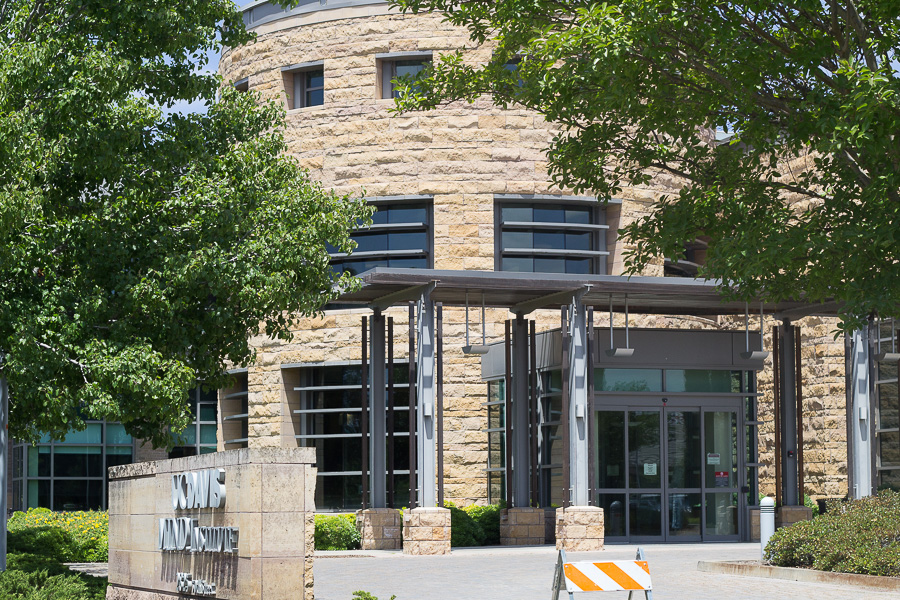
UC Davis MIND Institute receives ACE Grant

LAURA LONG / AGGIE FILE

MIND Institute awarded $12 million over 5 years to fund autism research

The UC Davis MIND Institute has been awarded one of five Autism Center for Excellence (ACE) grants in the country to create a “Center for the Development of Phenotype-based Treatments of Autism Spectrum Disorder”.

The research center started with the Autism Phenome project.

“The goal of the Autism Phenome Project is to try and divide up autism into more biologically and behaviorally defined homogeneous subtypes that we could direct more effective targeted treatments toward,” said David Amaral, the director of the center.

The center aims to find more individualized treatments for children with autism.

“One thing we know about autism is that it is extremely heterogeneous,” said Christine Wu Nordahl, an associate professor in the Department of Psychiatry and Behavioral Sciences and one of the center’s investigators. “There’s a saying out there, ‘If you’ve seen one child with autism, you’ve seen one child with autism.’”

With all the differences behaviorally and biologically, it can be hard to pinpoint a single treatment for a child, an issue this research is trying to solve.

To start with, the research is focusing on two subgroups, children with anxiety and children with megalencephaly — a brain growth development disorder. Nordahl is researching the latter subgroup with Susan Rivera, a professor in the Department of Psychology.

About 15 percent of males with autism have the megalencephaly phenotype. It was found that there were a few behavioral symptoms of autism connected with this phenotype.

“Most importantly, they weren’t doing quite as well as the rest of their peers with autism in terms of their cognitive development,” Nordahl said. “In general, they had made fewer gains in IQ than the rest of the kids in the cohort.”  

All of the children were getting community behavioral intervention, but this group wasn’t benefitting as much.

“If we can identify the specific cognitive processes and neural circuitry that is particularly impaired in this group, then we have a better chance of seeing more productive treatments,” Nordahl said.

The research is also looking at treatments for children with troublesome anxiety, a symptom that affects 40 percent of children with Autism Spectrum Disorder.

“It’s a debilitating symptom […] development can be thwarted in a lot of ways,” said Marjorie Solomon, a professor in the Department of Psychiatry and Behavioral Sciences. “While we do not have pharmacological treatments for the core features of autism, we have several strategies to reduce anxiety.”

Solomon’s research is already moving to a clinical trial where they’re testing one particular anxiety medication.

With treatments being very expensive, the ability to identify a specific treatment for a child helps parents afford better treatment as well.

This research aims to identify the nuance in how these symptoms affect children with autism but, as Solomon said, “The ultimate goal is to help more people.”


Written by: Kriti Varghese — science@theaggie.org
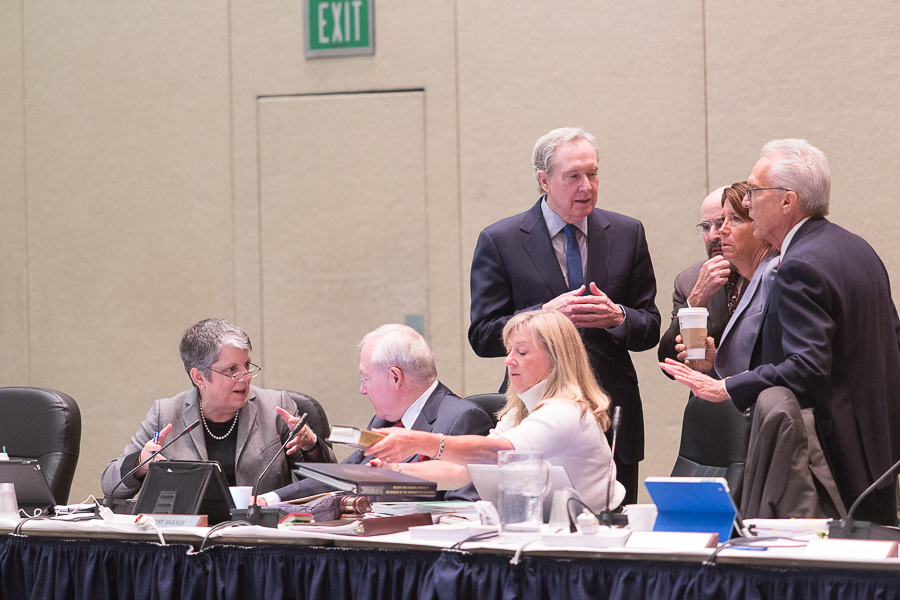
2017 state audits on UC system call for improvements

BRIAN NGUYEN / AGGIE FILE

Audits recommend UC system adhere more strictly to guidelines, practices

Three reports from California State Auditor Elaine Howle’s office were released relating to the UC system’s payroll and budgetary processes in April of 2017.  

The first audit of the year was issued on Aug. 22 and focused mainly on various campus-wide service contracts. According to the audit, the university system “generally adhered” to UCOP’s guidelines concerning contract policy, but the audit noted room for improvement.

“The university has not fully followed its policy for justifying its decisions to displace university employees with services contract workers,” the Aug. 22 audit states. “Low-wage services contract workers received hourly wages that were $3.86 lower than comparable university employees received.”

The audit recommended that UCOP adhere more strictly to guidelines concerning displacement by providing and promoting guideline-focused training.

The second audit, released on Aug. 24, mainly concerned the UC’s projected campus-wide salaries as well as the “human resources system” –– referred to as UCPath. According to the audit, the implementation of UCPath will be more costly than what was originally anticipated by UCOP and has been subsequently pushed back until June of 2019.

“The $753 million in cost savings, primarily from staff reductions, that the Office of the President anticipated would result from UCPath’s implementation, will not materialize,” the Aug. 24 audit states. “The Office of the President has not consistently informed the regents of UCPath’s challenges. Weaknesses in the Office of the President’s project management contributed to UCPath’s escalating cost and schedule delays.”

This audit recommends that UCOP develop strict cost reporting guidelines for UCPath and other related projects by the end of the year.

The third audit, released on April 25, revealed that UCOP and campus-wide administrative spending had increased. The audit focused on UCOP’s administration and budget.

“The Office of the President’s executive and administrative salaries are significantly higher than comparable state employee salaries,” the April 25 audit states. “Annual budget and staffing levels for the Office of the President are higher than administrations at other comparable public universities.”

This audit recommended that the Office of the President implement “best practices” for budgeting, look into creating a reserve policy and reallocate any “excess revenues” to the campuses.

UCOP issued a response to the findings of the three audits.

“The recommendations, largely about transparency and best practices, are constructive,” said UC President Janet Napolitano. “They will be implemented thoroughly and on time, and we will report back at regular intervals to the Legislature and the UC Board of Regents. The hallmark of institutional excellence is the eagerness, and resolve, to continually improve.”

Most recently, at the UC Board of Regents meeting on Sept. 13, Napolitano announced several new changes which will take into account the recommendations of the audits.

“New policies will […] reduce reimbursement for lodging and meals for those traveling on UC business [and] eliminate prospectively a supplemental retirement contribution for newly hired or appointed senior management group level employees, or current senior management level employees transferring to a different position,” the update on the UCOP website states. “In addition, at the Office of the President, UC-issued cell phones, tablets and mi-fi contracts are being reassessed and will be allowed only if a position requires remote access or before or after work hour access.”

New changes will begin to take shape as early as Oct. 15. The implementation of the new changes is expected to be complete by April 2020.


Written by: Clara Zhao — campus@theaggie.org


A Summer Worth Capturing

Aggie photographers share photos documenting their summer activities

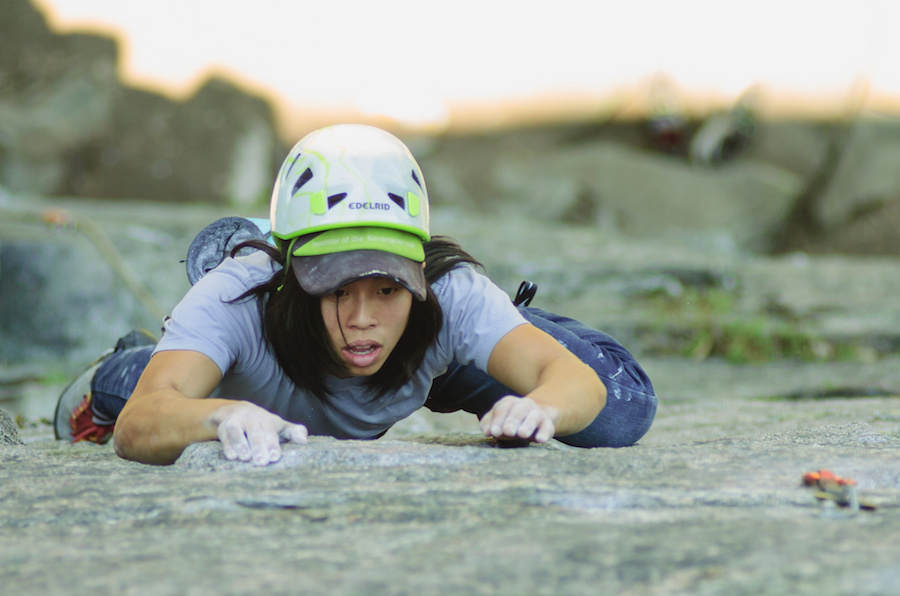
Adventure and photography sum up my summer and this photo depicts just that. To get this photo, I climbed 50 feet above my friend Tim and shot top-down during a weekend climbing trip to Lake Tahoe. About a month later, REI contacted me to use this photo in an upcoming ad campaign so I am excited to see where that and my other outdoor photos end up! (IAN JONES)


I spent this summer attending a lot of music festivals while completing two summer sessions! I did my best to keep my body healthy as well as enjoy the presence of myself and others. (ALEXA FONTANILLA)


I spent my summer drowning in prep books and practice tests. Here’s hoping that it all pays off! (ANH-TRAM BUI)


I explored Sacramento and came across some stunning artwork at a local chalk art festival. (DIANA LI)


My summer consisted of several day trips to the Bay in order to escape both summer session and the Davis heat. Here I took another cliché SF tourist picture at the newly-renovated Alamo Square Park. (JERO REAL)


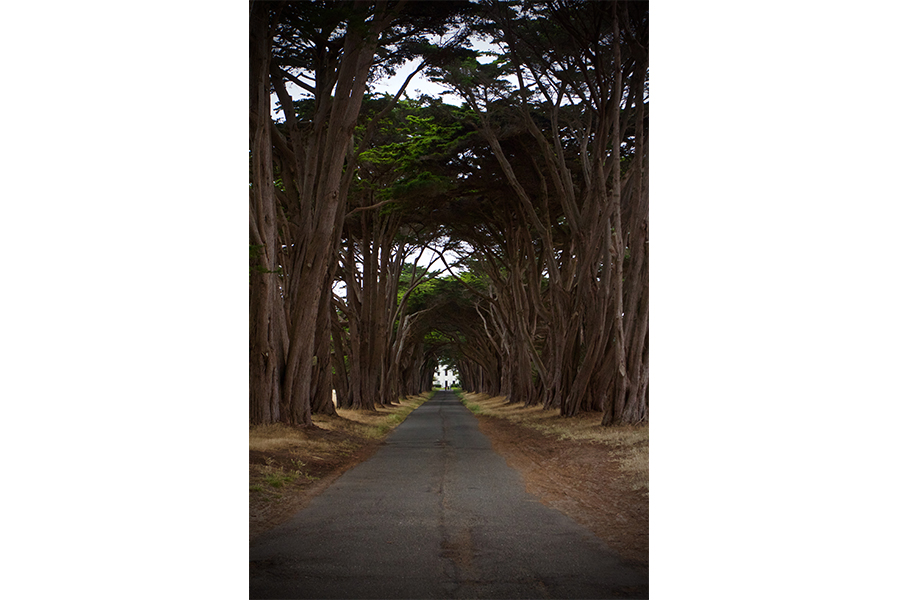
This summer I went on several trips to the greater Bay Area. My favorite memory from those trips would have to be visiting Muir Woods and Point Reyes. The crowds of people were nonexistent at Point Reyes and it felt like another world. We just drove around and explored with no idea of what we would find. This photo is of a cypress grove that leads to an old radio station. (JORDAN KNOWLES)


While spending most of my summer studying for tests, writing papers and checking Canvas, I had my new kitten to help distract me from all the stress of summer session. (LAURA LONG)


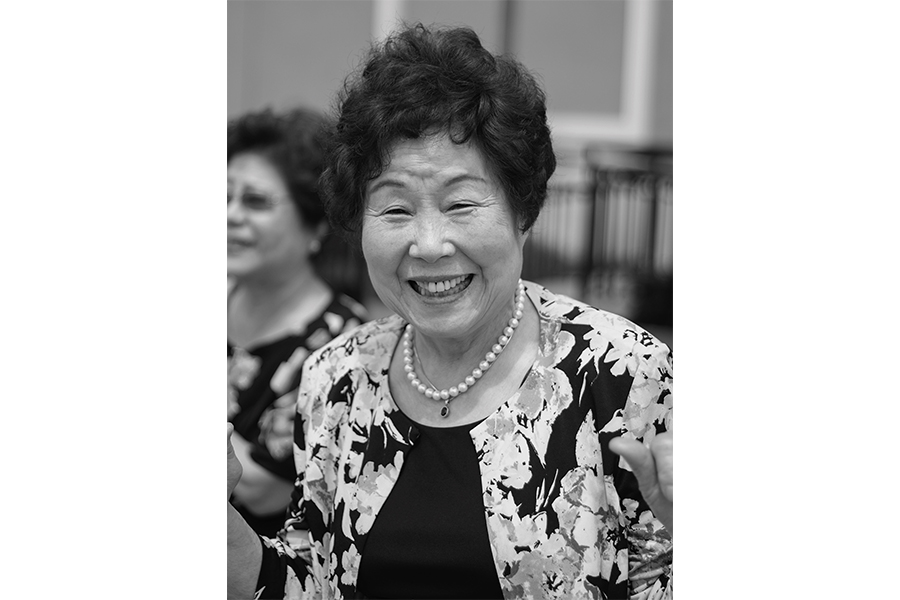
The majority of my summer was spent visiting family on the East Coast. This photo is of my grandma celebrating her 80th birthday in New Jersey. (MEENA RUGH)


I spent my summer back home in Hong Kong. It was an important time for me to reconnect with family and friends. (NICHOLAS CHAN)


I embarked on a study abroad program this summer, which took me to the U.K., France and Italy. This is a picture of the Arc of Constantine, taken from one of the balconies of the Roman Colosseum, during our stay in Rome. (TAYLOR LAPOINT)


This summer I enjoyed an amazing trip with my family to Maui, where I became mesmerized by the vibrant colors of the ocean, trees, and the whole island. (VENOOS MOSHAYEDI)


I found out about #goodtuesdayz this summer while taking classes. Every week photographers and models meet up in different locations in Sacramento to work together and shoot. (ZOË REINHARDT)


Compiled by: The California Aggie Photo Desk — photo@theaggie.org


Guest: Trump administration’s order to end DACA will be felt in federal, local economies

VENOOS MOSHAYEDI / AGGIE FILE

California has highest number of approved DACA applications

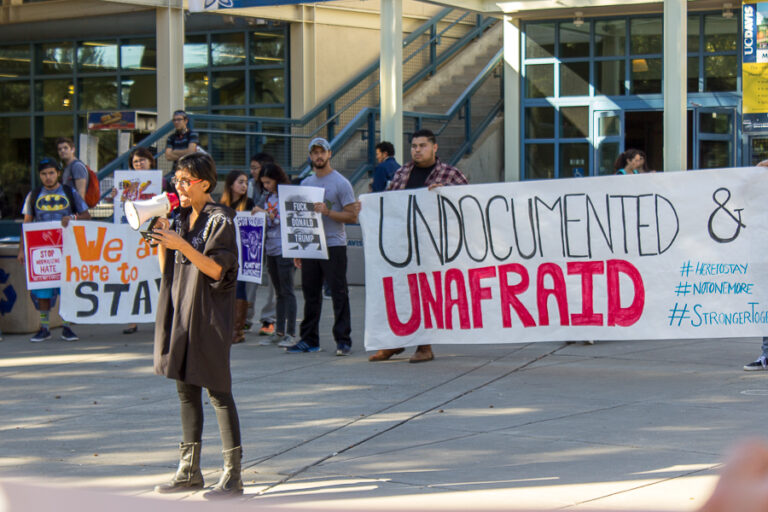
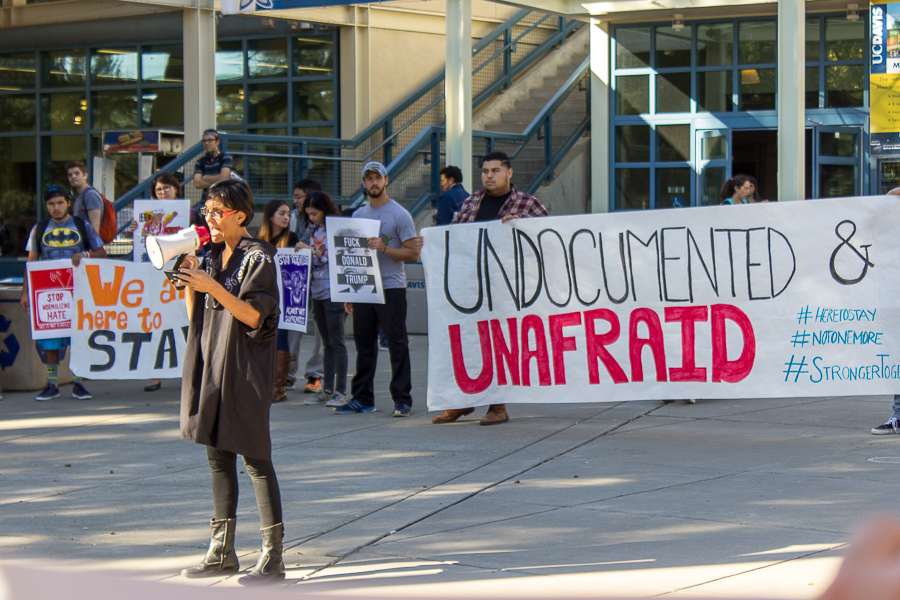
The Trump administration announced on Sept. 5 an end to the Deferred Action for Childhood Arrivals (DACA) program, a move that could put nearly 800,000 young adults at risk of deportation in the next six months. The decision has the potential to impact economies across the country: people who received work permits through DACA may have to leave the country if new legislation isn’t put into place by March 5.

In a country known for the spirit of the American dream, DACA’s implementation in 2012 was proof that immigrant children could pursue success in the United States. A national survey conducted in August by the Center for American Progress, a liberal research organization, showed that DACA recipients have stimulated the U.S. economy in a number of ways. The survey reported that 91.4 percent of recipients are employed — a stark contrast to the 60 percent employment-population ratio nationwide. Furthermore, 5.4 percent of recipients have started their own businesses and over 60 percent have opened bank accounts, become credit cards holders or bought cars. Continually, those who are employed with the help of DACA are active taxpayers. Without work permits or jobs, however, these people will no longer be able to support federal or state economies.

Politicians that oppose DACA, including Attorney General Jeff Sessions, often claim that recipients strip job opportunities away from non-immigrants. But in an article published in The Washington Post, David Bier dispels this myth by pointing to the lump of labor fallacy. Researchers historically believed that there was a “lump of labor,” or, in other words, a fixed number of jobs in a given economy. This hypothesis has since become obsolete, as economists now have evidence to prove that employment grows over time even when the labor force is increasing. Moreover, in a poll of top U.S. economists, 95 percent of them agreed that “the average US citizen would be better off if a larger number of highly educated foreign workers were legally allowed to immigrate to the US each year.”

Overall, a rise in the number of workers doesn’t result in higher unemployment in the United States. Rather than taking job opportunities away from domestic workers, the additional 800,000 eligible laborers that have resulted from DACA have improved economic efficiency.

With 222,795 approved DACA applications, California has the highest number of per capita DACA recipients. For this reason, California localities will notice economic changes taking place more strongly here than in any other state. Thousands of California workers may lose job opportunities provided to them by DACA — an issue that will jeopardize the long-term goals of so-called “dreamers” and will cause businesses to incur large employee turnover costs.

Additionally, if immigrants end up having to be deported, the government will have to foot the bill for what it calls the “identification and apprehension of immigration fugitives.” In the 2016 fiscal year alone, this cost added up to $129.4 million, which has the potential to increase if the Trump administration doesn’t act quickly to find a DACA substitute. If a resolution isn’t put into place, the government will become responsible for deporting close to 800,000 people who will be considered illegal after protections under DACA come to an end. Even if not deported, former DACA beneficiaries could lose their work permits, leaving them without labor rights and authorization to work in the United States. This will complicate worker-employee relationships and remove job security previously provided by DACA.

In Yolo County specifically, there are 3,000 immigrants eligible for DACA. Moreover, the UC system has an estimated 4,000 undocumented students. When DACA officially expires in March, these people will no longer be able to apply for the two years of deferred action that DACA has provided. Thus, they won’t contribute their unique expertise and culture to workplaces throughout Yolo County and UC Davis, damaging the diverse climate that makes our local economy and university thrive.  

UC President Janet Napolitano, who helped create the DACA program, said in a statement that DACA recipients in the UC system “represent the best of who we are — hard working, resilient and motivated high achievers. To arbitrarily and capriciously end the DACA program, which benefits our country as a whole, is not only unlawful, it is contrary to our national values and bad policy.”

Without DACA, nearly 200,000 California workers may lose the foundations they’ve established in the United States. America was built on the promise of the American dream — of people overcoming obstacles to provide better lives for their families. Ending DACA shatters this narrative for current dreamers. Coming up with an alternative to deferred action will be challenging for the government to achieve in just six months. I remain hopeful, however, that our students and other community members will be allowed to continue residing in the United States, inspiring us with their stories of perseverance.


Written by: Olivia Rockeman — copy@theaggie.org

Disclaimer: The views and opinions expressed by individual columnists belong to the columnists alone and do not necessarily indicate the views and opinions held by The California Aggie.