

52.7 F
Davis

Davis, California

Friday, December 26, 2025
Home Blog Page 615

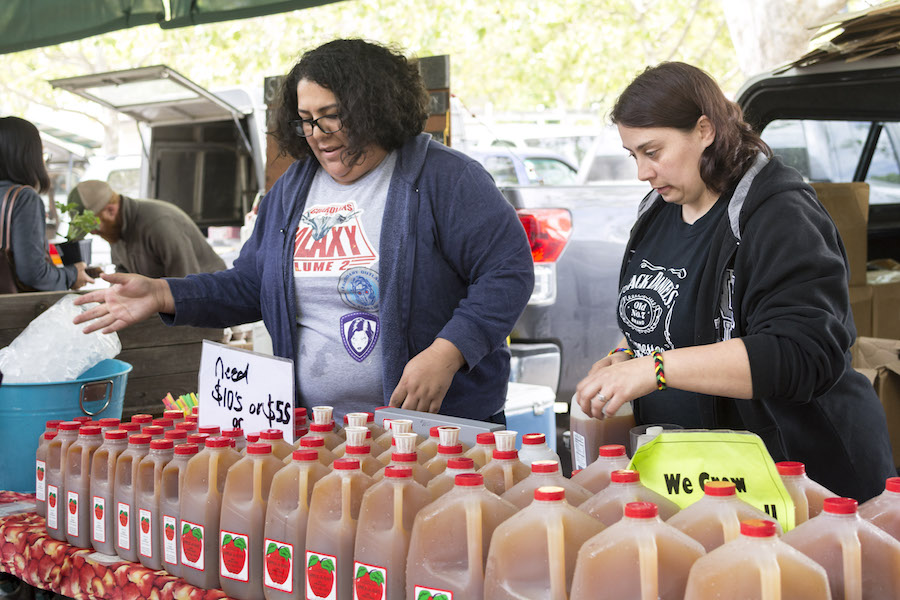
Humor: Bethany’s corpse found at farmers market after failing to get Insta pic

JORDAN KNOWLES / AGGIE

A plethora of attempts to pose a candid photo left one student dead

Every little girl’s nightmare became third-year Bethany Roberts’ harsh reality on Wednesday night when everyone’s favorite Instagram-er got all dolled up for the Farmers Market but simply could not take a good photo. This tragedy ultimately ended in a lesser one: death.

Bethany started her evening the same way as everyone else. She went and purchased her little bottle of apple juice and then tossed her phone over to her begrudging roommate — who doesn’t have a name because she’s irrelevant and, as a result, is never invited to be in any pictures — and requested a photo. The operation was doomed from the start, because Bethany had forgotten her polaroid camera, guaranteeing that her skin would look flawed. Nevertheless, she persisted.

“It all started out very normal,” her roommate said. “We were getting a full meal’s worth of free samples. We were doing that thing where we even pretended we might buy some produce, ya know, like good people. Bethany seemed fine.”

The two girls sat down on the grass and Bethany asked for a photo. Her roommate made the first fatal mistake when she tried to take the photo with flash, like some sort of psycho. Everything was downhill from there. Bethany simply couldn’t get her smize on, even though she had practiced with the Snapchat dog filter for weeks. Eventually, the vendors began to pack up, but Bethany refused to quit. Her roommate made it until midnight, when she finally threw in the towel. However, Bethany flipped her camera into selfie mode and continued to persevere.

“They found her the next morning,” her roommate said. “Her apple juice was spilled and her phone battery was dead. I haven’t seen a tragedy like that since I went to see Marley and Me in theaters.”

Once they recovered her phone, they found the greatest tragedy of all: a perfect picture. Yes, on the brink of death, Bethany had done it, but it was all for naught. Everyone at the park took a knee, including the Davis turkeys.

It has been decided that a new statue will be made of Bethany (at her best angle, obviously) in order to honor her memory and spread awareness of all Instagram-related deaths. People can come to place flowers at the foot of the statue or, as Bethany would prefer, a crap ton of “likes.”


Written by: Olivia Luchini — ocluchini@ucdavis.edu

(This article is humor and/or satire, and its content is purely fictional. The story and the names of “sources” are fictionalized.)


Letter: UC Davis Title IX officer responds to “Progress in reshaping the hunting ground”

HANNAH LEE / AGGIE

Chief Compliance Officer Wendi Delmendo

After reading “Progress in reshaping the hunting ground,” I would like to applaud ASUCD Sen. Anastasia Ruttkay for the work she has done to help educate her fellow students and contribute to sexual harassment and sexual violence prevention efforts in our community. Active participation by all members of the UC Davis community is key to prevention.

I thought Aggie readers would appreciate knowing more about what happens once the Title IX Office receives an allegation of sexual harassment or sexual violence. It’s important to note that the procedures the university follows are separate from the procedures followed by law enforcement.  Students can elect to file a report with UC Davis, law enforcement, both or neither.

When an allegation of sexual harassment or sexual violence is received by the Title IX Office:


  1. The person filing the complaint is promptly informed of the campus and community support resources available to them. If warranted, interim protections are put in place for their safety and that of the community.
  2. All reports are promptly reviewed, and a formal investigation is initiated whenever we have sufficient information and jurisdiction to do so. The investigations are conducted by full-time university investigators, and usually involve interviews with the complainant, respondent and any relevant witnesses, and can also include reviews of electronic communication, social media posts, security-camera footage and other relevant documentation.  
  3. At the completion of the investigation, the investigator prepares and submits a thorough report detailing the findings about the factual allegations and, based on those findings, addressing whether university policy was violated. If a policy violation is found, the matter is referred for disciplinary action.


By university policy, investigations into sexual violence or sexual harassment allegations against students are completed within 50 business days unless there is good cause for an extension. We recognize that waiting for the completion of an investigation can be stressful. However, we owe it to everyone involved to conduct a thorough review.

We all understand, too, that reporting sexual violence is a deeply personal decision. There are confidential support services available for sexual violence survivors that can provide information about campus resources and reporting processes. Confidential victim advocates are available on campus through CARE, and other confidential resources are available through Student Health and Counseling Services, the WRRC and the LGBTQIA Resources Center.

  More information about the university’s sexual violence prevention and response program can be found at sexualviolence.ucdavis.edu.


Written by: Wendi Delmendo — Chief Compliance Officer and Title IX Officer

How do Millennials differ across America?

GENESIA TING / AGGIE

Regional differences among Millennials are profound, worth exploring


What does it mean to be a Millennial living in Davis, California? More importantly, how does that Millennial compare to one living in Wichita, Kansas? How different are the everyday lives of San Franciscan Millennials to ones that are born and raised in the heart of Brooklyn?

A good example of a typical Millennial in Davis can be described by Taryn DeOilers and Eli Flesch, our associate opinion editor and editor, who (probably) eat expensive cheese and artisan bread while touring and wine tasting in Napa and Sonoma but (definitely) enjoy their elite status of being California Aggie editors living in NorCal. But, seriously, let’s briefly examine each part of the United States and observe what kinds of Millennials there are through a geographical compass.

The northern United States can’t be easily summarized or dissected, especially for the Millennials living there. Putting aside the Flint, Michigan and Dakota Access Pipeline incidents for a few seconds, let’s presume that there are plenty of things to do in the North and Midwest that Millennials are proud of and take up their time. The Great Lakes remain a destination Millennials favor to visit in order to escape their busy everyday lives. Yellowstone National Park also serves as a main attraction of the North. So don’t feel sorry for the young people living “above” us, but do feel sorry for their lack of diversity and culture. The northern part of the U.S. remains one the most white, conservative and homogeneous parts of the country. However, all is not lost if you mean the “North” to include the regal beauty of Montana and Wyoming, or the Great Lakes and urban culture hubs like Chicago. All in all, the North is easily the most difficult part of the country to dissect or compartmentalize.

The East Coast is America’s “front yard,” where history, politics, seafood and Biggie Smalls still remain iconic and thriving. I got the opportunity to interview several students at George Washington University when I was living in D.C. this winter. The consensus about life in the capital was actually pretty straightforward. Whenever students felt stressed, they would flock to the famous National Mall or head down to Virginia to see actual real trees and gaze at the Potomac River. While the best day trip around Davis was declared to be San Francisco (check out the write-up in the Best of Davis 2017), the number-one day trip for any Millennial living on the East Coast is hands-down the Big Apple: New York City. Millennials living on the East Coast are progressive, tough, innovative, proactive and formidable. From New York, Boston, Philadelphia, Richmond, New Jersey and many other major cities, the original stomping grounds of the U.S. are filled with history, culture and nostalgia.

“Southern Hospitality” has benchmarked Millennials in the South as the most kind, genuine and welcoming. In the same breath, they get the privilege of enjoying some of the best food, traditions and destinations in the country. From an authentic Texas barbeque to any form of traditional comfort food in the South, southern Millennials are indulging themselves when escaping stress, technology and today’s everyday grind. If you include Florida (California’s ugly, over-tanned cousin) as part of the South, this has much more to offer this young generation than just fried donuts and grits. From Miami Beach to the spectacle of the Everglades, Millennials in the southern U.S. have it pretty good compared to their peers across the country.

Last, and most importantly, you have the original and only frontier of America: the West. Not only do the words “best” and “west” rhyme, but living on the West Coast of the United States (or close to it) solidifies your place among the great, lucky few who call it home. Even though Los Angeles and Sacramento appear to be two different countries in the same state, the western part of the U.S. is the most culturally diverse and arguably most progressive part of the country. From California to Colorado, the West is filled with destinations, national parks and quite possibly the most economically vital organ of the country. I’m not saying the West Coast is the best coast, but as a Millennial born and raised in Northern California, there is nowhere I would rather live.


  Written by: Brody Wayne Fernandez — bwfernandez@ucdavis.edu

Disclaimer: The views and opinions expressed by individual columnists belong to the columnists alone and do not necessarily indicate the views and opinions held by The California Aggie.

What it means to protest a day of celebration

HANNAH LEE / AGGIE

Commencement speakers should embody university’s ideals

Vice President Mike Pence’s commencement speech at University of Notre Dame on May 21 was met with dozens of graduating students walking out of the ceremony as he spoke. Secretary of Education Betsy DeVos spoke at the historically black college Bethune-Cookman’s graduation to jeers and turned backs, as neither DeVos’ misinformation about the creation of such colleges nor her inexperience in the field were forgotten by the audience. To this, the university president Edison O. Jackson said to the crowd, “If this behavior continues, your degrees will be mailed to you. Choose which way you want to go.”

Universities do not look for a reason to stimulate debate, but instead choose their commencement speakers and inspire critical thinking among the departing students, according to Inside Higher Ed writer Scott Jaschik. However, oftentimes an image incites debate as an “increased emphasis on ideological symbolism” and can even become a method of elevating prestige. To combat this, as one columnist at University of Southern California’s Daily Trojan stated, Graduating students should have the power to nominate and vote for commencement speakers, or at the very least, be given choices by the university’s administration.”

What is seen in these commencement speeches is not only what might be a purposeful attempt to bring in controversy for the sake of national recognition — it is also a blatant refusal to recognize what graduating students want and need on one of the most memorable days of their lives.

This is not the first year politicians and notable speakers have faced protests. At Notre Dame, anti-abortion advocates confronted President Barack Obama in 2009 and Vice President Joe Biden in 2016. In 2014, a petition was created to prevent Bill Maher from speaking at UC Berkeley’s December commencement ceremony, but it did not accumulate enough support to elicit a response from the university’s administration.

Oprah Winfrey at Smith College, Dame Helen Mirren at Tulane University and Canadian Supreme Court Justice Rosalie Abella at Brandeis University have all attributed parts of their speeches to combating injustice in this country, some of which has been implemented by speakers who have been protested. On June 17, the Dalai Lama will speak at UC San Diego and has already been met with a number of protesters against his ideals of freeing the Tibetan national identity as a Chinese territory.

The protest against DeVos is an example of a university administration that is out of touch with the prevailing student sentiment. The protest against Pence was well-deserved and did not infringe on the experience of those who wanted to remain, as those who walked out did so as to shape their own narratives of their graduations. This editorial board encourages students across the country to advocate for individuals whom they believe represent the university’s ideals as well as their own — the act of protest on a day celebrating students’ success is not so much an act of protest as much as it is a refusal to accept a form of celebration forced upon them.


Lopsided win not enough for Aggies to defeat Grand Canyon University

IAN JONES / AGGIE

Aggies lose series 2-1 against Antelopes despite 16-1 victory Friday

As the season winds down, the UC Davis men’s baseball team took to the home field for its last home series of the season against Grand Canyon University last weekend. Coming off the 6-5 loss in the first game, the Aggies needed to enter the match with a little bit of fire if they wanted to make the series competitive. The result was a 16-1 trouncing of the visiting Antelopes for Friday’s game.

The 16 runs on 21 hits were a welcome addition to a positive late-season run in which the Aggies have now won six of their previous nine games. For head coach Matt Vaughn, these types of games are important for getting the team on their feet.

“We kind of lost a rough one yesterday [in] extra innings,” Vaughn said. “It’s a very easy day to come out and kind of go flat, and our guys didn’t do that. Even to be at the end of the year, [when] weather’s getting hot, I was very happy with their effort.”

Senior pitcher Justin Mullins took the mound with two straight wins and allowed just one run and six hits in a complete-game effort. Mullins credited his teammates’ bats with making his job as the starting pitcher that much easier.

“Before those runs, I was struggling a little bit with commanding all my pitches, but once you get that big lead it makes pitching a lot easier,” Mullins said. “You’ve just got to attack the zone and not worry so much.“

IAN JONES / AGGIE

After a scoreless first inning, the Aggies embarked on a two-inning stretch in which they tallied five runs, including a triple to kick off the bottom of the third inning by sophomore left fielder Ryan Anderson, who extended his hitting streak to 18 games with three hits and two RBIs. The Aggies were just warming up. After a pair of scoreless innings, the bats heated up once more and they ran off 10 more runs in the sixth inning alone.

“We’ve just got to keep doing what we’re doing,” Anderson said. “Playing good defense, hitting the ball like we are. We’ve kind of gotten hot these last few series, so hopefully, we can keep rolling with it.”

Unfortunately for the Aggies, they fell to the Antelopes 8-3 in the following game on Saturday. Though, as a non-conference game, the results are not deadly.

On Monday, May 22, the UC Davis baseball team beat Pacific 3-2. Now with three games remaining on the schedule, Vaughn hopes to sneak into the upper half of the Big West conference standings where the team currently stands at fifth place out of nine, on a 9-12 in-conference record. The Aggies will head down to Irvine on Thursday, May 25, where their final standings will depend solely on how they compete during the three-day series.

“If we can win the series at Irvine, that hopefully puts us in the top four or five in our conference,Vaughn said.


Written by: Bradley Geiser — sports@theaggie.org

Bike Breakfast provides commuters with the most important meal of the day

Bike Davis hosts breakfast event on May 19 for bikers traveling between Sacramento and Davis
As the City of Davis celebrates National Bike Month, events like the Bike Breakfast, hosted by Bike Davis, not only reflect the city’s deep-rooted love for everything bike-related, but they also work to bring the community together.

The Bike Breakfast included free breakfast for bike riders on the levee traveling between Sacramento and Davis on May 19 from 7 to 9 a.m. Bike Davis is a nonprofit group dedicated to promoting cycling in Davis.

“A small but dedicated group of individuals commute regularly by bicycle from Davis to Sacramento, and a few from Sacramento to Davis,” said Trish Price, the president of Bike Davis. “Bike Davis supports active transportation, so supporting the bicycle commuters is an obvious action.”

Bike Davis hopes that as many of these individuals as possible will commute without single-occupancy vehicles.

“[We work] to right the wrongs and celebrate the rights of cyclists,” said Darell Dickey, the Davis Bike Club liaison and a member on the Bike Davis board of directors. “Offering breakfast on the levee is definitely a way to celebrate the right. It shows bicycle commuters that we care about them. An event like this shows appreciation for those who choose to use healthier transportation.”

The members of Bike Davis are thrilled to be a part of the celebration of National Bike Month.

Lorretta Moore, the Safe Routes to School Program coordinator for the City of Davis, oversees a program for students grades K-6.

“I do work with Bike Davis for my program, and they are tremendously supportive in our bike education and trip-scanning programs,” Moore said. “It is great to have the support of advocacy groups […]  throughout the year.”

Some events being hosted through May 26 included a free screening of Bikes vs. Cars at the U.S. Bicycling Hall of Fame on Tuesday, May 23 from 6 to 8 p.m. Bike Davis also sponsored a Kidical Mass Bike Ride from North Elementary School to Picnic in the Park at the farmers’ market at Central Park, which took place on Wednesday, May 24.

Written by: Ray Ruano — city@theaggie.org


ASUCD holds cultural awareness forum

RAUL MORALES / AGGIE

Students discuss advocacy, student representation

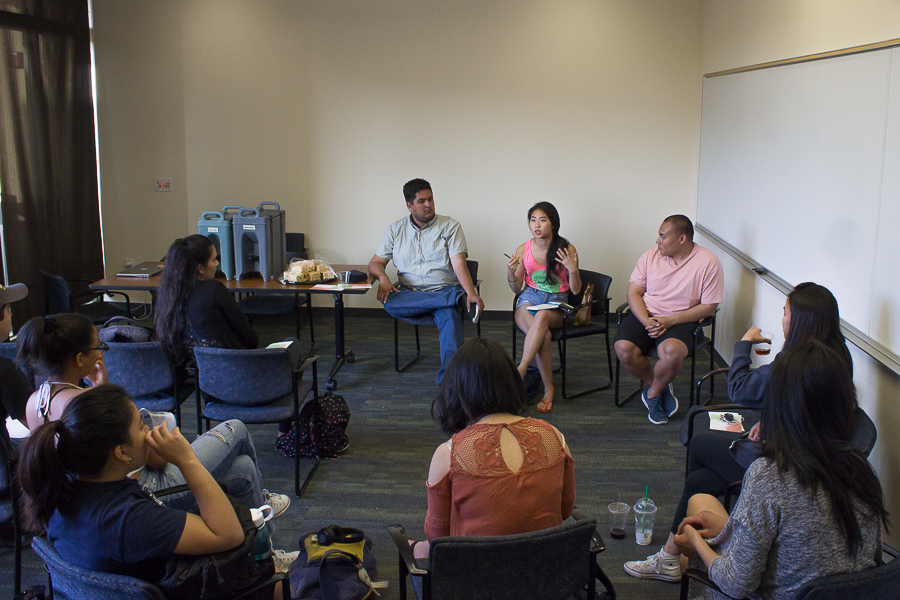
ASUCD hosted a forum in the Student Community Center (SCC) on May 8 to discuss cultural awareness. The event, hosted by the Department of Outreach and Recruitment and the Ethnic and Cultural Affairs Commission, gave students the chance to speak with their representatives and engage in discussions about issues of advocacy and student representation.

The forum, which took place in Meeting Room E on the second floor of the SCC, featured current ASUCD Senators Samantha Chiang, Marcos Rodriguez and Jose Meneses.

“ASUCD forums show students what issues we care about; cultural awareness is particularly timely due to our current political climate,” Chiang said in an email interview. “As ASUCD representatives, we want to foster a university environment that is inclusive to folx from all backgrounds.”

ASUCD has hosted forums before to try to better engage students and foster a relationship with the student body. Josh Dalavai, the current ASUCD president, said that the forums offer a space for back-and-forth dialogue.

“Beyond the spatial advantages, the content of these forums is very useful as they pertain to critical student issues,” Dalavai said in an email interview. “The forums serve as both a space for disseminating the work ASUCD is doing to tackle these issues and as a site for criticism and feedback.”

The forum, which lasted over an hour, included discussions of various topics, including student engagement and ASUCD’s work on issues like student diversity and inclusiveness.

Rodriguez, a second-year political science major, said that speaking with students offers an opportunity to engage with certain issues faced by different student groups.

“I feel like just being more involved with them and kind of letting them know where we are as an association, we can start to talk to communities, like underrepresented communities where we want to help build these coalitions and we want them to know that we want to help them, and a way to do that is through open forums,” Rodriguez said.

Although only a handful of students attended the forum, Chiang hopes future forums will attract a larger audience and greater involvement from both students and ASUCD senators to help build a stronger relationship between the two groups.

“When marketed properly, these forums can serve as a venue to hold student representative accountable and ensure that we are truly working in students’ best interest,” Chiang said. “Hopefully, we can garner more of a turnout in the future and combat the general apathy towards student government.”


Written by: Ivan Valenzuela — campus@theaggie.org

Davis prides itself on acceptance

BRIANA NGO / AGGIE

Big turnout present for annual Davis Pride Run downtown

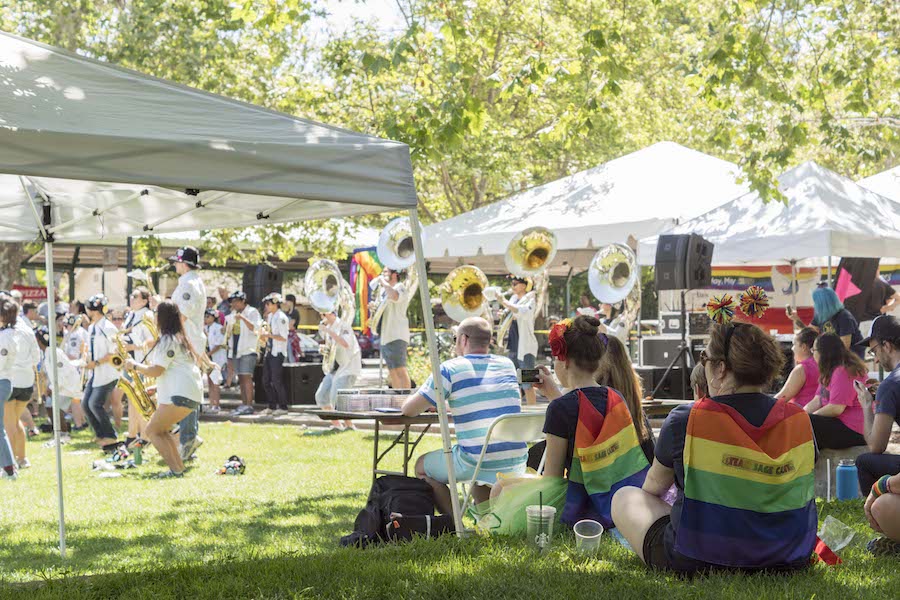
For the third year, the City of Davis held its annual Davis Pride Run/Walk for Equality in Central Park on Sunday, May 21. Around 200 participants gathered on the grassy area and under the canopy, which are spaces that are typically occupied by residents enjoying the farmer’s market on Wednesdays and Saturdays. There, vendors’ booths informed the public about supporting the LGBTQIA community and fighting for equality.

At the end of the 5K and 10K runs, Mayor Robb Davis gave a speech to recognize the LGBTQIA community and show his unwavering support for equality.

“Today is a trophy day,” Davis said. “We value people in the LGBTQIA community.”

Davis also stressed how important he felt it was for himself to take measures to ensure that LGBTQIA community members feel important.

“Do not allow me to become inattentive,” Davis said.

The Davis Pride event was first started by Gloria Martinez, the co-chair of the Davis Phoenix Coalition, in honor of her now 36-year-old son who had been the victim of a hate crime. The mission of the Phoenix Coalition is prevention of hate and violence. The coalition also puts on an anti-bullying carnival and works with city police and the school district to promote inclusion.

“We started this organization after my son was the victim of a hate crime,” Martinez said. “He’s a long distance runner. After the hate incident, he couldn’t even walk. Once he recovered, we decided that we would do a 5-10K run.”

Martinez’s son ran the 10K this year; among him were around 200 other runners and 30 volunteers. Sierra Chapman, a second-year volunteer, helped to organize the event.

“I’m in support of it, I volunteer here and am on the committee that organizes it,” Chapman said. “I think it’s a great, fun event that supports the LGBT community, which I think is especially important right now.”

Even in the 90-degree heat, people were smiling and sporting their rainbow flags and attire.

“We really think it’s important for people to come out to festivals like this to meet people that they wouldn’t normally interact with,” Martinez said. “The biggest part of it is being visible and providing a safe place where people feel comfortable and celebrated.”

After Davis’s speech, the UC Davis Band-Uh! marched onto the grass field of Central Park. The band performed pieces that were upbeat and positive in order to celebrate the community coming together to make sure that all of its members are included and accepted for who they are.

“If we fall, we will fall together. No one will catch us, so we will catch ourselves!” Band-Uh! members sang in between stanzas.

Community members in attendance clapped and cheered for the band as it performed. The Davis Phoenix Coalition successfully provided an inclusive environment for community members who were present; Davis expanded on this sentiment.

“We are a sanctuary city,” Davis said.


Written by: Kaelyn Tuermer-Lee — city@theaggie.org

Petition proposes renovations to Kemper Hall

JERO REAL / AGGIE

135 students, 12 alumni sign petition

A memorandum was delivered to the Office of the Chancellor on March 15 for a petition to improve the Kemper Hall basement facilities. 135 undergraduate students, mainly from the Computer Science Department, and 12 alumni signed the petition. This petition was hand-delivered on the last week of instruction of Winter Quarter.

The memorandum brings to light issues within the Kemper Hall basement, which, over the years has earned the nickname “The Dungeon.” These issues include poor bathroom sanitation and broken locking mechanisms on the bathroom stalls, a foul smell throughout the basement, inadequate airflow, uncomfortably cold lab rooms and no access to vending machines or bottled water.

The memorandum addressed the fact that, despite housing the Computer Science Instructional Facility (CSIF), which includes labs with tutoring and office hours spaces, the Kemper Hall basement provides students and faculty with poor facilities. It also mentioned that computer science (CS) is the third largest major on campus and thus deserves improved amenities in its parent building.

Simple requests from the memorandum include thorough cleaning and replacement of bathroom dividers for the Kemper Hall basement restrooms and an installation of a hydration station to fill water bottles.

In the long run, the petition requested for an expansion or relocation of the computer science undergraduate facilities.

“I think that the renovations to the basement are really important to the students, especially their morale,” said Andy Wu, a second-year computer science major, via email. “The basement houses the CSIF, which are the computer rooms that a majority of CS students do work in because most assignments have to be submitted from those machines. Most TAs host office hours down there, too, so every CS student at some point has been down there. Improving the place will hopefully make it feel less dungeony.”

Martin Marquez, a third-year statistics major, agrees with Wu’s sentiments and would have signed the petition if it was still open.

“I’m not a computer science major, but I have taken ECS classes where I have needed to utilize Kemper facilities, and it is awful,” Marquez said. “I’m glad administration finally noticed the neglect the Kemper Hall basement and its students are facing […] It’s definitely called the dungeon for a reason.”

Addressing whether there have been or will be tangible changes to the Kemper Hall basement, Jason Blevins, a fourth-year computer science major and the writer of the petition, was unsure.

“As of two weeks ago, there is no noticeable change,” Blevins said via email. “I have been told by many faculty and staff that changes are coming, but it has been two months or so and not much has changed. I am not 100 percent on the status since I have not been down there in a week or so.”

The issue of the basement was first brought up in a post made by Blevins in the Davis Computer Science Club Facebook page. After much popularity from that post, Blevins created the petition. After delivering the letter, there was a response from the chancellor’s office in which Blevins was contacted by the director of Facilities Management.

A town hall meeting was held on April 25 between students and the Computer Science Department administration to discuss issues regarding Kemper Hall.


Written by: Yvonne Leong — campus@theaggie.org

UC Davis, former researchers face lawsuit over strawberry intellectual property

CAT TAYLOR / AGGIE

Former UC Davis researchers sue for right to use strawberries developed within their strawberry breeding program that has earned millions for UC

In a litigation battle over the ownership of strawberry research intellectual property and physical cultivars, a judge ruled in the University of California’s favor on May 15, referencing the contracts that all UC researchers sign to relinquish intellectual property and research conducted on-site when they conceive a new invention or technique.

California Berry Cultivars (CBC) initially filed a lawsuit against the UC Regents on May 3, 2016, charging UC Davis with keeping CBC founders Doug Shaw and Kirk Larson from taking possession of certain strawberry cultivars they had developed while at UC Davis. The university refused to allow them access to the plants, and Shaw and Larson saw this as “an apparent attempt to suppress competition.”

Shaw and Larson’s suit sought $45 million in damages for royalties they lost by not using the plants in their own business, as well as a license to use the plants. UC Davis countersued, accusing CBC of unauthorized use of certain plant varieties and breach of contract.

Shaw joined the UC Davis Department of Pomology in 1986, and Larson joined in 1991. Both headed the strawberry breeding program for over two decades until 2014, supplying two-thirds of the entire California strawberry market with their successful and high-yielding strawberry cultivars, or varieties. The duo claimed that they amassed over $100 million in royalties for the university from these patents, which the university owns. The partners retired in 2014 to pursue their own Watsonville and Orange County strawberry developing business, CBC.

On April 27, the week prior to the May 15 ruling, a judge decided that “summary judgment is granted to UC on its claim for breach of contract arising from Shaw and Larson’s failure to assign their rights to the Core Strawberry Germplasm,” granting UC’s claims to the physical plants and siding with the university in that regard. At that time, the university still did not control the intellectual property associated with the plants. This will be decided by jurors by the end of May.

However, many other private California strawberry farmers see value in the release of this commercial-bolstering strawberry research. They believe that the school is withholding profitable and successful strawberry varieties from commercial and private usage. 60 of these growers sent letters to the UC, provided to The Aggie by Russ Stanton, the communications manager for CBC, asking CBC to license the plants to Shaw and Larson. These 60 farmers assert that there is a beneficial public and private interest in access to these resilient strawberry strains.

Kimberly Hale, the interim director of strategic communications at UC Davis, voiced her approval of the UC’s decision to support a public UC Davis strawberry breeding program, keeping the fruits of the research out of private companies.

“We are pleased with the judge’s April 27 decision and look forward to the proceedings that began this week,” Hale said via email. “In the meantime, our strawberry breeding program remains hard at work in its partnership with California’s strawberry farmers to continue producing the best strawberries in the world.”

Kyle VandenLangenberg, a project director at CBC, disagrees with Hale, arguing that it is mutually beneficial for the CBC, UC Davis and other strawberry companies that patented cultivars be used as parent strains when breeding and growing strawberries privately.

“There are actual plants — the physical property — and then the intellectual property that goes along with those things,” VandenLangenberg said. “You can think of those in terms of ink versus the words in a book. Shaw and Larson provided a lot more than just intellectual property, such as agricultural research, and provided that information to the general public. That’s almost the standard, extension-style research. They also produced products that were sold to the strawberry industry. There are very large patents held by the University of California for those creations that create a significant amount of revenue for the University of California. These significantly improved the California strawberry industry, valued now at $2.5 billion. [Shaw and Larson’s] research and product creation has contributed quite a bit to the growth of that industry and the stability of that industry.”

VandenLangenberg also disentangled the confusing situation of patented genetic material and plants that are owned by UC Davis yet used as industry standards in comparison, troubleshooting and growth. He sees the UC’s perspective as sheltering and uncompetitive, potentially injuring the agricultural economy.

“The University of California has claimed that benchmarking is infringing,” VandenLangenberg said. “A benchmark in any scientific experiment is a control. In agricultural research, the control often is the pedigree product. They grow them alongside their products to learn something about their own products. It’s something that’s a very common practice in science. In medical studies, they use competitors’ products in experiments. The University of California has taken a position that really, to me, flies in the face of the contract of science. The court has chosen to agree with them — the issue in summary of judgment has come out that it is patent infringement. It becomes difficult for other plant breeders to do their work without being able to benchmark it against other correct standards. As the leading agricultural institute in the world, I think it’s a very interesting position that UC Davis has chosen to take on this particular matter.”

After explaining the legal predicament of agricultural research that dips itself in public, academic and private interests, VandenLangenberg explained that Shaw and Lawson’s work has contributed to the majority of strawberries grown in California. He also conveyed that the UC has bolstered the California strawberry industry on the backs of Shaw and Lawson.

“There are about 19,000 or 20,000 acres of strawberry grown in California that have a UC Davis cultivar on them that was created by Doug Shaw and Kirk Larson,” VandenLangenberg said. ”That is about two-thirds of the entire California market. The rest of the market — the other 10 or 11 thousand acres — are planted with what we call propertier varieties, or cultivars, like Driscoll’s Berries.”

About half of all California strawberry growers have sent letters of support for CBC’s right to license the products they created years ago, according to VandenLangenberg. Including custom letters of support from Sunrise growers, a large frozen fruit company, the growers’ letters demonstrated the capitalistic spirit that competition is good for agriculture and that they support a settlement to boost and encourage competition. To the CBC, this wide endorsement from California growers shows the desire of the industry to free up competitive strawberry varieties from closed laboratories.

 “The cultivars they’ve developed have been very heavily used by other companies around the world as parent material,” Vandenlangenberg said. “This is a very common practice in plant breeding, to use other people’s patent’s as parents. The CBC is trying to continue our legacy, and we haven’t taken any intellectual property from the University of California. We didn’t misappropriate any intellectual property from the university, just used patented strains as parents, which the entire breeding industry has done for a century. This decision has a chilling effect on long-term agriculture.”


Update: On May 23, the jury ruled in favor of the UC, concluding that Shaw and Larson “willfully infringed UC patents, breached duties of loyalty and fiduciary duty and used plant material owned by the UC Davis Public Strawberry Breeding Program to develop berries for California Berry Cultivars,” according to a UC Davis press release.


Written by: Aaron Liss — campus@theaggie.org

Guest: Making affordable housing in Davis a student issue

VENOOS MOSHAYEDI / AGGIE

Davis’ housing crisis provides a unique opportunity for student activism

Many undergraduate students cite Davis’ college-town atmosphere as one of the deciding factors in choosing to attend this university. The friendliness and opportunities for connection are touted by admissions officials, and students do indeed benefit from a downtown with seemingly infinite options for food and studying. One must ask, however, whether the promise of a college town is delivered if entering students are unable to find adequate, affordable housing within its limits.

To put it simply, the housing situation here is dismal and growing progressively worse. Over the last two years, the rental vacancy rate in the city of Davis has been estimated to be between 0.2 and 0.3 percent. For perspective, many experts believe a healthy vacancy rate for renters falls between 5 and 7 percent. This measure translates to effects that have become familiar to Davis renters: increasing monthly rent payments, pressure to find adequate housing as early as possible and situations in which housing unavailability forces them to remain in unsafe or unhealthy rental units.

As with any public issue, the housing crisis did not arrive in Davis by happenstance. Measure R, first passed in 2000 as Measure J and renewed as R in 2010, requires that any proposed development on agricultural land or open space be approved by referendum. Though it may sound like a democratic mechanism to increase citizen input in community development, it has often been used instead as a method for people in the community to prioritize their slow-growth preferences over student needs. Meanwhile, the university has gladly latched on to the idea that most students prefer living in off-campus housing in Davis, utilizing this argument to justify providing less on-campus housing than many other UC campuses.

Historically, responsibility for student housing has been shunted back and forth between campus administrators and city officials, with each side demanding that the other do more. The recent boom in student population has only added more fuel to the fire, as the two parties have been unable to find common ground on the issue of on-campus student housing in the UC Davis Long Range Development Plan. For its part, Davis City Council approved the Renters Resources Ordinance in March, creating a system for rental unit inspections and establishing a reporting mechanism for problem properties. In April, the council approved the Sterling 5th Street Apartments proposal, which will bring student-oriented and affordable units to Davis — one small step in increasing the rental vacancy rate. As the city makes headway in combating this problem, however, the university has seemed unwilling to take any real steps.

With the student population’s continued expansion, it’s time for both parties to continue to tackle this issue, to take some blame for the problem and to move forward. It is time, too, that students step into the arena of local politics, demand action and refuse to be used as pawns in a political game.

For a Millennial population that expresses feelings of fury and helplessness over today’s political climate, it’s disheartening and illogical that students do not engage with local issues. The population of the city of Davis is approximately 67,666. UC Davis’s current undergraduate student population is estimated to be well over 28,000. These demographic realities offer untapped potential for student activism. When students came out in numbers to support the aforementioned Sterling Housing project, for example, it was clear that council members and Davisites alike took note. We owe it to ourselves and to future Aggies to vocally support future housing developments at the campus and city level.

Although it may be tempting for students to focus their attention on the federal government’s worrisome policy goals, local government provides an underutilized political arena that can do good for its citizens in tangible ways. It’s up to students to recognize their strength in numbers, energy and willpower, and to come together to solve the problems present in their own communities.

Written by: Sara Williams

Mega-shark vs. climate change

JAMIE CHEN / AGGIE

Why the SyFy channel best represents the dangers of climate change

The Syfy Channel’s creature-features carry an infamous reputation. Filled with washed-up celebrities, laughably bad CGI, buckets of fake blood and ridiculous titles like Mansquito, Piranhaconda and, most famously, Sharknado, they’re not exactly known as a quality source of science fiction. However, these movies offer something beyond cheap entertainment — they offer the best artistic expression of fears about climate change today.

Climate change is one of the biggest problems facing the modern world. With ice melting at record rates in 2017 and global temperatures rising annually, it’s something people are rightfully worried about. The problem isn’t going away anytime soon, either. The Trump administration has denied the existence of climate change and has moved to dismantle the country’s environmental regulations.

Part of the reason more action hasn’t been taken is that climate change can be hard to communicate to a popular audience in the short, digestible forms of media that dominate today’s airwaves. Climate change operates on such a grand and slow scale that it’s hard to capture within traditional literary or film narratives or photographs or paintings that capture specific moments. But its effects are so massive that it’s critical to try and represent the danger it presents.

There’s a lot of precedent in science fiction for representing large-scale destruction. It’s no secret that the original Godzilla is a metaphor for the atomic bomb and the monsters that followed in his wake often dealt indirectly with the prospect of nuclear war in the 50s and 60s. With new fears and challenges, particularly with climate change, science fiction should have adapted, but it surprisingly hasn’t.

Attempts to cover climate change in major sci-fi movies in the last 15 years have been mostly limited to unrealistic disaster films like 2012 and The Day After Tomorrow, which make the issues look as ridiculous as the deniers would have you believe, with giant blizzards and earthquakes destroying Los Angeles and New York in gloriously over-the-top fashion. The modern world also has its fair share of monster movies in Pacific Rim, the Godzilla reboot and Kong: Skull Island, but they seem to be playing off older traditions rather than creating something new and of our time.

As a result, the only original, relevant representation of climate change we have left are Syfy Channel movies. They lack subtlety, but their message about climate is consistently loud and clear. The monster, no matter how ridiculous it may be, is a variation on a known living creature. Godzilla is a giant lizard, but he’s not clearly modeled after a living creature in the way a mega piranha is. This is important because it ties the monster to Earth and natural forces, making it a metaphor for the extension of climate change — something mainstream monster movies fail to do.

It’s through this lens that Syfy Channel tells three different types of stories in their creature features: mankind’s punishment, the consequences of climate change and nature’s revenge. There’s a lot of overlap, but each approach highlights slightly different ways to tackle the implications of climatological destruction.

The first storyline involves a man-made creature that eventually breaks free and turns on its creators. The creature is often created by a well-intentioned scientist working for an evil corporation or the military, as in Sharktopus. This is similar to the man-made pollution and production of greenhouse gases that are threatening the environment. Mankind probably won’t have to face a Sharktopus, but it will have to confront the destruction brought about by tampering with the natural order of the planet.

The second storyline makes climate change the explicit reason the monsters are unleashed on the world. In 2009’s Mega Shark vs. Giant Octopus, the two gigantic creatures are frozen mid-battle in a chunk of glacial ice that one day breaks off from the glacier and melts, unleashing the beasts. While mankind’s punishment is the same, the beasts are a direct result of climate change, as opposed to just being a metaphor like in the first narrative.

The third storyline is one of rebellion. Creatures become so fed up with how mankind treats nature that they rebel or mutate and start killing humans. Birdemic: Shock and Terror is a great example of this. The characters eventually realize that the birds are attacking humanity out of revenge for the environment, and the film ends with a conservationist warning.

There’s more to climate change representation than just the creatures in these films. Nearly all creatures in these movies come from watery environments like the ocean or a swamp. Cities like New York, London, Miami, Los Angeles and Honolulu are often threatened or destroyed.

All of these cities lie near water and would be most affected by rising sea levels because of melting sea ice. It’s possible that these coastal cities will flood and their residents will be displaced inland. It makes sense that the monsters would be attacking these cities more than landlocked places like Minneapolis, Dallas or Kansas City. It’s the coastal cities that will bear the brunt of climate change, and it’s not a coincidence that they’re usually the target of whatever creature the minds at Syfy Channel dream up.

It’s because the monsters are tied to the earth’s natural forces, and because of their constant attacks on coastal cities, that they represent the consequences of climate change. Though a piranhaconda can’t capture the massive scale and progression of climate change, it can help us think about the destruction it might cause. In other words, without better fiction to address a difficult issue like climate change, maybe we should just start paying more attention to the message behind the giant killer crocodiles.


Written by: Noah Pflueger-Peters — napfluegerpeters@ucdavis.edu

Disclaimer: The views and opinions expressed by individual columnists belong to the columnists alone and do not necessarily indicate the views and opinions held by The California Aggie.


Photo of the Week: 5/24/2017

Leopard of the Sacramento Zoo. (NICHOLAS CHAN)

Big Lots, Inc. to pay $3.5 million lawsuit

HANNAH LEE / AGGIE

Allegations of unlawful hazardous waste disposal

Big Lots, Inc., a company that sells houseware, toys and seasonal goods, is set to pay a $3.5 million settlement following an investigation of its allegedly unlawful hazardous waste disposal. The statewide investigation included 36 attorneys, seeing as Big Lots, Inc. has locations all across the state of California.

Hazardous waste includes corrosive liquids, batteries, mercury-containing devices and toxic materials, which can be detrimental to the environment if not properly disposed of. For example, the waste can seep into surface water, which would then, in turn, drain into groundwater and pollute water sinks, killing wildlife and causing health issues for those who ingest it.

“This was a statewide investigation — there were 34 district attorneys from the state of California and two city attorneys who joined up in this investigation and settlement,” said Jeff Reisig, the Yolo County district attorney. “What we found was that Big Lots was disposing of waste improperly, both in regional distribution companies and their local stores around California. Those 34 counties all had Big Lots stores within their jurisdictions.”

Dumpsters and landfills were searched after allegations surfaced that Big Lots had been illegally dumping hazardous waste.

“We went through some of their compactors and dumpsters and discovered it, that’s how we figured it out,” said David Irey, the assistant chief deputy district attorney. “They [Big Lots] worked hard to come back into compliance, and they worked hard on their employee training program.”

It is still inconclusive as to how the allegations were first formed.

“I can’t speak for this case specifically, but generally, on cases like this, we get information sometimes from people who work for the companies that see that there is an ongoing problem […] The other way that this way comes about is through the landfills themselves — sometimes the stores will drop off at the landfill,” Reisig said. “Once we get the original tip, we investigate often by what we call ‘dumpster dives,’ where we inspect the materials that are being sent to the landfill by the company.”

The $3.5 million settlement was put toward carrying out the investigation itself, hiring additional California compliance personnel and working on projects that would benefit the environment.

“What that settlement accounts for is that California has laws for companies that pollute,” Reisig said. “[The settlement is to] pay for all the attorneys that were involved, and another part of the settlement is dedicated to funding supplemental environmental projects that protect the environment and consumers. Big Lots also agreed to pay about $800,000 to fund projects which are designed to reduce hazardous waste in California.”

The settlement serves as a reminder to Big Lots and other companies that proper waste disposal is crucial for the health of the environment and community.

“Thanks to the hard work and dedication of our Consumer and Environmental Protection Unit, we were once again able to hold another corporation accountable for their negligent actions and bring them into Compliance with California’s environmental laws,” said Mike Ramos, the San Bernardino County DA, in an interview with Daily Press.


Written by: Kaelyn Tuermer-Lee — city@theaggie.org

Farmer’s Market profiles: Apple-a-Day Cider

The quintessential FarMar drink

It seems like everyone and their mother has sipped the sweet nectar of the farmers market gods: the famous Apple-a-Day Apple Cider. The Aggie sat down with Melinda Garcia, the granddaughter of the the woman in charge of the famous stand, to hear the details of the town favorite — how you like them apples?


Where does the Apple Cider come from?


My grandma has the contract with the people who actually make this stuff to sell it — she works with them to bring it to the Davis Farmer’s Market. The actual place where the apples grow is on Ratzlaff ranch in Sebastopol, a county in Sonoma. At Ratzlaff, they grow apples, and the mom-and-pop operation has its own smoothie line as well. She picks up the product on Tuesday’s from the ranch and brings it back to Davis. We are Davis locals and have it ready for the Wednesday and Saturday market.


How long has she been running the stand?


My grandma has been doing this and coming to the market for 28 years. She took over for someone who was working for the people who make the apple cider after he unfortunately passed many years ago. She has been running it ever since. She has a lot of background in produce, specifically a lot with apples.


After all these years selling the cider, have there been any changes to the recipe?


It has been the same thing all these years. Except up until recently, a few months ago, we were allowed to sell raw apple cider. But the federal law intervened and said that we can no longer produce two types of juices at the same plant. So now we don’t make raw apple cider anymore, especially since we sell to stores too. So now we only sell our pasteurized version. Raw means that it has not been altered in any way — it has just been pressed and bottled. But to pasteurize it we have to flash it, which means we put it under an ultraviolet light for only a second. Some people have noticed a difference in the flavor, some people don’t notice. I think it might change the taste a little, but the quality is still there — it is just apples, no additives.


How does the cider change throughout the seasons?


The taste will change slightly as we change seasons because we can use different apples. Starting in a few months, we will have out Gravenstein apples and put that in our juice and have them for sale as well. There are a highly sought-after apple because they are good for baking, and it’s a little more tart in taste. Even though the apple cider can change by the seasons, we have our product year round — even when apples are out of season, we can freeze the juice right after we make it.


What is the apple blend right now?


Right now, our blend is Rome apples and Granny Smith apples. No matter the blend, they all taste good either way.


Where else can someone get the famous Apple Cider?


My grandma used to do seven or eight different markets a week, going from Napa to Fairfield, Downtown Sacramento and more. The Davis Farmer’s Market has been the mainstay for 28 years, though. She also has a contract to deliver to stores, like the Arden Whole Foods, all of the Dos Coyotes and the Sacramento Natural Food Co-Op using the same juice and brand.


Is there any waste in the production of the cider?


There is no waste in the making of the cider; any bad apples are just used for fertilizer.


Apple-a-Day Apple Cider is available at the Davis Farmers Market every Wednesday and Saturday. More information on where the apples are grown can be found on the ranch’s Facebook page.


Written by: Caroline Rutten — arts@theaggie.org