56 F
Davis

Davis, California

Friday, December 26, 2025
Home Blog Page 616

Back to the Glory Days: Kimberly Elsbach

KIMBERLY ELSBACH / COURTESY

UC Davis professor shares past as former competitive swimmer

It may be hard for students to imagine that current professors were once in college themselves. Some of them were in clubs, some spent time with friends and others even played collegiate sports.

This article is the first in a series of three that will explore the stories of former student-athletes who later became professors. First up is Kimberly Elsbach, a professor of management and Stephen G. Newberry Endowed Chair in Leadership at the UC Davis Graduate School of Management.

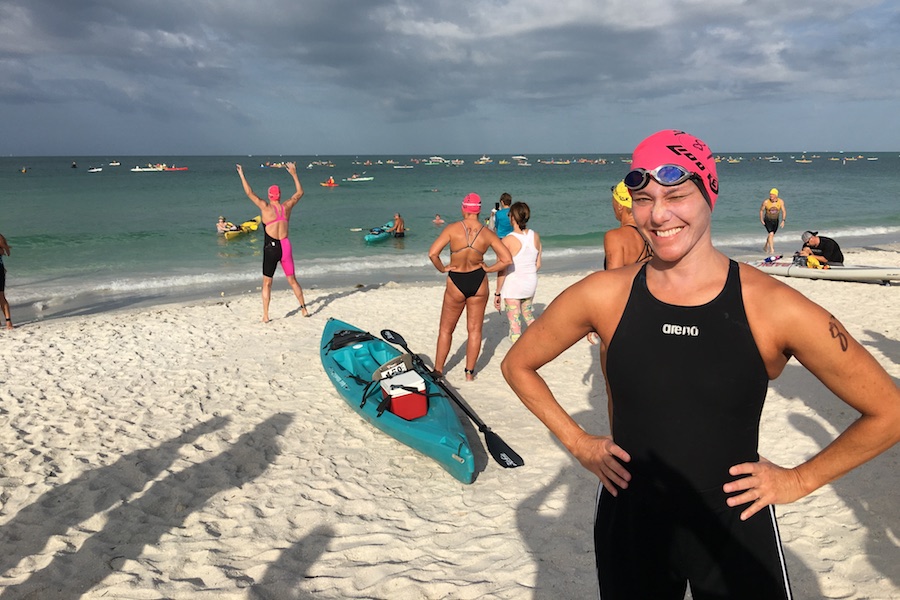
Elsbach started swimming competitively when she was 9 years old and was a walk-on swimmer at the University of Iowa in her college days. Elsbach is currently a part of U.S. Masters Swimming (USMS), a national membership nonprofit organization consisting of about 60,000 Masters swimmers. It was originally created to help adults stay in shape, but USMS also offers pool and open-water competitions that 25 percent of its members compete in, according to the USMS website.

The California Aggie had the chance to sit down with Professor Kimberly Elsbach to discuss her collegiate swimming days and her current job as a professor at UC Davis.


How was your experience in collegiate athletics?

It [Iowa] wasn’t a swimming powerhouse but it was a Division I Big Ten school, so pretty competitive. I was an engineering major, so I had a really full course schedule. Since swimming is one of those sports you have to practice a lot, we would practice from 6:30 a.m. to 7:30 a.m. and then every afternoon we would have weight training for an hour and then another two hours of swimming, six days a week, year-round. It was very time-consuming so it was a challenge figuring out how to do my coursework and swimming. Because of that, I learned how to be very organized, which served me very well in college. I ended up getting a scholarship my senior year, and I usually could score points in the dual meets so I felt like I belonged on the team at that point.”


I read that you are a Masters Swimmer, so is swimming something that you still continue today?

I swim every day. Last weekend [April 22], I did a seven-mile ocean race down in Florida. I do a lot of open water swimming and we have five national championship open water races at different distances. I won my age group and I got fifth overall which is pretty good given that I am older than some of the other swimmers.”

Why did you choose to become a professor after your collegiate swimming was done at Iowa, and why did you come to Davis to teach?

My father was a medical school professor, so I think I always really liked the lifestyle he had. He was busy a lot, but he got to do stuff he was interested in, like his research. I think when people think about college it is one of the best times of your life and when you are a professor you always get to be in that environment, which is pretty awesome. I worked for a few years as an engineer but I always planned to go back to school. By luck and chance I got into Stanford, and did my Ph.D. there, which really made me fall in love with Northern California and I never wanted to live anywhere else. I think I was in Davis for about 10 minutes before I decided I really loved it because it is such a great place and now I have been here for 20 years.”


Do you ever miss collegiate swimming?

I do. I miss being on a team because there is nothing like being on a really close knit team. I think it becomes a family. For me, going to college I didn’t know anybody, but I immediately had this family of my swim teammates and coaches, and I miss that. I am sure all college athletes have that experience.”


Being a former athlete, do you have any general advice for current and/or future student athletes?

I think it is the best experience. Of what I learned in college, I think that the things I learned that were the most valuable I learned from my time in athletics. Time management is one, but even something like humility. It is important to learn that there is always someone that is going to be better than you. You learn how to support people that are struggling, and those are lessons that I apply every day in my work and research. You don’t have to be an NCAA athlete to learn those things, you can be on a club or an IM sport. The more I learn about undergraduate education the more I learn that getting involved in an activity like this [sports] is really important. I think you do better in school, but I also think you learn more than if you just stick your head down and just do schoolwork. My advice is to take advantage of this opportunity. It may be hard, but you are going to learn so much more, especially when you fail. Take some time to reflect when you fail. If you just get mad with failure, you miss out on the opportunity to learn, and nothing will teach you failure and learning more than athletics.”

Written by Ryan Bugsch — sports@theaggie.org

Winter to Spring makeup, skincare transitions

VENOOS MOSHAYEDI / AGGIE

UC Davis students talk seasonal makeup, skincare routines

Despite common trends on Instagram or Youtube, makeup and skincare are very personalized routines — everyone does it a little differently. Much like decorating a laptop cover with assorted stickers or finding a special study method, makeup is also customized according to people’s skin types, daily lives and personalities. It’s a form of self-expression and oftentimes self-empowerment. The Aggie talked to a few UC Davis students about their personal makeup habits.

What is your cool weather to warm weather makeup and skincare transition?


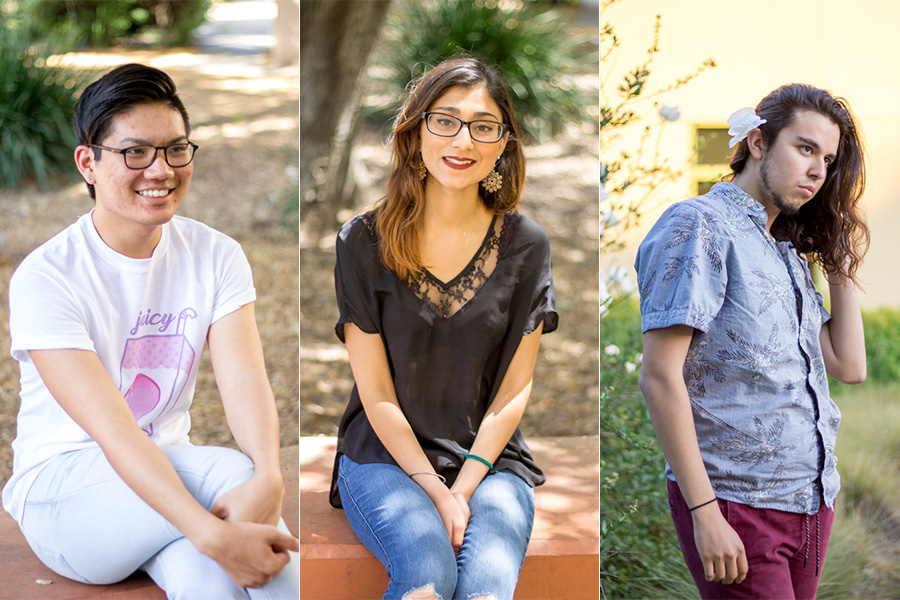
Huong Nghiem, second-year managerial economics and design double major:

“In the winter I use a lot of moisturizer because my skin gets dry, and when it gets warmer, I use a lot of mattifying products. I also use a lot of sunscreen when it gets to warmer weather. With makeup, I try to look more matte during winter and dewier during summer, even though I’m using more moisturizers during winter and mattifying products for my skin during summer.”


Alice Argueta, second-year human development major:

“I usually have to change my foundation depending on the weather. During winter, I need a formula that won’t dry out my skin and for spring, I use this water foundation. I used to have this NARS foundation that would dry out my skin during the wintertime. I always try to exfoliate once a week and I always use sunscreen to avoid getting more freckles.”


Isamar Ceja, first-year psychology major:

“I have to change my foundation during spring according to my skin tone. I also try to avoid using anything that makes me look too dewy during summer. I think for makeup, I use more browns and neutrals during winter and bright colors during spring and summer.”


Ashley Maciel, third-year human development major:

“In winter, I use a lot of burgundies, cool browns, grays and taupes and during spring, I’ll transition to pinks, corals and pops of color on my lips. For skincare, I think it’s important to use products with sunscreen in them.”


What are some products that you can’t live without?


Nghiem: “A staple would probably be setting powder or powder foundation. It’s good especially if you don’t like wearing heavy face makeup.”


Argueta: “My Jergens face cream. I have dry to normal skin, so especially during winter quarter I need to apply moisturizer right after I get out of the shower, or my face will get so tight and so dry. I also can’t live without my sunscreen and chapstick.”


Ceja: “There’s this Lancome BB cream I use all the time and I always do my brows, so I need brow powder and brow gel.”


Maciel: “I always like a bold lip and bold wing liner. I also like pops of color and just to have fun with my makeup.”


What advice do you have for someone who is getting into makeup and skincare for the first time?


Nghiem: “I think that people starting with makeup should start small and simple. Once you get the hang of that, you can get into more complex makeup. For example, with eyeliner you can start with pencil and go into liquid later on.”


Argueta: “I’ve always been the type of person to take care of my skin and body. If I haven’t been taking care of that, I feel like I haven’t been treating myself right. I think it’s good to splurge on skincare because it’s a good investment. I think it’s really important to know your skin type before buying any product for your face, whether it’s skincare or makeup. I also think it’s not good to wear heavy makeup everyday so your skin can breathe.”


Ceja: “I think that it’s important to know that you don’t need to do your makeup the way everyone else does it. While it’s helpful to watch YouTube videos and tutorials to start off, it’s good to just develop your own makeup routine that fits for you.”


Maciel: “I would say watch Youtube beauty gurus and do your research to find your skin type first.”


Which makeup trend do you think should die?


Nghiem: “I think people shouldn’t use products that aren’t meant to used for makeup purposes. For instance, people use lipstick for eyeshadow instead of just using actual eyeshadow.”


Arguetta: “I think baking is an unnecessary trend because it looks overly matte and for me personally, it would be too drying.”


Ceja: “I really don’t like it when people layer their mascara and it ends up looking clumpy.”


Maciel: “I think that overlined lips should go.”


Written by: Becky Lee — arts@theaggie.org

California Honey Festival showcases honey from across the state


GENESIA TING / AGGIE

Robert Mondavi Institute partners with the Inaugural California Honey Festival

As the bee population slowly rebuilds after the disastrous colony collapse from a decade ago, honey farmers are searching for better ways to protect the species.  

A year ago, there seemed to be a decrease in the use of plants laced with pesticides harmful to bees, according to an article from the Los Angeles Times.

“About 65 retailers, including Whole Foods and BJ’s Wholesale Club, have committed to phasing psyllids, that damage the plants,” the article read.

In fact, there is an entire festival dedicated to the farming and eating of honey. On May 6, honey makers from across California brought their honey to an event in Downtown Woodland showing off the tastes of the state. At the California Honey Festival, the event showed pride in its honey lab, beekeeper stage, and honey competition, the event attracted onlookers to downtown Woodland. The event aimed to teach more about bees and pollination, as well as share in the unanonymous love for sweet things.

“The California Honey Festival’s mission is to promote honey, honey bees and their products, and beekeeping through this unique educational platform, to the broader public,” read the event’s homepage. “Attendees will learn about the myriad of issues that confront honey bees including pesticide use, diseases and even the weather!”

UC Davis also took part in the event, as the Robert Mondavi Institute was one of this year’s partners in supporting the Inaugural California Honey Festival.  

While it has been 10 years since the 2007 bee colony collapse, there is still more to be done by farmers, students and honey lovers everywhere to protect bees, and it can be as simple as planting bee friendly plants without the use of chemically laced pesticides.

While companies’ preferences as to what products they sell are influential to encouraging healthier pesticide techniques, it seems to have at least slowed the amount of bee population decline.

“The USDA last year reported winter colony losses of about 23%, based on a survey of beekeepers.  A winter decline of about 19% is considered normal.  In May [2016], the USDA reported 17% loss of colonies from commercial beekeepers during the first quarter,” according to the LA Times article.

The problem lays not just in the use of pesticides, but also in the type of pesticides being used.

“Neonicotinoids, which mimic nicotine insecticides produced naturally in leafy plants, have been linked to the decline of bee populations,” the article read.

There are safer and more natural options for pesticide use, rather than the traditional use of man made chemical pesticides. These changes in farming techniques from chemical toxic to bee hives can be seen close to Davis. One such business, Henry’s Bullfrog Bees, helps provide bees for farmers to help increase crop yield, as well as sell raw honey to local markets like the Davis Co-op, Davis Farmers Market and numerous other Southern California locations.  

According to its website, Henry’s Bullfrog Bees works “hard to maintain healthy hives, which are not treated with any harsh chemicals, and keep our bees on land that will only benefit to their health.”


Written By Madison Lyznick — city@theaggie.org

Humor: GOP health care bill lists “being alive” as preexisting condition

HEATHER REED / PUBLIC DOMAIN

However, this will not apply to Congress

The House of Representatives recently passed a “much-needed” health care bill that would thoroughly scrap Obamacare. This bill introduces new limits on access to insurance, instituting new regulations on what constitutes a preexisting condition. This means that people with those preexisting conditions are priced out of coverage for their health problems.

“Yeah, so I was just sitting with a couple of my buddies laughing really hard about how poor people are in America,” said House Speaker Paul Ryan. “And right as my buddy Kevin was joking about how funny it would be to sell our souls to Internet providers like Comcast, an idea hit me: Why don’t we make it even harder for the poor to access health care? It’s the ultimate joke. So I was like, ‘Bros, let’s make a new health care bill!’ So I talked to the President about it and he was like ‘Do whatever you want as long as I can go take a nap.’ It was so rad! We were gonna pull the biggest practical joke ever! It was like being back in college with my frat bros.”  

So what was the best way for the GOP to play its awesome prank? Make being alive a preexisting condition!

Kevin McCarthy, the House majority leader, weighed in, “So my really good bro Ryan was like, ‘Kevin, this is what we are doing, and you will do it, because you are my little bitch.’ I’m cool with whatever Ryan wants, as long as it directly hurts poor people in America.”

“I mean, rich people are obviously gonna still be able to afford health care no problem. They won’t need insurance. However, poor people,” Ryan chuckled. “Poor people will just have to suffer. Haha! What a good joke.”

The Aggie tried to get a comment from Democratic lawmakers, but they were all too busy either trying to scam the American people in their own thinly veiled ways or banging their heads on their desks trying to forget all of this happened.

“I can’t *thud* believe *thud* any of this *thud* is happening *thud* WALL STREET,” said Bernie Sanders, offering some insight into the Democrat reaction to the health care bill.

Curiously, while being alive is a preexisting condition, erectile dysfunction is not. Hmm. I’m sure that’s just a coincidence.

Written by: Aaron Levins — adlevins@ucdavis.edu

(This article is humor and/or satire, and its content is purely fictional. The story and the names of “sources” are fictionalized.)

Veterinary school develops chicken coops on pastured poultry farm

KELSEY GREGGE / AGGIE

Students research organic chicken feed substitute

UC Davis students are in the process of building four chicken coops at the UC Davis Teaching and Research Animal Care Services facility in order to further a research project that studies the effects of an organic chicken feed for the UC Davis School of Veterinary Medicine.

The program aims to evaluate the effects of a new blend of organic chicken feed that contains the amino acid methionine has on black soldier larvae flies, according to Jacqueline Nguyen, a second-year civil engineering major and one of the engineers building the chicken coops. The fly larvae will then be fed to the chickens, and results will be noted.

“[The project is to] see the effects of feeding methionine to black [soldier] larvae flies, and then feeding them to the chickens,” Nguyen said. “This is part of an ongoing process to substitute regular feed for organic feed, without loss of nutrients.”

The coops are in the process of being constructed within the dimensions of the pastured poultry farm, which is a “living laboratory” for projects like this. The tentative completion date is set for June 2017, with the intention to finish before any of the student engineers on the project leave for summer vacation. The research project will continue for the rest of the year.

“The estimated completion date for the project concerning the chicken coops is the end of the quarter,” Nguyen said via email. “We are hoping to finish building and constructing all four coops before finals week, since the chickens need to be living in them by their 16th week of life. We are also trying to finish before summer vacation, as not all of our engineers will be in Davis. The overall project, concerning the research on black soldier larva flies and harvesting the chicken eggs, is year round.”

The 183 chickens that will be housed in the new coops are currently living in an indoor facility for protection. The coops themselves are being built with an emphasis on portability and protection.

“For this research project, there will be four coops,” Nguyen said via email. “Each coop will be built out of a lightweight, aluminum frame, making it easily portable around the pasture. Hardware cloth will be surrounding the frame, protecting the birds from any outside predators.”

Additionally, the design of the coops will allow for easy access to eggs that are laid during the duration of the project. The eggs themselves, according to the farm’s website, will be donated to the Yolo County Food Bank.

“In each nest box, there is a sloped bottom,” Nguyen said via email. “This design will help the husbandry team to retrieve the eggs that the hens lay, as the eggs will roll down to one side of the nest box, and the chickens will not be able to peck at them. The nest boxes are located on the two sides of the coops, and there will be a human access hand door behind the nest boxes […] This makes for quick egg harvesting, but it also does not disturb the hen’s process of egg laying.”

Students are intrigued by the idea of this project, as its goals seem to be leaning towards sustainability.

“While I don’t know very much about raising poultry, I am intrigued by this project,” said Ashley Lord, a first-year undeclared physical sciences major. “It seems to me that having a better food for the chickens will allow them to grow to be healthier, which would result in better eggs for us humans to consume.”

Other students, like Jazmin de Jesus, a first-year chemical engineering major, also like the idea of having more livestock on campus.

“I love the cows that are near Tercero, and the fact that we have chickens on campus is pretty cool,” De Jesus said. “It also seems like a great opportunity for engineering students to get hands-on experience, which is lucky for them.”


Written by: Emily Shintani — campus@theaggie.org

Forbes ranks UC Davis ninth Best Value College in the nation

FARAH FARJOOD / AGGIE

UC Davis secures position within the top ten, amongst four other UCs

UC Davis earned the ninth spot on Forbes’ annual Best Value College Ranking out of 300 national colleges. Forbes’ criteria for the ranking consisted of comparing “Quality (25%) + alumni earnings (20%) + median student debt (20%) + on-time graduation (15%) + drop-out risk (10%) + Pell Grant recipients (10%) / gross tuition and fees.” This data was drawn from the U.S. Department of Education College Scorecard and Payscale, the world’s largest salary database. UC Davis charges $13,896 per year for in-state tuition. US News and World Report, the premiere ranking publication, designated UC Davis as  #44 out of 310 schools in their 2017 National Universities ranking.  

Forbes approached the perennial college ranking criteria question from the standpoint of “whether a college will deliver a meaningful return on investment.” It illuminates how certain higher learning institutions, such as UC Davis, stand out among others nationwide in providing the greatest value.

“Knowing where you can get the most quality for each tuition dollar spent is the goal of this year’s Best Value ranking,” the Forbes press release stated.  

The Forbes press release showed a new trend toward Western public schools within the ranking, departing from the traditionally more prestigious private northeastern universities.

“We’ve tapped into something very interesting here,” the press release read. “Private Northeast institutions have lost their monopoly on the higher education marketplace. More than half of the top Best Value Colleges are clustered in the West and 5 of the 10 are public schools (four from the enviable U.C. system).”

Walter Robinson, the associate vice chancellor of Student Affairs, described the value of earning a degree at UC Davis, citing both the education and post-graduation success. Robinson explained how UC Davis has become the epitome of “what it means to be an engine of social mobility,” referencing UC Davis’ low-income and first generation college student advocacy.

“A high percentage of our students are the first in their families to attend and graduate from college,” Robinson said via email. “Many of our students come from low income backgrounds. We have earned the reputation of improving the quality of lives by moving our students three rungs up on the socioeconomic ladder which is transformative for them, their families and their communities.”

UC Davis resided at 125 on the Forbes 2016 list, climbing into the top 10 this year.

“We are in perpetual pursuit of comprehensive excellence in all that we do,” Robinson said via email. “We have world class faculty who engage with outstanding students, who participate in cutting edge research, high impact service and practical and applicable educational experiences. On average, our students graduate with one of the lowest amounts of loan debt when compared to other top universities.”

Claire Doan, a media specialist for the UC Office of the President, spoke about UC Davis’ cost-to-benefit ratio in terms of supplying a competitive college degree.

“The rankings confirm what we already know: University of California students are getting an extraordinary education and a great deal,” Doan said via email. “UC Davis is a prime example of groundbreaking research, excellent instruction and a high graduation success rate — for students paying only a fraction of what they would elsewhere for the same overall quality.”

Josh Dalavai, ASUCD president and a third-year political science and economics double major, hedged his appreciation of the ranking with a comment about out-of-state and international student advocacy, amidst proposed enrollment caps.  

“While it is wonderful that we are ranked so highly, we also have a long ways to go in ensuring that that ‘value’ also includes our out of state and international students in terms of accessibility,” Dalavai said via email.


Written by: Aaron Liss — campus@theaggie.org

Consider the following

HANNAH LEE / AGGIE

Vote to re-establish ASUCD Court in special election

UC Davis students will have the unique opportunity to vote to reestablish the ASUCD judicial branch this Wednesday. This special election comes as a result of a University of California Office of the President (UCOP) policy that requires student governments to have a court, which was recently brought to ASUCD’s attention by a student.

ASUCD became the only undergraduate student government in the UC system without a judicial branch in fall of 2016, after voters approved a constitutional amendment written by Internal Affairs Commission (IAC) Chair Nick Flores that abolished the ASUCD Court. Flores wrote the bill after determining that the court “maintains no unique powers that do not already exist” in the IAC.

Former ASUCD President Alex Lee supported the amendment, stating in a November interview with The Aggie, “As an executive, I personally favor pragmatism and the spirit of [the executive’s] governing documents over the exact wording [of the ASUCD constitution].” Lee also vetoed an amendment earlier this year that would have created a Judicial Council and a Judicial Council Oversight Committee.

The Editorial Board fully supports the reestablishment of the ASUCD Court.

ASUCD prides itself on being a mainly student-run department, giving students the chance to “gain invaluable experience engaging in leadership activities,” according to its website. By taking away the court, the association effectively took away nine student-held positions that offered the most hands-on experience for those who are interested in judicial law.

While supporters of the court’s elimination argued that the judicial branch “ultimately is not vital to fulfilling ASUCD’s constituted duties,” it is worrisome that student officials first turned to the option of disbanding the branch altogether rather than finding a way to give it a more meaningful role. It is equally worrisome that no members of ASUCD were aware of this policy beforehand. By totally disregarding the possibility to address weaknesses within the judiciary, the association has shown a disturbing amount of negligence for the checks and balances system.

The importance of checks and balances in student government can serve as a microcosm for an even greater problem the nation is facing today. President Trump suffered a major setback when two federal judges in Hawai’i and Maryland ruled that his travel ban was unconstitutional. This bureaucratic resistance served as an important reminder to the executive that running a government is not, and never will be, a one-person show.

The Editorial Board encourages students to vote yes on the creation of the Judicial Council and the Judicial Council Oversight Committee at elections.ucdavis.edu from 8:00 a.m. on May 24 to 8:00 a.m. on May 25.

HARD Summer hits 10th anniversary with Justice, Snoop Dogg, DJ Snake

Southern California music festival will showcase biggest talents from hip hop to electronic music

After one decade of bringing heavy beats and hip hop, HARD Summer returns to Southern California boasting a super stacked lineup headlined by DJ Snake and Justice. Other electronic acts include Bassnectar, Zeds Dead, Jai Wolf and Dog Blood, the duo consisting of Skrillex  and Boys Noize, there only show in 2017. Special guest, Snoop Dogg, will also be performing track of his classic 1993 LP Doggystyle. On the rap side of things, the lineup consists of Rae Sremmurd, Migos, Skepta and Ty Dolla Sign.

The inaugural music festival has a new location at to the Glen Helen Amphitheater in San Bernadino, Calif. on Friday and Saturday, August 5 and 6. General admission tickets and VIP tickets are still on sale and both have payment plans if you’re unable to purchase everything at once. Car and RV camping also makes its return which includes up to five camping wristbands for your crew. Tickets and passes can can be purchased at this link.

For a full list of artists, please refer to the graphic below. For more information about HARD Summer, be sure to visit their website. To stay up to date on all things HARD Summer, join the Facebook event page.

Update: A previous version of the article stated that the festival will be taking place at The Speedway in Fontana, Calif. Organizers recently announced the location change to the Glen Helen Amphitheater. All tickets purchased will be honored at the new venue.

Interim Chancellor Hexter organizes panel to address protection, restriction of hate speech

RAUL MORALES / AGGIE

Law enforcement, scholars discuss legal definition of hate speech in American constitutional jurisprudence with regard to college campuses

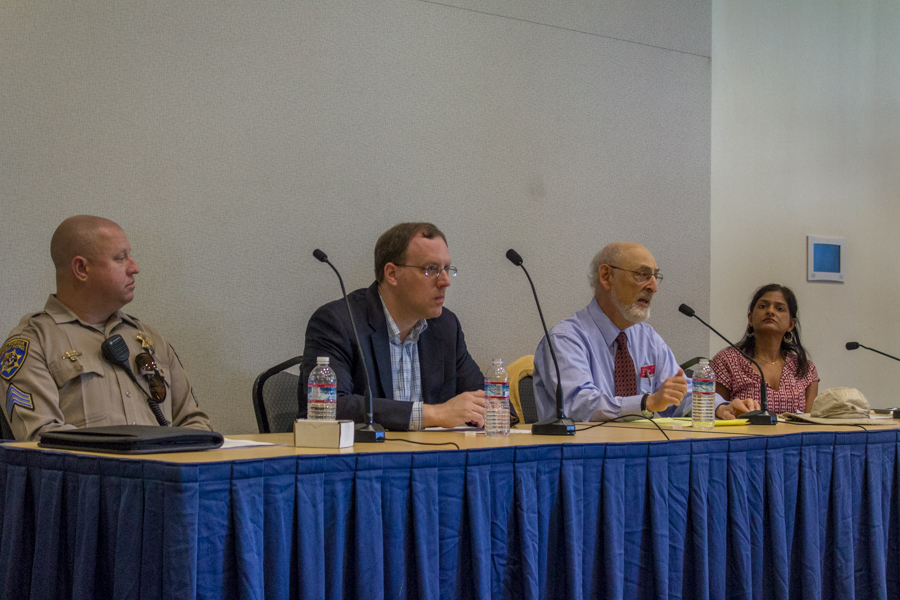
“Hate Speech, Free Speech, More Speech or Less Speech: The Quad as Free Expression Zone or Safe Space?” took place on May 1 in the Multipurpose Room of the Student Community Center. The event, organized by Interim Chancellor Ralph J. Hexter, was in collaboration with UC Davis School of Law and moderated by Madhavi Sunder, the senior associate dean and a professor in the School of Law.

Panelists included Alan E. Brownstein, an emeritus professor at UC Davis School of Law with a focus on constitutional and church and state law; Carlton F.W. Larson, a scholar of American constitutional law and Anglo-American history; and California Highway Patrol safety sergeant Steven White, assigned to the state capitol protection section. Among the attendants was Interim Provost and Executive Vice Chancellor Ken Burtis.

Sunder set the theme for the discussion by expressing how public university campuses, particularly UC campuses, became “focal points for public activism” against the Vietnam War and gradually made their way to becoming “a sight for contested speech in the culture wars.”

In light of the UC Berkeley protests against the presence of Ann Coulter and resistance at both UC Davis and UC Berkeley against former Breitbart editor Milo Yiannopoulos, administration expressed that an open discussion regarding hate speech was especially relevant.

Notable cases that questioned the presence of free speech include a letter to the editor written by Jeff Weiner, a UC Davis professor of comparative literature. Weiner’s letter addressed the cancellation of Yiannopoulos’ talk by stating that “free speech is dead on college campuses” and went on to express that “the protesters think they triumphed, but they only succeeded in taking us one step closer to the death of the university.”

Additionally, the unanimously passed ASUCD Senate Resolution #5 demonstrated ASUCD’s resistance to associate with the presence of Yiannopolous at UC Davis. The Senate Resolution quotes the ASUCD Student Bill of Rights, stating that students “have the right to be free from discrimination and harassment on the basis of race, gender, sex, ethnicity, religion, national origin, disability, sexual orientation, status within or outside the university, or political belief in all activities sponsored or conducted by the University, its affiliates, ASUCD, or campus student groups as addressed in the UC Davis Principles of Community.” The bill also stated that the Davis College Republicans inviting Milo Yiannopoulos “has brought about the marginalization and harassment of minority groups, such as transgender and minority students, on other university campuses[.]”

The event led off with Sunder discussing what the future direction of free speech will be in the face of violence occurring on university campuses, places that have been historically dedicated to open dialogue and debate.

“How does the univeristy balance its commitment to guarantee the rights and safety of all students and in particular its principle commitment to [the diversity of] students in an increasingly inclusive university,” Sunder said. “What is the role of law enforcement in securing free speech?”

Larson emphasized that the United States is “distinct” in that it protects free speech more than any other western country. He drew analogies between educational institutions restricting speakers’ entrance to private property owners barring visitors from entering their property.

It was then discussed that, while it is justifiable for people who own property to impede someone from their home, if that person is going on a political tirade that is unaligned with the property owner’s values, that right does not apply to public educational institutions.

Larson went on to quote the Supreme Court ruling in the case of Tinker v Moines about the freedom of expression of student opinions on college campuses.

“It can hardly be argued that either students or teachers shed their constitutional rights to freedom of speech or expression at the schoolhouse gate […] during authorized hours he may express his opinions, even on controversial subjects […] if he does so without ‘materially and substantially interfer[ing] with the requirements of appropriate discipline in the operation of the school’ and without colliding with the rights of others,” reads the ruling Larson mentioned.

Brownstein addressed the extent to which the First Amendment protects various categories of speech and distinguished between speech and conduct, noting that speech is protected by the First Amendment while conduct is not.

“Hate speech is simply another kind of speech that is protected as speech […] [it] has no legal significance,” Brownstein said. “Obstructing access to a room or activity is not protected speech, it’s prescribable conduct.”

Next, Brownstein recounted a case of abortion clinics that were subject to protests by individuals opposed to abortion who expressed their opinions by denying women and staff access to the clinic buildings. In this case, Congress passed the Freedom of Access to Clinic Entrances Act, which challenged the First Amendment by conveying that the protestors were not engaging in speech but rather performing conduct, which can be prohibited by law.

It was clarified that these laws could not be implemented on the grounds of respecting an individual’s sensibilities and sensitivity, nor on the basis of having caused emotional distress, regardless of how vile the relayed messages were. Brownstein listed several cases during which the Supreme Court ruled in favor of the side demonstrating speech. Cases included Nazi supporters marching through a town with a high population of Holocaust survivors and Westboro Baptist Church members displaying signs with “thank God your son is dead” at the funeral of Iraq veterans on the grounds that “God is punishing the U.S. because we are too protective of homosexuality.”

White echoed the same notions as Brownstein with regard to protection of speech. He mentioned that reservation permits for the state capitol are given regardless of the message that is being relayed to the public. The safety of citizens is their primary concern.

Larson added that prohibiting the speech of the invited individual is not a disadvantage to the group that was excluded, but rather “the harm is to everybody else that was deprived of the normal functioning marketplace of ideas that you would expect to have.”


Written by: Kimia Akbari  — campus@theaggie.org

Pride profiles

MEENA RUGH / AGGIE

Activism in LGBTQIA community uplifts others

May is Pride Month at UC Davis — a month during which members of the LGBTQIA community can celebrate and heal through a variety of workshops hosted by the LGBTQIA Resource Center and other collaborators. The Aggie interviewed queer activists on campus to find out what inspires them and how they got involved in advocacy.


Austin Tarumoto is a third-year global disease biology major and co-president of Asian Pacific Islander Queers (APIQ).


What activism have you done in the queer community?

My first year, I was a part of this queer organization and it just felt like my culture identity as a Filipinx Japanese person wasn’t acknowledged, so I found the Asian Pacific Islander Queers (APIQ) my second year and got more involved with that, and so that’s where I found a lot community and that’s where I felt uplifted as a queer Asian person. This year, I am the co-president for APIQ and I’ve been doing work to further community and better support the community with the recent political climate — just hosting processing and healing spaces and trying to figure out ways I can engage in community care because I feel like that’s a really powerful thing to do.

Another way is me and my co-president advocated for a seat on the Asian Pacific Islander Retention committee, specifically centering the experiences of queer API folks at this university and what a retention initiative would look like that involves and includes queer people.

We are also a part of SEA leaders, Southeast Asian Leaders, so being allies to the Southeast Asian community and also having straight allies within the Southeast Asian community to support us as well and building those connections with them is really cool.

I’m also a peer educator at the Cross Cultural Center through peer education and community empowerment (PEACE) and it’s not necessarily a solely queer job, but I find ways to incorporate my queerness in the ways I do my education work, and how I can use my own experiences as learning goals but not necessarily exploit my own traumas as a learning objective.


Any favorite queer artists?

The first person that comes to mind is Jade Phoenix Martinez, she’s a trans femme poet, activist and educator she’s really amazing and I saw her the first time last year at the trans people of color conference and then she kept coming back to UC Davis for different events. It’s really great to see her because I feel really affirmed by her words, especially for me identifying as genderqueer and seeing representation out there and being really successful, I feel really inspired by that. And just my co-workers, I have a lot of really dope co-workers here that are artists, some of the people that are on the APIQ board with me they just make this beautiful art and they retain me.


What does your queer trans people of color (QTPOC) family look like?

For me, it’s how much support there is in the community. It’s not one-sided — we all have things we can give to the community and we all have things we can receive from the community and we help each other grow, whether that be through education, whether that be through helping [each other] cope with our own traumas or caring for one another, or just gossiping […] it’s definitely what makes it a family. But there’s more to it, there’s just this feeling of home and a feeling of acceptance. To speak for me personally, having pretty religious parents, it’s hard being a queer child so being in that community has been really affirming.


Carlos Leal is a third-year human development and Spanish double major. He has been involved in QTPOC activism throughout his time at Davis and recently has enjoyed performing in drag.


How has the queer community supported and uplifted you?

The queer community has been really powerful for me in a lot of ways. I think that even dating back to my first year I lived in the rainbow dorms, the LGBTQIA friendly dorms, and that was really the first start of my activism journey. I come from Woodland and it’s only ten minutes away but it really is a lot different, I was bullied all through school and didn’t always feel like it was the safest place and it wasn’t. I didn’t know that just 10 minutes down the road I would find a community, and a solace and begin my own journey of self-love and appreciation. I’ve been uplifted through people I’ve met in the different resource centers, like LGBTQIA Resource Center, the Cross Cultural Center and the AB540 and Undocumented Center and I feel like it’s been really great to have those connections and friends and especially my queer and trans friends of color, you know QTPOC fam.


What has activism looked like for you in the queer community?

I think a lot of the activism I’ve done in Davis has been undoing the damage that was done on me growing up and helping other people undo some of that damage. Specifically in terms of machismo and the patriarchy informed the way I saw myself. I never felt adequate enough trying to reach these socially-constructed gender norms. I think that through learning and continually unlearning those damaging narratives of gender it’s allowed me to support other folks who also have dealt with some of that homophobia and queerphobia and that hatred towards femme folks and really support my feminist expression as well. I’ve been able to explore drag and I’ve been able to explore voguing and different forms of dance that have history and ties back to QTPOC as means of survival, and a means of expression and it has been really powerful for me to do that. Even two years ago I never thought that I would be able explore drag comfortably and now I want to continue to do it. I want to show other folks that femme expression is beautiful and powerful.


What queer artists do you recommend?

Well of course Rupaul’s Drag Race. I think it’s important for queer trans folks of any age see themselves represented in the media especially QT folks of color. This season there’s a Latinx queen, Valentina, and she’s been really great and it’s been so amazing to see her be so proud of her Latina heritage and I think it’s important for young brown folks to see that people from these communities who are often marginalized and oppressed can express themselves [in ways] that don’t align with machismo or whatever they were socialized with, they can be free from that.


What have you learned from the queer community?

Something I’ve learned in college is that I have to be unapologetic. There’s a need to be unapologetic and limitless in everything you do. If I could look back on my first year, as much as it was so nice being a part of the rainbow dorms I still felt so lost. It takes time to find your niche and don’t give up because the struggle is always going to be real. I’m still figuring everything out but it’s always a continuing journey and you grow in some ways and you don’t in others and that’s ok because you can grow in that area tomorrow. I have to be patient with myself and remind myself it’s ok to not progress in something right away.


Written by: Abigail Wang — arts@theaggie.org

The Memorial Union: Woohoo or Boohoo?

FARAH FARJOOD / AGGIE

Students share opinions on newly renovated Memorial Union

The Memorial Union (MU) Renewal Project is finally nearing completion after nearly three years of construction. Located next to the CoHo in the heart of campus, the newly renovated MU was reopened to the public on May 1, with the official ribbon-cutting ceremony on Thursday, May 18. Many students have already been inside the new location, and have formed their first impressions of the new study and lounge spaces now available to the campus population.

Emily Jones, a first-year political science and classics double major, was excited to finally be able to experience the MU, and has found it to be worth the wait.

“It was annoying that they were doing construction for so long, [but] it’s nice to see that it paid off,” Jones said. “This is really cool. I was definitely impressed.”

Kimberly Ruiz, a first-year psychology major, was very pleased by The Market, located on the west side of the MU’s main floor.

“I know [we] have Trudy’s [in Tercero], but I was thinking, ‘Oh my god, where am I gonna go next year?’” Ruiz said. “I really like that they have a convenience store here.”

Andrea Damian, a fourth-year neurobiology, physiology and behavior major, also welcomed The Market as a new addition.

“Oh, the food, that’s good,” Damian said. “I think that’s cool — with the organic food and the Peet’s coffee and all that.”

Ruiz appreciates that the new air conditioning system keeps the MU very cool and that the re-opening of the building has created more lounge space. Since the MU was under construction, many students felt that the CoHo had become too crowded for studying and relaxing with a cup of coffee.

“It took a long time, but looks pretty good,” said Emily Gould, a fifth-year clinical nutrition major and MU employee. “People seem to like it. My only complaint is that there is no post office here. People seem to miss that.”

Keri Pflieger, a fourth-year English and international relations double major, reflected upon the changes in the campus landscape made since she was a freshman, especially with graduation right around the corner.

“It’s kind of surreal, because [the MU] is completely different than what it started out from,” Pflieger said. “It’s like I’m leaving a different campus.”

Although Pflieger finds the MU’s renovations to be a step in the right direction, she believes that a lot of open space was left unutilized.

“I just feel like there’s a lot of open space with not much done,” Pflieger said. “There should be more study-dedicated tables and a better utilization of the space. I feel like the MU is more dedicated right now towards socializing.”

Damian offered a similar critique on the MU’s utilization of space — or the lack thereof.

“It kind of seems like they didn’t use the space correctly,” Damian said. “There’s not really enough room for a lot of people, [and] the [lack of] outlets are kind of an issue. Huge issue.”

With concerns of adequate study locations for the amount of people who will be enjoying the newly-renovated space comes the topic of overall comfort for the visiting student under the stress of midterms.

“New furniture is great […], but it’s kind of uncomfortable,” Damian said. “The chairs downstairs are half-backs and it’s really uncomfortable to sit in them for long periods of time. I think the overall study experience is not meant for you to stay in one place for too long.”

Pflieger also critiqued the allocation of the school’s resources and questioned where funds would be most impactful for student success.

“I just wish that maybe there was more noticeable work going into classrooms that don’t have [proper desks] where you can’t even fit your whole notebook on it, rather than one of the tour centered areas,” Pflieger said.

Despite issues with the current state of study spaces, the MU games area just downstairs has excited the campus community. Brixton Layne, a first-year international relations major and avid fan of billiards, was ecstatic to find out the MU had new billiards tables.

“Billiards is probably one of my favorite games,” Layne said. “I’m glad they put a lot of tables out. I expected more bowling lanes and maybe a little bit more outside of the bowling, but as far as the billards, yes, it met my expectations.”

Jones was also particularly excited about the basement, which houses billiards tables, bowling lanes and a gaming area.

“I think it’s really cool that this is an option now,” Jones said. “I’m a fourth-generation Aggie. My parents went here 25 years ago, and they were always telling me how cool it was to have the bowling alley, and now I’m glad that I finally get to actually [enjoy it].”

Jones herself seemed satisfied with the bowling lanes, but noted that the fee to play bowling has stayed — $5 per game per person, and $2 for a pair of shoes.

“When I heard that you had to pay to use this stuff, I was kind of annoyed,” Jones said. “I mean, what am I paying $14,000 in tuition for, if I can’t even go to the bowling alley? But it is really cheap — so that’s still really cool.”

Written by: Sahiti Vemula — features@theaggie.org

The ongoing problems of mental health

LAURA LONG / AGGIE

A conversation about mental health and its challenges

Sacramento Mayor Darrell Steinberg participated in a mental health conversation last week titled “How Can We Improve Mental Health Treatment?” The dialogue, which was open to the public and held at The Sacramento Bee, centered around the persistent challenges surrounding mental health.

The conversation was led by panel members including Steinberg, Dr. Aimee Moulin, an associate professor of emergency medicine at UC Davis and Dr. Ken Wells, the director of the Semel Institute Center for Health Services at UCLA. Dan Morain, the editorial page editor at The Sacramento Bee, moderated the discussion and took questions from the audience.

One of the first questions asked by Morain addressed the lack of beds in hospitals for psychiatric patients in California. Currently there are only 17 beds per 100,000 people in California dedicated to mental health patients. Steinberg attributed the “stigma that exists around mental health and behavioral health” to the lack of resources.

Steinberg targeted this issue of stigma when he was president of the California State Senate. He authored the Mental Health services Act, which was “the first of its kind in the nation that generates $2 billion dollars a year for people in need.” He is a leader in California of mental health and, as his biography illustrates, he is committed to combating homelessness, creating permanent supportive housing with services that are needed to end the cycle. He is an excellent example of how stigma should be stopped by introducing policy that will direct attention to these issues.

Steinberg says that patients with psychiatric emergencies have often waited too long after calling 911 to ultimately receive treatment — up to 10 hours, in some cases. The Cleveland Clinic defines a psychiatric emergency as “Behavioral emergencies [that] include any patient-initiated threat of harm to self, health care personnel, or others in the patient’s sphere of influence.” One study showed how “patients with bipolar disorder, psychosis, dual diagnosis, multiple psychiatric diagnoses and depression had increased odds of being in the emergency department for more than 24 hours.”

That was not the only issue presented. The more clear issue is “of course […] the most visible manifestation of untreated mental illness,” Steinberg said, “is the homeless problem.”

The 2016 Annual Homeless Assessment Report (AHAR) to Congress showed that half of the nation’s homeless population lived in five states, including California, which took the biggest share with over 115,000 homeless individuals. Two-thirds of that share are without shelter.

The Mental Health services act “has provided 73,000 […] full service partnerships throughout the state [with] 3,000 in Sacramento,” Steinberg said. These programs for the mentally ill have resulted in stability and healthy lives, he added. We need more organizations and activists that are targeting this problem, one that can help bring stability and healthy living to these individuals.

Although these programs have helped some patients, there is still a long waiting period for those going into housing.

“People don’t have to live on the streets,” Steinberg said, “We have thousands of people in permanent supportive housing.”

Steinberg said that although we have this “we have not committed as a society to creating the kind of inventory that is necessary in order to help more people.”


Written by: Marisol Beas — mbeas@ucdavis.edu

Disclaimer: The views and opinions expressed by individual columnists belong to the columnists alone and do not necessarily indicate the views and opinions held by The California Aggie.

Davis alumnus turned WWE superstar showcases new film

GENESIA TING / AGGIE

John Hennigan visits his alma mater — from kung fu films in the arboretum to pro-wrestling

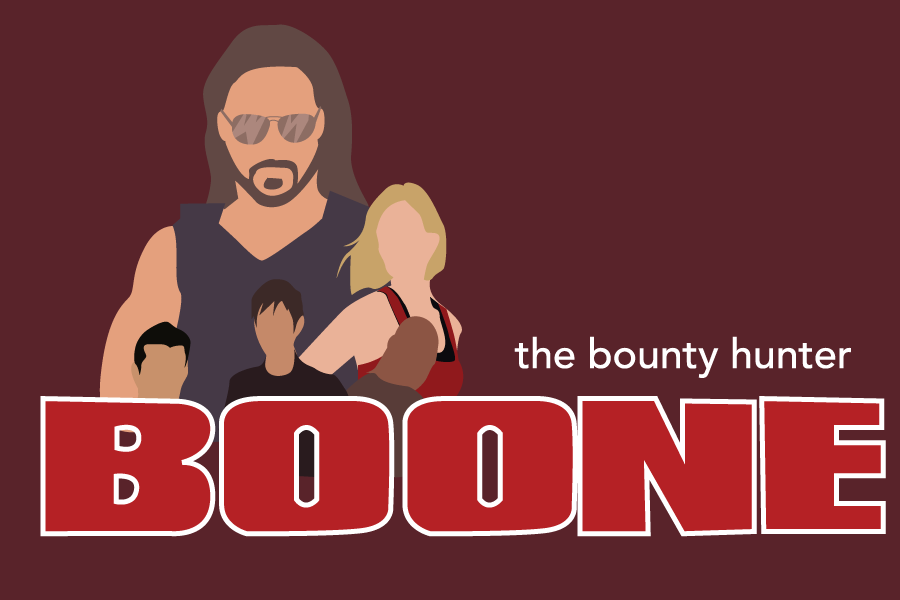
For 2002 Davis alumnus and World Wrestling Entertainment (WWE) superstar John Hennigan, “dream big” is more than a figure of speech. The pro-wrestler-turned-actor grew up on action films like Big Trouble in Little China, Lethal Weapon and Rush Hour — until he made one of his own. On Monday, May 8, Hennigan hosted a pre-screening for his newest film, Boone: The Bounty Hunter, to an eager audience of students and fans.

“This [movie] specifically is what I wanted to do,” Hennigan said. “This is what I dreamed of. This is what I started when I was in Davis, doing my little kung fu movies in the Arboretum. That’s why I was excited to come back here to do the screening.”

The pre-screening was nostalgic for Hennigan; in that same lecture hall he completed the chemistry and calculus series as he pursued a major in geology years back. Halfway through his second year, however, Hennigan switched to an individualized major, film aesthetics and culture, to pursue the “big dreams” his favorite childhood films had inspired.

When applying to colleges, Hennigan chose UC Davis because, at the time, it was the only UC with a wrestling team. And, as with his other aspirations, he succeeded — until injuries altered his path.

“I was captain on my high school wrestling team,” Hennigan said. “I wrestled all four years. So when I finished high school I really identified myself with wrestling, as ‘the wrestling guy.’ And I wanted to go somewhere where I could continue to wrestle. I got here and I only wrestled for one year, and hurt both my knees, and for some reason it was just enough to bump me off that track.”

Hennigan remained involved in on-campus activities, specifically a mix of athletics and performance-based art that would later become his career.

“When I was here, I spent six hours a day at the rec hall,” Hennigan said. “I would go from the gym, to gymnastics, to kung fu on Tuesdays and Thursdays, to breakdancing Mondays and Wednesdays — I spent all my time there.”

It didn’t take long after graduation — in fact, not even 24 hours — for Hennigan’s dreams to become an immediate reality. During his senior year, Hennigan submitted a tape to participate in the MTV series Tough Enough.

“I saw [the show] and I was like, ‘I want to do that. I grew up on pro wrestling and action movies,’” Hennigan said. “So I submitted a tape for season two, and almost made it, but didn’t. And then for season three, I re-submitted, and it was crazy timing: I submitted a month before graduation, and they let me know the day after I walked […] I ended up making it on the show — and then winning the show.”

From there, Hennigan’s career became a whirlwind of wrestling and television and chaos. The season winner of Tough Enough is granted a WWE contract, and Hennigan remained a wrestler with the organization until 2011.

“So it’s like as soon as I graduated, I did the show, and then four months later, I packed up my car and drove to Louisville and lived there for four years,” Hennigan said. “I learned how to become a pro wrestler, and I started on SmackDown in 2005, and I guess I had a career as a pro wrestler. As soon as I left here it was like, I’m a pro wrestler now.”

In 2011, Hennigan denied the renewal of a 5-year contract with WWE. The rigorous schedule of a pro wrestler infringed on Hennigan’s ability to work as an artist; it lacked, according to Hennigan, “creativity autonomy.”

It was this transition that inspired the creation of the film he helped write and produce. Boone: The Bounty Hunter is an epic, action-packed film with all the obligatory one-liners and bad puns required of an action movie. The main character, Boone (played by Hennigan), is a charismatic bounty hunter with his own TV show. In an attempt to save their dying show, Boone and his crew travel to Mexico to catch the ultimate criminal, hoping to save their low ratings.

“I made this movie because I grew up on action movies,” Hennigan said. “I wanted to make the kind of movie I would have loved as a kid. And I think I’ve got a reputation in pro wrestling for really hard-hitting, acrobatic, high-risk moves. So if you’re a fan of the stuff I do in the wrestling ring — if you think that’s crazy — then I really took it to the next level in this […] But it wasn’t just a showcase for action. I took a lot of care with the story. I wanted this to be a story about a guy who took an arc, and that has a change of heart in the middle of this movie.”

As the loveable, bounty-hunting wrestler, Boone is in many ways a product of Hennigan’s experience. From making risky career decisions to performing wild stunts (including a scene in which Hennigan speed-races a children’s bicycle, as only a Davis alumnus could) — the film is a simplified version of Hennigan’s complex journey.

“Most people that I know, they grow up, and they get a degree, and they have a career,” Hennigan said. “For some reason, I felt like I wanted to be an Olympic wrestler, and that didn’t work. And then I wanted to make films, and then I got an opportunity to be pro-wrestler, which was the dream I had when I was 6 years old — and I thought was impossible until it actually happened. Davis made me feel like whatever I wanted, I could do.”


Written by: Ally Overbay — arts@theaggie.org


Humor: MU tables perfect height for all the children that study there

NICOLE WASHINGTON / AGGIE

New Memorial Union lives up to the lowest of possible expectations
The new Memorial Union (MU) has surprisingly received a lot of complaints from students. Most of them revolve around the fact that it looks like an airport, mostly because it absolutely does.

But what a lot of people seem to be overlooking is the fact that the tables are the perfect height! For children, that is. This makes a lot of sense because most people are oblivious to the fact that a majority of the UC Davis student body is actually made up of students who are under the age of 6.

“I’m really disappointed with the renovations,” said William Bieber, no relation to Margarete Bieber, the German-American art historian. “I can only really use the tables to rest my feet on. And there are already things for that. They’re called footrests.”

But it’s not like there aren’t good places to sit on the ground floor of the MU. There are plenty of weird blocky couch-like things for students to awkwardly position themselves on. Plus, their shapes are perfect for students who are studying for the high school geometry class that they never quite got the hang of and just can’t let go. We’ve all been there. Right?

The height of the tables on the first floor of the MU provide a great explanation for why there have been so many children on our campus recently. It’s a huge relief that the school is finally providing good resources for people who don’t need them at all. Finally.

“I’m really happy that a lot of the tables on the first floor aren’t really meant for fully-grown people,” said Hannah “Mayonnaise” Smith, a second-year nutrition major who got her nickname by eating an entire jar of mayonnaise by herself because her friends were busy eating separate jars of mayonnaise somewhere else. “The students don’t really deserve good new study spaces, because it’s not like we paid for any of the renovations that were done for the MU. All the funding came directly from children raising money by selling lemonade.”


Written by: Brian Landry — bjlandry@ucdavis.edu
(This article is humor and/or satire, and its content is purely fictional. The story and the names of “sources” are fictionalized.)

Picnic Day fares well with budget after losing ASUCD subsidy

JERO REAL / AGGIE

Picnic Day generates enough revenue to cover expenses; ASUCD Controller, Picnic Day staff differ in sponsorship totals

During the drafting of last year’s budget, it was decided that Picnic Day, an ASUCD unit, would no longer receive a subsidy and would instead have to generate revenue for the association.

Now, a year later, Picnic Day is nearly hitting the mark toward generating the allocated revenue. According to ASUCD Controller Jin Zhang, ASUCD budgeted for Picnic Day to garner $30,000 in business sponsorships. Picnic Day advocated for $17,500, but the unit actually raised $33,500.

However, the numbers given by Picnic Day chair Chelsea Hernandez and Picnic Day business manager Nick Lee contradict those from Zhang.

“In terms of sponsorship, we got $26,550, so it’s obviously not the 30 [thousand dollars] we were expected to have and it’s just because there were just a lot of changes this year,” Hernandez said. “One of our typical sponsors, one that we’ve had for the past few years, Amazon, decided not to be a sponsor this year.”

Both Hernandez and Lee spoke about the difficulties of finding sponsors for Picnic Day.

“Ever since the change of being a subsidy-receiving unit to a revenue-generating unit, the search for sponsorships hasn’t changed too significantly,” Lee said via email. “Because my team and I had a higher goal for how much money we had to raise, we reached out to more than 200 companies, ranging from smaller and local companies and larger corporations. Even though we reached out to over 200 companies, only maybe 25% of them responded and maybe about 5 companies responded with a yes, which is a mere 2.5% rate of acceptance of sponsoring Picnic Day this year.”

Above meeting the revenue goal from ASUCD, Hernandez focused on making sure that, at the very least, all programming for Picnic Day was paid for.

“Thankfully we were fortunate enough to at least be able to afford Picnic Day,” Hernandez said. “For me, it was just seeing the stress being put on the business director,  especially as we got closer to it, and then just myself being really concerned. There was a point where we weren’t sure we would be able to afford everything and we were a little behind. It was a little frightening and there was a lot of pressure. […] Our focus was just to pay for Picnic Day, that is our main focus to put on this day.”

Zhang explained that Picnic Day is doing quite well for itself with its current budget.

“Picnic Day is doing really, really well in terms of the revenue they were expected, what was proposed,” Zhang said. “Some numbers haven’t come in yet and they aren’t going to be able to give you a direct number either unless there is some new information […] Honestly, we budgeted $47,000 in terms of what they could make, and currently they are at 43 [thousand dollars] without food sales. Picnic Day is doing particularly well for itself.”

Hernandez views Zhang as very understanding of the reality of running a unit and working within a budget.

“The controller this year seems very understanding of the issue,” Hernandez said. “Last year during budget hearings it seemed like we were expected to support other units, which I of course understand, I mean I am involved in a former unit, but it’s just a lot of pressure to put on that one person to support everyone else. It’s not easy and it’s especially hard tabling next to ASUCD and hearing, ‘Oh, we have this $13 million budget,’ and then working in a unit where it’s like you’re having to pay back to ASUCD.”

When it comes to next year’s budget, Lee has a few recommendations.

“Recommendations I would make toward the Picnic Day budget for next year is to think through where we’ll want to spend money, and reallocate funds in the correct subaccounts to accurately reflect what the Picnic Day Board intends to spend next year,” Lee said via email.

Zhang is also receptive to what the unit director thinks they can achieve within reason.

“We are hoping that they can make as much as they did last year, minimum, but that’s what we’re hoping for,” Zhang said. “I think it is very important, however, to take into consideration what the unit director wants and what they project, what they think they can do.”

Written by: Kenton Goldsby — campus@theaggie.org