53.8 F
Davis

Davis, California

Friday, December 19, 2025
Home Blog Page 625

UC Davis Coffee Center, Specialty Coffee Association sign two-year research partnership

AARON KEOKHAM / AGGIE

Research to rewrite guidelines of coffee industry

UC Davis Coffee Center is pairing up with the Specialty Coffee Association (SCA) in a two-year partnership to reevaluate the foundation and standards of the coffee brewing industry through new research projects. As coffee remains a staple in the lives of individuals across the globe, research efforts have been lacking in the industry since MIT Professor Earl E. Lockhart’s research was published back in the 1950s.

“The coffee community is thrilled to engage with UC Davis on this important work,” said Peter Guiliano, the chief research officer for the SCA, in an announcement made about the partnership. “We’re excited to see what surprises are in store for us.”

The SCA is a nonprofit organization that represents coffee producers and employees around the world. Members of the SCA make up a community of more than 5,000 coffee professionals and businesses, all dedicated to advancing the techniques, knowledge, process and sustainability of specialty coffee’s future.

Research to be conducted at UC Davis has the potential to revolutionize the foundational ways roasters, growers and even baristas approach coffee — from harvesting beans to delivering coffee into the mugs of coffee lovers everywhere.

Research efforts will be co-led by two UC Davis professors, William Ristenpart and Jean-Xavier Guinard.

Ristenpart is a chemical engineer and the founder of ECM 1 — The Design of Coffee class. Ristenpart has been an avid coffee drinker since high school but didn’t develop a taste for the more artisanal quality of coffee until 2012, which led him to design a class around this budding interest. Students who first took The Design of Coffee seminar in 2013 were able to learn more about the fundamentals of roasting and brewing coffee as Ristenpart further refined his interest in the subject.

What began as a seminar is now the most popular non-required elective course at UC Davis, according to the Ristenpart Research Group website.

“We hope to modernize and greatly expand something known as the Coffee Brewing Control Chart, which was originally developed in the 1950s, before even the invention of drip coffee machines, and hasn’t been reexamined since then,” Ristenpart said via email.

While Ristenpart’s research focuses on the physical and chemical aspects of coffee and how that relates to coffee drinkers’ experiences of different flavors, Guinard is focused on the sensory aspects of coffee research.

Guinard, along with his work in coffee research, has been involved in studies that have revolutionized both the wine and beer industries. Furthermore, Guinard aided in designing the Coffee Taster’s Flavor Wheel and is a professor and sensory scientist at UC Davis.

“This will be a unique multidisciplinary piece of research that will explore the effects of the brewing method on brewing physics and coffee sensory quality,” Guinard said in an SCA press release.

This partnership will mark the first large-scale research efforts coordinated by UC Davis’ Coffee Center. Both professors and their teams of research assistants look forward to the next two years and learning more about the caffeinated beverage enjoyed by so many.

Written by: Ally Russell — campus@theaggie.org
Birthday bar fun

KELSEY GREGGE / AGGIE

Stop by these places on your 21st

Once a year, everyone gets to act like they’re the center of the universe, especially if that person is turning 21. Here in Davis, birthday gifts even come from strangers — better known as bartenders.


Wiki Tiki Bar, 234 D St.

At the Wiki Tiki bar attached to Cafe Bernardo, “For any birthday, as long as you can prove it actually is your birthday, you get a free t-shirt,” said Cory, the bartender.


University of Beer, 615 3rd St.

At University of Beer (UoB), anyone over the age of 21 can get a free beer shot on their birthday.

“For birthdays we do a baby moonie, which is mixture of two beers and the bottom portion framboise raspberry lambic,” said Chris, a bartender at UoB. “If you drink it like a shot it’s a nice mixture and tastes like a chocolate raspberry cake.”

Since it is a layered drink, drinking this free beverage like a shot is advised. Because, if not, you will have to go through each layer one at a time.


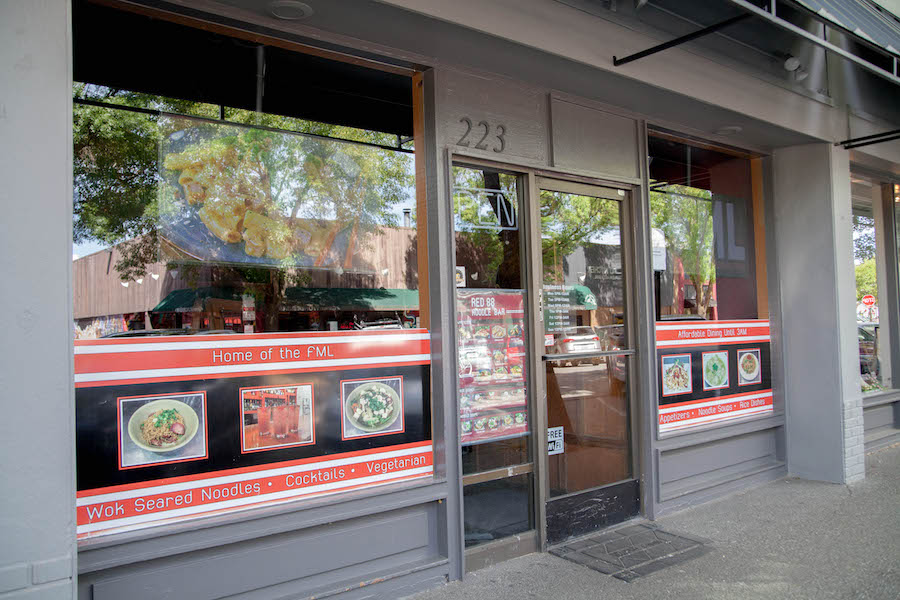
Red 88, 223 G St.

At Red 88, you don’t have to be 21 to partake in birthday fun. Anyone can get a free dessert with their meal on their birthday.

“On any birthday after 21st you get to spin the birthday wheel and you get that drink for free as long as one person in your party group buys anything,” said bartender Jesse.


Davis Beer Shoppe, 211 G St.

At Davis Beer Shoppe, expect snobbery and pretentious ale drinkers — but at least you get a free pint on your birthday.


Froggy’s Bar and Grill, 726 2nd St.

At Froggy’s you can get a Blowjob shot for free — but only on your 21st birthday.

“Come into the bar, show your ID, get something written on your forehead, take a Blowjob shot,” said Adam, a Froggy’s bartender. “But nobody can drink alone on your birthday, so one your friends has to drink with you, but it doesn’t have to be the same drink.”
Written by: Cara Kleinrock — arts@theaggie.org

Join Davis in celebrating all things bike this May

AARON KEOKHAM / AGGIE

Cyclists in City of Davis unite for National Bike Month

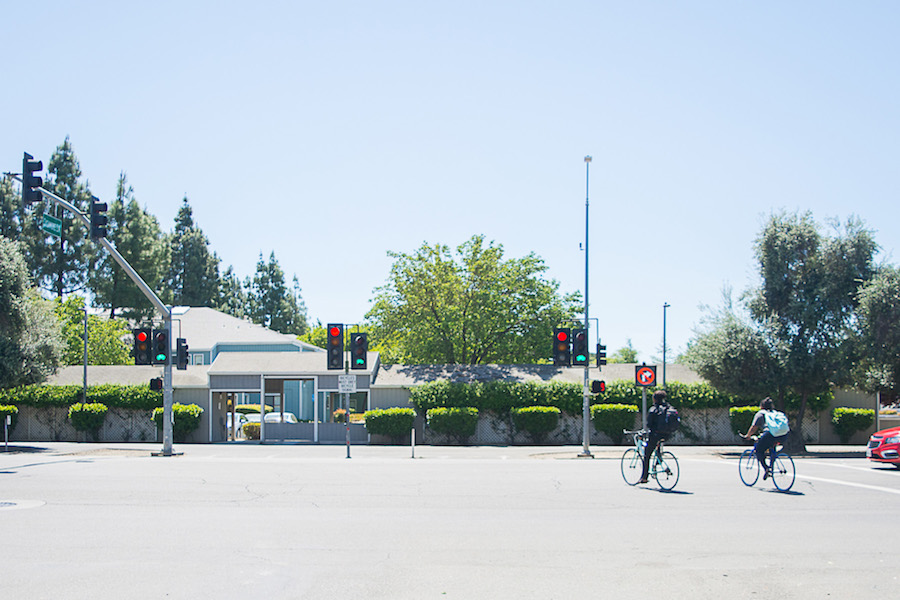
The event that keeps cyclists waiting all year long is finally rolling around the corner — National Bike Month! Started by the League of American Bicyclists in 1956, the annual event encourages people to give cycling a try and educate the public about bike culture and the benefits of biking.

While Davis has approximately 20,000 cyclists, there are still many residents who choose not to ride for various reasons, some being that they may not know how to ride, where to go or how to bike safely around town. In May, all of those folks are in luck.

Both the City of Davis and the university are holding various classes and events regarding bike safety and cycling culture, covering topics such as how to fix a bike, finding others to ride with or learning the various bike paths across town.

“We teach all the bike basics, many of the same things you need to learn as a motorist,” said Tim Bustos, UC Davis Bicycle Program coordinator. “We teach people how to fix a flat on their bikes because most people have never been taught that. There’s a whole cross section of events oriented towards May being National Bike Month.”

The hope is that National Bike Month will increase awareness about biking and, in turn, increase the number of cyclists who attend these events and various bike programs.

For example, the Bike Campaign, which works closely with city governments, schools and other organizations to encourage cycling, has implemented Bike Buddies. This program  connects new bikers with someone who can cycle with them, teach them tips and tricks and encourage them along the way.

“We also produce the City of Davis/UC Davis joint bike map for those who aren’t familiar with how to get around town,” Bustos said. “Having the bike maps available lists some of the key points in the city and lists where all the bikes shops are if they need to get their bike tuned up for Bike to Work day, for example.”

In addition to the annual National Bike Month, Davis is celebrating a plethora of events this year, like the 100 year anniversary of the incorporation of Davis and the 200th anniversary of the invention of the bicycle. In addition, the city will also celebrate the induction of the very first official bike lane in Davis (and the entire nation) on May 12th.

It all started in 1966 when two city councilmen, Maynard Skinner and Norman Woodbury, and the Davis mayor at the time, Ken Gill, joined forces to conduct the first study on bicycle lanes in Davis for the public works department to study.

“Nobody had ever figured out the width or how they would transition or how people would turn at corners with vehicles and bicycles,” said Bob Bowen, U.S. Bicycle Hall of Fame president. “Woodbury and others drafted some bills that were eventually passed by the state assembly and the state senate, and they were signed by the then California Governor, Ronald Reagan. In 1967, the city was able to put sections of the first official bike lanes in 3rd street downtown, on Sycamore Lane, on W. 8th St. and on L St.; it was the start of a bicycle lane system.”

These specifications and drafts were eventually adopted by the entire United States. However, while bike lanes are convenient and important to the incorporation of cycling infrastructure, they are sometimes viewed as outdated and even potentially dangerous.

“Celebrating it is great, but we also need to keep in mind that it’s not the safest infrastructure for bicyclists,” said Trish Price, the president of Bike Davis. “We would like to make sure that people are aware of that. We advocate for more separation from motor vehicles so that would make cyclists safer.”

In addition to advocating for road safety for cyclists and educating the public on cycling, Bike Davis also participates in the annual May is Bike Month competition. New or experienced cyclists can sign up to log bicycle miles ridden, participate in teams and win prizes. Greek organizations, clubs or even groups of friends can join together and participate, and Bike Davis is always accepting new cyclists to join their group for the contest.

To find out more about May is Bike Month and its various events around town, please visit the City of Davis website.
Written By: Bianca Antunez — city@theaggie.org

The Bike Barn: gears, tires and true Friends

DIANA LI / AGGIE

Behind the scenes of Bike Barn culture

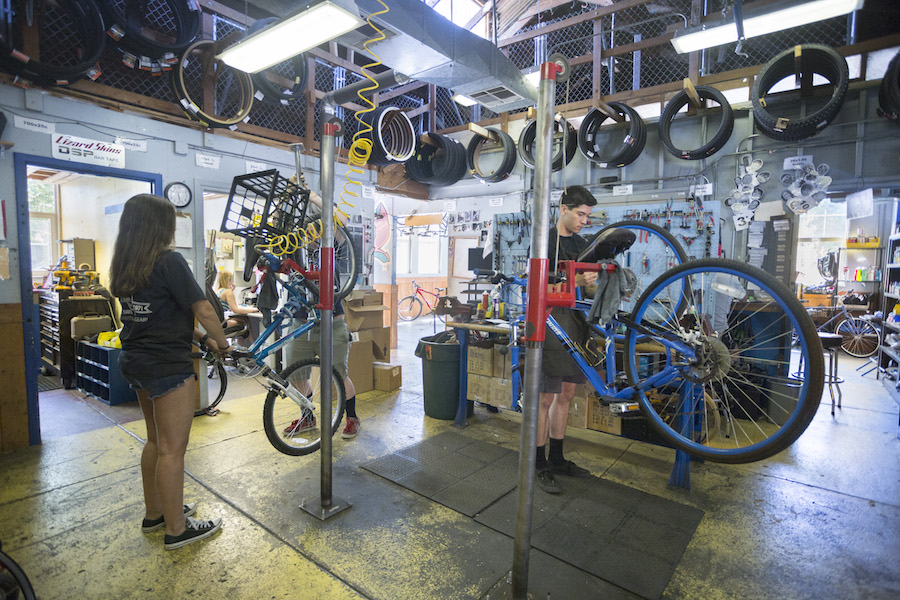
The ASUCD Bike Barn is located between the Silo and Rock Hall, its entrance hidden by a fleet of bikes. Upon entering the Bike Barn, one is greeted by a friendly face or two, usually someone working the register and another mechanic evaluating a client’s bike. But what — or rather, who — is hidden behind that wall lined with bike accessories?

It seems that there is an eclectic group of bike experts working hard amidst the background sounds of Spotify playlists, saws and bike chains. Hustling about, the Bike Barn crew includes people from multifarious backgrounds that all share an ardor for bikes and working with their hands.

John Hancock, a third-year political science major, has found fulfillment through working at the barn.

“Right there I can create something — fix something — and see what I did with my own hands,” Hancock said. “When I come home at the end of the day after a day’s work, it’s cool [that] I […] helped someone fix something.

Amid social science majors, art majors and science majors, a common ground seems hard to find, but the employees don’t let that stop them. Many of them mentioned that music is something that has helped connect them together, even though each person seems to have very different taste.

“We all like listening to music while working,” said Joseph Gondreau, a second-year electrical engineering major. “It’s weird because we all have really different tastes. Sometimes a guy will play East Bay rap music, then someone will put on Taylor Swift, and then someone will put on Brad Paisley. It’s [strange], but we all just enjoy each other’s music.”

Jacob Wagner, a second-year managerial economics major added that “angsty music” brings the entire crew together. The barn members also spend time hanging out and getting to know each other outside of their work, including at barbeques and dinners.  

“We go to music concerts together,” Hancock said. “Everyone gets along pretty well. [They are] a cool little friend group that I have outside of my normal one […]  and [some are] even […] in my friend group.”

Many of the crew members began working at the Bike Barn because of a long history of bike fanaticism and passion for active work. Wagner had been doing mechanical work since his childhood and Gondreau, having worked as a mechanic in construction, wanted to continue engaging that part of his interests. Gondreau found active work to be a necessary change from his routine especially when spending so much time bent over textbook pages.

“When I moved up here, with all the book work, I decided I needed kind of an escape and to work with my hands,” Gondreau said. “I ended up working here, and in my spare time I just do some projects, work on my cars. Working with stuff, building things […] that’s my jam.”

Jamie Birgstron, a third-year neurobiology, physiology and behavior major is currently one of the Bike Barn’s managers and head mechanics. Birgstron grew up loving bikes and couldn’t help dreaming about attending one of the largest bike-friendly campuses in the nation.

“I moved into the dorms, and the same day, I started working here,” Birgstron said. “I wanted to work [at the barn] before I started school here. The summer before [college], I drove down for an interview and drove all the way back home.”

One would’ve expected mechanical experience or a strong knowledge of bikes to be one of the prerequisites to work at the Bike Barn, but their hiring process focuses mostly on a candidate’s ability to work in a team and get along with the other members. Experience with mechanics and bikes becomes a decorative attribute to their resumes.

“The biggest thing, I say, is whether [applicants] work well with us,” Birgstron said. “You don’t have to be the best mechanic ever [… and] you don’t have to be the most social person, but you need to work well in a team. Experience is very helpful — but it’s not necessary.”

The passion and dedication each person in the crew brings to work at the Bike Barn creates a truly unique space, where the members have turned the workplace into a home base. Oftentimes barn members will drop in between classes to hang out by the break table and greet their friends. After all, home isn’t about a place — it’s about the people.

“Everyone’s working to better the shop,” Wagner said. “Everything you doing is for a positive influence. It’s not the kind of job where you just put your head down and do your thing. You’re always asking questions. You are always involved with other people. [And] even though you’re working on your own bike, if you have a question, there is someone there to help you right away.”

The way each person exhibits an obvious desire to be there has served, as Wagner mentioned, to blur the lines between work and play.

“There aren’t really any lolly-gaggers,” Wagner said. “That’s not the culture that’s here. I think what brings us all together is that we’re all really hard-working, problem-solving type of people. [We] are [all] willing to help each other.”


Written by: Sahiti Vemula — features@theaggie.org

Healing with the creativity of our minds

NICOLE WASHINGTON / AGGIE

Davis promotes art therapy as method of expression
Our minds’ creativity is sensational and oftentimes expressed with a paintbrush to paper, with hands to clay or even with a pencil to a printed mandala, which has basically become the adult version of a coloring book. In a moment of expression, our creativity takes hold of our full attention — all the while serving a therapeutic purpose.

Mara Newbart, a clinical social worker and psychotherapist in Davis who works on a variety of mental issues, incorporates art therapy as a form of expression. She utilizes it mostly with children but says that adults benefit as well.

“Sometimes you just don’t have the words to express what is going on,” Newbart said. “[Art therapy] gets emotions out that you don’t even know you have.”

As a form of treatment, Newbart uses art therapy to help people reach emotions stored in parts of the brain that are verbally unaccessible. She has witnessed how people, through art therapy, have an outlet to express their feelings of pain.

It’s important for students to find a space in which they can express themselves, like Newbart’s office, where issues are dealt with in a creative and healing way. Newbart notes the importance of “having someone to guide you” in a therapy setting, especially when dealing with bigger issues. Students should reach out and seek professional help if they are facing hard times. People like Newbart are here to help.  

Art outside of therapy can also have the same effect. Research has shown that “art can make a contribution to promoting positive mental health,” as well as serve as a form of empowerment and liberation. The study, published in the Disability and Society journal, stated that when art was conducted in a group setting, the interaction caused an increased sense of freedom. Participants in this study additionally saw an improvement in their general quality of life and emotional well-being. It positively affected their emotions and caused higher states of relaxation — found to be “an antidote to depression, anxiety, and fatigue.”

Students should participate and have the opportunity to engage in similar group settings. There are various art related activities that are promoted through UC Davis. Art is supported through organizations like the Cross Cultural Center, the Women’s Resource Center and other centers at the Student Community Center. These centers do not only spark the imagination, but also incorporate strong cultural and political meaning to their work.

Here on campus, students can also obtain the benefits of art therapy in a more private setting through Student Health and Counseling Services. These services are free to all students with or without insurance. Martha E. Zamudio, a psychology postdoctoral intern at UC Davis, uses art therapy on campus “as a way to engage the creativity of people’s minds,” as well as to deal with culturally sensitive art. She has created a group, the Mendalamented, to engage students in an impactful way. In the group you will find talks of mental health where media like clay work, painting, drawing and filling in mandalas are utilized as alternative ways to help students express their feelings. The group is confidential and held at North Hall, but is accessible to all students through the Student Health and Counseling Service center.

This form of group art, as well as many others, have helped students bond and, as Zamudio said, “Fill in a part of a person’s experience that they might have not been able to express.”
Written by: Marisol Beas — mbeas@ucdavis.edu

Disclaimer: The views and opinions expressed by individual columnists belong to the columnists alone and do not necessarily indicate the views and opinions held by The California Aggie.

New California law proposed would allow cyclists to roll past stop signs

JORDAN KNOWLES / AGGIE

“Idaho Stop” in Davis: Beneficial to cyclists, threat to bike safety

For as long as anyone can remember, all road vehicles — whether bicycles or automobiles — followed a “same road, same rights, same rules” philosophy. Yet, some cyclists claim that the new proposed California law, the “Idaho stop,” would make roads safer for bicycles in particular. The law also brings up a number of concerns.

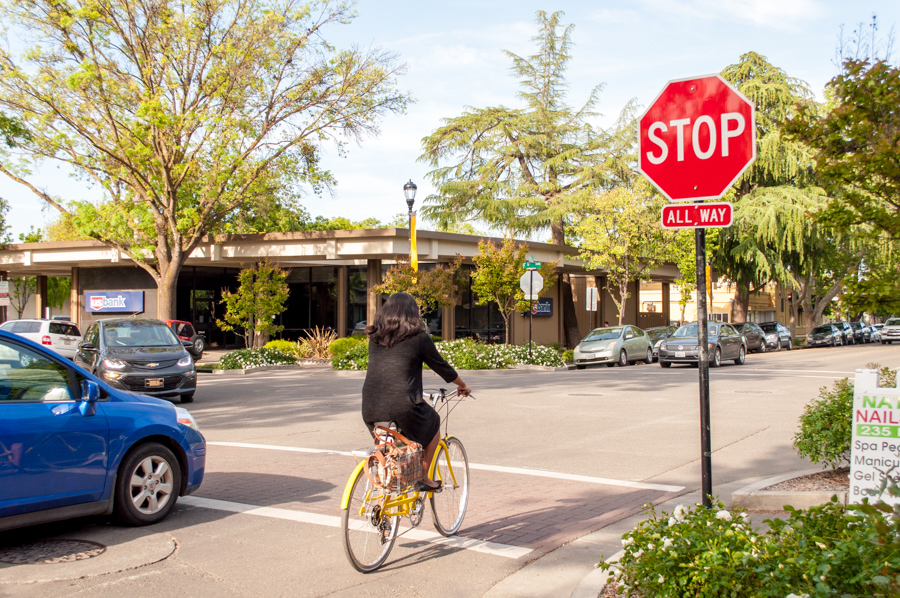
As part of the proposed law, bicyclists will still have to stop at traffic lights but will be allowed to roll through stop signs after they determine it is safe to proceed. Some people worry this could create a grey area in the law, since that determination is left up to the discretion of the cyclist themselves. It may also create an additional risk to children bikers who often lack a firm grasp on road safety.

“[The proposed ‘Idaho stop’] will end up being an enforcement thing,” said Bob Bowen, the U.S. Bicycle Hall of Fame president. “I see both sides of the issue. There are bicyclists who are in favor of that who say, ‘Why should we stop if nobody is around?’ On the other side, there will be people that…blow through the stop sign even when traffic is coming. So, that’s the grey area that remains to be seen. We just want people to be safe.”

For towns without a heavy bicycle presence, this may not be a very disputed issue, but for Davis, a town with approximately 20,000 bikers, residents have become increasingly concerned. Tim Bustos, the UCD Bicycle Program Coordinator, said road safety may be at stake in Davis if the law passes. However, as a lifelong cyclist and full-time bicycle commuter, Bustos also sees the potential convenience of the law.

“A lot of bicyclists have concerns about stopping at every traffic light,” Bustos said. “You know a cyclist isn’t going to seriously injure someone in a car because their bike accidentally hits them. We’re not as much of a threat, and the other thing from a standpoint of bike-commuting and riding and traffic: we’re actually safer road users because we have better visibility in a bike than we do in a car.”

However, much like other Davis citizens, Bustos realizes the potential for crashes in Davis is much higher due to the high volume of bikes in town and on campus.

“The flip side is that we’ve got a pretty high crash rate in regards to bicycles in Davis and many communities,” Bustos said. “You take 20,000 or so bicyclists and you place them on fairly small streets, and many of them have very little training, if at all. There’s a real concern that there are going to be an inordinate number of bicycle crashes.”

Bustos often sees cyclists with no hands on the handlebars looking down at the ground and at their handheld devices to check their emails while they’re riding at high speeds, particularly on the university campus, which would cause a true safety concern with the addition of the Idaho stop.

However, for those who are experienced cyclists, much like those in Bike Davis, a nonprofit group in Davis that promotes bicycling through advocacy, education, encouragement and design, the rolling stop law proposition increases their safety while cycling.  

“As an organization, Bike Davis does support the Idaho stop, largely because they believe it increases safety among bicyclists at four-way-stop-intersections, mostly because it is safer to be moving on a bicycle than it is to be stopped,” said Trish Price, the president of Bike Davis. “Starting and stopping is really the most vulnerable time to be on a bicycle. So, if you stop less, you generally have better control and that makes you safer.”

The loss of momentum when cyclists stop causes them to linger in the intersection longer, increasing the likelihood that they may be hit by oncoming automobiles or other bikers. Bike Davis also recognizes that there must be an educational component as part of the proposed law so that people fully understand the law and its yielding principles.


Written By: Bianca Antunez —city@theaggie.org

Humor: Loser student forgets to silence phone for exam but nobody notices because it doesn’t go off

A student’s lack of distraction becomes a major distraction for classmates, world

It’s always annoying when you’re really in the zone taking an exam and a phone goes off and ruins your concentration. Luckily for students in Marcus Raferty’s class, that wasn’t a problem because he’s a massive loser.

“I realized after the exam was over that my phone wasn’t on silent as I thought,” said Raferty, a fourth-year psychology major and major loser. “But I didn’t get a single notification during the midterm so nobody knew. I guess it’s a good thing, but I kind of wish I had gotten something to make me feel important. Even a text from my uncle would’ve been fine even though he’s dead. The only notification I got was that some random person I don’t know posted in Free and For Sale. Why would I care that Joanne is trying to sell her own leg? Really, Joanne? Again?”

This troubling incident didn’t go over very well with Raferty’s classmates, either.

“I was so distracted after learning that Marcus’ phone wasn’t on silent during our exam,” said Taylor Reed, a third-year psychology major and human outlet. “Just the thought of how much I could’ve been distracted angered me to my core. And if I did badly on this exam, I’m just going to absolutely lose it. The only way I could’ve done badly is because of a potential distraction that never actually happened. It has nothing to do with the fact that I went to Coachella the weekend before my Monday exam. Don’t be stupid.”

Student Judicial Affairs (SJA) is considering expelling Raferty over the incident.

“What Marcus Raferty did during his exam is absolutely criminal,” a spokesperson for SJA told The California Aggie. “His classmates should not have had to sit there taking an exam with somebody who is such an absolute loser. Who gets no texts during a 50-minute period? I have to stop talking about this now because it honestly makes me sick to my stomach. Also I should go find my son.”

Raferty has hopefully learned an important lesson from this incident: Stop being such a loser.


Written by: Brian Landry — bjlandry@ucdavis.edu

(This article is humor and/or satire, and its content is purely fictional. The story and the names of “sources” are fictionalized.)

California assemblymembers introduce bills to address student hunger

LAURA LONG / AGGIE FILE

AB 214, AB 543 aim to help California college students

Two new bills were introduced this year in the California State Assembly, both of which aim to alleviate the issue of food insecurity on California college campuses.

Assembly Bill (AB) 214, authored by Assemblymember Shirley N. Weber (D-San Diego), would help simplify the administrative process for college students applying for CalFresh as well as require the California Student Aid Commission to notify students of their eligibility for the program.

“A lot of low-income students have difficulty accessing anti-hunger programs because of unclearly written policies,” Weber said in a statement. “This bill is aimed at clarifying those policies and to streamline student access to programs that would help them alleviate food insecurity.”

AB 453, authored by Monique Limón (D-Santa Barbara), would require the California State University (CSU) Trustees and the California Community Colleges (CCC) Board of Governors, and would encourage the University of California (UC) Regents, to designate their campuses as “hunger free.” Each campus that does so will receive funding incentives.

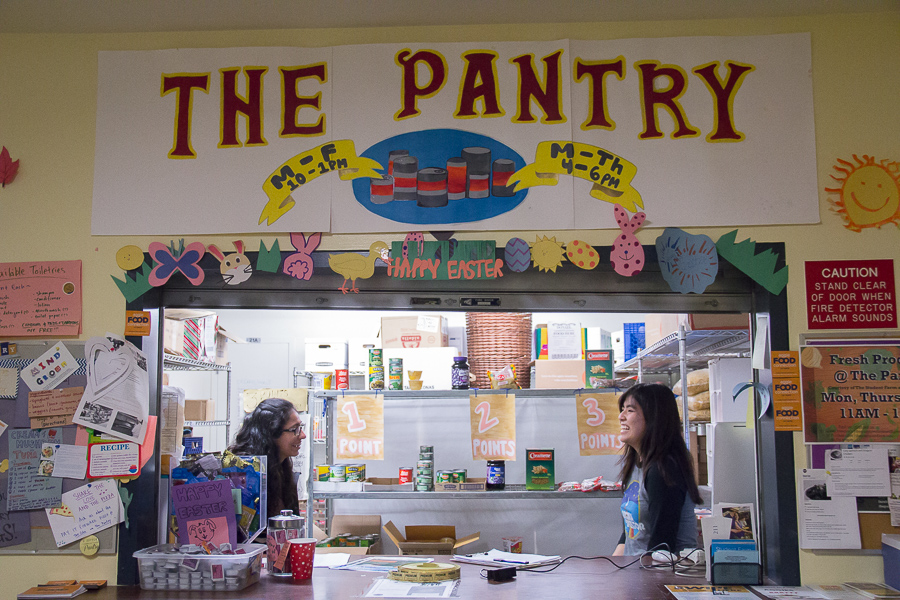
A hunger free campus would require a food pantry, a campus employee hired to help students enroll in CalFresh and a meal sharing program through which students can donate their unused meal plan credits to students in need.

Christopher Nellum, a policy director for Young Invincibles, a group which focuses on issues surrounding higher education, healthcare and financial security, said that the current policy proposals to curb student hunger in California have come after a culminating effort to bring attention to the issue.

“There’s been a lot of good work that people have done to raise awareness about the issue of food insecurity,” Nellum said. “College hunger is often an invisible experience, so people are having the experience but other people may not know, so I think it’s coming up now because we have a better sense of its prevalence.”

In 2015, the UC found that 42 percent of its students did not have access to adequate food or nutrition, while the CSU found that roughly a quarter of its students were food insecure.

Daniel Nagey, a second-year managerial economics and psychology double major and an ASUCD senator who campaigned on food insecurity, said that streamlining the application process for CalFresh is important because the process can be difficult.

“The application process for CalFresh is really complicated and really complex,” Nagey said. “You have to go through like an interview process and it’s stressful and nobody really knows how to do it. There’s no guide, it’s kind of like all the other things we have to do like taxes, where nobody really teaches you, but unfortunately you know, with something like CalFresh, you either are eating or not.”
Nagey, who adopted The Pantry as a unit, also helped plan this year’s Aggie Food Connection Fair on May 17, which will showcase a variety of healthy food resources available to students.

“I think it takes a lot to admit that you’re food insecure because it also has a lot of stigma that comes with it,” Nagey said. “Saying you’re food insecure means that you’re low income. It means that you’re probably battling a lot of other financial hardships, especially on a college campus where the majority of people are middle class and don’t really have that problem.”


Written by: Ivan Valenzuela — campus@theaggie.org

eSports on the UC Davis campus

CIERA PASTUREL / AGGIE

Aggie Gaming club provides community for competitive online gaming

In the world of college sports, staples such as football, baseball, basketball and soccer tend to dominate the headlines. However, over the past few years, a new sport has swept college sports. It isn’t played on a field or in a gym but instead in front of a computer or television screen. eSports are some of the fastest growing enterprises in the sports and entertainment industries, and is the focus of Aggie Gaming, the UC Davis gaming collective founded by fourth-year computer science major Michael Chan.


“Aggie Gaming at UC Davis was founded under the premise of fostering a gaming community at UC Davis,” Chan said. “We see a lot of gaming organizations at other campuses across the UC system and the greater collegiate scene throughout the United States, and we wanted something that replicated that.”


It started with the League of Legends (LoL) club. A strategic combat game, LoL is one of the most popular games on the eSports scene due to its team-based structure and online following.

Raphael Opon, a fifth-year international relations and sociology double major, serves as the vice president of the LoL Club, an extension of Aggie Gaming. He has been hooked ever since he first picked up the popular game three years ago.


“League of Legends is a Multiplayer Online Battle Arena where you get to work with your teammates,” Opon said. “You get to be frustrated, but at the end of the day, win or lose, you leave with a smile on your face.”
While games such as LoL have a governing body called the CSL (Collegiate Starleague), other games are still gaining prominence within the competitive gaming world. Super Smash Bros. 4, a fighting game, does not have a governing body at the collegiate level.  Amos Gossai, a first-year religious studies and philosophy double major, is trying to bring Super Smash Bros. to a bigger competitive stage during his time at UC Davis.

While applying to schools, Gossai wanted to go where he could help establish a gaming culture where one may not yet exist. To him, Northern California was the idea place.


“I thought, ‘How about I just go to NorCal for schools and bring the eSports up?’” Gossai said. “Create an organization, or get involved up there. Get to know the players and the community after having been a competitive player for so many years, myself. UC Davis was the only school I applied to up here, and I decided to come up for eSports.”


Through Aggie Gaming, games like Smash Bros. and LoL (as well as other titles such as DoTA and Overwatch) have found a home at UC Davis. Students — and alumni, in the case of Smash Bros. — can compete with other schools that sprawl across the entire country. According to Chan and Opon, there are upwards of 120 schools across the country, with UC Irvine leading the pack in terms of gaming innovation. They hope to bring UC Davis up in the world of competitive gaming.


The teams have a vetting process just like any sport, but they try to make a space for those who are willing and dedicated to put in the required work.


“Our collegiate team is looking for members,” Opon said. “There are no rank restrictions. As long as you keep an optimistic attitude and you are coachable, there is a place for you in our team.”


As a club organization, Aggie Gaming gets some base financial support from the school, but is entirely student-run. Should any of its different teams need extra funding, it is up to them to pay for transportation to events or, should the opportunity present itself, fees for entering large-scale tournaments. Having just opened its doors in September of 2016, the club is still working out everything that goes into bringing eSports at the UC Davis campus to the next level, with hopes to one day reach a Division I status, the highest competitive level in the e-sport community.


E-sports are still rather new, but the popularity behind the phenomenon continues to grow year after year. It takes people like Opon, Chan and Gossai to get the ball rolling. Future generations of collegiate gamers will have people like Opon, Chan, Gossai and many more to thank for its inclusion in the world of UC Davis competition. The blueprint is there, and as eSports continue to flourish, so should the team itself.

Written by: Bradley Geiser — sports@theaggie.org

How Captain America: Civil War plays out the fight between the far right and the establishment


GENESIA TING / AGGIE

The disagreement between Captain America and Iron Man echoes the current political climate

No franchise has worked harder to bring science fiction to popular prominence than the Marvel Cinematic Universe. One of its latest entries, Captain America: Civil War, was one of the biggest blockbusters of 2016. Looking back on it in the context of the year that’s past, it’s hard to ignore the implications of the film’s central conflict between Captain America and Iron Man over how best to bring justice to the world. The disagreement echoes the debates dominating the Western political world, as the revitalization of nationalism and the far right challenges the liberal, bureaucratic philosophies that have governed the world for 70 years.

After the events of the last Avengers movie that resulted in the demolition of a small Eastern European town, the UN proposes a new bill to limit the Avengers’ unauthorized activity. While this is going on, Captain America and his friend Bucky Barnes find out about a plan to unleash an army of mind-controlled supersoldiers on the world. While Captain America knows the truth and what needs to be done to stop the plan, he doesn’t have enough evidence to convince Iron Man and some of the other Avengers. They refuse to act — or to let him act — until the UN approves the use of force under the new legislation. Iron Man argues that the best way to keep the world safe is through laws and bureaucracy and supports the UN legislation. Captain America, however, supports acting on principles and doing what’s right no matter the costs.

Because he’s the title character, and also because his story is more interesting, the movie follows and makes us sympathize with Captain America and his team. The film shows us why the team should act as quickly as possible to neutralize the evil, even if it means going rogue, ignoring the bureaucracy and fighting Iron Man and company. In the end, Captain’s right. After an epic battle, they stop the bad guys just in time.

Whether or not you agree, it’s hard to ignore the fact that Captain America’s side is much more exciting, and this might help us understand the political shift to the right in 2016. The far right paints itself as new and exciting and promises swift, effective action instead of the competent, carefully thought-out bureaucratic method favored by the establishment. Many who voted for Donald Trump, Marine Le Pen and Brexit are fed up with this philosophy. Whether it be calls to close borders, leave the European Union, “drain the swamp” of the Washington elite or dismantle regulations, many feel that the bureaucratic systems currently in place are ineffective and hurt their countries in the long term.

In the context of the film, these far-right nationalist voters are Captain America, while the establishment of Hillary Clinton, Emmanuel Macron and the “Remain” campaign are Iron Man. In the movie and in real life, they’re set up as opposing views that are necessarily in conflict with one another — even if they both have legitimate arguments.

This is especially relevant to American politics. Being a super American (literally and figuratively), Captain America is all about doing what he thinks is right, even if no one else around him seems to agree. While the movie seems to endorse this view as heroic and brave, this ideology has gotten America into trouble in the past — namely with the Iraq War. The Trump administration seems to be adopting a similar attitude toward Syria and North Korea as well, and there’s no reason to be particularly optimistic about either situation for the same reasons.

Still, it’s an ideology that has empowered a lot of right-wing voters, who see themselves as the righteous rebels against an “unthinking” liberal society of Iron Man. It’s one that’s been running through America’s cultural veins for most of its existence.

The film does make a case for Iron Man’s argument, but it seems to endorse Captain America’s view at the end — that going rogue is the one way to act effectively. Iron Man’s method is shown as too slow, deliberate and ultimately destructive in comparison to Captain’s swift, righteous action. It’s not outlandish to say the film supports Trump’s views more, especially considering that Marvel CEO Ike Perlmutter donated $1 million to the Trump campaign and has been considered for an advising role in the administration.

As in real life, the two ideologies in the film compete and Captain America’s comes out the eventual victor, just like with Trump and Brexit. However, the end of the film shows Iron Man and Cap beginning to patch things up after they defeat the bad guys, offering a hopeful note that eventually the two sides can come together again. This hasn’t happened in the real world yet and these tensions may resurface in the next Avengers movie. Despite the divide, however, there still may be hope for reunification under a common cause. Let’s just hope the real world doesn’t need an Infinity War to do it.


Written by: Noah Pflueger-Peters — napfluegerpeters@ucdavis.edu

Disclaimer: The views and opinions expressed by individual columnists belong to the columnists alone and do not necessarily indicate the views and opinions held by The California Aggie.

UC Davis celebrates World Book and Copyright Day

IAN JONES / AGGIE

Festival shut down early due to noise complaints

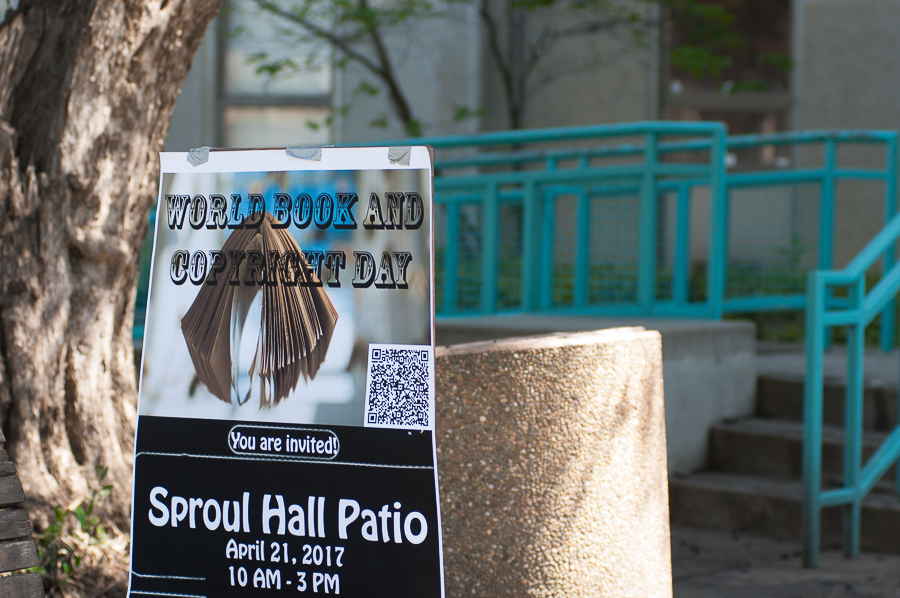
To celebrate languages and the power of books, the Spanish and Portuguese Department hosted the World Book and Copyright Day in the Sproul Courtyard on April 20.

The Davis chapter of this international event was organized by Ph.D. students with the goal of sharing their passion for reading with others, focusing specifically on language as an art form.

“We want to honor, respect and to remember art and to engage students in reading,” said Silvia Aguinaga, a fifth-year Ph.D. student in Spanish linguistics.

The festival was divided into five different sections. Participants first saw the “Languages in Contact” board — a world map covered with a variety of languages, most of them relatively obscure (like Mayan languages). Those who knew the languages were able to take an English word from the stack of papers nearby and translate them to one of the identified languages on the board.

“The point of the board is to encourage people to use these languages,” Aguinaga said. “We believe that if you use a language then it will never die.”

An open mic was one of the highlights of the event, creating a platform for individuals to share their favorite poem verses or sections from books with others, in any language they wished to use. Several language classes used this as an opportunity to gather outside of the classroom and read their assigned books.

“Professors and TAs bring their class and the students bring something to read either from the class or something they like a lot,” Aguinaga said.

Even students, mandated by their professors to attend, enjoyed the change of pace.

“It was fun to be outside and start reading the class book,” said Christina Harber, a second-year English major.

Combining the love of verse and language, the Garden of Verses was a pathway of various quotes in different languages, which, when combined, created one large poem.

“In the Garden, many people can plant a single verse and grow a poem,” said Elena Atanasiu, a fourth-year Ph.D. student in Latin American literature.

The festival was also home to the Literary Hairdresser, a makeshift hair-dryer chair made out of a lamp shade. Inside the shade was a headset that allowed the listener to pull the shade over their head and listen to audiobooks.

“If you’re tired and don’t want to read by yourself, you can come to the Literary Hairdresser and listen to someone read to you,” said Rebeca Rubio, a fourth-year Ph.D. student in Spanish literature.

The last exhibition was a mini-skit called “Burgers and Books.” Rubio acted as a waiter at a restaurant, seating and taking orders from customers. However, instead of normal food options, the titles of the burgers were book titles. The books were then served between two pieces of bread, as if they were to be eaten.

“The books are served like they are ordinary burgers because just as ‘you are what you eat’ we want to promote the idea that ‘you are what you read’ as well,” Rubio said.

Even though the event has been held in the same location for five years, it was shut down an hour early due to sound complaints from the nearby office building, as it was operated without a sound permit.

“The program of Education complained because we didn’t have sound permit, so they wanted us to stop the [open-mic] readings,” Aguinaga said via email. “Also, they mentioned that we were using their space (that area of the garden) without permission, so they asked us to leave one hour before the closing time […] we never had to ask for permissions [before]. It’s a pity that the Department of Education clipped the wings of several students reading poems and books. Such a contradiction.”

Although it ended early, the event still ran for four of the planned five hours.

“Next year we will take into account the comments from the Educational Department and we will ask for those permissions,” Aguinaga said via email. “But we all enjoyed it and we consider that there was a good amount of students, TAs and professors who participated.”


Written by: Emily Shintani — campus@theaggie.org

Millennials are quickly eating themselves to an earlier death

FARAH FARJOOD / AGGIE

Few American Millennials can afford the time, effort and money it takes to live a sustainable, healthy lifestyle



Do you ever wonder and contemplate about when you will “probably” die? Well, if you’re a Millennial living in the 21st century, evidence points to “probably pretty soon.” Why is the Millennial generation the first group in history not expected to live longer than their predecessors? The scientific community tells us there are several reasons as to why this young generation of Millennials will enjoy the same life expectancy as their grandparents rather than their parents.

The staple breakfast that Millennials have been enjoying since they were born consist of a tall glass of high-fructose corn syrup, a deluge of salty preservatives and a high-priced “valley girl” caramel macchiato. One would assume that this reason alone would account for Millennials heading to the grave sooner than expected. But when one looks at what they’re eating for lunch and dinner, and what their idea of physical exercise consists of, it becomes clear the problem is far more widespread. The food industry has exploded with genetically modified organisms that continue to function as the country’s most dominant and efficient form of agriculture. Although we can recognize that “the times, they are a-changin’,” we don’t always fully realize the severity of these changes.

Just before the 1970s and the “agricultural revolution,” farmers in all states were thriving and prospering. The country’s cattle were grass-fed, very few knew what a GMO was or had heard of “engineered preservatives” that are found among many everyday food items in 2017. The Baby Boomers and Gen Xers who were raised on this type of consumption are arguably better off than those of us who were born shoveling Xanthan gum and red color 40 for breakfast, lunch and dinner. Don’t get me wrong, Xanthan gum is delicious, and who doesn’t love the artificial red or yellow color dye 40? With the mounting evidence, it’s not difficult to see why the Millennial generation is not expected to live past another Coachella. So what can we expect to change in a world where the “Unicorn Frappuccino” is one of the most hyped-up and popular drinks at Starbucks? We can expect that, like unicorns, the chances that Millennials will live a long and healthy life are imaginary and fun to think about.   

As the greater Sacramento area fights to get the “City of Trees” sign back up on the water tower, one can’t help but consider how the new sign, “Sacramento, the Farm to Fork Capital,” suggests a new and positive direction in combating our food industry. But will measures like exercise programs and Michelle Obama’s “Let’s Move!” campaign be enough to help Millennials live longer? And how can we expect a rural, back-country town like Oxford, Mississippi to follow Sacramento? How can we expect the urban, underdeveloped area of Detroit, Michigan to carry its weight in the fight against obesity, diabetes and GMOs? Simply stated, we can’t.

This is a matter of money, time and location, as opposed to one of choice or action. There are simply not enough American Millennials that can have the resources necessary for consuming sustainable, healthy and organic food every day — not at least until the economy drastically improves, the price of higher education levels off or until today’s farmers are no longer slaves to federally-administered agricultural contracts.  

Although I’ve written before about how stress, depression and anxiety are plaguing the Millennial generation, it’s primarily the surrounding food environment that will land Millennials in the grave faster than anything. The solutions to most of these problems will take precious time, effort and wealth that the young generations of this country simply do not have yet.
Written by: Brody Fernandez — bwfernandez@ucdavis.edu

Disclaimer: The views and opinions expressed by individual columnists belong to the columnists alone and do not necessarily indicate the views and opinions held by The California Aggie.

Humor: Professor who still uses Smartsite asks everyone to add her on MySpace


SAHAR FOROUZANFAR / AGGIE

Professor is either out of the loop or a hipster, irritates students endlessly


The syllabi rolled out and everyone thought it was a cute joke, but alas it is true: One professor is still shamelessly using Smartsite. An eruption of courtesy laughs then turned into groans when Professor Ahdarn proceeded to give a lengthy talk on all the “cool” features of Smartsite.

“There’s a chat room!” Ahdarn said. “It’s like a room where you can all talk to each other, but none of you have to go anywhere! Crazy!”

A few students sought out a camera to glare into like they were a character on some prank show or The Office, but it was all too real. At the end of the syllabus, Ahdarn had left her email, her office hours and the link to her MySpace account.

“It’s this hip new website that’s all the rage!” she said, giving the students the hot gossip. “Whoever gets the highest grade in the class is going to be added to my top eight! It’s going to be radical.”

Many students think that Ahdarn has absolutely no clue what any technology is, as she walked up the the projector and tried to turn it on with voice command. Or maybe she just had really high expectations? No, we’re fairly confident she has no idea, since she also asked where the keypad was on one student’s iPhone.

“I mean, the Smartsite thing is already irritating because all three of my other classes are on Canvas,” one student said. “But it’s even weirder because she’ll post announcements that I think are just, like, Google questions. Like there was one yesterday that said, ‘When do mushrooms expire?’ But this is an English class.”

Ahdarn walks into class every day wearing her favorite outfit: a colonial woman’s dress with a matching bonnet and some fresh-churned butter. She locks her horse and buggy to a bike rack out front.

“She’s been telling us that this harvest ought to be bountiful or else we will have to sell the farm,” third-year Michael Jackson said. “Perhaps it’s a play on our agricultural school? I hope so.”

Students are hopeful that Ahdarn will soon get a clue. For now, they’re just praying that Smartsite doesn’t decide that it doesn’t feel like cooperating for the entire month before finals again. And also that the harvest will be bountiful.


Written by: Olivia Luchini — ocluchini@ucdavis.edu Twitter: @olivialuchini

(This article is humor and/or satire, and its content is purely fictional. The story and the names of “sources” are fictionalized.)


Norovirus outbreak alert in Yolo County

HANNAH LEE / AGGIE

Students, staff with symptoms advised to stay home

The Yolo County Health & Human Services Agency is warning students of all grade levels to be aware of a norovirus outbreak, otherwise known as the stomach flu, according to an Aggie Alert sent out on March 5. So far, 40 students and seven staff members of numerous schools in Yolo County have shown symptoms consistent with norovirus, 14 of whom are from UC Davis.

UC Davis and K-12 schools in Woodland and West Sacramento are at risk of contracting the gastrointestinal virus. Symptoms include vomiting, diarrhea and abdominal pain.

While no schools are closing in light of the outbreak, students and staff are reminded to practice hygiene techniques to avoid contracting the norovirus. Tips to avoid contracting the stomach flu include: using soap and water to wash hands, not just hand sanitizer, cleaning clothing and bed sheets more often, using a dishwasher to ensure that the heat kills all germs on the dishware and cleaning often-used items like cellphones, laptops and keys.

Health authorities advise any community members who believe they have contracted the stomach flu to stay home until their symptoms are gone for at least 48 hours in order to avoid infecting others.


Written by: Samantha Solomon — city@theaggie.org


The cost of sustainable eating

HANNAH LEE / AGGIE

Supporting organizations that provide fresh produce to students

As an agriculturally-focused school in one of the country’s agricultural powerhouse states, UC Davis emphasizes eating locally, organically and sustainably. However, the prices indicative of what the general Davis population would consider “eating well” are not appropriate for students and staff who cannot take advantage of the organic and local food options in the city.

The Student Health and Wellness Center defines food insecurity as “the limited or uncertain availability of nutritionally adequate and safe foods or the limited or uncertain ability to acquire acceptable foods in socially acceptable ways.” It is this definition that brings to light the oft-ignored circumstances a large portion of the UC Davis campus experiences.

According to a 2016 UC Global Food Initiative survey, four in 10 UC students identify as food insecure, and a study released  last year found that a whopping 70 percent of full-time, degree-holding UC administrative, clerical and support staff have had to make the choice between food or paying other expenses. On top of this, the state program CalFresh, which provides food subsidies to low-income Californians, provides an eligibility requirement on its applications. Noncitizens and undocumented students who sign up through the University of California Office of the President partnership may not be eligible for these benefits.

Acknowledging these facts, food insecurity has not been fully addressed on UC campuses by the institution. Despite the Global Food Initiative’s efforts, there is no data readily available to the public on whether the initiative’s initial funding of $7,500 in 2015 to each UC Pantry program has made an impact on the ASUCD Pantry’s reach in terms of providing healthy and sustainable options for its visitors.

This is not the direct fault of any such attempts to mitigate this ongoing food insecurity problem on campus. This Editorial Board believes that, with more help from administration as well as students who have the opportunity and the ability to donate healthy food, the campus can build to become a more inclusive environment for those who otherwise would not be able to eat as our campus indicates is the “best” way.

Donate to the ASUCD Pantry with your favorite healthy dry, canned and shelf-friendly goods. Participate in this school year’s Campus Community Book Project starting with Raj Patel’s Stuffed and Starved: The Hidden Battle for the World Food System and learn more about the Fruit and Veggie Up! program that provides free access to campus-grown produce. Check out the Aggie Food Connection to find out more about the resources available on campus that, though in need of more institutional assistance, will be and have been able to provide for students. Especially since the City of Davis retaining sanctuary city status and UC Davis increasing its enrollment each year, it has become ever more pertinent to assist these projects and expand the campus’ reach into solutions to this epidemic.

The Editorial Board encourages its readers to recognize the realities of living low-income in Davis and to check privilege when advising others to eat “well.”