56.1 F
Davis

Davis, California

Friday, December 19, 2025
Home Blog Page 624

TV’s fall from grace

VENOOS MOSHAYEDI / AGGIE

What we love about Hollywood, politics or any other form of entertainment is now being taken on-the-go

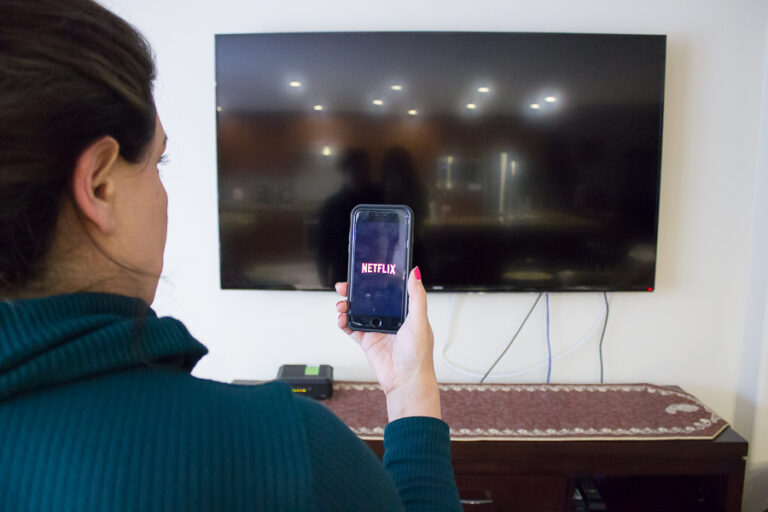
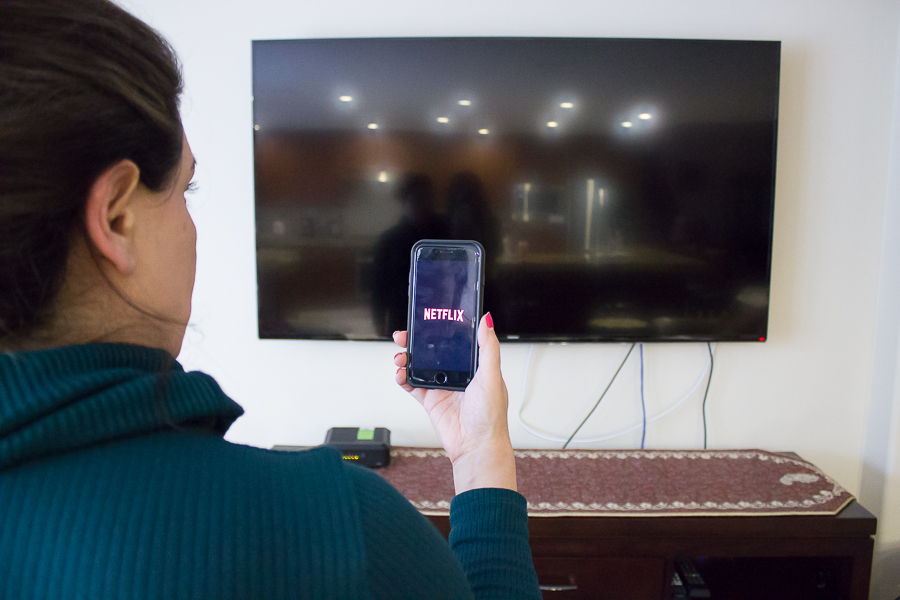
It’s every generation’s destiny to create a type of slang word or phrase. For Millennials, one newfound verb is “Netflixing,” or “to Netflix.” The phrase has multiple meanings, really, but the base of which defines the verb as to watch television shows or movies on any device via the streaming app. In fact, cable television is becoming more and more outdated as online access to streaming companies like Netflix are becoming the norm. Additionally, the very idea of “television shows” will soon just become “shows,” with no need for the word television. For now, though, the smartphones and tablets we have in our hands reign supreme for watching our shows, news and all other forms of entertainment.

Research has indicated that the majority of young people are now watching less television and spending more time on handheld devices. If you’re between the ages of 18 and 34, you are basically watching about 20 hours of television a week — on an actual TV. However, Baby Boomers, who ushered in the ‘age of television,’ are watching about 40 hours or more a week. A substantial difference for back-to-back generations. So, what’s the main cause of the declining, decayed, decrepit death of television? It appears that Millennials’ habits and tendencies might provide us with the answer.  

Imagine you’re at work, or you’ve been sitting through class all day, and you get a nice break in between. Are you going to use that time to refuel, get some food and cram in some study time? Of course not. You’re going to watch the next episode of Stranger Things or whatever Bill Nye is now doing. You’re able to accomplish this productive task because the chance that you have a smartphone, tablet or laptop on you is high. It’s a matter of convenience and accessibility. More Millennials are turning off the tube and relying on handheld devices to satisfy their addiction for movies and shows — simply because they can’t take the television with them to class or work. Millennials are accustomed to receiving their information and entertainment quickly, so it’s no surprise that we are seeing them leave the ancient, stationary form of television behind.  

While watching an Academy Award-winning film or a CGI-heavy summer blockbuster on a four to six-inch screen seems to take away from the cinematic experience, the truth is that it’s easy, quick and convenient: the holy trinity for Millennials. However, the Boomers paint a different picture, especially now that they’re entering their 50s and 60s. The dominant portion of their free time is centered around the television. If they’re putting in more than 40 hours a week in front of the tube, it’s a full-time job of watching TV (#jealous). Now that’s not to say that Boomers would not have taken advantage of the technology we have today. One theory suggests that once Millennials reach an older age, they will be more inclined to watch television as much as Boomers do now.  However, there isn’t research to support such a theory yet.

What we love most about Hollywood, politics or any other form of entertainment is now being taken “on-the-go” to accommodate a busy young generation that has been adapting to technological advances since they were born. This is not a trend or a fad. This is a change in social behavior that is directly linked to variables and changes within the environment. We have all heard that song “Video Killed the Radio Star,” right? Well, it’s still technically true, only that song was meant to exonerate the progressive climb that television has made. It’s not hard to imagine that in several decades we will be yet again looking in the rearview mirror to see just how far television has fallen.


Written by: Brody Wayne Fernandez — bwfernandez@ucdavis.edu

Disclaimer: The views and opinions expressed by individual columnists belong to the columnists alone and do not necessarily indicate the views and opinions held by The California Aggie.


97 percent ratification on Teamster’s new labor contract

MORGAN TIEU / AGGIE

Contract ensures generous wage increase, affordable healthcare

The Teamsters Local 2010, the University of California’s (UC) union, successfully ratified a new five-year contract on April 19. The contract ensures a 19.4 percent wage increase over the course of five years, a $1,200 ratification bonus per clerical employee, a health care price increase cap and a choice of retirement plans.

The union is composed of around 12,000 clerical and administrative workers and 800 skilled workers. The contract is set to last until March 31, 2020 and ensures a 3 percent annual raise each year the contract is in place. Skilled workers are set to receive a 12.5 percent wage increase on July 1 in addition to the annual raise. As part of ensuring affordable healthcare for union members, the contract sets a $25 monthly limit on health care rate increases to guarantee an average monthly cost of $32 for “generous health benefits.”

“Support for our contract has been overwhelming, validating the countless hours of hard work by Teamster activists and leaders across California,” said Catherine Cobb, the Teamsters Local 2010 president. “This is a victory in which we can all celebrate.”

Negotiations for the contract proved to be lengthy, as the negotiation process began over a year ago. During the contractual deliberations, the Teamsters fought for better wages, citing a study done by The Urban & Environmental Policy Institute of Occidental College that showed 70 percent of the Teamsters faced food insecurity due to insufficient wages. The Teamsters also instigated a UC wide one-day Unfair Labor Practice strike in January to protest what they deemed as bad faith bargaining and patterns of employee disrespect from the University. In March, the Teamsters reached an agreement with the University regarding the contents of their new labor contract.

Over 97 percent of the 12,800 member union voted to approve the contract. Jason Rabinowitz, the Teamster secretary-treasurer, noted that the successful ratification was largely due to the support the union had garnered from its community members.

“Our contract is the result of Teamster members standing together and showing their strength in their workplaces,” Rabinowitz said in an email press release. “We are grateful for the support we received from our sister Unions, community groups, elected officials, and the public. We are proud to have an agreement that will benefit all our members and their families.”

Shortly after the completed ratification process, UC Vice President Dwaine B. Duckett released a letter announcing the contents of the new labor contract and thanking the clerical, administrative and skilled workers that comprise the union.

“You play an integral role in keeping our campuses and medical centers running seamlessly every day,” Duckett wrote in the letter. “We appreciate all that you do, and this agreement reflects our commitment to fairly compensate you for your hard work and dedication.”

Written by: Lindsay Floyd  — campus@theaggie.org

Humor: Gary May only here to attend freshman seminar on Star Trek

JAY GELVEZON / AGGIE (left), PUBLIC DOMAIN (right)

Becoming chancellor was all just a ploy to attend the sickest seminar in the biz
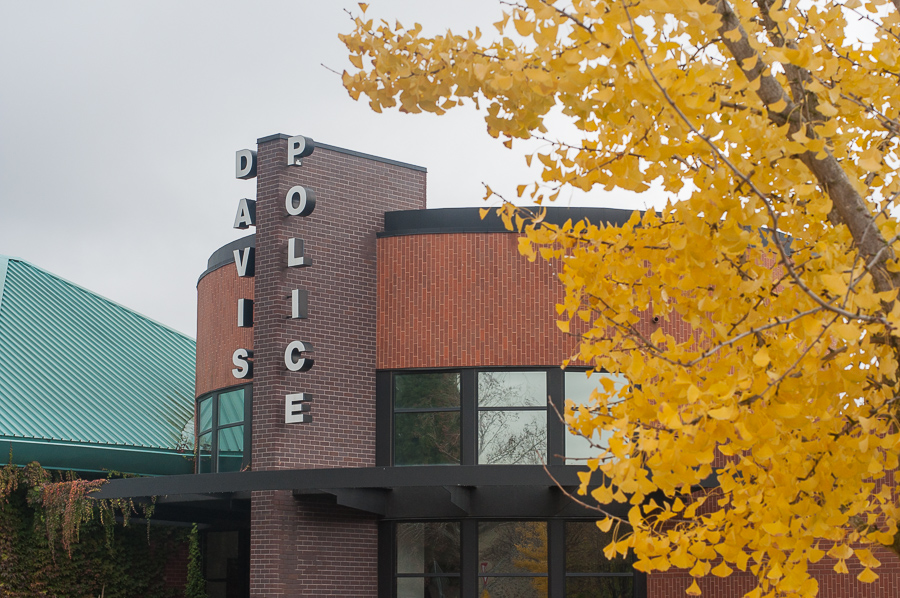
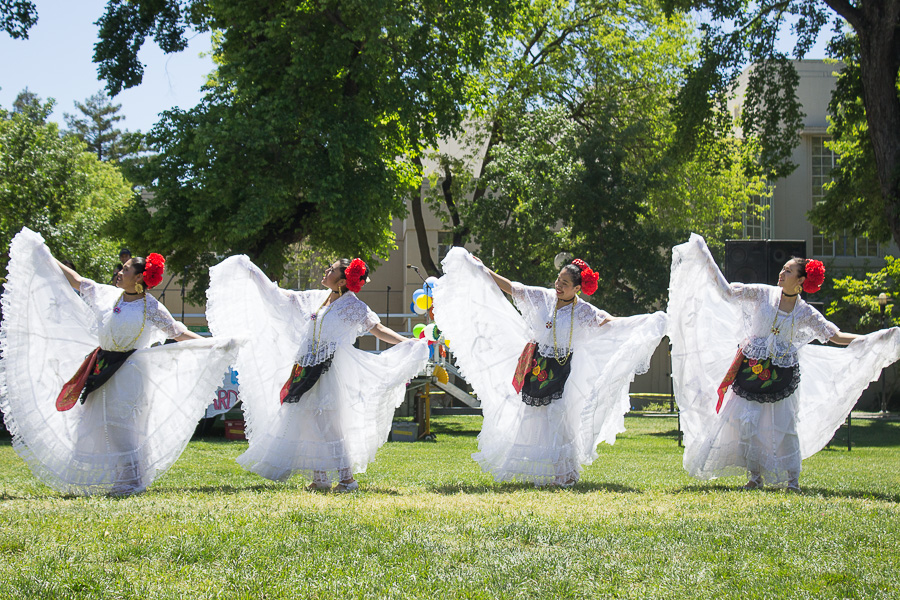
Ever since the email came out in which future chancellor Gary May professed his love for Star Trek, students have been clamoring to learn more about their future leader. So it came as no surprise when we all found out that he actually didn’t plan on replacing the infamous Katehi and instead was merely here to get two units through an extravagant seminar on the whimsy of space.

“We could sort of tell that something was off in the class when everyone else was in sweatpants and shirts while this little fella was in a full-blown suit and tie,” seminar professor Dan Cortez said.

May tried to blend in by wearing the sickest shades he could find at Kohl’s, but it was all for naught, since he had a Blackberry tied to his belt, ruining his cool youngster disguise. The unfortunate nature of it all!

“Hello, fellow youths,” May said as he entered the door for the first time, flawlessly mimicking the language of the modern collegiate pupil.

As every other student sat quietly listening to the lecture about the magic of Star Trek, May had both of his encyclopedias on the franchise ready and prepped to correct any wrong remark made about this holy work of fiction.

“That is not correct,” May said. “If we look to page 745 of the second edition of-”

The quote went unfinished because the person recording it broke their pencil in aggravation. After breaking his cover, May has been coming to class in his exact replica of a Captain Kirk outfit just to show the other students who they’re messing with.

“You think you’re a real fan?” May questioned, while challenging fellow students to a duel of wits. “I bet you don’t even know how old Leonard Nimoy was when he got his first chest hair. DO YOU?”

May was awarded an A+ in the class, but only because he pulled the “chancellor” card a few times. He is fit to leave come the end of this quarter with a sense of accomplishment and two more units under his belt.


Written by: Olivia Luchini — ocluchini@ucdavis.edu

(This article is humor and/or satire, and its content is purely fictional. The story and the names of “sources” are fictionalized.)

Alleged attack on Picnic Day sends two officers to hospital

IAN JONES / AGGIE FILE

Cell phone footage shows Davis Police officers fighting off crowd of people

Two police officers were sent to the hospital on April 26 for treatment of injuries sustained in an alleged attack on Russell Boulevard, despite special precautions taken during Picnic Day to ensure a safe campus experience. Three people who have been identified as non-UC Davis students were arrested in relation to the incident and there are numerous cell phone videos of the occurrence.

Three Davis Police officers were driving in an unmarked vehicle down Russell Boulevard when a crowd of people stopped the car from going further, according to a Davis Police Department press release.

One officer was wearing police attire with a visible badge and the other two were wearing plain clothes, although they had clearly displayed badges on their chests and visible police weapons,” the press release said. “At the time, Russell Blvd. was nearly gridlocked due to Picnic Day related traffic and many large parties occurring in the area. Due to the obvious safety hazards the group presented, the officers pulled near the group to take action.”

The police vehicle was allegedly surrounded by a group of people yelling threats at the three officers.

“As the officers exited the car and began to identify themselves as the police, two officers were immediately physically attacked by multiple suspects and beaten on the ground,” the press release said. “[…] As the officers were being assaulted, they could see people in the crowd filming the attack with their cell phones.”

The Davis Police Department maintains that the officers, while wearing plain clothes, had clearly visible police badges and acted within their rights as law enforcement. Two officers were taken to the Sutter Davis emergency room for treatment. One officer suffered damaged to his eye and face, while another was treated for head injuries after being hit in the head with a bottle.

While the Davis Police Department stands by this version of events, some individuals have called the account into question after video footage surfaced showing the officers fighting off the crowd.

“[An officer] laid on the horn and was yelling out the window, ‘Get the f*** off the street,’” said Isabel Lynch, a Sacramento resident and student at Sierra College in Rocklin who witnessed the alleged attack.

Lynch added that the officers were not immediately identifiable as police. She recalled watching the police officers exit the car and begin to engage the crowd.

“I did see one of the officers on the ground, and I saw one girl kicking one of the officers,” Lynch said. “A lot of it didn’t make sense. I think they were just reacting, and they reacted poorly.”

Davis Police Chief Darren Pytel disagrees with claims that the three officers involved were acting outside of their duty.

“There is screaming in the crowd that definitely indicates they knew they were the police,” Pytel said.

This was not the only incident of a breach in community safety on Picnic Day, as Davis police reported the arrest of a man who allegedly brandished a gun in downtown Davis. A crowd of individuals were also caught on tape vandalizing a woman’s car in East Davis as she was driving. Davis police had attempted to prepare for the influx of people by creating a Picnic Day Safety Enhancement Zone.

“The Safety Enhancement Zone increases fines for certain offenses to deter unlawful behavior,” said a press release from the Davis Police Department. “Fines are doubled for violations of open container laws, public urination, smoking and being drunk in public places.

Davis police ask that anyone with additional video footage or information regarding the incident involving the three police officers on Russell Boulevard contact their investigations unit at (530) 747-5400.


Written by: Samantha Solomon — city@theaggie.org


48th annual La Raza Cultural Days hosted at UC Davis

RAUL MORALES / AGGIE

Weeklong event features entertainment, discussions around Chicanx/Latinx community

The 48th annual La Raza Cultural Days (LRCD), a weeklong event of entertainment, educational workshops and lectures centered around the Chicanx/Latinx community, took place last month at UC Davis. Panels and discussions regarding topics such as immigration and queer latinidad occurred at the Student Community Center and various other locations on campus.

According to LRCD’s Facebook page, “La Raza Cultural Days is a week of educational programs, symposiums, conferences, workshops, lectures and entertainment that allows a space for a diverse community to come together to address social, cultural and political issues affecting our Chicanx/Latinx community.”

The week kicked off at noon on Monday, April 24 at the Memorial Union with a flash mob dance. Each subsequent day featured different campus organizations hosting panels and discussions with various special guests, including Brooklyn-based poet Christopher Soto, Sicangu Lakota, rapper Frank Waln and UC Davis faculty and staff members.

Robert Zuniga, a third-year environmental science and management major and member of El Movimiento Estudiantil Chicana/o de Aztlán (MEChA) at UC Davis, said that LRCD offers a space for students to learn about the different aspects of campus that may not always be apparent.

“With Cultural Days, it’s a week long event, and the cool thing that’s very unique is that every single day it’s a different workshop hosted by a different organization,” Zuniga said. “LRCD does a really good job in terms of just like awareness, and so with the workshops held and with the discussion held, they touch upon things that you don’t really see on the exterior of campus, and that’s why I feel like it does a good job.”

RAUL MORALES / AGGIE

Martin Robles, the associate director of technology for UC Davis Stores, spoke at a panel hosted by the Latino Staff and Faculty Association titled, “Our Own Stories of Existencia,” which featured guests who shared their experiences growing up in immigrant communities. Robles, who spoke on a panel of three, said that events like LRCD provide an opportunity for students to immerse themselves in different cultural experiences.

“I think these [events] are very important,” Robles said. “There’s so many things that people don’t know about our different cultures and the struggles that we all go through from one culture to the other. This is something that allows us to present our views and experiences, and that can definitely help a student or other students make it easier for them to get through the same struggles and get some enlightenment about what other people are doing.”

LRCD led up to the La Gran Tardeada on Saturday, April 29, a daylong event which featured music, food, dancing, a resource fair, featured headliner Buyepongo and other acts. That same day, MEChA hosted the annual Cuauhtemoc Run, which is a 5/10k run around the UC Davis Arboretum and a fundraiser for the Oscar E. Gomez Scholarship.

Zuniga said that the week offered students from other communities a space to learn about the various ways to help and interact with each other.

“A lot of students in classes who don’t require history courses and Chicanx [courses] I feel like Cultural Days can be open to students with different majors,” Zuniga said. “They can learn a little bit about what it means to be Chicano for example, or Chicana, or the problems that undocumented students are facing as well and what someone can do to support that, you know.”
Written by: Ivan Valenzuela — campus@theaggie.org


Team USA women’s water polo claims silver medal at Davis tournament

DIANA LI / AGGIE

National women’s water polo team secures silver medal at FINA Intercontinental Tournament

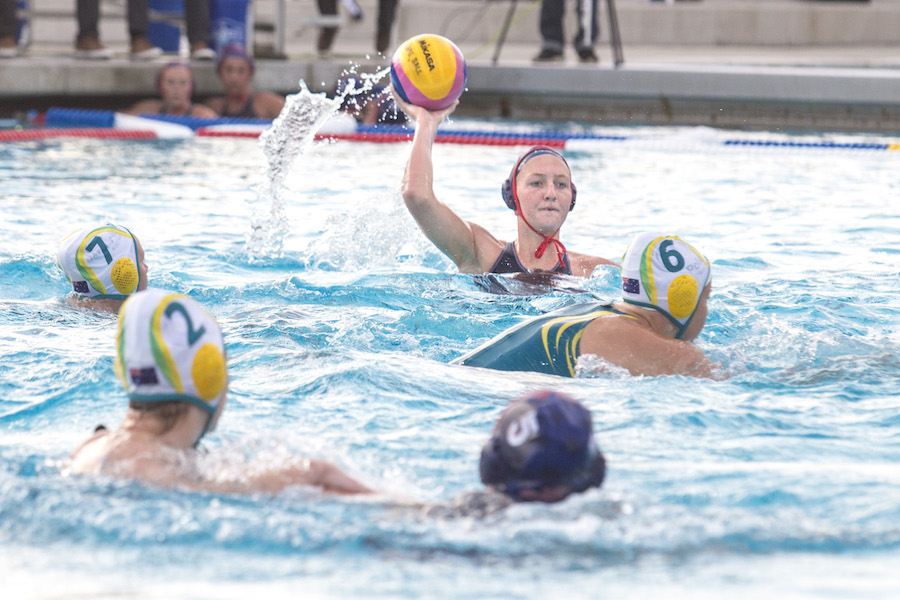
The U.S.A. national women’s water polo team made its way to Davis, Calif. last week in an out-of-the-ordinary appearance to face five other international teams trying to claim the gold medal in the FINA Intercontinental Tournament at the Schaal Aquatics Center from May 2 to 7.

Greg Mescall, the director of communications for U.S.A. Water Polo, said that the organization looks for various factors when choosing the venue for tournaments of this caliber.

“First, for a facility that can hold an event, has to have a certain size pool, stands, can support practices,” Mescall said. “Davis checked all those boxes and is a water polo community that appreciates high level water polo. When you have all of that together, it is a slam dunk to come to a place like this.”

BRIANA NGO / AGGIE

The FINA Water Polo League is the world’s first global league; it brings national water polo teams from around the world to compete in preliminary-round tournaments with the goal of advancing to the FINA Water Polo World League Super Final. The winner of the Super Final will earn the World League title and the largest share of the competition’s prize money. This year, the Super Final is held in Shanghai, China. As host, China automatically advances, leaving Kazakhstan, Canada, Japan, U.S. and Australia to play for the the top four spots that will advance to the Super Final.

Team U.S.A. headed into the championship game going undefeated in the round-robin play, where every team in the tournament faces each other at least once, to earn its its spot in the finals. U.S.A. previously won the tournament in 2016, beating Australia 6-5. However, only two of the players who competed in the 2016 Rio Olympics were on the 13-woman roster, the others being absent because the tournament coincided with their collegiate season. With a Team U.S.A. mainly comprised of young teenage standouts, this tournament seemed to be about building chemistry for the 2020 Olympic Games in Tokyo.

Team Australia came into the championship game winning every game in round-robin play, except one on May 6, when Australia lost 9-7 in a shootout to the U.S. Going into the championship on May 7, it was a hard-fought rematch of the previous day and the previous year between Team U.S.A. and Team Australia, and Team U.S.A. took the hard fought loss, 10-7.

“I take away a lot,” said Bayley Weber of U.S.A. “Teamwork and the way we came together despite our loss. I feel like we had better chemistry even though we didn’t put away our opportunities, but as a team I feel like we grew a lot and learned a lot more.”

The game started off strong for Team U.S.A., which won initial possession. However, shortly into the first period of play, Australia’s Elle Armit put one into the back of the net at the 7:14 mark, giving it the 1-0 lead. At the 4:13 mark in the same period, Armit made another goal, extending Australia’s lead 2-0.

DIANA LI / AGGIE

At 6:51 in the second period, Armit scored her third for Australia. Less than a minute later, Team U.S.A. equalized, and continued to shrink the deficit at the 1:25 mark, as Jewel Roemer placed a stunning goal at the five-meter mark to bring the score to 3-2.

On a power play for the U.S. in the third, Aria Fischer scored at the 5:38 mark, tying the game at 3-3. Australia’s Rowie Webster matched goals shortly after to give Australia the 4-3 lead. On an even-strength goal around the two meter mark that same period, Keesja Gofers extended Team Australia’s lead 5-3, which increased to three after a penalty shot was scored by Webster at 2:18 in the third.

Headed into the fourth period, Team U.S.A. did not seem disheartened, as Paige Hauschild earned one for the U.S., bringing the score to 6-4 (7:18). Roemer scored a penalty shot at the 6:30 mark to shrink Australia’s lead to one. Continuing on a back-and-fourth goal scoring, Hannah Buckling added one more to Australia’s score at 6:05 for 7-5 in Australia’s favor. After two unanswered goals by Team U.S.A. at the 4:50 and 3:04 marks, the game was all tied up at 7-7. Armit scored her fourth goal of the game for Australia, giving it the one goal lead with less than two minutes remaining. After a lobbed goal at the five-meter mark, the lead for Team Australia extended to 9-7, and at the 0:03 second mark, Gofers put the final seal on the game with a goal. The three late goals by Australia proved too much to come back for U.S.A., taking the hard-fought loss 10-7.

Before the medal ceremony, individual players received awards for their performance throughout the week. The top scorer award went to Australia’s Webster, with 18 goals in the tournament. Best goalkeeper went to Jessica Gaudreault of Canada and Seidemann of the U.S.A. received the MVP award.

Canada was awarded the third-place medal, defeating Japan 5-2 in the third place match.  Team U.S.A. took home the silver and Australia’s win earned them the gold. These top four teams will meet China, Hungary, Russia and the Netherlands, which previously qualified in the Women European Preliminaries, in the World League Women Super Final in Shanghai, taking place from June 6 to 11 later this year.

“We take a ton of things from this,” said head coach Adam Krikorian of Team U.S.A. “The key is what they take from this and hopefully they learned a lot. Hopefully the learning doesn’t stop and I am very happy with how the team listens, how receptive they were and how much they competed. I can’t thank Davis and the community enough. Everyone is so friendly and helpful and it just makes it fun to be here, and I can’t thank everyone enough.”


Written by: Ryan Bugsch — sports@theaggie.org

A more equitable film festival

BRIANA NGO / AGGIE

Davis Feminist Film Festival to feature films representing women of color, queer women, women with disabilities  

In 1991, acclaimed director John Cassevetes said, “I’m very worried about the depiction of women on the screen.” Aren’t we all, John?

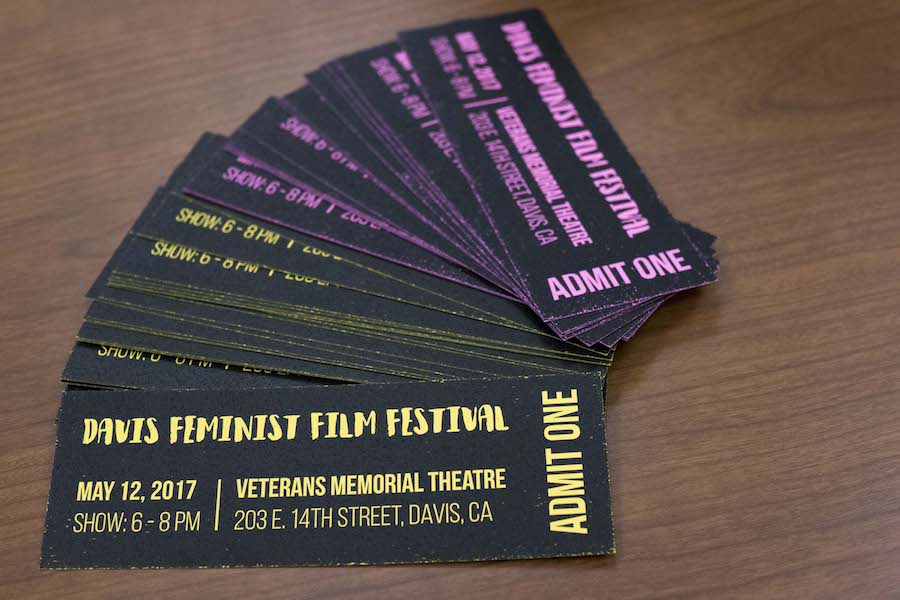
It often seems that little progress has been made in how women are represented in mainstream media, with female characters lacking complexity, authenticity and being used as mere tropes. And what’s most apparent is the lack of representation of different types of real women — queer women, women of color, women with disabilities. So, for those who have been feeling down about said lack of representation, it’s time to get excited, because the Women’s Resources and Research Center’s (WRRC) 12th annual Davis Feminist Film Festival is just around the corner.

The process of selecting the 14 films that will be shown was a complex one; a 35-person committee made up of members of the community, faculty members and graduate students sifted through the astounding 923 short film submissions that had poured in from all around the world. Next, a group of 10 interns watched the top 60 of those films, meticulously discussed them and finally decided on the selected few finalists.

Lindsay Baltus, an English Ph.D. student and the director of the film festival, noted that it was important to “build a lineup that was diverse in the people that it represented, issues that it talked about, themes, countries of origin, languages and genres.”

Baltus believes that film is a powerful medium for change and kept a broader community context in mind while curating the event.

“I feel that events like this represent some of the best things the university can do to address the inequities that women, people with marginalized identities and people of color are facing,” Baltus said. “I think that the university has a responsibility to make a connection between the academic work we do on campus and the marginal communities, including the local community that the university is situated in. So I feel really inspired by this event as a place where we can do that — the festival is open to the community, we’ve done a lot of outreach in Davis.”

The film festival is certainly the place to expand one’s horizons for those interested in learning about the stories of all types of different women, as the varied lineup includes experimental films, documentaries, narratives, animation and dance films. Especially given the current political climate, it’s important to represent different people’s experiences in an open and empathetic way that will turn into a wonderful learning experience.

Mary Rasooli, a third-year international relations major who is working as a communications intern for the festival, said, “When we’re fed so much rhetoric and people’s identities are essentially being politicized — immigrants, refugees, queer peoples — it’s important to bring all these identities together and to show an alternative to what we’re watching and constantly being fed.”

Through meeting with other interns weekly and discussing feminist films and subjects throughout the Winter and Spring Quarters, Rasooli realized the importance of being aware of who exactly is creating the specific art content that’s being consumed.

“When I saw that a woman of color was making a film on women of color, that was something that was so much more special, and you could even see it through the film that there was so much for depth and beauty to it,” Rasooli said. “So ‘who’s writing these narratives?’ is definitely the question that I started asking myself a lot.”

Angelica Garcia, a fifth-year psychology and Chicana/o studies double major, is also an intern for the festival. She stressed the need for a conversation surrounding feminism and its definitions.

“I think we feel like we’re in a bubble in Davis, or we feel like it’s really liberal, but we forget that harmful and hurtful things happen here too,” Garcia said. “Our goal is intersectional feminism, so explaining that to folks is starting a conversation in places where we think ‘oh, we don’t need that here.’”

Creating an open dialogue between all members of the community is vital to growth, understanding and compassion, and for Garcia, the festival is about creating “a healing experience and creating a place for voices that aren’t represented.”

Community outreach intern Sabrina Lee, a third-year community and regional development and film studies double major, believes that “watching these films will break down a lot of that stigma, and break down a lot of the rigid definitions that people have created about what feminism looks like.” Lee reflected on one of the films that she’s looking forward to people seeing.

“One of the more lighthearted films we looked at is Jessica, which does take a more lighthearted look into what ability, and ‘disability’ looks like,” Lee said. “I think oftentimes, we don’t let folks tell their own narratives, or put these certain expectations and standards onto folks with different abilities, while this type of film changed that narrative and made it so much more lighthearted and really made you love the character on a much deeper level.”

Experiencing a wide variety of eye-opening, beautiful, honest and moving films that represent real, complex women might just be the best way to go down a more accepting and healing road during these confusing and frustrating times. Don’t miss this exciting event, which will be taking place on May 11-12. Tickets are now available to be purchased online and at the WRRC; suggested donations are from $5 to $7 for students and $7 to $10 for general tickets. Please check out the link below for more information, including line-up specifics: http://wrrc.ucdavis.edu/feministfilmfestival.html


Written by: Pari Sagafi — arts@theaggie.org


City of Davis marches for climate action

DIANA LI / AGGIE

Davis locals bike to People’s Climate March in Sacramento

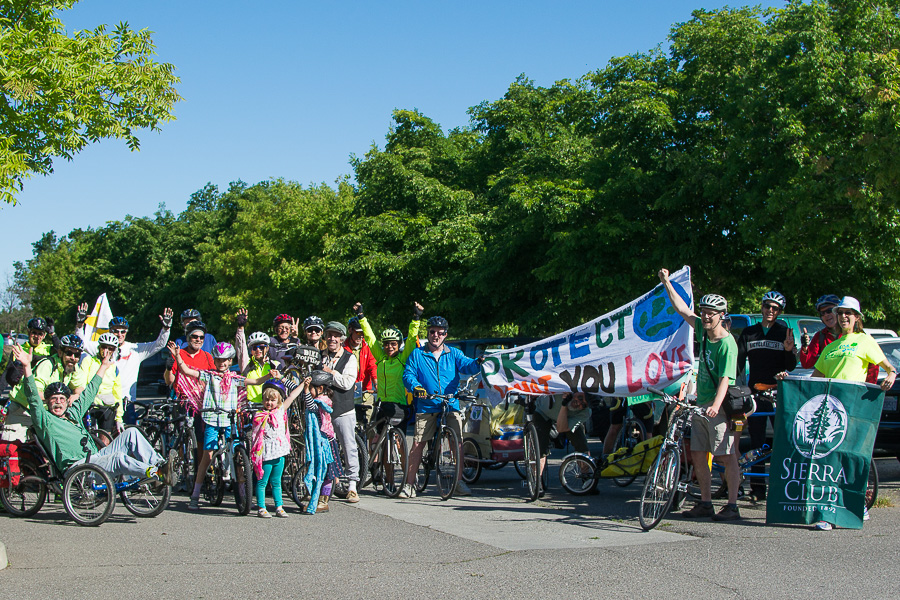
Saturday, April 29 marked 100 days of Trump’s presidency. Davis residents, young and old alike, gathered at Mace Boulevard park-and-ride at 9 a.m. to bike to Sacramento, where the march for climate change commenced at 11 a.m. The bike parade was open to the public and was kid-friendly. Since people bike at various speeds, there were several meeting points along the way to ensure that the group could stick together and that no one would be left behind.

In a world with an ever increasing population with its associated pollution and environmental damage, many are fighting to get recognition of climate change and for subsequent action to be taken. Davis is known for its cyclists and for being a very eco-friendly town; UC Davis has a goal of being completely waste-free by 2020. So why might residents take part in a march for climate action if the City of Davis is already reducing its carbon footprint?

Much support is needed in order for government administration to take action. But in order for action to be taken, the issue at hand must first be recognized.

Ergo, when Davis residents took part in a march for climate change in Sacramento, their mode of transportation — to prove their point and fight for protecting the environment — was biking.

“As we were thinking about ‘how will we get there,’ of course we want to live our values — that only makes sense — so we should be thinking about carpooling, or should we have ordered up a bus, or how else can we get there?” said Maria Contreras Tebbutt, the founder and director of The Bike Campaign and The Bike Garage. “We can take the train to Sacramento, or we can take a bus that is already en route, we could rent a bus to be here all together. And so we decided that there would also be a bike ride to get there. Most people have never been on the bike lane on the Yolo Causeway, and so this will give people the chance to go ‘okay, I’m going with a group and so this’ll make it easier for me to do something I haven’t done before that makes me feel a little bit nervous.’”

Juliette Beck, member of the Sierra Club and volunteer for Cool Davis, was a facilitator for the bike march from Davis to Sacramento.

“Sacramento has a wonderful coalition of people called the Sacramento Climate Coalition, and they started organizing the march in Sacramento and we wanted to join them by bike,” Beck said. “And so we’re encouraging people from this region […] to get there without polluting the environment [and] without using fossil fuel and to get there by bike, which is the best mode of transit if you’re able to do that — completely fossil-fuel-free […] [The march is] a response to the climate denialism that’s pervasive in this administration and a call for climate action to protect every living thing.”

The march was also a way for Davis residents to take part in a bigger movement with others who share the same passion for climate action.

“We’re going there to be inspired by other people that are like-minded, that care about our environment,” Contreras Tebbutt said. “I think there are a lot of people that are really afraid of some of the rollbacks that were seen with the Environmental Protection Agency [EPA] — things being eliminated that people had worked really hard to get instated in the first place. So this makes people nervous, but yet there are more of us, and every one of us can make a choice every day about how we live our lives, and transportation is a big part of that.”.

Transportation is one of the main contributors to human-induced global warming. Out of comfort or convenience, many people decide to drive their own vehicle rather than carpooling or taking public transportation. In addition, they even drive short distances that could easily be walked or biked.

“Active transportation makes you healthier,” said Mark Vayssieres, an attendee of the climate march.

Vayssieres is well aware of the effects of climate change and does his part to keep the planet clean by making his commute to work from Davis to Sacramento via bike.

“I found [out] about the march because I’m a member of several environmental groups, including the Sierra Club and Environmental Defense Fund and other groups, and we’ve been organizing this march for some time now,” Vayssieres said. “The Sierra Club started as a club to go hike in the mountains […] and then it evolved from that into protecting public lands and forest.”

Activists encourage residents of Davis, and citizens worldwide, become better informed about the effects that their lifestyle choices can have on climate change.

“We really encourage students to keep biking and being an example of the type of future we need with bicycle power transport,” Beck said.


Written by: Kaelyn Tuermer-Lee — city@theaggie.org

Active Aggies Week to begin next Monday

HANNAH LEE / AGGIE

On-campus events held to encourage physical activity

Active Aggies Week, a weeklong, campus-wide celebration of moving and staying active, will take place from May 15 to 21. Multiple exercise based organizations, the Wellness Center and Campus Recreations and Unions (CRU) will participate.

Active Aggies Week began as a way to celebrate May is National Physical Activity month and to provide students with fun and free opportunities to be active,” said Shantille Connolly, a wellness education educator, via email. “There are so many way unique ways to move our bodies, so Active Aggies Week is hoping to encourage students to find a form of movement that they truly enjoy.”

Connolly believes being active is important for both students’ physical and mental health.

“It’s important to stay active because of the positive physical and mental health benefits physical activity provides,” Connolly said via email. “Even a short, 10-minute burst of movement can provide you with an energy and mood boost. Research has found that physical activity has numerous benefits for mental health and we know that 46.8% of students report that stress negatively impacts their academics.”

On May 18, UC Davis Yoga Club will be offering yoga classes in 5 Lower Freeborn Hall at 6:30 p.m. Ana Elisa Skomal, a fourth-year food science and technology major and president of UC Davis Yoga Club, appreciates exercise because she uses it to connect with herself and her body.

“[Staying active] is an opportunity to connect with my body, with myself in a fun and enjoyable way,” Skomal said via email. “Yes, there are also many health benefits that come along with staying active. However, I feel it is important to not look at exercise as a chore. We have brought together a group of students from all over the world to share their energy and love for yoga.”

Reed D. Phinisey, a CRU fitness and wellness center coordinator, believes it is important that physical activity be done for one’s own enjoyment. On May 17, CRU will host its first pop-up hip-hop dance class at the Memorial Union Patio at 2 p.m. Later that day, CRU will host a Zumba-Thon at the ARC four-court gym from 6 to 8 p.m.

“Physical activity might be one of the most influential tools when it comes to improving one’s overall wellness,” Phinisey said via email. “This can range from either general exercise modalities (strength training, aerobic exercise, yoga, etc.) all the way to ADL’s (activities of daily living). It’s important though that we feel motivated to maintain this mode of physical activity but also derive enjoyment from said activity.”

Brian Luu, the Fitness and Wellness Center assistant director, said CRU is offering many different types of classes to inspire students to move and be happy.

“Campus Recreation and Unions contributes [to better quality of life] by offering a multitude of activities for our students to explore,” Luu said via email. “For us activity does not need to be limited to just working out in the gym. It can be going on a hike, taking a craft class, tending to a horse at our Equestrian Center, swimming, etc. We want students to find what makes them happy and helps them move. Our students’ well-being is what means the most to us!”

Other events happening during Active Aggies week include swing dancing with Davis Swing Dancers, a resistance band workshop, ballroom dancing with Davis Ballroom Dancing, Nerf-based games with the Davis Nerf Club and more.
Written by: Yvonne Leong — campus@theaggie.org

Editorial Board meets with Gary May

HANNAH LEE / AGGIE

May discusses positions on boards, UCOP audit, free speech

The Aggie Editorial Board sat down with incoming Chancellor Gary May on Monday to talk about issues concerning UC Davis students, including his positions on private boards. Below is a full transcript of the meeting.

Dr. May, you had brought up the idea of meeting after reading the editorial. So, to start, did you want to address the editorial?

I will. I first just wanted to say couple things. What I want to happen from this meeting going forward is to talk about how we can talk about making Davis better. The board issue is an issue but it’s not really the overarching reason why I wanted to meet with you. I think I want to get off on the right foot, I want us to have a good relationship, I want you to help me get the message to the students.

[…]

Well I didn’t have a problem with the editorial. I just wanted to make sure we had very clear and correct info on both sides. I’ll just say very generally, I’m certainly very philanthropically inclined and I can give you some examples. But I don’t think what I will do is to direct all my philanthropy in one spot. Right now, I give to the university where I work and I’ll certainly give to Davis. In fact, I gave to Davis today, I gave to Engineers Without Borders today for an activity they’re having May 13. Some examples of things I’ve done at Georgia Tech, there’s a tutoring lounge in the undergraduate tutoring commons that’s named after me and my family — I’d really rather not give dollar amounts — but you know that’s a significant donation.

There are two scholarships in my name at Georgia Tech, one’s co-sponsored by BP that started when I became dean and just a couple weeks ago, at the final College of Engineering program, a group surprised me and announced there would be a scholarship for engineering students of color that already has six figures from pledges and I’ll also be contributing to that myself. So I do do philanthropy regularly.

Some things outside the university: church, American Cancer Society — my dad passed away from cancer. American Diabetes Association — my mom was diabetic. And then a variety of who comes at me with the right pitch

I don’t wanna feel like I should direct all my philanthropy at Davis because that’s not really how I roll. If you guys don’t mind, a significant fraction of the money that comes in — not just from the board service but from salary as well — goes to philanthropy.


How would you describe the benefit to students of serving on a board like Leidos?

There’s some direct and some indirect benefits. For Leidos in particular, I think I mentioned this in one of the comments I made to the Sac Bee, in their eye-opening headline article, that it’s resulted in literally millions of dollars of philanthropy at Georgia Tech.


And then for the Draper board — how much time do you plan on spending on that board?

So those meetings are quarterly. They’re in Boston so I have to fly so there’s travel time. And there’s dinner and the next day’s the board meeting so there’ll be four of those a year. We should talk about timing but I think that question’s come up more than once — board service. The way I address with it the student group. There’s 168 hours in the week. Probably 40 if I’m lucky I’ll be sleeping. Probably 80 I’ll be working for Davis. So there’s a few hours left in the week that I can do other things. It won’t impact or detract from any way my service as chancellor. The way you can calibrate that is, I’ve been on the Leidos board for two years and the last year my own supervisor said it was my best year as Dean of Engineering. So these things do not detract from my current position. I think, quite frankly, if I was serving on a board of a charity or something, it wouldn’t be an issue. Tell me if I’m wrong.


While the optics are a big part of it, [your board positions are] still a real issue to students — how would you address their concerns?

This is kind of a cultural thing. When it was announced at Georgia Tech that I’d been selected for this board, it was celebrated. There was an article, none of these sorts of concerns arose but I’m sure this is partly due to the historical issue that you had with previous chancellors so I get that. But really board service is an indicator of thought leadership and it’s really a feather in the cap of any university or institution. I’m not the only chancellor who serves on boards nor am I the only faculty member in the system that’s on boards. A good friend of mine is on the board at Intel and she’s a professor at UC Berkeley. Faculty members in general get outside income from many sources — there’s people who consult, people who are expert witnesses for legal cases, a football coach has camps, people are comedians or concert pianists. Outside income is not necessarily a bad thing. So I’m disappointed it’s received this kind of stigma and I understand why, but I’m disappointed and I hope to be able to turn that around.


There are some students protesting the board positions because they believe it profits off war. How would you respond to that?

The company, Leidos, does not make manufactured or deploy weapons or make decisions that impact that. They have three business areas: defense, civil infrastructure and health. Defense does intelligence, info gathering, security, sensors, occasionally a prototype is built like there’s an unmanned underwater vehicle that was prototyped in our San Diego office. But by the same logic, the university itself — many faculty have contracts with the Department of Defense and other places so the university benefits off war if you use that same logic and I don’t necessarily prescribe to that logic.

[…]

I’ll characterize what Leidos does on the defense side is keeping both citizenry and the soldiers in the military safe by providing information, reconnaissance, all those sorts of things that help people out on the field and give them more info to do a better job. The company does not necessarily benefit from war. I think that’s really crazy because the company existed from a company called SAIC which has been in existence for 30 to 40 years and has been profitable in times of peace and in times of war, has nothing to do with whether there’s a war going on. I actually consider myself a pacifist and I also don’t like crime but I’m glad there’s police.


Do you believe that former Chancellor Katehi’s positions on external boards like Wiley and Sons and DeVry posed an implicit conflict of interest?

Now I’ve heard it argued both ways. Now when you look at Wiley, the argument that says it’s a conflict says Wiley’s a textbook company and she could influence what textbooks are bought on campus. But if you know anything about how textbooks are selected for classes, chancellors has very little influence on that at all. You know, the faculty guard their curriculum very jealously and if I tried to stick my nose in textbooks for a particular course, I wouldn’t get much out of it. So there’s a perceived conflict, which I get, but I don’t think there’s an actual conflict in that case.

Now, DeVry is a little different because DeVry was being investigated for some bad behavior. You could argue whether she should have used better judgment about that but as a board member you have some liability because you had fiduciary responsibilities to the company. So if the behavior had resulted in some judgment that could have impacted her as well as the company. So I’d rather, rather than talk about her positions and decisions, I’d rather have us moving forward because I don’t want to come off as being critical of my predecessor, I don’t think that’s productive.


A lot of the problem with Katehi had to do with her transparency. […] How do you plan on [keeping up the dialogue between yourself and students on campus], since there will most likely be people who continue to take issue with [your board positions]?

Well all I can do is continue to express my side of the story and why I think what I’m doing is not illegal, unethical or immoral. I fully disclosed all these relationships to the search committee and search firm involved in selecting me and the president’s office and I’m in total compliance with UC policies otherwise I wouldn’t be here. In fact, I brought it up before it was even asked of me so I could be completely transparent. If it was gonna be an issue, I shouldn’t be a candidate or I should give up the positions before I become a candidate if it is an issue. I explained the whole frequency of meetings, the compensation, and all the other things to the search committee and they were satisfied.


Would you consider utilizing income from board position for philanthropic purposes?

I do now. Some of the philanthropy I’m engaged in now is a result of that income. Now I should say — I should make some clarifying remarks about the income. So for Leidos it’s approximately $250,000 a year: $100,000 cash and $150,000 in stock. The stock does not vest until a year after it’s granted so it doesn’t do anything for me until a year later and I have to maintain a certain amount of stock ownership in order to be a board member because you have to have skin in the game, otherwise you don’t have enough personal interest to be effective. Thus far, in two years, the funny thing that happens is the stock vests, it becomes income that’s taxable and I actually lose money because I haven’t sold any of it.


How important is campus presence to you?

Very important. We spent part of today looking at my calendar of the first 60 days or so and lining up accessibility, visibility, meetings. I plan to be quite accessible for not just the students but the staff and faculty. One of the things I’ll be doing is something I do now called Dean’s Office Hours where I go to every school in the college once a semester and sit in an office and have office hours for anyone who wants to come. That could be students, faculty or staff — usually it’s faculty who want to compliment me on doing a good job.

It’s often people who have particular axes to grind. But I think it’s good to be out there, to be accessible and available so I’m going to do something like that so I’m going to figure out  calendar-wise how to do it. You know, try to be at the health system once a month in Sacramento. I’ll figure out different ways, when I give speeches, maybe make those available by streaming and other mechanisms. I’ve pretty much said yes to every invitation I’ve had so far and I’ll continue to be as accessible as I can be.


A recent issue which is not just particular to Davis, but also schools like Berkeley and across the country, has been when a student group invites a controversial figure to campus. What’s your stance on inviting inflammatory figures and how to accommodate them?

So first rule is follow the law and the law says you have free speech. And I’m an advocate of free speech. If you were to invite — I think Ann Coulter was the last one that was controversial — you know, the only thing Ann Coulter and I agree on is that she has the right to speak. But she does have the right and we have to make it safe and secure for everyone participating because campus security is part of my job. So to the extent that we can ensure the security and safety of all the students, we let them speak. Now I think that I was asked about this in the interview with the search committee and I’d say our freedoms have limits. My ability to swing my arm to the right ends where Scott’s nose begins, right? So the analogy is when someone’s speech causes an environment where students don’t feel like they can learn, then you have to look how we can put some constraints on whatever activity it is.


So, had you been chancellor in January, how would you have handled the Milo Yiannopoulos situation here?

From what I know about it I would’ve said yes, he can speak here. We would put some constraints around making sure the venue is secure and safe and et cetera and we’d have concerns about outside agitators and things like that so I’d take advice from the police and others about that but we will not curtail anyone’s right to express themselves.


Do you think that it’s the responsibility of UC Davis to pay for security at these events?

I think it’s the responsibility of UC Davis to make sure that all our campus stakeholders are safe and if that means we have to pay then that means we have to pay.


What’s your vision for UC Davis’ presence in Sacramento? Can you talk about what a business incubator there might look like?

Yeah. First I would say we’re already in Sacramento, that’s where the hospital and the medical system is so they would get mad if I didn’t say that. […] But beyond that […] I’ve already had the interim chancellor, Ralph Hexter, visit me in Atlanta and we took a tour of a place connecting to our campus, Georgia Tech’s campus, which they call “Technology Square,” which I think is a model for what we would like to be able to do in Sacramento. There’s a business incubator, there are landing spots for companies to come innovate there. Georgia Tech’s campus is very mission-focused on STEM, I would expect if we do that here at Davis it would be a little bit broader in scope than just the STEM fields, but the whole idea is innovation and connection to the city and the environment. I had a brief conversation with the mayor and he wants to come visit Atlanta to see what the Tech Square looks like. Harvard Business Review did a nice writeup of it, I can send you the link if you’re interested. The idea is for the university to be better connected the city in a variety of ways, it gives the participants in the Tech Square access to students and faculty for employment purposes and also allows them to collaborate on research. The unintended consequence we didn’t know would happen is there’s like 15 companies in Tech Square, all these innovation centers, and they get to work with each other and collaborate on their colleagues’ clients customers of each other, it could expand that was as well.


Is the Tech Square kind of like a satellite campus?

No, it’s a set of buildings that many of them are part of our campus, our bookstore is there […] the business school is there, and there are some research buildings, there’s retail, there’s the world’s smallest WalMart, there’s a waffle house, restaurants.


Georgia Tech is a STEM-focused school. What are you [planning on doing at UC Davis] to engage faculty and students in the humanities?

Well, I think these things are not separate, what I told the search committee is that we’d like to be able to do is to make UC Davis a focal point for addressing societal issues broadly. Some of those issues might require a new device or invention, some of those issues might require a new policy, some of those issues might just require better arts and entertainment. I talk about the dichotomy of STEM and the humanities in this way: some things that we study in the university are because we want to discover more about the world and about life, so the science, and some things we want to use to improve the quality of life, so engineering and business and some things we study because they make life worth living, so the humanities and the arts and those types of pursuits that fall in that category.


Katehi’s term was obviously a lot shorter than previously anticipated; are there any existing initiatives of hers that you would like to see continued?

I think the Sacramento piece is something she was in favor of. I don’t know how far it got, we talked about a food center of some sort, a public policy center of some sort. I’m not saying those will be the areas I’ll focus on, I think better engagement with Sacramento is a part of something I’m told that she was interested in having.


Have you met with her?

I have not. I’ve known Linda for a long time, we’re both electrical engineers, we’ve been on committees together. I’ve known her for 15 to 20 years.


Do you anticipate using her as a resource now that she’ll be on campus as a faculty member next year?

She’s offered that, she’s reached out and said ‘Congratulations, if you have questions or would like to discuss anything, I’m open to that,’ depending on what the issue is I may or may not. I have not, other than saying thank you and all that I have not actually used her as a resource yet but it’s possible.


How does the process of choosing your fellow members of the administration go? Do you anticipate keeping the existing staffers there?

There are several interim folks and some vacancies, and each will be a different strategy for filling those […] Immediately, I think it would be foolish for me to start making changes coming in the door, because I don’t know anything or anybody. So the existing staff will probably be in place for some period of time as I get the lay of the land and learn how things work and try to figure out the best way to execute my vision.


One issue that we’ve dealt with on campus recently is that for the first time in 12 years, the number of international students applying to UC Davis has decreased. Since 12 years ago it was the start of the Iraq war, this [drop in applicants] might also be perceived as political. You’ve written against the travel ban as something that prevents talent from coming from abroad. In this high time of political tension, how would you make UC Davis attractive to students abroad?

We have to provide a welcoming environment and a lot of that is by how people are treated when they’re here. My sense is that’s the case, right? I think if international, not just students but faculty as well, do feel safe and secure and welcome on campus, getting from where they are to here […] It’s going to be an ongoing issue, I think, under this administration that they haven’t given up on the travel ban […] and the whole atmosphere of nativism versus local is — if I can put it that way — going to be discussed not just here in California, but nationally for the next several years, even internationally. The French just had an election where they made a pretty strong statement about what they’d like to do.


Are there any specific steps you would take?

So, I just got out of a meeting with Joanna Regulska about an initiative that tentatively we’re calling “Global Education For All,” where she would like to have all Davis students have some sort of experience either physically at another country or bring the students here, or some sort of project related thing, or employment, it could take many different forms. I’m very supportive of that sort of initiative.


It came out recently that the UC Office of the President had about $175 million in funds that weren’t previously disclosed. The lieutenant governor has called for the UC to reverse its tuition increase, and same with the assembly speaker. What are your thoughts on that?

Let’s first deal with the $175 million, I think when you dig a little deeper there most of those funds were encumbered in already designated for specific uses so I think when you strip all that away you get to like, $40 million is the number? And I think $40 million is a reasonable amount of money to have for emergencies and different contingencies that you can’t foresee out of a system that has a $30 billion budget. So having a savings account of $40 million is not unreasonable to me. Now, the tuition increase, I believe there has not been one in five years? And at the same time costs have been increasing over those five years and so to maintain the same quality of education experience for you guys, you know we have to address that. I think one of the big misconceptions about higher ed is that tuition has been growing at a rate higher than inflation and those sort of things, I’m not saying those are false, but at state institutions, at public institutions, the state contributions to higher ed have been declining. So really the costs have not been escalating at that same rate, but what’s happening is tuition is being used to make up for the decline in state contributions. That’s true in Georgia, I’m assuming that’s also true in California. So, the question is: How do we cover the cost? Do we pass it on to the consumers in the form of tuition? Or do we try to make the state be more responsible for the cost and maintaining what is the best system in the county, the UC system. I’m sure there are arguments on both sides of that, I think 2.5 percent is relatively modest, particularly if you factor in five years of flat tuition and know that the materials and supplies your professors use and labs, buildings, the land and the salaries and everything else is going up, so there’s gotta be some way to account for that.


Do you think that Napolitano should have been more transparent with those funds?

So, I don’t want to be in a position of criticizing my boss, but I’m a big fan of transparency.


The city of Davis is a sanctuary city. How are you planning on upholding sanctuary status on the UC Davis campus?

I’m supportive of it, I don’t know what particular levers I have as chancellor to address it, but I’m certainly going to support the city’s effort, or any city’s effort to maintain sanctuary status. I know that the federal administration is going to try and take some actions to limit that. I’ve already — there was something announced just yesterday by the attorney general, but again that’s not a position that I agree with.


Black students have been traditionally underrepresented at UC Davis. You’ve had a lot of success at Georgia Tech, especially in the engineering department, graduating black students. What programs or initiatives would you undertake here to achieve similar results?

We’ve been successful at Georgia Tech […] there have been a variety of interventions and enrichment activities, workshops, whatever. I think the most important thing early on was the establishment of the partnership with the […] university center’s schools that were historically black college universities […] all there in Atlanta unfortunately, Georgia Tech has a geographic advantage in that sense that Davis may not have. But partnerships are certainly very important in trying to address this, providing a pathway and a vehicle for the students to matriculate and also be successful requires some resources. It’s tricky to navigate the resource situation here because of Prop 209, so we’ll have to figure out how to push that envelope while still being in compliance with the law. But we’ve had a lot of success in getting federal money from the National Science Foundation and others for specific programs and undergraduate research, fellowships for students, for a variety of different mechanisms that have been useful, but I think the most important thing has been — other than partnerships — has been role models on campus in faculty and staff. That’s been pretty essential to that success. I hope to be able to duplicate that and see what we can do. And I don’t think it’ll necessarily be a specific laser focus on African American students, although I certainly will pay attention to those students, but I think what you want is for the student demographic to look like the state and the country and not have anyone be underrepresented, in a sense.


So a large issue at UC Davis both on campus and in the city is overcrowding. There’s very little vacancy and it’s really hard for a lot of people to find housing. How would you use your position as chancellor to advocate for students within the city?

I have a dinner meeting tonight with the Davis mayor and city manager to discuss this very issue. And I cannot completely converse to all the nuances yet, but I know that the vacancy rate in the city is like 0.1 percent. We’re going to be building some new housing on campus to address the growth of the undergraduate population primarily, they would like us to cover all the growth and even more I think. There’s a costs associated with that, so again we don’t want your tuition to go up, but we have to house you, so there are tradeoffs. Potentially, this initiative in Sacramento might be able to get at that a little bit depending on students’ willingness to travel to campus, I’m spitballing stuff so don’t hold me to this later […] But I really need to hear from the Davis government to hear their side of the story and what they’d like to see happen […] we’d like to have sufficient quality housing for all of our students and at the same time we want to be a good neighbor to the city.


If you were talking about using Sacramento as a way of solving this problem, would that entail a satellite campus?

I wouldn’t put it that way, I’d call it — you know, if we do this ‘Tech Square’-type thing, I actually have a name for it: Innovation Station, near the train station […] if we do that I mentioned that in Tech Square we have Georgia Tech Hotel, we also have two high-rise student housing buildings going up that we didn’t pay for, this is just a commercial developer saying ‘Hey, there’s an opportunity here,’ students want to live near campus and they want to live near this Tech Square area, and it just happened as a result of this initiative. So something similar could happen to us.


Gary May special announcement:

What we’re going to be announcing on Wednesday is a student interior design contest for the residence, for the public portion of the residence. It’ll be two rooms and basically the idea is for students that come up with design ideas that say, my whole idea was to say: ‘This residence belongs to the university, not to me. It belongs to you, the Davis student.’ So I want you to feel some ownership in it, and feel like you have some say in how it looks and how it’s used […] all I know for sure is that my wife said she has to be a judge. There will be other rules and requirements, and we’ll have nice prizes and the winner will implement their design at the residence.


And when do you move in?
I arrive July 24, and I officially start August 1.

Students protest Trump’s religious freedom executive order

BRIAN LANDRY / AGGIE

Executive order allows religious organizations to become more involved in politics

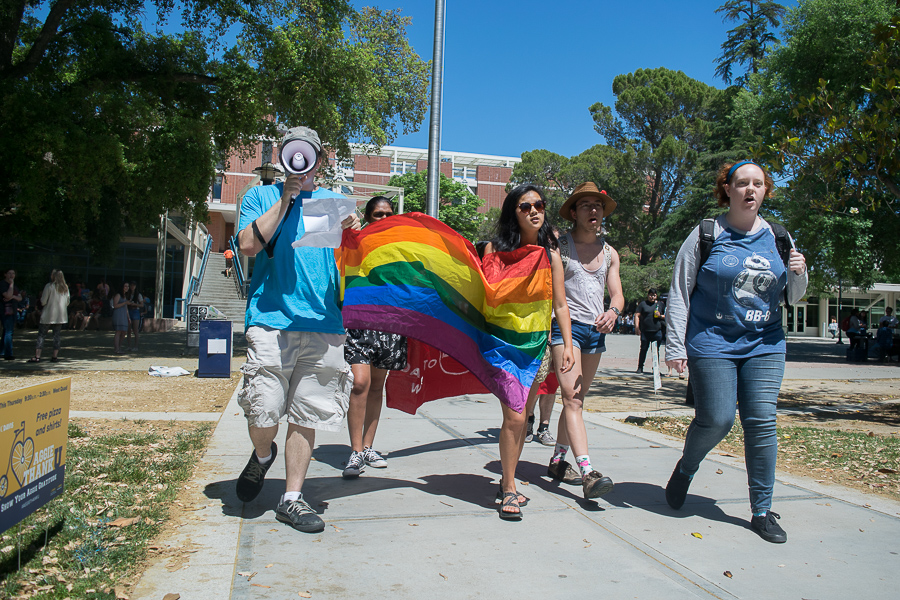
Students gathered at the Memorial Union on May 4 to protest President Trump signing a religious freedom executive order that would allow religious organizations to become more politically involved.

“By ‘religious freedom,’ [Trump] means that religious people who provide goods and services to the public can legally turn LGBTQIA people away due to their religious objections,” read the Facebook event page for the protest. “Essentially this executive order legalizes discrimination nationwide, and will create a massive barrier for LGBTQIA people in areas such as housing, employment, academics, and healthcare.”

Six students marched to Mrak Hall at about 12:15 p.m., chanting phrases like “LGBT, do not take my rights from me,” “hey hey, ho ho, homophobia has got to go” and “when queer people are under attack, what do we do? Stand up, fight back! When trans people are under attack, what do we do? Stand up, fight back!”

At Mrak Hall, one student gave a speech on behalf of LGBTQIA rights in front of a group of students who were camped out at Mrak to protest the UC’s involvement in companies that heavily use fossil fuels.

Sam Grusky-Milin, a second-year computer science and music double major who participated in the march, believes that people should separate their religious belief system and personal views.

“In addition to knowing that people can be members of any particular tradition of faith and have their own personal values of equality, those two things don’t necessarily have to be mutually exclusive,” Grusky-Milin said.
Written by: Alyssa Vandenberg  — campus@theaggie.org

Photo of the Week: 5/11/2017

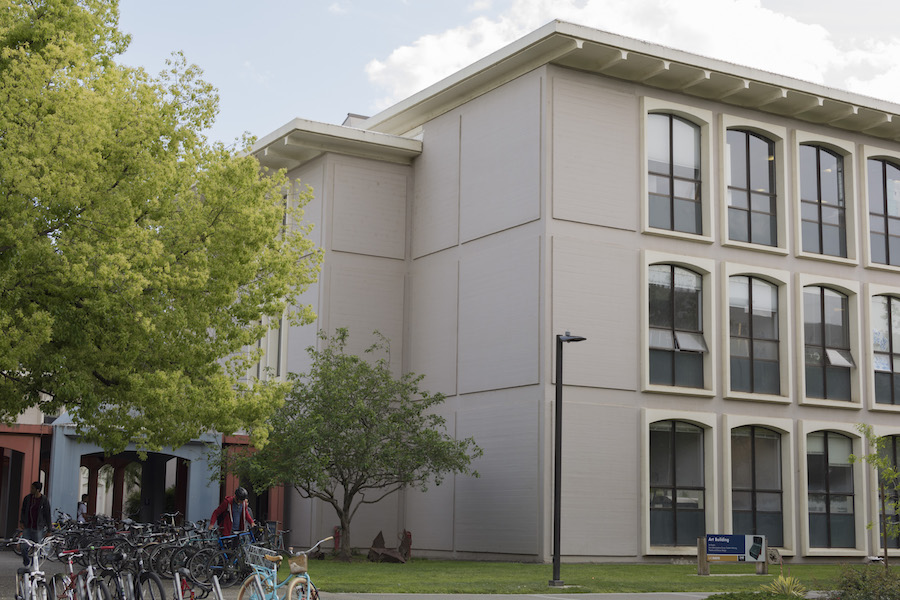
Art building at sunset. (NICOLE WASHINGTON)

UC Davis students start protein bar company

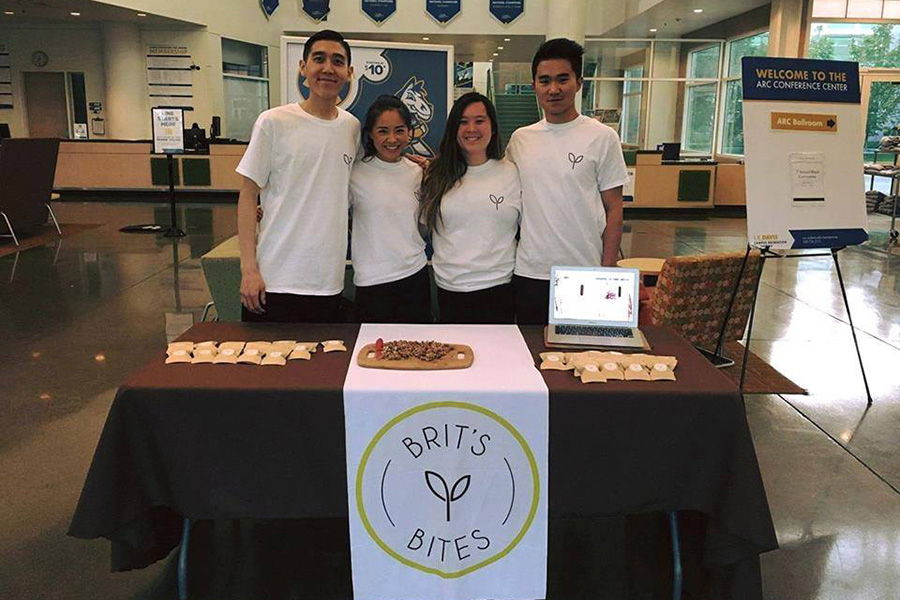
BRIT’S BITES / COURTESY

Four friends hope to introduce healthy, delicious snack to UC Davis

Like many ideas, the concept of Brit’s Bites first emerged in somewhat mundane circumstances. Ivy Feng, a fourth-year political science public service and economics major; Justin Lu, a fourth-year applied math major; Shiang-Wan Chin, a fourth-year managerial economics and communication major and Brittney Chung, a fourth-year human development major, had gathered together for a late night study session during Winter Quarter of 2016. Each of them came with snacks. Feng brought Ranch Doritos, Lu had Lays and Chin had Cliff bars. Chung chastised the group for their unhealthy eating habits and presented her own offering, a homemade, original recipe protein bar.

“It tasted amazing,” Chin said. “It was high in protein and we actually felt good. We could study longer into the night whereas a lot of the time we just had junk food and felt bad afterwards.”

Thus began Brit’s Bites. The four seniors had surmised a problem with the snack market. All the tasty snacks were bad for you, and all the healthy snacks were not pleasant to eat. They resolved to introduce a product that both tasted good and was good for you, and what had started as a fun idea between four friends quickly evolved into a legitimate start up business within a matter of months. Brit’s Bites, self-described as an organic, plant-based, superfood protein bar, is made by students for students.

“We’re really trying to cater toward health-conscious students,” Chin said. “Students that go to the gym, students who go hiking, students who do yoga and just people who are trying to eat healthier in general.”

Currently the Brit’s Bites team has sold over 1,000 bars, but the process it took for them to develop the initial idea to the finished product was a long one. They first needed to figure out their identity.

“Our biggest block in the beginning was trying to figure out ‘what is Brit’s bites? What do we want people to know our bars for?’” Feng said. “We’re all cofounders, we’re all trying to create something that represented our values.”

Starting a company is no easy task under any circumstance, but attempting to do so while pursuing a college education only added an extra element of difficulty and pressure. Chin, Feng, Chung and Lu had to work tirelessly just to get Brit’s Bites off the ground.

“We stayed up every night until 2 or 3 a.m. just having baking sessions and packaging our products,” Lu said.

The Brit’s Bites team also had to overcome a lack of resources and were forced to figure things out as they went, as none of them had any prior business experience.

“A really big obstacle was getting started as students,” Chin said. “We had limited funding, so we definitely didn’t have the capital. We pulled together whatever we had to get started. We didn’t have a lot of experience so we had to rely on trial and error. We talked to as many people as we could in order to get good advice and mentorship.”

Regardless, the group pushed on and fought just to get their product into the public’s eye.

“Right now we’re not very well established,” Lu said. “When we set up tables at the ARC, we were getting kicked out. You really have to have that thick skin to go wherever you can to start talking to people, selling to them.”

Because their company was still relatively small, the Brit’s Bites team focused much of its energy on gaining exposure at UC Davis. The team gives free bars and other giveaways to students who follow them on Facebook and Instagram. They travel all around campus at all hours of the day setting up booths and handing out samples. Every bar sold mattered immensely to them as it was a sign of progress and expansion.

“We’re willing to do whatever it takes,” Chin said. “We’ll set up our table in two minutes, be there for five minutes if we can sell two bars.”

In addition to selling over a thousand bars and counting, the Brit’s Bites team has secured backing from ASUCD which provided them with much needed funding. Still, with the rising success some doubt remains.

“From the very beginning, fear was the biggest obstacle,” Chung said. “I was so scared of people not liking our product. We had to remind ourselves, ‘what is our real mission?’ and realize that it was to have healthier snacks available for students and help them achieve their goals.”

Throughout the journey of making Brit’s Bites into what it is today, one thing has remained constant: The friendship of its four founders. Chung, Feng, Chin and Lu believe that the whole process has only made them closer.

“It really pushes you as a team,” Feng said. “We’ve definitely had our ups and downs but it’s made us stronger and we’ve definitely grown a lot, and I think that it’s going to reflect in how Brit’s Bites grows too.”

Each member handles a specific aspect of the business. Chin is in charge of strategy and development, Lu handles the finance and numbers, Feng overlooks operations and event planning and Chung, the namesake of the bar, works on baking and marketing. Together they have grown immensely as they navigate through the business world.

“When you create a start-up you think it’s going to go one way but it never turns out how you expect it to,” Lu said. “You have to be very flexible, be able to adjust to everything and communicate with your team 24/7. It’s been a really fun experience so far.”

Through all of the hardship the four students feel that it is all worth it in the end.

“Being able to talk to students and other individuals and seeing them take a bite of the sample and say ‘wow that tastes good’ and ‘wow those are the ingredients’ really felt good,” Feng said. “So despite the bumps and obstacles it’s really been rewarding.”


Written by: Eddy Zhu — campus@theaggie.org

English Professor Tobias Menely’s favorite reads

ZOË REINHARDT / AGGIE

Get new recommendations for fiction, poetry

The Aggie sat down with English professor Tobias Menely to discuss favorite books, genres and poetry. He is currently teaching “Introduction to Modern Literacy & Critical Theory” and “18th Century Literature” and will be teaching “Milton and Blake” in Fall of 2017. Check out the interview below for some new book recommendations and more.

The Aggie: Is there a particular genre that you like to read?

Professor Menely: I’ve been reading a lot of science fiction.

The Aggie: Are there any specific authors that you like?

Professor Menely: I’ve been reading a lot of novels by a local Davis sci-fi writer, Stanley Robinson. He’s considered one of the greatest sci-fi writers. His most famous novels are the Mars trilogy (Red Mars, Blue Mars and Green Mars) and they tell the story of the colonization of Mars. It’s just really interesting because it’s about these colonists are not only thinking about the implications of creating an atmosphere and biosphere for Mars, but they’re also thinking about new systems of political economy, new kinds of government and the economic systems. It’s basically all about revolution, and the possibility of revolution. There’s this suggestion that Earth (in Stan’s books) in the future is still defined by conflict and capitalism, and nothing’s really changed — it all gets worse. So the colonization of Mars becomes this occasion to re-think the basis of society.

The Aggie: How do you recommend that students find out about other genres and writers? How do you find things that you like to read?

Professor Menely: I read the London Review of Books, The New Yorker, The New York Times, The LARB. I think one of the things that they [undergraduates] can do is to read the journals and magazines like [these] which present them with new literature, new art and the world of ideas.

The Aggie: Is there a book you’re currently reading/recently read that you are enjoying?

Professor Menely: The Neapolitan Novels by Elena Ferrante are really good; she’s just one of those writer who is a realist. In the first of the four Neapolitan Novels, she’s describing these girls who are growing up in Naples in the ‘50s and they have very different personalities, and they’re grappling with historical change, their economic conditions — they come from working-class families. And I think that a lot of times, realist novels present us with characters who have some kind of unique capacity to see the world and to know the world, and these characters are like that. I think that we all do have that, that ability to see the world for what it is, or see the world in its strangeness, and its mysteriousness, and these little moments of luminosity that appear.

In [her] work, every word is in the right place and is doing something precise, and that’s part of the pleasure of reading her novels. There’s this perfection in the use of language, and that’s part of what’s amazing about it. You can kind of see what a word can do to generate a view of reality and what precisely the use of raw language can do.

The Aggie: How do you like to read books? Do you use post-its, highlight, etc.?


Professor Menely: I read every night before bed for personal reading. I’m usually reading a contemporary novel, or I’m reading The New Yorker or the London Review of Books. And when I read for class, I read with a pen or pencil in my hand and mark up the text, which I really push my students to do, just because it makes you get closer to the text and notice what’s happening. Because there is a difference between reading for pleasure — and for all sorts of things — and reading for class with the intention of possibly writing a paper. So to mark that difference, you have a pen in hand, and part of what that allows you to do is to highlight those moments in the text where there is something concentrated happening. When you’re reading just for pleasure, the whole text just kind of washes over you, and when you’re reading critically for a class, you’ve got to be able to take the text apart and find that moment where something special is going on that explains everything else.

The Aggie: Is there a book that you believe should be required reading?

Professor Menely: Everybody should read The Brothers Karamazov by Fyodor Dostoyevsky. The great 19th century realist writers in England — George Elliott, in France — Balzac, in Russia —Tolstoy and Dostoyevsky. What they’re able to do is to range across different scales, so you can think about the great sweep of society, and of history and of class conflict. But then you can also think about the experience of being an individual, grappling with some sense of guilt, or whatever kind of inner things we’re dealing with. So there’s this kind of commitment to realism, to realist detail and to describing history, and people in their historical setting. There’s also this willingness to treat individuals in the fullness of what it means to be an individual with their own conscious.

The Aggie: What is your favorite novel?

Professor Menely: My own favorite novel is Passage to India by E.M. Forster. I’ve read it a number times — and taught it too. I think Forster is kind of an undervalued writer, and he’s as great as Joyce. Passage to India allows for some kind of gap in understanding that people have to find a way to work around because it can never be overcome between these different characters and the different worldviews that they bring. There’s a kind of gap and you can’t overcome it just through conversation, because conversation creates all sorts of misunderstanding.


Written by: Pari Sagafi — arts@theaggie.org

Introns are “in” right now

REBECA FIGUEROA / COURTESY

UC Davis scientists discover expanded role of introns

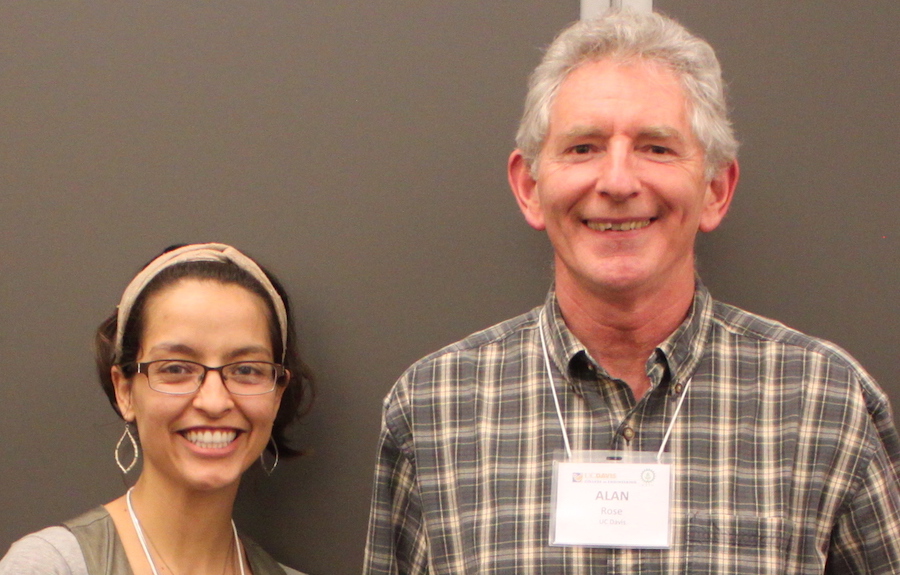
Dr. Alan Rose of the College of Biological Sciences, and Jenna Gallegos, graduate student in the Department of Molecular and Cellular Biology, have gleaming evidence that defies long-standing beliefs about the purpose of introns, as well as sheds light on their newfound function in gene expression.

Introns are noncoding pieces of genes that are promptly removed from the genetic sequence during the messenger RNA-building stage in protein production. Students who have taken a general biology course may be under the impression that introns, also known as “junk DNA,” are futile and don’t serve any significant purpose in gene expression.  

“In Intro to Bio, we’re taught that promoters control gene expression, and introns are really only important because they increase genetic diversity,” Gallegos said.  “We now know that introns can play essential roles in the initiation of gene expression. Fine-tuning gene activity is important for everything from protecting plants from drought to producing affordable pharmaceuticals.”

In the Rose Lab, the scientists experimented with a gene called “GUS,” which makes a conspicuous blue pigment when turned on. They fused the GUS gene to a plant gene and then proceeded to delete the promoter. The promoter is essential since it controls gene expression by initiating or preventing transcription of mRNA, or messenger RNA. After deleting the promoter, the scientists expected that gene expression would halt and the blue pigment would no longer be created. To their surprise, the blue pigment continued to be produced as long as the introns remained intact.

“What we found was that the part of a gene thought to control gene expression, the promoter, could be removed with no effect if the gene contained an intron,” Rose said. “This would be like finding that you could take the engine out of a car and it still went just as fast as usual if it had the spare tire in the trunk. Remove the spare tire and the car would not go even if it had an engine.“

These findings about the role that introns play in gene expression can have revolutionary effects in the biotechnology industry. Because biotechnology generally depends on optimal production of desired proteins, introns can help amplify the production of these proteins and create profound change in real world crises.

“This work could benefit humanity by providing a way to boost the productivity of a specific gene in plants and other organisms,” Rose said.  “For example, introns could be used to increase the level of vitamin A in golden rice to reduce the blindness and deaths caused by vitamin A deficiency in third world countries, to boost the levels of vaccine proteins in edible vaccines or to increase plant-based production of pharmaceuticals such as the Zmapp antibodies that were used to treat victims of the recent Ebola outbreak.”

How can researchers then obtain the maximum effect from an intron? The most significant factors are the specific sequence of the intron and its location within the gene. Researchers, being led by Ian Korf, a UC Davis associate professor of molecular and cellular biology at the Genome Center, have collaborated with the Rose Lab to develop a program that predicts the degree to which any intron will affect gene expression. Though more research is necessary in order to gain knowledge of the mysterious process of intron-mediated enhancement, this is definitely a step in the right direction.

“This study really advances our understanding of how introns work and present a new model,” said Judy Callis, a UC Davis professor in the Department of Molecular and Cellular Biology who has also conducted similar research. “It suggests that they have an important role in transcription, which is not what was hypothesized previously.”
Written by: Harnoor Gill — science@theaggie.org