57 F
Davis

Davis, California

Monday, December 22, 2025
Home Blog Page 656

Humor: I am a trash person and I am proud

“More garbage can, less garbage can’t”

Some people miss their childhood years. They miss the innocence, the carefree nature, the bitchin’ Legos.

I’ll admit I miss the Legos, but I’m so goddamn happy that I’m getting older. Not to say that crossing the 20-year-old mark is some threshold that grants instant maturity and wisdom, but I’m enjoying this ride far away from those days of yore that everyone’s so hyped up on.

When we were younger, we always felt this pressure to be amazing. Everyone had to be good, everyone had to do well, everyone had to be goddamn perfect. The only thing worse than being average was being apathetic — someone who just didn’t care.

I’d watch movies in which the cool kids smoked weed and bullied nerds and did whatever they wanted. But to fit into my school and my friend group, it was weird if you didn’t have extracurriculars, if you weren’t on the path to an Ivy League school, if you weren’t volunteering or interesting or passionate.

At this point in our lives, we have stopped pretending. It’s still not cool to bully, but in reality if you’re a weird kid who does something like show up to the library in a full marching band outfit on the top half of your body and a speedo on the bottom half, no one is going to give you any crap because no one really cares. We don’t have the energy. We just can’t bring ourselves to make fun of you. Maybe a snapchat, but that’s it. Do whatever you want. We’re all coping, somehow. ]

Today, we allow ourselves to be who we are. And it turns out that we’re all trash. Just garbage human beings. We all suck. We’re subpar, we’re mediocre and we’re totally okay with it.

I spent this past summer at home, doing what used to do: working 50 hours a week at an internship, reading every day on the train, walking my dog, smiling at my neighbors and doing laundry — being an active and involved citizen of my community. The second I got back to Davis, I cracked open a beer and sat down for a long day of nothing. Until school started, that’s exactly what I did. I woke up, went to the gym, got home, showered, ate and did absolutely nothing else. I sat around with my friends and we played video games. I drank in the middle of the day. I shot hoops and went out every night. I was such a piece of shit, but God, was I happy.

I contributed nothing of value to society. I breathed people’s air without giving anything back except stupid jokes and criticism of what I was eating — which usually was the product of someone else’s sweat and tears.

I was trash. Such trash. And I was proud of it.

That’s what I love about college. We can embrace our inner mediocrity. Sure, some people actually do stuff like edit newspapers or run charity events or do research. And kudos to them — they’re following their passions, willfully deciding that it’s something they want to spend their precious free time and limited energy on. There’s no parent to please, no hypothetical college admission officer to prove their worth to, no friend group to impress. They’re doing it for themselves.

As a wise meme once told me, just because you’re a trash person doesn’t mean you can’t do great things. It’s garbage can, not garbage cannot.
Written by: Yinon Raviv — ravivyinon@gmail.com
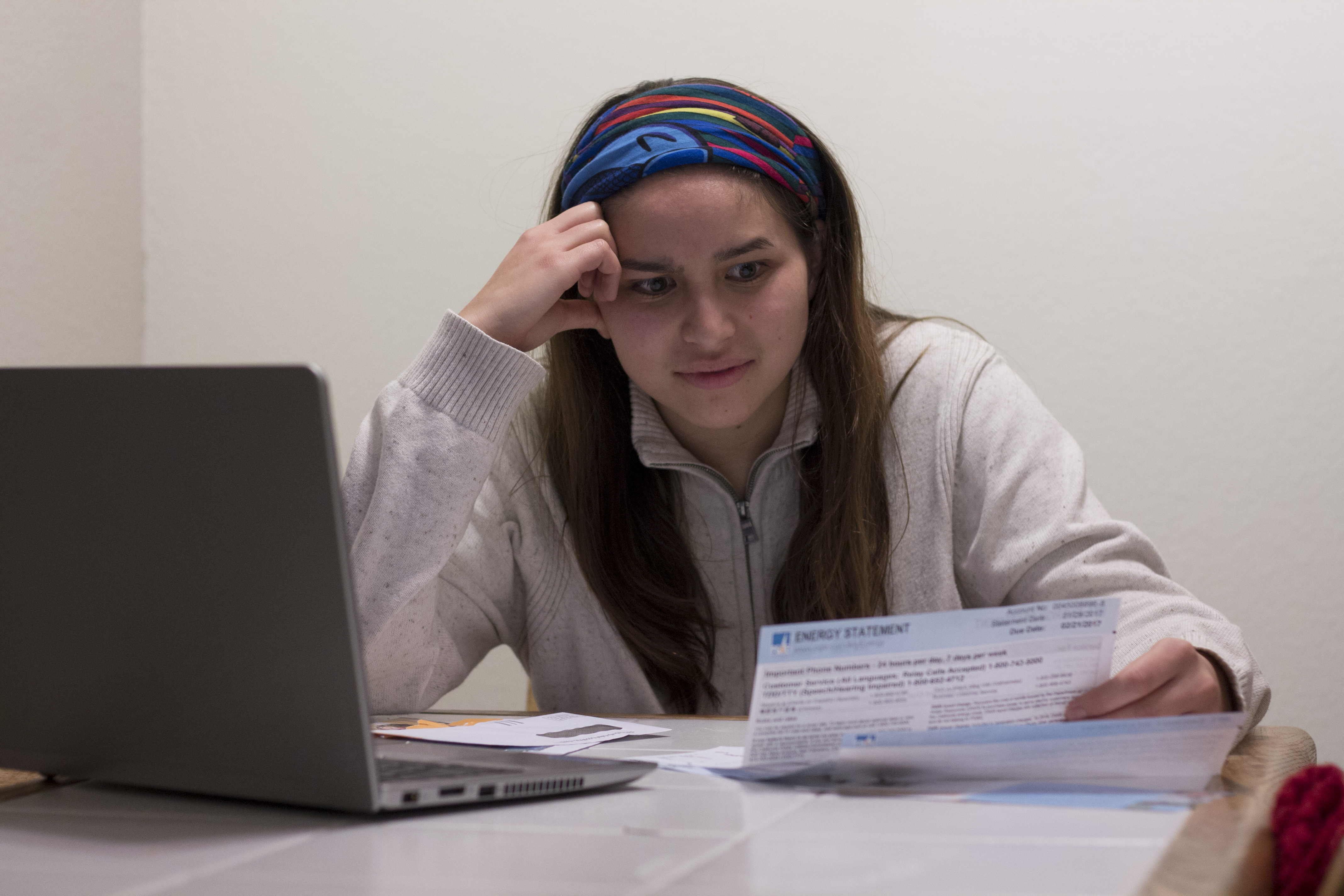
A cure for post-graduation anxieties

0
LUCY KNOWLES / AGGIE

UC Davis graduates impart wisdom

Gabriela Florian graduated from UC Davis in June 2016 with a triple major in political science, Spanish and communication, plus a passion for government policy. However, upon entering adult life, Florian faced an unexpected reality when the first job she landed after graduating was at Kohl’s.

“I had high expectations getting out of college, but it’s not enough to think that since you have a good degree you will get a great job,” Florian said. “You have to make connections and work really hard your last year of college because life after graduation is difficult at first.”

At a such a competitive university, students tend to have a voice in their heads telling them to cram in as much internship and career experience as possible in order to lead a successful life. However, there are many more aspects of the “real world” than simply preparing to work in your field of interest.

Now, as an administrative assistant at the Student Academic Success Center (SASC), Florian dreams to work for the California State Capitol, where she held a job during her college years. However, she wishes she could have made more connections with the people she had met during her time there.

“In addition to making connections, I would have applied [to jobs] starting the beginning of [senior] year and [come] much earlier to the SASC to get my resume and cover letters checked,” Florian said. “There are only so many hours in a day, but this has all been a learning experience.”

Florian started building her resume during her freshman year by working on campus as an instructional research assistant. However, she believes that she was inhibited from landing her dream job after graduation because, in her experience, employers are looking for more professional credentials which students have a better chance of achieving through connections. While she is satisfied with her current position at the SASC — which she acquired six months after graduating — she knows that the job is only a stepping stone to where she wants to be.

“If you’re shy and introverted, you’re not going to get to your dream,” Florian said. “You have to be out there and meet people.”

Workforce experience and building a professional network are both keys to a successful career after college, but it is just as important to develop habits for a successful personal life.

Jannet Nieves is a fourth-year clinical nutrition major who teaches cooking classes at the Student Health and Wellness Center’s Teaching Kitchen, and has dedicated her time to educating students on the importance of nutritious cooking and eating as they enter the real world.

“The classes teach students basics that they can build upon, such as how to hold a knife or sautée vegetables,” Nieves said. “It’s really important in college to practice cooking for ourselves because it becomes very easy to go out and eat fast food. Learning how to cook is not only cheaper but it’s also more nutritious.”

Nieves pointed out that many students come to college accustomed to their parents cooking for them, but never learn how to cook for themselves. According to Nieves, even learning the basics of cooking opens up a world of opportunities for various meal options.

“In general it’s a great basic skill to have because you can do so much with it,” Nieves said. “If you know how to sautée one thing, you can with 10 other things as well. Health-wise, it’s really important because in society as a whole we suffer from many chronic diseases and just knowing how to cook a well balanced plate goes a long way and can save you so much money in the long run.”

Nieves’ and the Teaching Kitchen’s main priority is to teach students how to prepare a meal of carbohydrates, proteins and vegetables so that they can include nutrition in their busy post-college lives. They also teach students how to have fun while doing this.

“One of the best things about the cooking classes is that it’s a hands-on class of about 11 students at a time so it becomes a really fun social experience,” Nieves said. “Everybody starts talking to each other about the different things they know how to do so you make a lot of friends cooking and exchanging ideas of different cultures as well.”

In Nieves’ opinion, cooking is a social skill that allows future graduates to host parties and become more confident in trying new things. It is also a great topic of conversation which could lead to an expanded professional network founded on a mutual interest in cooking.

Brad Barber, Associate Dean and professor of finance at the UC Davis Graduate School of Management, teaches the course Navigating Life’s Financial Decisions (MGT 12Y), which helps prepare students for difficult decisions they may face as graduates.

“Spending a lot of time looking into availability of jobs in the profession you’re interested in, the trainings required and what the pay is are useful exercises for students to think about upon graduation,” Barber said. “It makes a lot of sense for students to take a cold, hard look at what their opportunities are and what the pay is so they can make an informed choice in those dimensions and go in knowing what the odds are.”

Barber pointed out that while finding a job is important, finding the right job in something enjoyable is more healthy. He recommends correlating individual life skills with potential jobs, because doing so tends to make post-graduate life more employable.

“There’s no magic sauce,” Barber said. “The facts are [that] it’s a competitive labor market and it will continue to be, so students should figure out their unique skills that they can do well and package themselves around that skill.”

Barber teaches where to look for a job and how to handle the things that come next such as car insurance, saving for retirement and investing once students establish some savings.

“I try to take a holistic approach and think about what we as human beings get enjoyment out of,” Barber said. “Research shows that our experiences matter more than things. Trying to stretch your life in a way that maximizes the experiences that you have, such as family and friends, are way more important than the size of the house you live in or the kind of car you drive.”

While happiness is important for a successful life, it may not come very easily without a little saving.

“Try and save a little bit of everything you earn because there’s a lot of evidence that people who save are able to delay gratification which is a very useful skill,” Barber said. “These types of people tend to study more for the test, train harder for the big game and put in the work knowing that they won’t get immediate gratification but that it’s going to take months if not years to achieve a goal. Saving money teaches you to delay gratification because you’re giving something up today so that you can have something better in the future.”
Written by: Gillian Allen — features@theaggie.org

UC Davis students participate in UC-wide #NoDAPL day of action

CAT TAYLOR / AGGIE

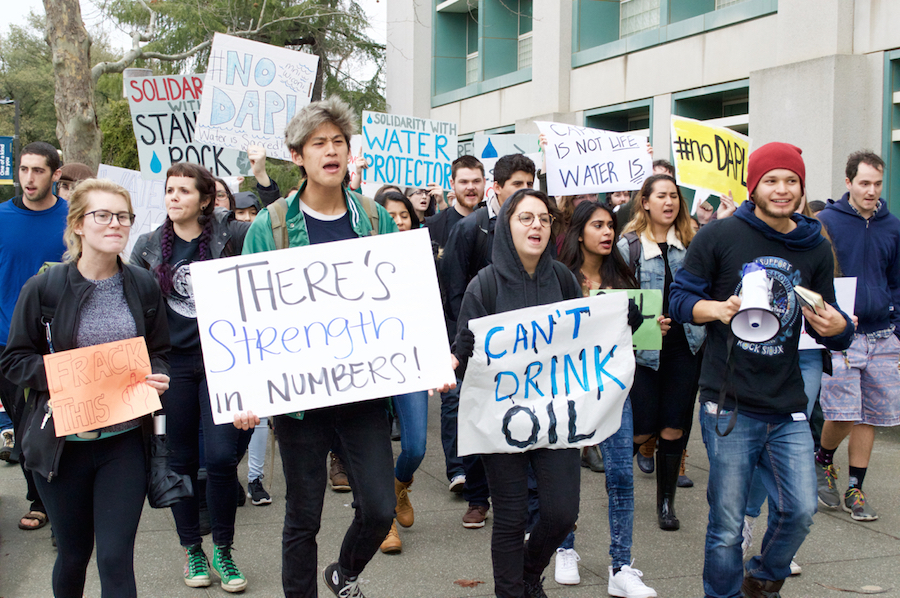
Student protesters march from MU flagpole to Mrak Hall

UC Davis students and community members protested the installation of the Dakota Access Pipeline (DAPL) on Thursday, Feb. 2. The protest was part of a larger scale UC-wide day of action, demanding that the UC regents divest from Energy Transfer Partners and Sunoco Logistics, two fossil fuel corporations involved in the construction of the DAPL.

The students met at the Memorial Union  flagpole and marched through the Coffee House and Shields Library before heading to Mrak Hall. Led by UC Davis campus organizer Francisco Ferreyra, protesters held signs to demonstrate their solidarity with indigenous people and their land claims.

Ferreyra, a third-year regional and community development major and environmental sustainability officer at the UC Student Association, said the protest was organized so the community could stand up against the fossil fuel industry’s project, which may compromise clean water supply in Native American reservations.

“This pipeline will leak, as all pipelines do, and when it does it will potentially contaminate drinking water for 18 million Americans that depend on the Missouri River,” Ferreyra said. “And if this black snake is completed it will send a message to the country that the U.S. government cares more about corporate profits than the treaties it signed with Native Americans years ago.”

The pipeline’s potential detrimental effects on the surrounding environment are not the only reason why students protested. Last month, it was reported that the University of California Retirement Plan, managed by the Office of the Chief Investment Officer of the Regents, currently holds bonds in Energy Transfer Partners and Sunoco Logistics.

“It doesn’t make sense for one of the leading climate science institutions in America to invest in an industry that is killing the earth,” said Hanna Presiado, a first-year environmental science and management major.

With President Donald Trump’s executive order last month advancing the approval of the Keystone XL and Dakota Access oil pipelines, as he promised during his campaign, some students feel that the current administration’s stance on environmental policy does not reflect the will of the people and will be detrimental for future generations.

Josh Wertheim, a third-year anthropology major who participated in the protests at Standing Rock in North Dakota, expressed his concern for the environment and the pipeline’s impact on future generations.

“This is our world and we borrow the world from the future,” Wertheim said.

The appointment of former ExxonMobil CEO Rex Tillerson as Secretary of State has also riled supporters of environmental sustainability.

“Trump’s corporate colonial cabinet is hard at work ensuring that students like us will have no planet to enact our education onto,” Ferrerya said. “Climate denialism kills, and the fact that our Secretary of State is a former CEO of the largest oil company in the world is a sobering reminder that the climate catastrophe will only get worse unless the people can successfully step in.”
Written by: Kaitlyn Cheung — campus@theaggie.org

UC Davis holds first mental health conference

JAY GELVEZON / STUDENT AFFAIRS MARKETING AND COMMUNICATIONS

Conference entails full day of speakers, panels, student-led discussions

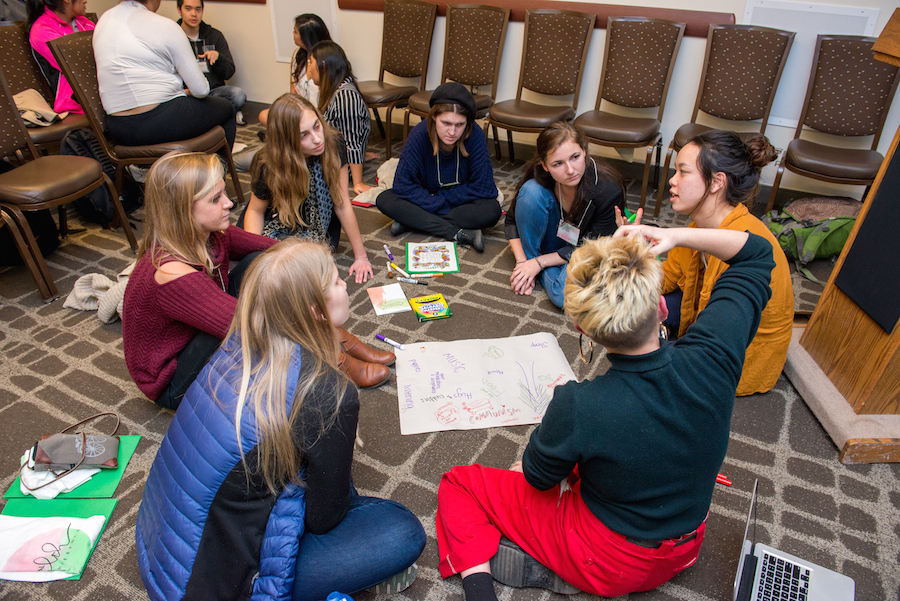
UC Davis held its first mental health conference at the UC Davis Conference Center from 9 a.m. to 7:30 p.m. on Sunday Feb. 7. Over 150 students participated in a series of workshops, panel sets and activities.

After check-in and breakfast, opening remarks were given by Monica Porter, an attorney for the Disability Rights Advocates organization. Porter spoke briefly about her own experience with mental health and expressed her happiness at seeing many students participate in a mental health conference and speak openly about mental illness without fear of stigma.

The first workshop set offered students a choice between workshops about grief, minorities and mental health and an intersectional approach to healing and political activism during the Trump presidency. Anastasia Ruttkay, a fourth-year international relations major, attended the workshop which was aimed at ways to combat living in a Trump presidency.

“We discussed the communities that are marginalized by his Presidency and ways to actively engage within our community to foster support and make change,” Ruttkay said via email.

Students were then able to choose between an administration panel and a psychologist panel. Both panels were comprised of speakers from the university’s colleges and representatives from Student Health and Counseling Services.The psychologist panel speakers spoke about their careers at UC Davis and gave advice to students considering studying psychology. The administration panel speakers spoke about their positions at UC Davis, their journeys from college to now and gave advice to students looking to serve in academic positions in the future.

Diana Olivan, a second-year cognitive science major, particularly enjoyed the two panels.

“It was great to actually be able to see them and hear about their experiences,” Olivan said. “It definitely helps in trying to figure out what career paths there are.”

Next, students broke into caucuses that served as a healing space and allowed students to share their stories and talk openly without fear of being judged. Some students chose to go into a caucus where they could identify as neurodivergent, or anything that is not typically defined as “normal,” while others chose to attend one for allies of neurodivergent people.

Olivan attended the workshop for those who identify as neurodivergent.

“I had a general sense of what neurodivergent meant but it seemed like a lot of the people who went were just interested in figuring out what neurodivergent means,” Olivan said.

Olivan hopes that in the future, the workshop will be used as more of a healing opportunity, as was originally intended.

After lunch, students attended a second workshop set and chose between gender based violence and mental health, suicide prevention and body image/self-love workshops.

“We had an open discussion about the way media portrays the standards of beauty, how certain body-[inspiration] campaigns are not intersectional and why all bodies are beautiful,” Ruttkay said.

Students were then given a choice to attend one of three student panels. Student panelists were selected after an online application process, and shared their personal stories and struggles with mental health. The student panel helped Ruttkay personally understand how differently abled students are marginalized and disregarded on campus.

“The students who shared their testimonies over their conditions really struck a chord with me,” Ruttkay said. “I was hearing their stories on a very raw level that opened up an even great[er] sense of care and compassion for mental health.”

Student groups gave performances after a short break. Performers included individual students as well as the student groups Unbound Progression, The Liquid Hotplates and Baile de Fuego.

Another three workshops were then offered about LGBTQIA mental health care and support, spiritual healing and self care. In an action planning set, students had the opportunity to share what they planned to do in the future for minorities in terms of support and activism. Shortly thereafter, dinner was served along with closing remarks by Juliet Forbes, a student at UC Davis who serves as a crisis counselor for Crisis Text Line. Forbes expressed the importance of destigmatizing mental illness, supporting those struggling with their mental health and the resources Crisis Text Line offers.

The conference took place after more than nine months of planning, but still presented its challenges on the day of execution. Mental Health Conference Founder and Director Samantha Chiang, a third-year English major, found it empowering that she and her team were able to build the conference from the ground up with student voices at the forefront.

“The biggest challenge was working out the kinks we hadn’t anticipated, like waiting for the workshop hosts and performers to come right before their designated times,” Chiang said via email.

Chiang said the conference was everything she had hoped for and more, and hopes that in the future she can secure enough funding to expand it into a two-day conference.

Attendees were able to appreciate the significance of the conference. Olivan found that she learned many ways to be involved in the community at Davis and that students had resources to help them feel safe and realize they are not alone.

“A great thing about the conference was that it happened in the first place, which is a great step in developing UC Davis mental health advocacy,” Olivan said.

Ruttkay believes that the conference highlighted many differently abled conditions and participants were given the opportunity to participate in meaningful discussions. She saw another side of mental health that she believes is extremely neglected by the university.

“The biggest takeaway from this conference was seeing how many students are passionate about advocating for mental health at an institutional level,” Ruttkay said.

Conference Panel Coordinator Jacqueline Grady, a third-year global disease biology major, hopes to expand the conference in coming years in order to continue pushing the boundaries on conversations about mental health.

“We’re looking to start a qualitative conversation about mental health,” Grady said via email. “There’s a negative stigma surrounding mental health and we want to tear that wall down. The conference is only one day, but we hope the conversation continues beyond it. Our goal is to make mental health a priority on campus.”


Written by: Jayashri Padmanabhan — campus@theaggie.org

UC Davis softball falls in home opener

0
KELSEY GREGGE / AGGIE

Aggies lose 6-3 to Stanford Cardinal

The UC Davis softball team concluded its third game of the season in a final tuneup before a lineup of 11 straight away games. The Aggies opened their season with two consecutive road wins over Santa Clara, but, in their third game, they tasted defeat for the first time this year, falling to Stanford 6-3 in a battle that was ultimately decided by defense and pitching.

Stanford took the lead early in the game thanks to a solo home run in the top of the second inning and an RBI double in the top of the third. UC Davis quickly responded in the bottom half of the third inning, in which the Aggies tied the game 2-2 on an RBI groundout and a Stanford error. These “small ball” runs were scored by center fielder Brianna Warner and left fielder Taylor Peters, who are both seniors. The Aggies went on to take the lead 3-2 in the bottom of the fourth on yet another Stanford error. This time around, a bunt down the line from Peters spurred the wayward Cardinal throw and subsequent UC Davis run.

KELSEY GREGGE / AGGIE

Sophomore left-handed pitcher Sara Cadona held the score at 3-2 through the fourth and fifth innings before running into trouble in the sixth. After walking her first batter, Cadona looked as though she had gotten out of the jam with a double play. However, the play was overturned after the umpire concluded that there had been catcher interference from the Aggies. This call proved to be the tipping point in the game, as Stanford went on to score four runs in the inning. The Aggies battled through the remaining inning and half but could ultimately not make up the lost ground, losing 6-3.

One of the bright spots in the Aggie loss was Peters, who finished 4 for 4 on the day and whose speed was a big factor when running the bases.

“I was feeling relaxed at the plate, my mindset today was [that] I was going to bunt till I got out,” Peters said. “I try to take advantage of my speed [with] any small ball I can get or if I see [the defense] is playing back I’ll put [a bunt] down.”

When asked about her senior left fielder’s performance, head coach Erin Thorpe didn’t mince words.

“Taylor Peters has some physical tools that you can’t teach,” Thorpe said. “She has the ability to be an extremely successful player all the way around.”

The Aggies will now travel to the Mary Nutter Collegiate Classic, where they will face a slew of nationally prominent teams, such as Kentucky and UCLA. Thorpe sent a message loud and clear to her squad.

“We’re not playing against our opponent per se, we’re playing to play our best us,” Thorpe said.

The UC Davis softball team’s next home game will take place on March 1 at 2:30 p.m. against Sacramento State.


Written by: Rowan O’Connell-Gates — sports@theaggie.org

City of Davis to retain sanctuary city status

0
DANIEL TAK / AGGIE FILE

Mayor Robb Davis reaffirms that the City of Davis will not make any policy changes

President Donald Trump signed an executive order on Jan. 25 threatening to withhold federal funds from cities and counties designated as “sanctuary jurisdictions.” “Sanctuary jurisdiction” is a loosely-defined term used to denote cities and counties that choose to limit their cooperation with federal immigration agencies.

The controversial executive order, titled “Enhancing Public Safety in the Interior of the United States,” was met with immediate opposition. Many sanctuary cities have publicly stated that they will not change their policies.

The City of Davis has been a sanctuary city since 1986, and Mayor Robb Davis recently reaffirmed that the city will not change its policies or status. Other notable sanctuary cities include New York City, Chicago, Seattle, Los Angeles and San Francisco.

Davis explained that the City of Davis’ sanctuary policy is simple: police do not, under any circumstance, inquire about immigration status.

“The police will not ask, seek to know, or record someone’s [immigration] status in any interaction […] This is something that we’ve done, as many other cities have, to encourage trust in the police so that if something happens to someone, they’re not fearful of contacting the police,” Davis said.  

Davis believes that President Trump’s executive order will make cities less safe.

“Imagine if you’re someone who is brought to this country, and you’ve been trafficked and you’re not here legally. Are you going to contact the police to save yourself? Maybe not. So I believe that this action [Trump’s executive order] will make cities less safe because people who are victims of crimes will not come forward,” Davis said.

According to Davis, the City of Davis is not breaking any laws in reaffirming its sanctuary city status and refusing to change its policies.

“Our police chief [and] our city attorney have stated unambiguously that we are following all state and federal laws and the Constitution by acting the way we’re acting,” Davis said. “We don’t have any concerns about the administration’s threats […] the Trump Administration is absolutely just blowing smoke. We’re not in a position where we’re going to be acquiescing simply because the president says we need to be an enforcement arm of immigration.”

Andrew Casas, a second-year English major, disagrees with Davis’ affirmation of sanctuary city status. He believes it contributes to division and polarization within the American political system.

“Whether you like Donald Trump or whether you dislike Donald Trump, he’s the President of the United States. It’s the same thing that happened with Barack Obama when the Republicans were in Congress; he was trying to do his best and people just kind of screwed him over with ‘no, we’re not going to pass any of his bills’ […] We should be working with the president to do our best to make the best America possible,” Casas said.

Jessica Angel-Gonzalez, a fifth-year animal science major at UC Davis, agrees with Davis’ stance on sanctuary city policies. She does not believe that anyone should be questioned about their immigration status by police if they are not breaking the law.

“For somebody to come around asking random questions like ‘Hey, are you a citizen here?’ It’s kind of none of their business. If they’re doing nothing wrong, then it shouldn’t be right for someone to [have to] show documentation. I’m completely against what Trump is trying to do with defunding the cities […] I think Davis is doing a good job by keeping this a sanctuary city,” Angel-Gonzalez said.

Sanctuary city policies protect undocumented immigrants from city and county law enforcement agencies, but they do not offer protection from federal law enforcement agencies. On Feb. 5, an undocumented immigrant living in Davis was arrested by Immigration and Customs Enforcement.

The individual in question had visited the Davis DMV office a few days prior to pay a ticket and apply for an Assembly Bill #60 driver’s license. AB #60, signed into California law by Governor Jerry Brown in 2013, makes it possible for someone to receive a California driver’s license without proof of legal residence.

The undocumented individual had multiple arrest warrants, and his AB #60 application prompted Immigration and Customs Enforcement to arrest him at his home a few days later.

The legality of President Trump’s executive order remains to be determined by the judicial system. Several sanctuary cities, including San Francisco, have filed lawsuits against the Trump administration over the order.

Written by: Raul Castellanos Jr — city@theaggie.org

Last week in Senate

HANNAH LEE / AGGIE

Last week in Senate

The ASUCD Senate meeting was called to order by Vice President Abhay Sandhu on Feb. 2 at 6:12 p.m. Eight of the 11 senators were present, with President Alex Lee and Senators Julie Jung and Sofia Molodanof marked absent.

The meeting began with a presentation by Gallo Wineries. The company announced that it is looking to recruit students and graduates for its management sales positions to help lead the company. Company representatives will attend the Career Fair on March 1 to meet with any interested students.

The meeting then motioned into appointments and confirmations, where Sexual Assault Awareness & Advocacy Committee (SAAC) chair Rachelle Fishbin introduced the new SAAC commissioners. After a series of questions, Senator Irveen Grewal moved to confirm the three SAAC commissioners. The motion was seconded and there were no objections.

After confirmation of members, the Senate discussed consideration of old legislation. Senate Bill #36 addresses the update of Chapter 21 of the ASUCD Bylaws. According to the bill background, many of the ASUCD Bylaws are outdated, inconsistent and disorganized. This bill creates consistency in Chapter 21 with regard to previously passed bills and updates sections that were technologically outdated. Grewal moved to call the bill into question. The motion was seconded and there were no objections.

Senate Bill #37 discusses the decision to mandate quarterly commission presentations. Senator Simran Grewal moved to call the bill into question. The motion was seconded and there were no objections.

Senate Bill #38 will require newly-elected or appointed ASUCD senators to attend legislation writing presentations by the Internal Affairs and Business and Finance Commission Chairs. Senator Ricardo Martinez moved to call the bill into question. The motion was seconded and there were no objections.

Senate also introduced new legislation and spoke about the ASUCD bills that will go to committees soon. This included a bill to establish the Disability Rights Awareness Committee, a resolution to urge the University of California to divest from fossil fuels and a bill to allocate $120 to the Coffee House to be used at an ASUCD lunch. They then motioned into ex officio and elected officer reports.

The meeting adjourned at 6:59 p.m.
Written by: Demi Caceres — campus@theaggie.org

Rekindle the affirmative-action conversation

DANIEL TAK / AGGIE

A discussion impossible to ignore in a racially-minded society
Police shootings, ethno-nationalism and political correctness have pushed the ugly issue of race back into the national limelight. 61 percent of Americans in 2016 acknowledged widespread racism against African Americans, and 41 percent perceived the same against whites. Observation has come with an ugly side effect — America’s view on race relations declined to its lowest measured point since the Rodney King riots in 1992. President Trump’s dubious use of a bully pulpit is unlikely to assuage Americans back into the blissful colorblindness of the past.

California’s public universities are bastions of this newfound racial consciousness. Our campuses are platforms for activists to shut down local micro-aggressions and protest national macro-aggressions. Questions of racial privilege are raised in almost every political conversation. Yet the conversation of race-based college admissions, an issue pertinent to students, has largely been side-stepped. This avoidance is dishonest and wrong.

Affirmative action has been banned in California public universities since the 1996 election, when Proposition 209 amended the California Constitution to prohibit discrimination on the basis of race, gender and ethnicity. Back then, the topic was more openly explored.

Walkouts and demonstrations on UC campuses against Prop 209 rivaled the backlash to President Trump’s election last year. Its victory edged out Bill Clinton’s re-election and California’s legalization of medical marijuana for The California Aggie’s election-day headline. Our editorial pages brimmed with columns and letters on the merits of affirmative action.

Proponents of affirmative action argued that racially-conscious admissions procedures help root out entrenched institutional racism and evaluate minorities more fairly at elite universities. Opponents countered that America had evolved past the worst aspects of racism, and that colorblind admissions are the fairest measure of merit.

Both sides have been vindicated. High-school GPAs, test scores of admitted students and graduation rates of enrolled students have increased, to the glee of affirmative action opponents. The fears of its proponents have also come true — Black and Hispanic communities, 6.5 and 38 percent of California’s population respectively, made up a paltry 2.5 and 13.5 percent of UC Berkeley’s enrolled freshman class in 2016.

This disparity is alarming, especially considering the socioeconomic opportunities correlated with elite university education. Those with elite college degrees live longer and earn more than their less educated counterparts.

Yet our activist peers who clamor about racism ignore the glaring inequality in front of them, even when UC admissions are in the news. Compared to the backlash in the 1990s, hardly a peep was heard on campuses when Governor Jerry Brown vetoed affirmative action authorization in 2011 or when lobbyists prevented a Prop 209 repeal from making the ballot in 2014.

Why has the chatter of the 90s lulled to a murmur? The establishment of race-conscious admissions today would not be at the expense of the privileged white male. In fact, whites are also underrepresented at UCs relative to their share of the California population. Diversity proponents would instead have to take up arms against another minority — Asian Americans.

Asian Americans make up 14.7 percent of California’s population, yet represent a whopping 42.3 percent of UC Berkeley’s freshman enrollment. If admissions were based on the racial picture of California, their enrollment would plummet. As a result, wealthy Asian American families have formed special-interest groups to block attempts to reinstate affirmative action, as they did in 2011 and 2014.

This does not fit the typical narrative of white privilege. But that’s not a fair reason to stop the conversation on campuses. If progressives wish for Latinos and African Americans to overcome their institutional disadvantages and earn more college degrees, they must acknowledge that privilege is not solely the domain of whites, that racism does not affect all non-white people in the same ways and stand up to Asian American special interests. And those against affirmative action ought to defend disproportionate Asian enrollment by articulating the concept of merit.

This discussion will be especially difficult, as college admissions hit close to home for many UC students. Yet it’s one we must endure to continue down the road toward racial justice.

Written by Sid Bagga — sidobagga@gmail.com

Disclaimer: The views and opinions expressed by individual columnists belong to the columnists alone and do not necessarily indicate the views and opinions held by The California Aggie.

Ags compensate for recent loss to Highlanders with decisive win

0
CAT TAYLOR / AGGIE

UC Davis men’s basketball remain undefeated at home, beat UC Riverside 77-63

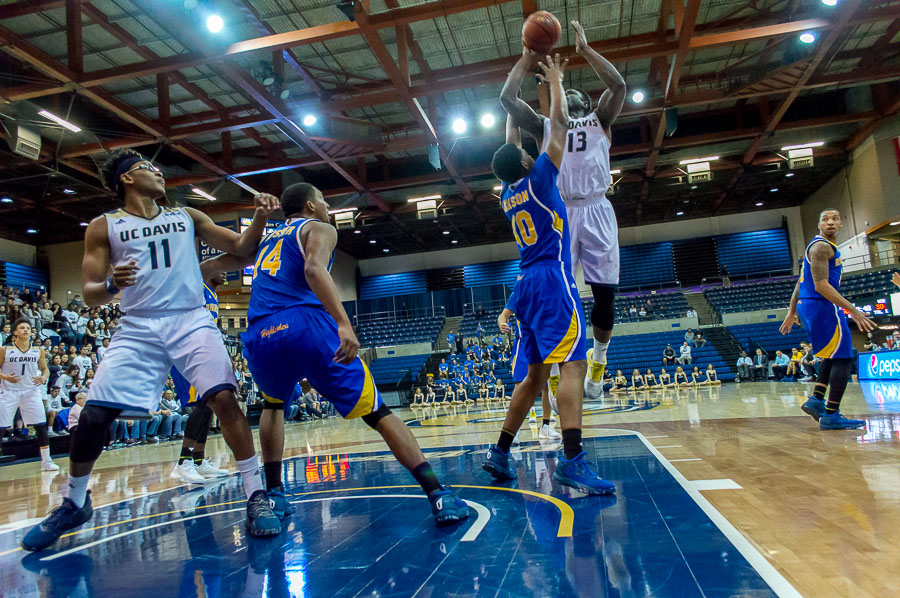
The UC Davis men’s basketball team had something to prove on Saturday, Feb. 11, since last time the Aggies faced off against the UC Riverside Highlanders, they lost 61-55, which was the Aggies’ lowest-scoring game of the year. That loss didn’t phase them, as the UC Davis men’s basketball team kept its undefeated home record intact with its 16th overall win of the season and a final score of 77-63.

The Aggies started rough, plagued by missed baskets and poor ball handling. Sophomore guard Siler Schneider scored the Aggies’ first points of the night with a layup, and that set the team in motion.

CAT TAYLOR / AGGIE

“I felt good about our guys wanting to atone for the loss,” said head coach Jim Les. “I knew they were going to come out with really good energy and try to make up for what was a bad game and a bad loss. I think we had some defensive breakdowns and we didn’t quite execute as well I would like, but part of that’s on me. I had different line-ups in the game and there wasn’t as great continuity with guys getting used to playing with one another.”

Ten minutes into the game with a score of 14-13, it was looking like it was going to be a close one. With four score ties and five lead changes throughout the first half, the Aggies had to remain focused and on their toes.

Just before the halftime buzzer, the Aggies kicked it into gear. Aggressive defense under the Highlander basket kept the ball open for the Aggies. Together, Schneider and Lemar knocked down four three-pointers in the first half.

At the half, Schneider lead the team with 13 points.

“Siler is really playing well, playing confidently,” Les said. “We’ve got a lot of confidence in him and he just makes plays. He makes plays on the defensive end, taking charges, he comes up with loose balls. He’s a really, really good shooter. He has that ability to put us on his shoulders and carry us through the course of the game and he did that in the first half and allowed us to get that separation.”

During the second half the Aggies opened with a 6-2 scoring run and kept the lead for the rest of the game.

Lemar finished the night with 14 points, with four of his five baskets coming from behind the arc, tying a career high for three-pointers scored during a game. Freshman forward Mikey Henn finished not far behind with 11 points.

“It felt like I was in the flow today, more than usual,” Henn said. “We just wanted to get back after it and give [UC Riverside] that loss. We didn’t play as well as we could have [last time] and they stole one from us.”

Les called a timeout with just 54 seconds to go, coaching right up to the last minute. The game ended with a 14-point lead by the Ags and a final score of 77-63.

CAT TAYLOR / AGGIE

“He wants us to stay focused and wants us to know the game isn’t over until the horn blows at the end,” said junior guard Arell Hennings. “We just had to stick to what we were doing to get that lead throughout the whole game and not take any breaks.”

The UC Davis men’s basketball team has just 24 hours to celebrate its win, according to Les, before focusing its attention on the Long Beach State 49ers. The Aggies head south on Feb. 16 for a 7 p.m. tip-off.

“[I feel] excited,” Les said. “I have a lot of respect for Coach Monson and the program they have. I know playing in the Pyramid, it’s always a tough road contest. We’ve got to put our work hat back on and get back after it because Thursday is not going to be easy and we have to go pick off a couple road wins before we can get back here in the Pavilion.”
Written by: Liz Jacobson — sports@theaggie.org

Closing the drapes on vapes

BRIANA NGO / AGGIE

Negative effects of vaping explored by UC Newsroom

Within the past century, smoking cigarettes was advised by physicians as a method of keeping a slim figure. The health effects of this were disastrous and progressive awareness campaigns were launched that gradually brought the smoking rate to its current all-time low in the U.S. Recently, the UC Newsroom investigated a similar and potentially just as dangerous contender that has joined the smoking room: electronic cigarettes.

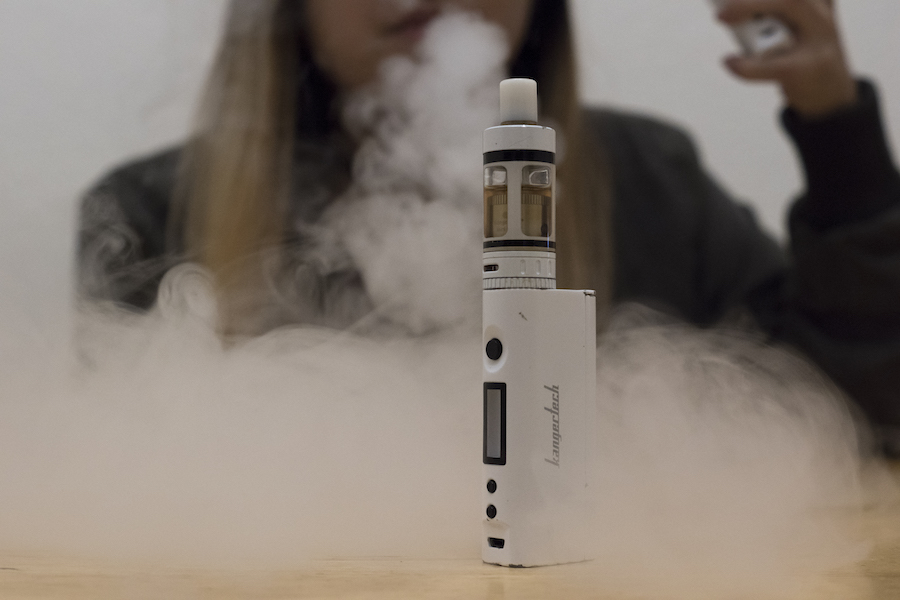
E-cigarettes, also known as vapes or e-hookahs, are devices that heat a nicotine-containing liquid into an aerosol that the user inhales. What many vapers may not realize is that, besides nicotine, e-cigarettes can contain potentially harmful ingredients including chemicals known to cause heart and lung disease, heavy metals, carcinogens and other ultrafine particles. Though advertised as “harmless water vapor” by the e-cigarette industry, this couldn’t be further from the truth.

“We are learning more about the health impacts of inhaling vapor, or aerosol and secondhand vapor,” said Elisa Tong, UC Davis assistant professor of general medicine who works with UC Quits, a tobacco cessation network across the five UC medical campuses. “It is not water vapor but propylene glycol that contains other chemicals [nicotine, flavorings, additives] and particles.”

The sleek design and technological sophistication are just a couple of factors that contribute to a cloud of appeal and normalcy around the notorious e-cigarette. The media, which heavily influences the perception of products on the market, has also played a critical role in skyrocketing popularity.

“Every single big tobacco company has at least one e-cigarette brand. Since e-cigarettes had not been regulated, they used many of the same advertising tactics that they did for cigarettes years ago,” Tong said. “Certainly this includes getting product placement and celebrity endorsements that are advertised through the media.”

Along with this, a plethora of attractive flavors, such as “Smurf Cake” and “Fruit Hoops,” often make it appear as though you are purchasing a pack of bubblegum rather than a harmful nicotine product. These flavors, though edible, can be harmful when inhaled. Diacetyl, a chemical linked to lung disease, is an example of a common flavorant in e-cigarettes, according to the U.S. Surgeon General.

Besides the negative long-term health effects, e-cigarettes also have explosive tendencies.

“Batteries used in e-cigarettes have been known to explode causing burns and damage to teeth,” said Diana Cassady, a UC Davis professor in the Department of Public Health Sciences in an email interview.  

Another indisputable problem with e-cigarettes is that they continue to fuel smokers’ nicotine addictions, an unfortunate effect considering that many try to use them to wean themselves off of traditional cigarettes.

“A puff on an e-cigarette is not as dangerous as a puff on a regular cigarette,” said tobacco control activist Stanton Glantz. “The most important negative effect of vaping is that they keep people smoking conventional cigarettes. They reduce the likelihood that a smoker will quit by a third.”

The Centers for Disease Control and Prevention (CDC) recommends FDA-approved nicotine replacement products, such as skin patches and chewing gum, for current smokers wishing to quit. The Surgeon General also revealed that the use of e-cigarettes is “higher among high school students than adults.”  

Despite rising e-cigarette popularity, states such as Hawaii and California have given their citizens reason to take in a breath of fresh air by officially declaring e-cigarettes as tobacco products and issuing regulations on their use, such as setting the minor age of consumption at 21.
Written by: Harnoor Gill — science@theaggie.org

A night under the stars

REBECCA RIDGE / AGGIE

Arboretum Open Mic night offered stage for performers to express themselves freely

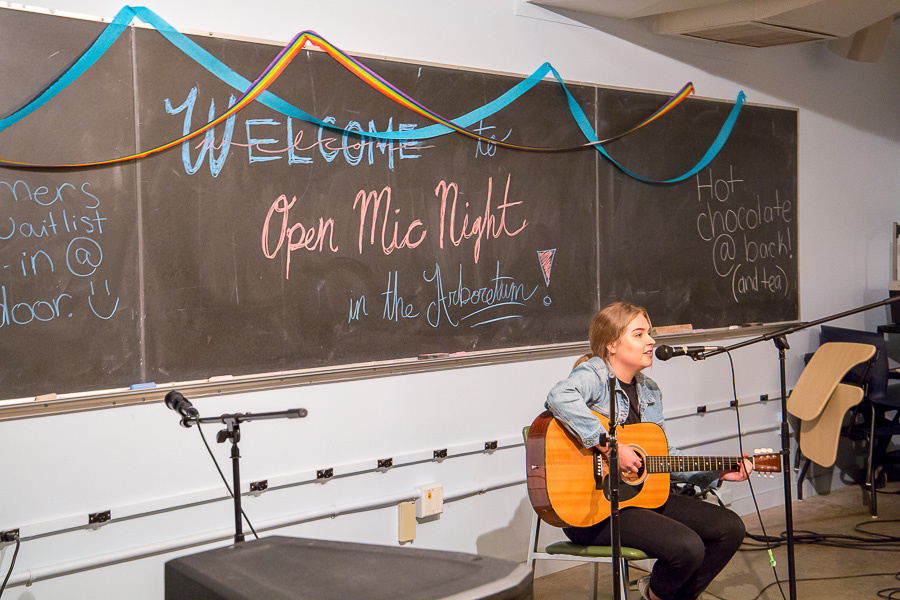
There is something magical about the sound that acoustic guitars produce: crisp, warm and soothing. With the right music, you can go anywhere and do anything — forget about stressful midterms and feel the warm summer breeze at the beach — even on a rainy Thursday night. The Open Mic Under the Stars at the Arboretum provided the perfect opportunity for people to gather and share their talents and opinions with a welcoming audience.

The open mic was hosted by the Arboretum GATEways Outreach Program (the GATE stands for Gardens, Arts and The Environment) on Thursday, Feb. 9. It consisted of an evening of arts from talented community members who performed everything from from music to comedy to spoken word poetry. The purpose of this event was to create a safe and welcoming environment in proximity with nature that encouraged everyone in the community to express themselves freely.

“The purpose of this event is to create a truly ‘open’ Open Mic,” said Drew Hanson, a fourth-year managerial economics major and one of the organizers of this event. “Many open mics have become politically correct to the point where many musicians, poets and comedians have become limited in what they can say or do, and I find this to be [a] travesty. To me, an open mic is a place for individuals to express themselves and their ideas that differ from our own perspectives, yet in such as environment, they will be able to openly cover whatever they wish without fear of being labeled negatively.”

Despite the chilly weather, a large crowd of guests showed up to cheer and clap for the performers. Most performers sang either pop music or original songs accompanied by an acoustic guitar.

According to Hanson and other organizers of the event, they strived not to define this event by a single theme — the “openness” is what matters.

“Open Mic Night is a safe and open space for people to share their creativity and passions at the Arboretum,” said Vivian Le, a third-year civil engineering major, one of the organizers of the event and the co-coordinator of the Arboretum GATEways Outreach Program.  

Unfortunately, due to the rain, the event was hosted indoors near the Arboretum.

“Having events like these will demonstrate to the community how important the arboretum is and will give them [the attendees] a new appreciation of it,” said Vanessa Verdugo, a second-year human development major, an intern for the GATEways Outreach Program and one of the organizers of the event.

Another Arboretum Open Mic Night will be hosted again next quarter. Those interested in performing or attending can call (530) 752-4880 or visit http://arboretum.ucdavis.edu/calendar.aspx.
Written by: Betty Wu — arts@theaggie.org

2017 ASUCD Winter Elections — Meet the Candidates

Executive: Josh Dalavai and Adilla Jamaludin

In order to follow through with their winter 2016 senatorial platforms into a new term, Josh Dalavai, a third-year political science major, and Adilla Jamaludin, a third-year international agricultural development major, have decided to run on the Based slate executive ticket for the 2017 winter elections.

“I think the way that this [partnership] came about was that we both realized […] that we had a good enough experience pool and similar goals to […try] this at the next level,” Dalavai said. “It helps that we’re really good friends, too.”

If elected as president and vice president, Dalavai and Jamaludin plan to address issues specific to students by maintaining UC Davis’ status as a “sanctuary” campus, conducting more efficient student engagement, providing adequate lighting in dim areas of campus and incorporating resources for housing and food security.

“It’s a comprehensive effort, and ASUCD is in a good position to be in contact with all these different groups,” Jamaludin said. “We really want to take a strong stance about [the sanctuary campus status]. We are aware we are not the only students who care about this issue.”

Through their partnership, the two plan to work as a team to achieve what the campus wants to see from its student government, since nothing is a “one person show.”

“With every project […] there’s always already someone working on it or someone who’s had the idea but just didn’t know how to do it, so we definitely incorporate student input and the voices of students past and voices of students current in everything that we do,” Dalavai said. “Whenever you do public service, it’s collaborative […] inherently so.”


Sam Chiang

If elected for her second term, Sam Chiang, a third-year English major, hopes to continue her work on the issues she has shown passion for during her time in Senate thus far.

“A lot of my platforms […] have similar themes [as last winter], but obviously they’re different projects,” Chiang said. “The things I care about haven’t changed really, if anything I just care more now.”

Basing her platforms on mental health awareness, cultural competency, international student accommodations and disability rights advocacy and outreach, one of the things Chiang hopes to establish is a mental health awareness month that represents many communities on campus and their needs.

“I think people do care about the work we can do and we can help their communities, so by going to the communities and helping them put on the events that they want to put on in mental health can be very powerful,” Chiang said. “We need to be more in touch with our communities […and] it’s things like that that make us better representatives.”


Khadeja Ibrahim

Khadeja Ibrahim, a third-year political science major, has served as a staffer for former ASUCD senator and current vice presidential candidate Adilla Jamaludin. One of her main goals as a senator would be to create a minority leadership program.
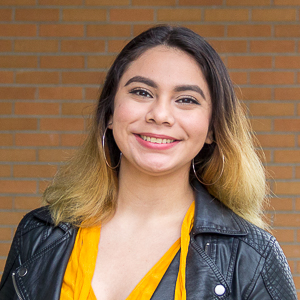
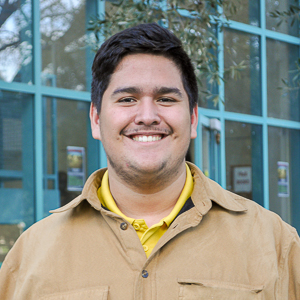
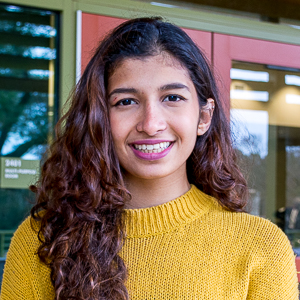
“It’s a program I want to create specifically for minority students on campus that would provide them with resources and assistance so that they could pursue government careers in the future,” Ibrahim said. “[…] The reason I want to create something like this is because I don’t think there’s anything like it on campus at the moment and I’d like to see more minority representation in local and national government, and I think that starts on college campuses.”

Ibrahim’s other main platform focuses around mental health. She hopes to help students increase their amounts of sleep by expanding nap areas available on campus and doubling the number of hammocks on the Quad.


Bespoke

Rosy Martinez

Third-year human development major Rosy Martinez’s senate campaign platforms are founded from her experience as the external director at the ASUCD Pantry. She has plans to address food insecurity and student homelessness, promote higher administrative accountability and improve financial aid services.

“Currently, the [financial aid office’s] hours are […] sort of impossible for the working student to have any access [to],” Martinez said. “I’d like to extend those hours […] and also have a liaison there […] so students have someone they can talk to and […to] be the mediator between the financial aid person and the [student] themselves.”

As a co-founder of the slate “Bespoke,” Martinez would focus her time in Senate on those in need across the UC Davis campus.

“[As a slate] we’re trying to sort of drift away from the high political […] reigns of things and have a community orientation,” Martinez said. “We wanted to be more than a slate and more of an organization.”


Marcos Ismael Rodriguez

Marcos Ismael Rodriguez, a second-year political science public service major, decided to run for Senate in this quarter’s election after staffing for a number of its members, including Kamal Thomas, Ricardo Martinez and then-senator Alex Lee.

“I joined [ASUCD] the first quarter of my first year here,” Rodriguez said. “I [have also] joined the business and finance commission of ASUCD and […] I’ve been the vice-chair for about a year now.”

If elected on the Bespoke slate, Rodriguez would like to create more opportunities for  different campus communities to “include their voice in student government.” In addition to the issues of ASUCD transparency and becoming a representative for the ChiLat community in his position in senate, one of Rodriguez’s passions is to expand the Housing Advising for Undergraduate Students unit (HAUS).

“I plan [to…] help [HAUS] create housing advisors, which is what their original purpose was supposed to be, as well as expand Housing Day and make more accessible tools for students to know renter’s rights,” Rodriguez said. “In light of the housing crisis, some property managers might want to take abuse to that.”


Rahi Suryawanshi

Rahi Suryawanshi, a third-year international relations major with an emphasis in environmental policy, spent the past year as a staff member for current senator Shaitaj Dhaliwal while also holding leadership roles in Startup Hub, #Include and Bakuhatsu Taiko Dan collegiate Japanese drumming.

“Through Startup Hub I have seen […] peoples ideas slowly turning into reality, […and with #Include,] I’ve seen people [who] have already created their ideas,” Suryawanshi said. “I see the determination and diligence and also the business mind that you need to achieve initiatives.

If elected, Suryawanshi will work to provide UC Davis with free self defense workshops, an online forum for research opportunities and allyship workshops in the residence halls — all based on the idea of community and student government communication.

“As an international student, […] I have lived and seen the importances of people of different ethnicities living together,” Suryawanshi said. “That is fairly important to my core, and I think it’s important […] for all kinds of students to learn what communities they live amongst and how they can support these communities when the time comes.”


Yajaira Ramirez Sigala

Yajaira Ramirez Sigala, a second-year sustainable agriculture food systems and Chicana/o studies double major, wants to utilize her experience helping in the AB540 Undocumented Student Center as an ASUCD senator.

“I want to make sure that the undocumented community is being included in these dialogues that are happening on campus, and […] that there is somebody facilitating those conversations when talking about the undocumented experience,” Ramirez Sigala said. “We don’t want that narrative to be taken over by another person that might not necessarily be undocumented.”

Ramirez Sigala’s campaign platforms focus on the inclusive conversations on campus regarding underrepresented groups, including mandatory sensibility trainings across campus, safe-zone commissions and awareness for the undocumented community.

“[This] would mean collaborating with other departments on campus and letting them know about the experiences that other underrepresented communities have faced before coming to Davis so that there can be a more positive student experience on campus,” Ramirez Sigala said. “[We have to] make it more inclusive with letting them know of the other experiences that students might come [with].”


Independent

Executive: Jaskaran Cheema

Jaskaran Cheema, a fourth-year neurobiology, physiology and behavior major, holds platforms which include increasing the number of squat racks and benches at the Activities and Recreation Center, renovating old bathrooms on campus and securing better WiFi on the Quad.

“We wanted to tackle issues pertaining to a vast array of students,” Cheema said via email. “Therefore, our platform is based on the betterment of campus to foster a healthy learning environment for all students.”

Although Cheema will be shown on the ballot as running with third-year economics major Zuhair Bhatti, due to personal reasons, Bhatti is no longer running with Cheema.

“We have selected a few experienced candidates which we will decide on if we win the election,” Cheema said.

Cheema also hopes to expand career and sexual assault prevention resources for students, ensure that students receive 10 free scantrons per year and increase the amount of hammocks on campus.


Samir Himes

If elected, Samir Himes, a second-year economics major, hopes to increase funding for ASUCD’s Entertainment Council so that more performance artists can come to UC Davis.

“A lot of other big schools have events […] I think that’s something the student body really wants,” Himes said. “I know tons of people who go out of town each weekend to go to shows and I think that’s a loss to the UC Davis community.”

Himes also intends to introduce legislation for transparency in the Club Finance Council (CFC) after some students had an issue with getting the CFC to fund security for the Milo Yiannapoulous event.

“Students were upset that their money was going to something they didn’t want it to and so I’m proposing that the CFC, before they give money to an event, [that] they have to make a public notice, which is similar to how a lot of city governments work,” Himes said.

Additionally, Himes wants to put plastic nubs on the bottom of the library’s chairs to decrease the loud noise that the chairs make when pushed in and pulled out.


Michael Gofman

First-year economics major Michael Gofman has centered his campaign around three platforms: sustainability, affordability and improvement of student-teacher relations.

“I want to get all the [leaders of the] different environmental organizations on campus […] to sit down at the table together and to centralize the environmental movement at UC Davis, because we’re already one of the most sustainable universities in the world without being centralized, but if we centralize we can achieve much bigger projects and the leaders will see how vast their resources are in order to achieve different tasks,” Gofman said.

As part of his affordability platform, Gofman, who has helped write grants for the ASUCD Pantry, hopes to expand the program’s resources.

“I’m hoping to as a senator […] help them find more consistent and reliable outside donors and funds from various funding organizations and grants to make sure that whatever the ASUCD budget situation is, however much money they have, no student on campus is going hungry,” Gofman said.


Zaki Shaheen

As a transfer student, Zaki Shaheen, a third-year political science major, is looking for ways to ease the transition for transfer students coming to UC Davis.

“I’m a transfer student, so a big platform of mine is working with the Transfer Re-entry Veteran Services Center to provide an increased amount of services to transfer students as well as [to] basically just give a better kind of information about what is available to them to better integrate them into the Davis community because it can be more difficult coming in later,” Shaheen said.

Shaheen’s also plans on working with the Office of Advocacy and Student Representation to maintain and improve sexual assault prevention resources. If elected, he hopes to be a representative for different minority groups on campus.

“I’m including my phone number on my [campaign] flyers and everywhere because I guess a theme of what I’m trying to run under is that I want to be accessible to everyone,” Shaheen said.


Frank McGreal

Frank McGreal, a second-year managerial economics major, drew largely on his experience as an orientation leader while creating his platforms.

“I want to implement a seminar at the beginning of each quarter […] for any incoming students or anyone who wants to see them [to show] different resources that we offer on campus, different clubs and different communities that are available in order to make the transition from whatever previous institution that they were at to coming to UC Davis as seamless as possible,” McGreal said.

McGreal also hopes to create a mentorship program that would collaborate with the City of Davis to match an undergraduate student with an underprivileged youth.

“[This] mentorship program [would] hopefully influence youth in our city to want to go to a higher [educational] institution one day,” McGreal said.

Written by: Alyssa Vandenberg and Emilie DeFazio  — campus@theaggie.org

Photo of the Week: 2/15/17

The boy who lived. (CHELBERT DAI)

Suspect in Davis Islamic Center vandalism arrested

SUE

Davis resident Lauren Kirk-Coehlo arrested in connection with hate crime

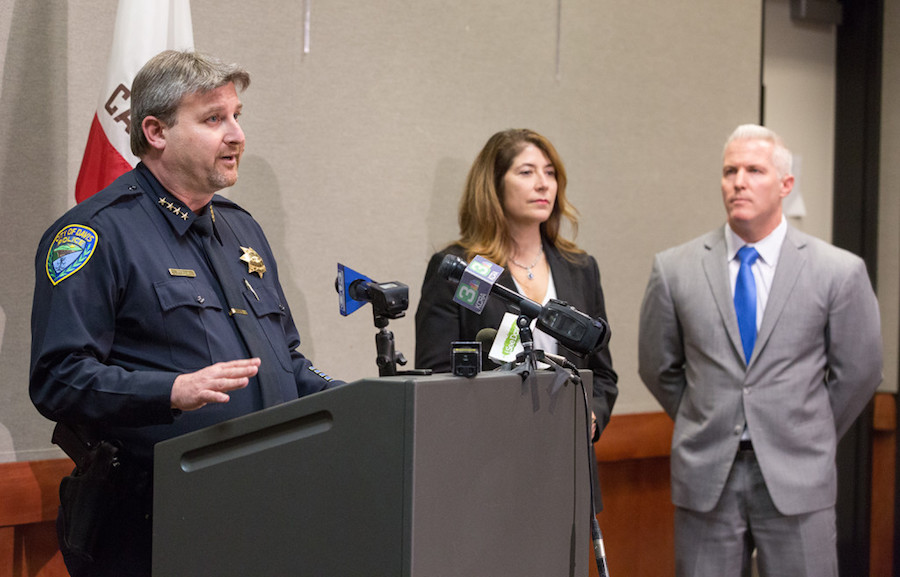
Police arrested a Lauren Kirk-Coehlo, resident of Davis and graduate of Davis High School, on the morning of Feb. 14 as suspect in the Islamic Center of Davis vandalism case, which investigators and state and federal prosecutors have labeled a hate crime. The arrest comes after nearly a month of joint investigation by the Davis Police Department (DPD) and the FBI.

The UC Davis issued a crime alert soon after the arrest stating, “Soon after the crime was reported, and the surveillance footage was released, the Police Department received numerous tips regarding the vandalism.”

Kirk-Coehlo is currently booked in the Yolo County jail for felony vandalism with hate crime enhancement. The suspect faces up to six year in prison if she is convicted, and bail has been set at $1 million. Kirk-Coelho’s arraignment hearing is set for Feb. 16 at 1:30 p.m.  

The vandalism of the Islamic Center occurred on the morning of Jan. 22 during which an estimated $7,000 worth of damage was inflicted. The incident was caught on a surveillance camera from the mosque.

“Video footage shows a female suspect smashing six window panes and placing something on the exterior door handle of the Islamic Center of Davis. It was later determined that strips of bacon were placed on the door handle,” said Jonathan Raven, chief deputy district attorney in a press release.

Shortly after the footage was released, The Sacramento Valley chapter of the Council on American-Islamic Relations (CAIR-SV) called on state and federal law enforcement to investigate the motive behind the vandalism.  

“Political, religious or ideological beliefs are not an excuse to commit hate crimes,” said Monica Miller, special agent in charge of the Sacramento FBI office in an interview with the Sacramento Bee after the arrest.

Members of the mosque have since rallied together, and with help from the Davis community, raised $20,000 dollars for repairs.

“On behalf of the Muslim community in Davis, we would like to thank you for your contribution to help repair our Masjid,” said Omar Awad, UC Davis Muslim Student Association president and Shifa Community Clinic volunteer, on the fundraiser page. “We are overwhelmed by your generosity as well as the amount of love and support that we have received in the past 72 hours.”
Written by: Samantha Solomon — city@theaggie.org