57 F
Davis

Davis, California

Monday, December 22, 2025
Home Blog Page 657

Humor: Hero student reminds us all that he chose Davis over Berkeley

First-year who graced us with his presence proceeds to prove his heroism

UC Davis student Robert Quail wasn’t just born; he was crafted by the gods. In many ways, you could say he’s an angel just by virtue of his very existence. It’s extraordinary to think that we almost lost our savior to the Golden Bears.

You see, Quail was admitted to both UC Davis and UC Berkeley. He chose to go to Davis. This has never happened before. Ask anyone and they’ll tell you the truth: once you get that acceptance to Berkeley, your Davis letter spontaneously combusts because the universe has already decided your fate. Our precious Quail would not let this be so! He grabbed his Davis letter and held it with all his might.

“Those people need me!” Quail wailed. “I cannot let them suffer without me.”

Thankfully, his letter did not disintegrate in his grasp; his soul is too pure for his form to be burned. When asked how he feels about his choice, Robert (per usual) stayed humble.

“You know, I don’t like to rub it in or anything,” Quail said. “I’ll just wear the Cal shirt every other week and take questions just to clear the air, if anyone is curious or something. Also, I comment on every single article that compares the two campuses so people know that, like, some winners go here too.”

Interim Chancellor Ralph Hexter meets with Quail once a week in order to pat him twice firmly on the back and gift him a muffin basket.

“We’ll probably give him the key to the city soon,” Hexter said. “It’s just so hard to find time to hold a ceremony like that because Robert has ‘be awesome’ penciled in his schedule 24 hours a day, every day.”

Quail, no matter how many times he graciously informs people, still encounters the occasional Aggie who has no clue what he did for this campus. He has proposed an easy solution to alleviate their embarrassment.

“We’ve danced around the idea of replacing the Egghead in front of Mrak with a bronze statue of myself,” Quail said. “I know it sounds so extra but, hey, anything to make our school the best it can be.”
Written by: Olivia Luchini — ocluchini@ucdavis.edu

Project Toto aims to address questions regarding city finances

0
NICKI PADAR / AGGIE

Davis residents create financial model to make city’s financial state more transparent

To increase transparency between the city’s financial situation and the community, three residents created a model called Project Toto which aims to improve how the city communicates its finances in an easily accessible design.

Jeff Miller and Matt Williams, who are members of Davis’ Finance and Budget Commission, joined together with Davis entrepreneur Bob Fung to create the model plan to bring the project to the Finance and Budget Commission in February, according to Kelly Stachowicz, assistant city manager.

“City staff appreciate the efforts that have gone into this, and the interest in trying to look at the city’s potential financial position over the long term,” Stachowicz said in an email interview. “We all have a shared goal to plan for a sound fiscal future with few surprises. We believe the Project Toto effort will mesh well with our other efforts as we build the budget for the next fiscal year and beyond.”

Project Toto complements the city’s effort to amplify the transparency of city decisions to community members. The aim is to increase the understanding about the city’s financial situation and make the information more accessible and easier to understand.

The project is mostly a tool for public education, but can also make predictions about potential decisions regarding the city’s financial future. Once completed, the program will allow residents to manipulate variables to see their eventual consequences, such as tax increases or extensions and proposed developments

“This really isn’t a budget, it is a forecast to see the intervention of these decisions,” Williams said in an interview with The Davis Enterprise. “What happens if we extend the sales tax? What does it do given the other numbers that are in?”

Project Toto enables users, whether it be a curious Davis resident, a concerned community member or a city leader, with the ability to project city finances with differing variables.

The online program consists of the 400-page city budget for the 2016-2017 fiscal year, the previous budget, staff reports and consultant analyses. All of the documents are cited and accessible to the public within Project Toto.

“It’s a model that very easily lends itself to visual representation,” Mayor Robb Davis said. “You can see the impacts of decisions the council makes on the fiscal health of the city.”

Complementary to this program, there is also a more advanced version of the model with more in-depth analyses of the city’s finances. However, for an easy-to-understand, simplistic overview, Project Toto should be enough to help residents comprehend Davis finances.

There is still more to do on the project, but its creators are hard at work trying to finalize it before the 2017-2018 fiscal year budget.

“It’s something I have been very much supportive of,” Davis said. “Transparency is not just something that I have been supportive of but something we have stated as a city council objective […] this fits very well with our attempt to inform the public of our challenges with our fiscal situation.”

Written By: Bianca Antunez  — city@theaggie.org

Shields Library hosts new exhibit for Davis centennial

ALEXA FONTANILLA / AGGIE

New showcase provides opportunity for students to learn about city’s history

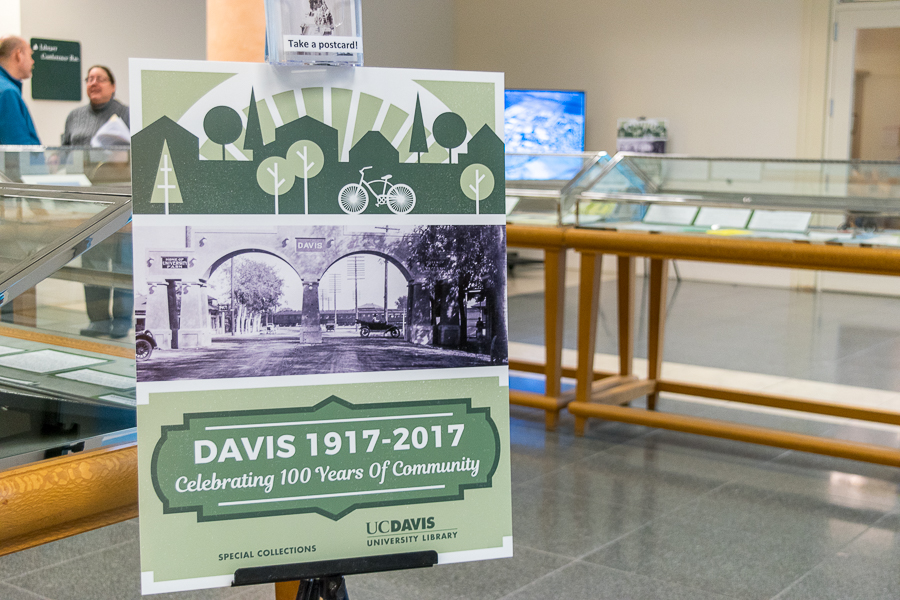
A new exhibit recently opened at Peter J. Shields Library to celebrate the upcoming centennial of the City of Davis. The showcase, titled “Davis 1917-2017: Celebrating 100 Years of Community,” features material from more than 15 separate collections and will be on display until June 18.

Sara Gunasekara, a public services and archives specialist at the Shields Library, said that the project provides a lot of historical background pertaining to the founding of Davis, which was incorporated as a city on March 28, 1917. The previous year, a large fire had struck the downtown business district, creating a need for redevelopment.

“So one of the key things was that there was a fire in downtown Davis in November of 1916,” Gunasekara said. “It hadn’t yet been incorporated, there was talk of incorporation in 1911 and then in the spring of 1916 they had started talking about incorporating again but hadn’t really gotten their feet under them.”

The exhibit, which is free and open to the public during normal library hours, includes unique photographs and personal papers which document the city’s 100-year history.

Jessica Nusbaum, the associate director of communications and marketing for the library, said that much of the material provided from the library’s Special Collections has been well received.

“One of the things that’s cool about Special Collections here at the UC Davis library is that we have some stuff that no one else has,” Nusbaum said. “So even the city was like, ‘oh you guys have good pictures from the fire? Can we have those ‘cause we wanna help tell that story that was so integral to the founding of the city, too.’ So there’s some really unique pieces here at Special Collections that go beyond even what the city itself has and we’re really proud to help tell the local history story that way.”

The library’s online page includes further material on the exhibit as well as links and information for the multiple collections from which the materials were gathered.

Stacy Winton, a media and communications officer for the City of Davis, said that Davis has been thankful for the exhibit.

“With our utmost gratitude, we thank UC Davis’ Special Collections staff for creating an impressive exhibit of the City’s history over the past 100 years,” Winton said via email.

For Gunasekara, working on the exhibit presented a fulfilling experience to examine the history of both UC Davis and the City of Davis.

“I think for me, it was just a really enjoyable exhibit to work on,” Gunasekara said. “They’re all fun but for me, it was such a large story to tell about the history. Of course I couldn’t tell the entire minutiae of the history, but I greatly enjoyed working on it and learning more about the town I come to work in everyday.”

Nusbaum said that the exhibit will be open long enough for students and their families to visit through Spring 2017. As students continue to visit, Gunasekara hopes that they can understand the value in what the library has been able to gather through its many exhibits.

“Having exhibits like this out that I think people can really connect with is also a way to educate students about all of the amazing resources that Special Collections has here at the library,” Nusbaum said. “And without the exhibits, people might not have a way to find out that there are all these historic materials here at the library. You know, people may not know that the library is a repository for that kind of storytelling of the history of the campus and the history of the local community if we didn’t do things like this.”

Written by: Ivan Valenzuela — campus@theaggie.org

Keep education public under Trump

HANNAH LEE / AGGIE

Trump threatens to strip funds from UC Berkeley

When President Donald Trump threatened to strip federal funds from UC Berkeley last week after violent protests shut down a scheduled talk by conservative agitator Milo Yiannopoulos, he demonstrated once again a profound lack of policy knowledge that could imperil the American education system.

It’s not enough, apparently, that he would appoint Betsy DeVos — an avowed enemy of public education in her home state of Michigan — to lead the Department of Education. He also feels the urge to deny a university critical funds because of the reckless actions of a few demonstrators among many who had gathered peacefully to reject Yiannopoulos’ dangerous rhetoric.

Fortunately, no law exists today that would allow Trump to withhold federal funds from a university because of a protest. The health care programs, research grants and financial aid all made possible by federal funds are, for the time being, safe from the president’s vindictive reach.

What we’re left with is another example of Trump speaking before he knows the facts. Such irresponsible words — made in the form of a tweet, no less — help feed into the grossly exaggerated narrative that the greatest issue facing higher education today is overly politically-correct college students. It’s not, and stoking such sentiments distracts from real problems like unsustainable tuition hikes, the sexual assault epidemic and the need to expand federal Pell grants so low-income students can afford a decent education.

It’s true that a policy Trump proposed to cap student loan payments at 12.5 percent of a person’s annual income — with all debt forgiven after 15 years — could bear some positive results. Other countries like England and Australia already have such plans in place. Low-income borrowers in particular might benefit from not having to pay more than 15 years, a common and restricting problem under the current system.

But make no mistake: Trump’s philosophy on education is one that centers around the tired idea that schools benefit from competing against other schools. He wouldn’t have nominated DeVos as Secretary of Education if he believed in the ability of public schools to provide valuable learning experiences to students. But how could he? Both Trump and DeVos are the billionaire products of elite private schools. The huckster sales tactics Trump University engaged in were fraudulent — indicative of a crony capitalist, not an educator.
Should Trump implement a voucher system — in which public funds are given to parents to help pay for private charter schools — he would bring a free-market mindset to the classroom that better belongs on Wall Street. Resisting DeVos, whose lobbying efforts helped kill basic charter school oversight in Detroit, will be critical to ensuring public education remains public. The cost of failure would be immense and would help make education — a proven tool of upward social mobility — less accessible to thousands of young students.

Written by: The Editorial Board

Critically acclaimed stand-up comic Brian Regan to perform at Mondavi Center

FRIEDMAN BERGMAN / COURTESY

Regan shares his passion for his craft, career beginnings

With all that’s going on in the world right now, sometimes laughter truly is the best medicine. For those who are comic buffs or simply looking for a laugh, Brian Regan, considered by many to be a veteran in the field of comedy, is coming to the Mondavi Center on Feb. 17.

Having appeared on the Late Show with David Letterman and The Tonight Show Starring Jimmy Fallon on multiple occasions — in addition to performing on Comedy Central — Regan has mastered the art of observational comedy. His performance style is sophisticated, relatable and, most importantly, hilarious. Although he is known for his relatively clean acts, devoid of any profanity or vulgarity, Regan’s stand-up is the type that can be enjoyed by people of all backgrounds and ages.

“In my comedy, I like to have it as lean and mean as possible,” Regan said. “I do the comedy that I enjoy simply because I enjoy doing it.”

While Regan was in college, he majored in economics and planned on becoming an accountant. After realizing he wanted to steer his career path in another direction, Regan changed his major to communications and theater arts. With the support of his parents, he set his sights on becoming a comedian.

“One of my first classes in that new major was speech, and I used to try and make my speeches funny. The feeling of making the class laugh and making the teacher laugh was just overwhelming to me,” Regan said. “I remember thinking ‘Wow, I don’t know what this is but I like it and I want more of it!’”

The acclaimed comic tends to center his jokes around topics of everyday life. In his routines, he talks about seemingly mundane situations that most people might not give a second thought to. Then, Regan gives the audience his own take on these funny aspects of life, often incorporating some singing and physical comedy on the stage.

In regard to his own advice for those aspiring to make it in the world of stand-up comedy, the long-standing comic says the most important thing is passion.

“When I decided I wanted to be a comedian, my life immediately became filled with this passion,” Regan said. “So, if you hit on something that makes you feel passionate, maybe that’s worth pursuing, despite the naysayers.”

Brian Regan is performing at the Mondavi Center on Feb. 17 at 8 p.m. Tickets can be purchased at http://tickets.mondaviarts.org/. Student prices range from $17.50 to $27.50.


Written by: Sydney Odman — arts@theaggie.org

Student Health and Counseling Services hosts “Step Up to the Plate” campaign

JAY GELVEZON / STUDENT AFFAIRS MARKETING AND COMMUNICATIONS

Students promote fruit and vegetable meals via social media

The Student Health and Counseling Services (SHCS) hosted the “Step Up to the Plate” campaign on campus from Jan. 23-27 in order to encourage students to fill half of their plates with fruits and vegetables. The campaign, which was run by the Health Education and Promotion department within the SHCS, included outreach events such as tabling at the Student Community Center and the Activities and Recreation Center to give out free bananas and oranges to students.

Based on the latest American College Health Association-National College Health Assessment, a research survey about college student wellness, less than 6 percent of undergrads and 10 percent of graduate students consume five or more servings of fruits and vegetables on a daily basis. The campaign’s goal was to increase that percentage and to educate students about the health benefits of consuming more fruits and vegetables daily.

The campaign slogan was “Step Up to the Plate. Make 1/2 Your Plate Fruits and Veggies.” The hashtag #aggieplate was used throughout the campaign to prompt students to post photos of their plates filled halfway with fruits and vegetables. A winner was drawn and awarded a $10 ASUCD CoHo gift card. Daisy Valdez, a health education and promotion wellness student assistant who worked on the campaign, believes that students learned an important message from the campaign.

“I believe students gained a reminder of the importance of eating more fruits and vegetables as well as learned about easy ways to increase their consumption of fruits and veggies” Valdez said. “Making half your plate fruits and veggies is such a simple way to increase the amount you are eating, so we received positive feedback from students about using it as a tool. One of the highlights of this campaign was the fresh fruit giveaways. Students were pleasantly surprised to receive free fruit.”

Stephanie Goley, a fourth-year science and technology major, likes eating fruit and is happy it is offered on campus.

“I particularly like berries,” Goley said. “Specifically blueberries and raspberries because they are rich in antioxidants.”

Yosenia Ruiz, a first-year biology major, likes how many healthy promotions and options UC Davis offers and is happy knowing there was a campaign encouraging students to eat healthier.

“It can be really easy to just choose the cheap, fast and fattening food option, especially in college when you are on a tight budget,” Ruiz said. “I have the dining commons where I still get a lot of food options but once I move out I need to find resources like this one that can provide for me healthy options.”

This is the second time the SCHS has hosted the fruit and vegetable campaign, and it plans on hosting it again during the 2017-2018 school year.
Written by: Demi Caceres — campus@theaggie.org

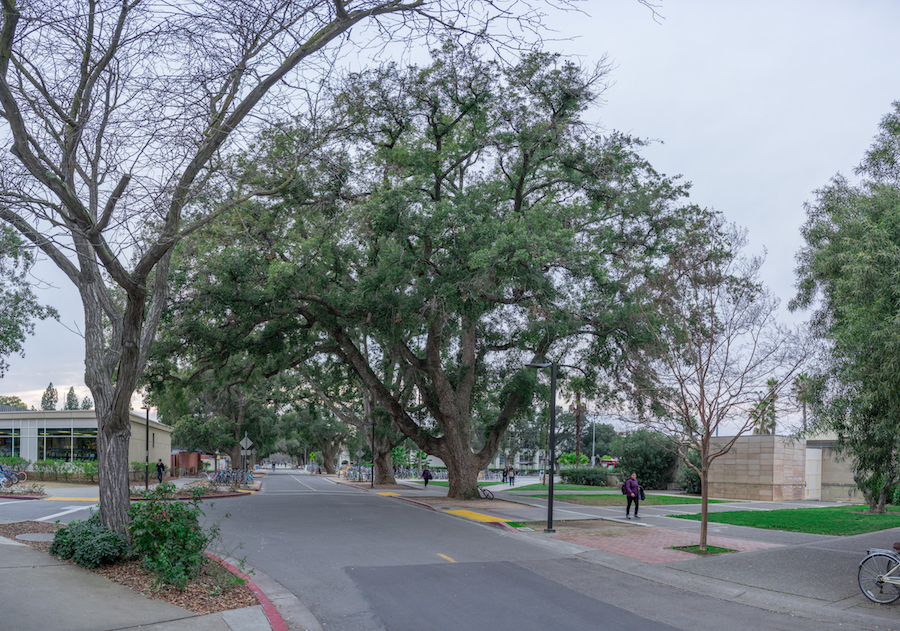
A view from the treetops

0
NICHOLAS CHAN / AGGIE

A closer look at the significance of heritage trees on campus

UC Davis is home to a number of iconic symbols: the classic mustang insignia painted in bike roundabouts, the picture-perfect water towers, and, most prolific of all, the impressive heritage trees that reside all over campus.

According to campus arborist Melanie Gentles, there are over 10,000 trees on the main campus plus another 3,000 or more in the Arboretum — as well as over 1,000 in the peripheral areas of land owned by UC Davis. Roughly 700 of those in the Arboretum are different species of oaks. Many of these oaks, in the Arboretum and on central campus, are considered “heritage.”

“‘Heritage’ is a human value — if something is valuable culturally, aesthetically or has great age, then you refer to it as ‘heritage,’” said Warren G. Roberts, a superintendent emeritus and Arboretum volunteer. “If you think about it, these trees [in the Arboretum] were here when there were grizzly bears, and [these trees] watched covered wagons come through. In fact, one pair of my grandparents came through the arboretum in the 1850’s because that was the main road coming west, and they would have seen some of these trees.”

The Arboretum is home to a number of trees that are more than 300 years old. In fact, the Central Valley used to be dominated by one of California’s most unique and native trees: the Valley Oak. This species of oak tree, however, was decimated when settlers began agricultural practices in the area. Today, the Valley Oak is the most abundant oak tree in the Arboretum and on the UC Davis campus.

Many of the trees that line the Quad and other parts of central campus are Cork Oaks, most likely planted in the 60’s and 70’s. These oaks are easily distinguishable from their characteristic cork-like bark, which, historically, is harvested in their native lands and fashioned into various cork products. The largest Cork Oaks on campus are unequivocally deemed heritage trees, their massive trunks towering above passersby on the north side of the Memorial Union and just south of Hickey Gymnasium.

“Most of the oaks here thrive in a Mediterranean climate, which means dry summers, wet winters,” said Kamyar Aram, a plant pathology Ph.D. student in the Rizzo Lab at UC Davis. “Oaks have been intimately connected with human civilization, there’re a lot of old references in Roman literature to acorn eating, and of course the Native Americans.”

Aram and his colleagues focus on forest pathology as well as forest ecology related to the influences of disease in forests. He studies a group of pathogens called phytophthora and how the pathogens can induce Sudden Oak Death, which, he pointed out, only infects and kills trees in a collection of oak species called red oaks. The Cork Oaks that can be seen around the Quad are not susceptible to this disease, but other species on campus, like the Coastal Oaks that line Howard Way into the MU bus stop, do have the potential to be infected by this pathogen.

“[Sudden Oak Death] was introduced in the coast, most likely through the nursery trade,” Aram said. “It has a complex lifestyle, it mainly grows on bay trees, [where it] produces spores […] and [the spores] find their way underneath the bark of an oak tree and that’s when they kill the oak tree.”

Fortunately for UC Davis and the Central Valley, Sudden Oak Death is not a big issue as it mostly affects trees in more coastal habitats and live in environments where contact with bay trees is probable. There are, however, other challenges that are more relevant to the trees on campus.

“As a tree grows older, it can become more susceptible to pests and diseases,” said Emily Griswold, the director of GATEways Horticulture and Teaching Gardens. “In the urban landscape, often what kills oaks is things like construction impacts and compaction of the soil, so the roots don’t have as much access to oxygen. Also irrigation, a lot of our native oaks evolved in this climate that is summer-dry, so there can be certain diseases that […] can affect roots of oaks if they get water in the summertime.”

Griswold, Gentles, Roberts, Aram and other interested experts at UC Davis are all members of the Tree Committee. Whenever there is a development on campus, the committee convenes on the tree site to determine if any trees in the area are worthy of being saved — especially heritage trees.

“The first [category] is the heritage tree category,” Roberts said. “The second is trees that are beautiful and valuable but not quite heritage tree status, third is it’s a good tree but it’s going to need some help — in other words you can’t leave it as it is or problems will occur in the future. The fourth category is that the tree is dying or out of shape.”

Management practices of trees at UC Davis have become less reactive and increasingly proactive since Gentles began working here full-time about 10 years ago. The urban setting means that safety is the number one concern for Gentles and her fellow groundskeepers, but managing the trees for health and beauty is extremely important, especially considering the heritage oaks are what attract many people to Davis in the first place.

This past January, a storm swept through the Central Valley and eight large trees on campus toppled over, including a large oak tree that fell onto Haring Hall.

“This storm was the perfect combination,” Gentles said. “It was soil saturation, [so] the roots couldn’t hold on, especially on the taller top-heavy trees. All the ones we lost were evergreens, which means they have a heavier load in their canopy. It acts like a sail, and the high gusts of wind meant that the roots couldn’t hold on.”

Thanks to the proactive management of the grounds crew on campus, evidence of these trees’ deaths has already been erased. Gentles and her team keep close track of which trees struggle and which thrive in the area, and replacement planting is the main route for dealing with the loss of trees on campus.

With a quick glance around, it’s not hard to notice the great diversity of tree species at UC Davis. The oak trees lend a characteristic appeal to the school and instill a sense of pride in students. Neither a scientific or historical knowledge of oaks nor a complete understanding of what designates a tree as “heritage” is necessary to appreciate the inherent value in nature so present and beautiful.

“I love when people I know [understand] the natural world around me, and oak trees are something I see everyday in my life,” Aram said. “When we get to know the world around us, we put on new lenses, and seeing more of the world is knowing more of the world.”
Written by: Marlys Jeane — features@theaggie.org

Guest: Female comics expand the conversation on female sexuality

METAL CHRIS [CC BY-NC 2.0] / FLICKR
Women in comedy help even the playing field between men and women
It doesn’t need to be clarified that Amy Schumer, the stand-up comic and actor, is almost always talking about sex. It’s the lens through which most of us are familiar with her work, which is infamous for its ever-present sexual undertones. She explained it well David Greene in a 2016 NPR interview: “I do talk about sex because I do think that a lot of things translate from the bedroom into how you live your everyday life.”

Schumer doesn’t talk about sex abstractly, but from her personal experience — of which, she constantly hints, she has a lot. She characterizes herself as promiscuous slut, but with the intention of mocking the concept itself. By focusing her comedy around the idea of “slutiness” she criticizes a culture that often limits women more than it does liberate them.

Sexual taboos in comedy can come in surprising forms.

There are, for example, countless male comedians who spend the majority of their airtime talking about their sexual activity — or lack thereof — but far fewer men, or women for that matter, will utter the word “vagina” on screen. Schumer breaks the trend, and in doing so breaks down a lot of the stigmas and inequalities that surround female sexuality.

She argued in the NPR interview that inequity in the bedroom can seep into professional spheres as well. Just by joking about sex, these double standards become less pervasive by breaking long-held taboos. Jokes level the sexual playing field between men and women and free women from constraints on how they come to understand and express their sexuality –– both positive developments that will improve social life.

Maybe if women weren’t labeled sluts for having a sex drive and prudes for being modest — and maybe if they receive equal attention from their male partner in the bedroom — they would reclaim agency in their professional and home lives.

Amy Schumer, though perhaps the most prominent, is not the only female comedian talking about sex. Nikki Glaser, who also guest stars on Inside Amy Schumer, pushes her audience to reconsider their preconceived notions about sexuality.

“I like putting myself in uncomfortable situations” Glaser told Vanity Fair. She says that if she’s dreading presenting her material, “…that’s when I know I’m doing something good.”

Glaser makes it clear that there’s power behind the things that make us viscerally uncomfortable. When we feel this way, there is often a significant reason why –– and that reason should be explored. By taking a personal and crude approach to sexuality, Glaser changes the protocol in comedy. She speaks openly and obscenely about sex from a woman’s perspective — something men have been doing about their own sexuality forever.

Issues surrounding active discussions of women’s sexuality are also well-explored by comedian, writer and actress Lena Dunham in each of the many mediums in which she works. Not only does her show Girls touch on sexuality in a realistic and raw way, but her memoir, Not That Kind of Girl, rivals the show’s grittiness.

In a section dedicated to her romantic past, she speaks honestly about being raped in college by a mutual friend and the confusing and disarming force it created in her life. Dunham does not parse words when speaking about her sexual experiences –– whether positive or destructive. She paints an honest picture of a girl discovering her sexuality and in doing so offers a realistic point of reference to the girls and boys who read her work.

Comics like Dunham are beginning to build an honest, challenging and provocative discourse which girls can use to educate themselves on their own sexuality. That Schumer, Glaser and Dunham have already entered the mainstream comedy scene indicates that their dialogue, and what it reveals about existing inequalities, is beginning to be accepted by society at large. And this would suggest that the potential for change and a more open conversation is imminent.

Written by: Stella Sappington

Disclaimer: The views and opinions expressed by individual columnists belong to the columnists alone and do not necessarily indicate the views and opinions held by The California Aggie.

Online courses: the classes of the future

0
ROSA LEE SCHWARZ / AGGIE

Hybrid, online courses impact students, campus life

In an era of smart cars, smart phones and smart homes, the world has become increasingly accessible with the click of a button. As the world becomes more efficient, the education system is unsurprisingly seeking to accommodate more students and different learning styles in innovative ways.

Universities such as UC Davis are finding new ways of using technological advancements to enhance students’ education, including incorporating online and hybrid courses into numerous undergraduate departments. Carolyn Thomas, the vice provost and dean for Undergraduate Education, has played a significant role in incorporating such courses at UC Davis.

“I think online and hybrid courses, if done well, will enable students to be more flexible in the ways they’ve learned to learn,” Thomas said in an email interview. “I also think more online courses, especially in the summer, will help students complete their degrees within four years.”

Online courses at UC Davis are taught through video lectures and often supplemented with discussion boards, homework and quizzes. Apart from exams that require a proctor to supervise the students, the rest of the work is completed online. Hybrid courses offer a portion of a class online but also have a designated time during the week for students to meet with their respective professors or teaching assistants. Hybrid courses often allow for smaller class size so that students can ask questions and further discuss course material.

The flexible structure of these hybrid and online courses allows students to manage their time in a way that will be most productive for them. These types of courses can free up time during the week for students to participate in other activities they may not have been able to do otherwise. Noy Shaked, a fourth-year managerial economics major, found that taking a hybrid course allowed her to more effectively manage her time.

“For example, on Fridays I have an online lecture [and] I don’t have to watch [it] exactly at the time it’s assigned,” Shaked said. “I’m actually able to go to my internship meeting at that time [instead]. So I think that it just allows for more opportunities and flexibility.”

Students can pause, rewind and rewatch video lectures as many times as needed — a benefit unique to the medium. Meanwhile, in-person office hours and hybrid class periods still give students a chance to ask instructors questions about the lecture so that not all face-to-face communication is lost.

        With these options, UC Davis has created a flexible environment for students without disrupting the campus atmosphere. Hybrid and online courses foster opportunities for students to learn online at home and bring their questions to their professors either in class or during office hours.

“I think more online and hybrid courses might also enable us to have more students working closely with faculty in learning environments that are truly high impact,” Thomas said. “We would be able to use our human resources more wisely […in] discussion classes, seminars and in mentored internship or research experiences.”

Chi-Yuan Tsai, a teaching assistant for ECN 115BY — Hybrid Economic Development — found that students were able to ask more in-depth questions during his class after watching the lectures at home, making better use of class time.

“I think it’s more effective,” Tsai said. “If they already watch[ed] the video online then they can understand [or] find out their problem and then come to class and ask questions.”

Often, students move away from home and attend college not only for educational purposes but also for the social aspects of the “college experience.” According to John Theobald, a continuing lecturer in the Department of Communication, online and hybrid courses may not require as much on campus and in-person interaction, which can detract from the sense of community on campus.

“I think it depends on how much instruction comes from the online courses,” Theobald said. “I benefited greatly from being on campus. The interactions I had with other people […] were the most memorable influential parts of the whole experience. As long as that persists, I think the students will be benefited positively from online and hybrid instruction.”

Hybrid courses allow for smaller classroom sizes, allowing for increased flexibility. This creates space for more students to ask questions and for professors to cater lectures to the students’ needs.

“I would like our students to have a number of options when it comes to how and where they would like to learn,” Thomas said. “Classroom teaching, when students are engaged and in dialogue with their instructor, is wonderful and this is what we will always want the majority of our classes to be because there is no substitute for this kind of transformational learning. At the same time, online courses can be a very effective way to learn material, especially material that students need time to absorb or interact with in complex ways.”

The idea behind hybrid and online courses is not to transition entirely to online learning, but rather to enhance students’ educational experiences at UC Davis by broadening the way in which classes are taught. Online and hybrid courses offered at UC Davis are curated to supplement students’ education and maintain the unique experience UC Davis has to offer.

“[This structure] will give students an opportunity […] to do a lot more with their time,” Shaked said.
Written by: Elizabeth Marin – features@theaggie.org

Reinstate the Draft

PUBLIC DOMAIN

Bringing back conscription would restrain social inequality and military recklessness


In today’s political climate, there are few opinions that 85 percent of Americans share. Revulsion towards a military draft is a rare consensus.

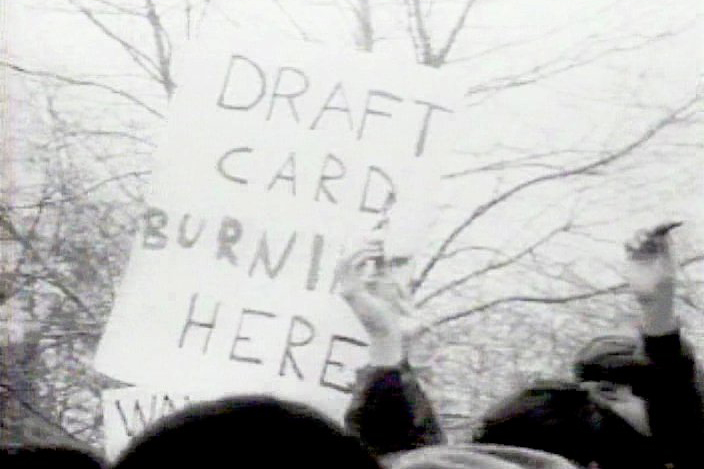
Conscription is branded in the American conscience as an unfair, unwise and undemocratic practice, largely due to the events of the 1960s, when conscription was the focal point of student demonstrations against the Vietnam War. The draft evokes the disastrous foreign policy and domestic unrest of that tumultuous era.

Young Americans believed themselves victorious when President Nixon’s Defense Department announced an end to conscription in 1973. The move was in fact a blow to democratic culture. America lost a cornerstone of its republic, a powerful force for government accountability and social equality. Warfare hasn’t been the same since.

Today, the burden of defense falls upon volunteers. These patriots disproportionately hail from regions of strong military culture, like the Deep South. To make up for enlistment shortages, recruiters target students from low-income families in inner-city schools who have few other options to improve their lives. Airstrikes in Syria and troop surges in Iraq are of peripheral importance to most other civilians.

When the draft still existed, the burden of military service was more equally shared. Because every 18 to 25-year-old male had an equal chance of being sent overseas, young men and their loved ones all had a personal stake in America’s military escapades. News anchors reported every declassified tactical maneuver. Music and film amplified cultural awareness of warfare. Victories were celebrated, and defeats mourned. Americans were immersed in war.

This is a key aspect of the ethos our country is founded upon — government by and for the people. In a liberal democracy, military action is a costly yet necessary evil to protect the basic liberties of life. As we all reap its benefits, should we not all bear its costs?

Though we’ve frequently been in military conflict since the ‘70s, our country has not, since Vietnam, truly experienced war.

Outside the philosophical considerations, widespread awareness of war kept hawkish politicians and the military-industrial complex on a leash. A foolhardy overstep abroad would meet powerful and public backlash.

Vietnam and Iraq were equally prolonged and unpopular conflicts, but only one was met with intense media scrutiny and massive student demonstrations. The other was reduced to a partisan talking-point, on par with issues like the national debt and abortion in America’s political dichotomy.

This dichotomy is also relevant to conscription. In the past 20 years, technology has made the world seem smaller through making it more reachable while at the same time dividing our country further. The United States has culturally regressed into a set of echo chambers. What were once fundamental American values, like respect for the presidency and hatred for foreign dictators, are now dependent upon labels like race, geography and income.

A correctly-implemented draft would be blind to such identities. Young Americans from all walks of life would be exposed to one another and form lifelong bonds over the trials of military training.

One of the most reviled aspects of the Vietnam draft was the end of student deferments. University students chosen by the draft lottery were forced to delay their academic and career ambitions until their service came to an end.

But this was in fact one of the finest features of the draft. Many college students are on track for career success, and accept at face value the principles of a liberal arts education. They will rarely encounter how the other half lives. Being drafted is a true kick out of the bubble.

Our country is in sore need of unity, social equality and healthy civic involvement. Reinstating the draft would be one step in the right direction.
Written by: Sid Bagga — sidobagga@gmail.com

Disclaimer: The views and opinions expressed by individual columnists belong to the columnists alone and do not necessarily indicate the views and opinions held by The California Aggie.

Burning Love, parody of The Bachelor

NICKI PADAR / AGGIE

With cast of all-star comedians, this parody is more relevant than ever

What could be better than watching The Bachelor with a few of your closest friends? Watching Burning Love. Considering the wild nature of season 21 of ABC’s The Bachelor, the E! parody Burning Love could not be more relevant.

Unlike the original dating show, the parody’s writing is blunt; everything that the participants on The Bachelor are thinking (but can’t say) is actually said in Burning Love. It’s the perfect show to binge-watch on Valentine’s Day, whether you are in a relationship, single or just “hanging” with someone new.

The premise of the show is the same as The Bachelor: a group of women compete for one man’s love. The first season stars Mark Orlando (played by Ken Marino), a firefighter in search of love, who is also the most arrogant, selfish and clueless man on earth. Everyone on the show is a terrible person, but that’s exactly what makes it great: it’s terrible women competing for one truly terrible man. As a sharp and biting parody, Burning Love points out the ridiculousness of shows like The Bachelor.

Burning Love is brimming with celebrity appearances. Ben Stiller is one of the producers, and he also plays the predecessor of Marino’s bachelor. Paul Rudd was the winner of the fictional third season, but he turned out to be a sex addict, so that relationship didn’t last long. In season one, Jennifer Aniston shows up in a panda costume, which is oddly reminiscent of a contestant from this season’s The Bachelor, whose infamous stunt involved wearing a dolphin costume. Aniston refuses to take the costume off because she wants to be loved for her personality, not her looks. Sadly, the self-absorbed bachelor, Mark, needs to see how attractive she is.

Mark admits on more than one occasion that he just wants to get some action. Instead of asking, “Will you accept my rose?” his catchphrase is, “Will you accept my hose?” Just like in The Bachelor, he takes the women on fancy dates. But in Burning Love, these dates include going to a roller rink, a mechanical bull-riding competition and building a house for the homeless. Not to mention the limo entrances, which are just as extravagant and ridiculous as those seen on The Bachelor.

The second season parodies The Bachelorette, and stars Julie (played by June Diane Raphael), who is just as ridiculous as Mark. Her list of suitors includes Michael Cera, Kumail Nanjiani, Colin Hanks, Nick Kroll and many more. But of all these contestants, Ryan Hansen is the best part of this show.

Hansen’s character, Blaze, is terrible in nature, but you can’t help falling for him because he is simply so attractive. His catchphrase, “Blaze being Blaze,” was coined because everything he did was simply horrible. Actor Adam Scott is the show’s therapist-turned-contestant because he was unqualified to be a real therapist. In fact, none of the show’s medics are qualified, resulting in the almost-death of a girl with a “monkey heart.” Seth Rogen even appears as an on-set medic trainee.

The third season is a take on Bachelor in Paradise, meaning all of the second season characters remain for the third. These loud personalities make for never-ending hilarious moments, and, when a whopping $900 prize (and of course, true love) are at stake, there are some undesirable yet comical outcomes — just watch to find out.

Burning Love can currently be streamed on Hulu.
Written by: CaraJoy Kleinrock — arts@theaggie.org

UC Davis athletes excel academically

0
KATIE LIN / AGGIE FILE

Twenty-six Aggies recognized on 2016 Big West Fall All-Academic Team

Student athletes are an integral part of the UC Davis campus community; their dedication to excelling in their respective sports provide both thrilling entertainment and a unifying sense of Aggie pride for students, faculty and community fans alike. Though their athletic prowess is easily reflected in competition, the members of the 23 varsity teams at UC Davis also commit a tremendous effort to their academic endeavors just like the rest of the student population at UC Davis.

The recent release of the Big West Conference Fall All-Academic Team honorees boasted 26 Aggies, showing that UC Davis athletes bring their A-game both on the field and in the classroom.

The women’s soccer team heralded the most awards at nine, closely followed by women’s volleyball, with seven. Six cross country runners made the honor roll, four women and two men, and men’s soccer rounded up four awardees. Several athletes claimed repeat academic nods.

Though the cross country, soccer and women’s volleyball teams piled on the accolades for the fall quarter, the road to honor roll is anything but easy. Generally, in order to maintain athletic eligibility, student-athletes must maintain a 2.0 GPA, but the All-Academic team nod requires a 3.0 minimum GPA and a 50 percent minimum participation rate in their team’s contests for the year.

The NCAA Division I, which UC Davis competes in, allots twenty hours per week for training, and athletes commonly devote even more time weekly towards sport-related demands, which may include non-competitive events, team meetings, travel and gameplay.

“Playing a Division I sport and putting in 20-plus hours a week consumes a lot of time, energy and focus,” said said senior women’s volleyball player Aima Eichie. “When you finally make it home, exhausted, you just don’t have a lot of drive to study or prepare for classes.”

As a third-year honor roll recipient, Eichie’s focus has remained on keeping a balance between sport and school.

“Although I love volleyball, school has always been my number one priority here at Davis, being a student athlete,” Eichie said. “I’ve learned one of the best ways to help balance everything out is setting schedules. It’s super important to remember the importance of self care and taking a few minutes to yourself every day to make sure you aren’t letting stress get the best of you.”

In addition to the Fall All-Academic Team honors, the sports teams have been making great strides in overall academic performance and shattering school records for scholarly achievement. As recently as Spring Quarter 2016, the 23 UC Davis teams averaged a 3.07 GPA, the highest ever recorded for the school. 15 teams in their entirety garnered a 3.0 or higher GPA, and the combined 3.18 GPA of the women’s teams tied the school record for highest GPA of all time.

“Our coaches bring in students who match the rest of the student population on campus, so they’re very bright student athletes,” said Dr. Michelle Roppeau, the director of athletic academic services. “They can compete in the classroom.”

In addition to regular studying techniques widely used by students — athletes or not — student athletes at UC Davis have access to a full-service academic advising office tailored to their needs and schedules. Five academic advisors oversee select teams and groups of students to ensure that they stay on track towards both their athletic and educational goals. Many athletes also take advantage of professor office hours and study halls appointed by their coaches.

Altogether, the combined effort of advisors, coaches, faculty and student athletes contributes to the academic success of the UC Davis sports teams.

“We are privileged to have the type of student athlete that we have here,” Roppeau said. “We have people who are really committed to school and what they’re doing academically, but they’re also incredibly committed to their sport and what they’re doing athletically. It’s really just an amazing group of students to work with.”
Written by: Alex Arechiga — sports@theaggie.org

Police Logs

0
NICKI PADAR / AGGIE

Something smells fishy

Jan. 29


“Loud music or TV –– reporting party has gone over twice but they keep turning up the volume.”

Jan. 30


“Static on the line –– tried to contact via cell but no answer and unable to leave message –– last call advised having phone problems due to tree knocking out phone lines.”


Feb. 3


“Reporting party’s roommate punched the wall to the apartment, was very upset but won’t tell why he is so upset parties are separated but in the apartment at this time.”


“Ongoing issue with parents parking in the white zone during student pick-up –– required extra traffic control in the afternoon.”
Written by: Kaelyn Tuermer-Lee — city@theaggie.org

PE classes may charge additional fees

MEENA RUGH / AGGIE

New fees to pay for equipment replacement

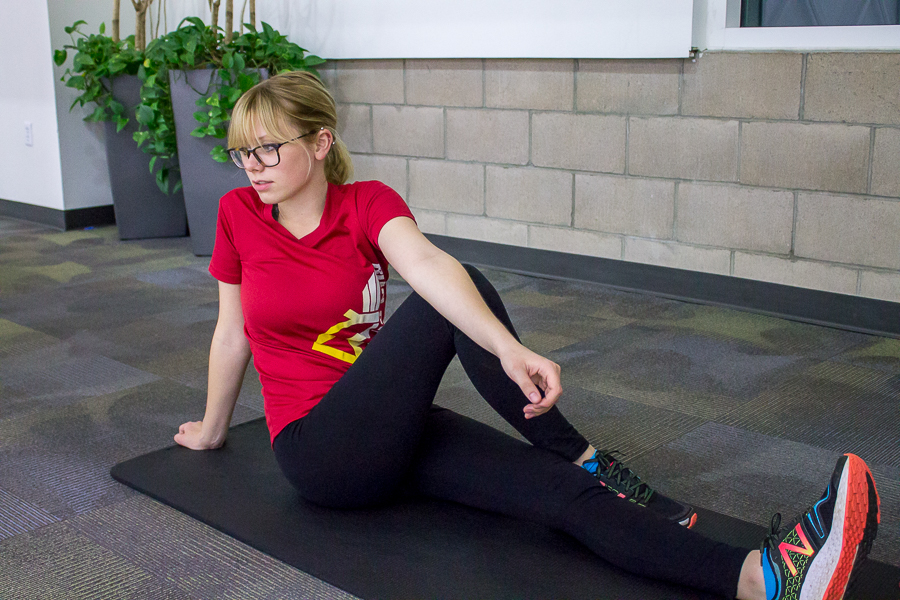
To compensate for a decrease in university-allotted funds, the Department of Physical Education has proposed adding a fee to physical education (PE) classes starting in the fall of 2017. The funds would be allocated to equipment replacement and additional costs associated with specific classes.

Previously, students could enroll in PE classes for a half-unit without paying any fees beyond baseline tuition costs. But starting next Fall Quarter, classes such as badminton or tennis that use additional equipment will cost between $1 and $2.50. Classes that don’t require any equipment, like fitness walking or swimming, will remain free of additional costs. The biggest increase will apply to archery, rock climbing, self defense and golf classes due to the additional resources and equipment needed.

According to Barbara Jahn, the supervisor of the Department of Physical Education, the department is aiming to keep costs as low as possible while also working to improve the quality of PE classes.

“In order to maintain these classes, which are extremely popular, we are proposing that we [apply a] charge,” Jahn said. “That’s so we can continue teaching classes and replacing equipment […] I don’t really like charging the students who are already paying for their classes, but we have to figure out a way to economically to continue. We are not getting the financial support in that area from the administration.”

Some students feel as though the additional fee is unwarranted, as they already pay tuition to take classes. Stephen Curry, a second-year chemical engineer major, is currently enrolled in a rock climbing class. Curry explained that the price hike would have deterred him from taking the class.

“It’s ridiculous,” Curry said. “I definitely wouldn’t have taken the class if it cost money, but they are lots of fun and they are a great way to maintain a balanced life. Some students don’t have the time to go to the gym and with PE classes it forced me to stay fit and it made time in my schedule to go to the gym.”

Jahn predicted that class enrollment would see little change. She said that the golf program, for example, already charges a fee to cover use at the Davis Municipal Golf Course but still consistently has full enrollment.

“It might [impact enrollment], but I don’t think so,” Jahn said. “Right now those golf courses are full and they are paying $23. For the self defense class, I don’t think that people would consider not taking that.”

Matthew Stuke, a second-year neurobiology, physiology and biology major, had considered taking a PE class but explained that an increased price on top of tuition for a low unit class would possibly make him reconsider.

“I’d think twice about taking a class,” Stucke said.
Written by: Lindsay Floyd — campus@theaggie.org

Moth species named after newly elected President

NAVRI VAZRICK / COURTESY

New moth species named Neopalpa donaldtrumpi, raises awareness for environmental conservation

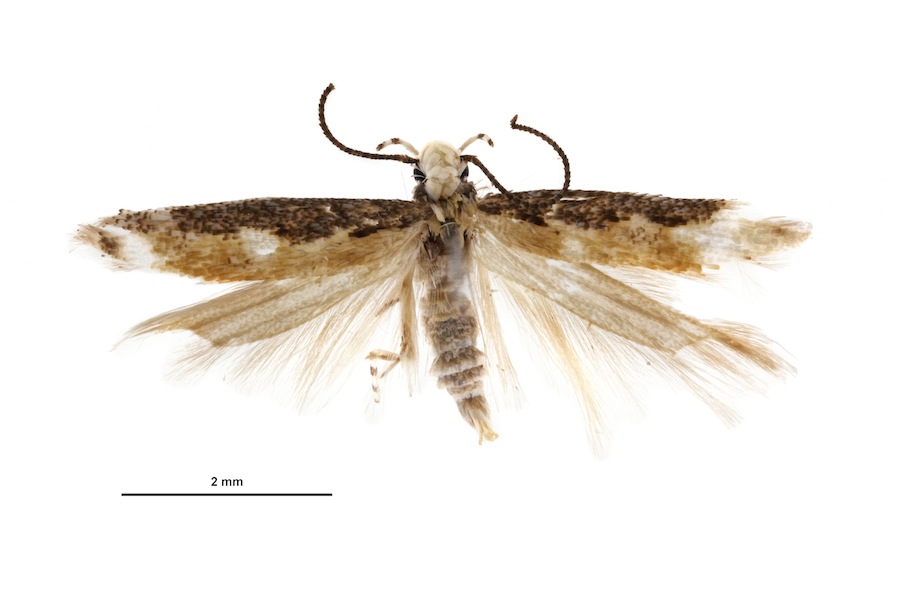
Microscopic combovers and barren sand dunes have gifted the world with a new moth species named after a man with the country’s most infamous hairstyle. The Neopalpa donaldtrumpi moth was collected by a team from the Bohart Museum of Entomology at UC Davis.

The Neopalpa donaldtrumpi, named a couple of days before the inauguration of President Donald Trump, is a moth with a 7-17mm wingspan and light yellow scales on its head, according to the journal article that first described it. Some say that the moth bears a resemblance to its namesake: Donald Trump. Regardless of the moth’s physical appearance, its name brings attention to conservation issues around the Algodones Dunes, where the moth was found, and to habitat preservation in general.

Lynn Kimsey, the director of the Bohart Museum of Entomology and a professor of entomology at UC Davis, led the expedition to the Algodones Dunes, which is a desert landscape located just north of the California-Mexico border.

“[The expedition] was a contract with the Bureau of Land Management to do a complete insect survey of the dunes,” Kimsey said. “We collected several hundred thousand specimens down in the dunes and we have various specialists look at them to identify species.”

It was one of those specialists, Vazrick Nazari, who identified and named the moth. As to why Nazari named the moth N. donaldtrumpi, Kimsey suspects that the name stems from a variety of reasons and not just because of the yellow scales on the top of the moth’s head.

“I think his idea was to name it after someone visible […] to make a point about the importance of these habitats,” Kimsey said. “The average person thinks of deserts as just wastelands.”

In fact, according to Kimsey, the Algodones Dunes in particular are especially rich in insect species, which makes conservation all the more important.

“The Algodones Dunes are about 200 square miles of sand,” Kimsey said. “There are a few plants scattered around, but it’s mostly just sand. We got almost 2,000 different kinds of insects on those dunes and six percent of them were new to science, which is a fairly big number.”

In addition to being a hotbed of insect diversity, the Algodones Dunes are a traditionally hostile environment, which means that its inhabitants often have interesting biological adaptations.

“One of the things that we had discovered was that the insects that survive in desert situations often times have very special adaptations, both physiological and biochemically,” Kimsey said. “Some of those chemicals actually turn out to be incredibly useful in terms of pharmaceuticals or industrial compounds.”

According to Kimsey, some insects don’t just survive in the extreme desert heat, they thrive in it.

“Quite a number of insect are only active during the summer when it’s hottest […] Sand temperatures in the dunes around June or July average around 160 to 170 degrees,” Kimsey said. “Insects are cold blooded, so they are whatever temperature they’re surrounded by. That means they’re tolerating temperatures that, except for bacteria, almost nothing else can tolerate, which means they must have some awesome heat shock proteins or other chemical adaptations that allow them to function at those temperatures.”

One of Kimsey’s colleagues, Steve Heydon, a senior museum scientist at the Bohart Museum of Entomology, helped collect this specimen and describes the specimen as an “LBM,” or little brown moth. According to Heydon, with its wings spread it still only measures about 1 to 1.5 centimeters.

 “If you put [the moth] under the microscope it really does have those little scales on the top of the head that kind of flip up,” Heydon said.

The scales Heydon refers to are the microscopic feature that relate the Neopalpa donaldtrumpi to its name.

This moth was collected using a Malaise trap which Heyden defined as a tool primarily used to collect bees, wasps, flies and other insects, but is also capable of collecting certain moths. The trap allowed those on the expedition to acquire an insect so small and delicate in a terrain where a “little brown moth” would be able to easily blend in. For a visualization, Heydon equates the trap to a “modified tent.”

While both Heydon and Kimsey helped physically discover this moth, there is a entire separate process to researching and learning about a new species once it is found for the first time. According to Heydon, unless someone specifically chooses to research this new species of moth it could be “centuries” before it is fully understood.

“When it comes to insects there is almost no information for most of the species,” Heydon said.

Marc Epstein, a senior insect biosystematist, explained how the conservation of the dunes served as the foundation of the whole expedition.

“The case for conservation of the Algodones and other unique environments is always best when the case is made about the unique biota, the numerous examples of unique organisms found at a particular site, rather than a few,” Epstein said via email.

Politically charged moths and sand dunes aside, Heydon stresses the importance of surveys like this as something integral to our growth as a society.

“It just goes to show how much we don’t know about the world around us and why we shouldn’t stop collecting and examining things because there are a lot really interesting species out there,” Heydon said.
Written by: Meral Basit and Emma Askea — science@theaggie.org