55.4 F
Davis

Davis, California

Monday, December 22, 2025
Home Blog Page 658

UC Davis tells its love stories

0
BRIAN LANDRY / AGGIE

Students, alumni share how they met their partners at Davis

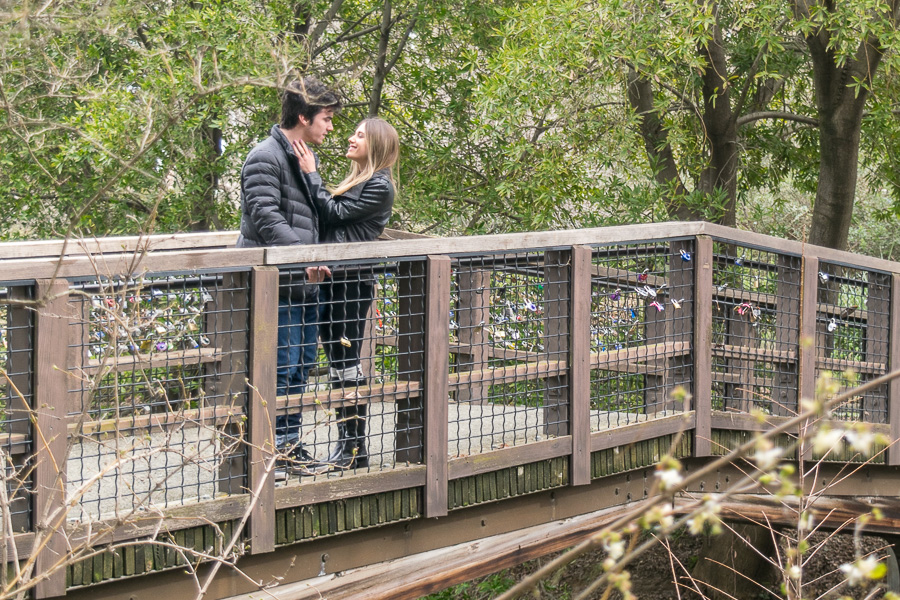
From picnics at the Davis Farmers Market to weddings in the Arboretum, UC Davis Aggies have carved out time in their busy quarters for a little romance. In the spirit of Valentine’s Day, The California Aggie reached out to students and alumni through social media, asking them to volunteer their campus love stories.

The story of Genie Obina, a fourth-year community and regional development major, and Cameron Do, a recent managerial economics graduate, began in Segundo’s Ryerson Hall. After meeting through mutual friends, they eventually became so close that Obina was able to turn to Do when she had to go home to the Bay Area for a family emergency.

“I had to go home but didn’t have any way of getting there,” Obina said. “I messaged our friend group chat asking if anyone could give me a ride to the Bay Area, and [Do] responded saying he would bring me. Him being there as a good support system and someone I could trust really helped me handle the situation and brought us closer, but was also the starting point of another relationship beyond friendship.”

Obina said her family always kept Do in mind because of how kind he was to take her to the hospital, and she noted that their relationship may have not ever had the chance to develop if she did not have to go home for an unfortunate circumstance.

“My family had never met [Do] but he came with me to the hospital where almost my entire family was,” Obina said. “At first they were confused about who he was, but later everyone, even my aunts and uncles, went up to him and told him how nice it was that he brought me to the hospital and how much they appreciated it.”

Obina said that this situation solidified her relationship with Do into something more than friendship. If it hadn’t happened, Obina and Do’s love story might have never lasted the year they have been together.

Tica Bragg, a second-year cognitive science major, was not an experienced soccer player when she joined a co-ed intramural (IM) team for fun during her freshman year. After some time, she decided that the team was not something she wanted to be a part of anymore, but she went to one last practice anyway. That fateful night, she began to fall in love with now-boyfriend of nine months Emile Rappaport, a second-year theater major.

“At the end of practice I asked if anyone wanted to go to the dining commons for late night knowing no one would pass that up,” Bragg said. “I just remember thinking he was unique and I liked that. We talked for a while that night, and the rest is history.”

Rappaport swore that it was a combination of his charm, funny personality and most importantly, the two goals he scored during an IM game that helped him win over Bragg.

“Approaching summer, we had only been dating for three weeks,” Rappaport said. “At that point you don’t really know what the other person’s life is life back home, so there was an elevated amount of trust we needed to put in each other so that we could make it through the entire summer.”

Bragg believes that the distance over summer actually made them fall even more in love and proved that they were on the same page about wanting to make the relationship last. Bragg’s own likes and interests are now becoming a part of Rappaport’s life too, and vice versa. For example, Bragg was inspired enough by Rappaport’s passion for theater to audition for a role in a play, something she said she never would have done if it were not for him.

“I love dancing and just doing adventurous things, and [Rappaport] is someone who always wants to do things I love with me,” Bragg said. “For example, we just planned a trip to go skydiving together and I love that we can go do crazy things together.”

Regardless of whether or not she continues her newfound interest in theater, Bragg supports Rappaport by going to his shows and even surprising him by bringing his parents along with her.

Bragg and Rappaport both appreciate the many different environments that Davis has to offer — especially IM sports — and agree that the campus is a place where amazing relationships can form.

“UC Davis is such a crazy-large campus with so many different types of people,” Bragg said. “It’s amazing when you put yourself out there in a different environment to see the people you’ll meet and the people you’ll eventually fall in love with.”

Falling in love is exactly what Alyssa Jenkins and Dan Elefant did. This happily married couple of 25 years, both of whom graduated UC Davis in 1990, met in 1987 in the Tercero snack shop, where Jenkins happened to be playing arcade games.

“This guy came down and wanted to play the game next to mine,” Jenkins said. “At that moment, my game ended and I wanted to learn how to play his so he started showing me how and that sparked us talking. At the time I didn’t think anything of it.”

A week or so after they first met, Jenkins returned to Davis after spring break to find a note on her dorm whiteboard from Elefant inviting her to a party. Jenkins remembered Elefant as somebody she got along with and enjoyed talking to, but she was not on the prowl to meet someone, which was one of the reasons she attributes to their relationship working out.

“[Elefant] didn’t meet me when I had makeup on, or was dressed cuter, or was being more flirtatious, so [for] the entirety of our dating period I never felt like I had to be anything other than myself,” Jenkins said. “When you’re trying to meet somebody you kind of put up a front, but the day we met I was just out there to kill time and he was there on a study break in the middle of finals, but instead he ended up down there for three hours talking to me.”

Jenkins was very confident in knowing what she wanted from a possible relationship.

“My first two quarters I dated people that really did not fit my value system, so that made me realize that they weren’t keepers,” Jenkins said. “[Elefant] and I share the same values and even though we have different traits, we complement each other. You have to have the same value system and that is the core of our relationship.”

An important value for both of them was establishing themselves professionally and achieving their individual career goals. Jenkins, who was a biological sciences and English double major and is now the chair of the English Department at Terra Nova High School in San Mateo County, pointed out that many people today might reject the opportunity for a relationship because they want to climb higher in the workforce and establish their careers.

“Your graduate school won’t take care of you when you’re sick and it won’t share your joys and your sadnesses,” Jenkins said. “My experience at Davis was largely colored by my relationship and it was the most meaningful thing to happen to me besides the entire growing up process.”

While at UC Davis, Jenkins and her husband broke up a few times, but each instance became a learning experience. They would always come back together to renegotiate, change and grow.

When graduation rolled around, Jenkins and Elefant decided to break up because Elefant had made it clear that he did not want to have children later in life, whereas that was something nonnegotiable for Jenkins.

“We decided to end our relationship at that point, […] because our goals were mutually exclusive,” Jenkins said. “I then left the country to go live abroad for a while because I was so fried out from school. When I was in Israel, [Elefant] wrote me a letter and his [postscript] was ‘do you ever think of us the way that we were?’ That was the moment I knew he changed his mind about having kids. I called him when I got back to the United States and we met up in San Francisco, and from that moment on we’ve been inseparable. I don’t think I’ve been away from him for more than two weeks ever since then.”

When she met her husband back in 1987, Jenkins said she had made up her mind about the kind of person she wanted to end up. Luckily enough, the guy who came along that day at the snack shop happened all of those qualities.

“I’ve spent almost my entire adult life with him to the point where he knows me better than I know myself, and there’s comfort in that,” Jenkins said. “When everything in your life is constantly changing, you have a new set of classes and professors every ten weeks, when you’re worrying if you’re going to get into graduate school or where you will go to graduate school, having somebody who is a source of consistency in your life is essential to feel secure when everything else is constantly changing.”
Written by: Gillian Allen — features@theaggie.org
Turkey as a model for the Middle East

SAHAR FOROUZANFAR / AGGIE

The traditionally secular nation is facing new challenges from fundamentalists
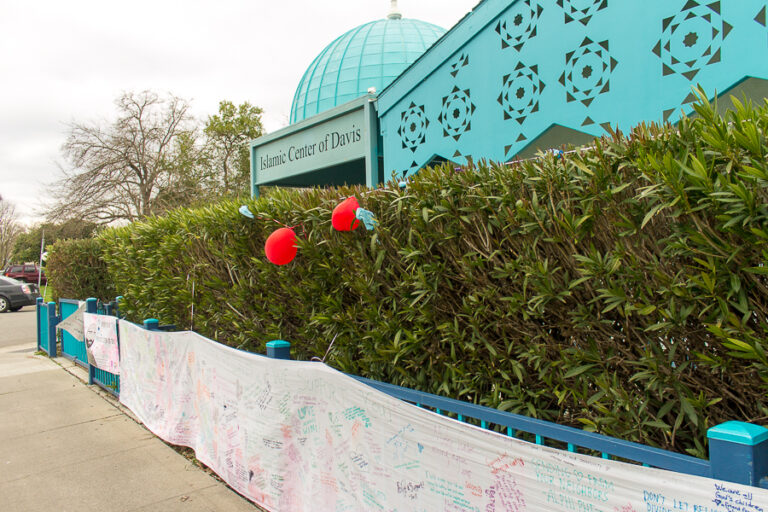
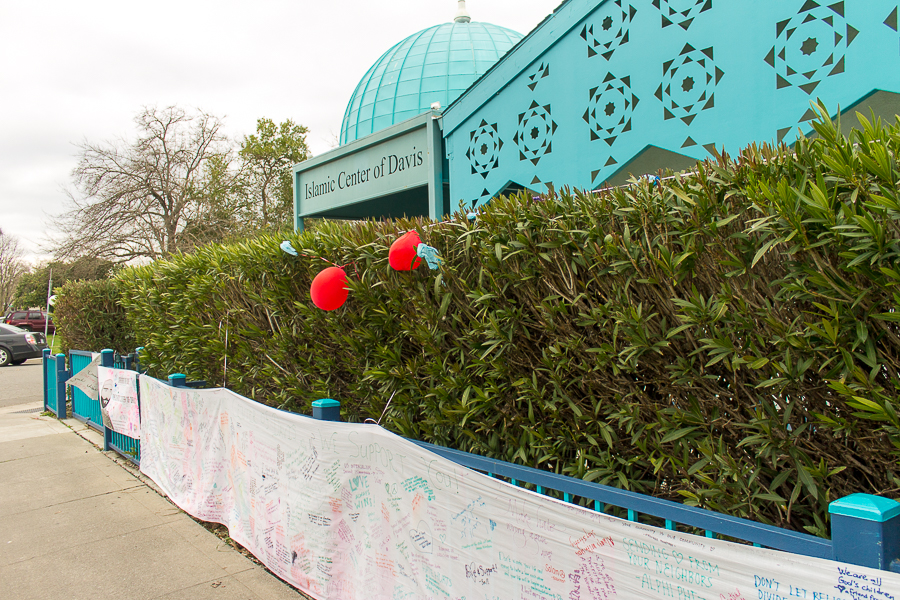
Early in the morning on Jan. 22, the Islamic Center of Davis was vandalized. Windows were smashed and strips of bacon were left on door handles with the intent of intimidating the Muslim community, seeing as pork is a forbidden meat in Islam. This incident came as the President promised to take drastic measures against the Muslim community in the United States and a speech by Milo Yiannopoulos, the tech editor of far-right news outlet Breitbart, on the UC Davis campus was cancelled.

This incident, which is being treated as a hate crime, points to the recent trend of Islamophobia that seems to be growing around the world. In some ways, it’s not hard to see why. From terrorist organizations that seem to multiply each time one is eliminated to the ever-present instability in the Middle East, it can be hard for outside observers to separate terrorism from Islam — especially when violent acts are performed “in the name of Islam.” The Middle East has become, in the broad public consciousness, synonymous with chaos, terror and regressive mindsets. This bias is only confirmed when the news coverage on these countries relates to war, air strikes and refugees. The common denominator in these countries seems to be that most of their citizens are Muslim.

Until recently, Turkey stood out as a nation that, despite a religious, Muslim majority, had built a functioning democracy with a written constitution and an established tradition of secularism. Turkey, with its robust and growing economy, served as a good example of how Islam and modern democracy can coexist and thrive.

Long held up as a model to Arab nations, Turkey’s peace is slowly unravelling. It’s inching closer to becoming an Islamist nation, abandoning the secularist views which have been the country’s foundation since its establishment in 1923. Many critics say that President Recep Tayyip Erdoğan is responsible for the country’s downward spiral. For over two decades, Erdoğan has served as Istanbul’s mayor, Turkey’s prime minister and president since 2014. Despite wielding an enormous amount of political power, he has tried hard to strengthen the presidency — traditionally weaker than the prime ministry — in a move that would require him to change the constitution. He has attempted to repress all challenges to his reign, especially from Fethullah Gülen, a moderate Turkish writer and Islamic preacher living in self-imposed exile in the United States. Turkish calls for his extradition have soured relations with the U.S. in recent years.

The bedrocks of democracy — free speech and a free press — are in danger in Turkey. Media freedom has steadily deteriorated since 2010, and has dropped drastically since 2016.

It’s no wonder that things came to a head in July 2016, when a faction of the Turkish military attempted a coup in major cities like Ankara and Istanbul. The military leaders of the failed coup left Turkey in an ongoing state of emergency with a shaky military. This has had significant consequences for the region,  because Turkey is an important geopolitical location that connects the West and the Middle East, both historically and in modern times. It serves as gatekeeper to the European Union, helping filter the enormous number of refugees fleeing Syria. Its relations with the EU have soured over arguments about Turkey’s EU membership bid, with Turkey threatening to open the borders and let refugees across.

This makes Turkey a significant player in the Syrian Civil War. Turkey has provided humanitarian relief to fleeing Syrians and now hosts the largest number of refugees in the world. It opposes Syrian President Bashar al-Assad’s government and has supported the rebels in fighting against Assad.

Faced by challenges on all fronts, including the long-standing problem of Kurdish rebels in the country, Turkey is in a tough spot. But if its foundations of democracy have been established strongly enough, it should be able to pull through this period of turmoil and stand upright again.

But questions remain. Will Turkey succumb to the same issues that other Muslim countries face in the Middle East? Is it truly possible for Islamic values and fundamental democratic principles to be followed side by side? Or will the Middle Eastern countries develop their own style of governance? Only time will tell.

Written by: Shohini Maitra — samaitra@ucdavis.edu

Disclaimer: The views and opinions expressed by individual columnists belong to the columnists alone and do not necessarily indicate the views and opinions held by The California Aggie.

Aggie Profiles: Martin Krieg

0
CHARLES MIIN / AGGIE

The story behind the man with the giant-wheeled bike

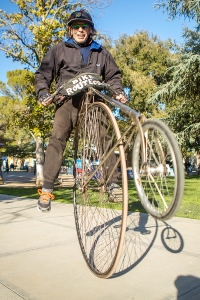
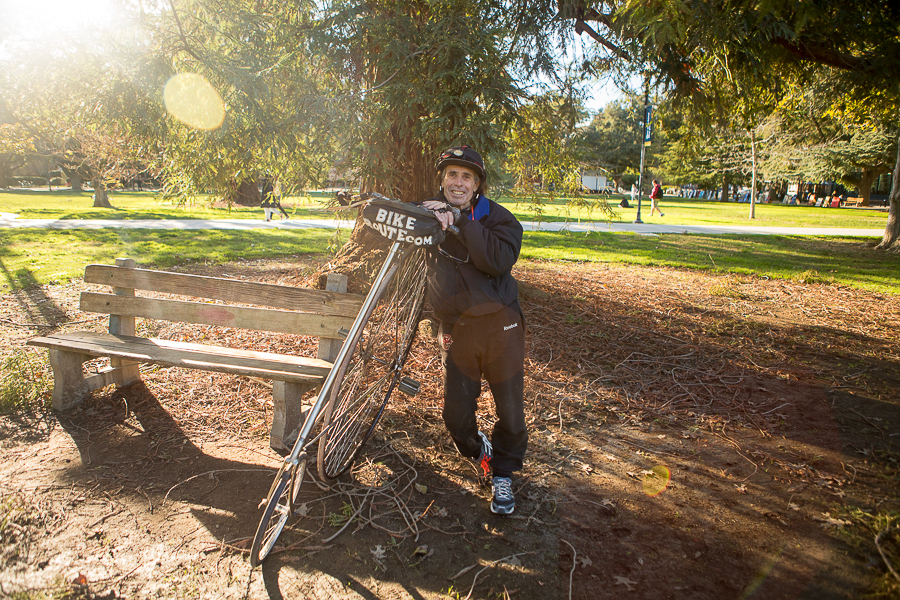
Nearly five feet off the ground atop a high-wheel bicycle, clad with fingerless cycling gloves, brightly tinted sunglasses and a bike helmet, is the epitomic image of Martin Krieg. As an iconic figure in Davis, Krieg is someone whose presence is instantly noted by students, faculty and residents alike.

Though his high-wheel bicycle is one of his major identifying features around town, Krieg is better known elsewhere as a man who recovered from clinical death, a seven-week coma and paralysis, and then proceeded to cross the United States on his bicycle — twice.

“I’ve been a cyclist all my life,” Krieg said. “For me, cycling [is] emancipative. You know how it feels — the air rolling through your hair, [and] all of a sudden you just feel great.”

As a child, Krieg had a deep interest in bicycles. In Hayward, Calif., Krieg started his journey on a prized Schwinn varsity tenspeed when he was 11 years old.

CHARLES MIIN / AGGIE

“[My mother and I] were in a bike shop,” Krieg said. “She said […] ‘If you got all A’s on your report card, I’d buy you it.’ She didn’t think there was any way I could do it. Well, I buckled down. I stopped watching TV. I just went ballistic […] and sure enough, I produced an all A’s report card. She was in disbelief.”

From there, Krieg began to ride his bicycle all over the region, from Hayward to the peaks of the Santa Cruz mountains. He maintained this passion while in college at California State University, Hayward and went on to pursue a career as an accountant after graduation. Krieg continued cycling until 1977, when he got into the car accident that left him temporarily paralyzed.

“All of a sudden I was so low,” Krieg said. “I was as low as a person could go. My friend […] Bobby came over. He knew I was into bicycles, so he showed me his new one he’d gotten. Against his better judgment, he let me ride it, [and] I found a way I could do things again and not […] be in so much pain. It was so amazing. From that point on, I resolved to get […] back on the bike.”

Traveling by bike rather than foot took away much of the pain from his accident, so Krieg returned to cycling. He started out with local rides and worked his way up to rides through multiple states. Eventually, Krieg took his first trip across the country in 1979, only about a year after the accident. The ride from Portland, Ore. to Washington, D.C. took Krieg 43 days to complete on a fifteen-speed bicycle that he purchased after trading in his Honda Accord.

“I was goofing around, going on a little sight seeing tour, until I got to […] Yellowstone,” Krieg said. “I ran into some guys I’d passed, and they made fun of me. They said, ‘Gee, we thought you were gonna be gone by now. You’ve got this […] state of the art […] bicycle. We thought we’d never see you again.’”

The jesting from the group of cyclists angered Krieg. Motivated to stop his sight-seeing and finish the journey, Krieg powered through the last 15 days of the ride.

“I got fired up […], hammering 100 plus miles a day,” Krieg said. “The last day I rode 200 […] miles nonstop. I was possessed.”

According to Krieg, upon arriving in Washington, D.C., he was regarded as a “total pariah” because of the scarcity of cyclists at the time.

“I felt real self-conscious of myself,” Krieg said. “I was kind of embarrassed I’d done something like this. It was after that experience that I made my mind up: ‘I’m gonna come back, and I’m gonna come back big, and I’m gonna make it such that cyclists were celebrated, […] not looked upon as […] pariahs.”

Krieg thus decided to make a more publicity-centered journey a second time in 1986 with the National Head Injury Foundation, as a pre-publication tour for his book “Awake Again.” This time, the ride took over three months, including stops for campaign work.

“[The ride] helped me finally get my book published,” Krieg said. “I learned as a writer. I reached 40 million people with newspapers, radio talk shows and TV.”

In 1994, after his recovery and both cross-country rides, Krieg published “Awake Again,” a book describing his post-accident experiences. He also began to spread awareness for the National Bicycle Greenway, a nonprofit organization encouraging coast-to-coast cycling on the Greenway route that stretches from San Francisco to Washington, D.C. While campaigning for the Greenway and promoting his book in Ireland, Krieg married and had his son, Cayo.

Krieg plans to celebrate the 50th anniversary of his first cross-country bike ride by making the journey with his son in 2029. Krieg also has future plans for the Greenway to incorporate bike boulevards, celebrated bike paths and bicycle signage.

CHARLES MIIN / AGGIE

“I love getting up in the morning and knowing that I’m going to be doing things with my mind that are making a difference instead of just passing time,” Krieg said.

Krieg has lived in Davis for a year and half and is currently planning the 15th annual National Mayor’s Ride, which will kick off in Central Park and hit cities such as Reno, Salt Lake City, Chicago and Washington, D.C.

Through his accident, recovery and cycling accomplishments, Krieg has learned countless life lessons that he is enthusiastic to share with the Davis community.

“I want people to realize that when you commit to something, you don’t lose anything,” Krieg said. “I committed to being a success, to prove my life is worth saving. Don’t be afraid to be a success. Being able to live the life I live right now didn’t come from thinking small and accepting prescriptions made for me. It came from willing to be different.”

Indeed, one cannot help but admire Krieg’s will to be different as he nails the running jump onto his high wheel and rides away, a distinct figure even as he merges into the crowd.
Written by: Allyson Tsuji — features@theaggie.org

Humor: DC fork famine due to tiny farmers’ desire to pitch tiny hay

ALEXA FONTANILLA / AGGIE

It’s perfectly logical

The illustrious UC Davis dining commons have it all. Vaguely ethnic food, Captain Crunch, rare salad dressings, apples, parfaits and diabetes can all be accessed through your custom meal plan. But there is one thing that under no circumstances can you obtain at the DC. That elusive treasure? A fork.

Students have long pondered the absence of forks at the DC. They have asked themselves questions like, “Why am I eating this enchilada-type dish with my fingers?” “How much am I paying for this meal plan again?” and “Why am I even alive?” But few students are privy to the secret behind the disappearance of literally the most important utensil.

Believe it or not, the answer is intuitive. Tiny farmers. For years, small farmers have tilled their small fields on the outskirts of Davis. Their tiny cows have produced thimbles of milk in pens made of golf pencils.

Yet in recent years small farmers have been in crisis. “We have no way to pitch our hay,” said a tiny voice, no louder than the mewing of a kitten. “We need some way to pitch our tiny hay and we have none.”

Farmer Daniel Bricklebottom is a fruit and vegetable farmer. His fields lie just west of the knoll behind the Student Community Center near the bike racks.

“We need these pitchforks so desperately. I know students must be confused about why there are no forks at the DC. They must be thinking, ‘wasn’t the DC designed for eating?’” He continued: “I just want students to know that if it wasn’t for their forks I wouldn’t have such a bountiful harvest this year.”

Bricklebottom was pleased to share with The California Aggie that he had grown six full-sized blackberries, three peas and a single stalk of asparagus.


Written by: Parker Nevin — phnevin@ucdavis.edu

11 new Chancellor Fellows honored for 2016

DANIEL TAK / AGGIE FILE

Recipients each rewarded $25,000 for research

University News announced the names of the 11 Chancellor Fellows of 2016 on Jan. 24, allotting each the prestigious title and a generous $25,000 to further their research at UC Davis.

With contributions to environmentally-friendly transportation, food health and sustainability, comprehension of cardiovascular disease, probate investigation and more, there are now 120 recipients of the award, which has been issued annually for the past 17 years.

“I continue to be awestruck by the excellence and creativity of UC Davis faculty, and inspired by the brilliant leading-edge work they do, every day, in their teaching and research,” said Interim Chancellor Ralph J. Hexter to University News. “I am honored to welcome this select group — distinguished by especially high accomplishment — to the ranks of the Chancellor’s Fellows.”

The following are the selected professors and their areas of study: Daniela Barile, Food Science and Technology; Amber Boydstun, Political Science; James Bremer, Mathematics; Nann Fangue, Wildlife, Fish and Conservation Biology; Bo Feng, Communication; Aldrin Gomes, Neurobiology, Physiology and Behavior; Yuming He, East Asian Languages and Cultures; David Horton, School of Law; Tina Jeoh, Biological and Agricultural Engineering; Alissa Kendall, Civil and Environmental Engineering and Emily Solari, School of Education.

Since the majority of the fellows have been at UC Davis for fewer than five years, Vice Chancellor for Development and Alumni Relations Shaun Keister said that they have difficulty obtaining financial support for their research compared to more established faculty members.

“I was very happily surprised to receive [the honor],” Kendall said. “Most of the time our biggest struggle is to be able to pursue new areas of research, so once you have something going you can apply to get research grants.”

Keister said that the Davis Chancellor Club raises money through donations in order to provide the recipients with this endowment.

“It is a way to reward [newer faculty members] for early successes in their teaching career,” Keister said. “This gives them funding to really jumpstart the research that they’re doing.”

Though the number of fellows is not necessarily limited by the amount of funding, Keister said the office usually awards between nine and 11 professors per year. So far, the program has had remarkable results.

“Some of our most successful faculty members on this campus have gone on to do amazing things who were recipients 10 or 15 years ago,” Keister said.

Chancellor Fellows are nominated by deans and faculty, reviewed by a small committee of institution members and then sent to the chancellor for confirmation. The committee finalized the honorees in the fall and sent an email congratulating them in mid-December.

“It was one of those things where you see an email in your inbox and […] you cannot possibly believe that it’s accurate,” Horton said.

A reception is planned for the spring, where fellows will have the opportunity to speak about their research and teaching experience thus far.

“We honor the recipients and invite the donors to come meet them,” Keister said. “It’s a great way for the donors to see firsthand how their dollars are going to use, [and] they love to meet the […] wonderful up-and-coming faculty.”
Written by: Jeanna Totah — campus@theaggie.org

A beginner’s guide to women’s gymnastics

0
IAN JONES / AGGIE FILE

Basics on scoring and rules

Ever wondered how gymnasts win or lose an event, or what the deciding factors are that ultimately constitute one victory over the other?

Women’s collegiate gymnastics has its own point system that differs from that of the men’s collegiate or men’s and women’s elite level.

Women’s collegiate Code of Points, also known as the “perfect 10” scoring system, is used for scoring UC Davis women’s gymnastics. A “perfect 10” is the score that each performer starts out with, which is then marked down for any mistakes — if athletes manage to keep their 10 score, their performance is “perfect.” Before 2005, most levels of competitive gymnastics were scored with this system, but, after an overhaul at the elite level, only the women’s collegiate and junior levels continue to keep score this way.

There are two schools of thought for which point system is preferable. There are those who believe that the 10.0 system is too demanding of perfection because any unplanned movement could be the difference between a win and a loss, whereas the elite point system gives the gymnasts the opportunity to attempt riskier routines that can result in more serious injuries.

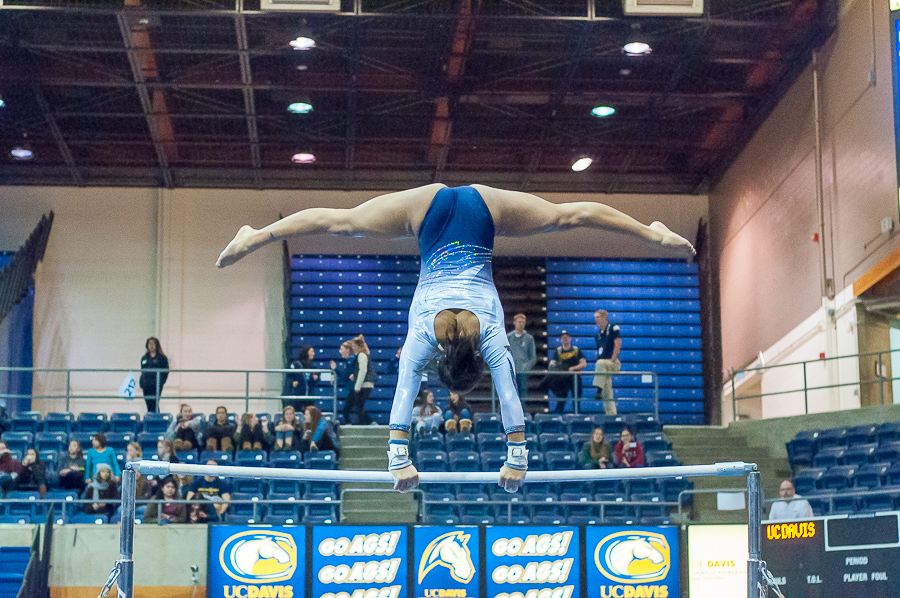
UC Davis women’s gymnastics team competes in four events — vault, uneven bars, balance beam and floor exercise — all of which have a detailed grading rubric that determines the overall score of each event.

Here are the basics for each event, pulled straight from the high volume of rules in the NCAA 2016-2017 Women’s Gymnastics Rules Modifications and Meet Procedures. This is only a small sample of what collegiate gymnasts are graded on.


  1. For the vault, gymnasts are allowed three attempts towards one vault that will be scored. 1.00 deductions from each judge if a gymnast fails to land on the soles of her feet, or if they fail to touch or only get one hand on the vault table.
  2. In the uneven bars, .05 will be deducted from the overall score for lack of variety in choice of elements, like the release move and/or connections. There must be at least two bar changes, and two flight elements.
  3. If the level of difficulty is not sustained throughout the routine, .05 will be taken off on the balance beam.
  4. If a gymnast is not using a sufficient amount of the of the floor area during a floor exercise, .05 will be taken away from their score, and the same amount could be deducted if the level of difficulty is not sustained throughout.

Almost halfway through their 2016-2017 season, the Aggies have averaged a score of 194.019 and have placed first in three of their five matches. Their next matchup is on the road against the U.S. Air Force Academy in Colorado Springs, Colorado on Feb. 11, and they will return home to The Pavilion on Friday, Feb. 17 to compete against the University of Alaska Anchorage.

Written by: David Flores — sports@theaggie.org

The Bachelor engages viewers, prompts viewing rituals

KELSEY GREGGE / AGGIE

Is the fourth time the charm for this season’s bachelor?

Few can say they share their significant other with 30 other people, let alone with nine million viewers on national television. But when competition is tough, one must go to extraordinary lengths in order to win the love of his/her/their life. This includes dressing up as a dolphin (though clearly in a shark costume), meeting the parents on the fourth date and even performing with the Backstreet Boys. These outrageous situations could only mean one thing: The Bachelor is back.

Airing every Monday night on ABC since Jan. 2, The Bachelor captivates a variety of audience members across the nation. The show features grandiose dates, over-the-top contestants and strange ceremonial customs.

“I just started watching last season. I had friends who watched it,” said Sofia Molodanof, a third-year English major and an ASUCD senator. “Every episode we got super excited about. We didn’t have cable last year, so we’d search online for the show at 10 [p.m.] after it was done. It was something I didn’t think I would enjoy, but it’s become my guilty pleasure and it’s so entertaining.”

The Bachelor is a reality TV show that centers on a single individual looking to get engaged. Thirty women or men compete for the final proposal from one bachelor or bachelorette. Each week, the contestants partake in a variety of challenges and dates in hopes of winning one of the remaining roses from the bachelor or bachelorette. During the season finale, the bachelor or bachelorette proposes to one of the last two contestants, giving them the final rose.

“Personally, I think it will be Vanessa or Rachel,” said Justin Wright, a second-year biological sciences major and 12-year Bachelor watcher. “This season is a little bit cheesy and raunchy, but I am intrigued by what Nick’s next move will be with his lovers.”

This year’s Bachelor veteran, Nick Viall, has been the runner-up on two seasons of The Bachelorette. Viewers are hopeful Viall will finally find lasting love.

“Every single time before The Bachelor or The Bachelorette comes on, I look at all the contestants a few weeks before and read their [bios],” said Kate Heller, a first-year economics major and seven-year viewer. “I see which one seems the most normal and the most sincere and kind and then I pick a top five that I think will make it.”

Many viewers even have their own Monday-night viewing rituals in order to see the spectacle.

“It’s a great way to de-stress after six and a half hours of class,” said Nicholas Valverde, a second-year undeclared life sciences major. “People are drawn to the comical aspect which is The Bachelor. It teaches you the way to a woman’s heart.”

The show gives people a two-hour period to relax, hang with pals and get in a good laugh — especially with this season’s drama. Spoiler alert: this season contains yet another polarizing contestant, Corinne Olympios, whose infamous flirty behavior has led to tension with the other contestants.

“It’s just so entertaining to watch […] it’s so out there and sometimes it does work,”  Heller said. “It worked for the first couple on The Bachelor and it’s worked for the past few people. I think it’s such a weird concept, and such a different concept that people tend to want to watch it to see if it works out.”

The Bachelor and Bachelorette have often been criticized for their lack of diversity. All 12 Bachelorettes have been white and 19 of the 20 Bachelors have been white. This season, however, Viall requested more diversity in his contestants, and 10 out of the 30 contestants are people of color.

The Bachelor is known for lacking in this area, but it’s interesting to watch — in this season especially — more diversity through Nick’s choice in women,” Molodanof said. “The Bachelor is obviously getting the hint that it’s ‘too white,’ but it still has a long way to go.”

Tune in to The Bachelor on Monday nights at 8 p.m. on ABC.
Written by: Abigail Wang and Myah Daniels — arts@theaggie.org

Seven movies from the seven countries targeted by President Trump’s Muslim ban

JAY GELVEZON / AGGIE

Learn more about countries targeted by Trump’s executive order by checking out these movies

On Jan. 27, President Donald Trump issued an executive order restricting the travel of citizens from 7 Muslim-majority countries: Iran, Iraq, Libya, Somalia, Sudan, Syria and Yemen. In light of this, thousands of people of all backgrounds and ages have gathered around airports to protest this executive order in what can be only described as a moving display of humanity. This executive order — which many have interpreted as an Islamophobic ban on Muslims — is yet another sign of how the Trump administration dehumanizes entire groups of people.

But people are still people regardless of where they are in the world; they fall in love, struggle, have hopes and dreams. They may drink coffee in the morning — or not — and have friends and family that they care about. They feel and therefore create art. Movies have always been a medium that can provide a glimpse into the everyday lives of people around the world. When entire populations are painted as the “evil other,” they are robbed of their humanity and their voices are silenced. Movies create a platform to tell their day-to-day stories, ­and seeing real, human complexity is incredibly important, as it serves as a necessary reminder of the existence and beauty of different cultures.

Here are seven movies from the seven countries targeted by Trump’s executive order.


  1. Iran: Close-Up

I’m ashamed to say that, as an Iranian-American, I have seen far too few Iranian movies, but I’ve at least seen my share of Abbas Kiarostami films. The critically-acclaimed director’s Close-Up is based on a true story — starring the people who were actually involved — about a man’s trial after he attempted to con a family into believing that he was the famous Iranian director Mohsen Mahkmalbaf. This heartbreaking film has been voted by many critics as one of the top 50 greatest movies of all time, and it’s being re-watched lately  in light of the celebrated director’s recent passing.

Close-Up is available on iTunes and Amazon.

  1. Iraq: The Dreams of Sparrows

First-time director Hayder Daffar shot this post-war Iraq documentary from 2003 to 2004, interviewing many Iraqis about their opinions of the war and the effect that it has had on their lives. The hand-held camera footage captures the different emotions of civilians, and while the majority oppose the United States’ presence in Iraq, Daffar interviews some Iraqis who have a more positive reaction to it. Seeing the Iraqi perspective of the war gives audiences an angle that is often left out of discussions of the war in the United States.

The Dreams of Sparrows is not currently available online; a copy of the DVD is available to borrow at the Davis Public Library.


  1. Yemen: A New Day in Old Sana’a

This 2005 film was heavily advertised as being the first, and only, Yemeni feature ­film — and the only Yemeni film to be shown at the prestigious Cannes Film Festival. Set in Yemen’s capital, Sana’a, this romantic drama is seen through the eyes of an Italian photographer, whose friend has to choose between two love interests. Critics have called this intense story one that highlights inner struggle between family honor and love,” and gives us a tiny glimpse into Yemeni culture.

A New Day in Old Sana’a is available on YouTube.


  1. Libya: The Message

Most people may think only of the tragic 2012 Benghazi attack when they hear the word “Libya,” but this immediate connotation is dangerous, as the country has a rich history and culture that is often neglected in political conversation. A popular film to check out is the 1976 cult classic The Message, an epic historical drama about the Prophet Muhammad’s beginnings, which was nominated for Best Original Score at the 50th Academy Awards.

The Message is available on Amazon.


  1. Somalia: Men in the Arena (documentary)

This 2015 Kickstarter documentary is directed and produced by J.R. Biersmith, who was inspired by the drive and dreams of the Somalian National Soccer Team.

When we turn on the news, we often hear about Somalia being a hotspot for terrorism and piracy, but rarely, if ever, do we see Somalia through the eyes of its greatest athletes born in its darkest hours,” Biersmith said on the Kickstarter page. ”By focusing on the national team, the relationship of two of its best players, and the shared dream for peace, we hope the Somali people and viewers around the world will be inspired by the light emanating from these young stars.”

The movie is yet to be released, as it still requires more funding for additional shooting, editing and translation.


  1. Syria: Return to Homs (documentary)

This Syrian-German documentary, which won the Sundance Film Festival award for Best Documentary in 2013, follows the lives of 19-year-old national soccer team goalkeeper Abdul Baset Al-Sarout and his media activist friend, 24-year-old Ossama. Their hometown of Homs is bombed and destroyed by the Syrian army, and the film explores how the young men deal with their now crushed hopes and dreams, as they turn from peaceful protesters into rebel insurgents.

Return to Homs is available on YouTube, iTunes, Amazon and Google Play.


  1. Sudan: The Lost Boys of Sudan (documentary)

Although this documentary was not produced or directed by a person of Sudanese origin, director and producer Megan Mylan is critically acclaimed for her work including The Lost Boys of Sudan, which won two Emmy Awards and an Independent Spirit Award. The documentary is about two Sudanese refugees, Peter Dut and Santino Chuor, who were orphaned as children and survived turmoil to finally reach a refugee camp in Kenya. From there, they were chosen to come to America and must now deal with the different culture and loneliness of going from one life to a  completely different one. It’s important to witness different immigrant stories like these, and The Lost Boys does an excellent job of capturing the spirit of this difficult experience.

Lost Boys of Sudan is available on YouTube.


Written by: Pari Sagafi — arts@theaggie.org

The Best of Times and the Worst of Times: A Valentine’s Day Playlist

GENESIA TING / AGGIE

Love or hate the holiday, it (and a sweet playlist) is here

Just like the cute, heart-shaped candies passed around this time of year, Valentine’s Day seems to leave a sweet or sour taste in everyone’s mouth. Whether you celebrate or despise the holiday, I present to you two appropriate playlists.


Anti-Valentine’s Day

Being alone is empowering. Recognizing the sad parts about love is necessary.

  1. ”I Could Have Been Your Girl” — She & Him

This coo from the ever-so-adorkable Zooey Deschanel is a reminder that being alone is okay and serves as the cure for the holiday blues. She & Him is not complicated; the songs are simple and the lyrics are clear, and sometimes that’s what one needs on Valentine’s Day. Yeah, “the pillow I cry on” is sad, but “we are free and never meant to be” is telling — sometimes it’s too little too late and things don’t work as expected. Deschanel’s low notes acknowledge the sadness of a breakup, yet the smooth, old-fashioned and romanticized sound promises that there is always another lover to come.  


  1. “Solo” — Frank Ocean

Being alone is scary, and, to Ocean, that fear is empowering. Ocean also thinks drugs help. With or without a mind-altering substance, the song’s minimal instruments and the isolation felt in Ocean’s wails might provoke that much-needed pent-up cry. But always after pain, “there’s heaven.”

3.“You Won’t Be Missing That Part of Me” — Melody’s Echo Chamber

If you’re simply trying to escape the day in itself, a hallucinogenic 1960s sound is a trustworthy remedy. Melody’s Echo Chamber, produced by Tame Impala’s Kevin Parker, brings a similar out-of-this world sound, yet with a much softer feel than the latter band. The groovy way Melody dismisses her ex-lover as she “lied with all her heart” exerts her newfound and celebrated independence. Maybe it’s okay, then, that “it won’t be that hard to forget me.”


Valentine’s Day

Rejoice in the simplicity and innocence of love itself, and the idiosyncratic differences of the person you care about.


  1. “Talk is Cheap” — Nick Murphy

Who wouldn’t want to be serenaded by that luscious beard and chilling voice? Murphy, formerly known as Chet Faker, says directly to his lover that the different nuances in how they communicate are “cheap” — they are insignificant in comparison to the love he has for her. He would rather “make her move with confidence” and reach a deeper romance than focus on the details. Irresponsible or hopelessly romantic, Murphy hits a fundamental point of love — it makes minute details appear more and more insignificant.


  1. “Someday” — The Growlers

The Growlers are the epitome of indie-folk beach-rat music, and similar to Melody’s Echo Chamber, their sound is reminiscent of groovier times. Along with a quirky sound, the romantic lyrics are direct and simple — there is no room for analysis in “one day I’ll make you my wife.” Songs like this capture the simplicity of love in, well, a simple way.


  1. “Jackie and Wilson” — Hozier

Hozier is a basic, borderline-cheesy choice when it comes to love music, but this song depicts the daydreaming innocence of love — making plans for the future together, like having two kids named Jackie and Wilson and “raising them on rhythm and blues.” These plans may or may not ultimately come true but, at the time, they mean the world.


4.“Sweet Child O’ Mine” — Guns and Roses.

I have to throw a classic in: love rocks.
Written by: Caroline Rutten — arts@theaggie.org

Celebrating solo: a single’s guide to Valentine’s Day

0
KELSEY GREGGE / AGGIE

In flurry of holiday gestures, students learn to love themselves

Celebrating a relationship on Valentine’s Day is a tired cliché. We all know those grossly overstuffed bears will either be burned or beheaded when the relationship ends. So this Feb. 14, treat yo’ self! Valentine’s Day is a holiday about love, and that includes self-love. Feel free to look over and take inspiration from this handy guide in planning your solo Valentine’s Day.

1. Indulge in desserts


Like any worthwhile holiday, eating well is a must. Are you up for the challenge of injecting chocolate into every meal throughout the day? Take a trip to Trader Joe’s and throw those microwaveable chocolate lava cakes into your cart, then find the cashier with the salt-and-pepper hair and kind eyes who will give you a strip of the ‘I left my heart at Trader Joe’s’ stickers. Or, if you are feeling adventurous, bike downtown to Sweet and Shavery and try out its crepe selection. Of course, it is also important to note that all three of the mini grocery stores in the residence areas sell pints of Häagen-Dazs and Ben and Jerry’s ice cream.

2. Find a good flick


There’s no time like the present to catch up on the Oscar-nominated movies you haven’t seen yet. The Varsity Theater will soon be showing several promising movies that are definitely not meant for cuddling — Isabelle Huppert received a Best Actress nomination for her role in “Elle,” a disturbing semi-psychological French thriller. Also coming soon is  “The Red Turtle,” a silent film from Studio Ghibli about a man and a giant red turtle, which was nominated for Best Animated Feature. If you’d prefer a laptop-sized screen as opposed to the big screen, Netflix and Amazon Prime both have a fair number of great films. Netflix houses a favorite single-anthem movie, “Bridget Jones’ Diary,” as well as the cult classic “The Shining,” the foodie’s paradise series “Chef’s Table” and the mysterious documentary “Finding Vivian Maier.” Via Amazon Prime, you can live vicariously through the single lives of Carrie, Samantha, Charlotte and Miranda in every “Sex and the City” episode ever.

3. Seek out rest and relaxation


To continue with the theme of self-love this Valentine’s Day, plan out a much-deserved day of relaxation. When was the last time you read for pleasure? Grab a book you have been wanting to read and plant yourself in the arboretum. If you’re still in need of a break, the Mind Spa at the Health and Wellness Center offers massaging recliners and chairs for free. Drop by the Akasha Yoga Studio in downtown Davis and take a yoga class for $15, or use just $10 for a manicure at Davis Nails and buy a carton of your favorite Ben and Jerry’s ice cream with the remaining $5.

4. Plan a “Galentine’s Day”


Who says being single on Valentine’s Day means spending it alone? Take inspiration from the passionate and creative mind of character Leslie Knope from “Parks and Recreation” and plan your own “Galentine’s Day.” But try not to go overboard and make pillows for your friends depicting the front covers of the newspapers that were published the day they were born like Leslie did. Get together with your pals and spend the day with them. Bake cookies and top them with pink frosting and sprinkles; plan a breakfast dinner with chocolate chip pancakes or host a make-your-own dessert pizza night; reminisce about middle school whilst exchanging themed Valentine’s cards from CVS. You can even break open Monopoly or Candy Land — but make an effort not to ruin any friendships fighting over hotel fees.

5. Venture outside


No tacit code dictates that single persons must be subject to house arrest on Valentine’s Day. Seize the day! Take a trip to the Manetti Shrem Museum and ruminate on the artwork created by former UC Davis faculty, stroll through one of the many art galleries downtown or go out shopping and peek into thrift shops like Boheme Hip Used Clothing. Or, use your free ticket at the Mondavi Center to go see Grammy award-winning singer Dianne Reeves at 8 p.m.

6. Spread the love


The art of letter-writing is a seemingly-forgotten but nonetheless heartfelt act. Since the crux of this holiday rests on sharing love, make an effort to show the people you care about most that you love and appreciate their presence in your life. No extravagance is required — people do love a good wax seal though. The thought is truly what counts. By acknowledging those in your life who love you, you will never be alone on Valentine’s Day.

Written by: Hannah Holzer – features@theaggie.org

Humor: Draining the swamp — administration promises to clear out Russell Field after rains

MEENA RUGH / AGGIE

Russell Field construction halted after grassroots movement and precipitation
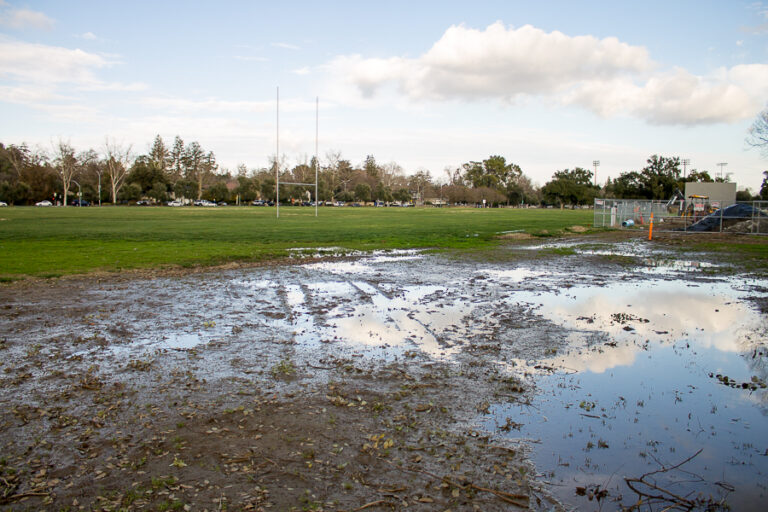
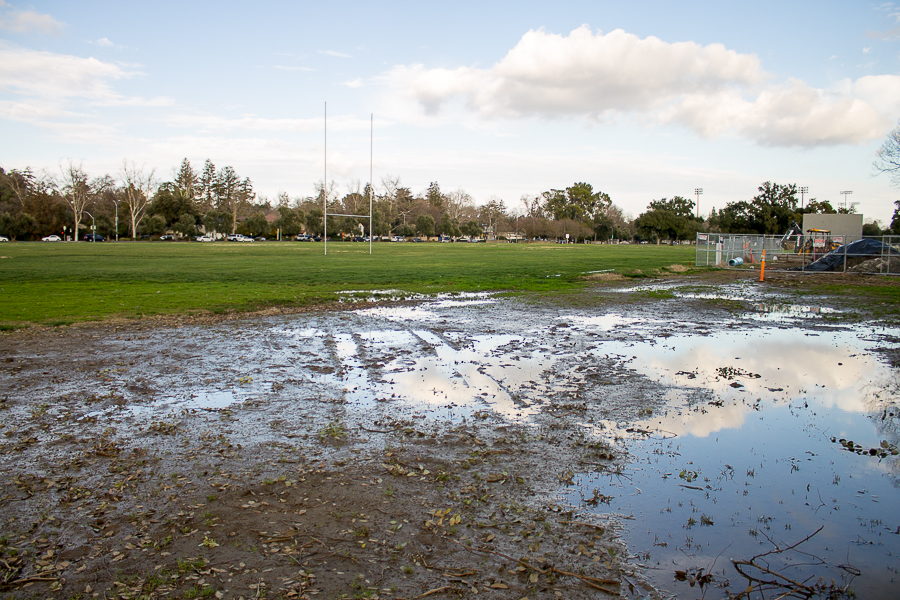
After the controversial proposal to build administrative buildings and housing on Russell Field, rain and local protests have halted the development of any new plots on the cherished fields. Russell Field, the home to club and intramural sports such as rugby and ultimate frisbee, has been the center of a conflict that pitted the UC Davis administration against the community.

The construction was supposed to start in early February, but the nearly two feet of rainfall in the past month has prevented workers from breaking ground. Local protests throughout this weather showed the dedication that the community has to keep the space open.

“Watching the locals come together through hail and real, not light, rain was a wake-up call. I’m in charge and I want to get things sorted out,” said Henry Rose, the director of housing. “For starters, we need to drain the swamp, literally. Sports must go on. I also don’t want to deal with the people that proposed this idea in the first place. The community clearly cares.”

Rose will be firing those who were in support of the construction and plans to hire people who have their ear to the ground for what students want. He wants to “drain the swamp” of an administration many students say is out of touch with the people of Davis.

“I’m glad that the school has decided to forego its plan,” said Warren Gates, an avid ultimate frisbee and rugby fan. The fourth-year human development major continued, “The school needs to have the interests of the students in mind. Apparently, the past administration didn’t.”

Russell Field’s new life has been met with overwhelming support from students. Keeping the interests of the community in mind makes for a happy campus, something that it seems the school often forgets. With a current administration that solely seeks to benefit those in charge, financially and for their own convenience, the school should seek to make changes that are less centered around what makes the powers that be happy and instead more focused on the well-being of its students.

Electing to preserve Russell Field, whether it be due to the rain or vehement protests from the people, is one of many steps that the university should be taking to ensure the happiness of the Davis community. Continuing on with amenities that benefit the few and not the masses only creates a further disconnect between the people and the powers at the top.
Written by: Ethan Victor — ejvictor@ucdavis.edu

Humor: Bike forgets where it parked its student

VENOOS MOSHAYEDI / AGGIE

Students face perilous conditions when left out in rain

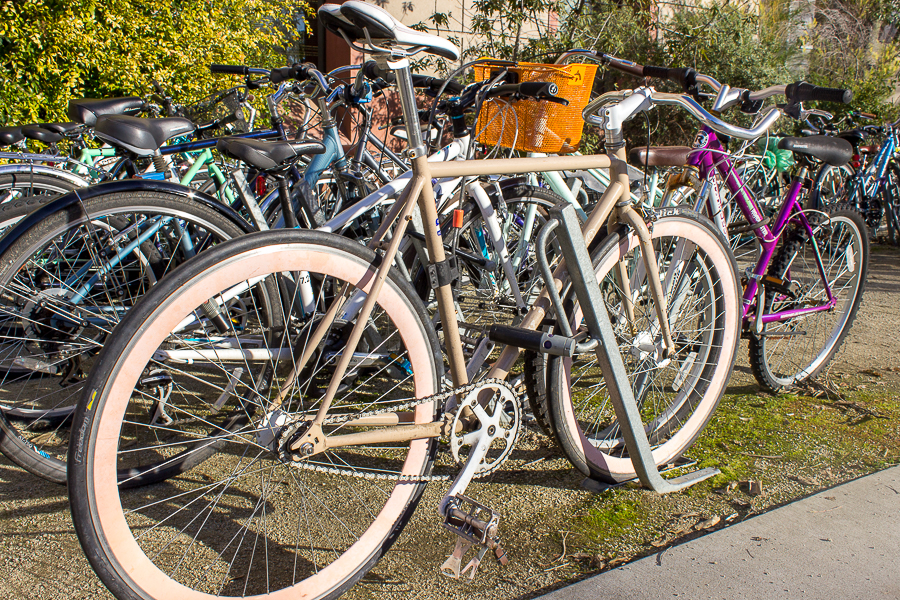
Students at UC Davis are constantly forgetting where they parked their bikes. It’s a tale as old as time. But a recent event has turned the tide on this familiar narrative.

According to a police report recently obtained by The California Aggie, a bike called 9-1-1 saying that it could not remember where it had parked its student. This is obviously strange, considering bikes don’t usually forget important things like that.  

The Aggie got in touch with the forgetful bike to try and get more on the story.

“It’s embarrassing, I know,” said the bike, a third-year mechanical engineering major and 2020 Olympic pole-vaulting hopeful. “I got out of my last class and was walking back to my student when I realized that I had no recollection at all about where I had parked it. I could have sworn it was by the CoHo. But I don’t know — it could honestly be anywhere. First I lost my son, and now this. It’s been days now and I still haven’t had any luck finding it. Poor thing. Hopefully it hasn’t gotten all rusty in the rain.”

A few days later, the bike finally found its student in the sea of parking spots near the Activities and Recreation Center (ARC). The student expressed relief at finally being located.

“I was really glad to finally be found after days of watching my owner go into the ARC to work out and not realizing that I was parked right outside,” said the student. “But by the time my bike finally found me, some of my parts had been stolen. Someone just went ahead and screwed off my left arm and took it to do who knows what. It was honestly horrifying. I’m just lucky that nobody tried to take my ears. What else would my bike grab onto to steer while he’s riding me?”

Members of the Davis community weighed in on the situation after reports of the incident started circulating online.

“This explains a lot,” said Nicole Tube, a first-year chemistry major who appeared on TLC’s My Strange Addiction for her addiction to throwing her electronic devices across the room and out of windows. “Mostly it explains why I may or may not have bought a human left arm on the Free and For Sale Facebook page. I know people might judge me and think it’s weird, but I really needed a new one after what happened to my last one. Yikes.”

This story of forgetfulness should serve as a staunch reminder to the bike community that they should always remember where they parked their students. You never know how many arms your student will have — or not have — by the time you finally find them.
Written by: Brian Landry — bjlandry@ucdavis.edu

Muslim students respond to recent political events

GENESIA TING / AGGIE

Muslim Student Association curates five-part Davis Muslim lecture series

The UC Davis Muslim Student Association (MSA) will host a five-part Islam awareness lecture series on campus for students in response to the current political climate and prevalence of negative attitudes toward Islam.

The hour-long lectures, which include topics such as “The Chameleon Muslim” and the “Rituals and Practices of Muslims,” illuminate the shared and diverse experiences of Davis Muslims.   

Kumran Islam, a Muslim alumnus of UC Davis, spoke at the opening event on Jan. 25, entitled “What is Islam,” to dispel myths and spread accurate knowledge regarding the Muslim religion. Islam’s lecture provided an interactive introduction to the series, as he encouraged participation, questions and debate from the audience.

The recent Islamic Center of Davis hate crime emboldened Islam to speak and question the acceptance of his religion within America. Islam spoke about the Jan. 22 attack on the Islamic Center of Davis, where an unidentified female vandal laid bacon on door handles and shattered windows.

“I thought it was important to come today considering the recent hate attack on the local masjid,” Islam said. “I think it’s not only important for us to be aware of our Muslim brothers and sisters, but to understand how incidents like this cause us to reflect upon ourselves and who we are as American people — whether we truly fulfill the ideals that we proclaim to [have] as an American society.”

Two days after the first Davis Muslim lecture, on Jan. 27, President Donald Trump issued an executive order to temporarily ban travel from seven predominantly Muslim countries.

Hansa El-Nounou, a first-year communications major, an MSA member and an upcoming speaker at the Feb. 15 talk, felt disenfranchised by the new president’s executive order.

“My personal, and others’, reaction was kind of that of mortification.” El-Nounou said. “We were holding onto the hope that he wasn’t actually going to pull through with it. It was really scary, but also, in a weird way, it was empowering to the community because we realized we have to stick together. We’re doing our best to be good Americans.”

Aafreen Latheef, a third-year civil engineering major and MSA member, worked in conjunction with ASUCD to present the lecture series. Latheef felt compelled to respond to political and social contention surrounding Islam.

“The problem, especially with the current president, is that there’s a lot of bigotry towards minorities and a lot of Muslim people are feeling threatened and attacked,” Latheef said. “We just wanted to spread knowledge about Islam.”

Adilla Jamaludin, a former ASUCD senator and a third-year international agricultural development major, started planning the series last quarter.

“I came up with this idea when I was still a senator with ASUCD last year, and the whole idea was that with the current political climate, it just seemed like the right time to have an informational series of lectures about the Muslim faith,” Jamaludin said. ”For me, it’s really nice to see this series happen because there’s different experiences for different Muslims on campus. There isn’t just one mold of what a Muslim is and it’s important to have that type of diversity of experiences shared. It’s also a great way for other students who are learning about Islam or the Middle East to be exposed to it on their own campus.”

Latheef invites and encourages non-Muslims interested in Islam to attend the remaining events.

“We wanted to target it towards non-Muslims who were curious,” Latheef said. “Maybe they’ll see that it’s a very peaceful religion.”
Written by: Aaron Liss — campus@theaggie.org

Political parody in the age of Trump

TIMOTHY KRAUSE [CC BY 2.0] / FLICKR
How Saturday Night Live is changing the face of political commentary

It all started with a beauty pageant.

In 1966, billionaire Donald Trump bought the Miss Universe Organization, which includes the Miss USA, Miss Teen USA and Miss Universe pageants. Since 1960, these all aired on CBS; that is, until Trump decided that he was unhappy with the network. He eventually sold 50 percent of the stake of the company to NBC in 2002. Not long after that, The Apprentice, which Trump hosted and co-produced, premiered on this new network. The show earned him $1 million per episode, and its success led him to trademark his notorious catchphrase: “You’re fired!”

In 2004, he hosted NBC’s Saturday Night Live for the first time and appeared in a sketch with comedian Seth Meyers (who would later become one of his biggest late-night critics). In the years between that first appearance and his second time on SNL in November 2015 — this time as a presidential candidate — Trump found himself in trouble with NBC. He got into hot water for peddling the conspiracy theory that President Obama was not an American-born citizen. But it wasn’t until Trump announced his presidential campaign with a speech calling Mexican immigrants “criminals” and “rapists” that NBC cut all its business ties with Trump.

Since his second SNL hosting gig, Trump has repeatedly slandered NBC and its long-running sketch comedy show. Despite the hosting gig (amid the disapproval of many), Trump later tweeted that the show was “not funny” and “one-sided.” While Trump rightfully points out that he is mercilessly mocked on the show, his reactionary tweets reveal a bruised ego.

SNL has a long history of political parody. The tradition goes as far back as 1976, when Chevy Chase portrayed President Gerald Ford as a pathetic klutz in a series of sketches. Chase’s portrayal reinforced public opinion that Ford was an “accidental president,” influenced by the fact that he was sworn in not because he ran for the position, but because he succeeded both President Richard Nixon and Vice President Spiro Agnew after they resigned in disgrace following the Watergate scandal.

In 1992, Phil Hartman poked fun at President Bill Clinton with an exaggerated imitation of his Arkansas accent and by making light of his tryst with Monica Lewinsky. Other famous imitations include Will Ferrell’s dopey George W. Bush, Tina Fey’s dumb-and-underqualified Sarah Palin, Amy Poehler’s overly ambitious Hillary Clinton, Jay Pharoah’s stiff Barack Obama, and now Alec Baldwin’s Donald Trump — a caricature of a caricature.

It’s worth noting that up until our current president, not a single politician has taken issue with their comic portrayals. Ford said he was able to laugh at himself through Chase’s impersonation, and Palin responded with a parody of Fey’s character from 30 Rock.

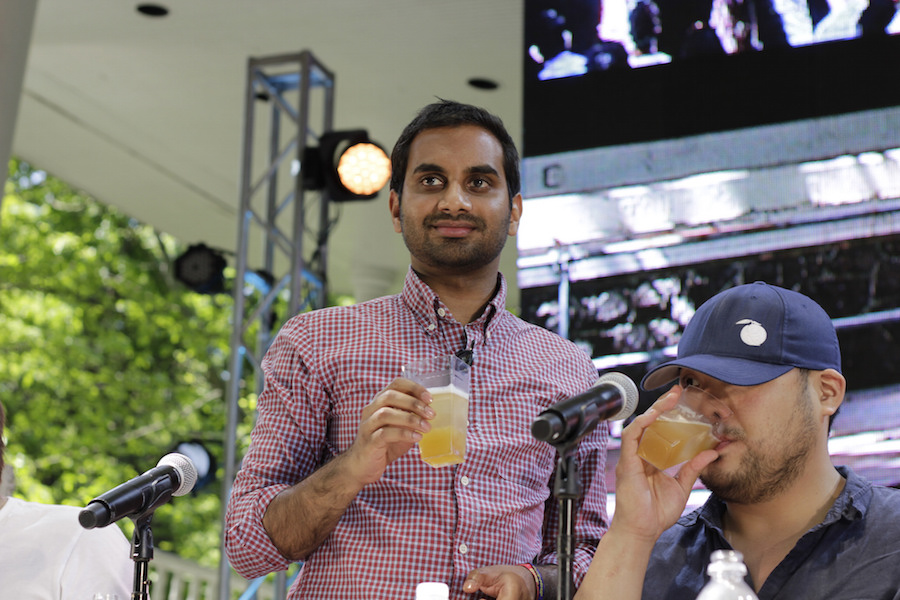
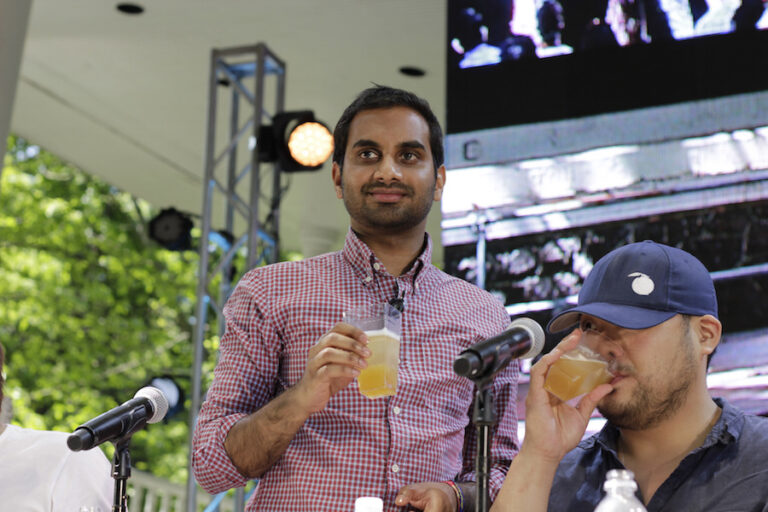
Lately, SNL’s political commentary is not as cloaked beneath a ridiculous wig. It merely reflects what it sees. The show’s monologues have become soapboxes. Since Trump’s inauguration, Aziz Ansari was the first comedian to tackle his contentious presidency. Ansari ditched the tongue-in-cheek tactics and instead directly addressed Trump and his supporters. He referred to some of Trump’s supporters as a “lower case KKK movement” and called out those who have said things like “Trump won! Go back to Africa!” Somewhat seriously, he continued: “I think Trump should make a… real speech denouncing the lowercase KKK. [He shouldn’t] tweet about me being lame or the show.” Ansari finished on a thoughtful note by saying, “If you look at our country’s history, change doesn’t come from presidents. Change comes from large groups of angry people.”

NBC’s resistance to Trump through SNL marks a new instance in which the entertainment industry uses its platform to challenge the political landscape. Previously, sketches served to bring levity or gentle mockery for its own sake. Now, they’re protests. From a rhetorical standpoint, by acknowledging its former partnership with Trump, NBC says, “Look, we’ve worked with him before. You shouldn’t trust him.” Or maybe by outrightly denouncing Trump, the network is attempting to distance itself from him. Maybe it’s a mix of both.

Written by: Jazmin Garcia — msjgarcia@ucdavis.edu

Disclaimer: The views and opinions expressed by individual columnists belong to the columnists alone and do not necessarily indicate the views and opinions held by The California Aggie.

News in Brief: A Valentine’s Day for everybody

0
MORGAN TIEU / AGGIE

Davis Cemetery District hosts fundraiser with potted plants

Who said that Valentine’s Day is limited to young lovers? This Valentine’s Day, the Davis Cemetery District will allow friends and family to place orders for potted plants to put on the graves of those who are buried there.

The fundraiser is a part of a project to continue caring for and restoring the historic community cemetery located at 820 Pole Line Road.

Ashley Wilson*, a Davis resident whose grandfather is buried at the cemetery, said that she thinks the fundraiser will welcome families to continue thinking of their loved ones and keep them from forgetting about them.

“I like the idea of the fundraiser,” Wilson said.  “I think it’s a warm gesture. I know for me it reminds me of how much my grandfather liked to give us roses on Valentine’s Day when I was younger.”

Each flowerpot will cost $15 or loved ones can purchase two for $20. On Valentine’s Day, staff will place the flowerpots on the gravesites. The flower arrangements themselves will follow the traditional color of Valentine’s Day — red.

“Each arrangement will feature vibrant Bellisima Red English daisy in a beautiful environmentally friendly four-inch Ecoform pot. These cheerful seasonal blooms will be a symbol of friendship and affection for those who cannot be with us during this season of love,” said representatives of the Davis Cemetery in a news release.

Since 1855, the Davis Cemetery District has provided a space to honor those who have passed. They now have one of California’s newest arboretums which features over 150 species of native and adapted plants in California. The plants are specifically suited to bear the climate of Yolo County. The cemetery also features Gallery 1855, an art gallery located on the grounds.

According to the Davis Cemetery District and Arboretum website, the art gallery is “one of the finest premier art galleries in Northern California, featuring monthly shows by international, national, regional and local artists.”

This Valentine’s Day, make it a goal to spend time not only with that special someone, friends, family or whomever it might be, but also to remember those who have passed.

*Name changed for anonymity
Written By: Dianna Rivera — city@theaggie.org