58.6 F
Davis

Davis, California

Monday, December 22, 2025
Home Blog Page 678

Open Mic, open heart

GENESIA TING, ELAINE SHEN & VOSTOK BERNAL / ENTERTAINMENT COUNCIL / COURTESY

Entertainment Council event offers healing, de-stressing for students

Studying at the CoHo usually entails stuffing your face full of pastries and chugging four cups of coffee, but ASUCD Entertainment Council (EC) has added an additional free element of pleasure.

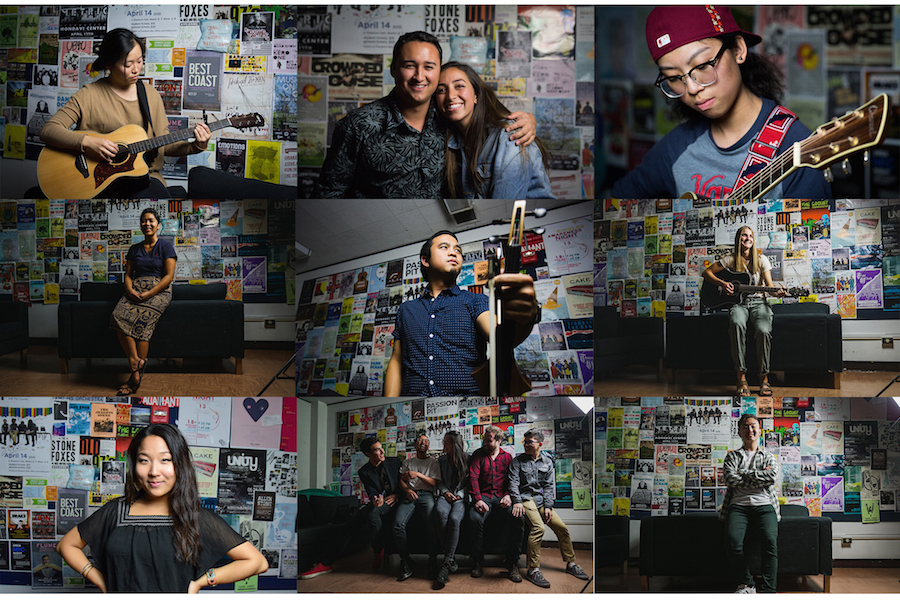
At least once or twice a month, EC hosts an Open Mic Night featuring some of UC Davis’ most talented students, hosting a variety of acts including music, spoken word and comedy. Haley Noble, a second-year communications and psychology double major and assistant director for EC, is the main coordinator for the event. With her team at EC, she looks through student performance submissions sent to the EC email to put together a program for each event.

“We have people that come out [who] are electrical engineers [or] design majors, so it’s really cool to see how diverse the student body is with what their academics are, but also that they have this creative side,” Noble said.  

Most of the events take place on weeknights to provide a study break for students.

“[UC] Davis is so academic and I like to think EC can make it fun, and help students relieve stress through being entertained, and I think there’s a lot of value in that which can often be overlooked when you’re stressed in school,” Noble said.

Open Mic Night aims to create a safe space for students who might not have connections to perform in other venues or who are first-time performers.

“So many people are so afraid [and have] stage fright. It’s personal growth at the micro-level and also it creates a more diverse experience at Davis,” Noble said.

This organic no-frills environment is evident to the audience as well. Jessica Kim, a third-year computer science major, believes this space is key to giving students a supportive setting to perform.

“It gives students a chance to express or have a safe space to share music [and art] that may not be comfortable sharing in a more professional environment, [and they] can really express themselves without the pressure of having to perform at a certain level,” Kim said.

Samantha Sipin, a fourth-year English major, has performed at Open Mic Night three times and often showcases her own songs. For her, this space is especially important in the wake of the recent election results. She performed the day after the election and sang a song that she wrote called “Mary.

“In light of the election, I felt that I needed to reaffirm my queer identity. I don’t put many political messages in my songs, at least not intentionally, but singing ‘Mary’ felt subversive and empowering,” Sipin said. “And now, that’s how I want all my songs to be, not just for my sake, but for anyone who feels like they could be erased because they’re not adequately represented.”

Through singing, Sipin hopes to not only navigate her own feelings about the election but also to help her audience.

“I would urge people not to underestimate the healing power of music. I know this is an extremely trying time for lots of groups and minorities,” Sipin said. “People have often turned to music [to express] their frustration with the system or their frustration with their own oppression. I think we could all benefit from looking at the arts to give us some solstice in this time of chaos and unrest.”

To hear Samantha Sipin’s work, follow her on SoundCloud.

For more information about upcoming Open Mic Nights, visit EC’s Facebook.


Written by: Abigail Wang — arts@theaggie.org
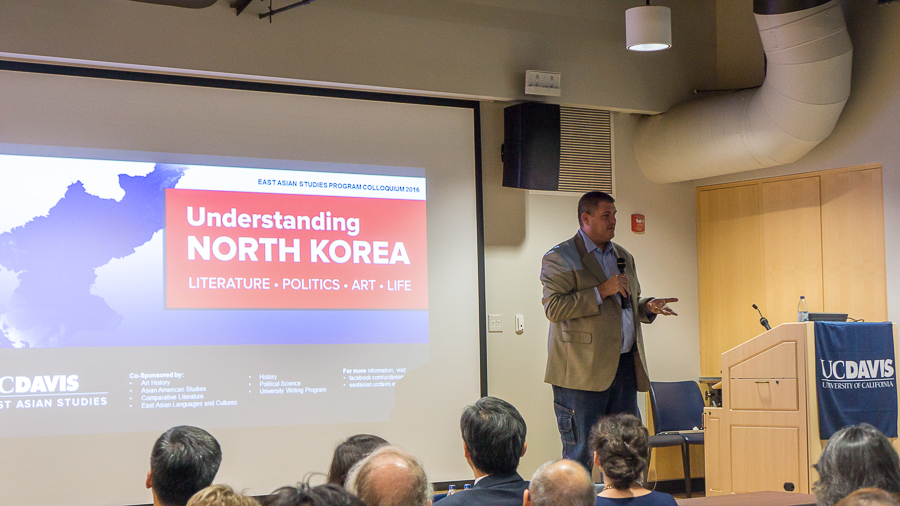
Understanding North Korea

NICKI PADAR / AGGIE
NICKI PADAR / AGGIE

UC Davis East Asian studies department co-hosts colloquium on North Korea

North Korea remains one of the most mysterious countries in the world, even today. It is only understood through film, personal testimonies and the small amount of political information available. Due to this lack of factual information, North Korean culture is often only visualized through others’ perspectives. Last Thursday, the East Asian Studies department at UC Davis, in collaboration with several other departments, introduced five speakers who offered unique viewpoints and experiences relating to North Korea.

One of the speakers, Jin-Hye Jo, is a defector who fully experienced the adversities of being a North Korean citizen. Her first escape to China was at the young age of 10, with her mother and younger sister during the famine in North Korea. Since then she has escaped four times. She is now 28 years old.

Growing up in authoritarian North Korea, Jo was never taught about identity, freedom of choice and self. As a female, she was always required to put her family members first. Now that she resides outside of North Korea, she better comprehends the concept of privilege and countries’ differing perspectives. For example, in North Korea, her ability to eat in a time of famine was not a right, but a privilege.

“When I saw people protesting Trump saying, ’not my president,’ I could not imagine doing that. In North Korea, you would die,” Jo said.

Because she survived her childhood without basic human rights, she is able to indulge in life’s simplicities in a way that most U.S. citizens cannot.

During the colloquium, she painted the audience a picture of North Korea’s current condition. She described the environment as a technological halt, making the country look the same as it did in the 1950s, with a small amount of progress in comparison. She ended her speech with the hope that one day South and North Korea will no longer be separated.

Through listening to personal experiences from refugees like Jo, outsiders can gain insight on the reality of living in North Korea. Unfortunately, they are still unable to entirely immerse themselves into her perspective. Literature, however, serves as an outlet for people to gain some level of this understanding.

Adam Johnson, a writer and professor at Stanford University, was another speaker at the colloquium. Johnson is the author of The Orphan Master’s Son — a Pulitzer Prize-winning novel about a man living in North Korea. Johnson wanted to create a way for readers to empathize with this character, but had a difficult time imagining the realities of living in North Korea. For example, he tried to go hungry for days, ultimately realizing he would never fully understand food insecurity; there is a difference between having the choice to eat and having no food to eat at all.

“In trying to imagine the perspective of someone that far from me, it was not the cultural ideas that I tried to imagine, because those I can research or ask my friends. It was the conceptual ideas. For example, we all believe in freedom, but that’s a very complex abstraction. When North Koreans encounter the word ‘freedom,’ it is very difficult for them to try to absorb what that word means,” Johnson said. “I had people ask me if the people were ‘really weeping’ after Kim Jong Il’s death, and that is a very Western question. For us, there are two options. We can choose to be Republican or Democrat, but what if in North Korea, the truth and the lie are folded together in way that is weird for us to understand? That is what I try to understand.”

Though Johnson’s novel can give American audiences a better understanding of North Korea’s current state, it is still difficult to fully grasp the realities of living under such a strict regime. And, while it is rare to hear stories directly from a refugee, it is virtually impossible to hear from a North Korean citizen.

Kyungah Ham, a South Korean artist, discovered a way to resolve the discrepancies between the two cultures. In fact, she is able to achieve this cross-border communication through her art. Ham sends her digital art to North Korea, and in return receives an embroidered interpretation of that art from various Korean artisans. Through this, she is able to illustrate their lives in an abstract style.

She discovered that people’s different cultural beliefs were represented by their interpretations of color. After sending her pastel-colored digital art to North Korea, she received work with more vibrant colors.

“When I choose the colors, I want to make something brilliant. I want people to come and see these colorful and beautiful surfaces. No one will doubt who made this art. No one will doubt that North Koreans made this because it is made in a very huge scale that only they can embroider. They are very precise,” Ham said.

Initially, she did not want her artwork to come back with extremely bright colors, and it took her some time to accept the changes. If she wanted to continue her projects, she had to acquiesce to their artistic interpretations.

“Because they work with no light or no electric systems, sometimes I did not like the results that came back. I did not want to even look at it. There was so much high color contrast and saturation that I could not stand it. Later I realized that because they work in the darkness, they like more vibrant colors of yellow and red. Not the pastel art that I send them,” Ham said.

All of her artwork consists of meticulous embroidery — each stitch sewn by hand. Some of her most astonishing pieces include large, detailed chandeliers with hidden messages and strings hanging past the canvas like tassels. The loose strings are supposed to represent personal expression outside the boundaries of governmental restriction.

“What if North and South Korea unify and North Korea’s history disappears?” Ham asked. “I think my art can record their lives in case this happens. Almost like a time capsule.”


Written by: Becky Lee arts@theaggie.org

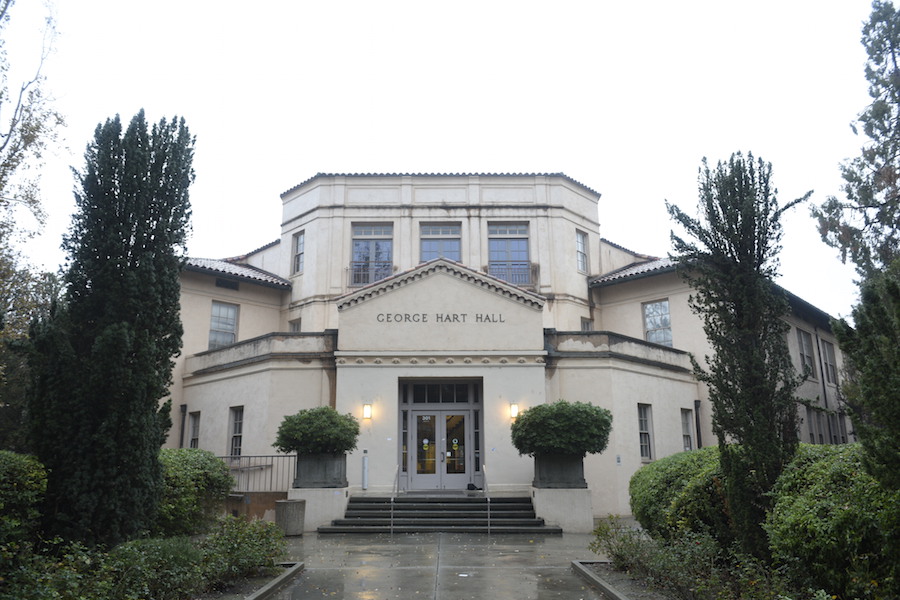
Hart Hall: a hearty history

0
CHELBERT DAI / AGGIE

On campus building houses departments, programs with passion

Newspaper clippings displaying images of advocates including Malcolm X and Angela Davis and articles documenting UC Davis protests adorn the walls of George H. Hart Hall. The hall is included in the National Register of Historic Places and is one of the earliest-constructed buildings on UC Davis’ campus.

“If someone just walks through, I don’t know if they pick up on [a] vibe, but it’s here for sure,” said Veronica Passalacqua, the curator for the C.N. Gorman Museum currently housed in Hart Hall. “People in this building are extremely passionate about their ideals.”

Hart Hall was originally known as the Animal Science building since it housed the Animal Science Department — the only department of its kind in the UC system. The building was renamed in 1983 to its present title in dedication to George H. Hart, a former chair of the Department of Animal Science who helped bring it to international fame.

Hart Hall is currently home to the ethnic studies as well as other departments and programs including American studies, the Division of Humanities, Arts and Cultural Studies, Gender, Sexuality and Women’s (GSW) studies and Human and Community Development.

Asian American Studies professor Sunaina Maira credits student activist movements to the creation of ethnic studies programs at UC Davis. Both Maira and Chicana/o studies professor Natalia Deeb-Sossa led the creation of the UC Davis Race Project which hangs in the hallways of Hart Hall. Showcasing a culmination of images and copies of Third World Forum newsletters, the project displays a history of social struggles and is a prominent feature of the building.

“The Race Project document[s] the history of the [UC Davis] student movements,” Maira said. “We wanted to […] create an archive and also a public exhibit that would try to educate the campus community about the long history of activism [at UC Davis, which] is not very well-known. Davis was actually […] a really important [place] for […] social struggles and student movements from the 1960s and ’70s on, and those movements led to the creation of ethnic studies programs that are housed in Hart Hall today.”

Additionally, Nicki King, chair of the Department of African and African American Studies housed in Hart Hall, said that a similar exhibit will be opening during Winter Quarter.

“The [African and African American Studies] Department, along with the other ethnic and cultural studies programs in Hart Hall, will be sponsoring an upgraded Third World Forum exhibit,” King said. “The concepts of equity, social justice and empowerment are important for the advancement and recognition of all underrepresented groups, and we want our students to understand that there is a strong historical precedent for their involvement in these causes.”

After an $8.9 million renovation in 1992, departments such as Native American Studies (NAS) moved into Hart Hall as well. The NAS Department is one of only two departments of its kind in the country that offer graduate programs.

“We’re the only [department] anywhere that offers a hemispheric perspective to the study of indigenous peoples,” said Inés Hernández-Ávila, NAS professor. “[This] approach to the study of indigenous peoples was central to our program from the beginning. It was the vision of one of our founders, Jack Forbes; he truly believed in this perspective — it is his legacy to us.”

Hart Hall is also home to research studies programs including the Self-Esteem Across the LiFespan Lab (SELF Lab), which researches the influences and factors related to self-esteem.

At the head of the SELF Lab is Kali Trzesniewski. Trzesniewski is an associate cooperative extension specialist in the Department of Human Ecology, who works with both undergraduate and graduate students, including Michelle Harris, a sixth-year graduate student of self-esteem and personality development in the Human Development Ph.D. program. Harris said she enjoys working in Hart Hall because it has a sense of home and community. She helps to conduct research, design surveys and publish data.

“Our most recent paper […]  is validating a new survey that we created that can measure global self-esteem,” Harris said. “This new survey […simplifies] existing surveys so kids can understand them a little better, and we found that their responses are reliable and valid. [The] survey works and it can be administered across the lifespan.”

Another noteworthy feature of Hart Hall is the C.N. Gorman Museum, founded in 1973. The museum, which displays contemporary Native American and Indigenous artwork, has been housed in Hart Hall since 1992 and has displayed over 200 exhibits. It is named after Navajo artist Carl Nelson Gorman.

“[C.N. Gorman] was really inspired by the students [who] were here,” Passalacqua said. “He soon amassed quite a big collection very quickly, [and] because he had this collection […] the university officially dedicated it as a museum in his name. We’re a university museum and we’re dedicated to teaching and research, but […] there’s no other venue like ours until you get to Arizona and New Mexico.”

The C.N. Gorman Museum’s next exhibit in January is entitled ‘Protest and Prayer’ and will display photographs of protests including Standing Rock and the Idle No More Movement. The exhibit fits into the air of social justice and advocacy evident in Hart Hall. Hernández-Ávila, who also worked as co-director of the UCD Social Justice Initiative, said she hopes people associate Hart Hall with social advocacy.

“I teach what matters to me,” Hernández-Ávila said. “I hope that the way that I teach [and] the way that I carry myself shows all students that  […] I want to contribute to awareness, consciousness, social consciousness [and] an understanding of social justice in a way that is inclusive of everyone. I think most of my colleagues in this building do the same thing.”

King, who has worked in Hart Hall for a number of years, said that the building’s location signifies what it represents.

“I have always felt that its location, right on the Quad and in the physical ‘heart’ of the campus spoke volumes about our commitment to be a vital part of the life of the university,” King said. “I can look out of my office window and see every demonstration on the quad, so it puts us right in the middle of what the students are thinking and feeling, especially about issues related to social justice.”

Although the departments in Hart Hall function separately from one another, Hernández-Avila said that faculty members from the ethnic studies departments, as well as the American studies and GSW studies departments, try to stand with and support one another.

“Historically, we’ve always worked in solidarity with each other,” Hernández-Avila said. “If one of the programs needs support from the other, we usually come forward and support them. I like the idea that the name of the building is Hart, because I think of it as the other, h-e-a-r-t.”


Written by: Hannah Holzer — features@theaggie.org

Reconsidering Thanksgiving

ZHEN LU / AGGIE
ZHEN LU / AGGIE

headshot_jyStereotypical depictions of Native Americans perpetuate historic mistreatment

Right around this time of year, elementary school students craft paper hats complete with colored feathers and buckles, trace hand-shaped turkeys and don’t learn about the truth behind Thanksgiving. This past Thursday, families across America prepared turkey, mashed potatoes, gravy, stuffing and still didn’t learn about Thanksgiving.

Right about now, we go to class, study, work, go about our daily lives and still don’t acknowledge the injustices that Native Americans face today. This, of course, is just an extension of the historic mistreatment of Native American tribes and our unwillingness as a country to own up to how we marginalize these groups.

Children may learn about pilgrims, “Indians” and the first Thanksgiving, but it’s a narrative told through a white lens: Christopher Columbus discovered America and the Indians helped the pilgrims. Then everyone had a wonderful feast and it all worked out without any conflict.

Schools conveniently neglect to mention the genocide of almost an entire population of people. Reparations and small slivers of land alone won’t fix this damage or change how many people perceive and treat Native Americans today.

And while we can’t necessarily tell young children stories of mass murder and rape, we also shouldn’t exploit these stories and twist the narrative so that the portrayals are completely inaccurate. That’s wrong. And these misrepresentations silence the voices of those who have been brushed aside and forgotten for far too long.

Stereotypes, prejudice and discrimination against Native Americans are nowhere near gone. If anything, it’s even more obvious now how little significance we place on Native American tribes and their cultures.

Native Americans are used as sport mascots and team names. Their culture is stolen from them and used for Halloween costumes or festival-inspired outfits. In film and television, they are depicted stereotypically or are just absent altogether.

This suggests that Native Americans are just characters who serve no greater purpose than as a stereotype, unworthy of being heard or seen. These portrayals are ubiquitous and only serve to perpetuate the notion that Native Americans aren’t real people with real stories.

But a people aren’t a mascot, costume or stereotype. To depict Native Americans as such dehumanizes them and can have adverse effects. Clearly, systemic prejudice and dismissal of Native Americans is still prevalent. Mocking and using their people and culture for entertainment and aesthetic purposes is salt in a wound that hasn’t even healed.

Furthermore, appropriation of Native American culture takes away from even more significant issues facing their communities, like poverty and a lack of educational and job opportunities. These injustices may not be as public as the use of a racist team mascot, but they can be much more impactful. The United States Census Bureau reported Native Americans have the highest poverty rate of any ethnic group — 28.3 percent, compared to the national average of 15.5 percent. Poverty and education can affect a multitude of other factors that determine quality of life — available job opportunities, physical and mental health, food security.

The high school dropout rate among Native Americans aged 16 to 24 was 11 percent in 2012, the second highest after Latinx/Chicanx groups, according to the Pew Research Center.

This needs to be seriously addressed.

While there is no direct correlation between these factors and the portrayal and treatment of Native Americans in our society, it’s certainly not just a coincidence. Poverty and high school dropout rates among white people were far less than those of nondominant groups. There’s an institutional hierarchy of importance in U.S. society, and Native American groups have been pushed to the bottom rung of that ladder.

Thanksgiving and beyond, we need to acknowledge these issues. If we continue to blindly and apathetically take part in a holiday without considering the history behind it, we only perpetuate and allow these inaccurate depictions and stories to exist. These issues need to be addressed, and until they are, the wounds of Native Americans won’t heal.


Written by: Jeanette Yue — jyyue@ucdavis.edu

Disclaimer: The views and opinions expressed by individual columnists belong to the columnists alone and do not necessarily indicate the views and opinions held by The California Aggie.

A Davis feast

0
NADIA DORIS / AGGIE
NADIA DORIS / AGGIE

Campus food resources allow affordable seasonal recipes

Orange is the new black as fall season is in full swing. Pumpkins, squash, pies, cinnamon lattes and other fall favorites have finally made it to the table. There are various ways for students to enjoy the spirit of autumn in their meals, even on a college budget. Using on campus and local resources can provide cheap and easy ways to do so.

One excellent food resource for students is the ASUCD Pantry, located in the basement of Freeborn Hall. Students only need to present their UC Davis identification cards and can take up to three meals or items per day.

Anne Adachi, a second-year neurobiology, physiology and behavior (NPB) major, volunteers at the Pantry.

“The Pantry is a student-run on campus food closet,” Adachi said. “We run on the idea that students shouldn’t have to skip out on meals while they are [earning] their degree. We are trying to promote nutritious meals and to have better [food] options, especially with fresh produce.”

The Pantry is doing more than helping students meet basic nutritional needs. They are also working to provide a greater variety of food, both culturally and seasonally.

“We are actually trying to promote more culturally diverse foods,” said Reeta Asmai, a first-year NPB major and fellow volunteer at the Pantry. “We are [also] working with the Student Farm to create little recipes with fresh produce.”

Trying to make meals while balancing time, money and nutrition is not an easy task for anyone in today’s society, let alone busy college students trying not to add to their loans. Another one of the Pantry’s volunteers, Chesna Pokharel, a second-year psychology major, has worked hard to keep this balance in her own life.

“There are a lot of different food resources on campus,” Pokharel said. “We are one, and the Student Health and Wellness Center offers fresh produce [with Fruit and Veggie Up!]. You don’t have to spend a lot of money to make good food, you just need to think about how you are spending money beforehand, and know all your resources to use them well. ”

Another source for fresh produce and tasty treats is the Davis Farmer’s Market on Wednesday evenings and Saturday mornings. The market is filled with reasonably-priced, seasonal organic produce along with honey, homemade jams and more.

Bernice Hatfield runs her family’s stand, Fruit Tree Field, at the market. Hatfield grows Asian vegetables which are key ingredients in many seasonal Chinese dishes. She also sells fresh homemade jams and other fresh produce.

“Usually we only have winter squash in the winter, and we grow some Asian vegetables for Chinese New Year,” Hatfield said. “This Chinese holiday is in February, and you can make many things for it with the Asian vegetables. One [dish] you can make is a hot pot with cooked meats and an assortment of vegetables.”

A few stalls down is farmer Jackson Vu’s family stand. Vu brings a variety of fresh vegetables to market and knows how each of his items can be used at home.

“We have Chinese broccoli — the whole thing is edible, even the flowers,” Vu said. “It actually adds extra flavor to it, making it sweet. You can saute it with olive oil and garlic, and do the same thing with spinach. Or you could just steam the spinach and put it in salads, something simple if you don’t have a stove.”

Since he grows and cooks his own food, he has an array of simple yet delicious dishes students can create.

“We’ve got Japanese sweet potatoes, which are white on the inside,” Vu said. “I’ve made potato wedges [with the sweet potatoes] — I’ll cut them up, put them on a plate, wrap the wedges in wet napkins, and put them in the microwave for a little over two minutes. The napkin actually acts as a steamer, so you’ll see the napkin float while the inside’s actually cooking.”

Students should also look out for some handy recipes specific for the Davis area in The Davis Farmers Market Cookbook.

Luckily, there are many different resources on campus and around town that can help students maximize their experiences at UC Davis, especially when it comes to making home-cooked meals. It is not impossible to find some balance in prioritizing nutrition and taste while on a budget.

“You just have to look around and find those things that work for you,” Pokharel said.


Written by: Sahiti Vemula — features@theaggie.org

I Love Lucy

ALAN LIGHT [CC BY 2.0] / WIKIMEDIA COMMONS
headshot_ssThe successes and failures of a revolutionary 1950’s sitcom


I Love Lucy, a TV show from the 1950’s, is often regarded as the show that changed sitcoms forever. I was not aware of this, or any of the thematic and topical issues at play in I Love Lucy, when my family and I watched episode after episode rented from the local video store.

All I knew about I Love Lucy at 8 years old was that it was funny, it made me feel warm inside to watch with my family and it provided a lot more screen time than I was used to getting. Yes, it was a different time. And look at me now! Watching hours upon hours of sitcoms online. How glorious!

In order to write about I Love Lucy properly, I began to re-watch the show; within 10 minutes it hit me how much I had missed in my youth. My mind immediately wandered to discussions of the limiting suburban-era family dynamic, women’s suffrage, the infrequency of interracial relationships on TV and the male-oriented dogma on the appearance of women. There were so many more blatant socio-cultural issues on I Love Lucy that completely escaped me when I was younger.

What, if anything, was I drawing from the show at 8 years old? If I had none of these thoughts or reactions, was I really watching at all? I wonder if the Lucille Ball I knew at that time was the same one enjoyed by viewers in the 1950’s — a goofy, crazy and loveable comedienne, slapstick in her routine — but someone completely disjointed from her clearly (to a more mature viewer) screwed-up circumstances.

The structure of I Love Lucy is built around Lucy’s relationship with Ricky Ricardo, a Cuban musician played by Desi Arnaz, who was Lucille Ball’s husband in real life. Lucy discusses the marital conflicts she faces with her best friend, Ethel, who lives in the same building with her husband, Fred. The two scheme absurd answers to these problems. Ethel is the archetypical female best friend, always offering solutions to the comical situations Lucy falls in, and always falling into them alongside her. Fred is an archetypically grumpy husband who disparages Ethel’s looks and depresses the mood.

In an article in Paste Magazine, “How I Love Lucy Defined the Modern Sitcom,” Chris Morgan discusses the significance of I Love Lucy and its contribution to the sitcom as we know it today. Morgan notes that I Love Lucy was the first of its kind to shoot a multi-camera show in front of a live audience, a practice that sitcoms continue today. It wals also the first show to air reruns, which garnered high ratings and paved the way for syndication. These conventions seem commonplace now, but it’s thanks to I Love Lucy that we are unsurprised to hear of a multi-camera, live sitcom shot on film, in which the two stars are also producers and its episodes run more than once.

I Love Lucy is also notable today for its topical subject matter. In a Huffington Post article: “Why Lucille Ball Was More Revolutionary Than You Think,” Lily Karlin notes that I Love Lucy was the first show to discuss and show a pregnant woman (Ball was pregnant with her first child in the first year of the show’s run). She continued to break convention in the years to come.

Ball was the first woman to own a production company (Desilu Productions was co-owned with Arnaz, at the time that I Love Lucy was aired) and the show became one of the only to feature a multi-ethnic couple. Ball had to fight the network to co-star with Arnaz because of his Cuban origin.

I Love Lucy managed to be simultaneously revolutionary and traditional, appealing to audiences so powerfully that it remains well-loved today. Despite its provocative elements and the avant-garde style of its filming, the undertone of the show revolves around the strict, normative family structure of the time. While Lucy constantly challenges the patriarchy in her home, the very fact that the show itself centers around her relationship re-establishes male dominance in her household and life.

Often, just when the viewer thinks that Lucy is truly challenging the gendered leadership in her life, Ricky’s interests or the sub-plot and circumstances surrounding the challenging conflict indicate that the status quo goes unchanged.

For example, in one episode, Lucy notices that Ricky has been ignoring her. After reading a sexist book about marriage, which says that male disinterest is the fault of the wife, she dresses up for breakfast to win Ricky’s attention back. The irony and unfairness and lack of realism in this is obvious to the viewer, and her attempts to attract her husband’s attention are unsuccessful.

This family dynamic is one that a viewer would likely never see in the family-oriented sitcoms of 2016. Although they borrow heavily from the structure that I Love Lucy introduced, and in many ways mimic the general themes, a viewer seldom sees Modern Family’s Claire, worrying genuinely about the disinterest of her husband, Phil. More often than not, we see Claire irritable and angry with Phil, and frequently critical of his foolishness.  

I Love Lucy manages to be at once subversive and old-fashioned, which might make its continued syndication problematic, especially for young, socially unaware viewers. However, from my vantage point, it’s a great lens through which one can understand the evolution of humor, TV and family life.


Written by: Stella Sappington — sasappington@ucdavis.edu

Disclaimer: The views and opinions expressed by individual columnists belong to the columnists alone and do not necessarily indicate the views and opinions held by The California Aggie.

Obama’s gun control legacy

PUBLIC DOMAIN / PETE SOUZA

headshot_taThe importance of Obama’s humanity moving into a Trump administration

I sobbed for a good half-hour on election day.

Partly because Donald Trump had just become the President-elect for our nation, but mostly because it finally hit me that President Barack Obama wouldn’t be leading our nation anymore.

Not only are we seeing the exit of one of the most charismatic, humble and inspiring leaders that this nation has ever seen, but we are also saying goodbye to a man that made sweeping changes to gun control. We are saying goodbye to a man who swiftly responded to national tragedy countless times. We are saying goodbye to a man who called for reform, and when he didn’t get the support needed for it from Congress, signed executive orders to implement changes that many felt were necessary.

Following the Sandy Hook massacre in Newtown, Connecticut, Obama addressed the nation in his usual eloquent fashion. He promised to “use whatever power this office holds to engage my fellow citizens, from law enforcement, to mental health professionals, to parents and educators…[because] we can’t accept events like this as routine.” And he tried to do just that, signing a series of executive orders in January that attempted to curb gun violence.

One of the reforms he passed was to strengthen federal background checks by improving processing rates and redirecting more law enforcement to that cause. The mandate also states that no matter where a gun seller is conducting his or her business, they must be licensed and able to conduct background checks. In re-allocating more law enforcement resources to background checks, Obama’s executive order creates accountability on the part of gun sellers.

But it still doesn’t close the straw-purchasing loophole that so many criminals go through to purchase guns. Furthermore, background checks aren’t required at a state level, and only 11 states have extended the background check requirement to some private sales of guns and handguns.

The executive action also included a commitment to improve the quality and accessibility of mental health care to those Americans in need. Obama proposed a new $500 million investment to help individuals with mental illness. In the proposal, he aimed to increase accessibility of mental health care by expanding the service capacity of hospitals and the behavioral workforce. Obama’s eventual goal, through this executive order, is to protect our communities by increasing access to mental health care and eventually lowering the number of deaths caused by suicides — the 10th leading cause of death in the United States.

Not only are Obama’s actions so exemplary of his legacy as president, but they also speak well to his character. When you listen to the speech he gave after the Sandy Hook shooting, you can hear the pain in his voice. You can see the empathy in his eyes. When he says he wants to increase accessibility to mental health care so that troubled individuals don’t die in vain, you believe him.

On Jan. 20, 2017, our country will say goodbye to President Obama and a reluctant hello to a man who uncritically supports the Second Amendment. That’s within his right, because everyone, including Donald Trump, is entitled to their opinion. But it’s when those opinions get in the way of real progress that problems arise.

In response to a CNN interview question asking what we should do about gun violence in relation to mental illness, he responded, “These are sick people. This has nothing to do with guns, this has to do with the mentality of these people.” And when asked what we should do to curb violence in a different interview, he argued that gun laws really have nothing to do with a solution and that it was natural for people to “slip through the cracks.”

A callous and careless response to a serious question is exactly what you would expect from Trump, but it’s still shocking, considering how much gun violence factors into today’s sharply divided America. In fact, the United States’ gun violence problem has everything to do with the laws and nothing to do with the inevitability of people “sometimes” making mistakes.

After the Sandy Hook shooting, President Obama pleaded with the nation to not “accept events like this as routine.” Donald Trump has not shown the same kind of commitment to the nation’s safety.

Remembering President Obama and his character for the next four years will be vital if we are to hold Trump accountable in moments of crisis. Keep Obama’s morals and values in the back of your mind. Because when 2020 rolls around, we need to elect someone like him for president.


Written by: Tamanna Ahluwalia — tahluwalia@ucdavis.edu

Disclaimer: The views and opinions expressed by individual columnists belong to the columnists alone and do not necessarily indicate the views and opinions held by The California Aggie.

#NoDAPL

HANNAH LEE / AGGIE
HANNAH LEE / AGGIE

Increasing tension at Standing Rock calls for resources, not ally theater

In a conclusion to Native Heritage Month no less repugnant than celebrating Thanksgiving, police forces at Standing Rock, North Dakota have taken new leaps in brutalizing unarmed protestors.

On the night of Sunday, Nov. 20, authorities unleashed tear gas, pepper spray, concussion grenades, rubber bullets and water cannons on an estimated 400 weaponless demonstrators. At least 17 of those protesters were hospitalized, while another 200 suffered injuries inflicted by rubber bullets, shrapnel and chemical gases some exhibited preliminary signs of hypothermia as a result of being blasted by water cannons in below-freezing temperatures. In the most extreme cases, two elders went into cardiac arrest and a young woman is at risk of losing her arm after a concussion grenade detonated on it.

This escalation of violent force is tethered to the ongoing conflict between Energy Transfer Partners (ETP), a Dallas-based oil giant, and the Oceti Sakowin people of the Standing Rock Sioux Reservation and their thousands of supporters regarding the $3.78 million, 1,172 mile-long Dakota Access Pipeline (DAPL). The pipeline, set to be constructed by the end of this year, would not only intersect grounds sacred to the inhabiting indigenous communities but — being a conduit for crude oil — threaten to pollute the region’s primary source of drinking water.

Accusations of violence have been made by both law enforcement and protesters, or water protectors, since the DAPL dispute started in April 2016. Police officials in the area have deemed the movement an “ongoing riot.” They defended their use of the aforementioned brutalities by claiming they were purely methods of “crowd control” against demonstrators who were trying to dismantle a police barricade, though the barrier was making it difficult for emergency services to access activist camps.

The contention over the DAPL is a bitter continuation of America’s disgraceful history with its indigenous people. Despite the countless arrests, injuries and mounting hostilities, two of the nation’s most prominent figureheads have remained silent.

Water protectors are awaiting any sort of response from President Barack Obama, who in the 2011-2012 Keystone XL Pipeline controversy, which has many parallels to DAPL, denied its permit for construction. President-elect Donald Trump, who invested half a million to $1 million in ETP back in 2015, also has yet to make a statement regarding DAPL. However, in news chilling for DAPL protesters and environmentalists in general, the first of many “Trump deals,” a merger between two oil giants including ETP,  has been officiated. Though the forecast seems victorious for oil and energy corporations under Trump’s presidency, the ever-growing unity and resistance exhibited by protesters is a hopeful force against them.

The indigenous people of the Standing Rock Sioux Reservation have garnered thousands of allies from all over the United States who have joined them in at the front line and can be considered one of the largest Native American protests, with the support of over 100 different tribes.

The nationwide ripple effect of the DAPL has hit Davis, where a number of teach-ins, writers circles and protests have taken place within the past few weeks. However, in supporting the water protectors at the DAPL, there are several important notions to understand in order to be an effective, constructive ally — so don’t pack up and head to Standing Rock just yet.

A Standing Rock Facebook page has made a plea for supporters to stay at home unless they are in correspondence with an indigenous person at one of the camps. Non-indigenous bodies only detract resources from those that the protest belongs aims to protect. Indigenous sovereignty is paramount, and those heading to Standing Rock to “resumé build” via photography or journalism need to consider their actions a “furthering of colonization” and take a back seat.

The human rights of America’s indigenous people are at stake once again. We cannot allow the focus to shift from them.

The Editorial Board stands with Standing Rock.

Please contribute and support the water protectors by sharing stories of what’s happening at DAPL, staying informed and most importantly: DONATING. Activists are in need of medical supplies, tents, extreme weather clothing, gas masks, food and more.

Remember: Water is life.

Police Logs

0
LUCY KNOWLES / AGGIE FILE

Looks like it’s been an interesting week

Nov. 15

“Elderly driver not stopping at stop signs […] woman in 80s, white hair, wearing glasses.”

Nov. 15

19-year-old daughter “was lured across the border into Mexico by her [boyfriend].”

Nov. 15

“Female needed assistance with getting the temperature adjusted in her [apartment].”

Nov. 18

Between pool and the school at the fork of the bike path” […] 3 juveniles “approx. 12 to 13 years old throwing tennis balls and chasing a cat.”

Nov. 18

Person “passed out in the lumber yard.”


Written by: Sam Solomoncity@theaggie.org

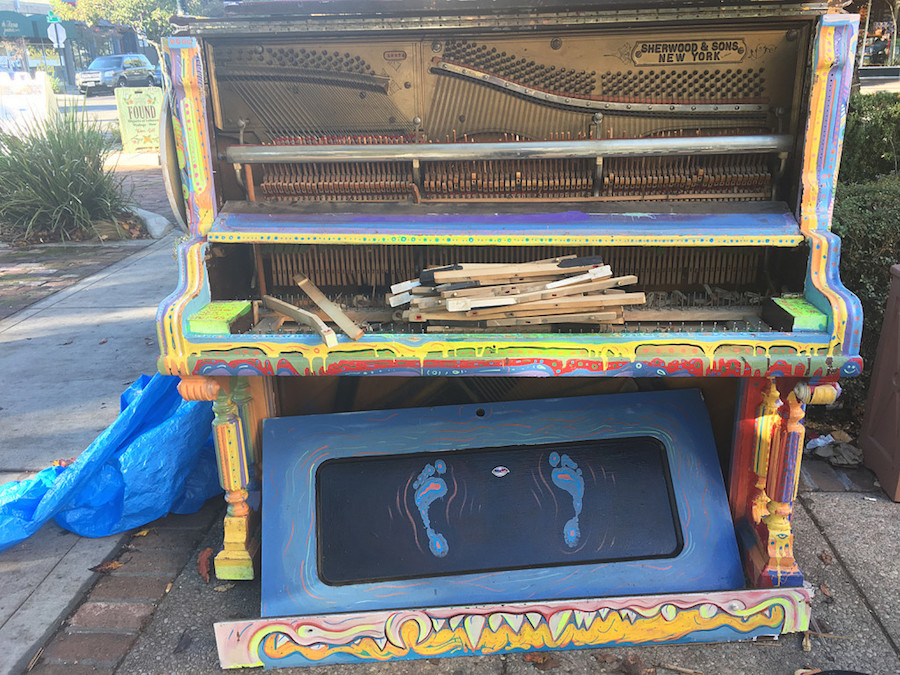
Public piano destroyed in act of vandalism

0
CITY OF DAVIS / COURTESY

Ornamental piano outside Mishka’s Café vandalized in broad daylight

The public piano on the corner of Second and E Streets was vandalized in broad daylight on Nov. 1. The piano was one of five set out this summer by the City of Davis as part of the ‘In the Key of Davis’ program. The program, which was conceived two years ago by local high school students, places pianos in public settings around Davis for community members to play.  

The piano that was vandalized was a particularly artistic one — over the summer, it had been painted by artist Will Durkee.

“I designed that piano to inspire people, to make it colorful and interesting, and I was trying to make normal life more interesting. […] I feel that art and music are some of the most important, joyful things in the human experience,” Durkee said.

The piano was well-liked by many Davis residents. Loshandra Ostrava, a piano and guitar instructor who teaches both privately and at the UC Davis Experimental College, frequents Downtown Davis and enjoys the public pianos.

“I think it was great, […] it turned that into even more of a public space. […] It’s a really organic way for people to share, and I was just amazed at the musicians coming through and playing it, students and community alike,” Ostrava said. “I don’t think that vandalism should preclude them replacing it with another piano.”

The damage to the piano was extensive and irreparable. It has been given to the Peregrine School in South Davis, where students will reimagine its purpose. Artist Will Durkee, the painter of the piano, sees this donation as the silver lining of the vandalism.

“They’re going to try and rebuild it and turn it into like a cool art project, you know, to try and repurpose it in a creative way, so I think that’s really good. […] Creativity will always be more powerful than destruction,” Durkee said.

Davis police have reported that there has been an increase in vandalism in the past few weeks. They have asked anyone with information regarding vandalism or other crimes to report it by calling their main phone number at 530-747-5400.


Written by: Raul Castellanos Jr. city@theaggie.org

Holding the Light

0
JAY GELVEZON / AGGIE

Davis residents light candles, promote sanctuary and inclusivity

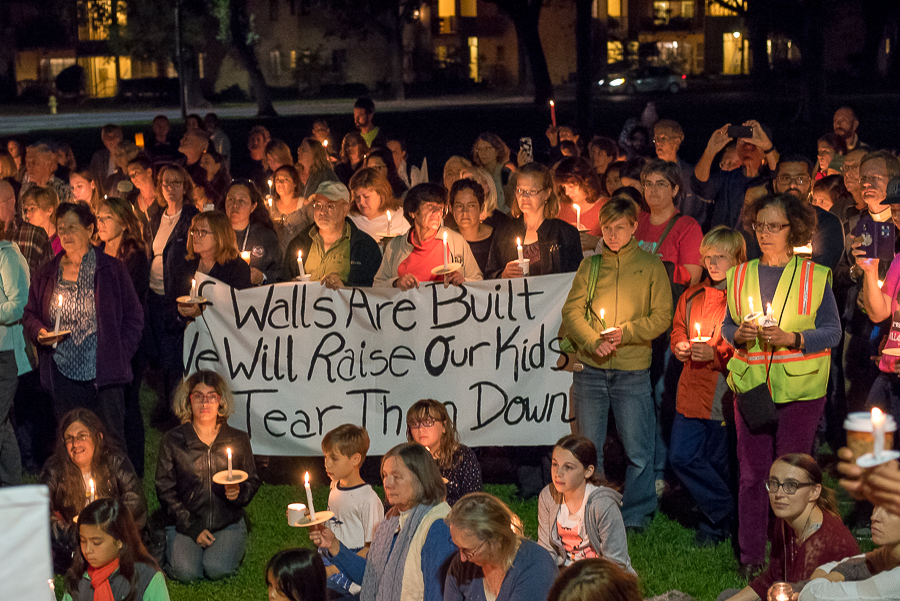
As darkness fell over the crowd of people who filled the streets of Davis on Nov. 12, a halo of light surfaced from Central Park. In light of election results both controversial and complex, Davis residents gathered together for a Holding the Light ceremony to reaffirm their commitment to keeping the City of Davis a progressive and sympathetic environment.

The event, organized by Cayce Wallace, took place in downtown Davis and served as a direct response to the election of Donald Trump, signaling solidarity as a diverse and climate conscious community.

“We have gathered as a community to bring light into the darkness that has come over our nation. Coming together in strength and solidarity so that we can get our legs back under us and move forward. We have been caught in what feels like a hurricane, but now we are in the eye, and we are finding our strength as we move forward together,” Wallace said.

Words of solidarity were followed by words of anger or anecdotes of the personal struggles people faced in the few days after the election results were announced. Candles were passed around to newcomers who stood empty handed, as community members stepped up to the microphone to share their messages of unity.

“I’m not sure if we know what’s coming, but we want to remain faithful as representatives of the community,” said Mayor of Davis Robb Davis.

Davis shared with the crowd an anecdote from his personal life involving his grandson Jaime. Jaime’s father, Davis’s son-in-law, is undocumented, according to Davis.

“Jaime came home the day after the election and said to my daughter, ‘Mommy, when does mister Trump take office?’ He’s in second grade. She said ‘Why do you want to know?’, and he said, ‘Because I want to know when Papa has to go back to Mexico ’— Jaime’s afraid,’” Davis said.

Davis went on to remind the audience that the community should remain tolerant, even in the face of intolerance. Davis, in his capacity as mayor, also addressed fears that the current American political climate could weaken the progressive advancements the City of Davis has made.

“We’re going to prepare ourselves. […] Given what we have heard, we must prepare ourselves to resist. Some may feel it is unseemly for an elected official to even suggest that there would be resistance against the state, but that’s what I’m saying,” Davis said.

His words were met with raucous cheers from the audience, however, Davis stressed that he did not use those words lightly. He explained that should the community be asked to compromise its values, Davis, among other elected officials, would defy such orders.

“We cannot succumb to those fears. But make no mistake — words have consequences. And words were spoken, not by accident, not by a slip of the tongue, but words were spoken during this campaign with meaning, with intent, and those words have consequences, and those consequences are that we have legitimate fear in our community today,” Davis said.  

Also in attendance was Lucas Frerichs, a councilmember for the City of Davis, who is familiar with the Davis community as a result of 20 years as a resident. Frerichs also chose to focus on the diverse aspects of the Davis community and shared his commitment to protecting the community.

Frerichs reminded residents of Davis’s designation as a sanctuary city, which means that the City of Davis refuses to conduct raids for the purpose of finding and detaining undocumented immigrants. Davis is one of several cities who have shared an unwillingness to assist U.S. Immigration and Customs Enforcement in that respect.  

“Davis has been a sanctuary city since 1986. 30 years as a sanctuary city. That is something to celebrate. […] I can tell you, without a doubt, that this current city council is going to continue to uphold that standing as a sanctuary city for anyone who needs to be here and wants to be here,” Frerichs said.

With candles glowing brightly, Davis residents seemed to find solace in one another that early November night.

“We honor that we are mad, disheartened and uncertain of things to come, and yet we are peaceful in our actions,” Wallace said.


Written by: Samantha Solomon – city@theaggie.org

This week in Senate

HANNAH LEE / AGGIE
HANNAH LEE / AGGIE

ASUCD Senators meet with Interim Chancellor

The ASUCD Senate meeting on Nov. 10 was called to order at 6:09 p.m. At the time of roll call, Senators Samantha Chiang, Sam Park and Ricardo Martinez were absent. Chiang and Martinez arrived later in the meeting.

Interim Chancellor Ralph Hexter gave a report of recent campus activities and responded to questions posed by the senators. Among the items discussed were Hexter’s recent appointment of athletics director Kevin Blue and UC Davis’ collection of $1.3 billion in donations to help fund new hirings such as Blue’s. The floor then opened for senators to ask Hexter questions.

International Affairs Commision Chair Nick Flores asked Hexter whether international students would remain safe on campus following the Donald Trump election. Hexter responded that the campus counsel would work with the King School of Law to consult with the Office of the Chancellor and UC President Janet Napolitano and discuss issues of immigration in order to benefit the undocumented students and staff members at UC Davis.

Next, Senator Joshua Dalavai questioned whether housing security issues have been discussed at Hexter’s level. Hexter said that there were plans to increase the amount of student housing. It was noted that many students turn to neighboring communities to find affordable housing, and to address this problem Hexter said he is looking into increasing the number of buses running to and from Woodland.

Senator Zhang Zhu asked about upcoming tuition hikes for both domestic and international students. Hexter responded that the university is moving toward an increase in tuition but also increased financial aid.

Gender and Sexualty Chair Alison Tam questioned whether the Black Under Attack demands were met and how the university would prevent hate crimes. Hexter responded that the university leadership’s role is to condemn those types of attacks.

Unitrans director Anthony Palmier then discussed Unitrans’ plans to add four new buses in January 2017 and two more double decker buses in late 2017, with no concrete date established. The buses would be funded with a $1.4 million grant from Sacramento.

Next, the Bike Barn presented an overview of their program, noting that the unit provides 19 student jobs and fixes around 30 bikes per day.

Transfer, Re-Entry & Veteran Committee (TRAVC) representatives gave a brief presentation regarding the TRAVC program.

After a 10 minute break, the senators regrouped and posed for a senate picture.

Consideration of Emergency Legislation took place next, with the senators discussing funds to be spent on hotel rooms for an upcoming conference. Senator Irveen Grewal proposed to increase funds to $3,600, which was seconded with no objections. Senator Adilla Jamaludin proposed to extend the funds for two nights and Senator Sofia Molodanof moved to amend to 15 hotel rooms, both of which were seconded with no objections.

A new ASUCD bill was proposed which would allocate $102 for 20 self care gift bags available at an upcoming mental health and grief workshop. Also, a new bill called for the amendment of the 2016 to 2017 budget. This amendment will distribute funds to create a budget for a Creative Media project manager position.

Ex Officio reports were given and the meeting adjourned at 9:30 p.m.


Written by: Lindsay Floyd — campus@theaggie.org

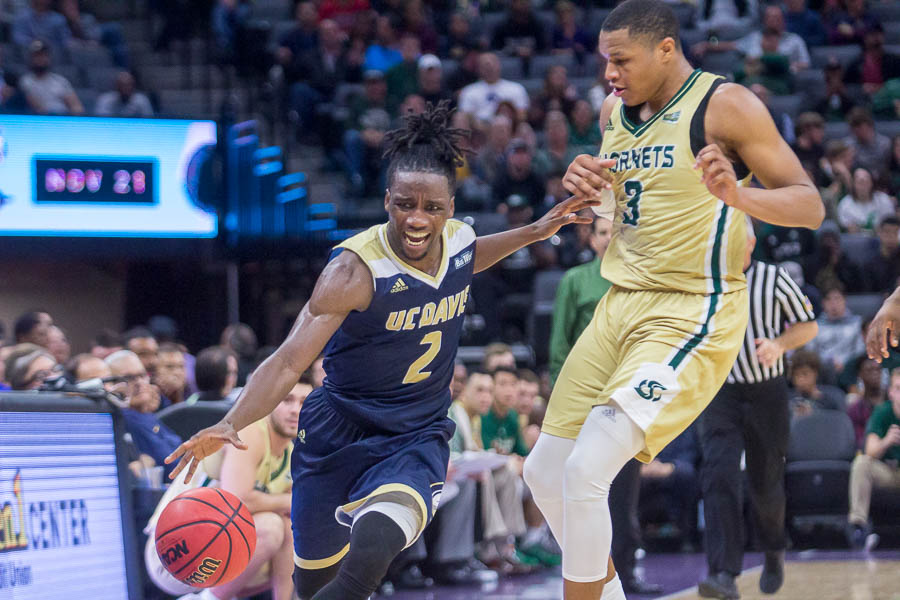
UC Davis beats Sac State in first college basketball game at Golden1 Center

BRYAN SYKES / AGGIE
BRYAN SYKES / AGGIE

Aggies’ depth proves to be too much for Hornets to overcome

In a night of many firsts, it seemed fitting that the first basket ever scored by a student-athlete in Sacramento’s brand new Golden1 Center belonged to Sacramento native Darius Graham.

Graham, a senior guard for UC Davis’ men’s basketball team, drained a three-pointer from the left baseline to open up the scoring in a tightly-contested game between the Aggies and rival Sacramento State on Nov. 21. UC Davis edged out a hard-fought win over the Hornets, 81-72.

The Aggies moved to 4-1 on the season with the win and knocked Sacramento State to 1-3. The matchup was the first NCAA game ever played at the arena, which opened in September in downtown Sacramento.

BRYAN SYKES / AGGIE
BRYAN SYKES / AGGIE

“It was crazy looking back at it,” Graham said about his opening shot. “I wasn’t thinking about it much during the game, but now after, it goes down in the record books. I can always tell my kids and grandkids that, ‘hey, I played the first college game [at the arena] and hit the first basket.’”

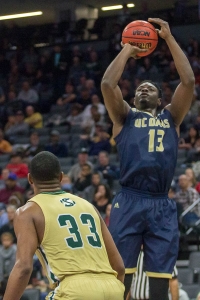
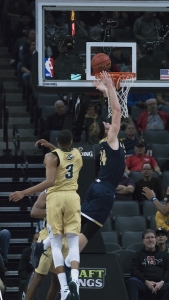
Graham finished the game with 10 points and was one of five Aggies who scored in double figures. Senior guard Brynton Lemar led the Aggies with a career-high 23 points, and junior forward Chima Moneke recorded a double-double with 15 points and 13 rebounds to go along with freshman forward Mikey Henn’s 13 points and senior forward J.T. Adenrele’s 10.

UC Davis head coach Jim Les was impressed by his team’s depth.

“We have a lot of places we can go to get points, to get productivity,” Les said. “I think the guys embrace that. They really enjoy playing with each other, so the ball moves, and guys are looking for someone.”

That someone was Lemar, who rattled off 14 consecutive points for the Aggies during one stretch in the second half.

“Brynton got the hot hand, and everybody ramped up their ability to screen for him,” Les said. “We found him on some sets and went to him when he got hot. And we’ve been that type of team because they like playing with each other.”

Lemar seems to enjoy playing against Sacramento State. Late in the second half, he surpassed his previous career high of 21 points, which also came against the rival Hornets last November.

“I just feel like I’m a competitor,” Lemar said. “When it’s a big game, I feel like I always play my best, and I came into the game confident because we had a good week of practice, and it showed.”

Lemar’s big second half allowed UC Davis to pull away late after a hotly-contested opening half. The Aggies led 35-33 at the break, thanks to a buzzer-beating three-pointer to close out the first half by Graham.

“I knew we had a couple seconds on the clock,” Graham said of his shot, which wrapped up a 12-2 UC Davis run over the final two-plus minutes of the half. “I was able to get a quick glance at [the clock]. I tried to loft it up there. It was a lucky bank, but, you know, we’ll take it.”

The Aggies continued their run into the second half. Henn’s three-pointer at the 12:30 mark in the second half gave UC Davis a 51-42 lead.

But Sacramento State kept it close, matching threes down the stretch to keep within striking distance. The Hornets’ occasional full-court press also caused UC Davis to turn the ball over, leading to fast-break layups for Sacramento State.

According to Les, the Aggies’ foul trouble contributed to him not being able to keep his best ball handlers on the court for extended stretches, which led to Aggie turnovers. The Aggies finished the game with 16 turnovers.

“We put some guys in some positions they weren’t really comfortable with, and I think that’s easily rectifiable,” Les said. “I like to see pressure, because [Lemar and Graham] thrive in that environment. So [the turnover count] doesn’t really bother me.”

BRIANA NGO / AGGIE
BRIANA NGO / AGGIE

The Golden1 Center is the new home of the NBA’s Sacramento Kings, for whom Les played for four years during his seven-year NBA career.

“I couldn’t be more honored that the Kings organization would invite us into this new house and give our university, our basketball program this opportunity to play in this game,” Les said. “We just feel blessed and fortunate, and we just wanted to take advantage of this opportunity.”

The Aggies looked comfortable playing in the arena, as they made eight three-pointers and shot 50 percent from beyond the arc.

“It’s big for me,” said Adenrele, who hails from nearby Roseville. “Going back to my high school years, playing in ARCO [Arena], and coming back here for college now, it’s the same feeling: excitement, nerves, anxiousness, all that kind of stuff. So it was fun for me. I’m glad we got the win.”

The Aggies may be slightly less comfortable over their next few games, as they head to Anchorage, Alaska to take part in the Great Alaska Shootout tournament from Nov. 24 to 26. Nevertheless, Les is confident in his team.

“I know it’s going to be cold,” Les said. “I know we’re going to have to go there and play some really good basketball and warm ourselves up a little bit. We’ll be ready for that, embrace it, enjoy the opportunity and compete our tails off.”

Written by: Scott Dresser — sports@theaggie.org

Sun down, bike lights out

0
LAURA LONG / AGGIE
LAURA LONG / AGGIE

Don’t be left in the dark now that Daylight Savings Time has ended

It is 4:45 in the afternoon, and the sun is already setting. With the ending of Daylight Savings Time on Nov. 6, nighttime has been extended from 10 hours to roughly 14 hours as the winter season approaches. Why is this change significant to Davis? The answer is not hard to find and lies just about anywhere you turn: bikes.

As a quick reminder, the California Vehicle Code Section 21201 states that all bicycles should be equipped with a white light that illuminates a distance of 300 feet in front and on the sides of the bicycle. A red reflector must be visible from the rear. White or yellow reflectors must be visible from the pedals or the bicyclist’s foot gear. Reflectors must also be visible from the sides of the bicycle white or yellow on the front tire and a red or white reflector on the back tire.

It’s important to keep these measures in mind, as they ensure that the cyclist is the most visible when there is hardly any light on the roads.

Davis neighborhoods contain certain hazards themselves despite the number of bike paths available. Some neighborhoods lack street lights which make objects such as piles of leaves difficult to see on bike lanes. Drivers can also be unaware of oncoming cyclists and unintentionally open their car doors, causing cyclists to run into the door of the vehicle.

Of course, having bike lights can prevent some of these incidents from occurring. Bob Bowen, public relations manager and U.S. Bicycling Hall of Fame president, knows the importance of bike safety after years of cycling experience.

“Safety is paramount,” Bowen said. “Sometimes folks that don’t have a lot of experience riding bikes, or even those who do, feel that it won’t happen to them. Unfortunately people, especially in the dark, may be distracted; they may be checking their texts illegally, they may be looking down, may be in the dark the cyclist doesn’t have a reflector or reflectorized clothing. For whatever reason, if you have a bike versus automobile collision, the cyclist is going to be the one that suffers the most.”

Although Unitrans offers transportation year-round, many students still prefer their two-wheeled form of transportation despite the lack of sunlight and the wet weather. Bowen advises purchasing the brightest bike one can afford.

“If you are going on a bike path that has little lighting, you want something that is going to be able to illuminate the path in front of you if you are on an illuminated street you want the lamp to be on a flashing mode so you can call attention to yourself and people can see you coming,” Bowen said.

Bowen said that if there is concern over getting bike lights stolen, removable bike lights are always an alternative option, which can be stored away when not in use.

In addition to bike lights, there are other procedures that cyclists can take for safer riding during these darker months. Bowen suggested bikers wear light-colored clothing or reflectorized clothing, attach reflectors to backpacks or anything that the cyclists might be wearing and also wear a helmet.

“Do not take the right of way, even if it is yours, because some people may not be paying attention, and don’t drive out in front of people assuming they are watching because they may not,” Bowen said.

Fewer hours of daylight should not get in the way of enjoying the countless miles of bike paths that Davis offers. Biking with bright lighting will protect both students’ wallets from a fine and the health of students in general.

Written By: Dianna Rivera — city@theaggie.org