57.1 F
Davis

Davis, California

Monday, December 22, 2025
Home Blog Page 679

The life of former Chancellor Linda P.B. Katehi post-resignation

AARON JAUREZ KONG / AGGIE FILE

Katehi writes memoir, moves out of chancellor housing

Linda P.B. Katehi, the Former UC Davis Chancellor has settled into a paid sabbatical leave this academic year after a series of controversies. Katehi, who resigned as chancellor on Aug. 9, is currently writing a memoir about her experiences as a woman in the electrical engineering field and as an administrative figure. She will return to campus as an electrical engineering professor and researcher in fall 2017.

The $424,360 paid year of sabbatical leave provides a transitionary period for Kaheti.

“[I’ve] always wanted to write a memoir, and I found that being on sabbatical leave would be the best time to do it,” Katehi said. “After that, I will be teaching next year and it would be very hard to write and publish.”

Katehi believes that women often face higher scrutiny and are at times held to sexist standards.

“For the same mistake, women will be criticized more,” Katehi said. “A lot of times they are called unable to lead. And I thought it’s so important nowadays to talk about gender issues, and to talk about the glass ceiling.”

Katehi recently moved out of the chancellor’s house, located at 16 College Park Avenue. The university furnished the chancellor’s house in 1998 for $185,000. When Katehi moved in, this furniture was donated and scattered throughout UC Davis buildings in order for Katehi to make room for personal furniture. As a result, UC Davis may now have to foot the bill to replace this “lost” furniture.

Brian Micek, a class of 1999 UC Davis alumnus, believes that Katehi should have kept the original furniture.

You can reupholster furniture; you don’t need to throw it out because it’s inconvenient,” Micek said. “I still use a dining table that’s 100 years old.”

Katehi, whose new title is “chancellor emerita” under an agreement with UC President Janet Napolitano in the resignation conditions, will shift to an electrical engineering professorial and research role next academic year. Katehi said that she is excited to move back into classroom instruction after her administrative duties of chancellor and that she has missed being a professor.

However, some UC Davis community members feel frustrated that Katehi has received a paid sabbatical leave and has retained a job on campus.

“As an alumnus, I was personally disappointed at Linda Katehi’s tenure at UC Davis,” Micek said. “The decision made about furniture at the chancellor’s house shows how decisions were made in her tenure. A lot of decisions were made that were personally beneficial to Linda Katehi that didn’t really encompass the ideal of a land grant university and a public.”

Katehi plans on focusing on her upcoming academic endeavors rather than her past controversies, such as advocating for women in STEM.  

“Women have tried for so many years to break the glass ceiling,” Katehi said. “I think, at least, I saw that, even now after so many years, we are not helping women find positions. In every profession, in every position, women have to do more than their male colleagues.”

Katehi believes that there is a trend of women having to prove themselves as qualified, while men are automatically assumed to have potential.

“[Women] have to always demonstrate their ability,” Katehi said. “Only 5 percent of Fortune 500 companies have women CEOs and less than 10 percent have women on their government boards.”

Katehi hopes to see more women involved in STEM in the future.

“In engineering, there are very few women,” Katehi said. “For years, I have had lots of experience in [electrical engineering]. I always thought it would be good to share it with women who are willing to grow into new professions, and to share with them my own experience.”

Micek feels disappointed that the university has not been more open with the community regarding the controversies both leading up to and after Katehi’s resignation.

“[I’m] disappointed to see Mrak Hall struggle with communicating the truth about what the chancellor had been doing on campus, whether the furniture or the donations she never donated that was supposed to go to scholarships,” Micek said. “The spokespeople of campus never communicated truthfully and it didn’t take long for the Sac Bee to point out the inconsistencies. Napolitano said ‘Linda misled me’ — she didn’t know about the Internet scrubbing contracts.”

Anthony Estrada, a third-year majoring in managerial economics, feels unsure if Katehi should be allowed to return as a professor at UC Davis.

“From the internet scrubbing, nepotism, conflict of interest, I wonder if she should be on paid leave and still allowed to come back on as a professor next year,” Estrada said. “But I don’t know if a man would have been punished less, or more.”

Helen Bansen, a recent UC Davis graduate who was involved in the Fire Katehi movement, is disappointed that Katehi will be returning to campus.

“I’m frustrated that Katehi is still on campus and allowed to stay in Davis, and that essentially she was given the choice to resign rather than being removed,” Bansen said. “I feel like the things she did and the role she continues to play in a number of companies don’t have the students’ best interest at heart. I’m hoping [there] will be a resurgence of the Fire Katehi movement because she is still given a huge amount of leeway that other people would not have been given.”

Written by: Aaron Liss — campus@theaggie.org

Giving Thanks

0

Aggie photographers show what they’re thankful for through photos

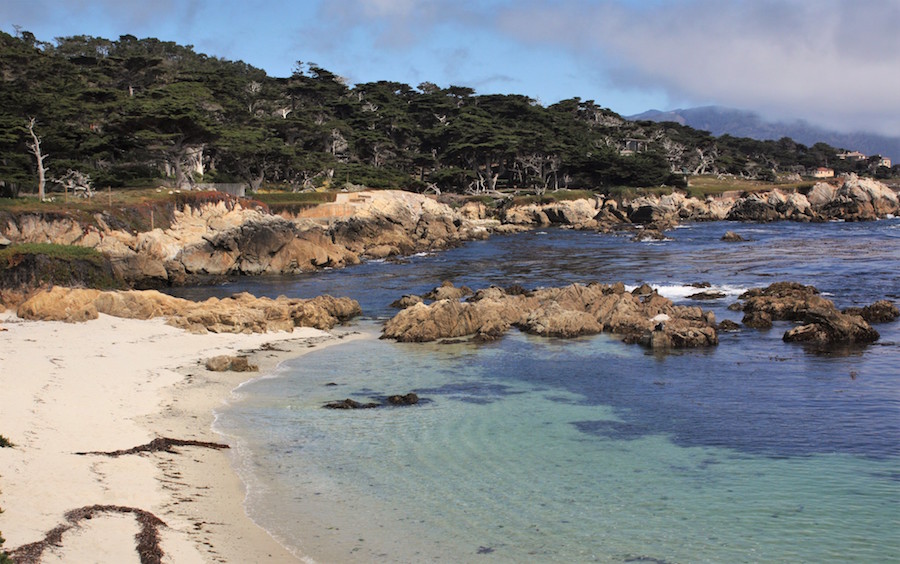
I am thankful for the natural beauty which surrounds us every day and my drive to seek it out. (IAN JONES)
I'm thankful that, often, magic really does exist. (CAT TAYLOR)
I’m thankful that, often, magic really does exist. (CAT TAYLOR)
I am thankful for all things Davis that exist under this beautiful sky. As a southern Californian, Davis has become my most important place to find serendipity. (DANIEL TAK)
I am thankful for ice cream for getting me through midterm season. (MEENA RUGH)
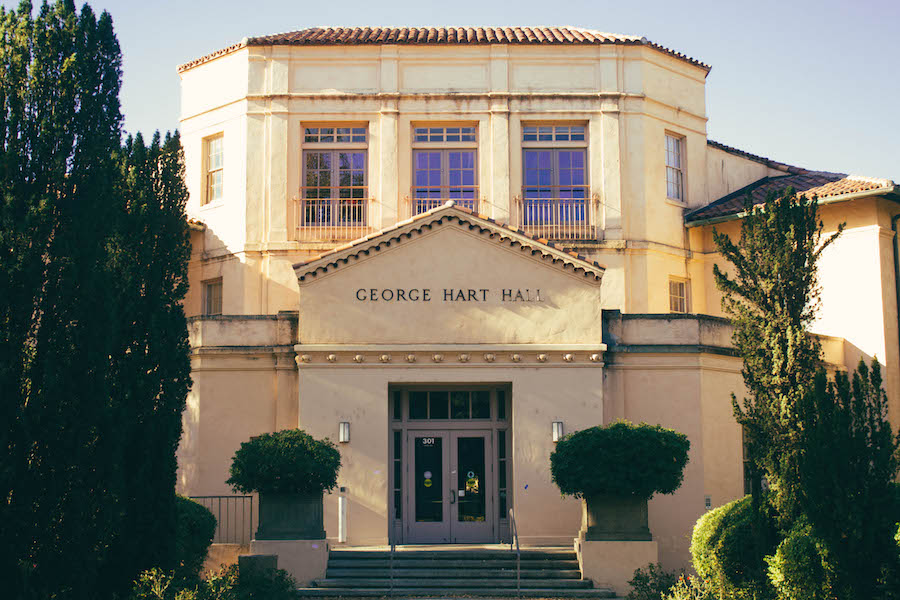
I'm constantly thankful for my education and for the opportunities that UC Davis has given me to grow as an academic and as a person. I chose to photograph Hart Hall because it is the departmental home of one of my majors, Gender, Sexuality and Women’s Studies. I'm constantly thankful for the opportunities I have had to expand and apply my education, and I hope to continue to grow and learn more and more. (BECCA RIDGE)
I’m constantly thankful for my education and for the opportunities that UC Davis has given me to grow as an academic and as a person. I chose to photograph Hart Hall because it is the departmental home of one of my majors, Gender, Sexuality and Women’s Studies. I’m constantly thankful for the opportunities I have had to expand and apply my education, and I hope to continue to grow and learn more and more. (BECCA RIDGE)
I'm thankful for wildlife! What do you call a pod of musical whales? An orca-stra! (NICKI PADAR)
I’m thankful for wildlife! What do you call a pod of musical whales? An orca-stra! (NICKI PADAR)
Thankful for the quiet moments between midterms when I can sit down, relax and read a book with a cup of coffee at hand. (ANH-TRAM BUI)
 I am thankful for the ability and opportunity to travel. I can't even begin to explain how eye-opening traveling has been for me; not only do I get to indulge in such beautiful sights and countries, but I also get to immerse myself into the culture as well, and to me that is the best part. (BRIANA NGO)

I am thankful for the ability and opportunity to travel. I can’t even begin to explain how eye-opening traveling has been for me; not only do I get to indulge in such beautiful sights and countries, but I also get to immerse myself into the culture as well, and to me that is the best part. (BRIANA NGO)
I am thankful for the beauty in nature. There's this breathtaking factor about nature that, even without color, you can truly appreciate. (VENOOS MOSHAYEDI)
I am thankful for the beauty in nature. There’s this breathtaking factor about nature that, even without color, you can truly appreciate. (VENOOS MOSHAYEDI)
I'm truly thankful for the presence of music in my life and decided to represent that with a picture of a heartfelt message from one of my favorite artists, Above & Beyond. It has the ability to bring together people of all walks of life regardless of differences, and evoke love in its purest form. (CHARLES MIIN)
I’m truly thankful for the presence of music in my life and decided to represent that with a picture of a heartfelt message from one of my favorite artists, Above & Beyond. It has the ability to bring together people of all walks of life regardless of differences, and evoke love in its purest form. (CHARLES MIIN)
I'm thankful for breathtaking views that give me a weekend full of relaxation. (LAURA LONG)
I’m thankful for breathtaking views that give me a weekend full of relaxation. (LAURA LONG)
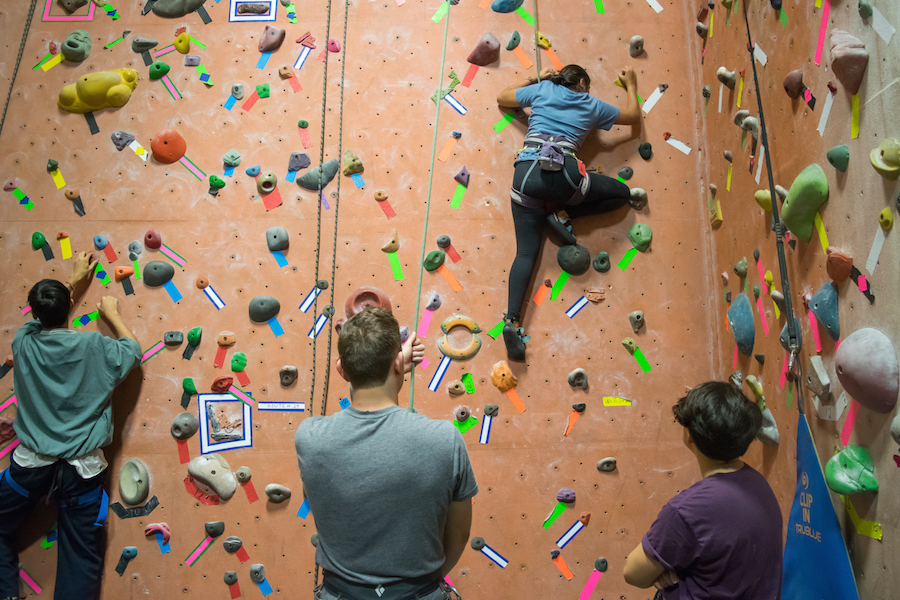
I'm thankful for rock climbing with my friends. After a stressful day, there's nothing I enjoy more than focusing completely on my own body and movement, and spending time with my friends. Climbing lets me do that. (BRIAN LANDRY)
I’m thankful for rock climbing with my friends. After a stressful day, there’s nothing I enjoy more than focusing completely on my own body and movement, and spending time with my friends. Climbing lets me do that. (BRIAN LANDRY)

I am thankful for random food hybrids. This is a cruffin (croissant + muffin) from Mr. Holmes Bakehouse in San Francisco. (NADIA DORIS)I am thankful for random food hybrids. This is a cruffin (croissant + muffin) from Mr. Holmes Bakehouse in San Francisco. (NADIA DORIS)
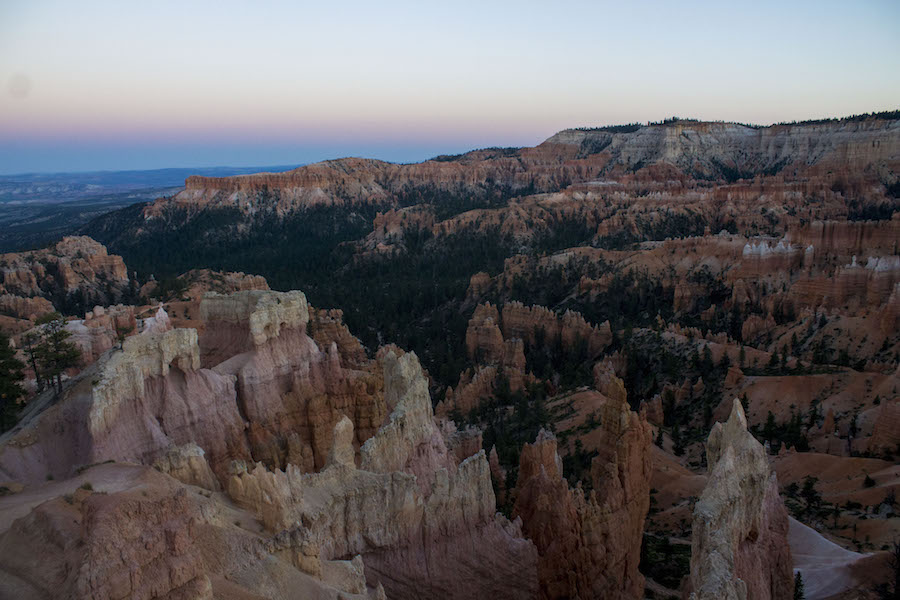

I am thankful for the earth and our ability to explore and protect it. (Bryce Canyon) (LUCY KNOWLES)
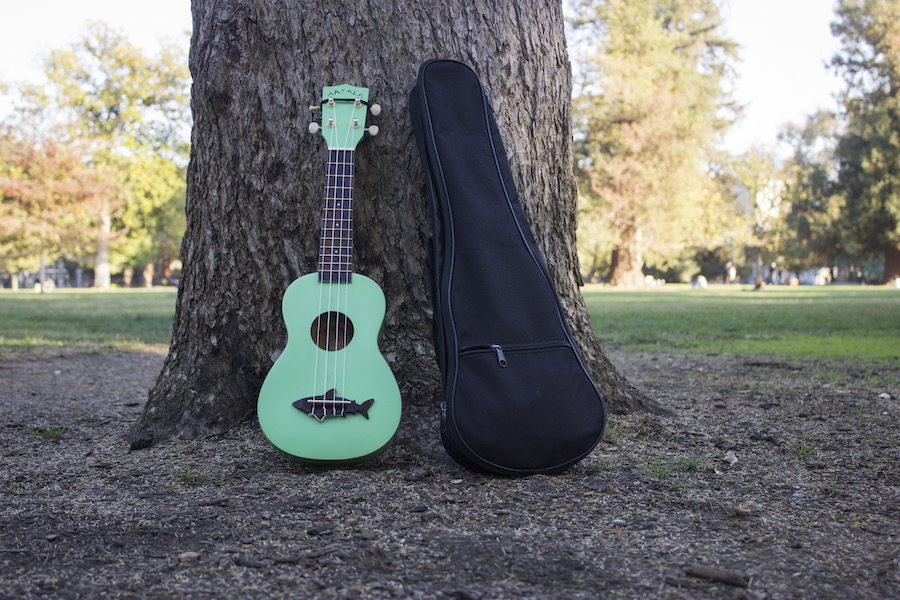
I am so thankful for my ukulele, which has helped me learn about music, enjoy life and happy tunes, and become friends with a diverse group of amazing people. (AMY HOANG)
I am thankful for my dog, Alvin. (KELSEY GREGGE)
Even when I'm stuck in my room, I'm thankful that I'm able to surround myself with nature. (ALEXA FONTANILLA)
Even when I’m stuck in my room, I’m thankful that I’m able to surround myself with nature. (ALEXA FONTANILLA)

Compiled by: The California Aggie Photo Desk — photo@theaggie.org


Debunking myths surrounding animal agriculture

ANH-TRAM BUI / AGGIE FILE

headshot_arThe amount of misinformation surrounding the livestock industry amounts to propaganda


Did you know that agriculture has a bigger economic share in California than Hollywood does? According to the California Department of Food and Agriculture (CDFA), California agriculture is a $42.6 billion industry generating $100 billion in economic revenue.

Animal agriculture, encompassing dairy production and livestock, contributed $12.1 billion in 2013 to the industry. California is the leading dairy producer in the United States, generating $9.16 billion in revenue. Additionally, animal agriculture is one of the world’s biggest employers. About 1.3 billion people are employed in the livestock industry across the globe, says Ermias Kebreab, an animal science professor at UC Davis.

But despite the huge net impact of agriculture, the level of misinformation surrounding the industry is astounding.

One of the largest issues plaguing animal agriculture today are propaganda videos from groups like People for the Ethical Treatment of Animals (PETA). These videos are often short, filled with cute animations and paired with a catchy tune. However, their contents are not so innocent. I have watched many of these unfortunate videos in classes and on social media, and most of the information they provide the public with is wrong. They portray common welfare practices as torture.

For example, one common target of misrepresentation is the use of farrowing crates for swine producers. Farrowing crates are used for sows that are going to farrow (give birth). Sows, female pigs, are temporarily placed in the crates in order to ensure that she will not crush her offspring.

Swine commonly have large litters of 10+ piglets, but evolutionarily speaking, the mothers have poor maternal instincts and are not concerned if they sit on or crush a few of their babies. Indeed, over 50 percent of postnatal deaths among pigs are a result of crushing by the mother. Producers developed farrowing crates as a means to protect piglets from their mothers.

The crates allow the mothers to stand, sit and lay down with constant access to fresh food and water, while providing the piglets with safe places to sleep without being squashed. The crate limits the mother’s range of motion, but only temporarily.

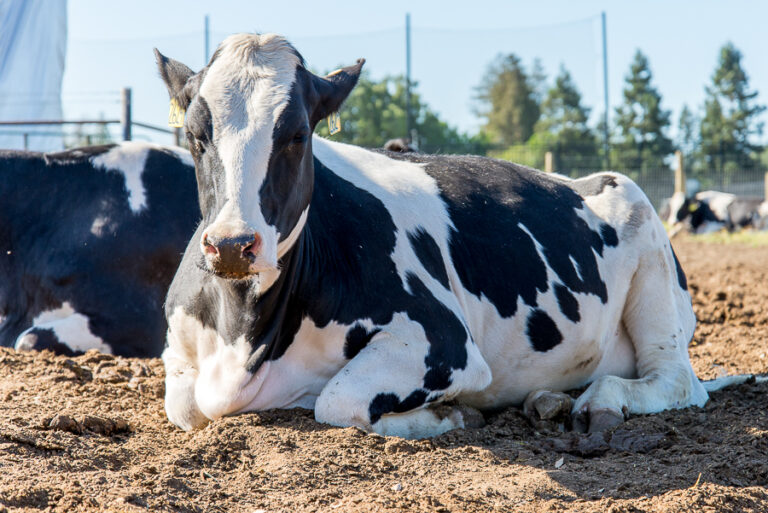
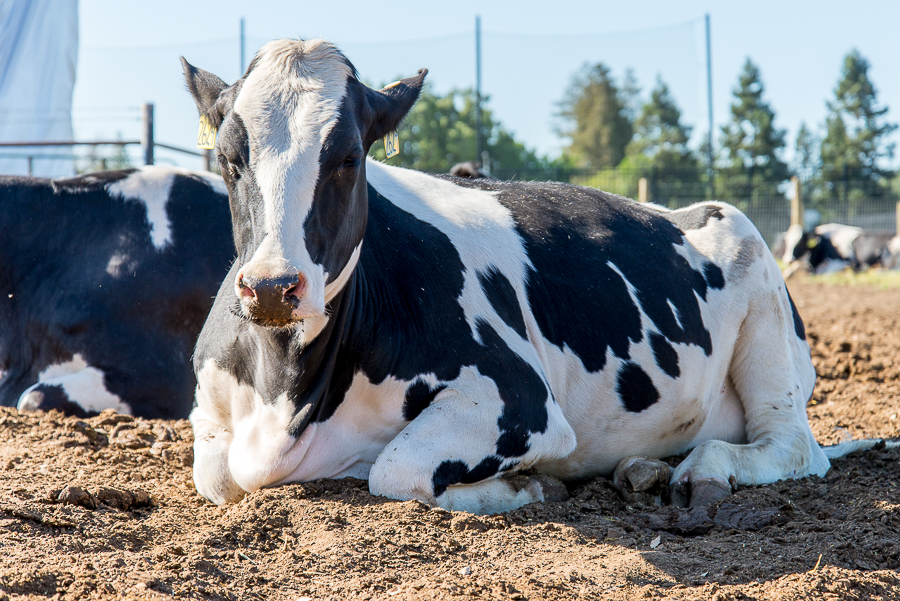
Another commonly disputed practice in the livestock agriculture is the removal of calves from their mothers after birth. Calves have an underdeveloped immune system at birth and are at greater risk of getting sick if they remain with their mothers. Studies have shown that the sooner calves are removed, the less likely they are to get sick and the less stressful it will be for both mother and daughter. The practice also ensures that the calf will receive its colostrum (first milk that provides antibodies).

One cause of concern is the passage of Cryptosporidium parvum, a parasitic protozoa that causes severe diarrhea and can be fatal to a calf. Infections are much more likely to occur if calves are left with their mothers, as they do not have properly functioning immune systems and cannot protect themselves from diseases the mother might pass on.

The industry is improving, despite the negative propaganda. Welfare practices, as controversial as they might seem, are in place for the protection of the animal. If an animal is healthy and content, they become more efficient producers and generate fewer greenhouse gases. Animals receiving the proper care are more sustainable, requiring less feed to produce the same amount of product as a mistreated animal.

The myths about the animal agriculture industry are unfounded and are detrimental to the farmers who produce food for a country of 300 million while trying to please every whim and desire the consumers have. Instead of judging these incredible individuals for things they cannot control, we should support them and aid in finding means to grow food sustainably to ensure a proper future for generations to come.

Written by: Alice Rocha asrocha@ucdavis.edu

Disclaimer: The views and opinions expressed by individual columnists belong to the columnists alone and do not necessarily indicate the views and opinions held by The California Aggie.

Support student demonstrators

HANNAH LEE / AGGIE
HANNAH LEE / AGGIE

Trump’s presidency should be a continued call to action

Students protesting President-elect Trump at California schools and universities are signaling the start of a new counter-culture. Thousands of high school students in Los Angeles, many of whom would be directly affected by Trump’s draconian immigration policies, marched out of their classrooms last week in a heartening display of peaceful civil disobedience. Widespread demonstrations across the University of California (UC) and California State University (CSU) systems renewed calls for inclusivity in a climate that has become more hostile to people of color and minorities.

The energy that inspired these actions must not die, for the sake of the communities made most vulnerable by Trump’s demagogic, dangerous and, apparently, here-to-stay behavior.

Here’s the good news: Trump should give students every reason to stay active and hold his power accountable. His appointment of Steve Bannon, the alt-right anti-Semite of Breitbart News, as chief strategist shows that he plans on playing to the divisions in America to further his own dark vision for this country. This move should convince anybody honoring President Obama’s request that Trump be given a chance that we are in for at least four years of gross ineptitude from our President-elect — and we shouldn’t be quiet about it. When the white nationalist movement in America finds itself at the doorstep of the Oval Office, and even on our campus in the form of racist flyers, normalization would be the worst course of action possible.

Demonstrators at UC campuses should specifically demand that President Janet Napolitano commit to not entering into any agreement with law enforcement that would target undocumented students currently protected from deportation by an executive order issued in 2012 by President Obama. Napolitano helped enforce that order in her capacity as director of the Department of Homeland Security. So for her not to make this basic guarantee, as CSU Chancellor Timothy P. White did for his students, would be an egregious error.

The Editorial Board believes that with commitment and focus, students here can effect the kind of local change that will eventually resonate on a national level.

UC students who walk out to protest Trump create that change in the vein of a strong California tradition of civil disobedience. They make a life of dutiful civic engagement much more possible for themselves and their community. Among the protesters in the infamous Chicano Blowouts of 1968 was Los Angeles mayor-to-be Antonio Villaraigosa. Students then were calling for improved conditions in their dilapidated schools and, like today, were met with scorn by adults who didn’t approve of their tone or method.

And the Vietnam-era protests at UC Berkeley, accompanied by the Free Speech Movement, made possible the kind of resistance students now exercise bravely when the future has never seemed more uncertain and, for many, more bleak.

Trump knows the value of mass movements. When he first stepped into the modern political arena by making racist calls for President Obama’s birth certificate, he did so at the kind of free-wheeling rallies that would come to define his campaign. He’s already expressed interest in continuing the rallies and wants to take a “Thank America Tour” across the country.

Students who counter non-violently with their own demonstrations should not be ridiculed, but respected and supported for the patriotism they are instilling in the next generation.

A how-to guide to cheering at UC Davis football games

0
JAY GELVEZON / AGGIE FILE

Bossy cow-what? Read on and find out!

Let’s begin with a little explanation about the objective of football.

The goal of football is to get the ball into the endzone, or to get a touchdown. This is accomplished by running or throwing the football down the field. The team has four tries to get the ball at least 10 yards across the field. If the team gets the ball past the first down marker, then it gets four more tries. If the opposing team stops the other team on or before the fourth down, the ball changes possession and the opposing team picks up where the other left off. Once a touchdown is scored, the team can either kick the ball through the field goal for an extra point or try to run the ball in for two extra points.

The UC Davis football team is eleventh in the Big Sky Conference, with one win and five losses, but, because not every game is a conference game, the team’s season record is 2-7.

At a UC Davis football game, there are a few cheers that are consistently performed.

UC Da-vis!

and

Here We Go Aggies, Here We Go!

These cheers show general support for the UC Davis football team and raise the spirits of the crowd. Either the emcees in the front of the Aggie Pack or those in the stands can start these cheers.

UC Davis is also known for having one of the most obscure cheers in the country, the Bossy Cow-Cow cheer, which is a favorite of both the Aggie Band-Uh! and the Aggie Pack.

Bossy Cow Cow

Honey Bee Bee

Oleo Margarine

Oleo Butterine

Alfalfa

Hay!

“It’s an old Aggie tradition that we’ve done for generations, so we continue that tradition,” said Ishita Singh, a fourth-year economics and international relations major and UC Davis Athletics Department marketing intern.

The Bossy Cow-Cow cheer is not hard to participate in getting the hang of it, even though the lyrics are quite odd and there is a choreographed dance. Begin on the right knee and shake to the right, to the left, to the right, and once more to the left. Then do a box step, or pretend to move in a small circle. Repeat that box step in the other direction, do a roll to the bottom and hands go up in the air on “hay!”

Other common cheers are performed after the first and second downs.

Move! Those! Chains!

and

U-C-D, First Down!

The first cheer represents the moving of the first-down markers (which use chains to measure distance) down the side of the field, showing that the UC Davis football team is progressing down the field. The latter cheer is performed often and is another favorite of the Aggie Pack. When cheering, point to the direction of the down at the same time as the words “First Down!”

The scoreboard will show a #1 next to “Down” and the emcees will lead off with a “1-2-3” count when The Aggies score a first down.

During the course of a game, the UC Davis football team feeds off the energy from the crowd.

“They bring the energy that we need to perform,” said senior punter Colby Wadman. “When we’re looking up, seeing them all cheer for us when we score and [when] we just see them erupt, it definitely brings that energy for us.”

His teammate, senior running back Manusamoa Luuga, agreed, and said that the Aggie Pack, the crowd and his own team’s cheering helps the team’s performance.

“When you make a big play, and you look over to the sideline and see the whole sideline jumping and everybody going crazy, it’s probably one of the best feelings,” Luuga said. “It’s definitely just a sense of motivation for us just to continue to keep going, just to stay in the game and to ultimately get the victory.”

Cheering not only helps the UC Davis football team, but it often has a positive impact on  the fans.

“I always encourage being part of the Aggie Pack, and even body painting,” Singh said. “Not only is it a great experience for [the fans, but] it shows our great teams that you’re excited and that we’re going to have a good time.”

According to Singh, cheering can also help to form new friendships and discover professional opportunities, like UC Davis Athletic marketing internships.

However, one of the most parts about cheering at a football game is knowing when not to cheer.

“If they make a big play, we want everybody yelling and screaming,” head coach Ron Gould said. “When the offense is in the huddle, they should be quiet. When they break, when they come out and get on the center, there shouldn’t be any noise, but when we make a big play, it should erupt. It should go to 10,000 decibels once we make a big play.”

Don’t waste this valuable information; be the most spirited Aggie in the stands on Saturday, Nov. 19 when UC Davis football faces off against Sacramento State in the 63rd Causeway Classic. There’s also the chance to score some free giveaways, like the coveted tube socks and cowbuckers that the Aggie Pack emcees throw into the crowd.  

“When we walk out, when those guys run through the tunnel and they see all those fans out there […] It really lifts their spirits,” Gould said. “It inspires them to keep moving forward.”

Written by: Liz Jacobson — sports@theaggie.org

Davis music venues: struggling or thriving?

AGGIE FILE
AGGIE FILE

The Davis house show scene shows initiative in light of closing Freeborn Hall, lack of “one size fits all” venues

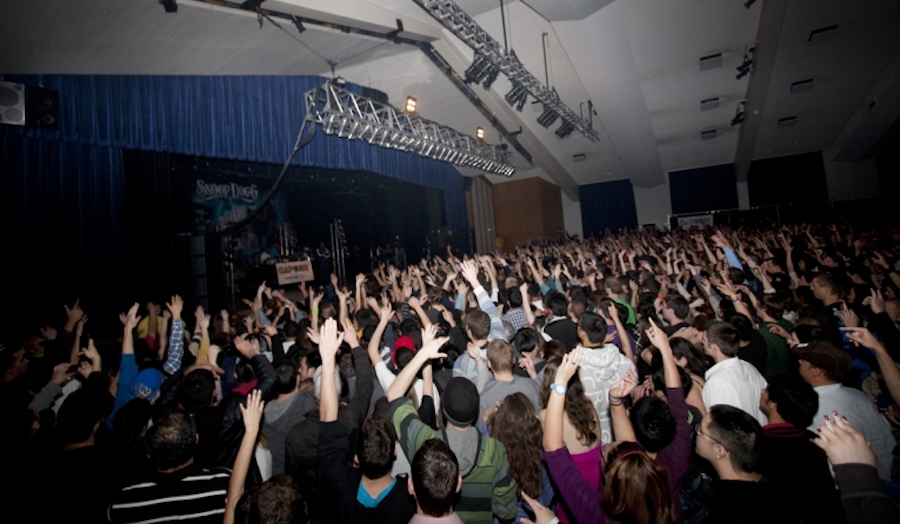
The Mondavi Center, Third Space Art Collective, Sophia’s Thai Kitchen, the Pavilion — Davis certainly does not lack a variety of music venues. But after closing Freeborn Hall (once known as UC Davis’ premiere music venue) and Chance the Rapper’s recent performance inside the makeshift Pavilion-turned-arena, the Davis music scene must ask itself: there may not be a shortage of venues, but is there an inadequacy?

Every music venue in Davis has its own niche, whether it be providing a formal location for large-scale artists at the Mondavi Center, hosting local KDVS musicians at Third Space, or providing background entertainment for the night scene at bars like Sophia’s and G Street Wunderbar. And while Davis musicians are dedicated enough to find places for sharing their art, the town still lacks an established “one size fits all” venue.

Jeremy Ganter, the Mondavi Center’s associate executive director and director of programming, detailed the performing arts center’s role in the Davis music scene. Having been with the Mondavi Center since its inception 15 years ago, Ganter noted that the Mondavi Center is a premiere venue not only in Yolo County, but in all of Northern California.

“Part of our role in the music scene is diversifying it,” Ganter said. “We present a very wide array of music genres, ranging from classical to indie rock, with a special commitment to classical music, jazz and other American musical forms, and world music. That said, our hope and our goal, every year, is that our contributions to the local music scene go beyond the excellence and diversity of the music we present.”

The Mondavi Center has its niche and excels at it. But most UC Davis students are drawn to genres not often hosted by the Mondavi Center — hip-hop, pop, garage rock. Ganter also recognizes this, and stresses the importance of an audience-centered ideology.

“Good venues are important to the experience, of course, but the most important element of a healthy music scene is a clear point of view about what artists are chosen, and why,” Ganter said. “If you have a focused perspective on your work that resonates with your audience, it can be a pathway to more venues, or improved venues, or the kind of venues that better serve the local music scene.”

There is no shortage of venues, therefore, to Davis students willing to pay for a ticket at a sit-down venue and hear world-renowned musicians like Yo-Yo Ma, Julian Lage, Philip Glass and others. (Not to mention that students receive 50 percent off most tickets at the Mondavi Center.)

E.J. Palacios, a Davis resident and third-year human development major at Sacramento City College, frequently organizes local Davis house shows. He believes there is a distinction to be made between the Davis music scene and that provided by UC Davis.

“[House shows are for] just a lot more lesser known, indie-groups — people that are still on a local level,” Palacios said. “The Mondavi Center, they are the one place that [musicians] will come. But that’s not really the Davis music scene, that’s for UC Davis. There isn’t much of a middle ground. You’re either paying $80 at the Mondavi Center, or donating at someone’s house.”

Palacios is right; without the Mondavi Center, local musicians are left with Third Space, bars and house shows. And with the limitation of 21+ entry for the night scene, half of the undergraduate community is left scrambling to attend house shows or trekking to South Davis to catch a performance at Third Space. That’s not to say any of these venues lack integrity, or even good music; rather, they are not primarily music venues. Food and drink menus and community-hosted events are instead priorities for places like Sophia’s and Third Space — and that’s okay; that is their niche.

Unbeknownst to most students, however, is the small but thriving community behind house shows. Davis residents, inspired by the growing music scene and saddened by the lack of attendance, have assumed leadership roles in this regard. Huck Vaughan, third-year cinema and digital media major, is one of these Davis residents inviting musicians, neighbors and strangers to pack into their living room for a night of sweaty dancing and local tunes.

“The underground music scene surprised me when I came to Davis,” Vaughan said. “Seeing a fledgling band playing in someone’s living room makes for an intimate live experience that’s hard to find anywhere else.”

In fact, Palacios is the brains behind the shows being held at Vaughan’s residence. Palacios contacted Bay Area band Pit Stains and invited them to grace Davis with some DIY punk. And, in the spirit of punk, Pit Stains accepted.

But attending a house show is more than making Friday night plans, or even discovering new music; it’s about showing support for the musicians and the community that consistently and voluntarily nurture an ailing scene.

“There’s a lot of interesting-looking people. There’s always lots of hairdos, hair colors. It’s always really inviting, at least at all the shows I’ve been to,” Palacios said. “I might not talk to a lot of people, but I have definitely met a lot people.”

Palacios concluded with a call to action. He requested that anyone with a mild interest in music or hosting live music should consider planning a house show themselves.

“Anyone who’s interested in putting on house shows should just f*cking do it. It’s really not that hard,” Palacios insisted. “You just [have] to reach out to bands. I wouldn’t necessarily say it’s easy, but it’s not crazy difficult; it just takes effort. You just have to be willing to initiate. You have to really want to lead. You have to really want to make it happen.”

To find out more about upcoming Davis/Sacramento house shows and clubs, check out undietacos.org.

Written by: Ally Overbay — arts@theaggie.org

English professors recall books that left lasting impressions

NADIA DORIS and LUCY KNOWLES / AGGIE

Looking for a book to read? Look no further!

Ah, reading. An activity that we always promise to make time for, but rarely end up doing.

Between all the assigned reading that we’re required to accomplish for classes, that club meeting you’re running to and your friend’s birthday dinner, recreational reading is something that often slips in between the cracks with other things that are good for us. Many of us may have wonderful, nostalgic memories of staying up past our bedtime, and sneakily reading a book under the covers with a flashlight or impatiently waiting for the next book in a series to be released.

So for those who don’t read anymore, or never really did, consider this: reading can awaken a curiosity that we may have forgotten about, or never knew existed. Engaging works of fiction can distract us from the daily stress of life, and non-fiction can empower us with knowledge about our world.

A self-help book can set you on the path to becoming more content, and poetry can remind you of beauty in life. We, as college students, are at such a unique point in our lives; we are growing, learning, ever-changing, and a little help from great books never hurts.

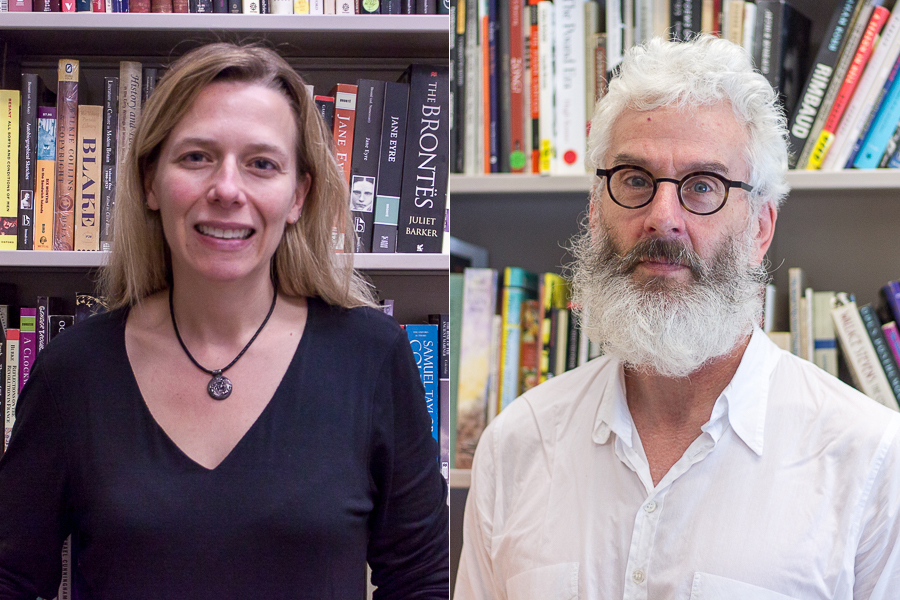
The Aggie sat down with Joshua Clover, professor of English and comparative literature, and Elizabeth Miller, professor of English, to see what books had a profound influence on their lives when they were in college. Plus, they name some books they wish they had read in college, with the hopes that this can inspire some of us to pick up a book that we’ve been eyeing for awhile.

Professor Joshua Clover:

Book that had a profound influence in college:

“Capital, by Karl Marx. At first I was puzzled that it wasn’t the old-fashioned call to revolutionary struggle I expected. Thank goodness; instruction manuals are bullies. It took me some doing to understand it was a far more ambitious thing, an attempt to sketch the laws of motion for our society and a framework for understanding how real historical change might be possible. I think it holds up pretty well. It’s a good inoculation against priests (politicians and economists, say) who would say there is no alternative to the world we live in. Revolution is one of the half-dozen topics in this world worth taking seriously and the least miserable, even in the face of defeat.”

Book that I wish I had read in college:

“Revolutionary Letters, [by] Diane Di Prima. I grew up with a pretty narrow sense of what poetry could be, and while university gave me a chance to engage with that tradition much more intensively (and I had great teachers), it didn’t do much to damage my definitions. Many poets since then have helped with that: Baraka, Stein, Mayakovsky, Mayer, Cesaire. But Di Prima most of all: oh, so it can be a way to deal directly with specific practical problems in front of us, a totally woo-free way to engage with necessity! Good to know.”

Professor Elizabeth Miller:

Book that had a profound influence in college:

“I worked at a Barnes and Noble bookstore for all four years of college (largely for the 40 percent discount on books!), and I was an English major, so I read a lot in college. For my leisure reading, I’ve always loved fantasy and speculative genres, and I can remember burning through Frank Herbert’s Dune (1965) during one day-long binge-read in the summer of 1995. Looking back, it almost seems like my love for Dune was preparing me to eventually move to California in 2008, right at the beginning of the drought.”

Book that I wish I had read (earlier) in college:

“If I had to choose the one book that I read in college that affected me most, it would definitely be Charlotte Brontë’s novel Jane Eyre (1847), which I read for the first time during a class [on the Brontë family] in the fall of my senior year. That was the book that set me on the path to becoming a feminist critic, and the book that set me on the path to becoming a scholar of Victorian literature. I was amazed by the rawness of Brontë’s language, the passion of her feminist indignation and the novelty of a small, plain and homely heroine. I can remember blazing through the first half of that book, reading as though the book was on fire, with a speed and an intensity of concentration that my brain seems no longer capable of today!”

Written by: Pari Sagafi — arts@theaggie.org

Taking another route to class

0
MARK WASHBURN / AGGIE FILE

Unitrans, TAPS’ history at UC Davis

Commuting to campus can be a daunting task, depending on what mode of transportation is used. Biking and busing to campus are popular modes of transportation that serve as products of UC Davis’ history of promoting alternative modes of transportation in order to reduce air pollution.

“Historically, a lot of research has shown that people are wary […] of using any alternative transportation because they are afraid of not having their cars with them during the day in case something happens at home,” said Leslie Mancebo, transportation demand and marketing coordinator at Transportation and Parking Services (TAPS).

UC Davis has historically been a promoter of eco-friendly practices, and transportation is no exception. One of the commanding modes of alternative transportation that UC Davis provides is the student-run bus system Unitrans that has been around for almost 50 years.

“In the 1960’s, there was a lot of interest in the environment and alternative transportation,” said Anthony Palmere, the general manager of Unitrans. “Coincidentally, at about the same time, the first bike lanes in the country were being painted here in Davis and many students rode their bikes to Davis […] and students were looking at other ways to get to the campus without driving.”

Students at that time took interest in a fleet of double decker buses that was being retired and bought two of those buses to bring to Davis. These buses would provide a different mode of transportation for people who previously chose to bike or drive to campus.

“It was successful,” Palmere said. “People rode it and they liked it. They asked for more service and as the service expanded they acquired a few more double decker buses and a few used single deck buses.”

Unitrans’ popularity grew as the City of Davis began to expand to accommodate the growing university campus until 1990, when a major initiative passed to have all undergraduates pay a portion of their student fees to make bus rides free for all students.

“At that time, Davis was expanding a bit more and there were apartment buildings two to three miles away from the campus,” Palmere said.

Unitrans has historically provided students with a substitute for driving to campus alone, and it assists in the reduction of air pollution produced by cars.

“All of our buses, except for our two older double deckers, run on clean natural gas,” said Amelia Bizjak, a fifth-year Japanese major and operations manager at Unitrans. “We try to be as efficient as we can in that way. We […] support getting to campus both safely and in an environmentally friendly way.”

The other bus lines that come to Davis include the Yolobus for Sacramento commuters or the Solano Express Route 30 for commuters coming from Fairfield. There are also vanpooling options that are promoted by TAPS to keep students from driving alone to campus. When students drive alone they take up more parking spots and contribute to pollution. However, by using other modes of transportation students can reduce this.

“We only have so many parking spaces on campus and it’s really expensive to build new parking,” Mancebo said. “We think that the [open] space on campus would be better used for classroom [and] recreational space something that is better for the community as a whole.”

In 2009, TAPS decided to bring carpooling, vanpooling and alternative bus systems under one umbrella program called “the goClub”. For TAPS, a big factor for promoting these alternative modes of transportation is to reduce the number of parking spaces used by single drivers.

“We hired a consultant that basically said ‘this is what it costs to build parking and this this what we think it will cost you to invest in these other strategies,” Mancebo said. “That is really why transportation services invests in these kinds of programs […] if we just built new parking for every new person it would get very expensive. So, parking rates would go up really high.”

The goClub is a membership program offered by TAPS that provides incentives to members for using alternative modes of transportation such as biking, carpooling, busing and walking. Some incentives include complimentary parking permits for days members cannot use alternative transportation, discounted transit passes or emergency ride home services.

Through Unitrans and the programs under the goClub, UC Davis is able to reduce the number of people who drive alone to campus. Based on its history, the future of UC Davis transportation will stay in line with a UC-wide mission to use sustainable practices and to help reduce construction costs of a growing campus population.

Written by: Amanda Cruz — features@theaggie.org

Police Logs

0
DANIEL TAK / AGGIE FILE

Nov. 7

“Subject stated our pizza is ready and that we were supposed to order him food”

Nov. 7

“Family members punching one another and trying to choke hold”

Nov. 7

“Unknown male subject hit the RP’s daughter in the head with a golf ball”

Nov. 7

“Two HBD subjects threw tacos and smashed the RP’s window”

Nov. 8

“Fairly large tumbleweed blocking right lane”

Written By: Sam Solomon — city@theaggie.org

Facing the liberal snobbery that helped elect Trump

GAGE SKIDMORE [CC BY-SA 2.0] / FLICKR
headshot_efDemocrats need to come to terms with their party’s elitist tendencies
Here’s the liberal snob’s view of things:

America proved itself this election as an eminently stupid nation. A man who should have received zero percent of the vote instead pulled off the greatest political feat in American history, leaving the nation’s fate uncertain and in the lurch. Some people were too stupid or too privileged to realize that voting a third-party probably contributed to the triumph of Trump’s ethno-racial campaign. Others were stupid enough to stay home on election day altogether.

To be fair, America has always been pretty stupid. We’re a country in which mock “ISIS hunting-permits” were actually a thing — bumper stickers sold by a Missouri GOP candidate so any interested buyer could proudly display their intolerance on the back of their Chevy Silverado, just above the pair of truck nuts.

But this election was something different. This was political equivalent of those videos you see on YouTube with a guy about to jump off a roof to get a few laughs — and then acting surprised when he hits the ground and blows his back out. We’re spineless, too. We’re spineless because we elected a sexist, misogynist blowhard in part because we didn’t quite think his opponent was “likable.” She wasn’t “able to connect.”

Trump supporters, no matter how well-intentioned, are complicit in endangering the lives of people of color. Now, for at least the next four years, we’re going to have to deal with a man who conned white Americans into thinking that their troubles — with government, work or family — are to be blamed on liberal elites who are too detached to care or respect their struggle. All Trump voters must be unequivocally condemned for the disaster that surely awaits this country at the hands of a man with the grace, wit and color of an orangutan.

And here’s the view liberals and Democrats need to adopt if they want a political future:

There’s a large portion of white workers, particularly in the industrial midwest, who claim to be hurting. In Ohio, which flipped decisively to Trump this year, the number of manufacturing jobs plummeted from a stable million in 2000 to only 600,000 in the immediate aftermath of the financial crisis, according to the Bureau of Labor Statistics. Today, less than 100,000 of those jobs have returned, meaning that tens of thousands of workers, many of whom probably voted for Obama, saw the promise of a Democratic government falter, and were given no reason to believe that a continuation of the status quo would improve their livelihoods.

To ignore race here would be to miss a crucial part of the question. But tread with empathy. Ask yourself: what do you say about privilege to a white man in his 60s who was just laid off the unionized factory job he loved, and is now making minimum wage stocking crates for Walmart? How do you try to convince him that Trump is a con-man whose promises to revitalize industrial America is at odds with a permanent shift to the service economy? Do you begin by calling him a bigot, or do you drop the liberal sanctimony and acknowledge, as Bernie Sanders did, that not all Trump supporters are racist?

Unfortunately, Trump exploited the economic fears of many white workers by painting a picture in which minorities — whether it be Black people benefiting from affirmative action or Mexican people from lax border policy — were cutting in line ahead of “real” Americans waiting patiently for their slice of the dream. Factory workers at Carrier, a company Trump repeatedly threatened to sanction with tariffs if they relocated to Monterrey, Mexico, felt a level of indignity at seeing Mexican engineers take stock of their Indianapolis factory in preparation for the move.

Though many of the workers thought ill of Trump’s harsh rhetoric, it did speak to their sense of helplessness at the prospect of an increasingly globalized economy. Nothing similar was offered up by the Democrats. Only arrogance and blanket condemnations.

The questions remain: how do we reconcile these views? How do we proceed when the two perspectives presented above can both, for the most part, be true? And, most importantly, will our desire for empathy match the actions we take? The answers will determine the fate of the progressive movement in America and whether Trump serves more than one term.


Written by: Eli Flesch — ekflesch@ucdavis.edu

Disclaimer: The views and opinions expressed by individual columnists belong to the columnists alone and do not necessarily indicate the views and opinions held by The California Aggie.

Aggie Style Watch

asw9_ar_briana_ngoLayering at its best

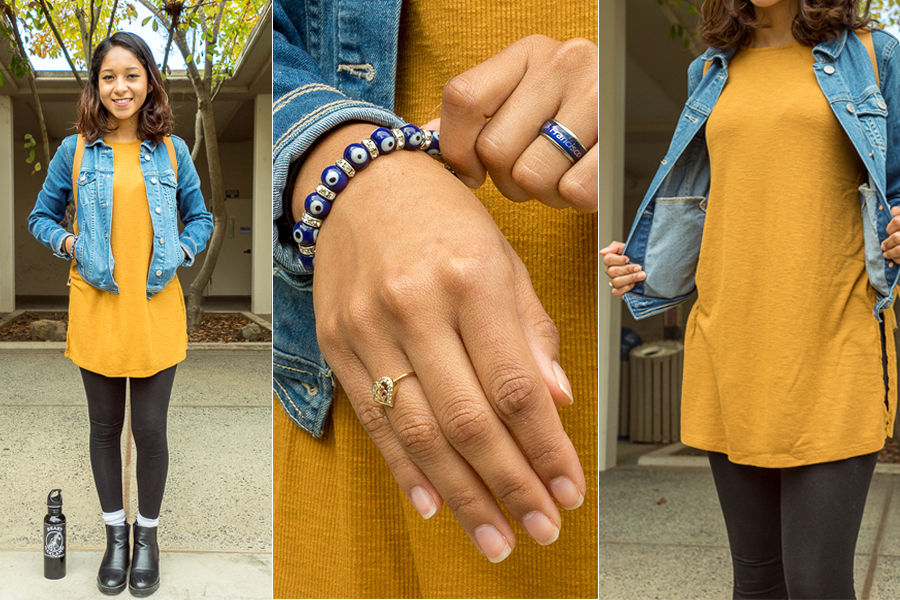
Jessica Ozuna, a second-year sociology major, gets ready for the cold by layering up. She loves to wear comfortable clothes that match with everything. For Ozuna, makeup is a second thought, making the outfit most important.

ASW: What is your style inspiration?

Ozuna: Myself, I assume. Usually the trends, especially now that it is the winter time I tend to wear long socks and dresses with leggings.

ASW: Do you have a go-to outfit?

Ozuna: It’s usually jeans with boots, a tank top and a cardigan.

ASW: What are your favorite stores to shop at?

Ozuna: I really like Forever 21 and H&M. They are the ones I shop at the most.

ASW: Are there any celebrities you look at for inspiration?

Ozuna: Not really, it’s mainly magazines; the Forever 21 magazine and the email newsletter give me a lot of inspiration, and Urban Outfitters always has good trends to be aware of.

ASW: Where did you get your outfit?

Ozuna: The jacket is from Old Navy, the dress is from Forever 21, the leggings are from H&M and the shoes are from a random store in my neighborhood.

ASW: Do you have any advice for someone who wants to be more stylish?

Ozuna: Wear what’s comfortable and not what everyone is wearing. You can make it stylish in your own way — it doesn’t have to be what others are wearing.

ASW: Do you want to talk about your style?

Ozuna: I’m not much of a leggings person; I love to wear jeans and cardigans. I tend not to wear makeup often either. It’s just when I’m in the mood and I don’t feel great about myself [if] I wear makeup.


Written by: CaraJoy Kleinrock – arts@theaggie.org

Through the Artist’s Eye: Ali Bhimani

ALI BHIMANI / COURTESY

Art studio major exhibits creativity through paper

Most of us usually don’t think of paper cut-outs as the first way to make art, but for second-year art studio major Ali Bhimani, it’s his primary medium. The use of paper throughout his artworks wasn’t the result of some purposeful, genius brainchild, but rather of laziness.

“It started off as me being lazy because one of the prompts for my [art] class was to use patterned repetition in a work, but I didn’t want to draw and paint the person everytime, so I drew him once, cut him out and used a stencil, and my teacher was like ‘that’s a very unique style of doing it,’ so through laziness brews creativity,” Bhimani said.

Bhimani has done art throughout his childhood but didn’t begin to consider it as a career path seriously until his senior year of high school, when his work was featured in the Knoxville Museum of Art.

“I was taking AP studio just to get some art credit, [my teacher] submitted my art to a museum and it was featured,” Bhimani said. “So I was like, maybe I have a chance to do something I like instead of business, which seemed too easy to me.”

From very early on, Bhimani drew inspiration from human life forms and continues to focus his artwork on this aspect.

“When I used to draw as a kid or if I had any art classes I would always draw eyes and hands,” he said. “I’m very obsessed with hands and the functionality [of them]; there’s so much we can do with our appendages, and it’s fascinating to me.”

Bhimani is also inspired by other artists, like Bansky, who push their audiences to address the political climate.

“There’s no copyright issue in artistry. It’s impossible to copy someone because your work takes its own path. If I’m making a sculpture, it is going to start off some way in my mind, but by the time I’m done the sculpture’s taken its own path and the idea has gone into the work and it is for others to see,” Bhimani said.

As for his future in the art field, Bhimani hopes to become an art professor and inspire others to take on artistic career paths. This past summer, Bhimani was the head counselor for an art camp, called Camp Mosaic, that hosted 120 participants in Seattle.

“That’s one of the most rewarding [experiences], inspiring kids to pursue art because it’s looked so down upon as a career path,” Bhimani said. “But there’s always going to be someone out there who enjoys what you enjoy so don’t hesitate to do what you want to do. Unless you’re a psychopath.”

Bhimani, although purposeful in his artwork, does not aim to push any specific meaning on his audiences.

“I want to quote Pablo Picasso, he says ‘art is a lie that leads to the truth.’ So no piece of art has any meaning; it could be a blank wall that’s sold for billions of dollars or it could be the most complicated, intricate clockwise structure that takes years and years to finish that sells for nothing,” Bhimani said. “It’s the person that walks up to that painting that gives it meaning.”

To view more of Bhimani’s artwork, students and others can visit his website at alibhimani786.portfoliobox.net.


Written by: Abigail Wang — arts@theaggie.org

Tips for holiday trips

Christie Neo / AGGIE

UC Davis students share their various ways of getting home for school breaks

Thanksgiving is right around the corner, and after nine weeks of assignments, midterms and papers, many students are eager to get home for a four-day weekend with family, friends and loved ones. However, before enjoying a holiday break filled with feasting and relaxing, first comes the important question of how to get home.

Those with homes in Northern California are able to conveniently drive or take the train home within just a few hours. However, international students, out-of-state students and even students from Southern California experience very different traveling processes.

For students traveling to Southern California, driving from Davis can take anywhere from six to 10 hours.

“A good chunk of the day will be given up to just driving,” said Tiffany Liem, a fourth-year animal science major who drives home to Los Angeles during breaks. “Usually the first hour is okay, and then you get sleepy. The second and third hour[s] [are] the worst of the whole drive.”

Driving for an extensive amount of time can be a tedious and tiring experience, so Liem offers various tips for staying awake and brightening the mood during such long drives.

“I use music to keep myself awake,” Liem said. “I do sing to my own music and turn it a little louder when [I’m] alone. Also […] take a few snacks every now and then. If you’re ever sleepy, chew on something. I go to Berkeley to pick [my brother] up, [and] having a person there with you actually helps a lot when you talk with them.”

A popular method among students for finding transportation home is posting in the UC Davis rideshare Facebook group. Through this group, students can either offer or request rides to certain destinations for other UC Davis community members.

Students who do not have cars in Davis or who have to go farther than driving distance to get to their holiday festivities have other options for traveling. Some students take Amtrak trains and those traveling farther away often choose to fly.

“When I used to know my schedule, I usually [bought] my plane ticket ahead of time,” said Cynthia Jinno, a fourth-year animal science major also from Los Angeles. “Now that I am in a research group, our schedules go from place to place. So I usually take the Amtrak now since you can buy the ticket the night before you leave.”

Students who wish to fly home often take the Yolobus 42A or B from the UC Davis Memorial Union to the Sacramento International Airport. Those who prefer Amtrak can take either the A or Z line of Unitrans from campus to the Davis Station downtown.

“[Amtrak is] usually eight hours to get [to Los Angeles],” Jinno said. “But if I take the really early train, I can sleep [during the ride], so by the time I wake up I’m already halfway there.”

Janzen Lee, a fourth-year computer science major and international student from Taiwan, has a different story regarding his plans for break. Lee moved to the United States with his parents when he was 17. After his parents moved back to Taiwan this summer, Lee’s home is now over 6,000 miles away from Davis.

During shorter breaks like Veteran’s Day and Thanksgiving break, when traveling all the way home is not a feasible plan, Lee finds other ways to spend these few days off from school.

“For Veteran’s Day, I [went] to Yosemite with […] the Taiwanese Student Association (TSA),” Lee said. “And for Thanksgiving, I saw the International Club’s trip to San Francisco, so I signed up for that.”

Lee has also gone on winter ski trips in the past with TSA and the Japanese American Student Society (JASS). He believes that these trips hosted by student organizations provide a welcoming community for students, especially those who cannot conveniently visit home during the holidays.

“These trips [involve] more bonding than just weekly meetings at school,” Lee said. “You get to know a lot of people more personally. I like [the trips] because for international students, we don’t necessarily have a place to go to for a short-term break. I know I have the option to go out and I don’t feel left alone.”

During longer breaks such as the month-long winter break this year, some international students may take the opportunity to go on vacations with their friends.

“[For] winter break, I plan to go to Disneyland [with] friends, and Las Vegas,” said Tomoko Shigemichi, a second-year English major and international student from Japan.

International students staying in Davis over Thanksgiving also get a chance to experience a traditional American Thanksgiving celebration on Nov. 19 with International House Davis (I-House), a private nonprofit organization located across the street from Russell Field. First established in 1981, I-House provides services and programs for international students.

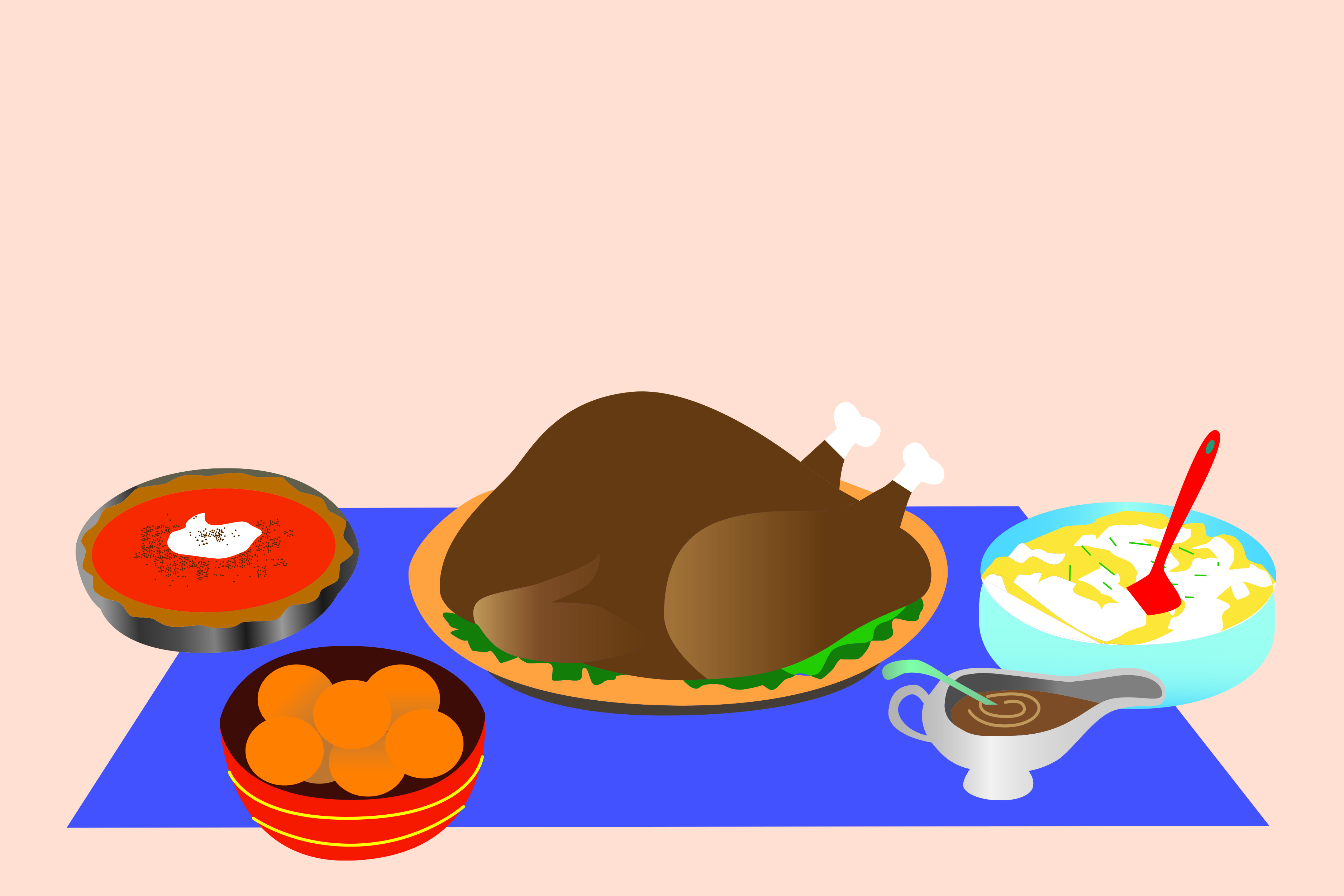
“One service we do provide [is] an annual Thanksgiving dinner [when] we invite international students, scholars, Davis community members and also I-House board, staff and interns to sit down and share a traditional Thanksgiving meal with turkey, trimming, pies — everything,” said Vinita Domier, I-House volunteer coordinator. “It’s a traditional meal shared amongst 100 wonderful friends, new and old.”


Written by: Jennie Chang — features@theaggie.org

Just your cup of tea

0
MEENA RUGH / AGGIE
MEENA RUGH / AGGIE

Tea culture in Davis

Students are creatures of habit even when it comes to their coffee orders. On the rare occasion that they decide to be adventurous and spice up the usual routine, they might order a tea hoping that its small amount of caffeine will get the job done.

However, there is much more to tea than meets the eye to its dark, dried-out leaves. Based on the environmental and physical effects of the beverage, it is safe to say that there is a unique story behind every tea bag.

Kevin Gascoyne is a British tea taster who has dedicated his career to discovering what those stories are. Gascoyne first fell in love with tea when he tasted freshly-plucked leaves while backpacking in the Himalayas at age 19. Now, he has been in the tea industry for 25 years and co-owns the company “Camellia Sinensis,” a tea shop and school located in Canada.

Gascoyne’s passion for the product has allowed him to travel around the world lecturing about tea’s countless benefits. He visited the Memorial Union for a lecture on Nov. 4.

“It is amazing to have ended up working with a product that has been consumed by humans for over 5,000 years,” Gascoyne said. “The consumption of tea actually started for its benefits as a health tonic. Tea not only improves your mood but also has a fascinating diversity.”

One of the reason Gascoyne loves this brewed beverage is because of the thousands of chemical properties that designate a tea’s flavor. Every tea plant will yield its own unique flavor depending on the environment in which it is grown.

“What you notice as you travel around is that even though people are using the same plant, just as they might be using the same rice or growing the same rose, the growing environment changes the flavor of the tea itself,” Gascoyne said. “The way that the plant reacts to the growing environment will change the chemistry of the leaves and it is that chemistry that gives us flavor.”

The manufacturing methods used by farmers to bring out these specific flavors also affect the chemistry of the plant. Just as with any living organism, the plant must also learn to adapt to unpredicted environmental and agricultural changes, and these adaptations actually make the tea more flavorful.

“A plant that is stressed and not having too easy of a time growing will grow leaves that taste better because the flavor chemistry is enriched,” Gascoyne said. “We have plants that are reacting to specific things in the environment such as insects or slight drought, and these alterations affect the flavor.”

While a certain amount of stress on the plant is good for drawing out flavor, too much stress will cause the plants to suffer and die. For example, recent environmental stimuli have had universally negative impacts due to significant climate warming which is linked to an increase of extreme and unusual weather.

“There have been substantial changes in the tea industry due to climate warming and environmental stresses over the years […] nobody in the tea industry has been unaffected,” Gascoyne said. “Anybody who thinks there is no warming on the planet should talk to the tea industry because every single region is having to adapt due to extreme weather patterns such as flash floods and unexpected cold periods.”

One particular cafe in downtown Davis, Temple Coffee Roasters, understands the importance of these environmental stresses and stands out as a leader in providing sustainable tea products. Temple came to Davis less than two years ago and has already seen immense popularity for the shop’s unique aesthetic and respectfully-produced coffees and teas.

“We try to offer the highest quality coffees and teas possible,” said Will Talbot, manager of Temple’s corporate office. “All of our teas are sourced from individual, high-grade farms and are grown using organic practices.”

Talbot explained that while it is important to grow their products in a sustainable way, it is also crucial to be able to provide a wide variety of teas to the community in order to show people that tea is not just one, monotonous flavor.

“Say that a tea drinker really likes black tea, and if they were to go into Starbucks or Peet’s they would have one maybe two options of a black tea to choose from,” Talbot said. “When they come into our café, we’ve got seven or eight black teas to choose from and all are distinct [in flavor]. We think it is important to give avid tea drinkers exactly what they want instead of asking them to settle.”

Temple also prides itself on offering unconventional tea drinks, such as the popular “Bliss” and “Enlightenment,” both of which combine tea, honey and non-dairy milk.

Root of Happiness Kava Bar, another shop in Davis that serves an unconventional form of tea, bases its entire menu on a particular kind of “tea” made from steeping kava root in water. Ava Taesali, assistant manager of the bar, explained the intricacies of kava and its benefits as a tea.

“The kava plant comes from the South Pacific Islands, such as Hawaii, Fiji and Samoa, and has a lot of natural anti-anxiety and relaxation properties to help soothe the brain and muscles,” Taesali said. “There’s a lot of benefits to drinking kava but mainly it is just going to make you feel really happy and good without any fogginess in the head.”

Pacific island cultures have been consuming kava for over 3,000 years because of its positive effect on the mind and spirit. After drinking kava, people can expect to instantly feel relaxed not only in the body but also in the mind, as well as ready to socialize with anyone they meet.

Whether students are looking to relax after a long day of classes or simply change up their daily routine, Temple and Root of Happiness are leaders in providing nontoxic, exotic and sustainably grown teas to help students achieve this.

“Besides improving mental health and stability, perhaps the most extraordinary benefit of tea is that it has very little negative impact on the planet,” Gascoyne said. “Tea plants actually have a negative carbon footprint so there is not really anything bad you can say about the product […] it really has such top-to-bottom integrity.”


Written by: Gillian Allen — features@theaggie.org

Tune in to Watermelon Music’s strings-for-food drive

0
ANH-TRAM BUI / AGGIE

Helping the community through Davis Community Meals is Watermelon Music’s forte

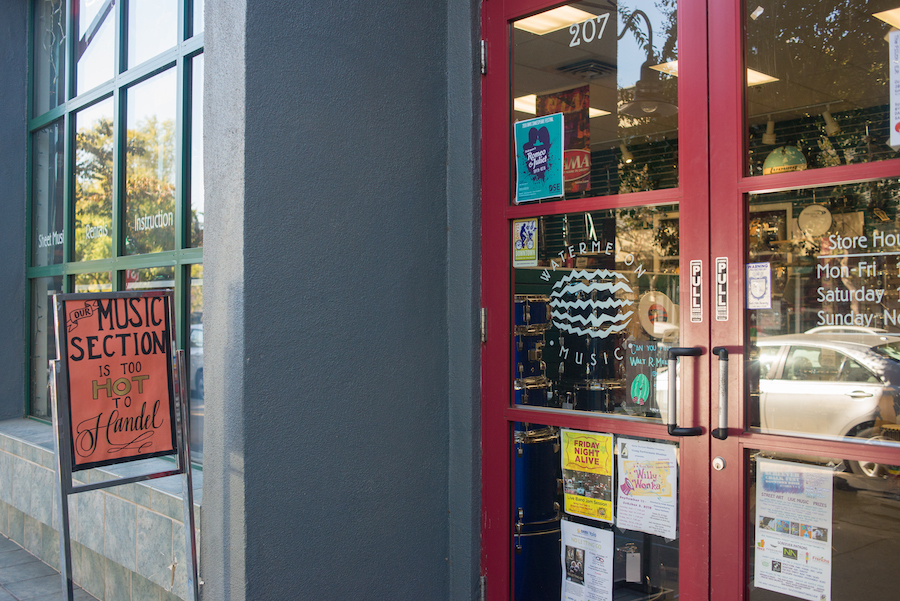
One thing that Davis certainly doesn’t have treble with is helping out the community. For the past 15 years, Watermelon Music, a local music store downtown, has held a strings-for-food drive, in which people can get a free set of D’Addario strings if they bring in at least two non-perishable food items, limited to two instruments per household.

This benefits Davis Community Meals, a non-profit, non-denominational volunteer organization that gives food to people in financial distress or those without homes. This year’s drive will be the last one held at Watermelon Music’s current location in downtown Davis.

Every year, the second Saturday in November is dedicated to this food drive, which aims to collect about 200 instruments — this would mould mean at least 400 cans of food. In a four-hour time span, this 200-instrument goal has been achieved three times in the past.

Volunteers consist mainly of community members who are knowledgeable in restringing instruments.

“[It started] long ago, over 20 years ago, and there was a representative from a company that made strings, who wanted to give [out] free strings to promote their company,” said Jeff Simons, manager of Watermelon Music. “But we wanted to have it for a cause, so someone suggested doing a food drive.”

Simons is also a member of the Independent Music Store Owners [IMSO], an online forum that shares ideas pertaining to their storefronts. About five or six years ago, the group started talking about which promotions they did that were successful. Upon someone mentioning the strings-for-food drive, the group jumped on the idea, looking to do something of the sort on their own fronts as well.

Although the minimum amount of non-perishable items per instrument is two, some people bring in shopping bags of food, the total amounting anywhere from 800 to 1,000 cans. Others decide to drop off food without even getting the free strings.

“The line goes out the door,” said Adam Portocarrero, a Watermelon Music employee.

Food pantries tend to run especially low approaching the colder months, so the food drive is a good way to replenish the stocks and get community members involved in  helping each other. Due to the rising costs of their current storefront, Watermelon Music is relocating to a bigger space on the intersection of Lake and Covell Boulevard, where there will be a live music performance venue inside in addition to a grand piano. However, the food drive will continue to happen every year.

“[We will] definitely [continue the food drive], it’s a big part of what we do,” Simons said. “Anytime you get a hundred musicians in a room, it’s cool. It’s a bonding kind of community thing. And at the same time, everyone is contributing. It’s not about getting free strings, it’s about helping out the community.”

Bill Pride, executive director of Davis Community Meals, explained that the organization serves around 165 to 175 meals per week by working with a soup kitchen staffed by high school or school group volunteers, in addition to partnering with food drives like Watermelon Music’s. Strings-for-food, however, is one of the larger food drives that Davis Community Meals is involved with, producing about six to seven large boxes filled to the brim with non-perishable items.

“The food drive is really great. It’s great to get re-stocking of food for various locations to help tie people over,” Pride said. “It’s always been an important thing to help people in our community.”


Written by: Kaelyn Tuermer-Lee – city@theaggie.org