55.7 F
Davis

Davis, California

Wednesday, December 24, 2025
Home Blog Page 717

Primate vocalization research shows promise in tracking, conservation

SOL MILNE / COURTESY

UC Davis predoctoral anthropology student studies bioacoustics of Bornean gibbons

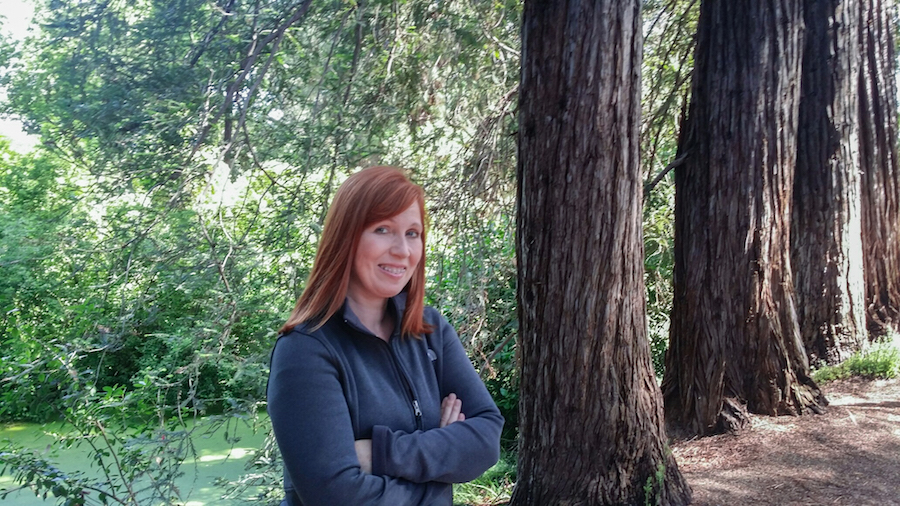
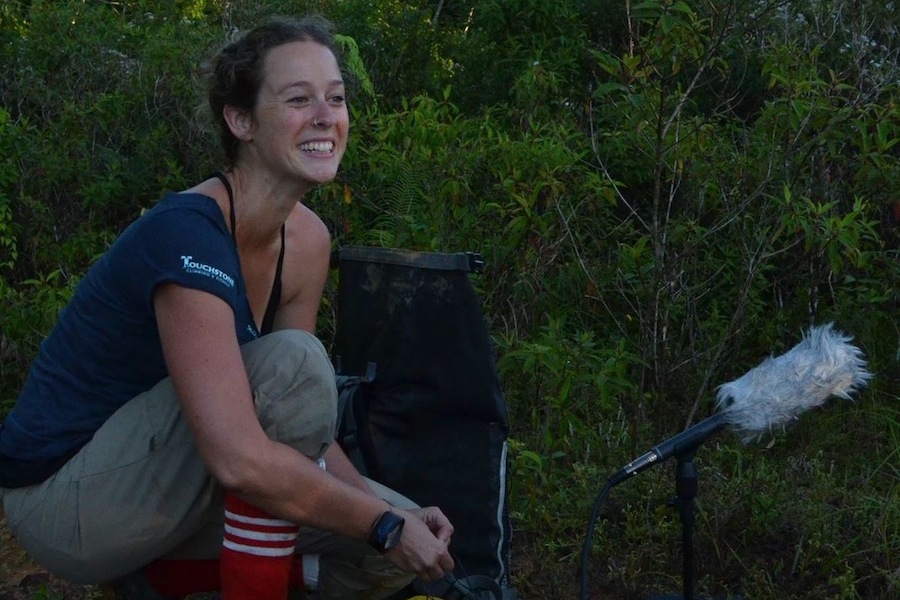
In the Malaysian jungle, the Bornean gibbon sings at dawn — and Dena Clink, a fifth-year UC Davis predoctoral anthropology student, records them.

Clink’s research analyzes Bornean gibbon vocalizations in order to answer the fundamental question of which evolutionary forces natural selection or drift shape geographic variation in their calls. Clink also employs a method of vocal fingerprinting to examine individuality in gibbons, which can be potentially used for large-scale population monitoring for conservation purposes.

Clink explored the evolutionary forces behind gibbon vocalizations by studying them directly in the field. The research began by collecting data at multiple fixed-point counts, requiring researchers to sit in the forest and record everything they hear. Unfortunately for Clink, gibbons start singing around 5:30 a.m., meaning she had to be out at the points some of which were a mile and a half-long hike away by that time or even earlier.

[My research assistants and I] would have to get up at 4 a.m. and hike. It’s so funny because it’s dark and there are so many things rustling around in the jungle,” Clink said. “The thing that scared me the most were the Bornean bearded pigs. They’re really cute, but they make this horrible screaming sound when they get scared. So, I’d be walking with just a flashlight and then they’d scream and I’d be like, ‘Oh my god what is that?!’”

After the fix-point counts were completed, Clink would gain an idea of the whereabouts of nearby gibbon groups and would conduct playbacks pre-recorded gibbon calls that would sound out of a giant speaker to elicit a vocal response out of wild gibbons.


“All of the sudden you see the trees just going wild, and these apes fly out and you can actually see them […] it’s so cool, because it’s so hard to see them otherwise”, said Allison Jones, a third-year evolution, ecology and biodiversity major, who worked for Clink as a field research assistant. “It was a really cool experience after two years of listening to their recordings to actually see the animal in person.”

After studying and recording the calls, Clink’s team studied the area itself to examine the interaction between forest density and call type. The gibbon’s vocalizations, while highly individualized between each animal, also varied with the density of the forest that they live in, with thinning forests corresponding to changing calls.

“There’s evidence that you could predict that if a forest is more dense, if there’s more tall trees or the canopy is more closed, that that’s going to influence how the sound travels, and that natural selection may have then shaped the gibbon calls,” Clink said.

Clink’s second research focus, vocal fingerprinting, utilizes the highly-personalized gibbon calls for cataloging and identification purposes, allowing researchers to track the fast-moving primates more easily, both as a group and individually. By identifying them based on their calls, researchers are able to accurately count and monitor the population.

On top of providing researchers a new way to study primate movement and activity, one of Clink’s goals for her research is to apply its results to a population of gibbons at the Stability of Altered Forest Ecosystems (SAFE) site. SAFE is a large-scale fragmentation experiment, in which the forest is cleared of trees except for six fragments, or forest islands, giving scientists a baseline of understanding on how the animals who inhabit the forest sustain themselves both before and after the deforestation.

“The scientists and the researchers are not the reason that the forest is getting cleared,” Clink said. “This land has been slated to be converted [into oil palm plantations] for a long time, and the researchers are making the best of a bad situation.”

The natural habitat of the gibbon has been destroyed over the last few decades as palm oil farming has expanded in Borneo. It is Clink and Jones’ hope that this body of research can be used to raise awareness for the impact that palm oil production has on existing primate populations.

According to Dr. Margaret Crofoot, an assistant professor in UC Davis’ anthropology department and Clink’s Ph.D. advisor, tropical forests across the globe are being destroyed at an alarming rate, especially the tropical forest in the Malaysian-Indonesian archipelago.

“Primates that live in that forest [are] critically endangered by human development and destruction of their habitat,” said Dr. Crofoot. “Any important conservation effort requires both active steps like protecting natural areas, but they also require monitoring to see how well the approach you’re taking is working. I think that’s really where [Clink’s] work has the potential to make a really positive impact.”

Both Clink and Jones, despite the early wake-up calls and Bornean bearded pigs, are eager to return to Malaysia and research more in the field as deforestation in the region continues.

“It’s tough work, you have to get up early, it’s a lot of hiking and carrying a lot of heavy stuff, but once you’re out in the jungle at sunrise, there’s nothing better,” Clink said.

Written by: Ariel Robbins – science@theaggie.org
Students versus teaching assistants: not always a competition

BRIAN LANDRY / AGGIE

Students take steps toward trusting their teaching assistants.

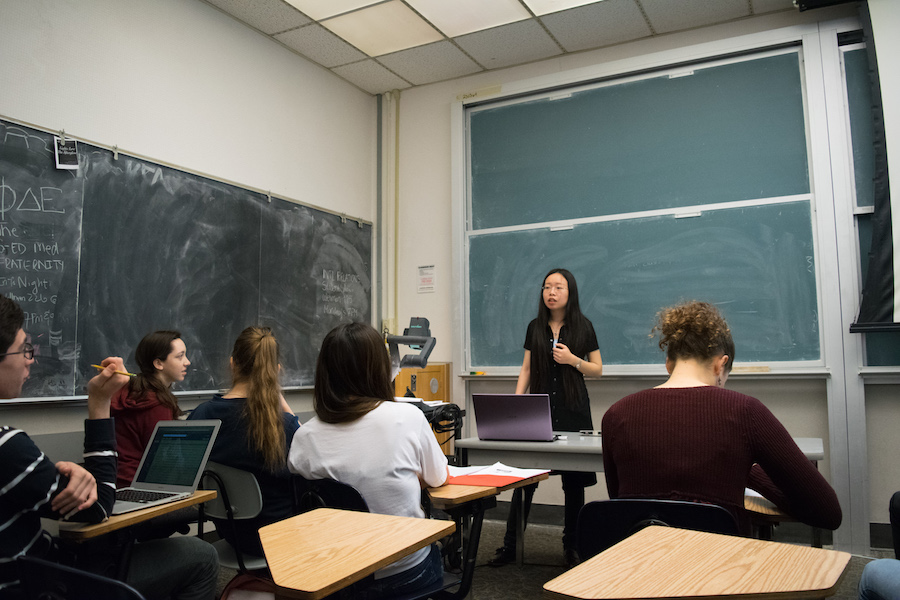
At a public research university such as UC Davis, it is not uncommon for students to depend heavily on the guidance and instruction of their teaching assistants (TA’s). However, many TA’s are young graduate students having recently completed their undergraduate educations, and this lack of an age gap sometimes leads to conflict between students and TA’s.

“It is important for students to remember that a young TA may be precisely who they should be learning from as this individual remembers quite clearly what it was like to be an undergraduate,” said Ph.D. student in archaeology Kevin Smith. “If you, as a TA, are pretty much in the same age group as the class, then [you can] use humor and pop-culture references that help your class relate to you and the material. As long as you are using humor in a way that keeps an energetic, upbeat, respectful and educational atmosphere, your students will like working with you.”

For Smith, a TA’s main focus and obligation should be their position as instructor of their section. One way to cultivate a positive environment is by respecting the students and using humor while effectively conveying required material. Smith also urges TA’s to remain humble and enthusiastic.

“Enjoy the opportunity to teach and convey the passion you have for your subject,” Smith said. “Remember, you are young, you don’t know everything! It is okay to learn from your students once in a while!”

According to second-year environmental policy major Joe Kaylor, TA’s and students should be able to form a productive and professional environment despite potential age gaps.

“There are plenty of student leaders that are able to organize, plan and execute productive events or sessions with their peers, so it really comes down to the university being able to select grad students with leadership qualities that are able to do that,” Kaylor said. “The age isn’t a huge issue — it’s whether or not they have the personal skills past the course knowledge to be able to hold a productive forum in their discussion sessions.”

Kaylor has found that many TA’s lack attributes of notable communication and interpersonal skills necessary for an efficient discussion.

“Although there have been exceptions, most of my TA’s haven’t been a huge help, but I don’t want to pin that all on them since they have the same stresses of school and finances that we do,” Kaylor said. “Maybe more training for how to be a successful leader would be helpful, but it’s a tough problem to solve easily.”

For first-year biological sciences major Bailey Boka, the small difference in age is not the root of the disagreements that may arise between students and TA’s; the issue has more to do with being confident in one’s abilities as an instructor.

“Sometimes I notice that some TA’s overcompensate for the lack in age gap by acting overly superior towards their students, making it difficult for students to feel comfortable asking questions and learning from them,” Boka said. “Just because they are young, does not always mean that students think they lack experience and insight. We just have to respect one another.”

Although it is easy to jump to conclusions about people, Smith urges students and TA’s alike to enjoy their time in the classroom and take it as an opportunity to learn from each other.

“The college years will not last forever and it is up to you to find your own hunger for knowledge now,” Smith said.

Written by: Gillian Allen — features@theaggie.org

UC Davis men’s tennis fall short in Big West Tournament

NICHOLAS YOON / AGGIE

Aggies end their season with best overall record since 1991

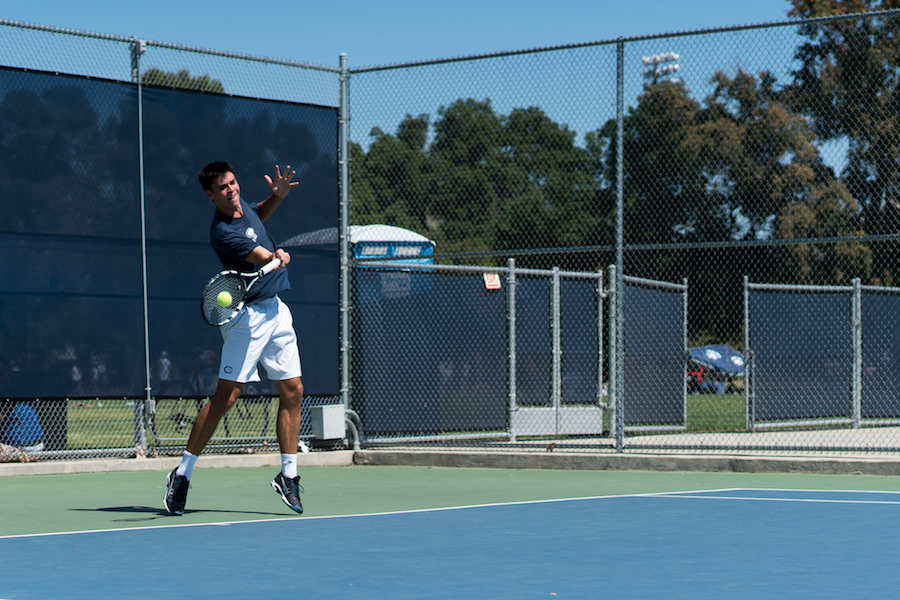
The UC Davis men’s tennis team traveled to compete as the No. 3 seed in the Big West Tournament at Indian Wells from April 27 to 28.

The Ags kicked off the tournament strong on Wednesday, sweeping the Hawai’i Rainbow Warriors 4-0 in a quick match. Senior Brett Bacharach and junior Eli Whittle, along with tandem junior Alec Adamson and senior Adam Levie, won their matches, 6-2 and 6-1, respectively, giving UC Davis the doubles point advantage.

The Aggies also went on to do work in singles, clinching three straight-set wins to wrap up a shutout victory. Sophomore Everett Maltby dominated with an easy 6-0, 6-0 shutout. Junior James Wade followed suit, 6-1, 6-1, giving UC Davis another point. Bacharach put the finishing touches, 7-5, 6-1, on a UC Davis victory. With their first round win, the Aggies advanced to play rival and No. 2 seed, Cal Poly San Luis Obispo.

After losing to Cal Poly, 4-3, on the road in regular season, UC Davis hoped to return the favor and advance to the final round of the tournament. However, the Aggies’ previous 0-2 record against the Mustangs in the Big West Tournament proved to stand in a close, three-hour, 4-2, rematch on Thursday afternoon.

The Mustangs got the lead early with a quick doubles win over Bacharach and Whittle, 6-3, while sophomore Tommy Lam and junior Bryce McKelvie held their opponents at 6-3. Cal Poly secured the doubles point as Adamson and Levie fell, 6-4.

UC Davis tried to make a comeback during the singles matches with McKelvie finishing in straight sets, 6-2, 6-3, avenging his past loss that decided the team’s regular season match against Cal Poly. Bacharach lost in straight sets, 6-4, 6-1, giving the Mustangs the lead again, but Maltby tied it up once more by winning his match after faltering in the first set, 2-6, 6-2, 6-2. UC Davis fought back with Lam, who pushed his match to three sets, but the Aggies could not hold on in the third set, falling 6-3, 3-6, 7-5. The Mustangs delivered the heartbreaking blow and ended the Aggies tournament hopes after Wade fell in a second-set tiebreak, 6-3, 6-7 (6), 7-5.

The Aggies end their season 17-7, the best record for UC Davis men’s tennis program since 1991.
Written by Nicolette Sarmiento – sports@theaggie.org

Guest Opinion: The trouble with Hallmark Holidays

MONICA CHAN / AGGIE
MONICA CHAN / AGGIE

In years past, when Hallmark holidays like Valentine’s Day, Mother’s Day, Father’s Day, (Cat Day, Siblings Day, National Pretzel Day) would roll around, I might think of my friends who had recently broken up with a significant other or who had lost a parent. I would imagine that the day must be hard for them. Now I’m not imagining it — I’m living it. And it is really, really hard.

My mom died this past summer after suffering from mental illnesses. Last year’s Mother’s Day was one of the first times she was able to come visit me in Davis. So it’ll be tough knowing that she won’t be around for any more Mother’s Days after that last one.

A lot of holidays have been hard: Thanksgiving, Christmas, her birthday, my birthday. But everytime I walk into a Target or a CVS, this specific Hallmark holiday rubs it in my face the most that I don’t have a mom anymore. Not to mention the Snapchat filters and the assortment of Facebook and Instagram reminders that will inevitably come. Plus, a very cheesy looking movie called Mother’s Day with Jennifer Aniston and Julia Roberts in a weird orange wig was just released.

My point here is not to rant excessively (although I could if you ask me to!). If you have a mom who ultimately supports and cares about you, who you maybe sometimes fight with, but love at the end of  the day, Mother’s Day is a great time to celebrate her and what she’s helped you accomplish. Calling your mom, making a Mother’s Day card or going out to breakfast is a way to show your love. But we shouldn’t really have to wait for a special day to appreciate our moms. Some say we should even disown the holiday. Appreciating someone who loves and cares for you should happen all the time.

If you’ve lost a parent, if you didn’t grow up in a nuclear American family, if you’re estranged from your children or if you don’t have parents that support you, days like these can be especially painful. There’s no one way to avoid the pain, but there might be a few things you can do to help yourself. You can still celebrate the person that you lost in your own way — a post on your choice of social media, planting a flower for them, writing a letter. You can acknowledge how another person in your life has helped fill the role of a mother or a father. That hole is still going to be in your heart no matter what, but acknowledging that fact can be helpful.

And if you just want to sit in your room alone and cry or watch Netflix all day, that’s okay too. Do what you need to do to get through this day that our culture is shoving down our throats despite the many complicated, sad feelings a lot of us get from them.

For those of you who know you have a friend that upcoming holidays will be hard for, it might be nice to let them know you care about them. Sometimes it’s difficult for people who are grieving to reach out to others. But just sending a text to someone you know that may be dreading an upcoming holiday or going through hard times can be a great way to send support. And if you’re grieving, know that your friends and lots of people around you will be there to listen.

If you’re dreading this Hallmark holiday and you’ve been avoiding all your favorite stores because you don’t want to be inundated with demands that you appreciate your mom, know that you’re not alone. Soon this day will pass like all others.

If you’re in need of help, you can also reach out to someone on campus. CAPS is a great resource, and there are counselors on call at the Student Health and Wellness Center Urgent Care.

Melissa Dittrich is the New Media Manager of The Aggie. Go ask her to see that Jennifer Aniston Mother’s Day movie with you over email at medittrich@ucdavis.edu or on Twitter @melissemily.

Superhero Now: The never-ending series

series_op

I have a problem every time I go to my local comic book store back at home. I feel overwhelmed by the amount of new issues and volumes that I missed while I was busy studying here at Davis. Just in 2011, Detective Comics (DC) began the publication of a comic book line titled The New 52 — a series of new storylines with old heroes. The New 52 is actually a pretty clever and overdue idea. It takes approximately 52 of DC’s comics and starts most of them fresh with the occasional outlier that is an entirely new series in the group. This means that a much younger generation now has access to the foundational stories of heroes and villains in the DC universe. But The New 52 asks the question: why do comic book creators insist on rehashing similar plots when they could create new characters?

To put it simply, it all boils down to money. Twilight, though not a comic, really did not need to have all four of its books made into movies. And it most certainly did not need to split the final book into two parts. And I even remember the commercial flop and critical failure that was City of Bones. Both these instances are examples of corporate Hollywood cashing in on a craze of young people’s popular culture, typically in printed works and film. The people behind these productions will always have to do their job, even if it means stretching out series. We cannot criticize them for this. We can only criticize their subpar results.

But what happens when the efforts of people doing their jobs results in a good product? The New 52 saw quite a bit of success, led to a new wave of consumers and reaped the benefits of die-hard fans who will devour anything they publish. However, this still does not answer my original question of why a comic book series seem so long.

The obvious answer results in the long history of comic books and its constant fluctuations in popularity. Even if you haven’t read a comic, their popularity among people of all ages and backgrounds is such that you’re aware of the basic premises of characters like Superman or Batman.

Another answer deals with the world of fiction and the separation of reality. Comics provide a sense of escape, much like any other book or movie. Obviously, if we enjoy something, we would hate for it to end if we could have kept it going. But at the same time, it might be a good idea to let a good thing end permanently. That way nothing gets ruined, or in a comic book, no one gets killed off permanently. People enjoy seeing good overcome evil. Comic book superheroes deal with that in many of their stories, and it results in just one reason of many that superheroes remain so popular today.

In the comic book industry, however, nothing holds more power than the dollar. Maybe the desire for more of our favorite superheroes in video games, comic books or movies is worth the extra dough.

Despite the omnipresence of money in the comic book industry, something still feels off. Does it not seem a bit funny to you that we pay money to an industry that monetizes our desire to escape. Just food for thought as I now head off to the comic book store to catch up on the latest Grayson and Batman/Superman comics.

You can reach MICHAEL CLOGSTON at mlclogston@ucdavis.edu.

Whole Earth Festival: A look at this weekend’s music lineup

JAY GELVEZON / AGGIE
Boca do Rio performing at the Whole Earth Festival in 2015. They perform this year on Saturday at 3:30 p.m. (JAY GELVEZON / AGGIE)

Bands and musicians from Davis, throughout California, Canada, head to annual local festival

The joys of Spring Quarter don’t end after Picnic Day. This weekend’s Whole Earth Festival (Friday, May 6 to Sunday, May 8) will boast food, local vendors, sustainable education, excessive hula hooping and of course, great music. With an amazing lineup of local musicians and bands, the quality of the lineup can easily get lost in the quantity of performers. Prioritize your listening with a brief highlight of this weekend’s tunes:

Friday:

The French Cassettes

Hailing from San Francisco, this quirky, upbeat, indie pop/rock band will set the perfect youthful and energetic mood for the weekend. Having paid to see them once at the Chapel in S.F., I couldn’t be more excited to see them again (but this time, for free). Take a listen to their single, “Mouth Drum,” to get an idea of their full length album, Gold Youth, and their EP, Summer Darling.

Tha Dirt Feelin

A band from Davis, this group makes music that will encourage almost anyone to dance. Identifying as a soul-funk-rock group, their music is naturally feel-good and instills within their listeners “tha dirt feelin.” Check out their rendition of “Thunderclap” from their session with Aggie Studios.

The Human Experience

Electronic artist and producer David Block frequently collaborates with artists, but The Human Experience remains his primary project. With a sound that seems fitting for a bout of hula-hooping, it is best described as “a delicious symphonic blend of prismatic soundscapes and sultry beats,” according to his website.

Saturday:

Monophonics

There’s a reason this group headlines the Saturday lineup — arguably the most popular day of the festival. With an experienced discography and a sound that almost any festival-goer can enjoy (check out their recently released album, Sound of Sinning), their music is the perfect ending to a festival Saturday. Check out their single “Promises” for a preview.

Steep Ravine

If you can’t wait until Sunday to check out the folk/Americana heavy lineup, Saturday will also boast melodic, acoustic sounds. Listen to the quartet of guitar, bass, mandolin and violin play their song “The Waiting Blues” to get an idea of their sound.

Groovesession

At Whole Earth, there’s no such thing as too much dancing, nor too much soul. I expect neither of these two facets to go unapparent during their Saturday set, so make sure to stop by and hear a performance from their extensive tour throughout California. Check out some sessions of grooving here.

Cello Joe

He’s a beat boxing cellist. Need much else be said?

Sunday:

Joe Craven and the Sometimers

This freestyle folk group is the perfect low-key wind down to a busy weekend. Their genre-defying sound makes every song interesting, and of course, will make for a very diverse and entertaining set. As a group with a multi-instrumental basis, their unpredictable set is certainly worth checking out.

Maya Burns

Having attended the Whole Earth Festival since her childhood, Maya Burns — only 17 years old — is best known for her sweet yet powerful vocals and her versatility of music. Ranging from jazz to Ranchero music, her sound is heavily influenced by her upbringing in Baja, Mexico. Check out this Davis favorite on her YouTube channel for a wide variety of covers.

Katgrüvs

A student musician here at UC Davis, Katgrüvs is an extremely talented fingerstyle guitarist. If her sound isn’t hypnotizing enough, simply watching her play guitar certainly is. Make sure to stop by her set to experience this dual visual and audio performance.

Davis Additionals:

Don’t forget to check out these Davis artists, some of them our very own student musicians:

The Sunday Slippers

According to their Facebook page, this student group has “the energy to keep crowds movin’ and groovin’ all day and night,” and are “guaranteed to impress.” With that being said, we expect nothing less.

Kaz Mirblouk

A prominent force in UC Davis’ music scene, make sure to listen to the self-identified garage/psych-punk three piece that brings the underground music scene here in Davis to the front of our attention.

Pastel Dream

A dream pop band consisting of, yet again, talented student musicians, has a great set of original tunes on their SoundCloud. But of course, the live rendition at their Saturday set is bound to be even better.

Big Sticky Mess

Hailing from Davis, this funk group is a returner to the festival. Check out this groovy show from 2014 Whole Earth to get amped about their 2016 version during their Saturday set.


A Recommendation from Whole Earth Festival’s Entertainment Director, Jessie Wong:

Lila Rose

With a sound that resembles Florence and the Machine and even Lana del Ray, this musician is bound to draw a crowd to her Friday set. Based in California, this musician’s “compassion and understanding of the world around her,” according to her BandCamp, makes her a perfect fit for this year’s RAW themed Whole Earth Festival.


Written by: Ally Overbay – arts@theaggie.org

Humor: This professor didn’t erase the chalkboard fully and it’s just enough to set Jennifer off

DEBPARNA PRATIHER / AGGIE

Jennifer Lam is ready to graduate. She’s done all that Davis has to offer — had a mojito at Bistro 33, pet a Tercero cow, matched with a TA on Tinder and suffered through four years of itchy eyes in the spring. She’s bored, but that’s not what finally got to her.

On April 29, Jennifer lost it. She was sitting in POL 189, taking notes while simultaneously watching The Office on the screen of the guy sitting in front of her (thank God he had the subtitles on) when it happened.

“The professor… oh man this is hard to talk about,” said Lam, who paused during our interview to take a sip of what I can only assume was wine from a Nalgene. “He wrote ‘politics’ on the chalkboard, and then erased it. But he didn’t erase it all the way. Half of the ‘s’ in ‘politics’ was left on the board. I tried so hard to will him to erase it. But he just turned around and kept on lecturing.”

Lam continued sitting in her seat before she stood up abruptly and shouted, “Can you erase that? Erase that right now! The ‘s’, you left the ‘s’!”

“He just stared at me. He didn’t even freaking move,” Lam recounted passionately. “So I went up there, took the piece of chalk from his hairy, weird phalanges and snapped it in half. Then I wiped the ‘s’ off the board with my hand and walked out.”

Lam has since refused to apologize to her professor:

“I could not give less of a heck that I disrupted the class or bruised his ‘ego.’ He was irritating me and I couldn’t handle it for a second more. I will not be saying ‘sorry,’” she said.  

The professor, who has requested to remain nameless, had this to say in response:

“It’s like the Bieb’s song, ‘Sorry’ says: ‘Is it too late now to say sorry? ‘Cause I’m missing more than just your body,’ and the answer is it’s never too late to say sorry. I have a PhD and yeah, it stands for ‘pretty huge dic’ I mean, ‘deal.’ I really don’t care what kind of issues she has: any student should be able to handle reading eight books and writing multiple 12-page papers while managing all of their other classes. My office hours are super convenient: Saturday from 12 to 1:30 a.m. She can come see me any time,” he said.  

The professor refused to elaborate on what he meant by the latter half of the Justin Bieber lyric.

ALEX GUZMÁN hates when the chalk board isn’t erased fully, and has been set off on more than one account. You can reach her at almguzman@ucdavis.edu and on Twitter @cactasss.

Head for the Brexit

ANH-TRAM BUI / AGGIE

Why Britain’s exit from the European Union will benefit the United States

It’s generally agreed by many policy experts that, should the United Kingdom vote to unhitch itself from the European Union this June, the United States would suffer. President Obama and his administration are officially opposed to what is being referred to as “Brexit.” When Mr. Obama visited London recently, he strongly urged the public to vote “no” on the referendum. Unfortunately, his ambitions could cause his administration to miss out on the potential positives of a successful ballot for Britain to leave the EU. In fact, should the U.S. play its cards correctly, with lean and intelligent policies, Brexit may provide a shot to strengthen the special relationship (the strong cultural, historic, economic and military ties) between itself and the U.K. By doing this, there is a strong possibility they could improve the problematic EU as a result.

From the vantage point of those who are risk-averse, it seems to be instinctual that the U.K. should stay. After all, Britain consistently acts as a reliable ally for the U.S. during talks with Brussels, the political center of the EU. For example, Britain played an important role in persuading the EU to back the U.S. in placing tough economic sanctions on Russia back in 2014, as well as in the more current fight against the Islamic State. Additionally, the U.K.’s leave from the EU may bring on severe financial consequences. With the infamous 2008 global economic crash, as well as volatile market shockwaves coming from the Greek debt crisis, the last thing that investors and government officials would want is a rash move like Brexit, which would prompt a drop in trade and a lack of confidence in the pound sterling.

But is this caution a bit overzealous? Frankly, U.S. ties with strategically significant European nations are more than strong enough for the U.S. to find common ground with the EU on problems such as Russian aggression and the Syrian crisis without Britain’s membership in the EU.

With all this in mind, it’s reasonable for many to be anxious that a British exit from the EU could cause some serious panic in the global marketplace. Observing the current polls shows that the British people are evenly split. But the market will have time to recalibrate itself, and no one should be floored by the U.K. leaving. Significant global players like Deloitte and BMW, as well as British-based companies like Dechert and Woodford Funds, are already prepared to withstand the shockwaves. They’re briefing support staff, as well as supplying business-to-business managerial and legal advising. (Not to mention the fantastic white paper painstakingly created by Woodford Funds regarding the economic impact of the Brexit).  Firms like these understand that a referendum to leave would only be step one. In the coming years, companies and firms would be obligated to begin a period of ongoing negotiations with clients, governments and other relevant bodies in order to efficiently navigate the new economic and political landscape.

Even though Britain is not in the best position to ensure it receives the trading preferences many proponents of this exit wish to achieve, it would still likely end up with a sufficient trading relationship with the EU. For example, countries like Greenland (which has benefitted handsomely since it left in the 1980’s), Norway (also a significant beneficiary of close but independent ties), as well other countries who have opted out of the EU, have found their commercial relationships unhampered.

Thankfully, America is in a position to mitigate the damages of Brexit. Rather than Mr. Obama’s White House preaching to the marketplace and its leaders by haranguing them with their Brexit-related anxieties, they should instead assuage their concerns by explicitly stating they would support Britain in its bid for independence. An excellent way to make this clear would be to prioritize Britain’s entrance into whichever version of the Transatlantic Trade and Investment Partnership deal comes in the future. This would give Britain an excellent safety net to soften the possible blows to trade that Brexit would create. And by being included in trade agreements with the U.S., they would have backing from a powerful partner.

Put in this light, Britain’s exit should not be seen as anything close to an economic or political fiasco for the U.S. But how exactly would they gain from the split?

While Brexit seems to be a completely awful and counterintuitive idea to many, it actually might further the mission of maintaining and growing a united Europe — something America has celebrated and encouraged for almost half a century.

America and a free Britain might become further aligned in areas like global safety and development. And should Brexit happen, much of British support for the EU would end, strengthening the Special Relationship on these important issues.

In terms of financial concerns, America would have a more close-knit relationship, cooperating on everything from reasonable financial regulation for their countries to prudential sanctions on countries they feel require them. As of now, Brussels possesses a chokehold on these issues — slowing Britain’s ability to make time-sensitive decisions and forcing them to endlessly debate with the full body of the Union’s membership. With a free-flying Britain, they could trim the unnecessary rules and regulations of the EU and jumpstart a more functional relationship between the world’s top two money powerhouses: Wall Street and the Square Mile.

The two countries share a variety of mutual needs and concerns, making them natural allies. These concerns span from sanctioning specific countries and preventing cyber-thievery ― which might dull their edge in the global market ― to joining forces to gather intelligence. By working together, the two nations will improve trade and surmount economic hurdles, which is a much better scenario than Britain jumping through the EU’s hoops on their own.

All this considered, from an American citizen’s vantage point, it seems clear that with careful planning, vigilance, and strong leadership, Brexit should be undoubtedly beneficial to the U.S.

You can reach RYAN DOWNER at rmdowner@ucdavis.edu.

Cinco de Mayo: Not an excuse to get drunk

HANNAH LEE / AGGIE
HANNAH LEE / AGGIE

Educate yourself to avoid cultural appropriation

Today is Cinco de Mayo.

Contrary to popular belief, the day is not to celebrate Mexican independence. Mexico’s Independence Day falls on Sept. 16; Cinco de Mayo is meant to commemorate the victory of the Mexican battalion against the French army in a battle in 1862 near the city of Puebla in central Mexico.

Also contrary to popular belief, Cinco de Mayo is not meant for college students to dress up in sombreros and faux mustaches while downing seven margaritas and calling it a “celebration of culture.” That’s called being culturally insensitive and racist.

Cultural appropriation is not equal to cultural celebration. Putting on a serape while taking tequila shots with your friends does not suddenly mean you’re well-versed in Chicanx/Latinx culture and history. The way to do that is to educate yourself, acknowledge the offensive stereotypes you may have internalized and understand why they are problematic.

Educating yourself involves understanding that while large Cinco de Mayo celebrations are held in some parts of Mexico, particularly around the state of Puebla, the day is not a national Mexican holiday and is actually sparsely celebrated in the country.

Another way to educate yourself is to utilize the many resources provided by UC Davis. As a university set to become a Hispanic Serving Institution (HSI) by fall 2018, UC Davis offers a variety of ways for students to familiarize themselves with Chicanx/Latinx culture, from an array of Chicano studies courses to programs and events hosted by the Cross Cultural Center (CCC), like the La Raza Cultural Days held last week.

Despite its future as an HSI, UC Davis is not immune to culturally insensitive incidences. In 2014, ASUCD Coffee House employees (CoHo) rightfully came under fire for organizing an off-campus event titled “Cinco de Drinko Sloshball.” If the party’s name wasn’t ignorant enough, the Facebook event encouraged attendees to “dress festively” and showed pictures of two CoHo employees dressed as border patrol officers while four students wearing sombreros attempted to climb over a fence behind them.

While several students justified the celebration as a harmless attempt at having fun, it is necessary to understand that insensitive parties like these are far from lighthearted and only perpetuate the racist stereotypes that Chicanx and Latinx communities have been spending years trying to shed.

With Latinx students making up 19 percent of the student body at UC Davis, students should strive to be respectful and inclusive of these underrepresented and underserved communities rather than hold ignorant, alienating events for the sake of “fun.”

The Editorial Board encourages all students to turn down those “Cinco de Drinko” Facebook events and urge everyone they know to do the same. There are a myriad of other ways to celebrate Mexican culture other than drowning yourself in tequila and donning racist clothing. The CCC highlights a few of these alternatives, including supporting authentic Mexican businesses, refraining from using Spanish in a disrespectful manner and donating to organizations fighting for immigration rights.

A sombrero is not a fashion accessory and neither is a culture.

There are other days of the year to get blackout drunk. Cinco de Mayo is not one of them.

Davis exceeds March water conservation goal

NICKI PADAR / AGGIE
NICKI PADAR / AGGIE

Reduced water consumption helps Davis exceed emergency reduction goals

In the month of March, Davis reduced water consumption by 45 percent with a total reduction of 27.7 percent between June 2015 and March 2016. Due to the ongoing drought, the California State Water Resources Control Board (CSWRCB) implemented multiple emergency regulations at the state level to ensure that all urban water agencies are reducing their overall water use.

CSWRCB started with a voluntary reduction and moved to mandatory reductions. The state-mandated reduction goal for Davis was originally 28 percent, but the goal was reduced to 25 percent to account for the hot, dry climate. The state is going to be considering modifications to their emergency regulations in May.

This year, Davis will be updating their Urban Water Management Plan, a plan required by California Department of Water Resources every five years from any urban water supplier who has 3,000 or more connections or provides over 3,000 acre-feet of water annually. The plan includes information on water supply, water demand, water conservation measures and water shortage contingency planning. The plan is scheduled to go to the City Council for a public hearing on May 24, 2016.

Not only has the City of Davis been an active force in water conservation efforts, but so has UC Davis. The campus was able to reduce water use by 25.7 percent from 2013 usage between June 2015 and February 2016.

Camille Kirk, assistant director of sustainability at UC Davis, said that the campus engages in multiple sustainability efforts. These include landscape irrigation conservation, use of reclaimed and recycled water in cooling towers, fixture retrofits and campus water conservation in labs, offices and dorms. These efforts play a major role in helping the city of Davis achieve its water conservation goals.

“We have reduced water use on campus despite increasing our population,” Kirk said in an e-mail interview.

Dawn Calciano, Davis conservation coordinator, said that the city is known for its green efforts, and highlighted the importance of lawn conversion and sustainable landscaping to the water reduction practices in Davis.  

“Davis residents have always been conservation-minded, they’ve cut back more on water usage indoor and outdoors and there are a lot of turf conversions in progress or completed,” Dawn said.

Davis hosts a multitude of workshops to promote sustainable practices in the community such as “The ABC’s of Sustainable Landscape” workshop, which was held on Saturday, April 30 at Central Park Gardens. This workshop showed Davis residents how to convert and maintain a sustainable landscape and was co-sponsored by the City of Davis, UC Yolo County Master Gardeners and Central Park Gardens. The facilitator for the workshop is Yolo County Master Gardener, Peggy Smith.

“We’d like to encourage gardeners to tackle smaller projects one at a time to build to a more sustainable landscape as a whole,” Smith said.

Another workshop will be held on Wednesday, May 11 at the Veterans Memorial Center. At the workshop, a Yolo County master gardener will discuss optimizing irrigation systems and how to convert to drip irrigation. With the modification of the conservation plan coming in May, Davis residents can use the workshops to continue conserving water.


Written By: Mashal Ayobi – city@theaggie.org

Davis Ride of Silence to take place May 18

NADIA DORIS / AGGIE
NADIA DORIS / AGGIE

International ride honors bike crash victims  

On Wednesday, May 18, The Ride of Silence will take place in Davis to honor cyclists who have been injured or killed while riding.

Rides on May 18 will take place worldwide to honor cyclists who have been in crashes and to raise awareness for bikers’ rights on the road. The eight-mile Davis ride will begin at the Veterans Memorial Center on 203 E. 14th St. and end at the United States Bicycling Hall of Fame on Third Street in downtown. There is no registration fee, although participants have the option to donate $1 at the beginning of the ride in order to cover costs for ride expenses. Helmets will be mandatory and bike lights are recommended.

The first Ride of Silence took place in Dallas in 2003, and in February 2016 it became an official non-profit organization. Since 2003, rides have taken place in 20 countries and on all seven continents. The Ride of Silence started in Davis by Bill Sbarra, a member of the Davis Bike Club. Davis resident Ellen Winder and her husband André Hamel have organized the Ride of Silence in Davis since 2014.

“We were inspired to do [the ride] because in 2010 my first husband and I were involved in a bicycling accident in Quebec, Canada. In 2011 and 2012 I went back to Quebec to participate in their Ride of Silence, and it was very inspirational and amazing. We decided to do the same thing in Davis on a smaller scale,” Winder said.

David Takemoto-Weerts works for the United States Bicycling Hall of Fame in Downtown Davis and is the Bicycle Program Coordinator for UC Davis. In his time at Davis, Takemoto-Weerts and UC Davis Transportation and Parking Services have taken action to promote bike safety in Davis and on the UC Davis campus, including the implementation of the BEEP program, an online course about traffic rules and cyclist safety. Takemoto-Weerts added that pedestrians, cyclists and those driving vehicles all must be educated on traffic and safety procedures.

“The Ride of Silence is a good thing because it brings awareness to the non-bicycling public and to people who don’t ride bikes very often about the fact that the lives of cyclists matter,” Takemoto-Weerts said.

While helmet and bike light use can mitigate the effects of crashes, drivers are often unaware of the rights of cyclists. According to the Highway Data Loss Institute, 720 cyclists died in crashes in 2014.

Darrell Dickey, a participant in this year’s Ride of Silence in Davis, commented that more policy changes are needed to protect cyclists on the road including designing roads that accommodate both bikers and vehicles. He added that policies that treat bikes as if they are cars can create dangerous situations for cyclists. For example, road design and development can favor motor vehicles and not allocate room for bike lanes. Resultantly, he believes that people are less willing to cycle due to perceived danger and the lack of cyclists leads to a lack of action to improve safety.

“We see automobile funeral processions all the time. We honor people who died by driving our cars slowly and solemnly,” Dickey said. “This is a group effort to do that, particularly for cyclists who have been killed or injured. We do it to show respect.”

Written By: CAROLINE STAUDENRAUS – city@theaggie.org   

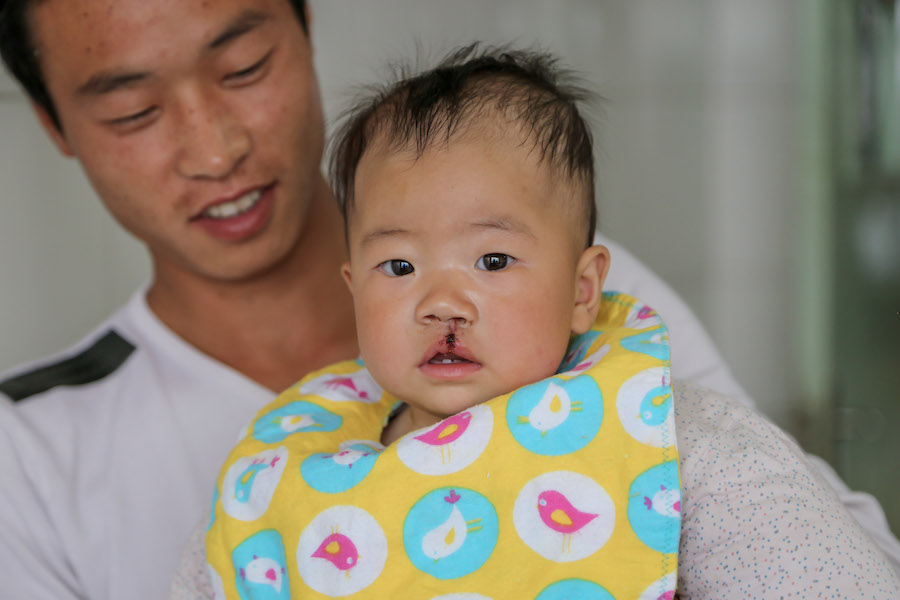
UC Davis surgeons travel to China to perform free cleft lip repairs on local orphans

LOVE WITHOUT BOUNDARIES FOUNDATION / COURTESY

The organization, Love Without Boundaries, has organized 12 such humanitarian medical missions to impoverished countries

Two surgeons within the department of facial plastic surgery at the UC Davis Medical Center in Sacramento traveled to China as members of a week-long surgical mission trip organized by Love Without Boundaries, a United States-based nonprofit.

Dr. Travis Tollefson, a fellow of the American College of Surgeons, and Dr. Celeste Gary were among a volunteer team of five doctors and other logistical support staff who traveled at their own expense to Kaifeng in Central China to perform cleft lip and palate repairs on local orphans.

The April 17 to April 23 visit to China was the 12th international cleft surgery trip organized by Love Without Boundaries and is the eighth trip undertaken by Dr. Tollefson.

The goal of the trip was to assist medical professionals at the Kaifeng Children’s Hospital in performing and financing cleft lip and palate repairs, a medical procedure that corrects the facial birth defect. The developmental impairment is common within China and is especially prevalent among low-income orphan populations in rural China, who often lack the resources or capabilities to receive treatment.  

For unknown reasons, Asia has the highest incidence of babies born with cleft lip in the world. Due to the cultural stigma surrounding children born with this condition in China, thousands of babies end up being abandoned and placed into the orphanage system when they are born cleft affected,” said Amy Eldridge, CEO of Love Without Boundaries, in a statement. “By providing them with surgery, our hope is that all of the orphaned children healed by our medical team will then be able to find permanent homes through adoption.”

In addition to performing the surgeries, another goal of the trip is to better prepare and equip local Chinese doctors and medical professionals to be able to perform the procedure following the conclusion of the humanitarian mission.

The benefit of this team is that we choose a site and then we train a local surgeon, as well as provide infrastructure, such as instruments, headlights and even one of the textbooks I wrote on complete cleft care,” said Dr. Tollefson. “That way when we leave we’ve trained someone who now will do all the work that we were doing and can make a difference in that manner.”

According to Dr. Tollefson, even though developmental malformations, including cleft lip and palate are often not life-threatening conditions, in low and middle income countries, they drastically affect the lives of those afflicted. Dr. Tollefson continued that major stigmas are attached to not only children with cleft lips, but also the children’s mothers.

“In Africa, it’s often described that when the father of a child finds out his baby has a cleft, the father will abandon the mother and the child because he believes there is something the mother had done wrong or that there is some form of curse,” said Dr. Tollefson.

He explained that in China, children with cleft lips face similar ignominy.

“With [China’s] one child policy, unfortunately there are a lot of orphans in China and many of these orphans have been abandoned because of their cleft lip and palate,” he said.

According to Dr. Star, orphans especially in rural China face many additional hardships independent from their disabilities.

“There is not a lot of support or care for orphans as far as education, nutrition and medical care. One of the organization’s focuses [is] to help establish those things in the orphanages,” Star said. “In addition to doing medical exchanges, they also have a presence in the orphanages in China, as well as what they call ‘healing homes’ for kids who are impoverished or in the orphanages. They also do educational programs at the orphanages because a lot of the orphans can’t attend school.”

According to Dr. Star, the visiting medical team, comprised of facial plastic surgeons, pediatric anesthesiologists, physicians and other medical support staff, worked in close proximity with local surgeons and other medical technicians. She added that both groups were able to collaborate effectively and foster an atmosphere of goodwill and cooperation.

“The staff of the hospital was so welcoming,” Star said. “They didn’t feel infringed upon at all. They were just really grateful for what we were offering for these kids.”

On previous surgical mission trips, Love Without Boundaries has integrated technology into their efforts to better understand regional distributions of developmental disabilities, as well as begin to discern the circumstances and patterns that result in the emergence of facial malformations in populations, especially within impoverished areas and in areas lacking modern medical infrastructure.

“I’ve been there over a dozen times working on research, evaluating where clefts occur in the country of Zimbabwe, using a mapping software, researching the improvement of surgical care in low and middle income countries, including doing research and training to help surgeons become better equipped to manage these kinds of problems themselves,” said Dr. Tollefson.

These efforts are all part of an emerging field of medicine described by Dr. Tollefson as Global Surgery.

“Global surgery is this field of study that is trying to bring the best surgical quality and care to all the areas of the world so that kids and adults can get care for things like car accidents or injuries so they don’t have lifelong disabilities,” Tollefson said. “This is just one way for us to help make sure that everyone is a citizen of the world and not just a citizen of the country they’re from.”

Written by: Jack Raineri – campus@theaggie.org

UC Davis to establish center for Chicana/o, Latina/o students

ZHEN LU / AGGIE
ZHEN LU / AGGIE

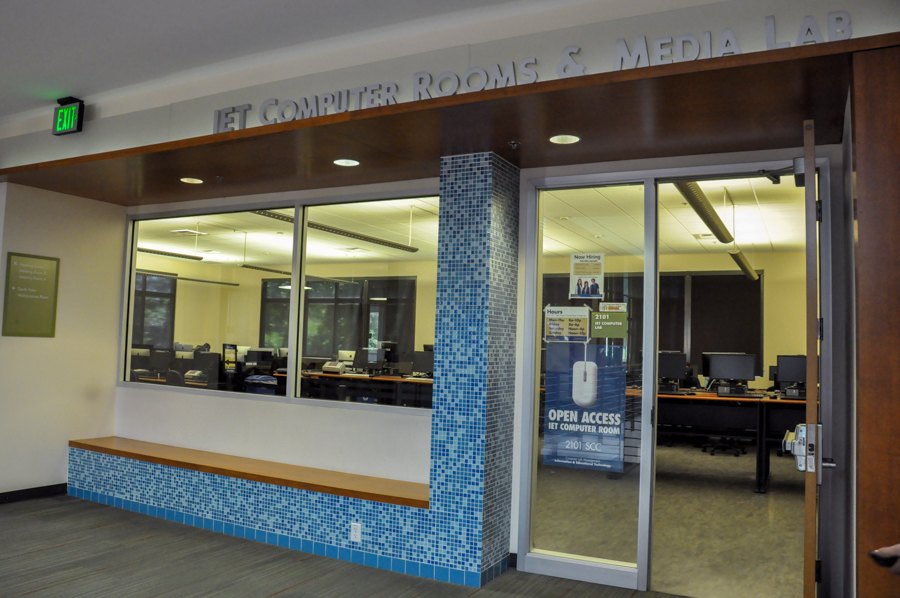
Center to replace Student Community Center’s IET Media Lab

UC Davis has announced plans to open a new Chicana/o and Latina/o Resource Center. The IET Media Lab in the Student Community Center (SCC) will close in spring of 2017 to make space for the center.

“The intention is to be more strategic and intentional to support the retention and graduation of these particular communities,” said Cirilo Cortez, the director of Strategic Chicana/o and Latina/o Retention Initiatives.

Cortez said the center will serve as a hub for academic support for individual groups and communicate with the Dean’s offices and academic advising offices, as well as have a direct line to referrals to address students who are on academic probation and subject to dismissal.

“[It’s a place to] find ways to provide more services, but also be a space for celebrating academic achievement, the stories of our students who are having success,” Cortez said.

Ruben Gil, a fourth-year English major and identity development coordinator at the Student Recruitment and Retention Center, said that the center has some potential, but that there are aspects that need to be addressed.

“I hope that it fills the gap of where all the other programs on this campus don’t seem to impact, particularly the first-year students,” Gil said. “I am afraid that, as hopeful as I want to be about this center, at the moment I just see it as another glorified study hall to appease HSI, [or] Hispanic Serving Institution, requirements.”

HSI is a designation by the federal government given to universities that meet certain requirements in helping facilitate low-income Hispanic students at the university.

Gil said that students have made their requests for the center known, including a change in the center’s planned location.

“We’re trying to have a say in this, we show up to every meeting, we try to voice our opinions and we already said we don’t want it in the [SCC] because we’re taking up space,” Gil said. “As it stands, this center is pretty balanced. We have students of color from all different communities, and to place a Chicano Latino center right on top of everything else, it’s going to bring an influx of folks from my community, which you know I want to retain, but I also want us to show what solidarity looks like and it doesn’t look like us imposing ourselves on a center that’s already so multicultural.”

Martin Giron, a second-year community regional development and Chicana/o studies double major, talked about his concerns for what it will mean to have the center where many students make regular use of the lab.

“I’m very offsided as well on the whole idea of having the center, especially the discussion of the location,” Giron said. “It’s going to be in the SCC where the current computer lab is, where a lot of current students use that center for printing, to do assignments, to just catch up on work and have an accessible computer at hand.”

Cortez said that the center will be open to anyone in the Latin American community, emphasizing diversity in such a large demographic.

“The center will be decorated and be a reflection of the diversity within the Chicano Latino community, not just heavily focusing on Mexican or Aztec culture but more broad to include the Latin Americas,” Cortez said. “It’s going to be very important for the UC system to think about more ways to better serve our community because demographically, we’re already the majority in public education.”

The center is the second in a project to create a space for four specific communities. This past fall, the African Diaspora Center in the South Silo opened, and Student Affairs still plans to create centers for the Native American and Asian Pacific Islander communities.

“We see a disparity of where these centers are located,” Giron said. “The center for African Diaspora is located in the attic of the Silo and ours is implemented in the [SCC], and the center for Native American students is [going to be] all the way next to where the international house is at. We’ve been asking to change the location [for the Chicana/o and Latina/o Resource Center] but nothing has been done.”

Gil said that programs for the Chicano/a center have either been non-specific or have not been geared toward a diverse enough population, including female students and the LGBTQIA community.

“I was part of the collective that formed the Chicano Latino male retention class and I tried inserting intersectionality by way of centering the conversation around gender and sexuality, but that wasn’t centered at all and so the class itself is only focused on heterosexual cis gendered Chicano Latinos,” Gil said. “As of right now, I hate that we still don’t have anything solid of what the center looks like even though it’s been in the talks for at least a year, and so we don’t know what it’s going to look like. All we know is that it’s going to be here in the [SCC] and that administration plans on retaining folks but they don’t listen to what the students have to say at all.”

Giron said that while the center is a good idea, there are still many issues that need to be figured out.

“Don’t get me wrong, I like the idea of having a center but I don’t feel like the center is something that is needed at this very moment. It needs to be talked about more than [in] just one town hall meeting within the community members,” Giron said. “There’s always going to be pros and cons and as student activists, we have to recognize when we’re taking up space and where space is needed.”

Written by: Ivan Valenzuela –campus@theaggie.org

“Have a good day at school, mom”

Kristin Hogue (COURTESY)

Older, nontraditional students seek the college experience at UC Davis

On the first day of the quarter, third-year English major Kristin Hogue’s professor began class with an icebreaker activity, welcoming her students to introduce themselves with a fun fact.

“I took a gap year between high school and college,” said the first student. “I’m part of the Band-uh,” said another.

The class continued like this for a while, until all faces pointed towards Hogue.

“I also took a gap year,” Hogue said. “Twenty-two gap years, actually.”

Hogue is a nontraditional undergraduate at UC Davis. She is a 45 year old married mother of five children, four of whom are attending college at the same time as her. Shortly after graduating high school, Hogue joined the workforce as a file clerk at Intel, and continued to work for the company for a decade.

“As I worked my way up through corporate America, I felt like something was missing,” Hogue said. “A lot of people around me had received a college education, and that’s something I didn’t get to complete. So I joined UC Davis full-time in 2003, but my children were so young then. The timing with my family responsibilities just wasn’t right back then. But now it is time for me to finish my education as well.”

Hogue’s decision to return to university and to pursue law school post-graduation was met with much enthusiasm from those in her life, particularly her family. Hogue’s son, Zennin Casl, is a first-year at the Rochester Institute of Technology in New York. He and his siblings often excitedly share news about their mother’s education.

“A lot of my friends only have one parent that went to college, or sometimes neither of their parents went to college. I’ve met very few friends that have two college-educated parents,” Casl said. “Now that my mom is back in school, it just makes me feel so proud of her.”

Lisa C., a third-year communication major, is also a nontraditional student that returned to university earlier this year. She began to pursue higher education after high school, but her marriage to a member of the military, combined with his frequent deployments and the birth of their children, complicated her college career. Like Hogue, Lisa C. has experience in the workforce, but saw merit in returning to school, so much so that it felt almost like an obligation.

“I want to set an example for my children,” Lisa C. said. “I want them to know that you should always finish what you started, no matter how long it has been or if you had to put it on hold. Since my first day of high school I knew that I wanted to go to college, and that’s why I am here. I am a lifelong learner.”

Her desire to set an example extends beyond her household, too. Lisa C. often feels that she is a role model and mentor to her younger classmates, especially given her age and her familiarity with duties that the average college student has had little to no experience with — like managing properties, filing taxes or raising a family.

Rebecca Salgado, a fourth-year political science major and peer adviser at the Transfer Reentry Veterans Center (TRV) at UC Davis, has found that these additional responsibilities have dynamic effects — both positive and negative — on such nontraditional students.

Older Wiser Learners (OWL), a former TRV program, aims to help re-entry students 25 and older, student-parents and married students find common ground with peers within their demographic, rather than the traditional 18 year old freshman or 20 year old freshman. Active participation in the program waned over the past few years and the program came to a temporary end. However, just earlier this year, several students expressed interest in re-starting the program, and kickstarted it as a student organization instead.

“I think something that OWL students face more than other students is that they have a resiliency. They think, I can do this. That’s really good and it helps them manage all these competing priorities,” Salgado said. “At the same time, I think it’s sometimes more difficult for them to ask for help because they’re like ‘I can do this, I can take care of this on my own’ like they do for their other responsibilities. But I found that when they do ask for help, they’re very willing to listen to advice, very appreciative.”

Salgado feels that she has a lot to learn from her peers in OWL, since they often have a unique perspective as university students because of other challenges that have shaped their experience. Hogue, who has attended OWL meetings in the past, has indeed found herself becoming a mentor in her new friendships.

“Because I’m a married mom, a lot of my experience comes from managing relationships and mentoring people. I’ve developed some friendships here that I like to call mom-ships,” Hogue said. “Sometimes, a girl sitting next to me in class will tell me about a fight with her boyfriend or will say she is having a tough time talking to a professor or [teaching assistants.] I’ll give her advice about how to manage those relationships.”

Still — like the students they are — both women find that they are constantly learning about themselves, their fields and their younger classmates in this new environment. The connection many millennial students have to modern technology and their ease in accessing information has left some nontraditional students on a steeper learning curve. Lisa C. tries to remain confident during educational and social challenges or feelings of inadequacy, reminding herself that no matter their ages, whether 18 or 88, all students ultimately attend UC Davis for the same reason: to learn.

According to Hogue, she often has to work harder and faster to keep up with their pace in the classroom, and she has a deep respect for her peers and their intelligence. She began her first quarter at Davis barely speaking to anyone other than her instructors, but her admiration for other undergraduates inspired her to build a college bucket list.

“I participated in the Fire Katehi walk-out. I had thought that at my age, a protest was something I’d never do. But when I was faced with that opportunity, I took it,” Hogue said. “I want to have as many experiences I possibly can. So I walked out with protesters. I learned a lot about the students and the administration, and how much these students value their ability to protest and the freedom they have to speak their minds.”

However, for a nontraditional student, not everything on a college bucket list is accomplishable. Lisa C. attempted to join a sorority, but found that her married status prevented her from doing so. Nevertheless, she continues to find other ways to integrate herself into campus life as she believes it is vital to student success. Both she and Hogue are eager to gain more than just a degree at UC Davis, and long for the college experience that they never had in their youth.

“My college experience has been all-encompassing. It’s been awesome and it’s been the highest of highs, but it’s also been overwhelming. In some ways, it’s even been terrifying,” Hogue said. “It is difficult to be a nontraditional student at UC Davis because I don’t necessarily share the current generational experience or its culture. But I’ve been really grateful for the opportunity to get in touch with it now.”
Written by: Anjali Bhat — features@theaggie.org

Poverty and policy

Giovanni Peri, Chair and Professor, Department of Economics (CENTER FOR POVERTY RESEARCH / COURTESY)

UC Davis Center for Poverty Research collaborates with policy community at Poverty Research and Policy Summit.

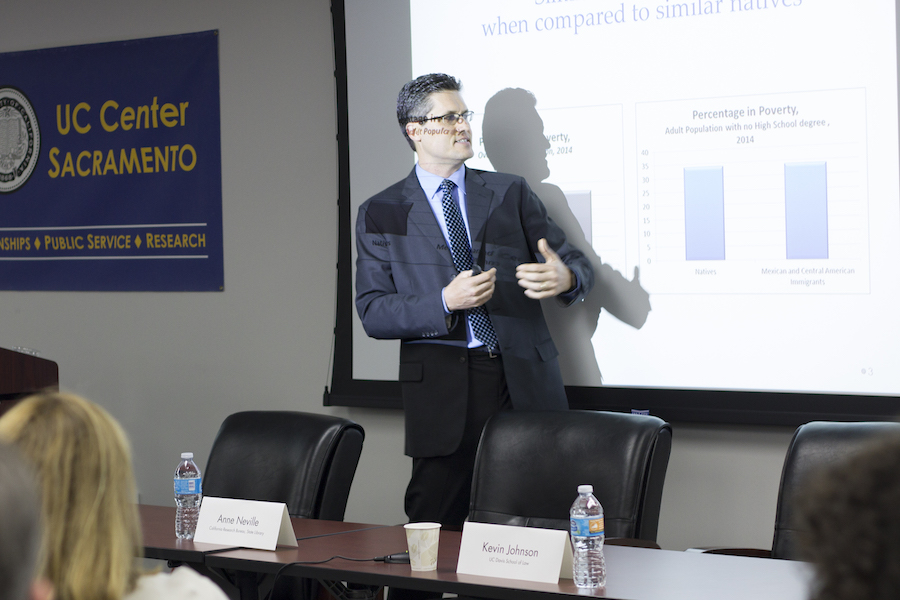
On April 22, the UC Davis Center for Poverty Research brought together researchers, policymakers, practitioners and advocates at the UC Davis Poverty Research and Policy Summit to discuss ways that research can help to combat poverty. The discussion, held at the UC Sacramento Center, explored poverty research and policy over the past 10 years.

Marianne Page, deputy director for the Center for Poverty Research, said that the summit gave both researchers and people involved in policy a chance to collaborate on the complex topic of poverty.

The Center for Poverty Research is a federally-funded center, and is one of three regional centers funded by the Department of Health and Human Services; the other two are based at Stanford University and the University of Wisconsin.

“There are three centers and they each have a different orientation and our center is oriented towards researching four areas,” said UC Davis psychology professor Ross Thompson. “Each of those areas was represented in one of the talks that we presented.”

The center focuses on immigration with relation to poverty, the effects of poverty on children, how labor markets affect poverty and the the effectiveness of social programs that are meant to assist people under the poverty line. At the summit, researchers were given 20 minutes to present what the last decade of research on each topic has shown about poverty. The panelists who are involved with policy were given the chance to respond to each presentation followed by general discussion of each theme.

Page stressed the importance of the summit, since collaboration between researchers and those involved with policy is not always available. While researchers look at poverty on a theoretical level, those in policy actually witness poverty in action. Bringing these two different approaches together can allow for progress in both fields, according to Page. Policy implementers are able to poke holes in certain aspects of research and, as a result, researchers can expand what they are looking for when asking questions about the subject.  

Thompson and Page collaborated on the children and poverty presentation. First, they asked whether children who grew up in poverty and experienced mental health problems have lower education levels, underemployment, unemployment, or lower wages. When research indicated there was a relationship, they then explored why the long-term effects of poverty are evident in children.

“We begin at the level of neighborhoods and communities. We then consider the effect of poverty on families [and] parent–child relationships. We consider then how children think of themselves: their self images, their aspirations for success, their self confidence,” Thompson said. “Then we burn down deeper to look at the effects of poverty on health and the immune system. You’ve got these really different levels that help explain why poverty has these effects on children and why those effects tend to persist over time.”

Thompson and Page were able to end on a hopeful note, concluding that policy interventions can help improve children’s health. For example, programs that help parents cope with economic stress can improve parent–child relationships and improve children’s health and confidence.

On the other side of the summit, panelist Kevin Johnson, dean of the UC Davis School of Law, took on the focus of immigration and poverty.

“[The summit] had a full house. […] I think that it was important to get researchers together with policymakers and policy implementers to talk about these important issues,” Johnson said. “I was quite pleased to see a number of UC Davis faculty and alums as well as attorneys and others listening intently to think about how we as a community and society can address these issues.”

In his presentation, Johnson discussed the economic benefits of integrating immigrants into the social safety net, allowing immigrants to receive more social benefits through programs offered by the state.

Through this integration, immigrants have a higher chance of being economically successful, possibly lowering poverty amongst immigrants. For Johnson, the conference provided a platform to raise discussion on these important problems.

“You’re not going to solve the problems of the world at a conference on a Friday afternoon,” Johnson said. “But you are going to start a discussion and dialogue that can have an impact and move us in a positive direction when it comes to these controversial issues.”
Written by: Amanda Cruz features@theaggie.org