53.5 F
Davis

Davis, California

Tuesday, December 23, 2025
Home Blog Page 749

Two UC students arrested for trying to steal textbooks at ARC bookstore

NICKI PADAR / AGGIE
NICKI PADAR / AGGIE

Extensive security precautions at temporary bookstore helps in catching culprits  

Two students were arrested Jan. 12 at the temporary bookstore at the UC Davis ARC Pavilion for burglary and theft after walking out with stolen textbooks. UC Davis student Adam Sato, 21, and James Hoblitzell, 19, a student at UC Merced, were taken into custody after employees reportedly saw the pair sneaking textbooks out of the store without paying.

“They were observed by bookstore staff putting books into a backpack and then leaving without paying for them, so staff followed them outside and called the police, who arrested them,” said Andy Fell, associate director of news and media at UC Davis.

The bookstore was relocated to the ARC after its original location at the Memorial Union (MU) began renovation in 2015. The bookstore is expected to move back to the MU in Spring 2016.

“Shoplifting is fairly common in our campus stores as it is at nearly all retailers,” said Jason Lorgan, director of the UC Davis bookstore, in an email. “Having said that, we believe we experience less theft than many mainstream retailers, primarily because of the market we serve.”

Lorgan also notes the different procedures that the store has had to implement since moving to the ARC, including placing non-uniformed employees who monitor the area.

“The temporary spaces have extensive camera systems for the safety and security of our stores and customers, and plain-clothed student loss prevention employees roam the locations just as they do in our permanent locations,” Lorgan said. “The spaces being more spread out now have created some challenges that we have had to adjust our procedures to compensate for.”

Maheep Virk, a fourth-year neurobiology, physiology and behavior major, expressed his disappointment in the incident and his thoughts on the students’ motives.

“It’s understandable that somebody would try and steal them. I just don’t think that that’s really the morally correct thing to do,” Virk said. “They probably realize that it’s probably harder to keep track of because the bookstore is now at the ARC and it’s a lot harder to catch people since it’s more of just a cage with books in it.”

Both Sato and Hoblitzell were booked at the Yolo County Jail on burglary and theft charges. Most students who shoplift pay a civil demand fine and are sent to Student Judicial Affairs. Fell notes that the nature of the incident is rare, but unfortunate.

“I don’t recall a similar arrest being made,” Fell said. “It’s unfortunate. We’d rather not see people try and do something like that.”

Written by: Ivan Valenzuela – campus@theaggie.org

UC Davis students continue push for more undergraduate-led courses

0
BRIAN LANDRY / AGGIE

Upcoming courses to touch on origami, meat protection, Hmong culture

Starting Spring Quarter of 2016, there will be eight undergraduate student-led courses that will be available for registration.

The courses will cover a wide breadth of topics, including cryptocurrency, the economics of happiness and origami, and are open to all undergraduate students.

While the amount of undergraduate student-led courses is on the rise, this is nothing new to the UC Davis campus. Student-led courses have been something that many undergraduate students have been interested in for a while, especially with the high-profile undergraduate teaching programs at UC Berkeley and Stanford. Recently, more students have helped to push for a larger and more centralized program for UC Davis students who want to teach their own courses. Among those students are former ASUCD senators Patrick Sheehan, Alex Lee and Roman Rivilis and former student Rajiv Narayan.

According to Rylan Schaeffer, a fifth-year computer science and engineering major and two-time student teacher, the previous undergraduate student-led courses were considered impermissible courses according to the Academic Senate at UC Davis. While courses were still being taught and units were still given to students, the student teachers were not considered legitimate. However, in Spring 2014, Schaeffer taught one of the first student-led courses at UC Davis, which was led through the UC Davis honors program and was a pilot course that preceded the creation of the senate’s new policy.

His current goal for the program is to get more students involved in participating, whether that be taking the classes or having the confidence and knowledge to teach courses. The other goal for the program is to establish an office on campus, which will serve as a facility where students can learn more about student-led courses. As of right now, the way the courses are formed is through departments. This means that the fate of a course is dependent on the particular department the student wants to teach their class through, which could potentially limit the ability of students to start their own courses.

But according to Schaeffer, despite the lack of unity within the program, the departments tend to be very accommodating to students who have an interest in teaching a course.

“Speaking from experience, the departments are by no means a bottleneck. I’ve taught courses in two different departments, one in computer science and one in a special academic program, and both of them were very facilitating,” Schaeffer said. “I haven’t heard of a case yet where the department was the problem.”

Schaeffer said that there are two problems that are most commonly roadblocks to students teaching their own classes.  The first problem is faculty members lacking incentives to aid the students in teaching their courses.  The second is a lack of students who are able to follow through and find unique subjects that are not already taught by the university.

“Essentially, they work like regular classes. You register for them on Schedule Builder with a CRN. They’re usually only one to two units, and they are all pass or no pass. Students don’t have the power to give each other letter grades and they don’t require a final either,” said Joshua Wild, a Student Assistant to the Chancellor and third-year economics major who will be teaching the economics of happiness course next quarter.

In order to teach a class as an undergraduate, the subject chosen must be a topic that is not taught on campus by a professor or lecturer. After choosing the topic, students will have to find a professor on campus who is willing to sponsor their class. Students will then have to get approval for their class through the department that the class will be offered in, which usually takes up to a quarter. During the next quarter, the student and the professor will plan the class curriculum. The student will teach the class in the subsequent quarter.

Madiha Javed, a first-year computer science major, said that she is looking forward to the courses being offered.

“I am really excited for these courses, and I hope the university makes it a priority to fund them,” Javed said.

The classes that will be taught this spring include: Economics of Happiness, Cryptocurrency Technologies, Origami, Children’s Literature Workshop, Fundamentalism, Terrorism and Human Rights, Introduction to Hmong Culture and Language, MEDLIFE and Meat Protection and the Environment. All these courses can be registered for on Schedule Builder as of right now with the corresponding CRN.

For more information on these courses and specific CRNs, contact Schaeffer at ryschaeffer@ucdavis.edu

Written by: Sangeetha Ramamurthy – campus@theaggie.org

Note: As of Feb. 16, 2016, some changes for accuracy in this article were made

ASUCD to host Student Appreciation Week in honor of 100th anniversary

ASUCD's Block Party on Feb. 19, 2016 takes place on the quad. (NICKI PADAR / AGGIE)
ASUCD’s Block Party on Feb. 19, 2016 takes place on the quad. (NICKI PADAR / AGGIE)

Association to hold events throughout next week celebrating clubs, professors and students

From Feb. 16 to 19, ASUCD will host Student Appreciation Week in honor of its 100th anniversary. ASUCD is hosting the series of events in order to give back to the community and showcase the clubs and activities that make up UC Davis.

“ASUCD doesn’t do enough to celebrate its students and our executive administration wanted to change that,” said first-year undeclared student Daniel Nagey, the ASUCD Executive Office director of programs. “Both ASUCD and students alike have failed to recognize that students are the lifeblood of our association. Without them we would be nothing. Therefore, we wanted to host events on a wide scale that would both benefit the students and pique their interests.”

Every day of the Student Appreciation Week, ASUCD will host different events on the Quad, each day with its own unique theme and activities.

To kick off the week, Tuesday’s theme will be “Celebration of Clubs.” Throughout the day, many clubs will be hosting games and activities such as dart board games, dance workshops and food demonstrations. There will also be other activities such as a potato sack race and balloon toss to win prizes.

Feb. 17 will be “AS(YOU)CD: Nourishing the Student in You.” Students will have the opportunity to grab coffee with their favorite professors at the ASUCD Coffee House (CoHo). There will also be a mini panel with graduate students to talk about their experiences and give students tips on success in the CoHo.

Feb. 18 will be “Keys to Success by ASUCD,” an ASUCD formal with alumni and keynote speaker Caliph Assagai, who served as ASUCD President from 2006 to 2007. The event will include a buffet and silent auction to raise money for ASUCD scholarships.

Feb. 25 will be an  “ASUCD Block Party” with activities similar to The Buzz. Students can expect inflatables, a laser tag arena, face painting, cotton candy and popcorn machines, a giant slide and a mechanical bull. There will also be performances by Davis acapella groups and a presentation by the ASUCD Senate to encourage people to vote that week in the ASUCD elections.

“We worked really hard on this event and we tried to assure students got the most out of it,” said Julienne Correa, a second-year psychology major and a member of the Executive Office volunteer staff who is helping organize the block party. “We want students to know what ASUCD has done for the school. Students should really come out and enjoy the activities.”

So far, public opinion for Student Appreciation Week seems to be positive, especially for Friday’s block party.

“I’m really excited,” said Karen Parga, a third-year biological sciences major. “[It] sounds like a great way to encourage students to reach out to professionals in various fields of study.”

For more details and a full list of events, visit the Student Appreciation Week’s Facebook page.

Correction: Due to the rain, the ASUCD Block Party was moved from Feb. 19 to Feb. 25. 

Written by: DEMI CACERES – campus@theaggie.org

How many movies, again?

0
ANH-TRAM BUI / AGGIE

How to properly participate in Oscar season

The Academy Awards are upon us and we could not be less prepared. How can you manage to watch and analyze every minute of each Oscar-nominated film by Feb. 28, while also having the responsibilities of a student, an employee, an intern, a club member and a real-life, participating person?

If you consider yourself a movie buff, the following are some handy steps to help you properly take part in Oscar season. However, before starting, make sure you take the time to critically analyze what goes into nominating a movie for an Academy award –– check out the Editorial Board’s comments on inadequate racial representation in Hollywood. This might influence how you spend your time the rest of February.

Step 1: Rationalize

Take the time to determine how you would like to spend your free time this quarter. Being a part of the quarter system –– which means four midterms, two papers and a project all (unsurprisingly) due the same week –– watching your favorite sitcom on a regular basis is a feat within itself. Do you want to go out with friends on your somewhat open Friday nights, or stay in with headphones, Ben & Jerry’s and The Revenant’s Leonardo DiCaprio? If the latter doesn’t sound at least tolerable, don’t put yourself through the heartache of watching feature-length films on a futon in a dark apartment. It’s all about your initial mindset, and like with any goal, optimism takes you all the way.

Step 2: Organize

People say that setting a goal for yourself will always come to fruition if you incorporate metrics –– determine specially how many movies you need to see and when you will watch them. What categories are you most invested in? Do you care more about acting, sound mixing or directing? When you decide that, for example, you want to watch all of the movies with Best Picture and Cinematography nominations at least once a week, write them all down and put them in your calendar! Be careful though –– making too long of a list could discourage you.

You’ve probably already seen Mad Max: Fury Road and The Martian, so cross those off your list. See, you’re already a quarter of the way there!

Step 3: Follow through

Spend your first midterm and project-free week getting through the list of movies. If you get one movie down over the weekend, you’ll feel great. Even get two out of the way if you can!

Following through on any project is essential, but when it comes to a voluntary program like this, it encourages pride and self-love as well. If you’re taking care of yourself and putting your happiness first –– and watching movies is a part of that –– this is meant for you.

Step 4: Get some friends involved

Why wouldn’t you? You’re having a great time and though you might have missed a scheduled viewing or two, having already watched a considerable amount of films, you’re way ahead of anyone who’s just begun. Besides, the thrill of beating your friends with a bet over which adapted screenplay deserves to win makes watching the awards way more fun.

Step 5: Panic

That head-start from when you organized your goals into neat little categories on your calendar is probably long gone a week before the show. What exactly were you doing, anyway? That physics midterm wasn’t worth all the studying –– you should’ve watched Spotlight for those two hours you spent procrastinating in the library. Come on, focus!

Jokes aside, there is a natural point where we need to realize exactly what we’ve volunteered ourselves for. Making the commitment to watch hours of film in the middle of the school year is a big deal, and maybe that moment of panic is just what you need to wake yourself up. But please, always remember put your schoolwork first.

Step 6: Re-rationalize

Okay, now it’s time for some reflection. How have your goals changed in the last few weeks? Would you be able to cut any films out of the running for your attention, or be able to shift your original schedule to fit your needs? Or is it time for abandonment? Ending here is not failure, but you can probably still muster up some energy for the final leg of this incredible cinematic journey.

You’ve probably lasted longer than your less determined friends that dropped out as soon as they saw that Bridge of Spies had been nominated and didn’t want to deal with it. Comparing yourself to others is a sure-fire way of establishing your own adequacy.

Step 7: Resolve

Unless you’ve already seen all of the nominated movies accidentally (which can’t be true because everything Oscar-worthy makes its way to us in mid-January), it should not be expected of you to finish within the month. Don’t put yourself through the pressure; you deal with enough from your professors! If this happens to you: don’t fret, because you’re definitely not alone.

Step 8: Try again next year after forgetting everything you have learned.

Have a happy Oscar season!

Written by: EMILIE DEFAZIO– features@theaggie.org

Senate Endorsements: Consider the Following

0
JAY GELVEZON, MONICA CHAN, ARIEL ROBBINS, ASHLEY LUGO, LUCY KNOWLES, BRIANA NGO / AGGIE

2016 Winter Quarter ASUCD Elections

ASUCD’s Winter Quarter elections are just around the corner and in order to make this round’s race a tad more clear, The Aggie’s Editorial Board interviewed all 19 senate candidates and both executive teams to make our quarterly picks on who should take a seat in the coveted third-floor Memorial Union offices. With familiar names on the ballot, this quarter’s cast of candidates is easily one of the most interesting and impressive in recent years. However, only six senate candidates and one executive team made our competitive short-list based on their readiness to take on UC Davis’ top roles in student government.

Executive:

Alex Lee (President) and Abhay Sandhu (Vice President) – SUMMIT

LeeSandhuLee and Sandhu have the experience and knowledge to take a seat in ASUCD’s Executive Office. Lee, who recently finished his term as a senator, and Sandhu, who currently serves as the chair for the Internal Affairs Commission, have the astute understanding of ASUCD necessary to pull off their ambitious, yet doable, platforms. The Editorial Board was particularly impressed by the pair’s willingness to delegate through creating a cabinet with focuses such as units, external affairs and academics. The pair showed further promise to students through their unique take on a club festival with a focus on fundraising for clubs through selling food and merchandise. With an additional idea to create an assembly to represent the four colleges, Lee and Sandhu are the right pair to spearhead this complex association.
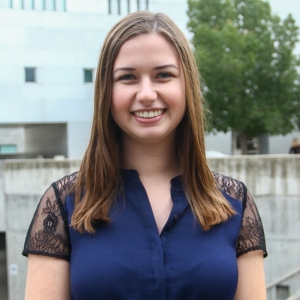
Senate:

  1. Sofia Molodanof – SUMMIT

MolodanofWith an impressive amount of effort already taken to communicate with administrators and outside organizations to learn the ins and outs of her platforms, Molodanof shows no bounds to what she can accomplish if she was actually in office. The second-year English and communication double major, who has held a seat on ASUCD’s Outreach Assembly, impressed The Aggie with her thoughtful answers and defenses to potential holes in her platforms. Molodanof, whose platforms include bringing more microwaves to the CoHo, creating a 24-hour non-urgent mental health stress line and displaying nutritional information at the CoHo, showed particular promise in her back-up plans and even back-up back-up plans if funding for her platforms fall through. With ideas like sharing funds with other departments and looking to statewide grants, Molodanof is a viable contender, deserving of The Aggie’s top slot.
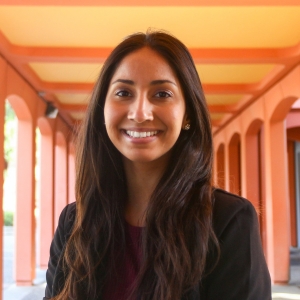
  1. Shaitaj Dhaliwal – BASED

DhaliwalAs the Executive Office’s current Chief of Staff, third-year international relations major Dhaliwal, who also has experience as a senate staffer and an advocate for the Office of Advocacy and Student Representation, has been involved in ASUCD since her freshman year. As current ASUCD President Mariah Kala Watson’s right-hand woman, Dhaliwal has sat in on various high-level budget hearings, providing her with a deep understanding of ASUCD’s budget and the motions she needs to take in order to realize her platforms. These platforms include using the Entertainment Council’s large show fund to launch a student talent-centric Davis Music Festival and partnering with the Academic Senate’s library committee to create more lounge spaces in Shields Library. With her experience in the Executive Office, Dhaliwal has a strong grasp on how to work with administrators and is now focusing on catering to students.
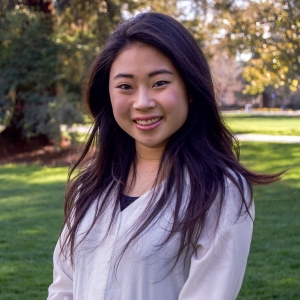
  1. Sam Chiang – BASED

ChiangAs a student who has been personally affected by the issues she’s seeking to change, second-year English and psychology double major Chiang impressed the Editorial Board with her passion for ASUCD and devotion to the student body. Chiang, who has served as the director of public engagement for ASUCD’s current Executive Office, showed particular promise with her refreshing and practical platforms, which include integrating a letter of recommendation request system into OASIS, making course evaluations public online and bringing vending machines to Shields Library stocked with bottled coffee and vital study supplies. However, she solidified her passion for students with her progressive platform to mandate mental health training for all professors following her struggle last quarter with anterograde amnesia, a mental illness that prevents the formation of new memories.
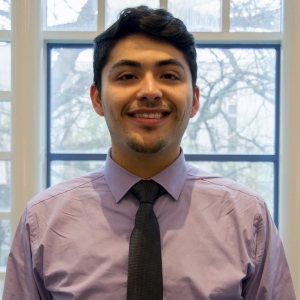
  1. Ricardo Martinez – BASED

MartinezThrough his short time in ASUCD as a staffer for Senator Kamaal Thomas and a commissioner for the Ethnic and Cultural Affairs Commission, third-year political science and philosophy double major Martinez made a strong impression on the Editorial Board with his quick learning and humble, but necessary, platforms. As a member of the underserved Chicanx/Latinx community, Martinez is following in Thomas’ footsteps to foster student retention and ensure post-graduation success to students in this community with a series of professional workshops, similar to those provided to the African diaspora community. Martinez also showed his astute awareness of other underserved communities on campus through his platform to bring Community Advising Network counselors to specialized locations such as the AB 540 and Undocumented Student Center, the LGBTQIA Resource Center and the Women’s Resources and Research Center. With an additional platform to add a “Jobs/Internships” tab across all department websites, Martinez epitomizes the right voice to represent the student body.
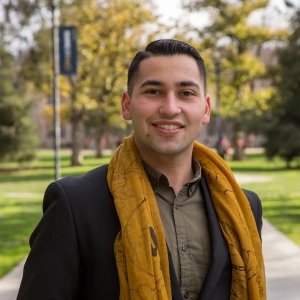
  1. Drake Santamaria – LEAD

SantamariaThrough his time as a commissioner for the Gender and Sexuality Commission, third-year design and communication double major Santamaria is a qualified advocate for UC Davis’ frequently overlooked LGBTQIA community. As a former resident advisor for student housing, Santamaria impressed the Editorial Board with his experience talking to leaders in student housing to begin implementing his Safe Dorm Initiative, a plan that would secure safe living environments for transgender students by automatically placing them in housing they are comfortable with. Santamaria also showed his awareness of the needs of LGBTQIA students and other marginalized communities with his platforms to indicate preferred gender pronouns on class rosters and bring more community-specific mental health services to campus.
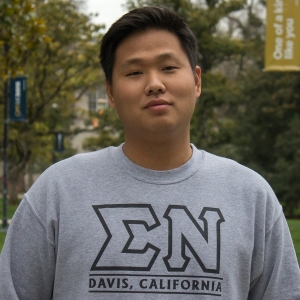
 

  1. Sam Park – SUMMIT

ParkFourth-year political science major Park inspired the Editorial Board with his personal struggles that led to his carefully-selected platforms. As a transfer and re-entry student, Park exemplified his passion when speaking on behalf of these communities with his needed platform to restructure transfer and re-entry orientation to more closely resemble the university’s First Year Experience program, which provides a full scope of services and students organizations available to the campus. He also plans on serving veteran students by implementing a peer advising program. Park, who battled cancer during his first year at UC Davis, refreshed us with his much-needed platform to create a resource packet detailing all the mental and physical health services available to disabled students as well as bring a specialized counselor to the Student Disability Center. With an additional platform to revamp Aggie Job Link by partnering with the Cal Aggie Alumni Association to include more job listings for post-graduates, Park showed his strong grasp on satisfying the needs of the student body.



ASUCD elections will be held from Feb. 16 to Feb. 19 at elections.ucdavis.edu.

Print The Aggie

0
TIFFANY CHOI / AGGIE

Support student journalism

Picture the UC Davis campus on a Tuesday morning during week six of Winter Quarter. The CoHo line is a mile long, bike circles are packed with students rushing to their midterms, professors are holding extended office hours and those that spent the night in the 24-hour study room are slowly emerging into the daylight.

While all of this is happening above ground, no one has time to consider anything else, let alone think about what’s going on in the basement of Freeborn Hall.

Few may know it, but Lower Freeborn is a thriving, creative and exciting place. Home to The California Aggie, The Basement has become a space for writers, photographers, graphic designers and copy editors to celebrate and engage in high-quality student journalism.

This academic year marks The Aggie’s 100th birthday. For 98 of those years, our staff has provided a print newspaper to the UC Davis campus community. However, in 2014, financial difficulties forced The Aggie out of print. All operations were moved online, staff pay was cut entirely and readership dropped significantly.

In a relatively short amount of time, The Aggie became a volunteer, web-based organization, and UC Davis became the only undergraduate UC campus without a print newspaper.

Flash forward two years later, and we’re still here — building up our online presence, boosting social media engagement, having daily Editorial Board meetings and holding foosball tournaments in 25 Lower Freeborn. But something is different. We no longer have a hard-copy source of student news in Davis. The Aggie recognizes that the print newspaper industry isn’t what it used to be, but this trend isn’t necessarily the reality of a niche college market. We cannot accept sacrificing services that all other UC students have for an industry shift that does not apply to our campus.  

So, in honor of our unit’s centennial, we are campaigning for the Print The Aggie initiative. If passed during this quarter’s ASUCD elections, the measure would increase quarterly student fees by $3.73 — less than a CoHo sandwich. With this money, The Aggie will be able to resume weekly printing, create close to 100 compensated student positions and hire a professional business manager to oversee our finances.

By running a fee initiative that other UC newspapers have successfully implemented in years past, we hope to create a sustainable business model that will last long into the future, while also fulfilling our mission of delivering news in an accessible way. Additionally, we believe that our 100 staffers, all of whom put in many hours of work every week to keep the newspaper running and provide a service for UC Davis students, deserve pay for what they do.

Print journalism is important, especially on a college campus. In addition to increasing transparency of local issues and keeping an official record of UC Davis history, an on-campus print newspaper gives student groups more visibility for their events and allows for a higher level of accountability for ASUCD and the administration.

We understand that an informed student body is an educated, conscious and well-rounded one. We also understand there’s nothing quite as pleasant as reading a print newspaper while drinking a cup of hot coffee.

If you enjoyed reading through this newspaper, consider voting ‘Yes’ on the Print The Aggie initiative next week, so this can become a normal occurrence. If not, still cast a vote. It’s a duty that comes with being a student.

Voting will take place at elections.ucdavis.edu from Tuesday, Feb. 16 to Friday, Feb. 19.

2016 ASUCD Winter Elections – Meet the Candidates

ASUCD / COURTESY
JACQUELINE SU / ASUCD CREATIVE MEDIA

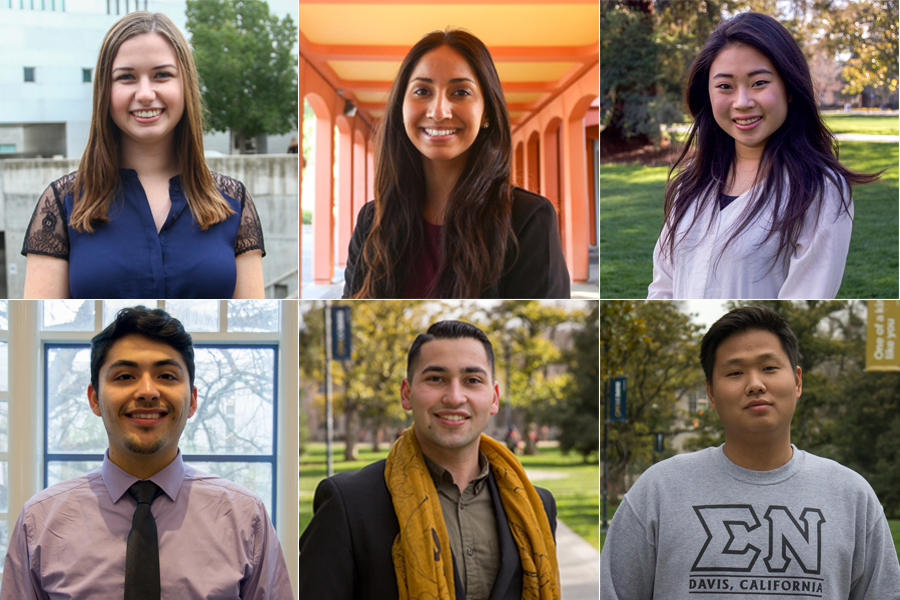
These are the candidates running in the 2016 ASUCD Winter Elections

Summit Slate

Executive

Alex Lee (President) and Abhay Sandhu (Vice President)

LeeSandhuAs one of two executive tickets, Lee, a third-year communication and political science double major, and Sandhu, a third-year neurobiology, physiology and behavior major, seek to change the university through a five-point platform consisting of academics, advocacy, clubs, jobs and ASUCD reform. Among their goals, the duo plans on making GE credit available for AP and IB classes, expanding ASUCD jobs, ensuring UC Davis’ participation in UC-wide decisions and launching a club fair. The pair also plans to create a cabinet under the executive branch to address key issues within the association.


“Alex and I are huge proponents of clubs, and we want to host a club fair that would allow clubs to streamline recruitment services and sell their merchandise,” Sandhu said. “Clubs are really the backbone of extracurricular involvement.”

In terms of experience, Lee just completed his term as an ASUCD senator and is the founder of the Davis Filmmaking Society, and Sandhu has spent time interning under former Senator Gareth Smythe and is currently the chair for the International Affairs Commission.

“ASUCD is the largest employer of students on campus, so we want to take pride in that,” Sandhu said. “We want to propel that notion of getting students jobs and we want to maintain that progress and hopefully expand the amount of jobs that we can offer in ASUCD.”

Senate

Ryan Downer

DownerAs a transfer from Santa Monica College and the vice chair for the Transfer, Re-entry and Veteran Committee, Downer, a third-year English major, seeks to improve resources for students by making the Orientation Handbook more student-friendly.
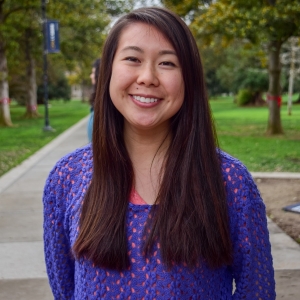
Downer, who has two years of student government experience from his junior college, wants to enhance financial literacy for students by holding lessons on investment strategies. He also plans to increase funding toward units like The Pantry, Aggie Reuse Store and Campus Center for the Environment.

“I’m a former homeless runaway. I was homeless for a year when I was 18, so I went through a very harrowing experience,” Downer said. “I have a deep empathy and connection with people who are greatly in need. I’m basically on a mission to make sure that the units that provide student aid for the people on campus are well-funded, well-taken care of and well-managed.”

Christie Chan

ChanAs a member of Alpha Chi Omega and second-year managerial economics major, Chan hopes to unite ASUCD and Greek life through her platform — Greeks Giving Back, a joint fundraising campaign to increase funding to support groups such as Cal Aggie Camp and The Pantry.
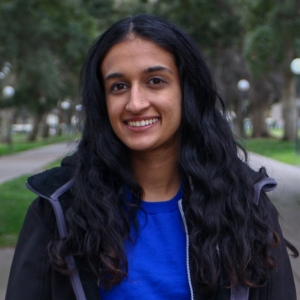
“My big is the unit director of Cal Aggie Camp and the budget has been really rough on her. She’s had to raise a lot of money than previous years,” Chan said. “Just looking at that and learning about how other units don’t get as much funding, that’s what mainly inspired me to unite the Greeks and ASUCD because I know Greeks are masters of fundraising.”

Chan, who is a current member of the Internal Affairs Commission, also seeks to establish a business major on-campus.

Irveen Grewal

GrewalAs the vice president of Ignite UC Davis, an organization serving to empower young women to become active leaders, second-year political science and psychology double major Grewal hopes to further sexual assault advocacy on campus.
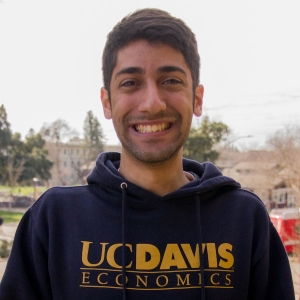
“I’d like to work with the Campus Crisis Response team to bring advocacy efforts to girls who have been attacked or victimized,” Grewal said.

Grewal, who was a staffer for former Senator Alex Lee, also hopes to further student resources through increasing nap areas, providing more 24-hour study rooms and extending computer lab hours. She also hopes to increase safety on campus through further developing the Safe Ride app and improving campus lighting.

Sam Park

ParkAs a transfer and former temporarily-disabled student himself, Park, a fourth-year political science major, wants to completely restructure transfer and veteran students’ orientation to engage the full extent of resources provided to the two groups. Park also wants to provide veterans with a separate orientation process completely, along with a career advising network for disabled students, increased notetakers and an information guide online.

“I believe [my decision to run for senate] was due to my own basic personal experience and struggles as a transfer and temporarily disabled student,” Park said. “I want to provide that perspective because it’s not being provided in the senate table right now.”

Park served as the network development organizer for Sigma Nu Fraternity and has served the internal affairs commission in ASUCD.

MolodanofSofia Molodanof

Molodanof, a second-year English and communication double major, has platforms that center around advocating for mental health, displaying nutritional information in the CoHo and improving campus amenities.

Molodanof serves as part of the ASUCD outreach assembly, and has experience with student council.

“We’re one of the biggest schools in California and [ASUCD [has] one of the biggest budgets in the country as it is,” Molodanof said. “I feel confident in my abilities to help students out.”


Based Slate

Senate

Samantha Chiang

ChiangChiang, a second-year English and psychology double major, has a platform that revolves around providing students with the basics, including creating a letter of recommendation system via OASIS or Canvas, making end-of-the-quarter professor evaluations public and bringing a vending machine to Shields Library.

Given her recent battle with anterograde amnesia, a mental illness that prevents the formation of new memories, Chiang also hopes to mandate mental health training for all professors. Chiang serves as the director of public engagement in ASUCD executive office.

“My platforms are all about bringing things back down to the basics means, giving students what they need as opposed to what they want,” Chiang said.


Ryan Abusaa

AbusaaAbusaa began his senatorial run with the goal of creating a series of student committees to help increase advocacy and representation for students, particularly international students and students of color.
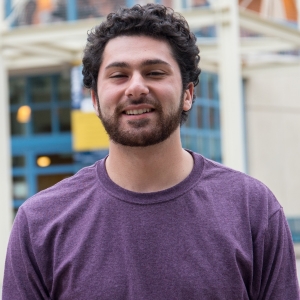
“I’d like to have students from different backgrounds, representing different colleges international [and] national to sit on these committees to make sure we’re ethically using our funds,” Abusaa said.

Abusaa, who interned under former Senator Roman Rivilis and worked with the Experimental College, also hopes to expand the role of the Entertainment Council by pairing the unit with the Club Finance Council and bringing in local artists. He also plans to work with Transportation and Parking Services to create an alternate payment system, in which students can pay off tickets through donations to The Pantry or volunteer hours.

DhaliwalShaitaj Dhaliwal

As the current chief of staff for the ASUCD Executive Office and a former intern for U.S. Senator Dianne Feinstein, Dhaliwal is planning on bringing her experience to the senate table. Her plans include arranging a Davis Music Festival through accessing reserves funding, bringing healthier food options to the Silo and creating more lounge spaces in Shields Library.

“Coming in, I have a vast amount of experience with not only policy, but also advocacy,” Dhaliwal said. “Through my experience, I’ve been able to meet with students and hear what their main desires are.”


Sevan Nahabedian

NahabedianFor second-year genetic and genomics Nahabedian, running for re-election came down to ensuring the completion of his unfinished projects from his past year as senator. He hopes to continue his work as adopted senator of the Bike Barn, by expediting repairs, updating the showroom and restructuring the unit so that its focus is on selling and repairing parts.
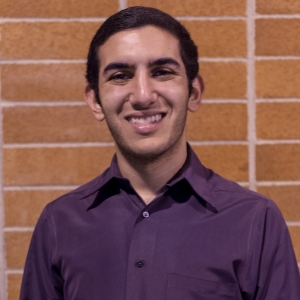
“I know how the space operates,” Nahabedian said. “I think that makes me the ideal choice for a second term. There are these projects that I’m so passionate [about], and I want to see them come to fruition.”

Additionally, Nahabedian has worked closely with Senator Miguel Guerrero and the External Affairs Commission to meet with athletics department representatives in order to figure out a way of increasing students’ commitment to Aggie athletics.

Ricardo Martinez

MartinezAfter seeing the strides Senator Kamaal Thomas made for the African Diaspora community,  third-year political science and philosophy double major Martinez developed a campaign targeting the Chicanx/Latinx community. Martinez, who was a commissioner on the Ethnic and Cultural Affairs Commission and previously interned at the Cross Cultural Center, plans on improving retention and recruitment for Chicanx/Latinx students.

“I was part of Senator Kamaal’s staff and while working with him I learned of two interesting ways in which to tackle retention and recruitment,” Martinez said. “I hope to apply what I have learned to the Chicanx/Latinx community.”

Martinez also wants to bring the Community Advising Network counselors to the AB540 Undocumented Student Center, Center for Advocacy, Resources and Education, the LGBTQIA Resource Center and the Women’s Resources and Research Center.

Ayman Shehadeh

SedhadehShehadeh, a second-year biochemistry and molecular biology double major, would like to implement a more supportive academic probation (AP) system by providing peer advising and more efficient warnings to those students on AP. Shehadeh also aims to bring more career resources for non-STEM majors.
“I feel as though ASUCD is represented heavily through social science majors and there’s not a lot of representation from people who are [in the] hard sciences,” Shehadeh said. “They don’t have a full representation of what the student body is, and I feel that I can represent that.”

Shehadeh previously worked for the Academic Affairs Commission.


L.E.A.D. (Leadership, Empowerment, Activism, Diversity) Slate

Executive

Elijah Pipersburg (President) and Lauren Kong (Vice President)

PipersburgKongBoth stemming from backgrounds of student leadership at the same community college, Pipersburg, a third-year political science major, and Kong, a fourth-year political science major, hope to strengthen energy, education and representation through their executive ticket. They strive to not only represent UC Davis students but to also highlight and encourage student voice, while invigorating the Aggie spirit on campus through their “Project Fun,” consisting of acts like bringing headliners back to campus.
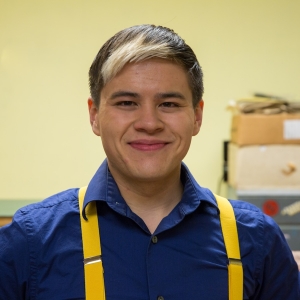
“We thought that [with] Mariah’s campaign, she really did bring it home,” Pipersburg said. “Seeing that [Kong and I] are the executive candidates [of L.E.A.D.], [we] want to continue the work Mariah has done — but go a little bit further.”

Currently, Pipersburg serves for the Office of Advocacy and Student Representation and as a member of the UC Regents Committee of Educational Policy. He previously acted as local affairs officer and vice president of internal affairs for the Davis consulting group. His running mate, Kong, served as a staffer for Senator Alex Lee and has past experience coaching badminton and leading the speech and debate team at both Kong and Pipersburg’s community college.

“We really believe in the voice of the student, which is what education is about,” Kong said. “Education is about transparency and understanding what ASUCD is about. We want everything to flow in a very cohesive manner, in a way that’s very collaborative so that everyone feels that they know what’s going and that they have a voice on campus.”

Senate

Brendan Chang

ChangFor Chang, a former senator and a fourth-year English and statistics double major, running a second time means a chance for him to further his former projects, including his reinstatement of the Transfer, Re-entry and Veterans Committee earlier this year. He also wants to continue to work with the Academic Affairs Commission to create a freely accessible portal for students to access class syllabi.
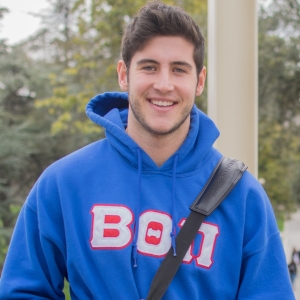
“The association has not really accommodated transfer students basically since its existence,” Chang said. “We’re 25 percent of the population, but we haven’t been represented in the association.”

Chang has held roles in student government for the past four years, including positions as a senator and the director of programs for his community college.

Bennett Pollack-Reeber

Pollack-ReeberFor Pollack-Reeber, a third-year political science and international relations double major, running for senate stems from his passion for social justice and his background in student leadership.
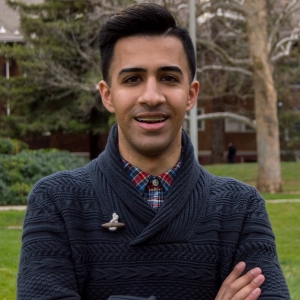
As a member of Students for Sensible Drug Policy, Pollack-Reeber, founder of the non-profit “Helmets are Sexy!” and Bernie Sanders superfan, hopes to start out his term by organizing free know-your-rights seminars for UC Davis students. Pollack-Reeber hopes to bring about the state-wide “Good Samaritan Law” to campus — where its presence is excluded — to avoid any students who might be suffering from overdose or drug-related issues from losing housing, financial aid and other academic privileges simply because they reached out for help.

“I think we need to see more activism [and] less bureaucracy in student government,” Pollack-Reeber said. “I want to be the catalyst to get things done, and to change things we don’t like.”

Jasir Soomro

SoomroIf elected, Soomro, a fourth-year neurobiology, physiology and behavior major, hopes to use his previous experience as senator and commission member at his past community college to serve the UC Davis campus community.
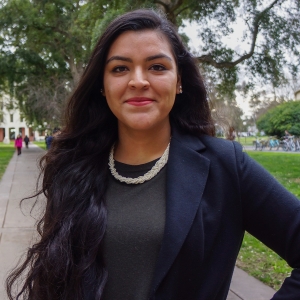
“I have that resonance with the people’s wants and needs,” Soomro said. “The critical time that ASUCD is going forward with — the budget crisis — I want to be apart of that.”

Soomro’s main platforms consist of serving coffee and tea in the library and developing mid quarter evaluations for professors and staff members, rather than the single end-of-quarter evals.

Drake Santamaria

SantamariaSantamaria, a third-year design and communication double major, hopes to focus on bringing a safe environment to trans students seeking housing accommodation, with eventual plans to branch out into representation for other marginalized groups on campus.

“I found out that those who had a platform that stood on diversity and marginalized students had to step down this quarter, and no one was going to take the frontier and step up,” Santamaria said. “I felt as though it is [unfair] for those who fall in a diverse or marginalized community to not be heard and I want to be that voice for them.”


Santamaria is a part of the Student Fashion Association and serves as philanthropy chair for Sigma Nu Fraternity, having worked with the gender and sexualities commission, student housing and undergraduate admissions in the past.

Claudio Serrano

SerranoSerrano, a third-year history and Spanish double major, wants to up the accessibility of resources to students. She hopes to increase the availability of gender neutral restrooms on campus, while also planning biweekly academic advising on the Quad from all the colleges.
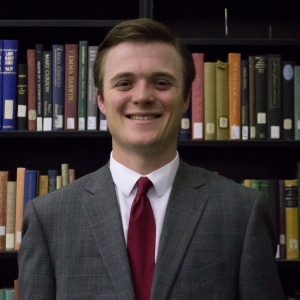
With her background as member of the student board for the Danzantes Del Alma (DDA) and a previous public relations and marketing intenrship, Serrano ensures she has ample experience in directing large group of students.

“I felt like ChiLat community wasn’t being represented as much in the student government,” Serrano said. “I felt now […] was a perfect time to go out and represent my community and advocate for issues that concern them.”

Independent

Senate

Jack Foley

FoleyFor Foley, a second-year political science major, club funding is his number one goal. Foley, who ran for senate in Fall 2015, hopes to assist with funding through working with local businesses and providing tips for applying to grants.

Foley, who was an intern for former Senator Reem Fatayerji and who currently holds a position on ASUCD’s judicial branch, also plans to improve student safety by replacing campus lighting and extending Unitrans weekend night schedules, especially for lines that run through downtown or other bar-populated areas.

“Campus lighting comes from my girlfriend. I asked her, ‘If there was something that you’d like to change at UC Davis, what would that be?’  She says that the campus isn’t adequately lit,” Foley said. “I looked at her and I looked at myself. I’m 6’1’’ and a guy and she’s 5’6’’ and a woman. I’m like, ‘Maybe you have a point because that’s something I might not notice.’”

Ryan Brady

BradyAs a member of Alpha Epsilon Pi, Brady, a second-year statistics major, wants to focus senate on UC Davis-related issues.
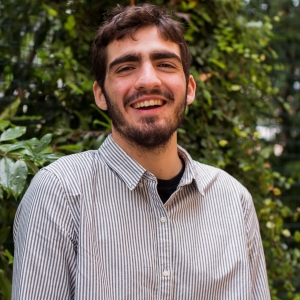
“Making things stay school-related is a huge [part] of my platform. I know about the divestment problems and I think that isn’t a place for school politics,” Brady said. “I want to make everything a little less serious. It doesn’t have to be so [much] business and we should be enjoying ourselves.”

Brady’s platforms include creating a computer program that sends emails to students the night before their pass time to prevent the amount of forgotten appointments. Brady works as an intern for Senator Mikaela Tenner and currently serves as his fraternity’s representative in the Interfraternity Council.

Mato Tirkas

TirkasFor Tirkas, a third-year economics major, running for senate is all about supporting the arts. As a past DJ at KDVS and treasurer for his co-founded campus guitar club, Tirkas believes that providing students with the tools they need to execute and explore their artistic ideas would be a vital part of his role as senator.

“I think I can do good things in maintaining what the campus has as of now,” Tirkas said. “I think we have a lot of valuable resources and we need to take care of these resources, it’s a good thing to preserve what you have.”

Tirkas hopes to give more opportunities to connect students to different cultural backgrounds throughout his term.


Initiatives

T.G.I.F. (The Green Initiative Fund)

The Green Initiative fund, commonly stylized T.G.I.F, seeks to add a $3 increase to student fees that would be used to create an approximate $150,000 granting pool that students, staff or faculty can apply for to receive funding for campus sustainability projects, ranging from environmental education to zero-waste events to improving energy infrastructure. Co-authored by Hannah Ulansey, a fourth-year environmental science and management major, and Shaina Forsman, a fourth-year international relations major, the initiative requires the proposed project to involve significantly undergraduate students and approval from the T.G.I.F. committee, which will also determine the allocation of funds.

Print the Aggie Initiative
The Print the Aggie initiative seeks to bring UC Davis’ student-run newspaper, The California Aggie, back to regular in-print publishing, as it had been from 1915-2014. This initiative, authored by Scott Dresser, The Aggie’s editor in chief, would add $3.73 to quarterly student fees — $2.80 of which would go to The Aggie. Income from this initiative would, along with providing a weekly print newspaper to campus, administer compensation for staff, fund a professional business manager to oversee operations and enable The Aggie to purchase new and updated media equipment. Furthermore, the measure has a five-year sunset clause to ensure that the next generation of UC Davis students can decide for themselves if The Aggie is still something worth funding.

Written by: Jason Pham – campus@theaggie.org & Ellie Dierking – features@theaggie.org

Graphic by: JACQUELINE SU / ASUCD CREATIVE MEDIA

Photos by: JAY GELVEZON, HANNAH WODRICH, ANGELICA DAYANDANTE, KATE SNOWDON, DANIEL TAK, ANH-TRAM BUI, BRIAN LANDRY, NICKI PADAR, KATIE LIN, MONICA CHAN, ARIEL ROBBINS, LUCY KNOWLES, BRIANA NGO / AGGIE

Editor’s note: A previous version of this article misspelled the name of Sam Park. The article has been updated to reflect the correct spelling. The Aggie regrets the error.

Men’s tennis rolling thanks to dedication and desire

0
After a tough start to the season, junior Alec Adamson fights hard in his victory against the USF Dons. (DANIEL TAK / AGGIE)
After a tough start to the season, junior Alec Adamson fights hard in his victory against the USF Dons.
(DANIEL TAK / AGGIE)

UC Davis men’s tennis team 8-3 overall after 11 matches in 18 days

Immediately starting a season on the road is a tough task in any sport. This was no exception for the UC Davis men’s tennis team, where the first week of regular season play consisted of three matches in four days against all top 50 opponents.

The season got off to a tough start for the Aggies, who came into the season ranked #57 by the Intercollegiate Tennis Association as they faced #18 Stanford and #8 USC, losing 4-0 and 7-0, respectively.

Luckily, the team got a tough win against #33 Pepperdine, with contributions from junior Bryce McKelvie and sophomore Tommy Lam. The pair got a doubles win and won their singles matches as well. The win helped the team get some confidence in the early stage of the new season.

“I think we competed well [in] all three [of the matches]” said Head Coach Eric Steidlmayer.  “To get the win over Pepperdine, [a] storied program, that’s cool, really cool […] I think it does give you a boost of confidence.”

In this week’s play at Marya Welch Tennis Center, the Aggies went 4-0. In their matches against Hawai’i on Feb. 2 and the University of San

BRIANA NGO / AGGIE
BRIANA NGO / AGGIE

Francisco on Feb. 6, the men’s team won 6-1 in both matches. And on Sunday, Feb. 7, the team shut out both Holy Names University and Sonoma State 7-0, in a double header. The team has a 6-1 record after losing to Abilene Christian at the end of January in Colorado Springs.

The Aggies are undefeated at home this season and even won a match that was scheduled to take place in Stockton. Instead, the contest took place in Davis against #72 University of the Pacific, whose court was under construction. The Aggies have now won 14 straight home matches, dating back to 2014.

The team has an exceptional home record, in part due to the more comfortable environment.

“Being home is the best,” McKelvie said. “It’s fun traveling, but with school and everything, especially playing at our own place, it’s nice because I just get to go home and hang out.”

In light of the team’s recent successes, McKelvie was named the Big West Conference men’s tennis player of the week on Feb 3.

“I enjoyed it,” McKelvie said. “I’ve been playing pretty good so I feel like if I keep improving and keep working on things I’ll be able to get some more awards.”

McKelvie is the eighth men’s player in the program’s history to be honored with the award, and the first since Everett Maltby, who earned it in April of last year. After this week’s play, McKelvie registered three more wins for a total of nine straight in singles competition.

After playing in multiple fall tournaments, the team took a two-and-a-half month break before starting back up in late January. As a young team the year prior, the Aggies have kept the same lineup, which has allowed them to grow close and battle for one another. Throughout matches, whether singles or doubles play, the players look over to cheer on their teammates. Encouragement is needed in a season that tests one’s mental and physical endurance.

“If I was to say there’s one [improvement], it’s just the fact that more guys understand what we’re about here,” Steidlmayer said. “They learned last year that we’re about improvement. We’re about mental maturity and growing that.”

As last year’s co-regular season Big West champions, the Aggies want to keep the momentum and push for another title. Not only do they want to repeat their victory as conference champs, but they also want to find a way into the NCAA Division I Men’s Tennis Championship. After facing tough opponents early on, the team has breezed through their schedule. The stiff competition forced the Aggies to push themselves to get better even when the weather did not permit it.

“Well, it’s a challenge. But you know what, I’m really appreciative of my players because we basically lost only one day of practice to rain,” Steidlmayer said. “If it’s raining in the morning, we’re practicing in the afternoon. If it’s going to rain in the afternoon, we’re practicing in the morning. And guys are finding a way to make that happen.”

The team can enjoy a week long break, after playing 11 matches in 18 days. With the forecast looking nice for the upcoming matches, the Aggies will put some good work in this week, but are getting well-deserved time off.

The Aggies, now ranked 53 in the nation, look to make their sixth victory in a row in next week’s Causeway rivalry match against Sacramento State on Sunday, Feb. 14.


Written by Michael Martinez – sports@theaggie.org

Women’s gymnastics springs to slim victory over San Jose State

CIERA PASTUREL / AGGIE

UC Davis defeats San Jose State University, 194.375 to 194.225

The positive energy was palpable in the ARC Pavilion during the UC Davis women’s gymnastics meet on Feb. 5 against San Jose State University. With fellow UC Davis athletes crowding the stands, the Aggies were able to pull through with a slim victory, coming in at 194.375, just surpassing SJSU, who finished at 194.225

CIERA PASTUREL / AGGIE

overall.

Sophomore Alexis Brown earned a win in three events, with an individual score of 9.825 on the vault, 9.900 on the bars and 9.825 on the

beam. Brown kept a positive attitude throughout the whole meet and stayed focused on each of her events.

“It was so exciting to see my teammates do so well and knowing that we can come back and fight even through adversity,” Brown said.

Brown performed exceptionally in all of her events throughout the night. Her personal favorite was her achievement on the bars.

CIERA PASTUREL / AGGIE

“My favorite part was when I stuck my dismount on the bars,” Brown said. “I don’t do that very often so I just started screaming right away, knowing I did my best routine.”

Coming in second to Brown on the beam, senior Stephanie Stamates received a score of 9.800, and also excelled on the floor. Stamates’ incredible and energetic performance on the floor was evidenced through her score of 9.850.

Senior Dani Judal participated in all events, doing the best on the bars and coming in with a 9.800, just behind teammate Alexis Brown. She earned a 9.700 on the vault, 9.275 on the beam, and a 9.775 on the floor, tying freshman Yasmine Yektaparast.

Yektaparast, who was named Newcomer of the Week by the Mountain Pacific Sports Federation at the last meet, came in behind her teammates on the vault with a score of 9.550. She inched past fellow teammate and freshman Kara Jones on the floor with a score of 9.775 to Jones’ 9.750. Jones participated in three of the four events, tying sophomore Miranda Holder with a 9.725 on the vault, while losing some speed with a 9.250 on the beam.

Coach Lavallee has big plans for the team as they move forward.

“I’m not too worried […] and hopefully we’ll start scoring up in the mid-195’s and get to where we want to be,” Lavallee said.

The Aggies will travel to Washington to take on the Seattle Pacific Falcons on Feb. 12.

Written by Iman Farahani – sports@theaggie.org

ShortsNLongs storytelling event celebrates one-year anniversary

0
JOHN KOKOSA / COURTESY

Become a storyteller at Third Space

This Wednesday, Feb. 10 at 7 p.m., the Third Space Art Collective welcomes the ShortsNLongs storytelling series back for its one-year anniversary.

ShortsNLongs is a series that meets once a month at Third Space and started a year ago as an open platform for people of all ages, backgrounds and abilities to come and tell a story.

Lisa Cantrell, the organizer of ShortsNLongs, said that they chose to set up storytelling events because they are easy for people to get involved in.

“Everyone can participate. Not everyone is a musician, not everyone is an artist that can exhibit, but every single person has a story and can tell it,” Cantrell explained. “People like telling stories and people like hearing stories; it’s something that everyone enjoys.”

Since this month is ShortsNLongs’ birthday, they’re changing the event to celebrate.

“We’re having a special event where lots of people who have spoken in the past year, the favorites, will tell another story. We’re going to have five to seven storytellers, and four or five of them are familiar people telling a new story. And I think we’re going to have some birthday cake,” Cantrell said. “We also have a special announcement to make, that’s going to help us build community and support Third Space!”

Their venue, Third Space, has long been a pillar of the artistic community in Davis, because of its commitment to freedom of expression.

“[Third Space] was just the obvious place to do it [because you] can potentially hold a lot of people and people can actually listen. That’s why Third Space exists in this community is to hold events and bring people together,” Cantrell said.

Even though the event is free, they do ask for donations to try and support Third Space to continue its community role of bringing people together at ShortsNLongs.

“Afterwards, people stay and chat.  [It is] often just people connecting in general, more than about the stories,” said Truman Young, a professor of plant science, restoration ecologist and repeat performer at ShortsNLongs. “Most people tell great stories and they’re so interesting, and it’s nice to see people who have the courage to expose themselves. It doesn’t have to be prepared or insightful, just important to you or memorable, and people want to hear you. It’s a fun event!”

With such an encouraging premise, it seems like it would be easy to turn up and tell a story. Cantrell explains further that it’s actually even easier than that.

“It’s so human, every single person tells stories. When you meet someone, how do you describe to that person who you are? You tell them stories about things you did in high school, things you did yesterday, something you did a year ago, which tells people who you are. It’s how we form our identities,” Cantrell said. “I’ve said to a couple of nervous people that I’ll listen to their story and we can work on it and smooth it out. We can help storytellers who don’t consider themselves performers, because this is for everyone.”

They typically have a theme, that co-organizers Beth Hopkins and Cantrell will decide together, and this month it is “Love, Lust, Lost.”

“[Past] themes have been “Caught Red-Handed” and “Buses Trains and Planes”, but it almost doesn’t matter what the theme is, it’s just to get people thinking,” Cantrell said. “Most of the stories lean towards being humorous or surprising, but some are shocking or sad. Beth has told a story about her father dying.  Another person told a story about being depressed for a long time and how she came out of that. There’s a good range I think”.

Young is a repeat performer at ShortsNLongs, which is unusual, as most people will tell one story and listen to the rest. He decided that he wanted to use the space to improve his art as a storyteller.

“I learn by listening to other people’s stories, and things they try that maybe don’t work, and try and incorporate them into my stories. By telling them I practice them,” Young said. “Usually the stories are personal, or sometimes traditional stories, so up till now I’ve drawn on things that have happened in my life.”

Ed Lewis, a professional storyteller and retired early education professor, has performed at ShortsNLongs a number of times and is part of the National Storytelling Network (NSN). According to Lewis, the NSN is an organization that aims to preserve storytelling for the adult community and to train people to be storytellers in schools.

Lewis met Cantrell through the Sacramento Storytellers Guild, which she attended for some time before starting ShortsNLongs. He praised her creation of a storytelling event in Davis.

“Most people in the storytelling community are 40 to 80 years old.  I really enjoy hearing the stories from the younger generation and trying to keep that tradition alive,” Lewis said. “ShortsNLongs is a younger crowd, and a great environment for everyone. Professional storytellers like myself will go to events, and it gives us a chance to practice.”

He believes it’s important to pass on the storytelling tradition to young people, to allow it continue to flourish and to grow people’s’ imagination.

“We get a lot of great media with television and movies, but when we see them the images are already put in your head. As a storyteller, it’s my job to create really evocative images and for you to create your own pictures,” Lewis said.

Check out the Facebook event for more information. ShortsNLongs can also be reached on their Facebook page or by email.


WRITTEN BY: Kate Snowdon – arts@theaggie.org

The Chainsmokers play to a packed house at Ace of Spades

The Chainsmokers play for UC Davis students at the Ace of Spaces in Sacramento, CA. (JAY GELVEZON / AGGIE)

A night of revelry and dance in the midst of midterms

On Thursday, Feb. 4, a few hundred UC Davis students waited outside of the Ace of Spades venue in Sacramento, anticipating the appearance of The Chainsmokers, an electronic dance music duo who were headlining an event made possible by the Tilt app.

chainsmokers_ar_Gelvezon2
JAY GELVEZON / AGGIE

Entering the venue was a nightmare, as the will call process was abandoned and floods of students were allowed into the venue without tickets or IDs, although most were just happy to be near the music and out of the cold.

Sydewaze, another EDM duo made up of two UC Davis students, Brandon Bolender and Nick Casas, opened the show. They kicked off the evening with some of the most popular tunes in the EDM scene, mixing well-known bass drops with sing-along vocals. The excitement in the room was palpable as more and more students entered the venue to see two of their own on stage. Sydewaze’s opening performance was indicative of the general vibe of the night. The duo knew their crowd and played favorites for an hour, with the crowd’s anticipation for The Chainsmokers growing with every bass drop.

The Chainsmokers came onstage to a tumult of applause, wearing plain T-shirts and jeans. Perhaps their outfits proved that they knew what they were there to do — entertain college students, give them a little freedom and an outlet from studying and stress. Generally, the duo’s brand of EDM is Top-40 pop. They are best known for their remixes of Indie hits, including “Pumping Blood” by the NONONO, “Habits (Stay High)” by Tove Lo and “Sway” by Anna Of The North. They played all of these tracks and more, sometimes slowing the beat down or dropping a different, unexpected bassline.

The duo played their well-known track “#Selfie” about 20 minutes into the set, introducing it by telling the crowd to put their middle fingers in the air if they hated it, making it clear that they had moved beyond the kitschy hit that had once defined them. The new arrangement of the song made the old bassline nearly indiscernible, but the crowd did not seem bothered by the unexpected twist. Having gotten their first hit out of the way, The Chainsmokers continued to play crowd-pleasing vocals mixed over huge and frequent bass drops.

chainsmokers_ar_Gelvezon3
JAY GELVEZON / AGGIE

One of the defining moments of the performance was the duality The Chainsmokers expressed with one of their bigger hits, entitled “Kanye.” When they first mixed in the track, the crowd grew visibly excited. The high-pitched, confectionary vocals melted over the bassline, proclaiming, “I wanna be like Kanye / I’ll be the king of me always / do what I want, I’ll have it my way.” The multicolored lights matched the bright pink hearts smattered across the screens surrounding the stage, striking a clear image of the overall vibe of the night — bright, easy, Top-40 fun. Just when the set began to feel like a radio jam, however, the lights changed to a mixture of blue and gold, and the screens were pasted with a plain black image. The bass dropped deep, much closer to a hardstyle EDM song than the more pop versions The Chainsmokers usually employ. It was, as one student proclaimed, “dirty.”

Besides this unexpected and promising moment, the rest of the set was fairly tame. The crowd was not nearly as energized as it was during the early portion of the performance, excluding a high moment when “Californication” by the Red Hot Chili Peppers was introduced as “some sexy throwback California music.” The Chainsmokers ended the set rather abruptly, heading backstage for about a minute before they came back out and played a brand new song entitled “Don’t Let Me Down.” The song itself was nothing special, but what was noteworthy, however, is that the song was played for UC Davis students two hours before its official release.

Overall, the event was successful. Though The Chainsmokers’ set finished on an underwhelming note, Davis students swayed, sang and jumped their way through a couple of stress-free hours on a Thursday night.


WRITTEN BY: Sara Williams – arts@theaggie.org

Humor: Art of the kickback

0
ZHEN LU / AGGIE
ZHEN LU / AGGIE

There are many different kinds of social events one will attend in their lifetime. Birthday parties, weddings, baby showers, anniversaries, break-up anniversaries and countless others. However, studying hard at a university can seriously limit a person’s ability to socialize with friends. Living in constant fear of deadlines, unemployment and general failure in life can take a serious toll on a person’s mental health. That’s why some college students take part in a ritual that cleanses away anxiety, formality and prudishness: The kickback.

Once in awhile, you might hear someone mention going to a kickback, or getting invited to one. You might then see it’s just a bunch of random people drinking beer and playing games in someone’s dirty living room. Don’t be fooled by the kickback’s ragged appearance: these gatherings can be some of the most important you’ll take part in at college. They allow people to enjoy themselves, go crazy and appreciate whatever’s going on. However, there are still rules of etiquette and procedure that hosts and guests abide by to achieve an easy-going atmosphere.

First, one must formally define the kickback.

Kickback– (Ki-k bah-ck) noun- A social gathering typically hosted by college students for the purpose of leisure and maintaining social bonds.

Although this definition may recall a pretty basic party, there are some further key requirements for it to count as a kickback.

  1. It must be casual- This is to avoid appearing pretentious. If a host over-prepares his or her place with decorations that weren’t bought at a dollar store, it will make the guests feel obligated to enjoy themselves. Cleanliness is also a balance between appearing dirty enough to look like you never cleaned up, but safe enough that your guests don’t get sick.


  1. A host that can improvise- A host must be willing and able to adapt to the unpredictable nature of the kickback. Different kinds of events and parties require various amounts of permissiveness. This is measured with the “Chill Spectrum,” quantified in “Dude” units.  This spectrum was hypothesized in 1992 in the Wayne’s World Papers, and later confirmed in 2000 by Prof. Ashton Kutcher in a Bro-Reviewed experiment. The Spectrum is measured on a -10 to 10 scale, with 10 being the most permissive (chill), and -10 being the most uptight (bummer).

________________________________________________________________________________________________________________

Chill Spectrum measured in “Dudes” (Kutcher, 2000):

A Spinal Tap Concert: 11.0

Heaven: 10.0

Kickback: 9.0 (+/- 2 Dudes)

Pub crawl: 8.0

Summer Pool Party: 7.5

A friend’s birthday party: 5.5

Meeting a friend on the street: 2.0

Equilibrium: 0.0

Meeting a guy you don’t like on the street: -2.0

Court Case: –5.0

Weddings: -6.0

Graduation Ceremony: -7.0

Funeral: -7.1

Sweet Sixteen Birthday Party: -8.5

UK Royal Coronation: -9.5

Your Wedding: -9.9

________________________________________________________________________________________________________________

If a host does not meet the Dude level for a particular event as listed on the Chill Spectrum, they will run the risk of alienating their guests through either negligence or obsessive controlling behavior.

  1. Relatively small- The size of a kickback needs to remain small and manageable for the sake of logistics. A large number of guests can complicate things once all the bathrooms are occupied, the queue for the video game is too long or the liquor runs out. The number of people you invite depends on your own resources, but there is a helpful system for each UC identifying the minimum and maximum amount of people one can invite to a kickback:

UC Davis: 3-25                                        

UC Berkeley: 2-15 (2-20 if bay-area apartment rents haven’t bankrupted you yet)

UC Irvine: n/a (currently under reevaluation)

UC Los Angeles: 3-100                          

UC San Francisco: 1-15 (no more than three medical school dummies at a time)

UC Santa Barbara: 5-30

UC Santa Cruz: 3- 25 (10- 50 if hosted on a public beach past 6 p.m.)

UC Merced: 1-1

UC Riverside: 4-8

UC San Diego: 2-20 (A 2003 city ordinance banned the term “kickback” for promoting violence. The new legal term is “Chill Fest.” Fines for publicly using the term “kickback” is $400 in Doritos chips.)

________________________________________________________________________________________________________________

Another way to look at a kickback is through its various stages. The collective mood gradually changes over time, and it’s wise for guests to predict the mood so they can anticipate when to leave.

  1.  The “Hello. What’s up. How’ve you been” Phase: This is the first part of the kickback where guests start appearing.

Tips for the host for this phase:

-Have music playing in background

-Pretend you were in the middle of a video game they can automatically join in.

-Don’t leave any evidence of your homework in sight. This will making people think they are taking valuable studying time away from you.

  1. The “It’s getting crowded in here” Phase: This is right before the kickback has reached its full capacity. Some kickbacks fluctuate in size throughout the evening, while others remain consistent. At this point, the guests should be in the best mood to have drinks and food without judging whoever started pigging out first.
  2.  The “Hey. Who’s up for some…” Phase: This is the climax of the kickback and the point when the most crazy, amazing and memorable thing happens. It’s called “the Highlight of the Evening” and can be caused by nearly anything. In order to be successful, the majority of the guests must not be sober. There are several different kinds of highlights one can go for. Here are a few examples.
  3.     Someone injures themselves doing a flamboyant victory dance after winning a game of Table Soccer or Ping Pong.
  4.     Someone is paid 20 bucks to run butt-naked through your living room while everyone cheers him or her on.
  5.     A guest brings a guitar and gets everyone to sing classic “Weezer” hits.
  6.     A Police raid
  7.     A game of Rage-Cage or Kings Cup
  8.     “The Hangover” director Todd Phillips shows up to do research for his next movie.
  9.     Your 68 year-old neighbor complains about your party’s debauchery despite the crazy  things he or she did in 1969.
  10.  The “Later yo!” Phase: This is when guests begin to leave the kickback. It usually happens after the highlight of the evening, when someone gets too tired or when someone makes a social faux-pas (embarrassing mistake). At this point, the host must be sure that anyone leaving is sober, has a ride home or has reserved a couch to to be stacked upon before they wake up the next morning with a head full of misery.


Tip for host:

-Always have one sober person with a car to drive people home.


Tips for guests:

-Don’t tell the Host you’re about to leave, then spend half an hour looking for that one cute person to get their number. Just leave it be.

-Don’t shout out ‘goodbye’ to everyone as if you were the most important person that night.

-Don’t drink and drive………seriously!

The rules of holding a successful kickback can seem complex and frustrating at first. But if you have good friends as guests, an open mind and clever foresight, a good kickback is never far away.


Enjoy responsibly.

You can reach EVAN LILLEY at etlilley@ucdavis.edu.

Food: Grocery shopping 101

0
HEE-AH YOO / AGGIE
HEE-AH YOO / AGGIE

This one goes out to all the people who sometimes watched The Food Network instead of MTV or Disney Channel during their pre-teen years! On behalf of Emeril Lagasse, Alton Brown and the slough of Iron Chefs, both American and Japanese, I salute you. These guys are giants, but the truth is, anybody can cook — not just those saturated by The Food Network.

Personally, I don’t have a ton of cooking experience, but I still love to experiment in the kitchen. It can be as simple as throwing random ingredients into a steamy stir-fry (a heavily sauce-dependent venture, in my experience). And who knows, one day you may build up your skills to making dishes as complex as glazed oysters with osetra caviar or horseradish crusted salmon medallions (I copied those directly from the Gary Danko website). This week, look out for my favorite tips and tricks to increasing the amount of time you spend in front of your stove. I’ll cover various ways you can improve your cooking and maximize the amount of flame emojis you precariously place in your next food-related Instagram caption.

Learn How to Cook More:

Switch off cooking dinner with your housemates: This may be the single most helpful strategy for learning how to cook. Get into a team of four to five. Everyone gets a day, Monday through Friday. On your day, you pay and cook dinner for the team. When it’s not your day, you get to come home to a home-cooked meal. There will be failures and triumphs, but I guarantee that you will get so much better at cooking, portioning and shopping by the year’s end.

Host and attend cooking competitions: There is absolutely nothing lame about organizing a cooking competition with your friends. Watch an episode of Chopped or Iron Chef (both on Netflix) for a good template on how your own contest should be run. Judging should be very specific and judges should use a lot of fancy-talk to describe food creations. Some great, cheap secret ingredient ideas include jicama, Lucky Charms marshmallows, capers, popsicles and crème fraîche. And if you need someone to help judge, I may just be your guy.

Host and attend BBQs: Spring quarter is coming up. Dust off the old grill or rent out the one in your apartment complex or dormitory. Grilled meats and vegetables taste much better on the open flame. Preferably grill near a pool or body of water. It’s the fastest way to boost your chill-to-grill ratio.

Picking out your ingredients: There are an absurd amount of grocery stores in the Davis area. Let me help you sift through them so you can get only the best for whatever it is you decide to cook:

Health food/quality produce: The Nugget, Whole Foods, Davis Food Co-op, Davis Farmers Market

These places can be immensely overpriced. You’re paying for quality and for ingredients you may not be able to find elsewhere. The Nugget is probably the best overall supermarket in Davis. On top of quality ingredients that you won’t find elsewhere, it’s locally owned and their sandwiches, açaí bowls and salad bar are all better than the same items at Whole Foods (Although Whole Foods has a pretty impressive beer selection). Nugget is essentially a better, local Whole Foods, with a more unique personality. The Davis Food Co-op also has a great selection and has the best nut/grain/dry food dispenser bar of anywhere in Yolo.

The best produce in Davis, however, comes from the Davis Farmers Market (also dubbed FarMar or The Marmer’s Farket). It’s held at 3rd and C every Wednesday afternoon and Saturday morning. You can find delicious seasonal fruits and vegetables, as well as free samples and food stands. Try the frozen apple juice and the Bolani bread samples. It’s also a great way to feel connected to the Davis community.

Ingredients on a budget: Grocery Outlet, Bargain Market, Dollar Tree, Safeway

You can find a lot of good deals at Grocery Outlet (GrossOut), just be sure to check expiration dates before you buy if a deal looks too good to be true. My favorite thing to get there is an entire pack of 15 to 20 bacon strips for $2.50. If you’re trying to put together a kitchen from scratch, Dollar Tree has spatulas, rags, egg-beaters, tongs, measuring cups and more for a dollar a pop. No dorm kitchen would be complete without help from the Dollar Tree. Safeway tends to have pretty good prices as well, and they’re open 24 hours (making crème brûlée a real possibility at 2 a.m.). Be warned, though: their beer selection is atrocious.

Best value: Costco, BevMo

You won’t believe how much you can get for how little you pay at Costco. You wield quite a bit of power if you’re a college student with a Costco card. If you’re cooking for yourself, it’s almost impossible to go through their enormous produce packages by yourself. That’s why I like to stick to items with long expiration dates and avoid perishables unless I can split them with somebody. BevMo, like Costco, is a 15-minute drive from campus. But both are well worth it. It has by far the best beer selection in all of Yolo. If you love beer, I suggest getting lost in aisles three to seven at BevMo the next time you’re in Vacaville.

“Now you’ve got a friend in the dinin’ room business”


You can reach JONAH VERSMAN at jiversman@ucdavis.edu.

UC Davis research finds stem cell therapy in cats may translate to human medicine

KATE SNOWDON / AGGIE

UC Davis Veterinary School of Medicine collaborates with UC Davis Medical Center for further stem cell research in humans

Cats with a disease known as feline chronic gingivostomatitis (FCGS) were chosen by the UC Davis Veterinary School of Medicine to undergo a clinical trial using stem cell therapy. FCGS is a disease that inflames the oral cavity of felines and often results in teeth pulling in order to reduce the inflammation.

Dr. Boaz Arzi, professor of veterinary dentistry and oral surgery, led the project, which looks to explore the versatility of stem cell therapies.

“It is a biological approach to therapy,” Arzi said. “We didn’t study the disease more than we studied stem cell therapy.”

Dr. Arzi and his team first took fat tissue samples from the cats in the trial. The fat tissue was used to render stem cells that were injected back into the cats intravenously to aid in treating FCGS.

“We targeted this specific disease because it is a chronic inflammatory disease,” Arzi said. “Our approach is immune modulation. We strengthen the immune system and make it more appropriate versus suppressing it.”

Dr. Dori Borjesson, professor of veterinary pathology, microbiology and immunology, collaborated with Dr. Arzi on this project. She admitted her astonishment about the findings that this clinical trial yielded. The majority of the cats were cured or showed improvement with the treatment.

“The study findings were very surprising […] This was really our first really big success with stem cell therapy in small animals here at UC Davis,” Borjesson said in an email interview. “We did not expect that cats would be completely cured and we also did not expect that the cure would be long-lasting (so far, no cats have relapsed).”

After a successful clinical trial with cats, Dr. Nasim Fazel, professor of dermatology at the UC Davis Medical Center, showed interest in this project. Because this study focuses on an inflammatory oral disease in felines, Dr. Fazel sees this study as especially relevant to her own research on inflammatory diseases in humans, including oral lichen planus, which is similar to FGGS.

“This is a novel approach to stem cell therapy that hasn’t been used in humans yet,” Fazel said. “In a way we are trying to carry over what we’ve seen in the animal model to set the stage for a clinical trial in humans to use stem cells to treat diseases like oral lichen planus.”

Dr. Fazel has been communicating with Dr. Arzi to explore what possibilities these new and innovative approaches provide for her research. She has since submitted a grant request in order to field a clinical trial of her own.

“When we started having good results and started talking to our human medicine counterparts, then it became clear that there may be human applications to this,” Arzi said.

Megan Badgley, the FGGS study coordinator, acknowledged that the UC Davis Medical Center and the UC Davis Veterinary School of Medicine have exemplified how they can collaborate to provide a holistic approach to medicine.

“This clinical trial is one that depicts the pinnacle of UC Davis One Health and our goal to integrate the value of medicine and research as a parallel to human and veterinary medicine and the vital role it plays in our daily lives as a community,” Badgley said.

Written by: Nick Griffen – campus@theaggie.org

Must-hear podcasts

0
Podcast recommendations to lighten the mood this midterm season. (JAY GELVEZON / AGGIE)

Five podcasts for your weary, midterm-ridden mind

The mid-quarter blues can get even the best students down, and with only precious few hours in the day, it’s often difficult to take that much needed break. Movies and TV shows take up a lot of time — and reading for pleasure? Well that’s simply not done on the quarter system.

Podcasts, however, are a great alternative for the multitasking student. They don’t take much time and don’t require full attention. So for the student that’s just about had it with midterms but doesn’t know where to turn, try some of these podcasts on for size. (All the following podcasts can be found online or on iPhone’s Podcast app.)

  1. This American Life (1 hour)

By now it’s assumed that most people have heard of Ira Glass. Those who havent: its time to get with it. While you were doing whatever else, Americas favorite bespectacled uncle has been taking over radio airwaves. Although the show has evolved over time, it has always been organized around a weekly theme. You would think that a weekly show that has aired for 20 years would run out of themes, but it hasn’t. The most recent episodes, I thought I knew you,” “Something only I can seeand The Poetry of Propaganda,” show that clearly, this isnt your run of the mill broadcast journalism.

Glass is often seen as the leader of the radio revolution — out with hard news that just tells you what happened and where, in with long-form feature journalism that tells you the story behind the story. This American Life gives you documentary storytelling that guides you through issues of national concern. Episode recommendation: Same bed, Different Dreams” (556) and Im from the private sector and Im here to help” (266).

  1. Snap Judgment (1 hour) 

A more recent podcast, Snap Judgement, premiered back in 2010 after founder Glynn Washington won the Public Radio Talent Quest. The rest is radio history. Snap Judgment seeks to tell a cinematically produced narrative that focuses on the trials and tribulations felt by the first person narrator. Though every good story gets to the big picture(and snap is no exception), snap focuses on the craft of telling — so that although the majority are non-fiction stories — the program feels almost like a play. It’s almost like a really great Hollywood director telling a story around a campfire. Snap has also ventured into the realm of fiction a lot more than other radio programs, and has superb audio chops to bring a mixture of prose and dialogue to life. Episode recommendation: Tin Manand The Proxy.”

  1. Fugitive Waves (varies, shorter episodes range from 10 to 20 minutes)

This program is brought to you by the Kitchen Sisters, Nikki Silva and Davia Nelson. Silva is a museum curator and Nelson a casting director, both of which seems to influence their unique sound. Most listeners will agree that their flow is smooooooooooooth (extra os required). The heavily layered sounds seem to capture a time and place, almost like an audio snapshot into a community. They do NPR reporting as well, which looks into the lives of specific individuals, but these are often juxtaposed with their signature soundscape montage that seems to take the profiles a step beyond standard journalism.

The Kitchen Sisters also have a series called Hidden Kitchens which, in their own words, explores the world of unexpected, below the radar cooking, legendary meals and eating traditions how communities come together through food.Episode recommendation: Tupperware” (a cool montage of a tupperware party).  Though it was one of their first, it seems to capture the essence of what they do so well: provide a window into an interesting cultural trend.

  1. The Truth (varies, about 10 to 20 minutes)

Another cinematic go-to, The Truth, will give you a movie for your ears. Unlike the previous podcasts listed which only touch on fiction, the main aim of The Truthis all fiction, all the time. It is a radio drama of the 1950s, if they switched out the weird cowbell props with a soundboard and composer there is no prose and no stage direction. The Truth consists of super short and digestible one act plays that really span a wide range of topics. This isnt a show that focuses on bringing you journalism, these episodes are like the shorts that you see making the film festival circuits: short, punchy and hopefully with a narrative twist. If you need a study break but you dont want to look at your screen, this should be your go-to. Episode recommendation: Starburst.

  1. Welcome to Night Vale (20 to 30 minutes)

This is a bi-monthly long-form narrative podcast that is, in some ways, a parody of radio altogether. It’s complete with the monotone announcer, the overworked interns and the weird radio callers. However, the town is set in a sort of supernatural reality that, as co-producer Joseph Fink puts it, a town in that desert where all conspiracy theories were real.The interns die, cats float past the studio, there is a faceless old woman, etcetera. You wont understand it, but you’ll love it. Episode recommendation: Pilot,” —  It’s best to start at the beginning. You can find it for free on iTunes.

Written by Anna Nestel — feaures@theaggie.org