53.5 F
Davis

Davis, California

Tuesday, December 23, 2025
Home Blog Page 750

Remembering a legend

UC DAVIS ATHLETICS / COURTESY

Past players, coaches reflect on the life, career of historic football coach Jim Sochor

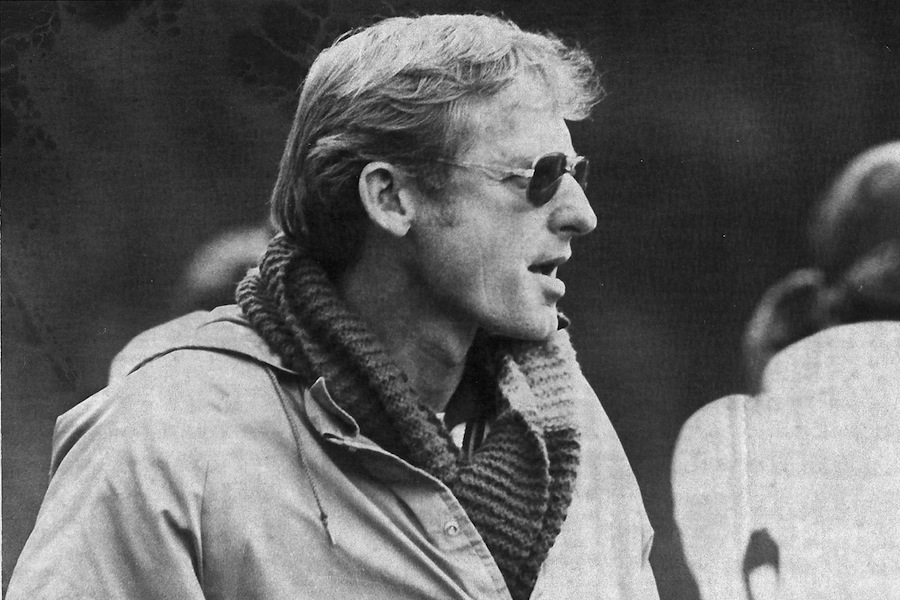
“Aggie Pride,” the schoolwide phrase that every UC Davis student uses or sees around campus, was coined by Jim Sochor, the man who coached the UC Davis football team to 18 consecutive conference championships and to the 1982 Palm Bowl. Mr. Sochor earned his respect from his team and staff and maintained it with proven and consistent success on the field. Of all the losses the Aggies have suffered (and, during Mr. Sochor’s reign, there were very few), none was as saddening as the loss of Sochor himself after a battle with cancer on Nov. 23, 2015 at age 77.

A graduate of San Francisco State University (SFSU), Mr. Sochor began his football success as the quarterback who led SFSU to three consecutive league championships from 1957-59. He later became an assistant coach for the SFSU team, gained his master’s degree in physical education and eventually came to UC Davis after completing his doctorate degree in education.

As head coach from 1970 to 1988, Mr. Sochor helped the Aggie football team reach new heights of success, boasting an overall 156-41-5 record over nearly two decades of work.

“He spoke with great conviction,” said Ron Gould, the UC Davis football team’s current head coach. “You were always captivated by the things that he would say […] the little remarks.”

Chris Petersen, a former player and coach for Mr. Sochor at UC Davis who is currently the head coach for the University of Washington, said that, while he had to adjust to Mr. Sochor’s presence and coaching methods, he has adopted many of them into his own coaching techniques..

“He never raised his voice to anybody, but you knew exactly when you disappointed him or hadn’t done right,” Petersen said.
UC DAVIS ATHLETICS / COURTESY

In a 2007 interview with the UC Davis Athletics Department, Mr. Sochor said that the core values of his teams were unity, trust and togetherness. His goal of changing the team’s culture into a close-knit family became a successful method for the Aggies. His most famous rule was that the helmet, unless on a player’s head, was never allowed to touch the ground at any moment in time.

Mr. Sochor coached 10 Aggies who went on to play professionally in the National Football League and had players and members of his coaching staff who also went on to become coaches, including Bob Biggs, who served as the Aggies’ head coach from 1993-2012.


“My being his first quarterback, there was trust between us,” Biggs said in a phone interview. “He trusted me as a player, and I trusted him as a coach.”

Biggs played for Mr. Sochor and coached with him after his graduation.

“As much as anything, [I carried on] his organizational skills and his easygoingness,” Biggs said. “He molded players not just as players, but as people.”

The values that Mr. Sochor preached to his staff and team have resonated throughout generations and are repeated by Gould.

“I didn’t know a lot about UC Davis in terms of the university [when I arrived to coach], but I knew a lot about Coach Sochor, a lot about his philosophy, a lot about how he did things,” Gould said. “Talking to a lot of players who’ve coached under him, they just raved about him. They talked about a lot of different things: about team, about family, about togetherness and unity.”

After his tenure as a head coach in 1988, Mr. Sochor served as UC Davis’ athletic director until 1991. He then went on to become an offensive coordinator for the Scottish Claymores in NFL Europe in 1996 before retiring in 1998. Mr. Sochor was inducted into the College Football Hall of Fame the following year, and he was awarded the Ronald L. Jenson Award for Lifetime Achievement by the Positive Coaching Alliance in 2008.

“I had him come out and speak to the team a couple times, and they loved him,” Gould said. “I had a hundred players just glued into him, they are all sitting on the edge of their seats, listening to him and he obviously got a standing ovation when he was done, but the players just absolutely adored him [and] had a tremendous amount of respect and admiration for who he is.”

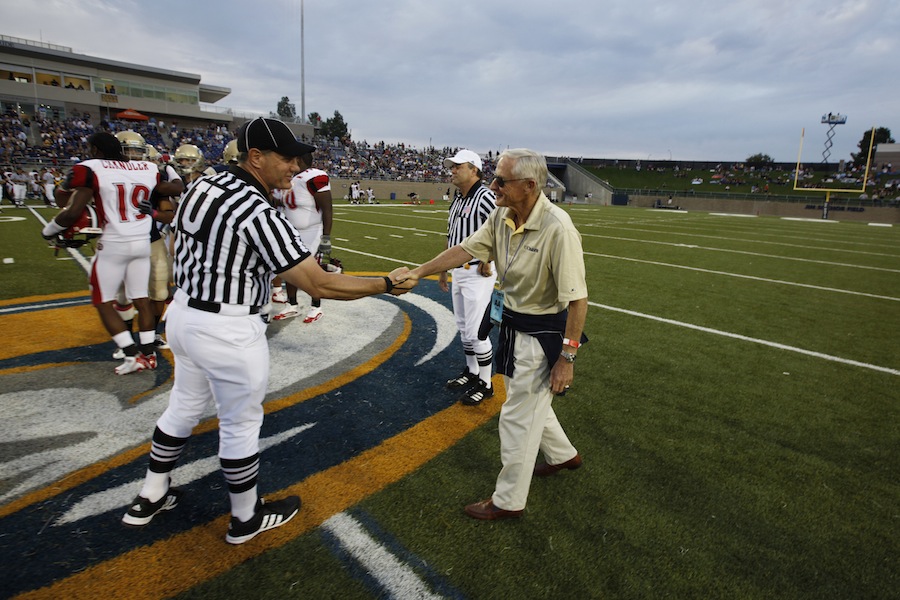
Even now, Mr. Sochor’s lessons live on, as those who had witnessed and heard of him view his values as a proven foundation for success. The Jim Sochor legacy forever lives on in Aggie Stadium, as the team and university he glorified continue to play on a field in his name.

Written by: Veronica Vargo – sports@theaggie.org

This week in sports

0
TIFFANY CHOI / AGGIE

UC Davis athletics from Feb. 1 to Feb. 7

Men’s Basketball (10-12 overall, 5-4 conf.)

UC Davis at Cal State Fullerton (L, 57-61)

UC Davis at UC Riverside (W, 50-49)

In their first of two away games, the Aggies received a little payback from the California State University, Fullerton Titans, losing 57-61 on Thursday, Feb. 4. Junior guard Darius Graham fired off a three-pointer in the final Aggie possession of the game to cut the Titan’s lead from five to two. Graham led the Aggies with 16 points, junior guard Brynton Lemar added 13 of his own and junior center Neal Monson earned his third career double-double, scoring 12 points and securing 13 rebounds.

In a stunning finish, broadcast nation-wide on ESPN3, Lemar sank a floater in the last 0.5 seconds of the game versus the Highlanders. A tightly run Aggie defense held UC Riverside at bay throughout the entire game on Saturday, Feb. 6. This defense and a tour de force in the second half by senior forward Josh Fox gave the Aggies what they needed to come out ahead. Fox and Lemar led Aggie scoring with 16 and 13 points respectively, while Monson protected the basket with 12 rebounds.

The men’s basketball team hosts UC Santa Barbara on Thursday, Feb. 11 at 7 p.m.

Women’s Basketball (13-9 overall, 6-3 conf.)

UC Davis at UC Riverside (L, 73-80)

UC Davis at Cal State Fullerton (W, 63-59)

For the first away game, a fired-up freshman forward Morgan Bertsch led the Aggie comeback against UC Riverside on Thursday, Feb 4. A 17-2 run by the Highlanders in the third quarter nearly put the game out of the Aggies reach. However, the Aggies wouldn’t let the Highlanders get away easily, going on an 18-4 sprint into the last three minutes of play. Overall, UC Riverside’s 22 point lead was too much to overcome, and the Aggies lost 73-80.

Not letting the loss hold them back, senior forwards Alyson Doherty and Celia Marfone led the Aggies to a victory on Saturday Feb. 6 over host Cal State Fullerton. Doherty added 15 points while Marfone posted 13 points and eight rebounds. Sophomore forward Pele Gianotti finished with 10 points, the final two from the foul line to help secure the Aggie lead on an otherwise single point game.

The women’s basketball team hosts Cal Poly on Wednesday, Feb.10 at 7 p.m.

Women’s Gymnastics

UC Davis vs. San Jose State (1st, 194.375)

In a tight dual meet on Friday, Feb. 5, sophomore Alexis Brown’s victories in the uneven bars and balance beams allowed the Aggies to just outreach the Spartans 194.375 to 194.225. Brown is only the seventh gymnast to post a 9.900 on bars. Brown was joined by senior Stephanie Stamates, who won the floor routine with a 9.850 score.

The Aggies will be away for their next meet on Feb. 12 at Seattle Pacific.

Men’s Tennis (8-3)

UC Davis vs. Hawai’i (W, 6-1)

UC Davis vs. San Francisco (W, 6-1)

UC Davis vs. Holy Names (W, 7-0)

UC Davis vs. Sonoma State (W, 7-0)

UC Davis men’s tennis had a big week and a flurry of wins. Starting on Feb. 2, the Aggies hosted Hawai’i in their Big West opener. Senior Brett Bacharach and junior Eli Whittle took the first doubles victory, while junior Alec Adamson and senior Adam Levie followed up to secure the Aggie’s lead in the match. Sophomore Everett Maltby and junior Bryce McKelvie  won their singles events in straight sets, while junior Jesse Ross defeated Nikolai Storch to close the victory for the Aggies.

On Saturday, Feb. 6, the Aggies continued their winning stride as they faced off against San Francisco. Joining Bacharach, McKelvie and Adamson in the winner’s circle was sophomore Tommy Lam and junior James Wade. These victories secured the Aggies their third straight victory over the Dons, and was a great portent of the rest of the weekend.

The doubleheader on Sunday, Feb. 7, turned out to be a slaughter for the Aggies. Extending their winning streak, the Aggies managed to hold two flawless victories.

The Aggies will play again on Sunday, Feb. 14, at Sacramento State at 1 p.m.

Women’s Tennis (3-2)

UC Davis at San Diego State (L, 3-4)

UC Davis at UC San Diego (W, 7-2)

On Saturday, Feb. 6, UC Davis faced off against San Diego State in a non-conference match down in the Aztec Tennis Center of San Diego. Sophomores Kristy Jorgensen and Lani-Rae Green won their pairing against the Aztecs, however, that victory was stuck between two Aztec doubles victories which awarded them the point. Singles victories by juniors Frederique Sleiffer and Kamila Kecki put the Aggies on the board. Green won one of the other outstanding matches to put the Aggies up to three points, but the final singles match went to the Aztecs, leading to an Aggie loss.

Sunday, Feb. 7, saw the Aggies play another non-conference dual meet at UC San Diego. The Aggies won two of three doubles to secure the point, thanks to sophomore Jesse Lee and Green, and Sleiffer and Kecki. In singles, freshman Isabella von Ebbe and senior Tiffany Pham cruised through their matches to join Lee, and secure the five team points necessary for an Aggie victory.

The women’s tennis team plays away at UC Santa Barbara Sunday, Feb. 14 at noon.

Women’s Water Polo (5-3)

UC Davis vs. UC Irvine (L, 8-10)

UC Davis vs. Pacific (W, 14-10)

UC Davis vs. California (L ,3-6)

UC Davis vs. San Jose State (W, 14-6)

The Aggies opened up their second tournament of the season on Saturday, Feb. 6, down in the Stanford Invitational. Splitting the games on the first day, junior utility Hanna Harvey and senior center Allyson Hansen tallied a goal under their names, but the Aggies were out-shot, and fell to the Anteaters before picking up a win over the Pacific Tigers. Utility senior Ariel Arcidiacono and utility junior Bryn Lutz each posted hat tricks in the opening games.

The Aggies stole the show on their Saturday nightcap against Pacific. Junior center Carla Tocchini earned a hat trick in the first half to help the Aggies maintain a tied game. A six-goal run in the third put the Aggies firmly in the driver seat that gave them a four-point lead for the rest of the game.

In Sunday’s opener, a five goal run was stopped by Hansen with 20 seconds left in the opening half. Lutz and Tocchini both converted 6-on-5 opportunities to round out the Aggie’s scores. The deficit from the first half was just too much for UC Davis to surmount, and the Golden Bears took home the morning game.

For their final game of the tournament, the Aggies faced off against San Jose State University, their rival for eighth in national ranking. A flurry of six goals put Hansen in the history books as the sixth player in UC Davis history to score six or more goals in a single game. Lutz and sophomore center Greta Kohlmoos both tallied two of their own goals to help Hansen lead the Aggies to a 14-6 victory.

The Aggies split their games at the Invitational, and will be heading to La Jolla Saturday, Feb. 13 for the Triton Invitational at UC San Diego.

Men’s Golf

Ameri Ari Invitational (18th of 19)

Starting their spring season in Hawai’i, the UC Davis men’s golf team sent five players down to the sunny islands for one of the toughest tournaments in collegiate golf. Freshman Ryan Knop shot a spectacular 6-under 66 on the Saturday of the event, while sophomore Evan Knight posted a final-round 70. Senior Ben Corfee shot a 73, and senior Luke Vivolo was right behind him with a 74. UC Davis shot a combined 8-over 296 on Saturday.

Knop, playing solo, shot extremely well, and climbed the ladder to finish tied for 13th at 5-under par. Knop’s Score was the best, relative to par by two strokes, this season.

The Aggies will be co-hosting The Prestige at PGA West on the Greg Norman Course from Feb. 15 to 17, for their next round of golf.

Written by Aaron Sellers – sports@theaggie.org

UC Davis to convert 83 single-stall bathrooms into gender-inclusive facilities by March 1

Gender inclusivity offers appropriate restroom options for LGBT and gender-nonconforming folk. (LUCY KNOWLES / AGGIE)

Massive change part of UC President’s plan to create more gender-inclusive facilities across all UCs

By March 1, UC Davis expects to convert 83 of its on-campus single-stall bathrooms into gender-inclusive facilities, which is part of a system-wide plan called the University of California (UC) Guidelines for Providing Gender Inclusive Facilities — a project that UC President Janet Napolitano and her LGBT advisory panel have worked on since June 2014.

According to UC Davis Provost and Executive Vice Chancellor Ralph Hexter, who served as co-chair of the UC Presidential LGBT Task Force and is currently a member of the LGBT Advisory Council that meets with Napolitano, the conversion of single-stall bathrooms to gender-inclusive facilities is just one recommendation made by the council that is currently in action at UC Davis.

“Other recommendations include asking people to identify sexual orientation and gender identity when they apply to a UC, so we can track data on those demographics,” Hexter said. “We are also urging that sufficient attention be paid to the medical and mental health issues of all members of our community, including [LGBT] populations, because there are a lot of problems that our healthcare providers need to be aware of and prepared to deliver to our students.”

According to Hexter, he was not involved in the facilities management process to meet the March 1 deadline to change the single-stall bathrooms into gender-inclusive facilities, which made him impressed that other members of UC Davis faculty are working to execute this plan on their own. To Hexter, this independence shows the LGBT council’s impact across UC faculty.

“The counsel is made up of experts from the UC community who would offer the best advice for policies on improving the climate of LGBT faculty, staff and students,” said Kate Moser, a spokesperson for the University of California Office of the President (UCOP). “UC campuses have been ranked among the most LGBT friendly campuses in the country.”

Specifically, at UC Davis, Project Manager Brandon Chan is working with the university’s facilities management department to convert at least one single-stall restroom to a gender-inclusive facility in approximately 120 buildings. According to Chan, the bathrooms will be on UC Davis’ core campus as well as in the Health Sciences District. Additionally, he said that the bathroom door will have a sign with a circle and a triangle, accompanied by the word “Restroom” under it or a wall sign that simply states “Restroom.”

The scope of restroom conversion is replacing the exterior signage and installing door hardware if necessary to make it a private lockable space,” Chan said. “The sign will not contain pictograms, unisex terminology or the phrase ‘Gender Neutral.’ We don’t want to limit the space to any sort of [gender] classification. We just want to leave it to what it is: a restroom that anyone can use.”

The absence of gender indicators in the restrooms’ signage is meant to be inclusive of those who are gender-nonconforming, and for small children and disabled people who may need assistance.

The whole idea of gender-inclusive restrooms is supposed to be for a wide range of people,” said Lisa Brodkey, the director of UC Davis’ Harassment and Discrimination Assistance and Prevention Program. “A lot of parents may need to help their small children use the restroom, and it’s an awkward situation when the parent and child are different sexes. Also, which gender-specific facility is a disabled person supposed use if they have an assistor of a different gender?”

However, Brodkey said that she has dealt with a higher number of people who have been caught in uncomfortable situations in gender-specific bathrooms in past few years.

“In recent years, we’ve gotten a higher number of calls from people who are looking for a restroom on campus that feels safe and appropriate for them to use,” Brodkey said. “Some employees, students and faculty members don’t feel comfortable using multi-gender facilities. In general, they have felt scared, offended and sometimes even intimidated.”

Brodkey emphasized that this plan is not meant to create any sort of divide between gender-conforming people and gender-nonconforming people but rather meant to make UC Davis more inclusive and comfortable for everyone.

“This initiative is not designed in any way to take rights away from anybody,” Brodkey said. “There aren’t many spaces at all on campus for people who aren’t comfortable using a gender-specific bathroom. This isn’t about taking things away; this is about providing access to facilities for everybody.”

Many students have responded positively to the proposed restroom changes.  

It’s really nice that [UC Davis] considered the voice of the [LGBT] community and cared enough to respond with this measure,” said Adaku Ume, a post-baccalaureate biological sciences major. “I do think it shows that UC Davis supports the community that has expressed this sentiment about gender identity issues. It’s a step in the right direction.”

According to Elizabeth Coté, director of the LGBTQIA Resource Center, undergraduate scholars have vigilantly catalogued the existing gender-inclusive restrooms.

Single-stall restrooms are just the beginning of UCOP’s plan to generate more gender-inclusive facilities. As a part of Napolitano’s plan, locker rooms, changing rooms and shower rooms will be reviewed, but the current focus is on restrooms. This gender-inclusive plan will be implemented in the design of future infrastructure projects at UC Davis as well.

“We will be creating gender inclusive bathrooms for new buildings such as the International Center, the Shrem Art Museum and the [Ann E. Pitzer] Music Center,” Chan said.

The emphasis of adding gender-inclusive facilities to both existing and future buildings is a major step in the process of fostering LGBT inclusivity at UC Davis.

“I think it’s great that we will do away with this unnecessary division when it comes to single-stall [restrooms],” Hexter said. “It personally makes me, as a gay man, particularly proud to be part of a university that pays attention to these details at such a high level.”

Written by: JULIAN LEUS – campus@theaggie.org

Former UC Davis nurse wins $730,000-case against UC Regents

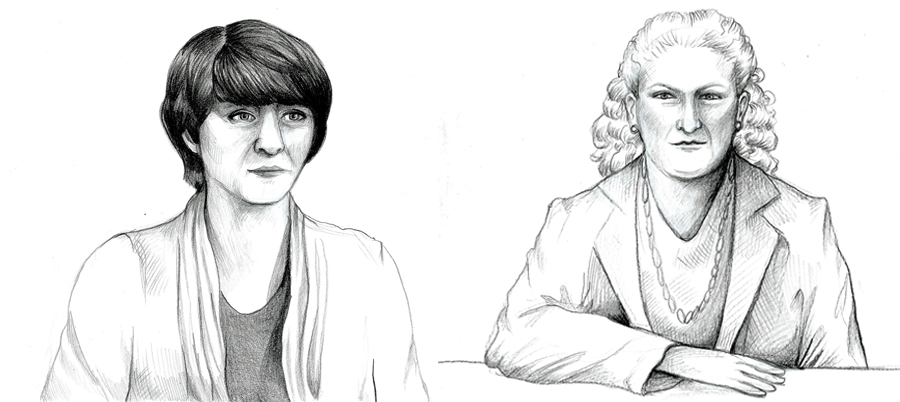
Janet Fulton (left) and Mary-Alice Coleman (right). Sketches by Nicole McKeever / ArtForTrials.com and NicoleMcKeever.com

Janet Fulton’s nine-year legal ordeal exposes human subject research without legal compliance

When Janet Fulton, a former registered nurse at the UC Davis Medical Center, first filed a report concerning a joint research program conducted by the university, it took up to seven years for any of her concerns to be legally validated.

Fulton filed a lawsuit on Sept. 18, 2009 claiming that she had been a victim of whistleblower retaliation, which is when the University of California (UC) illegally retaliates against an employee for “blowing the whistle” on legal violations or other gross practices performed by the UC, despite being protected under the university system’s Whistleblower Protection Program.

For Fulton’s case, the backlash followed after she reported improper research practices being exercised in a study conducted by UC Davis’ Healthcare Policy and Research (HPR). For legal reasons, Fulton was unable to comment on the case but was able to provide information regarding her situation, so all questions were diverted to her lawyer.

In November 2015, the UC Board of Regents granted a $730,000 check to Fulton after a jury ruled in favor of Fulton’s case. Out of the $730,000, $330,000 was awarded for lost earnings, while the remaining $400,000 was for noneconomic damages. These damages include the social, emotional and mental consequences Fulton experienced during and after the trial.

While Fulton’s settlement was officially granted on April 23, 2014, it took a total of seven years for the settlement to be reached from the time she first filed the lawsuit.

Fulton began working for HPR in April 1998 as an administrative nurse. By 2006, she was both a part-time employee and part-time UC Davis student in the process of obtaining a postdoctorate in human development.

By December 2006, HPR assigned Fulton to be a part-time nurse researcher to the Community Oriented Pain-Management Exchange (COPE). COPE was a $5.5 million federally-funded effort sponsored by the California Department of Correction, the Correctional Medicine Network at UC San Francisco and HPR. The study’s primary interest dealt with pain management for inmates primarily held in the San Quentin State Prison.

Four months into her employment, Fulton noticed that the program had been improperly collecting prisoners’ medical histories, including their sexual history and HIV/AIDS status, without asking for their consent.

After sharing her concerns with her research manager to no avail, Fulton left COPE in June 2007. Days after leaving, Fulton anonymously reported COPE to UC Davis’ Institutional Review Board (IRB). IRB, a subsection of UC Davis’ Office of Research, was created to ensure that all UC Davis research involving human subjects align with federal, state and university policies.

Between June 12 and Sept. 10, 2007, IRB launched an in-depth investigation on COPE. On June 13, 2007 IRB ordered COPE to suspend all research until the end of the investigation. During the investigation, which included a hearing, IRB asked Fulton asked to testify against COPE, promising to grant Fulton whistleblower protection in return.

IRB discovered Fulton’s claims to be true, that COPE had been conducting research on human subjects without proper approval, going against university policy.

In response to these findings, IRB made several suspensions to COPE’s principal investigators and required further training for the rest of the research staff. IRB also urged UCSF to drop their support of COPE. Following IRB’s findings, COPE was terminated.

After COPE’s disbandment, Fulton began to notice instances of whistleblower retaliation. On a personal level, Fulton’s former husband Ken Keyzer was fired from his position as an IT analyst under COPE. After filing an internal grievance, UC Davis offered Fulton the position “Analyst VII” under the Battelle Memorial Institute. According to Fulton, this project-based position was a demotion from her former jobs, and was planned to end within 30 to 80 days.

In an attempt to compensate for the demotion, Fulton was later informed that the position would be granted to her with no need to apply. Fulton had turned down the position and was terminated from UC Davis in December 2007.

The university’s failure to offer a similar position to Fulton led her to file a lawsuit against the UC Board of Regents. Represented by attorney Mary-Alice Coleman, Fulton claimed that the university had retaliated against her on the basis of her whistleblowing.

Between 2009 to 2014, Fulton had to oppose six counts and file four motions. According to Coleman, she was unable to represent Fulton because the UC claimed that Coleman was a witness. Second, the Regents failed to supply 1600 pages of court-ordered legal documents until days before the trial. Known as a “document dump,” this tactic would make it difficult for Coleman and Fulton to build a stronger case against the Regents by holding critical evidence.

During the trial, the Regents claimed that there was no form of retaliation present because they had given her the same benefits as her previous employment. Additionally, the Regents invited two key witnesses to testify, Dr. Klea Bertakis and Dr. Patrick Romano, both who claimed that COPE was not a human research project and did not need approval from the IRB.

According to Chapter 240 of UC Davis’ Policy and Procedure Manual, “human subjects research” is defined as “any research project that obtains data about the subjects of the research through intervention or interaction with them; identifiable private information about the subjects of the research; or the informed consent of human subjects for the research.”

For Fulton, the act of collecting medical records was a form of collecting prisoners’ private information. Thus, Fulton believed that COPE was technically conducting an experiment using human research and did need approval.

Fulton and her legal team discovered several documents, including an e-mail published by the Davis Vanguard, that supported Fulton’s claims of whistleblower retaliation.

“I think it will be best to put [Janet] back to work, then lay her off in the usual manner, rather than under the current peculiar [and perhaps questionable] circumstances,” Romero said in the e-mail.

With a 9-3 vote, the jury determined the UC Regents’ argument to be lacking sufficient evidence, validating Fulton’s claims that she was a victim of whistleblower retaliation.

“The University of California investigates all claims of violations of laws and policies thoroughly, and that was true in this case as well,” said Andy Fell, associate director of news and media at UC Davis. “The university took time to review carefully its options in this matter as well as its internal complaint procedures.”

Fulton’s failure to be protected under UC’s Whistleblower Protection Program, prompted the attention of former California Senator Leland Yee. Yee’s Senate Bill 219, which passed in February 2009, would revise California’s existing Whistleblower Protection Law so that it offered the same level of protections for UC employees as it did to other federal employees. In a quote published by the Davis Vanguard, Chief Justice Kathryn Mickle Werdegar emphasized the bill’s importance.

“The court’s reading of the act, making the university the judge of its own civil liability and leaving its employees vulnerable to retaliation for reporting abuses, thwarts the demonstrated legislative intent to protect those employees and thereby encourage candid reporting,” Werdegar said. “If the same government organization that has tried to silence the reporting employee also sits in final judgment of the employee’s retaliation claim, the law’s protection against retaliation is illusory.”

For Coleman, Fulton’s story should not be representative of the university’s nature, because every system is imperfect and legal representation needs to be in place for those who want to help correct issues within the system.

“Most people do [follow the rules]. Most people try [to follow the rules] and the system tries to steer right,” Coleman said. “But It is important for people to feel enough integrity and internal fortitude to be able to push it back when it starts getting out of line.”

Written by: KATRINA MANRIQUE – campus@theaggie.org

Have you registered to vote?

DANIEL TAK / AGGIE
DANIEL TAK / AGGIE

Mail-in ballots increase convenience for voters in Yolo County

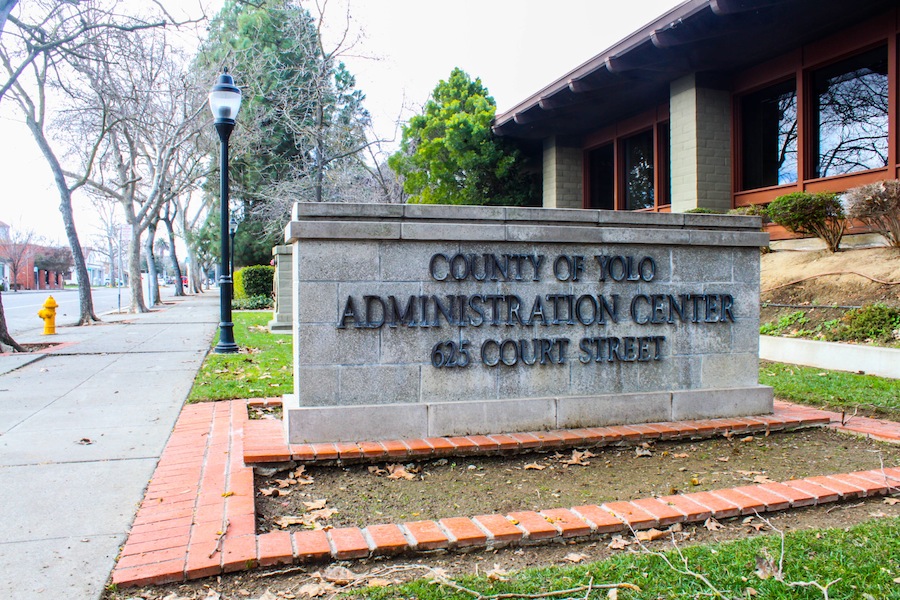
Over the past 30 years, Yolo County has made several changes to its electoral process. With new laws in place, registering to vote has become significantly easier, and more people are voting with mail-in ballots, according to the Yolo County Election Office.

Susan Patenaude-Vigil, assistant clerk recorder for the Yolo County Election Office, states that 55 percent of voters in Yolo County are registered to vote by mail-in ballots. She said these are more convenient, since voters get their ballot ahead of time and can do research prior to voting.

Despite the convenience of mail-in ballots, the City of Davis has seen a drop in voter registration over the past year. As of October 2015, 33,357 voters had registered in Davis, which is 2,677 less than were registered in August 2014.

The decrease in voter registration is partially the result of purges the electoral office issued this past year to remove voters from registration lists and to update the state’s registration roles. As of 2014, over 100,000 voters were registered in Yolo County, but after the purges, that number dropped by approximately 6,000 voters.  

“We have gone through and bumped vote-by-mail ballots that may have been returned [to the sender] from the 2014 general elections and inactivated voters from that list that moved out of state or out of the county,” Patenaude-Vigil said. “We also downloaded a duplication report from the Secretary of State to get rid of people on that list who are registered in another county.”

According to UC Davis political science professor Oswald Stone, students greatly contribute to the decrease in voter registration, since they tend to shy away from voting in college due to a lack of connection with their new community.

“The longer people have lived in a community, the more likely they will have taken the time to register and vote, which is one reason students don’t vote,” Stone said. “Young people generally don’t vote […] because […] sometimes they haven’t registered to vote or don’t know how to vote and get a ballot.”

In the 2014 Report of Registration, 19,334 Davis residents were registered as Democrats whereas 5,184 were registered as Republicans.

“The major explanation for why people register for a party is because of their political values. Liberals tend to identify and register as Democrats and conservatives tend to identify and represent as Republicans,” Stone said. “A second explanation is due to a socialization effect. If you grew up in a democratic family, you are more likely to be a Democrat.”

Rebecca Salgado, a fourth-year political science major, is the president of Davis College Democrats (DCD), an organization with the mission to educate voters and get people involved in the political process.

“We invite candidates to campus and all of our meetings are open,” Salgado said. “This gives students a chance to get to know the candidates that are running for the seat that will represent them in a manner that’s open, inclusive and easier for student accessibility since it is on campus.”

The Aggie Voter Project, a non-partisan extension of DCD, helps students register to vote across campus, a privilege not many organizations have.

“[Students] are super busy and elections are never friendly to students,” Salgado said. “I remember the last election, I had two midterms that day. Voting by mail still allows you to participate in the political process without having to set aside the time [to] vote at the polls.”

The Yolo County Election Office plans to reach out to local high schools and UC Davis in the spring.

“We just hope people get out and vote,” Patenaude-Vigil said. “I know there is a lot of voter apathy out there right now. I don’t blame people for being upset with their politicians, but we can’t make change unless we get out there and vote.”

Written by: SHIREEN AFKARI – city@theaggie.org

How big is a small town?

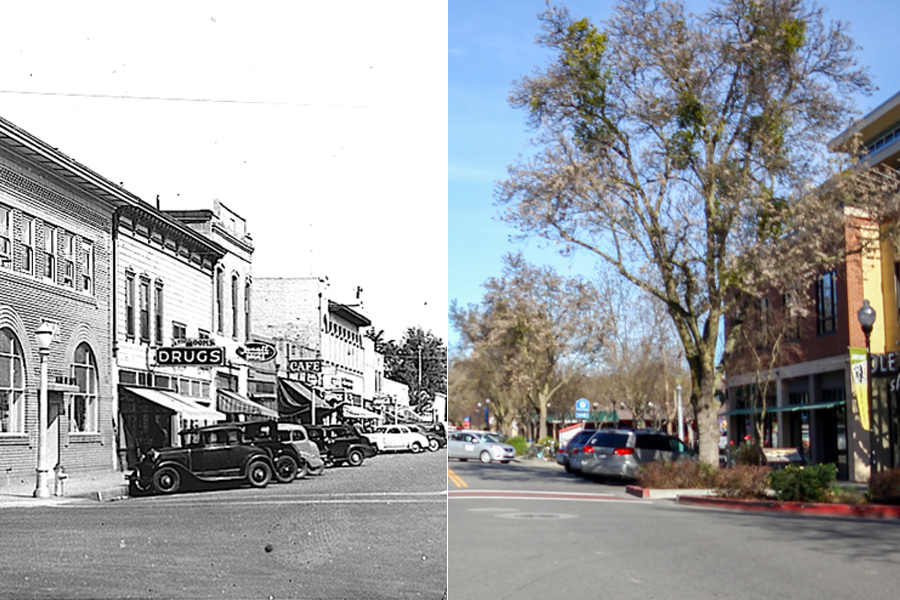
2nd and G St., Downtown Davis (ASHLEY LUGO / AGGIE)

Developers make plans for Davis expansion

With a steadily increasing population density and expanding UC Davis campus, the City of Davis has considered numerous development plans to accommodate the growing local community over the past few years.

According to the United States Census Bureau, Davis has grown from having less than 1,000 residents to almost 67,000 since its establishment as a city in 1917.

Bob Wolcott, Davis principal planner for the department of community development and sustainability, explained that future development plans for Davis are multifaceted. Goals include increasing nonresidential development, creating more compact residential areas and improving energy and water use efficiency.

As we do all those things, they have to be balanced,” Wolcott said. “You don’t just do it without consideration for the existing fabric of the city. It’s a balance of achieving these goals for new developments while still respecting what we have now. That’s what makes it a challenge.”

One development project currently underway is The Cannery, located at 1550 Cannery Av., which will create residential homes and provide a working farm for the community. Many other projects throughout the city are in various stages of planning and approval, including the mixed-use Nishi Gateway District and Sterling 5th Street Apartments.

Katherine Hess, Davis community development administrator, explains that development plans in the city require different forms of approval based on their location.

“Almost all of the land on the edges of the current community is designated for agricultural use. So [using] that for something other than agriculture requires a public review process, it requires environmental analysis,” Hess said. “If the City of Davis wishes to change land from agriculture or open space uses to urban development, it needs to be approved by the voters.”

The construction of The Cannery did not require this review process because the land was previously designated for industrial use.

Future construction plans are also limited by physical boundaries. Hess explains that the residential areas surrounding Downtown Davis make radial expansion unlikely, though there have been efforts to use the existing space more efficiently.

“There is continued desire on the part of the City Council to allow some additional intensity within the downtown [area],” Hess said. “There are some parcels that are underutilized, [such as] surface parking lots, for example. There are some buildings with very low floor area ratios, so there could be the potential to change some of the existing properties to more intensity.”

John Lofland, UC Davis professor emeritus of sociology and creator of the Davis History Today website, explained that the City of Davis went through the bulk of its growth in the latter half of the 1900s, with growth slowing in the 1990s.

“Already, by 1970, the physical transformation of Davis was well underway, although in large parts it looked like a Western boomtown,” Lofland said. “On Covell Boulevard, all of those apartments were largely still under construction.”

Ken Galett and his wife Sandi Redenbach graduated from UC Davis in 1967 and 1972, respectively, and still live in Davis today. Since they first moved to Davis, the couple has seen the city transform.

“It’s night and day,” Galett said. “The town didn’t go very far […] It was maybe one or two stoplights. Covell Boulevard didn’t exist [and] everything here North of Covell was just farmland. So it was very small. You could actually drive downtown and find a parking space.”

Galett and Redenbach both feel that Downtown Davis was more separate from the university in the past than it is now. The couple believes that, despite its expansion, Davis has still preserved much of its charm.

“Davis has a way of maintaining the culture that it used to have. I don’t know how, because the expansion is extremely palpable, I mean it’s stretched out all over the place,” Redenbach said. “But it still has the feel of a small, quiet town to me. And that’s what I love about it.”

Written by: KAYLA ZOLA – city@theaggie.org

All the world’s a stage: Shakespeare meets video games

0
KATE SNOWDON / AGGIE

UC Davis faculty, students create motion-capture game.

Friends, Aggies, Countrymen, lend me your ears. For many, the very thought of performing Shakespeare conjures up memories of stammering through a soliloquy in high school while a room of bored classmates look on. But the UC Davis Modlab, “an experimental laboratory for media research and digital humanities”, has developed a video game designed to take the fear out of performing Shakespeare.

In the game, titled “Play the Knave”, players pick a scene to perform, choose from a variety of stage and actor avatars and act out scenes while a Kinect motion sensor camera picks up their movements and mirrors it on screen. The result is “Shakespeare karaoke,” which allows players to engage with the plays of Shakespeare in an accessible way.

“The idea of using performance to teach Shakespeare is an old idea,” said Gina Bloom, a UC Davis English professor and the video game project director. “A lot of teachers will assign their students a scene out of a play, and the idea is that, by speaking the lines and thinking about how to position your body, you demonstrate an understanding of the play. So this [game] is just using the affordances of digital technology to make that assignment easier.”

Sawyer Kemp, a fifth-year graduate student in English and the installation coordinator of the project, has travelled with the game to various Shakespeare festivals and witnessed firsthand the educational aspect of “Play the Knave.”

“For every time you ask someone to play, five will say no, but every time someone boots it up, 30 people will come watch,” Kemp said. “It’s really validating to see these people who say they’re not an actor and they don’t play video games to tell their friend, ‘Oh, move your arm that way!’ By watching other people do it, they realize they actually do have some kind of knowledge. It shows that they’re engaging and understanding [the] performance.”

Alison Tam, a third-year English major who interned on the project, was present at the game’s installation at the local Davis Arts Center, located on 1919 F street, over the summer and enjoyed watching how the game engages people of all ages.

“It was cool seeing how kids react to Shakespeare,” Tam said. “You usually think of Shakespeare as something elevated and academic. With a game, it’s so democratized that anyone can read or play it, so it gives people a greater sense of ownership over Shakespeare.”

For Nick Toothman, one of the lead programmers of the game and a sixth-year graduate student in computer science, the most rewarding part of the project was at the Stratford Shakespeare Festival, when he saw the public have fun with something he helped create.

“It sunk in that I’ve done something that people can have fun with,” Toothman said. “That’s the most amazing feeling.”

However, the course of videogame production never did run (completely) smooth. The team has encountered some growing pains during the game’s development, mostly due to a gap between what they would like to add to the game, and what is realistically achievable.

“A lot of the challenges were figuring out what we could offer people in the experience and what we would love to offer,” Toothman said. “We would love to give facial or detailed hand animation a try but the technology is just not accessible right now.”

Bloom said that she sees the game growing in three directions: continuing with the short-term installations that have been set up at various universities and festivals, bringing the game to teachers and then eventually releasing an at-home version.

“There’s some tension between what our budget is and what we would like,” Kemp said. “Eventually we want there to be more customization, like allowing people to change out the costumes or sets.”

But despite the restraints, the team has found that glitches can often be incorporated in performances and utilized to an actor’s benefit. When asked what their favorite scene to perform was, Bloom, Kemp and Toothman all had the same answer: the ghost scene from Hamlet, because of funny glitches that allow players to exercise their creativity.

“At the Utah Shakespeare Festival, these two kids were playing the scene and realized that when you cross the avatars, one of them will disappear,” Kemp said. “One kid took advantage of [the glitch] and he’d creep around and pop up randomly. When you watch the video playback, it would look like the ghost was disappearing and reappearing. I thought it was genius that he was using the system to make the game even better.”

And so, all the world really does become a stage, as “Play the Knave” allows people who do not consider themselves performers a chance to indulge their inner actor, and to engage with Shakespeare’s plays in an innovative and interactive way.

For more information, visit the Play the Knave’s website, http://playtheknave.org.
WRITTEN BY: Amanda Ong – arts@theaggie.org

Closing the education divide

0
ANH-TRAM BUI / AGGIE

In January, the Pew Research Center published a somewhat confounding survey showing that, despite widespread cynicism about the United States, Americans now hold more positive views about their institutions than they did five years ago. It’s not an intuitive conclusion, considering how popular the harbingers of the apocalypse seem to be doing in our presidential election.

But make no mistake: most of today’s problems — especially those in financial malpractice, racialized policing and education — are systemic and need to be solved in that manner.

The Divide, written by Rolling Stone’s Matt Taibbi and selected for this year’s UC Davis campus book project, is particularly concerned with the propagation of inequities within the criminal justice system. Taibbi focuses on street dealers and Wall Street bankers, making the case that an invisible set of rules has effectively made different justice systems for these groups and for the rich and poor in general. You can guess who gets the short straw.

It seems that, more than ever, people attribute the sources of their frustration to these invisible rules and rigged institutions. And in no field do they pose a greater threat than in education.

Achievement gaps refer broadly to any sort of discrepancy in academic performance that falls along lines of race, sex or socioeconomic status. These gaps aren’t the result of any one variable, but it’s clear that they start growing from the earliest stages of education — and are increasingly divided along class lines. Fifty years ago, the achievement gap between black and white students was up to two times as large as the income gap. Now, the opposite is true, and income has become the primary source of educational inequities. Despite making progress in closing one gap, our country now faces another one that threatens our core values about economic fairness.

According to a 2009 report by McKinsey and Company, impoverished students (defined by the study as being eligible for federally subsidized free lunches) were, on average, two years behind in their learning than their wealthier peers. The consequences poor children face when they are unable to make up this difference are staggering, and they have serious impacts on not only their own future, but on the health of the country at large. The McKinsey report suggests that economic losses of not closing the international achievement gap are close to those sustained during the “Great Recession.”

There are two primary reasons that these disadvantaged students have a hard time moving up the academic ladder as they get older.

The first is the tendency of schools to divide students into classes that best fit their specific learning needs. Think GATE programs in elementary school and AP classes in high school. In effect, this practice — known as tracking — will often separate students along racial and economic lines. The proponents of tracking, who include many educators, say that with growing class sizes, having a great diversity of needs in a classroom hinders the teaching process. That’s a fair point.

But for as many students who start out on these higher tracks, there are even more stymied below. Students on lower tracks will not usually have the quality teachers or resources that would allow them to make the jump to an honors class. Critics have cited research on the divisiveness of tracking to liken it to a modern form of segregation.

A second, more latent form of early division comes in the form of childrens’ upbringings. Unlike tracking, which disproportionately affects its victims based on race and income, parenting styles seem to differ almost exclusively by class. Annette Lareau, a sociologist at the University of Pennsylvania, describes the middle-class childhood as one defined by “concerted cultivation.” Kids who fit under this model typically enjoy a host of structured activities through school and other sources. Their parents facilitate communication with teachers and other authority figures.

Lower-income children are more likely to experience what Lareau describes as “the accomplishment of natural growth” — a far less organized way of growing up that doesn’t put as much of a focus on the child working in tandem with educators. The difference in parenting style is a result of the resources available to each family. For example, piano lessons are expensive, so not every child will grow up learning the patience such an endeavor could afford.

Policymakers need to consider these factors before they continue to make decisions on how to best serve students.

2016 is already shaping up to be a watershed year in education. In an unusual show of bipartisanship, the US Congress replaced the failed No Child Left Behind Act with the Every Student Succeeds Act (ESSA). The new law, written by senators Lamar Alexander (R-TN) and Patty Murray (D-WA), drops the punitive punishments levied by the federal government on schools that failed to raise test scores year to year. More importantly, ESSA recognizes that states should control their education policies individually and that no single model can address the vastly different problems that can exist from one school district to the next.

With these revisions, civil rights groups will need to play a more involved role than ever in checking the states, which have a dismal record of dealing with their individual achievement gaps.

With college education becoming a necessary tool for social mobility (and with UC Davis leading the way), students of all economic backgrounds need to first be ensured a fair path to that education.
You can reach ELI FLESCH at ekflesch@ucdavis.edu or on Twitter @eliflesch.

The untold story of ‘The Uncondemned’

0
LUCY KNOWLES / AGGIE

UC Davis Professor of Law instigated first conviction of sexual assault as a war crime.

In 2013, UC Davis School of Law professor Lisa Pruitt received a phone call that would change her life forever. This call had to do with a memo she wrote 17 years prior, which would later assist in the first conviction of sexual assault as a war crime and serve as the basis for a major motion picture now set to debut in September 2016.

“Part of the reason why I’m out as a rape survivor in the film and in life is [because] if we can’t talk about these issues, we can’t begin to de-stigmatize the status of these survivors,” Pruitt said. “Anyone who’s paying attention to what goes on in the world [will] know that there’s a sexual assault epidemic in our country, and if we can’t come face-to-face with the fact that it ‘happens to people like me’ — whatever that means — then we’re not really even taking the first step.”

During writer and director Michele Mitchell and her late partner Nick Louvel’s search for possible documentary subjects, they came across the court case of Jean-Paul Akayesu, former mayor of the Taba commune of Rwanda. During the 1994 Rwandan genocide, Akayesu abstained from any attempt to stop the thousands of rapes and gender-specific war crimes.

“The story of the Akayesu case had never been told before,” Mitchell said. “When I wanted to tell the story of the first time rape was convicted as a crime of war, I thought we were going to Bosnia, because the case that I always heard about happened at the International Criminal Tribunal (ICT) of the former Yugoslavia.”

It was not until Mitchell began her research for the documentary, titled “The Uncondemned,” that Lisa Pruitt came into the picture. In 1996, Pruitt wrote a memo which included testimonies from key witnesses of the crime. At the time, the International Criminal Tribunal of Rwanda (ICTR) deemed these unusable, claiming that there wasn’t enough evidence in the case against Akayesu to support the prosecution.

In spring of 1997, investigators went back to talk to every witness in Pruitt’s report, which finally resulted in an amendment to the indictment which included sexual assault on the list of war crimes Akayesu had committed. This led Mitchell to contact Pruitt, surprising her with the news that the memo she wrote almost two decades ago had assisted in a major historical court case.

“[Pruitt] started laughing and that was one of the best days of my career,” Mitchell said. “When you can call somebody who did their job and got crushed […] It was just so great to be the bearer of good news for once. Lisa’s story really resonates [because] it’s such a great thing to find out that doing your job did something wonderful.”

As a gender consultant in the late 1990s, and with past experience as both a rape crisis counselor and a victim of rape herself, Pruitt knew about the dynamics of the survivor and psychological trauma.

“I [looked] at the evidence that had already been collected from people who had witnessed the events in the Taba commune,” Pruitt said. “I argued in my memo there was sufficient evidence to amend the indictment to include charges of sexual assault and that we should be sending, as a matter of priority, investigators back into the field to contact these women again.”

At the time, the common opinion was that adding “weak evidence” of sexual assault to a case backed with strong proof of war crimes would lessen the strength of the prosecution.

“There was a strong current […] that this was about investigating a genocide, and rape was not central to the genocide — it was just incidental,” Pruitt said. “To the victor goes the spoils, and women were some of the spoils of war.”

The memo eventually got into the hands of two members of the prosecution, as a matter of inside intelligence. According to Patricia Sellers, trial attorney and Legal Gender Advisor for the ICTR above Pruitt, the document it was put back into the system as an internal document for the Office of the Investigation after initially being put aside.

“Just imagine what kind of character that takes,” Sellers said. “To go there and do that type of professional work, and to come out and hear that the work will not be used, and from [Pruitt’s] impression, thinking that it would never be used.”

Sellers believes that the work Pruitt completed in that case is a task that lasts forever in the law profession.

“Lisa was really acting on behalf of myself as the legal advisor for gender to undertake some preliminary investigative work,” Sellers said. “She did the work, did it professionally enough that you can see the result down the line [and] allowed us to really consolidate some of our investigative leads and witness leads.”

Pruitt said that without her education, the drive to vindicate the witnesses of the Akayesu case would not have led to any further developments in the case.

“I did what lawyers do; I applied the law to the facts. Maybe I went a little bit beyond that in my advocacy in taking the women seriously,” Pruitt said. “I’m proudest that I took the women seriously when no one else was.”

The witnesses, depicted as HH, JJ and OO in “The Uncondemned,” made major contributions to the story. Guided by their social worker and an NGO activist, the women testified against Akayesu and took the spotlight alongside Pruitt in the documentary.

“It’s never easy for victims of crime to get up and tell their stories, [and] by the time we were in Rwanda and meeting the women, I held them in much higher regard than I might have even thought to do so before seeing the film,” Pruitt said. “They are just absolutely the ultimate heroes of this [story].”

Mitchell agrees that recognizing the witnesses’ bravery is of the utmost importance, but she also considers how vital the role Pruitt played was in the success of this never-before-told story.

“One of the things [about] Lisa’s storyline [is] that it [is] about redemption, and about that moment when you become yourself again,” Mitchell said. “[The witnesses] are not [just] ‘women who were sexually terrorized during this genocide — they’re people who changed history. There is no single hero, but [the] Lisa Pruitt [story] is the soul of the film.”
Written by EMILIE DEFAZIO– features@theaggie.org

A century of celebration

0
UC DAVIS / ARCHIVAL PHOTO

UC Davis alumna reflects on great-grandfather’s role as first Picnic Day chair.

Come spring, thousands of visitors will flock to campus to experience what is believed to be the largest student-run event in the country. For some, though, Picnic Day is more than just a day of ice cream, giggles and dachshund races — it’s a celebration of life and a long-standing connection to the university. This is especially true for UC Davis alumna Caroline Stasulat, whose great-grandfather, Robert Lockhart, served as the first student Picnic Day chair in 1916.

“My grandmother was the keeper of all our family history,” Stasulat said. “Every year, my sister, parents and I had this tradition of going to our grandmother’s and she would cook us a big breakfast before we walked over as a family to campus to celebrate my earliest Picnic Days. That’s when she would tell me about her father’s role as chair.”

Lockhart spent his last year as undergraduate at “The University Farm,” a UC Berkeley extension that eventually became UC Davis. Although Picnic Day debuted in 1914, students did not assume the chair position until 1916. This year’s Picnic Day chair, fourth-year plant biology major Grace Scott, believes she shares a connection with Lockhart due to his past position and history with the campus.

“I can draw parallels between my life and Robert’s life,” Scott said. “He was an agricultural major, and I study plant biology. He was the first student chair, and 100 years later his legacy still stands. I hope it does for another 100 years. It wasn’t even UC Davis at that point, and it’s cool to see how the campus and Picnic Day have changed under the leadership of students.”

If Lockhart were alive today, he might be surprised to find that his role as Picnic Day chair was certainly not his only contribution to the campus. College students are notorious for finding creative solutions to their financial challenges — and apparently, things weren’t so different a century ago. Unable to afford horses of their own to ride out to the fields, Lockhart and his roommate built and rode the first bike ever used on the UC Davis campus. Amusingly, bicycles are now ubiquitous on campus, and the city of Davis is often listed among America’s best biking cities.

Like Lockhart, several other members of his family have also left long-lasting marks on the UC Davis community throughout the last century. His daughter, Marilyn Lockhart Wilson, worked in the Botany Department on-campus, while Caroline Stasulat’s other great-grandfather, James French Wilson, was appointed assistant professor of Animal Husbandry in 1919. Caroline Stasulat’s parents, Edie and Joe Stasulat, both worked in various academic departments and the Internship and Career Center (ICC). Ms. Edie Stasulat also worked at the Activities and Recreation Center (ARC), and just recently retired from the Philosophy Department in July 2015.

“The really interesting thing is that since my great-grandfather was there, every following generation has discovered UC Davis and developed their relationship with the campus on their own,” Stasulat said. “It was never ‘your grandfather worked there so you have to go there.’ It wasn’t a mandated tradition. It all happened organically.”

As a teen, Stasulat never planned to attend UC Davis herself. Although she was brought up in close proximity to the university, she always dreamt of a future far away from home. That dream fell apart when her father passed away in her senior year of high school. Stasulat chose to stay local, and support her family as everyone healed. Today, she sees that decision as a blessing.

“I got to have some exposure to the work he had done in the [ICC],” Stasulat said. “I worked all four years there as a peer adviser and I got to do meaningful work and learned about what he had done from his colleagues. I was in a place that, after a loss, still had a really strong sense of family connection.”

Stasulat’s connection to her family’s history with UC Davis ended up finding its way into every aspect of her life. As an undergraduate, Stasulat found a passion in Native American studies, and went on to pursue a degree in the subject.

“Whenever I go back to campus, it feels nostalgic to the max,” Stasulat said. “Not only do I have memories of my own time and studies here, but whenever I go to Hart Hall, I imagine my great-grandfather working in the basement. It’s so meaningful to be in a place that has meant so much to your family and to others for such a long time. It’s an honor to have this relationship and this history with UC Davis.”

Though this year marks the 102nd Picnic Day, it’s a centennial celebration for Stasulat. Talks of a party and family reunion are in the air, and those involved in alumni engagement are enthusiastic about any future celebrations and alumni involvement with the school.

Jen Thayer, director of programs at the Cal Aggie Alumni Association, works with alumni worldwide, encouraging them to share their knowledge and their expertise with the campus. According to Thayer, alumni should return to campus in order to “relive their own experience,” and share with students what they can do to make their time here great.

“Alumni are there to be the voice of the university after students are no longer here,” Thayer said. “Alumni are the ones speaking fondly about the school, speaking to prospective students and the community of their experience here.”

Thayer, Scott and others involved in Picnic Day planning often collaborate on outreach efforts for the event, including the annual Picnic Day Breakfast. At the heart of every project is an emphasis on community, which is especially meaningful to Scott.

“Picnic Day is my sense of community here at Davis,” Scott said. “I’ve been doing this for four years, and getting involved makes me feel like I’m part of something and that’s something I really need for my own happiness. When I graduate and become an alum, I want to be invited to Picnic Day and made welcome and feel what’s going on — just like we do for Stasulat’s family.”


Written by Anjali Bhat—features@theaggie.org


Note: As of Feb. 19, 2016, some changes for accuracy in this article were made. 

Keeping students on track

VENOOS MOSHAYEDI / AGGIE

Increase in next academic year’s enrollment calls into question possible effects on student retention.

Already in this academic year, UC Davis obtained the largest solar plant on a college campus nationwide, the new Center for African Diaspora Student Success opened its doors in October 2015, and a staggering 86,041 hopefuls applied for the chance to become an Aggie, breaking the previous UC Davis record for number of applicants.

However, with over 35,000 students already roaming campus as of Fall 2015, and plans underway to accommodate the enrollment of 10,000 more students next academic year, concerns about student retention have arisen.

“As we attract more diverse and first-generation students to UC Davis, we have developed strategic initiatives to improve retention and graduation rates,” Katehi said in an email interview.

These initiatives were founded from UC Davis’ 2013 Blue Ribbon Report for Enhancing the Undergraduate Student Experience, and they include the creation of updated orientation programs for new students and the hiring of additional staff.

According to a 2015 Retention and Graduation Survey conducted by the UC Davis Institutional Analysis, Student Research and Information sector, 85 percent of undergraduate students finished their degree within six years of entering UC Davis in 2009. Out-of-state students, Hispanic men and African American men and women are amongst the groups surveyed that have the most varied retention rates in recent years.

“The numbers of black students on academic probation (AP) and subject to dismissal (SD) are over 100 every year,” said Frederick Williams, the student academic success coordinator for the Student Recruitment and Retention Center (SRRC) and a second-year political science and psychology double major. “I feel like being such a small [part] of the campus, that we can’t afford to lose anyone that’s here. Everyone that’s here is here for a reason — everyone that’s here is capable of doing it.”

UC Davis established the SRRC in 2000 to analyze the problem of student retention in a more hands-on environment.

“I believe that what [the SRRC does] is create that necessary safe-space for those who feel alienated or isolated on a campus where they don’t see many people who look like them,” first-year undeclared student and SRRC intern Andrew Jones said. “It’s a really big campus, and if you don’t have somebody looking out for you and developing some strategy to keep you on campus, it’s very easy to be forgotten. I think that whole concept of retention also keeps the morale and motivation [up], which is necessary to succeed.”

Although some may be concerned that student retention efforts will no longer be a top priority at the university level due to next year’s addition of over a thousand new UC Davis undergraduates, Kate Moser, media specialist for the UC Office of the President, assures students that this increase in enrollment is “a testament to the value of a University of California education.”

“More and more students want to study here, and we are busy [with] plans for major in-state undergraduate enrollment growth across the system,” Moser said in an email interview. “Simultaneously, we are carrying out initiatives to support the strength of academics across the system and provide the necessary infrastructure on our campuses to accommodate the enrollment growth.”

DJ Aniciete, a fourth-year history major and the SRRC retention chair, said the the center was created in response to Proposition 209, which put an end to affirmative action in California by ending preferential procedures toward any individual based on race, sex or ethnicity.

“Not one specific part of retention is improving,” Aniciete said. “There are two areas I feel we’re excelling in, and those would be academic excellence and community development. We try to provide as many resources as we can to support the academic excellence of the students that come in, such as free testing materials, drop in advising [and] demystifying AP [and] SD.”

In terms of community development, the SRRC holds various events regularly to foster a sense of connection between the students who come to the SRRC.

“Basically what Black Leadership Retreat did was create that community,” Jones said. “Now being a black student on campus, you have this immediate community, especially as a first-year […] Within the first few weeks, [I] have this whole other network of people.”

This community retreat, paired with services such as counseling support and peer mentorship continue to foster an atmosphere of guidance and support. With regard to retention in an ever-growing student population, Katehi said that helping students acclimate to university life and giving them tools to succeed are UC Davis’s top goals for the future.

“[Student retention] is really important because we do need to recognize how the institution is supporting the students,” Aniciete said. “We want to keep students on campus, we want them to succeed and thrive in the college experience. In a holistic sense, catering to the needs of the individual [is important], because every experience is different for everyone.”
Written by: Ellie Dierking – features@theaggie.org

The cost of the game

0
ARIEL ROBBINS / AGGIE

UC Davis professor Dr. Bennet Omalu discusses medical discovery, recent movie release about his research called “Concussion”

The National Football League (NFL) built its multi-billion dollar empire by providing widespread access to an exhilarating sport: football. It was an untouchable institution.

The NFL’s invincibility lasted until a young Nigerian forensic pathologist discovered a disease, which he named chronic traumatic encephalopathy (CTE), rooted within the minds of some of football’s greatest players.

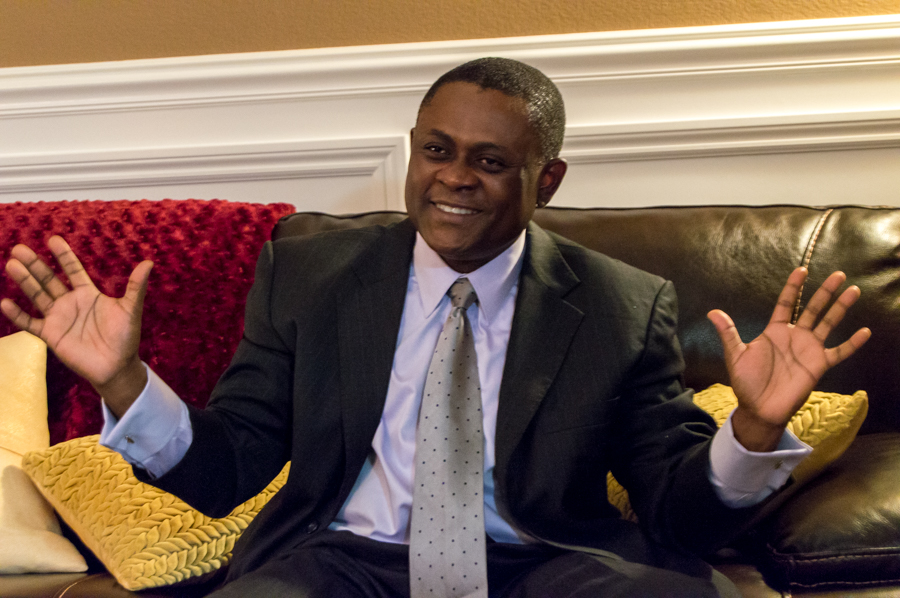
That forensic pathologist was Dr. Bennet Omalu, the chief medical examiner and sheriff-coroner of San Joaquin County and an associate clinical professor of pathology at UC Davis. Omalu received his Doctor of Medicine (MD) degree from the University of Nigeria in 1991 and came to the United States in 1994. He currently holds eight degrees.

“When I came here [and] saw this disease, first I was surprised — I was shocked that no one else had seen it or described it,” Omalu said. “I thought, honestly, that that was un-American.”

In 2002, Omalu found the body of famed former Pittsburgh Steelers quarterback Mike Webster on his autopsy table. Webster had been suffering from depression, dementia and bone and muscle pain before passing away from a heart attack.

“There was something I was expecting to see: a brain that was damaged by repeated blows like you would see in boxers,” Omalu said. “But when I opened up his skull, his brain looked as normal as every other normal brain you would see. So, in fact, I was embarrassed by that.”

After sifting through medical literature, Omalu sent several pieces of the brain tissue for analysis. The results showed an abnormal buildup of protein within Webster’s brain that was caused by repetitive sub-concussive blows to the head. This protein choked his brain of normal functioning and fundamentally changed him both as an athlete and as a person.

“Retired players were going crazy after retirement, and nobody figured it out,” Omalu said. “That intrigued me, that something could be wrong here and people chose to look the other way. […] I chose not to keep quiet. [I] chose to use my voice, my education and my knowledge given to me by America to become the voice of the voiceless.”

With the help of various other medical professionals, Omalu published a paper detailing his findings in the NFL-endorsed Neurosurgery journal. The NFL responded with a letter accusing him of fraud and demanding the paper’s retraction. However, the NFL could no longer ignore the issue after the suicide of two more ex-NFL football players within a year.

“A concussion will give you a false sense of danger,” Omalu said. “You may suffer one or two concussions in your lifetime, but you may suffer five thousand blows to your head. The issue is about exposure to repeated blunt force trauma of the head. And if the NFL admits that, they are pretty much admitting that playing football is inherently dangerous, which is what it is.”

Even with papers and the commotion amongst NFL players, public knowledge of CTE was relatively restricted until 2013. Despite the NFL’s best attempts to keep the matter under wraps, Sony Pictures Entertainment announced that it was producing Concussion, a major motion picture film based on Omalu’s discovery. With Will Smith playing the role of Omalu, the film immediately put CTE and the NFL into the spotlight and under the nation’s most critical eye.

ARIEL ROBBINS / AGGIE

“Already, this movie has made an impact,” Omalu said. “Congress is already calling a mini state house of assembly and I don’t think the risk of football has ever been discussed as much as it has since this movie came out, so it is instigating a change in thinking.”

In 2015, the NFL put another preventative measure in place by introducing an independent certified athletic trainer (ATC). The spotter can stop the game at any time if they see a player with a potential concussion, who must then get the ATC’s approval to continue playing.

UC Davis has adopted similar protocols and practices in response to the potential dangers that athletes face during play. Specialists are on-field during games to diagnose and evaluate head, neck and spine injuries that might occur over the course of a game.

“There’s a lot of neck strengthening […] so that in a whiplash situation, you might be able to control your head a little more,” said Tina Tubbs, the director of sports medicine at UC Davis. “I think the biggest thing that we can do is early diagnostics, correct diagnostics and doing a very thorough return-to-play program of making sure we’re going through the proper stages and giving it proper rest.”

Tubbs stresses that there are various ways of getting a concussion that don’t involve contact with the head, such as whiplash from falling and getting hit near the head.

“It’s very difficult to prevent a concussion,” Tubbs said. “For a sport like football, it’s not just a contact sport, it’s a collision sport.”

In an opinion editorial for the New York Times, Omalu wrote that children should not play high-impact contact sports, like football, until age 18. He said that it is the moral obligation of society to protect children and that no adult should be allowed to make a potentially life-altering decision for a child.

Although prohibiting minors from participating in high contact sports would be effective in managing the proliferation of concussions, this may be unlikely to happen anytime soon.

“For kids in the inner cities, [football is] their way out, and that’s all they’ve been taught from a young age,” said Shamawn Wright, a fourth-year sociology major and UC Davis football player. “There’s no way you can really stop concussions from happening because it is so physical.”

Growing up, Wright lived in a broken home that provided him little help through school; football was his chance at having a college education.

“I had to sacrifice my body and I’m okay with that because it’s what I had to do to get my way out and provide for my future family,” Wright said. “But if my kids don’t want to play, then they don’t have to. I’m not going to force them to because I don’t want them to grow up with brain trauma.”

As a former college football player and now the head football coach at UC Davis, Ron Gould believes that doctors are the only individuals qualified enough to make claims that young kids should not be playing high-impact contact sports.

“I think the most important thing, whether your kid is under 18 or not, is making sure that their coaches are teaching them the right way to tackle,” Gould said. “You have to make sure that they are being taught the right techniques because the kids are so much bigger, stronger and faster than before, so the collisions are going to be much harder.”

Football is a significant part of American culture, and many people have difficulty envisioning the sport’s eradication. However, if the issue with concussions isn’t addressed soon in the form of large-scale outreach and legislation, the number of athletes at risk for severe brain disease will only increase.

“America is suffering from a sort of intoxication with football,” Omalu said. “What we are letting human beings do to each other is barbaric. That does not belong in the 21st century. […] We must let things belong in the past. Let us do things in smarter ways for our children.”

Written by: Bryan Sykes and Lisa Wong – sports@theaggie.org

Top 5 Most Underrated Love Songs (And Then Some)

0
KEVIN HILL / FLICKR
KEVIN HILL / FLICKR

In no particular order, here are some of the least recognized — but most worthy — songs for your Valentine’s Day playlist.

  1. “When I Get My Hands on You” – The New Basement Tapes

This Valentine’s Day, treat yourself to a musical phenomenon involving three amazing things: Bob Dylan, unreleased content and an unfathomable amount of love captured in very few words. The New Basement Tapes, an undertaking assembled by T Bone Burnett, is a project that has some of today’s leading artists (Marcus Mumford, Elvis Costello and others) performing the never before released manuscripts of Bob Dylan himself. Did I mention musical phenomenon?

  1. “Can’t Help Falling in Love” – Haley Reinhart

Yes, this is the song from the Extra gum commercial. But it’s worth a listen not for the lyrics, which are both commonplace and lack ingenuity, but for the haunting fluctuation of Reinhart’s voice. You’ll get chills at 2:32.

  1. “Love” – Allen Stone

Though the title doesn’t suggest its complexity, this song takes an interesting — and groovy — perspective on an old moral. “Treat others how you want to be treated” never sounded so sublime: “Love: what a reflection / Love: it’s a natural fact / Love: every bit you create you get back.”

  1. “Julep” – Punch Brothers

Punch Brothers have to yet to release something that isn’t borderline genius, so here is — with much justification — their most popular single. This song, more about the concept of time than star-crossed lovers, presents an interesting notion: where does love stand in relation to time? According to the magnificence that is synchronized mandolin, guitar, bass, violin and banjo, the two are irreversibly intertwined.

  1. “Soul is Fire” – Elliot Root

If being told, “Baby, your soul is fire” isn’t enough to get you going, the intensity of the chorus certainly will. This up and coming alternative group, having risen to prominence within the past year and a half, have released three EP’s that will instantly become a staple in your day-to-day playlist. Krueger’s voice is not one to be easily forgotten.

And for those who haven’t been hit by Cupid’s arrow, here are some more relatable tunes:

For the hopeful single: “Heartbreak Road” – Ryan Montbleau

This cover of Bill Wither’s classic maintains the original’s post-breakup optimism, but has a modern sound that resembles the likes of Allen Stone, Gary Clark Jr. and even Lake Street Dive. It’s rare that a love song can spew advice without sounding trite, but Withers — and decades later, with the help of Montbleau — manages to accomplish this with ease. If you refuse to take your mother’s dating advice, at least take Withers’: “You ain’t never gonna understand it / Till you’ve been all down in it.”

For the hopeless single: “Lonely” – Anderson East

Self-pity never sounded this pleasant, thanks to an amazing horn section supporting East’s gravelly voice. This tune brings raw human emotions to life: our sometimes-painful indecisiveness, our natural tendency to regret, but most importantly, our ability to evolve.

The gentle breakup: “The Mates of Soul (Remastered)” – Taylor John Williams

Upon first listen, with its sweet melody and William’s smooth vocals, this song seems like a typical love ballad. But the lyrics are surprisingly (and might I add, hilariously) incongruous as we discover that this song from The Voice semi-finalist is actually about a serial heartbreaker: “Said I never believed in the mates of soul / so I never once claimed that I know / that you’re the only one for me.” If only breakups actually sounded this poetic.

The ugly breakup: “Baby Blue ft. Chance the Rapper” – Action Bronson

The lyrics can summarize the song’s purpose on this list better than I ever could.

When you roommate starts dating: “Neighbor Song” – Lake Street Dive

When your roommate starts dating, well, you gain another roommate and Lake Street Dive perfectly captures this all-too-common college experience. For those who did not attend this group’s performance at the Mondavi Center back in November, first of all, you missed out. Secondly, this song is unforgettable; Rachel Price has more strength in her vocals than the stage beneath her. Keep an eye out for their upcoming album, Side Pony, expected to release Feb. 19.

Written by: Ally Overbay – arts@theaggie.org

A day in the life of student athletes

0
Junior Hilvy Cheung swims fly. (LUCY KNOWLES / AGGIE)

What it really means to wear blue and gold

There is a joke among college students that goes, “Sleep, grades, social life. Pick two.” This hits close to home for many college students are just too busy. Student athletes have it even harder, as they have a fourth option that they have to balance.

Currently, more than 460,000 student athletes in the United States compete in NCAA sports every year. UC Davis is home to approximately 600 of those students. The California Aggie sat down with a few of of these athletes to get a better glimpse into their busy lives and schedules and to see how they balance it all.

“There is a time for practice and there’s a time for after school-student stuff,” said Brynton Lemar, a junior guard for the men’s basketball team. “We are blessed to be doing what we love in college while [getting] a great education.”

Ironically, when The Aggie contacted athletes for this story, a handful were simply too busy to sit down for in-person interviews and could only be contacted via email. Alyson Doherty, a senior forward for the women’s basketball team, was one of these individuals.

Doherty rises at 7:15 a.m. for weights at 8 a.m., then a combination of school and basketball keeps her out and about until 7 p.m., when she finally returns home. These 12-hour days can be staggering.

“We practice six days a week, with our day off being Sunday,” Doherty said in the email. “We will have weights in the morning three days a week and then practice from about 3 to 6 p.m. There is also film, team building, scout and rehab — so although we may only be on the court for a few hours, there are still other things that keep us busy during the day.”

Because of similar time-constraints, Hilvy Cheung, a junior swimmer who specializes in Butterfly, also was unable to speak with The Aggie in-person. For Cheung, swimming is a 19-hour-a-week commitment, which has an impact on her social life.

“I am with my teammates 24/7. We always try to sign up for the same classes so that we won’t have to go through a lecture alone,” Cheung said in the email. “However, practice time is the number one time for socialization, though my coach may disagree. During practices, whenever we are resting on walls, kicking with a kickboard or waiting for the next set, [that’s] always the time when the pool completely fills up with chatter.”

According to Cheung, being a student-athlete and having such a tight-knit social group does have its drawbacks.

“The lack of time makes it hard for me to make friends [outside of swim] and actually find time to maintain those relationships,” Cheung said. “Interestingly, in college, it is much easier for me to make friends with another athlete […] there is a silent but mutual respect for each other as we both understand the work and the time we put into our sports while maintaining the grades.”

However, all of the students have benefitted from their work as athletes.

“I think just now I’m a better planner [and] I plan out my days better,” said Alec Adamson, a junior on the tennis team. “[It’s all about] figuring out little blocks where I can do a little studying, and just planning [ahead] when we have to leave for trips and stuff.”

At the end of the day, the athletes are constantly pushing themselves to be successful both on and off the court or field. They sweat and they hurt, and, in some cases, they bleed in order to do what they love.

According to Doherty, she wouldn’t trade any of her hard work or effort, regardless of the sacrifices she must make as a student athlete, for any other experience.

“We have such a unique opportunity to play the sport we love at an amazing university,” Doherty said. “[You have to] make sure you always remember that and enjoy every second of it.”

Written by: Aaron Sellers – sports@theaggie.org

New art museum to open on campus this fall

0
NICKI PADAR / AGGIE
NICKI PADAR / AGGIE

The Manetti Shrem Art Museum set to engage with students

The Jan Shrem and Maria Manetti Shrem Museum of Art is set to open on campus this fall. A more specific opening date will be announced in February, and information about opening exhibits will be released later this year.

The opening of the Manetti Shrem coincides with the opening of two other architecturally innovative museums in Northern California: the new building at the Berkeley Art Museum and Pacific Film Archive and the expansion of the San Francisco Museum of Modern Art. With funding from various donors, including Jan Shrem, Maria Manetti Shrem and Robert and Margrit Mondavi, and a capital budget of $30 million, the season is set to be an exciting time for Northern California’s art scene.

“The museum has been in the university’s long-term planning since the mid-1990s,” said Amanda Price, the public relations representative for the museum. “It can be said that the museum is really 60 years in the making, rooted in UC Davis’ history and legacy dating back to the 1950s when the Department of Art was founded.”

Student Engagement Coordinator Carmel Dor added that the museum would celebrate the legacy of the UC Davis art department.

“In the 1960s to ‘70s, it was one of the top art schools in the nation, second only to Yale for a period of time,” Dor said. “We had a really great faculty here, who were not only world-renowned artists, but also amazing educators. They championed experimental education, and collective learning. When they taught their classes, it wasn’t teachers and students, it was learning together and creating art pieces together.”

According to Price, these teachers pioneered an interdisciplinary approach to art that spread to their pupils and produced scores of influential figures. This continues in the art department today, where various professors have integrated the development of the Manetti Shrem into their classes.

My Department of Design colleagues Mark Kessler, Tim McNeil and Brett Snyder and I have involved our classes in different aspects of imagining and implementing possibilities for the Manetti Shrem,” said James Housefield, a UC Davis design professor and curator of special projects at the Manetti Shrem.

Housefield’s role will be to encourage new cross-campus projects and to inspire engagement with the museum from all areas of campus. So far, each department and professor has engaged differently with the evolution of the Manetti Shrem and the creative opportunities it presents.

“My [class], Design 40C: Design Aesthetics and Experience, will engage with the museum on various levels in spring quarter, from an anticipated construction site tour of the unfinished space to projects envisioning forms of audience engagement at the new Manetti Shrem or similar museums,” Housefield said. “I’m enthusiastically designing my fall course on modern art to emphasize exhibition spaces from the time of the Impressionists and our newly-opening museum.”

This engagement with the museum will not only occur in classes, but in the work produced by UC Davis students and faculty. Dor explained that since its inception, the art program has been collecting student and faculty work. The work collected from past students will form the basis of many of the museum’s future exhibits. The museum will also exhibit many renaissance paintings and ancient Chinese sculptures, which are a part of the Fine Arts Collection at UC Davis.

Dor also leads the Manetti Shrem Student Coalition, which was created to allow students to showcase their own artwork. The coalition provides students an opportunity to give their input on what they want the Manetti Shrem to look like, and their feedback will then be incorporated into the museum.

“Students are at the focus of all that happens at the museum,” Price said. “The museum’s architectural design supports places for students to informally gather, and there are dedicated locations in the museum for active participation: the collections classroom and a community education room, which will be open to classes from across campus.”

Dor further explained that the coalition is a space to discuss what students want from the museum, and that anyone is welcome to attend their monthly meetings.

“We had such a spread of disciplines [at the last meeting]; we had someone from the agriculture program, we had a graduate student, a postdoctoral student of computer science and we had undergraduates from all over the place,” Dor said. “Those different voices come and share what they think would make a really good student space and where they can be part of a creative community without having to fit into a certain fold.”

Those who are interested in getting involved with the development of the museum can attend monthly student coalition meetings on Mondays from 6 to 8 p.m. in Wellman 234 on Feb. 17 and March 9, and in Wellman 230 on April 13 and May 18.

For more information on the museum, visit the Manetti Shrem website, http://shremmuseum.ucdavis.edu. Further questions can be directed to Carmel Dor, who can be reached at cdor@ucdavis.edu.

WRITTEN BY: Kate Snowdon – arts@theaggie.org