52.4 F
Davis

Davis, California

Tuesday, December 23, 2025
Home Blog Page 751

Former ASUCD vice president, senator speak out on mental health strain in association

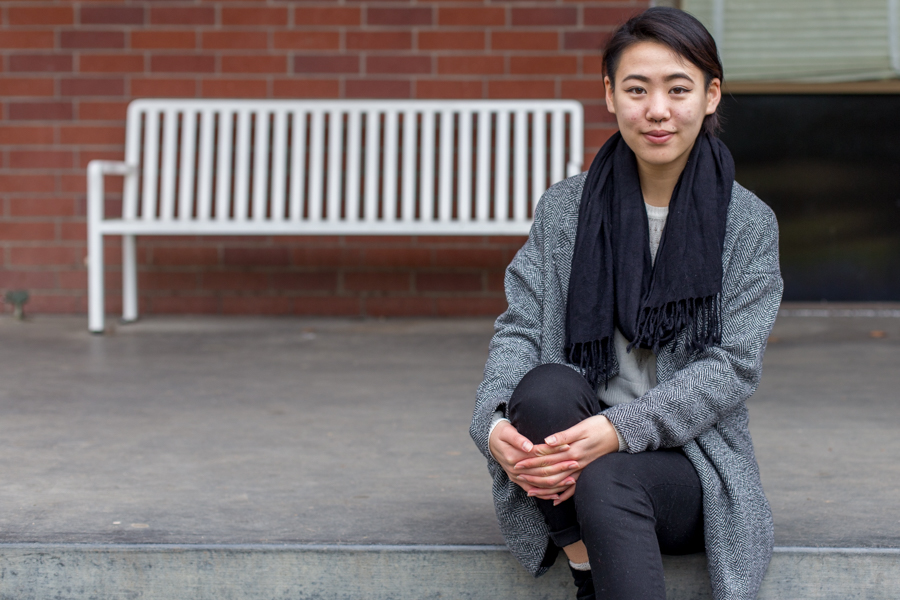
Former ASUCD vice president, Robyn Huey. (KATIE LIN / AGGIE)

ASUCD to implement new mental health resources following resignations

It’s a rainy mid-afternoon in Davis when former ASUCD Vice President Robyn Huey walks into the Student Community Center. Her smile beams through as she holds open the door, ushering another student inside.

This image is starkly different from the Huey students saw 10 months ago, when the one-time leader of UC Davis’ student government resigned her post due to her struggle with depression.

According to the National Alliance on Mental Illness, one-in-four college students struggles with mental illness. While Huey doesn’t cite ASUCD as the cause of her depression, she does see her two terms in student government, one as a senator and the other briefly as vice president, as the final push she needed to get diagnosed and seek medical help.

“It was complicated because I knew that my depression [did]n’t come from ASUCD, but maybe some part of it was aggravated by it,” Huey said. “Being part of ASUCD was keeping me going, but at the same time, the amount of work that was required from me didn’t give me time to fully recover.”

For Huey, events such as the ASUCD Coffee House’s racially-charged Cinco de Drinko party, 2014’s massive unit budget cuts and two terms sitting on divestment meetings, where she voted on whether the UC Regents should divest from companies involved in the Israeli occupation of Palestine, were primary stressors on her psyche.

“I was thinking about the really traumatic Thursday night senate meetings,” Huey said. “There have been shouting matches moments where you just have to close for the night. I remember having multiple anxiety attacks. Reminding myself of that made me realize that I wasn’t ready to continue. It wasn’t worth it.”

Huey was clinically diagnosed with depression by UC Davis’ Counseling and Psychological Services (CAPS), now known as Student Health and Counseling Services (SHCS), in August 2014, the summer after her term as a senator. Less than a year later, in April 2015, she formally resigned as vice president, only a few weeks into the job.

According to current ASUCD President Mariah Kala Watson, Huey’s running mate, the day of Huey’s resignation was the first time the executive duo had opened their office to the public.

“Everybody was so joyous before this meeting. I remember Robyn walking in and just looking miserable,” Watson said. “She handed me this letter and said, ‘When you get a chance, read this and let me know.’ I started looking at it, and I immediately knew what it was. It was a five-page handwritten letter and the last page just said, ‘I can’t do this. I’m sorry. This is my formal resignation.’”

Huey told classmates in her landscape architecture class before she notified anyone in ASUCD, including Watson, about her planned resignation.

“The people I talked to were people who didn’t know me as vice president or senator,” Huey said. “They knew me as something else. Like, ‘Oh, Robyn. She’s in my landscape architecture program’ or ‘Robyn, she designs stuff and I love talking about design stuff with her.’ Those are the people that I really went to first because they knew me outside of ASUCD and talking to them helped me remind me who I was when I was happiest.”

Huey’s decision to first notify non-ASUCD members followed a defining moment a few nights before, when she realized a majority of the people around her were only contacting her for ASUCD-related requests.

“There was this one night where everyone who wanted to get in contact with me was for something related to ASUCD,” Huey said. “That night I was so tired. That’s when I realized that everyone around me at that moment, they only knew me because of ASUCD or they wanted something from me because of ASUCD. It was sort of a defining moment. It wasn’t about time for myself; it was time for other people.”

However, Huey’s original resignation spoke nothing to her struggle with depression. It wasn’t until months later that Huey opened up about her battle, hoping that others would have the courage to do so as well.

“I think hiding for so long just continued the stigma,” Huey said. “To hide it [was] also to shame my existence because there’s nothing wrong with having a mental illness. I was like, ‘You know what? I’m done hiding. Maybe this will help me and maybe it will help other people.’”

Six months following Huey’s resignation, another member of ASUCD resigned due to mental health issues: former ASUCD Senator Anabiah Syed. While Syed noted that she had very minimal knowledge about Huey’s struggle with mental illness, the two share similar histories with depression, anxiety attacks and stressful divestment hearings, which both members said led to hate emails, including death threats.

For Syed, her reservations with ASUCD began when she was elected in the near-uncontested 2014 Fall Quarter election.

“I tend to give a lot of myself to any position I hold. That wasn’t the case with ASUCD or Senate, and I’ll be the first to admit that,” Syed said. “I did have my qualms about Senate, and ASUCD. To me, it felt like a fairly toxic environment — the type of environment I had done my best to avoid throughout my time at Davis.”

However, it wasn’t until months into her term that Syed found herself retreating from loved ones and becoming immobilized by her depression that she began contemplating resigning.

“Around May, it began to get worse. It felt like the biggest task was even getting out of bed in the morning, afternoon or however long I’d convince myself it was all right for me to stay there,” Syed said.

A few weeks into fall quarter last year, Syed announced her official resignation, but not without some hesitation on disappointing her constituents.

“I never wanted to disappoint all the students that put me there to begin with,” Syed said. “I didn’t want to just give up because that’s what resigning signified to me at that point — giving up.”

According to Watson, the overwhelming desire to please students is why many student leaders sacrifice their mental and physical health for the role they work in, and it is also one of the reasons she believes that more members within ASUCD struggle with mental health issues than expected.

“You’re working 40 hours a week sometimes, and you don’t stop because you’re not thinking about yourself,” Watson said. “It’s dangerous, and it’s definitely why a lot of us go through things. We have this mindset where if we take a break then we’re being selfish, but you cannot function if you’re not taking care of yourself.”

For this reason, Watson is planning to bring academic advisors and a CAPS counselor specialized in ASUCD to the Memorial Union, where a majority of ASUCD units are housed. This is in addition to ASUCD unofficially loosening its reins around missed senate meetings following Huey’s resignation. According to the current bylaws, senators are only permitted one unexcused senate meeting per quarter.

Following their resignations, Syed and Huey are taking different routes to recovery. Syed is currently taking the quarter off and spending time at home with her family following a bad turn in her depression. She plans to return in the spring.

In December, Huey graduated with a degree in landscape architecture and currently works full-time as a designer for Shields Library and strategic communications. Although Huey doesn’t keep up with ASUCD anymore, she affirmed that she doesn’t regret her time in the association.

“It was definitely eye-opening. It helped me grow,” Huey said. “My relationship was so complicated, but if I never went through all of that, I never would’ve been diagnosed. I learned so much. But with that, everything in moderation and eventually you have to move on.”

With regard to whom Huey is today compared to whom she was a year ago, she said that she has a better grasp on how she can make herself happy.

“The difference now with who I was a year ago is that I know myself a lot better. I know how to identify what’s good for me and what isn’t,” Huey said. “I know if something is actually aligned with what would actually make me happier or what is healthy for me.”

Written by: JASON PHAM – campus@theaggie.org
UC president launches new Student Housing Initiative

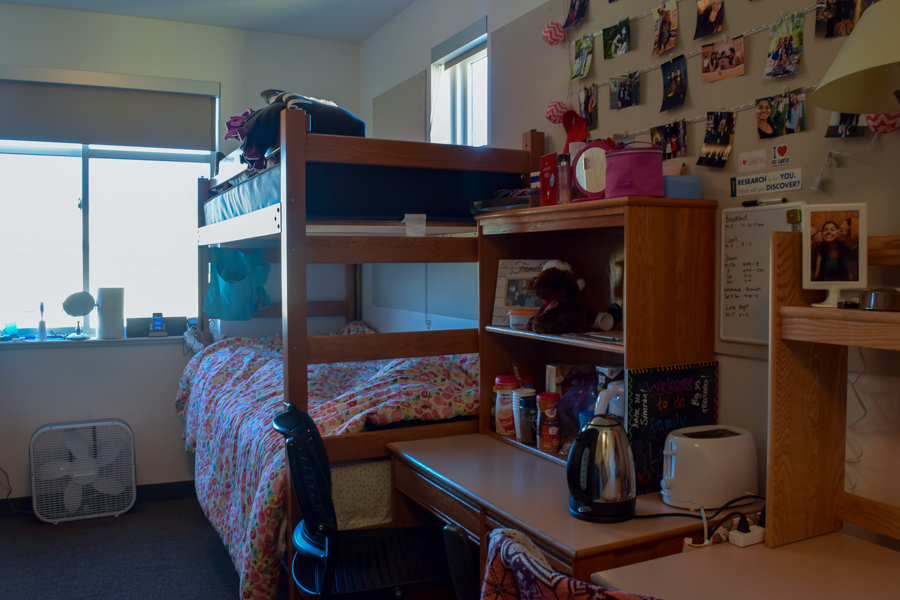
In addition to adding 14,000 beds across the UC system, UC Davis is planning on expanding the Tercero Dining Commons and redeveloping the Cuarto residence halls. (DEBPARNA PRATIHER / AGGIE)
In addition to adding 14,000 beds across the UC system, UC Davis is planning on expanding the Tercero Dining Commons and redeveloping the Cuarto residence halls.
(DEBPARNA PRATIHER / AGGIE)

Initiative to add 14,000 beds to student housing across all UC’s

On Jan. 20, University of California (UC) President Janet Napolitano issued the UC’s new Student Housing Initiative with the intentions of accommodating the future enrollment influx, accelerating student housing development and keeping housing affordable.

Influenced by admission targets, Napolitano set to increase system-wide admission of 10,000 new in-state undergraduates within the coming three years, including 5,000 incoming freshmen and transfer students in the 2016-17 school year.

Napolitano plans on adding roughly 14,000 new beds in the next couple of years including more beds in the residence halls, increased graduate student housing and more university apartments for the general populace.

“I think it’s exciting,” said Emily Galindo, executive director of Student Housing. “I think that because we want to grow and be sure that we can accommodate as many California residents as possible […] then you need to have facilities to accommodate them and a key facility is student housing.”

Though Galindo believes that off-campus housing isn’t as large of a problem in Davis, she still sees this initiative as beneficial across the UC’s.

“So many of the campuses are located where [there’s] very expensive housing in the exterior of the campus. So students often look for a place on campus to find housing more affordable,” Galindo said. “In Davis, our situation is a little different, but it can also be applied.”

Alexis Quach, a first-year economics major, believes that a growing problem at UC Davis is many first-year students are forced to live off-campus because of a lack of space, despite being promised guaranteed housing as freshmen. The initiative is intended to help house more incoming freshmen.

“I know a number of freshman that have to live off-campus because they couldn’t get housing,” Quach said. “I think it’s kind of unfair because you want that experience as a first-year and you’re open to way more resources when you’re on campus.”

For the Davis campus, the initiative focuses on the increasing incoming freshmen and transfers, rather than the continuing student body. Steps taken to fix the first-year housing shortage include the termination of guaranteed second-year housing.

“Unfortunately we’re gonna have to suspend our second-year guarantee because we want to be sure that we can accommodate all the first-years,” Galindo said.

But Galindo does not rule out supporting the continuing student body.

“In terms of continuing students, I think the campus can be responsible in how it grows,” Galindo said. “What that means is, although many students will choose to live in the city of Davis […] depending on supply, it could mean we need to supply more student housing.”

However, some students do not share the same enthusiasm for the Student Housing Initiative. For Kayla Chen, a first-year managerial economics major, the increase in students would result in potential rise in tuition.

“Having more dorms and beds would mean more students, and that would mean they would [raise] the tuition,” Chen said.

These sentiments have been expressed since the launch of the 2020 Initiative, a campaign pioneered by Chancellor Linda P.B. Katehi in November 2011 that intends to add 5,000 undergraduate students by 2020. However, since the initiative is not state-funded, a tuition hike is necessary to expand the physical capacity of the campus, including student housing.

Currently there are plans for the “Tercero Phase 4” residence halls to be completed by Fall 2017, adding four new buildings that will house 506 students total. Galindo mentions this future on-campus housing as part of the 2020 Initiative.

“We had already begun the process in figuring out how to accommodate the 2020 Initiative,” Galindo said. “What you see with Tercero is a part of what we needed for that.”

The new housing initiative, on the other hand, will assist the renovation and redevelopment of other projects on the UC Davis campus, with an emphasis on the Tercero dining commons and Cuarto residence halls.

“Right now, the next thing we would be looking at is additional dining, maybe a second dining facility in the Tercero area. It’s really packed,” Galindo said. “Out in the Cuarto area is another place where we have aging facilities. We have a plan now to redevelop Webster and Emerson and add about 300 additional beds.”

On Jan. 22, a team consisting of UC Chief Financial Officer Nathan Brostrom and senior leaders under Brostrom and Chief Investment Officer Jagdeep Singh Bachher visited all 10 UC campuses in hopes of accessing and expediting each campus’ housing objectives.

Written by: Yvonne Leong – campus@theaggie.org

UC Davis revamps website design

UC Davis' new website. (ZHEN LU / AGGIE)
UC Davis’ new website. (ZHEN LU / AGGIE)

Updated website adds information on admissions, educational programs, campus life to homepage

On Jan. 19, UC Davis launched its redesigned website, which provides easier navigation and more content for current and prospective students as well as parents and staff.

Staff from departments including strategic communications, information and educational technology, undergraduate admissions, student affairs marketing and communications spent 18 months working on the redesign. They asked prospective and current students what updates they would like to see to the website, and watched how students used the original site to determine what changes would be made.

The team working on the website reviewed the old site to see what was popular and looked at other universities’ websites and sites like The Huffington Post and BuzzFeed for ideas.

“We wanted something to serve the audience a little better, so we did a little research on what the audience looks for,” said Tom Watts, lead interactive web designer for UC Davis strategic communications. “The website is keyed for prospective and current students, so we aimed toward a younger audience.”

On the new site, students can find pages with information on admissions, educational programs and updates on campus life.

On the News & Information page, research news is now combined with university news. At the top of the page for each story are links to the UC Davis news site’s top stories and the UC Davis Facebook feed.

Andy Fell, associate director of news and media relations, believes the website has a more attractive and modern look that will now truly represent UC Davis and all that it has to offer.

“We wanted a better website, one in line with a modern look and attractive front door for the university,” Fell said. “The new website tells the story of UC Davis in a more engaging way. The school knows this is a great university, but now the world will know as well.”

The team will continue to add new features to the site, such as features catered toward prospective graduate students.

Angelica de Jesus, a second-year civil engineering major, feels that the website has captured the essence of UC Davis.

“The website is so unique and eye catching now, [and] it has a cool opening video that is inspiring and a true representation of what Davis is all about,” de Jesus said.

To explore the site, visit ucdavis.edu.

Written by: Demi Caceres – campus@theaggie.org

Some like it spicy

0

Students reflect on their inner Spice Girl.

If you were a Spice Girl, what would your Spice name be?

jordan_bhanji_rovingreporter_fe_RobbinsJordan Bhanji, third-year communication major
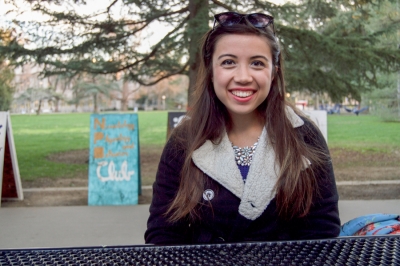
“Stressed-out Spice.”


olivia_hawkins_rovingreporter_fe_RobbinsOlivia Hawkins, third-year history major
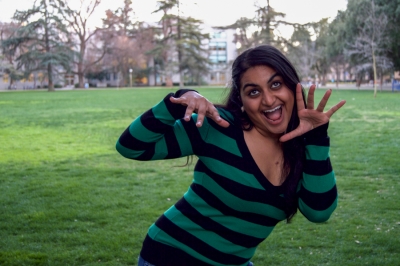
“Disney Spice.”


neelam_rumar_rovingreporter_fe_RobbinsNeelam Rumar, fourth-year psychology and communication double major
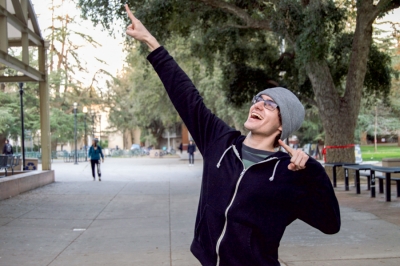
“Cinnamon Spice. But I wouldn’t even say Cinnamon I’d be like Cinnamahn, because it reminds me of Jamaica.”


justin_kaplan_rovingreporter_fe_RobbinsJustin Kaplan, third-year political science major
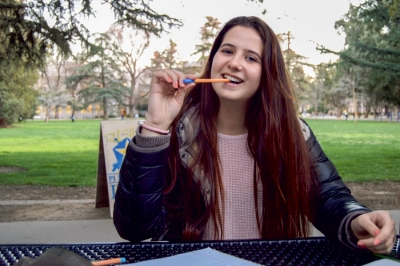
“Tabla Spice. It’s like an Indian hand drum.”


sonia_zafiratou_rovingreporter_fe_RobbinsSonia Zafiratou, first-year neurobiology, physiology and behavior major
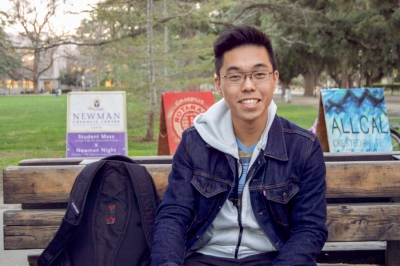
“I want to say Sensual Spice, but I’m like, no….but [then] I’m like, yeah. Yeah.”


andrew_chuen_rovingreporter_fe_RobbinsAndrew Chuen, third-year aerospace engineering major
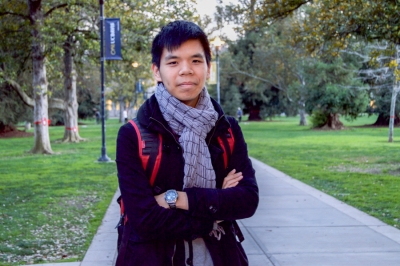
“Aero[space]-Spice.”


hin kwan_kwok_rovingreporter_fe_RobbinsHin Kwan Kwok, third-year computer engineering major
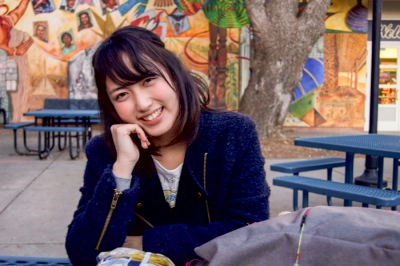
“Universal Spice.”


rio_suzuki_rovingreporter_fe_RobbinsRio Suzuki, second-year English major

“Musical Spice.”


rushi_hasegawa_rovingreporter_fe_RobbinsRushi Hasegawa, second-year English major
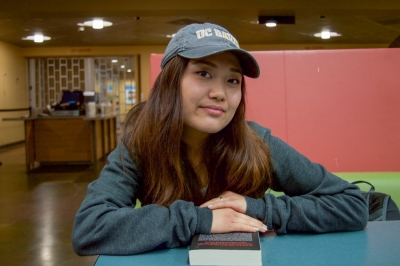
“Boyfriend Spice.”


sarah_kim_rovingreporter_fe_RobbinsSarah Kim, third-year managerial economics major

“Caffeine Spice. I live off of coffee and tea — that’s the only way I function.”


Written by: Allyson Tsuji – features@theaggie.org

Letter to the Editor – Being An Invisible Woman: Reporting and Casual Misogyny

0
HANNAH LEE / AGGIE
HANNAH LEE / AGGIE

My name is Kyla Burke and I am an undergraduate student and activist. I run a group on campus called Davis Stands with Ferguson which organizes direct actions under the mantle of the Black Lives Matter movement on campus. As we’ve taken to the streets, across the campus, and elsewhere we’ve gained increasing visibility as an organization and for our cause. Protests on campus tend to be fairly noticeable things, and as a result the Aggie often writes about us. As a media outlet we respect the Aggie’s work in building an informed student body. It is because of our respect for the mission of transparency that we have more work to do. A pattern of casual misogyny has arisen in your reporting that must be addressed.

Davis Stands with Ferguson has two lead organizers, myself and a graduate student Brandon Buchanan. If you look on our Facebook page, we are the ones listed as admins. On every event we make, we are the ones listed hosts. So of course it makes sense that we would be the ones contacted when someone wants to interview a representative of our group. But nearly every single time an Aggie reporter has reached out for an interview they have only contacted Brandon. This happened for the fourth time today and you know what they say, once is an accident, twice is coincidence, three times is a pattern, and four times is a problem. And what I see is a clear problem with casual misogyny.

Who you choose to contact in a group may not seem like a big decision, but it reflects who you believe has authority in that group. When people look for DSF contacts they find two names, Kyla and Brandon. First they operate under the assumption you can determine someone’s gender from their name, which for my fellow organizer is an instance of misgendering; and once they decide someone is a man, they contact them almost exclusively. Obviously the woman isn’t in charge. Obviously she doesn’t speak for the group. Why would we contact her?

This isn’t the only way I have encountered misogyny as a black woman and activist, from the casual to the blatant.We’ve had people who think they are radical and want join, and pull the exact same shit and assume Brandon was in charge. We’ve had a local news crew do an interview with Brandon and myself, and literally cut me out of the shot. We’ve had white men show up at our protests and yell intimidatingly over me, before proceeding to have calm conversion with men from our group who repeat my words. My experience as a woman activist has showed me misogyny is thriving on our campus and I have reached the end my patience. I’m calling people on ALL of their misogyny, so do better.


(Editor’s note: The California Aggie works hard to train our staff to contact various and diverse sources for every article we publish. We can always improve in this regard. We sincerely apologize for not reaching out to Ms. Burke initially when covering Davis Stands with Ferguson, and we thank her for bringing the issue to our attention.) 

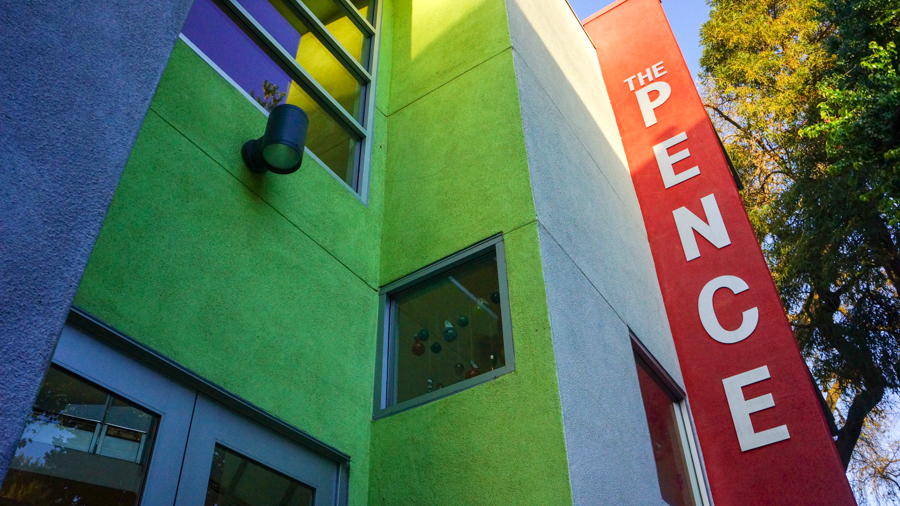
Pence Gallery explores ‘The Consilience of Art and Science’

NICKI PADAR / AGGIE
NICKI PADAR / AGGIE

Exhibit explores link between art and science

The Pence Gallery’s biennial exhibit, “The Consilience of Art and Science,” will be open to the public from Jan. 19 to Feb. 28. The exhibition, started in 2009, explores the links and transdisciplinary qualities between science and art via pieces submitted from artists across the country.

Natalie Nelson, director and curator of the Pence Gallery, elaborated on the organization of the exhibition.

“It’s always different artists [for each exhibition] and it’s heavily technology-based this year,” Nelson said. “[The submissions] usually [are] just because technology incorporates so much of science.”

While there are many pieces exploring technology, the spectrum of mediums in the exhibit is wide. One of the most striking pieces is Longing by artist and UC Davis alumna Belinda Hanson. Longing utilizes a chair with elongated legs, a fishing pole with magnets on the end of the line and a record player to “explore the science of possibilities.” Via a released statement from the artist, Hanson goes into further detail about the piece.

“I incorporate my degree in biology from UC Davis and my degree in sculpture from Cal State Chico to solve each problem,” Hanson said in the statement. “My results are playfully plausible constructions perched on the boundary between what we can see and what we can’t.”

With 90 entries submitted for jury selection, the work of the jurors, Shih-Wen Young and Sharon Bladholm, was instrumental in guaranteeing the quality of the artwork. Young, a physicist and artist, explained the process of judging each piece of artwork.

“I went through each work asking, ‘What beauty and meaning does this work bring to us?’” Young said. “What scientific knowledge does the artist try and represent in the work? Does it constitute an aesthetic existing in a different dimension?”

Even with those questions serving as a minimum criteria, narrowing down 33 final pieces out of the 90 entries was still a difficult task, according to Young.

“[The final pieces offer a] dynamic blend of perspectives inspired by the interface of art and science,” Young said.

The Pence Gallery will host a reception for the exhibit on Feb. 12. For more information, visit the Pence Gallery’s website.

WRITTEN BY: Rashad Hurst – arts@theaggie.org

Review: ‘The Danish Girl’

0
FOCUS FEATURES
FOCUS FEATURES

The heart-wrenching story of Lili Elbe

With its slow pace and beautiful visuals, The Danish Girl is a poignant adaptation on the struggles of the first transgender pioneer Lili Elbe, played by Eddie Redmayne. This film was directed by Tom Hooper, who is best known for directing Les Miserables and The King’s Speech. He has a certain touch in his movies that makes the audience empathize with each of the characters. The audience will become deeply invested in this film, as they see how different characters react to Elbe’s transition.

The acting is sensational, especially from Redmayne and Alicia Vikander, who plays Elbe’s wife, Gerda. Redmayne took extra care in giving this role all the attention it deserves and I was blown away by his acting range. Redmayne was believable as a woman, getting every little detail right, and it was fascinating watching his mannerisms change as his character transitioned. Vikander portrayed all the different stages of acceptance superbly, and her devotion to her partner during the transition was moving.

The cinematography is breathtaking, and the vivid colors of Copenhagen help to fully immerse the audience in the film’s magic. Along with the picturesque setting of the city, the movie also uses painting as backdrops, since a vital part of the story revolves around Elbe and Gerda’s shared passion for artwork. Elbe paints landscapes and Gerda paints portraits, which becomes significant because she paints Elbe throughout Elbe’s transition. Her work gains notoriety because dealers and the audience start to become transfixed on the striking figure in the paintings.

There is a mesmerizing scene when Elbe first realizes she wants to transition into a woman. She performs a striptease for herself in which she envisions herself as Elbe and all alone, finally discovers what makes her feel most like her true self. This movie was truly a work of art that opened my eyes to a topic not often discussed.

WRITTEN BY: CaraJoy Kleinrock – arts@theaggie.org

Yolo Basin Foundation celebrates 21st Duck Days Festival

NICKI PADAR / AGGIE
NICKI PADAR / AGGIE

Annual wetlands, wildlife festival brings fish, fowl, fun to Yolo County

Since 1995, Yolo Basin Foundation (YBF) and its sponsors have held the Duck Days Festival in Davis. This year, the festival will take place from Feb. 21 to 22.

YBF is a non-profit, community-based organization founded in 1990 that offers environmental education programs related to wetlands and wildlife and helps establish the Yolo Bypass Wildlife Area. It partners with the California Department of Fish & Wildlife to expose the community to wildlife conservation and the importance of wetlands.

This Duck Days Celebration kicks off with the Welcome Reception at the Davis Arts Center on Feb. 21, from 5:30 to 7:30 p.m.

“It features art from Yolo County High School students and some photography,” said Michael Herrera, volunteer coordinator at the Yolo Basin Foundation. “We have mostly gotten paintings and that sort of stuff, but in the past years we have gotten more three-dimensional art, which is nice.”

Duck Days continues early Saturday morning from 9 a.m. to 4 p.m., with off-site field trips as early as 7 a.m. With over a dozen field trips to sites in surrounding regions and on-site exhibits and activities, there are events for adults and children alike. Some events include a bat workshop, live raptors from the UC Davis Raptor Center, avian photography and a falconry demonstration.

According to Ann Brice, former co-executive director of the Yolo Basin Foundation and past coordinator of Duck Days, the most popular event by far is the fishing for the youth activity, which allows children to fish at a pond stocked with trout. The event runs from 10 a.m. to 3 p.m. and all supplies are provided, along with some training if needed.

While there are many activities and exhibits to help people interact with wildlife, the main goal of the festival has always been to educate the community.

“Originally, when [Duck Days] started, it was just to make people more aware of the importance of wetlands […] and that has stayed the goal, to just raise community awareness and the importance of protecting these areas and caring for them,” Brice said.

As the oldest wildlife festival in California, Duck Days has garnered support from other conservation organizations in surrounding areas, such as the Cache Creek Conservancy (CCC).

The organization has a long-standing relationship with YBF and has participated in the event for many years.

“We see ourselves as supporting a sister agency, if you will, in our mutual missions of protecting and restoring wild lands in California and environmental education,” said Nancy Ullrey, executive director of the CCC.

Naturalist Autumn Turner will be attending the Duck Days event and representing CCC to instruct the community about environmental conservation.

The cost of the event is $20 to $30, depending on the number of field trips purchased. Children under 16 get free admission when accompanied by an adult. For more information on the event, visit www.yolobasin.org, or call the YBF at (530) 757-3780.

Written By: BIANCA ANTUNEZ – city@theaggie.org

Club Finance Council repeals senate bill, cuts club resources

NICKI PADAR / AGGIE
NICKI PADAR / AGGIE

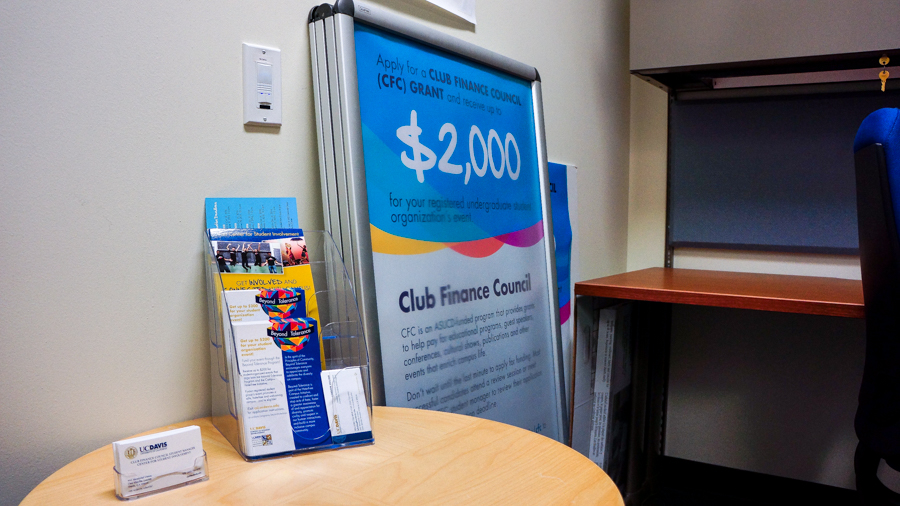
CFC halts ASUCD food catering, reduces annual club grants back to $2,000

In October 2015, former ASUCD Senator Alex Lee proposed Senate Bill 08, which allotted UC Davis clubs up to $2,500 annually and the option to have food catered by ASUCD services, specifically the ASUCD Coffee House (CoHo). Lee’s bill was unanimously passed by the senate.

However, ASUCD’s Club Finance Council (CFC) announced in late January 2016 that it repealed the bill, thus no longer providing ASUCD services and CoHo food catering for UC Davis clubs and organizations. CFC also clarified that it would bring annual club grants back down from $2,500 to $2,000 beginning in February.

CFC’s decision was based upon the concerns the council had shared with Lee before the bill was proposed to the senate last fall. CFC agreed to increasing annual club grants to $2,500, but not to ASUCD food catering.

Third-year international relations and economics double major and CFC board member Funke Aderonmu, explained in an email interview the reasoning behind the board’s concern over ASUCD food catering for UC Davis clubs and organizations in the bill.

“With the limited funding available to allocate to over 500 qualifying undergraduate student organizations, [CFC] felt funding food would further limit the amount of money available to students,” Aderonmu said.

Despite these concerns, Lee still wanted to provide clubs with the option of food catering by ASUCD services.

“Clubs will spend days or weeks figuring out how to cater their events with food. This bill would be helpful for those clubs, especially during long conferences where food and refreshments might be expected,” Lee said.

Lee is also confident that food catering will be financially beneficial for ASUCD in the long run.

“By opening up funding opportunities to our own services, we will redistribute money. This bill would unite UC Davis clubs and ASUCD services in working together,” Lee said.

The bill presented to the ASUCD senate was Lee’s original bill, proposing both an increase in club grants and ASUCD food catering. The CFC Board was surprised to learn that the original bill had passed through the senate without any of their suggestions amended. According to CFC bylaws, the council is not allowed to provide food catering to clubs and events.

“The bill that was passed was in conflict with the CFC bylaws,” Aderonmu said. “The CFC Board had to decide whether they would sign off on the un-amended bill or would return to the original guidelines.”

In January 2016, the CFC Board unanimously decided to return to the original bylaws, thus vetoing Lee’s bill.

Before the bill was reversed, some clubs had actually registered for ASUCD food catering services for upcoming events. These clubs were informed via email that beginning in February 2016, food catering would no longer be available. Clubs were also informed that annual grants were reduced from $2,500 to $2,000 — the original budget before Lee’s bill passed.

The Association of Body Image and Disordered Eating (ABIDE), one of the clubs that received the email, was disappointed in hearing this news. Yi Sum To, a fourth-year clinical nutrition major and ABIDE’s treasurer, discussed the stress involved in catering for club events.

“It can be difficult to find food sponsors for events,” To said. “When you need money for club T-shirts and other supplies, it’s harder for us to gather up the money for catering.”

Lee hopes to revisit this bill with CFC and further discuss potential options for club catering.

“I think it’s best to work with what we’re given and expand upon that,” Lee said. “I think it’s important to put a little more pressure into student government and express that people are using our services. It’s beneficial to clubs and the association.”

Written by: Emma Sadlowski – campus@theaggie.org

Super Bowl 50 preview

THE SOURCE
THE SOURCE

Prediction: Panthers to trample Broncos

Watch the Super Bowl this Sunday for the 30-second, $5 million commercials, because the game itself is going to be over before it starts. The Broncos are under-qualified and overmatched in Sunday’s title game, which will most likely eerily reflect Super Bowl XLVIII in which the Seattle Seahawks steamrolled the Broncos 43-8.

Final Score Prediction: Carolina Panthers 36 Denver Broncos 7

You don’t have to take my word for it, but my credentials are sound. One muggy July afternoon in Reno, which is possibly the worst place to be in July, I placed a $20 bet on the 2010 Green Bay Packers to win Super Bowl XLV that season. Although I later lost the ticket stub which I needed to collect my eventual winnings and had no way of returning to Reno when the Packers ultimately won, I learned two important lessons that season. The first was that the house always wins, even when you do. And the second was that I am incredibly good at predicting Super Bowl champions.

This year’s Super Bowl features two former number one overall draft picks under the gun. First, the legendary Peyton Manning, a rapidly-aging 39-year-old who spent six games of the season sidelined with a foot injury. When Manning was active, he had a career- worst season, throwing nearly twice as many interceptions as touchdowns, averaging a 28.6 percent worse quarterback rating than his career average and was even out performed by his less-athletic, better-looking younger brother, Eli. It doesn’t take a statistician to tell you that Manning is old, and, although once great, his ball lacks zip and his days in the NFL are numbered (perhaps down to one).

The quarterback on the other sideline is the likely MVP of the 2015 season and the spark plug of the highest scoring offense in the NFL. Cam Newton, or, as Panther’s spanish news reporters Jamie and Luis Moreno call him “El Dinosaurio,” carried the Panthers on his back (and with his arm) to the Super Bowl, accounting for 76.2 percent of the Panther’s total offensive yards.

Newton will effortlessly dismantle the league’s best defense with the help of a wide range of offensive weapons. Accompanying Newton in the backfield is running back Jonathan Stewart, a proven pro who has combined for 189 rushing yards and two touchdowns in the Panther’s first two playoff games. Newton’s main targets downfield are Greg Olsen, debatably the best tight end in the league who is not in a Patriot’s uniform, and Ted Ginn Jr., the speedy receiver out of THE Ohio State University.

On the other side of the ball, the Panther’s number two ranked defense will easily handle the Bronco’s medicare-qualifying Manning offense. The Panthers’ defense maintained a league-low opponent passer rating, which is bad news for Manning, who has the unenviable distinction of being the owner of the league’s worst regular season passer rating.

Yes, Manning has done it before. And yes, he is one of the great all time quarterbacks in the storied history of the NFL. But Manning hasn’t won the Big One since 2006. A lifetime ago. That was the same year Al Gore alerted the world of climate change with his release of An Inconvenient Truth, Kanye West was still recording the Graduation album and was happily single, and young Cam Newton was entering his senior year at Westlake High School in Atlanta. A decade later, Newton is a vastly improved quarterback, not to mention a much better dancer.

The Panthers will win Super Bowl 50 in a landslide.

Written by George McConnell – sports@theaggie.org

Photo of the Week: 2/3/2016

Your best friends during midterms. (MONICA CHAN / AGGIE)

The search for a perfect match

0

marrowdrive_feBone marrow drive on campus allows students to serve as potential match for mixed-race leukemia patient.
In January, UC Davis students were given the chance to save a life by means of a simple cheek swab. The Asian American Donor Program hosted a bone marrow drive on the Quad for Lara Casalotti, a 24-year-old acute myeloid leukemia patient.

Casalotti was diagnosed in December 2015, and, because she is of mixed race, needs a very specific bone marrow donor by April 2016 to survive. With the help of organizations worldwide, Casalotti’s family has been working to find a match through various means — including university campus marrow drives.

“At our drive, any student and faculty that [is] between the ages of 18 and 44 [can participate],” Asian American Donor Program Outreach Coordinator Diana Hong said. “If they are a possible donor, they can provide a cheek swab sample and a consent form. They’re added to the national registry and they are there until they’re 60 [years old], and that’s when they are removed.”

According to Casalotti’s aunt, Sujitpan Lamsam, Casalotti collaborated with migrant workers in Thailand when she “felt some aching in her bones” and went to the hospital, where she received an instant diagnosis. When the news came, Casalotti’s family began campaigning right away.

The program launched into action when Carol Gillespie, executive director of Asian American Donor Program, received a call from her cousin in New York notifying her of Casalotti’s situation.

“We contacted all our mixed race groups,” Gillespie said. “We sent out a press release so the media would know about it right away. We’ve received a lot of contact — a lot of patients [in need of mixed race donors] are coming forward.”

Aside from campaigns in the U.S., Casalotti and her family also have established efforts in Thailand through the Red Cross, and in the United Kingdom.

“It looks like [our recruiter] is working with [organizations such as Bhagat Puran Singh Health Initiative (BPSHI)] and Alpha Phi Omega (APO),” Gillespie said. “So actually, [the campaign is] all over the world — Thailand, Italy, Australia — and it’s really becoming a movement, in my opinion.”

In collaboration with the Asian American Donor Program, Casalotti and her family are doing their best to spread awareness about the lack of mixed race donors in the national registry.

“[Lara] is of Chinese, Thai and […] Italian origin, and as a result it’s very hard to find a match,” Lamsam said. “We have a lot of awareness [regarding a lack of mixed race donors] that we’ve been able to generate through social media. [One of] the things we’re trying to work on is [converting] that awareness to actually donating.”

Thanks to the efforts made by Casalotti and her family, the campaign for mixed race donors is evolving into a worldwide phenomenon.

“This is the first really big global campaign that we’ve ever seen,” Gillespie said. “Usually people can only relate to people in their own neighborhood or their own state. The registry throughout the world shares donors with each other. This is the first time I’ve ever seen a global campaign for a person.”

Hong encouraged UC Davis students to participate in the drive, and to also look into the movement for mixed race donors worldwide.

“It’s all voluntary,” Hong said. “There’s no guarantee [that one will become a match]; it’s like winning the lottery. We always tell everyone it only takes a couple minutes out of your day.”

According to Hong, there are 12.5 million people registered through “Be the Match,” the national registry for bone marrow donors. Of these people, only four percent are from the mixed-race community.

“We encourage everyone to register, not just the mixed race community,” Hong said. “There are over 14,000 patients per year. [Donors] might not match for Lara but they can match for someone else who is searching [for a donor].”

Though Casalotti’s family and the Asian American Donor Program are fighting hard for Casalotti, they said this fight is just as much about the thousands of other patients in need of a donor.

“The big picture is to recruit more committed donors,” Gillespie said. “We’re a global society, we travel like crazy. Why not help a patient that’s overseas? [We need to] bring more awareness to the community.”

Those interested in registering to be a donor can do so at the national registry website. More information can be found on Casalotti’s website.

“There are going to be some people who don’t want to [or are unable to] join the registry,” Gillespie said. “They can always volunteer at the drive, spread the word, or donate money. There are always things that they can do. Let’s include everyone.”

Casalotti’s family, with the help of the Asian American Donor Program, continue to persevere in the search for mixed race donors worldwide.
Written by: Allyson Tsuji – features@theaggie.org

Students rewrite names of police brutality victims as part of ‘Say Their Name’ protest

Students belonging to Black Lives Matter on campus held a protest last Wednesday, called "Say Their Name," at Memorial Union, to bring a awareness to the 1500 people who had been killed by police officers in 2015. The students organized to write the names in chalk and on a sheet to make it permanent. (ASHLEY LUGO / AGGIE)
Students belonging to Black Lives Matter on campus held a protest last Wednesday, called “Say Their Name,” at Memorial Union, to bring a awareness to the 1500 people who had been killed by police officers in 2015. The students organized to write the names in chalk and on a sheet to make it permanent. (ASHLEY LUGO / AGGIE)

Davis Stands with Ferguson responds to UC Davis’ erasure of victims’ names last fall.

On Jan. 27, Davis Stands with Ferguson, an extension group of Black Lives Matter on the UC Davis campus, held a protest called “Say Their Name” at the Memorial Union (MU) in honor of the 1,200 people killed by police brutality in 2015. The students who participated wrote all 1,200 names on the patio of the MU in chalk and on a blanket in case the names were removed.

During Fall Quarter, a similar protest was held. However, due to a mistake by the university and some UC Davis employees, all of the names were erased.

After last quarter’s incident, Dave Lawlor, vice chancellor and chief financial officer of UC Davis, apologized on behalf of the university in an email sent to the entire student body. The email then went on to list the names and ages of every single person killed by police in 2015 if information was available.

“I am deeply sorry that university employees erased the names of more than 1,000 people who were killed by police,” Lawlor said in the email. “Please know that erasing the names was a mistake, and it was fundamentally wrong. As the lead for the university’s finances, operations and administration, I take full responsibility for these actions. I sign this letter in the spirit of respect and in support of the Black Lives Matter movement, which also has the full support of UC Davis leadership. We welcome an opportunity to meet with students and learn how we can be helpful in moving forward.”

The administration reached out to Davis Stands with Ferguson about this incident, and the students decided to rewrite the names at the original location and ensure the names would not be erased again.

Among the demonstrators was Alisha Rodriguez, a second-year psychology student, who was upset when she found out that the university erased the names of all the people that had been killed in 2015, partially due to the fact that one of the victims of police brutality last year was her cousin Ryan Rodriguez.

“We wanted to remember the people that left us,” Rodriguez said. “My cousin actually passed away. He got shot last year, and it was important for me to have his name written just to remember what happened and to have justice for him. And, to have his name erased just felt really bad.”

According to Kyla Burke, a fifth-year environmental science and management major and co-organizer of the “Say Their Name” protest, none of the students was particularly upset with the university for erasing the names. However, she was a bit skeptical of how much the university truly supports the Black Lives Matter movement.

“There is no animosity [toward the university], but in their apology, they said that they support Black Lives Matter, but to actually do that on campus would involve a lot of change, and we would like to see more of that support,” Burke said.

Burke went on to say that the protest was to commemorate the lives of the over 1,200 people who were killed in 2015 due to police violence. The larger goal for this group, according to Burke, is to end systemic racism and police brutality against people of color. She said that while this is the larger goal of the Black Lives Matter movement, Davis Stands with Ferguson focuses more on the UC Davis campus and has a particular set of demands to make UC Davis a more inclusive environment.

Some of those demands include the disarmament of campus police, an ethnic studies requirement for all students, the hiring of more black faculty members across all academic disciplines and a UC Davis Afro-House for black students who are in need of affordable housing or a safe space.

According to Vice Chancellor of Student Affairs Milton Lang, UC Davis supports and continues to support Black Lives Matter and Davis Stands with Ferguson in creating a more inclusive and diverse community. Although several campuses across the country, like Purdue and Oberlin, have been more skeptical of supporting Black Lives Matter due to the recent events at the University of Missouri, Lang ensured that UC Davis will continue to give support to Black Lives Matter on campus and defend the students’ First Amendment right to free speech. He also said that UC Davis will continue to work with Davis Stands with Ferguson and their set of demands.

“If those (list of demands) are concerns of our students, I think we should sit down at the table and talk about those concerns and address them in ways that will allow us to move forward as a community […] and work in partnership with our students,” Lang said.

Written by: Sangeetha Ramamurthy – campus@theaggie.org

UC Davis hosts third annual UC Davis Wears Red Day this Friday

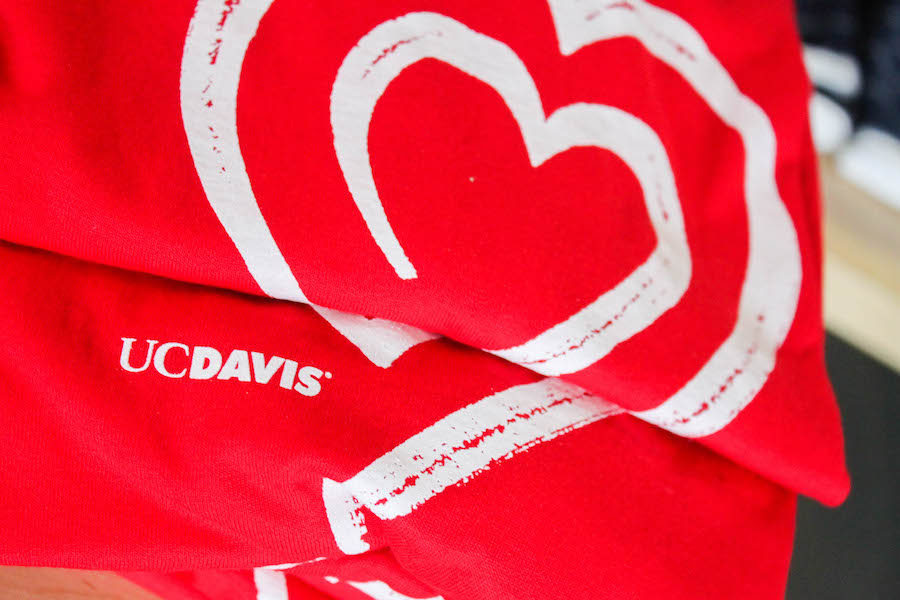
UC Davis community members can promote heart health by wearing “Wear Red Day” t-shirts that are currently available at all UC Davis Store locations. (DANIEL TAK / AGGIE)

University Red Day campaign to raise awareness of heart disease, teach heart-healthy tips.

The third annual UC Davis Wears Red Day, which will be held throughout the day on Friday, Feb. 5 at Hutchison Field, will welcome all members of the UC Davis community to prove once again that UC Davis has the biggest hearts.

Chancellor Linda P.B. Katehi launched Wear Red Day back in 2014 in collaboration with cardiologist Amparo Villablanca, director of the UC Davis Women’s Cardiovascular Medicine Program, as a way to promote heart health. This year, the Office of the Chancellor is hoping to raise awareness of heart disease and different ways that people can prevent it.

“Our number one goal is to make sure the UC Davis campus community (students, staff and faculty) becomes more aware that heart disease is a significant health threat in the U.S. and that they have the power to change that fact for themselves,” Villablanca said in an e-mail interview. “I want UC Davis to become even more of a leader in heart-health outreach and education by engaging our campus and the broader communities we serve in heart disease prevention in ways that are appealing, fun and engaging.”

This year’s event, which was organized by students from Aggie Heart Association, Alpha Pi Sigma and Phi Delta Epsilon, will feature two new activities that will be free to the public. These include an interactive and anatomically correct Mega Heart Exhibit that people can walk through, as well as hands-on CPR training sessions.

Additionally, attendees of the event will have the opportunity to learn a variety of heart-health information at the Battle Heart Disease Fair, which will feature over two-dozen organizations.

The event will also feature a Zumba class and a healthy food drive to support The ASUCD Pantry. As per Red Day tradition, participants are invited to gather at Hutchison Field to help form the world’s largest human heart formation — one that the Aggie Heart Association hopes will break the Guinness World Record.

UC Davis community members planning on attending UC Davis Wears Red Day can help promote the heart-health message and encourage participation in the event by wearing the “Wear Red Day” T-shirts that are currently available at all UC Davis Store locations.

“Don’t forget to wear your red,” Katehi said via email. “We are making a statement, as a community, for heart-health awareness.”

One of the organizations hoping to make an impact on Red Day is Chicanos/Latinos in Health Education (CHE), who encourage students to attend the event in order to learn more about health.

“We hope to establish a human connection with the students who choose to attend the event and encourage them to go about the change they wish to establish in the world,” Ana Skomal, CHE co-director said in an e-mail. “If you wish to enrich your UC Davis experience and overall perspective on health, I encourage you to attend.”

According to Villablanca, the creation of UC Davis Wears Red Day came after Chancellor Katehi visited a Picnic Day Fashion Show.

“The chancellor had the chance to see some of the dresses on the runway of the Picnic Day Fashion Show, and she approached me about doing more to promote heart-health throughout the UC Davis community,” Villablanca said. “As a result, Battle Heart Disease and UC Davis Wears Red Day were born.”

In addition to creating UC Davis Wears Red Day, Villablanca and the UC Davis Women’s Cardiovascular Medicine Program partnered with the department of design to create a collection of student-designed red dresses in order to help broaden heart-health outreach efforts to the student community at UC Davis.

Adele Zhang, a lecturer in the UC Davis Department of Design who has been overseeing The Red Dress project since 2009, said that this year’s collection of eleven dresses will become the seventh line of dresses added to the UC Davis Red Dress Collection.

“The red dress is a national symbol for women’s heart health,” Zhang said in an e-mail interview. “The UCD Red Dress Collection is a wonderful example of two disciplines: design and medicine coming together to inspire one another and in turn advocate for women’s cardiovascular health.”

This year, Villablanca said the goal for Red Day is to make sure that the UC Davis community becomes more aware of the fact that heart disease poses a big threat in the United States, while helping students understand that they have the power to change that for themselves.

“Heart disease develops over the course of decade well before symptoms become apparent. So the earlier that healthy habits are adopted, the better,” Villablanca said.

In addition, Villablanca hopes that young women at UC Davis leave the event with a greater awareness that heart disease is something that they are at risk for and that they should start taking preventative steps now.

“The UC Davis Women’s Cardiovascular Medicine Program has been a leader for more than two decades in educating women that heart disease is their leading killer, and that heart disease is for the most part preventable with a heart-healthy lifestyle,” Villablanca said.

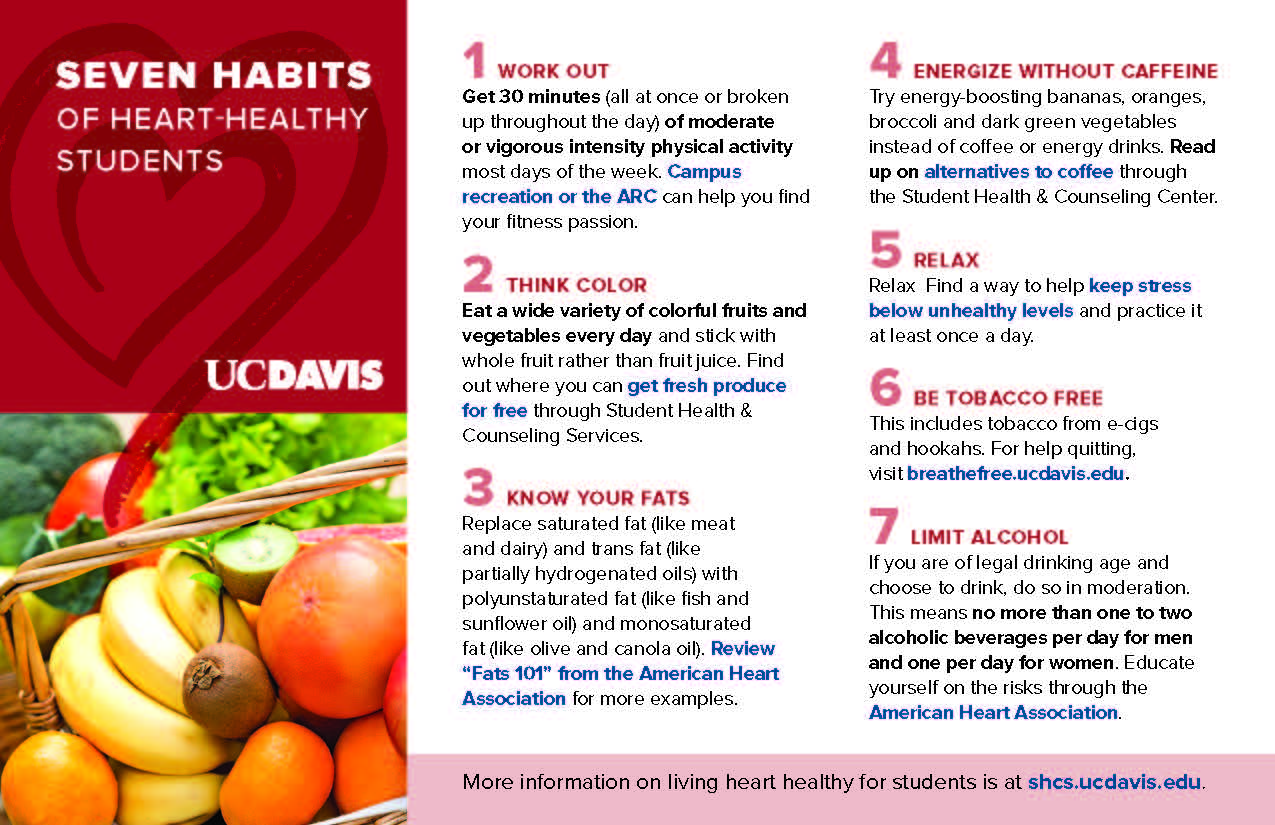
To help students begin living a heart-healthy lifestyle, Villablanca put together a list of “7 Habits of Heart-Healthy Students” in collaboration with the UC Davis Student Health and Counseling Services.

AMPARO VILLABLANA / COURTESY

“These are very do-able,” Katehi said via email. “Doing this now can help ensure your heart health in the future.”

For more information and a more detailed list of events, visit UC Davis Wears Red Day’s Facebook page.

Written by: JENNIFER PUZA – campus@thaaggie.org