55.7 F
Davis

Davis, California

Wednesday, December 24, 2025
Home Blog Page 778

The Internet Explorer: The social media fame game

0
JENNIFER WU/ AGGIE
JENNIFER WU/ AGGIE

garcia_opMaybe I’m just like your gruff old uncle at heart, but I have to admit it: sometimes I hate teenagers. Well, some teenagers — at least those whose seal of approval would be a resounding #yaaaas and who would attend a concert only to watch it through the screens of their iPhones. I, however, openly acknowledge the fact that I unreasonably resent a generation of people who are not at fault for being born in the Millennial Age. Technically speaking, I am a ‘Millennial’ myself. I realize that, like most things, adolescent culture evolves with the passing of time. If anything, I’m just part of an undying cycle, through which I have expectedly progressed to the cynical young adult stage.

While I tend to show favor toward the innovations of social media, I sometimes find myself at odds with the cultures they seem to inspire. Social media sites can be strange spaces that often read as personal diary entries. Many social media users broadcast hookups, cryptic breakups, what they had for brunch and how much time they logged in at the gym. They do this because they can — whether you like it or not. The fact that I feel somewhat conflicted about these posts is completely subjective. It’s definitely a matter of ‘it’s not you, it’s me.’ There’s no substantive argument I have to show for my disdain, other than the impression that these people seem to be incentivized by how many ‘likes’ they can get. It’s as if people, particularly young people, have an insatiable quota for them.

Gone are the days when seeking popularity or fame consisted of auditioning to be on a subpar reality television contest, or forcing your way onto a breaking news coverage. While these methods are not necessarily extinct, they’re definitely outdated. In this day and age, social media revolutionized the concept of celebrity, as it readily provides both an audience and a stage. And all it takes for a person to take that stage is six seconds or 140 characters.

Vine, YouTube and Twitter all establish the popularity of the soundbite, and along with other platforms, immortalize them as memes: sharable and alterable media. There are roles in the social media fame game; one is the star and the other is the promoter. The role of the star often involves some ingenuity, whether it be in the orchestration of an outrageous stunt, or a silly, yet instantly iconic one-liner. Sometimes the subject of a viral video isn’t a social media savant. The subject can be an endearingly jumpy dog, or someone caught falling off a stage. Regardless of intention, many subjects become the butt of a joke that lasts for a few weeks, and more often than not, they laugh along with the audience.

The role of the star is nuanced. The task of the promoter, on the other hand, is unambiguous. The viral component of a meme has more to do with how the Internet transforms it and its actual distribution. In this sense, social media platforms constitute a participatory culture where many are credited with the popularization of a new meme.

For many people, the social media fame game goes beyond trying to stand out as a singular, big name. As a promoter, the faculty of sharing and expanding a meme provides one with the experience of co-authorship, which is arguably more accessible to us than the prospect of being a star. This goes back to an age-old question: why do we want to be famous? It’s actually not that complicated. It’s a sort of paradox in that standing out gives people dignity and a sense of belonging. This is not necessarily true of all people, but at least it makes sense to the players in the social media fame game. In our day-to-day lives, we subconsciously size people up within seconds of meeting them. We compare ourselves to them and other people we know because of a latent desire to elevate ourselves. And ‘other people’ are the only units of measure that seem both accessible and relevant to us.

In a world where we continually decrease our prospects for recognition — as illustrated in restrictive 140 character tweets and six-second Vine videos — we struggle against being socially marginalized. So we hashtag the memes and Instagram our selfies in the spirit of an implicit competition. Not all of these competitions are hostile; some are merely to ensure survival. The stakes, of course, are not exactly trivial. People either want to co-author a meme or star in a viral video to feel like a contributing member of social media’s participatory culture. They just want to be appreciated.

Older generations often have misconceptions about social media. They are confused by it, they trivialize it and they arrive at the conclusion that Millennials are somehow more impersonal and different from them. Despite my personal antipathy towards many aspects of social media and online culture, I know not to dismiss them as unimportant. Social media works to project basic and transgenerational wants and needs — it’s just a different brand. While many things remain the same, I find that a lot of young people are increasingly in it for Hollywood fame and glory. They just want to do it for the Vine.

Science Cafe discusses medical cannabis

0
DANIEL TAK / AGGIE
DANIEL TAK / AGGIE

UC Davis professor explains process of cannabis research.

On Oct. 14, Professor Don Land held a discussion titled “Reefer Sanity: The Modern Science of Medicinal Cannabis” at G Street WunderBar. Every table in front of the stage was filled even before the event was scheduled to start. By 5:30 p.m., when the discussion began, people were standing along the back of the room and lining the bar.

Davis Science Cafe began as an opportunity for professors to share their work and has flourished into a forum that caters to an audience of varying professional minds.

Organic chemistry professor Jared Shaw started Science Cafe three years ago as a monthly event with the support of the UC Davis Department of Chemistry. During the first event in November 2012, professor Matt Augustine spoke about the relationship between wine, medical imaging and airport security.

Ridge Tolbooth, a self-described science enthusiast, has been coming to the events every month for the last year and a half. He recalls that the largest crowd was for a lactation lecture from Professor Bruce German in June 2014. Shaw credits the crowd of about 90 to the professor’s appearance on Insight radio.

“Students will show up when they are connected to the professor but that circle only comes once,” Tolbooth said. “University regulars and non-university people come for the entertainment.”

The lecture quickly became a discussion about varying topics as crowd members were eager to ask their cannabis-related questions.

Land discussed a study on the frequency of tumors in three groups: one that did not smoke, one that smoked cigarettes and one that smoked cannabis. The group with the most tumor growth was the one that smoked cigarettes, while those who smoked cannabis and those who did not smoke at all were closer in number to each other. Land attributes these results to the idea that some cancers shrink in reaction to cannabis.

According to the National Cancer Institute (NCI), cannabis appeared to kill cancer cells in a laboratory setting but has not yet been approved by the Food and Drug Administration (FDA) as an effective cancer treatment in humans.

Cannabis has 85 chemical compounds, known as cannabinoids, which include cannabidiol (CBD) and tetrahydrocannabinol (THC).

In a mouse trial, analyzed by the NCI, CBD was shown to kill breast cancer cells and minimally affect normal cells. NCI stated that cannabinoids have the potential to decrease the quantity and growth of tumors.

Most plants grown for recreational use contain a higher content of THC than CBD. THC is the cannabinoid responsible for the “high” associated with cannabis. Although CBD is non-psychoactive, it may have some medicinal purposes, according to Land.

Land also expressed the difficulty of gaining FDA approval of potential clinical trials due to the varying chemical makeup of the cannabis plant. The current federal and state cannabis laws also pose a problem for his research. Cannabis is a Schedule 1 controlled substance, which falls under the heaviest federal government regulations.

“I can’t do any testing on campus or carry cannabis on campus,” Land said. “I can send DNA across state lines but not cannabis itself.”

However, Land states that there are currently trials trying to obtain FDA approval.

Cheryl Demharter, a French professor and regular at the Science Cafe, expressed curiosity for any new type of scientific medical discoveries.

“As long as you have an open mind and are willing to learn, then you will have the openness and spirit to learn so much more,” Demharter said.

For future event information, Shaw recommends checking www.capscicomm.org or joining Davis Science Cafe on Facebook. Davis Science Cafe is held on the second Wednesday of every month.

Ghosts and goblins and ghouls, oh my!

halloweenFInalEdit
HANNAH LEE/ THE AGGIE

The countdown to Halloween begin.

Halloween is the day for candy, costumes and carved pumpkins, but the weeks leading up to Oct. 31 can be just as frightening. Davis and Sacramento offer a variety of Halloween events to help get you in the spooky spirit. From blood chilling scares to family-friendly frights, these events offer something for everyone.

  1. Take a trip to the past with Old Sacramento Ghost Tours. The tour explore the lives of people who used to live in the historic Old Town Sacramento and the ghosts who haunt the streets. Tours will be running every half hour from 6:30 to 9 p.m. on Oct. 23 and 24. Tickets are $15 for adults and $10 for children.
  2. Davis Farmers Market will hold its annual Fall Festival on Oct. 31 from 8 a.m. to 1 p.m. Come to Central Park to enjoy crafts, animals and a silent auction to benefit Davis Farm to School Connection.
  3. Pick out the perfect pumpkin and get lost in the world’s largest corn maze at Dixon’s Cool Patch Pumpkins.  Find the perfect Halloween decorations among the numerous varieties of pumpkins that Cool Patch has to offer. For the more ambitious visitors, try conquering the 60 acre corn maze in the dark! Cool Patch Pumpkins is open from 9 a.m. to 8 p.m. and admission to the corn maze is $12.
  4. Float down the Sacramento River aboard the Sacramento Spooky Halloween Cruise. The hour-long boat tour features a scenic view of the city with Halloween music and crafts for kids. Cruises will be running the weekend of Oct. 24 and 31 and are $18 per person.
  5. If you’re looking for a more relaxed way to spend your devilish day, celebrate Halloween at Varsity Theatre with a free showing of It’s The Great Pumpkin Charlie Brown. This is the perfect family friendly activity, and with showings at 2:00, 2:35 and 3:10 p.m., there’s still time for evening trick-or-treating after.  
  6. Searching for a deathly fright? Check out Corbett’s House of Horror located at 905 Leidesdorff in Folsom. Corbett’s offers a traditional haunted house in addition to a zombie shootout and carn-evil halloween carnival. The attraction will be opened on Fridays and Saturdays leading up to Halloween and Thursday through Saturday Halloween weekend. General admission is $20 for adults and $15 for children under 12 years old.
  7. See some creepy critters the Sacramento Zoo’s Halloween Boo at the Zoo event on Oct. 30 and 31 from 5 to 8 p.m. The zoo will have train and carousel rides as well as trick-or-treating around the lake. There will also be a magic show and Halloween-themed games. Early bird tickets are available for $10 and will increase to $12 after Oct. 29.
  8. Experience Davis’s El Dia de los Muertos celebration on Oct. 31 to honor those who have passed. The event will include live music, dancing and a procession down 2nd St. Participants are encouraged to wear traditional Dia de los Muertos costumes. The celebration will take place in the Davis Downtown E St. Plaza from 2 p.m. through sunset.
  9. Looking for a new way to pick out the perfect pumpkin? Visit the Floating Pumpkin Patch at the Mike Shellito Indoor Pool, located at 10210 Fairway Dr. in Roseville. In addition to swimming for a pumpkin, the Floating Pumpkin Patch will also have a pumpkin decorating station, bounce houses and games. The pumpkin patch will be open on Oct. 24 from 1 to 4 p.m. and admission is $5 for swimming and $10 to swim and pick out a pumpkin.
  10. Too lazy to leave the house? Stay in bed on Halloween evening with a giant bag of assorted candy and watch a Halloween classic. We recommend The Nightmare Before Christmas, Casper or Halloween.


By KAYLA ZOLA

city@theaggie.org

Women are people, too

0
HANNAH LEE / AGGIE
HANNAH LEE / AGGIE

UCSD fraternity accused of misogyny

Last week, a member of the University of California, San Diego (UCSD) chapter of Sigma Alpha Epsilon (SAE) fraternity requested a picture of “rush boobs” from his undergraduate female friend.

“Lol funny story,” the fraternity member said in a Facebook message to second-year UCSD student Rachel Friedman on Oct. 15. “So I’m in a frat now and we have to get ‘rush boobs’ if you or any of your friends can help me out I would really appreciate it. I don’t need faces I just need topless pics with ‘Rush SAE’ written on their chests.”

Friedman posted a screenshot of the exchange on Facebook sporting the caption, “it’s time people take their heads out of their asses and respect others.”

Concept: women are people.

Even with roughly 50 percent of the world’s population being female, there are still many mindless individuals who seem incapable of remembering that women — people — deserve to be treated with respect.

The UCSD SAE chapter later posted on Facebook that “those responsible within [their] chapter are being dealt with accordingly.” This statement, along with the fraternity claiming to have had no involvement in the occurrence, does not mean that they should get off scot-free. When choosing its members, a Greek organization is identifying who it believes will best represent the group, and UCSD’s SAE is no exception to this standard.

The constant avoidances of blame, and pathetic excuses along the lines of “they didn’t know better,” need to stop. Responsibility must be taken, and a system that helps to shift those ignorant, excuse-filled mentalities into informed, well-educated attitudes must be put in place.

Whether that eventually takes the form of anti-oppressive trainings incorporated in our educational system or a further push by universities to support the use women’s resource centers is up to each school’s discretion. However, the first and most important step is for all community members to see those around them as fellow human beings — as opposed to a skin color, a religion, a sexual preference or a body part.

By no means is this an attack on Greek life, members of fraternities or men in general. The unfortunate fact is that the degradation and objectification of women is everywhere — even on the seemingly forward-thinking settings of prestigious public universities, like UCSD.

The idea of someone typing out and sending the sentence “I don’t need faces I just need topless pics” to a woman clearly indicates that sexually objectifying females is still a relevant topic of discussion.

The Editorial Board warns the community that, although this occurrence may seem harmless to some, incidents like these promote the derogatory mindset that pairs with more serious matters such as sexual assault and domestic violence.

The situation at UCSD was all too familiar for Friedman, who had been a victim of sexual assault in the past. She is not alone when it comes to grappling this topic.

According to the National Coalition Against Domestic Violence, women between the ages of 18 to 24 are the most commonly abused by an intimate partner. This violence starts with the objectification of women.

On Oct. 18, the UC Davis Police Department issued a crime alert addressing a case of sexual battery that had happened earlier that day. The male offender and female victim had dinner together, and upon walking back to campus, the female was assaulted by her companion.

October is Domestic Violence Awareness Month. With sexual assault a very sensitive topic for many, it is important to keep in mind how seemingly small and harmless events, such as UCSD’s recent episode, can negatively affect the community. These events perpetuate sexual exploitation and serve as stepping stones that lead to bigger and more solemn themes.

This October and beyond, the Editorial Board urges UC Davis students to remember that we are all respectful members of the community — so let’s start acting like it.

Thirsty Thursdays

0
DANIEL TAK / AGGIE
DANIEL TAK / AGGIE

A feature on Davis nightlife and bars.

Café Bernardo

Popular Drinks: The Wicki Wacky Woo (Wicki)

Cafe Bernardo, better known as Bernardo’s, is the bar where many 21-plus students begin their nights. Their most popular drink there is the Wicki, which contains enough alcohol (a shot of Bacardi 151 in the straw) to jumpstart your weekly night-on-the-town shenanigans. It’s also part of Davis’ famous rite of passage: The Trinity. The Trinity is a ritual that requires the consumption of three of the strongest drinks in Davis—the Wicki, the Devastator and the FML—in less than an hour.

As you walk into the bar, one thing will stand out right off the bat—it’s really small. Therefore, Bernardo’s is a popular place for people to start their night, but the crowd usually thins out as the night progresses. The typical mindset most people have when deciding to pay a visit to Café Benardo is: go in, down my Wicki and get out!

Bistro 33

Popular Drinks: The Devastator and Mojitos in various flavors

Every Thursday night on the corner of F St. and 3rd St., you can expect two things: everyone is out drinking, and 90 percent of these people will be at Bistro 33, also known as Bistro, early on in the night. Bistro has gained a reputation over the years as a popular spot to drink and hangout on a Thursday night in Downtown Davis. Why? Not only does this bar have another drink of the Davis Trinity, the Devastator, but also because if you’re a Davis student, you’ve probably heard the phrase “I’m going to Mojito Night.” Bistro offers a wide variety of atmospheres, whether you feel like relaxing out on the patio next to an open fire, hanging out by the bar or busting out the moves on the dance floor. One of the drawbacks of Bistro is that it gets crowded early and often. Come early for a table or expect to wait a little while.

Red 88 Noodle Bar

Popular Drinks: The FML and The Super FML

Downtown Davis bars sure do love repeating numbers. Red 88 Noodle Bar, or better known as Red 88, is the bar where students end their nights when looking to just relax and snack on some late night drunchies. However, the bar also offers two popular drinks: the FML, which consists of vodka, gin, tequila, Triple Sec and a splash of Sprite, and the Super FML. The FML is highly recommended as it is the third and final drink of the infamous Davis Trinity.

KetMoRee Thai Restaurant & Bar

Popular Drinks: Various cocktails

If you like to drink and dance, KetMoRee, better known as Ket, may be the bar for you. Restaurant by day and dancefloor by night, Ket utilizes its spacious lower level by clearing out the tables and chairs and creating a wide dancefloor. Ket offers a good mix of mostly top-40 hip-hop songs as well as lesser-known songs that are just as likely to keep the party going. Details, such as the projected music videos and laser lights on the walls, make this bar feel more like a club. The word has spread that Ket is the place to be on Thursday nights, as many people from the Sacramento area venture out here to have a good time.

DANIEL TAK / AGGIE
DANIEL TAK / AGGIE

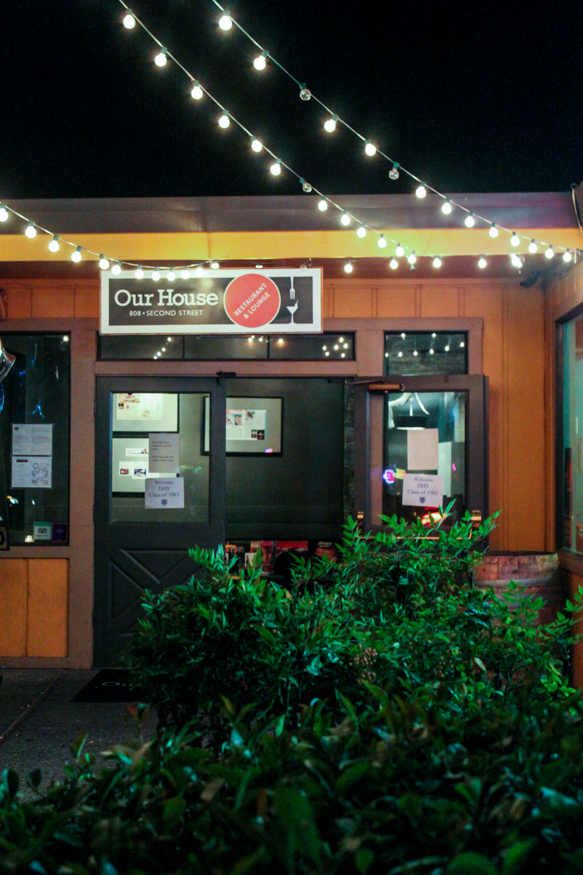
Our House

Popular Drinks: Various cocktails

Our House may look small from the outside, but looks can be deceiving. Upon entering, it is actually a spacious venue with crowds spread out amongst the bar and dancefloor. Our House is another popular destination for Davis students who want to blow off some steam, and the line to get in can be rather long on Thursday nights. However, it’s well worth the wait because Our House creates an upbeat and welcoming atmosphere where it’s easy to meet people and enjoy another night out in Downtown Davis.

The Millennial Age: Influential Millennials

0
JENNIFER WU/ AGGIE
JENNIFER WU/ AGGIE

prokos_opThe influence of millennials is all around us: they run the companies we shop from, invent the social media sites we use daily, write the books we read and practice new philosophies we admire.

Sometimes, the identity of these millennials is overlooked. We don’t think to put a face to the inventions we use every day. Alternately, millennials who work as producers or actors seem to be more recognized by the public. In any case, these awe-inspiring and innovative millennials have spent their years dancing to the beat of their own drum. Influential millennials have helped grow a culture of new innovation, communication, business philosophy and political equality. Their contributions will hardly go unnoticed, as they have set the precedent for future generations and overall cultural evolution.

Here are a few of the most influential millennials to date:

Mark Zuckerberg: While the founder of Facebook may be seen as one of the more obvious influential millennials of the time, his contribution to society will never go unnoticed. Zuckerberg was one of the social media pioneers. He succeeded in fulfilling his vision to connect people by creating a virtual, social network. As of 2014, a whopping 58 percent of the U.S. adult population uses Facebook. This is an astronomical number, considering its very specific purpose. While LinkedIn remains designated for business culture, and Twitter connects the world population over common interests and news, Facebook serves to keep intimate relationships alive. The notion that a person could maintain personal connections online was bizarre, if not unheard of, 20 years ago.

Sophia Amoruso: The CEO and founder of Nasty Gal is a millennial virtuoso, known both for her trendy style and unconventional, entrepreneurial process. Her fashion retailing company, founded in 2006, was named one of the “fastest-growing private companies in the U.S.” by Inc. Magazine. In her New York Times Best Seller #GIRLBOSS, Amoruso recounts the path that led her to create her thriving business, describes her off-beat entrepreneurial attitude and defends her general refusal to adhere to the status quo. This is what business looks like now. Amoruso not only understands her young clientele, but she has critically been able to build her empire based upon this knowledge.

Emma Watson: As a star of one of the greatest film series of the millennial era, Watson has since dedicated herself to setting a grand example for young girls and women as a United Nations Women Goodwill Ambassador. Through her HeForShe campaign, she has been able to diminish gender inequality. During a worldwide Facebook conversation in March 2015, Watson addressed the misunderstanding between Millennials and many traditional Generation X parents about societal roles. She set forth several calls to action, noting, “I think it starts young, I think it starts really young with girls and boys being told what they can be. It’s not about men saving women. We need yin and yang. We need that balance. We need female representation. We need female leadership.” By using her celebrity to bring attention to these gender inequities, Watson is making a worldwide impact. As a Goodwill Ambassador, her focus is not limited to any one country.

Jaden and Willow Smith: This millennial sibling duo has gained quite a following in recent years, first through their acting and musical projects and now through their new existentialist philosophies. Like most millennials, they embrace boundless creativity and resplendent ambition, spending their time reading up on quantum physics and ancient texts. Reflecting on her work so far, Willow explains her debut song “Whip My Hair” as “a great thing […] When I look back I think, wow, I did so much for young black girls and girls around the world. Telling them that they can be themselves and to not be afraid to be themselves.” Now, Willow feels that she is making a difference inspired by “source energy and universal truths” in her philosophies. Jaden has found his own niche in Twitter, where his idiosyncratic posts are some of the most popular on the site. These two millennials are truly in a category of their own.

David Karp: While this web developer’s name may not be as widely known as Zuckerberg’s, Karp’s contribution is to the World Wide Web is just as monumental. Karp, founder and CEO of the blogging platform Tumblr, not only streamlined the blogging world but has also fostered a more relaxed work culture within his corporation. Karp once said he abhors scheduling, citing his belief that appointments actually blight creativity. He explained, “It’s so frustrating when you’re in the middle of a great conversation or work groove, and you realize, ‘Oh, I’ve got an appointment. I’ve got to bolt.’” Karp’s relaxed workplace is yet another example of the flexibility of Millennial company culture.

Malala Yousafzai: This 18-year-old Pakistani native gained the support of many after surviving a physical and targeted attack by radical terrorists against women’s education. Since the 2012 attack, this millennial has been named one of Time’s “100 Most Influential People in the World.” She has continued her activism, written a book about her journey and won a slew of awards for her bravery, courage and dedication to women’s right to education. Malala now holds the title for being the youngest Nobel Prize Laureate. More than anyone else, Malala disproves the stereotype that millennials are inwardly-focused narcissists.

For all the criticisms leveled against it, Generation Y continues to find its voice in part through the efforts of these people.

LED lights to make for a better, brighter Davis

NICKI PADAR / AGGIE
NICKI PADAR / AGGIE

City receives feedback on LED installation.

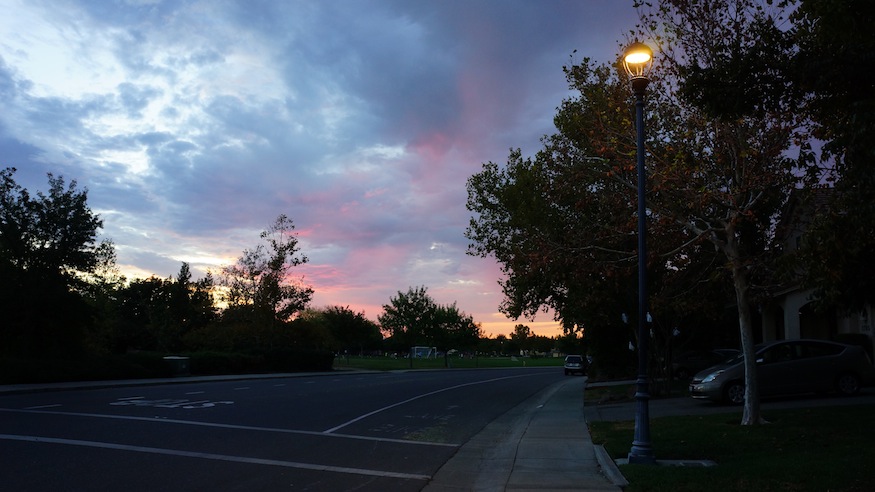
Recently, the City of Davis resumed efforts to install LED lights throughout the city after concerns were raised about the initial project plan that the Davis City Council introduced back in 2014. The project reinforces the city’s efforts to save energy and resources.

The initial LED lights project was put on hold in May 2014 after the city received complaints from the community. Residents raised concerns about the brightness, color and glare of the 2,600 streetlights that were replaced with low energy consuming LED lights.

Cagri Aytekin, a first-year civil engineering major, said that he prefers yellow street lights over the blue hue of the LED lights that were installed in 2014.

“The brightness was so much that it was difficult to see anything,” Aytekin said. “I was unable to sit and admire the stars.”

The city council addressed similar concerns and made efforts to revise their plan for LED light installations. Engineering company Siemens and the UC Davis California Lighting Technology Center (CLTC) helped the city formulate new plans.

“We worked with the city council and advised them about the color, temperature, and brightness of different LED lights and helped them with the installation process,” said Konstatinos Papamichael, co-director of CLTC.

Cobrahead LED lights, recommended by CLTC for their yellow tint, are now being placed in West Village. According to Mitch Sears, sustainability manager of Davis, the new lights will use significantly less energy than non-LED lights and while still producing the same yellow tint.

“The initial streetlights composed of high-pressure sodium and were 70 watts [while the cobrahead lights are] 19 watts,” Sears said.

The cobrahead lights are tested to last up to three times longer than the original, non-LED, high-pressure sodium lights and have received positive feedback from residents. Eventually, the city council expects to replace all of the streetlights in Davis with cobrahead lights, saving $200,000 annually and greatly reducing the city’s energy consumption.


RAHLIL SHETH can be reached at city@theaggie.org.

Preventative health group RIVER to expand programs

KATIE LIN / AGGIE
KATIE LIN / AGGIE

Recognizing Illnesses Very Early and Responding organization holds obstacle course fundraiser to raise money for various programs.

Founded in 2013 by a small group of undergraduate students, Recognizing Illnesses Very Early and Responding (RIVER) is an organization dedicated to educating and providing accessible dietary resources and consultations for the underserved, uninsured and at-risk community in the Davis and Sacramento area.

RIVER’s mission is to bridge the gap between public health and medicine by forming a free, preventive care clinic focusing on diet, stress, sleep and physical activity.

Today, Oct. 22, the UC Davis health advocacy group will hold a fundraiser at the West Quad from 11 a.m. to 4 p.m. The money raised through this fundraiser will go toward nutrition and education projects, which involve clinics in Davis and Sacramento such as the Comprehensive Opiate Recovery Experience (CORE) Medical Clinic, Cal State University Sacramento (CSUS) Cardiovascular Wellness Program and CommuniCare Clinic in Davis.

“All the money that we earn will help us run those projects,”said Manvita Tatavarthy, a RIVER co-exercise director and fourth-year neurobiology, physiology and behavior major. “Basically none of it really stays with us. It just goes back to the projects that we’re running right now.”

RIVER’s fundraiser will include an obstacle course called “the Aggie Warrior,” consisting of individual events and team events. Those who wish to participate can register ahead of time on Eventbrite or at the fundraiser. Individual competitors will compete against each other to see who is capable of the most push-ups, sit-ups and box jumps, while teams race in the obstacle course.

“There was so much we wanted to do,” fifth-year biology major and RIVER Co-President Zannain Shafi said. “Just having a plan for everything and setting deadlines, and making sure deadlines were followed up on [has] been a challenge, but we’re really excited that everything we wanted to [do], we’ve been able to.”

The idea for this fundraiser was suggested at the end of Spring Quarter 2015, stemming from the popular television show, “American Ninja Warrior.”

“The reason we got into this idea was that, while we do go to Sacramento and low-income areas of Sacramento and Davis and talk about physical activity, we also want [students] at Davis to get more active,” Shafi said. “I thought this was a fun way to incorporate a bunch of different exercises.”

RIVER’s work focuses on the greater Sacramento area; however, the group hopes to bring awareness to how important physical activity and exercise is to every community—including UC Davis.

“I really think the mission statement of RIVER is just phenomenal,”Tatavarthy said. “There’s a lot of student-run clinics on campus and they’re all great. But the thing is, all of them direct their attention towards a problem that already exists […] what we do is help prevent [the problem] in the first place.”

According to Tatavarthy, this preventative angle of medicine has not been explored to its full extent and is extremely important to health advocacy.

“Our motto is ‘always prevention before intervention,’ which I think is the perfect way to look at healthcare and unfortunately that’s not how most people view it,” Tatavarthy said. “They wait for the disease or disorder to develop before they do something about it.”

At these various clinics, RIVER Exercise and Nutrition interns prepare a ten-week long curriculum on nutrition and education related topics for those at CommuniCare. On top of this, participants provide counseling to people at CORE and often do 24-hour dietary recalls to make sure their needs are met. At the CSUS Cardiovascular Wellness Program, interns will also often give presentations and help patients one-on-one.

RIVER plans to work with an elementary school in the Sacramento school district during the summer. Basing their activities off of those at CommuniCare, the organization will try to direct a healthy influence on children by including games, sports and talks about malnutrition and other important topics.

RIVER Clinic Manager and fourth-year neurobiology, physiology and behavior major Shreyas Bharadwaj said that awareness and education is lacking in the student-run clinic space, which is why these programs are so vital to youth in the area.

“All of these events are linked the same way,” Bharadwaj said. “We really try to tackle preventative care from a nutrition and exercise standpoint. And I think that’s really valuable because our goal is to essentially spotlight the fact that at the end of the day, a healthy lifestyle can prevent any sort of intervention you may need in the future.”

Along with the fundraiser and the elementary school preventative program over the summer, RIVER is planning and working on a few extra projects. One project is an exercise drive to try and collect extra exercise equipment, while the other involves talks about holding a symposium on campus.

“[The symposium will] basically [be] a forum for students to talk to professionals in preventative health and just kind of get exposure to that field […] and also talk to student organizations that kind of have the same vision,” Tatavarthy said.

For this upcoming school year, RIVER is hoping to focus on integrating nutrition and education into a more holistic curriculum.

“I think in the past we’ve kept [nutrition and education] a little bit separate,” Bharadwaj said. “But if there’s a way to integrate both of those and give people personalized plans, and also have that data recorded in some sort of way such that we can keep track of it over time […] that’s the big goal for the year.”

Despite the many programs the group currently has in the works, RIVER’s main goal is to expand on the underrepresented secondary healthcare services provided by the existing UC Davis student-run clinics.

“What we’re really looking at is expanding the programs and bringing more resources to those communities,” Tatavarthy said. “Providing them more of what they need and just kind of targeting what we do more towards whatever their needs are.”

Sopping wet and ready to rumble

DEBPARNA PRATIHER / AGGIE

Women’s swim and dive team start season with non-competitive Intrasquad meet

The UC Davis women’s swim and dive team got their feet wet, both literally and figuratively, at the annual Blue-Gold Intrasquad scrimmage, an informal event that welcomed back alumni in a friendly round of competition. Dipping their toes in the competitive waters for the first time after a nonstop training period that began in September, the meet served as a dress rehearsal to put their practice to the test.

“One of my goals as a coach is to see them develop in all aspects, not just as an athlete,” Head Coach Barbara Jahn said. “Some have more work to do than others, but overall [I look forward] to seeing them mature.”

At the Blue-Gold Intrasquad meet, Aggie swimmers and divers wore either gold or blue caps and the alumni sported white as the team was split down the middle for a match of friendly competition. The nominal divide between the athletes did nothing to prevent mingling from both sides, as the current swimmers welcomed back friends and idols with open arms.

For the divers, this was the first — and last — event where they could receive calls from their coach, a safety net to prevent hesitant athletes from crashing into the water and help them land up and down.

“They’re getting to a point where they don’t need them as much, but there are a couple kids who still need a call or two just so they don’t crash,” diving Coach Phil Tonne said. “They are a week or two away from not having any calls at all. I was really really happy with the way they did.”

DEBPARNA PRATIHER / AGGIE

The UC Davis swimmers held close and competitive races throughout the meet. Junior veteran Hilvy Cheung dominated in both the 100 and 200 yard butterfly events, hitting the wall with times of 56.50 and 2:03.16 respectively, and beating her nearest competitor by over six seconds in the 200. An impressive showing by freshman Mia Facey saw her take gold in two freestyle events, the 50 (24.39) and 200 (1:55.68) yard freestyle.

Freshman Solie Laughlin, an Aggie to watch out for, qualified earlier this year for the 2016 Olympic Trials in the 200-meter backstroke. Unsurprisingly, she swam laps around her teammates in both backstroke events, going 57.82 in the 100 and 2:08.75 in the 200 yard.

“It’s fun to see the freshmen for the first time head-to-head,” Jahn said. “You can see them in practice, but that doesn’t always indicate where we think they are. It’s a really hardworking group of freshmen and I see them contributing a lot to the team this year.

Tonne expects senior divers Audrey DeNeffe and Lucy Lafranchise to give great performances over the season, despite injuries that both athletes are recovering from.

“They should be in my top three pretty much every meet,” Tonne said.

Lafranchise is on the mend from a back injury and only competed on the 1-meter, where she placed second with 282.52 points, with DeNeffe less than ten points behind in third place. Overcoming a minor hip flexor complication, DeNeffe came in second on the 3-meter with 259.05 points.

A major concussion last year did nothing to hold back junior Serena Yee, who came in first for both diving events, beating Lafranchise by .38 in the 1-meter and DeNeffe’s 259.05 with a score of 259.12 in the 3-meter.

“Just seeing these alumni back, and what they’ve accomplished — it is just really fun to be a part of their development,” Jahn said. “I didn’t get them there — they did it themselves — but hopefully I helped them along the way.”

Read to Succeed Conference calls attention to early literacy

0
HEE-AH YOO / AGGIE
HEE-AH YOO / AGGIE

Local groups partner to address Yolo county education

Several Yolo County organizations, including the Yolo County Library, United Way and the Yolo County Office of Education have teamed up to host the Read to Succeed Conference (RSC). The event will focus on the importance of early childhood literacy in the community and will be held on Oct. 29 at the Woodland Community and Senior Center.

RSC is a follow-up to a symposium held in late April that addressed similar topics.

“We know that early literacy is the key to really addressing a lot of the success, issues and academic concerns that we have in our community,” Yolo County Superintendent of Schools Jesse Ortiz said.

The conference will include discussions of preschool and early elementary education programs in Yolo County where, according to Ortiz, only 46 percent of third graders are reading at grade level.

“[RSC] is an important step to not only talk about what early literacy means, but also to talk about the importance of preschool and how that relates to long-term economic benefits for Yolo County,” Ortiz said.

Woodland United Way, an organization dedicated to helping strengthen the local community and improve the quality of life in Yolo County, has also contributed to the RSC effort. The group’s executive director, Lori Ross, said that the conference will go beyond discussions of early reading programs, including topics of student health and nutrition.

“It’s not only grade-level reading; it’s also being ready to learn,” Ross said. “We’re promoting when [students] are getting ready to be in school that they’re healthy—that they had a good breakfast.”

Aligning resources and goals of the various organizations present is also a major focus of the conference. The RSC aims to facilitate communication between participants in order to better meet their unique needs.

“We’re hoping to come out of this conference with something like an action plan,” Ross said.

According to Martha Beetley, retired Davis Joint Unified School District reading specialist and member of the conference planning committee, educators view early literacy programs as critical measures to ensure students’ success.

“It’s so much better to prepare the kids for age-appropriate learning instead of having to remediate after they’ve fallen behind. First learning is just critical to get them off on the right foot,” Beetley said.

Additionally, conference leaders hope to educate all members of the community about the importance of early childhood literacy.

“We want everyone in our community to understand how successful students impact our whole society,” Beetley said. “Our whole community will be better served if kids are learning and engaged in school […] prepared to be productive members of society.”

UC Davis grads, students launch tutoring app

JAY GELVEZON / AGGIE

Exclusive UC Davis app currently available for download

A group of UC Davis students and alumni have teamed up to create Penji, a peer-to-peer study app that will connect Davis students to a community of tutors.

The two founders of the app, Ben Holmquist, a UC Davis alum, and Ben Morrison, a fourth-year biology major, explained how they came up with the concept behind the app.

“Ben and I were seniors at the time and we recognized that, myself being a tutor and him going through the ranks of college, there are a lot of times when you’re really struggling and need help,” Morrison said. “Once you get to upper division [courses] you realize you have the potential to teach a lot of other people on campus who are struggling with the material you understand.”

They want Penji to create an academic community that would connect students at UC Davis. Ricardo Matsui, who works as one of the app’s developers, explained how the user interface of the app will function. According to Matsui, the app will work in a similar way to the car service Uber, in the sense that students are able to request tutors for specific courses. Similarly, tutors who specialize in those subjects will be matched with the corresponding students.

“As a learner you can post a request; the app will ask you which class you want help in and what specifically in that class you want to know more about. You can pick which location preferences you have and what times you’re available,” Matsui said. “Then any teachers that are looking in the app can filter through which class they’re looking to teach and see which classes the learners want. The learner and the teachers can see if there is a time when both of them available, then they can make an offer for that time.”

Holmquist continued where Matsui left off, specifically explaining how the payment system will work. He explained that rates will begin with either a $15 or $20 per hour spread depending on what the tutor believes he/she deserves. Holmquist also confirmed that the app is now live in the Apple App Store and Google Play Store.

The app, which is currently exclusive for UC Davis students, is available for assisting students in limited courses and subjects. Morrison stated that the courses that it will first serve during the beta phase are Math 16A, 17A and 21A, as well as Chem 2A.

Morrison mentioned that the payment will be completely digitally processed, which he believes makes the process easy and effective. He also revealed that Penji will take an unspecified small percentage of the pay to account for the use of the app.

“UC Davis students can get $10 off their first session by using the promo code ‘learn,’” Morrison said. It is going to be awesome.”

Soon after conceiving their idea, Morrison and Holmquist began to build a team of app designers and developers. UC Davis alumni Matsui, Sumayyah Ahmed, Naji Dmeiri and Bobby Zhang joined in the effort to make the concept a reality.

According to Ahmed, the lead Android developer, the team finished the prototype in March 2015. Once the partially-finished prototype was pitched to investors, the team was able to collect enough funds to develop the completed app.

“[Morrison and Holmquist] used the prototype when they approached investors and displayed the business plan, letting them know which features were working and which were not,” Ahmed said.

Now that Penji is a functional app, Morrison and Holmquist hope their app will impact the lives of students who are going to use it.

“Sometimes it’s hard to make friends and study partners and eventually meet people who can help you along the way during college,” Holmquist said.

The pair stressed the importance of building a community at Davis. They intended for the app to allow students to increase their social and academic interactions.

“Penji facilitates this sort of interaction and encourages students to help each other and share their knowledge,” Morrison said.

The Penji team showed great excitement about the beta launch of their app. They also expressed their plans of further app development and eventual expansion to other universities.

“This app is very centered around the academic year,” Holmquist said. “Over the summer we will do a lot of improving.”

Celebrate life at Dia de los Muertos

DAVIS DOWNTOWN / COURTESY

Davis Downtown to put on third annual Day of the Dead event

People can celebrate Halloween through a myriad of traditions, whether it’s trick-or-treating, passing out candy or squirming through a scary movie marathon. There is something for everyone in Davis; if you want to try switching it up, Downtown Davis is putting on their third annual Dia de los Muertos celebration on Oct. 31 from 2 p.m. to sunset at the E Street Plaza.

This cultural event brings to life the Mexican tradition of honoring loved ones that have passed on. It is a day of both remembrance and celebration, complete with mariachi music, food, dancing and fun. All ages are encouraged to attend and experience the festivities.

The event kicks off with a Halloween and Dia de los Muertos-themed story time. There will be  an altar for anyone to contribute physical memories or offerings to lost loved ones.

Reyna Saenz, the owner of Tres Hermanas on 2nd St., encourages everyone to come and pay respects to friends and family members that have passed away. She also hopes to see people decked out in traditional Dia de los Muertos dress and face paint.

“[On this date], we are honoring those that have passed away,” Saenz said. “We just celebrate their life and [the fact] that they were in our lives.”

At 4 p.m., Aztec dancers and drummers will start off a processional, which will make its way from Tres Hermanas to the E Street Plaza, where dancing, music and poetry will continue until the event ends at sunset.

The Dia de los Muertos event pulls in people from throughout the region by providing a cultural alternative to traditional Halloween activities.

Jeff Simons, the owner of Watermelon Music on E Street, is sponsoring the event with Davis Downtown, El Burrito and Tres Hermanas. Simons believes this event is a nice break from handing out Skittles and Snickers on Halloween night.

“I like that it is more than just giving out cheap candy. You’ve got all of these people downtown so if there’s a way to give them a little shot of culture, that’s great,” Simons said. “It pulls a whole bunch of people in that [trick-or-treating] wouldn’t.”

Saenz loves the holiday and the opportunity to honor lost loved ones and share her heritage with the people of Davis.

“You get to have a day [to think] about your loved ones who have already passed and [have] a celebration of life,” Saenz said. “I like that people get together and get to see part of our culture.”

Simons also asks that parents bring their children so they, too, can learn about this tradition.

“My kids both went to a Spanish immersion school,” Simons said. “So they’ve had some exposure to Dia de los Muertos and an understanding of how it works, but for the town as a whole to do it is very beneficial.”

To really get into the Dia de los Muertos spirit, make sure to try some of Saenz’s pan de los muertos, which is a Day of the Dead sweet

For Mexican Americans, the day provides an opportunity to celebrate their culture and allows others a glimpse into an unique holiday.

Julia Gonzalez, a second-year psychology major, enjoys this chance to share her Mexican heritage with her friends.

“I love celebrating the ancestors that shaped who I am,” Gonzalez said. “I also get to show my friends who are not Mexican what this holiday is all about really celebrating and thanking those that came before us.”

For more information, please visit the event website.

More than man’s best friend

MONICA CHAN / AGGIE
MONICA CHAN / AGGIE

Veterinary researchers discuss the possibility of stem cell therapy in humans

Dogs and cats may soon become more than just their owners’ pets by giving their human companions an even greater gift: a chance for a healthier life. Doctors from the UC Davis School of Veterinary Medicine believe that because these animals are affected by problems such as heart disease, arthritis and cancer, they are favorable models that can be used to better understand and treat the same ailments in humans.

Dr. Dori Borjesson, a professor in the School of Veterinary Medicine and a clinical pathologist, studies how stem cells can modulate the immune system of afflicted animals.

Our primary question [is], ‘when you give stem cells to an animal, how do they work to change inflammation or immune response?’” Borjesson said. “There is a lot of evidence that suggests that [changing an animal’s immune system] is one of the ways [stem cells] work.”

Scientists are careful to point out that the research being done is very different than  “animal testing.” Animal testing involves infecting healthy rodents or other animals with a disease and then studying the effects of the disease on the animal. At the veterinary hospital, researchers study the success of treatments on patients that are already sick or otherwise compromised.

At UC Davis, animal patients are given a systemic administration of stem cells to reduce stomatitis, a severe chronic inflammation. Anti-inflammatory and regenerative fatty stem cells are extracted from the animals’ stomachs and reintroduced into the body intravenously.

Alternatively, patients with bone deformities can undergo surgery and receive artificial soft or hard tissue created with 3D printers. With protein regrowth therapy, this treatment has proven to be successful in animals. This has led scientists into researching whether the same therapies could be performed on humans.

Such research involves a collaboration among a diverse group of professionals, including veterinary scientists, doctors, cell biologists and biomedical engineers. According to Borjesson’s colleague Dr. Boaz Arzi, an assistant professor and oral surgeon, this is because the research is composed of two different processes. The first part involves tasks in the laboratory, including working with stem cells, doing blood work and engineering tissue. The second part of the research is the actual therapy itself, in which a patient either receives an injection or surgery from a clinician scientist.

“Collaborating is very inspiring,” Arzi said. “You have people from all sorts of disciplines working together and it’s very exciting — there’s no competition. People are on the same page. We are all working towards the same goal, and you learn from each other.”

Dr. Fernando Fierro, an assistant adjunct professor at the UC Davis School of Medicine, works with the same type of stem cells as Arzi and Borjesson, and conducts a trial with dogs afflicted with osteoarthritis. A fairly common disease in dogs and older humans, osteoarthritis affects weight-bearing joints and usually causes inflammation. If left untreated, it can cause more serious structural damage.

For this reason, the California Institute for Regenerative Medicine has granted more robust funding for researchers at UC Davis, who hope to eventually transfer their findings to human clinical trials. Fierro’s team works to develop a stem-cell based therapy in which they inject stem cells into the dogs to make the necessary joint repairs without serious side effects.

Fierro has been cautiously optimistic about the dogs’ chances of recovery, noting that all dogs have different manifestations of the disease and varying degrees of severity.

“I would not be surprised if the results turn out to be some dogs get better and others don’t,” Fierro said. “Some might have the disease because [they are] overweight and [suffer] more damage to the elbow because there’s too much weight on it. Others might be […] very old [or] have a genetic predisposition. But we will learn a lot and we will use that data not only to get the dogs better, but also as proof to move this forward to our clinical trials with humans.”

Fierro said that one of the toughest aspects of his research is making sure that the therapies they develop work consistently in a variety of situations. Although the stem cells have been proven safe, they have not shown the expected results, forcing Fierro’s team to come up with a second solution.

“The stem cells don’t stay that long,” Fierro said. “We put them in the animals and they normally last for only a few weeks and then they’re gone. This is good news from a safety point of view, but also may be a problem if they don’t make the repair in that window, then we may not see any efficacy.”

Fierro and his team are working on making a second generation of stem cells more powerful, while continuing to maintain safety and increase efficacy.

The safety of the clinical trials performed by UC Davis veterinarians have caused their work to be heralded by the scientific community. Arzi’s work has been featured in The New York Times, The Guardian and various veterinary science publications. Borjesson was awarded the 2014 Zoetis Excellence in Research Award for working to cure oral inflammatory diseases in cats.

According to Borjesson, the stem cell therapy used has shown minimal side effects. The stem cells that Borjesson and her team use are adult-derived mesenchymal stem cells which have been deemed safe even in human clinical trials. Hundreds of animal injections have shown no significant adverse reactions.

“There have been small reactions,” Borjesson said. “If you put stem cells in a joint, many animals will have some sort of inflammation around that joint for 24 hours. Some of our cats will also have a transfusion-like reaction if we inject too fast, but all you do then is slow down the injection and they are fine. Those are very small side effects.”

The minimal side effects give the most promise to these treatments someday being performed in humans. Borjesson and her colleagues hope to receive additional funding from the National Institute of Health and other organizations in order to build the quality and quantity of their research and produce optimal results. According to Fierro, scientists expect to translate these treatments into human clinical trials in as little as two to four years, depending on the funding they receive. They remain motivated by their aspirations to find a cure in any patient, whether canine, feline or human.

“In each and every case, when you get a cure, it is so exciting,” Arzi said. “When you get a patient who has had treatments for years and is suffering, and you’re able to cure that, nothing beats that feeling. We like to find the problems that medicine did not solve yet and find an innovative solution to it.”

The Forgotten 29

0
JENNIFER WU/ AGGIE
JENNIFER WU/ AGGIE

How media distorts gun violence in America

The tragedy that occurred three weeks ago from the senseless killing of nine students at Umpqua Community College in Oregon, was just that – a tragedy. As were last year’s shootings at UC Santa Barbara, Sandy Hook Elementary School and Aurora, Colo. Many more incidents of bloody massacres, grieving families and national loss come to mind.

Because all of these events are noteworthy and tragic in their own right, it feels unjust to simply gloss over any one.There are the firearm homicides not committed in the midst of a mass shooting, the suicides and accidental deaths we hear about only occasionally. Those must not be forgotten. But how many of those happen?

Following the Umpqua shooting, a YouGov/ Huffington Post survey showed that a wide range of responses to that question bring a median guess of about 5,000 firearm deaths in the United States per year. The other 48 percent had no clue about the number, not enough to even venture a guess – they simply responded with “I don’t know.”

Unfortunately, the respondents who elected to answer aren’t very close to the true number. According to the Center for Disease Control and Prevention, 32,888 people were killed by firearms in the United States in 2013. Of these men, women and children, 21,875  took their own lives; 11,208 were intentionally murdered; and 505 perished from an accidental gunshot. Of those homicides, 502 were committed as part of a mass shooting.

The total amount of gun-linked homicides in the United States dwarfs the amount of people killed in mass shootings. About 31 people are murdered with firearms every day in single shooting events, 29 of whom die outside of mass-shootings.

Why don’t we hear about the Americans who are victims of single-shooter deaths? Why did CNN devote practically 24 hour coverage to Roseburg, Ore. on Oct. 1, without any mention of the 29 others who lost their life to guns that same day? Why did our President, in his strong political statement following the Umpqua tragedy, fail to also extend his thoughts and condolences to those forgotten 29?

Statistically, those 29 people were mostly men, between the ages of 18 and 30. They were African-American, Hispanic, impoverished and inner-city inhabitants. So were their killers. Unlike the largely white, middle-class mass shooters, whose profiles are ardently dissected by cable news, these killers aren’t the victims of mental illness. They are instead the victims of a much more pervasive illness, one not as sensationalist and appealing to viewers. They are the victims of fractured households, poverty, poor education, bad role models and the appeal of gang culture. They are the products of income inequality, institutional racism and damaged inner city values.

But CNN won’t get the ratings it needs by profiling these 29 victims. It’s much easier to pity and fear a mentally ill kid that lives in a middle-class neighborhood. President Obama won’t pack the same political punch by describing the plight of these 29 other families who experienced loss and tragedy on Oct. 1. It’s much easier to relate and grieve for the middle class victims of mass-shootings at universities and movie theaters. This is understandable. Most Americans are middle class. Most Americans have either been in a university or a theater.

Yet the other 29 warrant, at the least, a mention. Even if the cable television demographic can’t relate to these deaths, news is meant to do more than simply elicit grief and sympathy — it is meant to inform Americans about issues. It is hard to blame ourselves and our fellow countrymen for our gross underestimate of the amount of life lost at the behest of firearms, when media refuses to talk about the other 29.

On a political level, knowledge of these deaths and more responsible media coverage would create a better informed electorate. Issues like institutional racism and inner city poverty, the issues that affect the 29, should be brought up for debate and discussion. Armed with facts and a truer perspective on firearms, Americans would make wiser political decisions with their ballots, and their elected representatives would respond accordingly. Perhaps a more informed public would provide a jolt to the gun policy debate, which has stalled for so long.

On a moral level, the 31 Americans who are murdered by firearms everyday all deserve acknowledgment, not just the two killed in circumstances most can relate to. No one unjustly killed in this country deserves to be glossed over. So today, tomorrow and until the day our national bloodshed ends, join me in extending thoughts and prayers to all those killed.

The Ethical Wallet: Trick or treat or justice?

0
CAMILLA DAYRIT / AGGIE

greenburg_opWe’ve all heard the story about the magical man who runs a large, mysterious factory full of delicious treats and colorful candies. When I was little, before grasping the hard truth that it was a fictional place, I wanted nothing more than to go to Willy Wonka’s Chocolate Factory. Aside from stealing a golden egg and meeting an Oompa Loompa, I wanted to see where chocolate was born.

In reality, chocolate begins from cocoa beans, more than 70 percent of which are grown in West African countries. Asia and Latin America are also responsible for some of our cocoa supply. Children in countries like Ghana and Cameroon are being forced into slavery to pick the cocoa beans. It’s no mystery why farmers, wanting to offer competitive prices in order to remain relevant within the industry, continue to abuse their worker’s rights. The Ivory Coast gets 60 percent of its revenue from cocoa exports, using child labor to keep costs low.

These kids end up on cocoa farms for a number of reasons. Maybe they are living in poverty and are desperate for work, or a relative sold them to the farm or they were abducted by traffickers. Working from before sunrise until sundown and using dangerous tools such as machetes and chainsaws hardly seems suitable for a child. I can’t help but see a painful irony. While Ghanaian children struggle to carry 100-pound sacks of cocoa pods through the forest, American children would be thrilled to carry a 100-pound sack on Halloween night.

In order for the chocolate industry to eliminate forced labor and slavery, companies would need to pay cocoa farmers a more reasonable wage. I believe the American sweet tooth can stand to get a little more expensive, especially when you consider what that extra dollar or two is standing for.

In addition to social justice concerns, there are health concerns to consider when choosing your chocolate. Many companies, such as Nestle, Hershey and Mars, source their cocoa beans from farms using GMOs and pesticides. In fact, in 2012, Hershey and Mars spent over one million dollars opposing Proposition 37, a law that would have required GMO labeling in California.

By choosing an organic chocolate from brands such as Equal Exchange, you are guaranteeing yourself a product free of harmful chemicals and putting your dollar toward healthier cocoa-growing practices. Equal Exchange also supports small family farms by sourcing their cocoa from three businesses that they believe embody the true goals of the Fair Trade mission. Unfortunately, while labels of Fair Trade are always encouraging, they don’t have much significance in the chocolate industry. In 2011, Fair Trade USA split from Fair Trade System due to a difference in values.

Cocoa producers have become so secretive about their practices that it is difficult for anyone to know which farmers are using forced labor. Most farms in Latin America have yet to be found using these unethical practices. However, at this point in time we are unable to pick up a chocolate bar, flip it over and read with confidence that it was ethically produced. My best recommendation to avoid supporting unethical companies is to refer to lists recommending companies that source chocolate for their products with fair practices.

As always, I encourage you to read up on your favorite chocolate bar or Halloween treat. Whether it’s to express love, gratitude or apologies, eventually each of us will choose the chocolate to nurse us through our break up or celebrate our achievements. Therefore, we must consider what brand best aligns with our values as well as our taste buds. Just because Wonka wanted to keep his chocolate operation a secret doesn’t mean we should. Remember, you’ve got the golden ticket and only you can decide how to spend it.

You can reach Martha Greenburg at mzgreenburg@ucdavis.edu or on Twitter @marthazane94.