58.4 F
Davis

Davis, California

Tuesday, December 23, 2025
Home Blog Page 819

Aggies’ Doherty excels despite knee injury

0

With 11 minutes left in the first round of the 2014 Big West Tournament, junior forward Alyson Doherty suffered a devastating knee injury during a win against UC Santa Barbara in April.

“I got chills, just bringing it back up,” Doherty said.

The injury sidelined Doherty for the second round of the tournament, a one-point loss against UC Irvine. Doherty finished the 2013-14 season with 13.1 points per game, 6.3 rebounds per game, and a conference-leading 56.4 shooting percentage.

In spite of the season-ending injury, Doherty remained resilient through the off-season and throughout the rehabilitation process.

“When I found out [about the severity of the injury] I was devastated. Once I had my surgery, I was incredibly determined to come back. We were on a roll at that point; there was no doubt in my mind that we were on our way to the Honda Center,” Doherty said.

At the time of the injury, the Aggies were just three wins away from claiming their first Big West Tournament Championship title since UC Davis defeated Cal Poly in the 2011 Championship game.

The Aggies were playing the best basketball the team had played all season during the tournament. Defensively, UC Davis held opponents to a 38.3 shooting percentage, second-lowest in the conference, during the regular season. On the other side of the floor, the Aggies had the best shooting percentage in the conference, 44.5 percent, and averaged 14.8 assists per game.

The absence of Doherty truly hurt the Aggies’ chances in the second round of the tournament. The Aggies lost a top scorer in Doherty, second to senior forward Sydney Fipps, who scored 17.7 points per game.

However, the Aggies came into the 2014-15 season with the same nucleus of players and a veteran team.

“Once I got injured, it was hard. It was a tough pill to swallow. I just had the determination to come back because we have [a great] team, and we only lost one player,” Doherty said. “I knew that this team was going to come back and that we were going to come back to the Honda Center again, and I wanted to be a part of that.”

Thus far this season, UC Davis holds an 8-9 overall record, 3-2 in the Big West. Doherty is back at the top of her game and is averaging 13.2 points and 7.0 rebounds per game. But getting to this stage was not easy for Doherty. Doherty had to endure a strenuous rehabilitation program. And once she got back to the court, she had to adapt mentally to the physicality of the game.

“The last time I was playing, I was at the top of my game. So it was hard to come back and be physically OK,” Doherty said. “I was rusty.”

As the season continues, Doherty hopes to improve her game and get back to playing at a high-intensity level to lead the Aggies into the Big West Tournament. This season, Doherty has been a huge part of the Aggies’ offense.

Doherty’s presence on the court has taken a load off Fipps’ back, who has been a consistent force for UC Davis for the past four seasons. It is rare to find a college team with tandem like Doherty and Fipps. The relationship between the two has demonstrated success for the Aggies for the past three seasons.

“Syd and I are great on the court, and we are best friends off the court. Syd is one of the best players this team, this program, this conference has ever seen,” Doherty commented on her relationship with Fipps. “It’s honestly an honor to play with that. She has a lot of confidence in me and that obviously helps a lot. I love playing with her.”

Basketball comes easy for Doherty when she is on the court alongside Fipps. But there are still aspects of the game that need development in order for the team to succeed. Despite ranking second-to-last in rebounds, Doherty iterated the importance of rebounds and that the team is working on improving in that aspect of the game.

“The thing with our rebounds is that we are inconsistent with it. We’ll have games where we rebound 80 percent and then games where we don’t,” Doherty said. “The coaches are holding us more accountable during practice — if we don’t get aboard, we’re on the line and we’re running.”

Doherty is adamant that this team will make a run for the Big West Championship, and credits the team’s experience and leadership.

“I think the key for us is going to be our experience. We are a veteran team this year, we need to come out, and we all know what we need to bring to get to the Honda Center,” Doherty said.

The Aggies will continue on their quest for a Big West Championship as they travel south to face the Cal Poly Mustangs on Thursday and then the UC Santa Barbara Gauchos on Saturday.

This week in men’s and women’s sports

0

This Week in Sports (updated weekly)

Men’s Basketball (14-4):

UC Davis @ Hawai’i (L, 84-76)

The UC Davis men’s basketball team traveled across the Pacific to the beautiful Hawaiian Islands with the mission of advancing to 5-0 in Big West play. Perhaps distracted by the warm weather and sandy beaches, the Aggies faltered in the first half of the game and were down 37-48 at halftime while allowing their opponent to shoot 62.1 percent from the field.

During the second half, UC Davis managed to outscore their opponent, making 62.65 percent from beyond the arc while holding the Rainbow Warriors to 40 percent shooting. Still, they only outscored Hawai’i by three, unable to make up the 11-point deficit they faced at halftime. The team fell with a final score of 76-84. Senior guard Corey Hawkins led the Aggies with 19 points, but turned the ball over seven times. The Aggies finished with 24 turnovers compared to nine by their opponents, a deciding factor in the game.

The Aggies will now play a two-game homestand, facing Cal Poly and UC Santa Barbara on Thursday and Saturday.

Women’s Basketball (8-9):

UC Davis vs. Hawai’i (L, 53-58)

In the first half, the Aggies looked as if they were going to cruise to a relatively easy lead. Despite a small three-point lead, UC Davis was holding its opponent to 31 percent shooting and junior forward Alyson Doherty was looking unstoppable on the block. The second half began in a similar fashion, with Doherty hitting two straight and-ones to extend the lead.

Then, however, UC Davis began to turn the ball over and both Doherty and senior forward Sydnee Fipps saw foul trouble. The two sat with four fouls each with almost nine minutes remaining in the game and Fipps fouled out with over five left. Those last minutes proved vital as the Rainbow Warriors roared back and captured a five-point victory.

The Aggies played outstanding defense throughout the game, holding their opponent to 32.8 percent shooting, but turned the ball over 18 times. Doherty was dominant with 18 points, 11 rebounds and three blocks, but her foul trouble clearly inhibited her over the final few minutes.

UC Davis will travel south to face Cal Poly and UC Santa Barbara.

Gymnastics (4-5):

UC Davis @ Sacramento State (2nd, 194.800)

Despite the Aggies placing behind their cross-causeway rivals overall, the Aggies had several gymnasts finish impressively. Senior Tiana Montell and sophomore Katy Nogaki placed first and second in the vault, while junior Stephanie Stamates and freshman Alexis Brown led the balance beam.

Two Aggie gymnasts, junior Cassandra Quebral and redshirt freshman Jordan Helgesen, competed in their first collegiate events. Still, the Aggies weren’t able to overcome a sweep by Sacramento State on the floor. UC Davis will return home to face George Washington on Feb. 8.

Swimming & Diving:

Swimming @ UCSB (W, 148-114)

The Aggies traveled to Santa Barbara to face the Gauchos and dominated throughout the meet, finishing with a 34-point victory. Senior Samantha Shellem was spectacular, winning three individual events while also anchoring the winning 200-yard medley event. The Aggies scored another individual win by junior Marissa Brown.

The team will return to UC Davis and face the University of Pacific on Saturday, their last meet before the Mountain Pacific Sports Federation Championships.

Men’s Tennis (3-2):

UC Davis @ California (L, 0-4)

UC Davis @ Loyola Marymount (W, 4-3)

UC Davis vs. Grand Canyon (W, 5-2)

The Aggies embarked on a four-match road-trip after defeating University of Pacific at home. UC Davis started off the trip with a low point, failing to win a set against Cal. No Aggie player won more than three games in a set. The Aggies’ second competition, against Loyola Marymount, saw a final win by sophomore Bryce McKelvie decide the day. The sophomore lost his first set 1-6, won the second 6-3 and defeated his opponent in a deciding third set that went into extra sets.

The final competition of the week came against Grand Canyon University a day after their marathon meet with LMU. The Aggies swept their doubles play and won all but two singles matches to take home the victory. UC Davis will complete their road-trip on Saturday at Santa Clara University.

Women’s Tennis (2-2):

UC Davis @ Portland State (W, 6-1)

UC Davis @ Portland (L, 3-4)

The UC Davis women’s tennis squad begin their spring season with five straight matches on the road, facing Portland State and Portland back-to-back. The Aggies defeated Portland State handily, losing only one singles match. Freshman Lani-Rae Green saw two sets go into overtime, but managed to pull out a three-set victory. Only the No. 2 player, junior Tiffany Pham, lost her match.

On the second day of their back-to-back, now facing Portland, the Aggies fell to their hosts 3-4. The team split its singles matches with Portland, but failed to gain the decisive point in doubles play. UC Davis will now play at Sacramento State on Friday before returning home for a match against University of Pacific the following day.

Graphic by The California Aggie Graphics


Gallery 1855 presents “Archive of Abandoned Dreams”

ar_ivanova

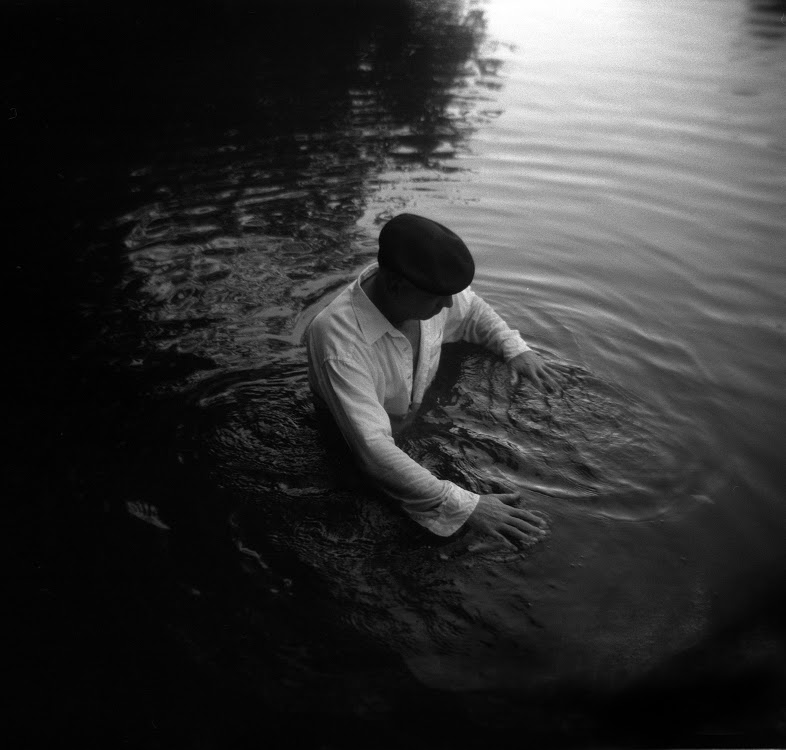
From Feb. 1 to Mar. 1, Gallery 1855 at the Davis Cemetery will present Archive of Abandoned Dreams, a photography showcase by Bulgarian-born, Texas-based artist Ellie Ivanova. A free opening reception will take place on Feb. 8 from 1 to 4 p.m., featuring an appearance by Ivanova herself.

The series consists of black-and-white portraits that celebrate moments Ivanova holds dearly. However, Ivanova does not use photography to merely capture existing memories. Rather, she brings to life the spirits of her personal history, from fairytales recited by her grandmother to the poetry of Bulgarian symbolist Dimcho Debelyanov.

“[My photographs] are, in many ways, interpretations of faraway memories and personal stories that I stumble across,” Ivanova said.

Such fairy tales and personal stories encompass themes of fortune, justice and supernatural forces that, despite not belonging to Ivanova, paved the way she approaches life. Archive of Abandoned Dreams thus makes a reality out of Ivanova’s nostalgia for the unknown.

“For me, nostalgia is the painful necessity for re-experiencing past events,” Ivanova said. “I like the untranslatable German term, ‘sehnsucht,’ [which is] almost like a phantom sensation of lost things that you felt were a part of you physically.”

The photographs featured in the exhibit were taken with old Eastern European film cameras to honor the earlier worldviews of those who’ve inspired Ivanova, such as her parents and grandparents. With photography’s demand for certainty, Ivanova described capturing her mystifying muses as challenging, yet intellectually inspiring.

“By choosing to focus on dreams and beliefs, I am simultaneously constrained by the impossibility and liberated by it too,” Ivanova said. “Because photography is expected to represent the real, it gives me the eerie emotional assurance that [photographing scenes] I don’t have access to, like my grandmother’s stories, [can] stay with me.”

While Archive of Abandoned Dreams takes a close look at Ivanova’s world, it simultaneously creates an engaging atmosphere for viewers. Gallery 1855 superintendent Joe Cattarin specifically noted the exhibit’s captivating power.

“I enjoy the stark imagery that creates a story [left] to the viewer to interpret,” Cattarin said.

Gallery 1855 curator Kristi Dvorak expressed her excitement for the exhibition, describing Ivanova’s work as a fresh perspective for the world of art.

“[Ivanova’s] work is a great asset to the Gallery 1855 and [the faculty is] thrilled to be able to present her work to the community,” Dvorak said. “It’s her embracing of the past with the future that is so exciting.”

If you are interested in perusing the Archive of Abandoned Dreams, stop by Gallery 1855 at 820 Pole Line Rd. More information is available at the gallery’s website.

Photo by Ellie Ivanova

AggieTV to begin shooting “Far From Strom”

0

ar_farfromstrom3

AggieTV, UC Davis’ student video and media production studio, is in the works to begin shooting their latest feature film “Far From Strom,” which will be directed by AggieTV executive director Ruben Rojas. With an ASUCD production budget of $1000 and an expected running time of over an hour, the film marks the studio’s largest and most ambitious project to date.

The story, which was written by fourth year English major and screenwriter Nicholas Troughton, follows the life of Vic (Victoria), a 13-year-old tomboy who is stuck between her life in a small Midwestern town and aspirations of wanting something more.The film also delves into Vic’s budding relationship with Nash, an older rebellious cool girl, who not only serves as Vic’s central love interest, but also the catalyst inspiring Vic to seek out greater aspirations. However, the story becomes complicated when Vic becomes rivals with her older friend Louis, who also begins developing feelings for Nash.

“I think ‘Far From Strom’ is a story worth telling because it’s something we can all relate to,” Rojas said. “We can all look back on and evaluate our choices in life, the ways we were brought up, and how that has affected us and opens our view of our future.”

According to Troughton, the film was originally written with a male lead named Vincent, however, the last minute change was made after Troughton reviewed his script and sought ways to make the coming-of-age tale more original. Although the film touches upon sexual exploration, Troughton emphasizes that very little changes had to be made to the script and the sexuality of the characters isn’t the film’s main focal point.

“We want to explore perspectives that aren’t often discussed in mainstream film and so having this not be just a regular coming of age film, but now it’s more of a commentary on sexual discovery,” Troughton said.

The film’s title is derived from a fictional comic book Vic and Nash bond over called “Strom,” which depicts a story of a knight in shining armor rescuing a damsel in distress. According to Troughton, the title references how real life is far from that cliched trope.

Troughton, who was born and raised in San Jose and is a transfer student from San Jose State, said the script is based on his own aspirations to explore somewhere other than his hometown.

According to Rojas, the film’s direction will take a unique twist in the shift of point of views between the film’s three principal characters, which will be done with fade outs, point of view shots and other editing techniques.

Because the film is set to be shot in rural locations around Dixon, Davis and Woodland, cinematographer Gene Ang, a UC Davis alum, plans on taking a more realistic approach to the cinematography. Although the project’s budget is relatively small, Ang feels the shakiness of the camera, natural lighting and more close-up shots he plans on including will add to the film’s authenticity. “Far From Strom” marks the first time AggieTV has branched out of UC Davis for a project.

“The thing is with more natural looking films, is the stories are more relatable,” Ang said. “I feel like the camera shake and how you can get close to subjects will be a lot more personal for the film and I think that works for this kind of story.”

With the release of AggieTV’s original mini-series “BLiND” last fall, “Far From Stom” is part of a new phase for the studio, who is beginning to produce more original content.

“AggieTV is originally marketing and reporting, however, a lot of our members join AggieTV with aspirations to become filmmakers in the future,” Troughton said. “We’re definitely putting forth efforts to create an environment where we can explore those desires and ambitions, to create real films and to bring our ideas to life. It’s a very conscious effort and I hope with this project we can open many doors to that.”

AggieTV expects to release “Far From Strom” on their YouTube channel in Fall 2015. Casting for the project is currently ongoing and will continue until the end of February. More information can be found online at aggietv.org.

Photo by Gene Ang

ASUCD serves up comedy, acapella and spoken word

0

ar_coho

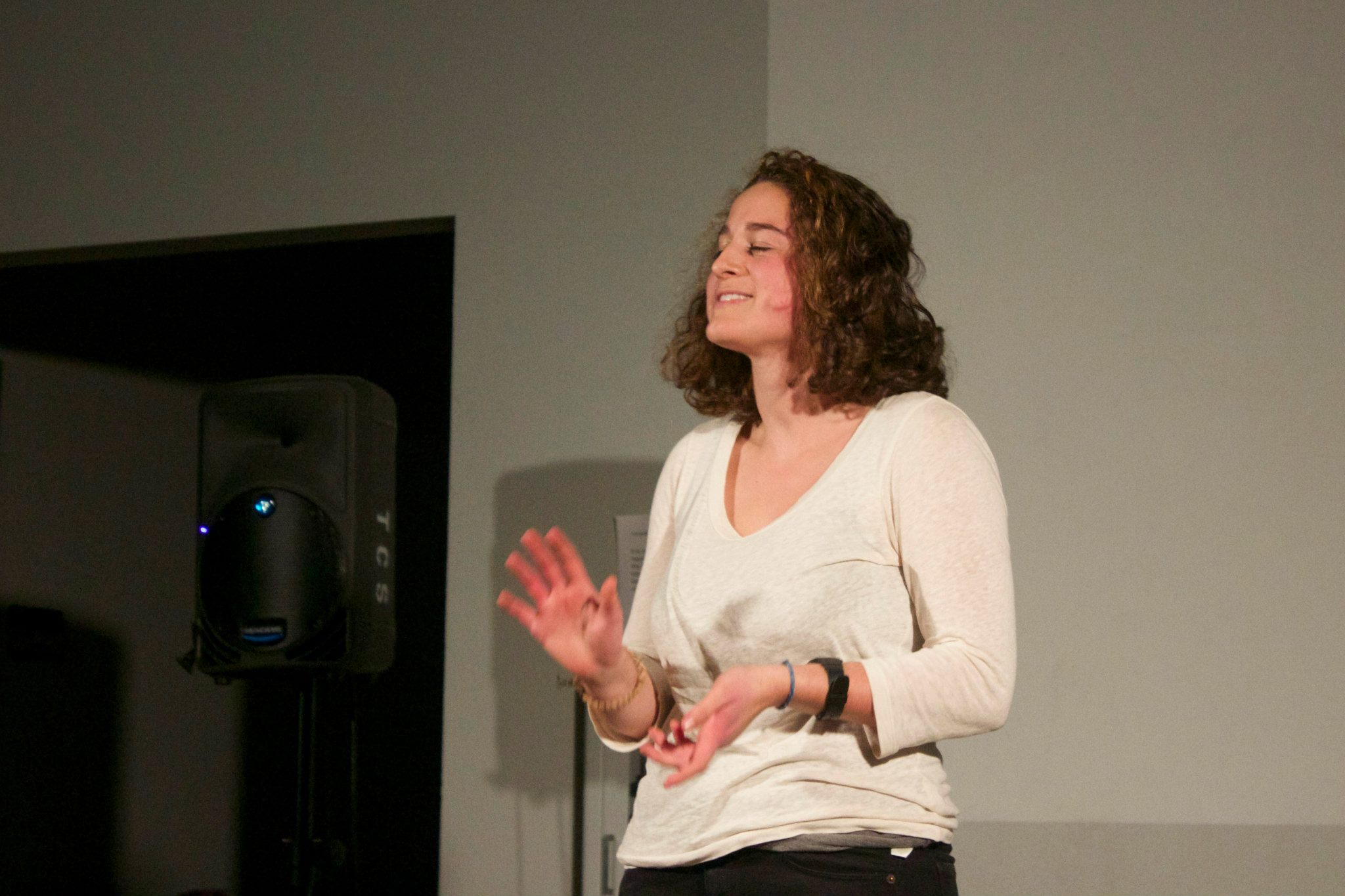
This Thursday, from 6 to 8 p.m., the ASUCD Coffee House will be transformed from a hangout area to a space for artistic expression where the ASUCD Entertainment Council will be presenting Open Mic Night. The performances, which will take place on the west side of the CoHo, near Swirlz bakery, will range from a cappella to comedy to spoken word poetry. The headliners will be The Spokes, Birdstrike Theatre and SickSpits. The showcase will also feature 12 different performances from selected student artists.

Entertainment Council president and third-year communication major Alexis Munnelly said that when looking for headliners, the organizers really wanted “diversity in [their] selections.” They specifically chose the three headliners because they are “very popular on campus” and will hopefully draw large crowds.

Students had the opportunity to submit videos of their performances for a chance to showcase their talents, and Munnelly said that as far as the remaining open mic slots went, there were about 30 auditions for 12 spots.

“[We] tried to evenly select vocalists and comedy and spoken word performers for a diverse selection,” Munnelly said.

SickSpits president and third-year Spanish major Tanya Azari is excited for the opportunity to perform for a diverse and large crowd.

“I’m really excited because we’re going to access a different demographic, and if they like what we put forth, hopefully they’ll come out to our performances,” Azari said.

Because the Open Mic Night will take place in the CoHo —  where many students will be studying and hanging out with friends —  headliners such as SickSpits, who usually rely on word of mouth and social media to advertise their performances, will be able to reach a wider audience.

Sarah Lloyd, Birdstrike president and a third-year chemistry major, expressed a similar hope that this performance will help the Birdstrike improv troupe reach a broader range of students.

“Performing here is going to be really good for our visibility,” Lloyd said. “People will see what we’re all about.”

Birdstrike has collaborated with The Spokes in the past, most recently near the end of Fall Quarter, and Lloyd had many positive things to say in regards to their previous collaboration.

“This past show [with The Spokes] was really cool because we tried finding ways to incorporate music into improv. It adds another layer of entertainment,” Lloyd said.

Lloyd also said that Birdstrike will focus on montage-style improv, which are scenes that are fast-paced and easy to follow because of the audience and venue. Students will most likely be walking in and out of the CoHo so Lloyd wants to make sure that people will be able to follow Birdstrike’s performance.

Azari said that SickSpits will also be keeping the audience in mind when deciding what kind of poems they want to perform. She said that the SickSpits performance will be a “cool combination of entertainment-based poetry and poetry that will challenge [the audience]” intellectually. But the thing that excites Azari the most about performing in open mic nights like this one is the unpredictability factor.

“You’re always gonna get surprised,” Azari said. “You never know who’s gonna show up. Kids you just see walking around — [this kind of event] is where kids come out of woodwork and you really get to see a piece of their lives.”

The ASUCD Open Mic Night is free of charge and open to the public. To learn more about this showcase, check out the Facebook event page.

Photo by Sickspits

Flick Chick: Are We Resourceful? Or Desperate?

0

defazioheadshot_opIf you’re college-aged, you are most likely an expert at finding your favorite show or movie online. You have discovered the ability to online stream, on many different sites and use your own specific ways to set up a video resolution, speaker system and order of what shows you will watch. This means you’re a rebel and nothing can stop you. Congratulations.

When I wanted to watch “Gone Girl” (2014) this weekend, I found myself in limbo, where I was too late to see the movie in theaters since it came out in October and, of course, the DVD and Blu-ray won’t come out until I retire. Since there was absolutely no way for me to find the movie due to both my procrastination for going to see movies in theaters when they’re actually out as well as my chronic impatience, I decided to find it online somewhere — wherever I could get it. There, I paid with my blood, sweat and tears instead, trying to find a good website that would load completely, have the least amount of commercials beforehand, and was the correct “Gone Girl” (you’d be surprised). Once one worked for me, I felt proud. The search for the one good website brings me some false feeling of superiority, but honestly, I had to ask a friend to direct me to a website that would work best for me. Is anyone really good at this?

What am I doing? Do I love myself? Why would I, a respectable and educated young woman, be proud of finding some weird corner of the internet that is teeming with files of movies barely released in theaters, and reality shows from 20 years ago? Am I so wrapped up in myself that I think that movie watching can only be appreciated if the work it took to get it was grueling enough? What is the meaning of my existence in this relationship between my computer screen and me? I was tired and cranky and just wanted to watch Ben Affleck be accused of murder. I fell asleep before the movie ended.

This is the new thing, finding full movies and television series online. Streaming, whether it be on Netflix, Amazon, Hulu, or your favorite channel’s website, is usually the same experience; it’s always a search for what movie is worth your time, but isn’t something you’d personally like to endorse by physically buying a copy of the Blu-Ray. Having the evidence on your computer is enough commitment to season four of “Honey Boo Boo.” Everyone does it, and because everyone does it, it’s changing the landscape of movie rentals and releases across the globe.

Some may say that this accessibility to any film or show known to man promotes laziness, and hurts the creators of such work because if it’s free, of course it’s harmful. Unfortunately for the old-school critic, free streaming means movies on the go, literally any movie on the planet being available, and pausing or playing whenever you’d like (as long as the ads allow it). Though it may seem sad, lonely and desperate, it’s free. And it’s changing the dynamic of who gets to watch what movies, and expanding our understanding of the world. In what other way are we able to watch foreign critically acclaimed documentaries, or an HBO miniseries that would have otherwise cost hundreds of dollars to see? Shows like “Breaking Bad,” “The Office” and “Arrested Development” changed the way people enjoy entertainment because they were available online. Ratings, when taking into account the amount of online viewing, skyrocket and are seen as the main form of reception. This isn’t a bad thing. I was able to watch a thriller full of psychopathic motives and Rosamund Pike’s bleached eyebrows over two nights and only fell asleep once in the comfort of my own bed on my two and a half-year-old laptop! Life is truly amazing.

If you’re in limbo and need something to entertain yourself for a couple of hours, scope the internet with an ad blocker and distract yourself from the real world. Just don’t take yourself too seriously and keep your mental health as a priority, because whatever online service is available to you will have its faults. But realize that what you are partaking in while watching “Gone Girl” (which I highly recommend, by the way) is the new form of entertainment that will expand just as much as home copies had, and that is something to be proud of. Fight the man, you revolutionaries.

Hey, do you know where to find The Little Mermaid II: Return to the Sea? Let me know by email (endefazio@ucdavis.edu) or on Twitter (@emdefaz10). My, uh, niece is over.

Graphic by CA Aggie Graphic Design Team

Photo by CA Aggie Photo Team

Sustainability in the built environment: The spectrum of renewable energy

0

lundheadshot_opCurrently, it seems like every business model is to go green. The motivation for businesses to go green is simple — money.  Businesses will invest in alternative energies only if they will see a return on their initial investment within a reasonable time frame. From this notion derives the increasingly popular business term “green is green,” which, in layman’s terms, states that green (green engineering) will yield businesses more green (money). This opens up a can of worms between the businesses and environmentalists.

Obviously, businesses will choose the alternative energy source that will return the most capital in the shortest amount of time (most of the time that energy source is non-renewable). Businesses only have two variables — monetary return and time. Environmentalists, in contrast, will choose the alternative energy source that reduces fossil fuel dependency by the highest percentage while subsequently reducing ecological impact. The environmentalists have many variables to consider, but the main choices are based on non-renewable energy reduction and environmental health.

So, where on the spectrum does the ideal alternative energy source lie? The general answer is that there is no answer. There does not exist a one-size-fits-all energy source for all locations and energy related necessities on the planet.

In order to understand the reasons behind the implementation of alternative energy sources, a brief (however incomplete) history lesson is beneficial. Eco-friendly energy sources can be dated all the way back to 200 B.C., when Europeans used energy from flowing water to harness energy to power mills. Following the European use of river energy was the 10th century Persian operation of windmills used for irrigation and corn grinding. Skip approximately 700 years to England, where electrolysis (the groundwork research for hydrogen fuel cells) was being exploited for metal production.

Moving along — France, 1860, is probably one of the most recognized stepping stones for alternative energy. The French developed a model that uses carefully aligned mirrors to harness solar energy. This system was designed to heat up water to produce steam, thus powering various equipment. The last source of energy in this string of places is California in 1921. This time and place marked the first use of geothermal power plants to produce energy. This timeline just presented is to help one understand the long and arduous journey alternative energy has been through — and will continue to go through.

Via the rough timeline of alternative energies, one can see that each alternative energy system was used for a specific reason. This gets to the heart of the initial question — which alternative energies are more suitable? The implemented energy source was dependent on the necessities of the system in need. That is, no one such alternative energy source is better than another.

Imagine Earth 1,000 years into the future — if humans managed to not destroy the planet — the assumption that all energy sources would be sustainable is reasonable. Now think about what sources might be in place, would the world be littered in solar panels? No, because there are massive areas on the planets that get limited sun. Would the entire planet be powered by wind or tidal currents? No, because there are places on the planet in which these energy sources are poor or non-existent.

Under the assumption that all energy sources are going to be renewable come year 3015, I would claim that the largest percent of energy production would be from geothermal energy (the unnecessarily slow implementation of this science will be discussed next week). In short, geothermal energy is the energy produced by manipulating heat within the Earth. Geothermal energy can produce massive amounts of energy, anywhere on the planet. This science is still currently being researched but initial implementation costs are drastically decreasing. Geothermal energy is the most environmentally friendly and economically sound renewable energy source to date. However, as stated before, all renewable energy sources are beneficial for specific situations; it’s just that geothermal energy is specific to the largest range of global energy needs.

BRENT LUND can be contacted at brlund@ucdavis.edu

Graphic by CA Aggie Graphic Design Team

Photo by CA Aggie Photo Team

Starting up at UC Davis

0

1379321_176001999255334_1117355404_n

If it weren’t for the Rapid Ramen Cooker, many UC Davis students might not immediately associate the university with student enterprise. Although the frequency of startup businesses in Davis might not match that of startups at other schools, there is a growing effort to change the culture of entrepreneurship as it is seen on campus.

“What I tell my students is [this]: ‘Look at your idea and try to find out if there is a market for it, if people will want to use your idea and if people will want to pay for that,’” said Lucas Arzola, the director of the Engineering Student Startup Center (ESSC) at UC Davis. “‘If you can find that, then you have the possibility of having a business.’”

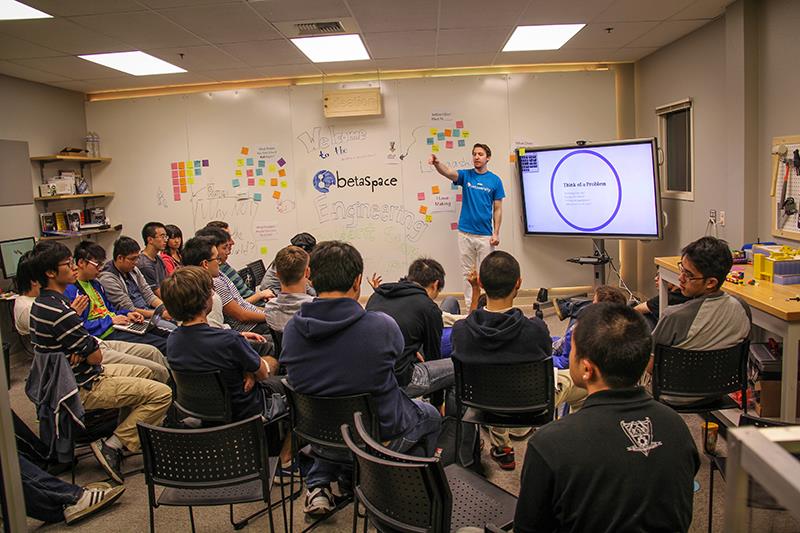
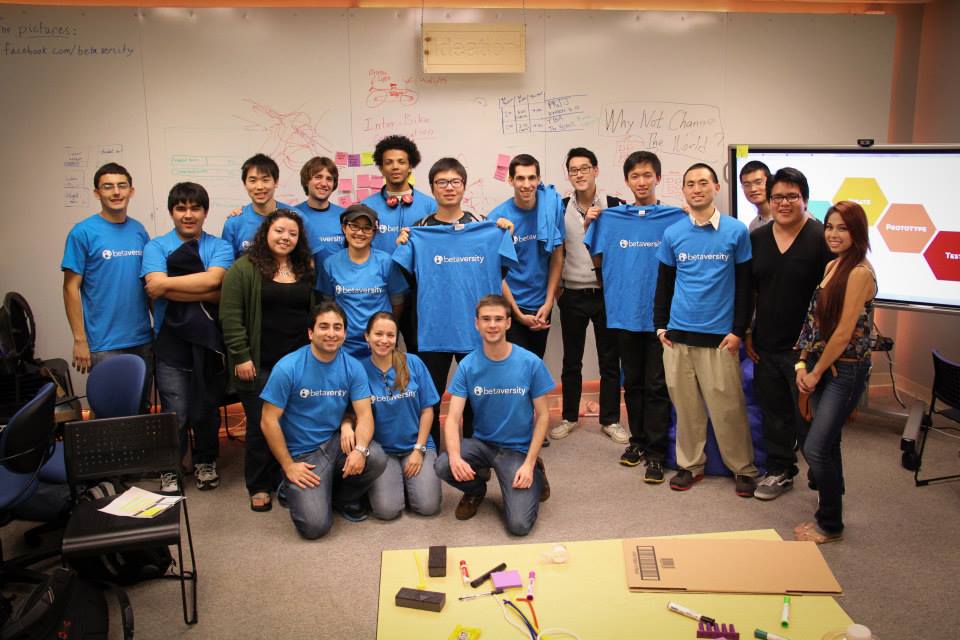
The ESSC started up in October 2013 as a project by Arzola and his company, Betaversity, to encourage entrepreneurship at UC Davis. Since then, the center has served over 600 students. The group also offers workshops taught by student staff which cover topics such as design thinking and computer programming, and provides instructions on how to use the equipment found at the center, which include a 3D scanner, a 3D printer and a “shopbot” for wood fabrication.

“We’re basically what is called a ‘maker’s space,’” Arzola said. “We provide rapid prototyping equipment so that students can go from idea to product very quickly.”

The ESSC is open to any student, regardless of major. As long as they attend a safety workshop and get certified to use the equipment, students can use the resources at the center for free. This openness allows a broad range of ideas to filter into the community of entrepreneurship that Arzola is trying to create.

“We’re also working with student organizations,” Arzola said. “The idea is [that] we want to bring people with different skills, different perspectives, into our space to create coalitions where new ideas can happen. We’ve been working with student organizations in manufacturing, design, engineering, computer science and business. We are bringing all those people together to create a community around innovation.”

This quarter, the ESSC can begin to provide financial resources to students with promising ideas. The center received a $40,000 grant this year through a network called Venture Well, which provides funding to promote student entrepreneurship.

“The College of Engineering is matching that one-to-one,” Arzola said. “So we’re going to have a micro-grants program over the next three years to provide students not only awareness, not only the space and resources, but actual funding they can use to invest in their projects.”

On top of providing financial resources and a space to develop ideas and create prototypes, the ESSC helps students by connecting them with other resources throughout campus and supports them in turning their ideas into reality.

“Usually students that come here have an idea that’s early — maybe they’ve done a little work on the idea or the technology, but they don’t know how to take it further or to really go about starting a business around it,” Arzola said. “So we give them that support and that knowledge where they can learn about what resources are available at UC Davis and nationally. The outcome that we want to see is for students to gain the skills to be more entrepreneurial.”

Arzola pointed out that the ESSC is fairly young, with its start less than two years ago, and that it and some of the other resources are beginning to work more closely together as part of a shift in the culture of startups and entrepreneurship at UC Davis, giving thanks to a supportive university administration.

One of the resources the ESSC might point an entrepreneur to is the ASUCD Entrepreneurship Fund (E-Fund).

“We get a certain amount of money allocated to us each year that we then essentially give out as grants or as initial seed funding to startups run by UC Davis students,” said Daniel Riesgo, a third-year managerial economics major and ASUCD E-Fund Committee Chair.

Twice a year, the E-Fund gives out up to $2,500 to potential businesses which have at least one student attending UC Davis — ideally, the founder.

“We look for all kinds of ideas in all kinds of development phases,” Riesgo said. “Obviously it’s hard to not give a preference to startups that are a little more developed. Some of these startups have prototypes or might already have other investments or already sold products, but we accept all kinds of applications.”

Multiple applicants might win if their ideas are good enough, in which case the money is divided between them based on the decisions of the committee.

“We understand that even $2,500 isn’t much,” Riesgo said. “But what we’re trying to do with that is make a statement and really encourage entrepreneurship at UC Davis. That’s really the main goal of E-Fund.”

Although new ideas are encouraged, Riesgo mentioned that sometimes it is difficult to judge applicant’s ideas due to high expectations. One thing he noted was the popularity of developing new applications for Apple or Android platforms.

“I think apps are really popular because they’re easy to make,” Riesgo said. “Those are fun to mess around with, but they’re typically ambitious. I’ve noticed this pattern when we’re judging an app… It’s difficult because we don’t want to break these [people’s] dreams or ambitions, but at the same time we have to be realistic and objective when they come and pitch and we give them feedback.”

The pool of applicants for the E-Fund is relatively small. Riesgo estimated an average of 20 applications per cycle, but he noted that the number was increasing.

“I think entrepreneurship is not really viral here yet,” Riesgo said. “I think it’s getting there, for sure, because we’ve seen an increase in applicants and discussions about that, but it’s just not prominent at UC Davis.”

Although the rate of entrepreneurship might be relatively small, Davis is definitely home to a number of startups and small businesses. Research done by the Davis chapter of Consult Your Community (CYC) suggests that there are over 250 small businesses in the local area.

Sunny Chui, a third-year applied mathematics major and one of the founding members of CYC Davis, commented on what the club is planning to do in the near future.

“We provide free consulting services to small business in the Downtown Davis and Sacramento area,” Chui said. “I like how this club is helping small businesses instead of helping big companies make even more money.”

CYC started in Berkeley in February 2013 and has quickly spread nationwide and shown up in colleges along both coasts. At Davis, the club is in the development stage and will be looking for clients this quarter and beginning consultations in the spring, after it is done training its members.

Chui wants to keep the club’s members capped at around 20 people, as he believes that a small amount of dedicated members is better than many inactive members.

“We’re looking for people that are actually serious. All of us are very social, but when we get to work we’re all serious and get stuff done,” Chui said. “We want people who can really put in effort to this club.”

The application cycle is currently closed but will open up as more members are needed.

Chui emphasized the significance of volunteer service in regard to startups and small businesses.

“Why would you charge when people are already struggling or willing to help?” Chui said. “It’s not like we’re losing something or they’re losing something. We give them recommendations, and they can take it or not. At the same time they give us an opportunity to do research [for] eight to 10 weeks. It’s a win-win.”

The primary tasks of the club include collecting and analyzing data to determine how business might be improved.

One of the common themes of these nascent resources for startups at UC Davis is an emphasis on education. CYC plans to work to educate current and potential business owners specifically about how their work can be better conducted. The E-Fund committee is attempting to increase the amount of education available to students regarding entrepreneurship. Meanwhile, Arzola is teaching a course on entrepreneurship which meets in ESSC space every week.

“I would say that the innovation ecosystem is mature enough now so that we have entrepreneurship spaces and programs that serve different parts of campus,” Arzola said. “We’re also seeing larger integration and collaboration between them, so any student that has that inclination to be more innovative, they can find the resource on campus that can help them best.”

The ESSC is open every weekday from 3 to 7 p.m. in Academic Surge 2060.

“My job really is to help students be successful and to help them make their ideas a reality,” Arzola said. “I think that’s a great position to be in.”

1379892_178212495700951_1855679089_n

Photo Courtesy Engineering Student Startup Center

A Work of Heart

0

RD_1

Many design students were surprised to learn that heart disease kills one woman approximately every minute — more than all cancers do combined — through a fashion project, not a biology class.

In the fall of 2009, Amparo Villablanca, cardiovascular medicine professor and director of the Women’s Cardiovascular Medicine Program (UCDWCMP) at the University’s Medical Center, contacted Design Museum curator and UC Davis professor Adele Zhang about creating a cross-disciplinary project combining fashion design with a campaign for heart health.

For the past five years, UC Davis design students have presented their handmade red dresses every February at the Women’s Heart Care Education and Awareness Forum in Sacramento and at a live-model fashion show in the Mondavi Center. The “Red Dress” is a registered trademark of the U.S. Department of Health and Human Services, and serves as the theme of the annual project in honor of February as American Heart Month.

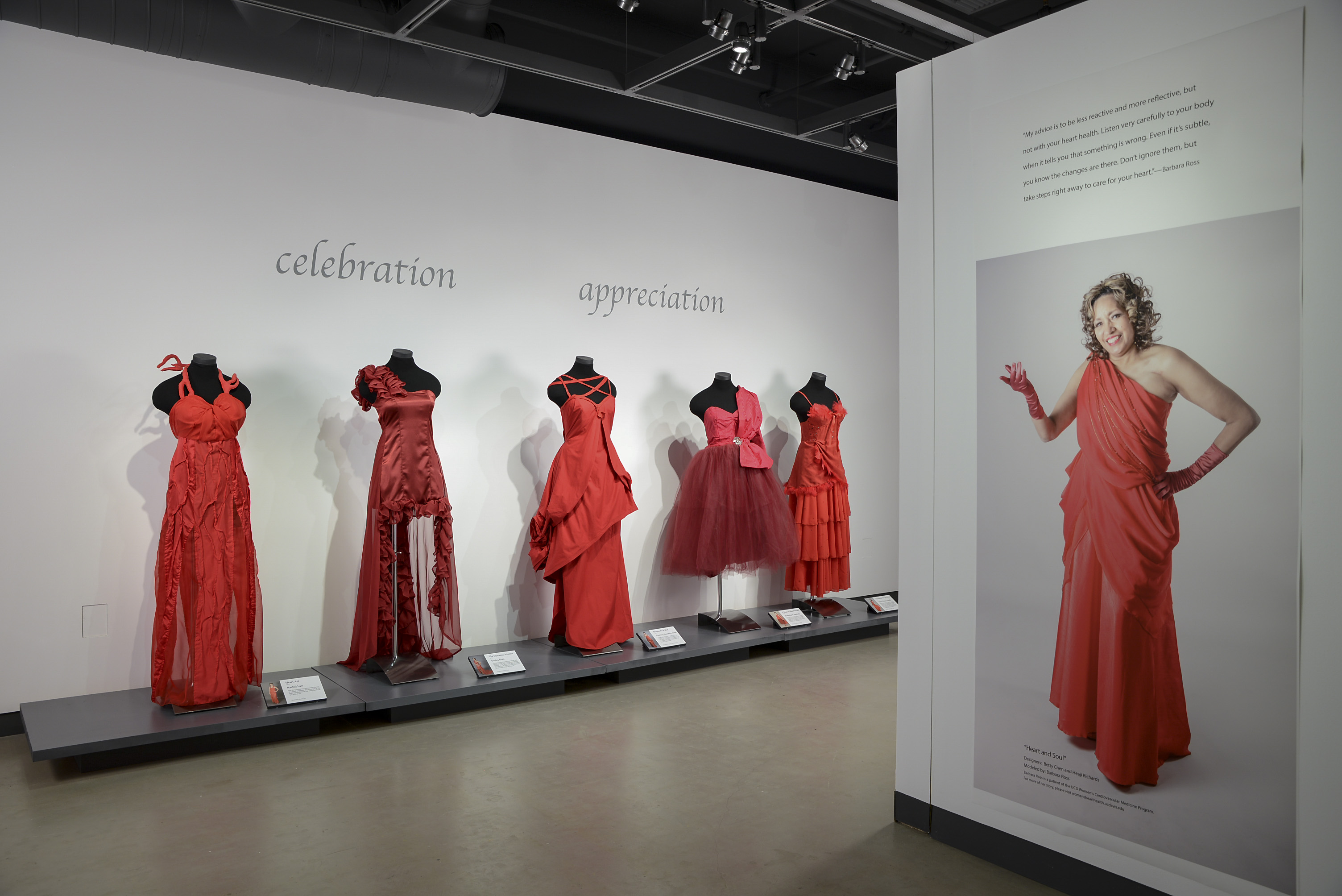
This year, however, brings something new: for the first time, UC Davis students are showcasing 18 accumulated garments in a free exhibit named Red Dress: Design Stories for Heart Health, open from Jan. 15 to March 13 in Cruess Hall on-campus.

“We can finally exhibit these dresses to the public,” Zhang said. “People might wonder what science is doing in the humanities. But I think we have done it really well. And finally people will be able to see that.”

Typically, Zhang’s students have created red dresses on their own time, based on personal and familial experiences or their own research regarding cardiovascular disease and prevention. But beginning this year, two of Zhang’s students, third-year design major Betty Chen and fourth-year design major Heaji Richards, collaborated to create a red dress and received the opportunity to interview a cardiovascular disease patient — Barbara Ross of UCDWCMP, as a client.

“It was my first time working with a client, and it was so nerve-wracking because I had never done it before,” Chen said. “[Ross] was so nice, excited and open with us. She was so positive even though she had gone through so much, and she came prepared with so many ideas.”

Chen and Richards adjusted their preliminary sketches to Ross’ needs and desires, and created a one-shoulder dress in order to show Ross’ scar on the left side of her chest, where her pacemaker was inserted. Richards was thankful for the opportunity to work with a real client instead of a mannequin.

According to Richards, the learning process of creating a mock dress, doing a fitting with Ross, making a final version of the dress and having a photo shoot with the finished product took about two months. Additionally, Chen created her own second dress, modeled after the symbol of a lotus.

“In Chinese culture, the culture I come from, a lotus represents positivity even though its surrounding is a negative externality,” Chen said. “It still blooms beautiful and strives to live. I want heart disease patients to be strong, positive, and fight on, like a lotus.”

While the dress both students created is only displayed in the exhibit through the form of a life-size photograph taken by professor Barbara Molloy, the lotus-inspired dress stands among other real red dresses, many of which have also been featured in a book edited by Zhang and Villablanca. But for Chen, seeing all the dresses up front before the exhibit opened, was surreal.

“When I walked into the exhibit, everything looked completely different from making those dresses late at night with my classmates. Everything looked so neat and professional that I almost couldn’t believe that I made the dress,” Chen said. “I feel so honored and to have my dress in the exhibit when just a year ago I was learning the basics of sewing. To improve so much in two quarters and have my work displayed is so incredible to me. There are so many talented people in my class, I never expected to be chosen.”

Zhang said that she believes her students learn a lot through the project — one of her students, for example, was not aware that her family had a history of heart disease until she began the project.

Both Chen and Richards will speak at next month’s forum on Feb. 6 about what they have learned.

“Normally people think fashion is just fashion. Clothes that we create end up in Neiman Marcus, Macy’s, or other retail stores, and that’s it,” Zhang said. “But now the people who create for and attend this exhibit can see that fashion can have a bigger impact and can be used for social awareness. I want the nation to recognize that.”

Photo courtesy Barbara Molloy

RedDress_01a

Second Public-Safety Dialogue held to enhance city communication

0

MRAP_ci

Nearly 40 members of the Davis community and the Davis Police Department (DPD) gathered in the Davis Veterans Memorial Center Jan. 21 for the second meeting in a series of Public-Safety Dialogues related to concerns that arose from the city’s acquisition of the Mine-Resistant Ambush Protected vehicle (MRAP) this past June. Although Davis is no longer in possession of the MRAP, the issue brought attention to concerns of the community related to safety and communication between the DPD and the community.

According to Judith Macbrine, facilitator of the Public-Safety Dialogue, owner of The Mirror Group and long-term Davis resident, the meeting was essential to allow both members of the DPD and the Davis community to recognize views on the issue that differ from their own.

“When there’s a hot issue like this, often people think they have the whole view of something. It’s like with a hand: if you’re looking at the palm of my hand, you have a certain view of my hand. If I’m looking at the back of my hand, I have another view of my hand. Both of us are right about what my hand looks like, but it’s incomplete,” MacBrine said.

The same notion was asserted by City Council member Brett Lee. According to Lee, there was a disconnect in communication between the community and the DPD, where the community was surprised by the acquisition, and the DPD was surprised by the community’s reaction.

“The idea of the community dialogue was to bridge that gap [between police and community],” Lee said.

Although Lee referred to the first community dialogue held in November as more informative, he believes that this second dialogue allowed people to directly converse with police officers.

“It gives the people at the different tables a chance to talk to police officers and get to know them better…[some people] never have even spoken to a police officer in Davis. It was kind of a low-key setting, just talking and interacting with each other,” Lee said.

MacBrine facilitated the meeting’s schedule and organized the table configuration to create an environment where participants felt they could express their opinions. There were approximately 15 tables in a circle consisting of people from different community groups including individuals from the city council and the DPD.

“We made sure that there is somebody from the police department in each table. But we were equal participants in the dialogue. The goal was information gathering and community awareness,” said Thomas Waltz, DPD press officer.

MacBrine began the meeting by introducing the idea of “listening to understand” explaining that “everyone is right, but only partially.” According to MacBrine, this created an accepting and open environment for people to freely share concerns.

“If you can create a safe environment for people to speak, then the different voices can start to mingle and influence each other so we can start to be creative as a community,” MacBrine said.

The participants discussed different polarities that they see within the community. The group came to consensus that the main polarity of the situation involving the MRAP, the DPD and the community was one of balancing trust and accountability.

“My hope is that by hearing these different perspectives, getting to know the reasoning behind some of the decisions that are made and realizing where there are blind spots or gaps in communication, that all of that will happen, in fact and make things better for the future,” said Davis resident Mary Loibl.

The MRAP acquisition, according to Lee, was not to create a surplus of military equipment but instead, to replace the DPD’s broken down vehicles. Furthermore, Lee said the public-safety dialogues have resulted in a general consensus from participants in the community that can now understand the police’s reasoning of purchasing the MRAP, even if they disagree with the acquisition.

“I think the next step would be the city council discussing, not of a military vehicle, but if the police force need to have access to an armoured vehicle,” Lee said.

In addition to internal discussions by the council members, future community dialogues will be held to further develop communication between the DPD and the community.

According to MacBrine, the goal of the first meeting was to gather information from participants while the goal of the second meeting was geared toward working with the conflict brought to light in the first meeting. She explains that setting this foundation is important before trying to find solutions.

“We tend, as a society, to want to fix things before we’ve really heard what we need to hear and worked with what we need to work,” Macbrine said. “I suspect that at the next dialogue we’ll start to get into some concrete things that can be done to balance this polarity that we explored at this meeting.”

Photo by Katherine Lin

Breaking News in Brief: #Facebookdown

0

facebook 3

Update: as of 11:15 P.M., Facebook and Instagram online and mobile apps began functioning again.

At 10:10 P.M. tonight, the sites faced technical difficulties. They were down for a little over an hour. #Facebookdown is trending on twitter.

Check in for further updates.

— Gabriella Hamlett

Courtesy of Creative Commons.

Women’s tennis look for fresh start to the season

With longer days, blooming flowers and warmer weather comes the start of something new for UC Davis women’s tennis.

Last season, UC Davis women’s tennis rounded the year at 12-10, and reached the quarterfinals at the Big West Women’s Tennis Championship in April. This year, the Aggies look for a fresh start. With four of the team’s ten players being freshman, and a total of only two upperclassmen on the squad, women’s tennis embraces the opportunity to gain experience.

The Aggies officially began their season on January 16, traveling to Tempe, Arizona to face Northern Arizona University. In their first match, women’s tennis proudly brought home the win, defeating NAU 5-2.

The only senior of the team, singles and doubles player, Layla Sanders, demonstrated resilience against NAU, defeating the top seed in the third set after faltering 3-6 in the first. Freshman Jessie Lee, sophomore Kamila Kecki and junior Tiffany Pham, also brought home wins for the singles division on Friday.

Freshman Kristy Jorgensen paired up with the experienced Sanders to play number 1 doubles. The unexpected pair defeated NAU 6-3. Doubles partners, Kecki and sophomore Frederique Sleiffer brought home the second doubles win with a score of 7-5.

With high hopes, the Aggies faced Arizona State, the following day, but faltered, as the rank no. 32 team took the 7-0 win. Despite the loss, Pham and Lee took 8 and 6 games in their respective matches. Jorgensen played her second collegiate match, and was the only Aggie to take Arizona State to the third set.

As for the rest of the season, the Aggies are set to break a record. Scheduled to play 11 straight home games beginning Feb. 28, the Aggies will finish the season with a major home advantage.


Women’s golf: a preview of their upcoming season

0

What can UC Davis fans expect from the Women’s golf team this year? If the beginning of their season is any indication, then a whole lot.


Collegiate golf seasons is split in two sections, with the fall portion of their competition already completed.  Brandishing an impressive set of finishes – one second place and two third place results – the Aggies are prepared for a successful spring season.


“Going into the spring, it’s really more about being consistent, even on our days that aren’t so great,” said coach Anna Temple.


The accomplishments of some players are enough to highlight the talent of this team.  With sophomore Paige Lee having competed in the U.S. Open and senior Blair Lewis playing in the U.S. Public Links this past year, it gives a testament to the type of players this program churns out.  Golfweek ranks the women’s team at 33rd in the country, which pits them against other powerhouse teams like UCLA, Duke and Stanford, to name a few.


With the same five players returning from last year, the Aggies’ biggest strength is their cumulative experience.  They share a camaraderie as well as a burning desire to win.


“We didn’t make nationals last year, but this year we’re really motivated and ready to come back really strong for the spring,” said junior Andrea Wong.  “I think everyone in the back of their minds knows what we’re out here for and what we’re wanting to achieve.”


This year the Women’s Championships will be conducted differently than previous tournaments. For the first time, NCAA women will play a combination of stroke play and match play – three rounds of stroke play will determine who will be paired up and go on for the final round of match play.


Earlier in the year, the Aggies’ were able to experience this type of play during the East and West Match Play Challenge in Ann Arbor, Michigan, where Wong placed 1st out of 48 players.  This marked her premier individual victory, and provided her with fuel for future matches.


“It was definitely a huge hurdle because that’s one of my goals, obviously – to win a collegiate tournament,” said Wong.  “After you get a taste of it, you just want more, you know?”


With practice resuming after the winter break, the team is now able to start on the path to achieve their goals for the rest of the season.


“We want to compete against the best,” said Temple.  “It’s not so much about playing or thinking about one particular team, but really maximizing what we do well and making that consistent week in and week out so that we can compete with the best teams every single week.”

The remaining season holds great promise for the Aggies. They will compete in Stanford for the second time this year and they will travel to Dallas, Texas and Hawaii during the coming months.


“Going out to Dallas will be a cool experience,” said Wong. “And of course Hawaii.  Can’t be mad about that.”


The Aggies will host the Big West Championship for the the first time in late April.  Wong is looking forward to the opportunity.


“It’ll be fun, I’m really excited to have it hosted here, just because it is our home course and it will give an opportunity for people on campus who like golf [to come and watch], or just for our friends and family to come and support us.”

Men’s golf re-opens season in Hawaii after hiatus

0

The UC Davis men’s golf team will continue their 2014-2015 season after taking a two-month winter hiatus. The team will be traveling to Waikoloa, Hawaii for the 24th Annual Amer Ari Invitational at the Waikoloa Kings Course during the first weekend of February.

Earlier this season, UC Davis participated in four tournaments and placed in the top five in three of the tournaments. Upon arrival to the Aloha State, UC Davis will compete against the top teams in the nation, including no. 9 Stanford, no. 6 UCLA, no.14 Oregon and no. 22 Washington. Other schools competing in this tournament include Texas, Colorado  and the University of Hawaii. The team hopes to continue playing well in the upcoming tournament and the rest of the season that will hopefully conclude in the NCAA tournament.


Following the Amer Ari Invitational in Hawaii, the Aggies will host The Prestige at PGA WEST, a three-day tournament in La Quinta, Calif. They will also host the El Macero Classic in April.


Prior to the winter hiatus, UC Davis finished in fourth place in the Alister MacKenzie Invitational, Oct. 13-14, 2014. There were 16 teams in this tournament, Cal earned first place by hitting 13 under par, followed by Arizona State and Oregon State. The Aggies finished in third place in Big West last year and were given an 11th seed in the NCAA Regional round.


Sophomore Nicolas Noya led all Aggies and tied for sixth individually, by hitting three under par. Junior Luke Vivolo and senior Matt Seramin hit two under and one under par, respectively.


Vivolo has been outstanding for the Aggies this season, continually finishing at or near the top of the UC Davis finishers. He is currently ranked 164 individually in all of NCAA men’s golf. A season ago, he finished seventh individually in the NCAA Regional round.


The Aggies hope to continue competing at the same level of intensity as the Alister MacKenzie Tournament last October, and to build on their season’s accomplishments thus far.

AggieAngelous

0

Facilitated by Camille Iman Woods

ThePoetry-ThePoets&ThePoetesses

ThePoetry

Untitled by Gabriel Patterson


“I can’t breathe,” yet I continue to tell myself to remain calm. I put my “hands up” and over my head because from an early age I was taught that doing so helps to expand the lungs, optimizing the flow of oxygen throughout the body…. As a member of a very small African American population in Santa Fe, New Mexico, my childhood and adolescence were not without challenges and I became well acquainted with the racial inequities and injustice that reverberate in U.S. society. I understood that, based solely on the difference in our skin tone to that of our peers, my brothers and I were somehow viewed as inherently different, even inferior, to our White and Latino friends. Every parent is concerned about their children and all the risks and dangers in our world (i.e. motor vehicle accidents, illness, injury, rape, death, financial hardship, etc). However, as parents of three Black males, my mothers and fathers have had an additional set of concerns that are unique and shared with Treyvon Martin’s parents, Michael Brown’s parents, and a list of many other violent incidents that is in no way exhaustive….Regardless of my intelligence, education, great upbringing through my family and the values I carry, society will only see my surface. I’ve had people (of all ethnicities) tell my brothers and I that we’re different because we’re “articulate,” lack the stereotypical ghetto accent, or defy any additional criteria of their conditioned notion of what it means to be Black…. Social scientists who study our hidden biases demonstrate that we are more likely to associate Black people with negative words and imagery than we are White people. In this so-called “colorblind” post-racial America, micro-aggressions, implicit biases, and unfairly implicating Black people in their own deaths surround our lives. The jury has spoken….I don’t know what is best, but I always try to Do the Right Thing. I choose to speak out against the racial bias that still infects our society and distorts our perception of one another. I always try to make my voice heard, to make a difference in the lives of those close to me…Não tenha medo da escuridão, nem tudo que é negro remete a escravidão, não tenha medo da escuridão, nunca mais, nem tudo que é preto remete ao medo não.


ThePoets&ThePoetessses


Gabriel Dixon is a first year M.S. student in Agricultural and Environmental Chemistry here at UC Davis. Gabriel loves the outdoors, traveling and learning about culture along the way. He loves to rock climb and play percussion when he’s not studying in the library. Involved with Brazilian Samba here on campus and a huge reggae fan, Gabriel engages with the intersection between  music and culture while maintaining his studying of environmental change and innovation.


Be Featured in AggieAngelous

Send your poetry to aggieangelous@gmail.com with your name, major, year a short, one-to-two paragraph description about yourself, and a photo of the poet. Feel free to include your interests and/or hobbies, or maybe even your favorite quote! Anyone from the UC Davis campus community (undergrad, grad, employee or alum) from any academic discipline can submit. You can submit as often as you like with as many pieces of creative writing as you would like. Please feel free to email AggieAngelous with any questions, concerns or inquiries.